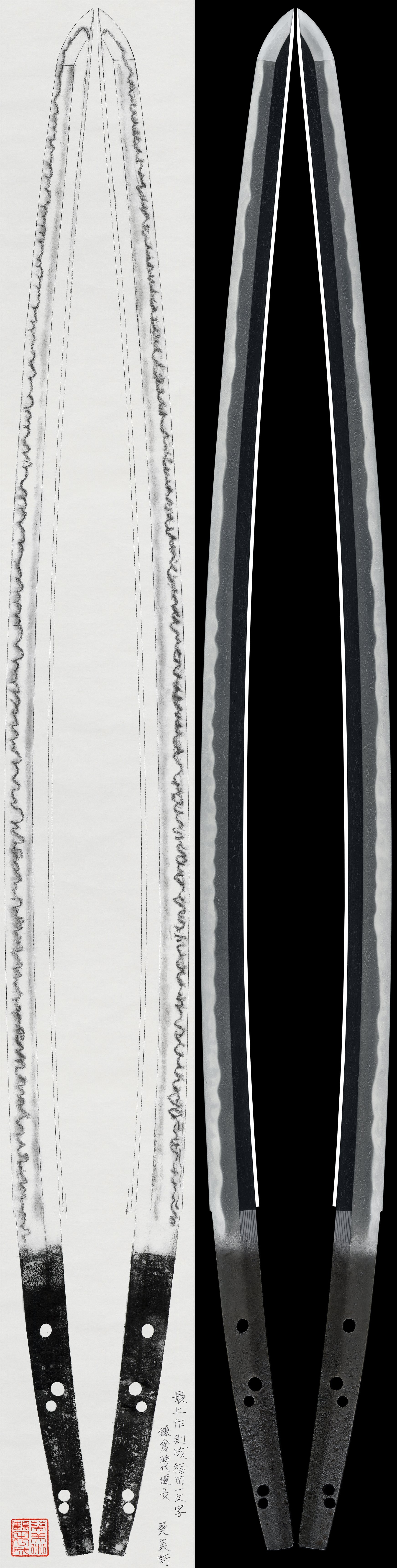
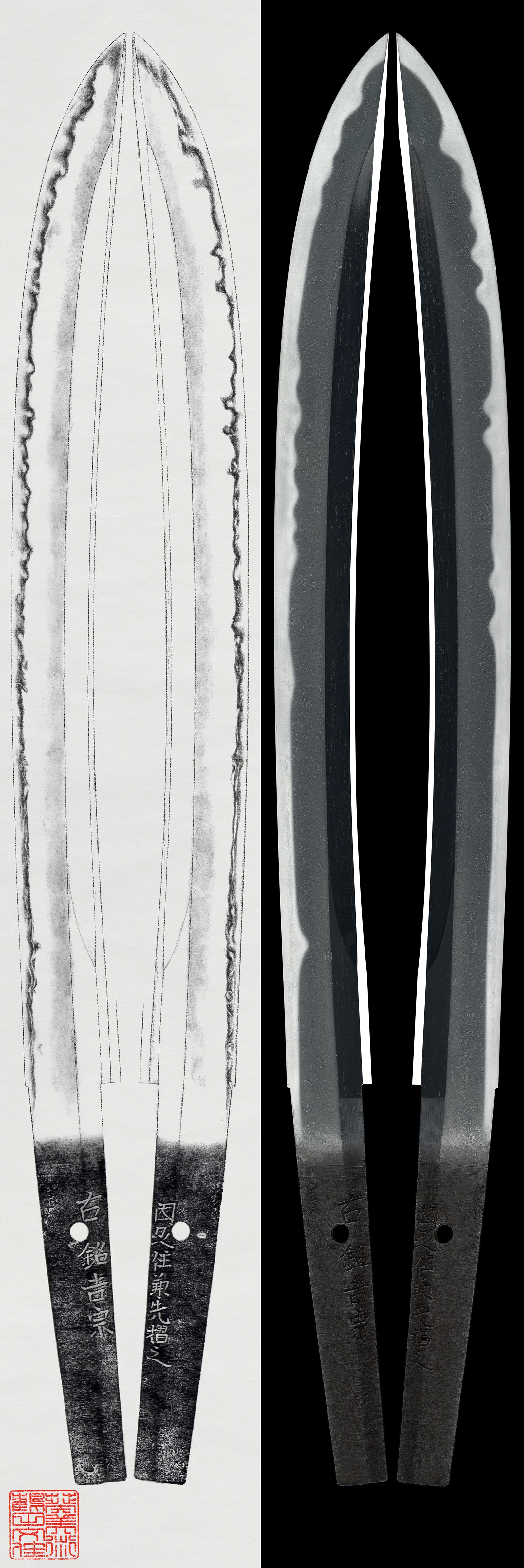
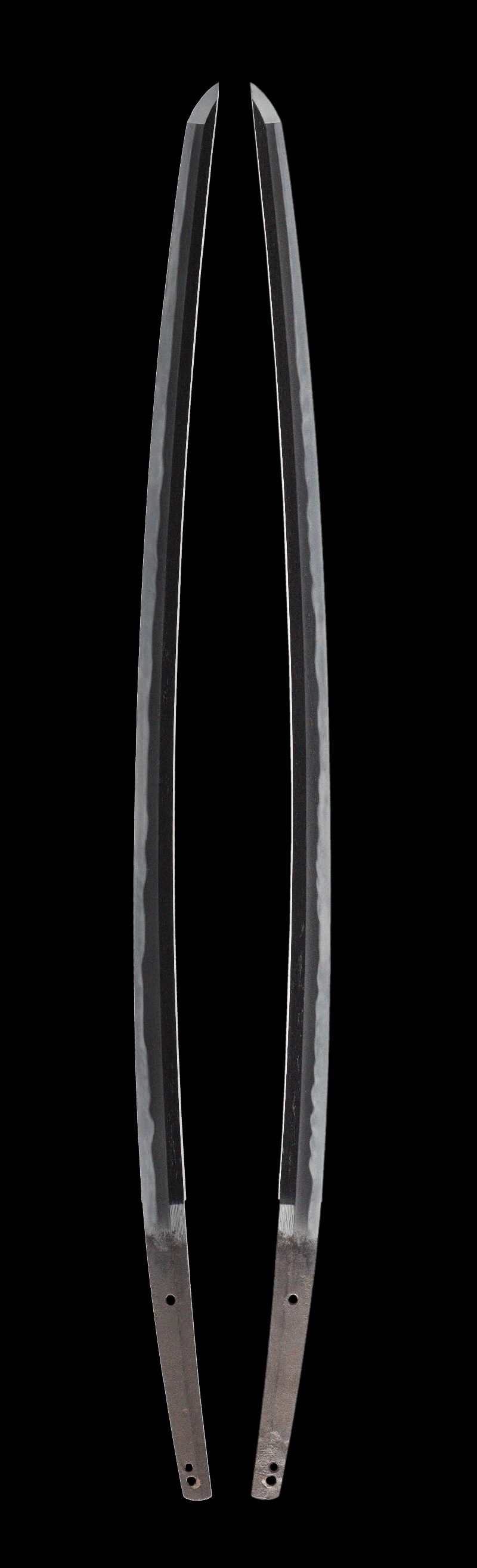
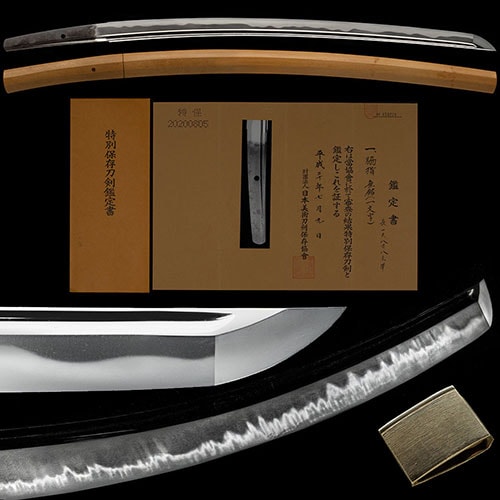
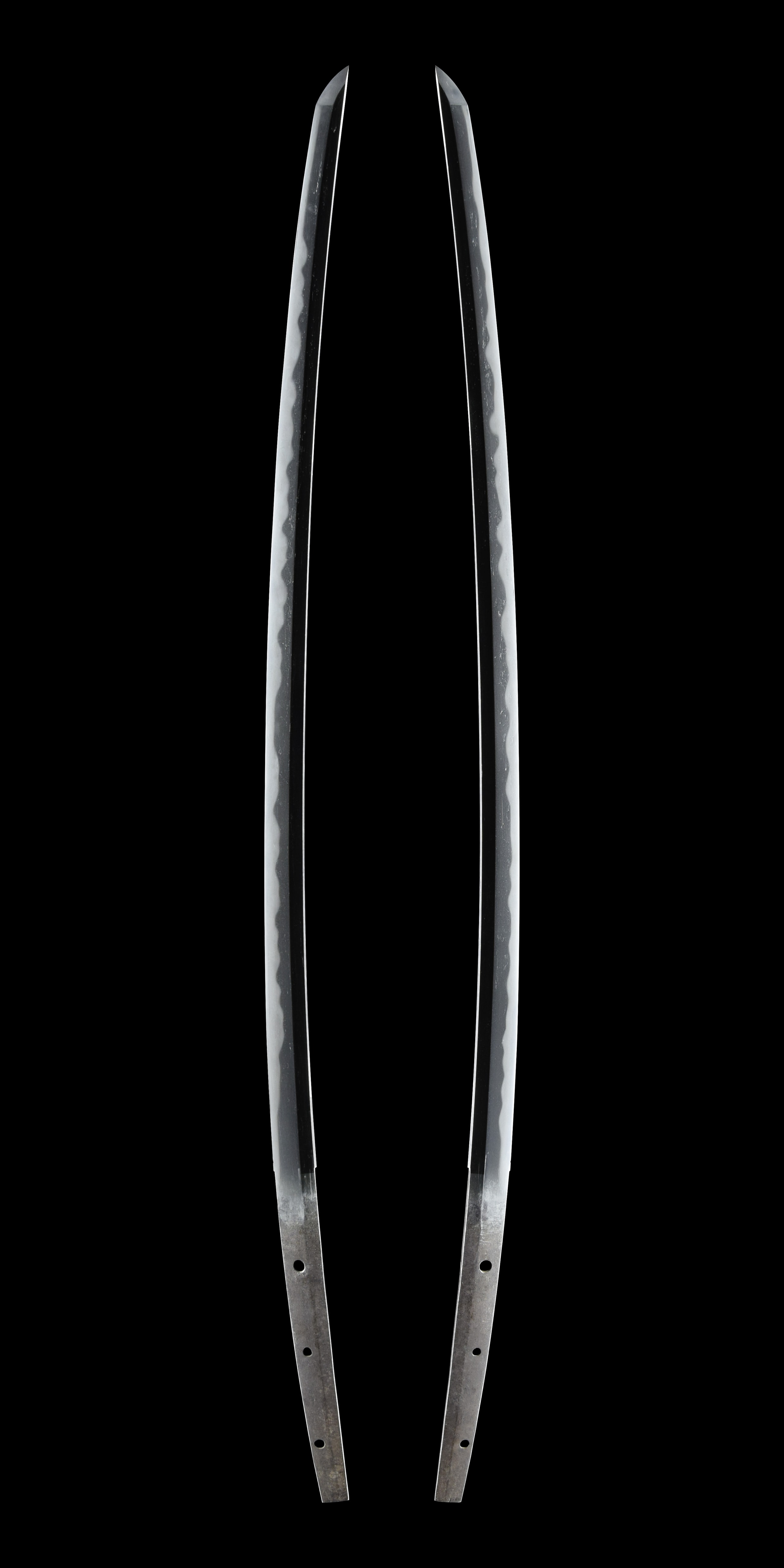
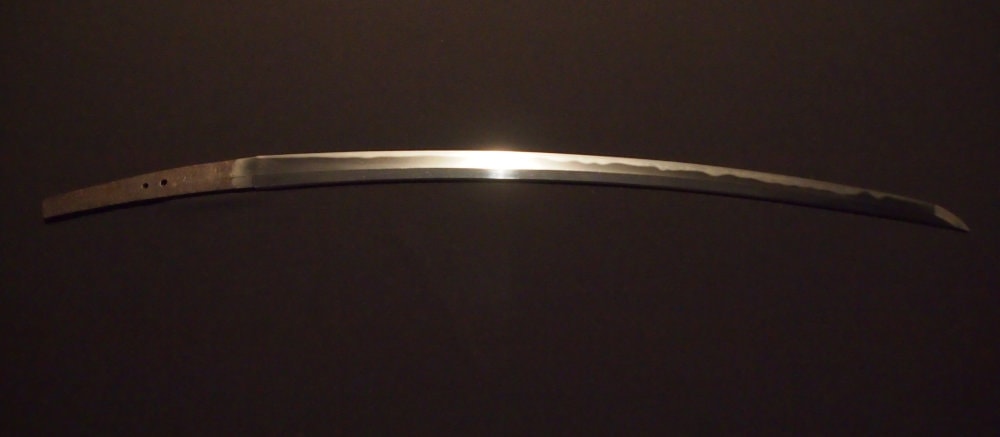
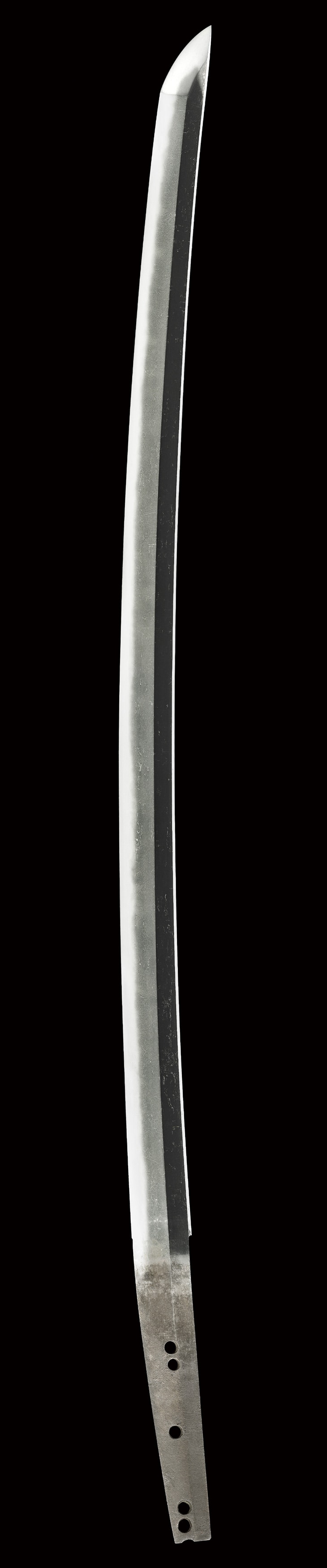
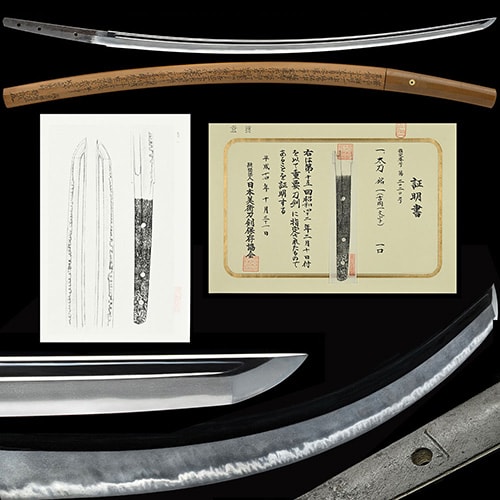
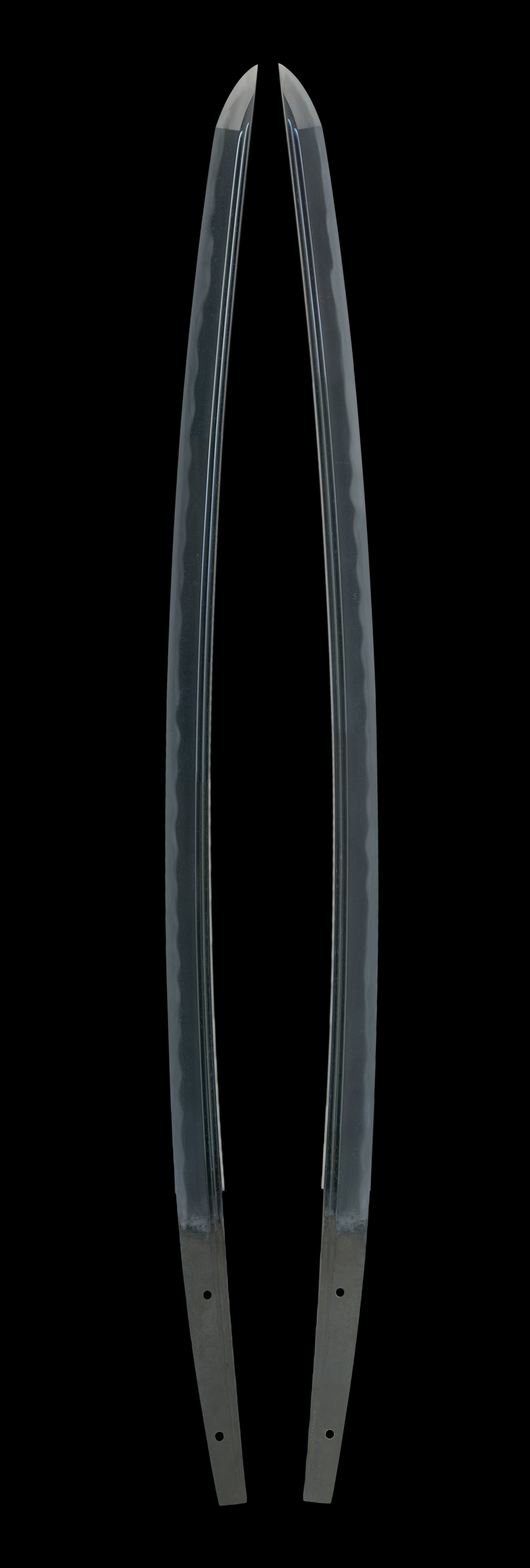
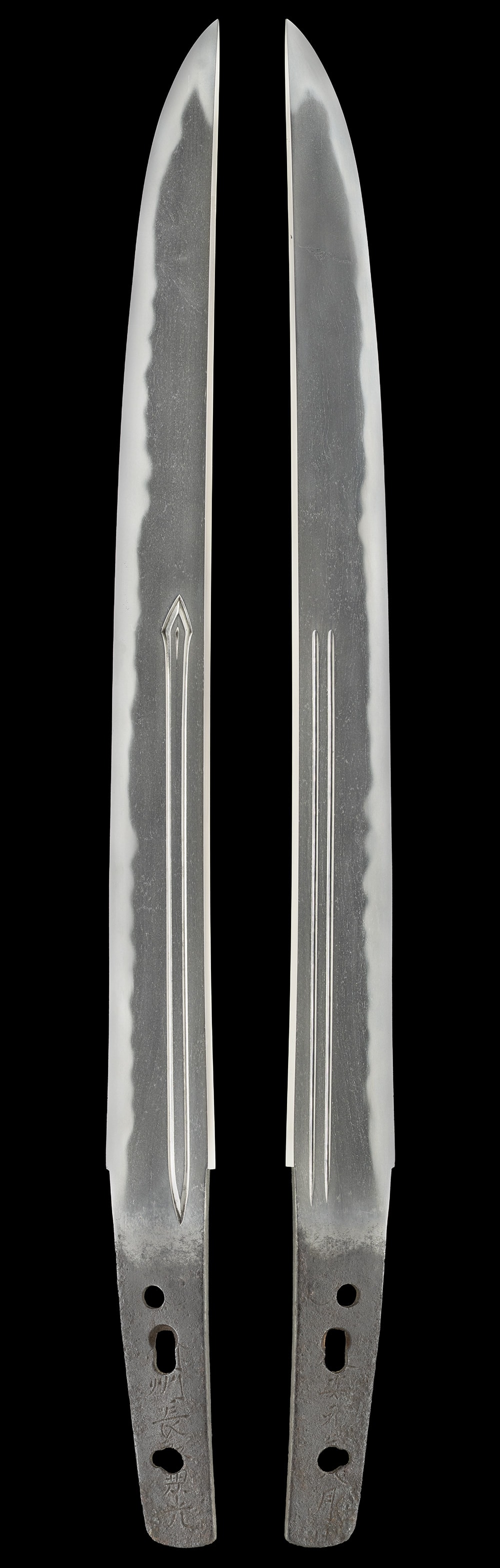
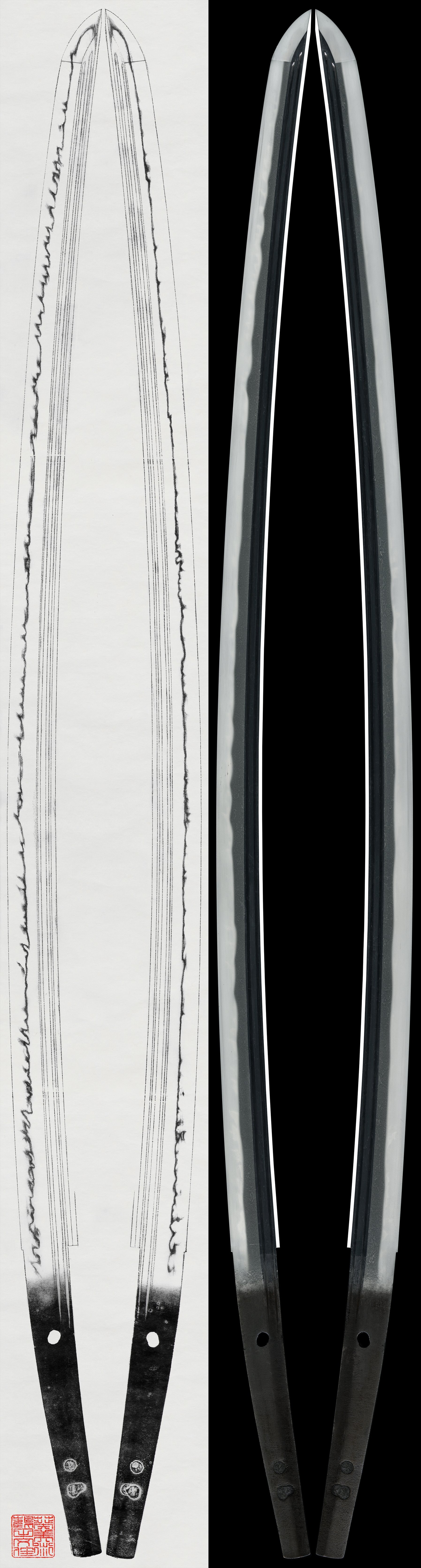
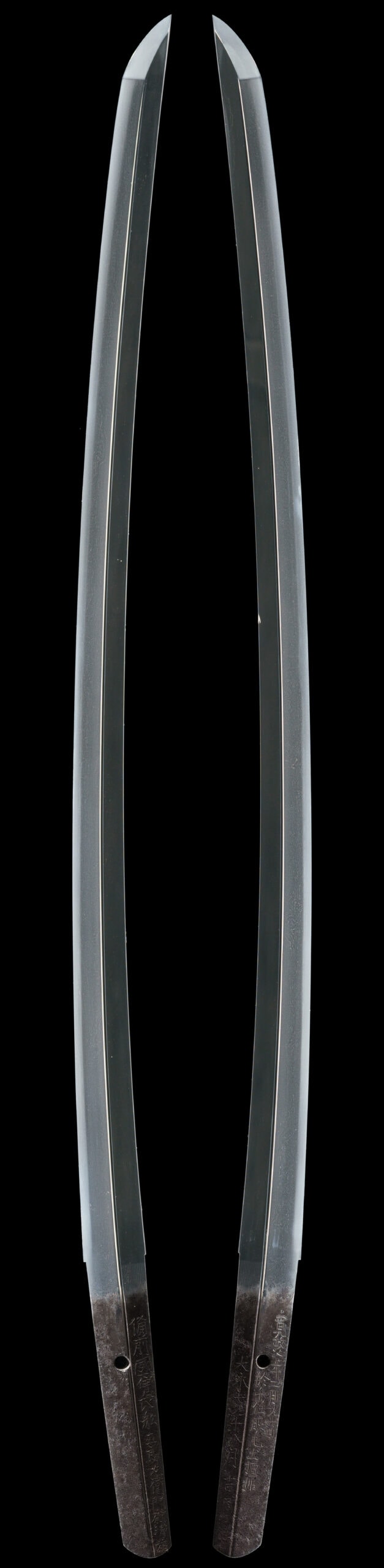
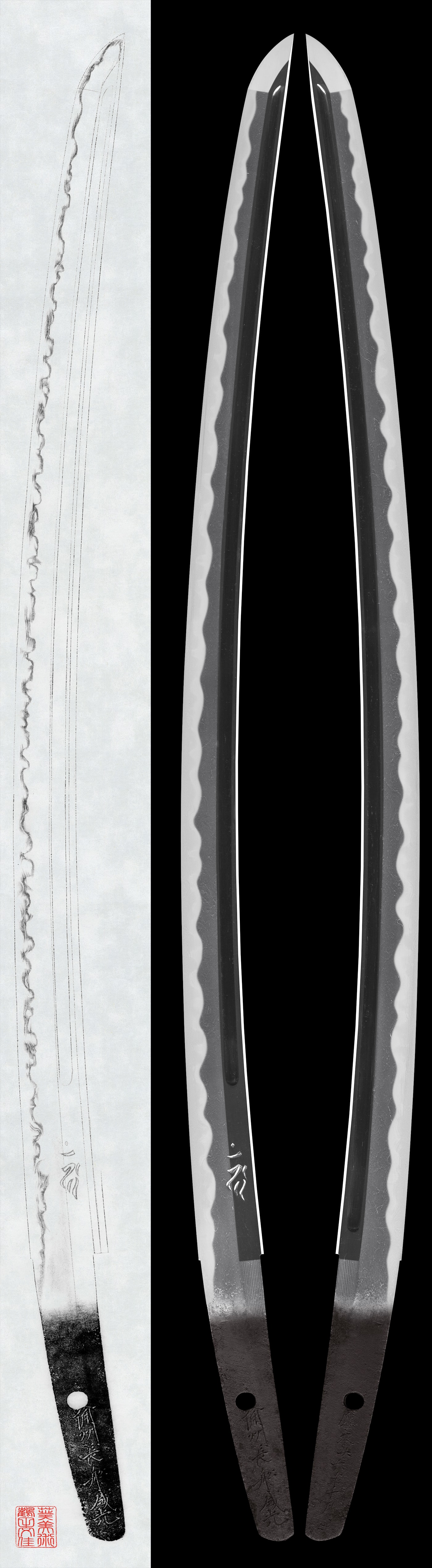
Sukehisa is transmitted in the as the son of Fukuoka Sukenobu, a smith who later relocated to in Province. His active dates are variously given as the Tenpuku era (1233–1234) or the Ryakunin era (1238–1239), firmly situating him in the mid- period. Judging from the style of his workmanship and the manner of his signature, the considers him to precede the Nagamitsu lineage, positioning Sukehisa as a transitional figure between the Fukuoka tradition and the great mainline that would follow. His early heritage — the so-called Ko- manner — is evident in that share with an old-fashioned, slender form with small , pronounced -zori, and noticeable .
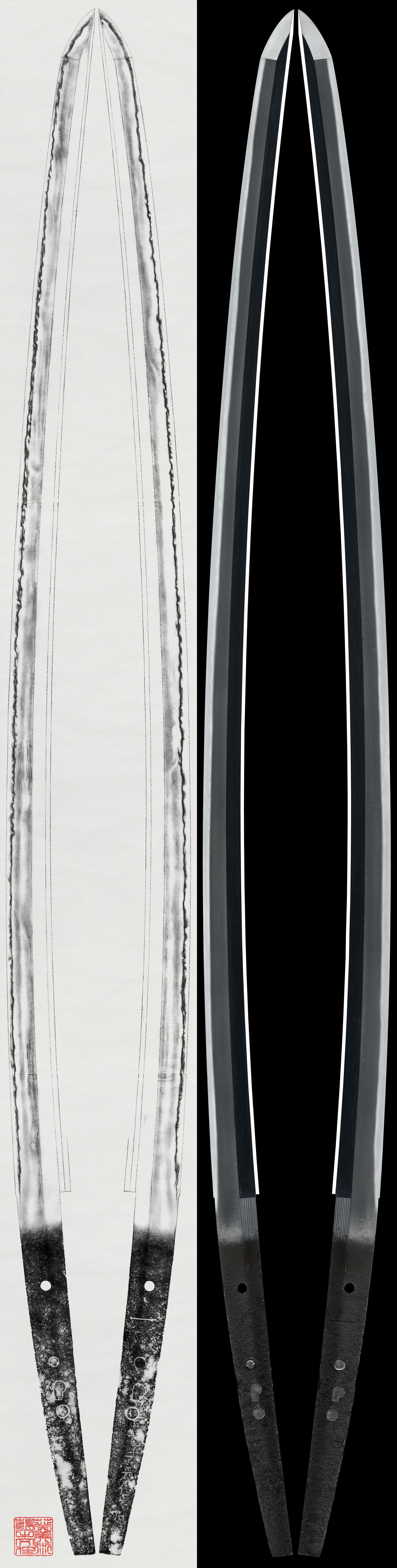
Sukehisa's technical range encompasses both and , the latter form being particularly well represented among his designated works. His are rendered in ryo- with high , producing a refined and elegant form in which the tip does not flare — a the compares directly to by Nagamitsu of the province and by Kuniyoshi of Yamashiro. The forging is a well-refined, densely packed with finely adhering and occasional . The is a base, at times showing shallow tendency with slight and ; the is characteristically tight and notably clear (). In his , mixed with predominates, with entering well and appearing in the ground.
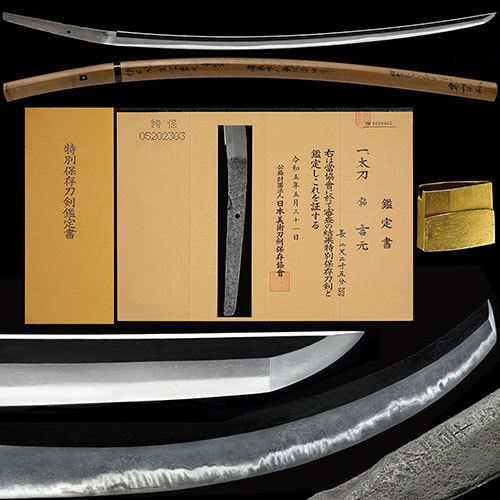
The designation records repeatedly describe Sukehisa's work as — sound and well-preserved — a condition that, combined with the quality of both and , draws consistent praise. His blades are characterized as possessing "a substantial presence and a lofty, dignified tone," and in multiple evaluations the singles out the exceedingly fine quality of the steel and temper. Sukehisa thus occupies a distinguished position within the early tradition: a bridge between the Fukuoka heritage and the school's ascendancy, whose surviving works demonstrate skilled workmanship of the highest order.