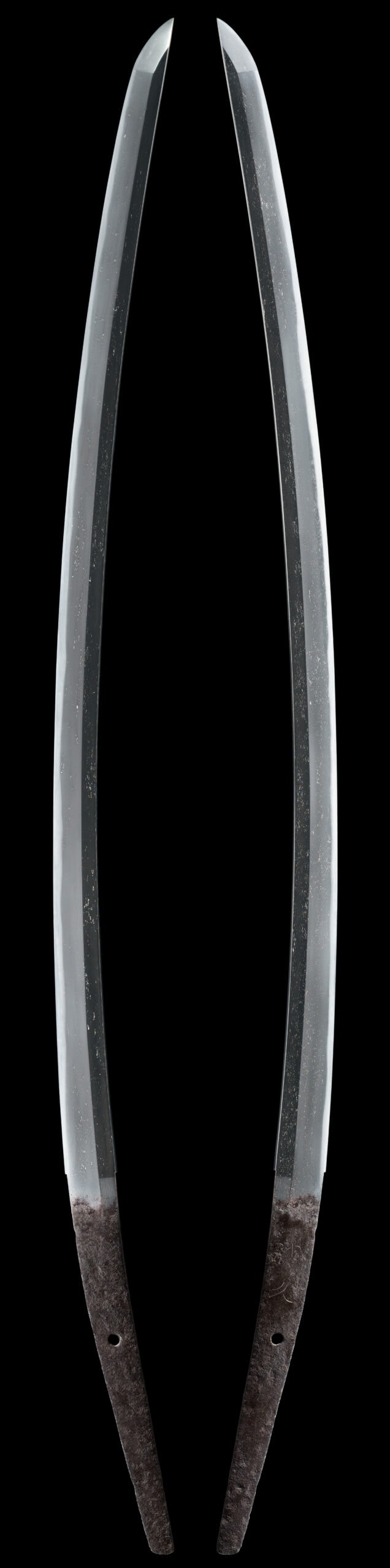
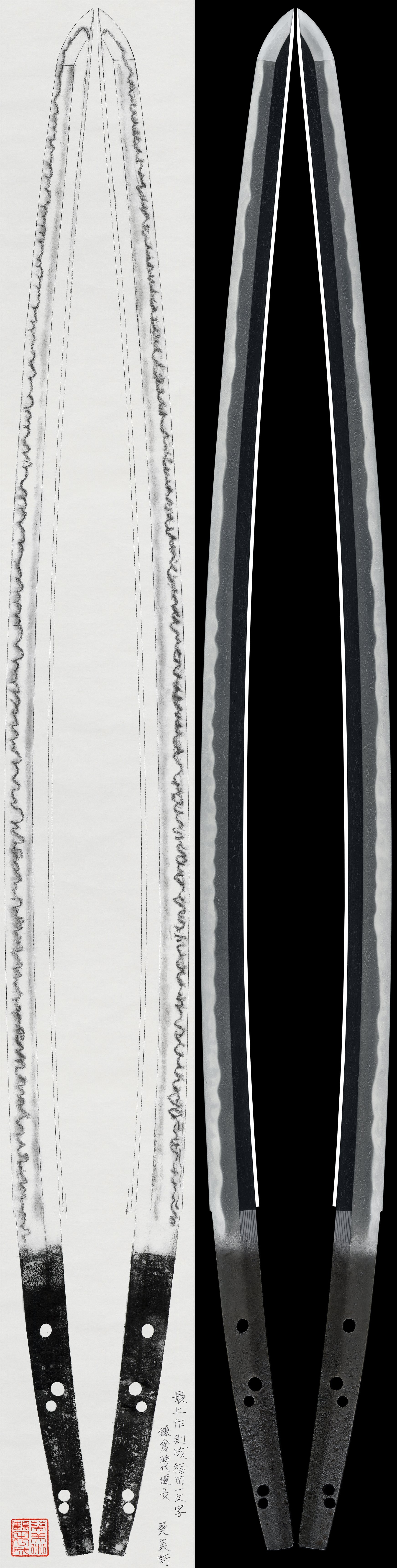
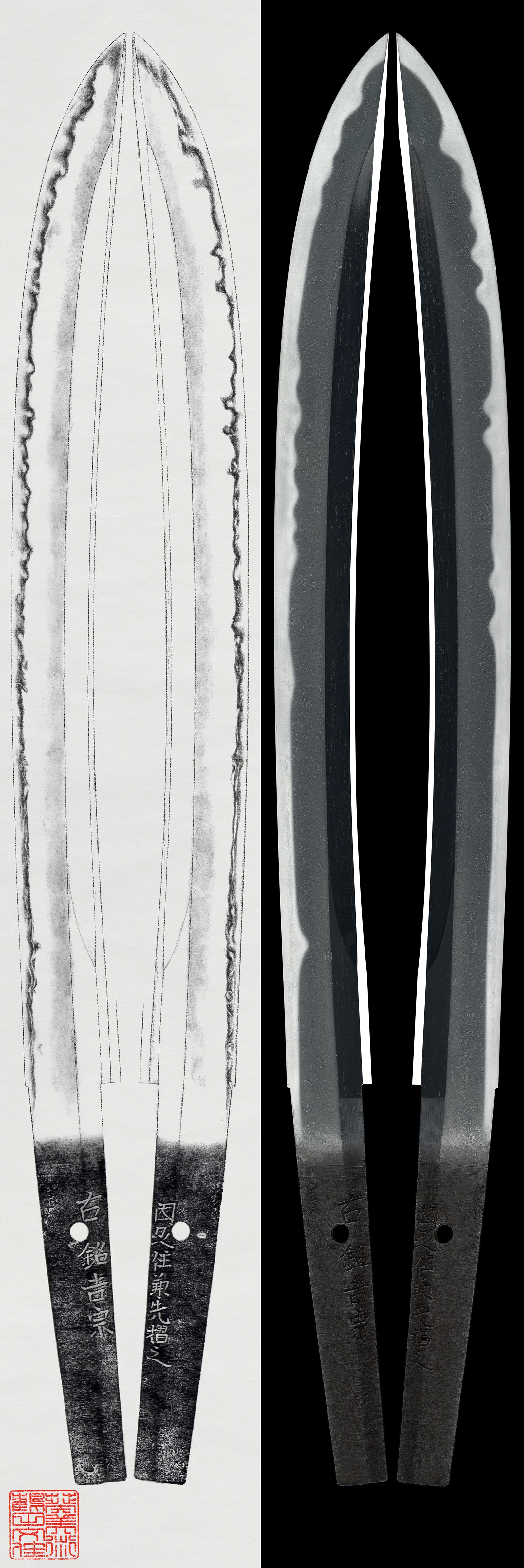
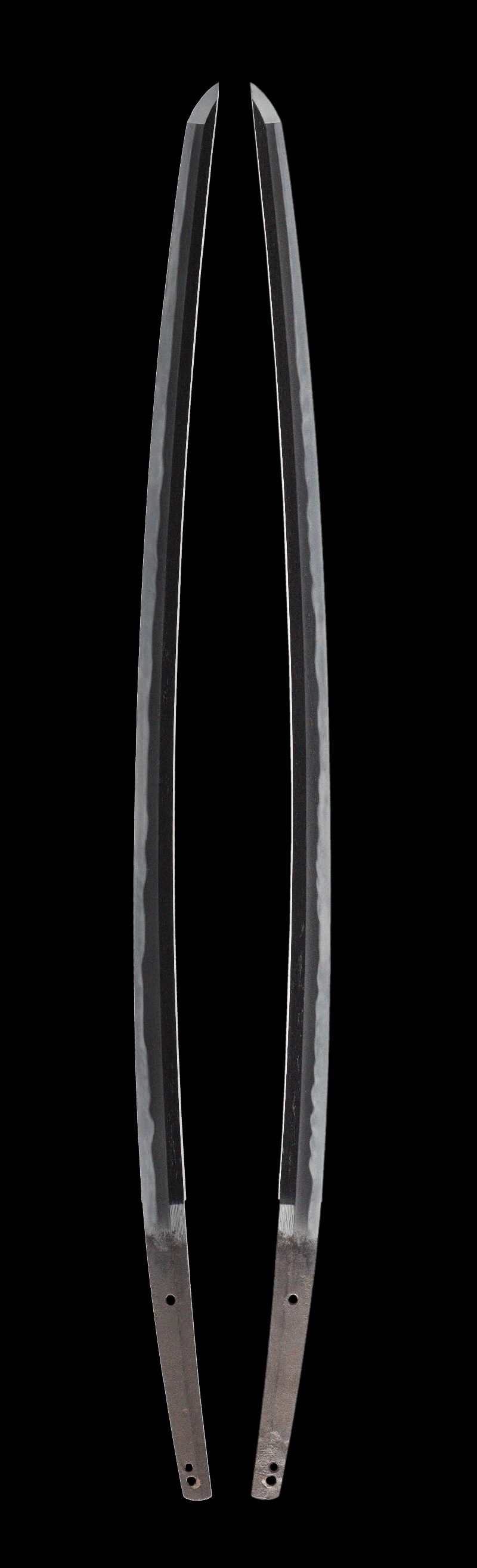
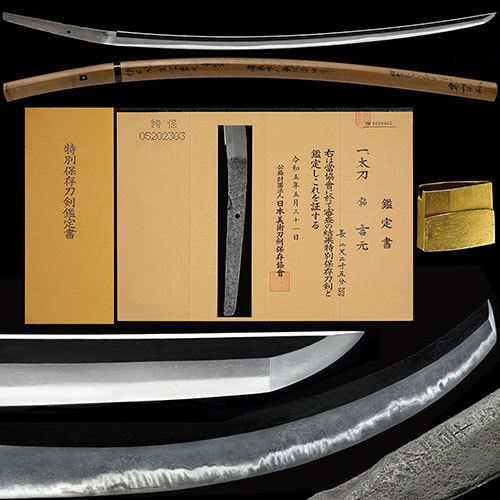
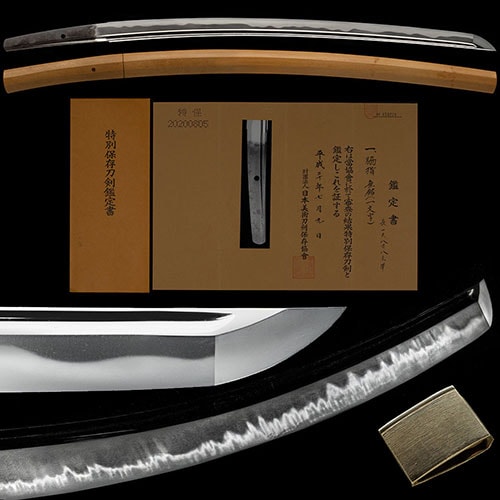
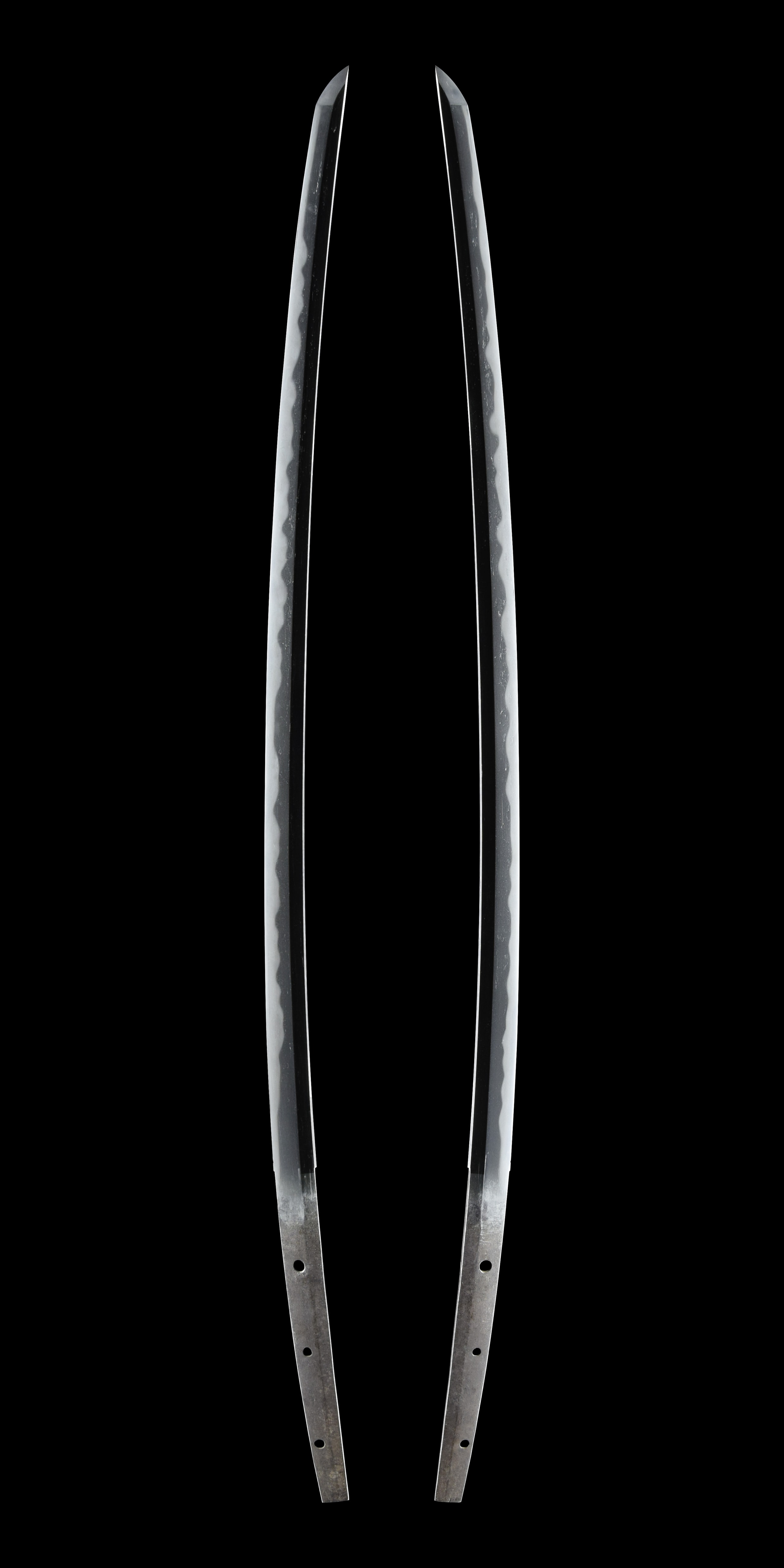
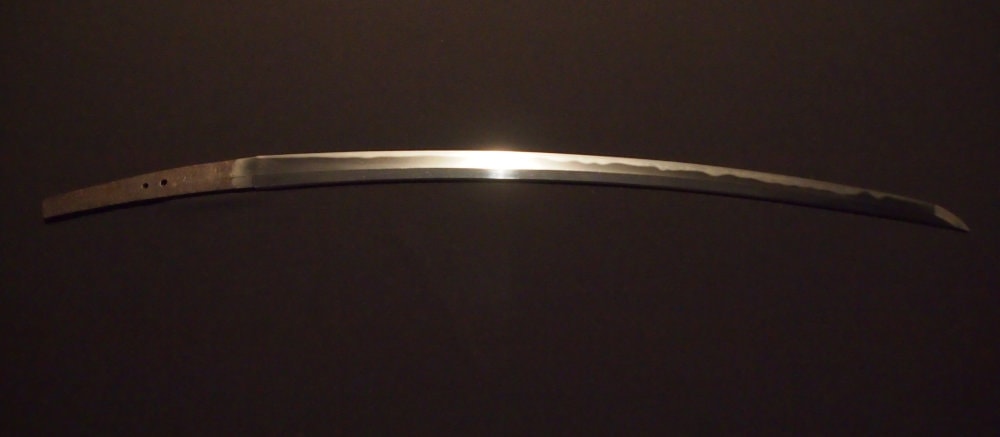
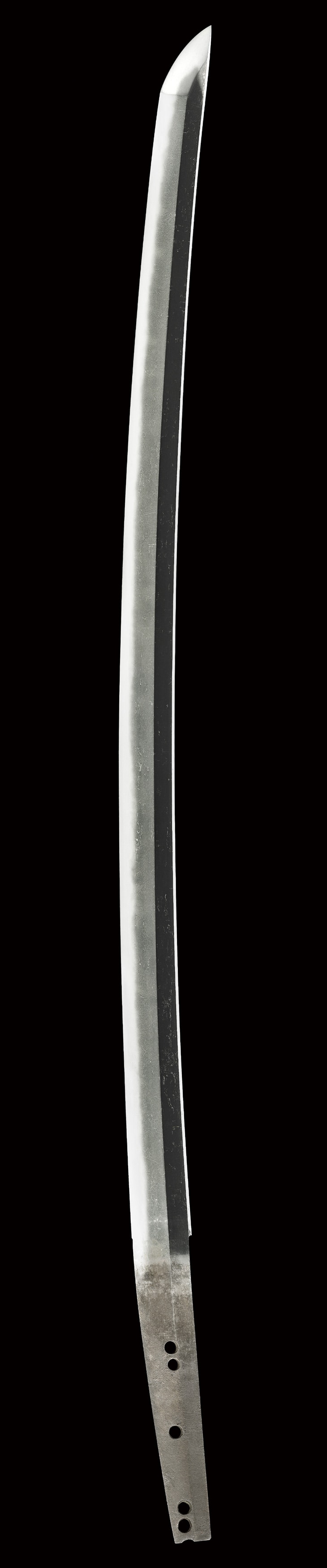
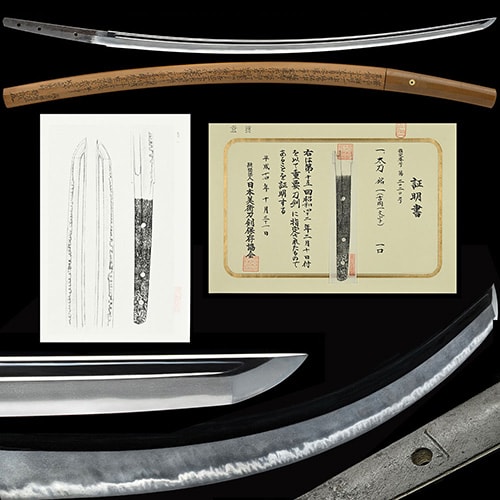
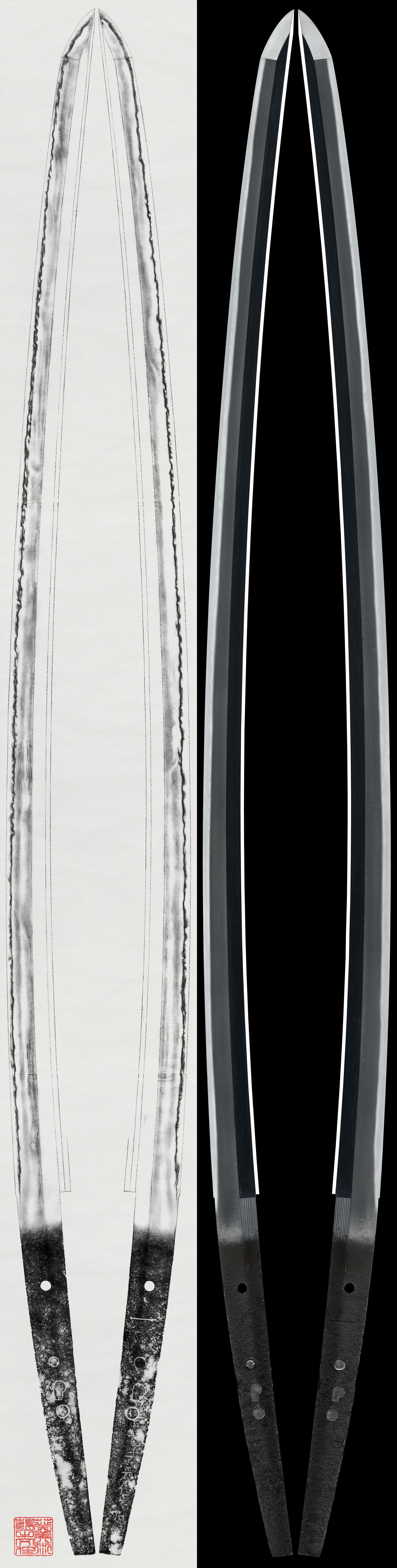
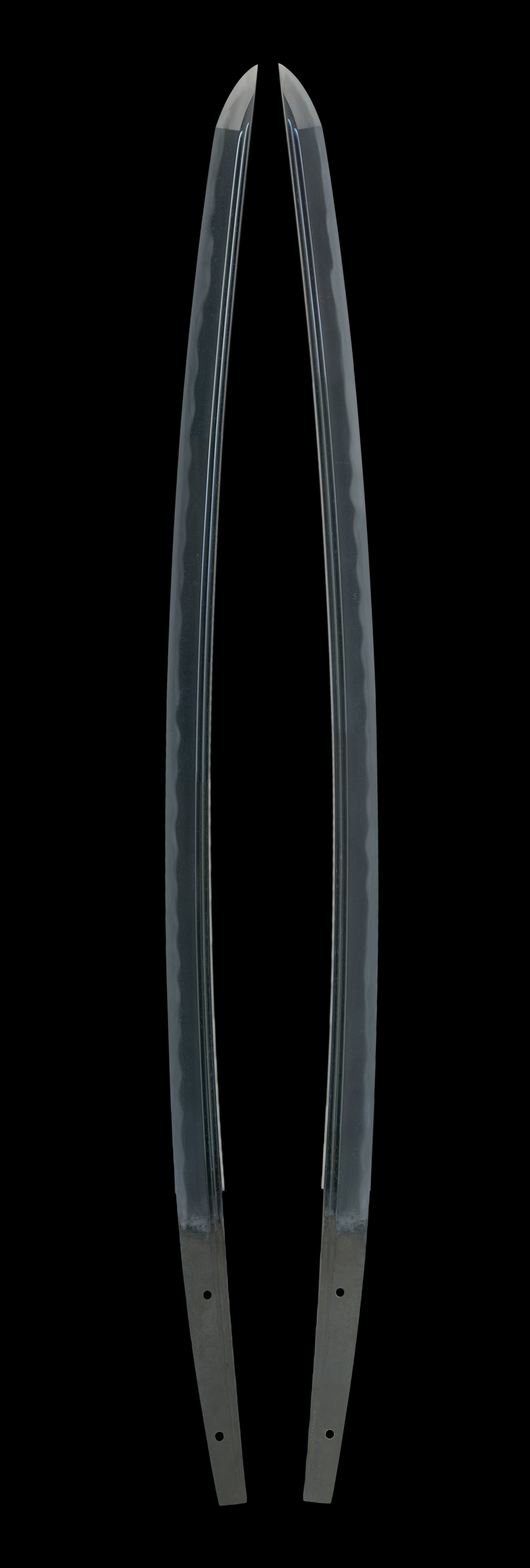
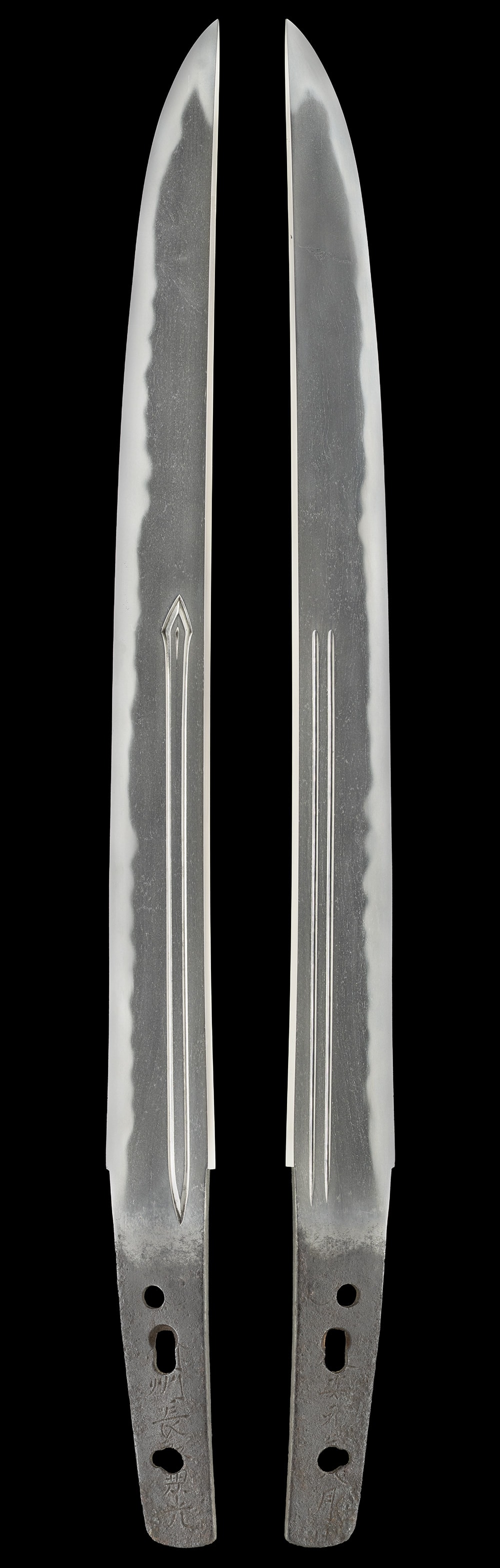
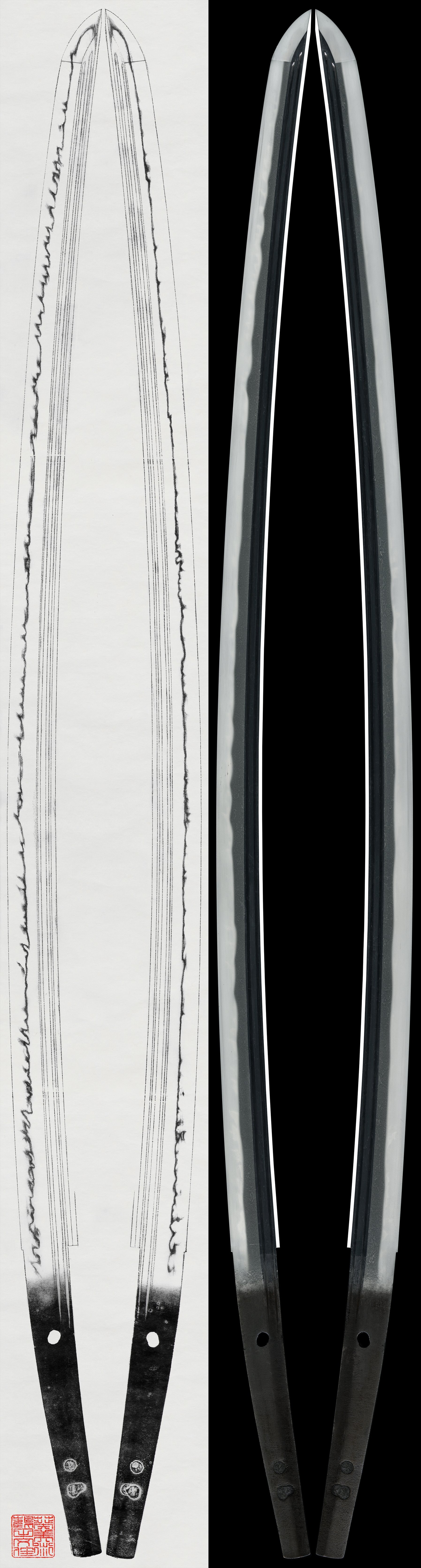
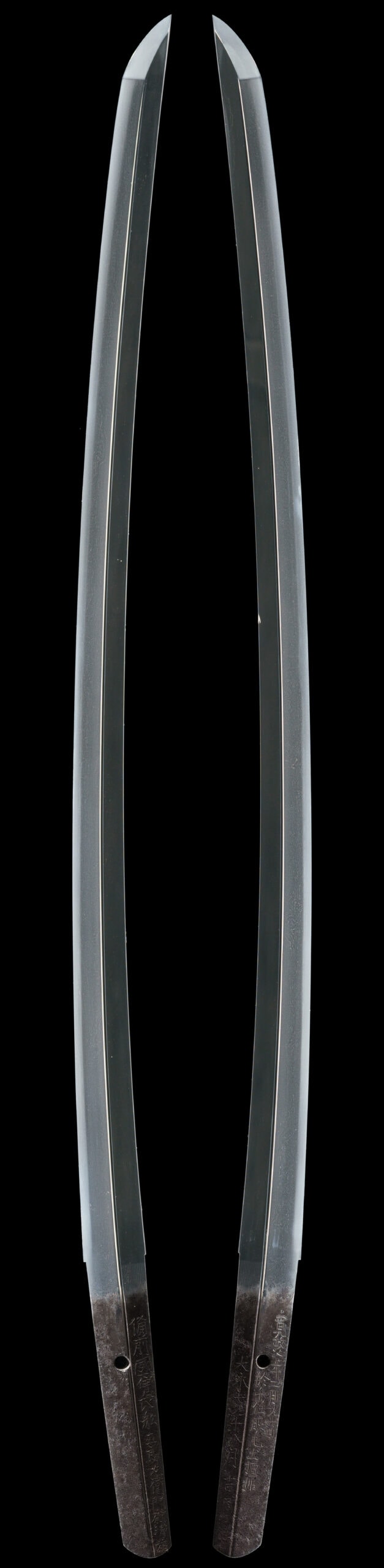
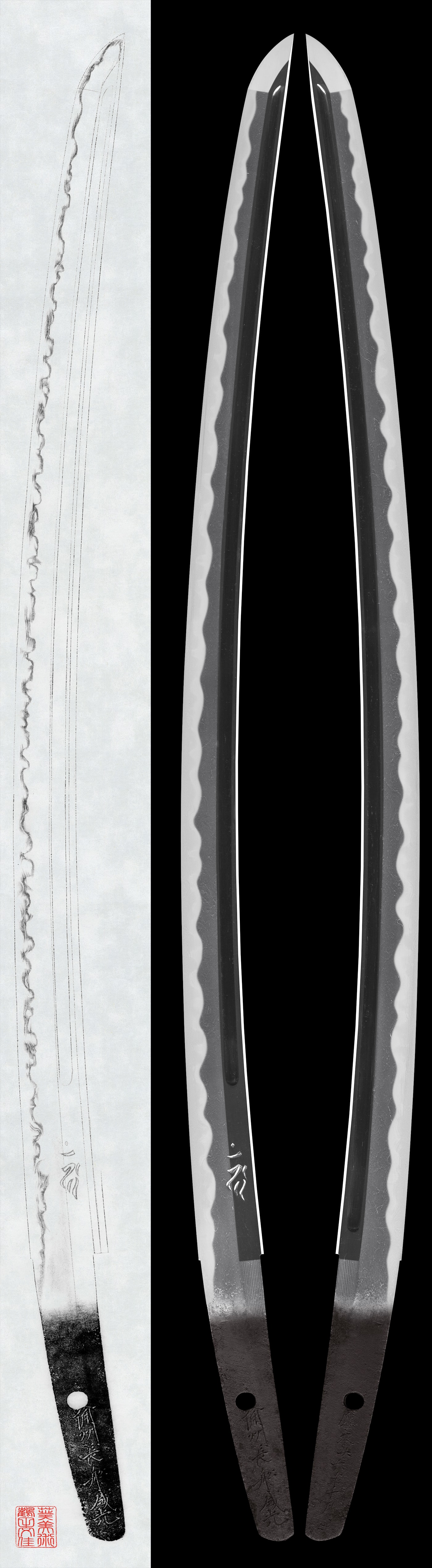
Nobukane (信包) was a smith of the Fukuoka school in Province, traditionally transmitted as the son of Nobufusa (信房) — who bore the epithet " Saburō" — and the younger brother of Nobumasa (信正). His working period is placed around the Tenpuku era (1233–1234) in the early period. Extant signed works by Nobukane are extremely few, which lends surviving examples particular documentary importance. Several of his retain their (unshortened) in (pheasant-thigh) form, preserving original tang geometry that is itself a valuable point of reference.
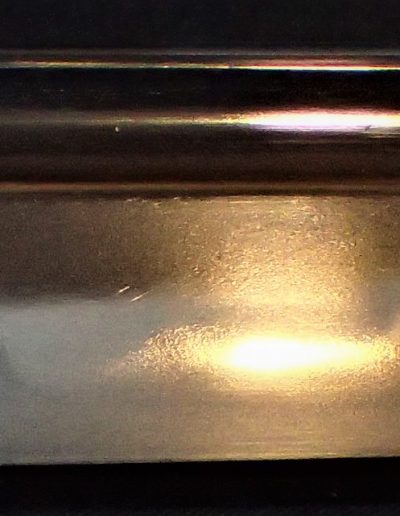
Nobukane's forging characteristically shows , at times with standing grain, well-condensed and well-knit, with and prominent . His is typically a -flavored temper mixed with featuring comparatively conspicuous rounded heads, together with areas tending toward pointed and angular forms; and enter well, and the construction is almost entirely . In one notable example, the is a richly furnished with and , with , , and appearing within the tempered area. The has observed that Nobukane's temper — with its heads and moderate undulations — yields a construction reminiscent of Nagamitsu of the following generation, and "deserves attention as an early forerunner of that approach."
Nobukane's blades consistently present the characteristic Fukuoka style while exhibiting a workmanship described as possessing an archaic (koko) flavor. The evaluates his work as conveying both clarity of and with "activities within the tempered area, resulting in a well-made work." Because signed works are scarce, surviving blades — particularly those retaining with original signatures — are assessed as possessing "extremely high documentary value" and are considered precious reference material for the study of the early Fukuoka tradition.