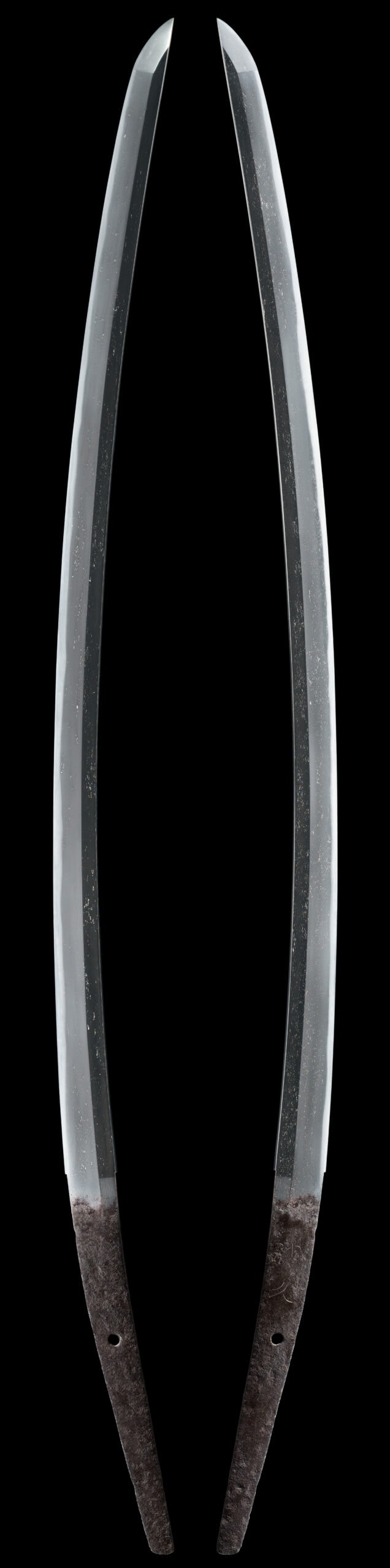
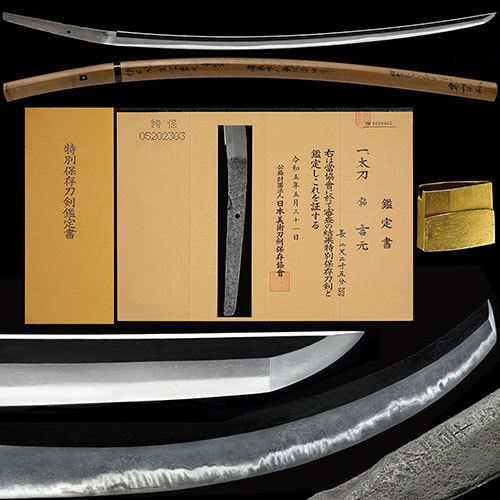
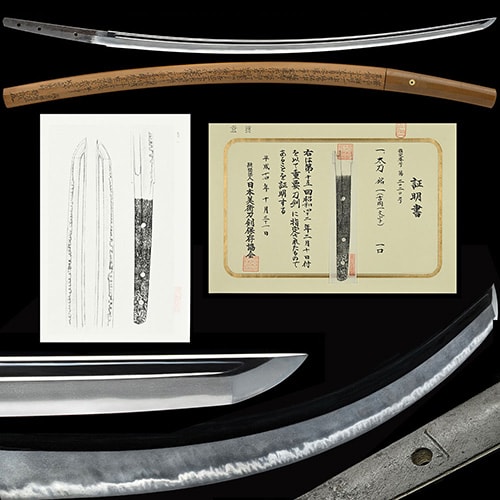
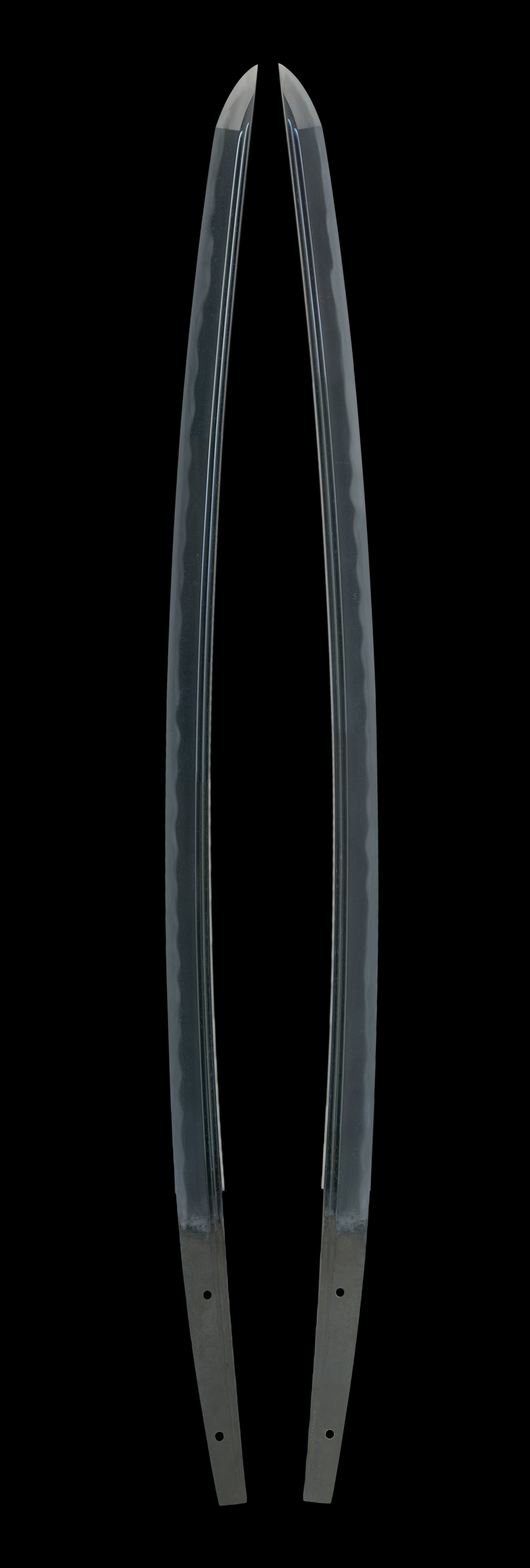
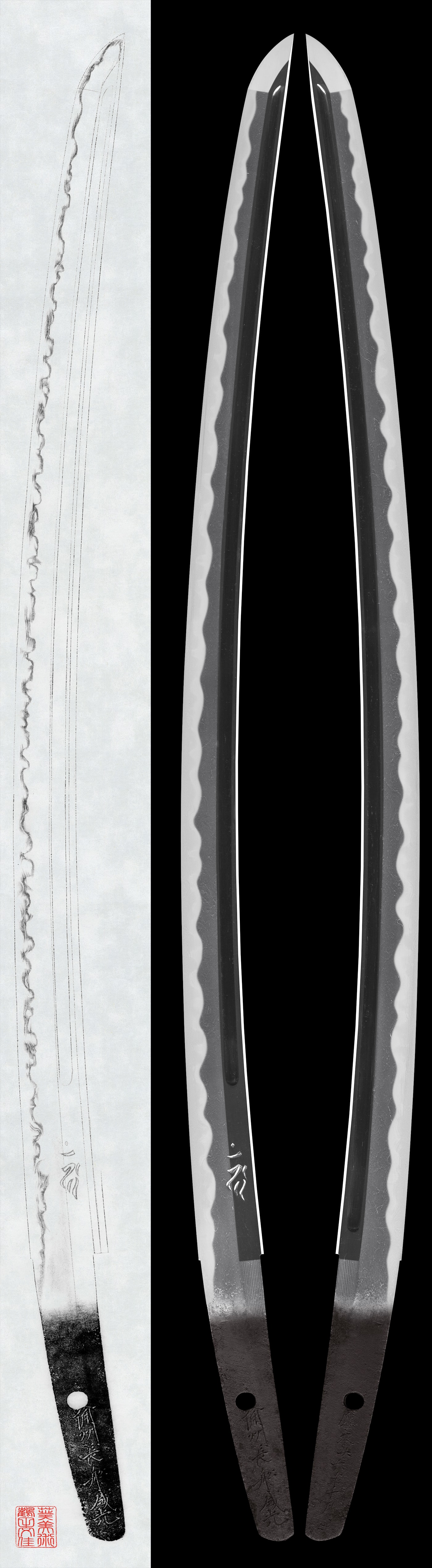
Narichika (成近) was a smith of the Fukuoka group, the celebrated lineage that flourished in Province from the early period through the era. The school prospered in such locales as Fukuoka, Yoshioka, and Iwato, producing many excellent craftsmen. According to sword-signature compendia, Narichika's period of activity is recorded as around the Jōei era (c. 1232--1233). Extant signed works by him are rare, making each surviving example of particular importance for the documentary record. A separate smith reading Narichika is also known among the Ko-Hōki group descending from Yasutsuna, active from the late into the early period in Hōki Province; the two should not be confused.
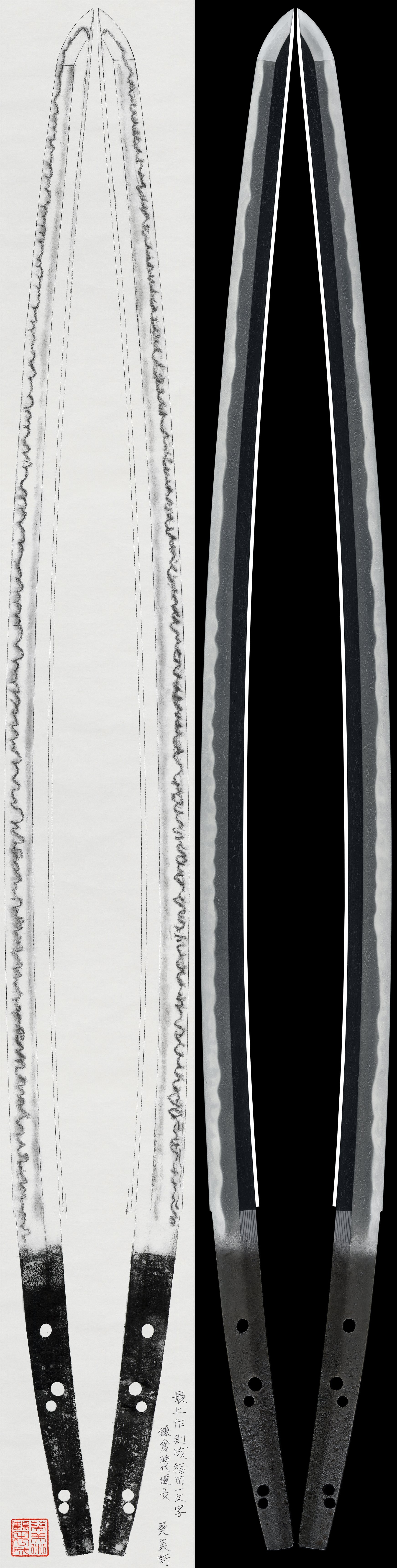
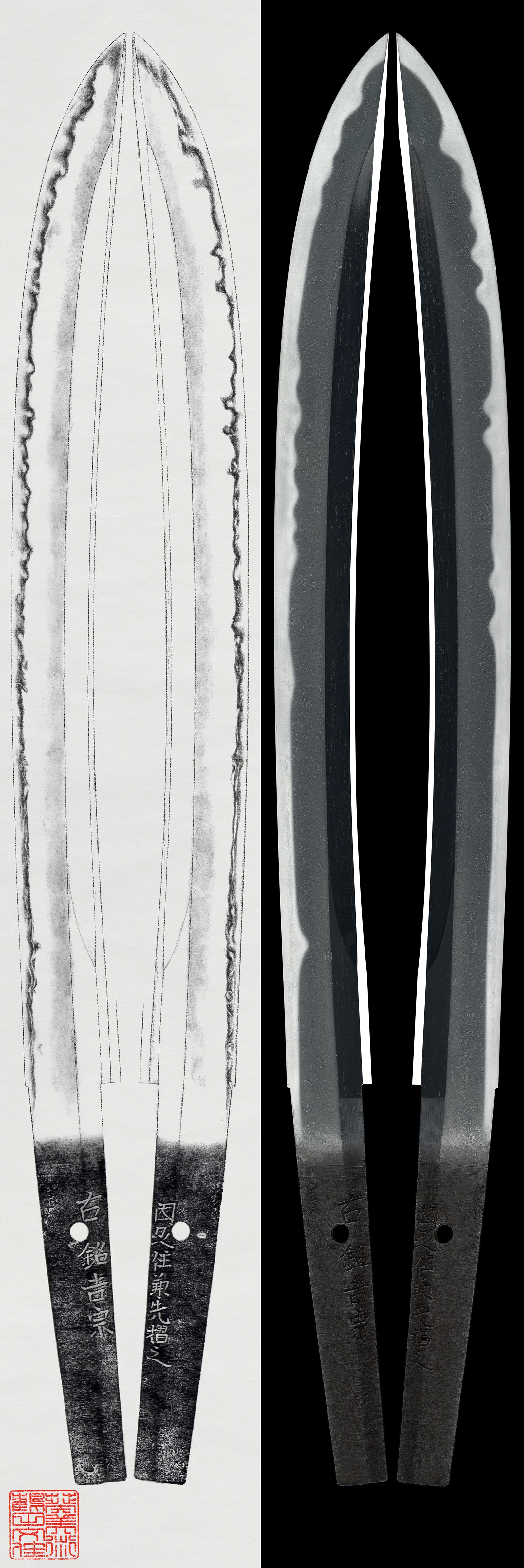
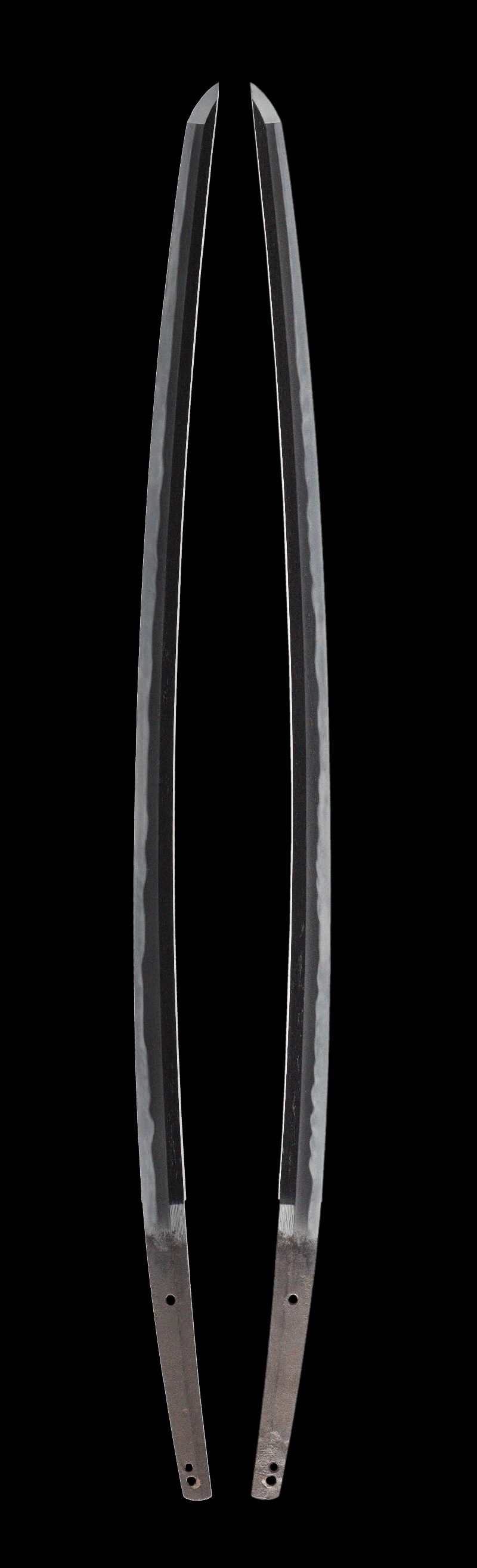
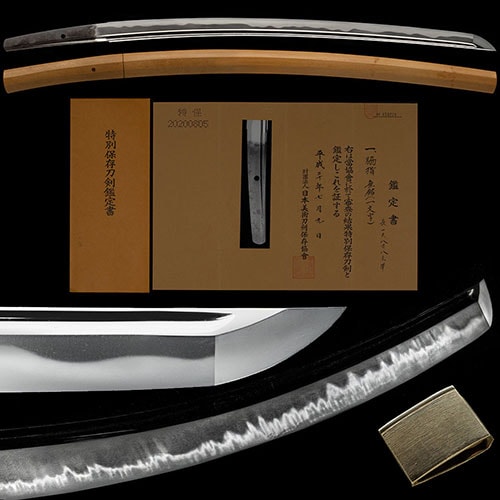
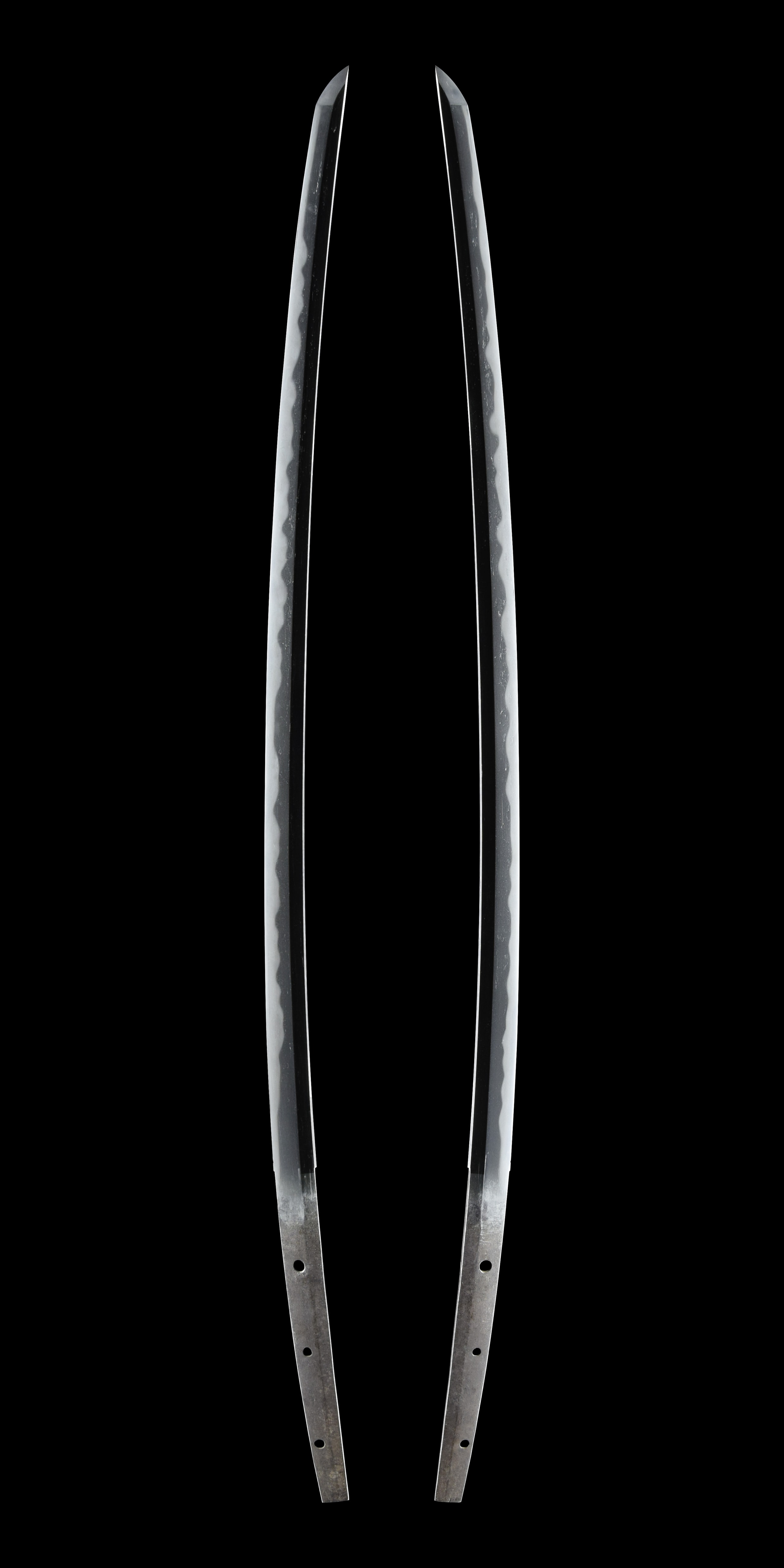
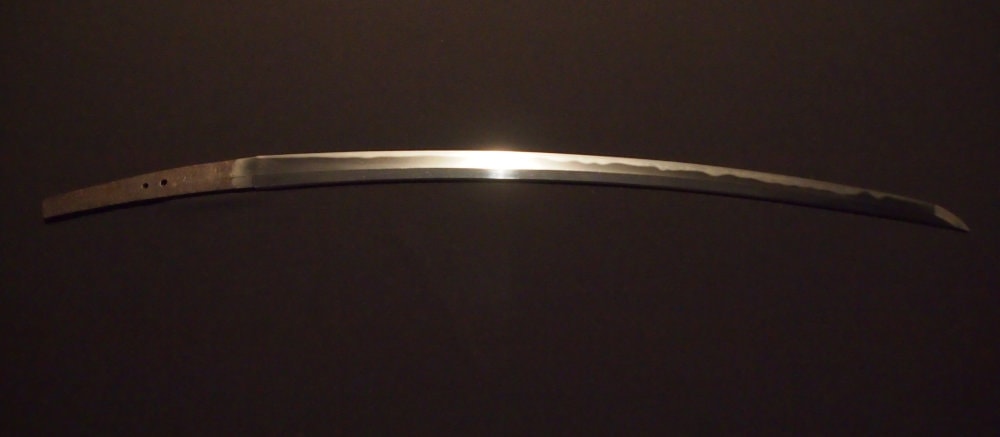
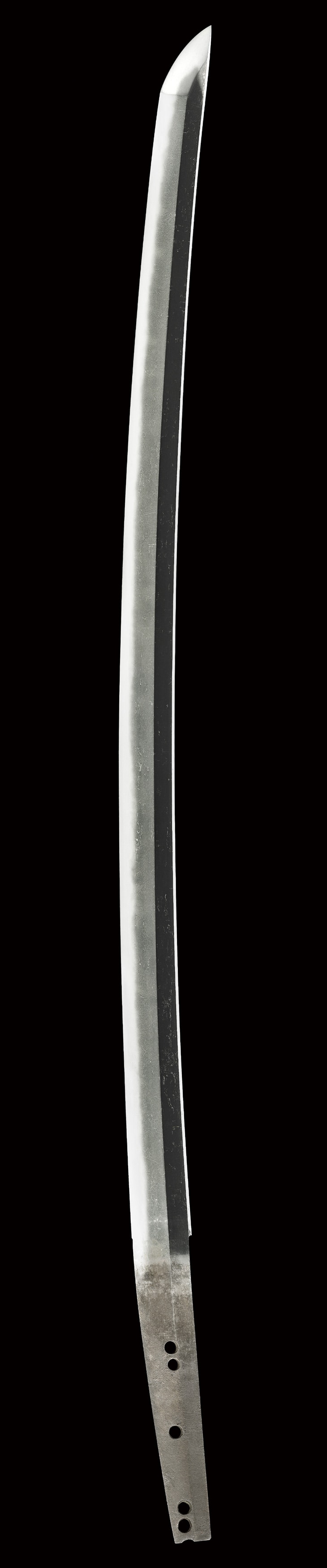
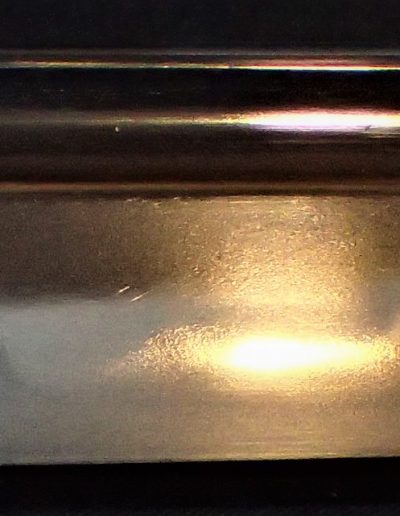
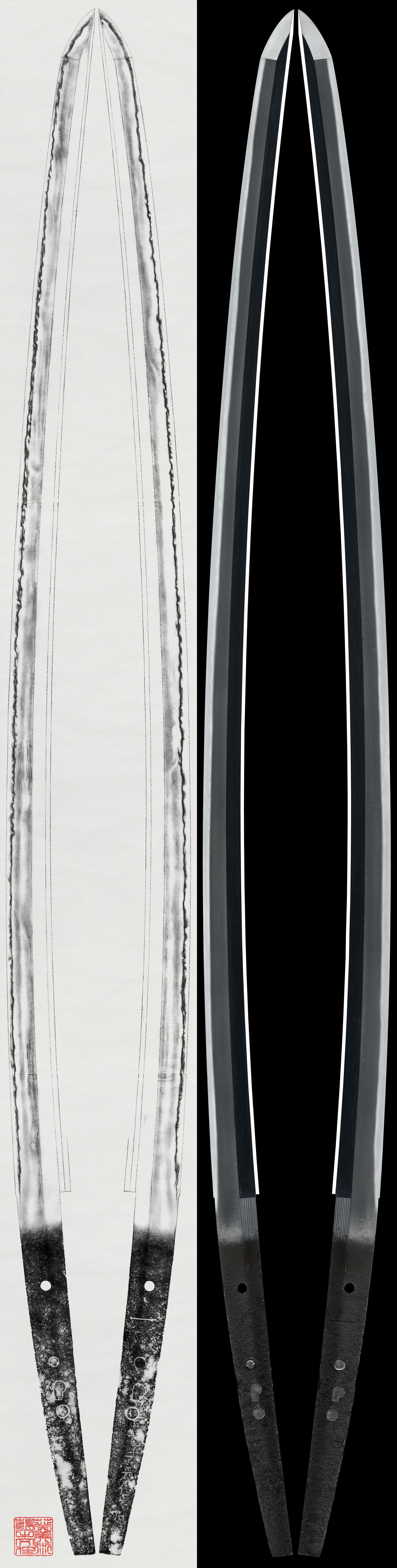
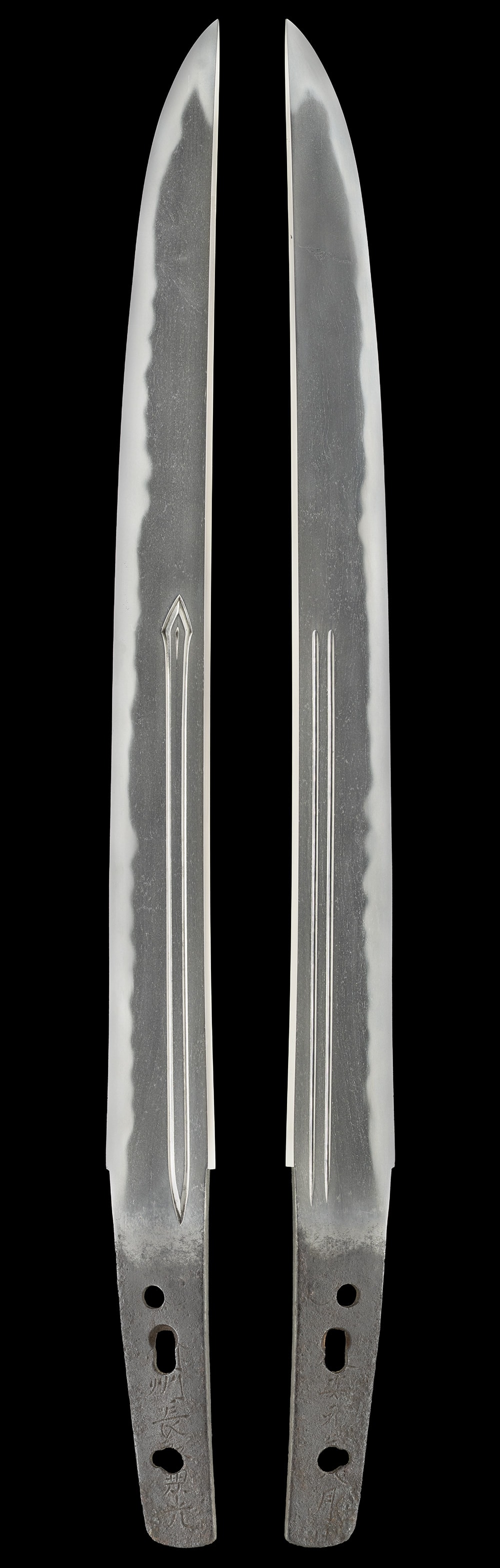
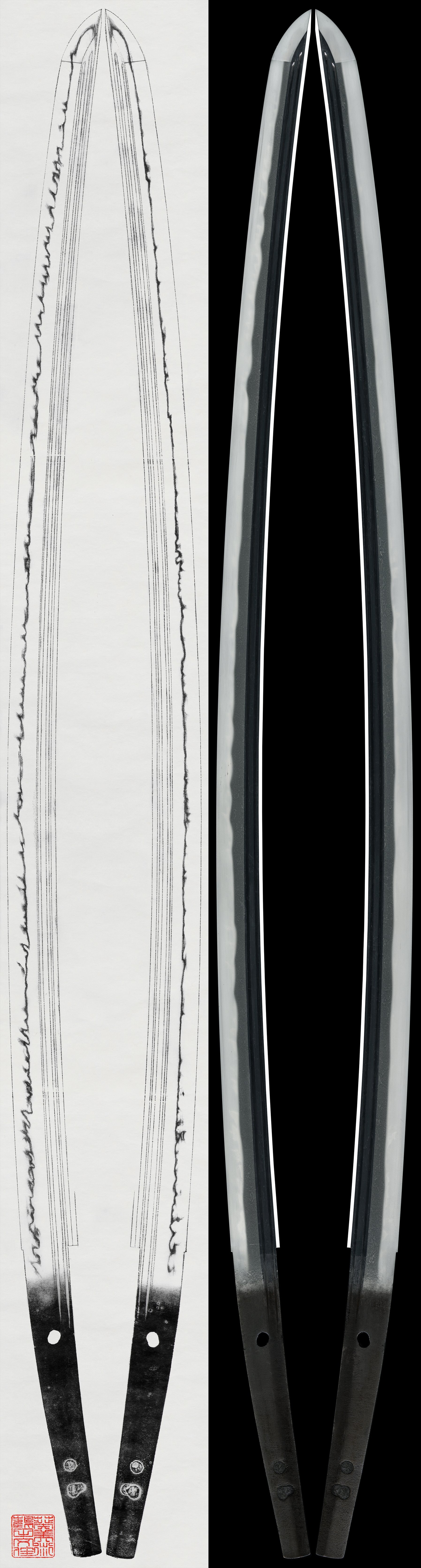
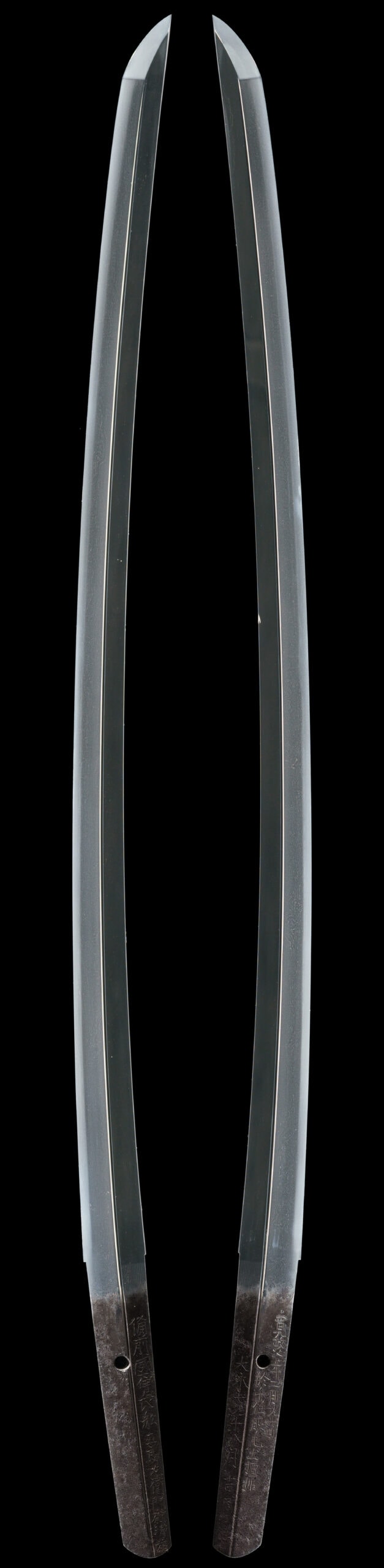
The bearing Narichika's signature presents an elegant form -- somewhat slender, of long dimensions with a , marked taper from base to tip, and pronounced . The forging shows well-refined with extremely fine in particles and delicate ; stands out clearly, and the steel is bright and clear. The begins with above the ; in the lower half the is taken wide, forming large mixed with in a flamboyant, large-scale with conspicuous rises and falls. In the upper half the pattern becomes calmer, mixing with and . Throughout, and enter well; predominates with adhering ; and such activities as , , , and appear -- revealing an excellent . The is with a small tendency, turning back.
The work superbly demonstrates the Fukuoka school's brilliant, richly varied style at a level of outstanding workmanship. Both and are bright and clear, and the state of preservation is exceptionally good. As one of the few surviving examples by this smith, the blade is extremely valuable as reference material for the study of early -period craftsmanship. The was transmitted in the Sendai Date family during the domain-administration era, further attesting to its historical standing among connoisseurs of the sword.