NihontoWatch MonNihontoWatch
MarketEncyclopediaKantei
NihontoWatch MonNihontoWatch
Market
Encyclopedia
Kantei
Overview·Historical importance·Designations·Kantei·Dated Works·Blade Forms·Signatures·Lineage·School
OverviewHistorical importanceDesignationsKanteiDated WorksBlade FormsSignaturesLineageSchool
  1. Schools
  2. Kozori
  3. Morisuke

Kozori Morisuke

守助

Jūyō
Vol. 49, No. 123 · Tachi

Kozori Morisuke

守助

7 ranked works

Major smith
ProvinceBizenErac. 1354–1384PeriodNanbokuchōSchoolKozoriTraditionBizen-denGeneration1stToko Taikan700(top 17%)TypeSwordsmithCodeMOR287
7Jūyō Tōken

Overview

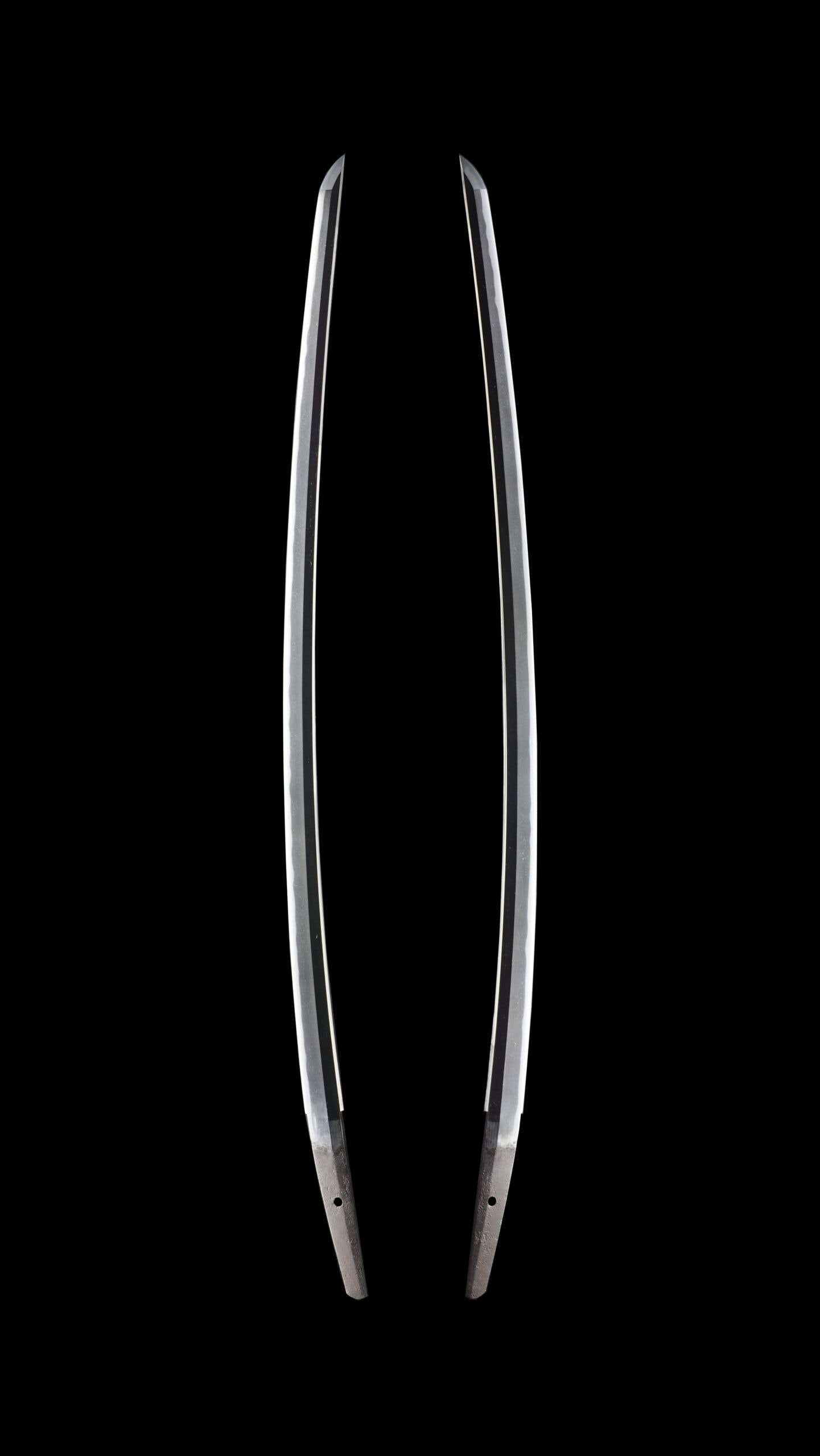
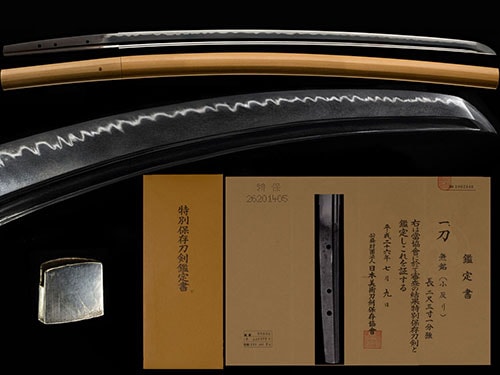
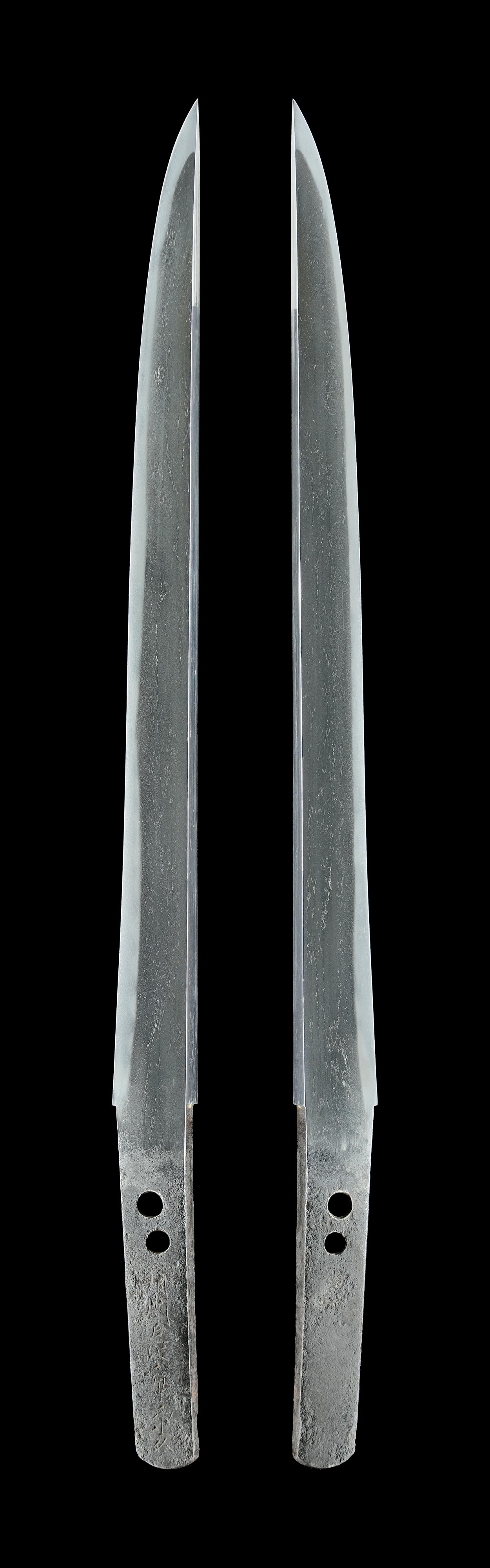
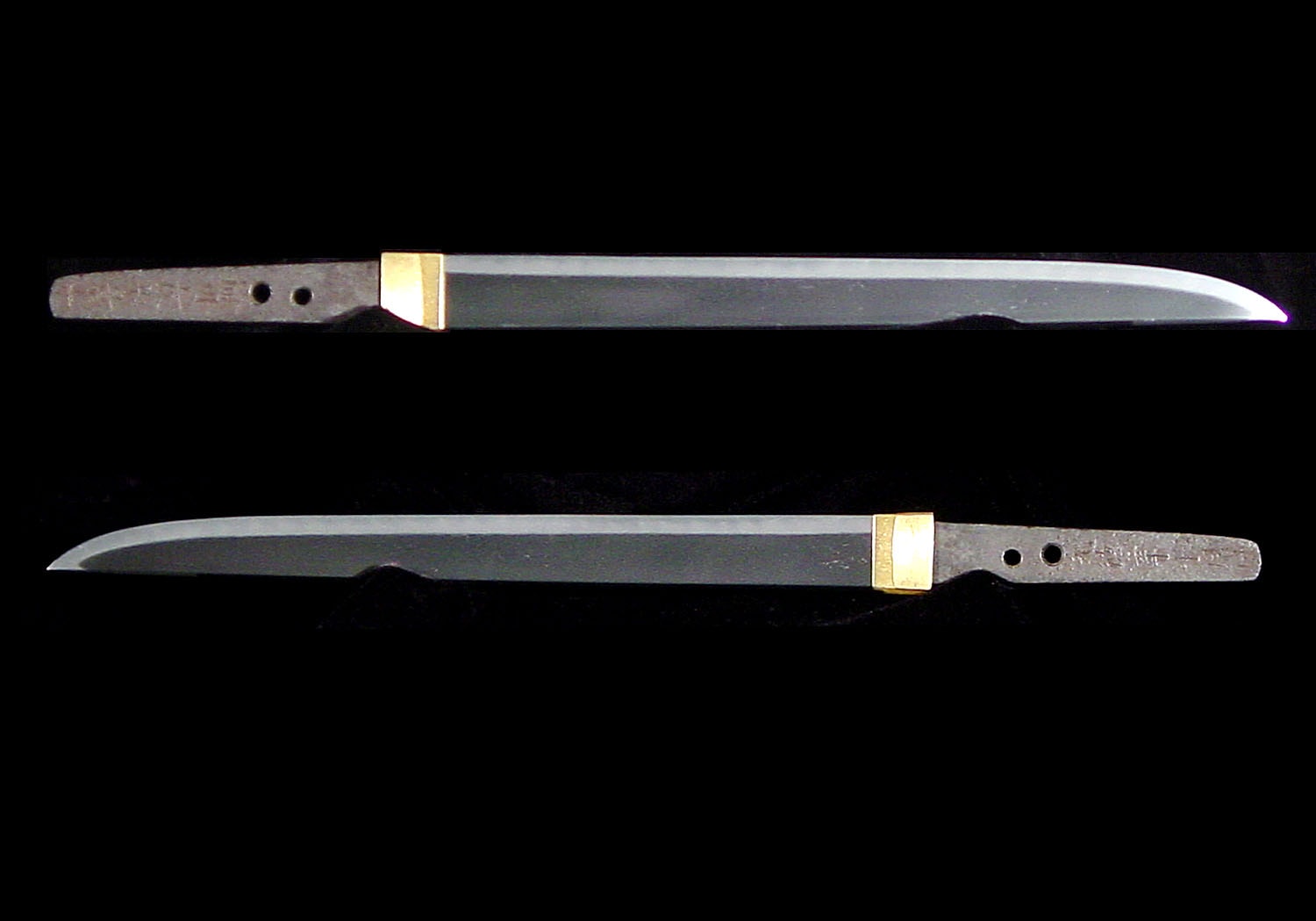
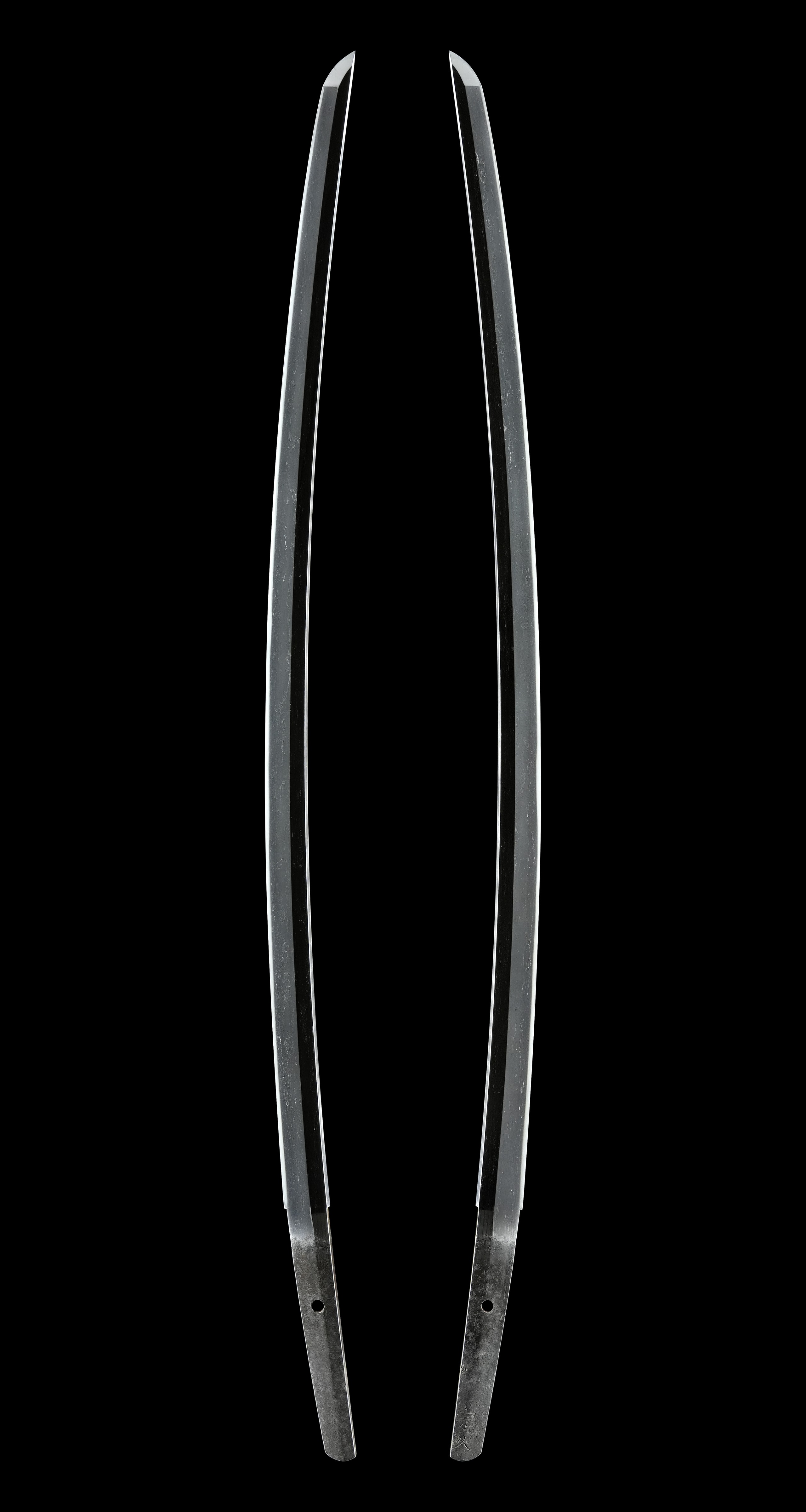
Morisuke signs his blades Bishu Morisuke in six characters, often adding a date, and one of his carries on its reverse a Joji 2 (1363) inscription that fixes him squarely in the late period. He was an smith, but his line within that great workshop cannot be clearly drawn. The published sources count him among the , the slightly-curved-sword smiths, and place him probably in the lineage of Moriie and the group, with the further note that his work can also be appraised alongside the Yoshii-mono of the province. The reference books list a Morisuke succession of several generations, the first in Ryakuo, the second in Enbun, the third in Eitoku, then a fourth in Oei and a fifth in Bun'an, and the surviving signed pieces are judged to fall in the late around Eitoku. Signed work by his hand is exceedingly rare, so each of the blades on record is valued less for fame than as material for knowing a smith of whom little else survives.

The hand that recurs across his blades is a small-patterned temper, and it is this that the published sources name as the clearly expressed mark of workmanship. Over a base he mixes , , , pointed teeth and angular squared-off elements, the whole never resolving into the large round of the Kanemitsu-derived mainline but staying compact and busy, a ko-moyo. Into it run and ; gathers well along the edge; in places the loosens into , and and play conspicuously through the tempered area. On his finest , the Eitoku-era piece in particular, the published record calls the result a blade rich in and 「覇気に充ちており」, filled with vigor, while remaining sound in both and . The is not fixed to one shape: on the and work it enters in and points at the turn, while on the it runs straight to a small round return, so that the temper of the tip tracks the form of the blade rather than carrying a single signature.

The is read through the standing of the grain. He forges an that tends to stand open, and mixing into it, with fine attaching, passages of -like texture, and dark -toned steel entering on the best pieces. Over this rises the reflection that places him a , not a , hand of the period: a on the broad , broad and straight low on the blade and breaking into irregularity higher up, and on the wide a standing along the edge side. The reflection is named on most of his recorded blades, and on the long it rises clearly enough to be one of the surer tells of his work. It is the and its , more than any one shape in the , that anchor the appraisal of so sparsely documented a smith.

His range divides into two registers without changing its essential manner. The first is the , of which the most arresting is a long of wide , high and evident running to a , a piece the published sources call 「南北朝時代の大太刀の典例」, an exemplary model of the great of the age, and prize the more because it survives , signed and dated; on it the temper opens into a with -style . The second register is the wide and , where the compacts into close-set with and a tendency, the tightening or sinking, the entering in and pointing. Of one such the published record says he was 「互の目を得意としている」, especially proficient in , and on these smaller pieces a is carved on both faces close to the . The dating of his work carries a historical interest beyond the smithing: his blades bear both the Southern Court Enbun years and the Northern Court Joji and Teiji years, and because many are dated Joji the judges reason that he was at that time a smith aligned with the Northern Court. The published sources draw from this the larger picture that 「当時の備前が、南北両朝の間に右往左往していた」, that of the day was pulled back and forth between the two courts.

What the name means has been explained in many ways since old times and resists a clean definition, but the published sources treat it as 「兼光と師弟関係の無い刀工の一括した呼称」, a collective designation for the late- smiths who, while not in a master-disciple line with Kanemitsu, worked in a manner descended from his. Morisuke belongs squarely to that body, and the observes of his shortened signed that 「この作は此の工のみならず小反りの典型的作風を示している」, that it shows not only this smith's own characteristics but the typical style of the group as a whole. A Morisuke blade thus reads as a standard of its kind: his bright over a standing and his small-patterned, busy set him within the manner rather than the round- line of Kanemitsu proper, and distinguish him in turn from the -leaning hands of the decades. His lineage to Moriie and is offered by the published sources only as a probability, and they are candid that his place within is not securely established.

Morisuke is not a smith of National Treasures or Important Cultural Properties; his record stands at seven blades that have reached the rank, with no and no higher designation, and no provenance to a house is preserved among them. His standing rests instead on the scarcity of his signed work and on the quality of the few pieces that carry it: the dated held an exemplary , the Eitoku a blade of conspicuous vigor, and the small dated and valued as documentary evidence of a hand whose signed output is, in the words of the published record, exceedingly few. These are designated cultural property held in private and institutional hands rather than objects of the market, and an authenticated, signed Morisuke comes before a collector only rarely, the more so for being both signed and dated. For the student of its interest is precise: not a famous name but a clear, datable window onto the workshops of the late , and onto a province caught between the Northern and Southern courts.

Historical importance

Where Morisuke stands among comparable artisans: across all of nihontō, and within tradition, era, and period. The tiers (Foremost · Leading · Major · Notable) weigh official designations from the NBTHK and Japan's Agency for Cultural Affairs, together with historical honors of lasting repute such as the Sansaku and Meibutsu-chō.

随一
Foremost
屈指
Leading
有数
Major
著名
Notable

Select a lens to see how it's measured.

Designations

Kokuhō—
Jūyō Bunkazai—
Jūyō Bijutsuhin—
Gyobutsu—
Tokubetsu Jūyō—
Jūyō Tōken7

Elite Standing

Kantei

Dated Works

Blade Forms

Distribution across 7 ranked works

Signatures

Signature types across 7 ranked works

Currently Available

Lineage

Morisuke
Students (3)
  1. 1.Nobuyoshi信良1designated
  2. 2.Norishige則重
  3. 3.Noriyoshi則能

Kozori School

Other artisans of the Kozori school

  1. 1.Hidemitsu秀光19designated
  2. 2.Iesuke家助11designated
  3. 3.Iemori家守15designated
  4. 4.Nariie成家2 for sale21designated
  5. 5.Moromitsu師光2 for sale7designated
  6. 6.Tsunehiro恒弘4designated
  7. 7.Yukimitsu幸光3designated
  8. 8.Mitsukage光景1designated
  9. 9.Hidesuke秀助1 for sale1designated
  10. 10.Mitsumune光宗1designated
  11. 11.Iesuke家助1designated
  12. 12.Iemitsu家光1designated

More from the Kozori school

View all →
World Seiyudo
Jūyō
Katana - Jūyō - by Kozori Moromitsu - Bishu Osafune Moromitsu - NBTHK Juyo Token / Tokubetsu Hozon TosoguKatana - Jūyō - by Kozori Moromitsu - Bishu Osafune Moromitsu - NBTHK Juyo Token / Tokubetsu Hozon Tosogu

Katana

ByKozori Moromitsu
¥9,500,000
Toushin
Tokuho
Tachi - Tokuho - by Kozori Morihisa - Morihisa - 1-118Tachi - Tokuho - by Kozori Morihisa - Morihisa - 1-118

Tachi

ByKozori Morihisa
¥6,600,000
Token-Net
Tokuho
Katana - Tokuho - by Kozori Tsunehiro - Mumei (Osafune Tsunehiro) (Bizen) (Sanyodo)Katana - Tokuho - by Kozori Tsunehiro - Mumei (Osafune Tsunehiro) (Bizen) (Sanyodo)

Katana

ByKozori Tsunehiro
¥1,350,000
Samurai Museum
Hozon
Katana - Hozon - by Kozori Morihiro - Antique Japanese Sword Katana attributed to Osafune Morihiro NBTHK Hozon CertificateKatana - Hozon - by Kozori Morihiro - Antique Japanese Sword Katana attributed to Osafune Morihiro NBTHK Hozon Certificate

Katana

ByKozori Morihiro
¥17,491
Touken Komachi
Tachi - by Kozori Hidesuke - Bishu Osafune HidesukeTachi - by Kozori Hidesuke - Bishu Osafune Hidesuke

Tachi

ByKozori Hidesuke
¥600,000
Eirakudo
Tokuho
Katana - Tokuho - by Kozori School - Kozori Katana Tokubetsu Hozon TokenKatana - Tokuho - by Kozori School - Kozori Katana Tokubetsu Hozon Token

Katana

ByKozori School
¥1,350,000
Kanda Toukodo
Tokuho
Katana - Tokuho - by Kozori School - Mumei (Ko-zori)Katana - Tokuho - by Kozori School - Mumei (Ko-zori)

Katana

ByKozori School
¥780,000
Toushin
Tokuho
Tanto - Tokuho - by Kozori Morihisa - Bishu Osafune MorihisaTanto - Tokuho - by Kozori Morihisa - Bishu Osafune Morihisa

Tantō

ByKozori Morihisa
¥770,000

More from the Bizen tradition

View all →
Nihonto.com
Jūyō
Tanto - Jūyō - by Osafune Kagemitsu - Juyo Tanto by Bizen KagemitsuTanto - Jūyō - by Osafune Kagemitsu - Juyo Tanto by Bizen Kagemitsu

Tantō

ByOsafune Kagemitsu
¥89,500
Aoi Art
Jūyō Bijutsuhin
Daisho - Jubi - by Osafune Nagamitsu - Dai Sho: Katana (Important Art Object): Mumei (Attributed to Nagamitsu) / Wakizashi: Mumei (Attributed to Sekishu Naotsuna)Daisho - Jubi - by Osafune Nagamitsu - Dai Sho: Katana (Important Art Object): Mumei (Attributed to Nagamitsu) / Wakizashi: Mumei (Attributed to Sekishu Naotsuna)

Daishō

ByOsafune Nagamitsu
Ask
Tsuruginoya
Jūyō
Katana - Jūyō - by Fukuoka Ichimonji School - Mumei Fukuoka IchimonjiKatana - Jūyō - by Fukuoka Ichimonji School - Mumei Fukuoka Ichimonji

Katana

ByFukuoka Ichimonji School
Ask
Hyozaemon
Tokuho
Tokuho - by Fukuoka Ichimonji Yoshifusa - Naginata Naoshi Wakizashi by Fukuoka Ichimonji Yoshifusa, a Master of IchimonjiTokuho - by Fukuoka Ichimonji Yoshifusa - Naginata Naoshi Wakizashi by Fukuoka Ichimonji Yoshifusa, a Master of Ichimonji

Naginata Naoshi Wakizashi by Fukuoka Ichimonji Yoshifusa, a Master of Ichimonji

ByFukuoka Ichimonji Yoshifusa
Ask
Eirakudo
Tokuho
Katana - Tokuho - by Katayama Ichimonji School - Katayama Ichimonji - Tokubetsu Hozon TokenKatana - Tokuho - by Katayama Ichimonji School - Katayama Ichimonji - Tokubetsu Hozon Token

Katana

ByKatayama Ichimonji School
¥4,500,000
Eirakudo
Jūyō
Katana - Jūyō - by Motoshige - Motoshige - Juyo TokenKatana - Jūyō - by Motoshige - Motoshige - Juyo Token

Katana

ByMotoshige
¥6,000,000
Giheiya
Hozon
Katana - Hozon - by Takada School - Mumei (Hira Takada) - 72.1cm, with Koshirae and ShirasayaKatana - Hozon - by Takada School - Mumei (Hira Takada) - 72.1cm, with Koshirae and Shirasaya

Katana

ByTakada School
¥350,000
Eirakudo
Jūyō
Katana - Jūyō - by Omiya Morikage - Ohmiya Morikage - Juyo TokenKatana - Jūyō - by Omiya Morikage - Ohmiya Morikage - Juyo Token

Katana

ByOmiya Morikage
¥4,000,000

Morisuke

Morisuke(守助) was a Japanese swordsmith of the Kozori school in Bizen province, active during the Ryakuo (1338-1342) ND period.

The work follows the Bizen-den tradition.

Designated works by Morisuke include 7 Jūyō.