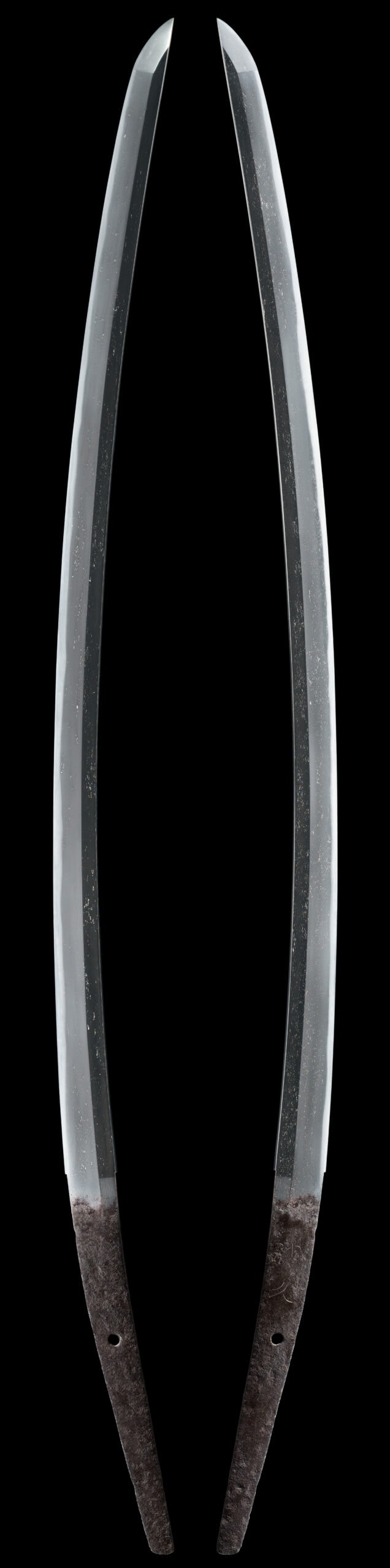
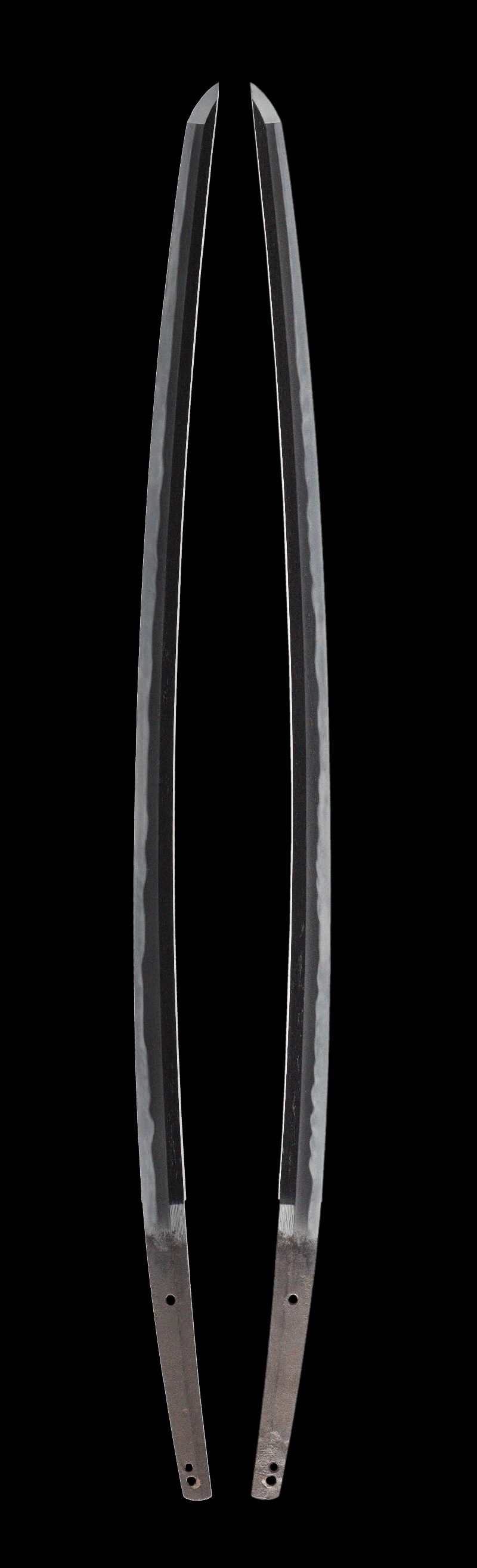
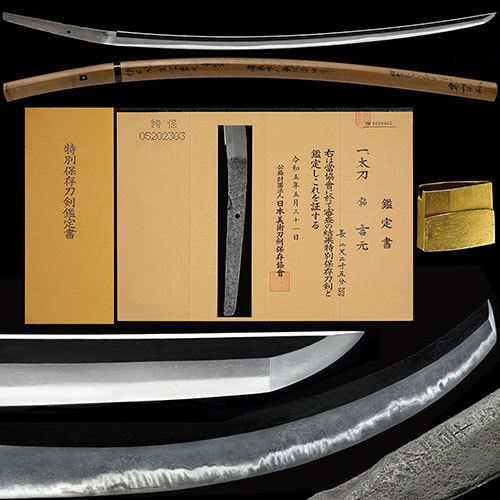
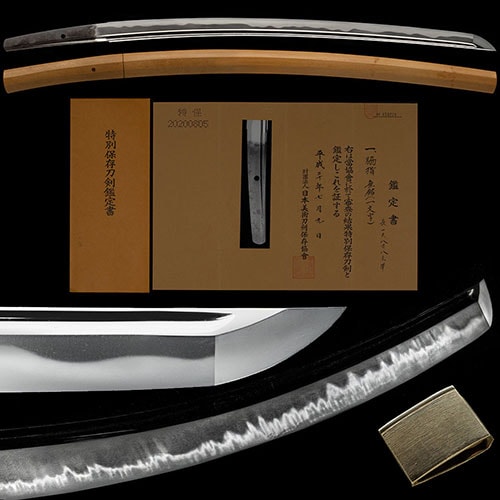
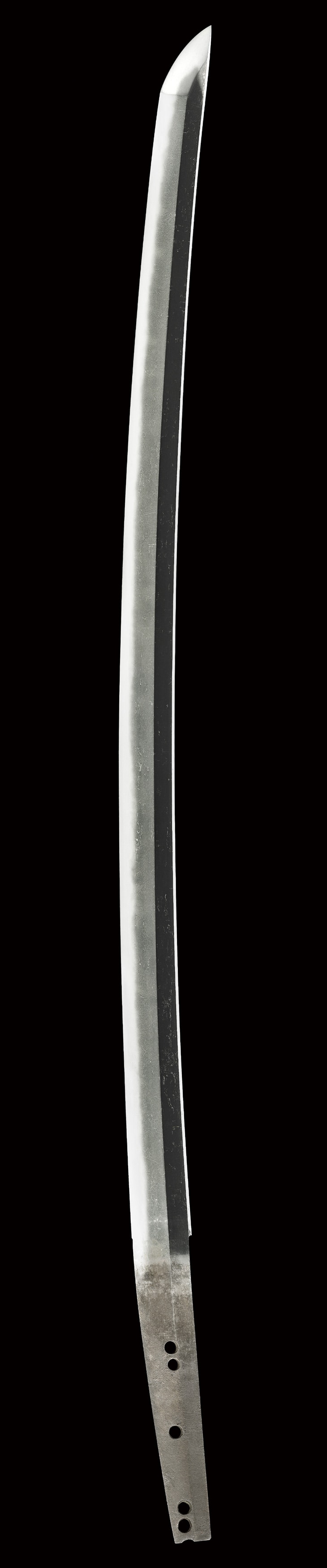
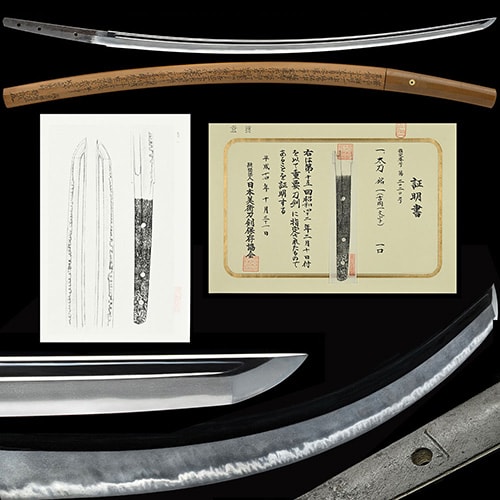
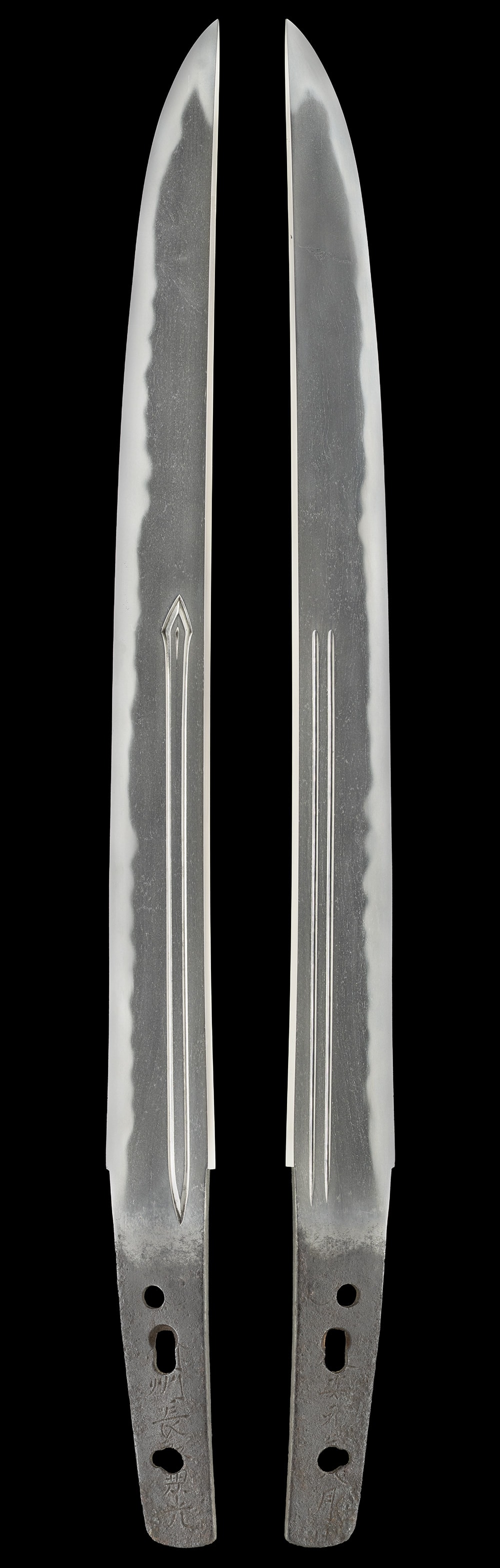
Kagenori (景則) is a smith of the period whose exact lineage has long resisted definitive resolution. Sword reference works variously place him among the makers of the Bun'o era and within the Fukuoka group of the Koan era, with second and third generations further associated with the Bunpo and Gentoku periods. Additional sources record that the Koan-era Kagenori "is said to have been the founder of the Yoshii group," though whether this attribution is correct remains a subject for future research. The name also appears in Yoshii genealogical records and alongside Kagehide and Kageyasu in the Kokon Meizukushi, yet surviving signed works do not clearly belong to either the lineage or the old Yoshii lineage, leaving the precise affiliations of smiths bearing this name a matter of continuing scholarly inquiry.
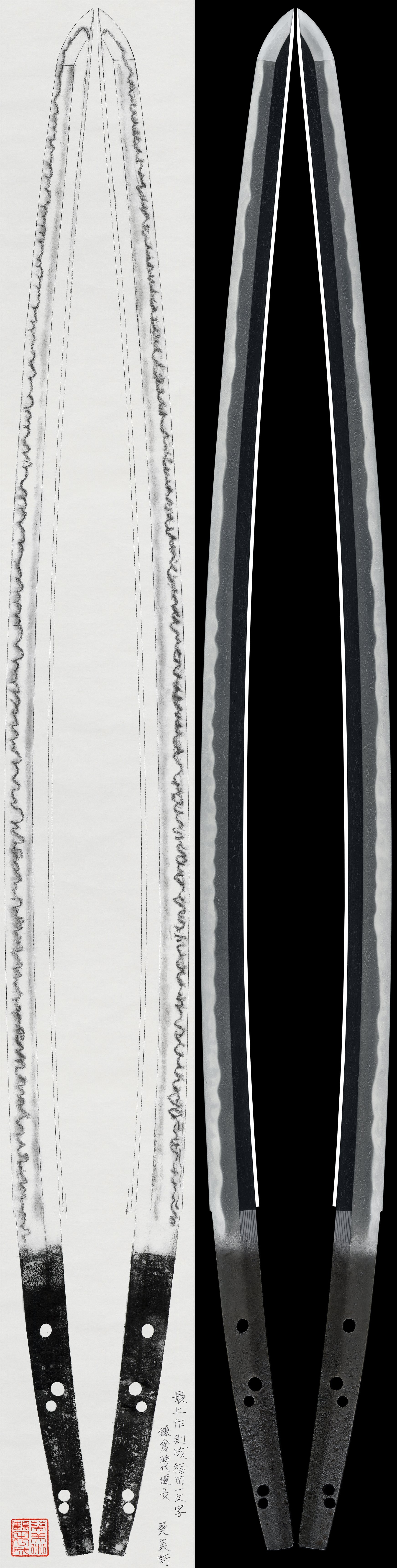
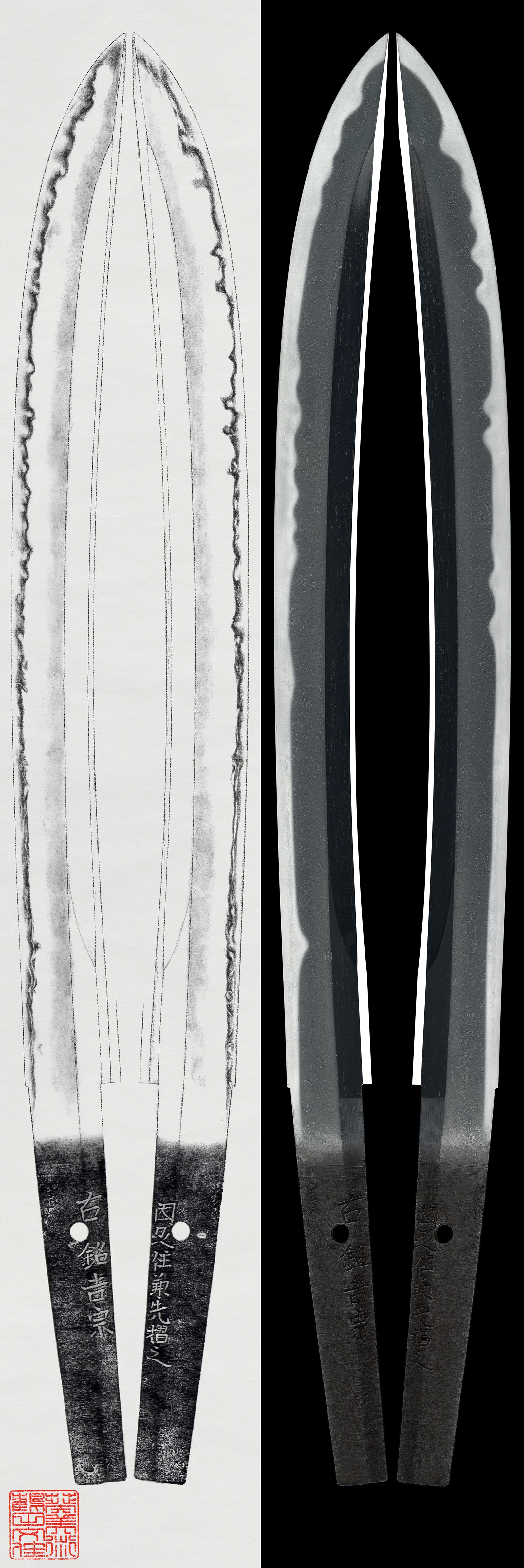
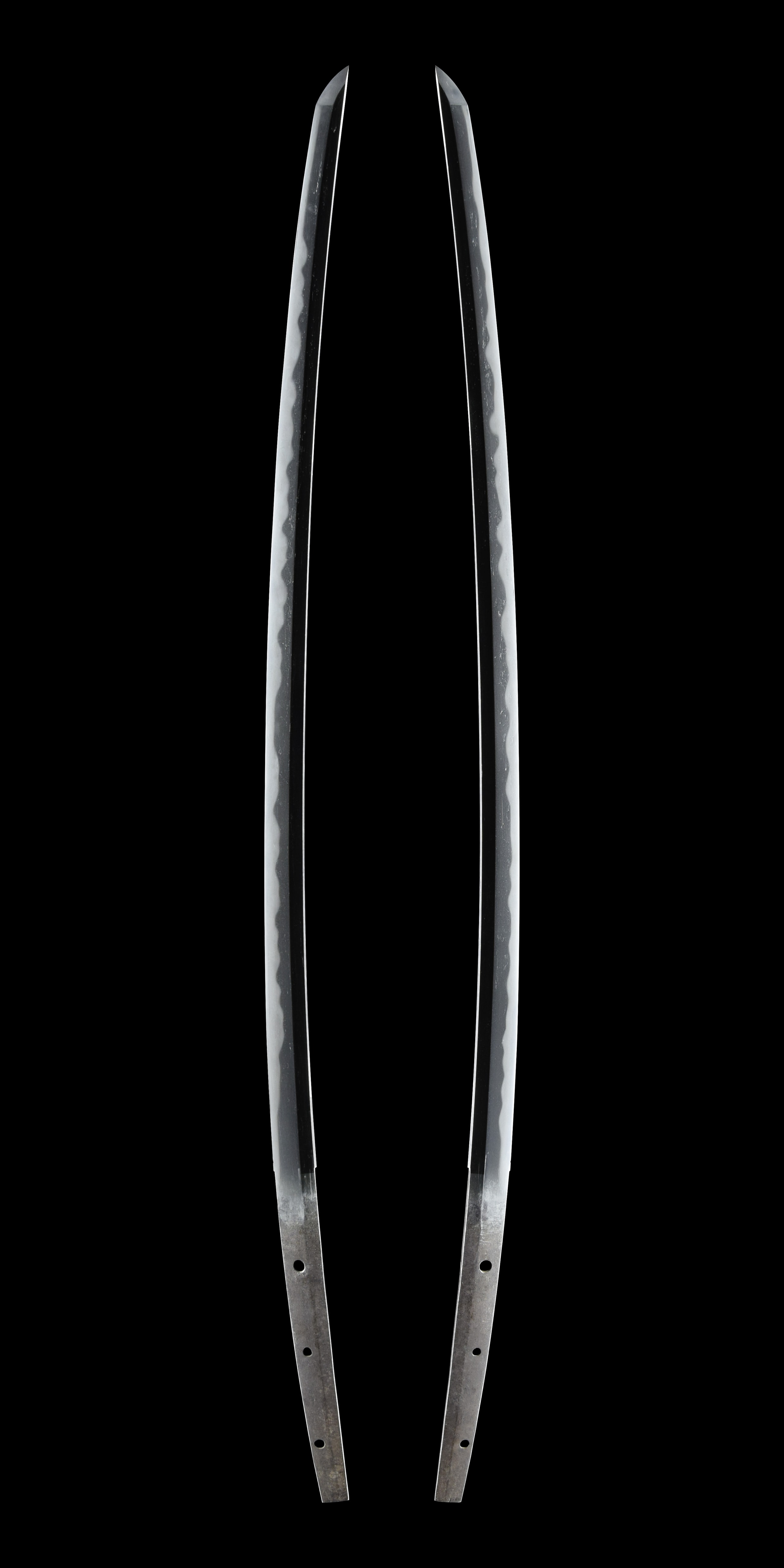
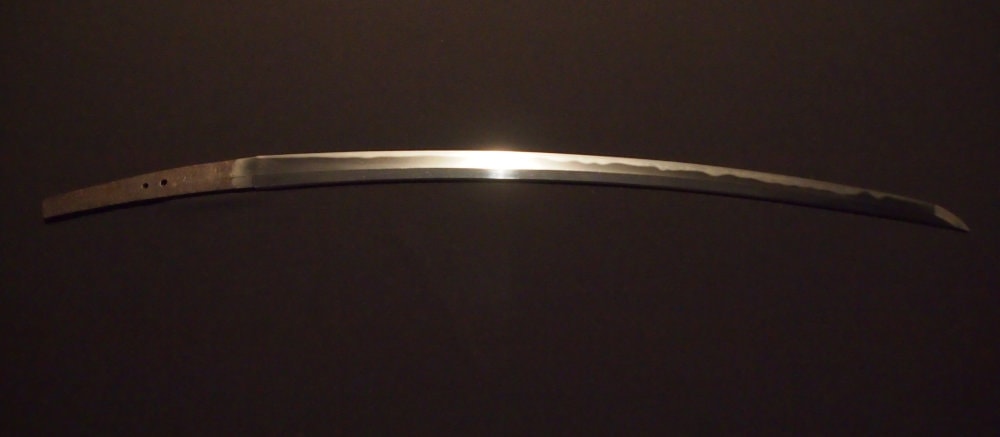
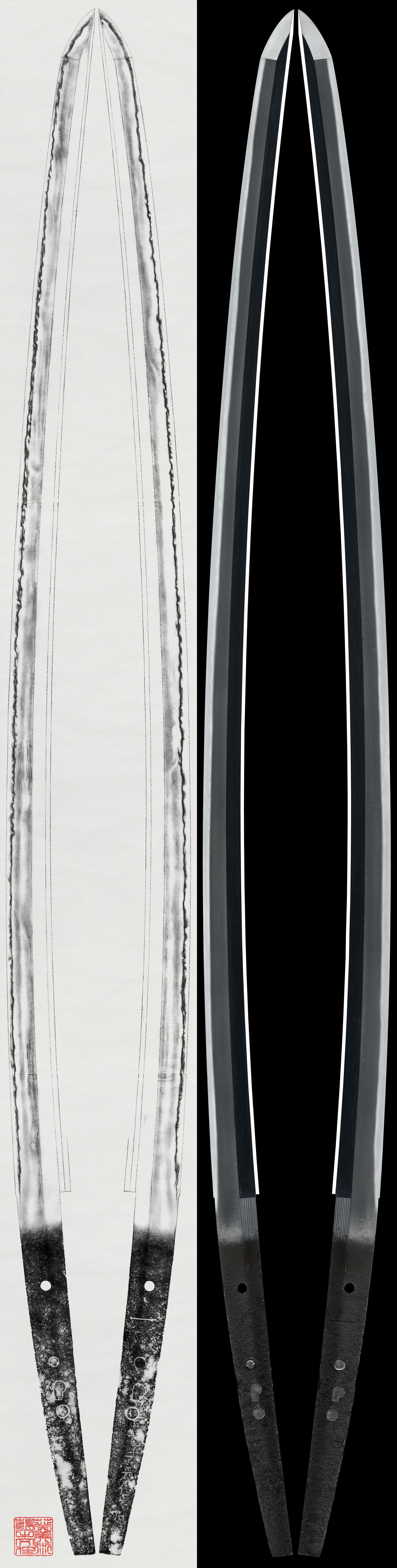
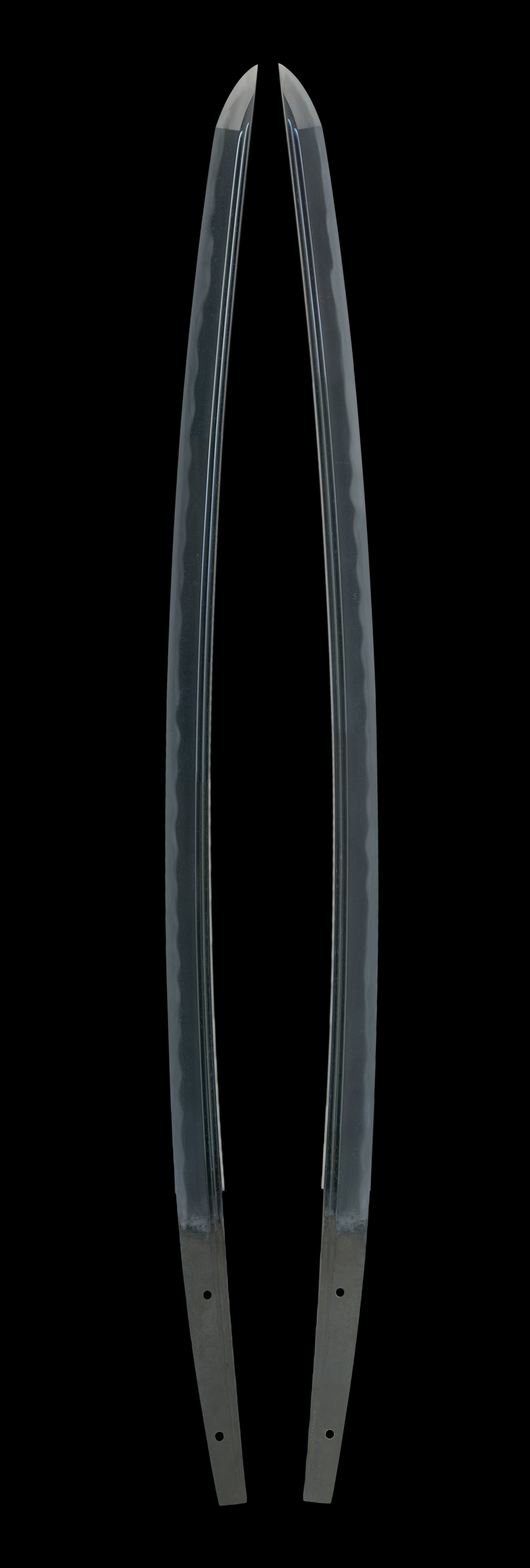
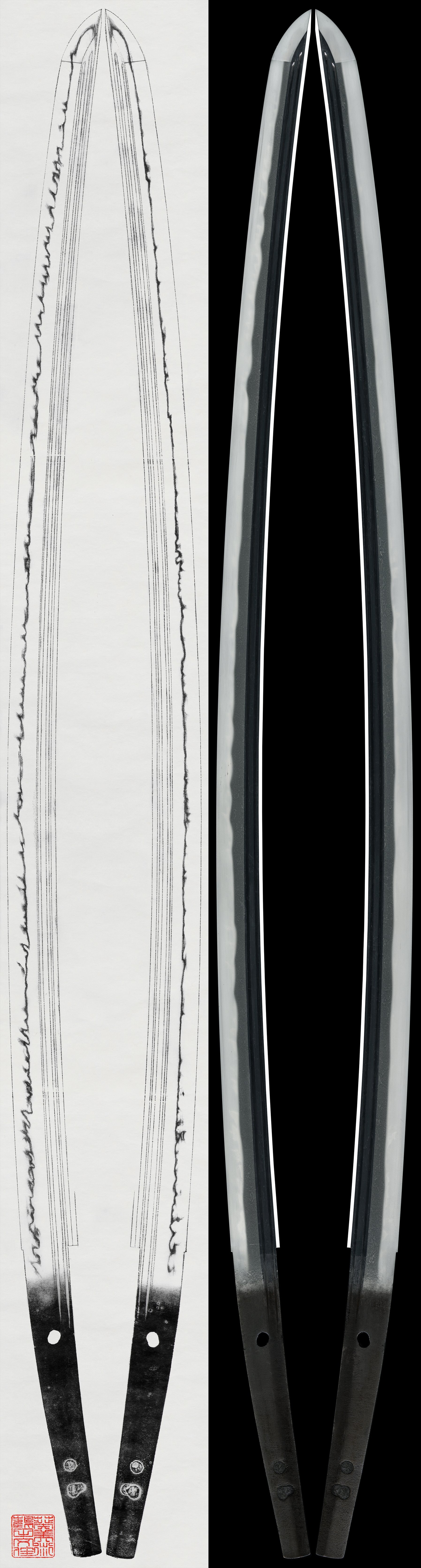
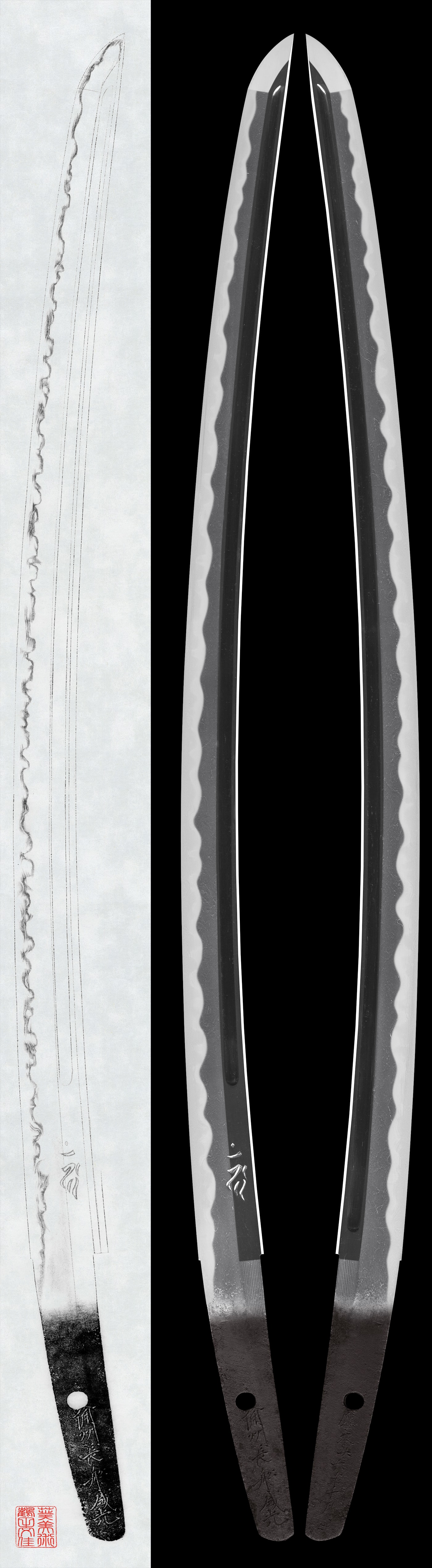
Extant works by Kagenori encompass pieces appraised as both and , reflecting the breadth of stylistic territory associated with the name. The -attributed blades characteristically display as the principal motif, rendered in a flamboyant manner mixed with , small -like elements, and -ba. The is forged in mixed with and , with adhering and entering in places. Prominent stands in the ground steel, and the temper line presents a softening tendency in the that produces a brilliant, showy effect. Other works show with a -gokoro character accompanied by vigorous activity within the , demonstrating range within a consistently high standard of forging and tempering.
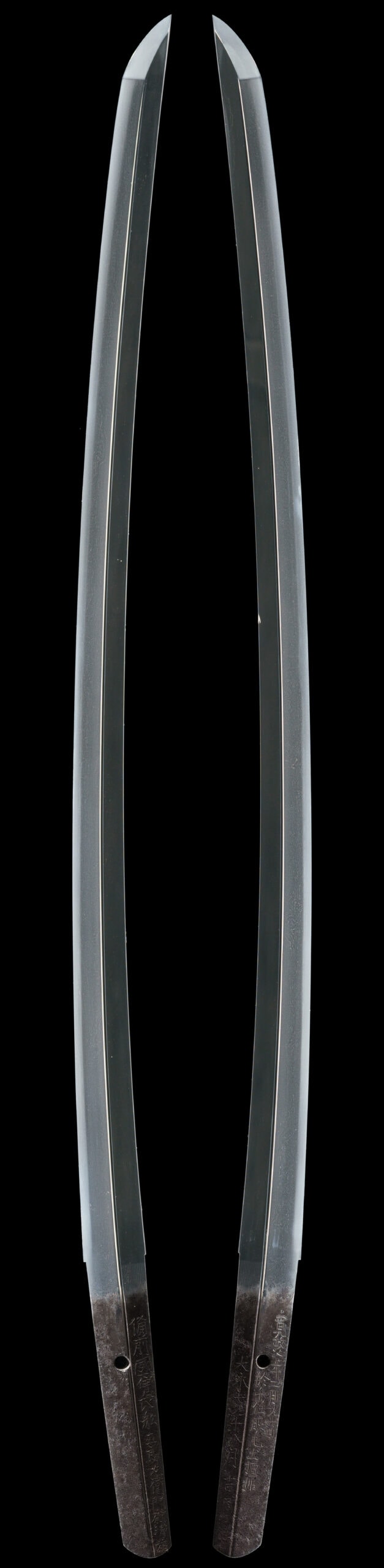
Because so few signed works by Kagenori survive, each authenticated example carries particular importance as reference material for understanding his individual style and its relationship to the broader evolution of the and Yoshii traditions. The existence of a dated blade inscribed Koan 4 (1281) provides a critical chronological anchor, while calligraphic comparison of signatures across surviving pieces has enabled scholars to identify works by the hand. Collectively, these blades constitute precious evidence for tracing stylistic change within the schools during the mid-to-late period and into the early era.