NihontoWatch MonNihontoWatchBETA
MarketEncyclopedia
NihontoWatch Mon

NihontoWatchBETA

Market
Encyclopedia
Overview·Kantei·Designations·Provenance·Blade Forms·Signatures·School
OverviewKanteiDesignationsProvenanceBlade FormsSignaturesSchool
  1. Schools
  2. Ichimonji
  3. Fukuoka Ichimonji
  4. Norinari

Fukuoka Ichimonji Norinari

則成

Tokujū
Vol. 20, No. 15 · Tachi

Fukuoka Ichimonji Norinari

則成

5 ranked works

ProvinceBizenEraKencho (1249–1256)PeriodKamakuraSchoolIchimonji>Fukuoka IchimonjiTraditionBizen-denToko Taikan800(top 14%)TypeSwordsmithCodeNOR251
1Jūyō Bijutsuhin
2Tokubetsu Jūyō2Jūyō Tōken

Overview

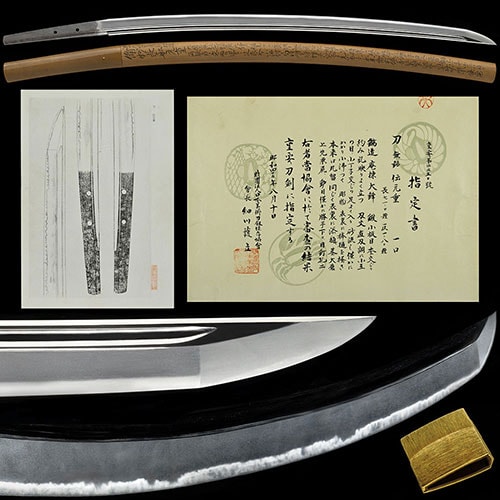
Norinari is a smith of the Fukuoka school, placed by tradition around the Kenchō era of the early-to-mid period. He is one of the rarest names the school records: of his signed work the published sources observe that extant examples are extremely few, and that the number of securely authenticated signed examined to date amounts to scarcely four. The signature reading 則成 is itself a problem of the books. The enter the name across three -related lines, the Fukuoka , the Yoshioka and ; the examined blades, however, are appraised as the work of the Fukuoka man active around Kenchō, and the later designations increasingly read him as Ko-, the early- wing of the school whose work, in the words of the published commentary, keeps the old colour of . He stands at the threshold between and the great flowering of Fukuoka under Norimune, Sukezane and Yoshifusa.

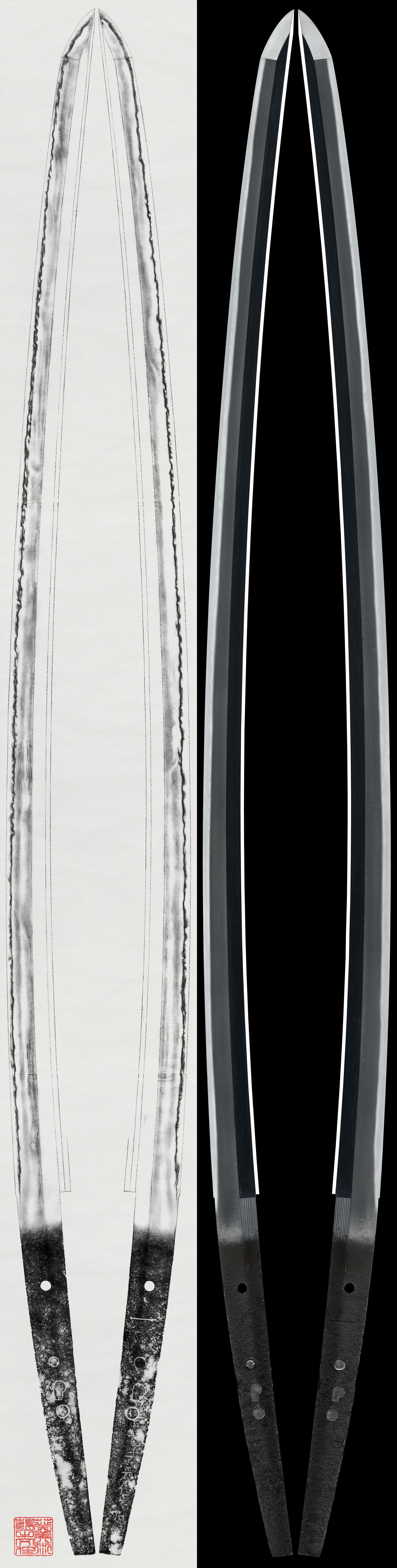
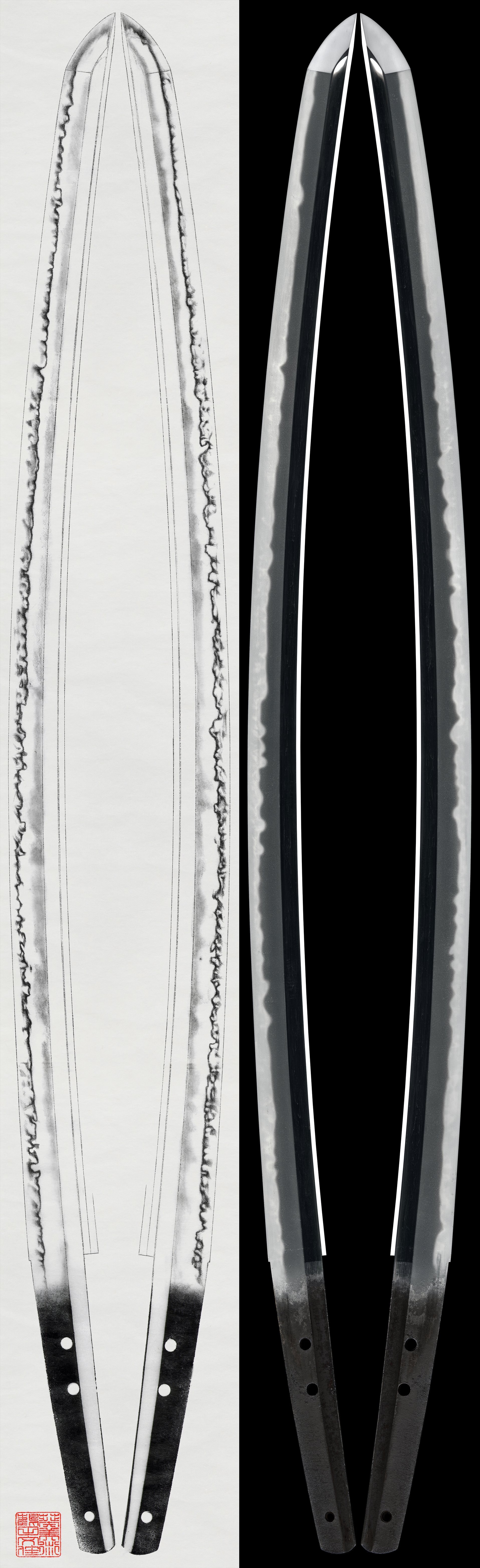
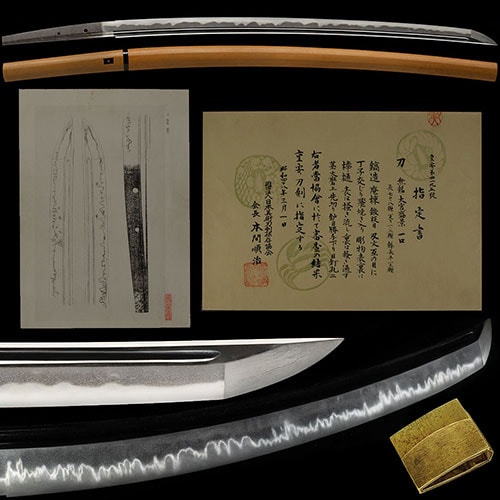
His characteristic hand is a -based irregular temper that has not yet opened into the school's full clove-flower. Over the the published sources describe a mixture of , , and that nonetheless holds to a foundation, with and entering densely, well adhered, the tight or soft, and and running through the lower half. The tell is where the cloves gather. The judges note that around the the are conspicuous (殊に腰元には丁子が目立っており), and that just here the edge takes on a fresher note than the old province allows, so that in this point the distinctive character of the Ko- wing is clearly displayed (焼刃にやや新味が感ぜられるところに古一文字派の特色が顕著に表示されている). It is the smallest of advances on , but the published commentary reads it as the nascent emergence of the full to come (来たるべき盛期一文字の萌芽を想わせる).

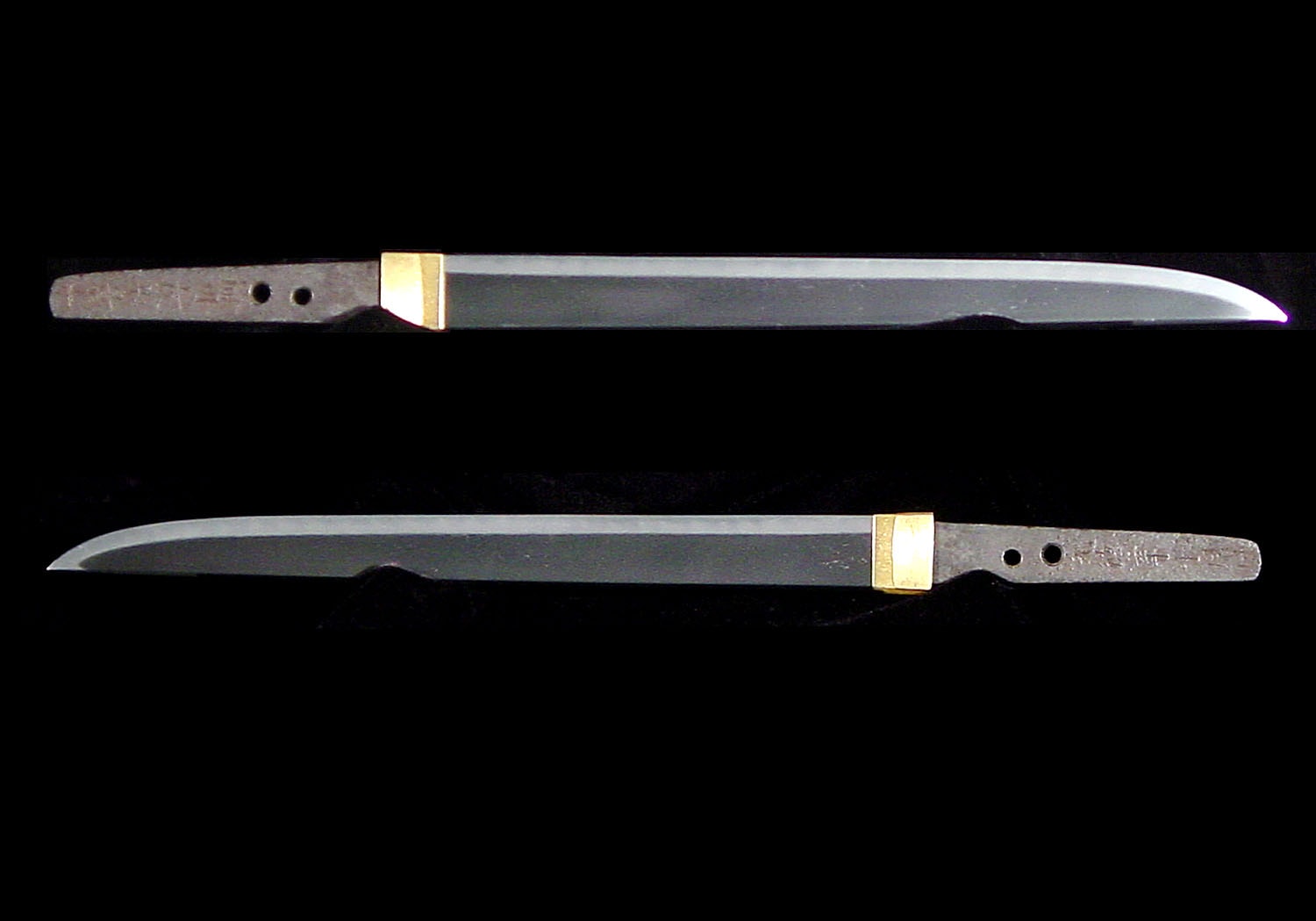
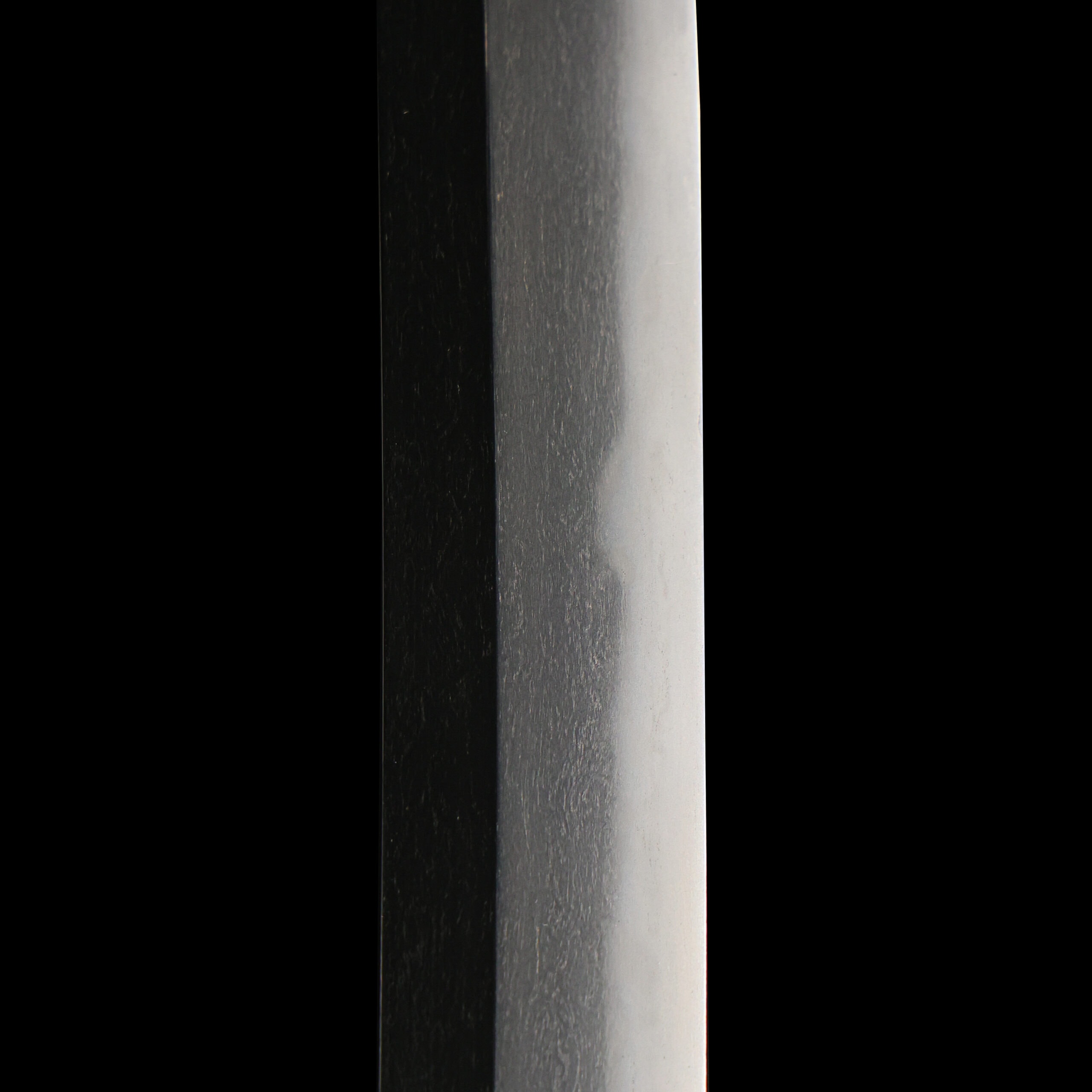
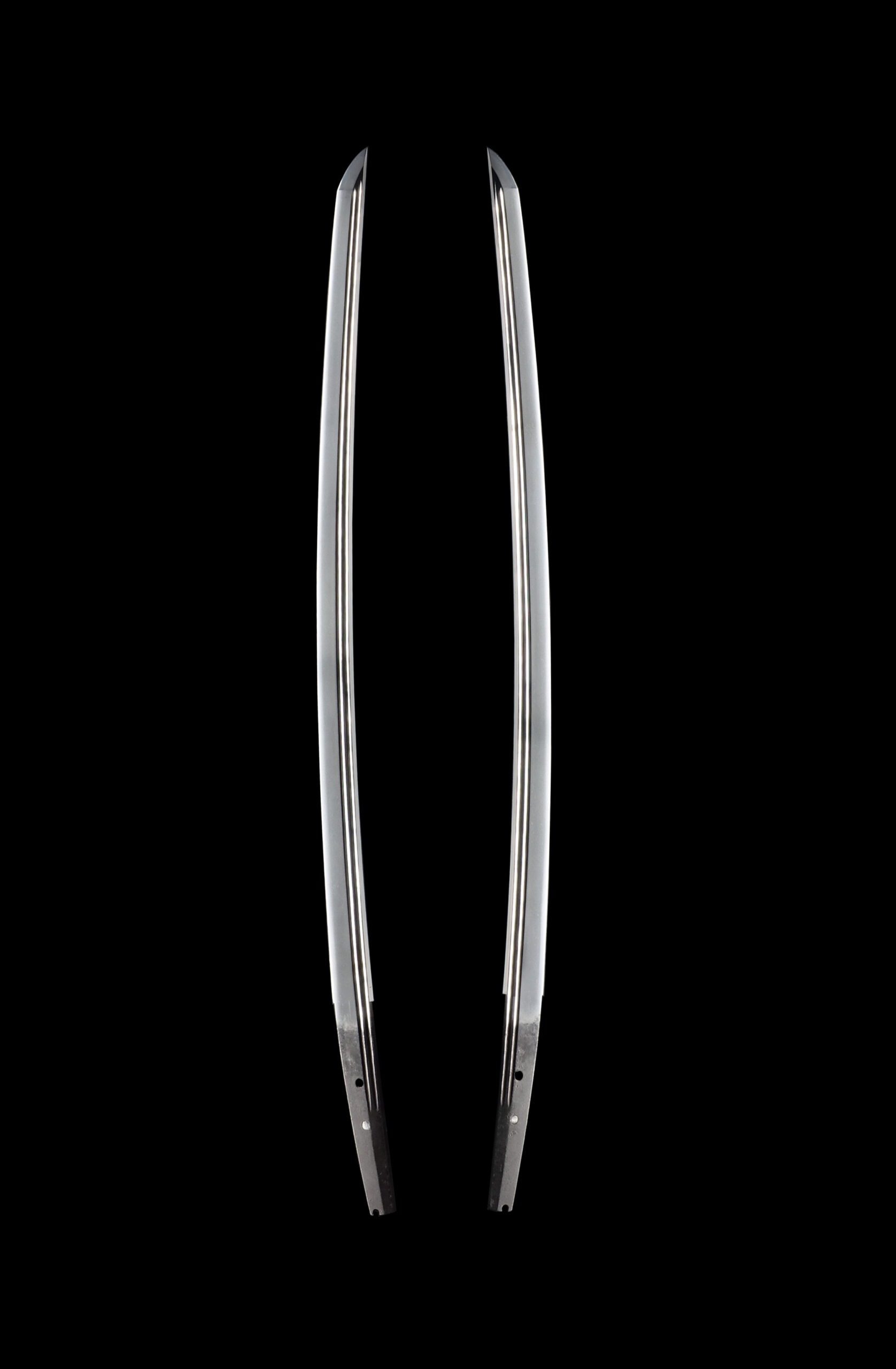
The is the steadier half of the picture and the more obviously . His are forged in , generally well-packed and at times mixed with , the grain standing a little and entering where the forging opens; over it lies a fine , on the slender pieces a dust-fine ( ), and a that stands out clearly on the signed work. On a of around the Kenchō era the reflection can fall faint and the construction turn wholly to , the gentle, demonstrating the virtues of steel without the of the later school. The follows the quiet manner: a shallow turning in a , or running straight to a .

His few blades divide into two grades of the one manner. The slender signed , several of them yet keeping a high and and ending in a , carry the -based, archaic register at its most refined; the published sources call these of an older than the mid- type, and value them for the way the about the waist lift them past . A second, showier grade widens the : on a standard-width , or only slightly shortened and keeping its , the temper runs as mixed with , in places becoming -like, with round-topped and set in here and there. Of one such the published commentary judges the workmanship excellent and the blade a valuable example for understanding the smith's high level of ability and the scope of his work.

What sets Norinari apart his neighbours name precisely. From the brilliant of the mid- to late- he is held apart, his manner read as one that differs from the splendid mid- style (鎌倉時代中期の華麗なものとは異なり) and in which the character of is strongly preserved in both shape and the workmanship of and (姿恰好及び地刃の出来には古備前物の趣が強く遺存している). From the plainer smiths he is held apart by the gathering of on his edge and the brightness of his . On one shortened the older commentary granted only that there was no doubt it was the work of a superior smith (備前上工の作には相違ないが) while adding that its precise lineage warranted further examination (系統についてはなおよく検討したい), a caution that the later attribution to Fukuoka around Kenchō has since refined rather than overturned. He is, in the end, a documentary figure: the quiet root from which the most brilliant of the traditions grew.

For the collector he is a scarce early name rather than a market presence. He has no National Treasures and no Important Cultural Properties; his designated record runs instead through the and ranks, with a handful of pieces, and through the prewar Jūyō Bijutsuhin, one of which descended in the Maeda family of . The published sources value each signed blade for exactly what it documents, calling it one of Norinari's few extant signed works, of high value as reference material (則成の数少ない有銘作として資料的にも価値が高い). With securely signed numbering only about four, a privately held example is among the rarer encounters in the field, coming to light from a long-held collection only seldom and with patience, and prized when it does as a witness to how the began.
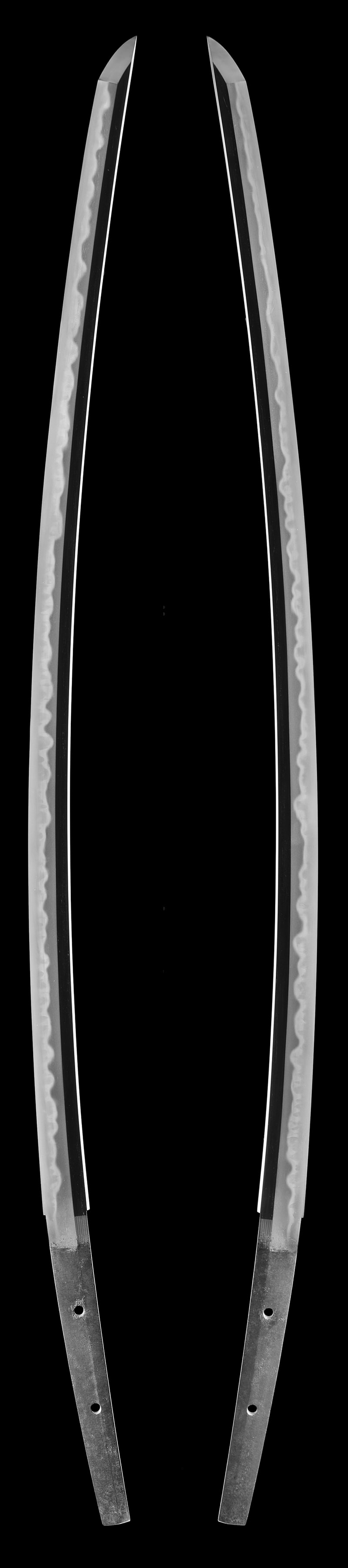
Kantei

one Ko-Ichimonji manner read in two grades: the suguha-based, Ko-Bizen-flavored signed tachi (choji and ko-choji on a suguha foundation, archaic and nioi-deki, the chiff of coming Ichimonji at the koshimoto), set beside the wider, more flamboyant gunome-and-choji-midare register on a broader yakihaba

Norinari is a Bizen smith of the Fukuoka Ichimonji school placed by tradition around the Kencho era of the early-to-mid Kamakura period. The published sources treat him as one of the rarest names in the school: securely authenticated signed tachi number scarcely four, and the Meikan lists the name Norinari across Fukuoka Ichimonji, Yoshioka Ichimonji and Osafune alike, yet his examined works are appraised as the Fukuoka man, increasingly read as Ko-Ichimonji, the early-Kamakura wing of the school whose work keeps the flavor of Ko-Bizen. His hand is recognized in two grades of one manner: a slender, high-koshizori tachi over a well-packed itame mixed with mokume, ji-nie and a vivid midare-utsuri, on which he tempers a suguha-based line of choji, ko-choji, ko-gunome and ko-midare with ashi and yo entering densely, ko-nie and a tight nioiguchi, kinsuji and sunagashi running through, the boshi shallow notare to a small round or a yakitsume; and a wider, more flamboyant register of gunome and choji-midare on a broader yakihaba. The published sources call the choji about the koshimoto the tell that lifts him just past Ko-Bizen toward the coming Ichimonji flowering.

Diagnostic discriminators

unique vs mid-Kamakura Fukuoka Ichimonji (full choji-midare)

unique vs Ko-Bizen baseline (plainer ko-midare)

Observation by phase

The suguha-based Ko-Ichimonji tachi (his recognized prime)

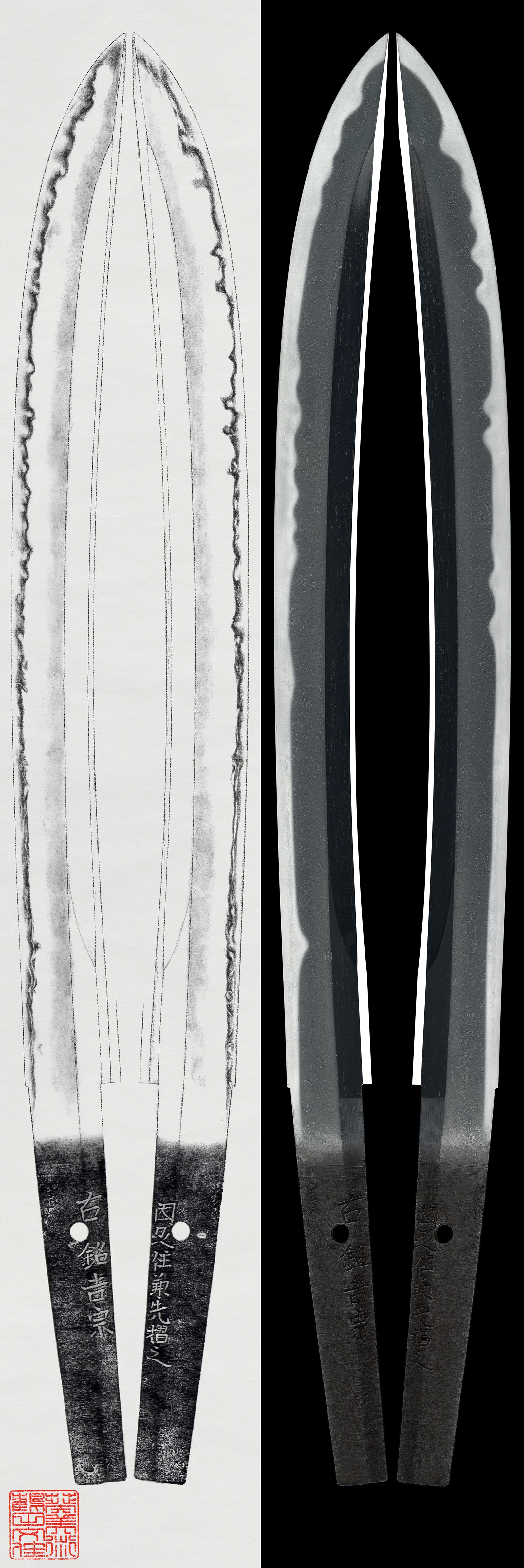
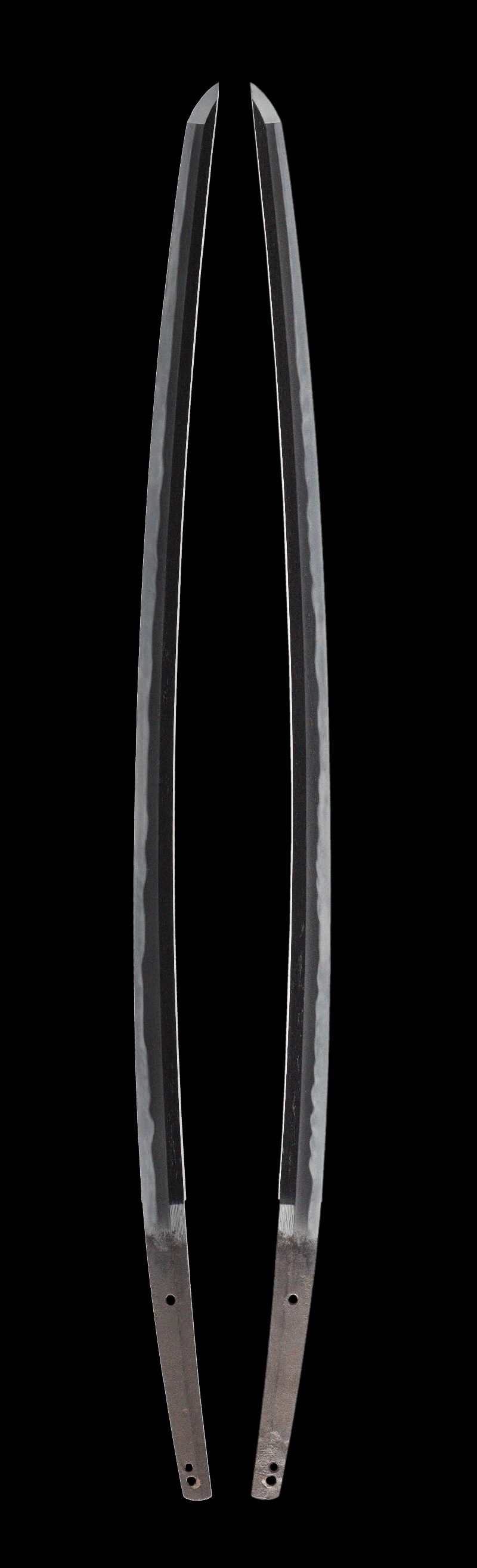
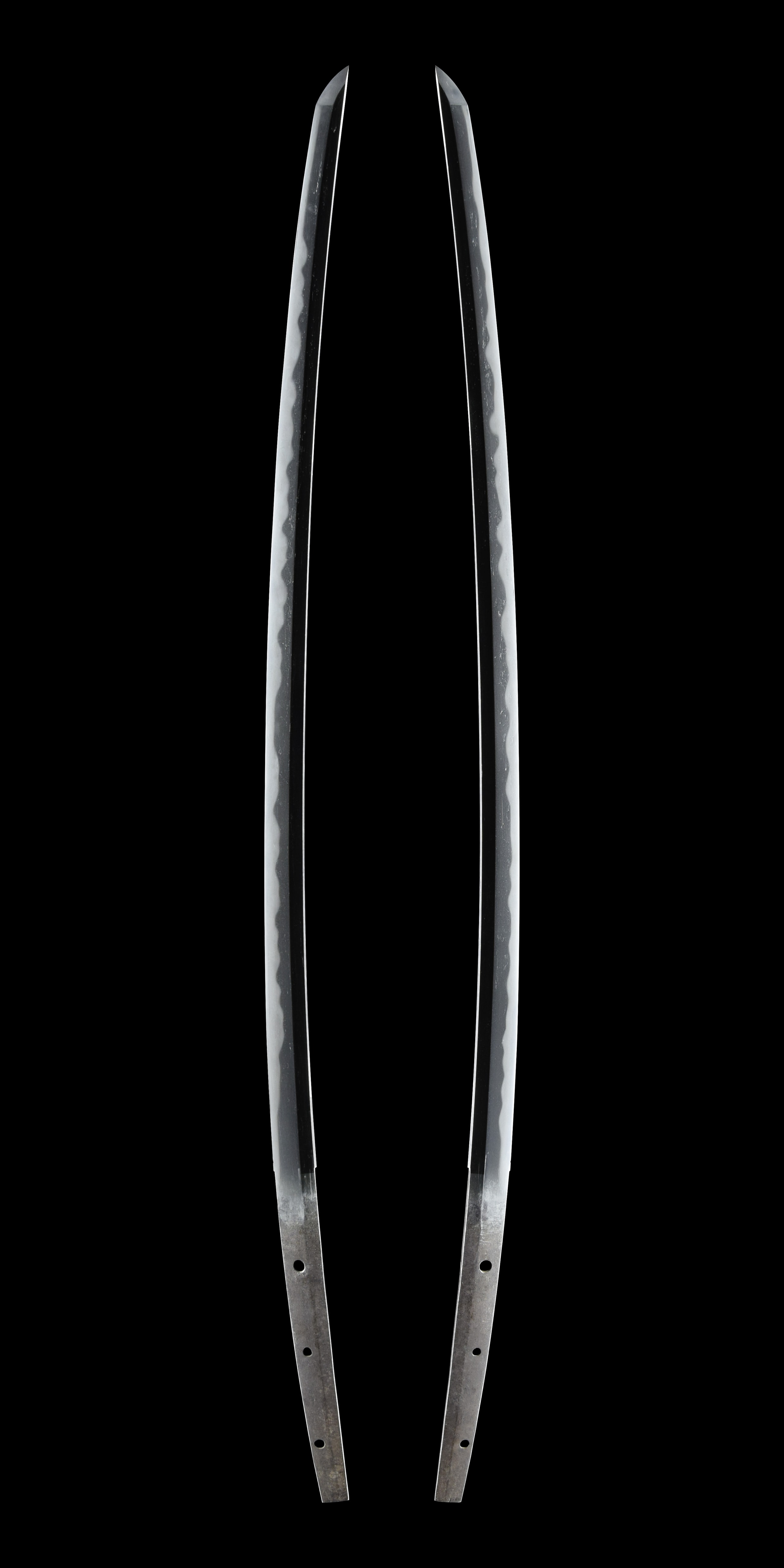
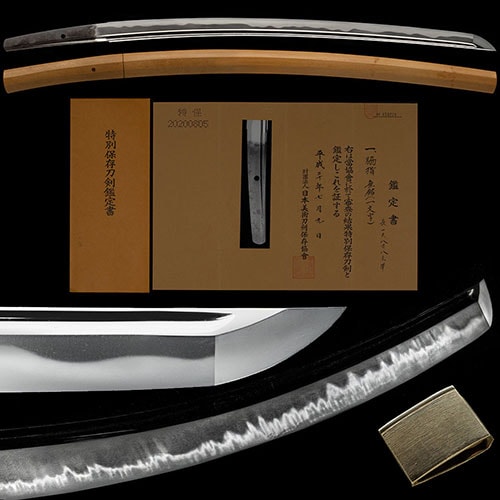
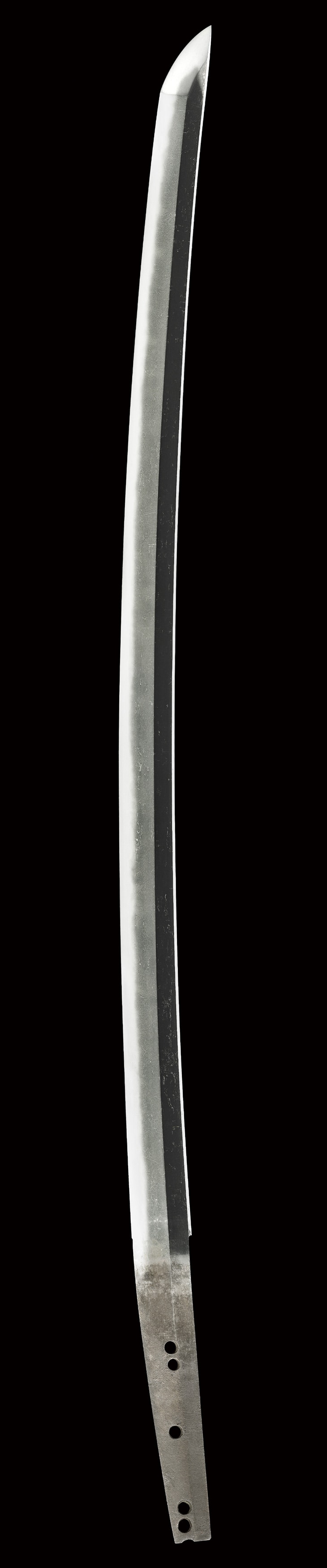
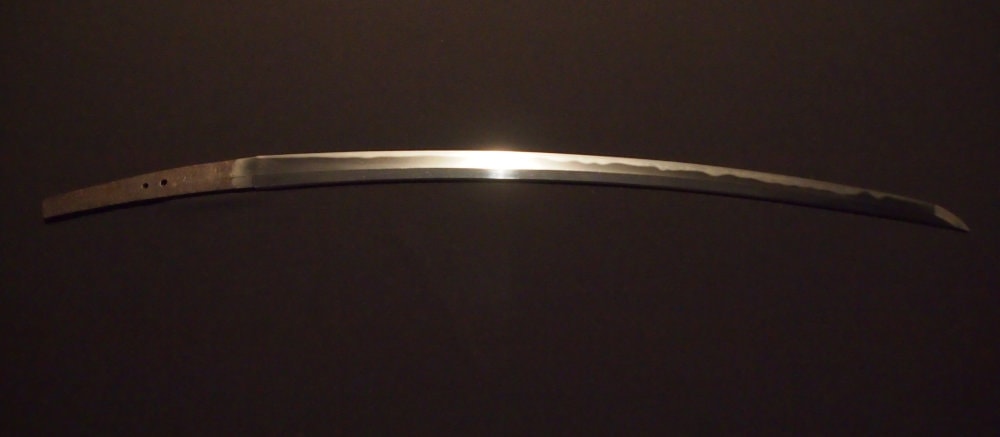
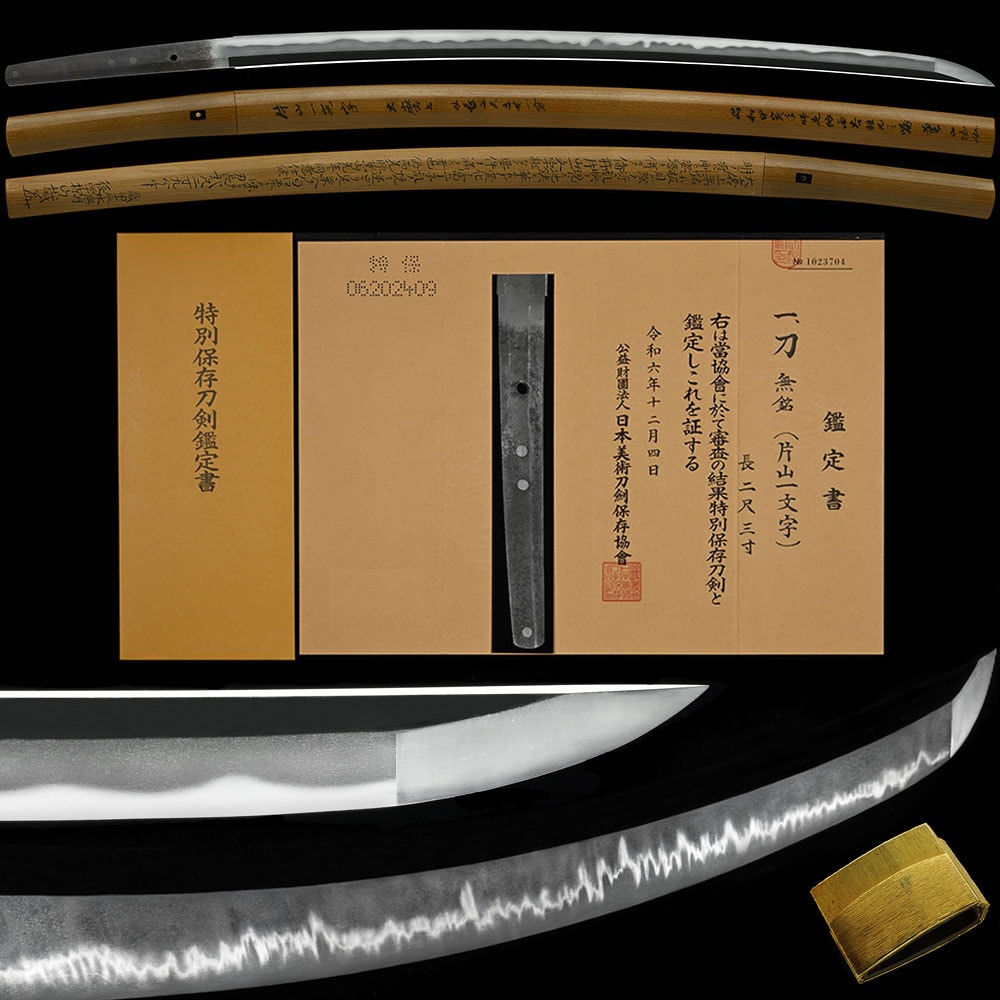
His most fully described works are slender signed tachi, suriage yet keeping a high sori and koshizori, ending in a ko-kissaki or chu-kissaki. Over an itame, generally well-packed and mixed with mokume, the ground carries fine ji-nie, sometimes ji-nie mijin, and a midare-utsuri that stands out clearly; the grain stands a little and chikei enter where the forging opens. The temper is the tell: overall suguha-based, mixing choji, ko-choji, ko-gunome and ko-midare, with ashi and yo entering densely, ko-nie adhering and the nioiguchi gentle, kinsuji and sunagashi running through the lower half. The boshi runs shallow notare to a ko-maru, or straight to a yakitsume. The choji gather conspicuously about the koshimoto, more elaborate than Ko-Bizen work, so the published sources read the hardened edge as carrying a fresher note than the old province, the nascent emergence of the full Ichimonji flowering to come.

Sugata 姿
Jigane 地鉄
Hamon 刃文
Bōshi 帽子

The wider gunome-and-choji register

less firmly established

A second grade of the same hand runs wider and more flamboyant. On a standard-width tachi, ubu or only slightly suriage and keeping its funbari, the yakihaba broadens; the temper is gunome mixed with choji, in places becoming suguha-like, with round-topped gunome and saka-ashi entering here and there, the nioiguchi tight and ko-nie adhering, over an itame with abundant ji-nie and a vivid midare-utsuri. The boshi is a shallow notare tending to ko-maru or a yakitsume. The published sources judge this the work of a superior hand and value it for the high level of ability and the scope of workmanship it shows, the showier face of a smith otherwise read as quiet and archaic.

Sugata 姿
Jigane 地鉄
Hamon 刃文
Bōshi 帽子
Scholarship

The published sources record that the Meikan lists the name Norinari across the Fukuoka Ichimonji, Yoshioka Ichimonji and Osafune lineages, while appraising the examined signed works as the Fukuoka Ichimonji smith active around the Kencho era; they note that securely authenticated signed tachi amount to scarcely four, and they increasingly read him as Ko-Ichimonji, the early-Kamakura wing whose work keeps the Ko-Bizen flavor.

On the suguha-based signed tachi the published sources find that while it preserves at first glance the archaic coloring of Ko-Bizen, the conspicuous choji and ko-choji about the koshimoto give the hardened edge a fresher note, in which the distinctive character of the Ko-Ichimonji wing is clearly displayed.

Designations

Kokuhō—
Jūyō Bunkazai—
Jūyō Bijutsuhin1
Gyobutsu—
Tokubetsu Jūyō2
Jūyō Tōken2

Elite Standing

0.11 across 5 designated works

Top 18% among smiths

Provenance

1 documented provenance across certified works by Norinari

Provenance Standing

1 works held in elite collections across 1 documented provenances

Top 84% among smiths

Raw score: 1.83 / 10

Blade Forms

Distribution across 5 ranked works

Signatures

Signature types across 5 ranked works

Currently Available

Fukuoka Ichimonji School

Other artisans of the Fukuoka Ichimonji school

  1. 1.Sukezane助眞44designated
  2. 2.Yoshifusa吉房1 for sale46designated
  3. 3.Norimune則宗8designated
  4. 4.Yoshihira吉平17designated
  5. 5.Sukekane助包6designated
  6. 6.Norikane則包7designated
  7. 7.Tamekiyo爲清5designated
  8. 8.Yoshimochi吉用10designated
  9. 9.Tameto爲遠5designated
  10. 10.Yoshimune吉宗6designated
  11. 11.Naganori長則17designated
  12. 12.Ichi一7designated