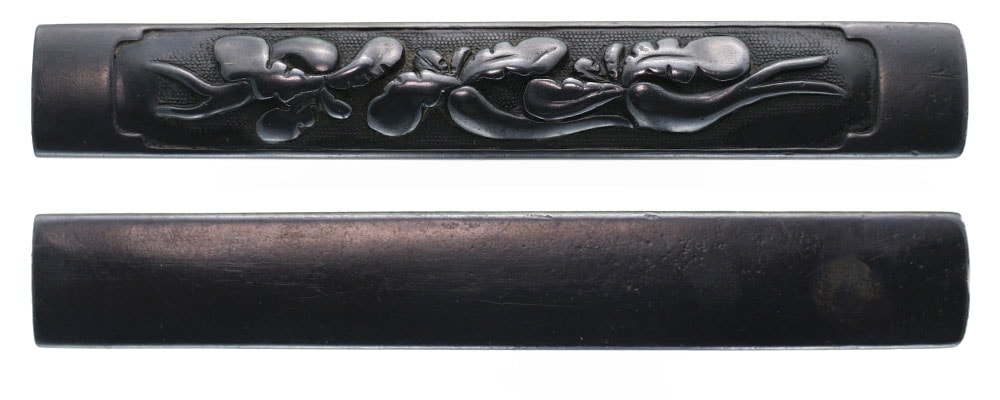
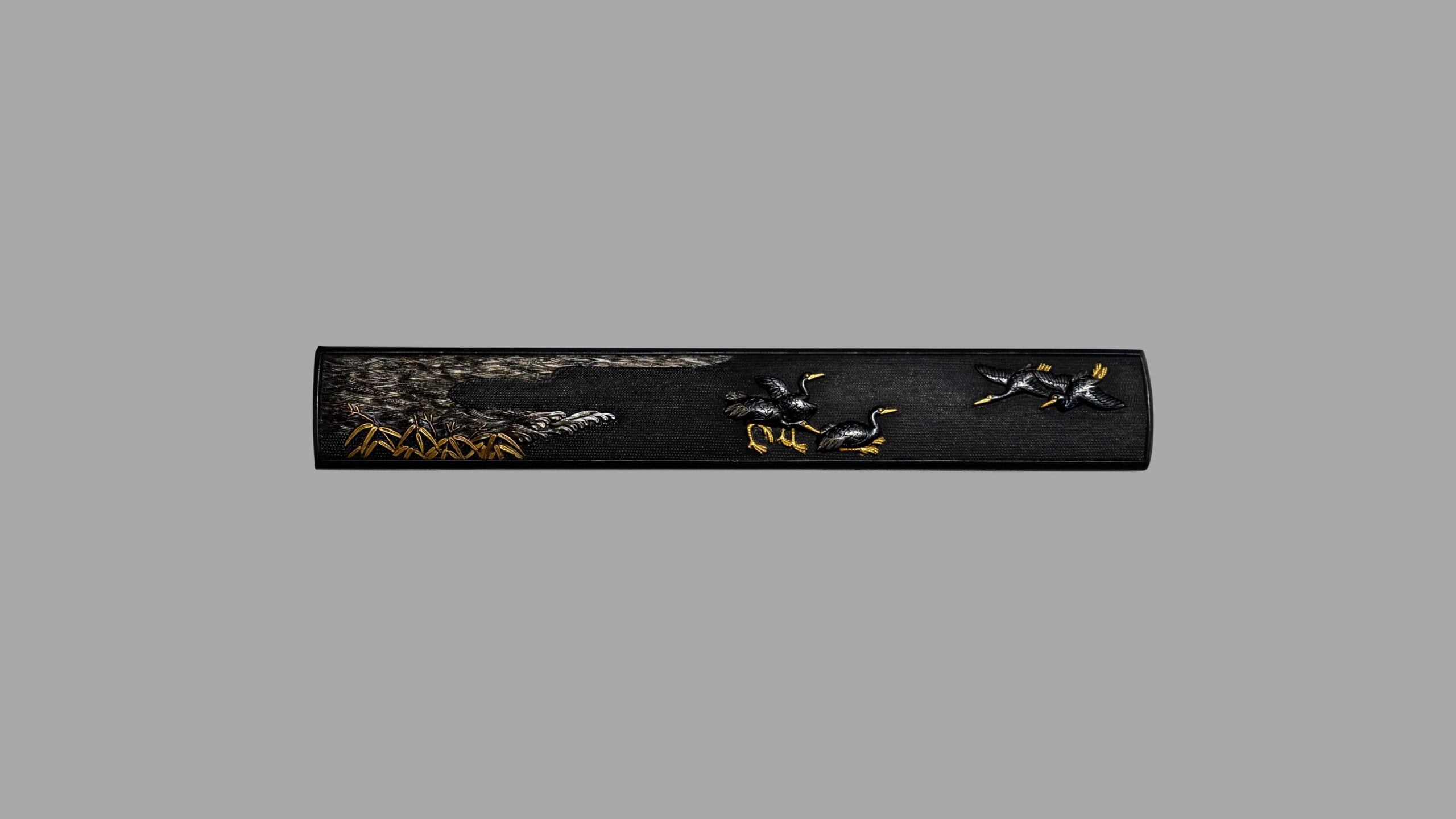
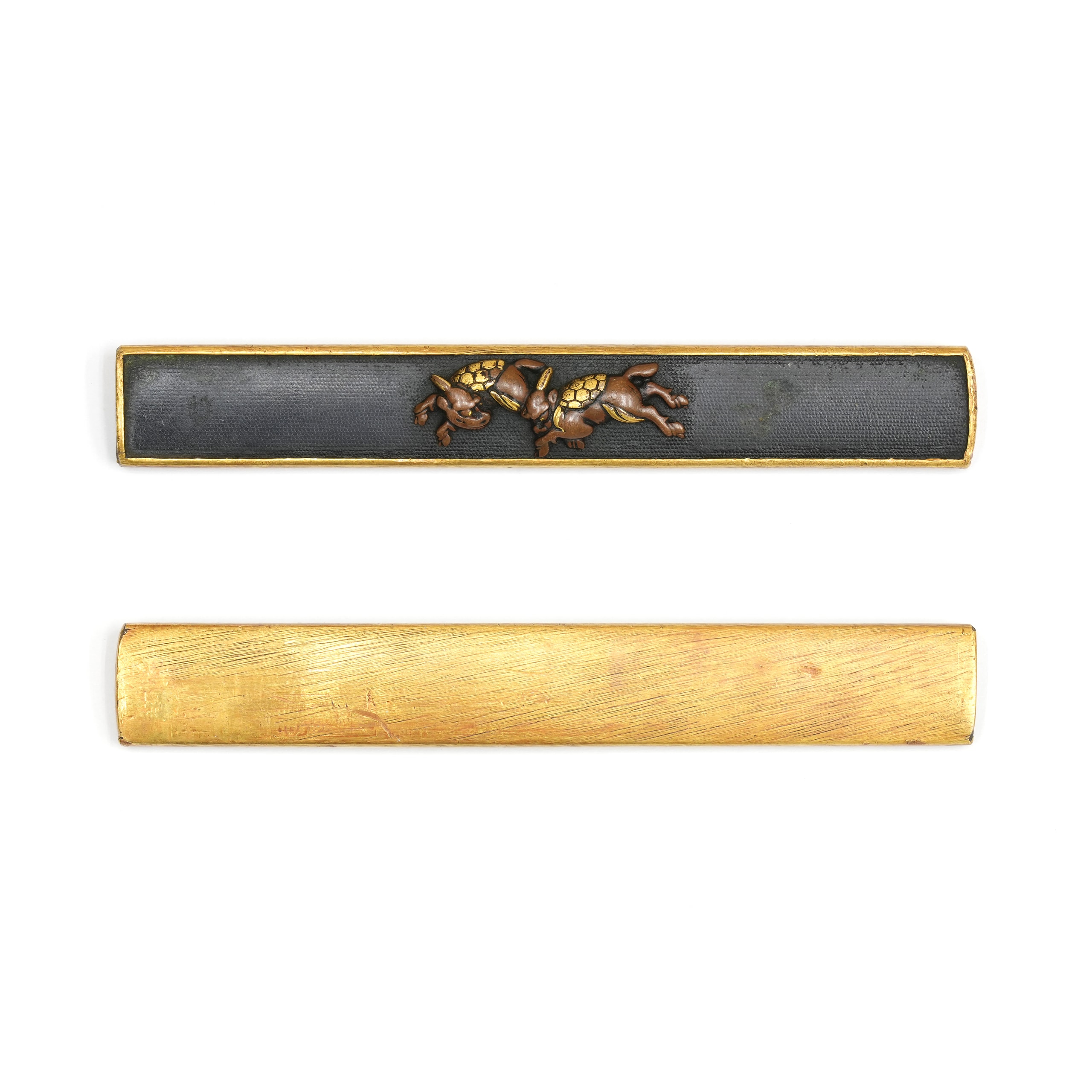
Goto Mitsuyoshi, fifteenth head of the mainline Goto family, bore the art name Shinjo. He was the eldest son and heir of the fourteenth master, Goto Mitsumori (Keijo), and was born in An'ei 9 (1780). His childhood name was Kameichi and his common name Gennojo. In Kyowa 4 (corresponding to Bunka 1, 1804), upon the death of Mitsumori at the age of sixty-four, Gennojo changed his name to Shirobei Mitsuyoshi and succeeded as the fifteenth-generation head of the main line. He thus inherited the stewardship of a house that had served the Oda, Toyotomi, and Tokugawa rulers across three centuries, continuing its unbroken tradition of metalwork at the highest echelon of the art.
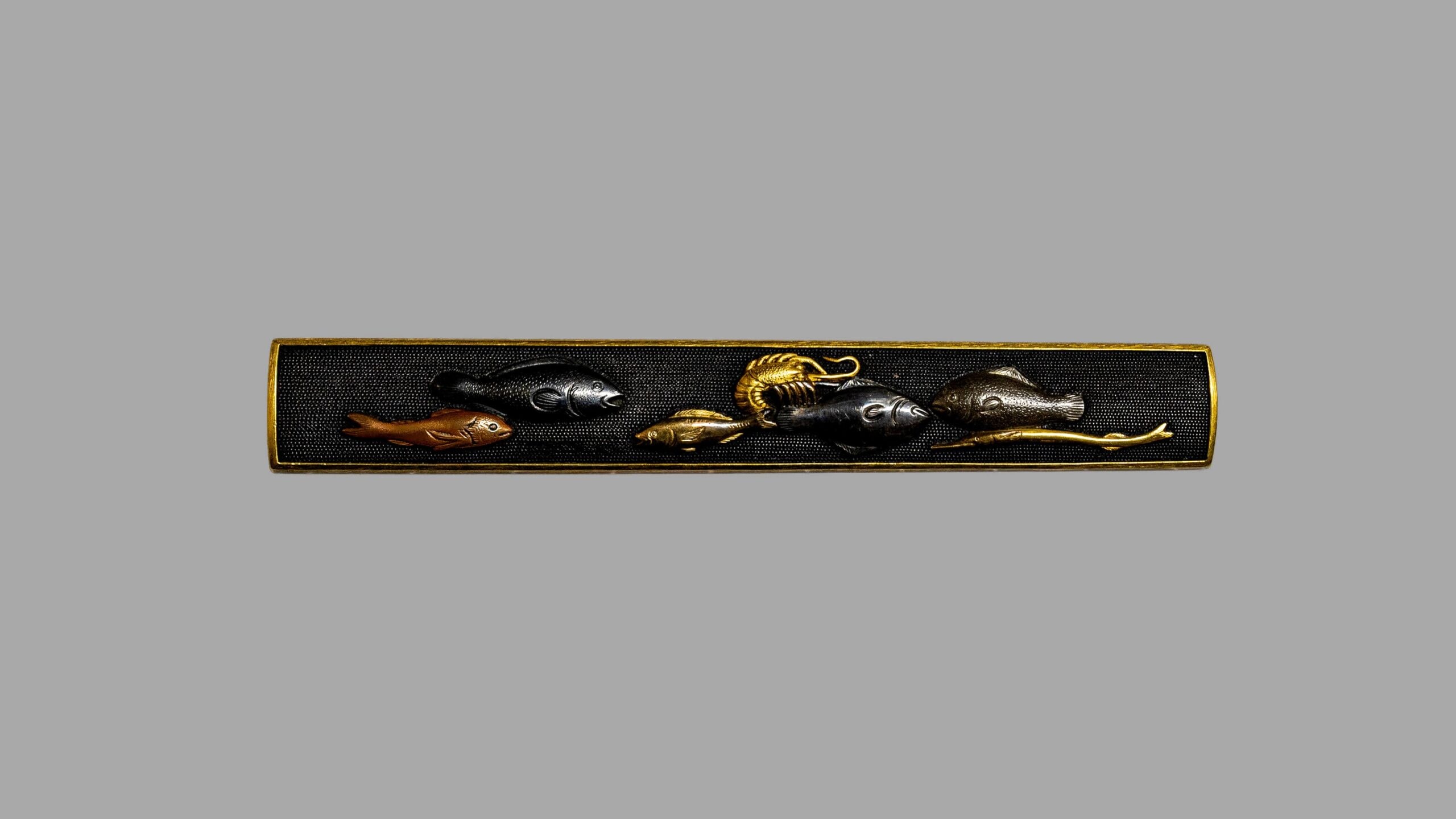
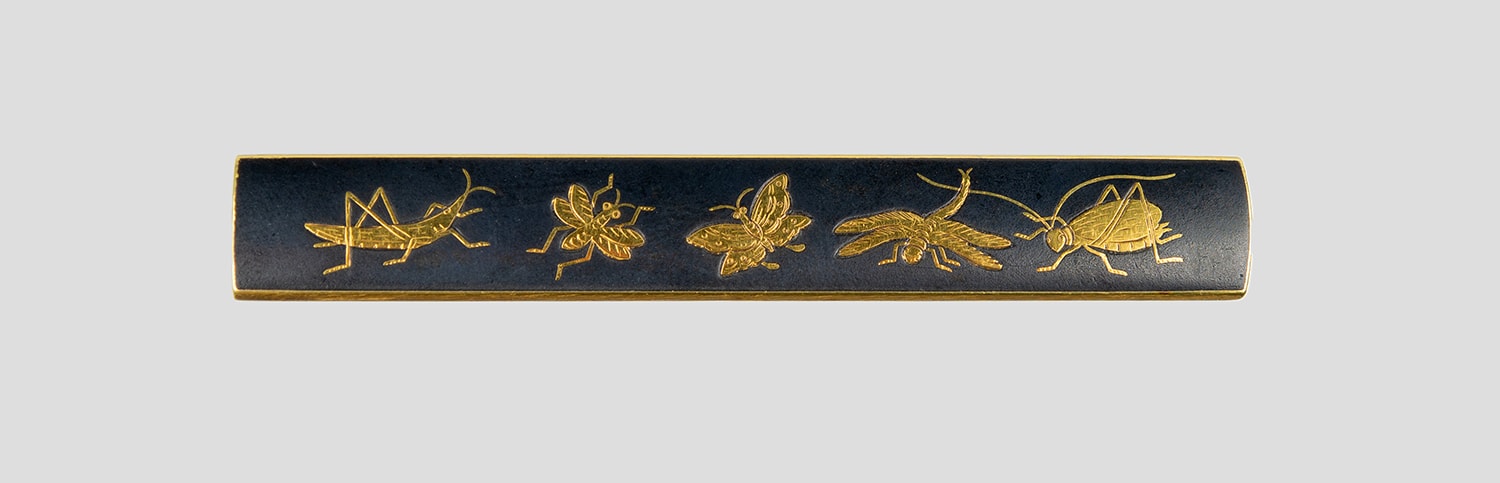
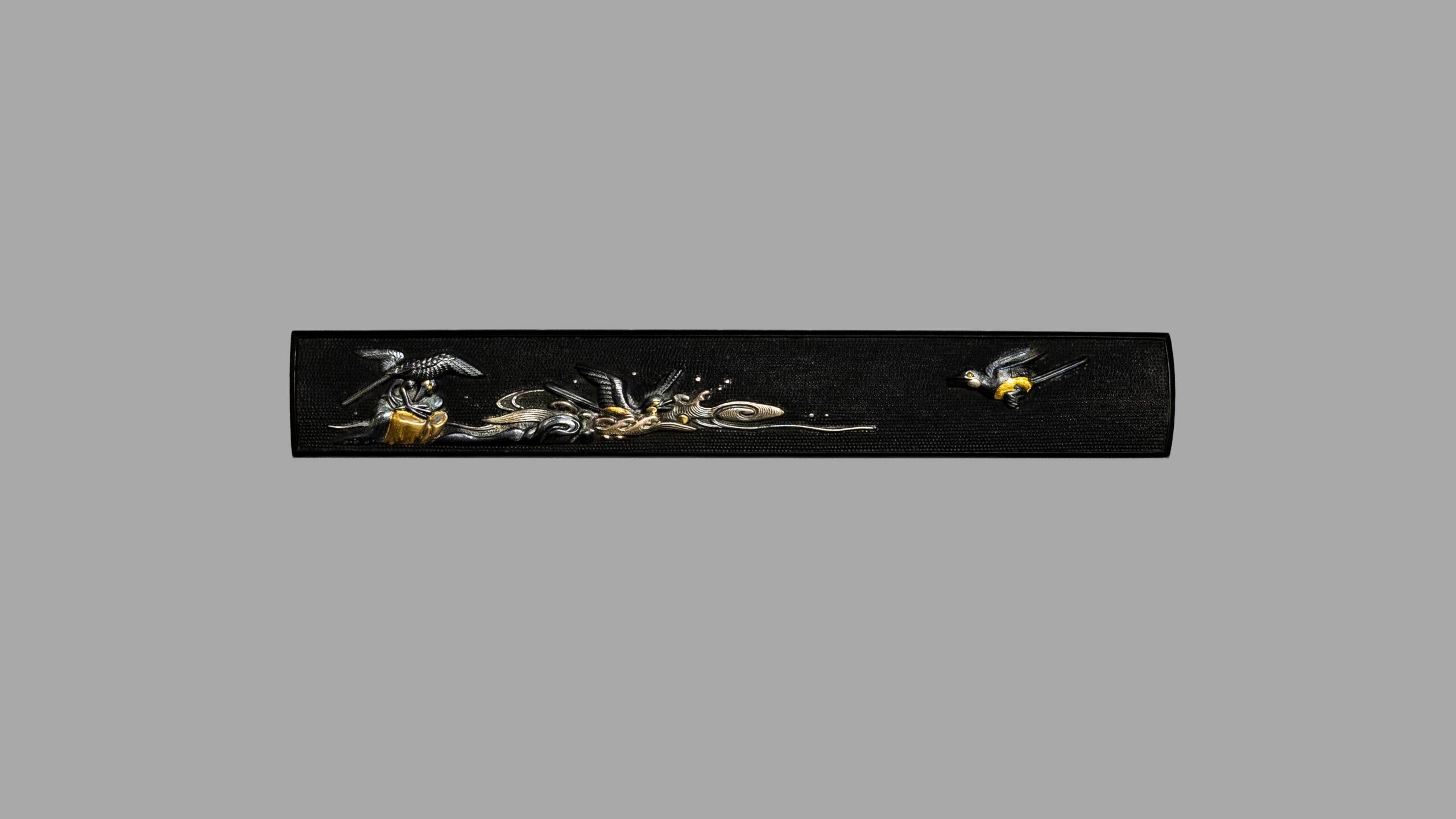
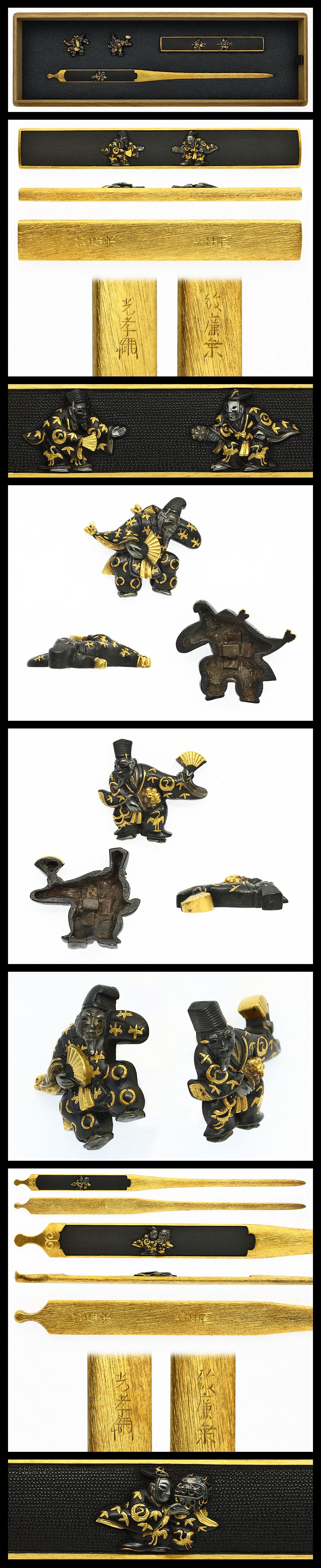
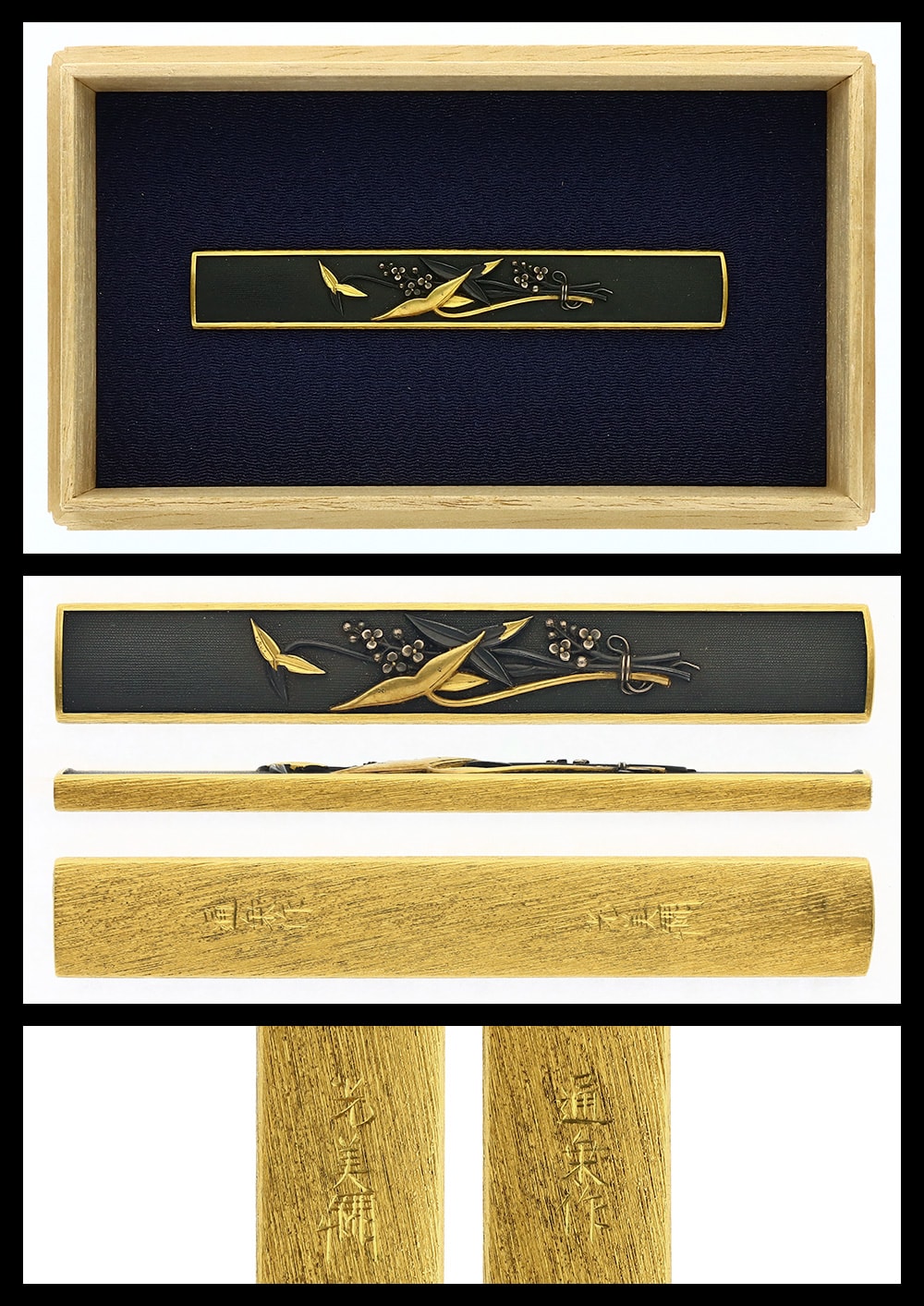
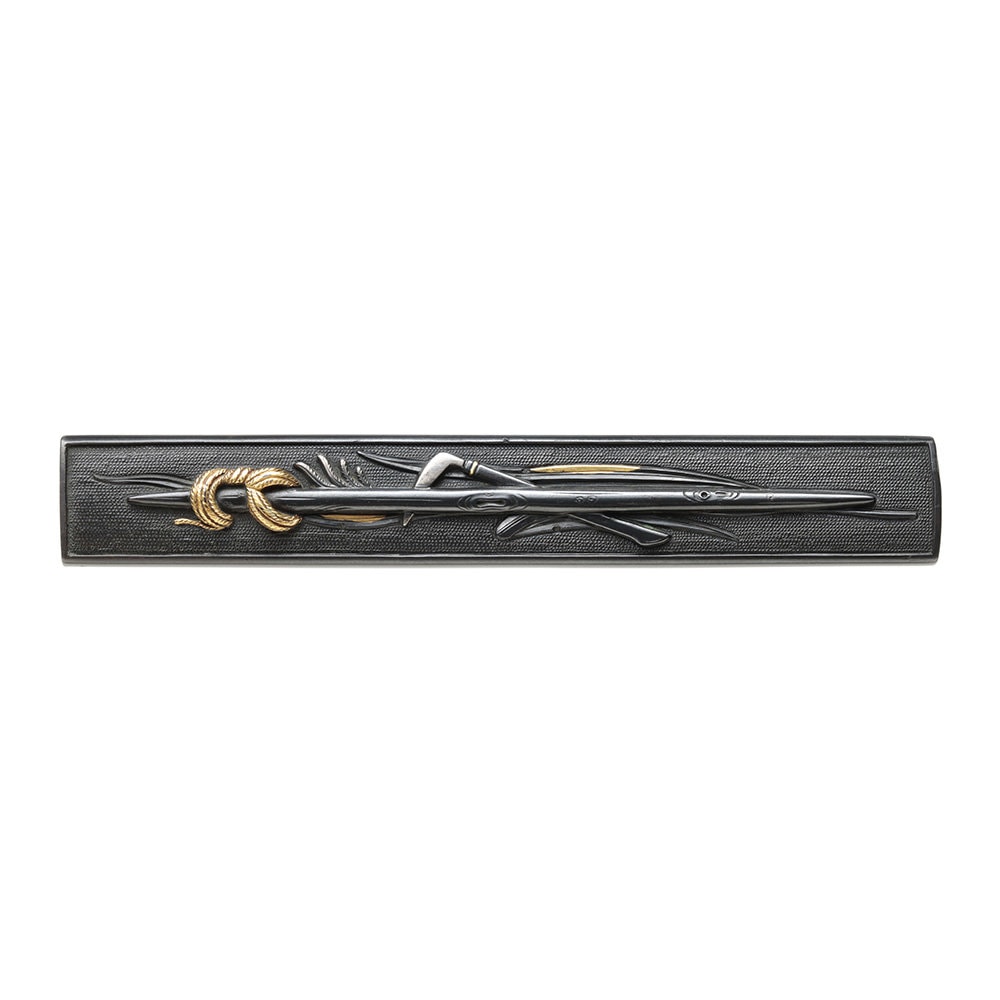
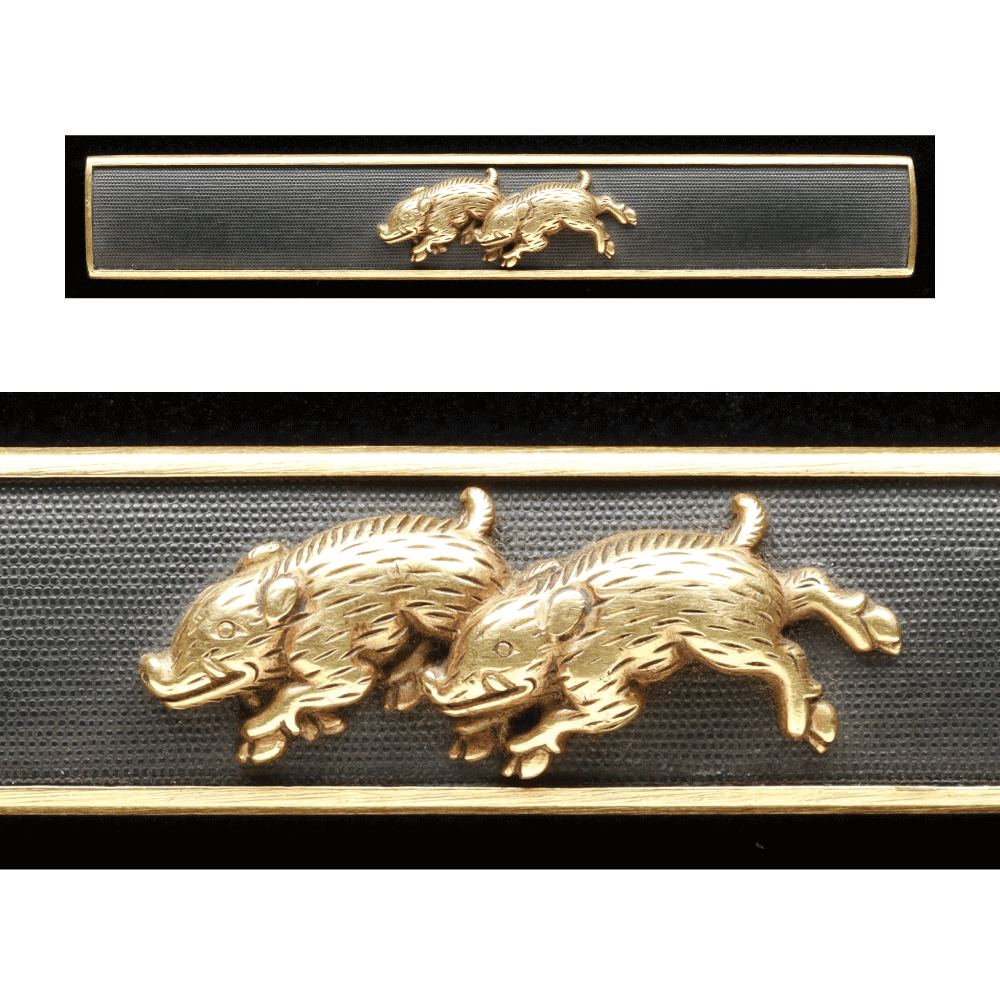
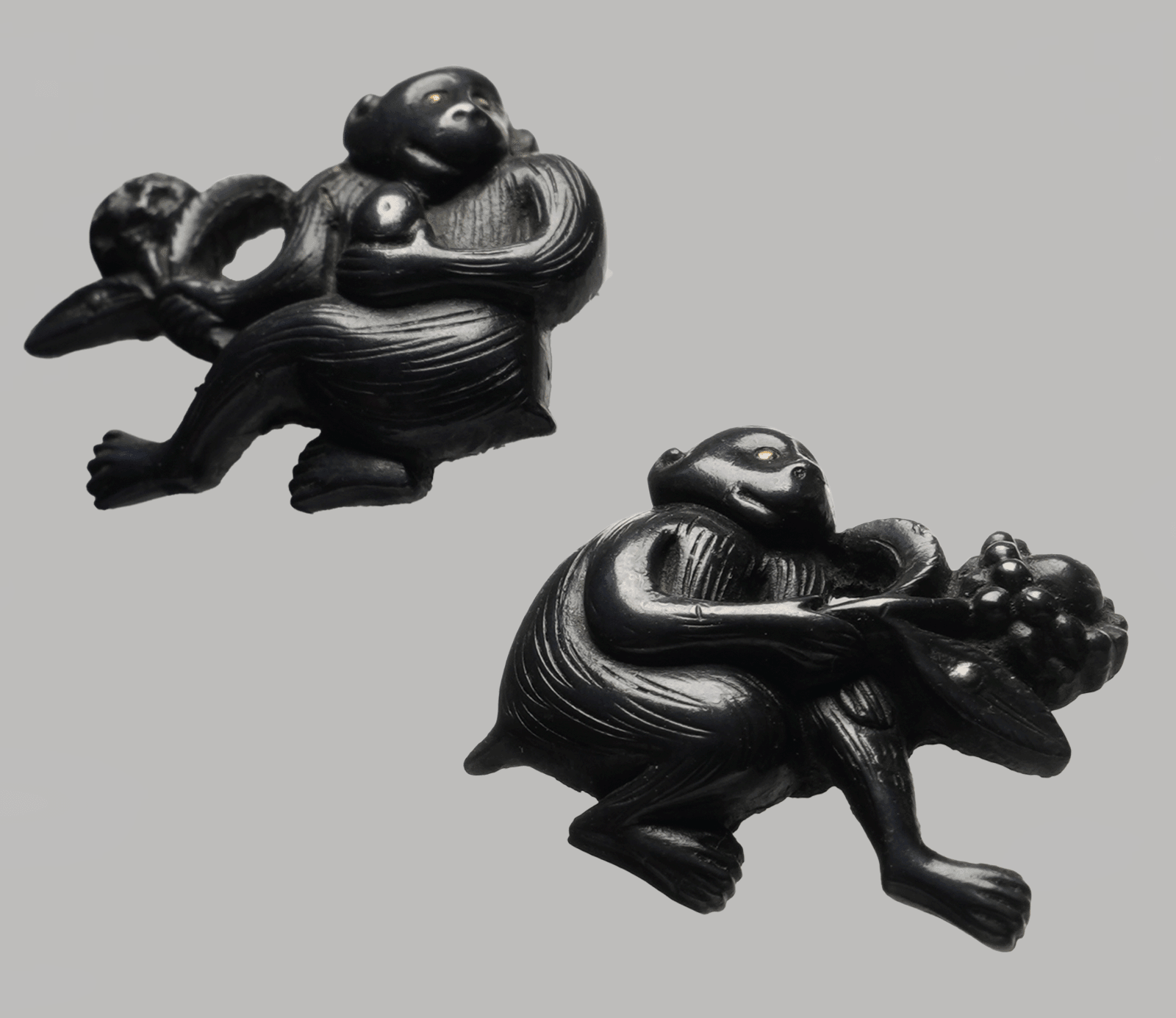
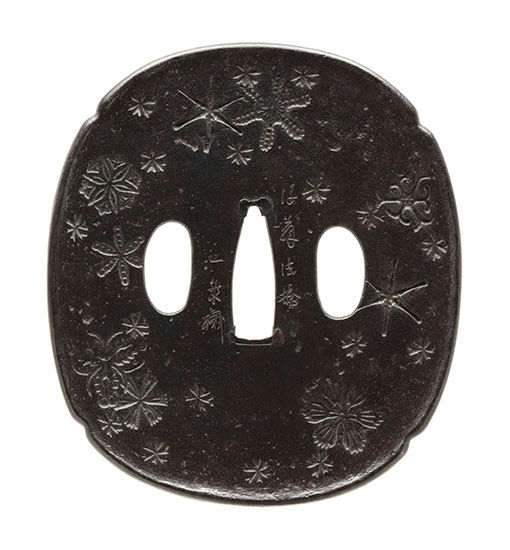
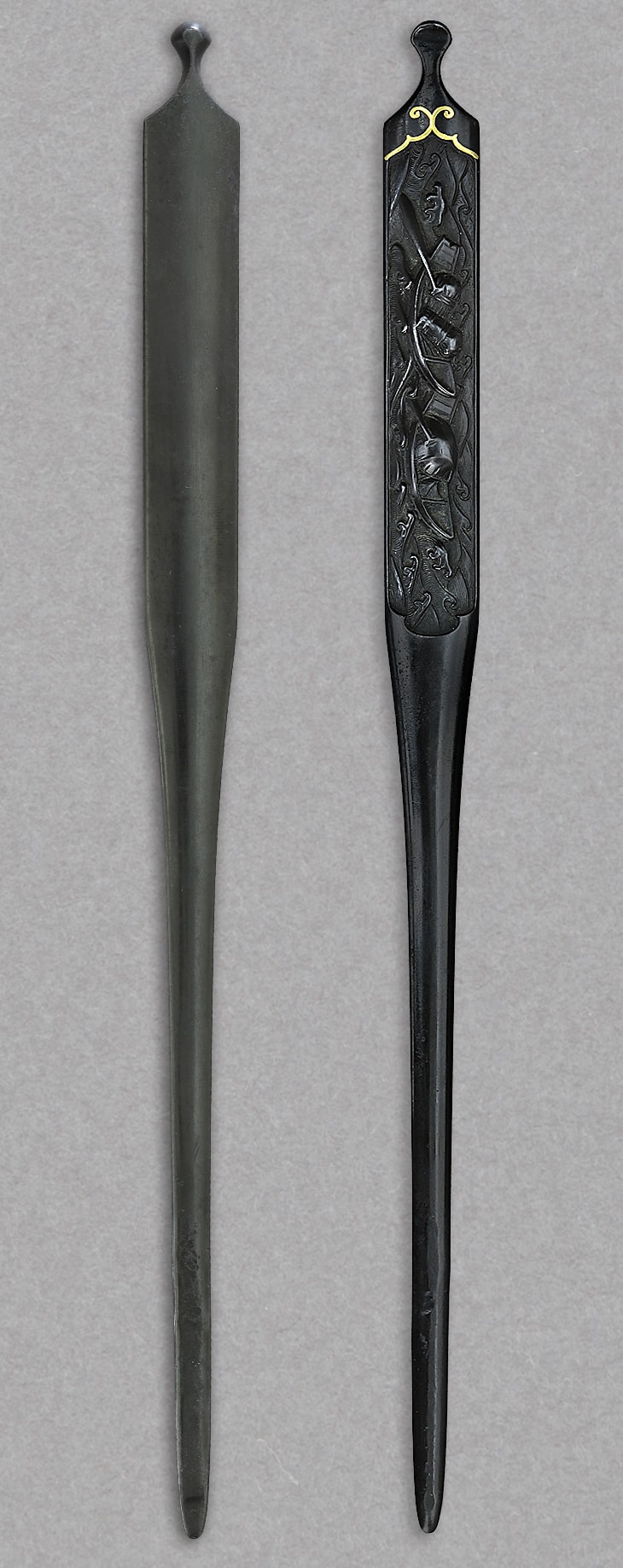
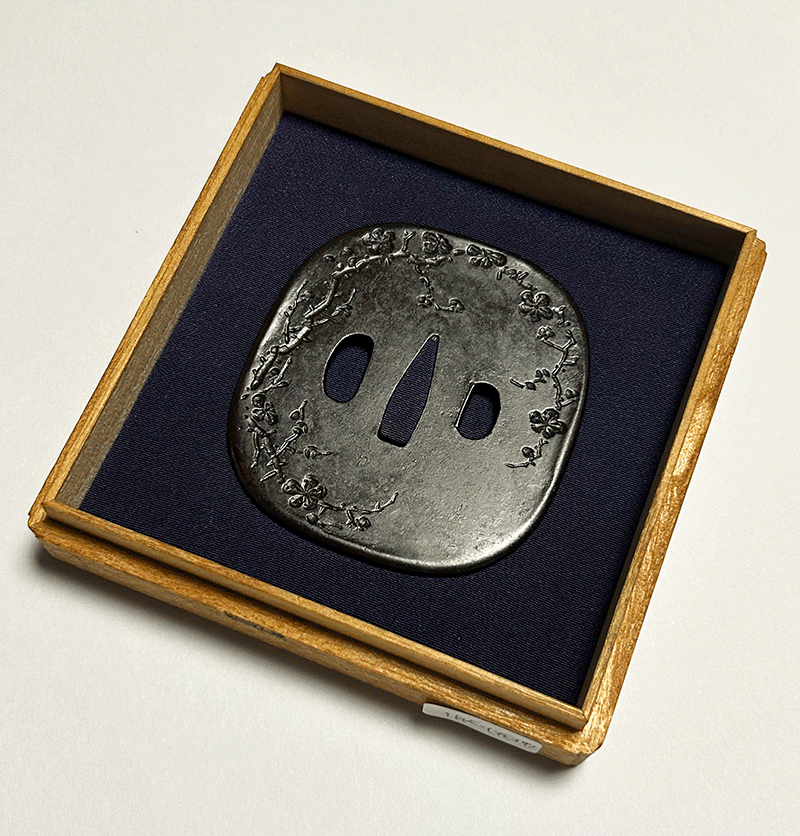
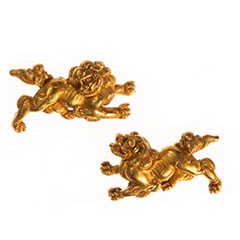
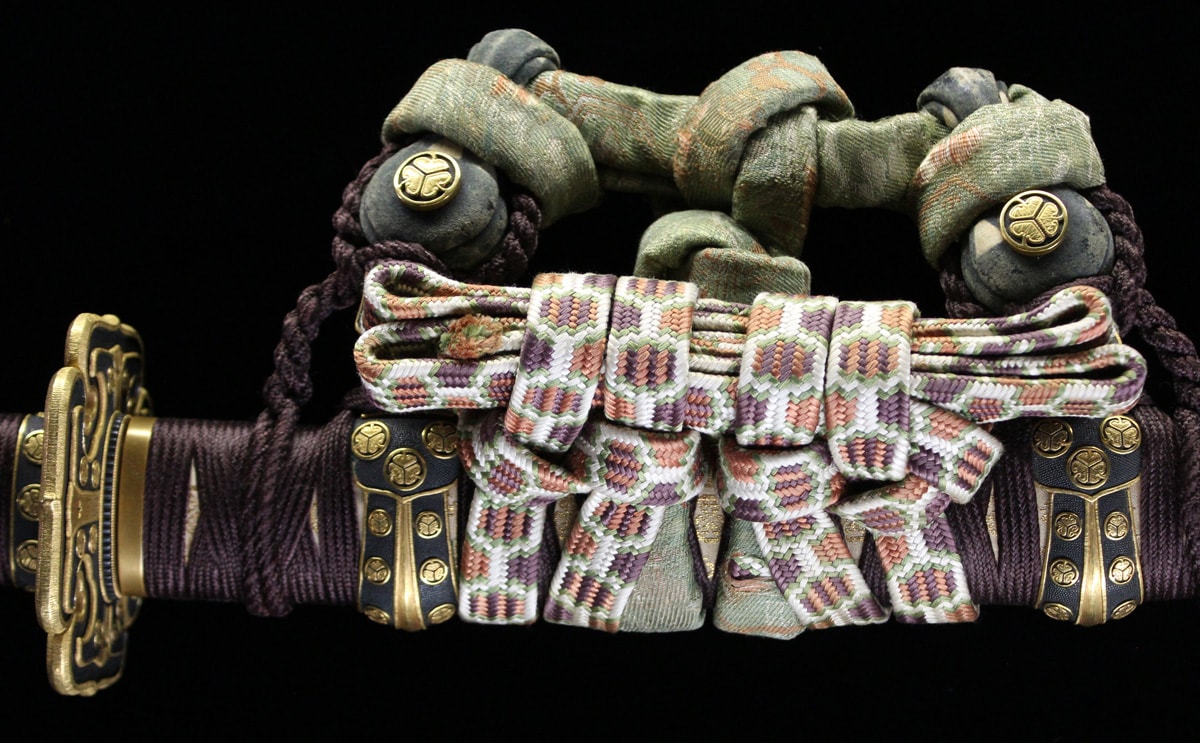
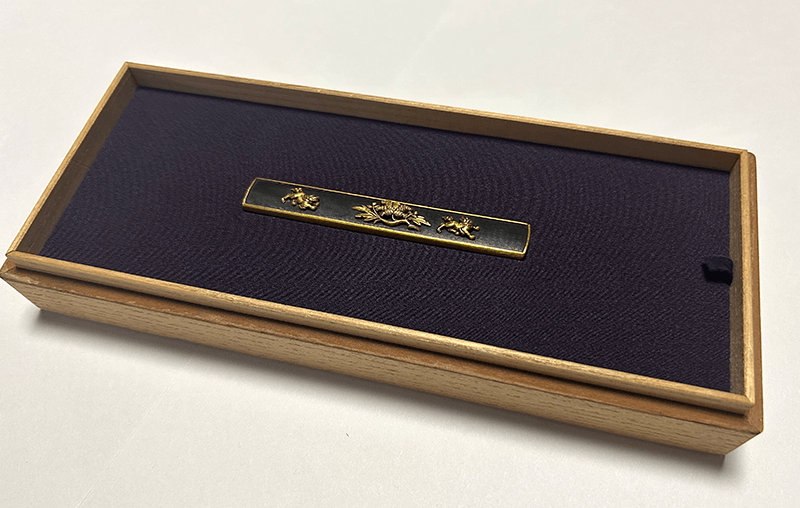
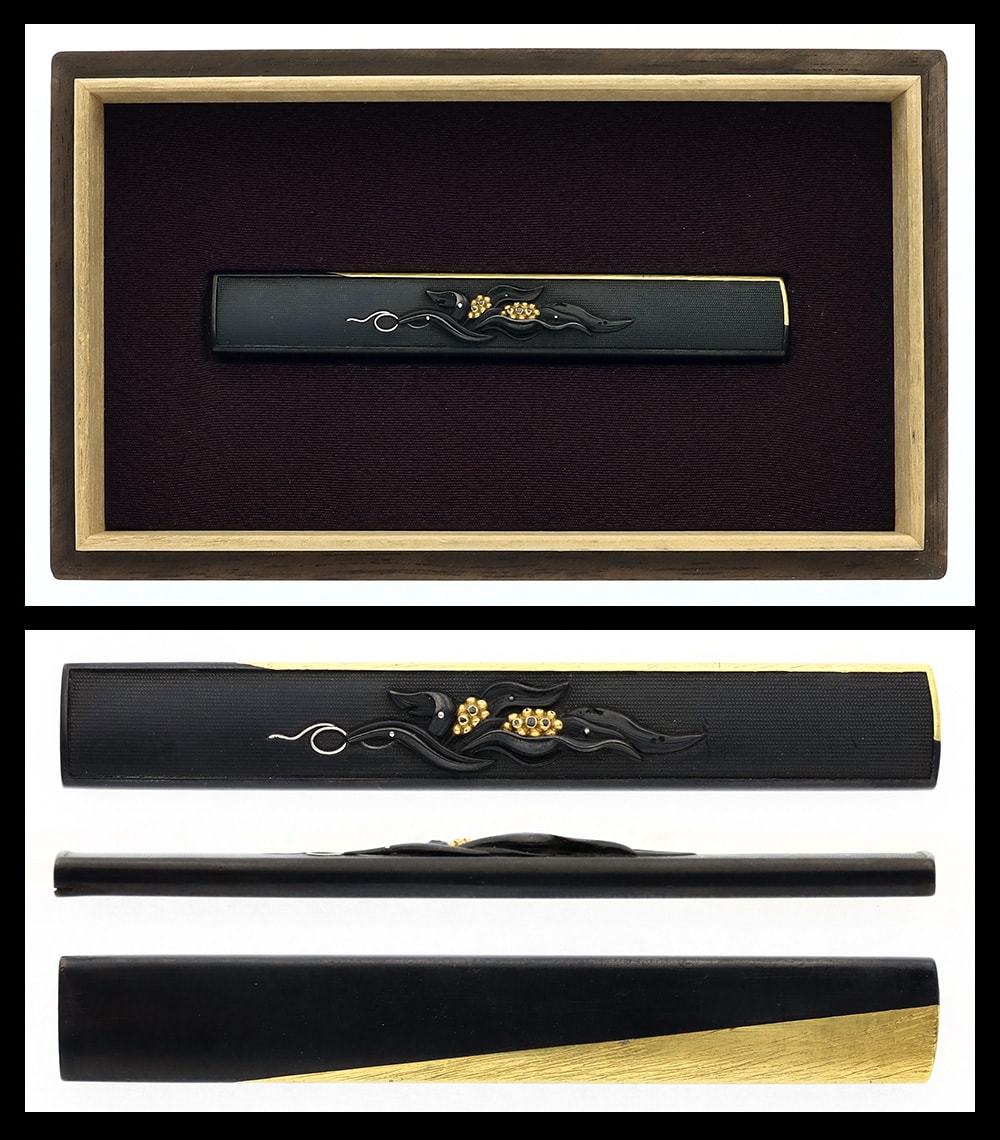
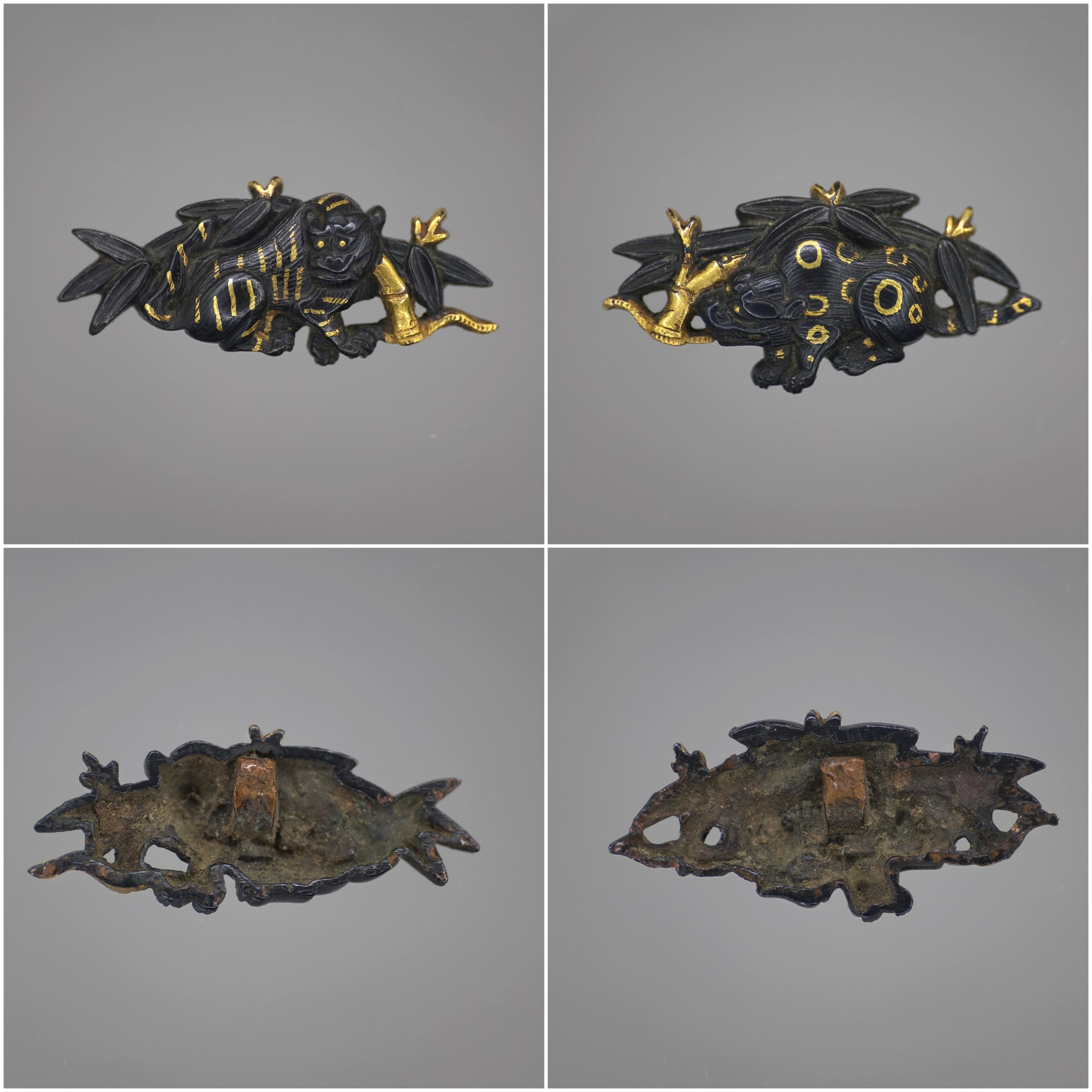
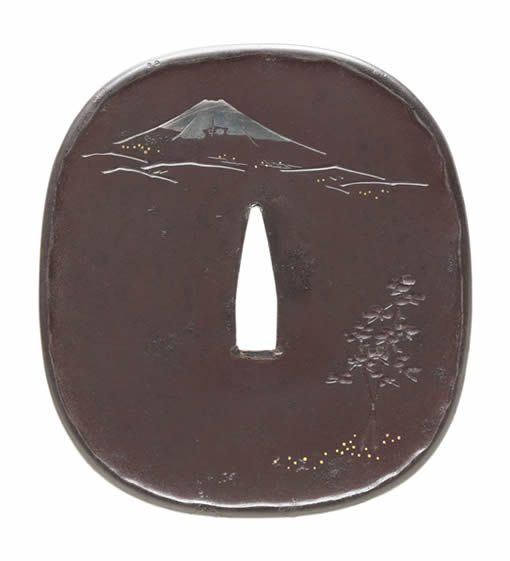
Mitsuyoshi worked squarely within the traditional Goto manner -- (high-relief carving) with (polychrome metal inlay) on a ground -- yet brought to it a pronounced lyrical sensibility and assured command of composition. His subjects encompass sweeping landscape programmes such as Mt. and the Tokai seacoast, rendered across complete soroi- suites, as well as intimate seasonal themes of autumn grasses with the moon rabbit. A solid-gold depicting a seashore scene demonstrates his capacity for chisel work of pronounced modulation and rhythm, rendering form and recession using gold alone with truly delicate precision. Notably, he extended the Goto idiom beyond sword fittings by producing signed inro and netsuke in , an uncommon material choice for the house, conceived as coordinated ensembles reminiscent of a warrior's formal attire.
The evaluations acknowledge that Mitsuyoshi is sometimes regarded as slightly inferior in technical ability when compared among successive generations of the Goto family, yet consistently affirm the excellence of individual works. His finest pieces are praised as masterworks in which sumptuousness is balanced by an air of clarity and freshness, and in which the opposing states of stillness and movement are set in contrast. His authenticated inscriptions on works by earlier masters such as Eijo (sixth generation) further attest to his institutional authority as the final pre-modern guardian of the mainline Goto tradition.