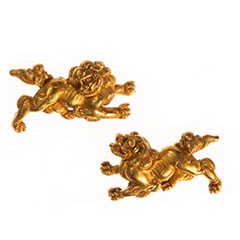
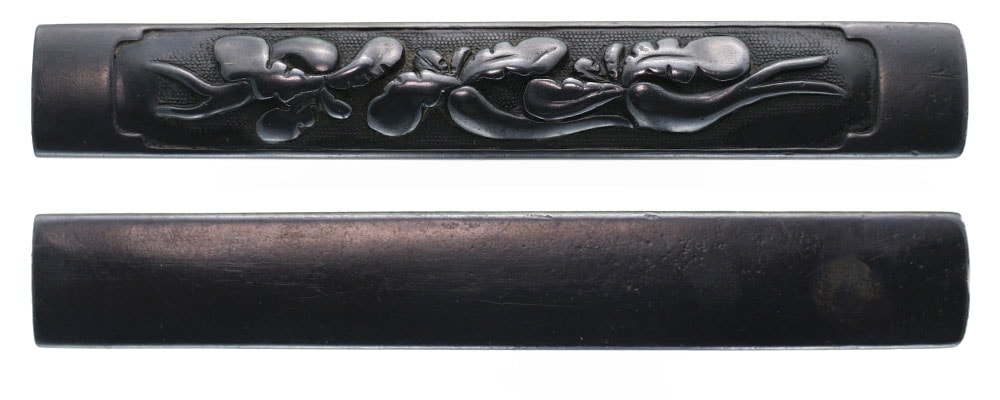
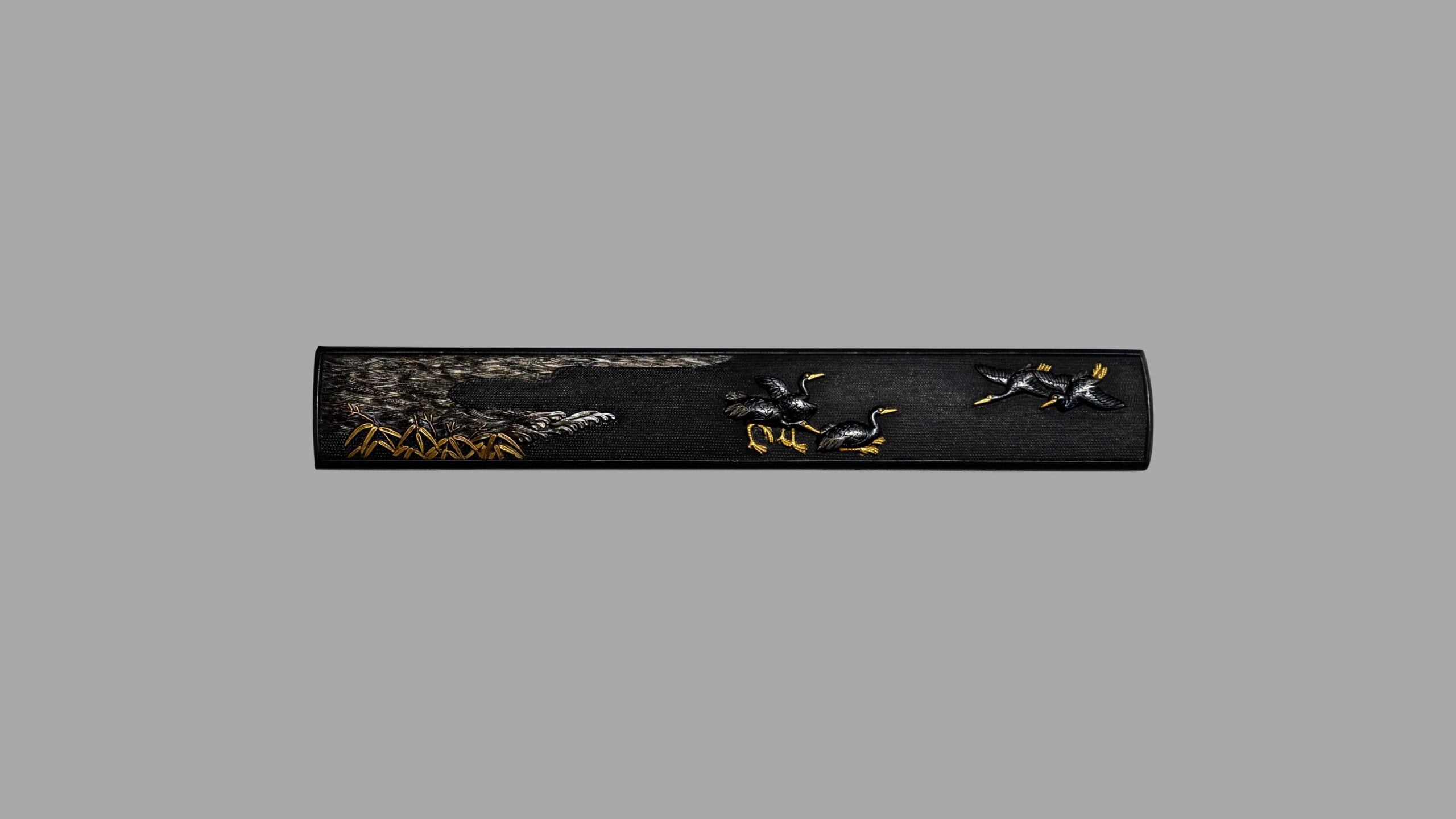
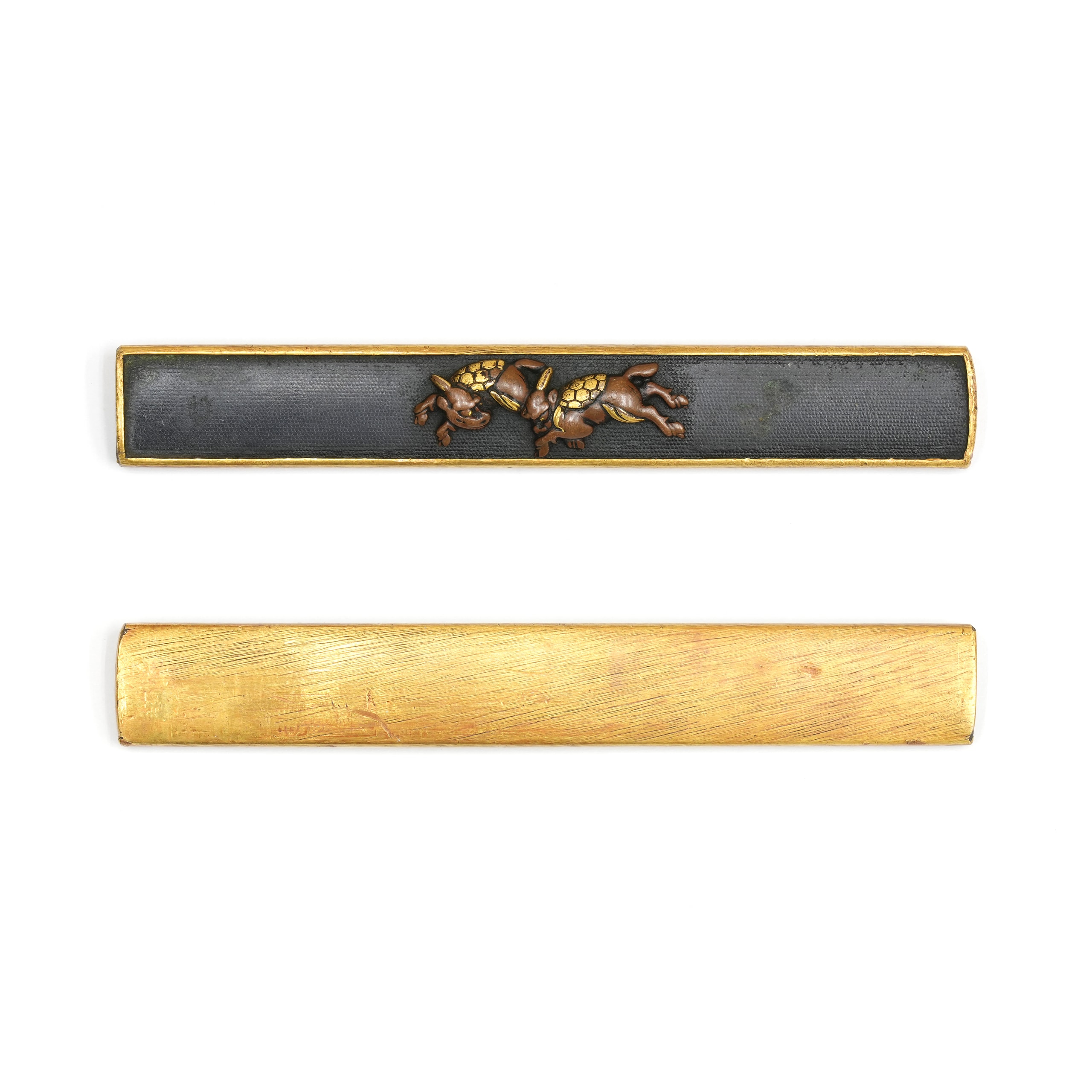
Goto Sokujo, the eighth head of the mainline Goto family, was the second son of the sixth master, Eijo. His childhood name was Kameichi and his common name Genshichiro; he was born in Keicho 5 (1600). When his father Eijo died, Genshichiro was eighteen years old. He succeeded to the name Shirobei and changed his personal name to Mitsushige. The circumstances of his succession were complicated: for reasons the notes "are not clear," the seventh headship was held in a custodial form by his grandfather Tokujo, and in Genna 9 (1623) his uncle Kenjo inherited as the seventh master, while Sokujo was assigned to service in (edozume). It was not until 'ei 5 (1628), at the age of twenty-eight, that Sokujo at last succeeded to the main house as its eighth head. His tenure, however, proved tragically brief --- "less than four years" --- and he died of illness in 'ei 8 (1631) at the young age of thirty-two. The observes with consistent emphasis that "for this reason, Sokujo's works are exceedingly few," and that among pieces bearing his own signature, "only a single set of a crawling dragon (hairyu) is presently confirmed." His known signatures include "Goto Mitsushige" with , "Mitsushige" with , and "Goto Shirobei Mitsushige" with .
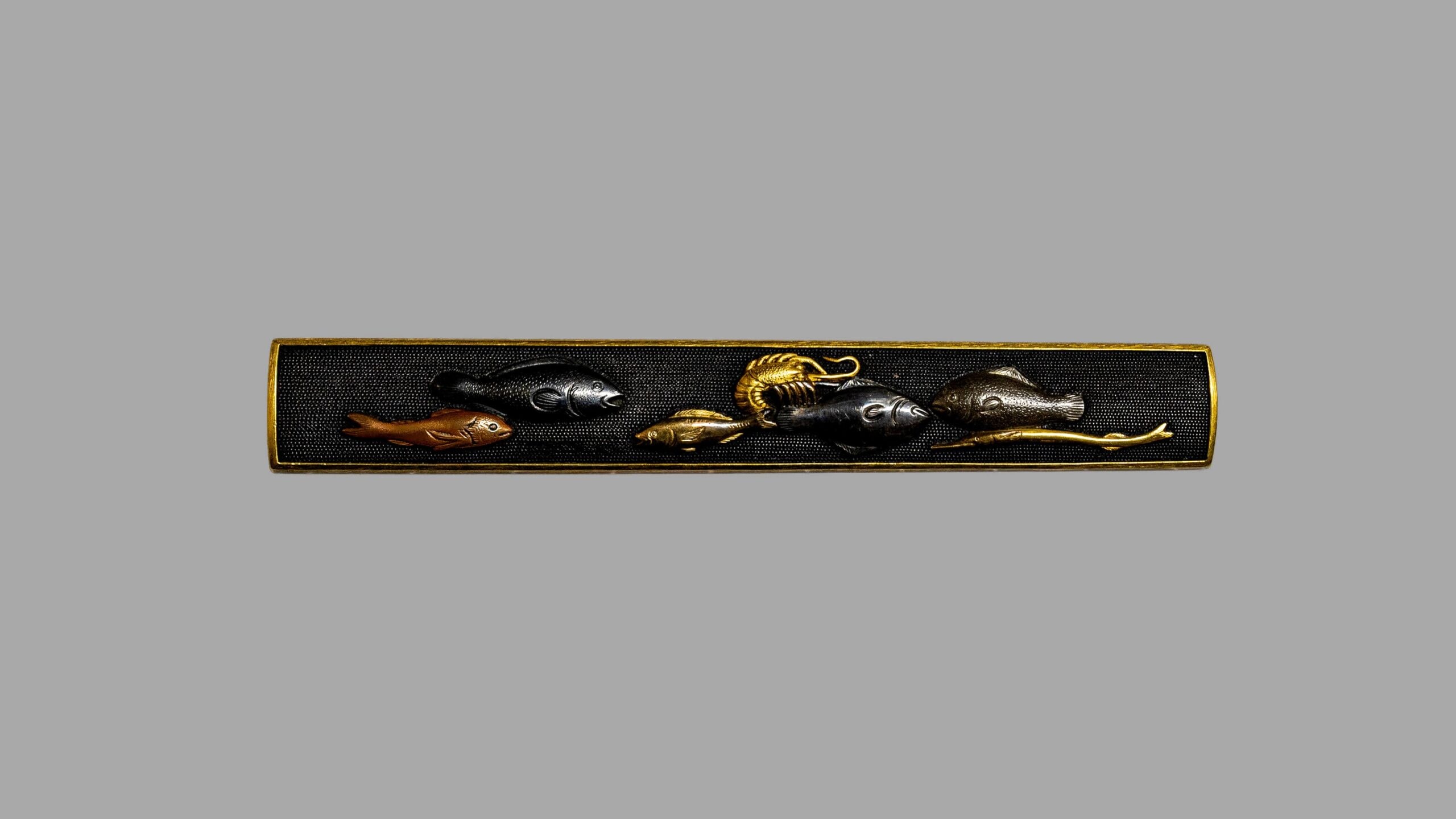
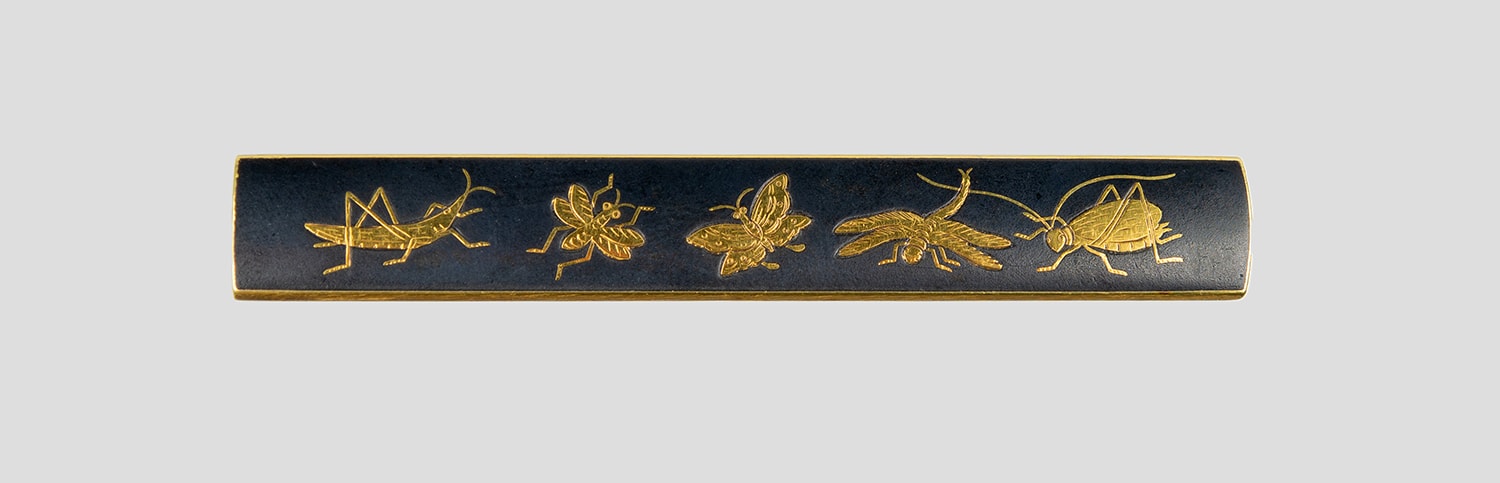
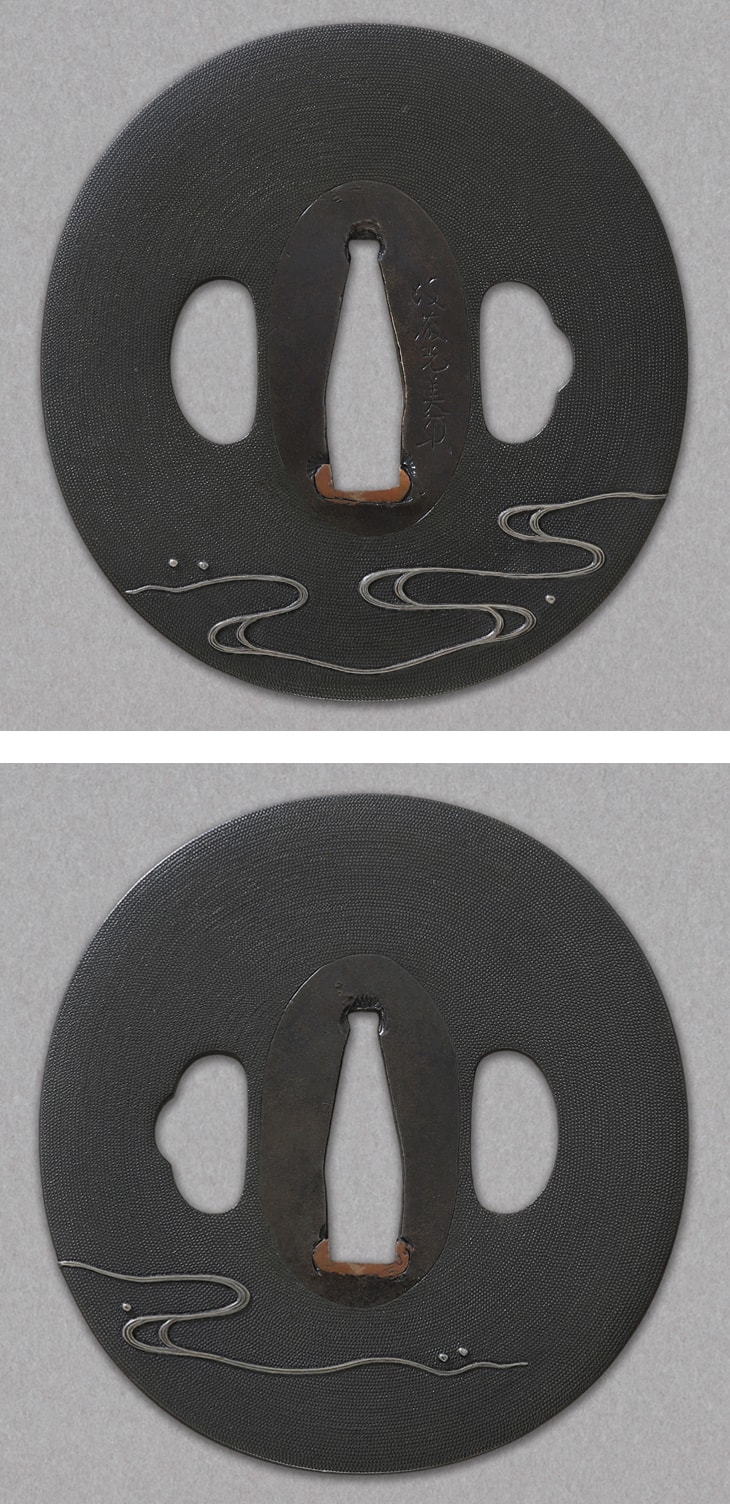
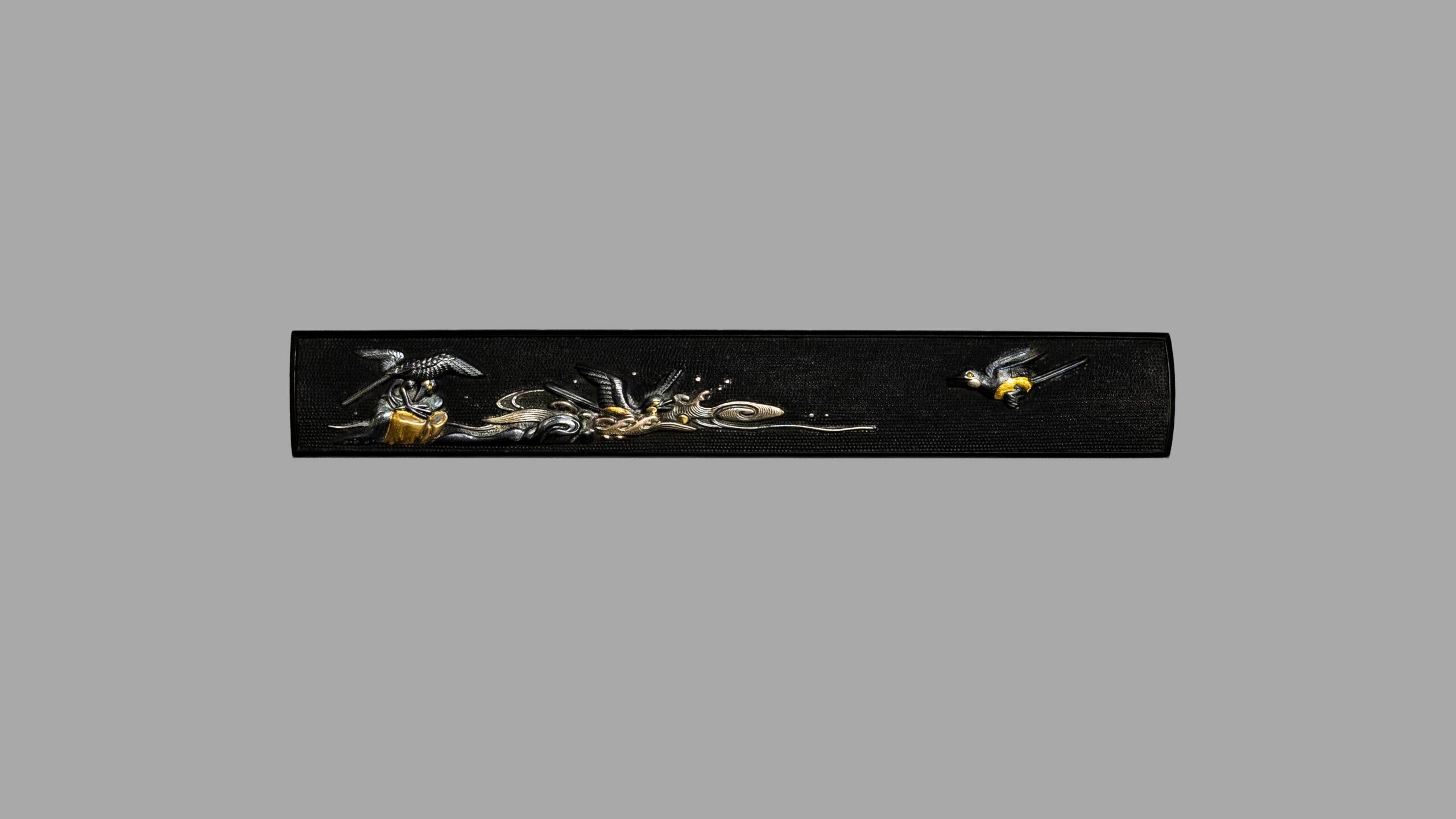
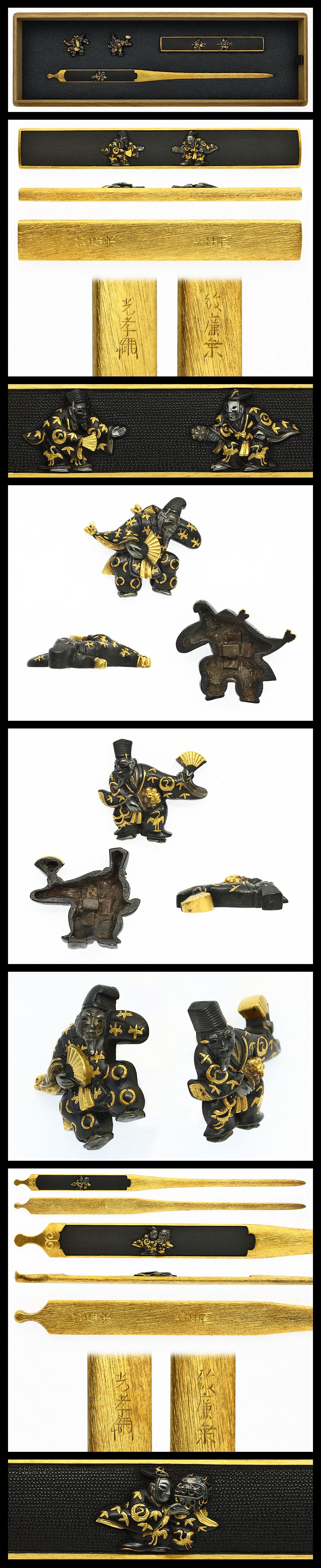
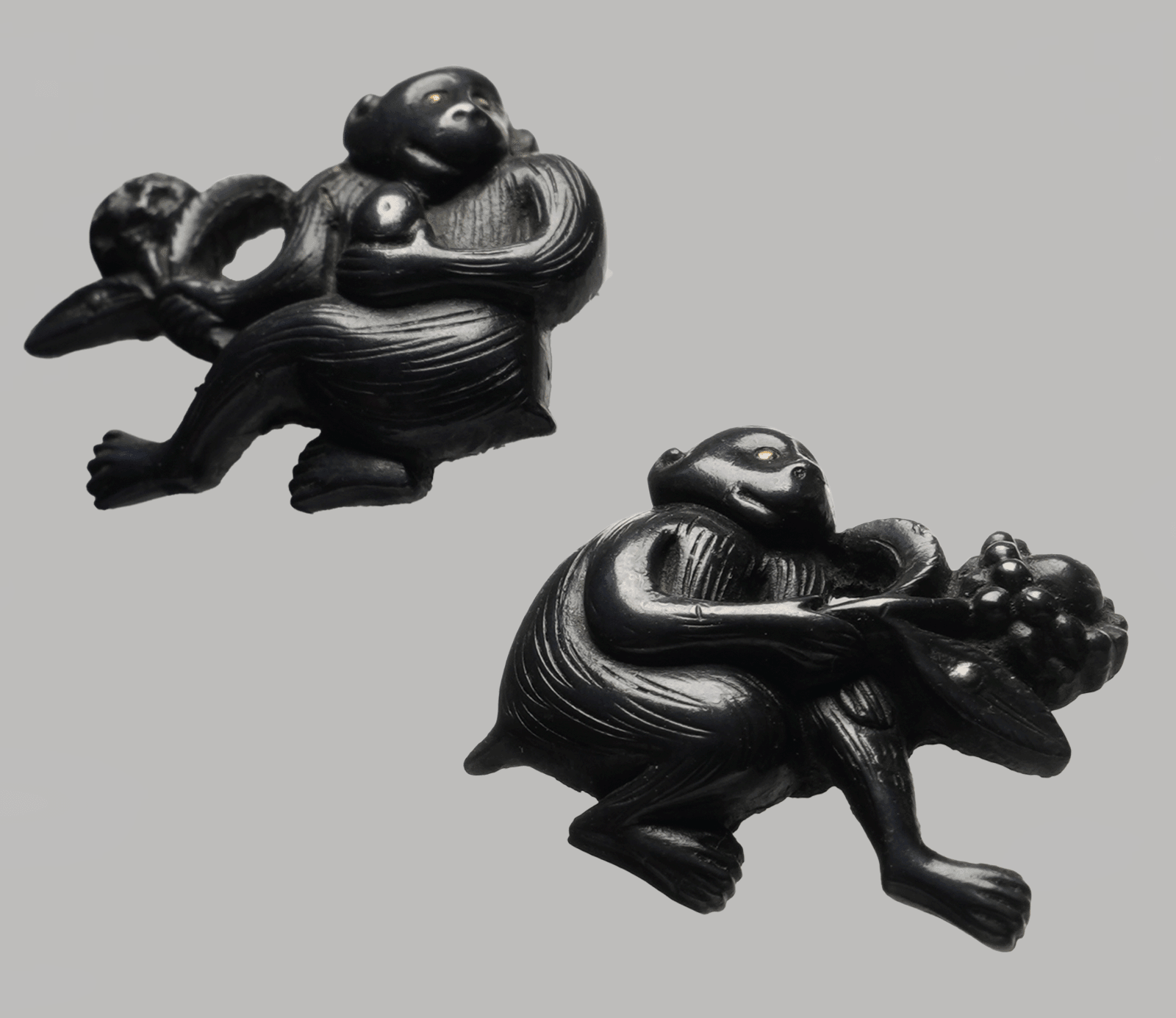
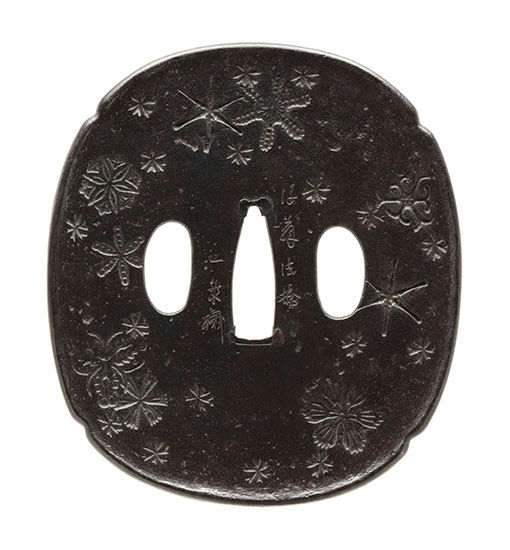
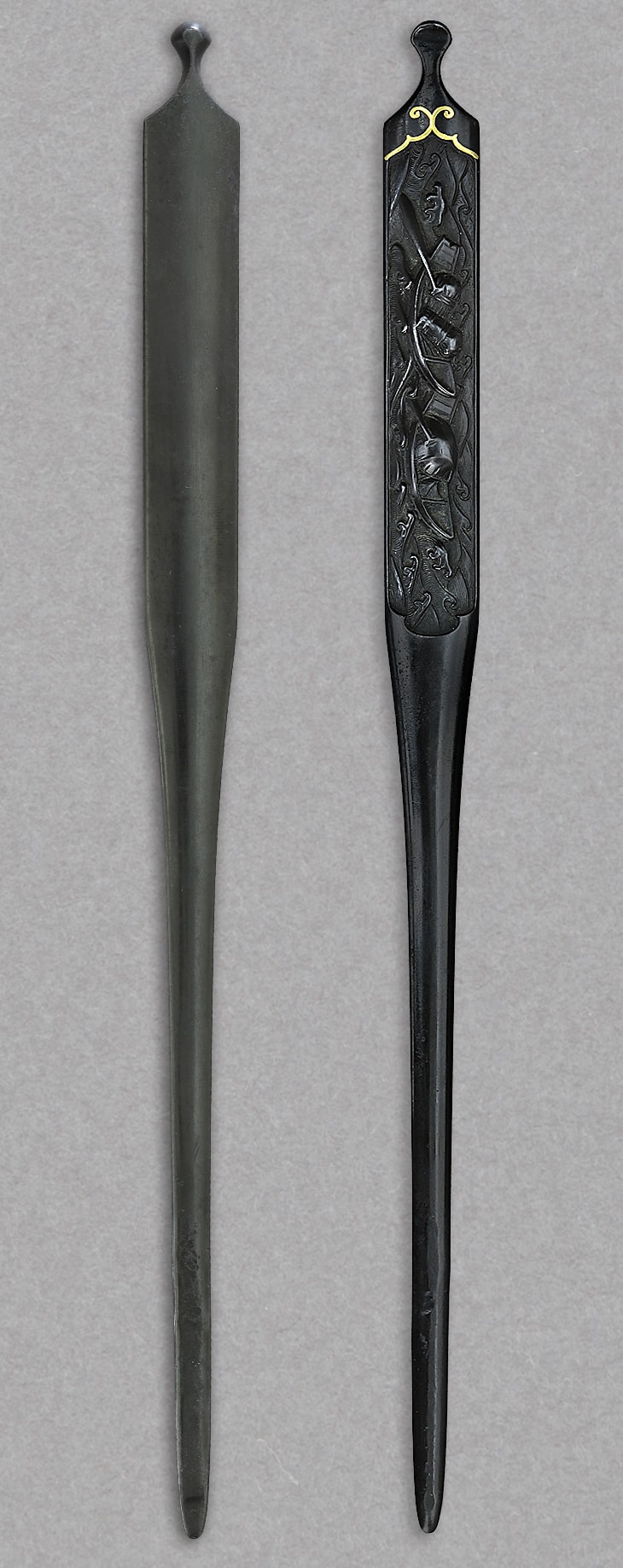
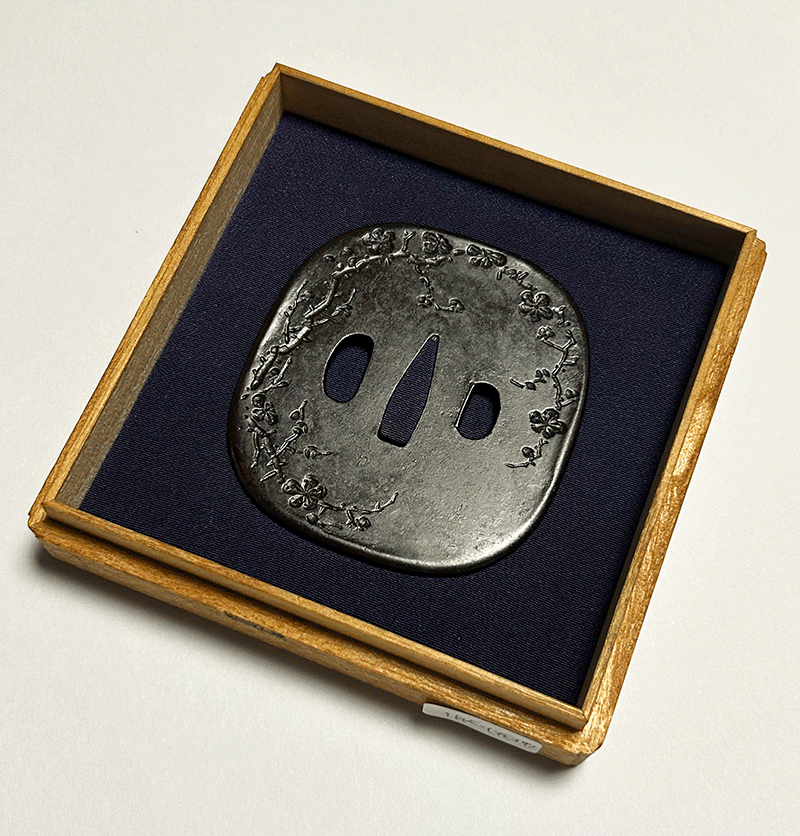
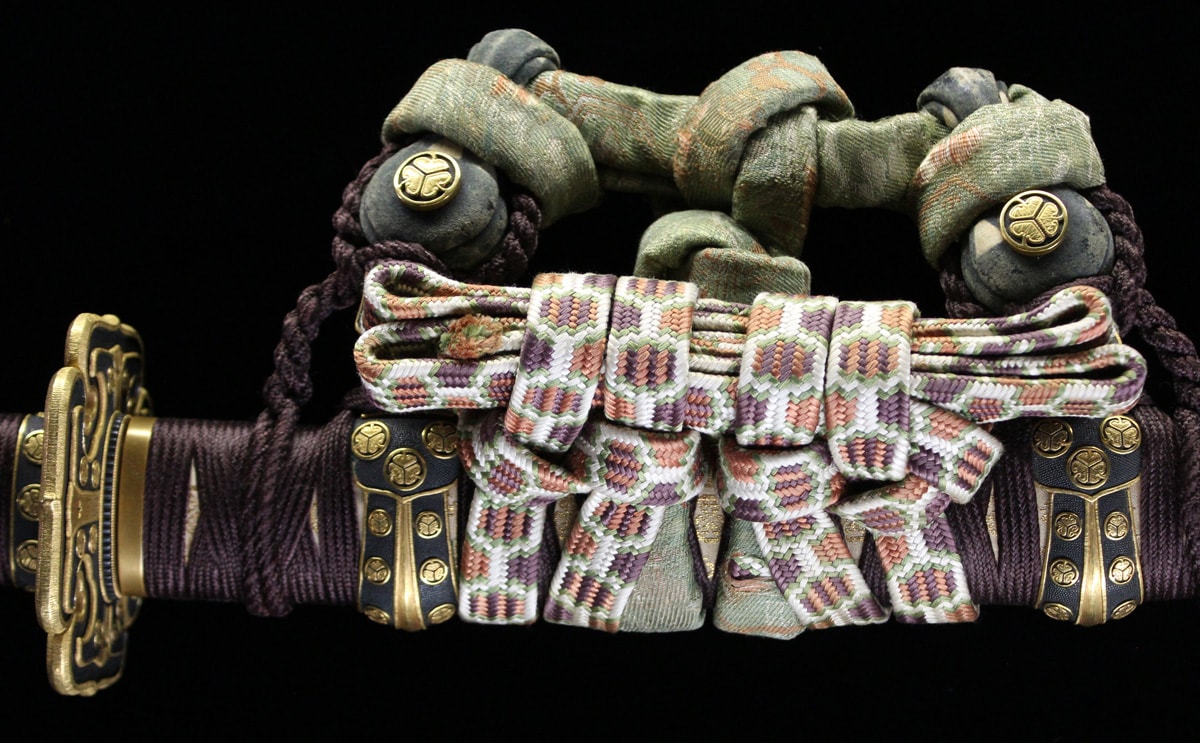
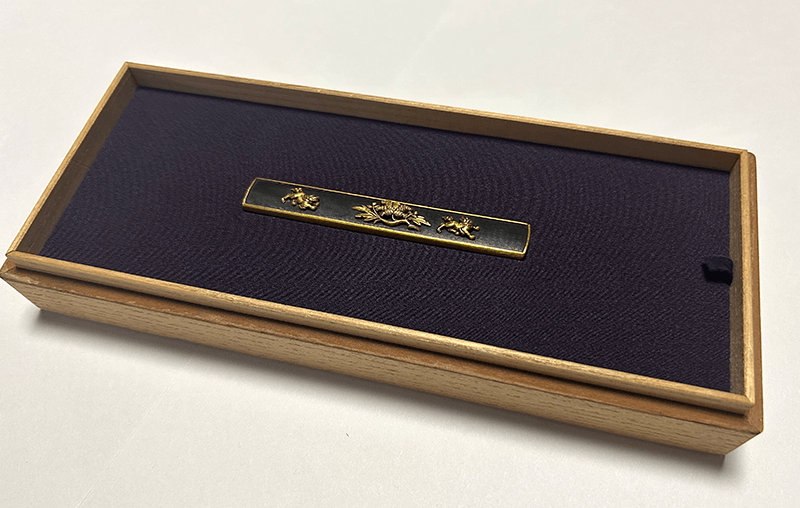
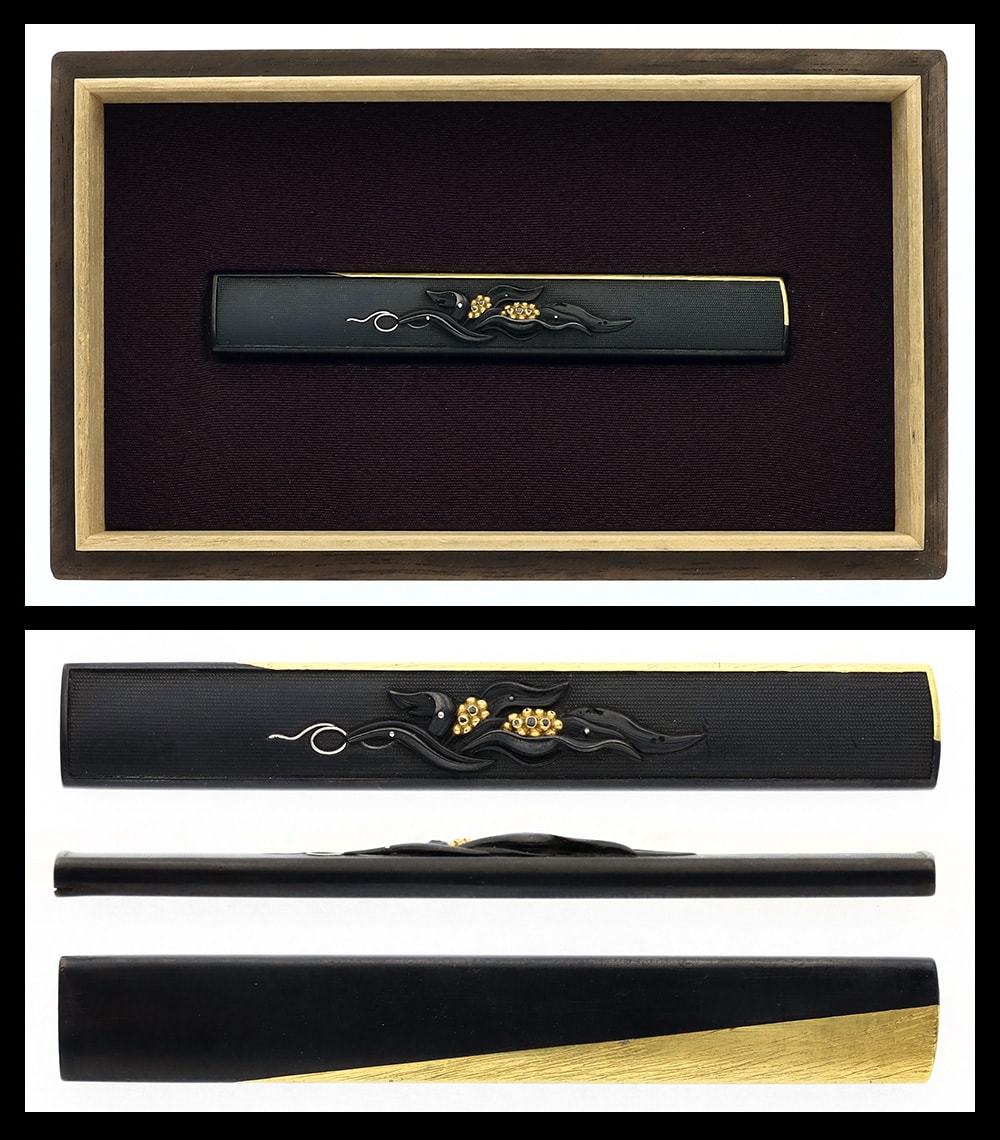
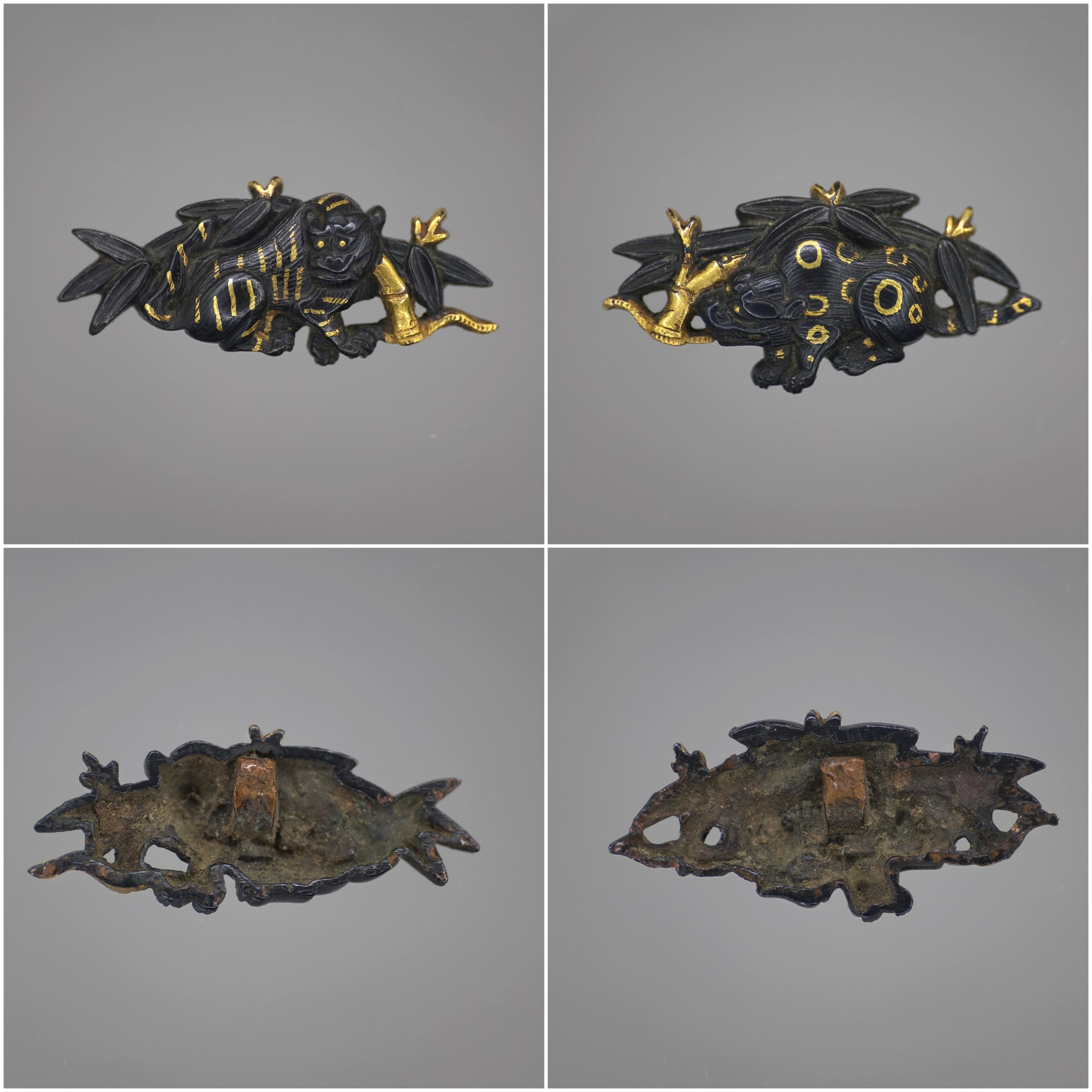
Sokujo's extant works demonstrate strict adherence to the iebori no okite --- the formal house rules of workmanship that governed mainline Goto production. His and are executed in with gold crests and gilt reverse ('), while his conform to house practice in solid gold with modeled carving (yobori). The quality of the ground is consistently noted as "superb," and the gold crest carving () is described as "exceptionally minute and of excellent quality." His subjects encompass the dragon in its several canonical forms --- the crawling dragon (hairyu), the dragon, the sword-wrapping dragon (kenmaki ryu), and the water dragon (suiryu) --- as well as narrative and auspicious themes including the Four Sacred Beasts (shirei), the shell-matching game (-awase), Emperor Xuanzong and Yang Guifei, and the gold coinage of the Goto house itself. His carving is characterized by vigorous modeling in which, as the observes, "the 'mountain' portions rise high and the 'valley' portions are cut deeply; the forceful quality is outstanding." Triangular chisel marks applied to dragon horns, ears, and foreclaws constitute a notable technical signature. His figures are described as "taut" and showing "smooth, fluent movement," while the overall compositions convey "an elevated sense of formality" and "notably high dignity."
The rarity of Sokujo's oeuvre paradoxically intensifies the significance accorded to each surviving work. Almost all designated pieces are unsigned, their attribution resting upon formal appraisals issued by later Goto masters --- the tenth head Renjo, the twelfth head Jujo Mitsusato, the thirteenth head Enjo Mitsutaka, the fourteenth head Mitsumori, the fifteenth head Mitsuyoshi, and the sixteenth head Mitsuaki --- often accompanied by certificates with recorded valuations and by reverse carving (urabori) added at the time of authentication. One work was judged by Renjo to be his own father's hand, an appraisal the describes as "carrying authority close to that of an autograph signature." This sustained chain of institutional authentication across eight generations of Goto headmasters constitutes an extraordinary provenance, and the repeatedly emphasizes its evidential weight. Sokujo's works are described as embodying "the assured tradition of the Goto house's official carving style" (Got0 ), possessing "exceptionally dignified" presence, and exhibiting "great precision" in execution and "exceptionally good" states of preservation. Despite a career cut short after barely four years at the head of Japan's most consequential metalworking dynasty, Sokujo left a small but distinguished body of work in which the formal authority and technical discipline of the mainline Goto tradition are preserved with undiminished rigor.