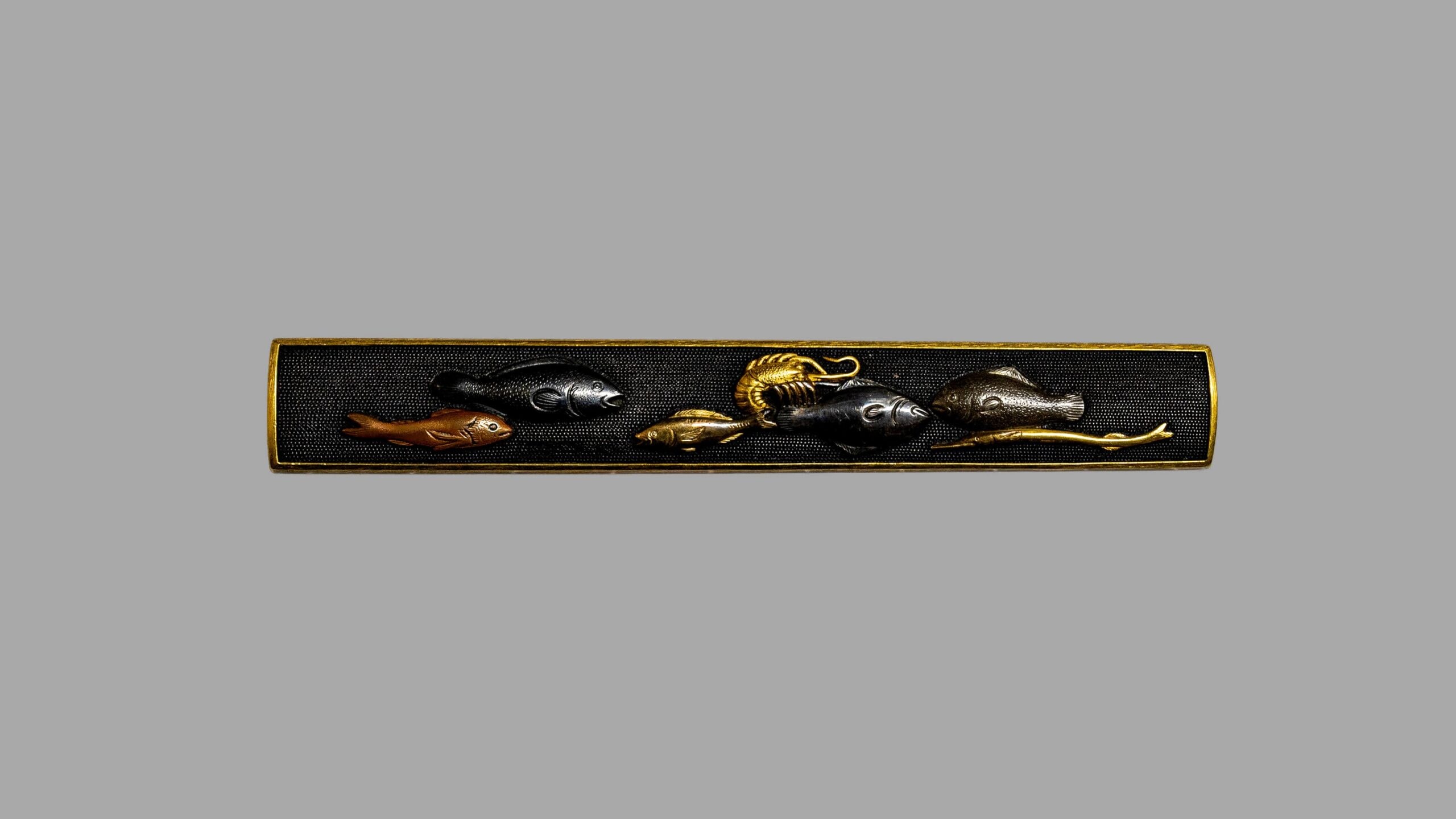
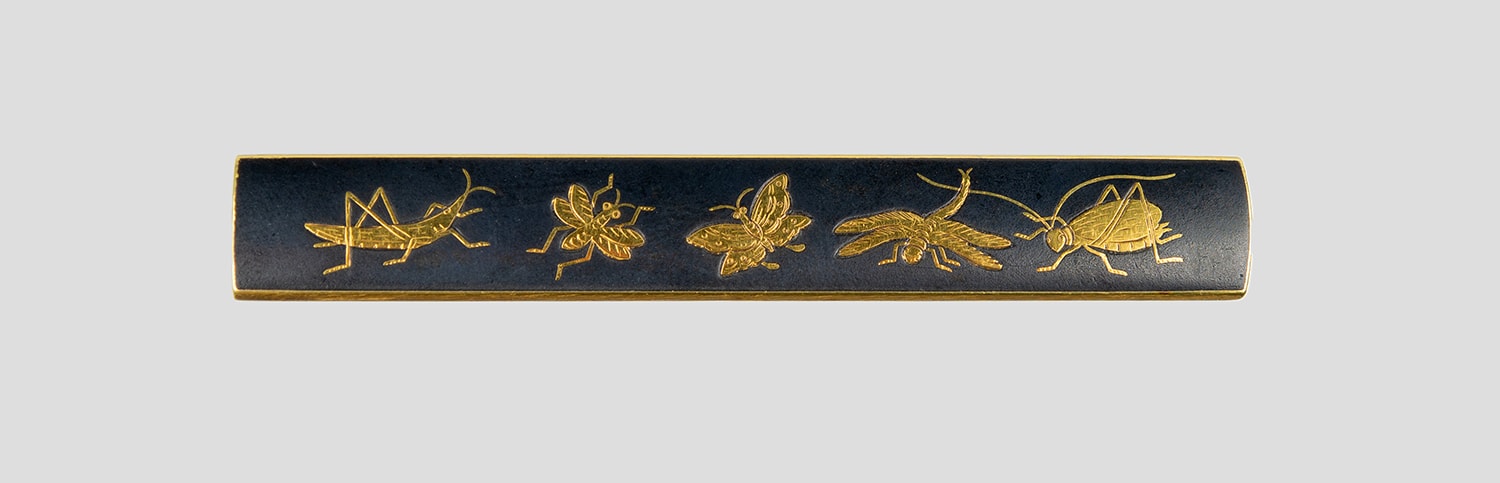
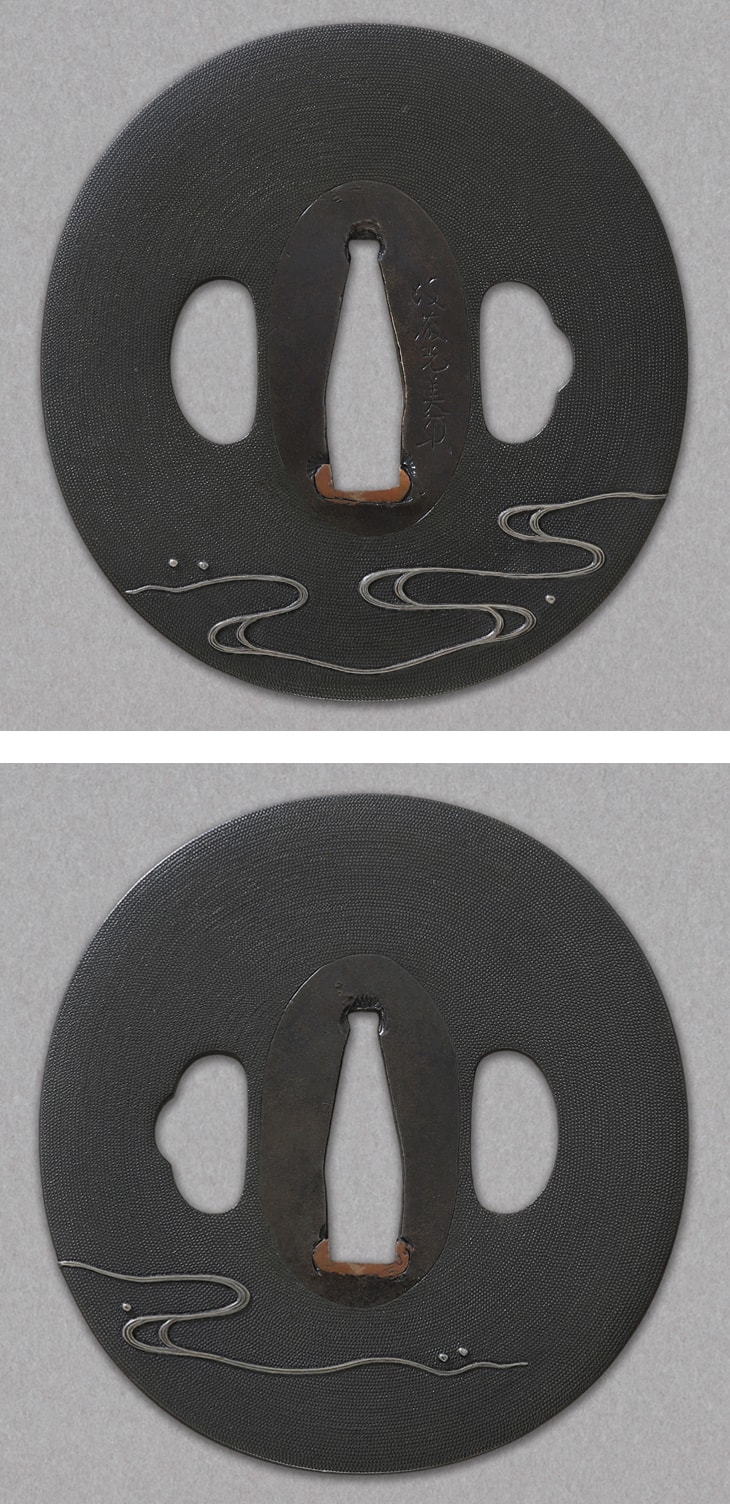
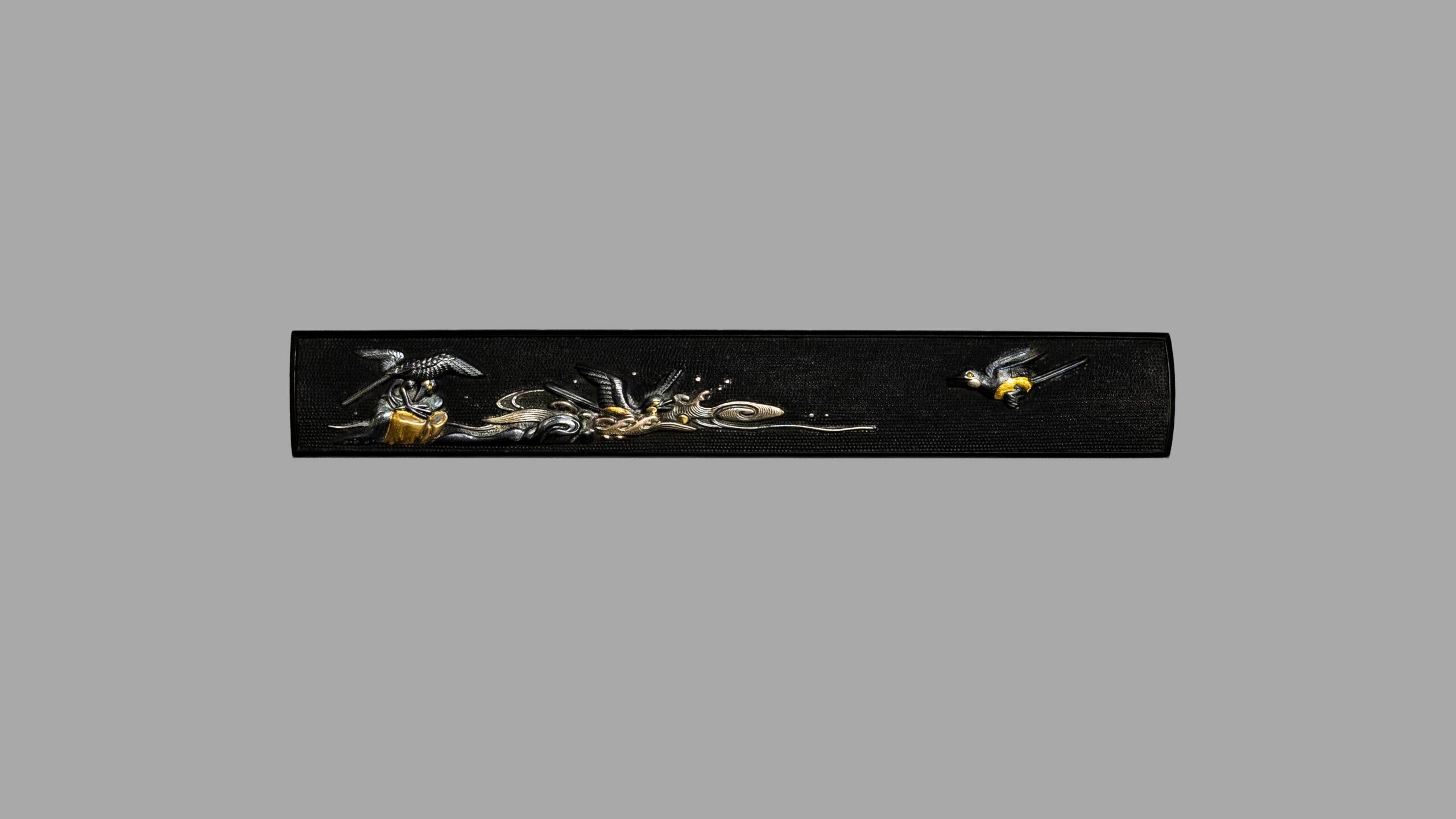
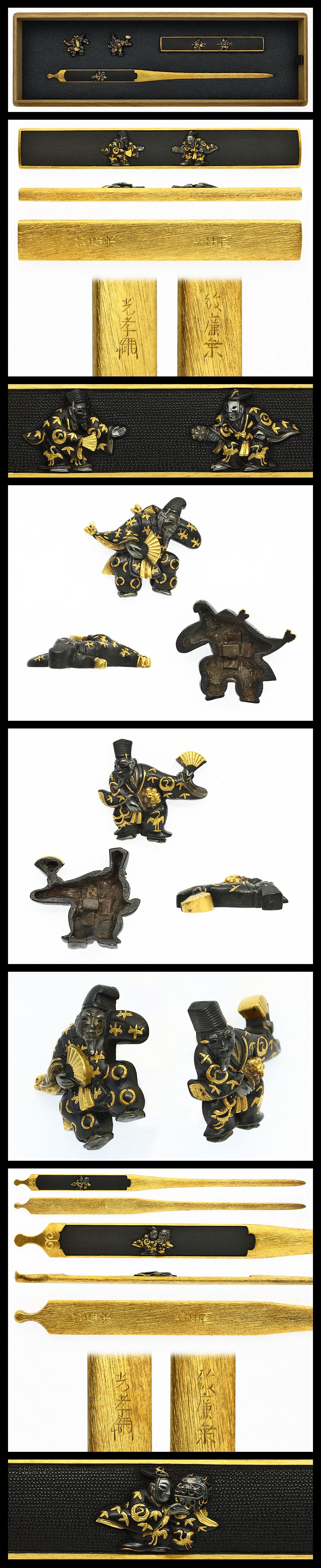
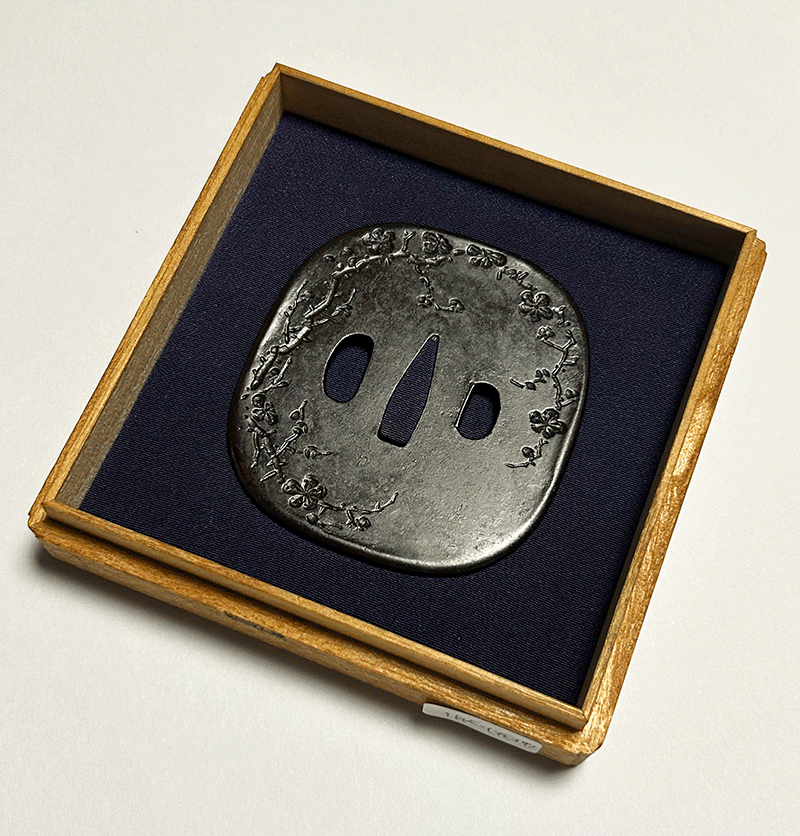
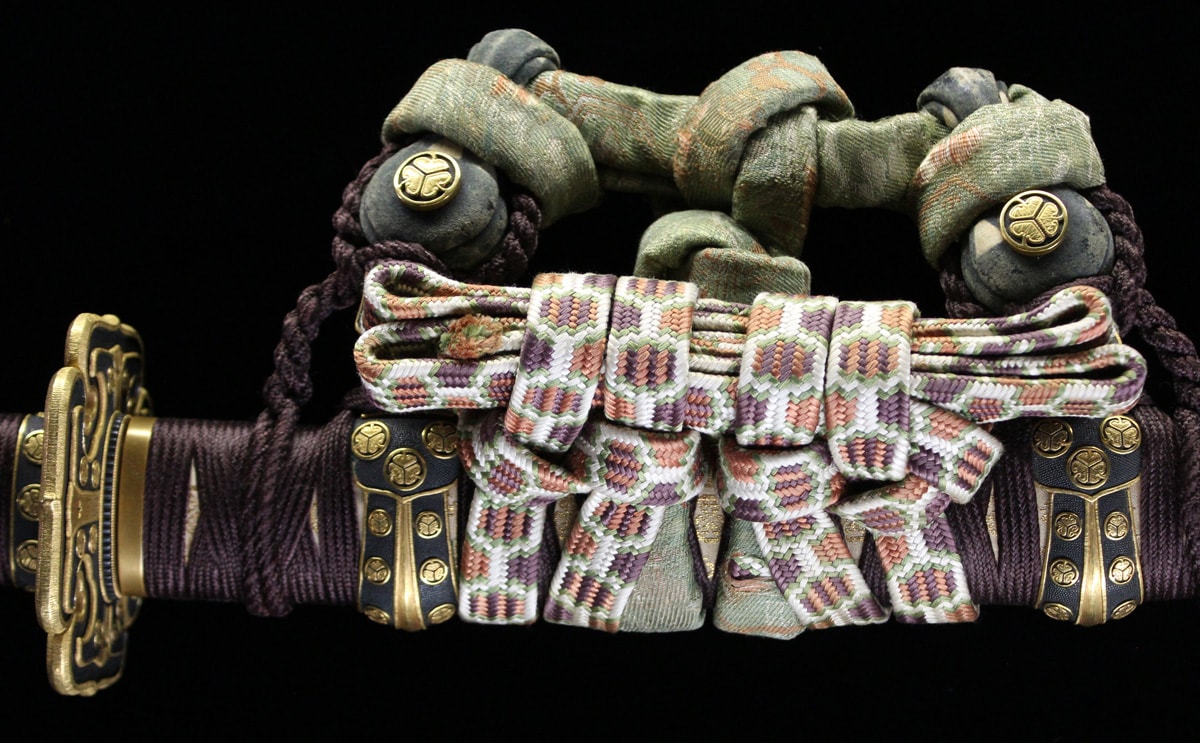
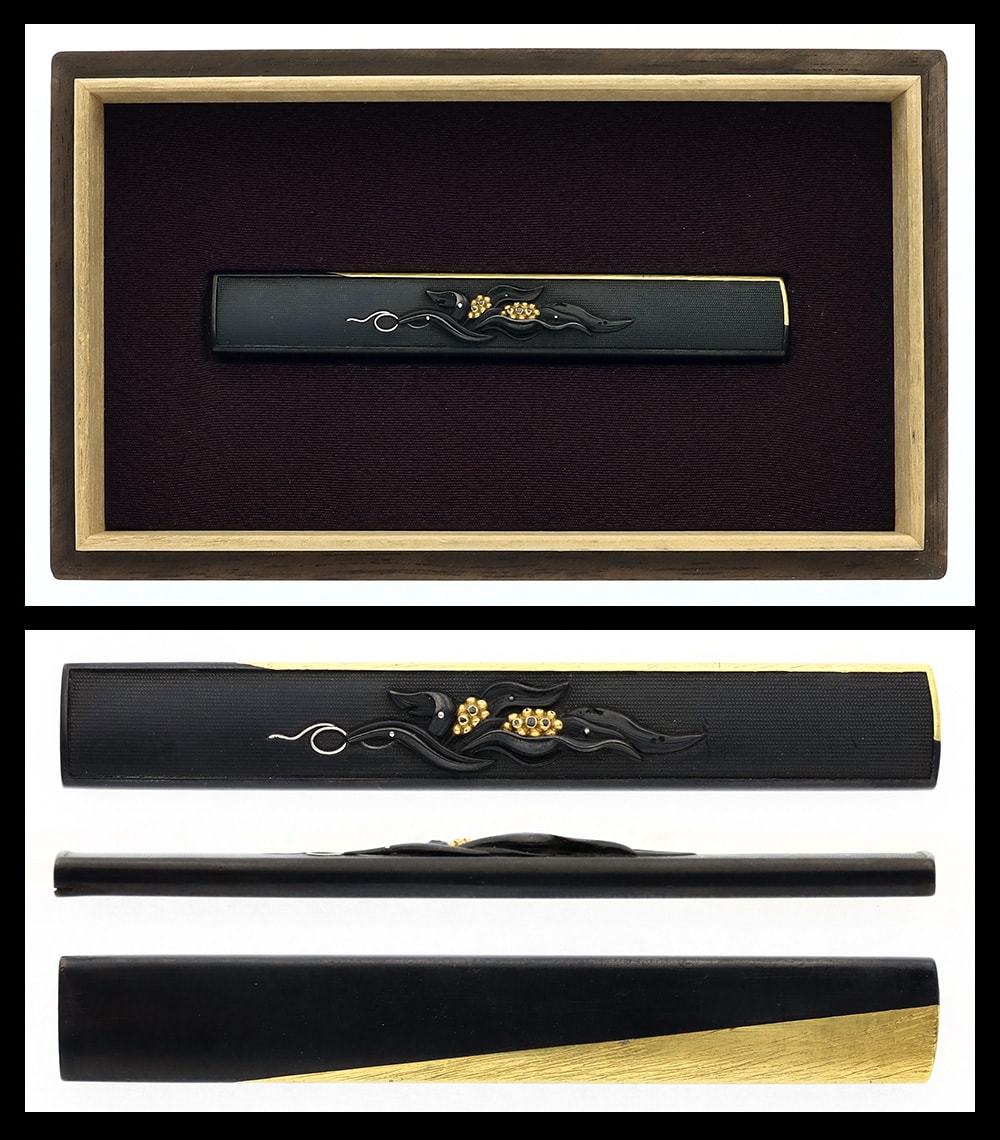
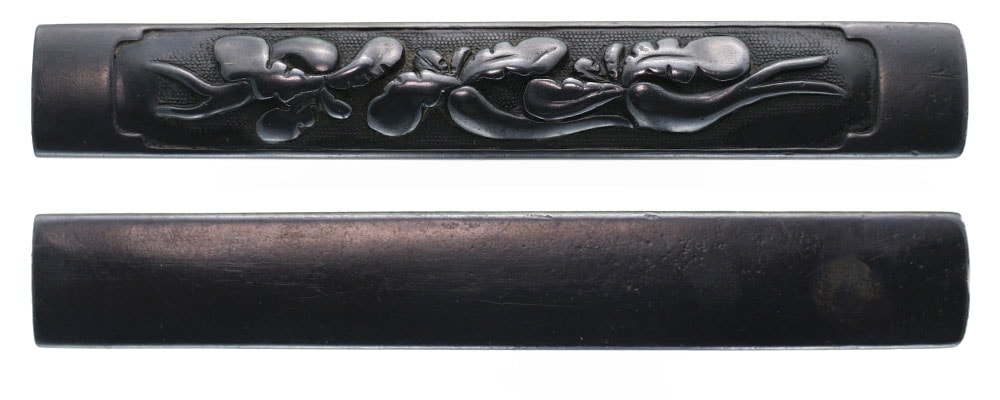
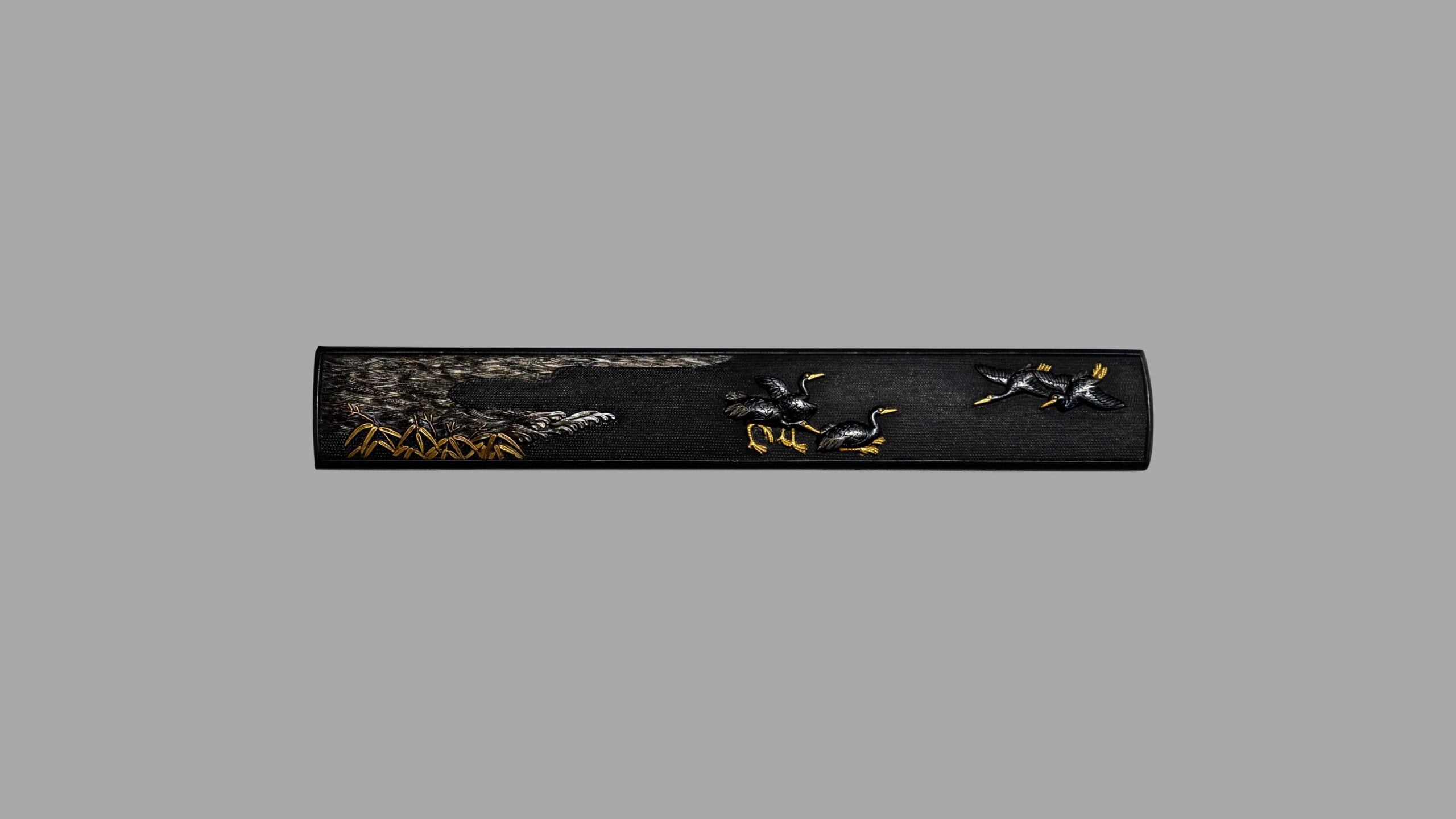
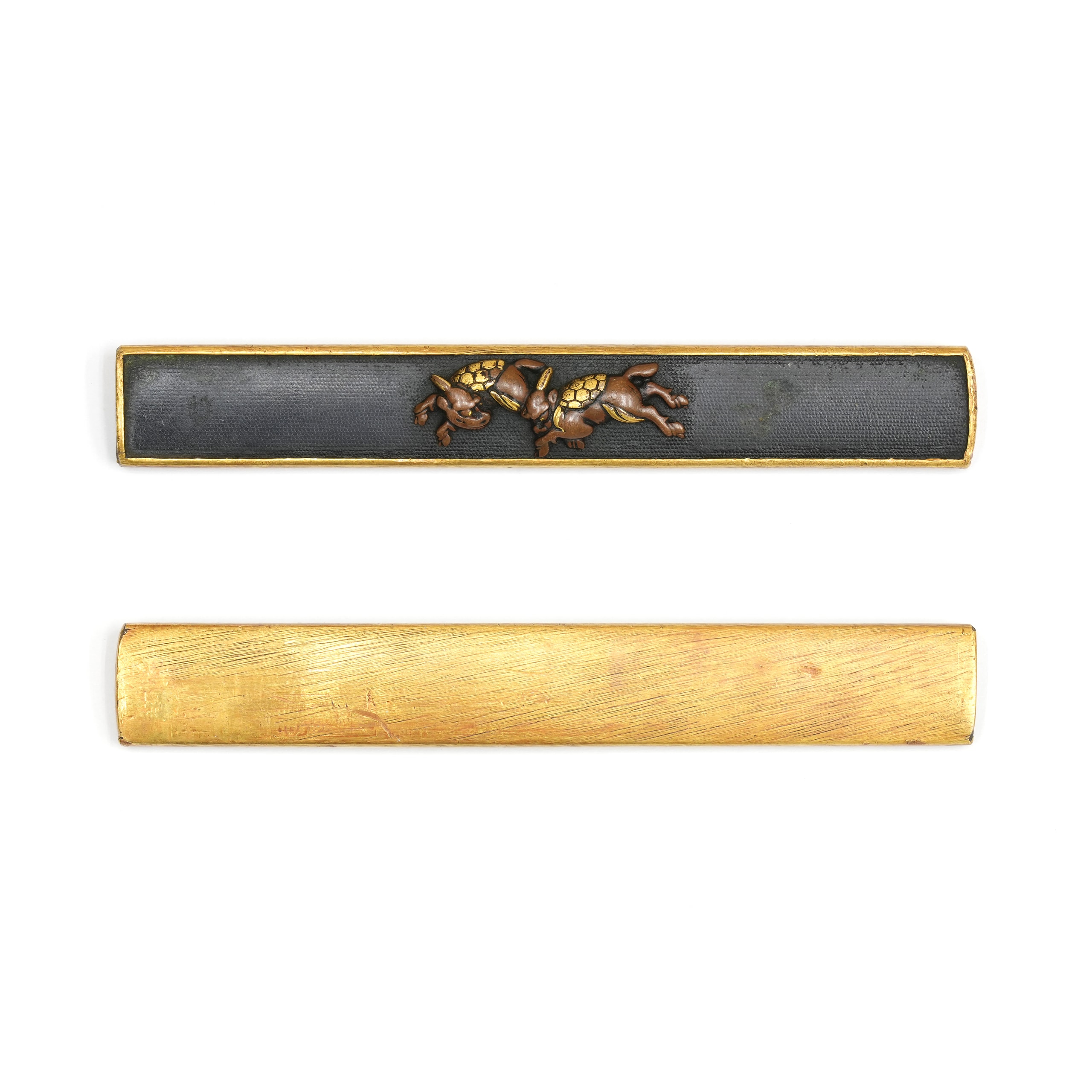
Gotō Mitsunori (後藤光乗), the fourth-generation head of the Gotō mainline (sōke), was the eldest son and heir of the third master Jōshin (乗真), born in Kyōroku 2 (1529). His common name was Kameichi, later changed to Koichirō, and his personal name (imina) was Mitsuie (光家). The Gotō family, acknowledged as the principal house of kinkō (sword-fitting metalworkers), served successive shogunal houses from the period through the period, and their productions came to be known as iebori ("house carving"), distinguished from ("town carving") made in response to ordinary public demand. Mitsunori initially served the Ashikaga shogunal house, then entered the service of Oda Nobunaga as a close retainer alongside his son Tokunori (徳乗). In Tenshō 9 (1581), by Nobunaga's command, Mitsunori and his heir Mitsumoto (Tokujō) produced the unmarked ōban (ten-ryō), regarded as the largest gold coin in the world. His reputation as a master craftsman is exceptionally high, and he is sometimes said to have been second in skill only to the founder Yūjō (祐乗).
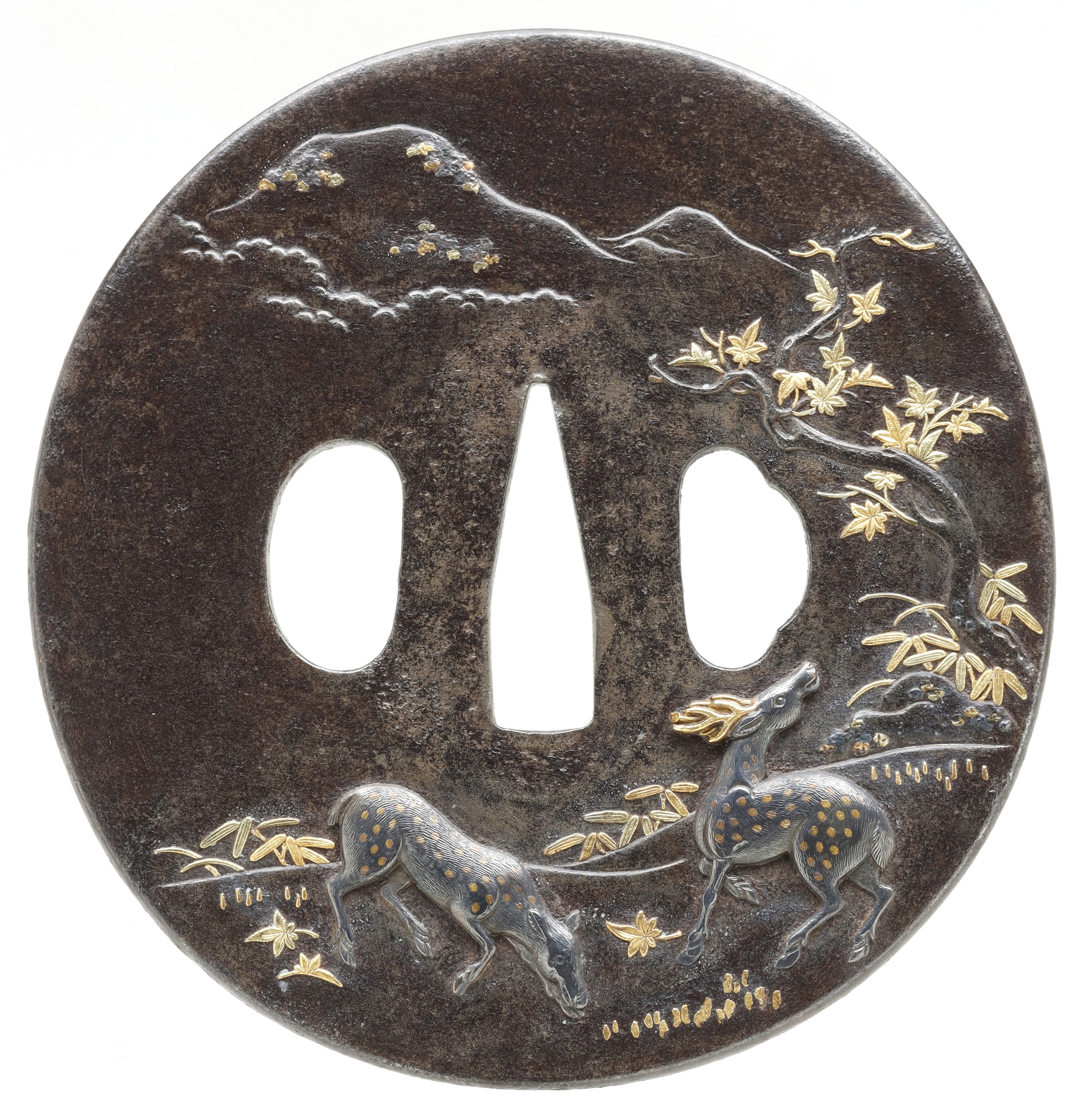
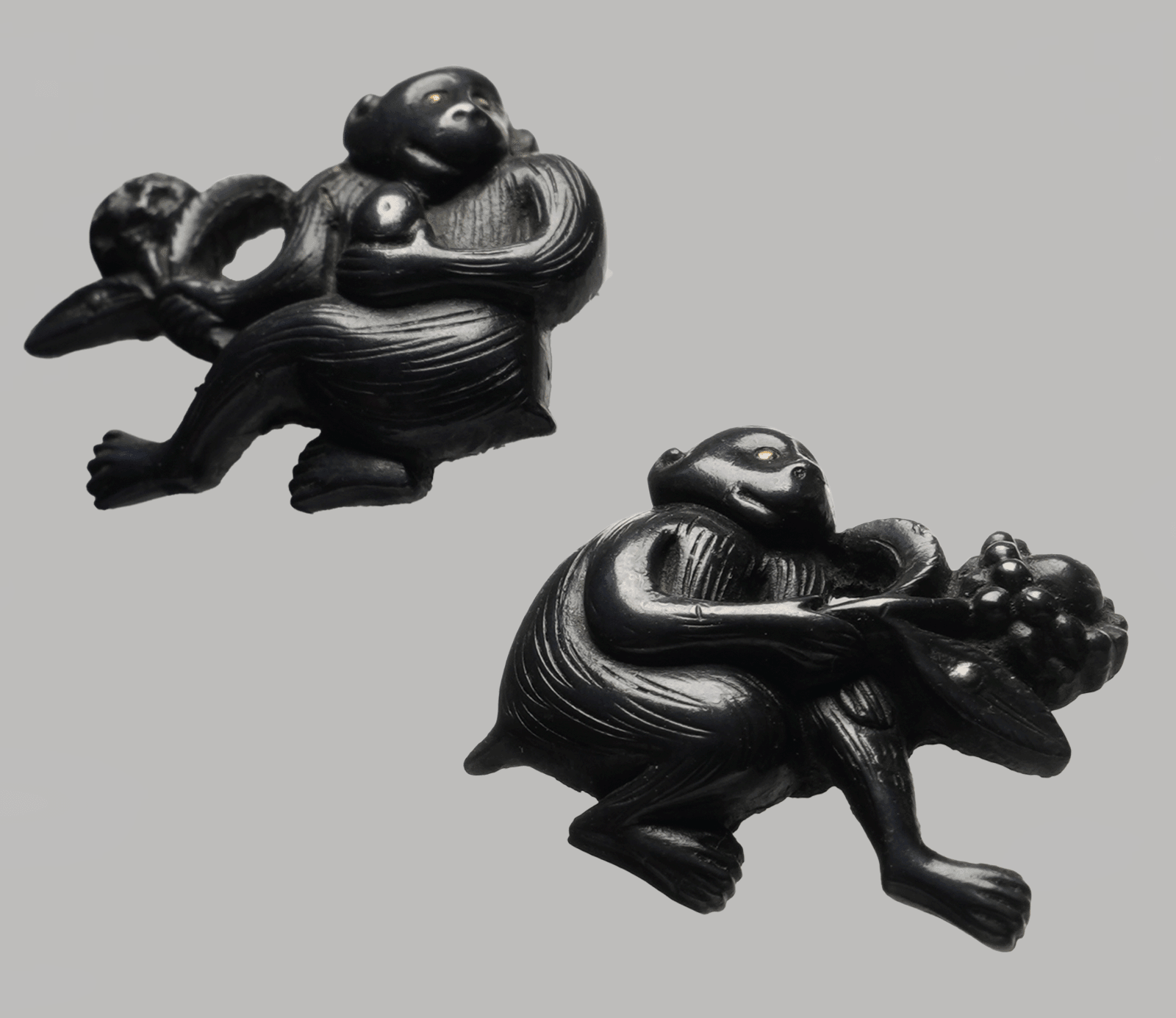
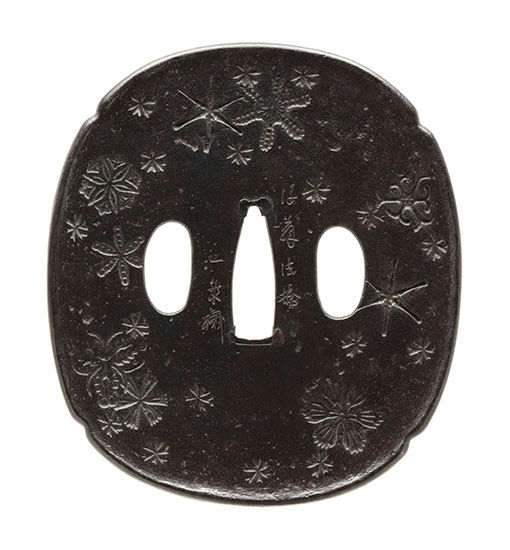
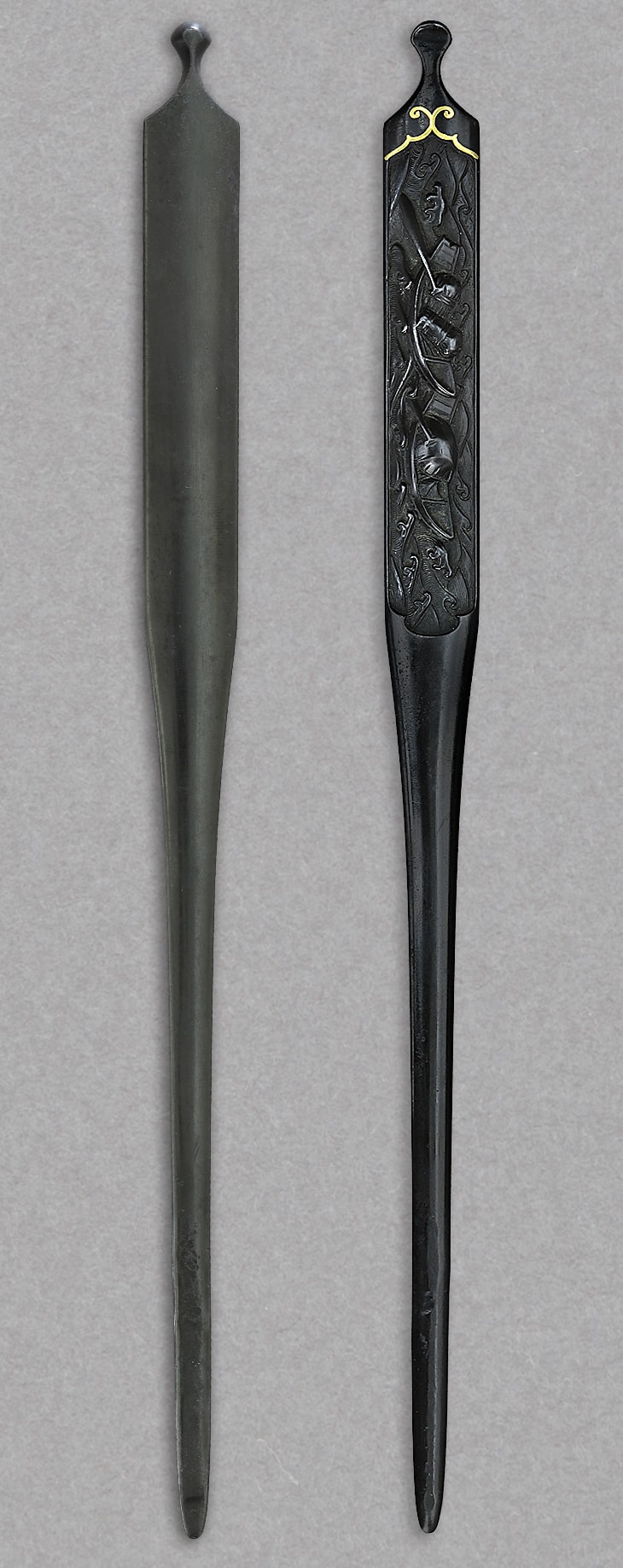
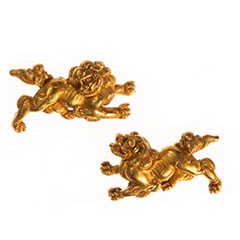
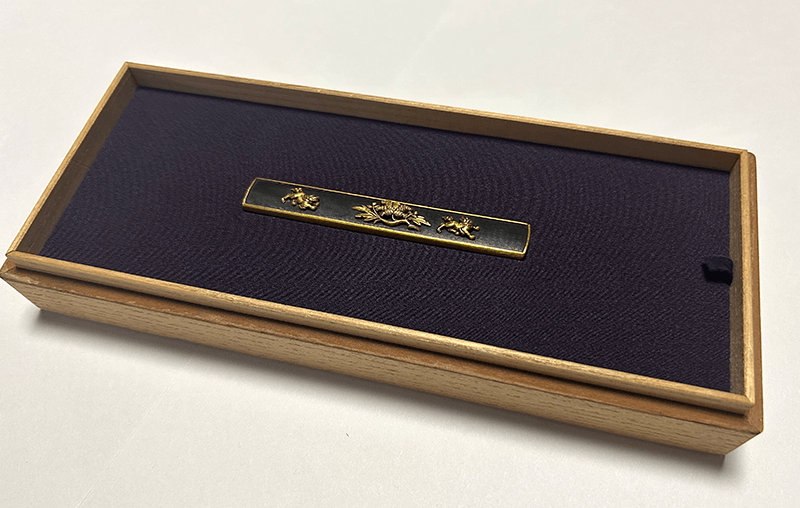
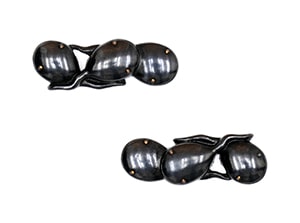
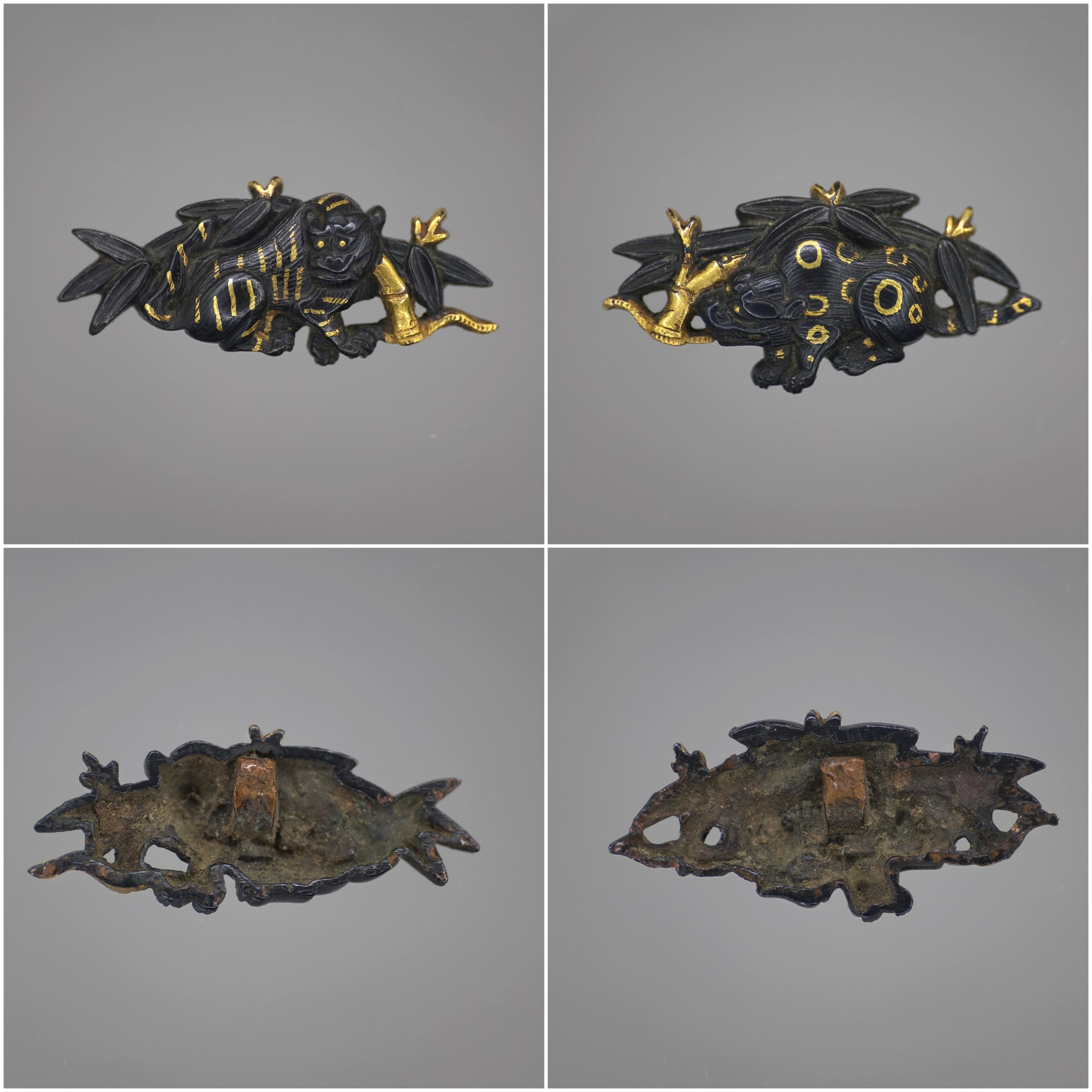
A distinguishing characteristic of Mitsunori's oeuvre is the frequent presence of strongly pictorial compositions, as he employed preparatory drawings by painters such as Kanō Motonobu and Kanō Eitoku. Within the Gotō house, he is credited as the first to introduce warrior subjects (mushabori) and designs of dragons and tigers. His works are executed primarily in with gold applied crests () and gilt reverse ('), employing (high-relief carving) enriched with gold and silver (polychrome metal inlay). The are characteristically rendered in solid gold (-muku) with sculptural yōbori and paired in'-ne attachment stems, features that later appraisers used as decisive points of attribution. His lion motifs display a distinctive manner of depiction said to occur frequently among the first three generations of the Gotō line as well as in his own work, and the triangular chisel work (sankaku-) is employed to powerful effect. Despite the limited pictorial field of the and , the carving is ample yet controlled, achieving compositions so vivid that figures seem about to spring into motion.
Mitsunori's works embody the spirited luxury of the age while maintaining the dignified tone of the iebori tradition. His subjects range from sacred beasts (reijū) — lions, tigers, leopards, kirin, rhinoceros, and baku — to Chinese historical narratives such as Huang Shigong and Zhang Liang and literary themes from the Twenty-four Filial Exemplars, as well as the Dragon and domestic subjects including oxen and pheasants. Many of his pieces were subsequently authenticated by later mainline masters, most notably the thirteenth head Mitsutaka (光孝), who inscribed authentication marks () and issued certificates with valuations that rank among the highest class. These works were transmitted through distinguished collections including the Shimazu, Kōnoike, Tsugaru, and Sakai families, attesting to the esteem in which Mitsunori's craftsmanship has been held across centuries of connoisseurship.