 NihontoWatchNihontoWatch
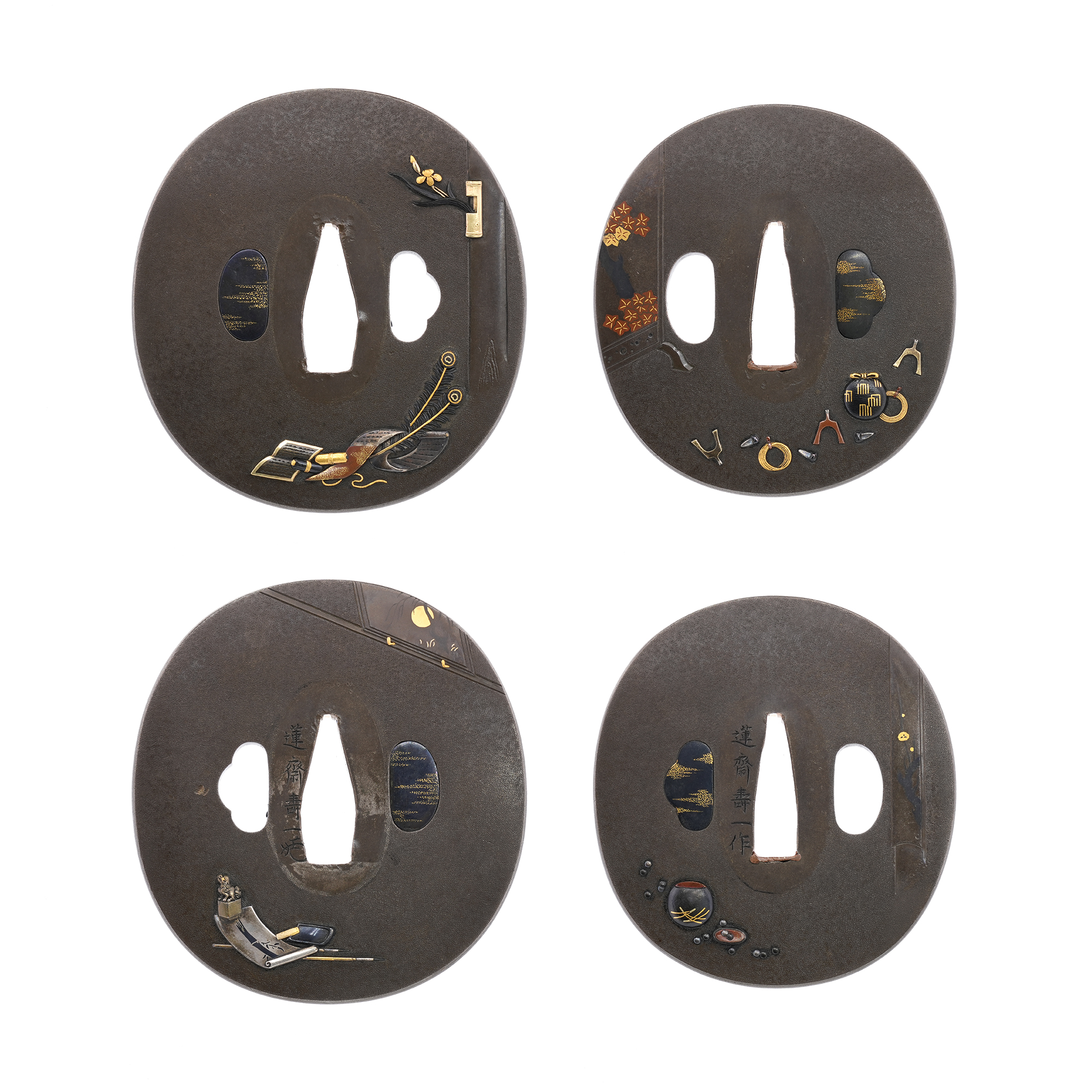
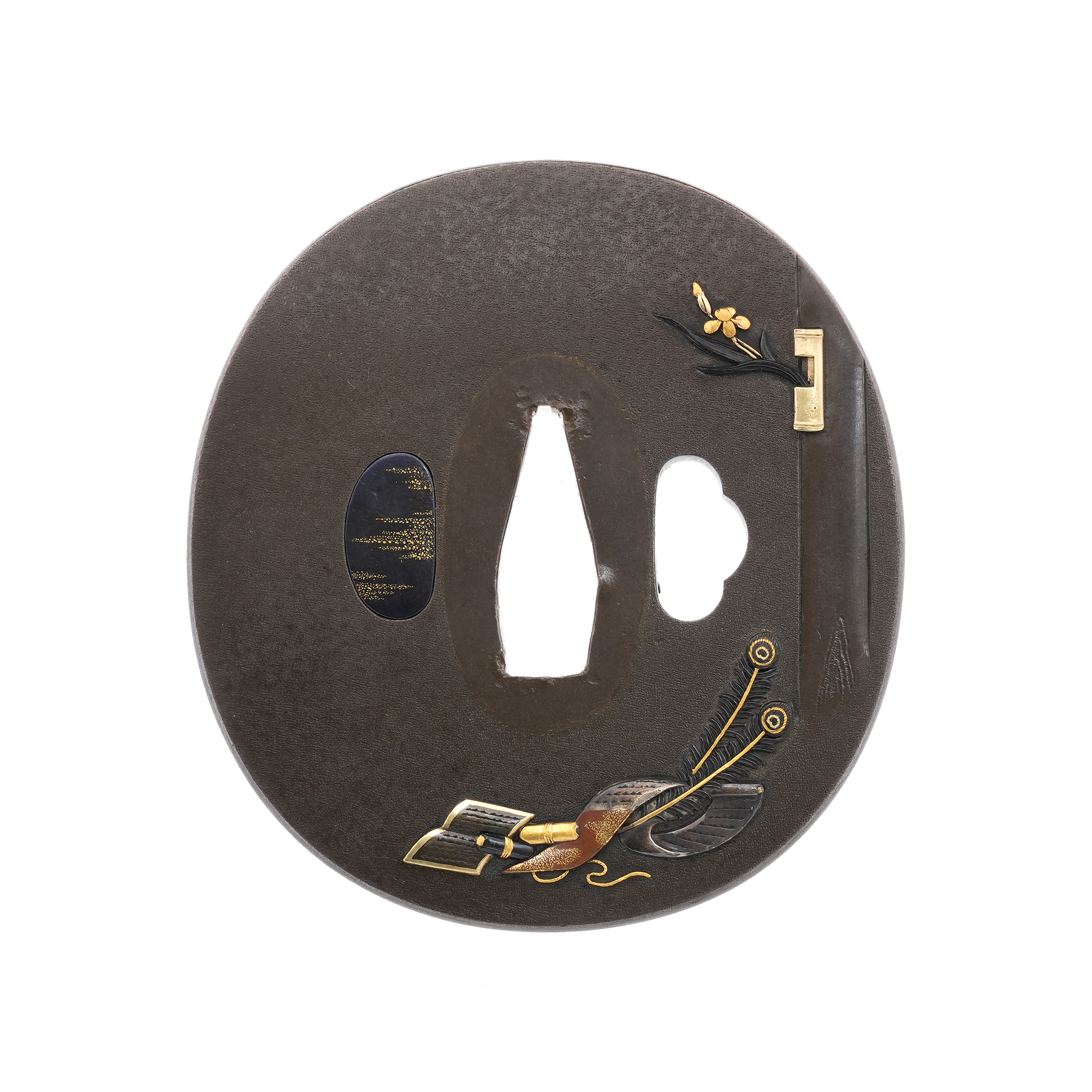
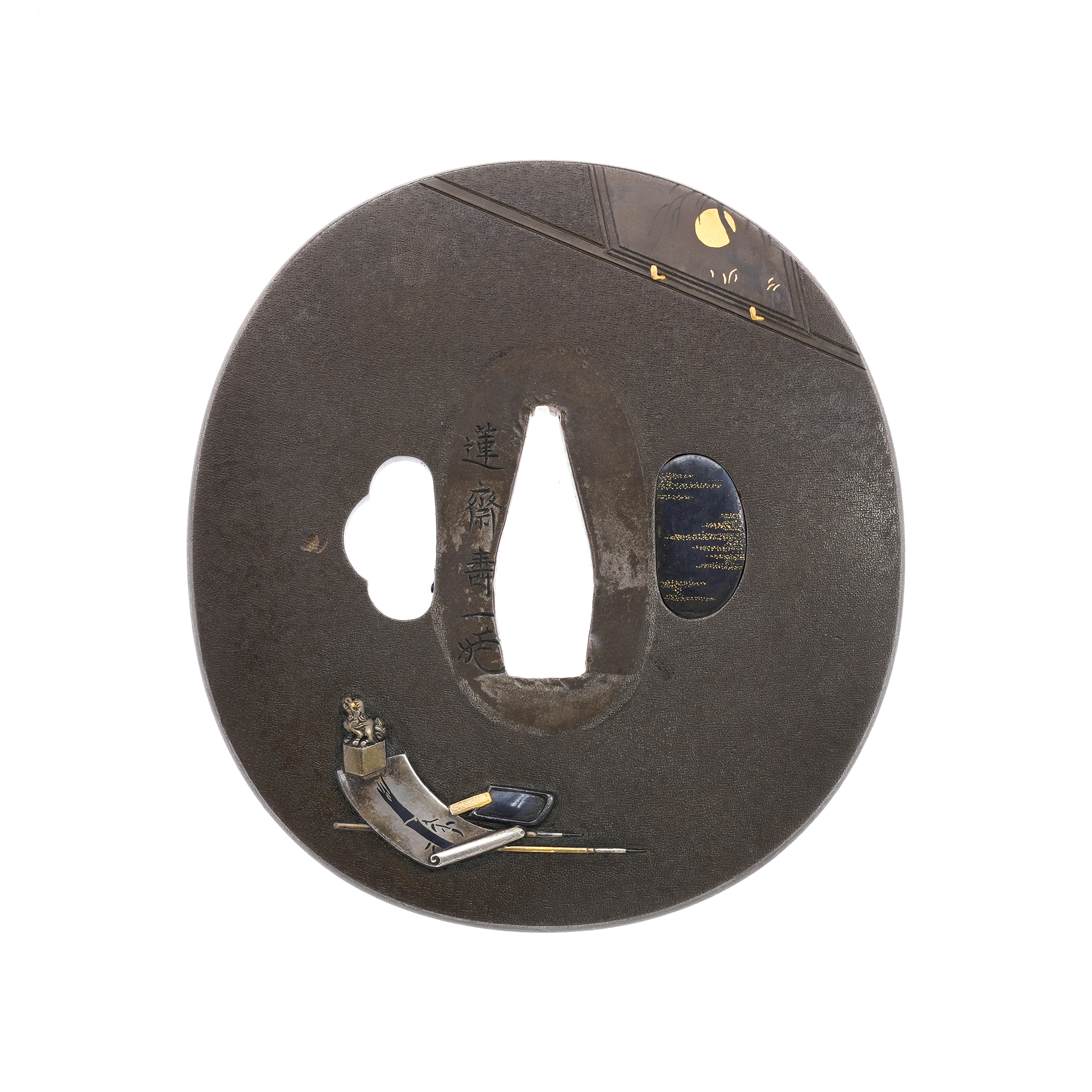
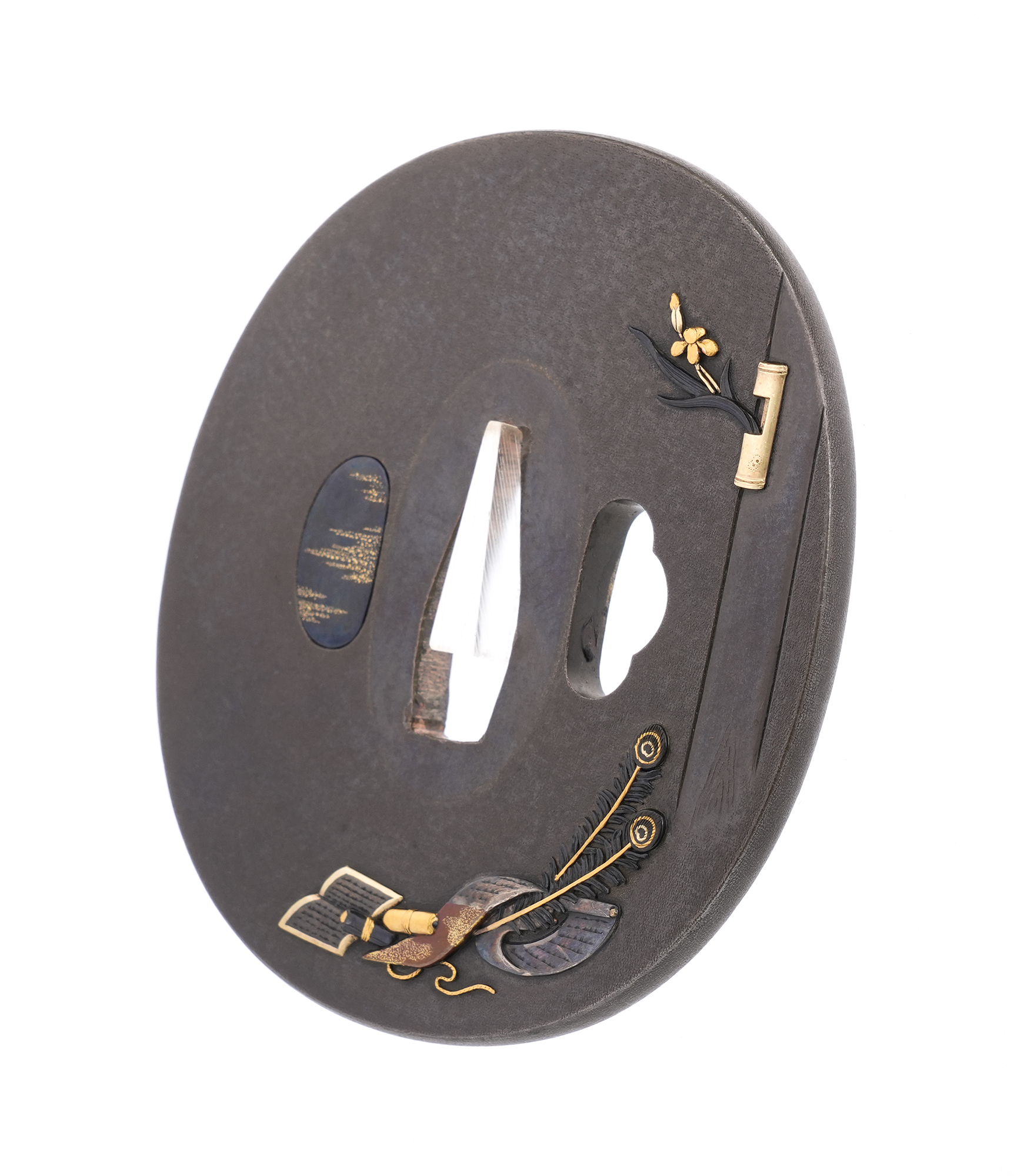
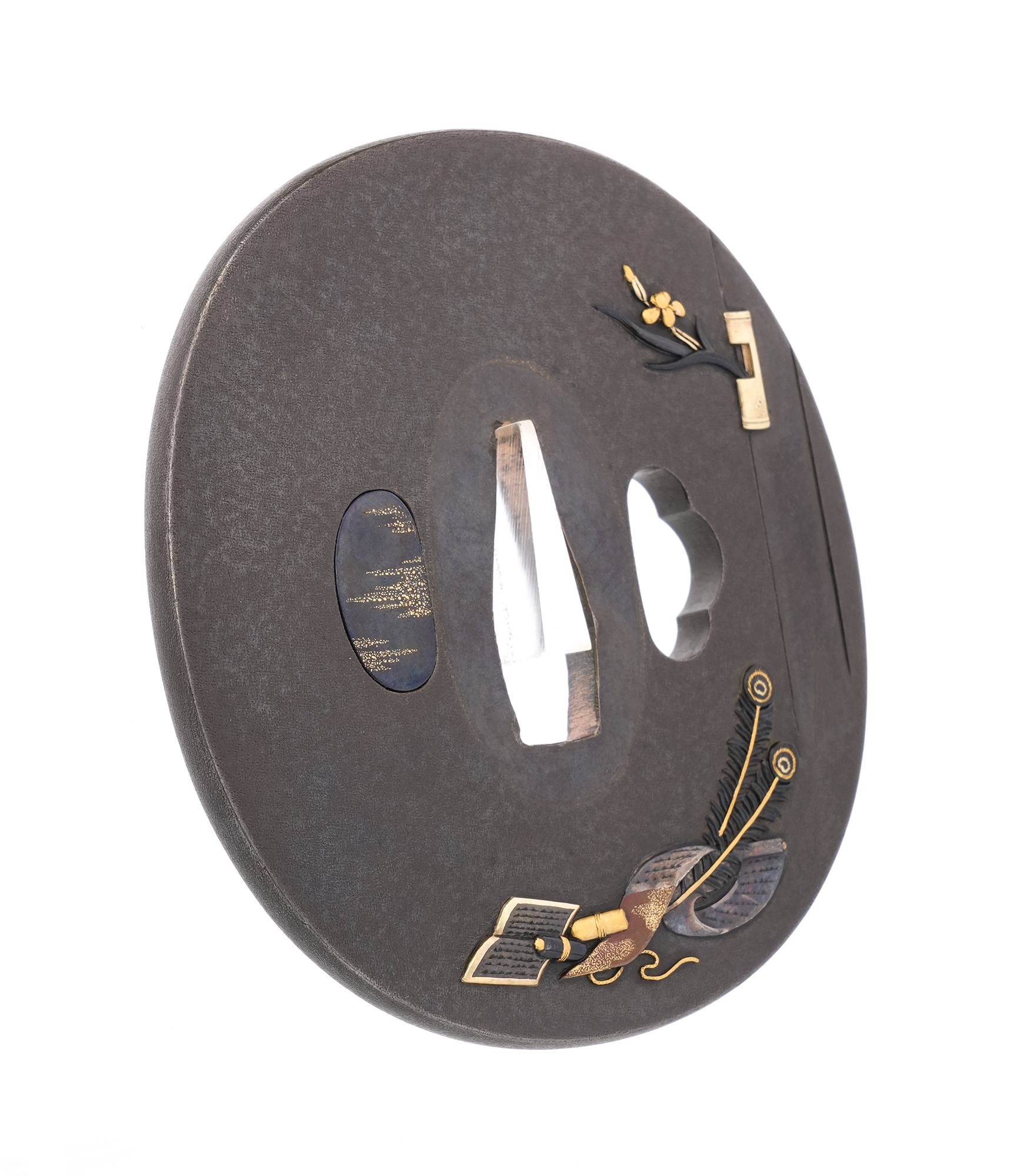
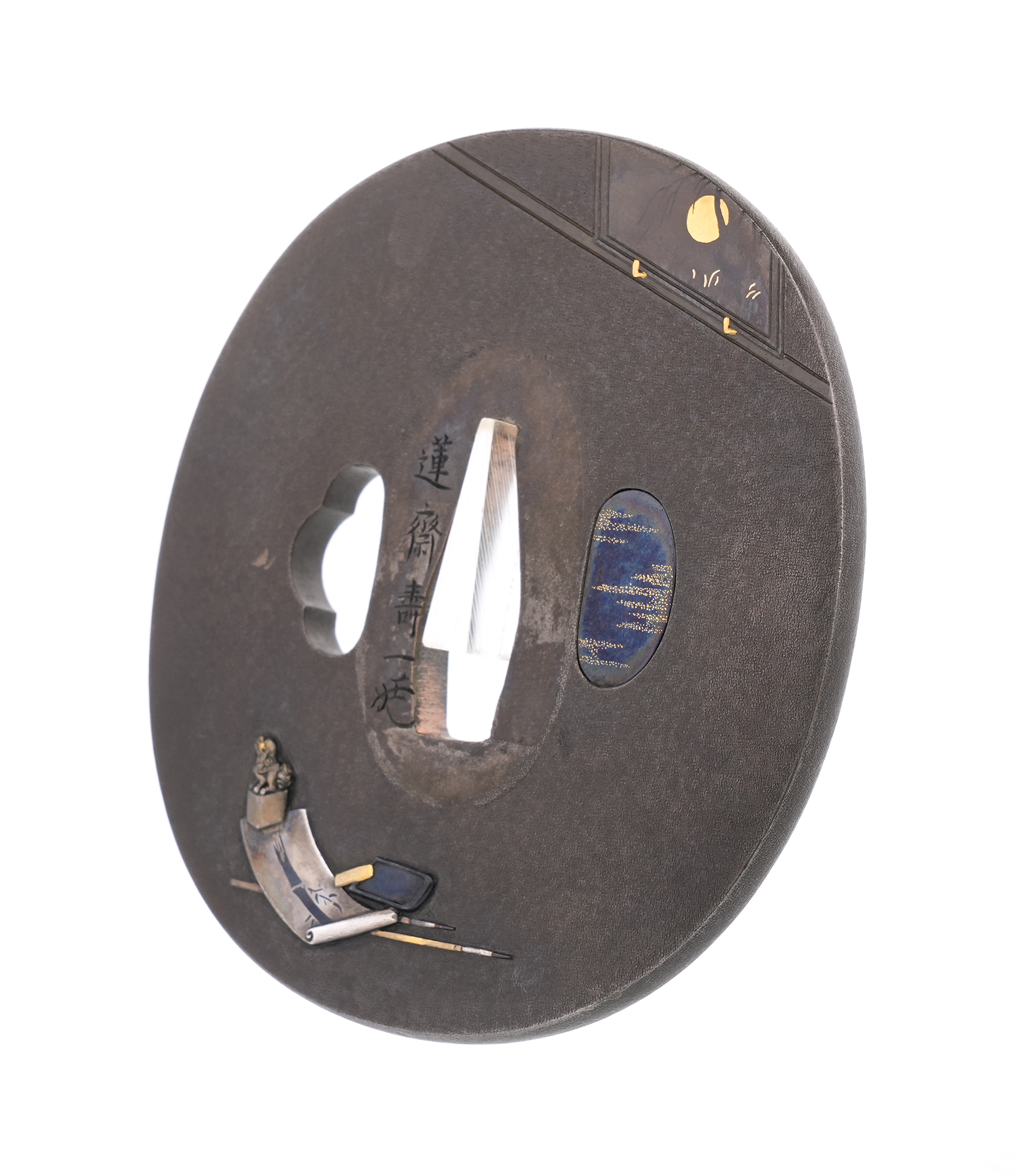
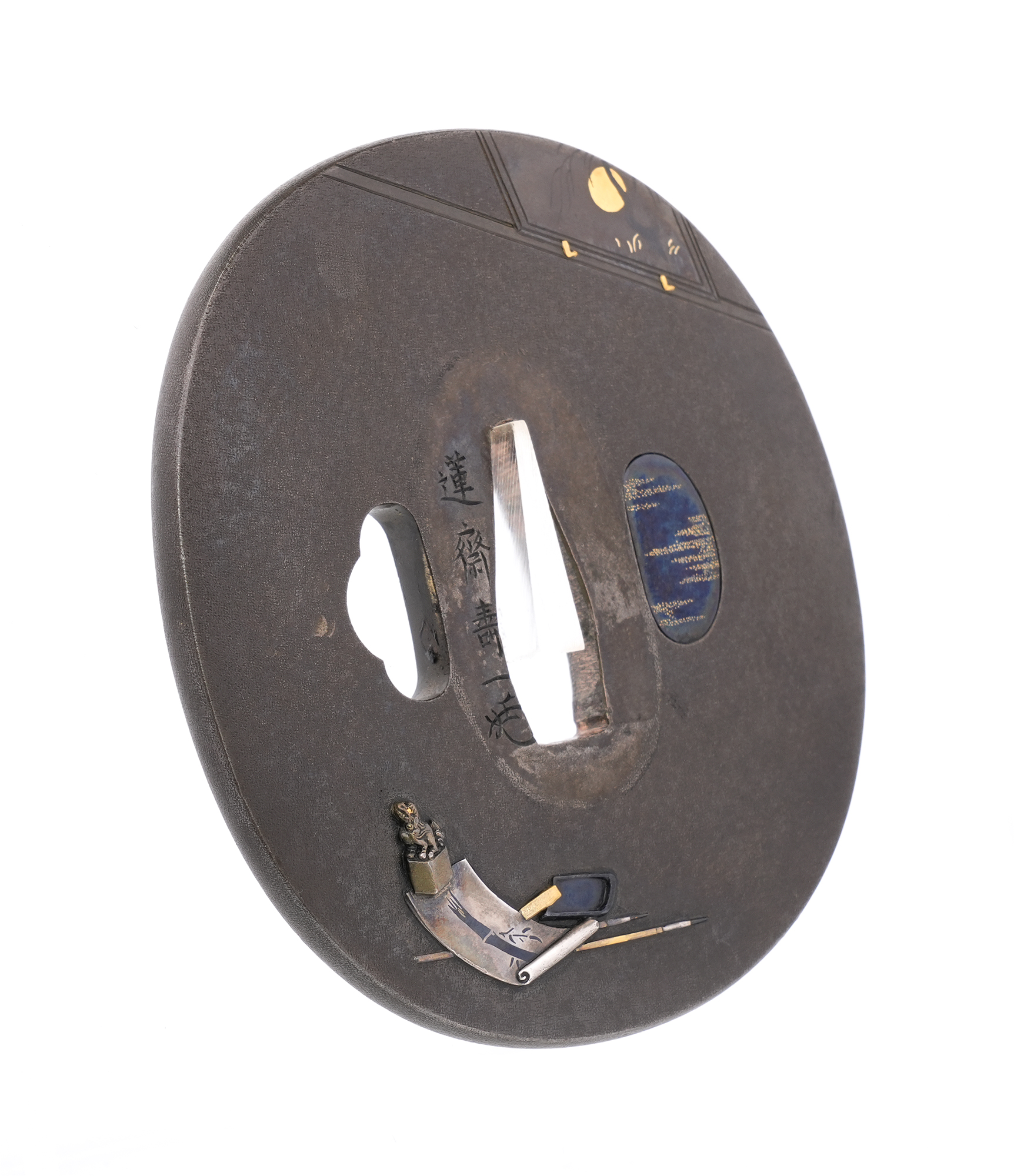
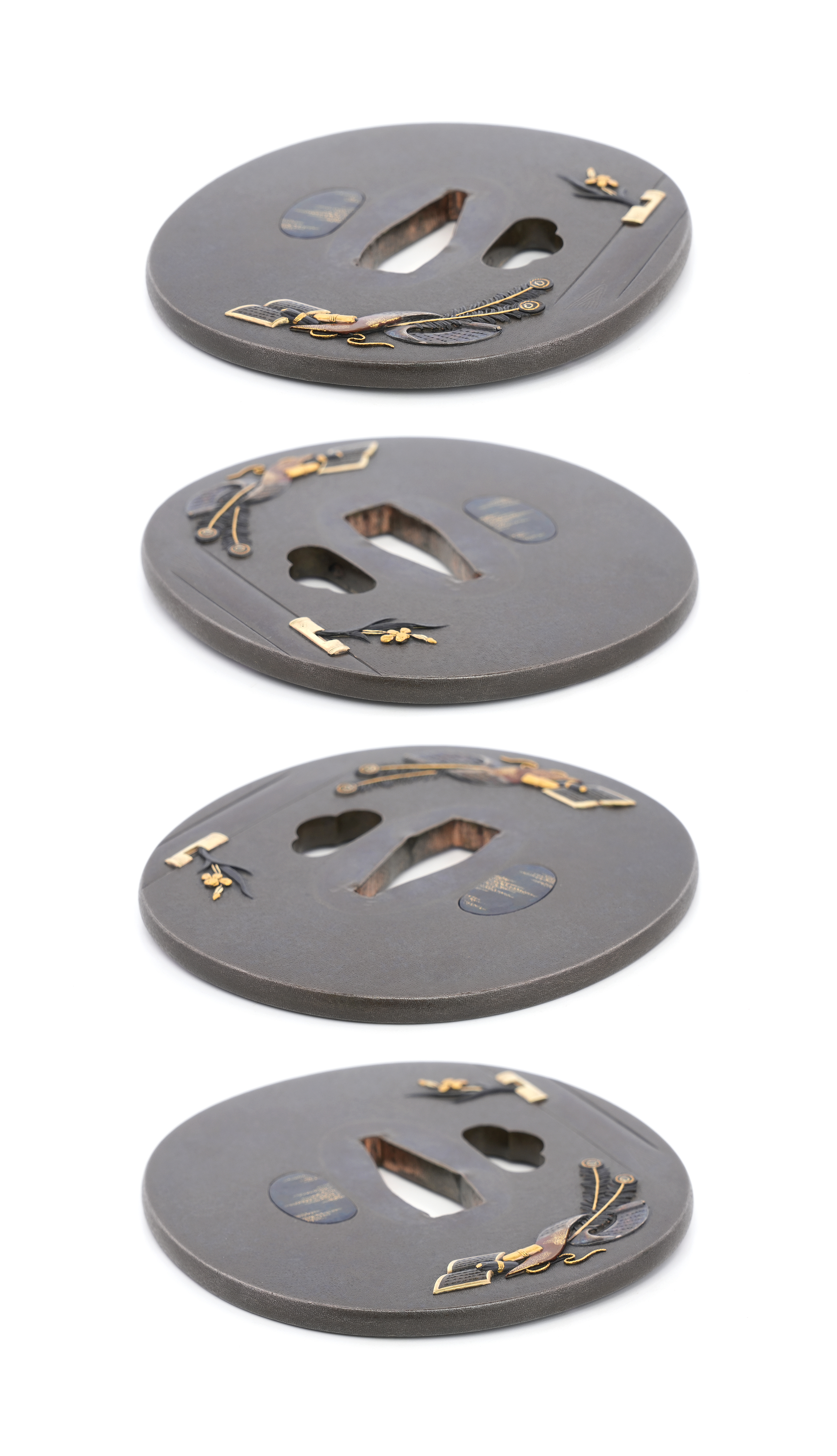
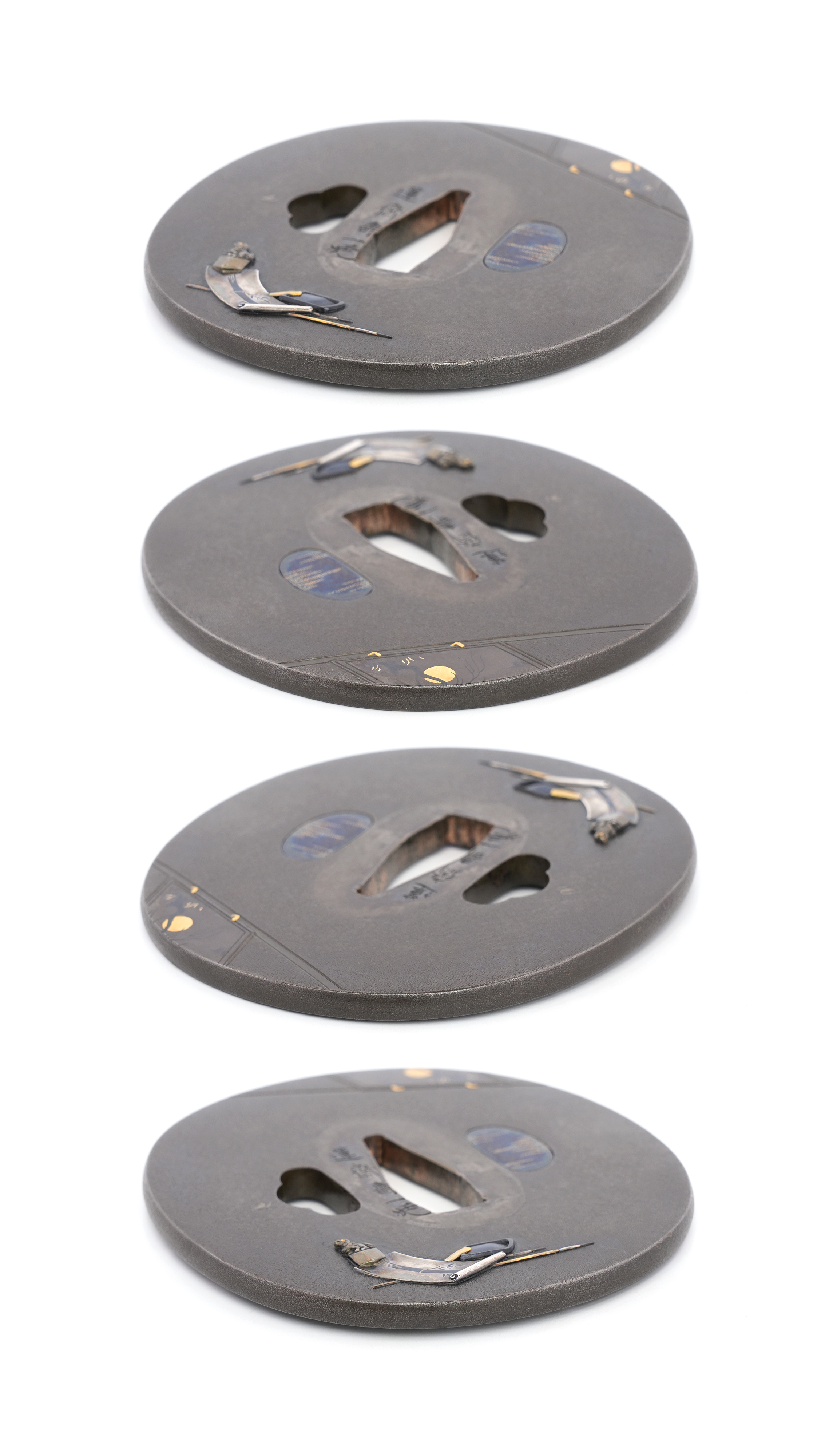
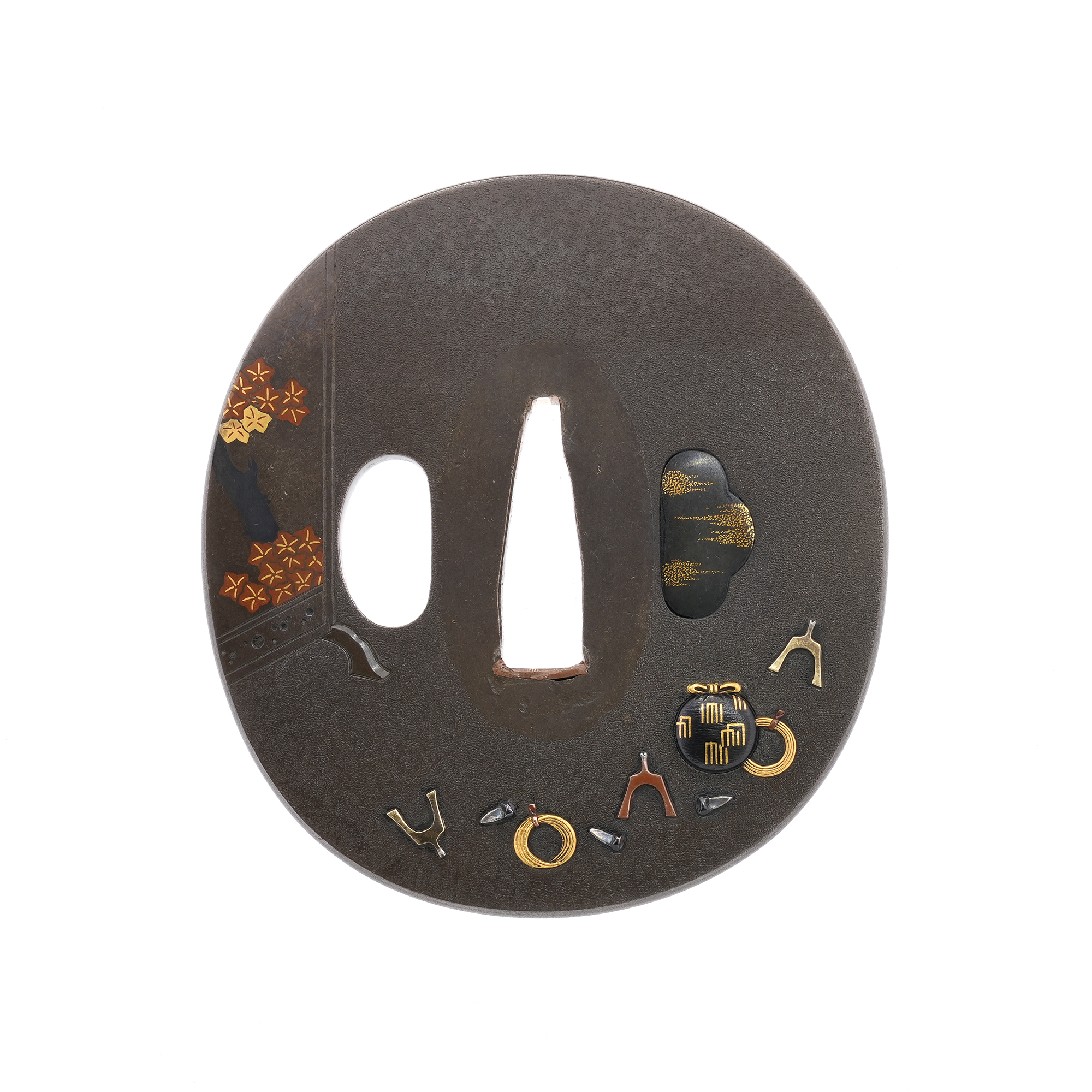
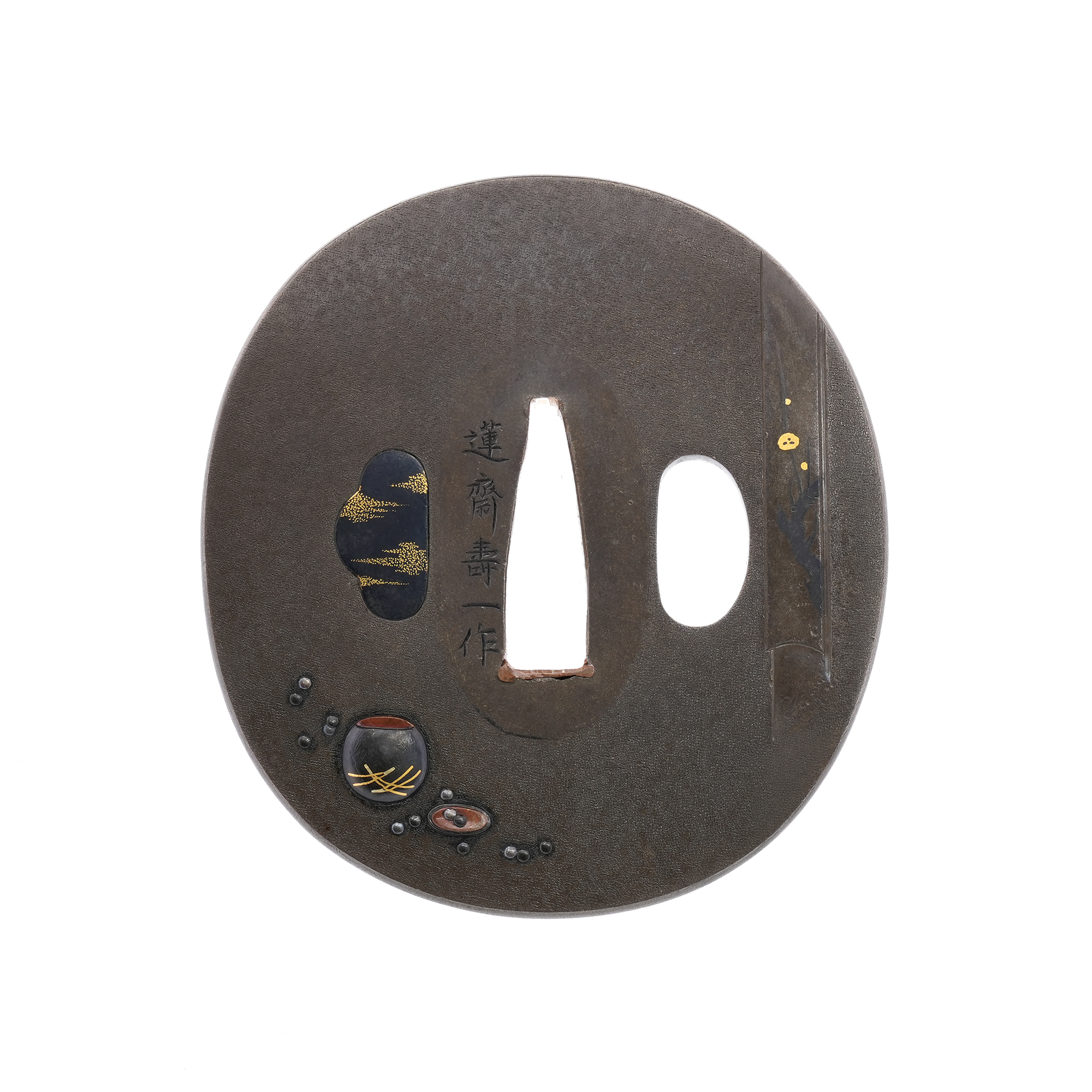
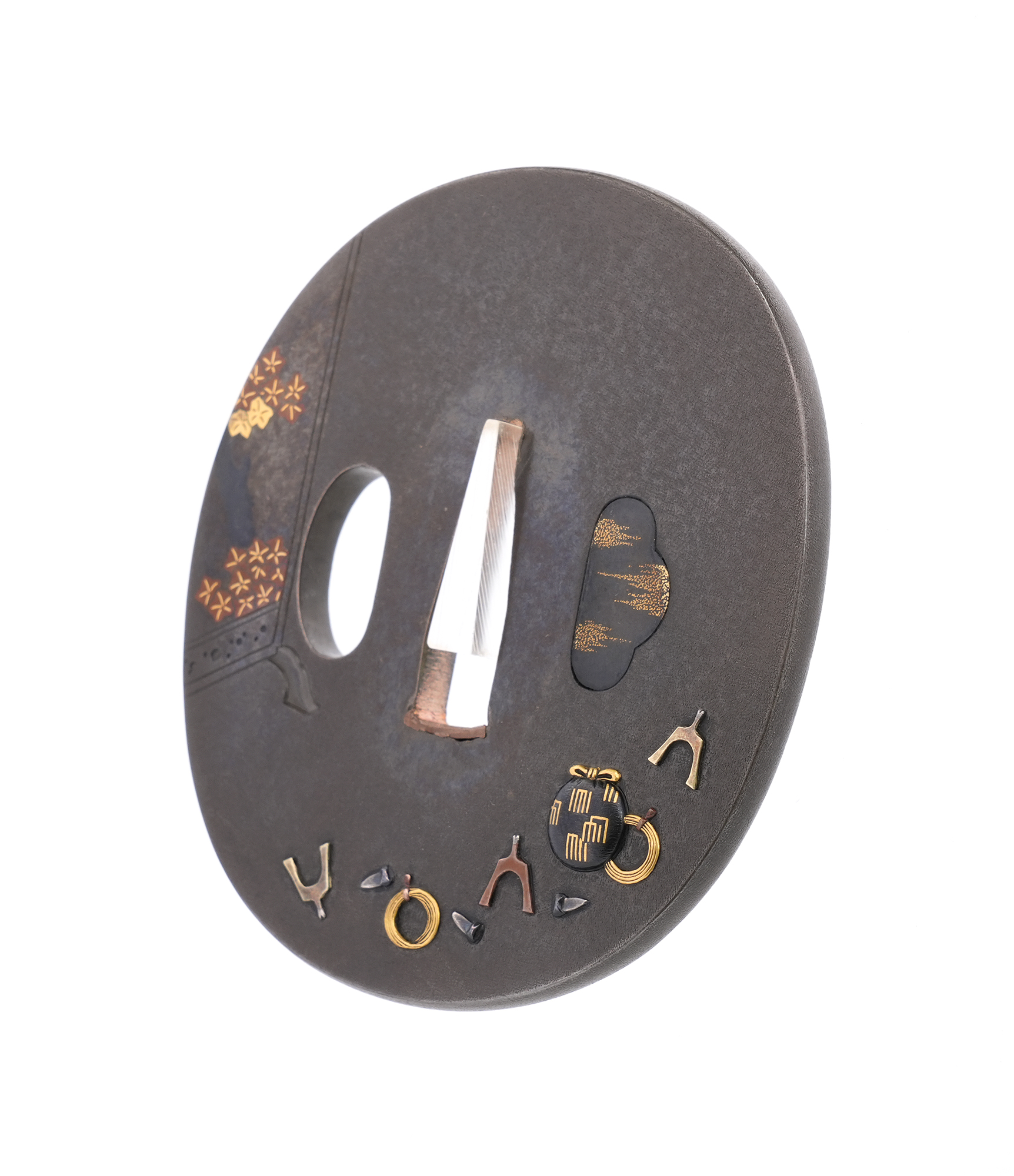
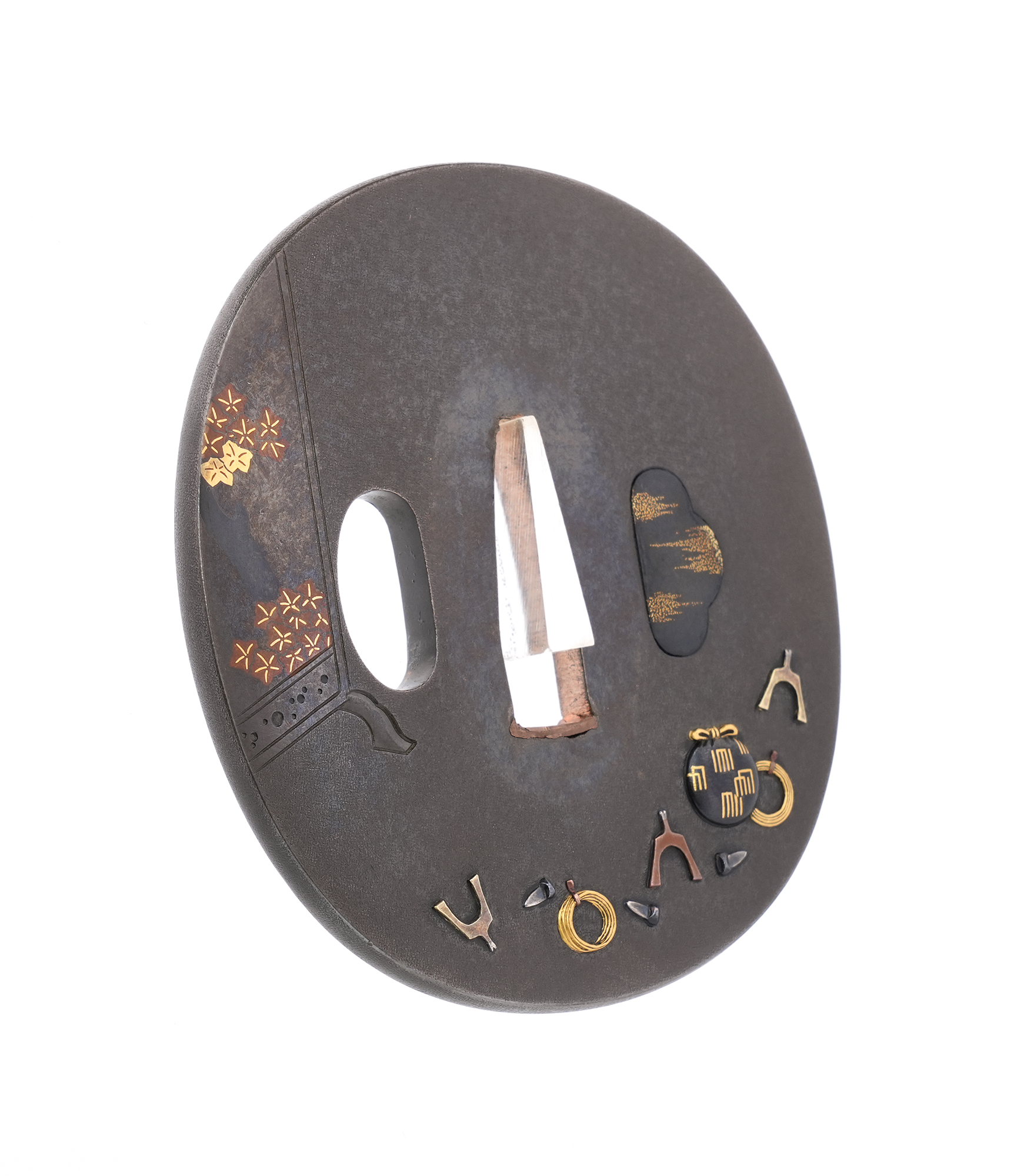
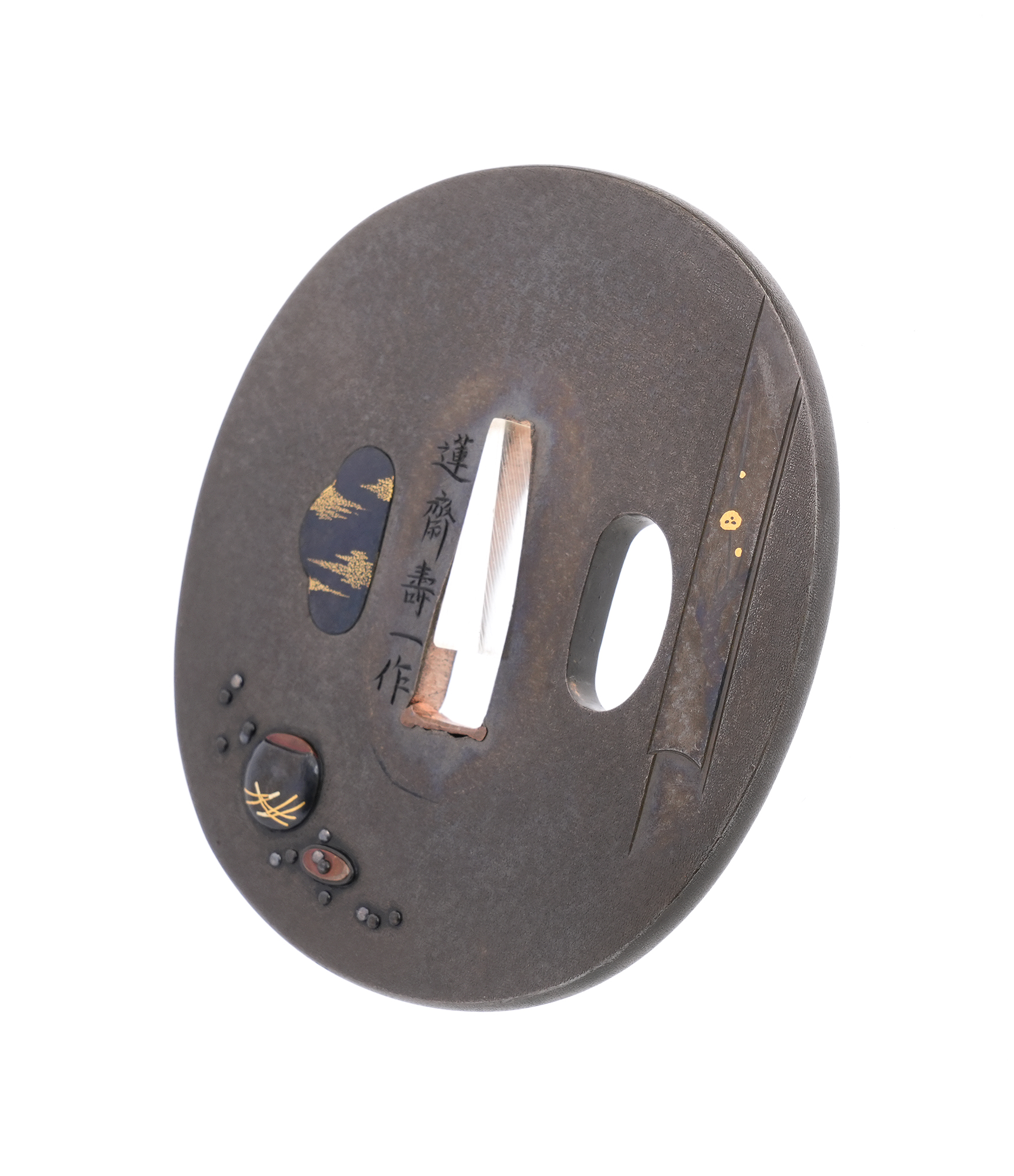
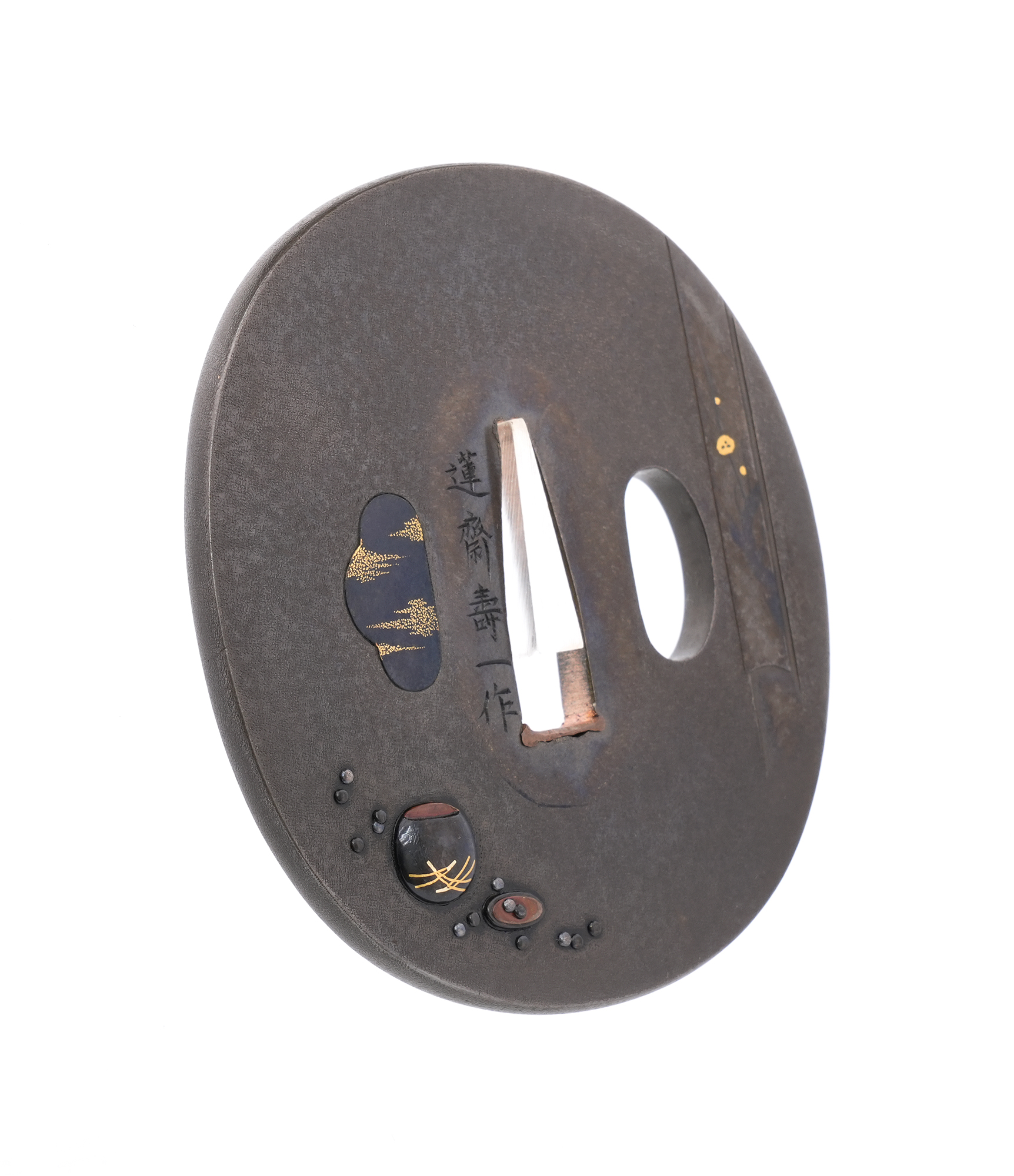
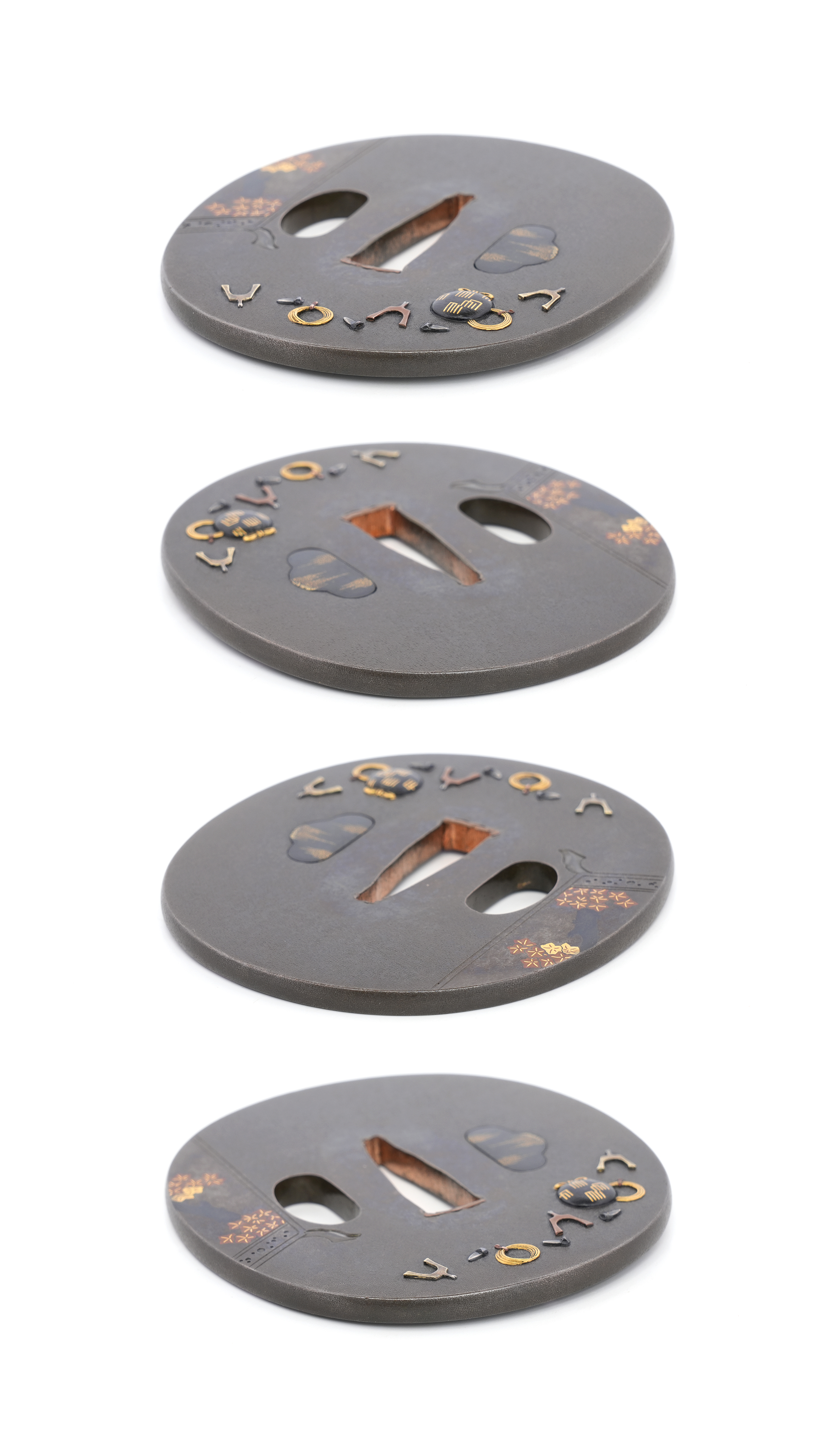
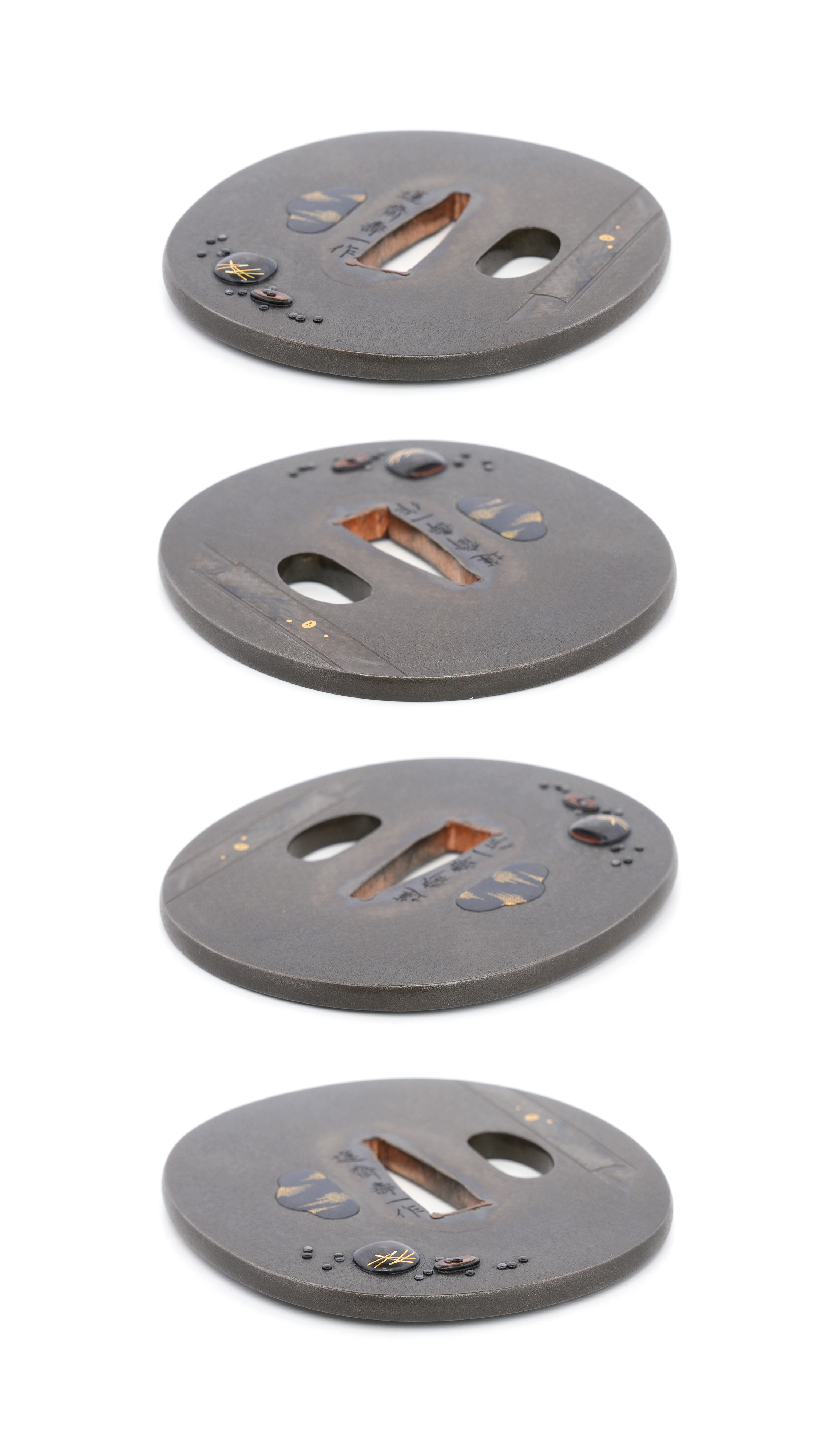
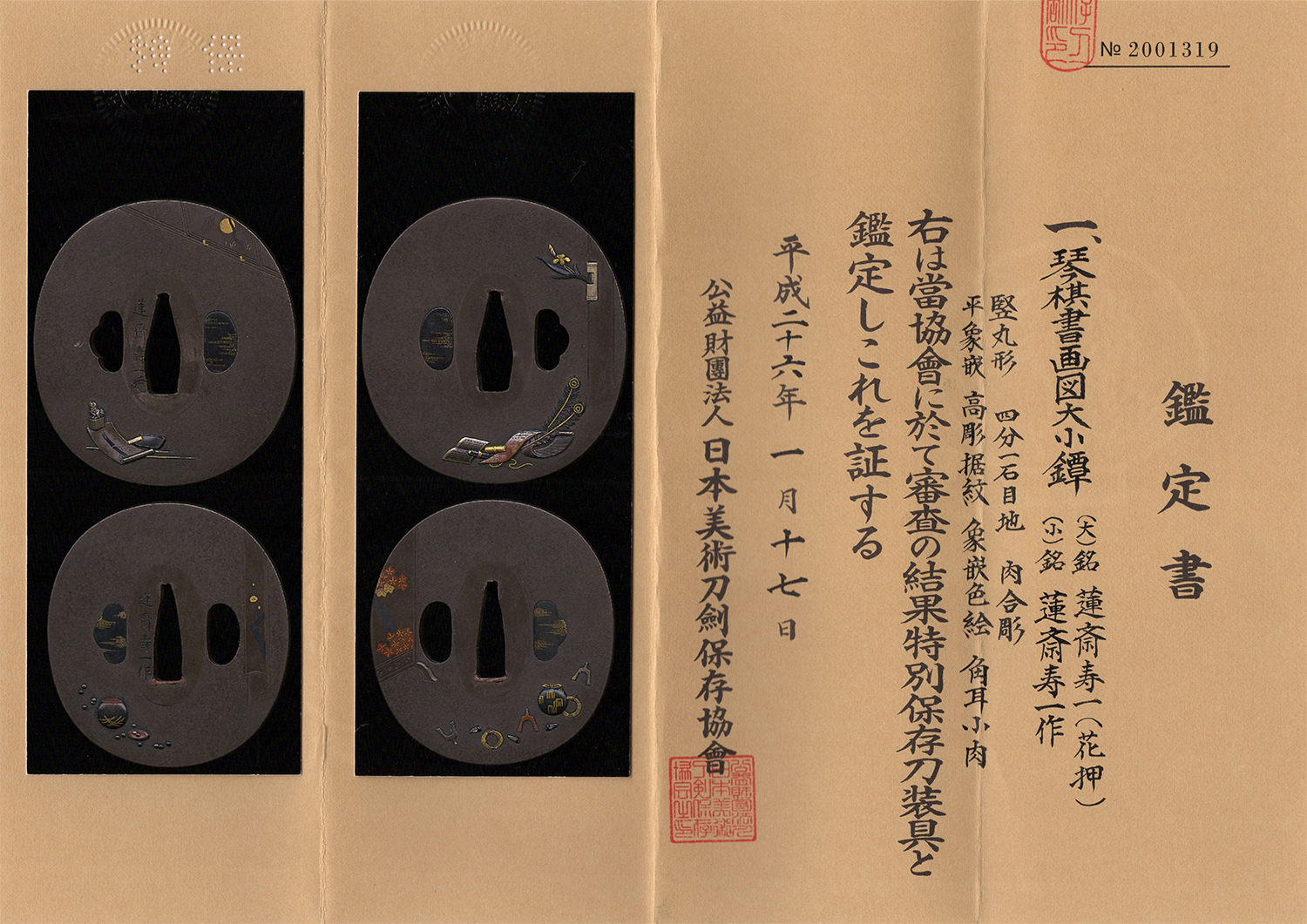
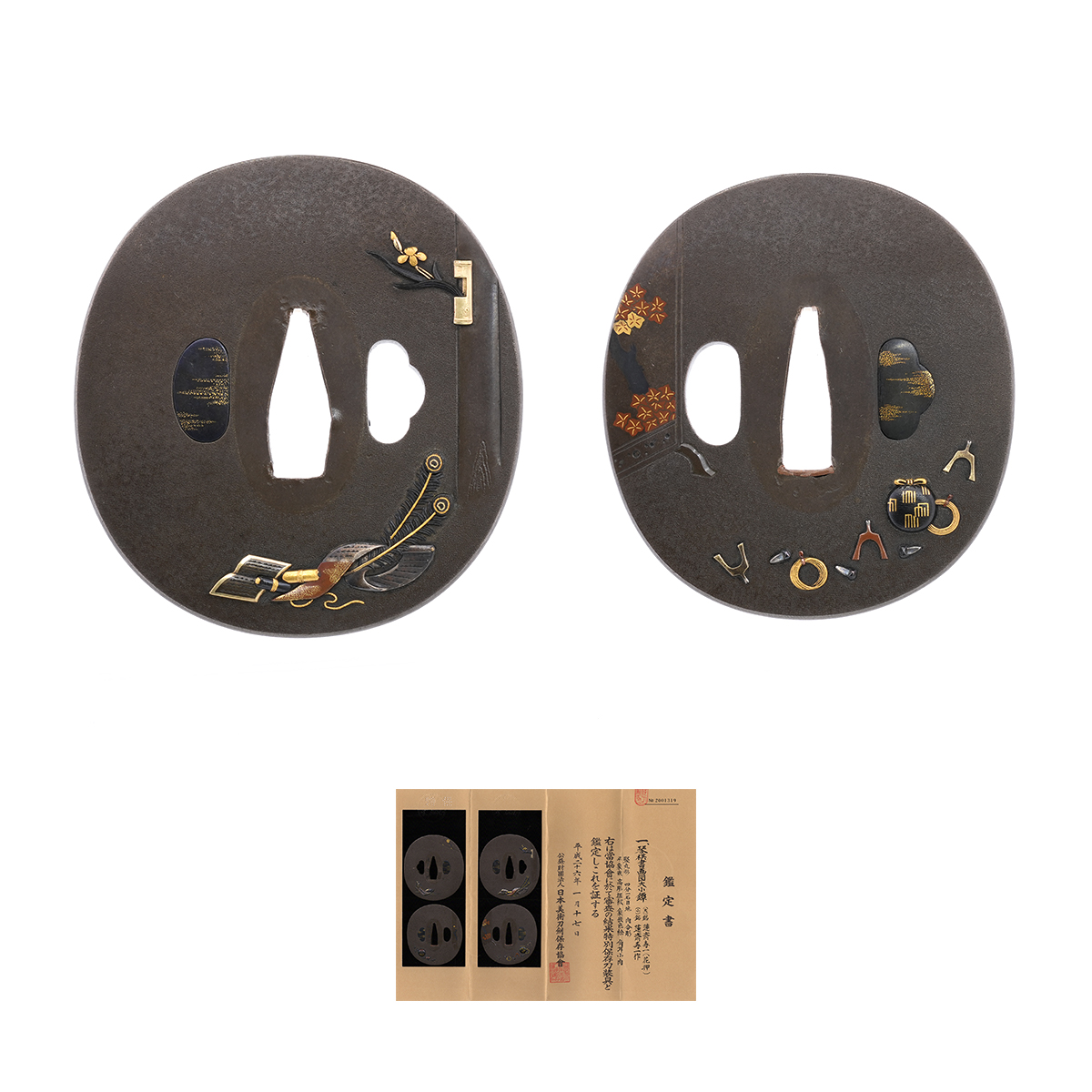
Kinkishogazu Daisho Tsuba (Dai) Rensai Juichi (Kao) (Sho) Rensai Juichi saku -Signed Rensai Juichi- (Dai) Length 80.2 mm, Width 74.1 mm, Seppa-dai thickness 5.15 mm, Weight 187 grams (Sho) Length 74.1 mm, Width 68.0 mm, Seppa-dai thickness 4.65 mm, Weight 145.5 grams Edo late period The late Edo period Included: Tokubetsu Hozon Tosogu Kanteisho, paulownia box Although Rensai Juichi leaves some points unknown in his detailed biography, the skillful handling of the shibuichi ground shown in this work, the three-dimensional expression freely using shishiaibori and takabori, and the refined sense of color arranging gold, silver, shakudo, and suaka at key points of the composition suggest that he was an artist possessing outstanding skill as a machi-bori kinko of the late Edo period. With the mei "Rensai Juichi" and kao engraved on the dai-tsuba and "Rensai Juichi saku" on the sho-tsuba, this work, completed as a single concept for the pair, is a signed sorimono that should be called a representative work, fully conveying the artist's compositional power and precise tagane technique. Kinkishoga represents the four accomplishments of a man of letters—playing the koto, playing gi (go), reading sho (books), and enjoying ga (paintings)—and is a high-style theme symbolizing the ideal state of being familiar with scholarship and art away from the fame and profit of the secular world. In Japan as well, it was repeatedly taken up in paintings and crafts as a symbol of elegance and intellect; in the rusumoyo style, which tells of that world using only utensils that evoke the koto, gi, sho, and ga without directly depicting people, there is a modest and intellectual charm where the viewer draws the scene in their mind while deciphering each tool. This item uses a voluminous tatemaru-gata shibuichi ishimoji as the stage for both the large and small, distributing books, stationery, scrolls, furnishings, and flowering plants associated with Kinkishoga across the front and back, and by making full use of shishiaibori, hira-zogan, takabori, suemon, and iroe, it vividly depicts even the textures of paper, lacquer, metal, and plants. In the dai-tsuba, the utensils are arranged spaciously within a wide yohaku to create a grand dignity, while in the sho-tsuba, each design is tightly linked to express a condensed brilliance; by sharing the light of gold and silver, the black of shakudo, and the warm tones of suaka, a magnificent sense of unity is created as if looking at a single painting when the two are placed side by side. The kata-hitsu of each large and small are neatly filled with shakudo, and mists are depicted on that shakudo ground with kin-zogan; rather than simply plugging the hitsu-ana, it shows a thorough aesthetic sense that could not be achieved by an ordinary kinko, trailing golden mists within the deep black to incorporate them into the scenery of the entire work. The calm gray of the shibuichi, the deep black of the shakudo, and the gold of the mists resonate in a single screen, and by the kata-hitsu itself becoming an independent small scene, it adds further depth and quiet splendor to the designs on the front and back. A pictorial composition utilizing yohaku appears from the front, the volume of takabori and suemon appears in oblique light, and the combination of minute tagane lines and irogane appears at hand one after another; the more one goes around the large and small, front and back, the more the world of Kinkishoga richly expands. In addition to the luxurious volume of the shibuichi ground reaching a total weight of 332.5 grams, the presence of mei on both large and small, excellent irogane expression, and a level of perfection where the design reaches even the shakudo-umegane of the kata-hitsu, it possesses a certain status recognized as Tokubetsu Hozon Tosogu, making it a daisho-soroi truly worthy of being called a masterpiece among masterpieces representing the elegance and technique of late Edo period kinko.
NihontoWatchOffered by Toushin
This piece has sold
15 on the market
Get an email when new Toryusai School work hits the market.

Toryusai School
late Edo (c.1830)
Signed
Tokuho
Machine translation from the shop's Japanese · may contain errors ·
Machibori · Edo
15 pieces on the market now
The Toryusai school was established in Edo by Tanaka Seiju (1804--1876), born the son of the Musashi Province tsuba maker Tanaka Fusajiro. Seiju trained formally under Goto Sojiro Masanori but pursued the broader field of kinko largely through self-directed study, ultimately perfecting a stylish, distinctive personal manner that became known as the Toryusai style. Counted among the "three great masters of Bakumatsu metalwork," he rivaled the fame of Goto Ichijo in Kyoto and, like Ichijo, was granted the rank of Hogen. " Kono Shunmei (Haruaki), a master of the Yanagawa lineage who shared Seiju's milieu in Edo, represented a parallel current of late-Edo kinko artistry whose weighty chisel manner and illustrative e-fu carving influenced the broader circle in which the Toryusai school operated. Together, these artists constituted the vital core of Edo-based decorative metalwork during the final decades of the Tokugawa shogunate. The Toryusai school's collective identity rests upon an encyclopedic command of metalworking techniques unified by a distinctly Edo sensibility -- urbane, witty, and decoratively assured. Across the lineage, from Seiju through Kiyoshige and Toshiyoshi, one encounters a shared mastery of takabori with iroe polychrome, sukidashi-bori, suemon-zogan, hira-zogan, and nunome-zogan, deployed across grounds of shakudo, shibuichi, iron, and silver with fluent authority. " Kiyoshige inherited this vocabulary and distinguished himself through exceptional volumetric modeling -- his yobori approaching fully sculptural marubori with what the NBTHK terms outstanding "placement of flesh" (nikuoki).
Toshiyoshi, working primarily on polished shibuichi grounds, synthesized multiple inlay techniques within single compositions, combining suemon-zogan, okigane, and keshi-tokin to achieve chromatic depth and tonal complexity. A hallmark of the school's later production is the neko-kaki yasurime ("cat-scratch" file marks) found on the reverse of kozuka -- a workshop convention that links Toshiyoshi's output to the broader Toryusai lineage. Throughout, the school's pictorial range is vast: figure compositions, birds and animals, literary themes from the Taketori Monogatari and Tsurezuregusa, folk tales, and witty conceits including anthropomorphized frogs and the "Daruma-in-absence" design, all handled with the okashimi (humorous charm) that conveys the school's fashionable Edo flair. The NBTHK's appraisals consistently characterize the Toryusai school's productions as works of notably high dignity and completion, possessing a solemn yet unpretentious taste even when gold inlay is used abundantly. Seiju's mature works display technique and conception operating "in full concert," while Kiyoshige's finest pieces are judged as attaining a level comparable to the founder himself. " The school's significance extends beyond individual virtuosity: the Toryusai lineage represents the most coherent articulation of an independent Edo kinko aesthetic -- one that assimilated the carving methods of the Goto and Yanagawa families yet forged from these an unmistakably personal idiom marked by fresh designs and ingenious, taste-driven sensibility. That the lineage sustained its identity from Seiju's founding through Kiyoshige's succession and into Toshiyoshi's Meiji-era continuation testifies to the robustness of its artistic vision, preserving the refined character of late-Edo metalwork at the moment of its historical transition. Learn more →
| Smith | Era | Designated |
|---|---|---|
| Kiyotoshi清寿 | — | 39 |
| Toshiyoshi寿良 | — | 14 |
| Kiyoshige清重 | — | 5 |
| Yoshitsugu良次 | 1670 | 4 |
| Toshimasa寿政 | — | 0 |
A Hozon-certified fitting of notably superior craftsmanship and condition, often with signature or workmanship of high reference value.
The NBTHK (Nihon Bijutsu Tōken Hozon Kyōkai, the Society for the Preservation of Japanese Art Swords) is a public-interest incorporated foundation founded in 1948 and supervised by Japan’s Agency for Cultural Affairs (Bunkachō); it is based at the Japanese Sword Museum in Tokyo. Its expert panels physically examine each submitted work (shinsa) and issue a certificate (kanteishō) ranking it by artistic and historical merit. NBTHK papers are the most widely recognized standard of authentication for Japanese swords and fittings.
NBTHK official siteAs a rule we do not accept returns, except when we have sent a different item from the one ordered or when there is a significant discrepancy between the description and the item. If you wish to return an item, please contact us within 3 days of its arrival and then send it back.