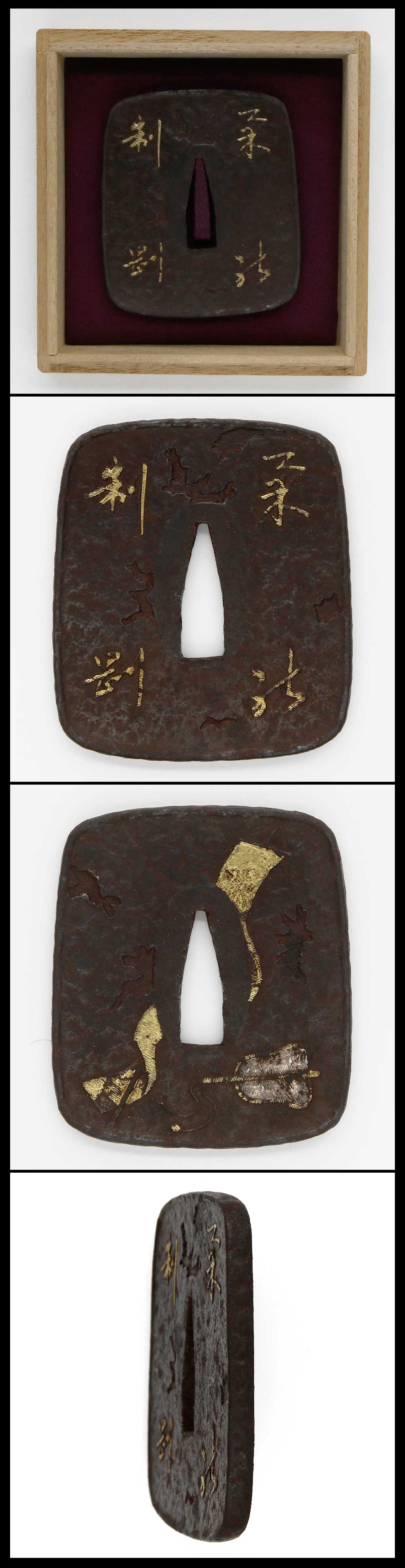
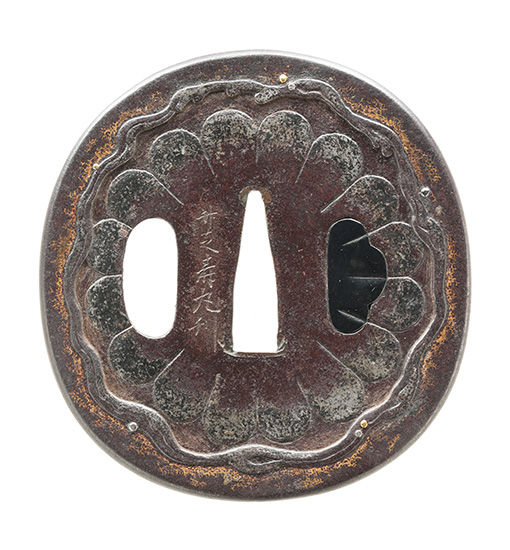
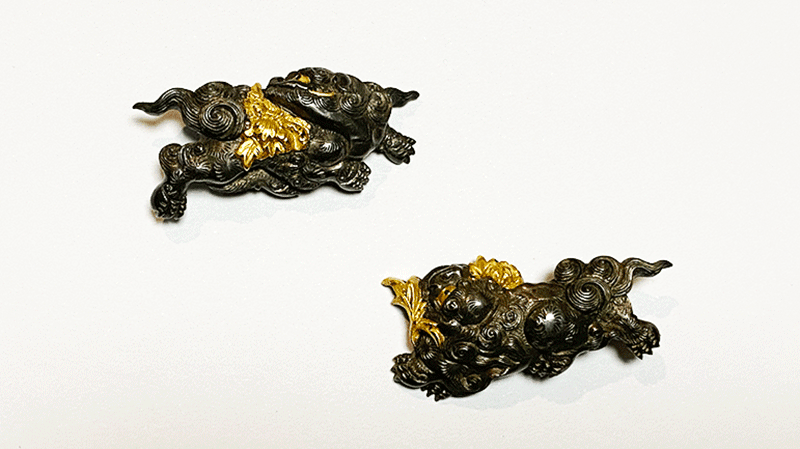
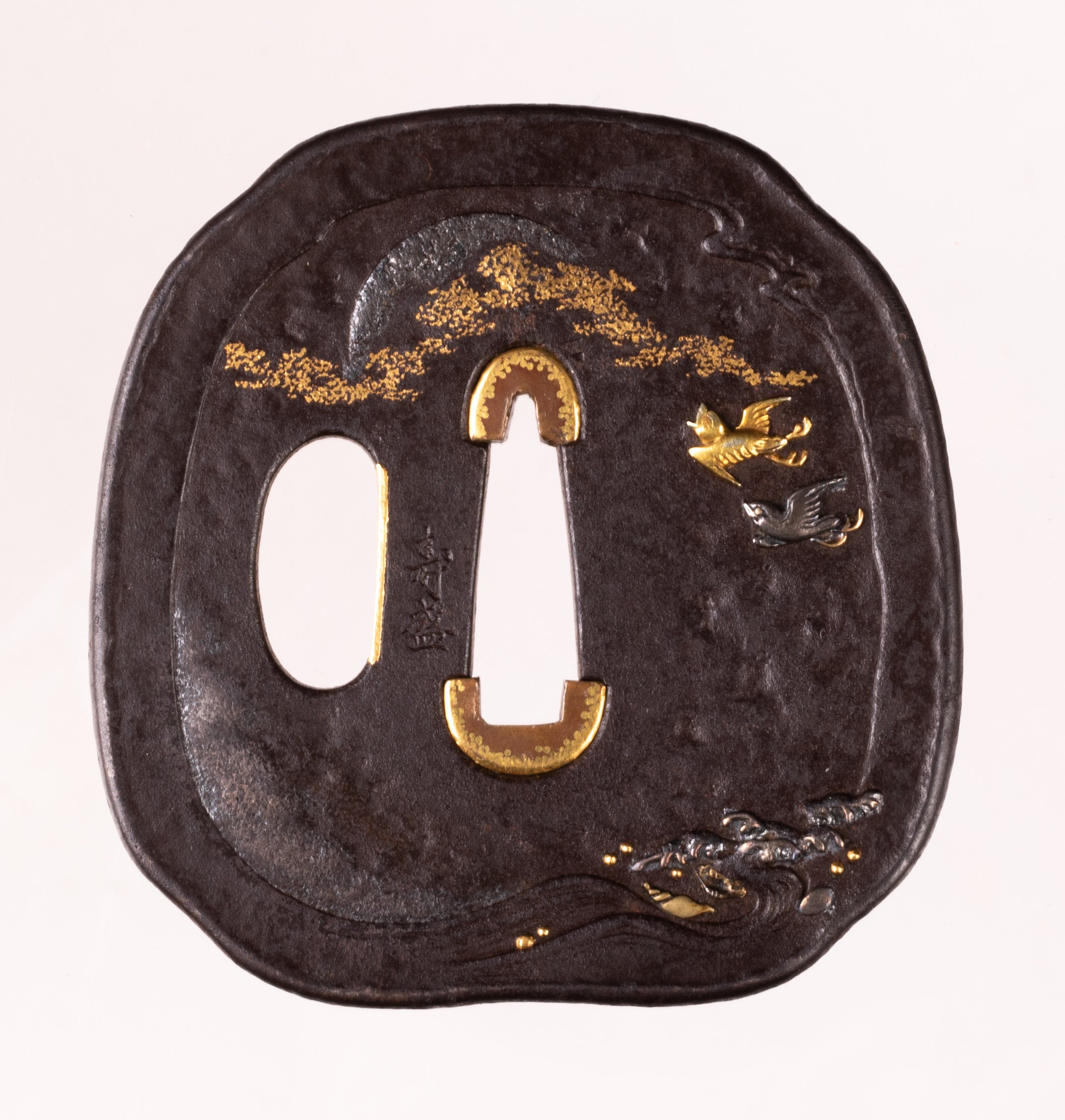
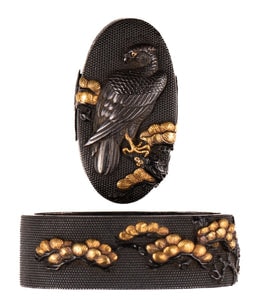
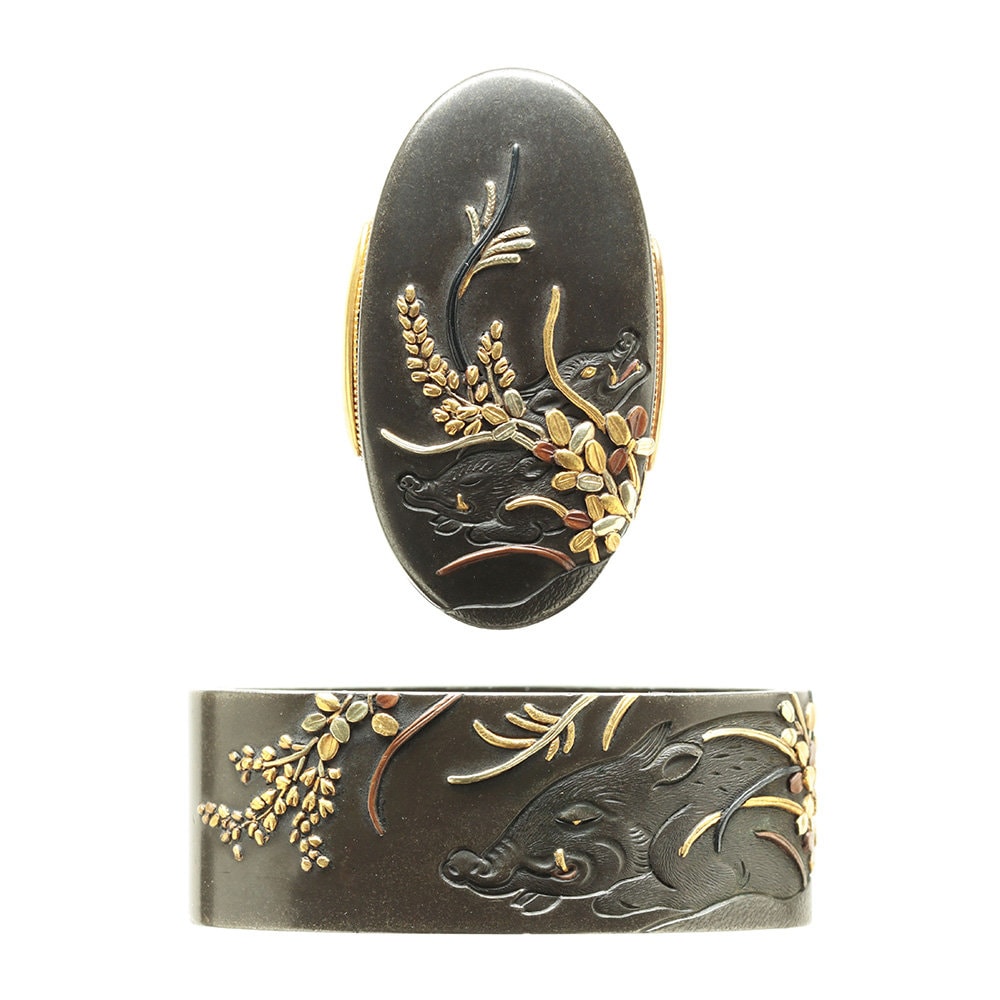
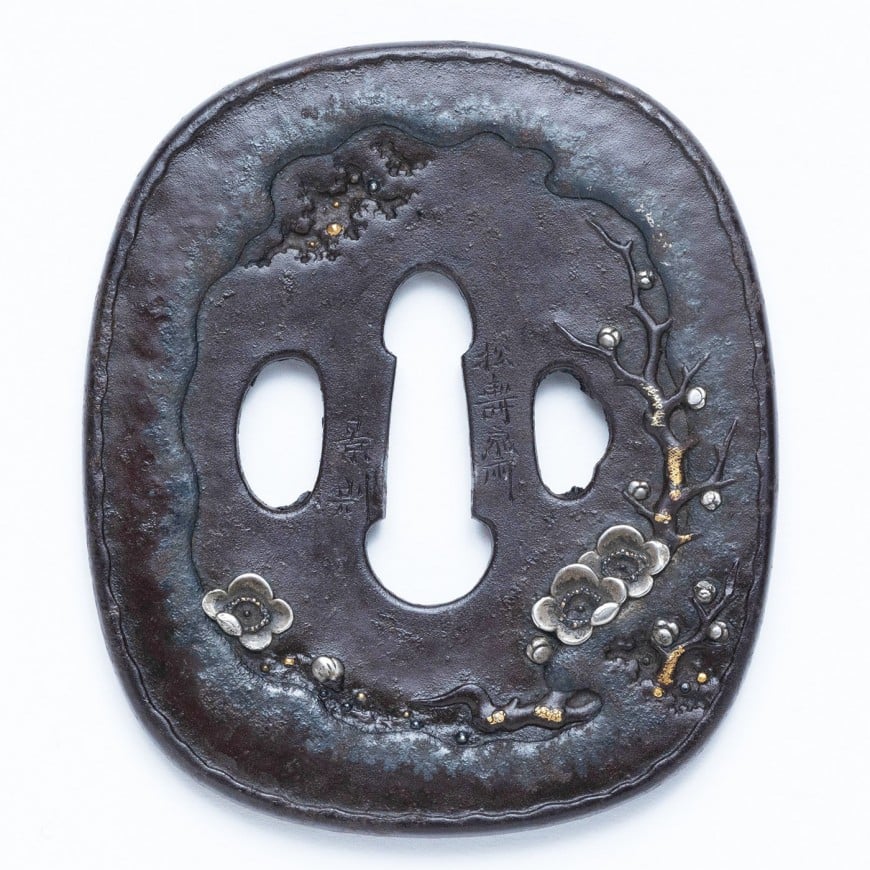
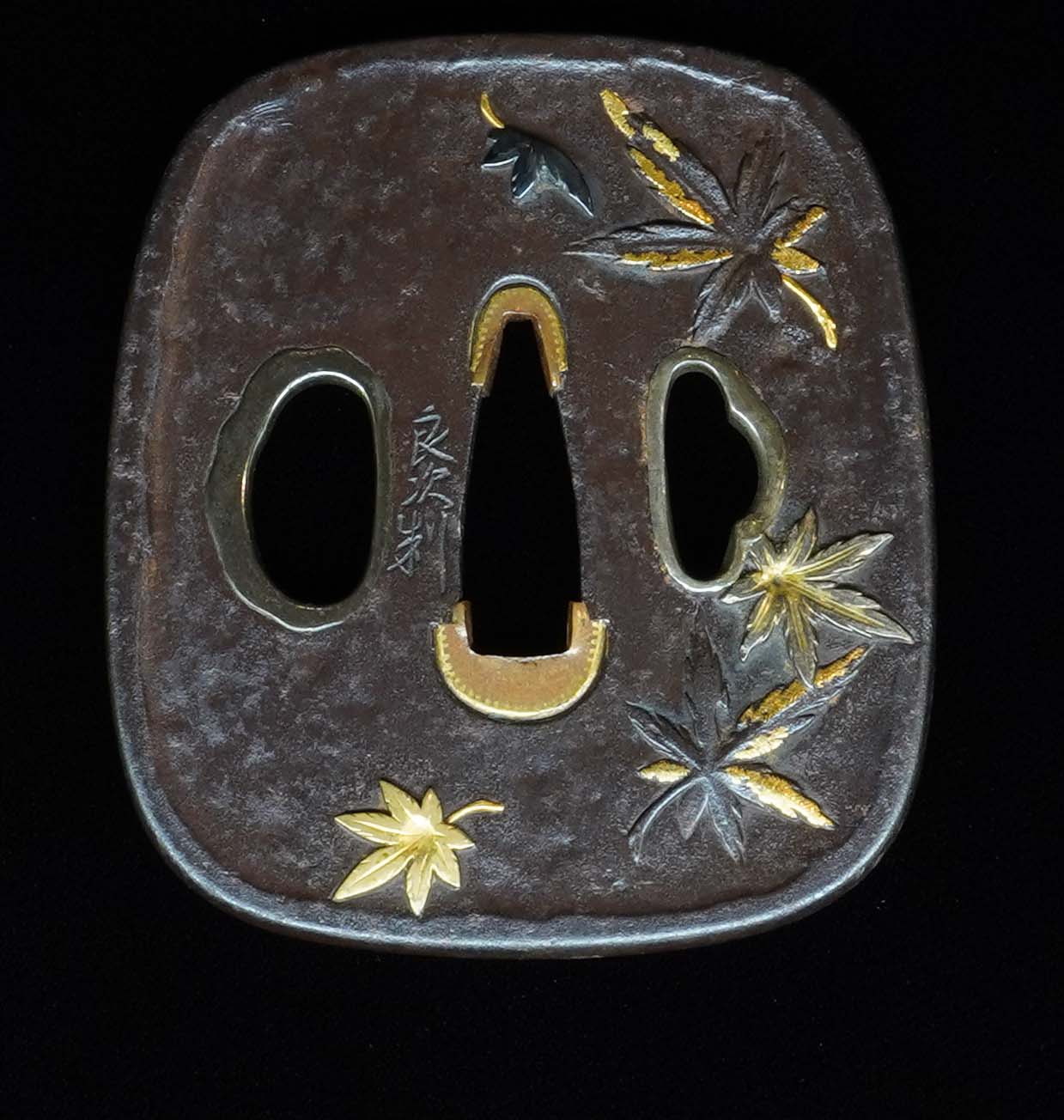
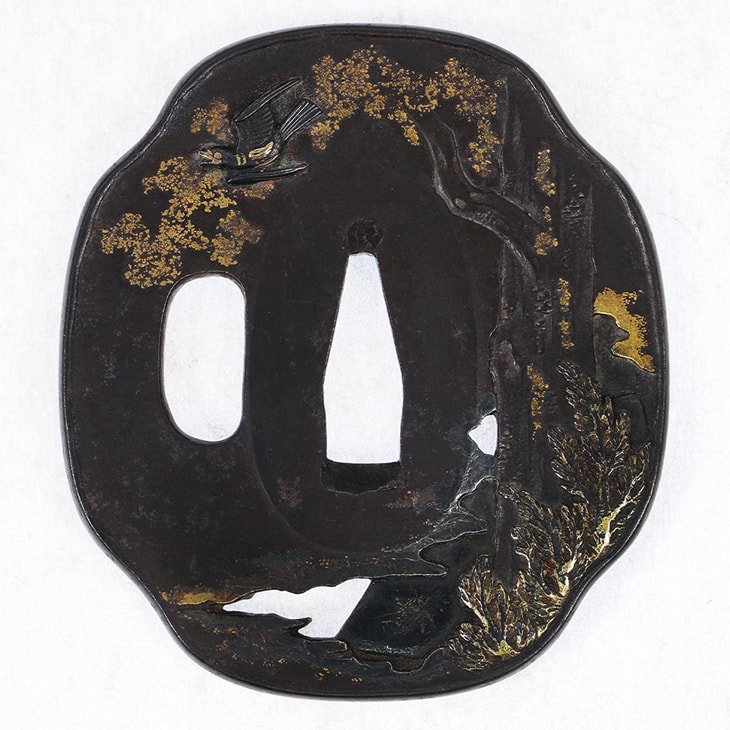
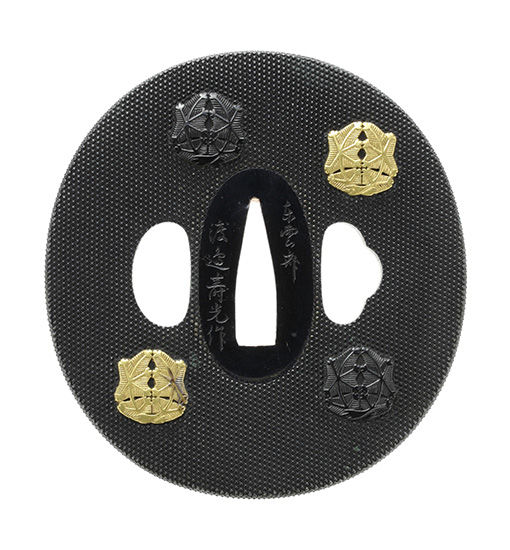
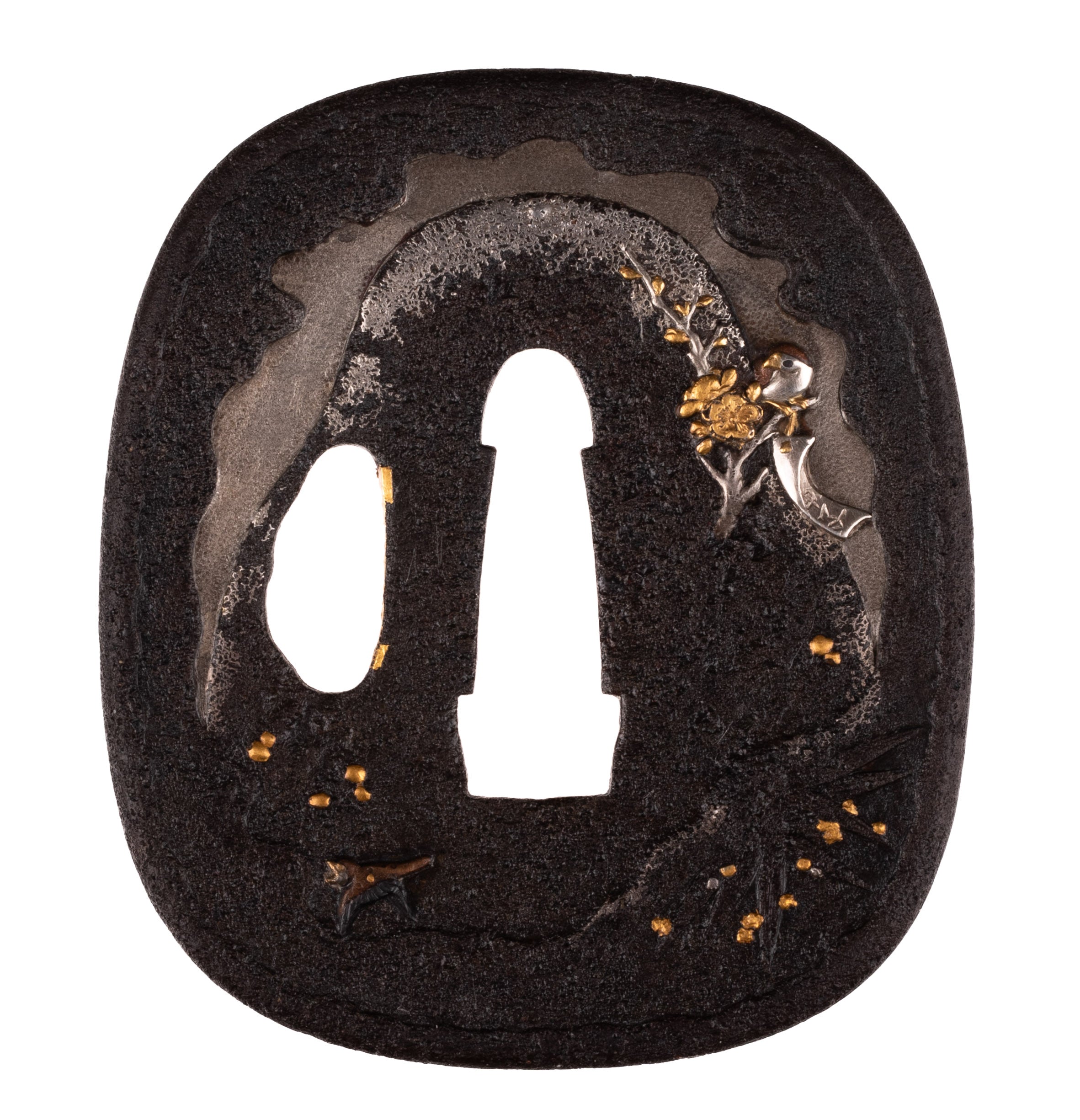
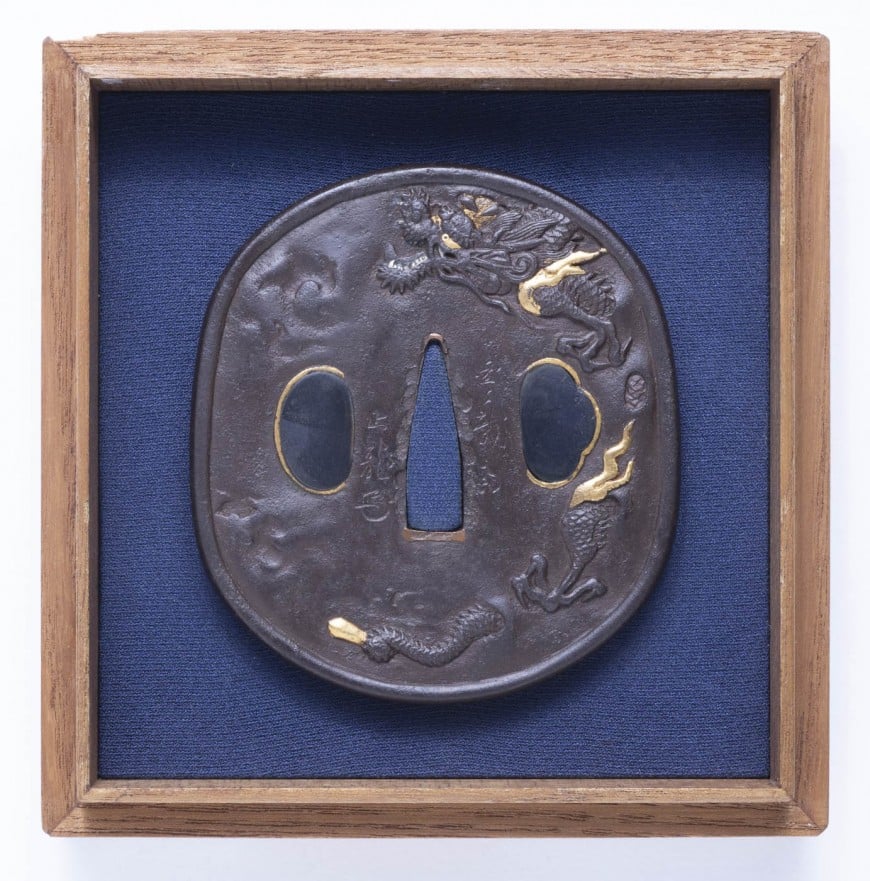
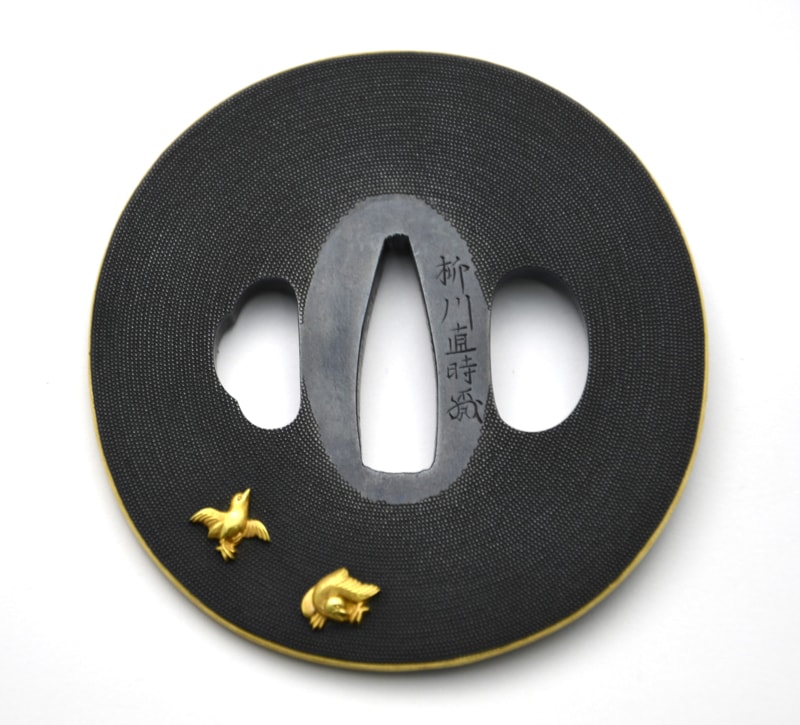
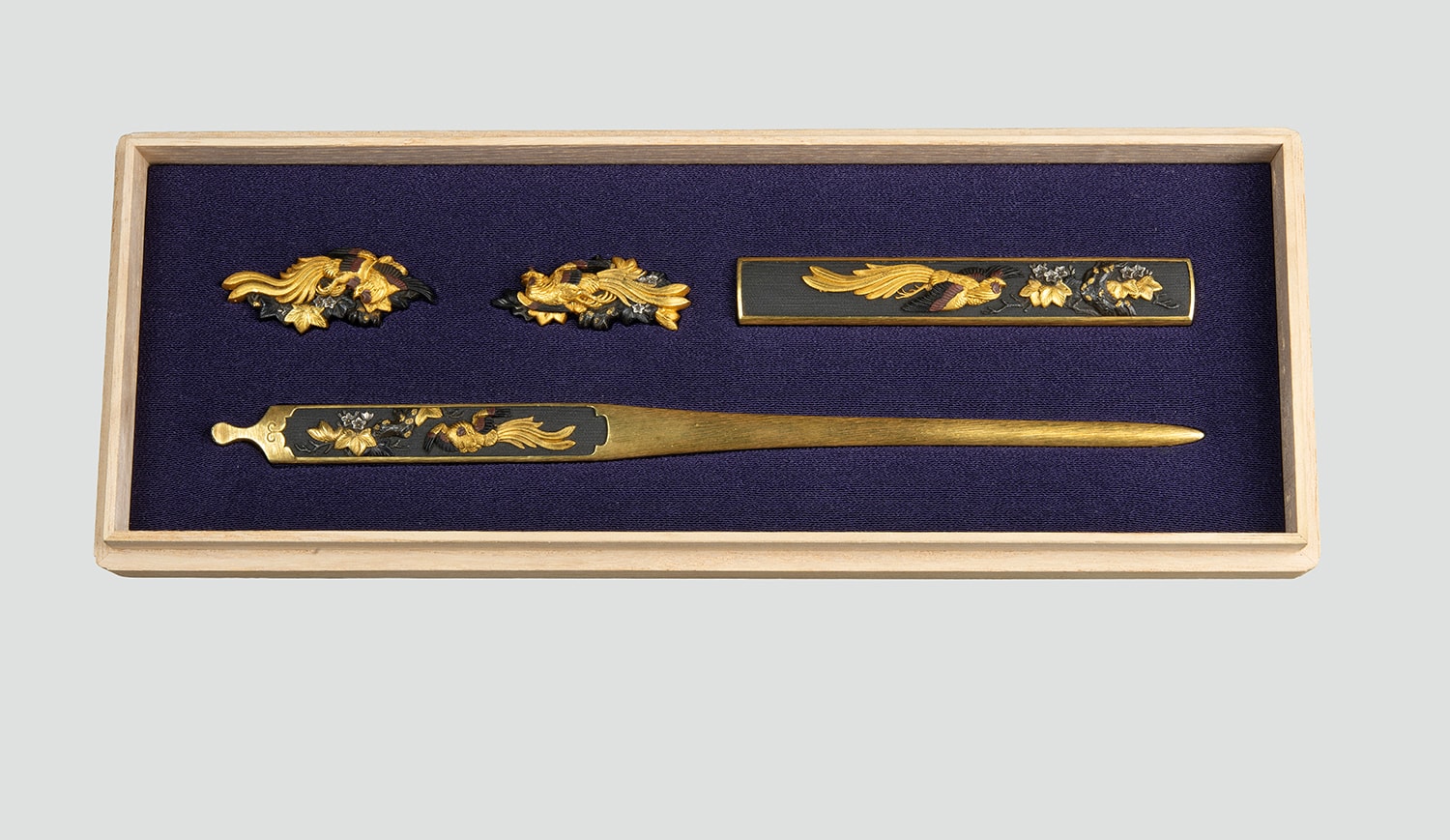
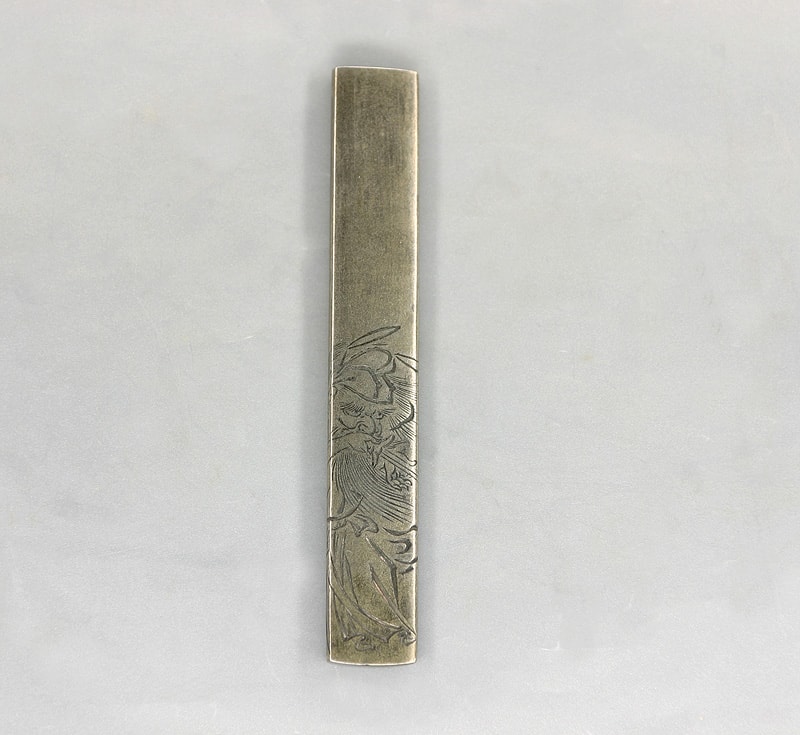
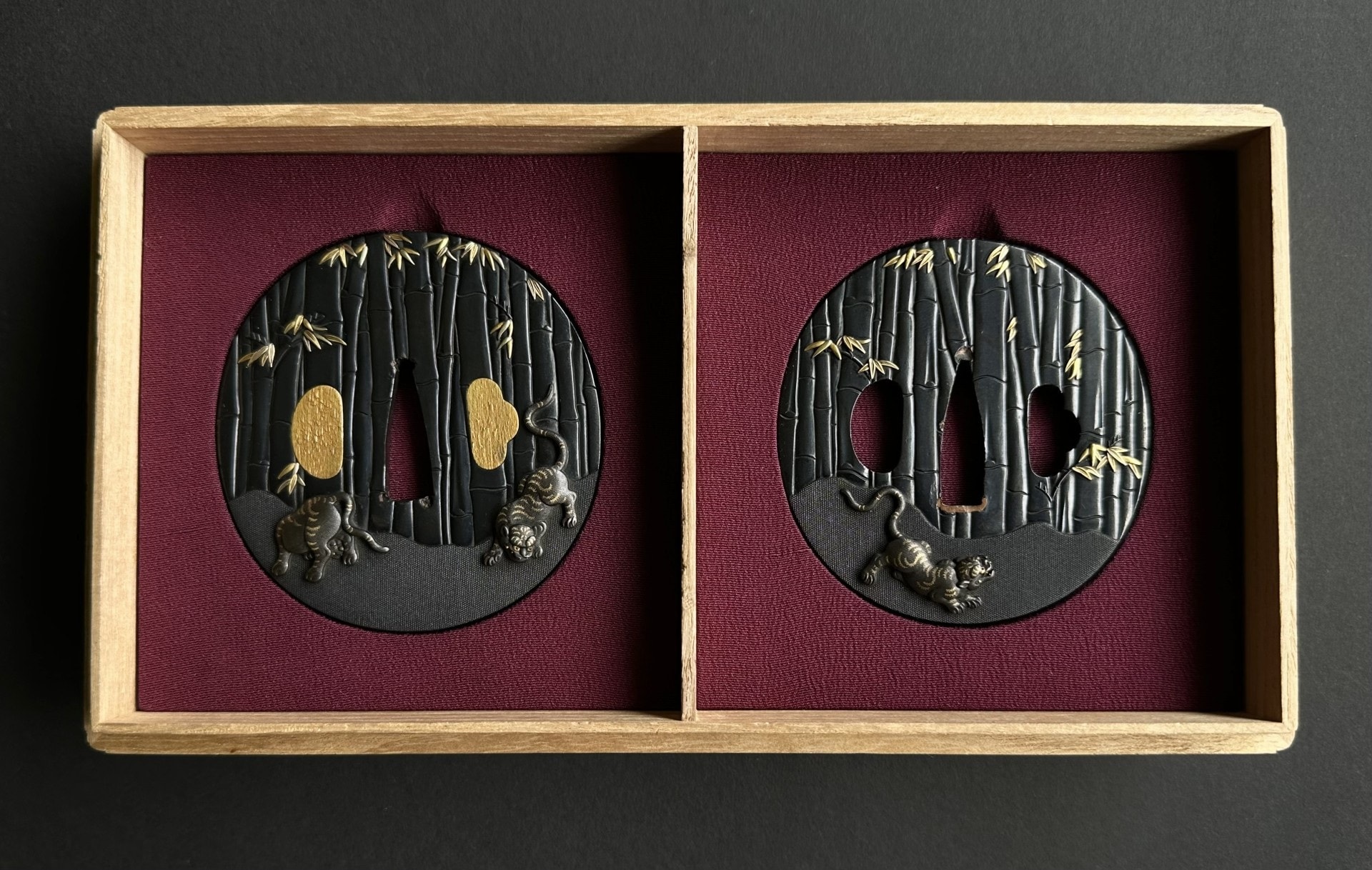
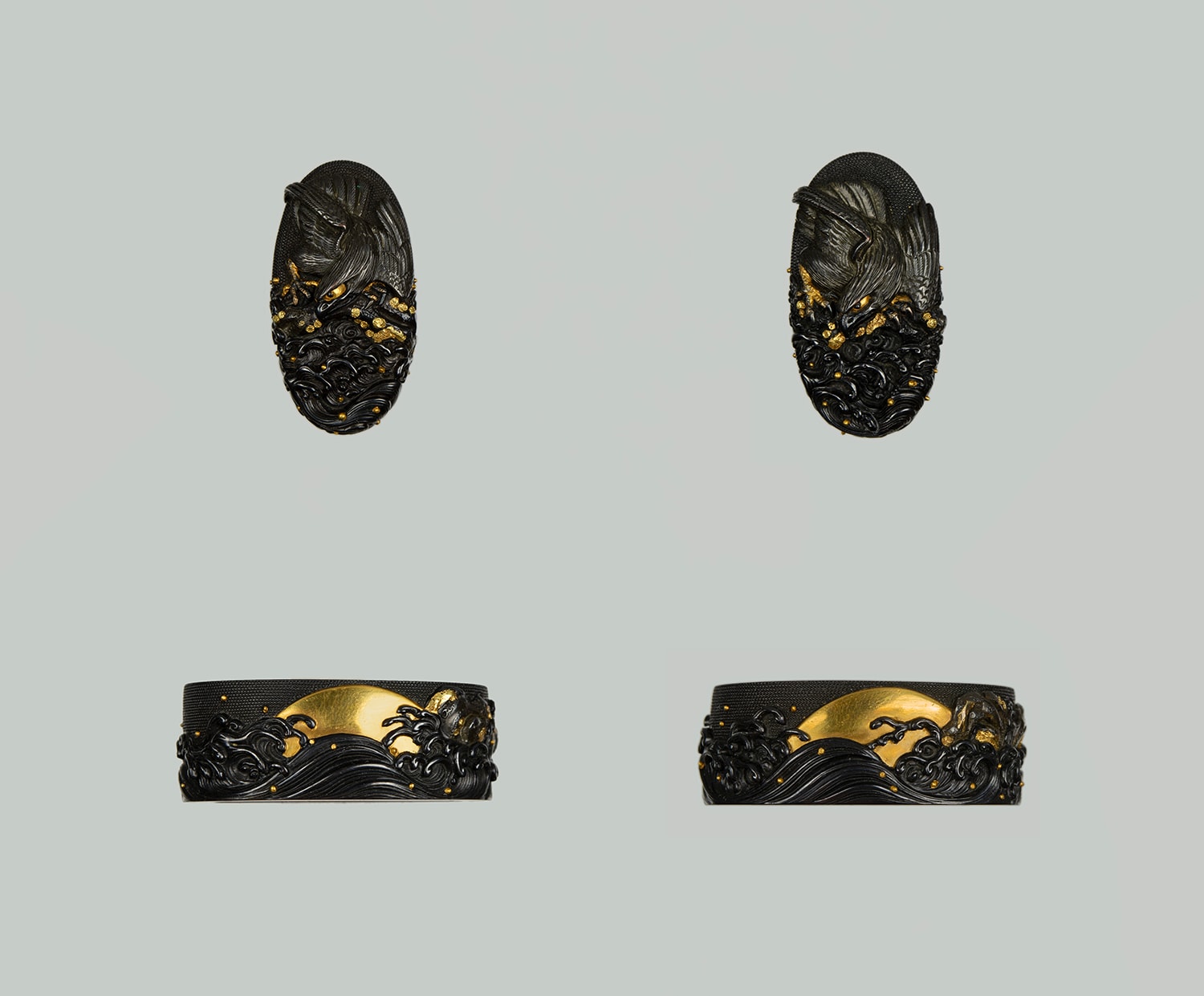
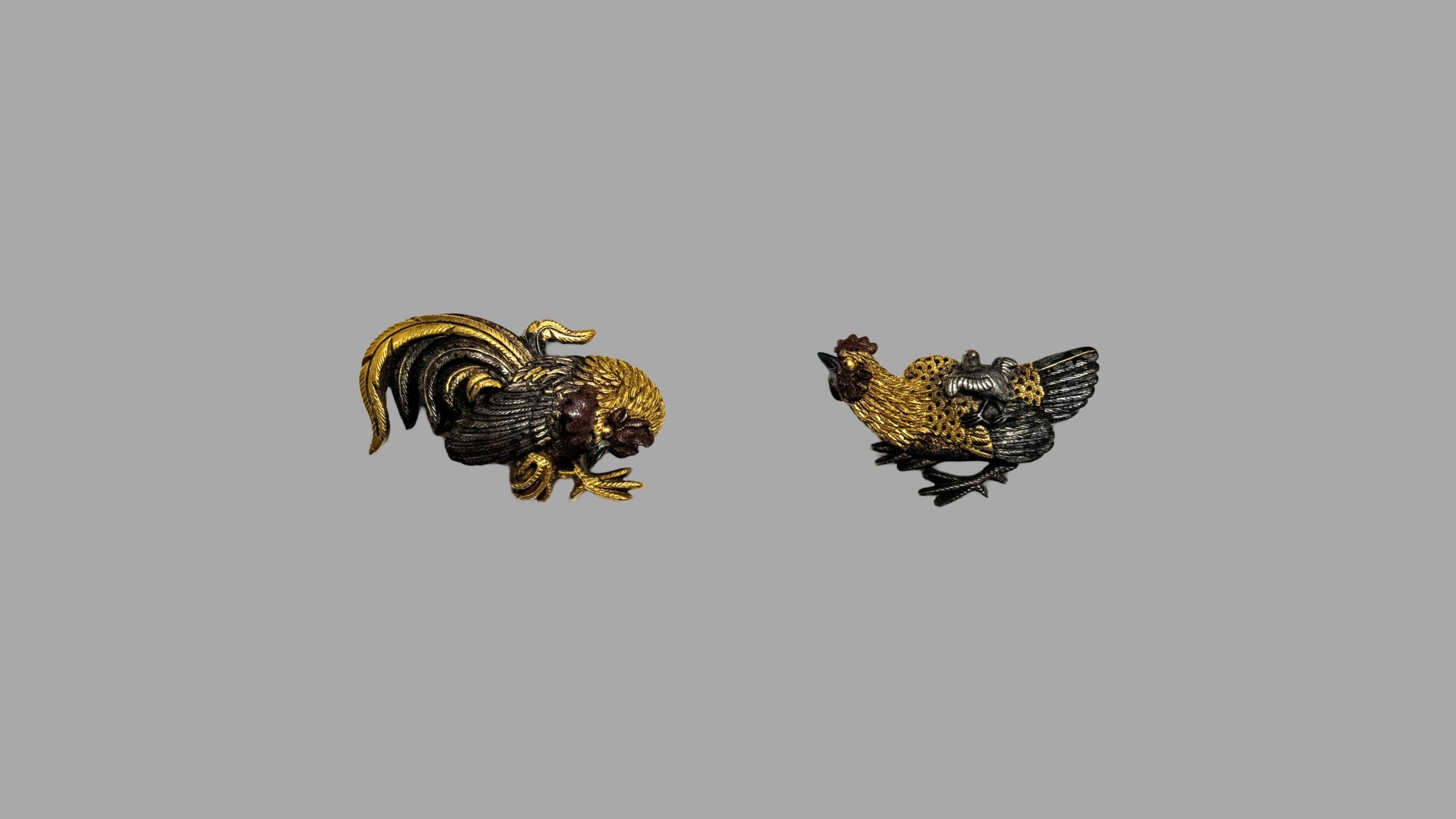
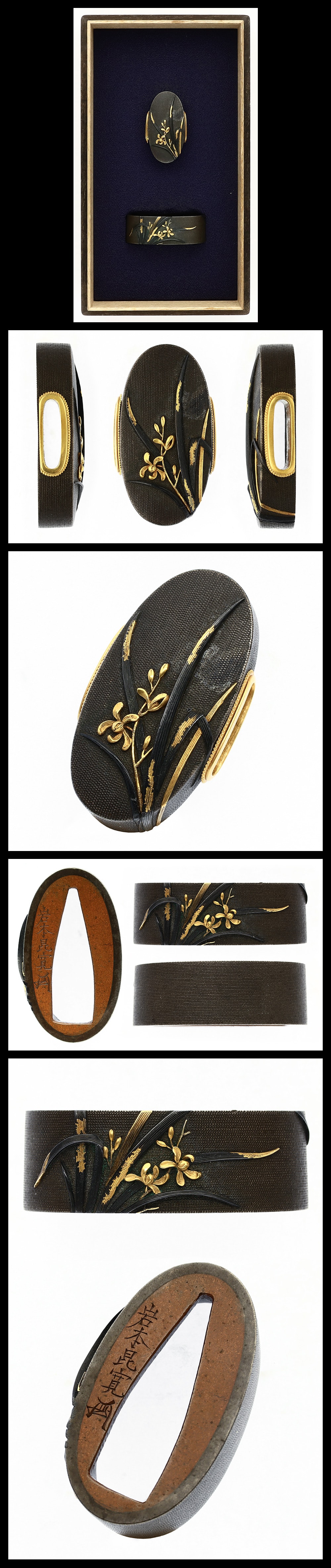
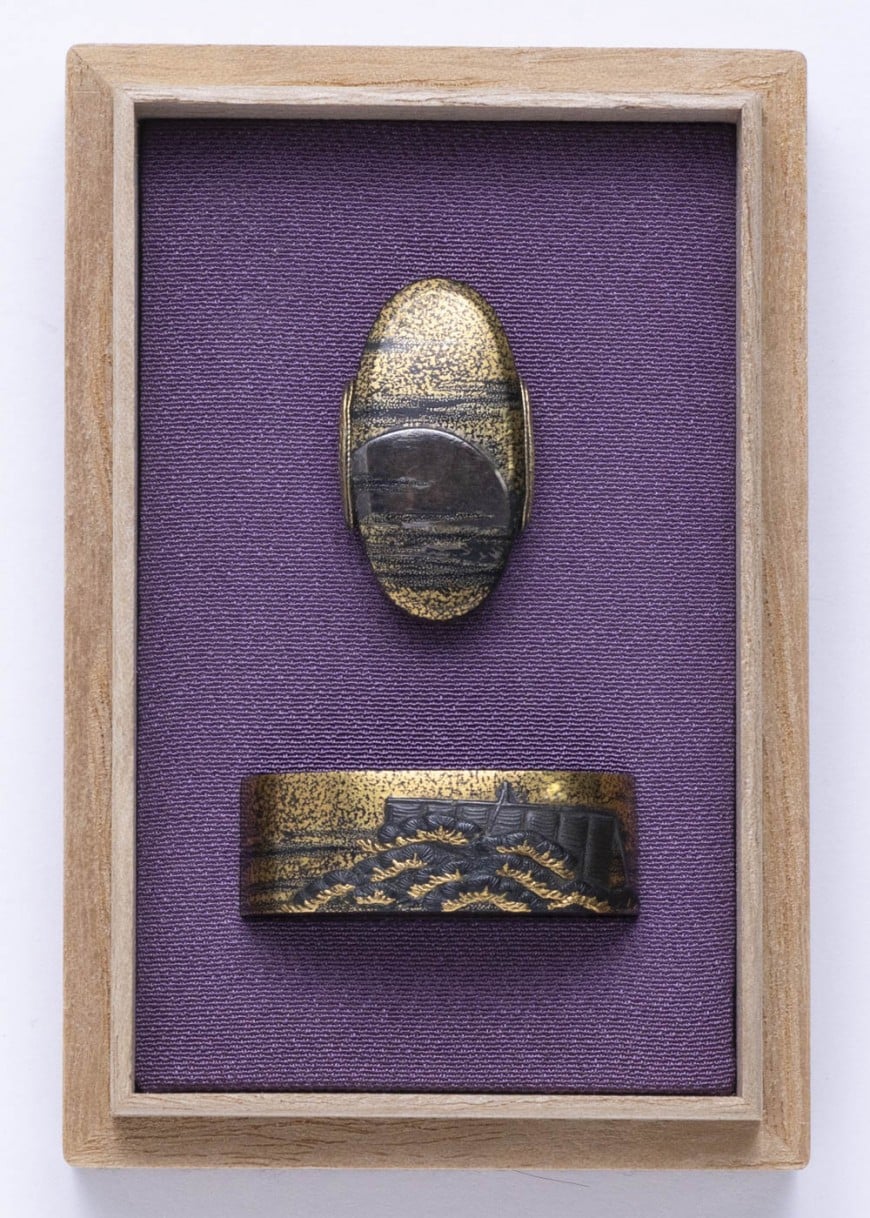
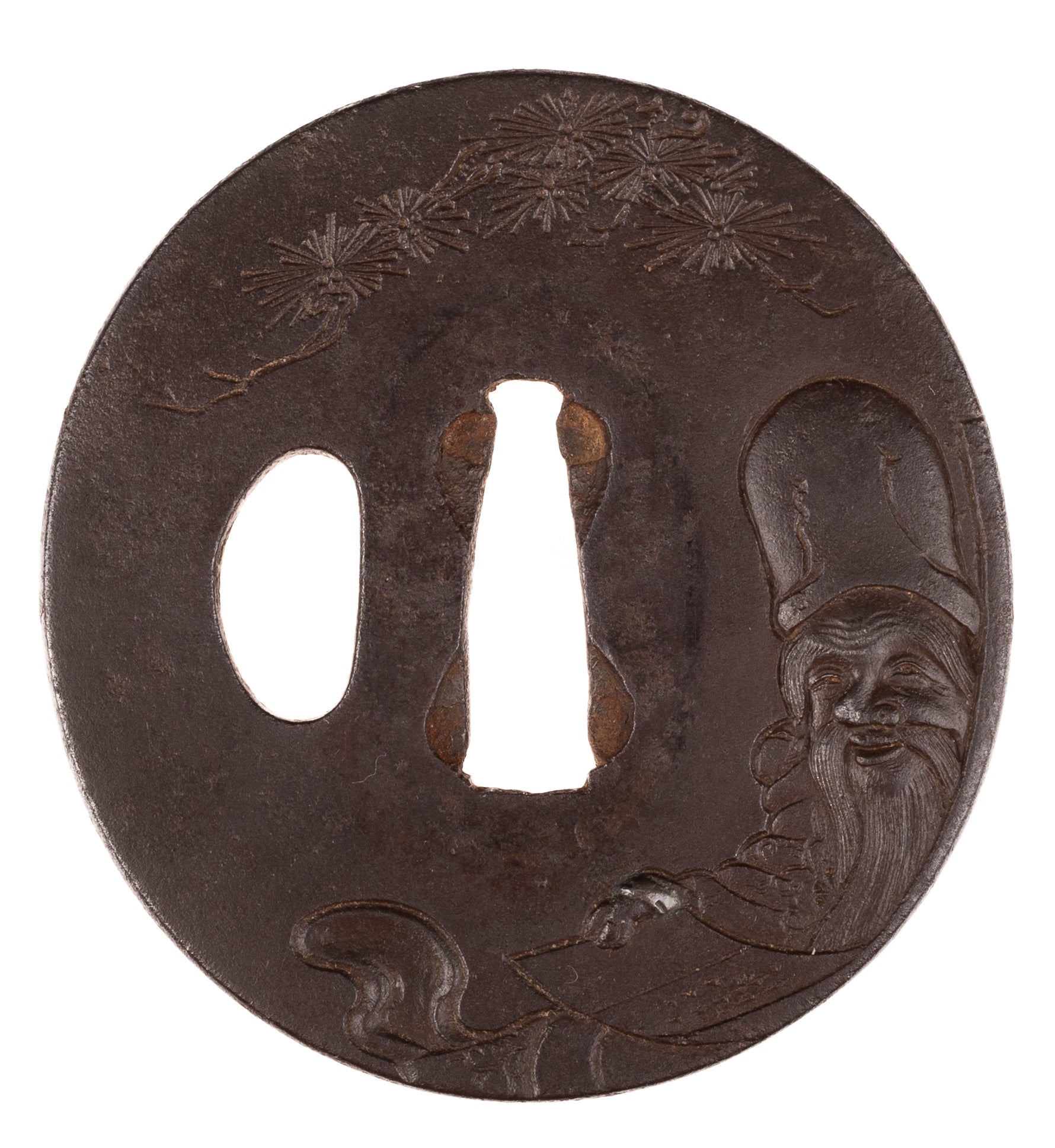
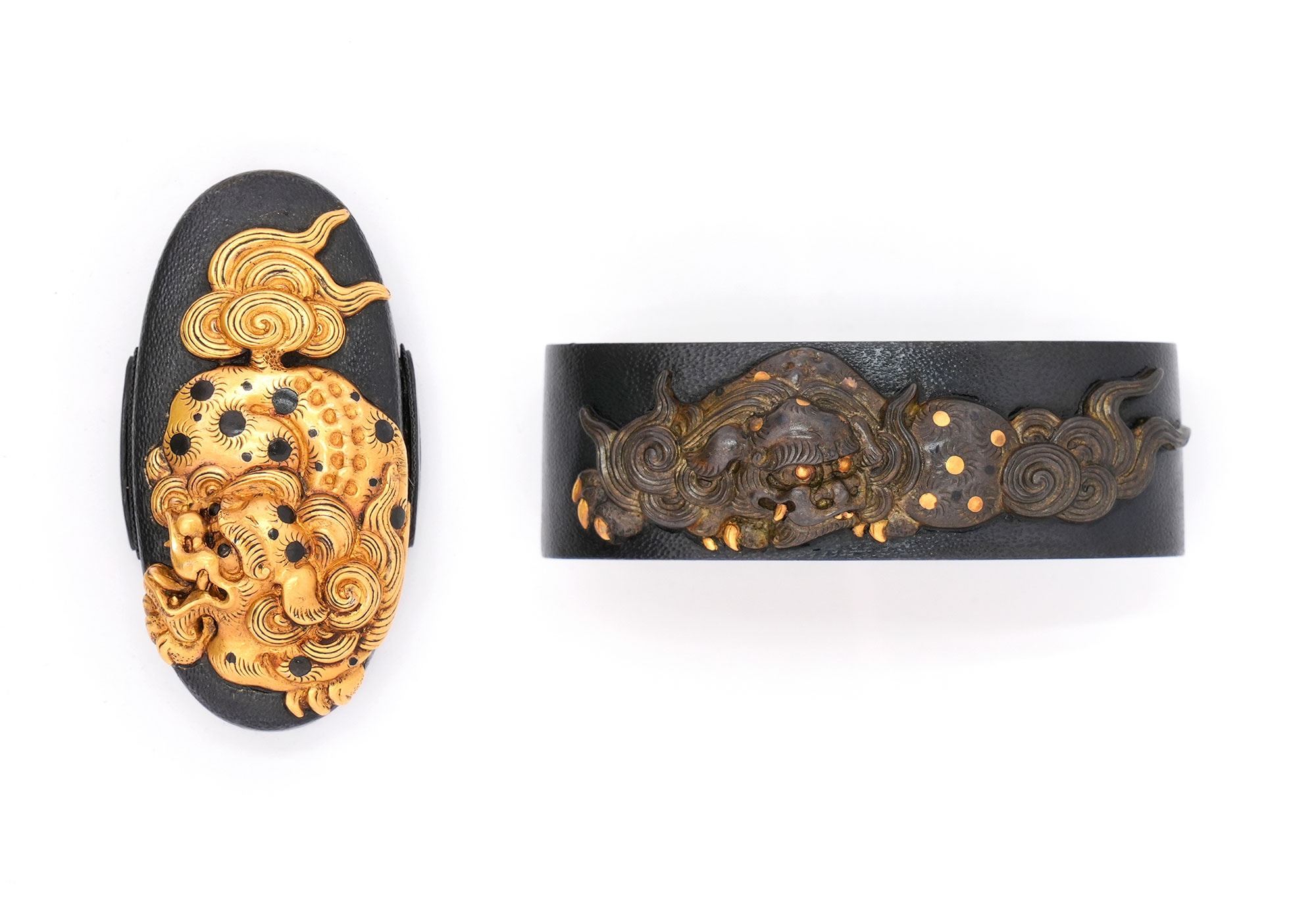
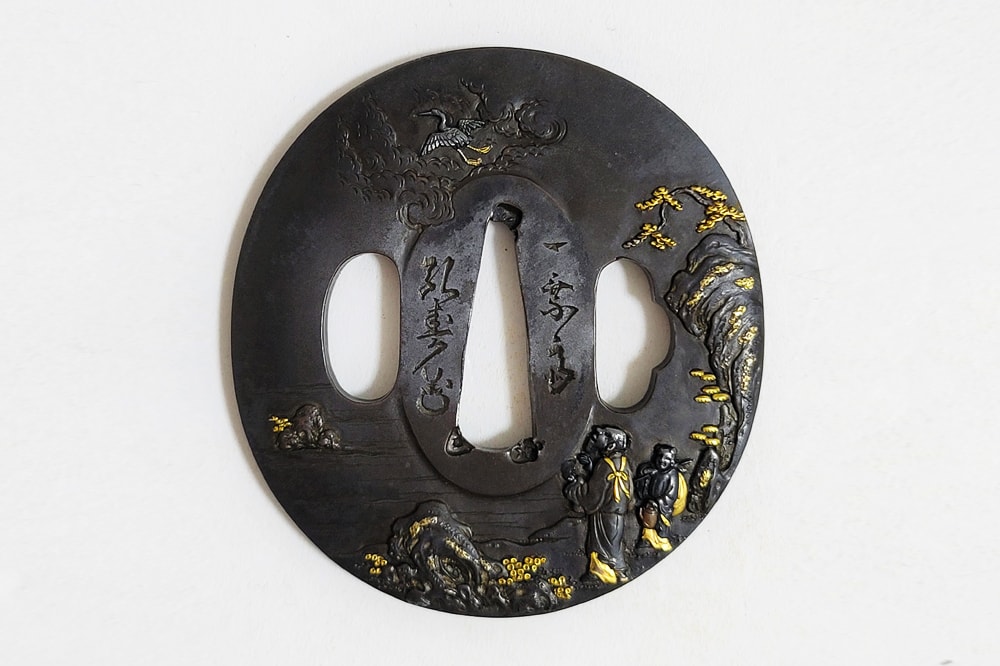
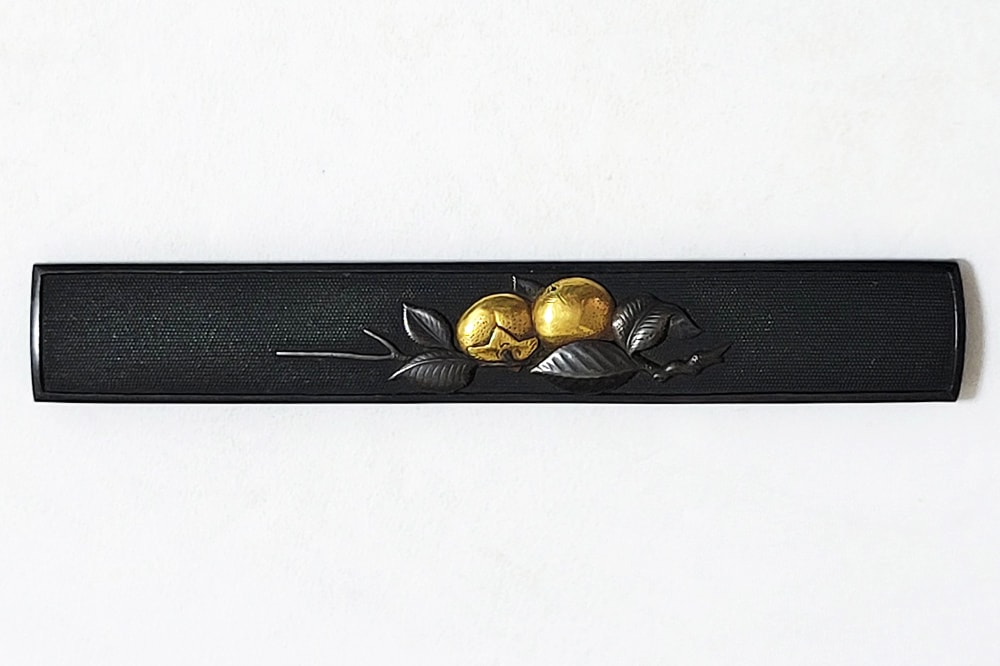
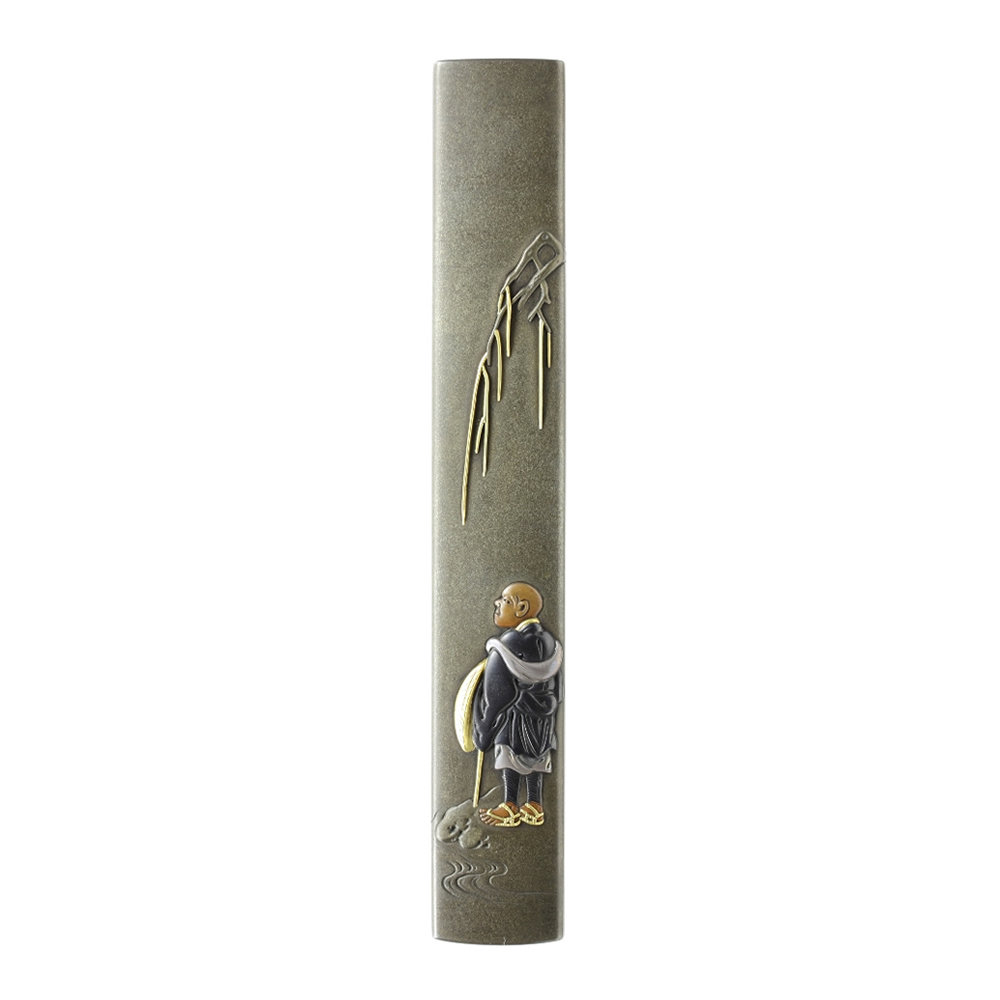
This kozuka depicts a scene from the Noh play 'Yugyo-yanagi,' showing the priest Saigyo resting under a willow tree at Shirakawa Barrier. The maker, Shibahara Toshinaga, was a leading disciple of Toryusai Seiju. He excelled in precise drawing and intricate high-relief carving with colored inlays, capturing a refined atmosphere. This piece showcases his delicate carving, particularly in Saigyo's firmly closed mouth and sharp gaze, conveying the young priest's strong will.
 NihontoWatch
mei · Toryusai · Edo
Toryusai School
Edo
Signed
Machibori · Edo
12 pieces on the market now
The Toryusai school was established in Edo by Tanaka Seiju (1804--1876), born the son of the Musashi Province tsuba maker Tanaka Fusajiro. Seiju trained formally under Goto Sojiro Masanori but pursued the broader field of kinko largely through self-directed study, ultimately perfecting a stylish, distinctive personal manner that became known as the Toryusai style. Counted among the "three great masters of Bakumatsu metalwork," he rivaled the fame of Goto Ichijo in Kyoto and, like Ichijo, was granted the rank of Hogen. " Kono Shunmei (Haruaki), a master of the Yanagawa lineage who shared Seiju's milieu in Edo, represented a parallel current of late-Edo kinko artistry whose weighty chisel manner and illustrative e-fu carving influenced the broader circle in which the Toryusai school operated. Together, these artists constituted the vital core of Edo-based decorative metalwork during the final decades of the Tokugawa shogunate. The Toryusai school's collective identity rests upon an encyclopedic command of metalworking techniques unified by a distinctly Edo sensibility -- urbane, witty, and decoratively assured. Across the lineage, from Seiju through Kiyoshige and Toshiyoshi, one encounters a shared mastery of takabori with iroe polychrome, sukidashi-bori, suemon-zogan, hira-zogan, and nunome-zogan, deployed across grounds of shakudo, shibuichi, iron, and silver with fluent authority. " Kiyoshige inherited this vocabulary and distinguished himself through exceptional volumetric modeling -- his yobori approaching fully sculptural marubori with what the NBTHK terms outstanding "placement of flesh" (nikuoki).
Toshiyoshi, working primarily on polished shibuichi grounds, synthesized multiple inlay techniques within single compositions, combining suemon-zogan, okigane, and keshi-tokin to achieve chromatic depth and tonal complexity. A hallmark of the school's later production is the neko-kaki yasurime ("cat-scratch" file marks) found on the reverse of kozuka -- a workshop convention that links Toshiyoshi's output to the broader Toryusai lineage. Throughout, the school's pictorial range is vast: figure compositions, birds and animals, literary themes from the Taketori Monogatari and Tsurezuregusa, folk tales, and witty conceits including anthropomorphized frogs and the "Daruma-in-absence" design, all handled with the okashimi (humorous charm) that conveys the school's fashionable Edo flair. The NBTHK's appraisals consistently characterize the Toryusai school's productions as works of notably high dignity and completion, possessing a solemn yet unpretentious taste even when gold inlay is used abundantly. Seiju's mature works display technique and conception operating "in full concert," while Kiyoshige's finest pieces are judged as attaining a level comparable to the founder himself. " The school's significance extends beyond individual virtuosity: the Toryusai lineage represents the most coherent articulation of an independent Edo kinko aesthetic -- one that assimilated the carving methods of the Goto and Yanagawa families yet forged from these an unmistakably personal idiom marked by fresh designs and ingenious, taste-driven sensibility. That the lineage sustained its identity from Seiju's founding through Kiyoshige's succession and into Toshiyoshi's Meiji-era continuation testifies to the robustness of its artistic vision, preserving the refined character of late-Edo metalwork at the moment of its historical transition. Learn more →
| Smith | Era | Designated |
|---|---|---|
| Kiyotoshi清寿 | — | 39 |
| Toshiyoshi寿良 | — | 14 |
| Kiyoshige清重 | — | 5 |
| Yoshitsugu良次 | 1670 | 4 |
| Toshimasa寿政 | — | 0 |
We could not find an authenticity certificate on the seller’s listing. Japanese swords and fittings are normally papered by the NBTHK (or the NTHK). Without one, the attribution is the seller’s own assessment and has not been independently verified — treat it with caution and ask the dealer about certification before buying.
If, due to our fault, the item differs significantly from its proper condition, the item may be returned. Cooling-off is within one week of the item's arrival.
This kozuka depicts a scene from the Noh play 'Yugyo-yanagi,' showing the priest Saigyo resting under a willow tree at Shirakawa Barrier. The maker, Shibahara Toshinaga, was a leading disciple of Toryusai Seiju. He excelled in precise drawing and intricate high-relief carving with colored inlays, capturing a refined atmosphere. This piece showcases his delicate carving, particularly in Saigyo's firmly closed mouth and sharp gaze, conveying the young priest's strong will.
NihontoWatchmei · Toryusai · Edo
Toryusai School
Edo
Signed
Machibori · Edo
12 pieces on the market now
The Toryusai school was established in Edo by Tanaka Seiju (1804--1876), born the son of the Musashi Province tsuba maker Tanaka Fusajiro. Seiju trained formally under Goto Sojiro Masanori but pursued the broader field of kinko largely through self-directed study, ultimately perfecting a stylish, distinctive personal manner that became known as the Toryusai style. Counted among the "three great masters of Bakumatsu metalwork," he rivaled the fame of Goto Ichijo in Kyoto and, like Ichijo, was granted the rank of Hogen. " Kono Shunmei (Haruaki), a master of the Yanagawa lineage who shared Seiju's milieu in Edo, represented a parallel current of late-Edo kinko artistry whose weighty chisel manner and illustrative e-fu carving influenced the broader circle in which the Toryusai school operated. Together, these artists constituted the vital core of Edo-based decorative metalwork during the final decades of the Tokugawa shogunate. The Toryusai school's collective identity rests upon an encyclopedic command of metalworking techniques unified by a distinctly Edo sensibility -- urbane, witty, and decoratively assured. Across the lineage, from Seiju through Kiyoshige and Toshiyoshi, one encounters a shared mastery of takabori with iroe polychrome, sukidashi-bori, suemon-zogan, hira-zogan, and nunome-zogan, deployed across grounds of shakudo, shibuichi, iron, and silver with fluent authority. " Kiyoshige inherited this vocabulary and distinguished himself through exceptional volumetric modeling -- his yobori approaching fully sculptural marubori with what the NBTHK terms outstanding "placement of flesh" (nikuoki).
Toshiyoshi, working primarily on polished shibuichi grounds, synthesized multiple inlay techniques within single compositions, combining suemon-zogan, okigane, and keshi-tokin to achieve chromatic depth and tonal complexity. A hallmark of the school's later production is the neko-kaki yasurime ("cat-scratch" file marks) found on the reverse of kozuka -- a workshop convention that links Toshiyoshi's output to the broader Toryusai lineage. Throughout, the school's pictorial range is vast: figure compositions, birds and animals, literary themes from the Taketori Monogatari and Tsurezuregusa, folk tales, and witty conceits including anthropomorphized frogs and the "Daruma-in-absence" design, all handled with the okashimi (humorous charm) that conveys the school's fashionable Edo flair. The NBTHK's appraisals consistently characterize the Toryusai school's productions as works of notably high dignity and completion, possessing a solemn yet unpretentious taste even when gold inlay is used abundantly. Seiju's mature works display technique and conception operating "in full concert," while Kiyoshige's finest pieces are judged as attaining a level comparable to the founder himself. " The school's significance extends beyond individual virtuosity: the Toryusai lineage represents the most coherent articulation of an independent Edo kinko aesthetic -- one that assimilated the carving methods of the Goto and Yanagawa families yet forged from these an unmistakably personal idiom marked by fresh designs and ingenious, taste-driven sensibility. That the lineage sustained its identity from Seiju's founding through Kiyoshige's succession and into Toshiyoshi's Meiji-era continuation testifies to the robustness of its artistic vision, preserving the refined character of late-Edo metalwork at the moment of its historical transition. Learn more →
| Smith | Era | Designated |
|---|---|---|
| Kiyotoshi清寿 | — | 39 |
| Toshiyoshi寿良 | — | 14 |
| Kiyoshige清重 | — | 5 |
| Yoshitsugu良次 | 1670 | 4 |
| Toshimasa寿政 | — | 0 |
We could not find an authenticity certificate on the seller’s listing. Japanese swords and fittings are normally papered by the NBTHK (or the NTHK). Without one, the attribution is the seller’s own assessment and has not been independently verified — treat it with caution and ask the dealer about certification before buying.
If, due to our fault, the item differs significantly from its proper condition, the item may be returned. Cooling-off is within one week of the item's arrival.