NihontoWatch MonNihontoWatch
Market
Encyclopedia
Kantei
NihontoWatch MonNihontoWatch
Market
Encyclopedia
Kantei

Description

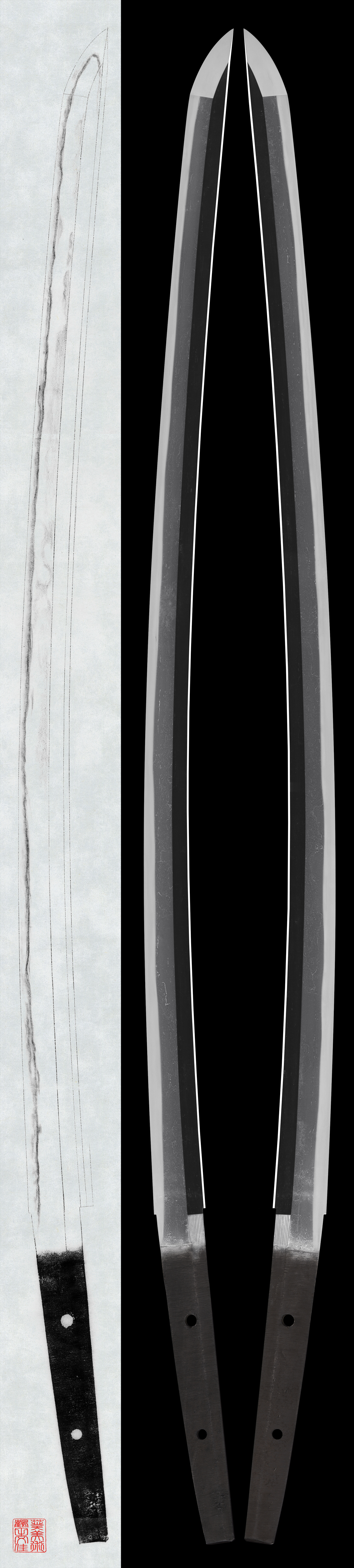
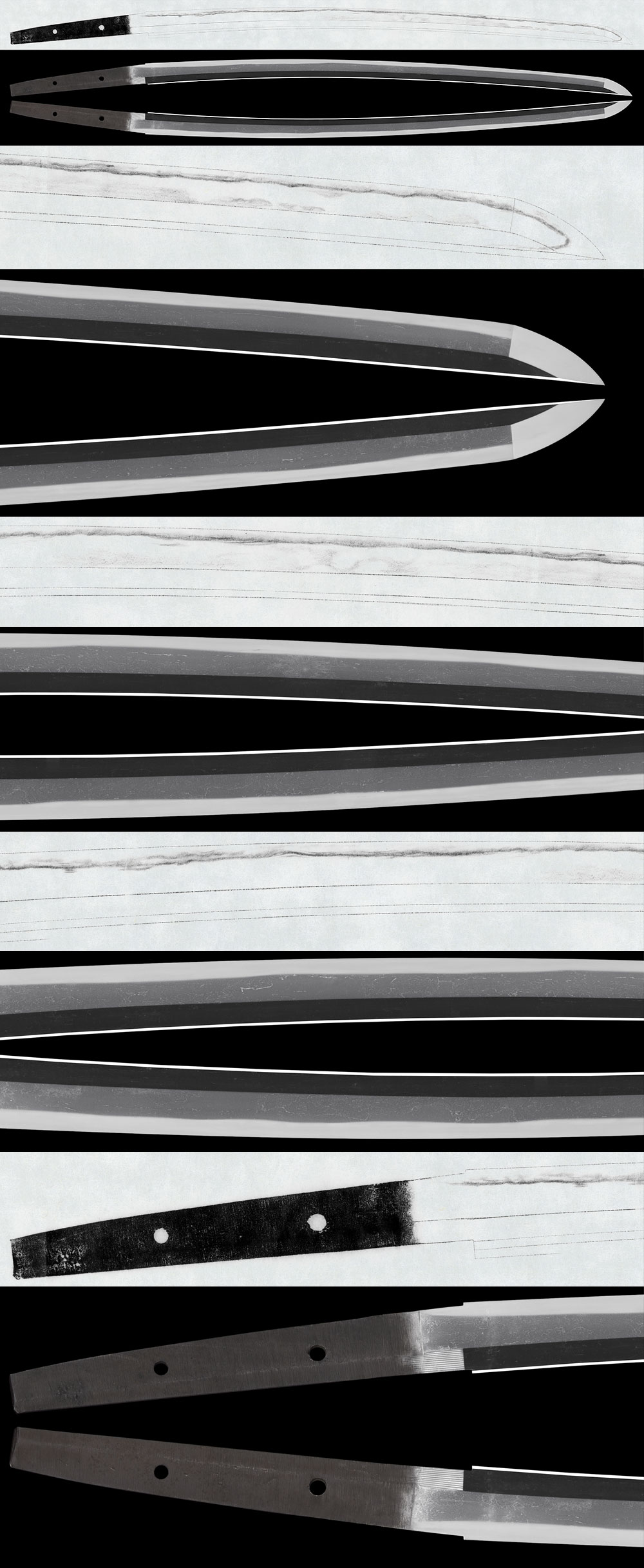
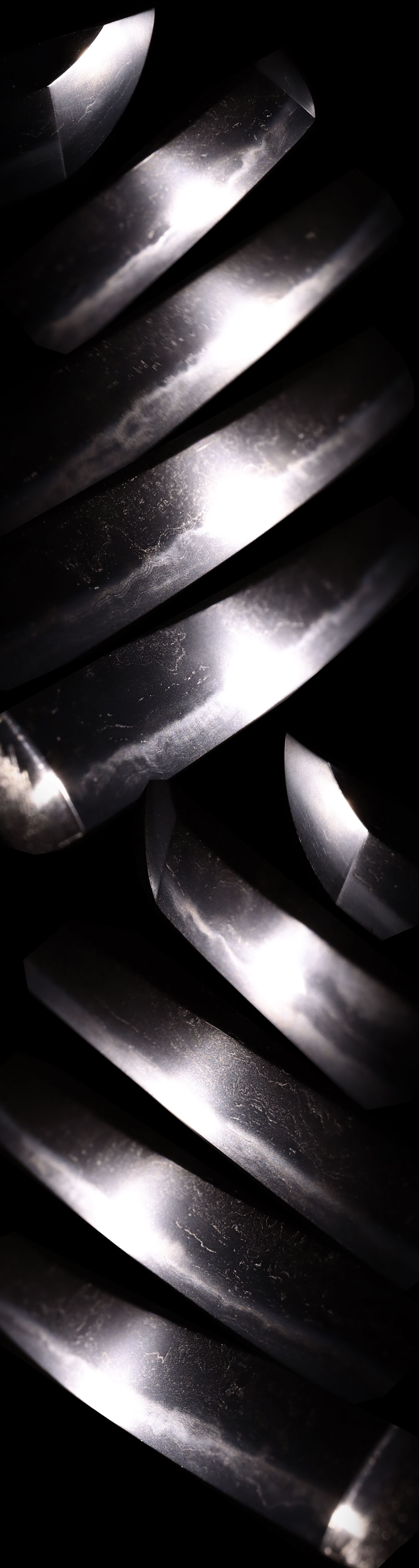
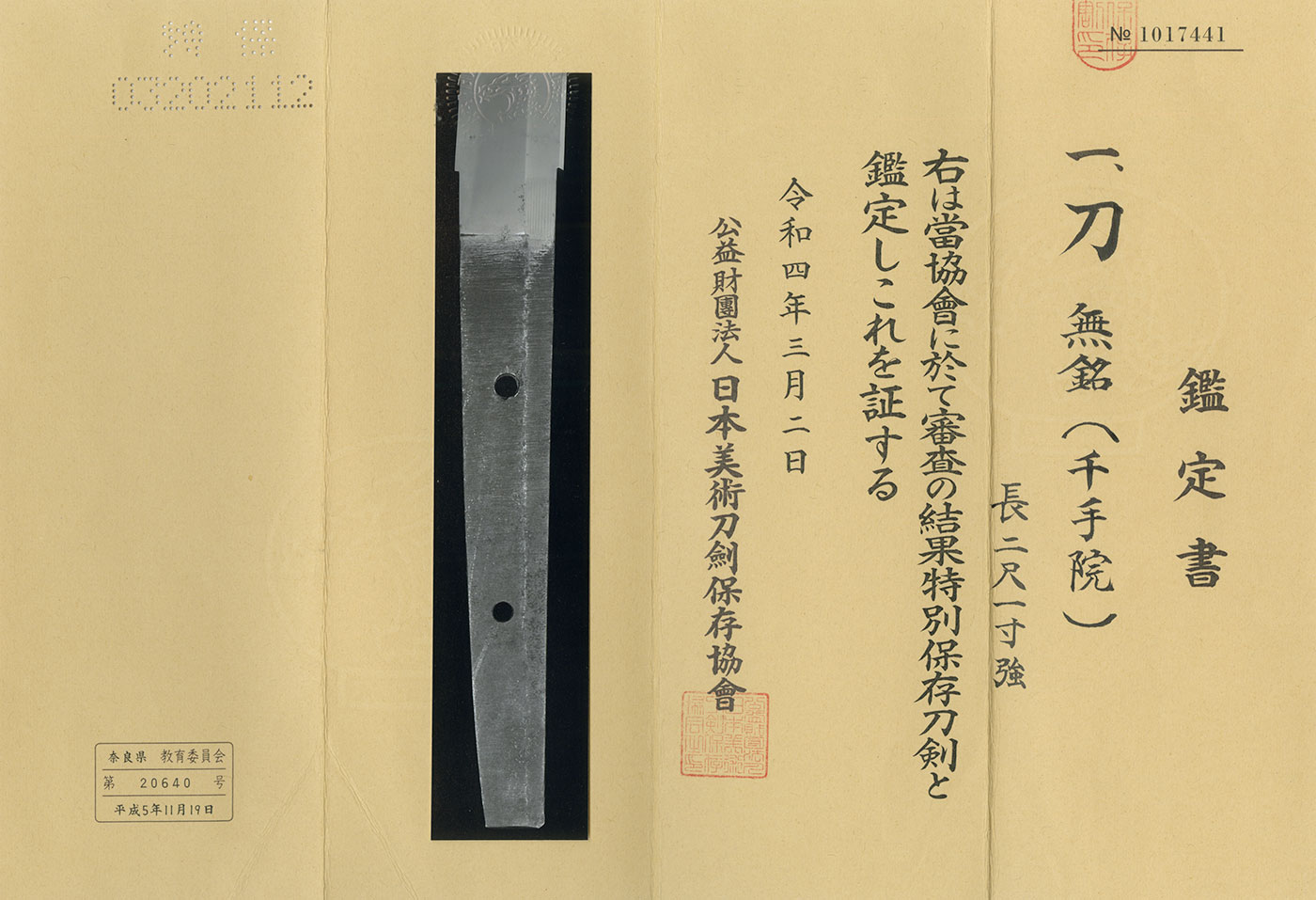
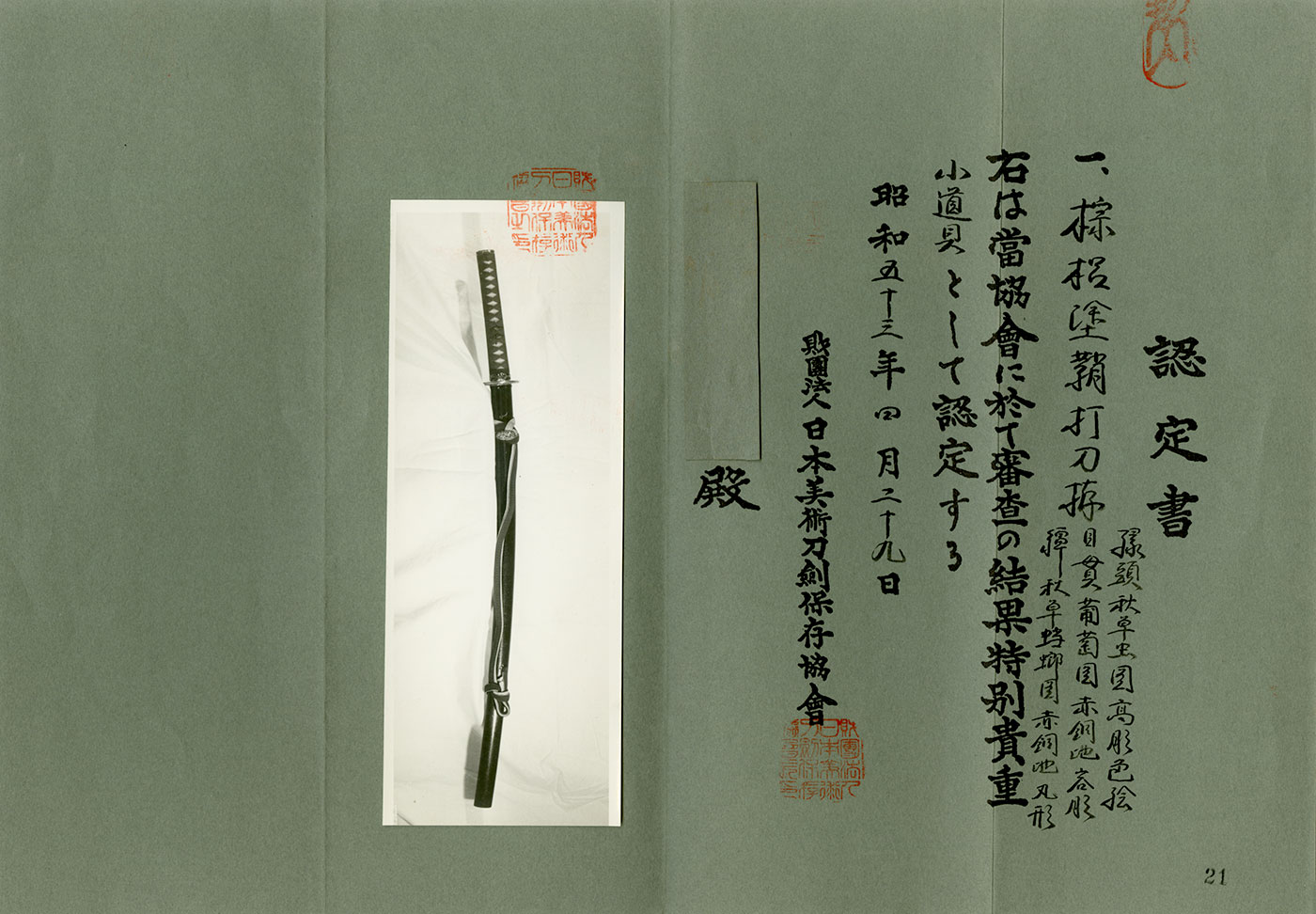
This mumei katana is attributed to the Senjuin school, active during the mid to late Kamakura period in Yamato Province. It features a well-proportioned shape with a refined ko-itame hada and a suguha hamon with a deep nioiguchi, characteristic of the school. The blade comes with a shirasaya and a complete koshirae, and is certified as NBTHK Tokubetsu Hozon Token.

Auction History

Auction status: live on sword-auction.com.

NihontoWatch MonNihontoWatch
MarketEncyclopediaKantei
Swords›Yamato-den›Senjuin›Katana: Mumei (Senjuin) (NBTHK Tokubetsu Hozon Token)
katanaTokubetsu Hozon
Senjuin School

Katana: Mumei (Senjuin) (NBTHK Tokubetsu Hozon Token)

mumei · Senjuin · Kamakura · nagasa 63.8cm · sori 1.6cm

Current bidLive auction
¥1,400,000
1 bid·Ends in 4d 11h·Updated 9m ago
View & bid →
Katana
Could you name the smith from the blade alone? Today’s kantei →
Senjuin School — 1 of 5
Senjuin School — 2 of 5
Senjuin School — 3 of 5
Senjuin School — 4 of 5
Senjuin School — 5 of 5
1 / 5
1 / 5
Senjuin School — 1 of 5Senjuin School — 2 of 5Senjuin School — 3 of 5Senjuin School — 4 of 5Senjuin School — 5 of 5
Katana
Could you name the smith from the blade alone? Today’s kantei →
Measurements & details
Smith
Senjuin School
Type
Katana
School
Senjuin
Period
Kamakura
Province
Yamato
Signature
Unsigned(6% of this smith's designated works are signed)
Measurements
Nagasa 63.8cmSori 1.6cmMotohaba 2.88cmSakihaba 2.13cmKasane 0.63cmWeight 670g
Description

This mumei katana is attributed to the Senjuin school, active during the mid to late Kamakura period in Yamato Province. It features a well-proportioned shape with a refined ko-itame hada and a suguha hamon with a deep nioiguchi, characteristic of the school. The blade comes with a shirasaya and a complete koshirae, and is certified as NBTHK Tokubetsu Hozon Token.

About the school

Senjuin

千手院

Yamato-den · Yamato

22 pieces on the market now

›

Among the five schools of the Yamato-den, Senjuin (千手院) is held to be the earliest in origin, its name drawn from the Senjudo, a hall enshrining Senju Kannon (the Thousand-Armed Avalokitesvara) said to have stood at the western foothills of Mt. Wakakusa in Nara. The smiths who gathered in that quarter, working under the patronage and within the orbit of the great temples, formed the group, and their close association with the warrior-monks of the monastic establishments is thought to account for the scarcity of signed work that marks the school across its whole span. Old transmitted writings name two masters of the late Heian period, Yukinobu and Shigehiro, though no secure example by either has been confirmed; the oldest surviving signed piece is a tachi cut with the three-character inscription "Senjuin," placed in the early Kamakura period. Blades prefixed Ko-Senjuin are assigned to the earliest phase and retain the lingering presence of the straight-sword (chokuto) tradition, material indispensable to the study of how the curved shinogi-zukuri blade took form. Production runs from the late Heian period through the Nanbokucho era. The school's vocabulary is rooted firmly in Yamato practice. The jigane is an itame mixed with mokume and passages of nagare-masame, often tending toward hada-dachi, with thick ji-nie adhering well, abundant chikei, and in finer examples a faint nie-utsuri that leaves the steel bright and clear; the masame gathers and strengthens toward the edge on the most Yamato of the blades. The hamon is fundamentally a suguha with a shallow notare tendency, mixing ko-choji, ko-gunome, and ko-midare, the habuchi fraying into hotsure with uchi-noke, nijuba, kuichigai-ba, and yubashiri worked in profusion; thick ko-nie lies along a clear nioiguchi, while kinsuji and sunagashi run vigorously through the ji and ha. The boshi enters straight and forms a ko-maru with vigorous hakikake, or finishes in yakizume.

Within this shared foundation the hands diverge. Yoshihiro is singled out as the smith whose ji and ha vary most, his nie especially strong, swelling from the school's quiet suguha into a flamboyant large midare with kinsuji and sunagashi that reads toward Soshu. Sukemitsu gathers ko-choji, ko-gunome, and small midare on a bright suguha-cho, a Bizen-leaning admixture set against the school's plainer temper, his bold two-character mei itself a mark of the hand. Nobuyoshi of the Ryumon group, a Yamato branch, divides between a lively midare carrying utsuri and a Bizen character and a subdued suguha fraying into hotsure in which the Yamato color stands strongest. To kantei a Senjuin blade is to read its position among its neighbours, and the long-standing rule holds that within the Yamato Five Schools a hamon of unusually vigorous and changeable character should be appraised as Senjuin, against the more restrained tempers of Tegai, Shikkake, Taima, and Hosho. The masame in the ha, the hotsure, kuichigai-ba, and nijuba, and the yakizume or hakikake boshi keep the work within Yamato, while the brightness of the nioiguchi and the ko-midare on the edge set it apart from the plainer suguha of its sister schools. Surviving forms span tachi, katana, kodachi, ken, and yari, the ken notably numerous because they served as goshintai and ritual implements rather than weapons of the warrior class; many blades keep their ubu nakago, with pronounced koshizori and funbari of archaic bearing. Yoshihiro's dated signatures give him a face among many anonymous hands, his manner the touchstone for Soshu-tinged mumei attributions; Nobuyoshi is carried to high standing by a single great signed tachi held as an imperial heritage; Sukemitsu is anchored by a dated reference tachi in the Tokyo National Museum. The bulk of the school's record is mumei, the attributions resting on construction, the flowing masame-inclined forging, and the bright suguha alone, and provenance runs through religious institutions such as Tanzan Shrine and Kyoo Gokoku-ji (To-ji), attesting to the school's monastic roots. Learn more →

40 recorded smiths230 designated works
Leading smiths
SmithEraDesignated
Nobuyoshi延吉1288-129329
Sukemitsu助光1243-12476
Yoshihiro吉弘1352-13565
Yoshihiro義弘1312-13173
Aritoshi有俊1293-12991
Explore the Senjuin school →

Historical context

Yamato in the Kamakura period

›

The Yamato schools grew up in the shadow of Nara’s great monasteries: Tegai took its name from a gate of Tōdaiji. Their austere masame and quiet suguha are a temple aesthetic, prized ever since for exactly that restraint.

Yamato in the Kamakura period →

NBTHK Certificate
Tokubetsu Hozon Tōken特別保存刀剣
Sword Especially Worthy of Preservation
›

A Hozon-certified blade judged to show notably superior workmanship and a better state of preservation. The bar is higher: re-tempered blades and most unsigned Muromachi/Edo works are excluded.

About the NBTHK›

The NBTHK (Nihon Bijutsu Tōken Hozon Kyōkai, the Society for the Preservation of Japanese Art Swords) is a public-interest incorporated foundation founded in 1948 and supervised by Japan’s Agency for Cultural Affairs (Bunkachō); it is based at the Japanese Sword Museum in Tokyo. Its expert panels physically examine each submitted work (shinsa) and issue a certificate (kanteishō) ranking it by artistic and historical merit. NBTHK papers are the most widely recognized standard of authentication for Japanese swords and fittings.

NBTHK official site→
Seller
A
Aoi Art
🇯🇵Ships from Japan
›
✓Verified dealeraoijapan.com
Settles in JPY
✓Ships worldwide✓English supportWire transferPayPalCredit card
Return policy

If you wish to return an item, please notify us within 3 days of receipt. After this period we cannot accept cancellations. Please ship the return to us within 5 business days. Cancellation is conditional on the item being kept in the same condition as at the time of sale, so please handle it with care.

View all of Aoi Art’s listings→

Previously sold — Senjuin School

View all →
Aoi Art
Jūyō
Katana - Jūyō - by Senjuin School - Mumei (Senjuin)Katana - Jūyō - by Senjuin School - Mumei (Senjuin)
Sold

Katana

BySenjuin School
SOLD
Choshuya
Ken - by Senjuin School - Mumei Yamato Koken with Vermilion Lacquered Aikuchi Tanto KoshiraeKen - by Senjuin School - Mumei Yamato Koken with Vermilion Lacquered Aikuchi Tanto Koshirae
Sold

Ken

BySenjuin School
SOLD
Choshuya
Katana - by Senjuin School - O-suriage Mumei SenjuinKatana - by Senjuin School - O-suriage Mumei Senjuin
Sold

Katana

BySenjuin School
SOLD
Samurai Museum
Hozon
Tanto - Hozon - by Senjuin School - Antique Japanese Sword Tanto Attributed to Mino Senjuin NBTHK Hozon CertificateTanto - Hozon - by Senjuin School - Antique Japanese Sword Tanto Attributed to Mino Senjuin NBTHK Hozon Certificate
Sold

Tantō

BySenjuin School
SOLD
Choshuya
Tachi - by Senjuin School - O-suriage Mumei SenjuinTachi - by Senjuin School - O-suriage Mumei Senjuin
Sold

Tachi

BySenjuin School
SOLD
Unique Japan
Tokuho
Katana - Tokuho - by Senjuin School - A Senjuin KatanaKatana - Tokuho - by Senjuin School - A Senjuin Katana
Sold

Katana

BySenjuin School
SOLD
Choshuya
Wakizashi - by Senjuin School - RikiyoshiWakizashi - by Senjuin School - Rikiyoshi
Sold

Wakizashi

BySenjuin School
SOLD
Aoi Art
Tokuho
Yari - Tokuho - by Senjuin School - Senjuin SakuYari - Tokuho - by Senjuin School - Senjuin Saku
Sold

Yari

BySenjuin School
SOLD

More from the Senjuin school

View all →
Sanmei
Tokuho
Tachi - Tokuho - by Senjuin School - Unsigned SenjuinTachi - Tokuho - by Senjuin School - Unsigned Senjuin

Tachi

BySenjuin School
¥1,250,000
Touken Komachi
Tokuho
Katana - Tokuho - by Senjuin School - Attributed to Senjuin, in ShirasayaKatana - Tokuho - by Senjuin School - Attributed to Senjuin, in Shirasaya

Katana

BySenjuin School
¥800,000
Touken Komachi
Tokuho
Katana - Tokuho - by Senjuin School - Mumei (attributed to Senju-in) with Shirasaya and KoshiraeKatana - Tokuho - by Senjuin School - Mumei (attributed to Senju-in) with Shirasaya and Koshirae

Katana

BySenjuin School
¥1,250,000
Touken Komachi
Tokuho
Katana - Tokuho - by Senjuin School - Senjuin - ShirasayaKatana - Tokuho - by Senjuin School - Senjuin - Shirasaya

Katana

BySenjuin School
¥880,000
Eirakudo
Jūyō
Katana - Jūyō - by Senjuin School - Senjuin - Juyo TokenKatana - Jūyō - by Senjuin School - Senjuin - Juyo Token

Katana

BySenjuin School
¥3,500,000
Toushin
Tokuho
Tachi - Tokuho - by Senjuin School - Mumei (Senjyuin) - 1-086Tachi - Tokuho - by Senjuin School - Mumei (Senjyuin) - 1-086

Tachi

BySenjuin School
¥3,520,000
Toushin
Jūyō
Katana - Jūyō - by Senjuin Nobuyoshi - Mumei (Ryumon)Katana - Jūyō - by Senjuin Nobuyoshi - Mumei (Ryumon)

Katana

BySenjuin Nobuyoshi
Ask
Ayakashi
Tokuho
Ken - Tokuho - by Senjuin School - Ken: SenjuinKen - Tokuho - by Senjuin School - Ken: Senjuin

Ken

BySenjuin School
¥1,800,000

More from the Yamato tradition

View all →
Aoi Art
Jūyō
Katana - Jūyō - by Taima School - Mumei (Taima)Katana - Jūyō - by Taima School - Mumei (Taima)

Katana

ByTaima School
¥4,500,000
Choshuya
Tokuho
Katana - Tokuho - by Tegai School - Unsigned (O-suriage) TegaiKatana - Tokuho - by Tegai School - Unsigned (O-suriage) Tegai

Katana

ByTegai School
¥1,250,000
Goushuya
Tokujū
Katana - Tokuju - by Satsuma Yasuyo - Tokubetsu Juyo Token (One-Leaf Aoi Mon) Shume no Kami Ichihei Fujiwara Ason Yasuyo, Made in Satsushu Kirei-gun on an Auspicious Day in March, Kyoho 12Katana - Tokuju - by Satsuma Yasuyo - Tokubetsu Juyo Token (One-Leaf Aoi Mon) Shume no Kami Ichihei Fujiwara Ason Yasuyo, Made in Satsushu Kirei-gun on an Auspicious Day in March, Kyoho 12

Katana

BySatsuma Yasuyo
Ask
Tokka Biz
Hozon
Katana - Hozon - by Mihara School - Mumei MiharaKatana - Hozon - by Mihara School - Mumei Mihara

Katana

ByMihara School
¥650,000
Touken Komachi
Tokuho
Katana - Tokuho - by Tegai Kanenaga - Katana in ShirasayaKatana - Tokuho - by Tegai Kanenaga - Katana in Shirasaya

Katana

ByTegai Kanenaga
¥3,000,000
Eirakudo
Tokuho
Katana - Tokuho - by Tegai Kanetoshi - Tegai Kanetoshi - Tokubetsu Hozon TokenKatana - Tokuho - by Tegai Kanetoshi - Tegai Kanetoshi - Tokubetsu Hozon Token

Katana

ByTegai Kanetoshi
¥1,250,000
Bushido Antique Japanese Swords
Jūyō
Katana - Jūyō - by Shikkake Norinaga - Shikkake Norinaga Juyo TokenKatana - Jūyō - by Shikkake Norinaga - Shikkake Norinaga Juyo Token

Katana

ByShikkake Norinaga
¥42,000
Tsuruginoya
Jūyō
Katana - Jūyō - by Tegai Kanenaga - Tegai KanenagaKatana - Jūyō - by Tegai Kanenaga - Tegai Kanenaga

Katana

ByTegai Kanenaga
Ask

Swords

  • Katana
  • Wakizashi
  • Tantō
  • Tachi
  • Naginata
  • Yari
  • Japanese Swords
  • Samurai Swords

Fittings

  • Tsuba
  • Fuchi-Kashira
  • Kozuka
  • Menuki
  • Sword Guards (Tsuba)

Armor

  • Kabuto
  • Samurai Armor
  • All Samurai Armor

By Certification

  • Tokujū
  • Jūyō
  • Tokuho
  • Hozon

Resources

  • Dealer Directory
  • Artist Directory
  • The Daily Kantei
  • Glossary
  • Browse All
Nihontowatch© 2026
TermsPrivacyCookiesAbout

Description

This mumei katana is attributed to the Senjuin school, active during the mid to late Kamakura period in Yamato Province. It features a well-proportioned shape with a refined ko-itame hada and a suguha hamon with a deep nioiguchi, characteristic of the school. The blade comes with a shirasaya and a complete koshirae, and is certified as NBTHK Tokubetsu Hozon Token.

Auction History

Auction status: live on sword-auction.com.

NihontoWatch MonNihontoWatch
MarketEncyclopediaKantei
Swords›Yamato-den›Senjuin›Katana: Mumei (Senjuin) (NBTHK Tokubetsu Hozon Token)
katanaTokubetsu Hozon
Senjuin School

Katana: Mumei (Senjuin) (NBTHK Tokubetsu Hozon Token)

mumei · Senjuin · Kamakura · nagasa 63.8cm · sori 1.6cm

Current bidLive auction
¥1,400,000
1 bid·Ends in 4d 11h·Updated 9m ago
View & bid →
Katana
Could you name the smith from the blade alone? Today’s kantei →
Senjuin School — 1 of 5
Senjuin School — 2 of 5
Senjuin School — 3 of 5
Senjuin School — 4 of 5
Senjuin School — 5 of 5
1 / 5
1 / 5
Senjuin School — 1 of 5Senjuin School — 2 of 5Senjuin School — 3 of 5Senjuin School — 4 of 5Senjuin School — 5 of 5
Katana
Could you name the smith from the blade alone? Today’s kantei →
Measurements & details
Smith
Senjuin School
Type
Katana
School
Senjuin
Period
Kamakura
Province
Yamato
Signature
Unsigned(6% of this smith's designated works are signed)
Measurements
Nagasa 63.8cmSori 1.6cmMotohaba 2.88cmSakihaba 2.13cmKasane 0.63cmWeight 670g
Description

This mumei katana is attributed to the Senjuin school, active during the mid to late Kamakura period in Yamato Province. It features a well-proportioned shape with a refined ko-itame hada and a suguha hamon with a deep nioiguchi, characteristic of the school. The blade comes with a shirasaya and a complete koshirae, and is certified as NBTHK Tokubetsu Hozon Token.

About the school

Senjuin

千手院

Yamato-den · Yamato

22 pieces on the market now

›

Among the five schools of the Yamato-den, Senjuin (千手院) is held to be the earliest in origin, its name drawn from the Senjudo, a hall enshrining Senju Kannon (the Thousand-Armed Avalokitesvara) said to have stood at the western foothills of Mt. Wakakusa in Nara. The smiths who gathered in that quarter, working under the patronage and within the orbit of the great temples, formed the group, and their close association with the warrior-monks of the monastic establishments is thought to account for the scarcity of signed work that marks the school across its whole span. Old transmitted writings name two masters of the late Heian period, Yukinobu and Shigehiro, though no secure example by either has been confirmed; the oldest surviving signed piece is a tachi cut with the three-character inscription "Senjuin," placed in the early Kamakura period. Blades prefixed Ko-Senjuin are assigned to the earliest phase and retain the lingering presence of the straight-sword (chokuto) tradition, material indispensable to the study of how the curved shinogi-zukuri blade took form. Production runs from the late Heian period through the Nanbokucho era. The school's vocabulary is rooted firmly in Yamato practice. The jigane is an itame mixed with mokume and passages of nagare-masame, often tending toward hada-dachi, with thick ji-nie adhering well, abundant chikei, and in finer examples a faint nie-utsuri that leaves the steel bright and clear; the masame gathers and strengthens toward the edge on the most Yamato of the blades. The hamon is fundamentally a suguha with a shallow notare tendency, mixing ko-choji, ko-gunome, and ko-midare, the habuchi fraying into hotsure with uchi-noke, nijuba, kuichigai-ba, and yubashiri worked in profusion; thick ko-nie lies along a clear nioiguchi, while kinsuji and sunagashi run vigorously through the ji and ha. The boshi enters straight and forms a ko-maru with vigorous hakikake, or finishes in yakizume.

Within this shared foundation the hands diverge. Yoshihiro is singled out as the smith whose ji and ha vary most, his nie especially strong, swelling from the school's quiet suguha into a flamboyant large midare with kinsuji and sunagashi that reads toward Soshu. Sukemitsu gathers ko-choji, ko-gunome, and small midare on a bright suguha-cho, a Bizen-leaning admixture set against the school's plainer temper, his bold two-character mei itself a mark of the hand. Nobuyoshi of the Ryumon group, a Yamato branch, divides between a lively midare carrying utsuri and a Bizen character and a subdued suguha fraying into hotsure in which the Yamato color stands strongest. To kantei a Senjuin blade is to read its position among its neighbours, and the long-standing rule holds that within the Yamato Five Schools a hamon of unusually vigorous and changeable character should be appraised as Senjuin, against the more restrained tempers of Tegai, Shikkake, Taima, and Hosho. The masame in the ha, the hotsure, kuichigai-ba, and nijuba, and the yakizume or hakikake boshi keep the work within Yamato, while the brightness of the nioiguchi and the ko-midare on the edge set it apart from the plainer suguha of its sister schools. Surviving forms span tachi, katana, kodachi, ken, and yari, the ken notably numerous because they served as goshintai and ritual implements rather than weapons of the warrior class; many blades keep their ubu nakago, with pronounced koshizori and funbari of archaic bearing. Yoshihiro's dated signatures give him a face among many anonymous hands, his manner the touchstone for Soshu-tinged mumei attributions; Nobuyoshi is carried to high standing by a single great signed tachi held as an imperial heritage; Sukemitsu is anchored by a dated reference tachi in the Tokyo National Museum. The bulk of the school's record is mumei, the attributions resting on construction, the flowing masame-inclined forging, and the bright suguha alone, and provenance runs through religious institutions such as Tanzan Shrine and Kyoo Gokoku-ji (To-ji), attesting to the school's monastic roots. Learn more →

40 recorded smiths230 designated works
Leading smiths
SmithEraDesignated
Nobuyoshi延吉1288-129329
Sukemitsu助光1243-12476
Yoshihiro吉弘1352-13565
Yoshihiro義弘1312-13173
Aritoshi有俊1293-12991
Explore the Senjuin school →

Historical context

Yamato in the Kamakura period

›

The Yamato schools grew up in the shadow of Nara’s great monasteries: Tegai took its name from a gate of Tōdaiji. Their austere masame and quiet suguha are a temple aesthetic, prized ever since for exactly that restraint.

Yamato in the Kamakura period →

NBTHK Certificate
Tokubetsu Hozon Tōken特別保存刀剣
Sword Especially Worthy of Preservation
›

A Hozon-certified blade judged to show notably superior workmanship and a better state of preservation. The bar is higher: re-tempered blades and most unsigned Muromachi/Edo works are excluded.

About the NBTHK›

The NBTHK (Nihon Bijutsu Tōken Hozon Kyōkai, the Society for the Preservation of Japanese Art Swords) is a public-interest incorporated foundation founded in 1948 and supervised by Japan’s Agency for Cultural Affairs (Bunkachō); it is based at the Japanese Sword Museum in Tokyo. Its expert panels physically examine each submitted work (shinsa) and issue a certificate (kanteishō) ranking it by artistic and historical merit. NBTHK papers are the most widely recognized standard of authentication for Japanese swords and fittings.

NBTHK official site→
Seller
A
Aoi Art
🇯🇵Ships from Japan
›
✓Verified dealeraoijapan.com
Settles in JPY
✓Ships worldwide✓English supportWire transferPayPalCredit card
Return policy

If you wish to return an item, please notify us within 3 days of receipt. After this period we cannot accept cancellations. Please ship the return to us within 5 business days. Cancellation is conditional on the item being kept in the same condition as at the time of sale, so please handle it with care.

View all of Aoi Art’s listings→

Previously sold — Senjuin School

View all →
Aoi Art
Jūyō
Katana - Jūyō - by Senjuin School - Mumei (Senjuin)Katana - Jūyō - by Senjuin School - Mumei (Senjuin)
Sold

Katana

BySenjuin School
SOLD
Choshuya
Ken - by Senjuin School - Mumei Yamato Koken with Vermilion Lacquered Aikuchi Tanto KoshiraeKen - by Senjuin School - Mumei Yamato Koken with Vermilion Lacquered Aikuchi Tanto Koshirae
Sold

Ken

BySenjuin School
SOLD
Choshuya
Katana - by Senjuin School - O-suriage Mumei SenjuinKatana - by Senjuin School - O-suriage Mumei Senjuin
Sold

Katana

BySenjuin School
SOLD
Samurai Museum
Hozon
Tanto - Hozon - by Senjuin School - Antique Japanese Sword Tanto Attributed to Mino Senjuin NBTHK Hozon CertificateTanto - Hozon - by Senjuin School - Antique Japanese Sword Tanto Attributed to Mino Senjuin NBTHK Hozon Certificate
Sold

Tantō

BySenjuin School
SOLD
Choshuya
Tachi - by Senjuin School - O-suriage Mumei SenjuinTachi - by Senjuin School - O-suriage Mumei Senjuin
Sold

Tachi

BySenjuin School
SOLD
Unique Japan
Tokuho
Katana - Tokuho - by Senjuin School - A Senjuin KatanaKatana - Tokuho - by Senjuin School - A Senjuin Katana
Sold

Katana

BySenjuin School
SOLD
Choshuya
Wakizashi - by Senjuin School - RikiyoshiWakizashi - by Senjuin School - Rikiyoshi
Sold

Wakizashi

BySenjuin School
SOLD
Aoi Art
Tokuho
Yari - Tokuho - by Senjuin School - Senjuin SakuYari - Tokuho - by Senjuin School - Senjuin Saku
Sold

Yari

BySenjuin School
SOLD

More from the Senjuin school

View all →
Sanmei
Tokuho
Tachi - Tokuho - by Senjuin School - Unsigned SenjuinTachi - Tokuho - by Senjuin School - Unsigned Senjuin

Tachi

BySenjuin School
¥1,250,000
Touken Komachi
Tokuho
Katana - Tokuho - by Senjuin School - Attributed to Senjuin, in ShirasayaKatana - Tokuho - by Senjuin School - Attributed to Senjuin, in Shirasaya

Katana

BySenjuin School
¥800,000
Touken Komachi
Tokuho
Katana - Tokuho - by Senjuin School - Mumei (attributed to Senju-in) with Shirasaya and KoshiraeKatana - Tokuho - by Senjuin School - Mumei (attributed to Senju-in) with Shirasaya and Koshirae

Katana

BySenjuin School
¥1,250,000
Touken Komachi
Tokuho
Katana - Tokuho - by Senjuin School - Senjuin - ShirasayaKatana - Tokuho - by Senjuin School - Senjuin - Shirasaya

Katana

BySenjuin School
¥880,000
Eirakudo
Jūyō
Katana - Jūyō - by Senjuin School - Senjuin - Juyo TokenKatana - Jūyō - by Senjuin School - Senjuin - Juyo Token

Katana

BySenjuin School
¥3,500,000
Toushin
Tokuho
Tachi - Tokuho - by Senjuin School - Mumei (Senjyuin) - 1-086Tachi - Tokuho - by Senjuin School - Mumei (Senjyuin) - 1-086

Tachi

BySenjuin School
¥3,520,000
Toushin
Jūyō
Katana - Jūyō - by Senjuin Nobuyoshi - Mumei (Ryumon)Katana - Jūyō - by Senjuin Nobuyoshi - Mumei (Ryumon)

Katana

BySenjuin Nobuyoshi
Ask
Ayakashi
Tokuho
Ken - Tokuho - by Senjuin School - Ken: SenjuinKen - Tokuho - by Senjuin School - Ken: Senjuin

Ken

BySenjuin School
¥1,800,000

More from the Yamato tradition

View all →
Aoi Art
Jūyō
Katana - Jūyō - by Taima School - Mumei (Taima)Katana - Jūyō - by Taima School - Mumei (Taima)

Katana

ByTaima School
¥4,500,000
Choshuya
Tokuho
Katana - Tokuho - by Tegai School - Unsigned (O-suriage) TegaiKatana - Tokuho - by Tegai School - Unsigned (O-suriage) Tegai

Katana

ByTegai School
¥1,250,000
Goushuya
Tokujū
Katana - Tokuju - by Satsuma Yasuyo - Tokubetsu Juyo Token (One-Leaf Aoi Mon) Shume no Kami Ichihei Fujiwara Ason Yasuyo, Made in Satsushu Kirei-gun on an Auspicious Day in March, Kyoho 12Katana - Tokuju - by Satsuma Yasuyo - Tokubetsu Juyo Token (One-Leaf Aoi Mon) Shume no Kami Ichihei Fujiwara Ason Yasuyo, Made in Satsushu Kirei-gun on an Auspicious Day in March, Kyoho 12

Katana

BySatsuma Yasuyo
Ask
Tokka Biz
Hozon
Katana - Hozon - by Mihara School - Mumei MiharaKatana - Hozon - by Mihara School - Mumei Mihara

Katana

ByMihara School
¥650,000
Touken Komachi
Tokuho
Katana - Tokuho - by Tegai Kanenaga - Katana in ShirasayaKatana - Tokuho - by Tegai Kanenaga - Katana in Shirasaya

Katana

ByTegai Kanenaga
¥3,000,000
Eirakudo
Tokuho
Katana - Tokuho - by Tegai Kanetoshi - Tegai Kanetoshi - Tokubetsu Hozon TokenKatana - Tokuho - by Tegai Kanetoshi - Tegai Kanetoshi - Tokubetsu Hozon Token

Katana

ByTegai Kanetoshi
¥1,250,000
Bushido Antique Japanese Swords
Jūyō
Katana - Jūyō - by Shikkake Norinaga - Shikkake Norinaga Juyo TokenKatana - Jūyō - by Shikkake Norinaga - Shikkake Norinaga Juyo Token

Katana

ByShikkake Norinaga
¥42,000
Tsuruginoya
Jūyō
Katana - Jūyō - by Tegai Kanenaga - Tegai KanenagaKatana - Jūyō - by Tegai Kanenaga - Tegai Kanenaga

Katana

ByTegai Kanenaga
Ask

Swords

  • Katana
  • Wakizashi
  • Tantō
  • Tachi
  • Naginata
  • Yari
  • Japanese Swords
  • Samurai Swords

Fittings

  • Tsuba
  • Fuchi-Kashira
  • Kozuka
  • Menuki
  • Sword Guards (Tsuba)

Armor

  • Kabuto
  • Samurai Armor
  • All Samurai Armor

By Certification

  • Tokujū
  • Jūyō
  • Tokuho
  • Hozon

Resources

  • Dealer Directory
  • Artist Directory
  • The Daily Kantei
  • Glossary
  • Browse All
Nihontowatch© 2026
TermsPrivacyCookiesAbout
NihontoWatch MonNihontoWatch
Market
Encyclopedia
Kantei
NihontoWatch MonNihontoWatch
Market
Encyclopedia
Kantei