 NihontoWatchNihontoWatch
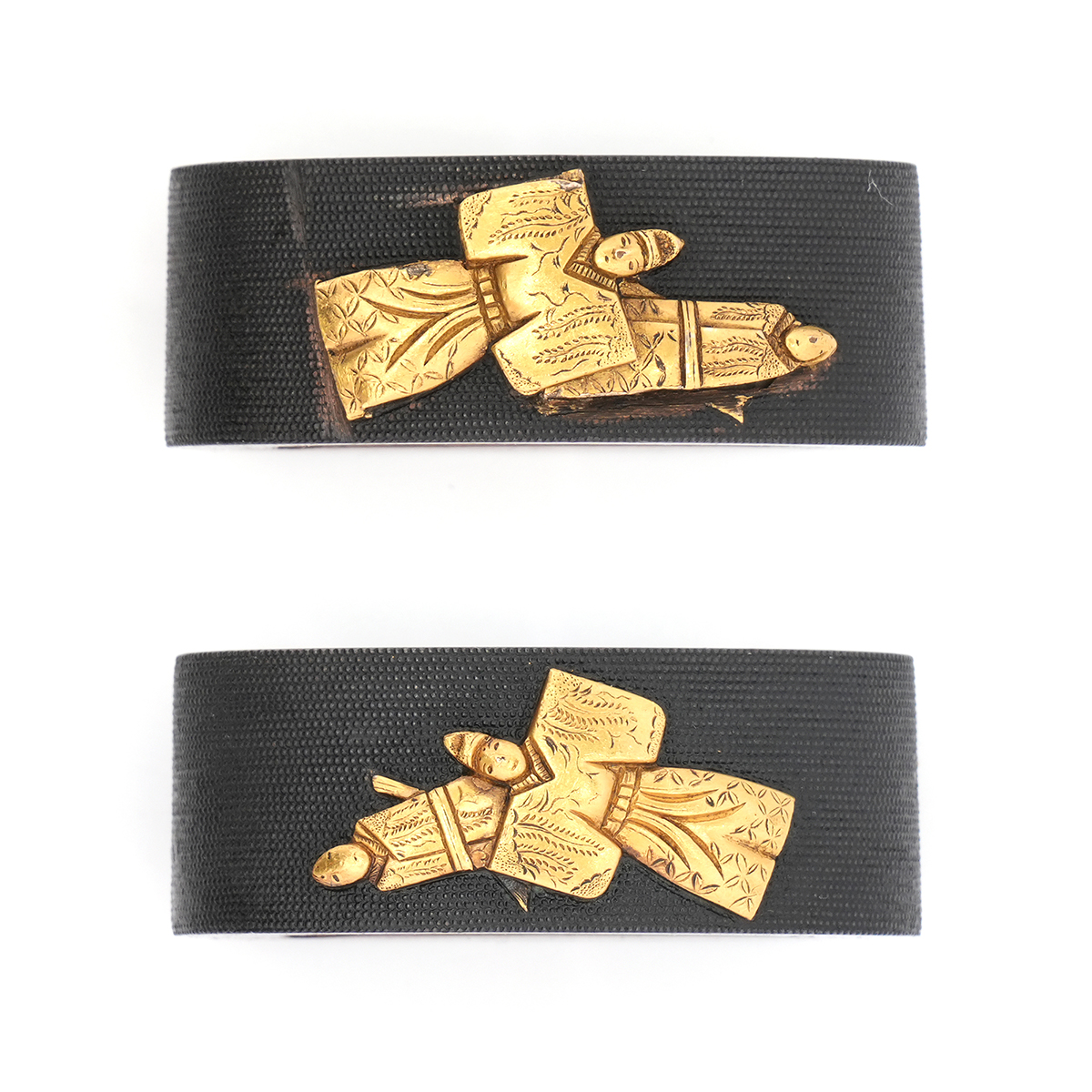
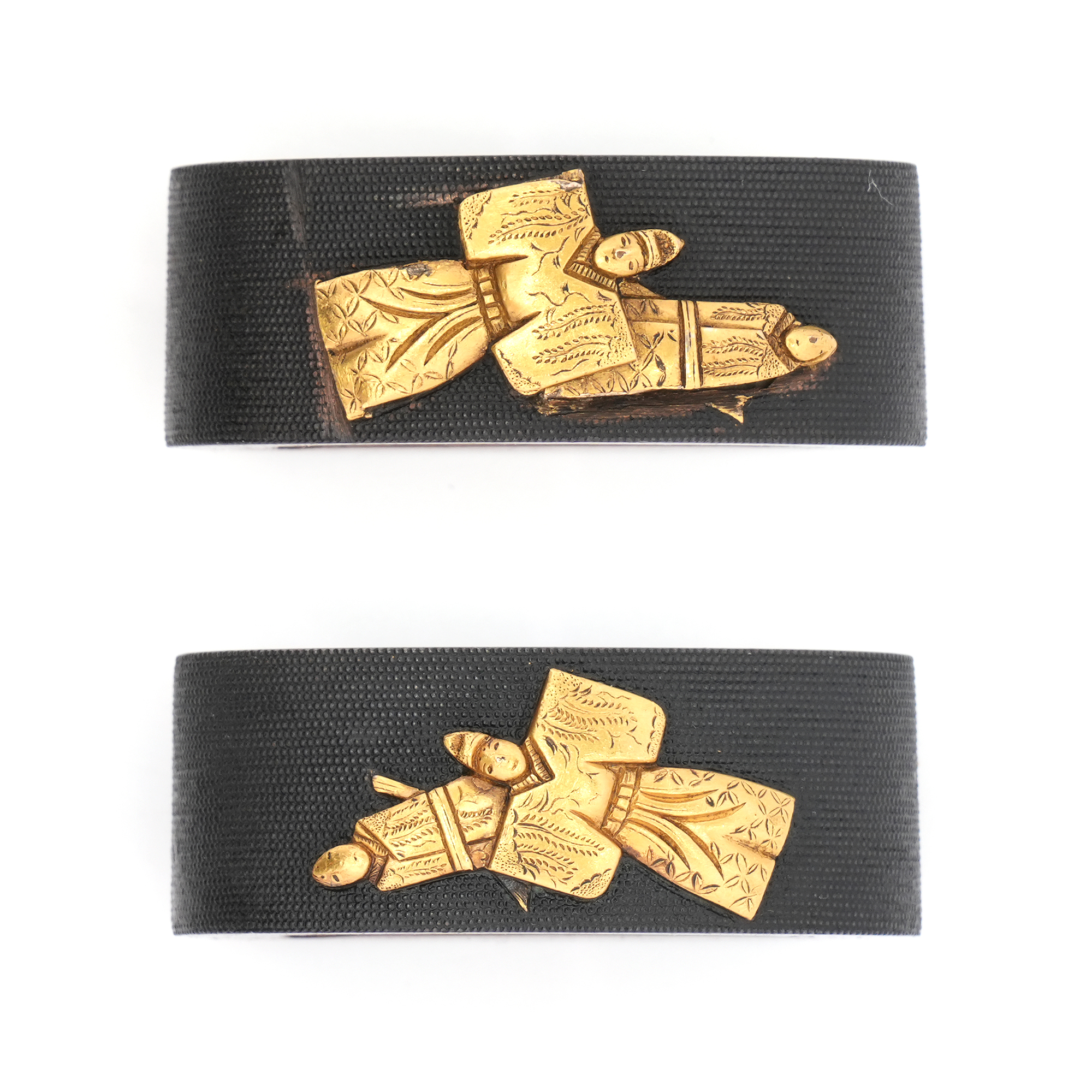
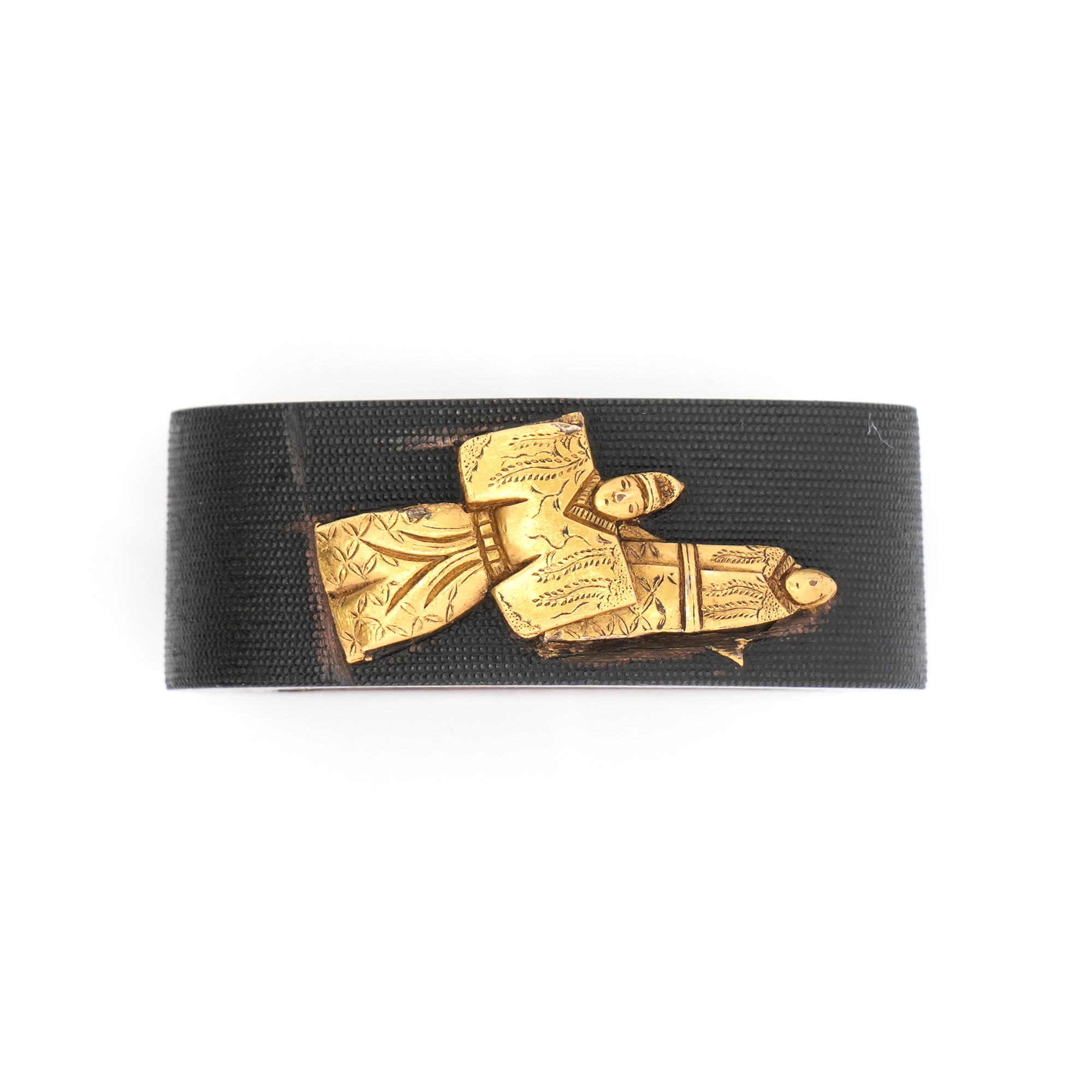
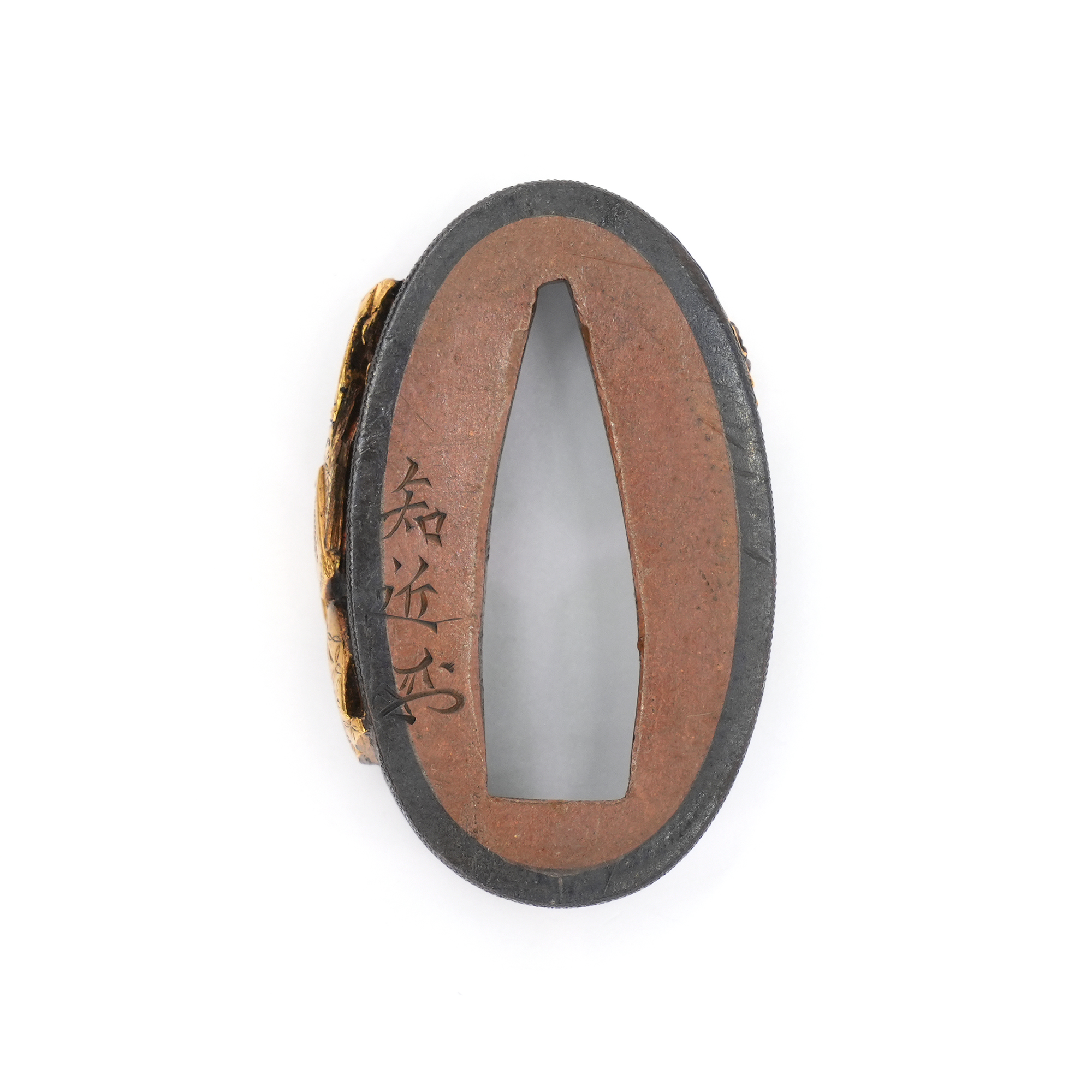
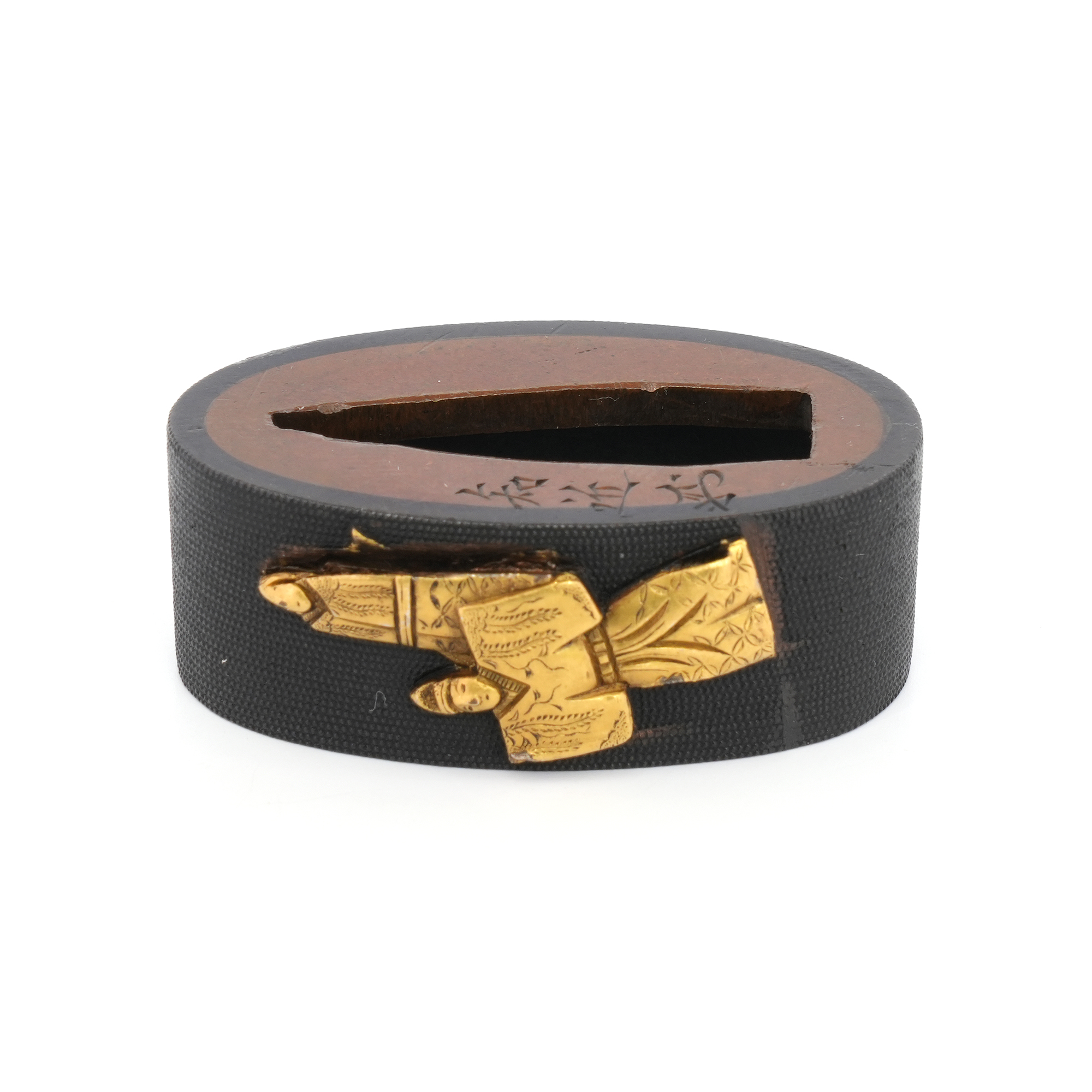
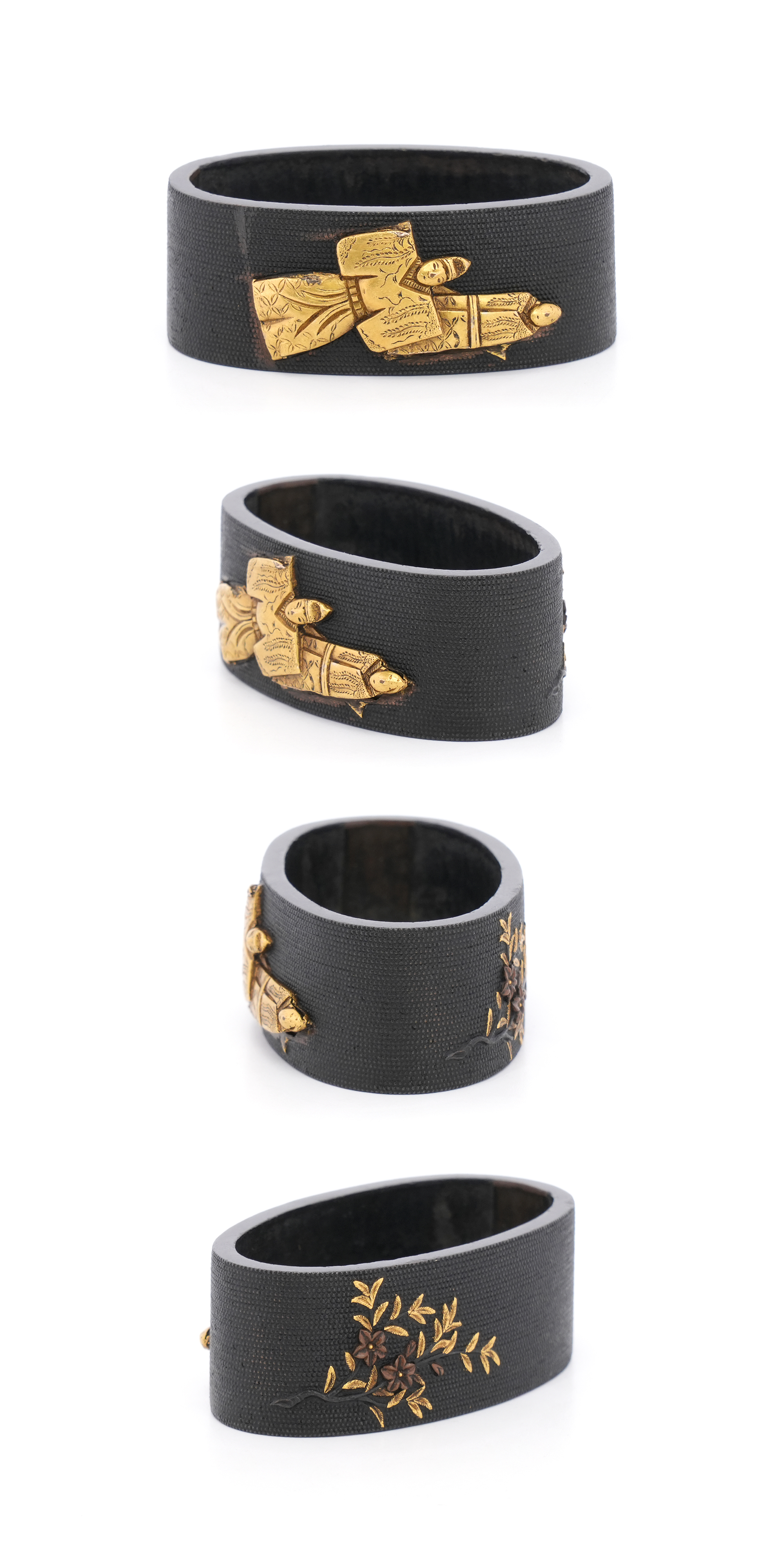
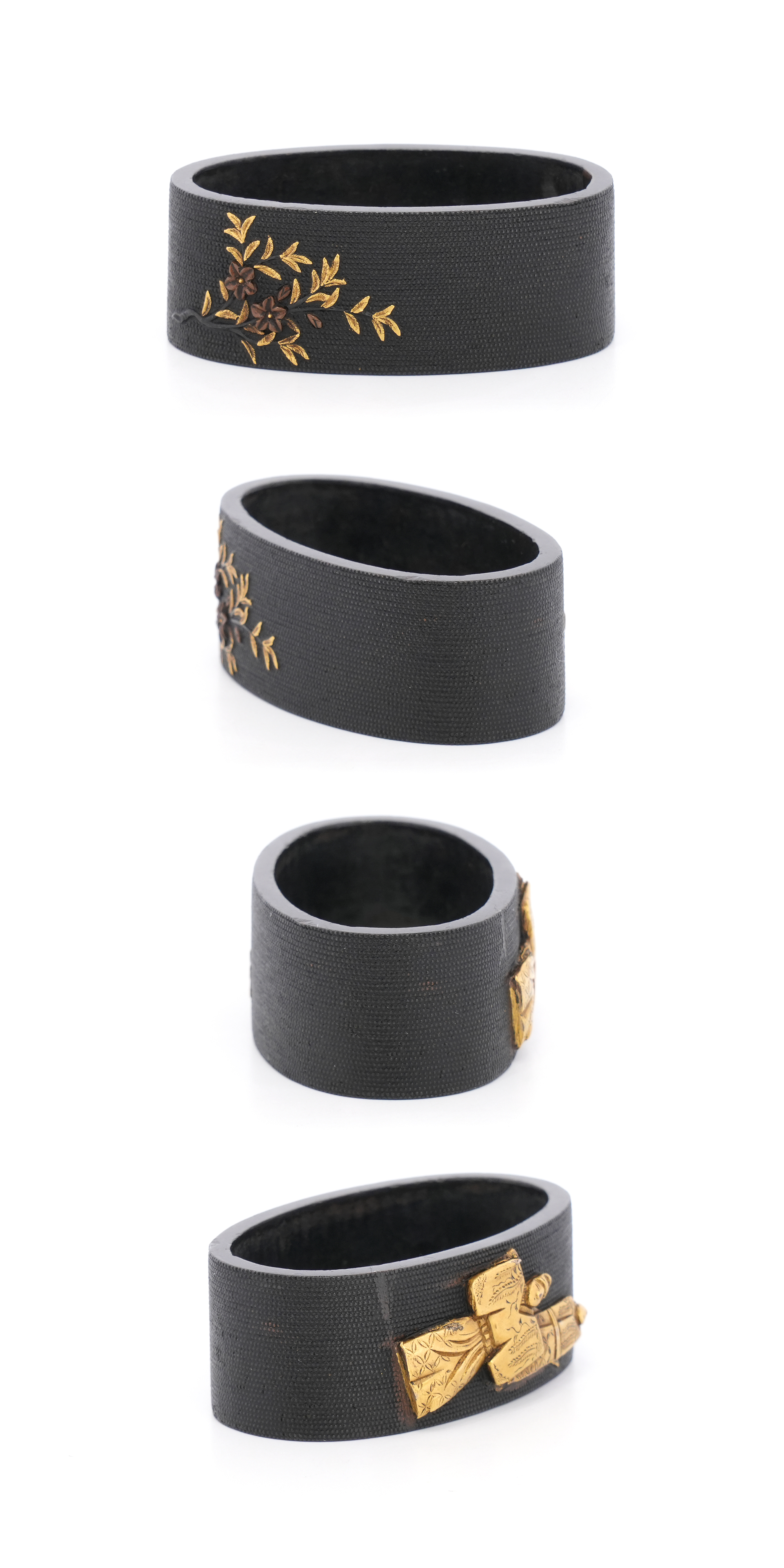
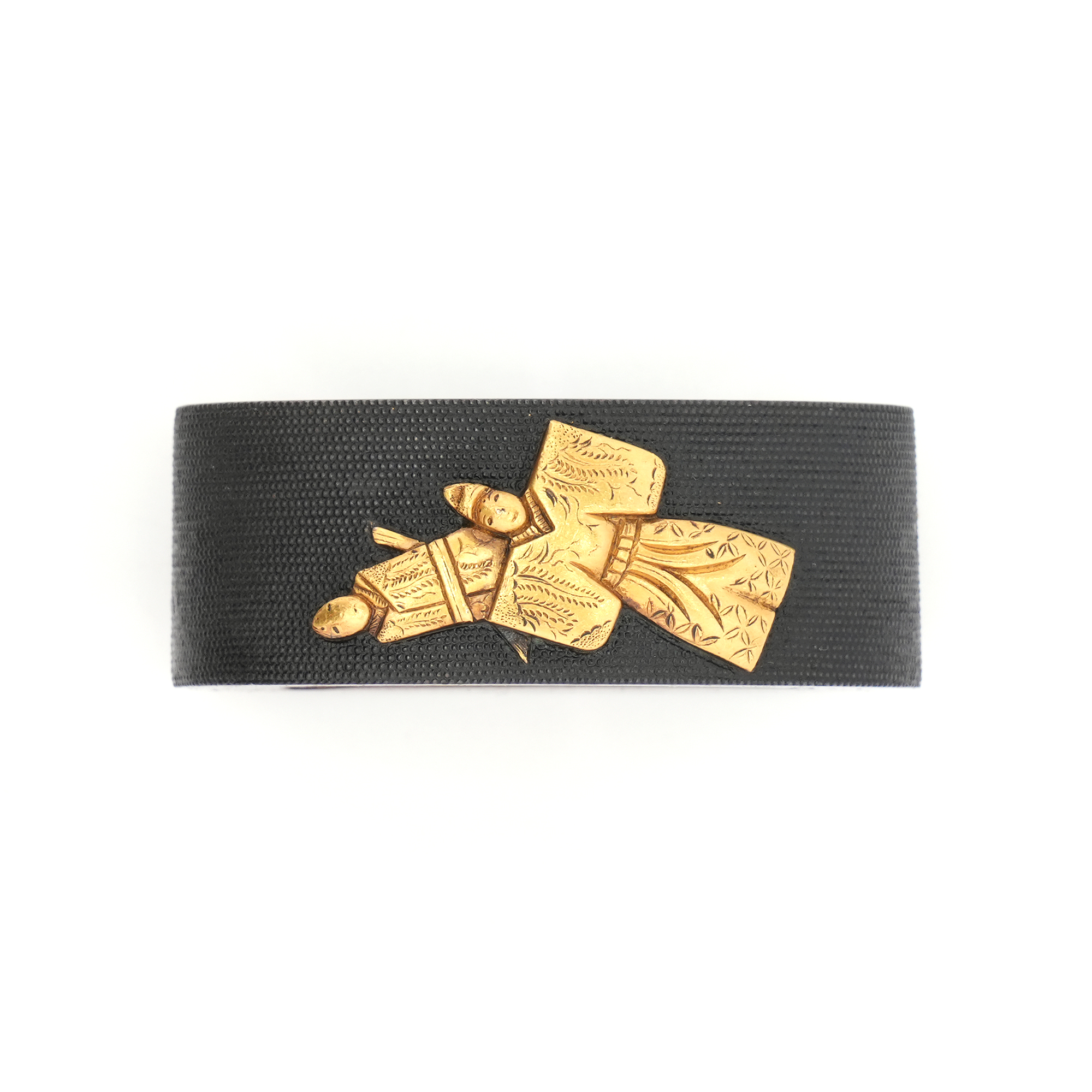
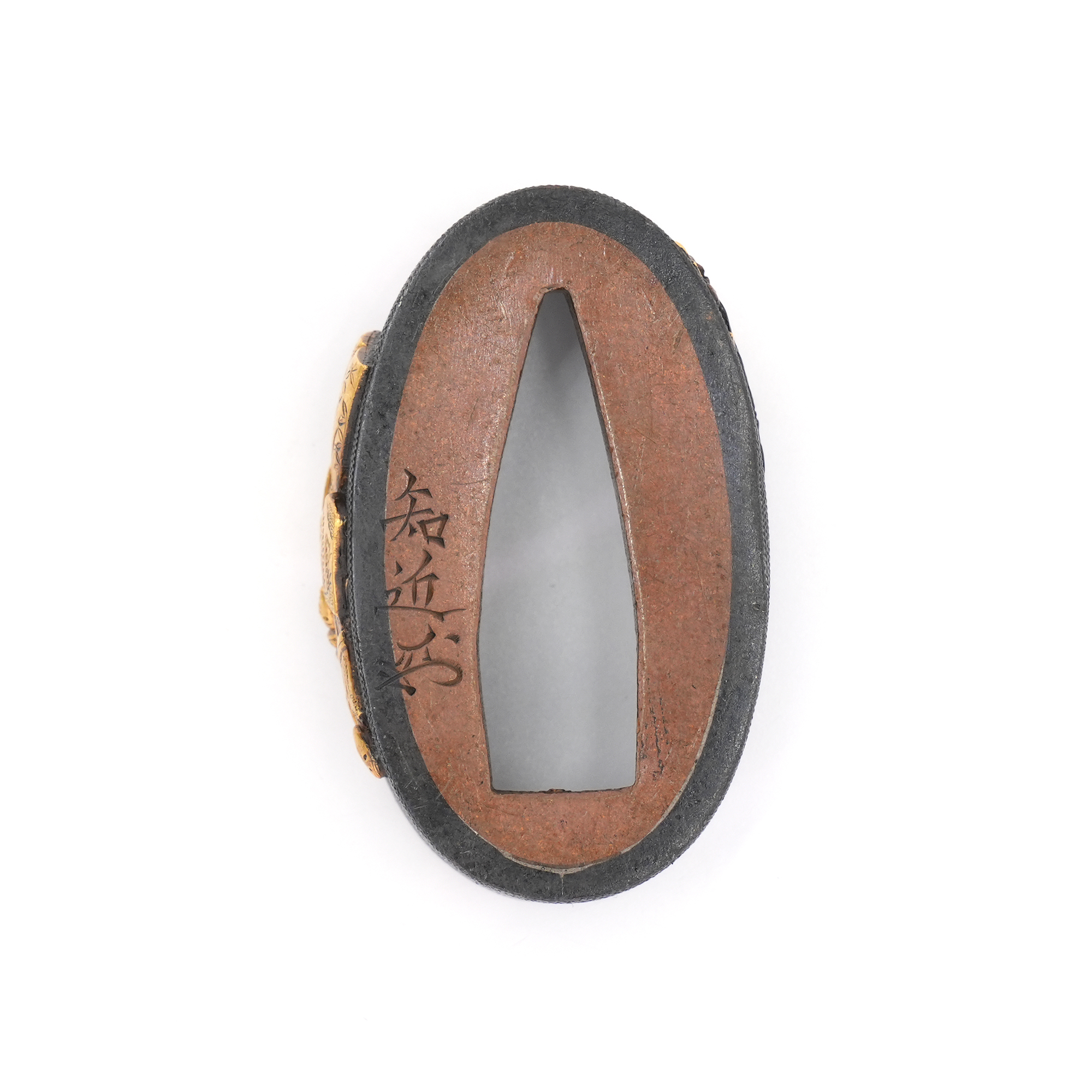
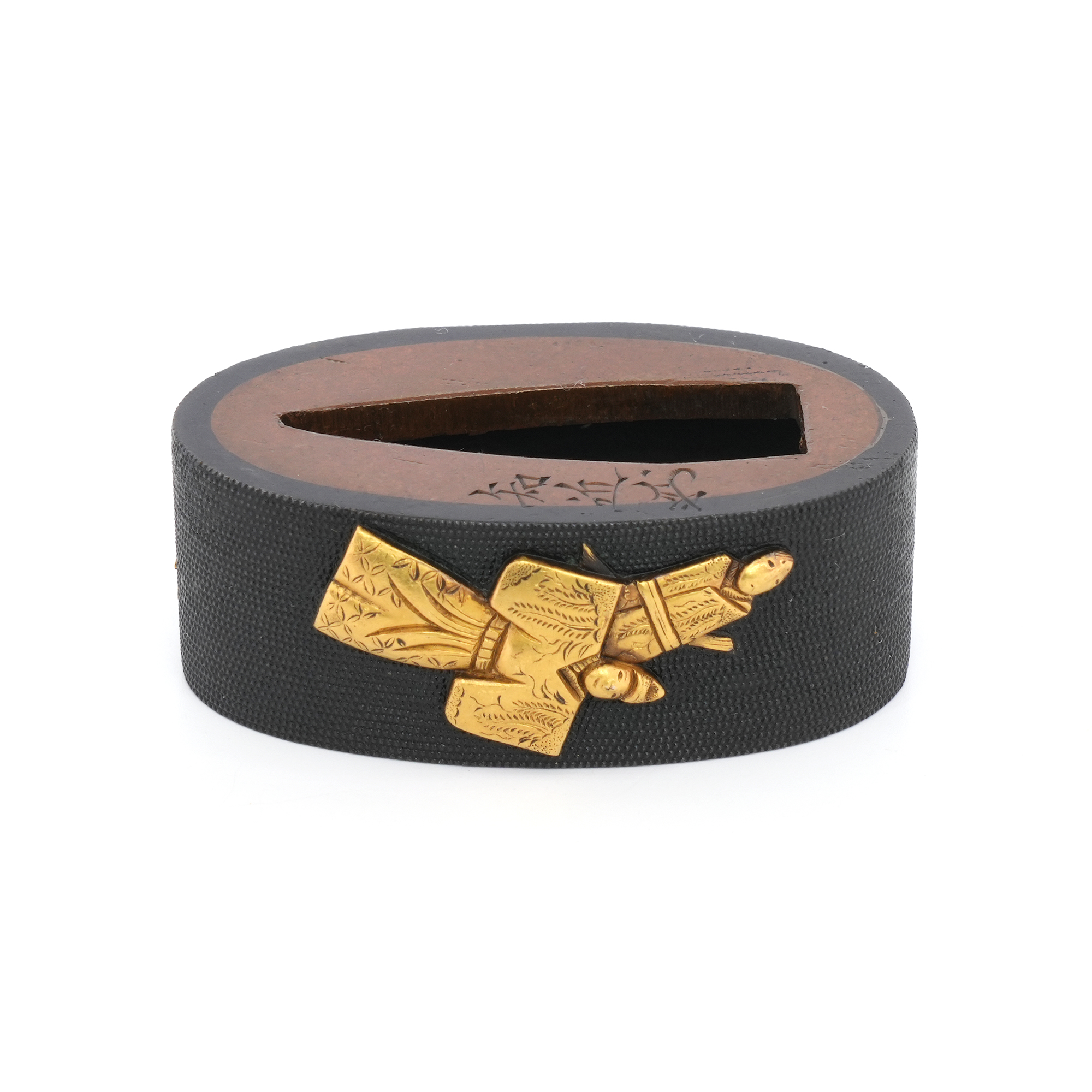
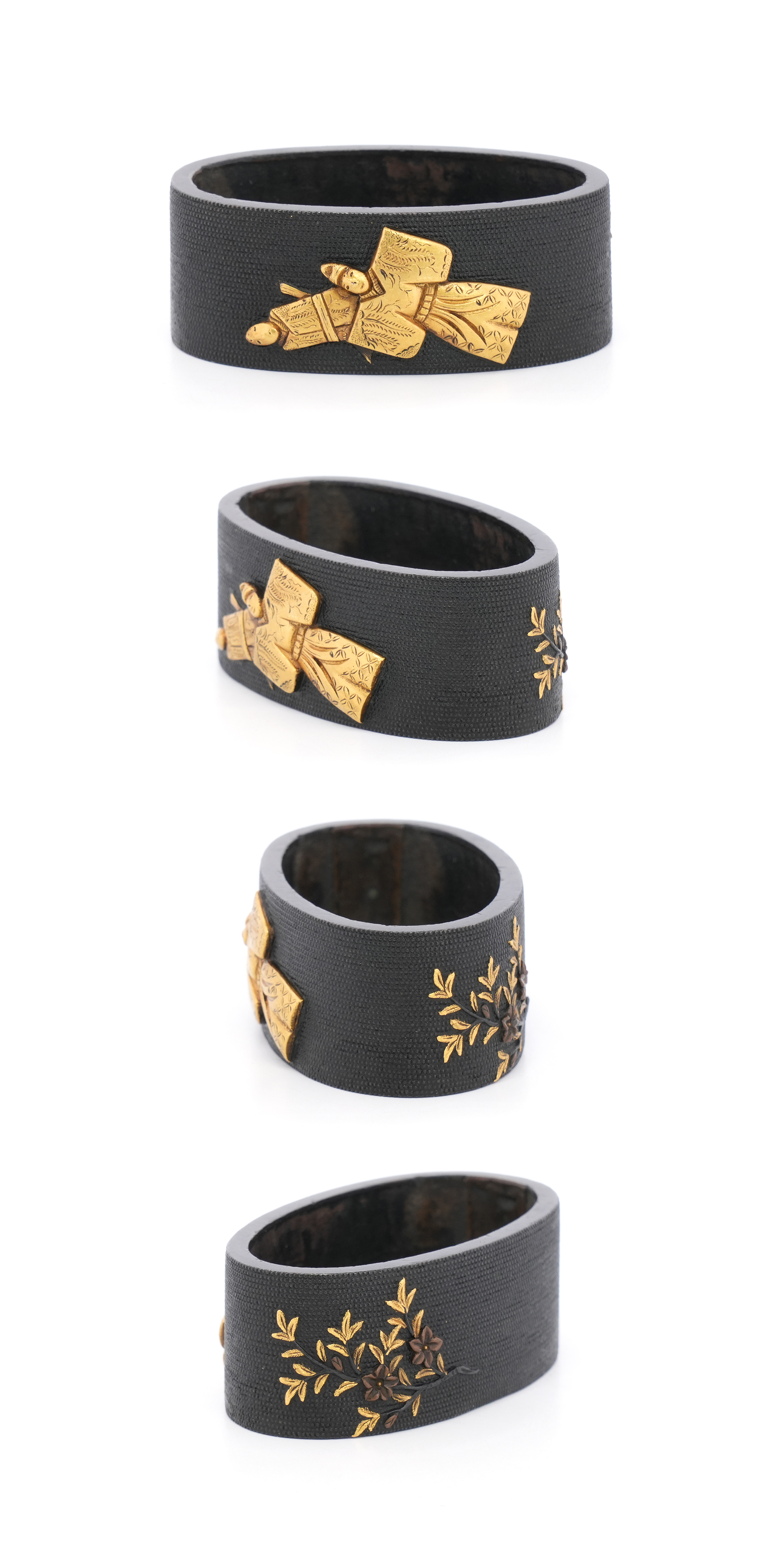
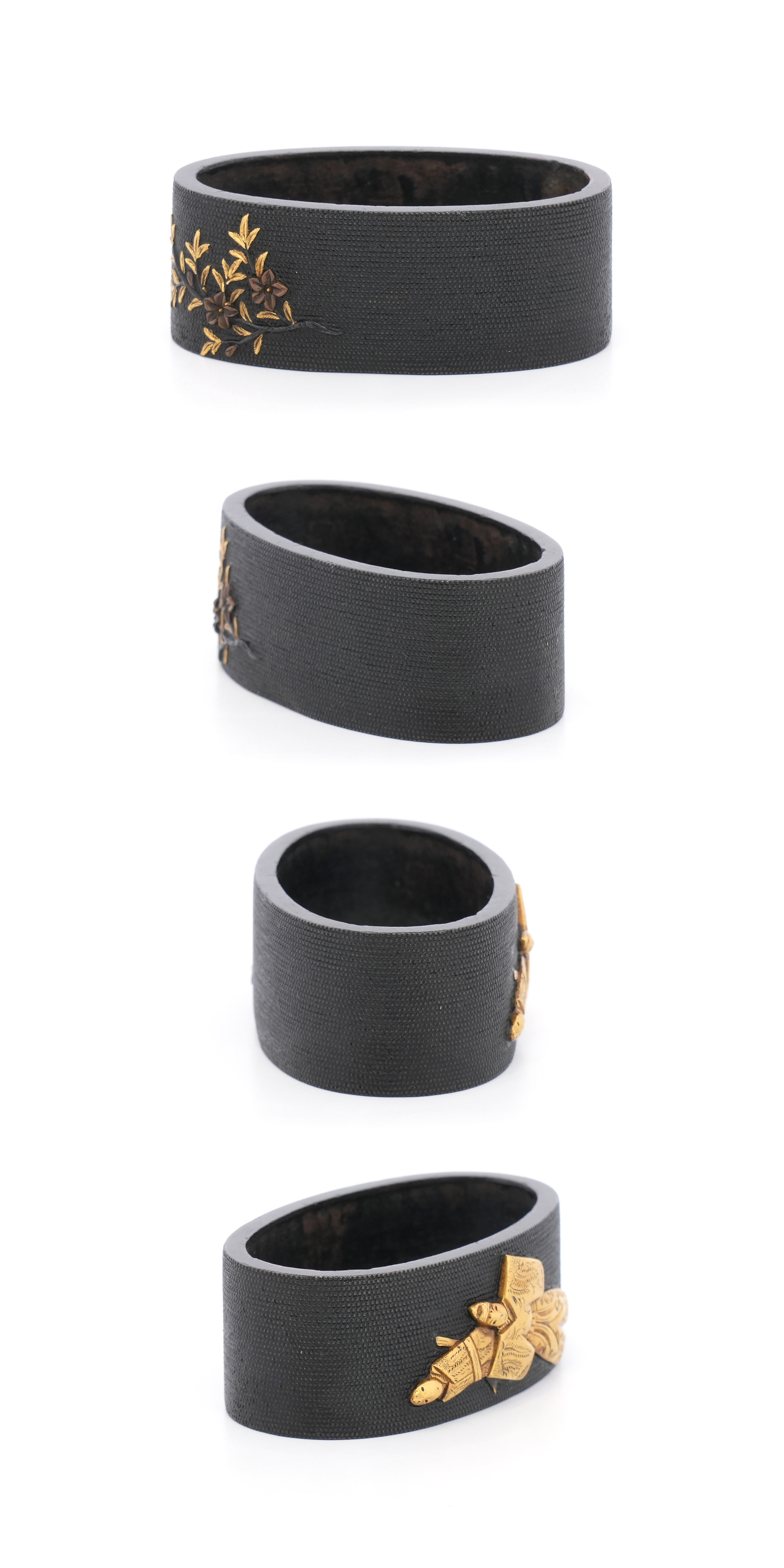
Tomochika was a kinko who lived in Edo during the Bakumatsu period and used the go Unryusai. His family name was Nohara. His common name was Denzaburo, and he was the biological son of Hidetomo, a pupil of Omori Teruhide; he studied under his father and used the Omori school name as his surname in his works. Characterized by delicate tagane-zukai and a high-style workmanship that inherited the traditions of the Omori school, he is one of the outstanding kinko representing the Bakumatsu period. This work is a daisho set of fuchi kanagu depicting a pair of lovely Hina dolls in takabori on a finely and uniformly struck shakudo nanako-ji. The exquisite patterns applied to the clothing, the gentle expressions, and the tagane-zukai that reaches every detail fully demonstrate the superior skill unique to Tomochika, exuding a refined atmosphere amidst its splendor. On the other hand, traces of an attempt to peel away the gold with a chisel can be observed around the Hina doll on the fuchi kanagu for the daito. These are thought to have occurred during eras when precious metals became valuable resources, such as the Meiji Ishin or during the war; while regrettable for a work of art, they are also interesting as traces that convey the history this work has traveled to the present day. Fortunately, the modeling of the Hina dolls themselves remains in good condition, and it is thought quite possible to have them repaired and restored without any sense of incongruity by the hands of a skilled modern kinko, so please feel free to consult us if you wish for restoration. Even in its current state, it possesses documentary value that tells of the transitions of the eras, and it is a rare daisho set masterpiece whose appreciation value can be further enhanced through restoration.
NihontoWatchOffered by Toushin
We couldn’t find current papers for this piece. Ask the dealer whether it has been, or can be, submitted to shinsa. — Hoshi

Ōmori
Edo
Signed
Machine translation of the shop's Japanese ·
Machine translation from the shop's Japanese · may contain errors ·
Machibori · Edo
16 pieces on the market now
The Ōmori school was one of the great machibori (town-carving) lineages of Edo, founded in the first half of the eighteenth century by Ōmori Terumasa (大森英昌, also read Eishō), a direct disciple of Yokoya Sōmin. " A dated tsuba of Meiwa 7 (1770) anchors his mature activity, and the workshop remained rooted in the shogunal capital throughout its history — his pupil Hidetomo proudly signed works "Tōto, by the Sumida River"[[c:1]]. The headship then passed through Hidenaga to Hidemitsu (英満), Teruhide's fifth son, carrying the line deep into the late Edo period. " Its defining invention is the strikingly three-dimensional wave design known as Ōmori-nami (大森浪), the "Ōmori waves," together with sunago-zōgan gold-dust inlay executed in the kinkeshi manner and the flush gold inlay evocative of maki-e lacquer called nashiji-zōgan or chirigami-zōgan — techniques devised, the setsumei state, to heighten the elegant, courtly taste of the work. The judges single out "the weighty takabori carving characteristic of the Ōmori style," deployed across a repertoire spanning peony-and-shishi compositions, birds of prey amid rising sun and surging waves, tigers in bamboo, waves with myriad fish (uozukushi), the vanguard crossing of the Uji River, Fan Kuai at the Banquet at Hongmen, and the treasure ship of the Seven Lucky Gods.
Later generations show measured evolution: Hidemitsu "preserved the carving methods of his forebears while accepting changes in contemporary taste," turning also to iron ishime-ji grounds in sukidashi-bori and collaborating with the painter Kanō Dōhaku Aishin, whose preparatory drawings attest to exchange with the painting ateliers of the day; substitute works (daisaku) by his disciple Ōmori Mitsutoki under the master's signature reveal a flourishing workshop practice. The school's standing is confirmed at the highest levels of patronage: a ceremonial hosodachi mounting transmitted in the Ii family of Hikone, its entire suite of fittings by Teruhide with the clan's tachibana crest in takabori and gold iroe, documents the Ōmori masters as makers of daimyo ceremonial equipment. From the atelier radiated an exceptionally influential teaching lineage: Hidetomo (Ryūrinsai Ōmori Sadabei), recorded in the Kōto Kinkō Meifu as "a foremost disciple of Teruhide"; the Mito-branch Moriyama retainer Otsuzuka Hisanori, whose "dense, richly wrought inlay reached a uniquely individual realm" and drew praise in the Natsuo Chōkin-dan; Horie Kōsei, who entered the Ōmori school after Hamano Masayuki's death and later, as retained craftsman of the Hachisuka family of Awa, "trained many pupils of his own school"; and Izumi Hidetoshi, who studied under both Teruhide and Hidetomo. Through these channels the Ōmori manner — above all its sculptural waves and sumptuous relief — passed into the broader current of late-Edo machibori metalwork, securing the school's place as one of the most powerful branches of the Yokoya tradition in the tosogu canon. Learn more →
| Smith | Era | Designated |
|---|---|---|
| Teruhide英秀 | — | 15 |
| Chizuka Hisanori遅塚久則 | 1725-1795 | 9 |
| Horie Okinari堀江興成 | — | 7 |
| Terumitsu英満 | — | 4 |
| Terumasa英昌 | — | 0 |
We could not find an authenticity certificate on the seller’s listing. Japanese swords and fittings are normally papered by the NBTHK (or the NTHK). Without one, the attribution is the seller’s own assessment and has not been independently verified — treat it with caution and ask the dealer about certification before buying.
As a rule we do not accept returns, except when we have sent a different item from the one ordered or when there is a significant discrepancy between the description and the item. If you wish to return an item, please contact us within 3 days of its arrival and then send it back.
¥132,000