

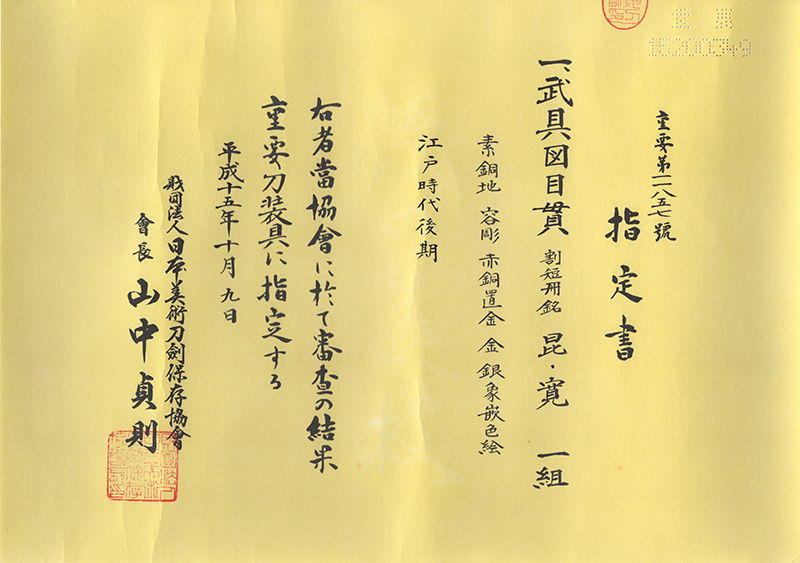
-, 49th Session — Designated October 9, 2003
, : Iwamoto Konkan (岩本昆寛)
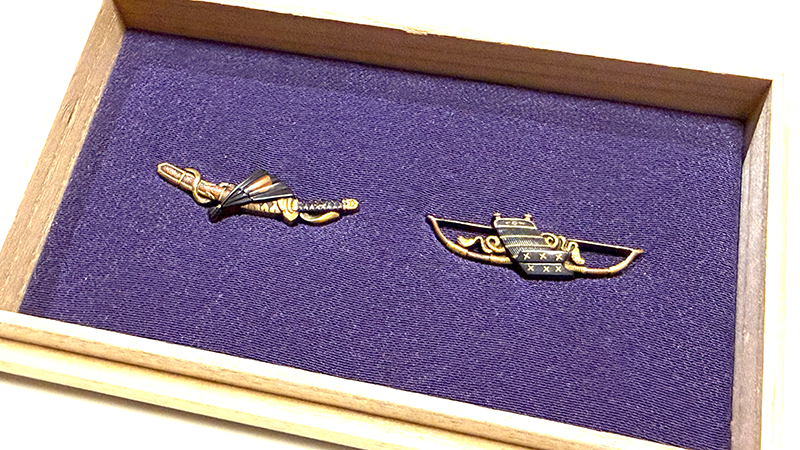
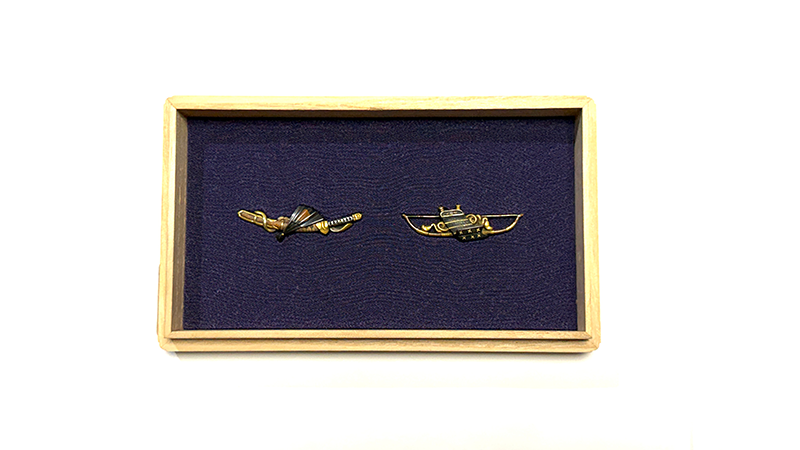
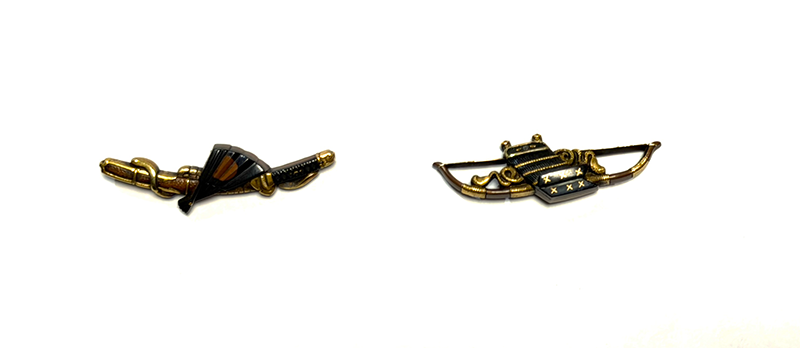
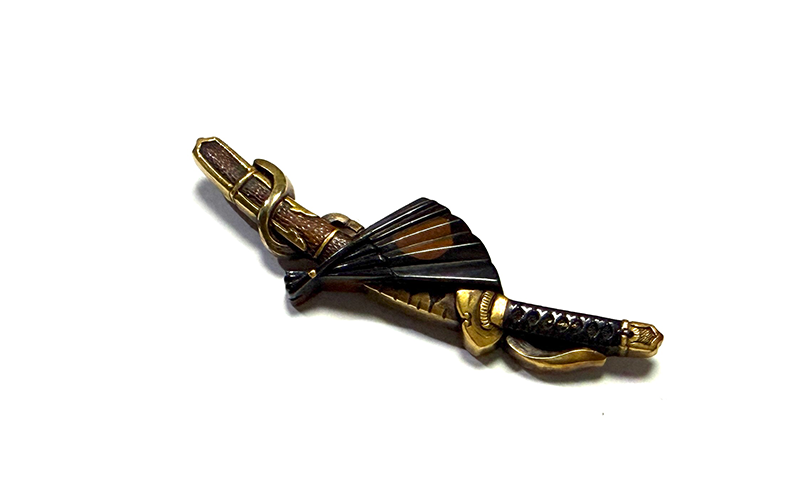
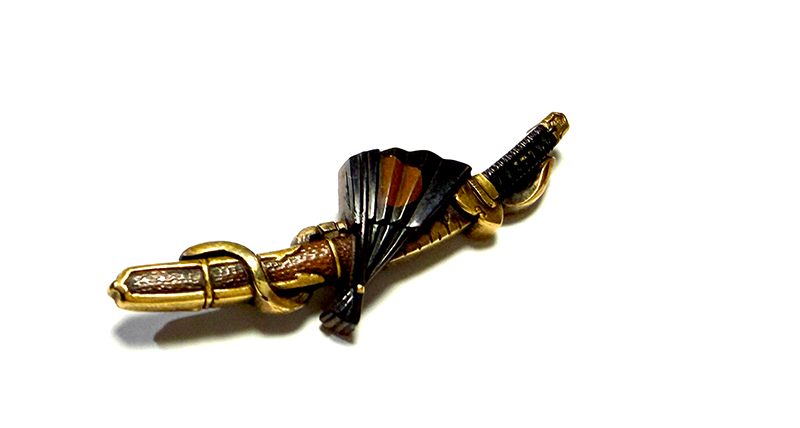
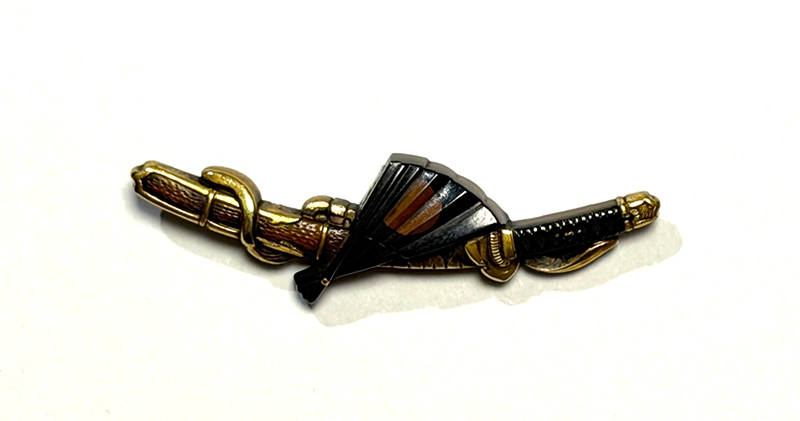
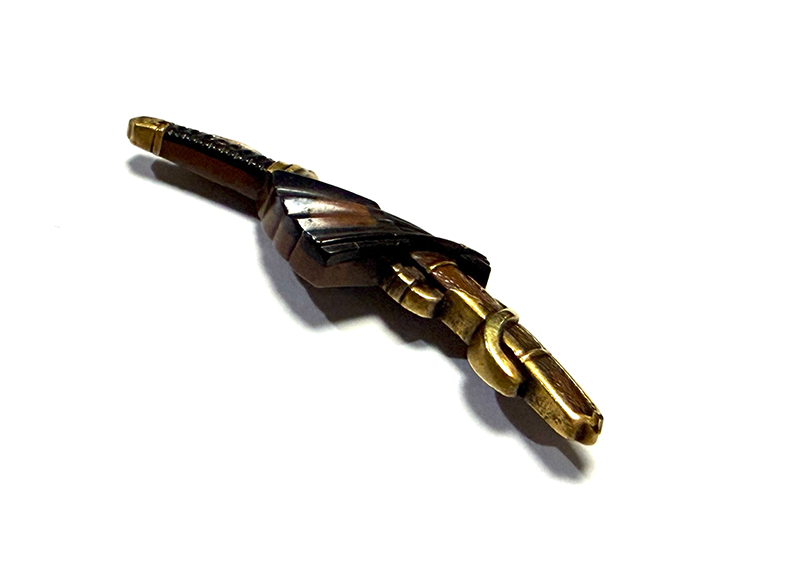
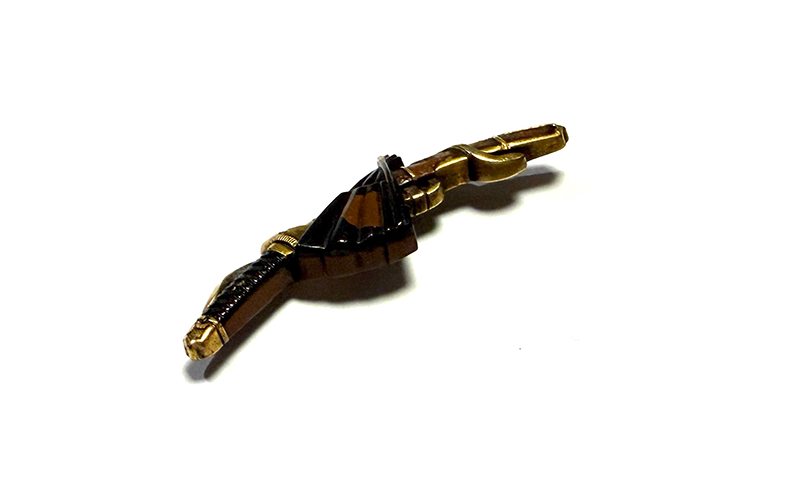
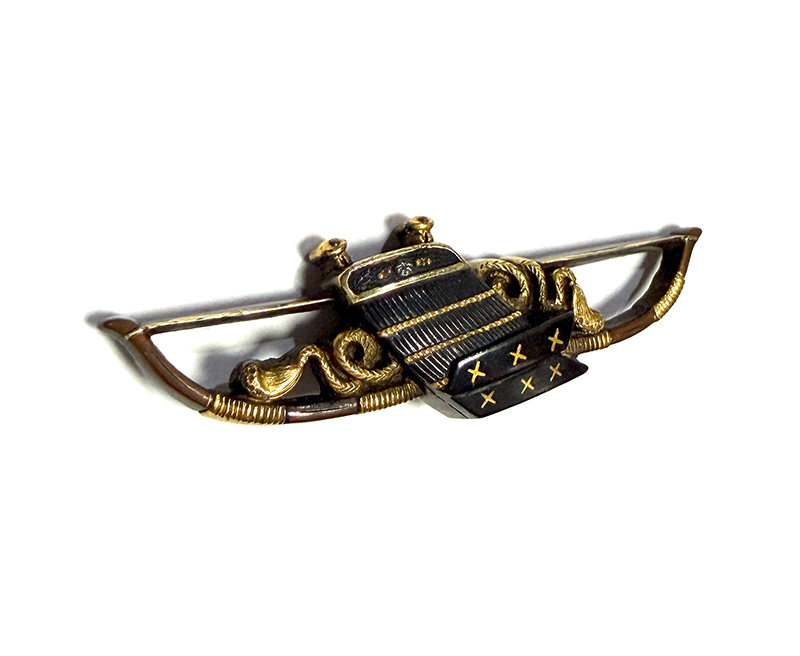
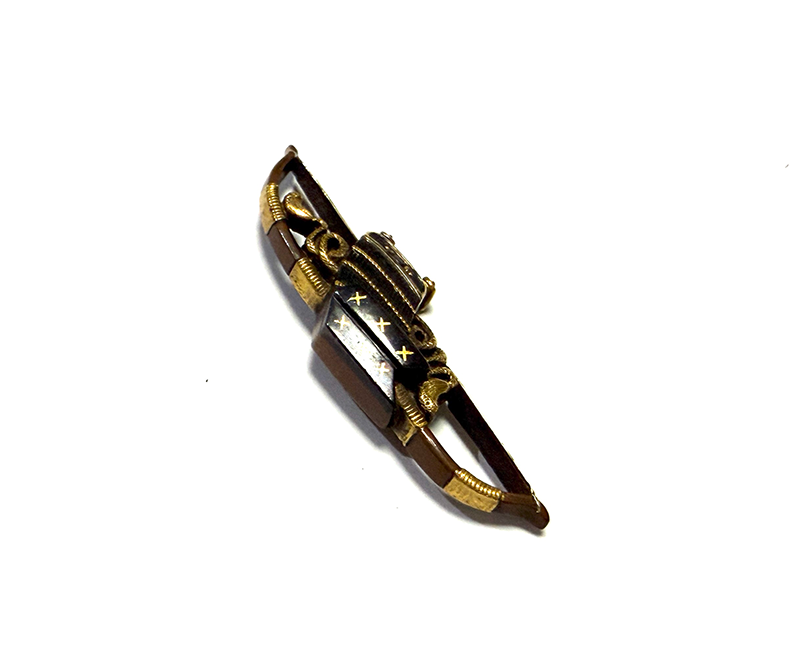
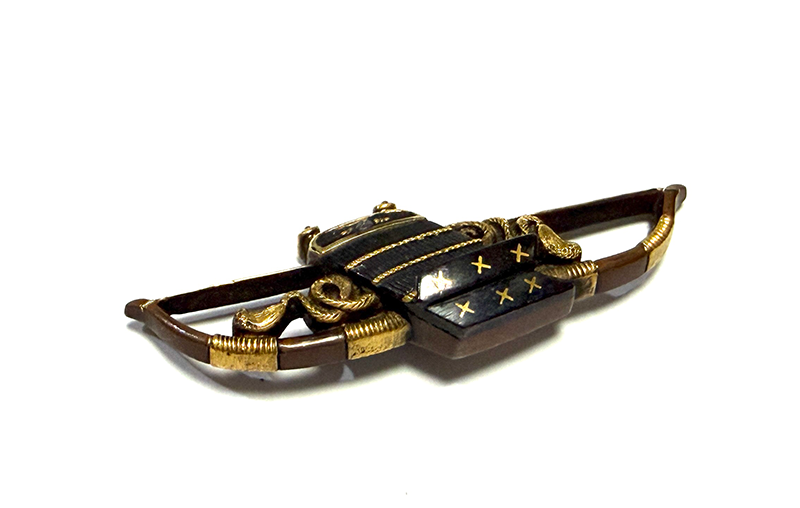
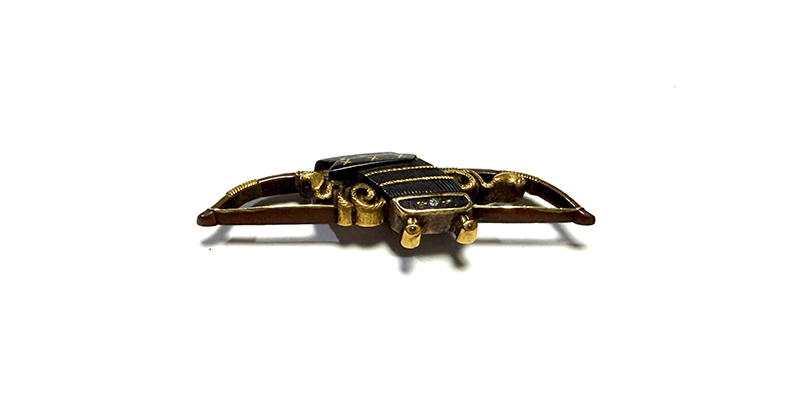
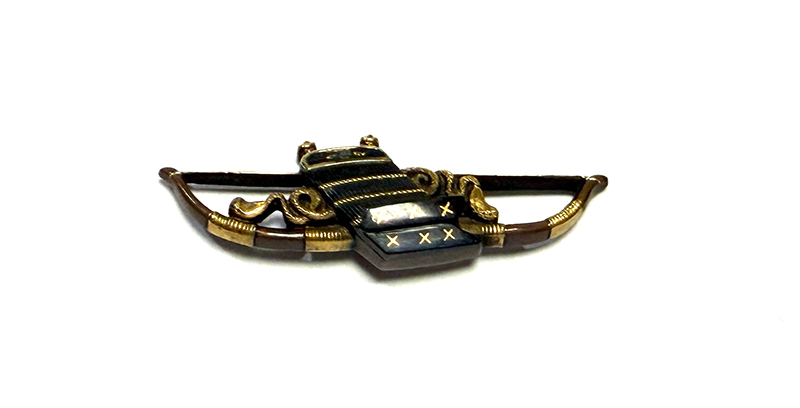
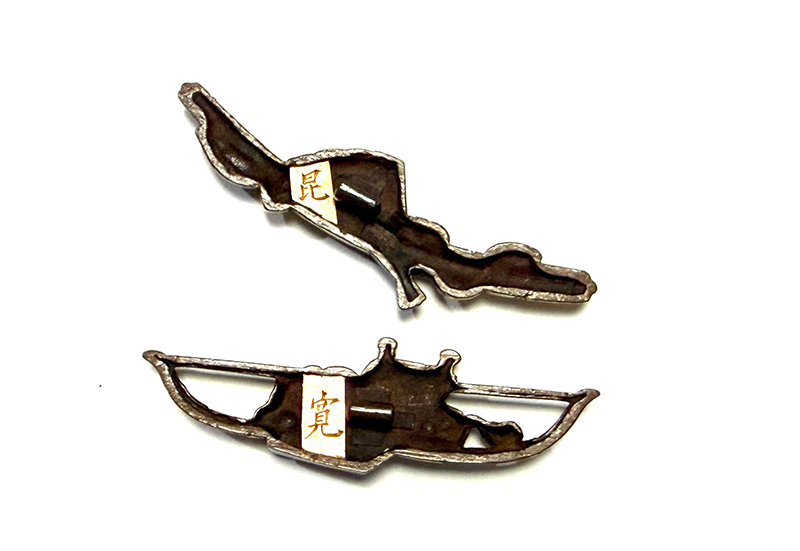
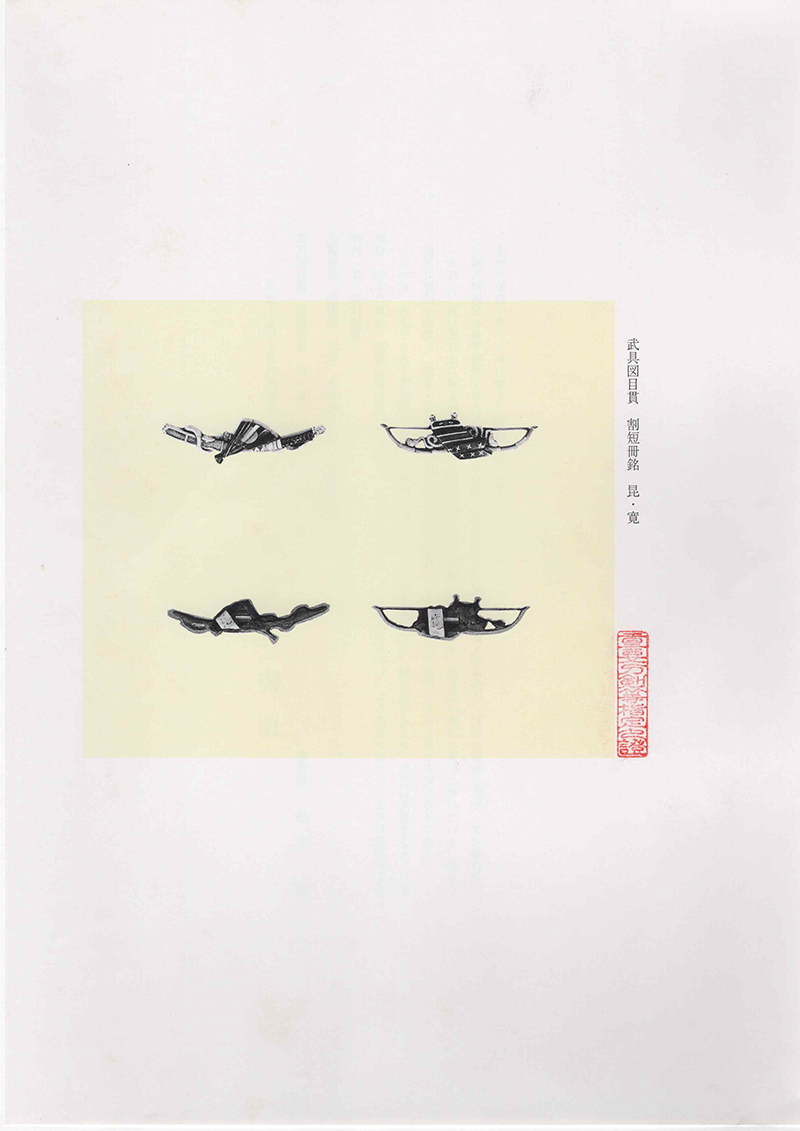
Description Form: Pair of (/) Material: (copper) ground Construction: High-relief carving () Design: Martial implements (bugu-zu). The shows a mounting and a gunbai (war fan); the combines a bow (yumi) and sode (armored shoulder guards), interlaced vertically and horizontally. Decoration: applied metal (); and ; inlay in gold and silver (), including . Signature: Split (wari-): “Kon · Kan” (昆・寛)
Artisan Iwamoto Konkan (岩本昆寛)
Era Late period
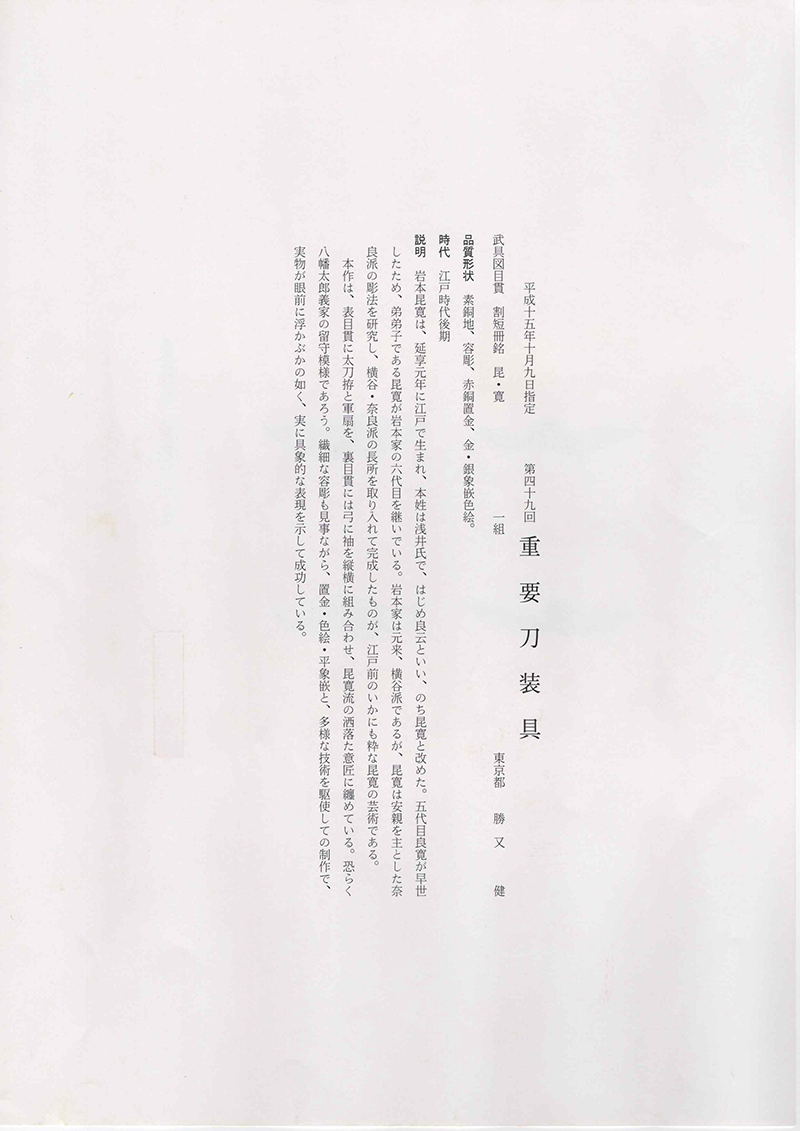
Explanation Iwamoto Konkan was born in in Enkyō 1 (1744). His original family name was Asai; at first he used the name Ryō, and later changed it to Konkan. Because the fifth-generation Ryōkan died young, Konkan—who had been a junior fellow disciple—succeeded to become the sixth head of the Iwamoto house.
The Iwamoto family was originally of the Yokoya lineage. Konkan, however, studied the carving methods of the Nara school—taking Yasuchika as his principal model—and by incorporating the strengths of both the Yokoya and Nara traditions, he brought his manner to completion. This is the very stylish (iki) art associated with taste that characterizes Konkan’s work.
In this example, the depicts a mounting and a gunbai, while the arranges a bow and sode in a crisscross composition, bringing them together into an urbane design in Konkan’s distinctive idiom. It is likely the “rusu-moyō” (absence motif) associated with Hachiman Tarō Minamoto no Yoshiie. The delicate high-relief carving is outstanding; moreover, through the full deployment of varied techniques—applied metal, , and flat inlay—the piece succeeds in an unusually concrete, vividly presentational expression, as though the actual objects were appearing directly before one’s eyes.