Sixty years of war between two courts drove blades long and broad, and Osafune met the demand: Kanemitsu and Chōgi led forges serving the provincial warriors who did the fighting, while Sōshū influence arrived with the armies to create Sōden-Bizen.
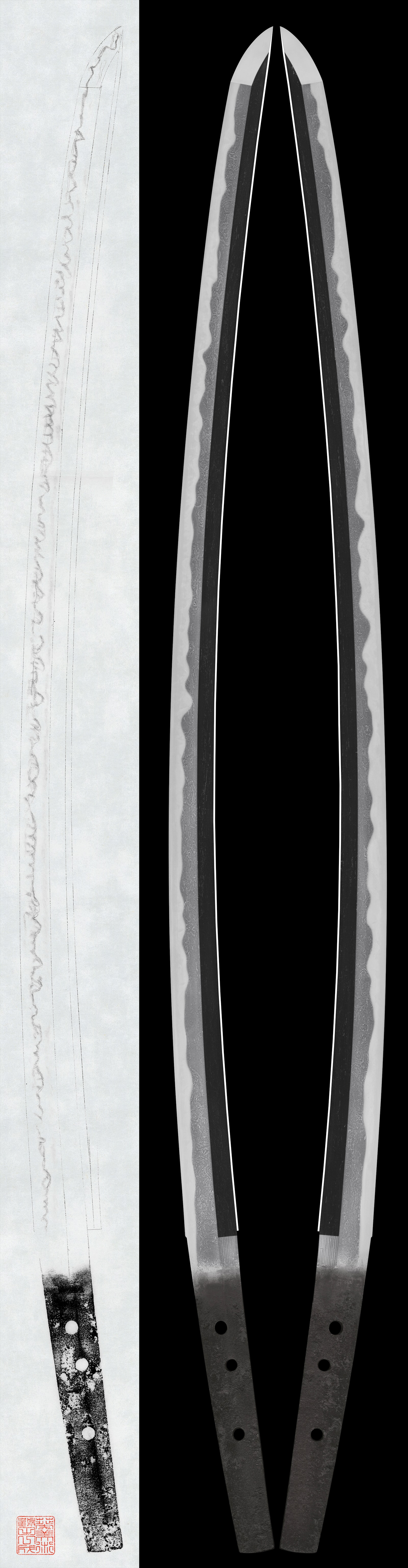
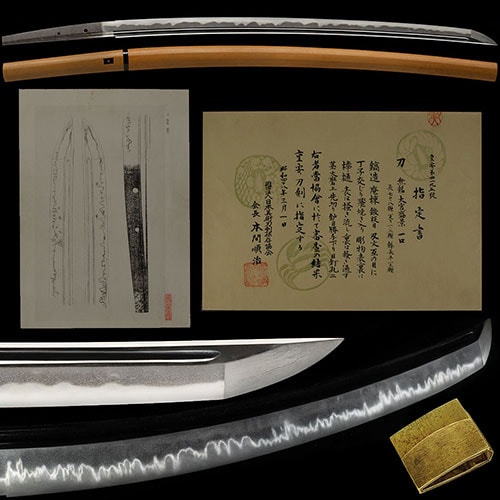
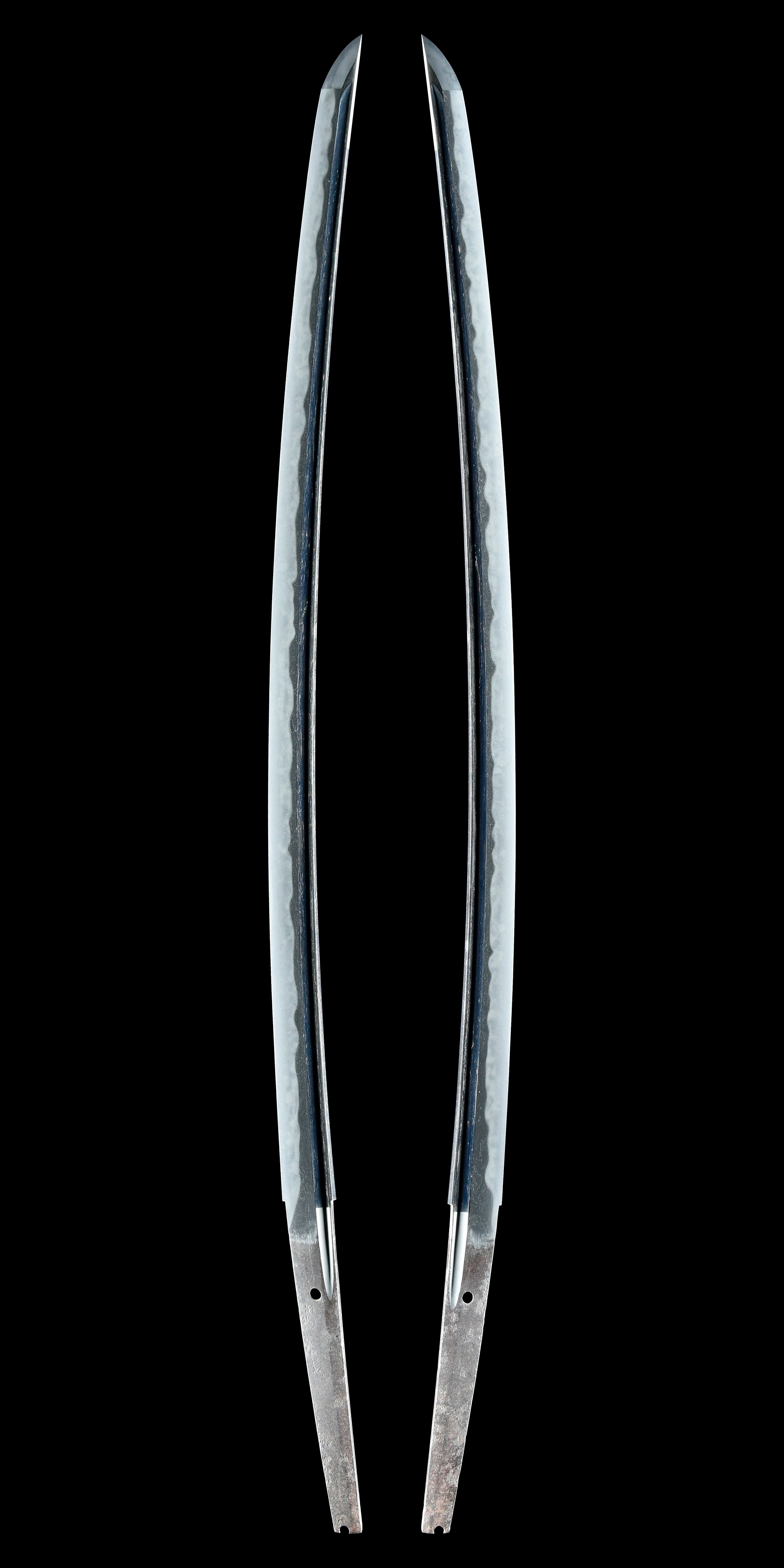
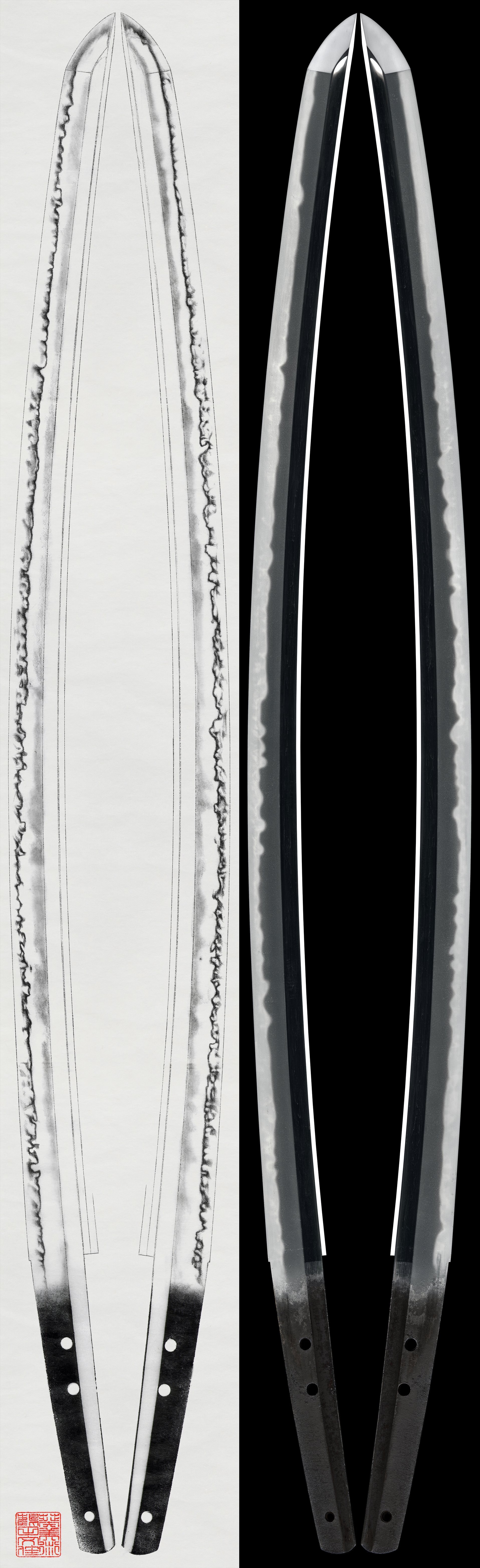
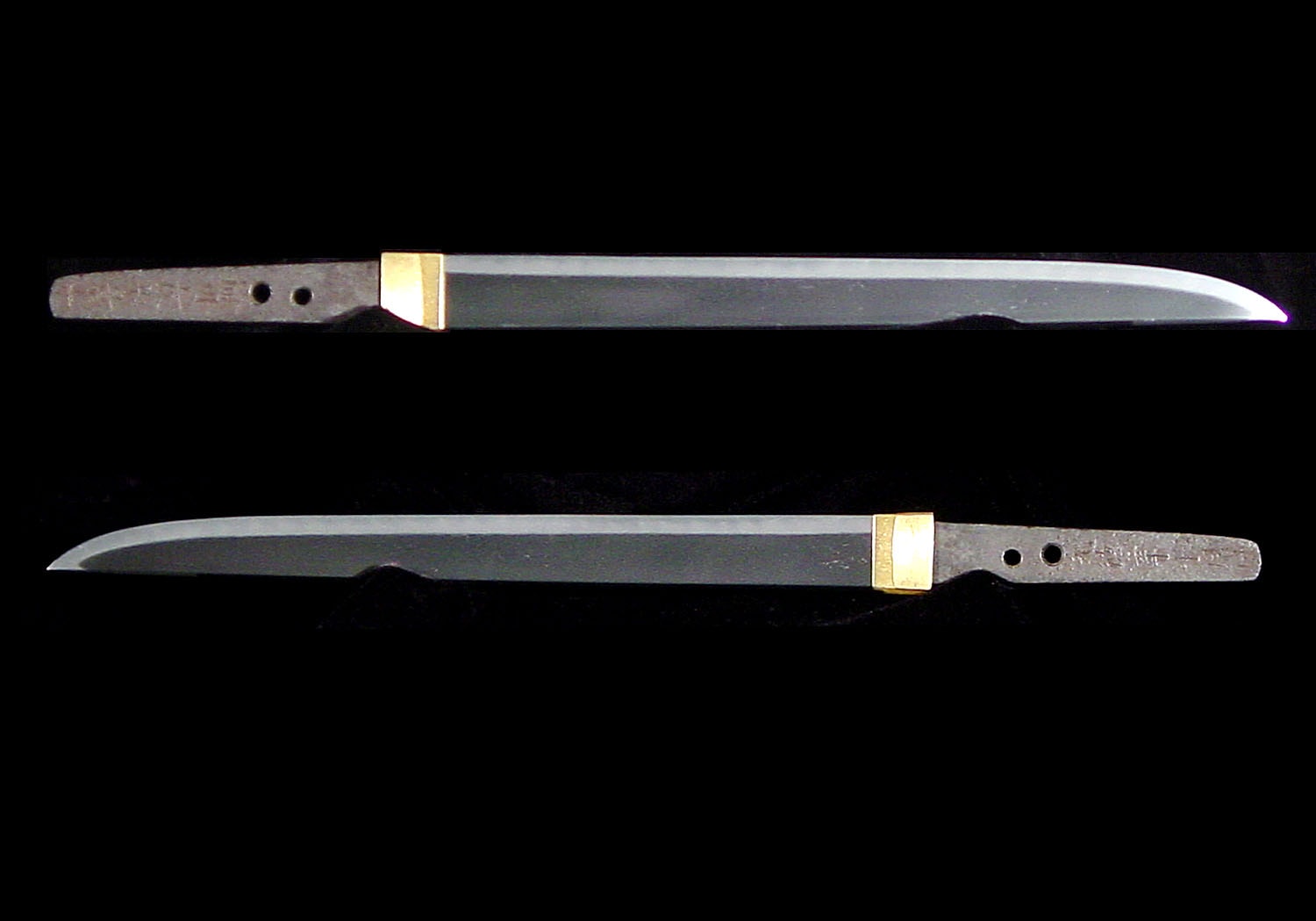
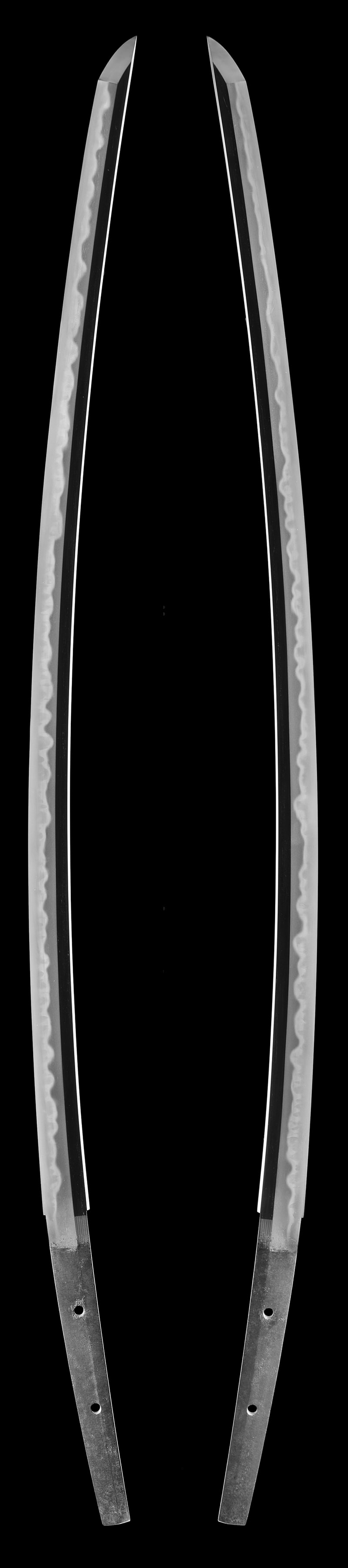
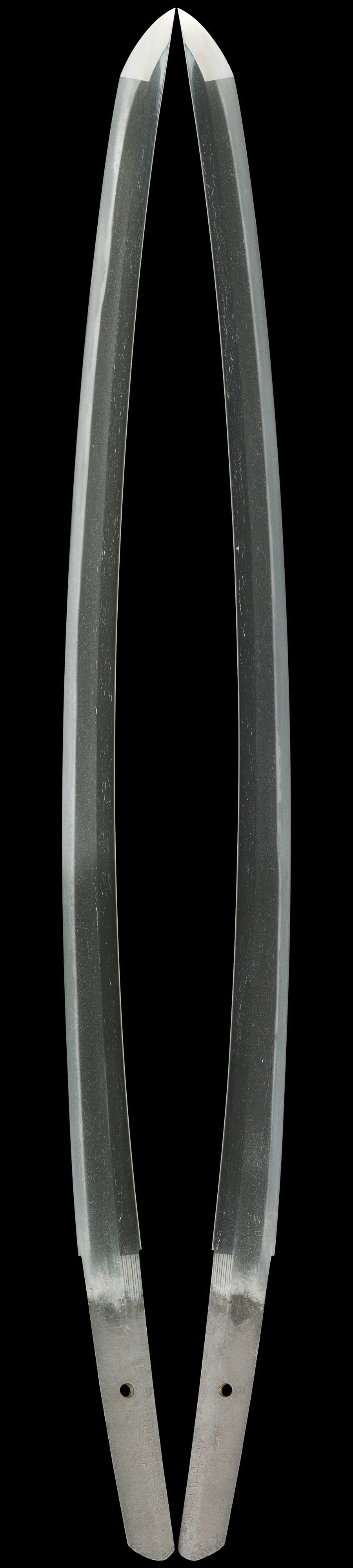
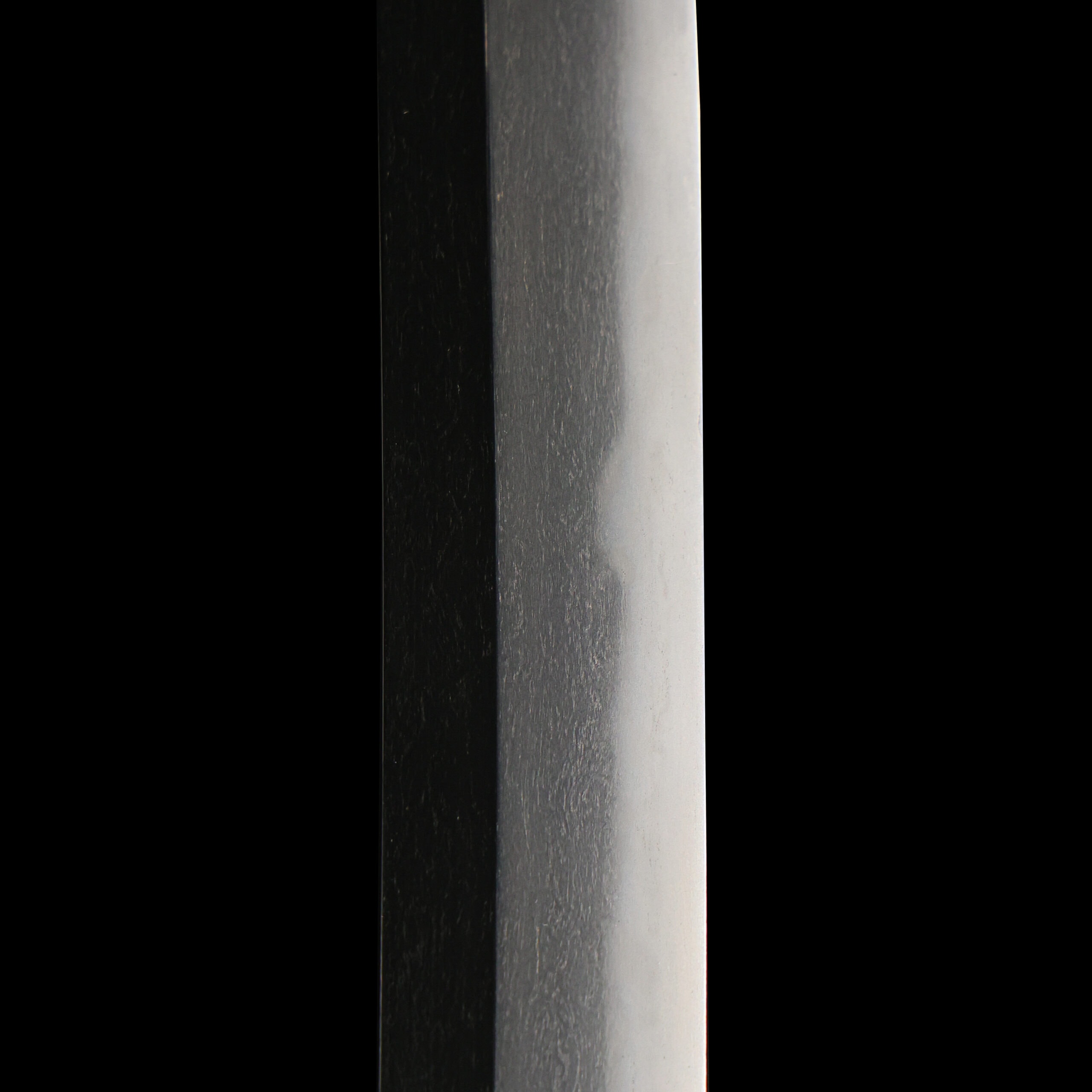
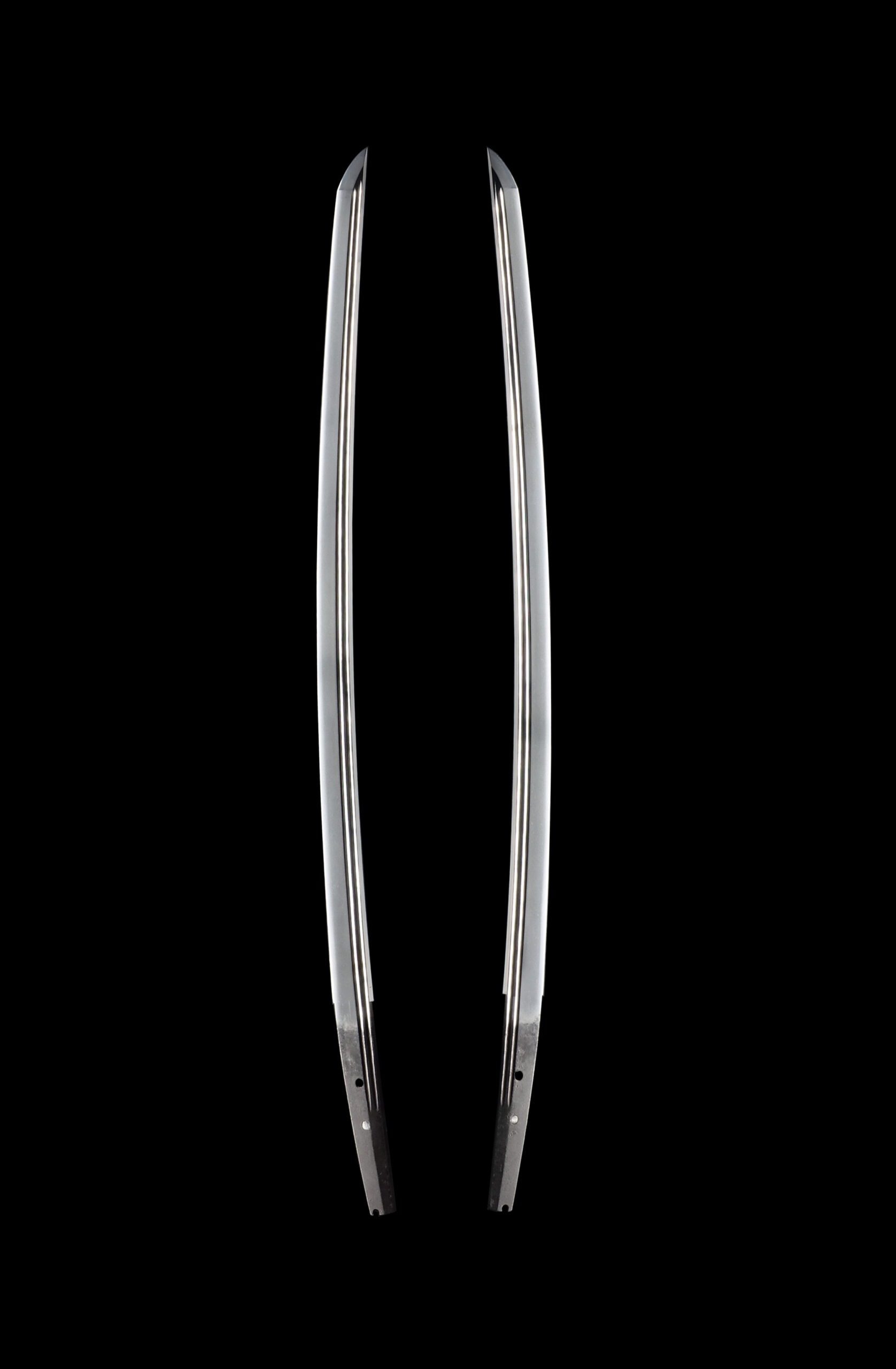
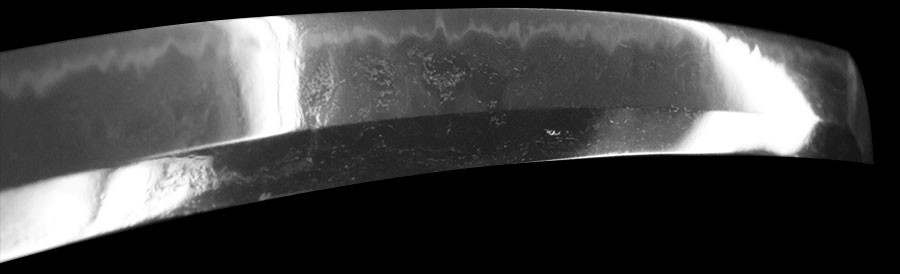
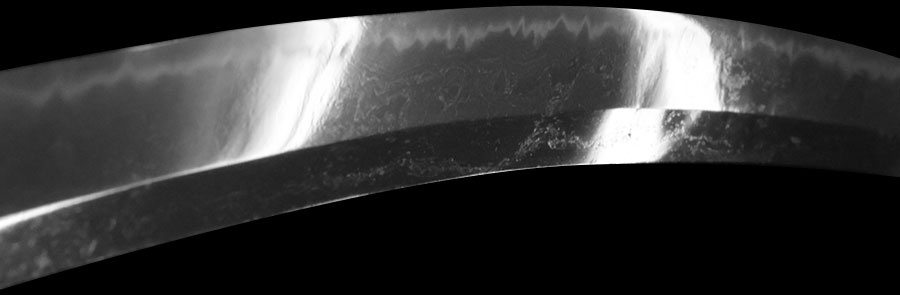
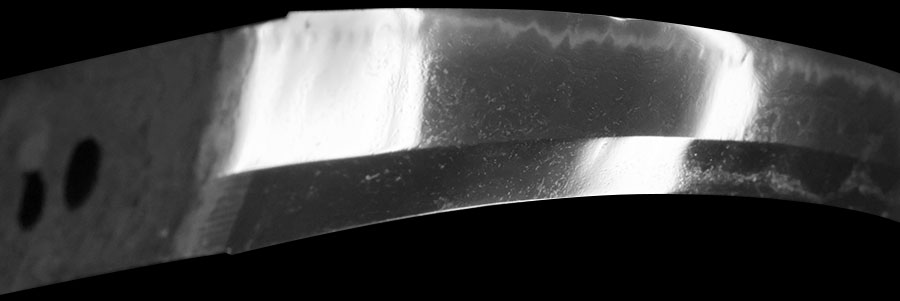
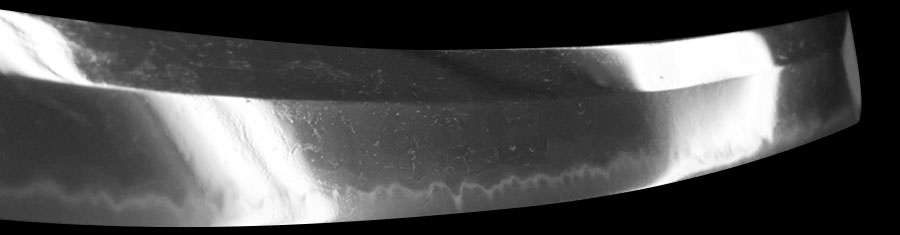
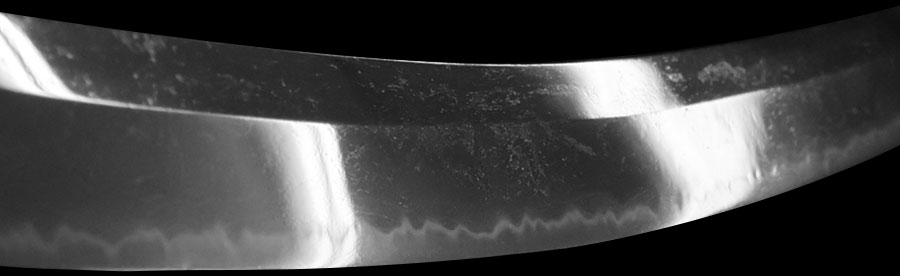
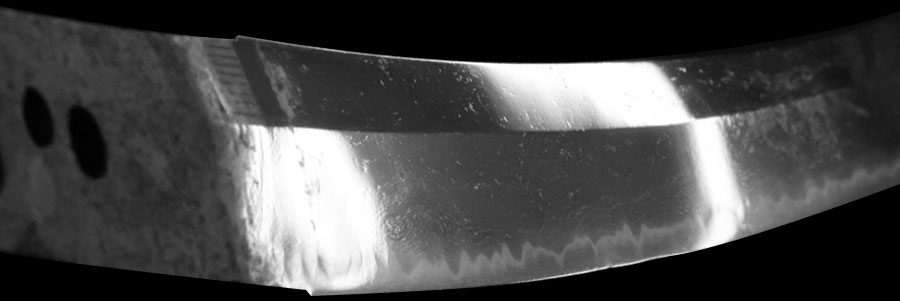
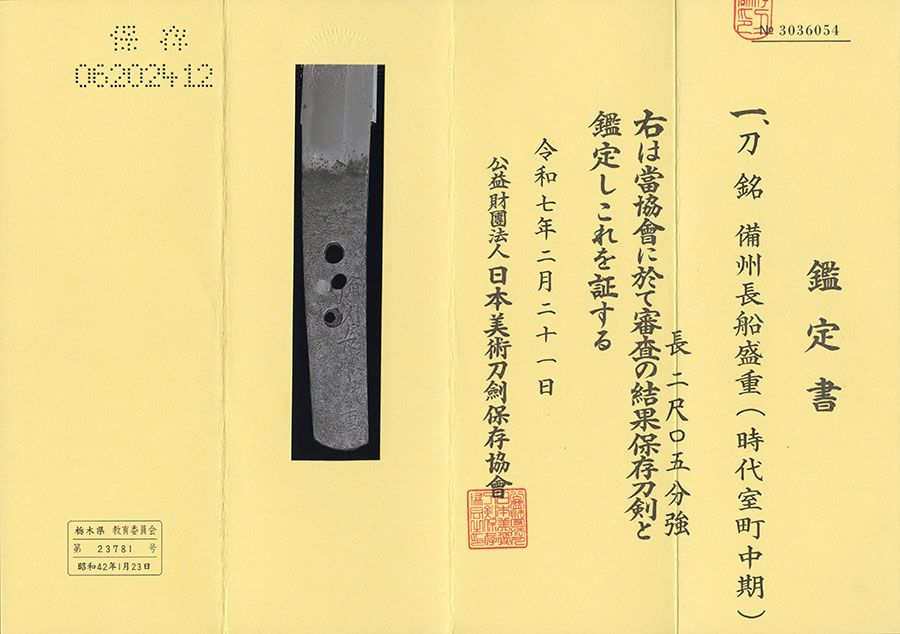
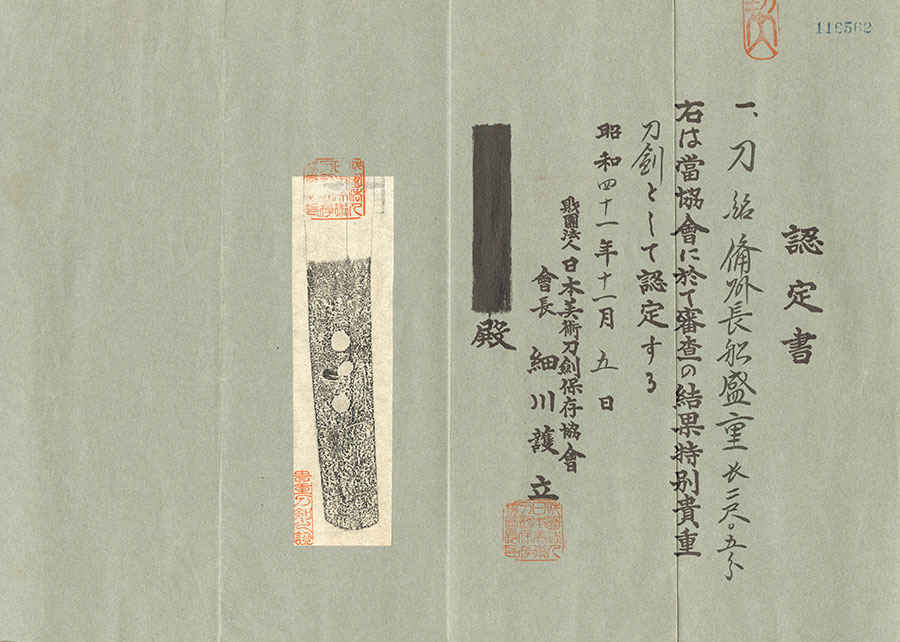
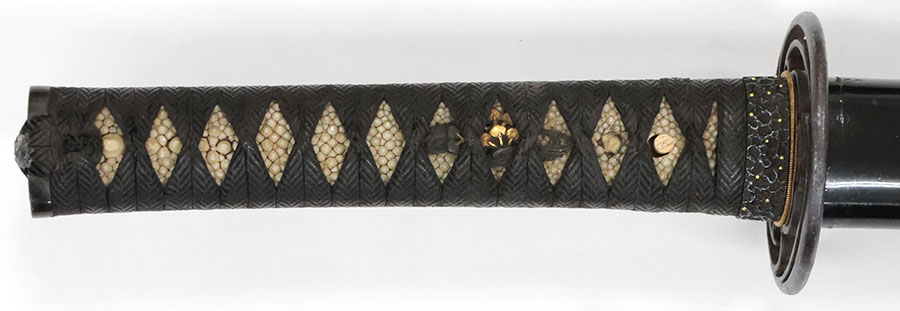
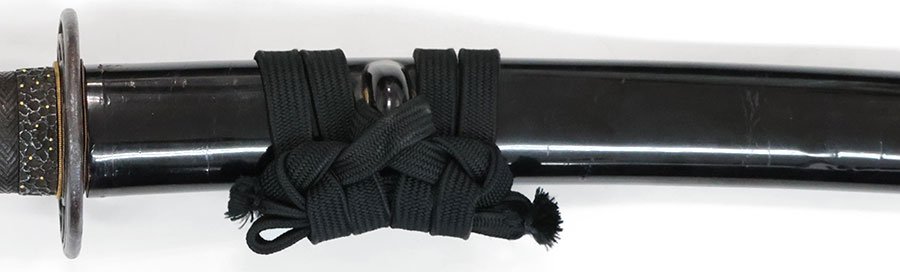
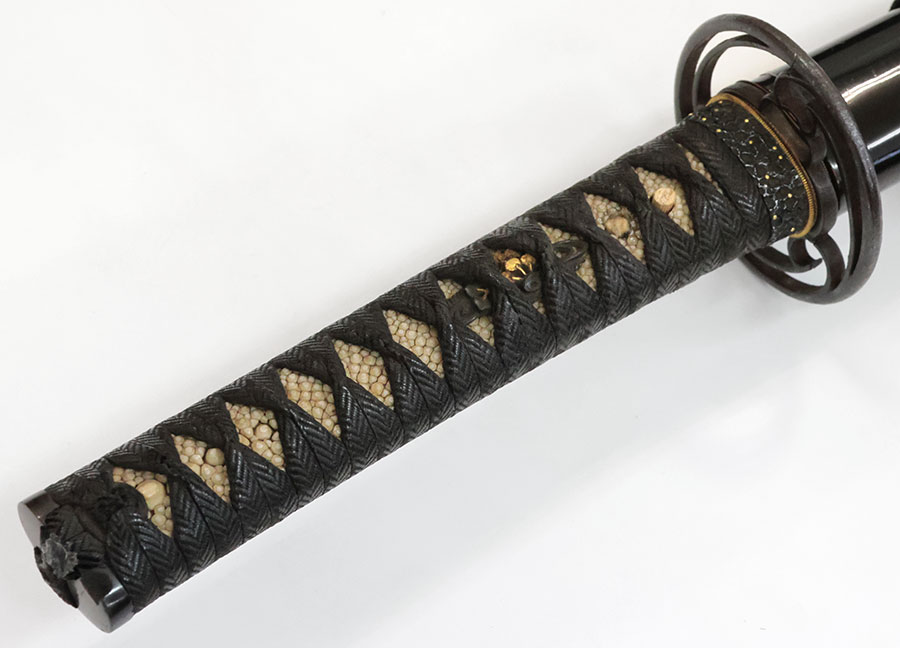
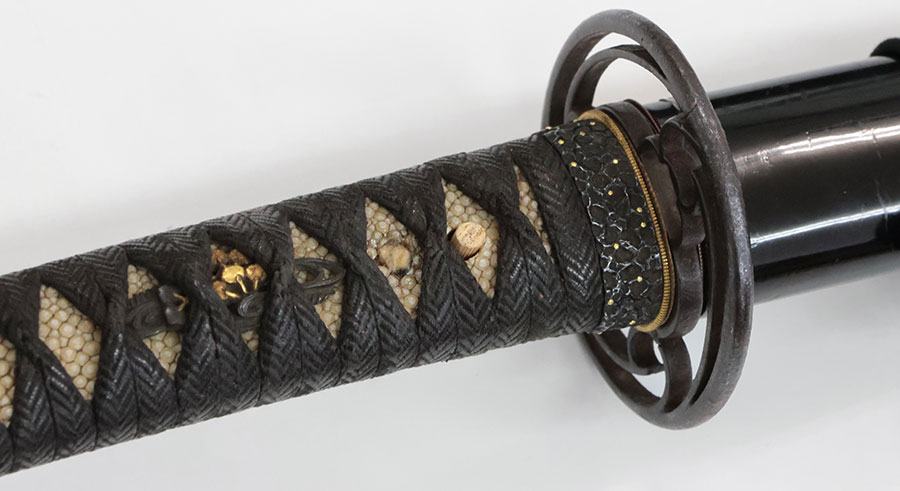
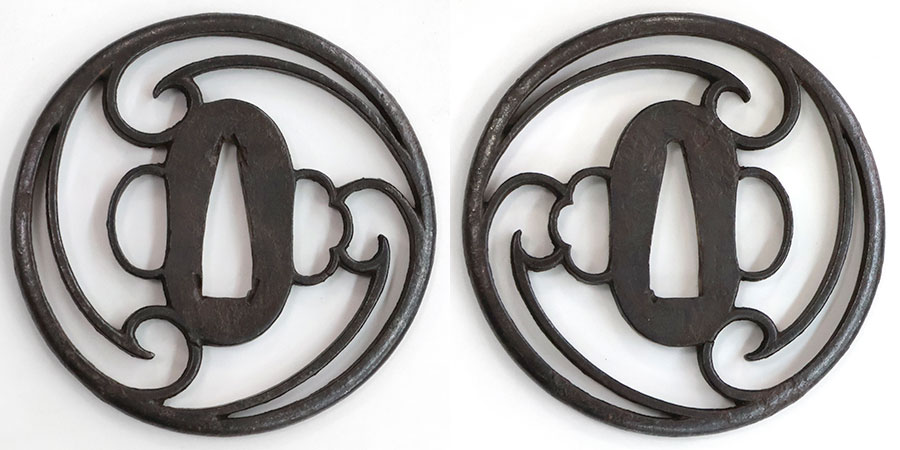
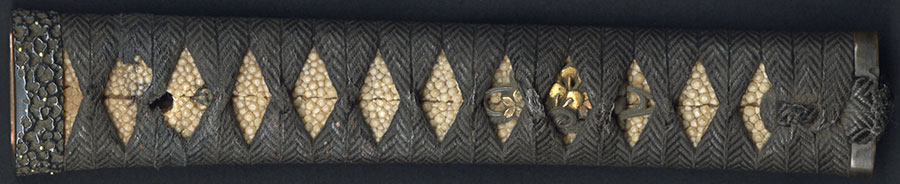
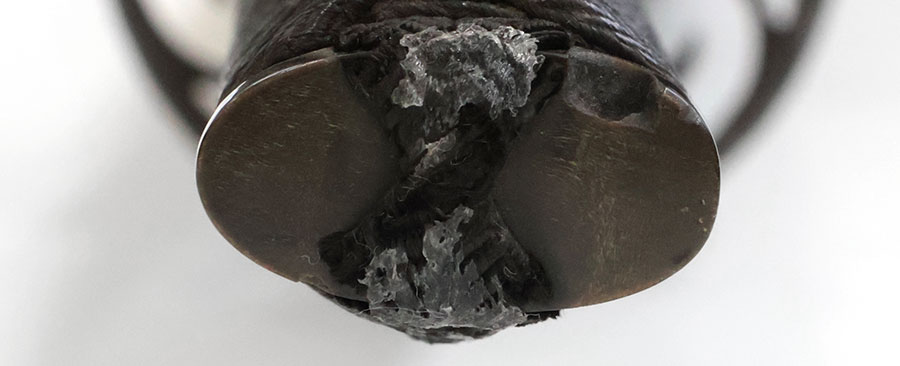
It has arrived, it has arrived—a masterpiece by Bishu Osafune Morishige has arrived. Foreigners always say, "Japan is wonderful; one can personally own works created hundreds of years ago that have been cherished and preserved by many people until now—this is unthinkable in foreign countries." This katana is truly a precious work that embodies those words. This lineage begins with Bizen Omiya Morishige, who was famous for competing in skill with Bizen Osafune Kanemitsu (O-Kanemitsu) around the Oan era of the Nanbokucho period (1368, 657 years ago). This katana was made around the Chokyo era of the Muromachi period (1488, 537 years ago), said to follow the Oei Bizen tradition. It was crafted exactly during the time when Akamatsu Masanori—famous as a Shugo Daimyo and Sengoku Daimyo—restored the Akamatsu clan (which had been destroyed in the Kakitsu Rebellion) and took control of half of Kaga, as well as Harima, Mimasaka, and Bizen. This is a precious and healthy masterpiece by the third generation Bishu Osafune Morishige, made in those very ancient times. The sugata shows a short dimension suitable for katanuki-uchi (quick drawing), with funbari at the moto, koshi-zori, and a distinct difference between the moto-mihaba and saki-mihaba, presenting a fine Bizen katana form. The jigane is itame-hada mixed with mokume-hada, and the ji displays a faint, irregular midare-utsuri from the base, giving it a refined character typical of Bizen Osafune. The hamon is nioi-hon-i with nie, featuring a low, double-structured gunome-choji with slightly open valleys (koshi), fired brightly and with great haki. The koshirae is a Denchu-koshirae with a black ro-saya from the Edo period, intended for attendance at the castle, which adds further splendor to this Bishu Osafune Morishige katana. Having received this from an elderly connoisseur (sukisha) who wished for it to be passed down to the next generation at a low price due to their age, we are offering this precious, 500-plus-year-old Bishu Osafune Morishige katana at a special bargain price. Please enjoy it.
 NihontoWatch
Nanbokucho · nagasa 62.2cm · sori 1.9cm
















Bizen-den · Bizen · around 1429-1441
Fujishiro Chu-jo saku
1 piece on the market now
Where Morishige stands among comparable artisans: across all of nihontō, and within tradition, era, and period. The tiers (Foremost · Leading · Major · Notable) weigh official designations from the NBTHK and Japan's Agency for Cultural Affairs, together with historical honors of lasting repute such as the Sansaku and Meibutsu-chō.
Select a lens to see how it's measured.
Bizen-den · Bizen
7 pieces on the market now
The Omiya school (大宮) of Bizen traces its name and its blood to Kyoto, not to the Bizen heartland where it eventually settled. The published sources follow the line back to a remote ancestor, Kunimori, who is said to have left Inokuma Omiya in Yamashiro province and moved into Bizen during the Kamakura period, around the Bun'o years. With him the group carried a Yamashiro sensibility into the province of choji, and that transplanted origin remains the key to everything the school later became. Works by the earliest Omiya hands, Kunimori and Sukemori, survive in extremely small numbers, so the line first comes clearly into view at the close of the Kamakura period and then flowers through the height of the Nanbokucho era. Several names recur across these generations, among them Morishige, whose name passed down successive smiths from the late Kamakura into the Muromachi period; but the figure who left by far the largest body of work, and the highest reputation[[c:1]], is Morikage, who worked at Osafune and cut long, dated signatures such as Bishu Osafune Morikage across the Oan, Joji, Eiwa and Kakei years. What binds these smiths into a recognizable group is a particular blend, a temper that reads as Soden-Bizen yet is built differently from the clove-flower of mainstream Osafune. The jigane is the constant beneath the range: a standing itame mixed with mokume, the grain tending to open, with fine ji-nie, chikei entering, patches of jifu in the steel, and a Bizen midare-utsuri that rises on signed and mumei blades alike. Upon that ground the school sets a midare in which gunome, choji and an angular, pointed tendency intermingle, with ashi and yo entering well, nioi deepening to ko-nie, and fine sunagashi and kinsuji running through the ha. The recurring tells are a Yamashiro-tinged ji carrying that strong nie, and a boshi running midare-komi to a small round or a pointed turnback with hakikake. Within this shared vocabulary the hands diverge.
Morikage tends to a ko-notare base with somewhat angular crests and a subdued, shizumi nioiguchi rather than a showy temper, while his range stretches from that quiet register to a suguha the commentary likens to Aoe and the Unrui smiths[[c:2]]. Morishige favors a bold, opened-waist gunome, the koshi-hiraki pattern mixed with choji into flamboyant undulations. The breadth itself is a school trait, the published sources describing the Omiya saku-iki as wide, taking in notare-dominant work, florid choji-gunome midare, angular gunome, and the Aoe-manner suguha at its quiet edge. To kantei an Omiya blade is to read this fusion of Yamashiro-den refinement and Bizen-den flamboyance, then to separate it from its larger Osafune neighbors. The bright midare-utsuri and the nie-strong ji hold the school apart from Kanemitsu, whose temper undulates more broadly, and from the box-shaped large midare of Chogi, though the kinship to Chogi is real and acknowledged in the commentary, which places Morikage's workmanship beside it[[c:3]]. The school is often overshadowed by those two names, which makes the distinguishing read the more useful: the standing itame with its utsuri, the angular pointed elements, and the comparatively restrained nioiguchi. Morikage stands at the front rank of Nanbokucho Soden-Bizen and carries a Jo-jo saku grade in Fujishiro; his provenance runs through the daimyo houses, the Nabeshima of Hizen, the Uesugi, the Date and the Hisamatsu-Matsudaira, with a piece recorded in Imperial keeping. A modern scholarly question hangs over the name itself, the published sources recording a theory, now widely entertained, that the long-signature Morikage may belong to an Osafune collateral line connected to Chikakage and Yoshikage, and that the smiths who cut bold, large two-character signatures may be the true Omiya hands; the matter is left open. By the late Muromachi the distinctive Omiya traits fade, the Shinkuro generation of Morishige showing no difference from the general Sue-Bizen type, evidence that the subsidiary line was at last absorbed into the dominant Osafune school, a trajectory that gives the group its documentary value for the study of how Bizen's lesser lineages were drawn into the mainstream. Learn more →
| Smith | Era | Designated |
|---|---|---|
| Morikage盛景 | 1356-1390 | 92 |
| Morikage盛景 | 1299-1302 | 5 |
| Nobuhide延秀 | 1302-1303 | 0 |
| Norifusa則房 | 1199-1201 | 0 |
| Morishige盛重 | 1394-1428 | 2 |
Bizen in the Nanbokuchō period
Sixty years of war between two courts drove blades long and broad, and Osafune met the demand: Kanemitsu and Chōgi led forges serving the provincial warriors who did the fighting, while Sōshū influence arrived with the armies to create Sōden-Bizen.
Certifies a genuine blade worth preserving: a signature confirmed correct, or, if unsigned, an era, province, and school that the NBTHK can reliably identify.
The NBTHK (Nihon Bijutsu Tōken Hozon Kyōkai, the Society for the Preservation of Japanese Art Swords) is a public-interest incorporated foundation founded in 1948 and supervised by Japan’s Agency for Cultural Affairs (Bunkachō); it is based at the Japanese Sword Museum in Tokyo. Its expert panels physically examine each submitted work (shinsa) and issue a certificate (kanteishō) ranking it by artistic and historical merit. NBTHK papers are the most widely recognized standard of authentication for Japanese swords and fittings.
NBTHK official siteFor returns due to customer circumstances, the cost is the customer's responsibility. For returns due to our mis-shipment or a defective item, we bear the cost.

It has arrived, it has arrived—a masterpiece by Bishu Osafune Morishige has arrived. Foreigners always say, "Japan is wonderful; one can personally own works created hundreds of years ago that have been cherished and preserved by many people until now—this is unthinkable in foreign countries." This katana is truly a precious work that embodies those words. This lineage begins with Bizen Omiya Morishige, who was famous for competing in skill with Bizen Osafune Kanemitsu (O-Kanemitsu) around the Oan era of the Nanbokucho period (1368, 657 years ago). This katana was made around the Chokyo era of the Muromachi period (1488, 537 years ago), said to follow the Oei Bizen tradition. It was crafted exactly during the time when Akamatsu Masanori—famous as a Shugo Daimyo and Sengoku Daimyo—restored the Akamatsu clan (which had been destroyed in the Kakitsu Rebellion) and took control of half of Kaga, as well as Harima, Mimasaka, and Bizen. This is a precious and healthy masterpiece by the third generation Bishu Osafune Morishige, made in those very ancient times. The sugata shows a short dimension suitable for katanuki-uchi (quick drawing), with funbari at the moto, koshi-zori, and a distinct difference between the moto-mihaba and saki-mihaba, presenting a fine Bizen katana form. The jigane is itame-hada mixed with mokume-hada, and the ji displays a faint, irregular midare-utsuri from the base, giving it a refined character typical of Bizen Osafune. The hamon is nioi-hon-i with nie, featuring a low, double-structured gunome-choji with slightly open valleys (koshi), fired brightly and with great haki. The koshirae is a Denchu-koshirae with a black ro-saya from the Edo period, intended for attendance at the castle, which adds further splendor to this Bishu Osafune Morishige katana. Having received this from an elderly connoisseur (sukisha) who wished for it to be passed down to the next generation at a low price due to their age, we are offering this precious, 500-plus-year-old Bishu Osafune Morishige katana at a special bargain price. Please enjoy it.
NihontoWatchNanbokucho · nagasa 62.2cm · sori 1.9cm
Bizen-den · Bizen · around 1429-1441
Fujishiro Chu-jo saku
1 piece on the market now
Where Morishige stands among comparable artisans: across all of nihontō, and within tradition, era, and period. The tiers (Foremost · Leading · Major · Notable) weigh official designations from the NBTHK and Japan's Agency for Cultural Affairs, together with historical honors of lasting repute such as the Sansaku and Meibutsu-chō.
Select a lens to see how it's measured.
Bizen-den · Bizen
7 pieces on the market now
The Omiya school (大宮) of Bizen traces its name and its blood to Kyoto, not to the Bizen heartland where it eventually settled. The published sources follow the line back to a remote ancestor, Kunimori, who is said to have left Inokuma Omiya in Yamashiro province and moved into Bizen during the Kamakura period, around the Bun'o years. With him the group carried a Yamashiro sensibility into the province of choji, and that transplanted origin remains the key to everything the school later became. Works by the earliest Omiya hands, Kunimori and Sukemori, survive in extremely small numbers, so the line first comes clearly into view at the close of the Kamakura period and then flowers through the height of the Nanbokucho era. Several names recur across these generations, among them Morishige, whose name passed down successive smiths from the late Kamakura into the Muromachi period; but the figure who left by far the largest body of work, and the highest reputation[[c:1]], is Morikage, who worked at Osafune and cut long, dated signatures such as Bishu Osafune Morikage across the Oan, Joji, Eiwa and Kakei years. What binds these smiths into a recognizable group is a particular blend, a temper that reads as Soden-Bizen yet is built differently from the clove-flower of mainstream Osafune. The jigane is the constant beneath the range: a standing itame mixed with mokume, the grain tending to open, with fine ji-nie, chikei entering, patches of jifu in the steel, and a Bizen midare-utsuri that rises on signed and mumei blades alike. Upon that ground the school sets a midare in which gunome, choji and an angular, pointed tendency intermingle, with ashi and yo entering well, nioi deepening to ko-nie, and fine sunagashi and kinsuji running through the ha. The recurring tells are a Yamashiro-tinged ji carrying that strong nie, and a boshi running midare-komi to a small round or a pointed turnback with hakikake. Within this shared vocabulary the hands diverge.
Morikage tends to a ko-notare base with somewhat angular crests and a subdued, shizumi nioiguchi rather than a showy temper, while his range stretches from that quiet register to a suguha the commentary likens to Aoe and the Unrui smiths[[c:2]]. Morishige favors a bold, opened-waist gunome, the koshi-hiraki pattern mixed with choji into flamboyant undulations. The breadth itself is a school trait, the published sources describing the Omiya saku-iki as wide, taking in notare-dominant work, florid choji-gunome midare, angular gunome, and the Aoe-manner suguha at its quiet edge. To kantei an Omiya blade is to read this fusion of Yamashiro-den refinement and Bizen-den flamboyance, then to separate it from its larger Osafune neighbors. The bright midare-utsuri and the nie-strong ji hold the school apart from Kanemitsu, whose temper undulates more broadly, and from the box-shaped large midare of Chogi, though the kinship to Chogi is real and acknowledged in the commentary, which places Morikage's workmanship beside it[[c:3]]. The school is often overshadowed by those two names, which makes the distinguishing read the more useful: the standing itame with its utsuri, the angular pointed elements, and the comparatively restrained nioiguchi. Morikage stands at the front rank of Nanbokucho Soden-Bizen and carries a Jo-jo saku grade in Fujishiro; his provenance runs through the daimyo houses, the Nabeshima of Hizen, the Uesugi, the Date and the Hisamatsu-Matsudaira, with a piece recorded in Imperial keeping. A modern scholarly question hangs over the name itself, the published sources recording a theory, now widely entertained, that the long-signature Morikage may belong to an Osafune collateral line connected to Chikakage and Yoshikage, and that the smiths who cut bold, large two-character signatures may be the true Omiya hands; the matter is left open. By the late Muromachi the distinctive Omiya traits fade, the Shinkuro generation of Morishige showing no difference from the general Sue-Bizen type, evidence that the subsidiary line was at last absorbed into the dominant Osafune school, a trajectory that gives the group its documentary value for the study of how Bizen's lesser lineages were drawn into the mainstream. Learn more →
| Smith | Era | Designated |
|---|---|---|
| Morikage盛景 | 1356-1390 | 92 |
| Morikage盛景 | 1299-1302 | 5 |
| Nobuhide延秀 | 1302-1303 | 0 |
| Norifusa則房 | 1199-1201 | 0 |
| Morishige盛重 | 1394-1428 | 2 |
Bizen in the Nanbokuchō period
Sixty years of war between two courts drove blades long and broad, and Osafune met the demand: Kanemitsu and Chōgi led forges serving the provincial warriors who did the fighting, while Sōshū influence arrived with the armies to create Sōden-Bizen.
Certifies a genuine blade worth preserving: a signature confirmed correct, or, if unsigned, an era, province, and school that the NBTHK can reliably identify.
The NBTHK (Nihon Bijutsu Tōken Hozon Kyōkai, the Society for the Preservation of Japanese Art Swords) is a public-interest incorporated foundation founded in 1948 and supervised by Japan’s Agency for Cultural Affairs (Bunkachō); it is based at the Japanese Sword Museum in Tokyo. Its expert panels physically examine each submitted work (shinsa) and issue a certificate (kanteishō) ranking it by artistic and historical merit. NBTHK papers are the most widely recognized standard of authentication for Japanese swords and fittings.
NBTHK official siteFor returns due to customer circumstances, the cost is the customer's responsibility. For returns due to our mis-shipment or a defective item, we bear the cost.