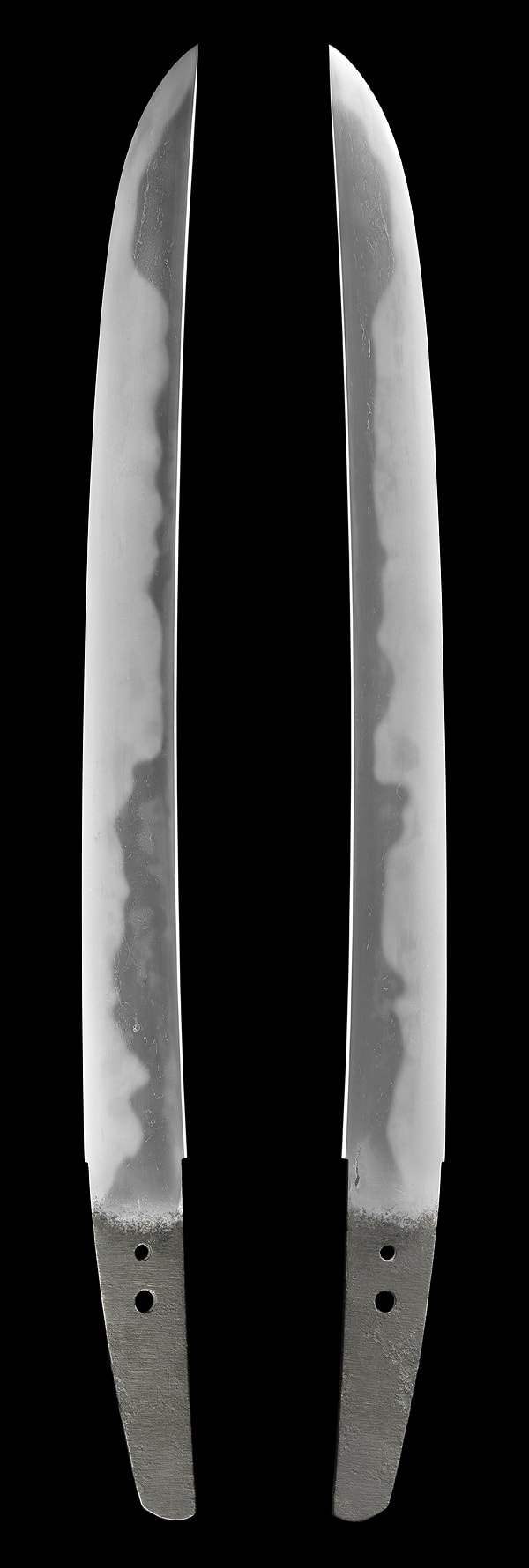
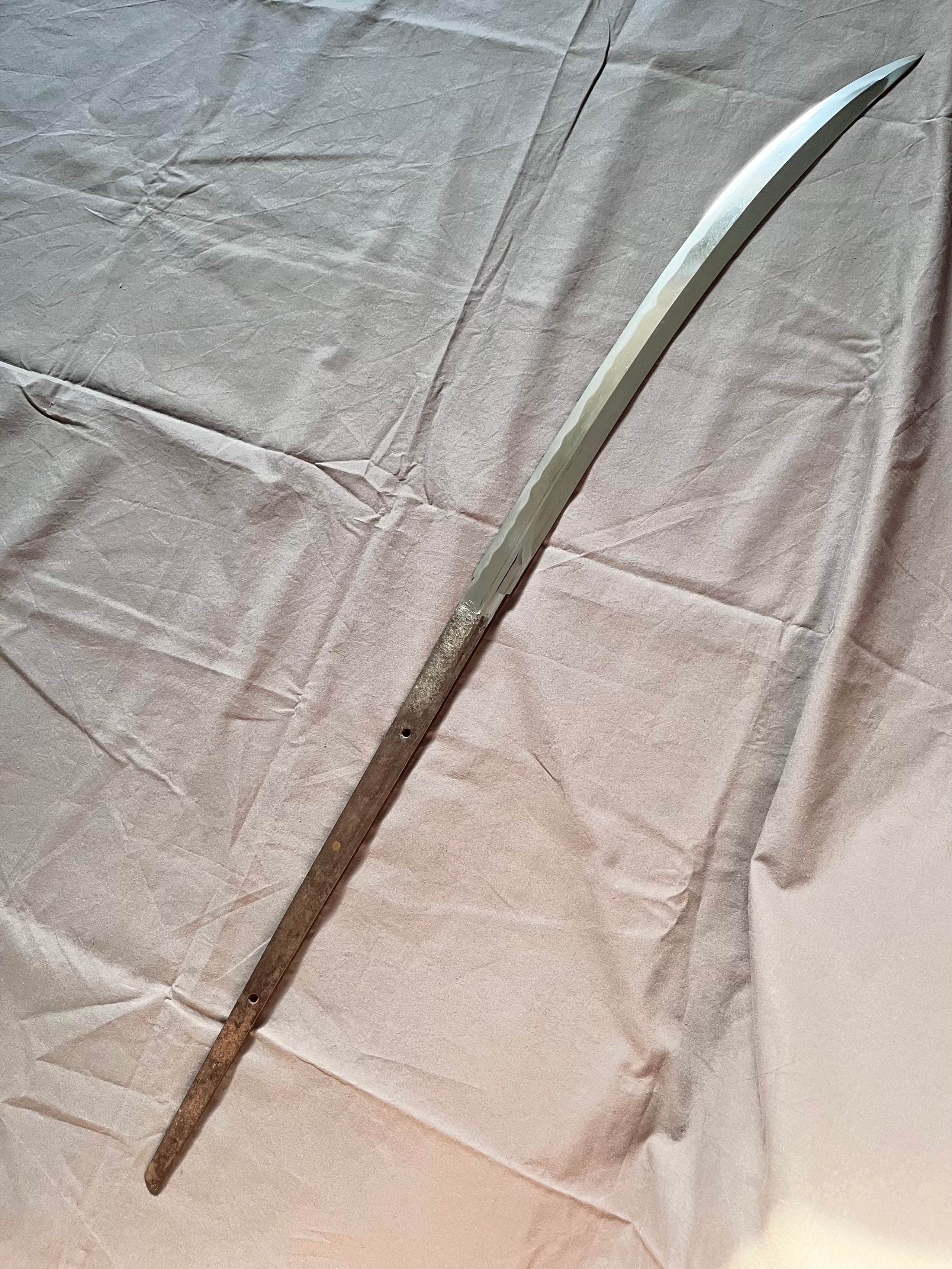
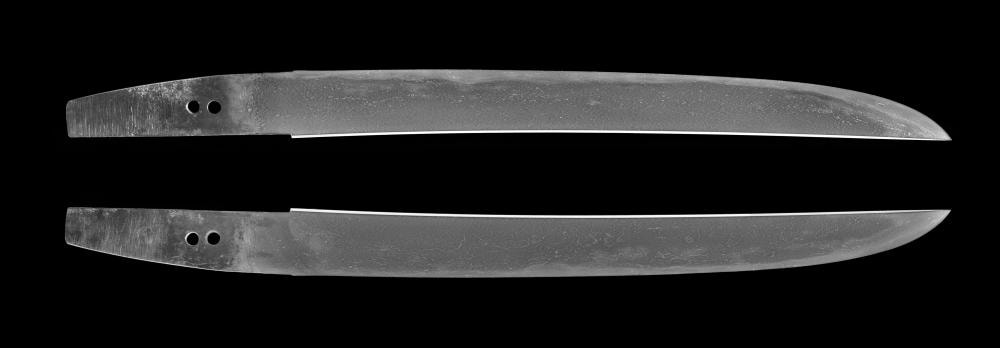
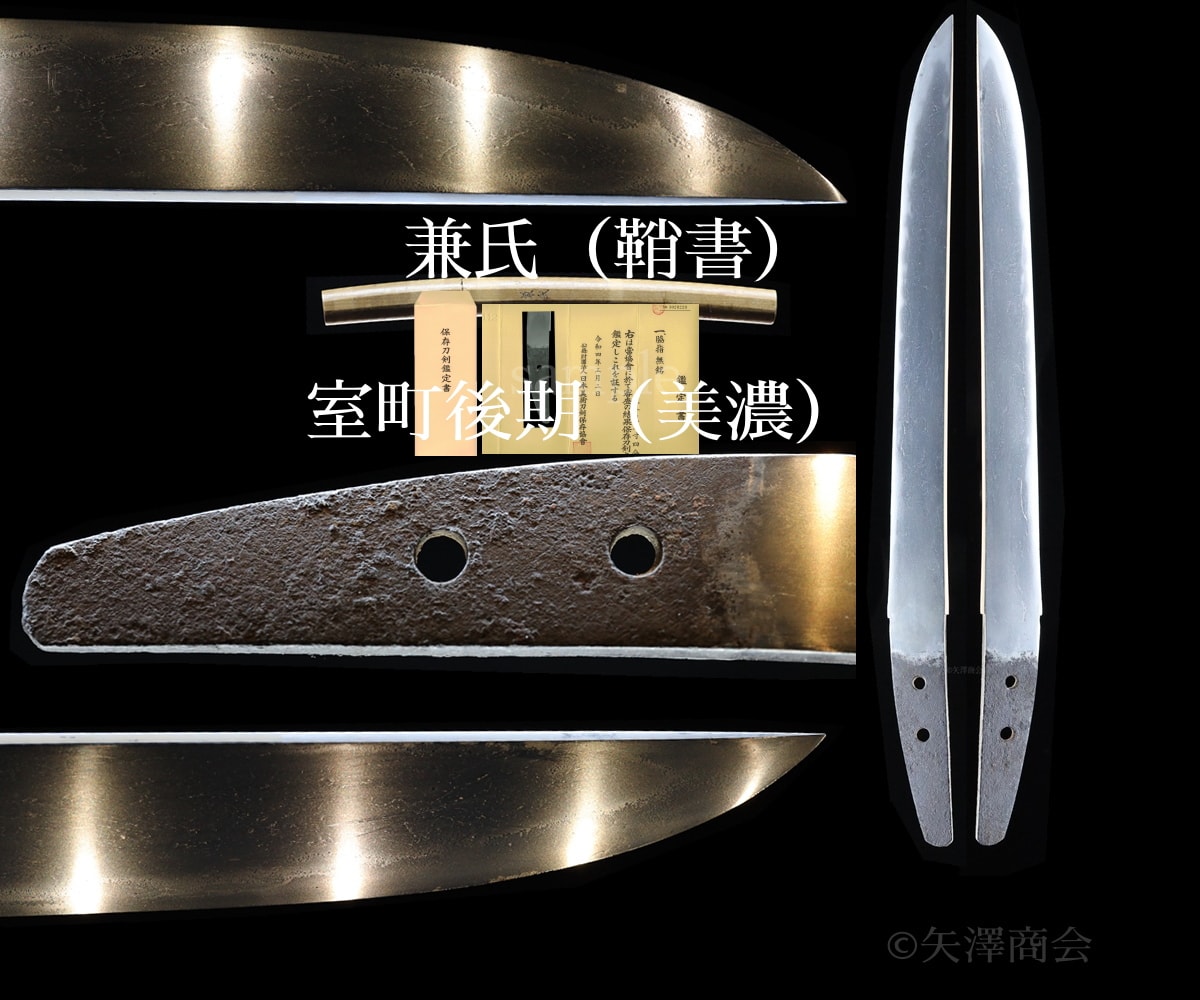
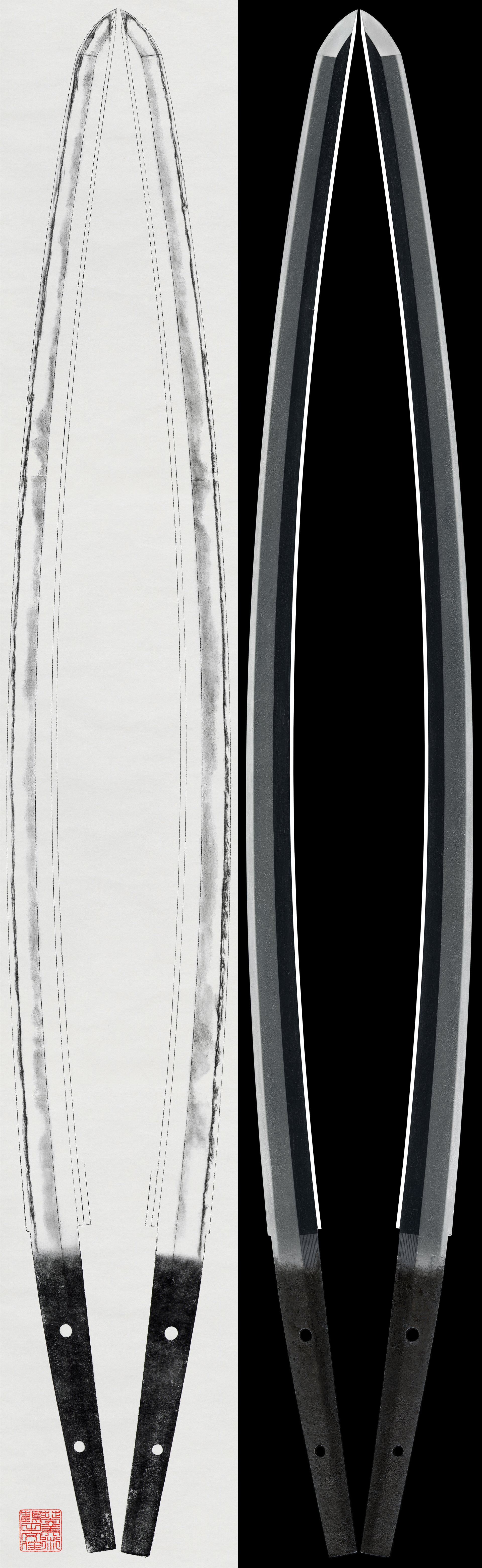
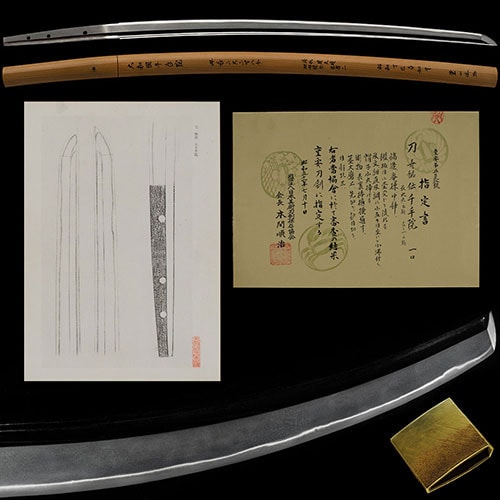
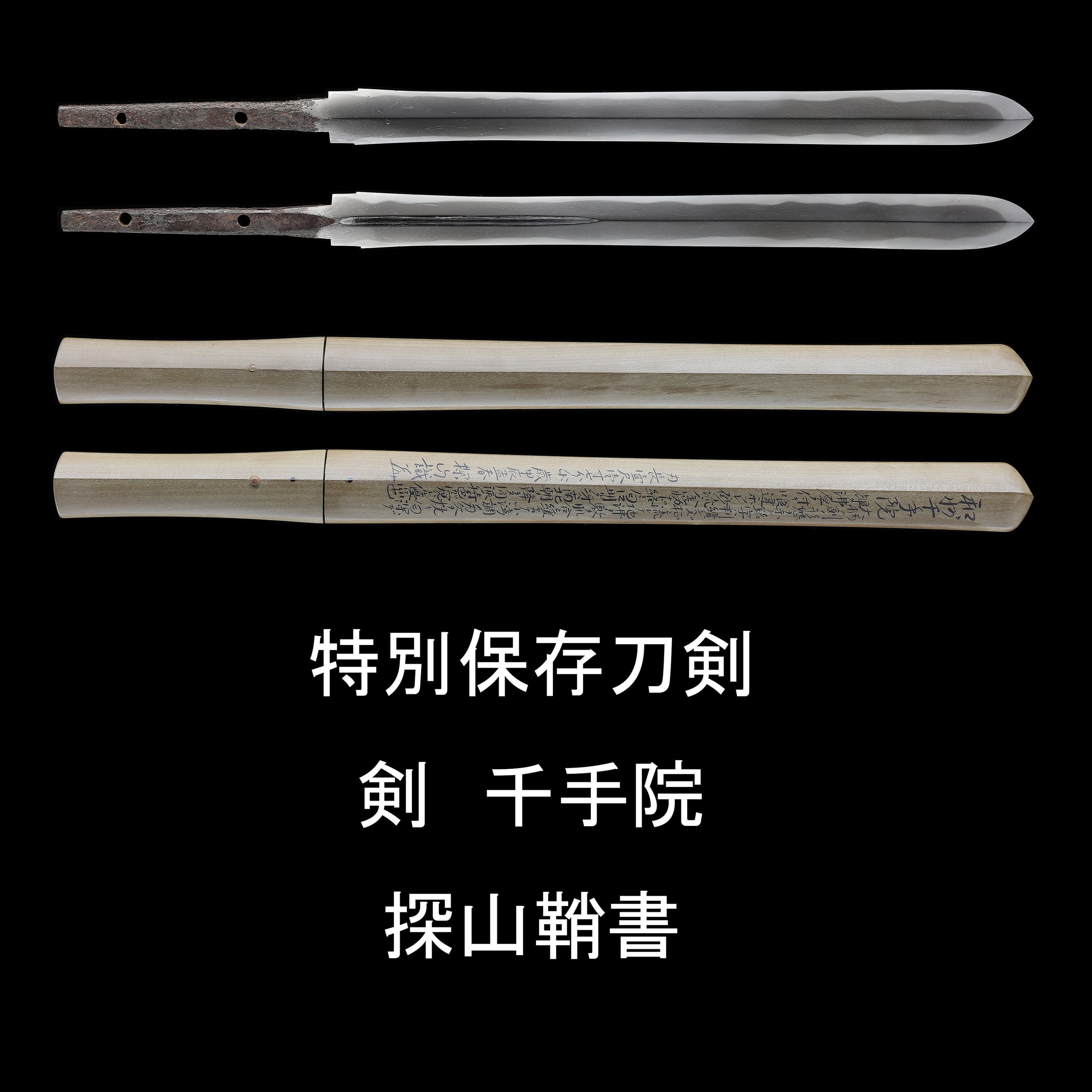
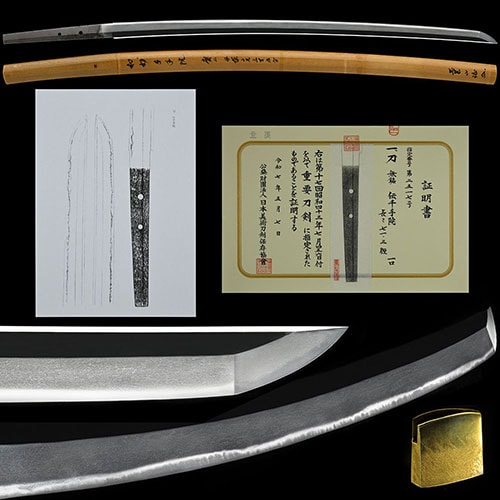
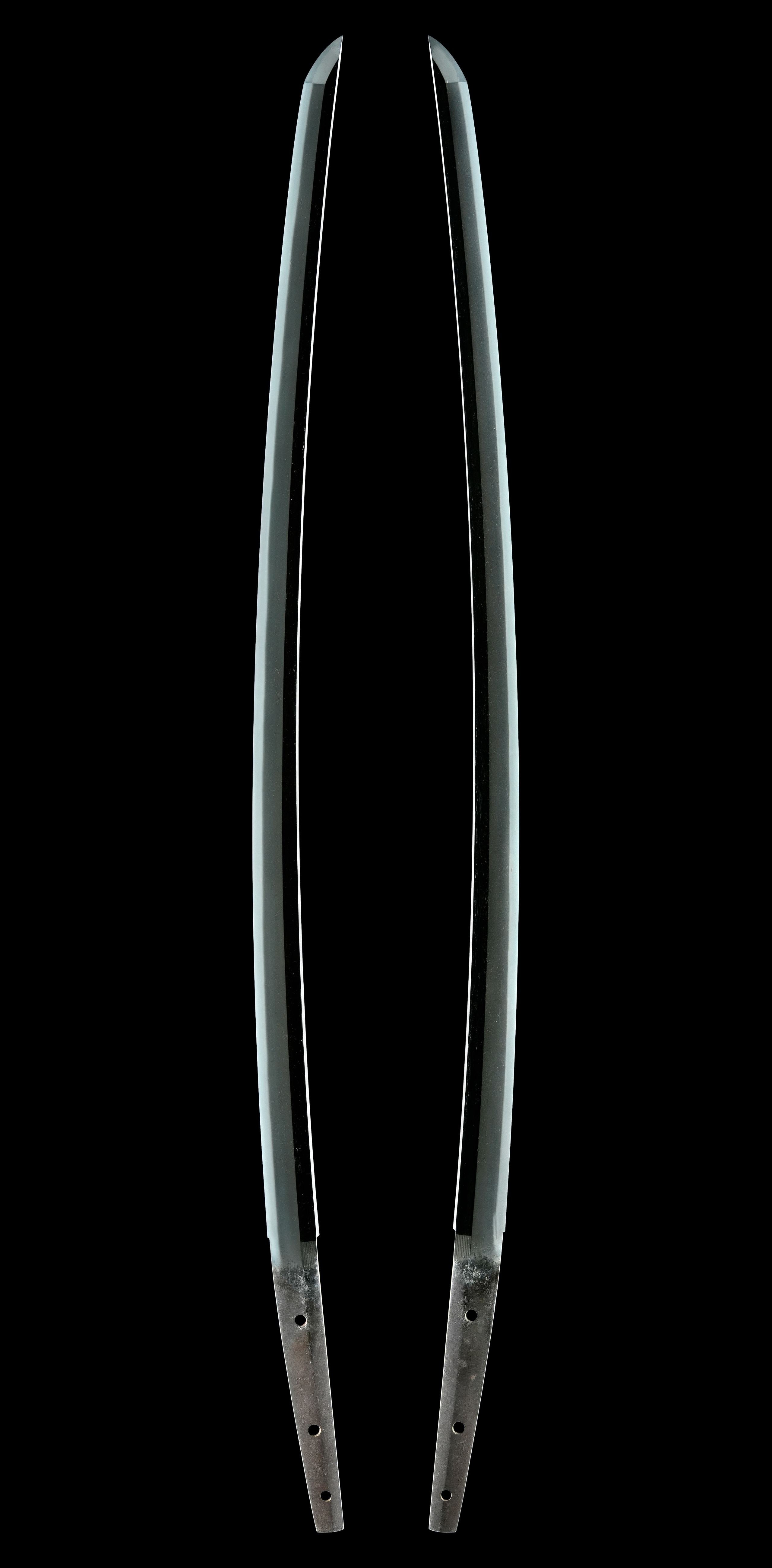
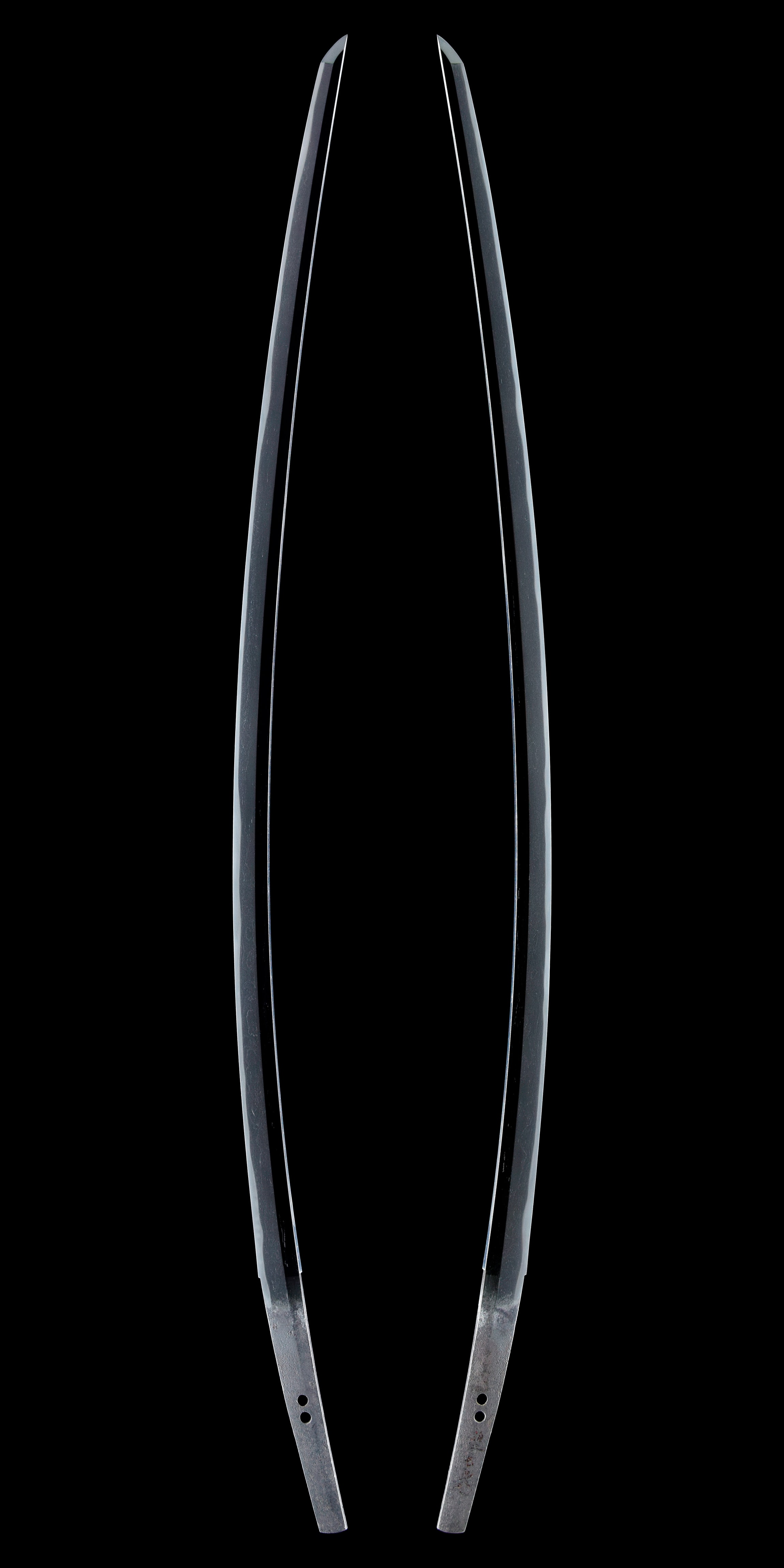
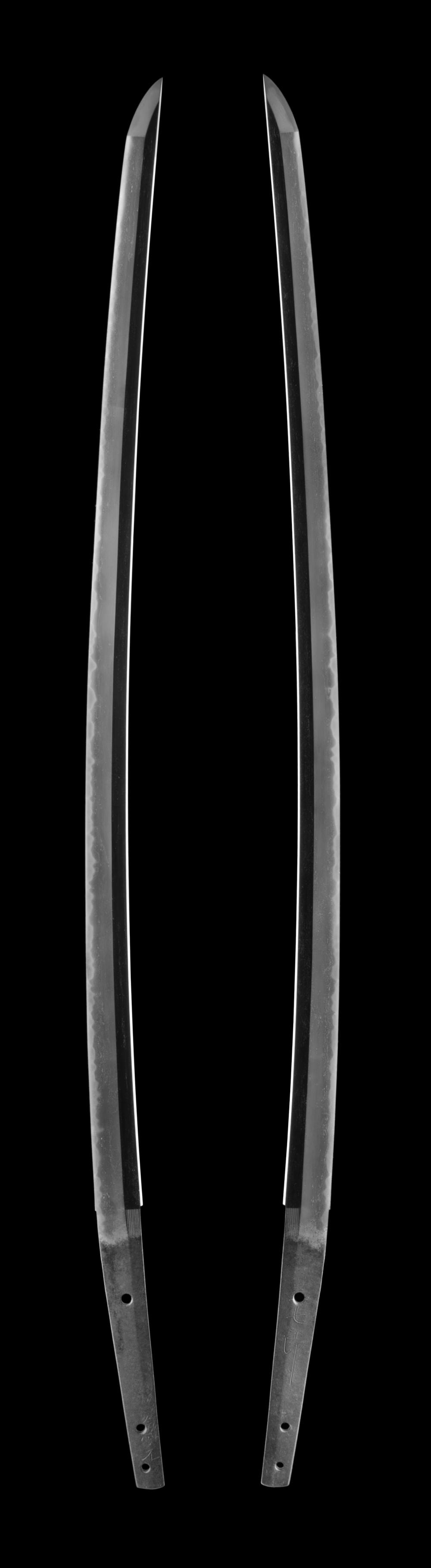
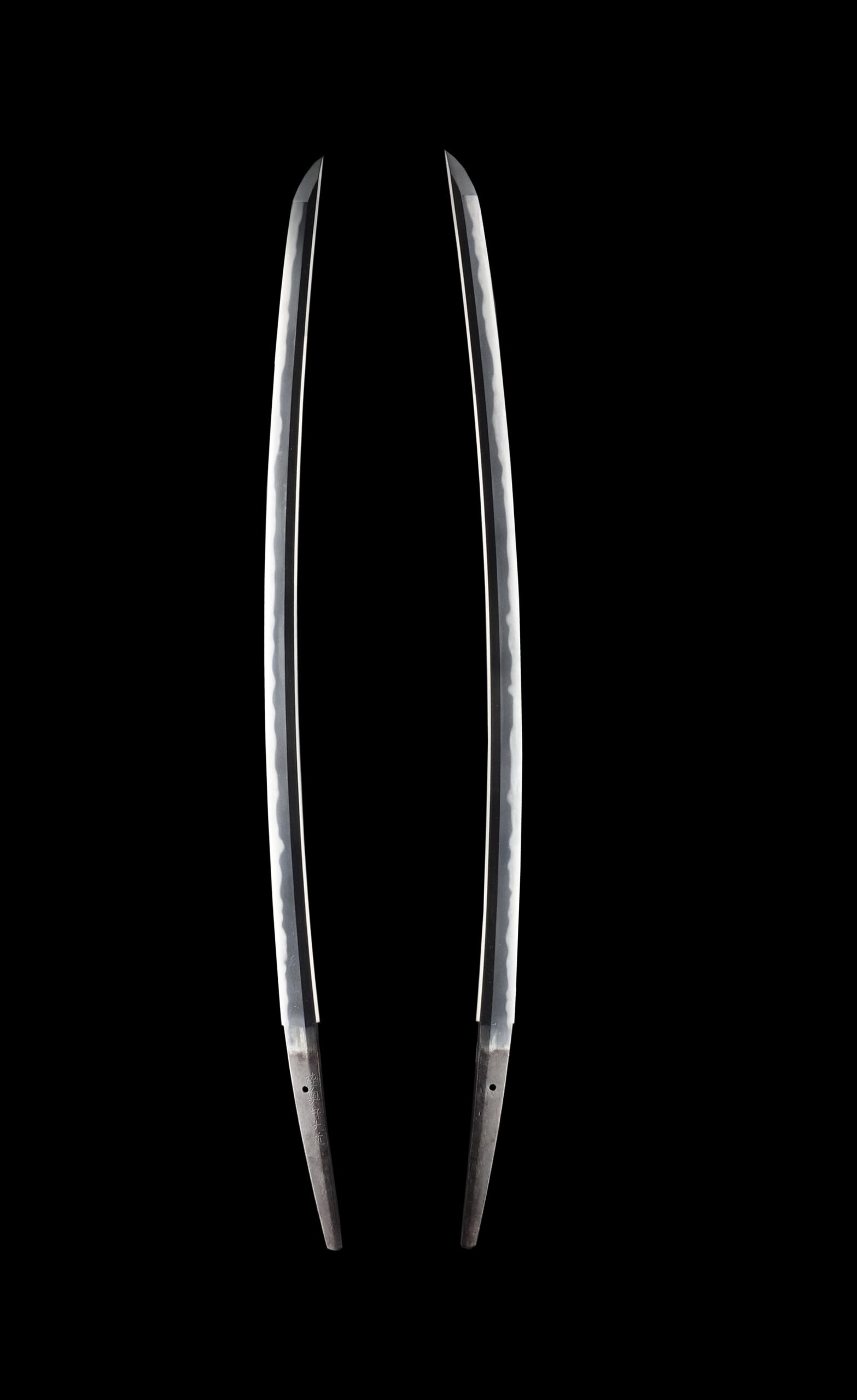
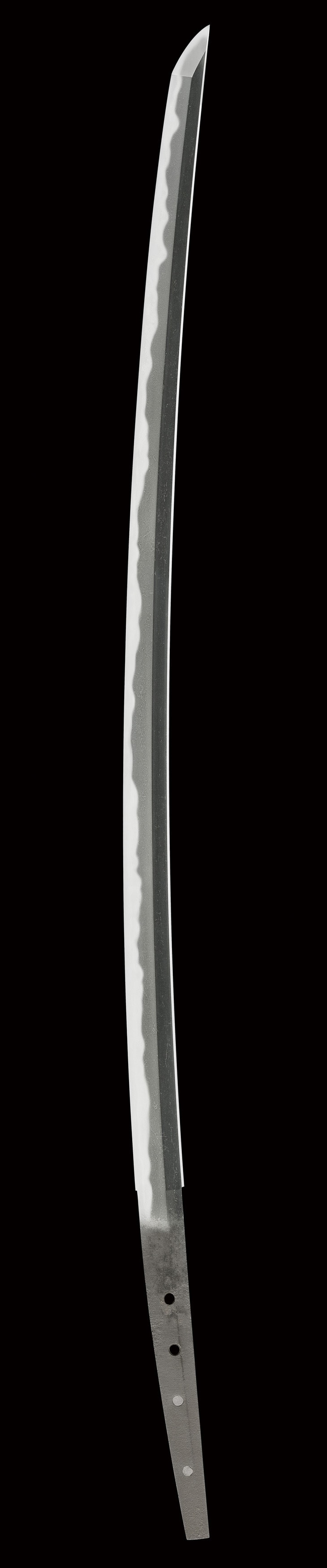
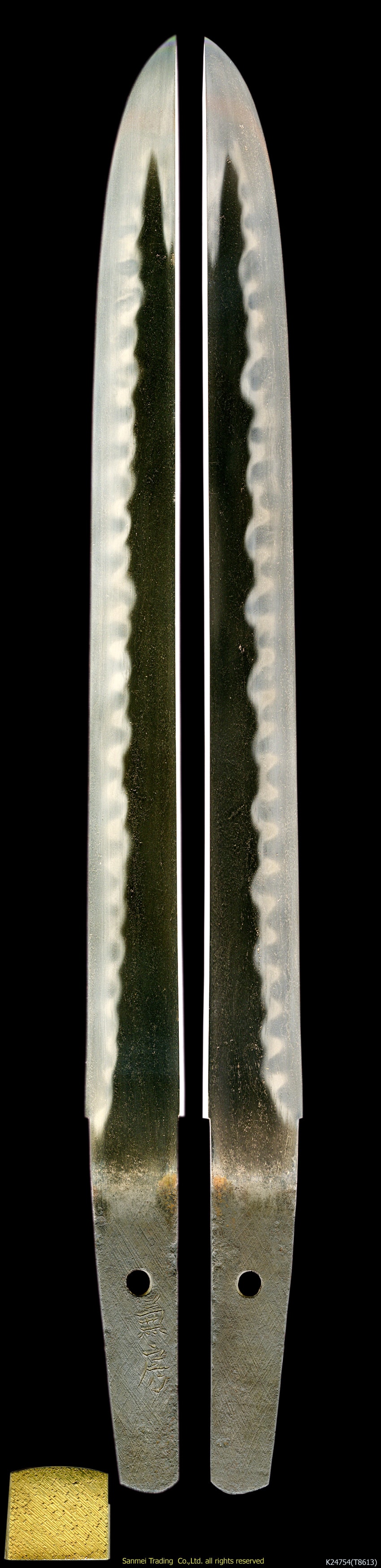
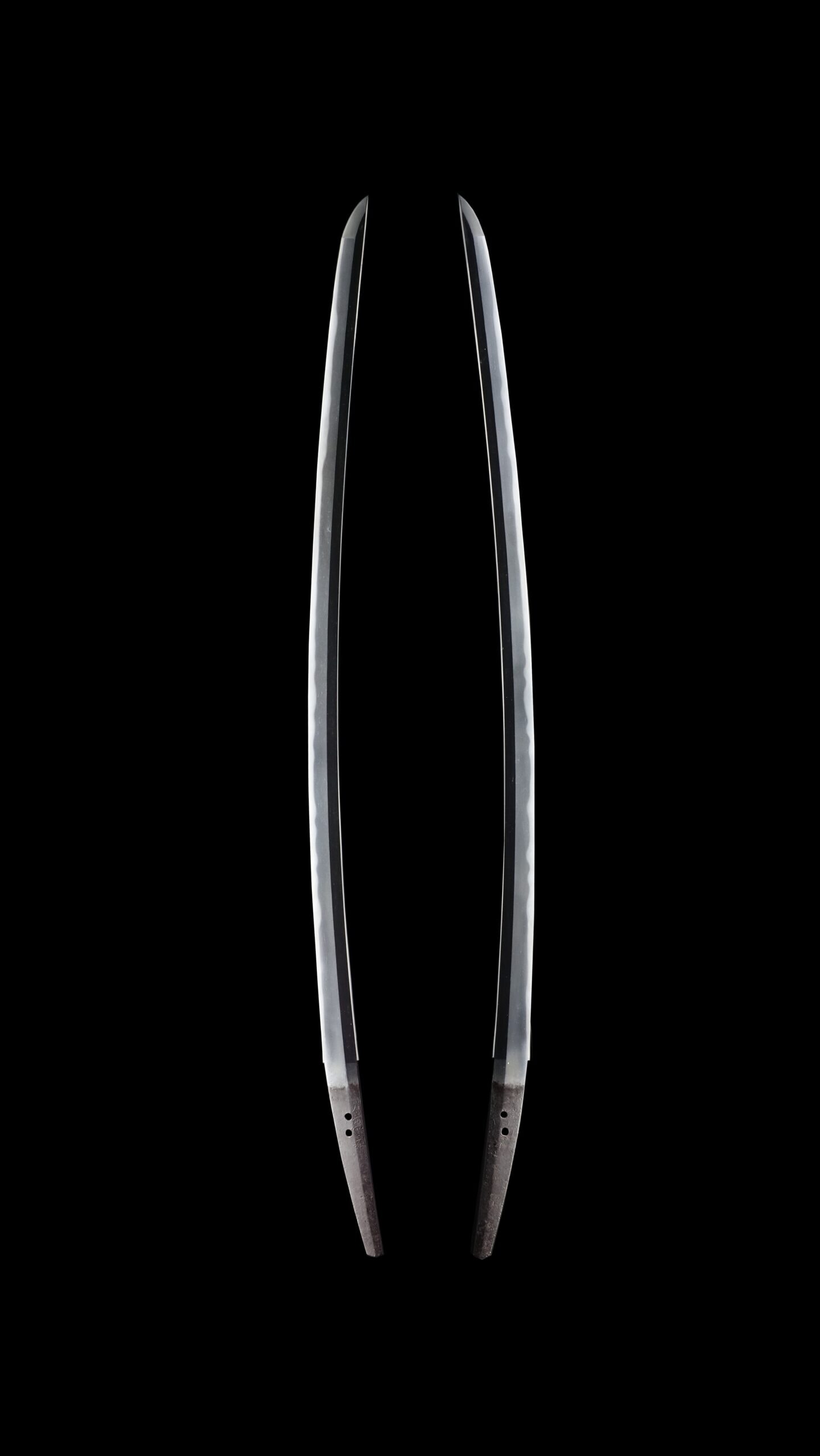
This is a wakizashi by Kanemitsu from the late Muromachi period. The blade features a shinogi-zukuri, iori-mune sugata with a tight itame hada mixed with ko-mokume. The hamon is gunome-midare with a chu-kissaki. It has an ubu-nakago with kurijiri and takanoha yasurime, and is fitted with a silver-plated double habaki. The blade is in beautiful condition with no rust or chips.
 NihontoWatch
mei · Muromachi · nagasa 50.4cm · sori 1.3cm
Mino-den · Mino · around 1429-1441
Tōken Taikan top 60%
1 piece on the market now
Mino-den · Mino
7 pieces on the market now
Akasaka in Mino Province was the seat of a group the NBTHK setsumei records under two names, Mino Senjuin and Akasaka Senjuin, and the documents are consistent on its descent: the line traces to the Yamato Senjuin tradition, whose craftsmen relocated north into Mino. The setsumei place that migration around the end of the Nanbokuchō period, with the group then flourishing into the Muromachi. Learn more →
| Smith | Era | Designated |
|---|---|---|
| Kuniyuki國行 | 1362-1368 | 8 |
| Doin道印 | 1469-1487 | 0 |
| Yasumichi康道 | 1504-1521 | 0 |
| Kaneuji兼氏 | 1492-1501 | 0 |
| Yasutsugu康繼 | 1532-1555 | 0 |
We could not find an authenticity certificate on the seller’s listing. Japanese swords and fittings are normally papered by the NBTHK (or the NTHK). Without one, the attribution is the seller’s own assessment and has not been independently verified — treat it with caution and ask the dealer about certification before buying.
This is a wakizashi by Kanemitsu from the late Muromachi period. The blade features a shinogi-zukuri, iori-mune sugata with a tight itame hada mixed with ko-mokume. The hamon is gunome-midare with a chu-kissaki. It has an ubu-nakago with kurijiri and takanoha yasurime, and is fitted with a silver-plated double habaki. The blade is in beautiful condition with no rust or chips.
NihontoWatchmei · Muromachi · nagasa 50.4cm · sori 1.3cm
Mino-den · Mino · around 1429-1441
Tōken Taikan top 60%
1 piece on the market now
Mino-den · Mino
7 pieces on the market now
Akasaka in Mino Province was the seat of a group the NBTHK setsumei records under two names, Mino Senjuin and Akasaka Senjuin, and the documents are consistent on its descent: the line traces to the Yamato Senjuin tradition, whose craftsmen relocated north into Mino. The setsumei place that migration around the end of the Nanbokuchō period, with the group then flourishing into the Muromachi. Learn more →
| Smith | Era | Designated |
|---|---|---|
| Kuniyuki國行 | 1362-1368 | 8 |
| Doin道印 | 1469-1487 | 0 |
| Yasumichi康道 | 1504-1521 | 0 |
| Kaneuji兼氏 | 1492-1501 | 0 |
| Yasutsugu康繼 | 1532-1555 | 0 |
We could not find an authenticity certificate on the seller’s listing. Japanese swords and fittings are normally papered by the NBTHK (or the NTHK). Without one, the attribution is the seller’s own assessment and has not been independently verified — treat it with caution and ask the dealer about certification before buying.