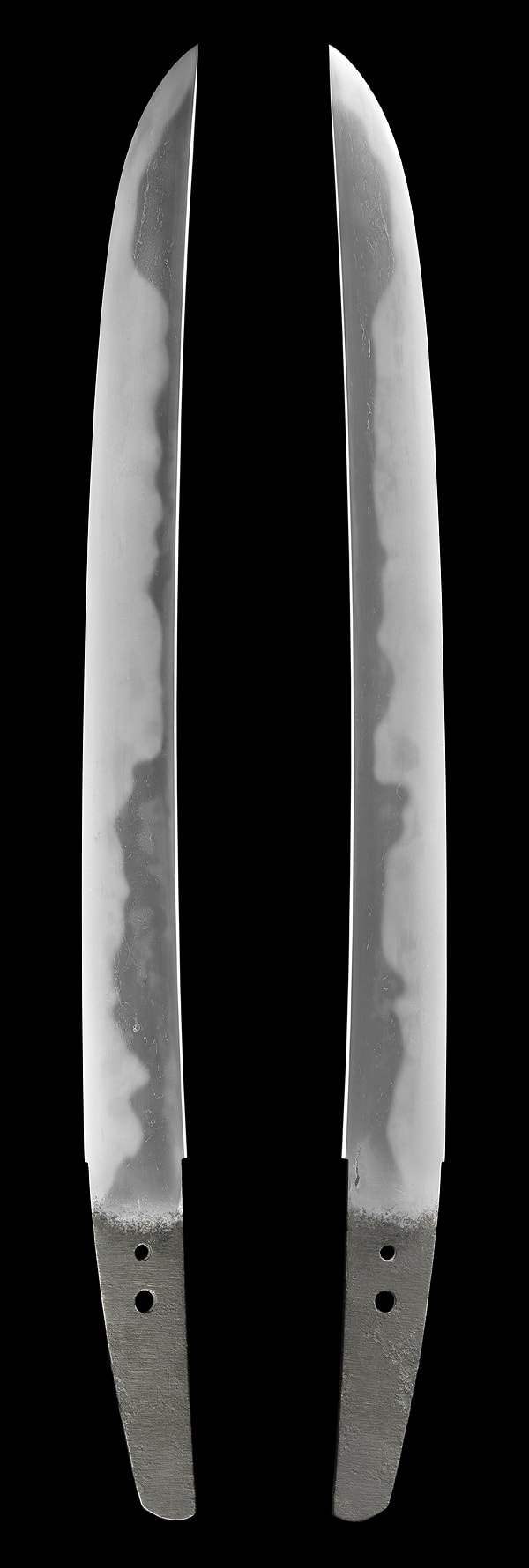
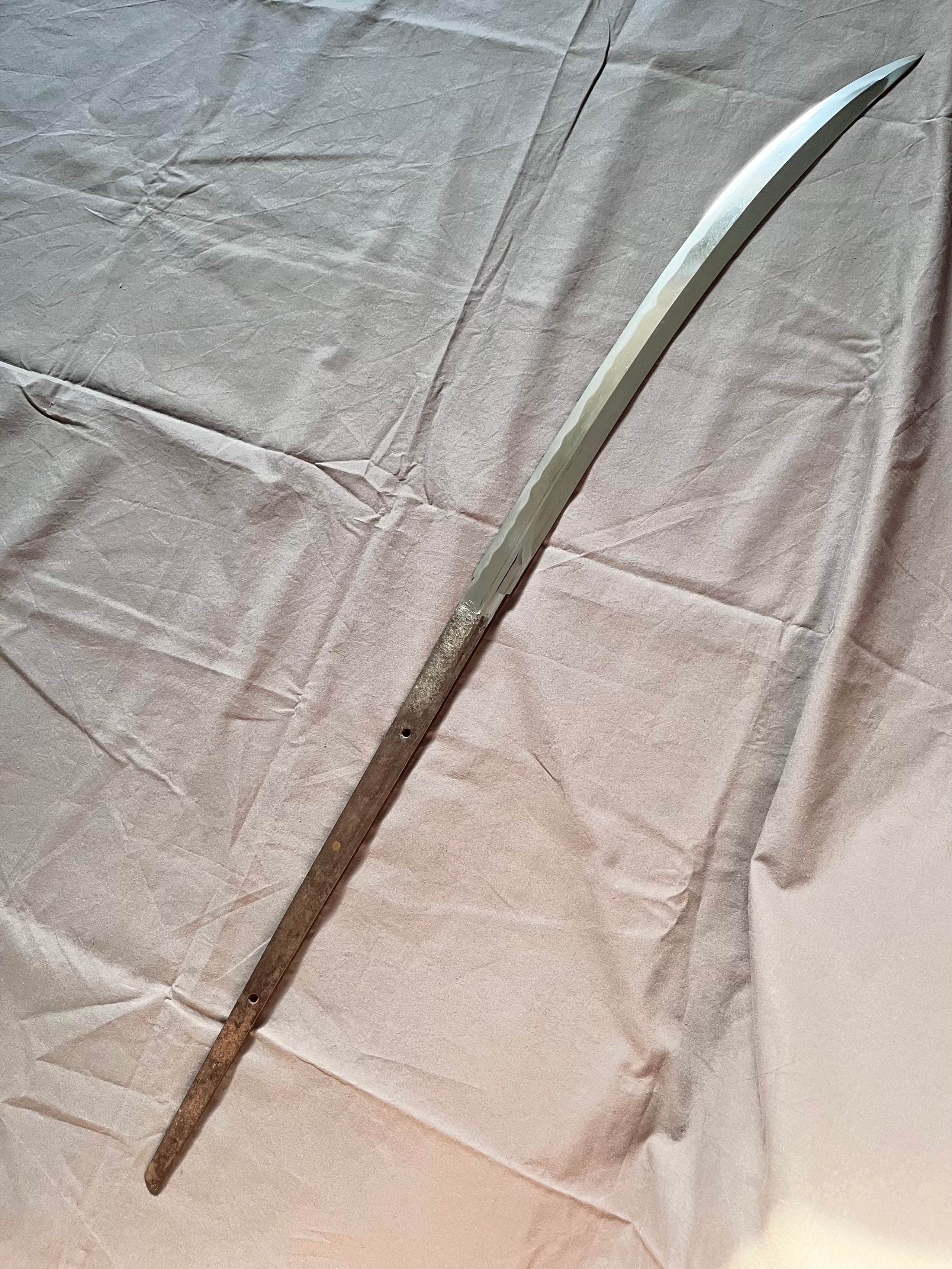
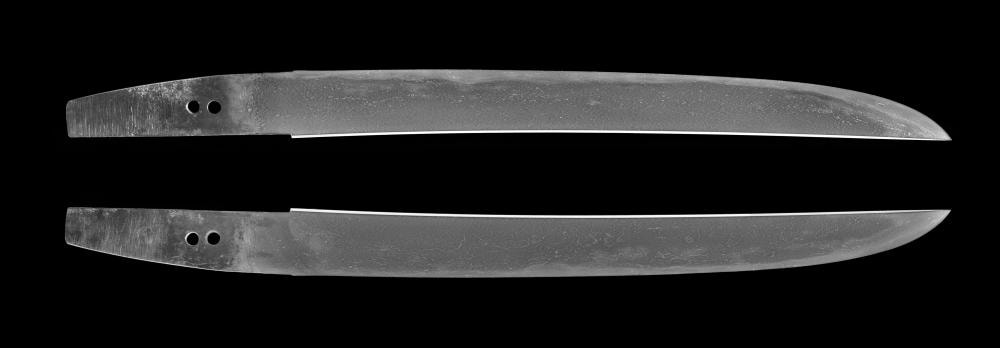
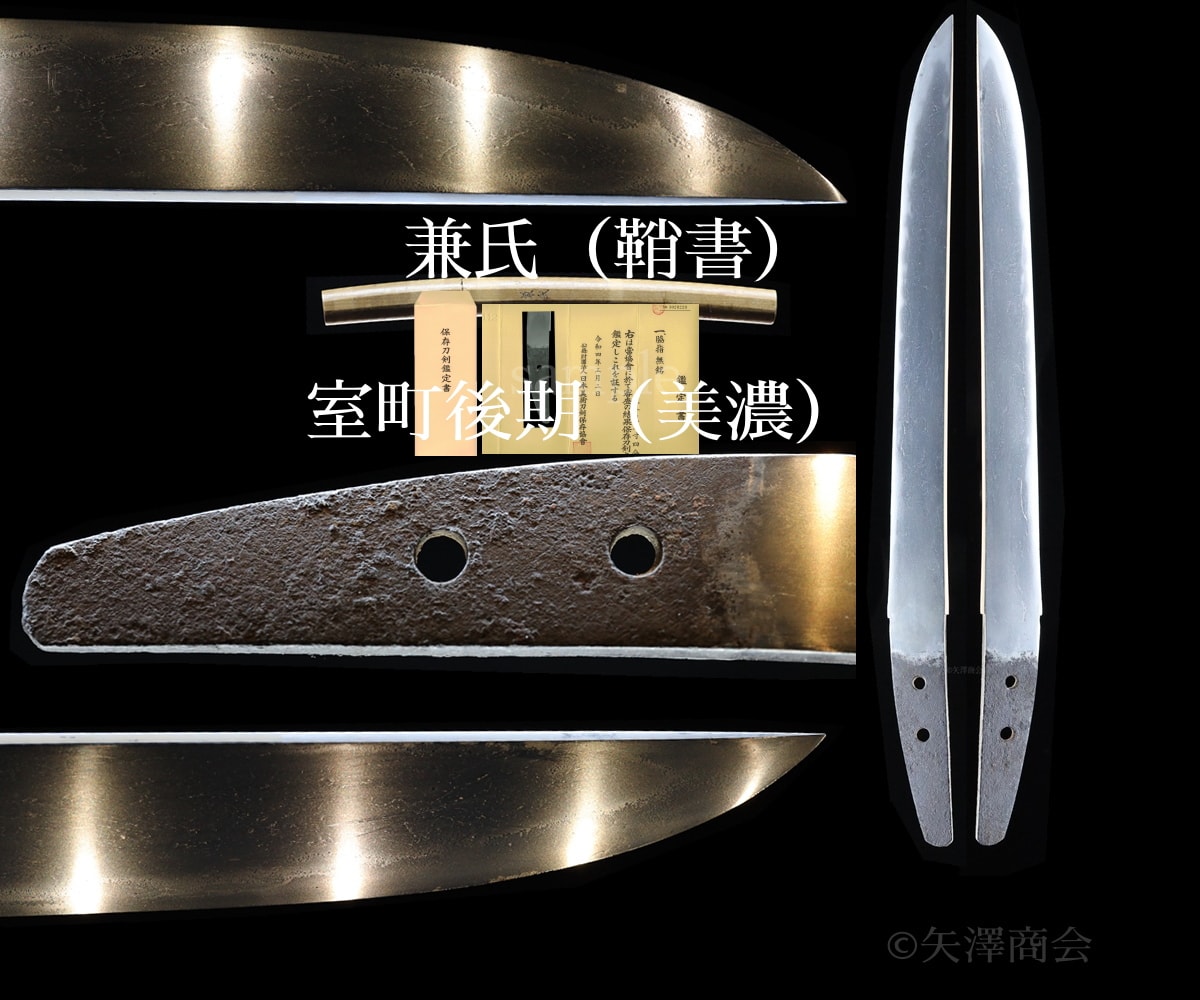
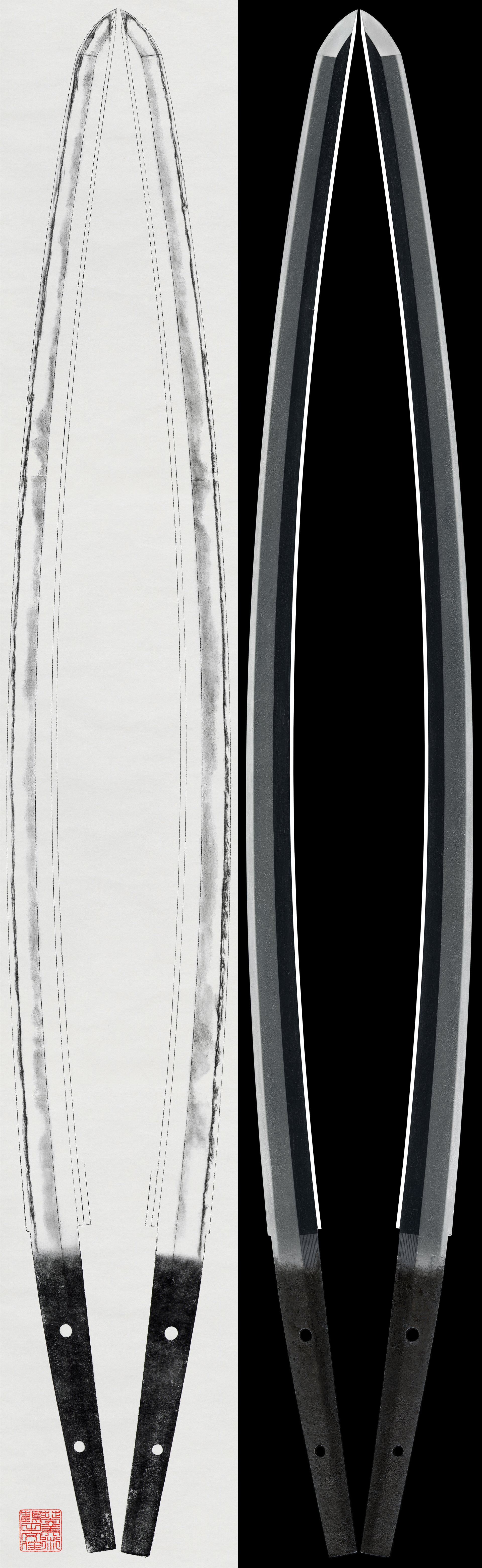
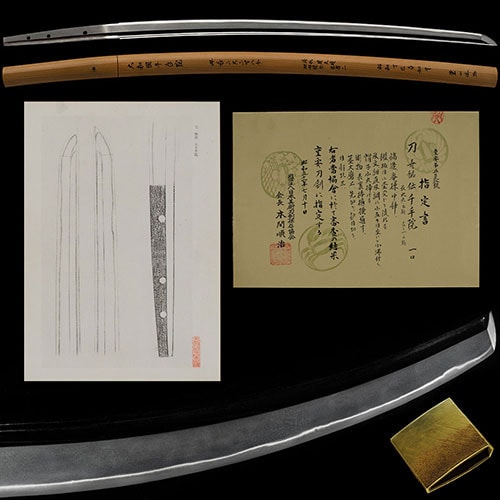
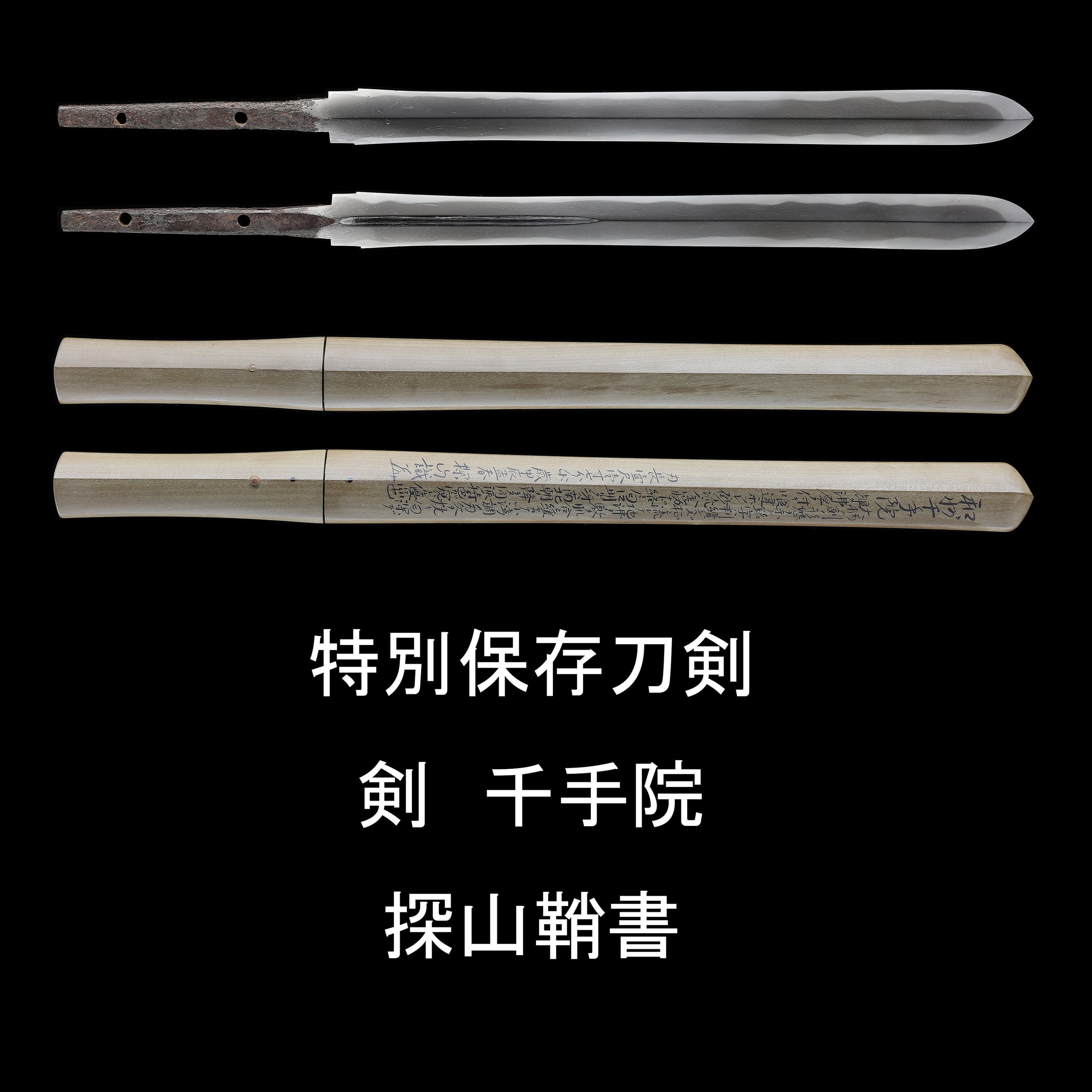
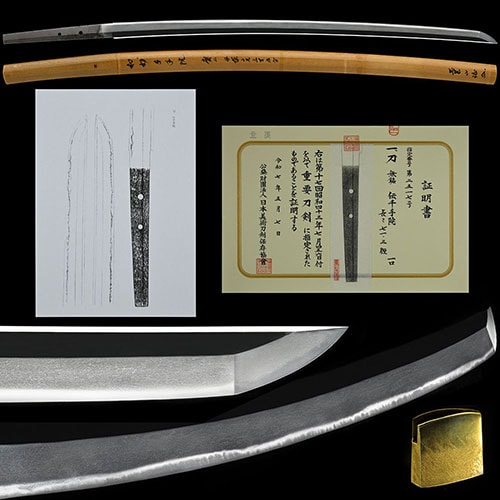
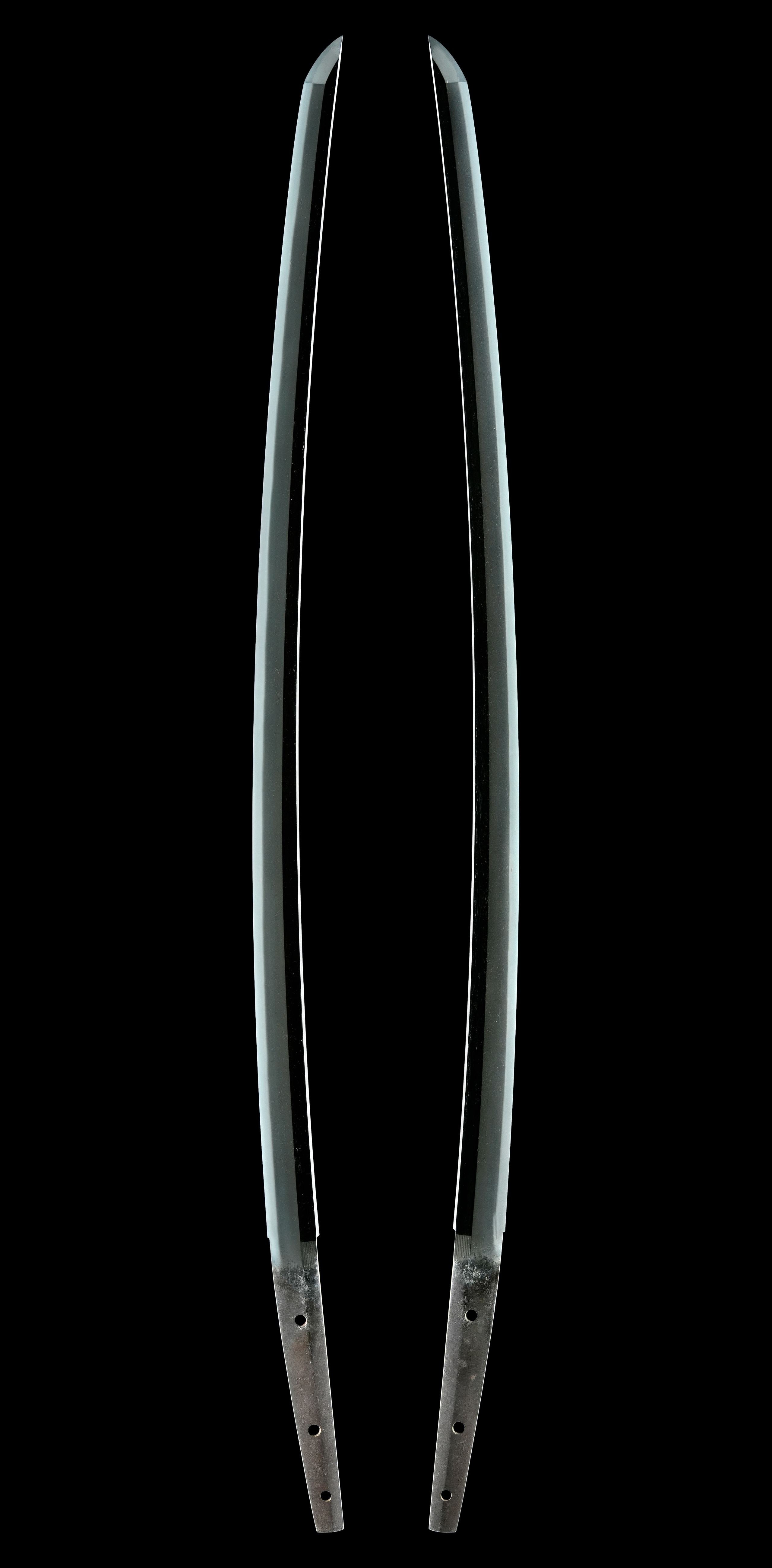
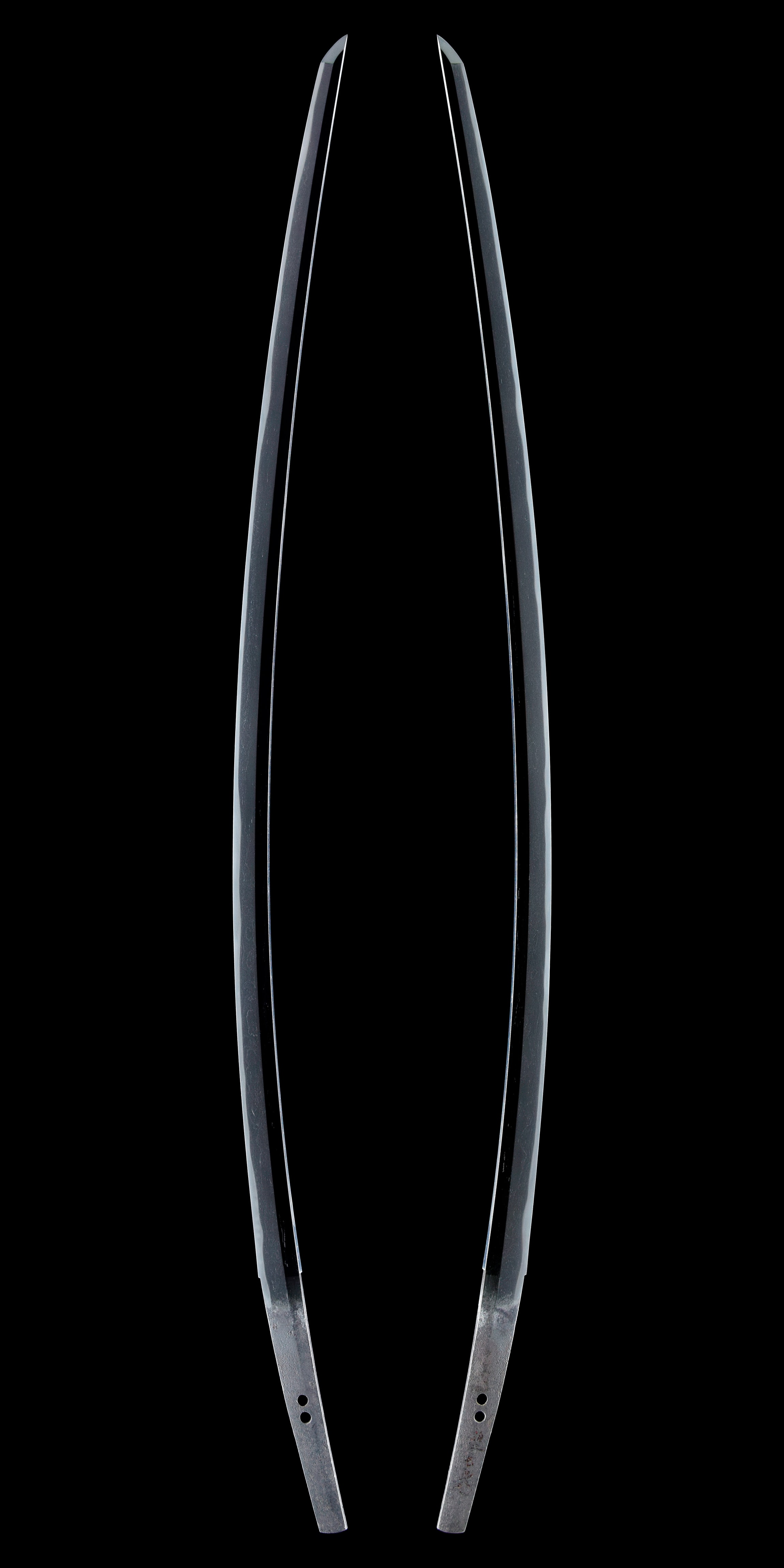
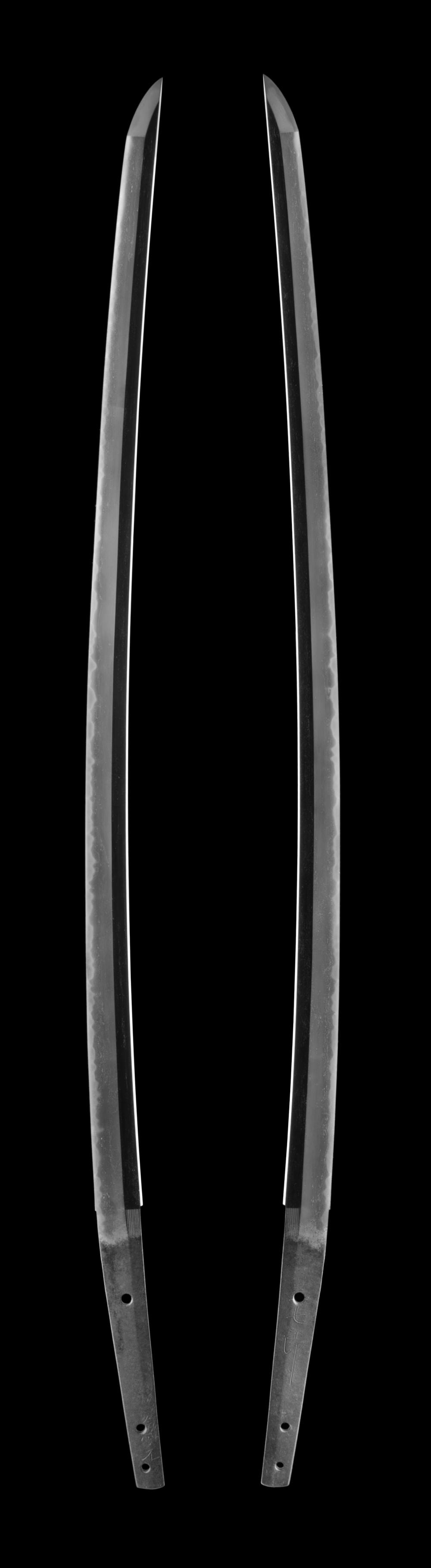
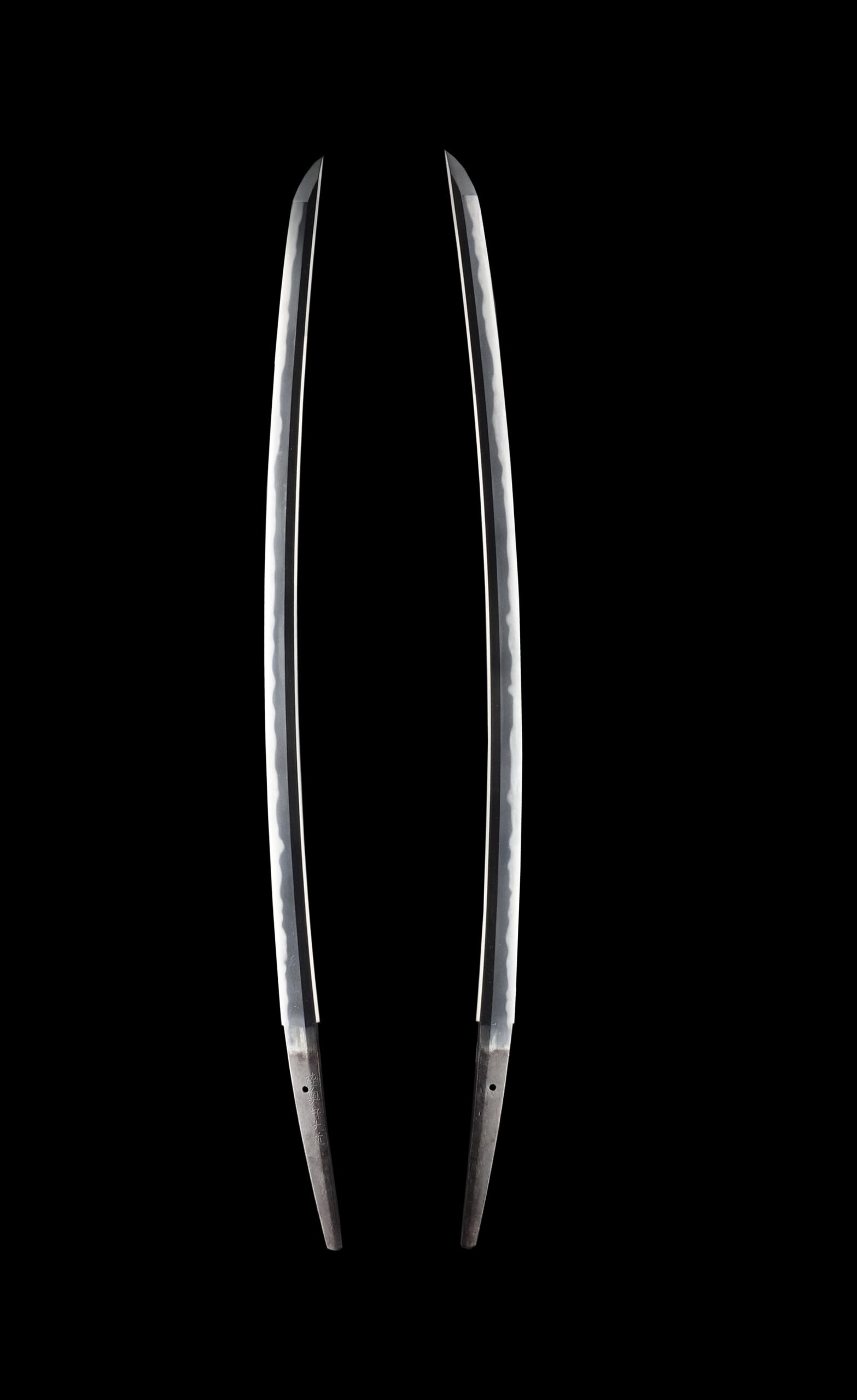
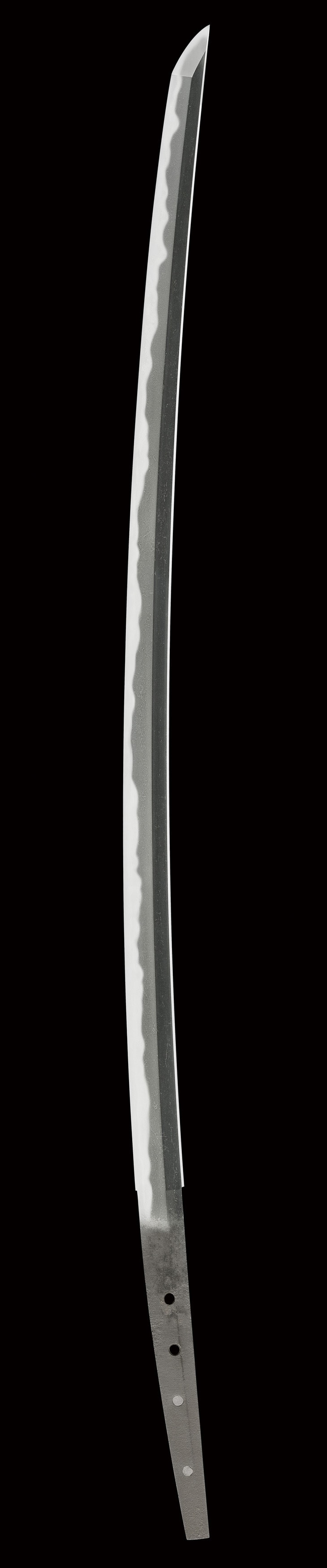
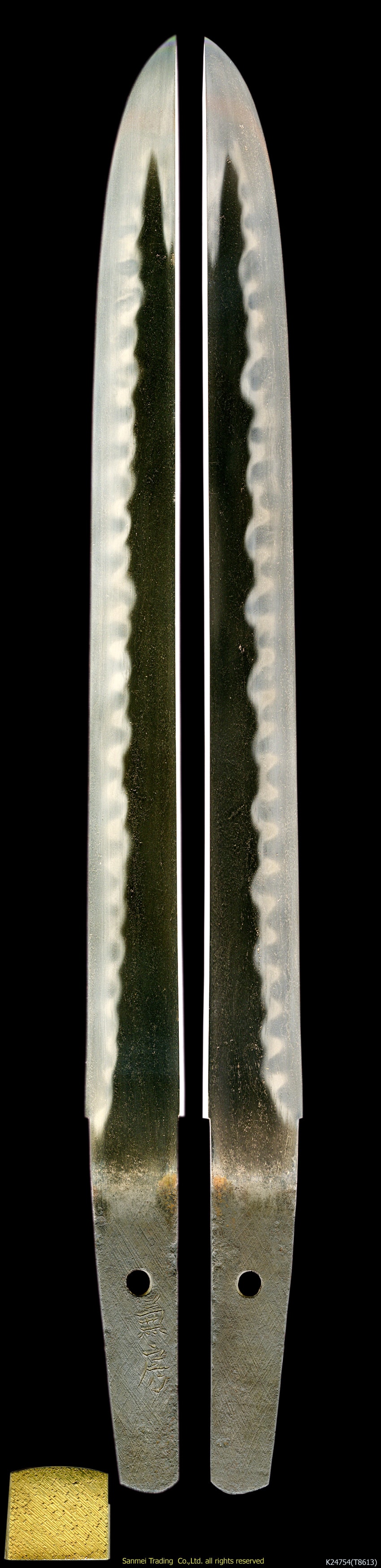
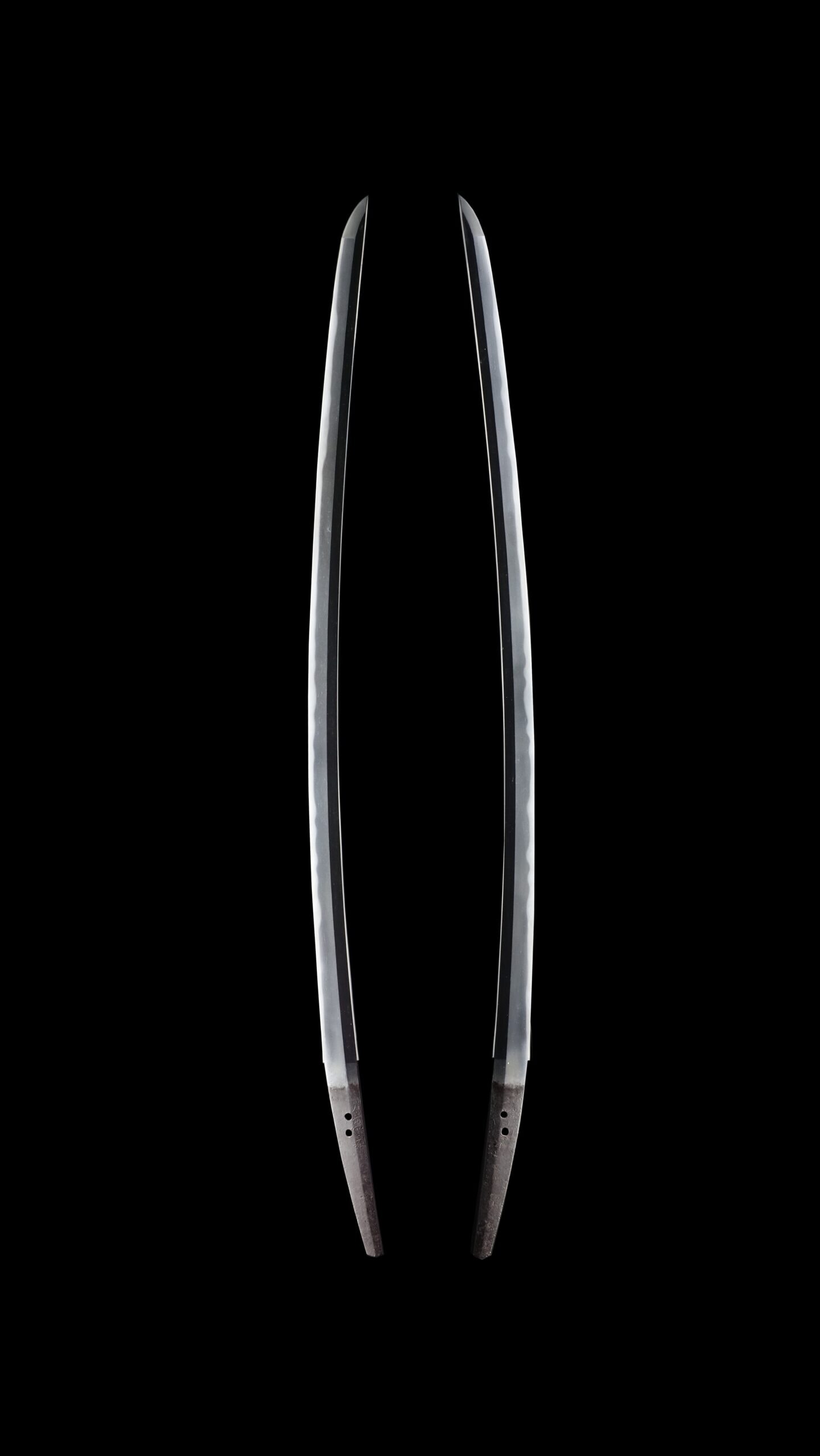
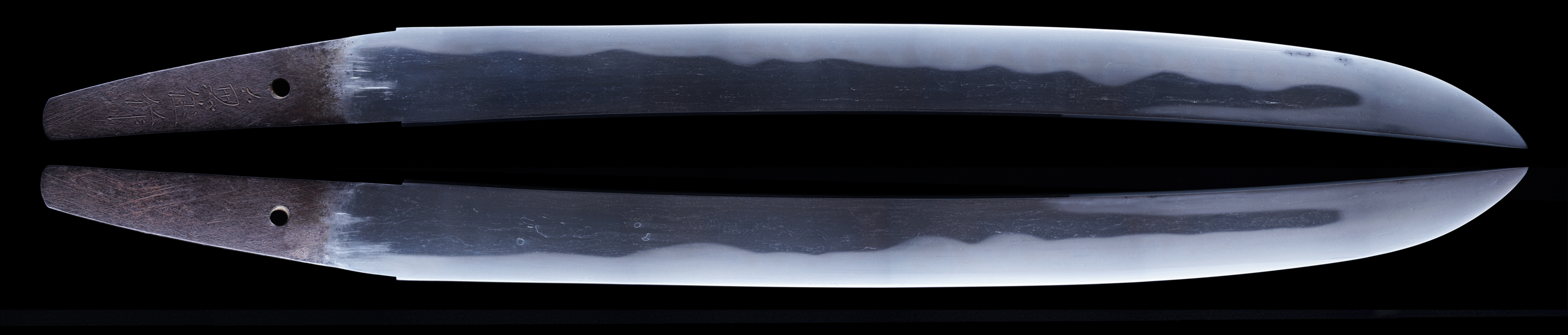
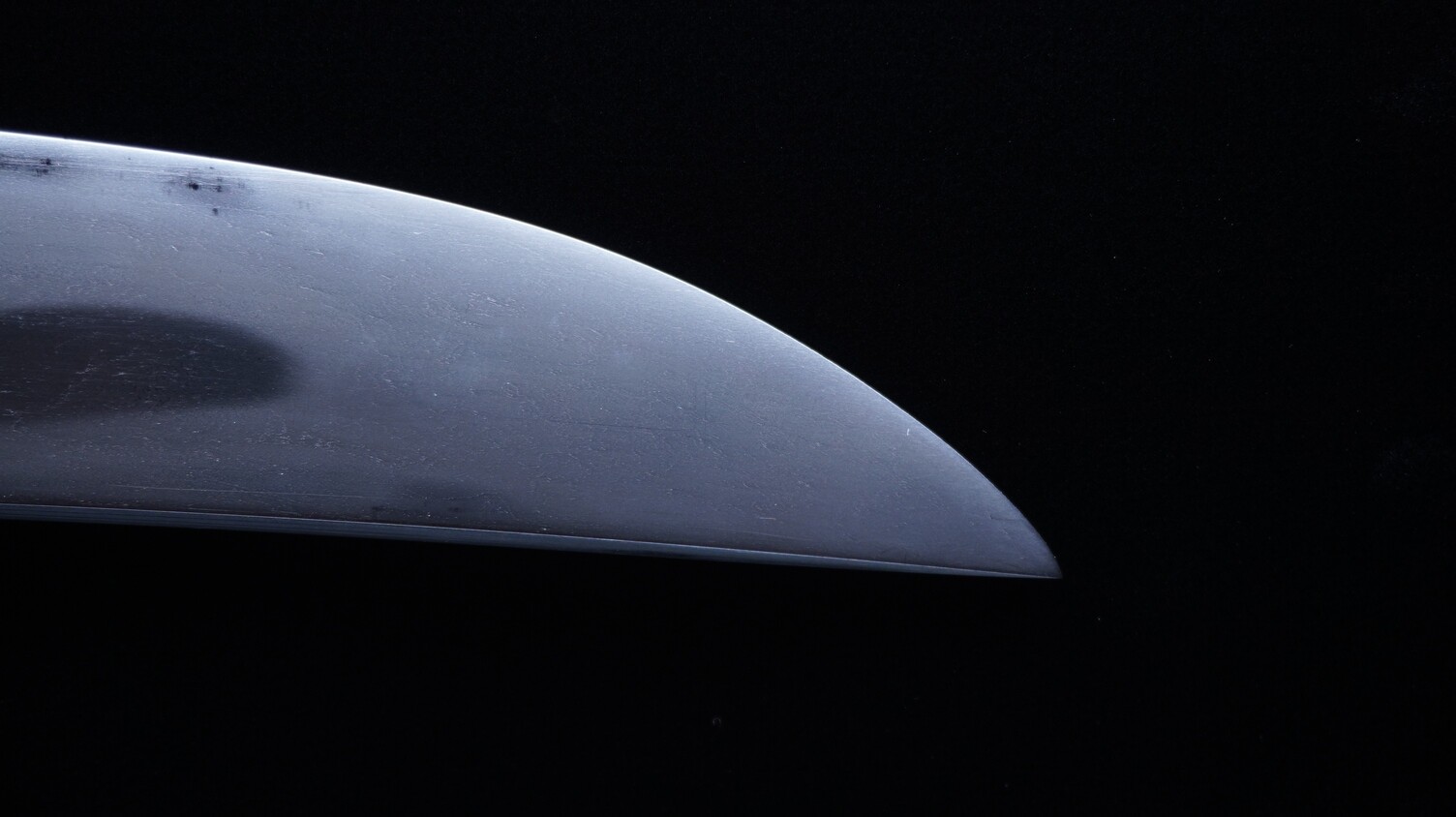
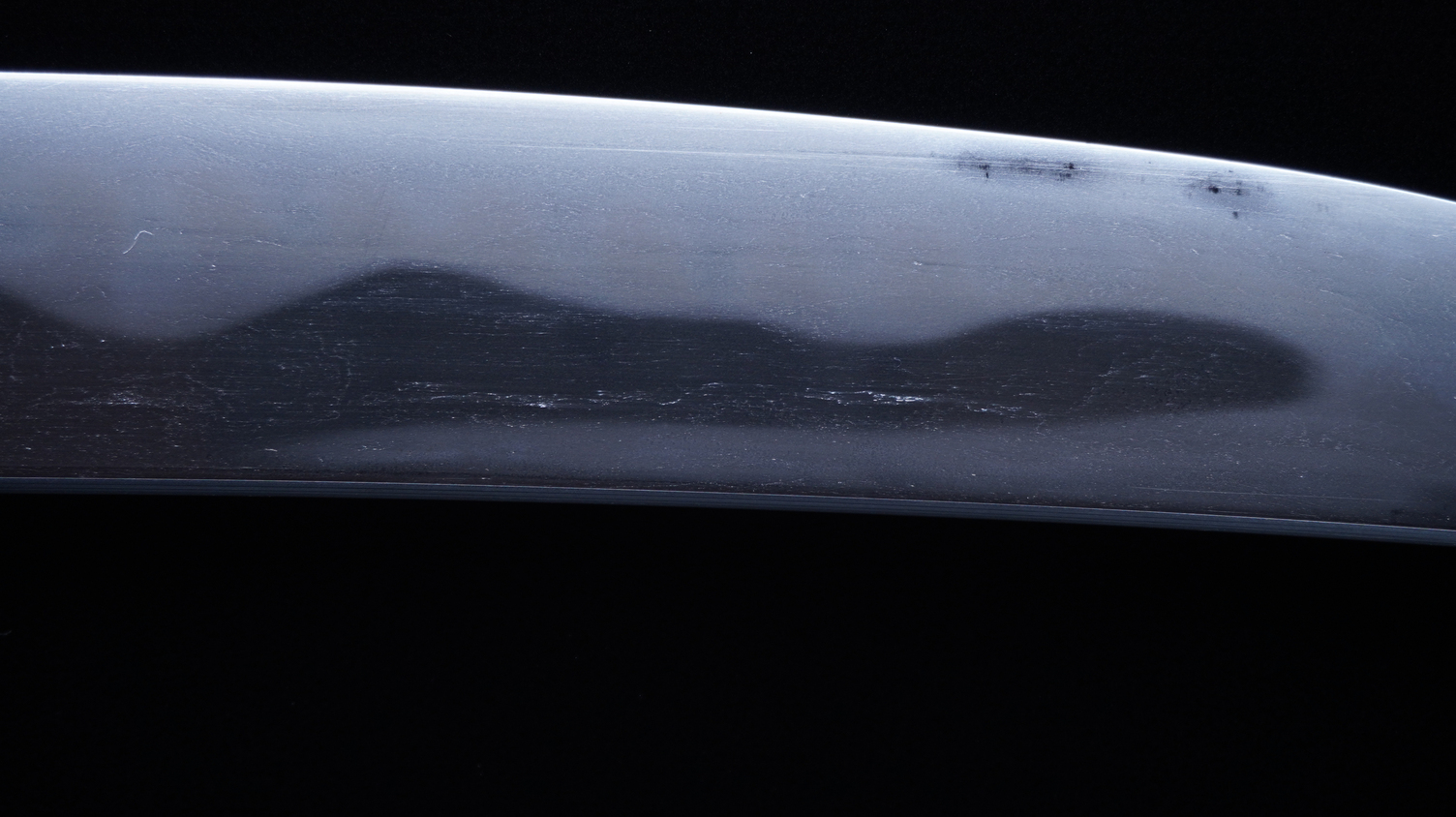
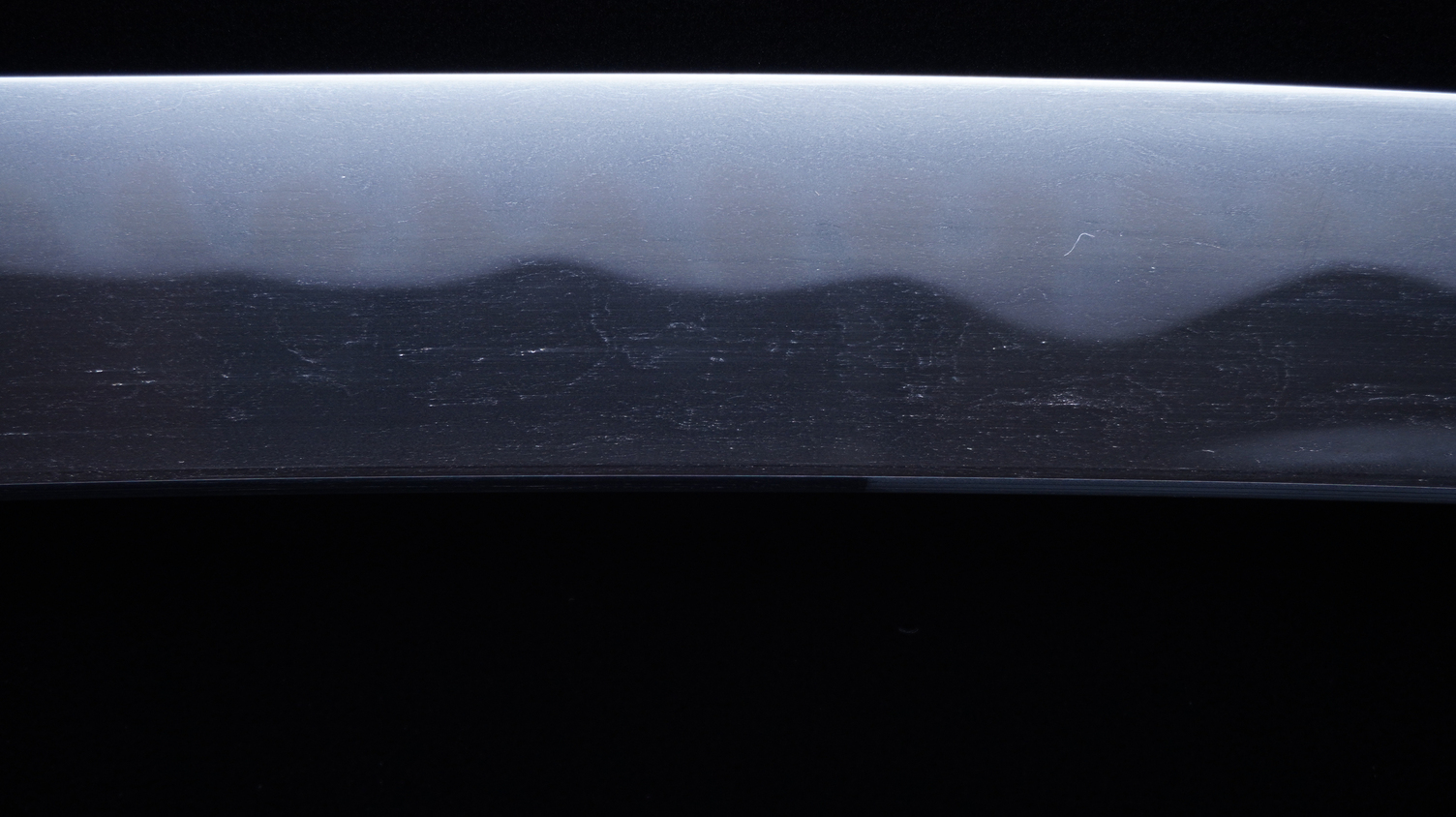
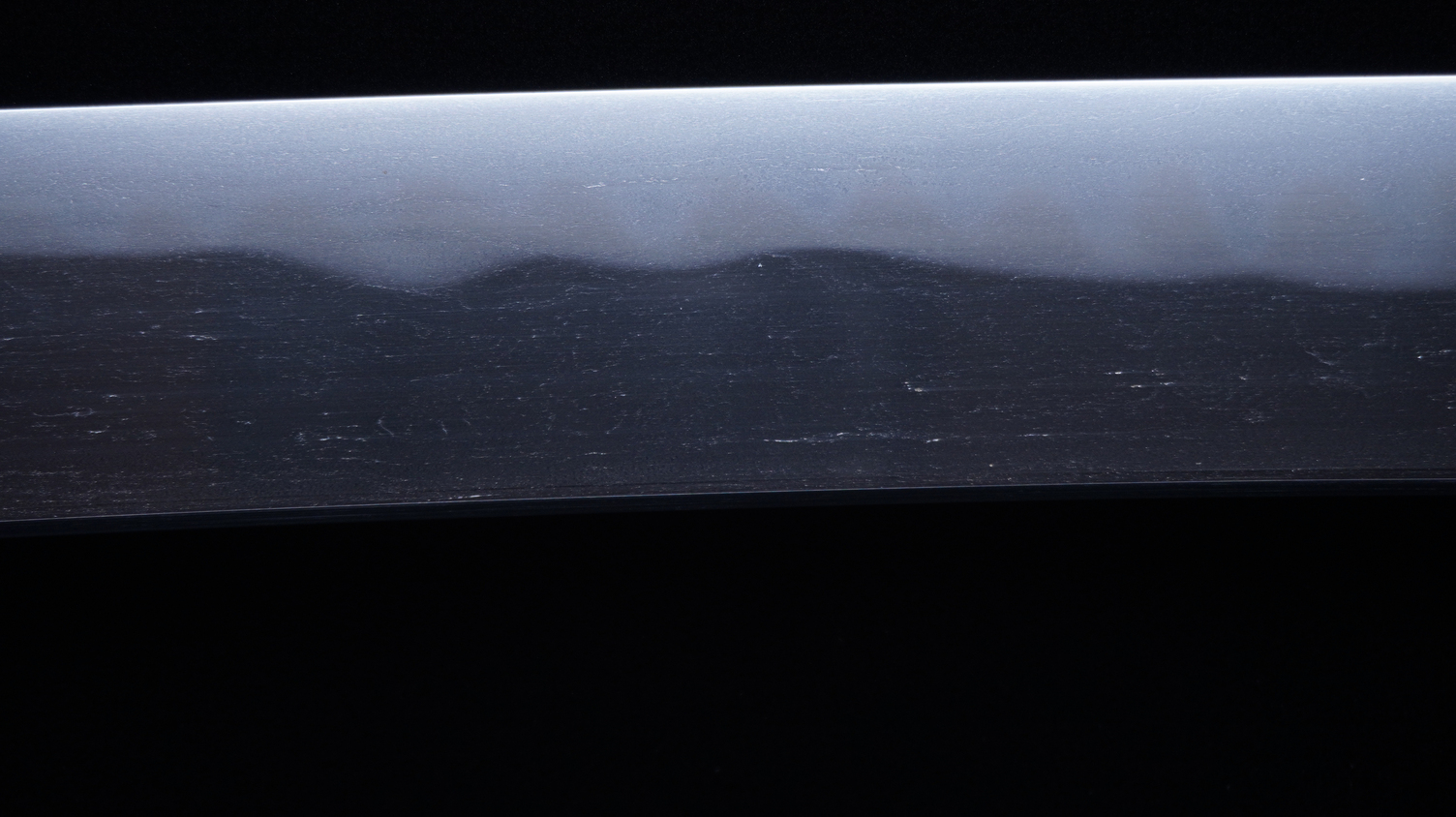
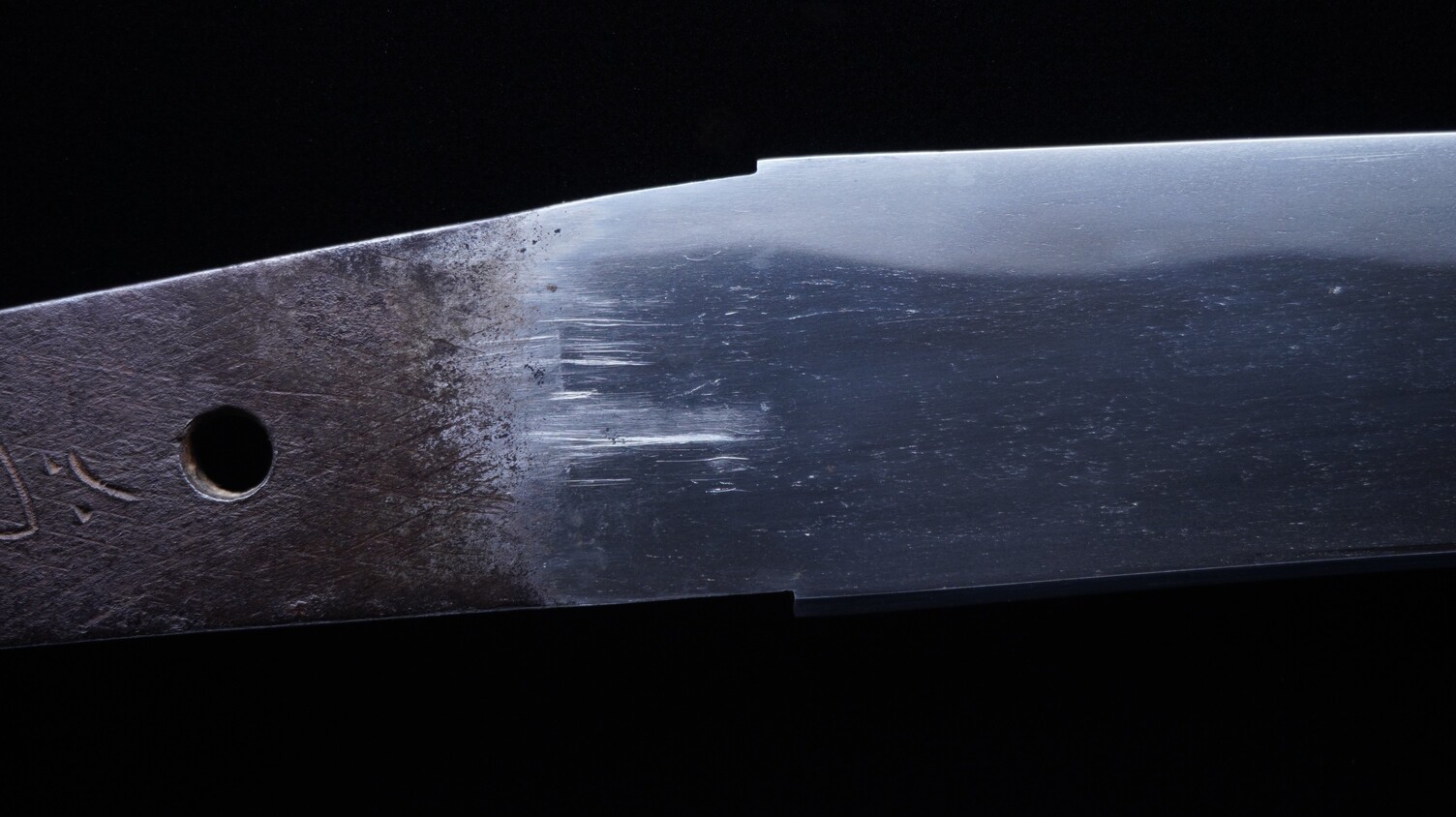
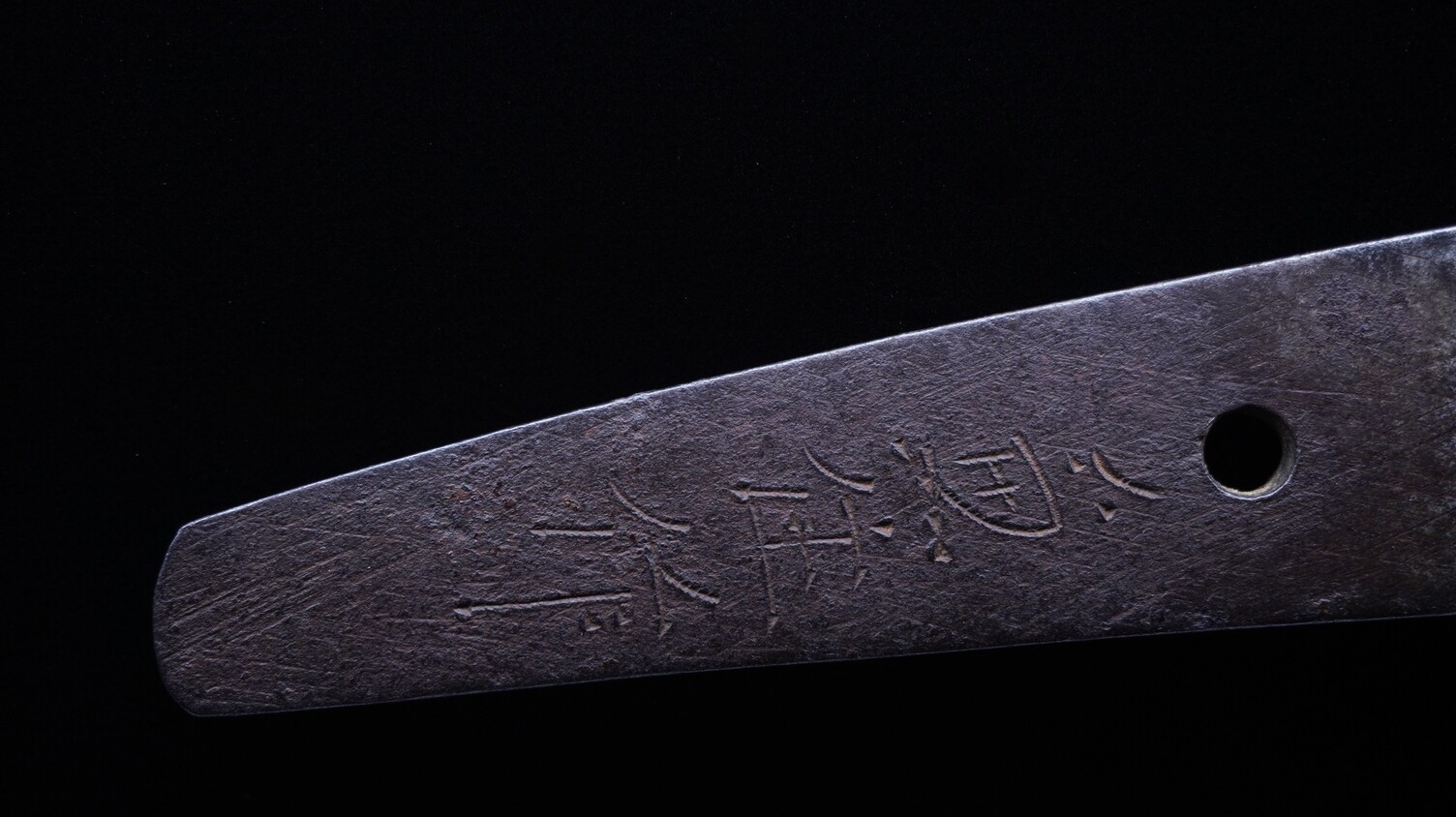
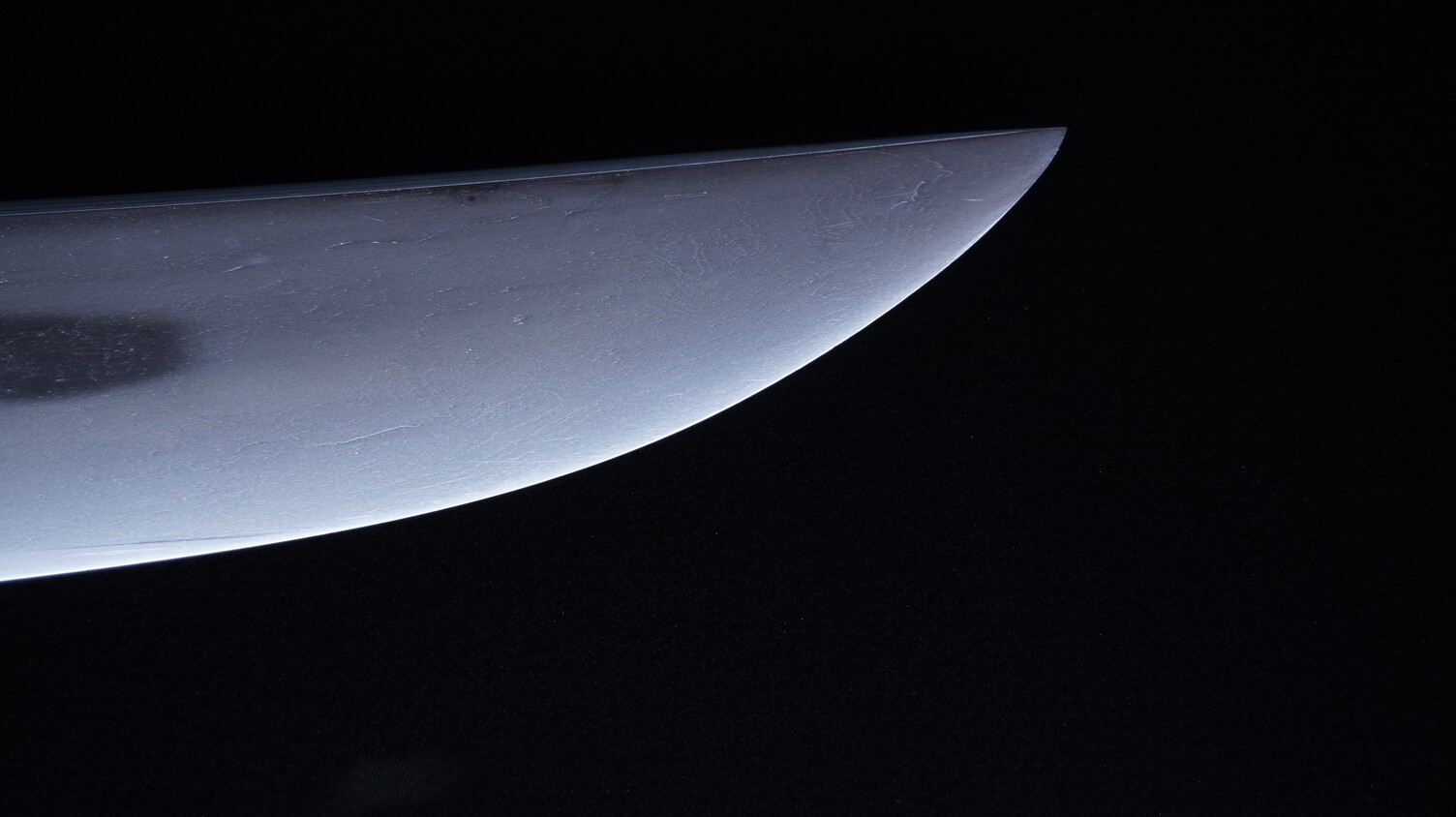
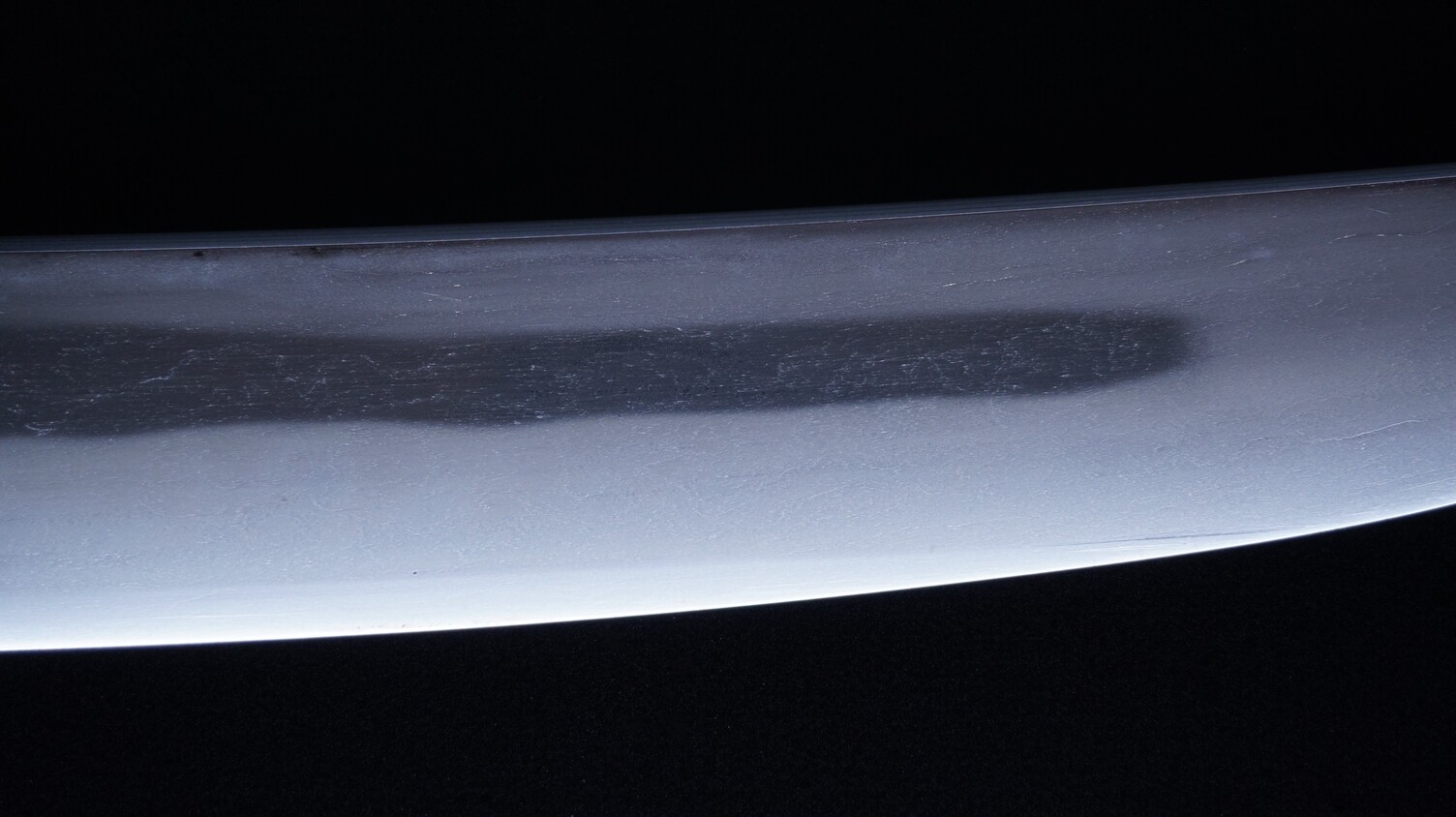
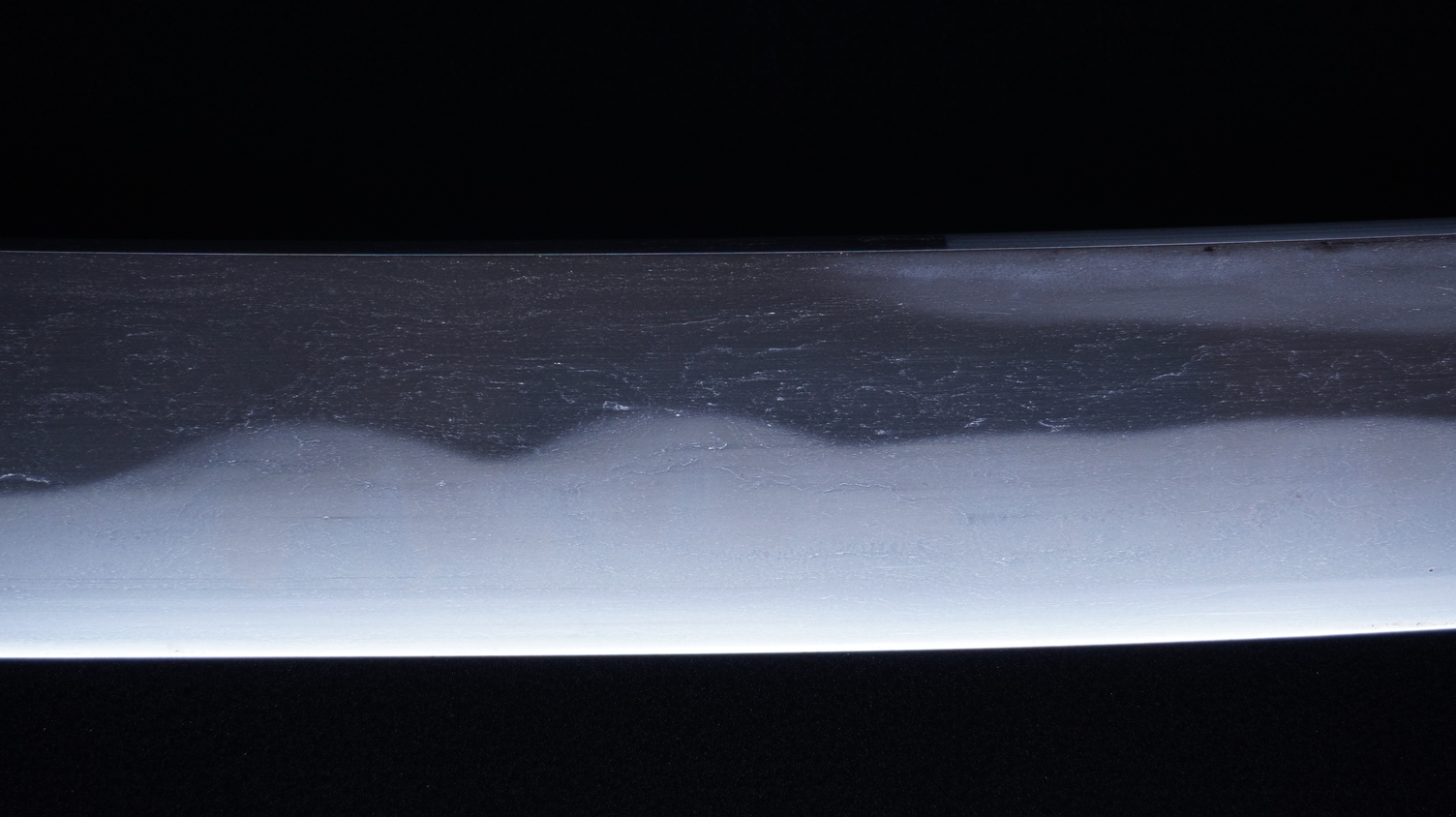
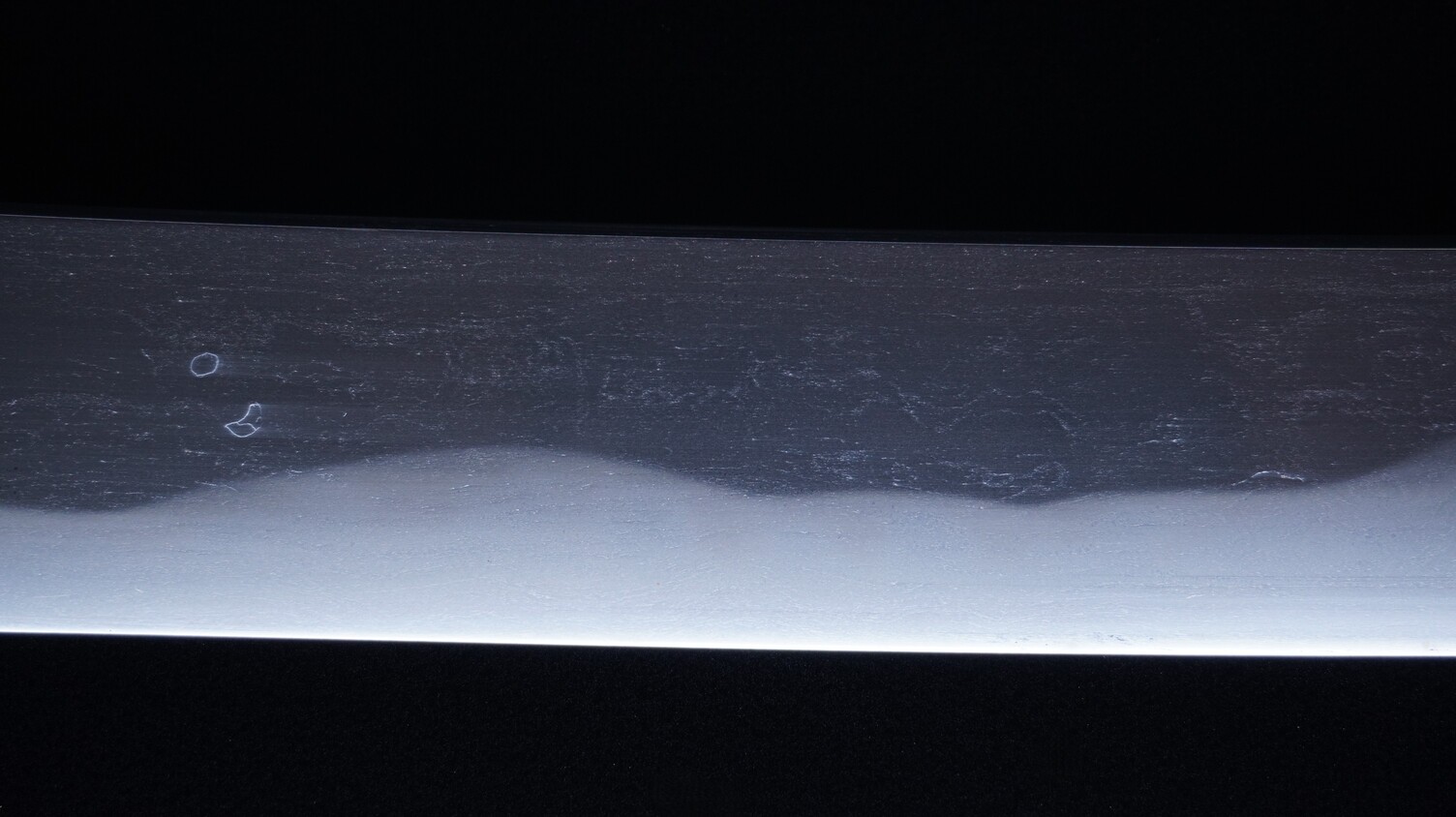
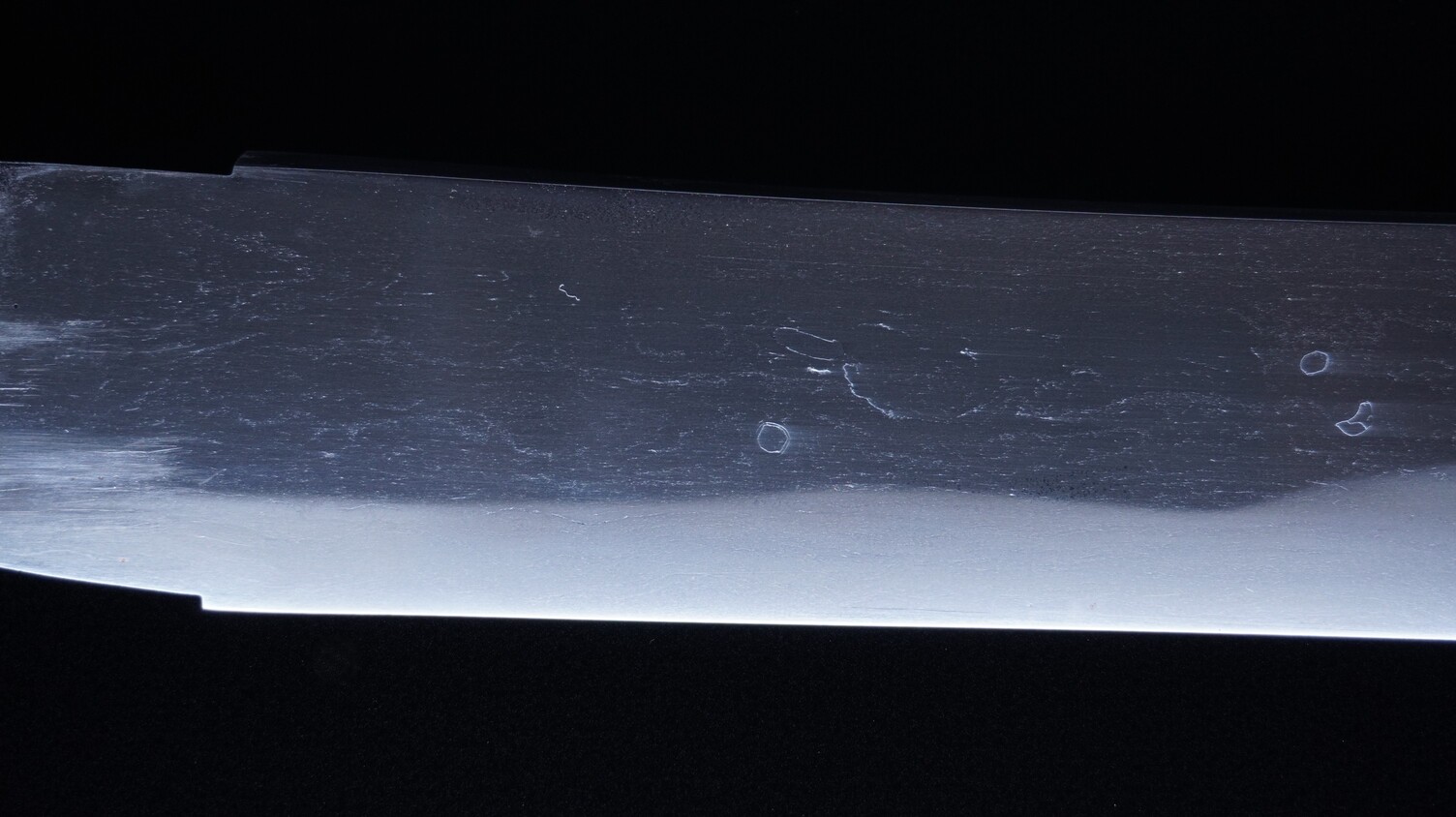
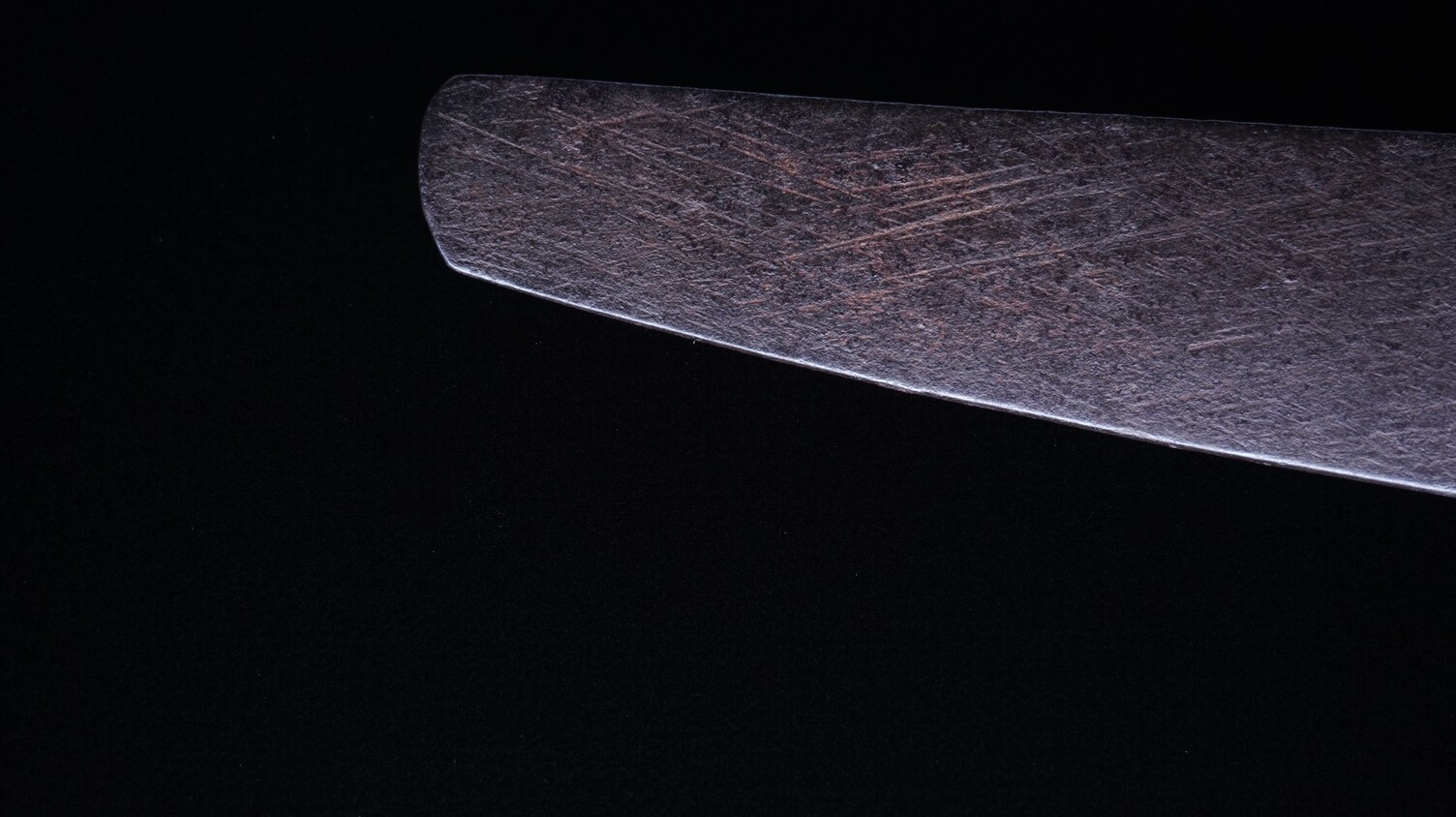
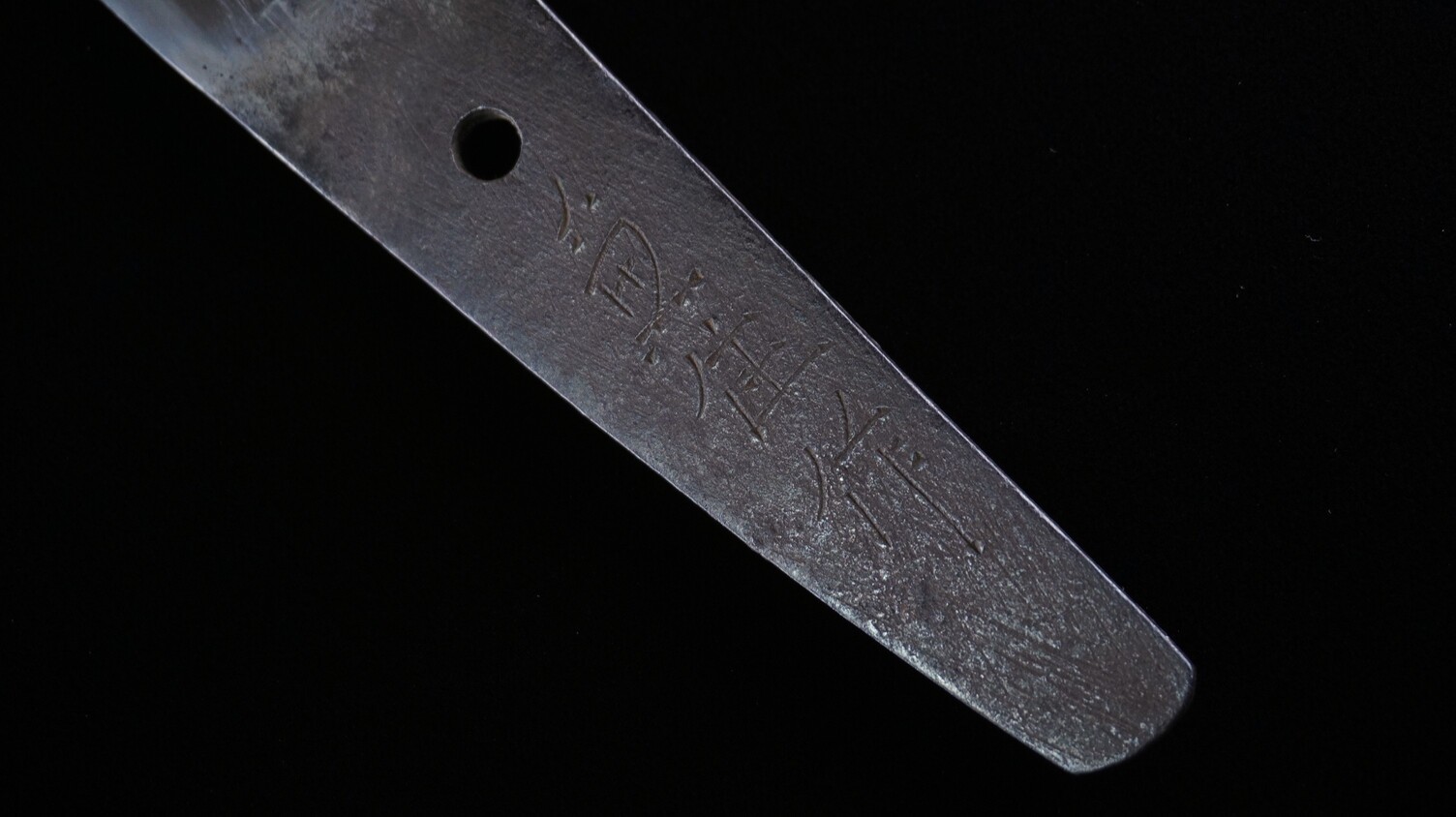
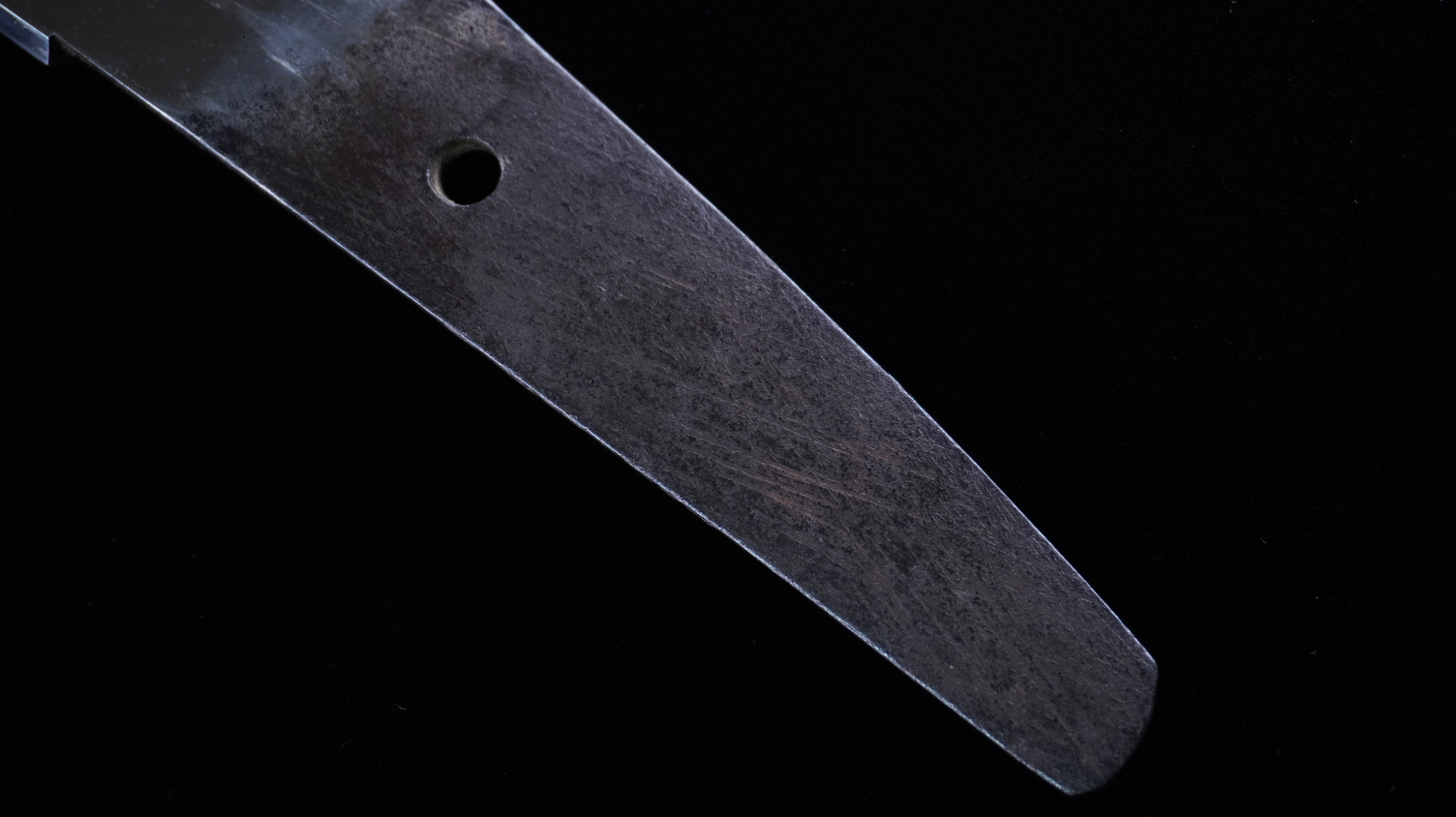
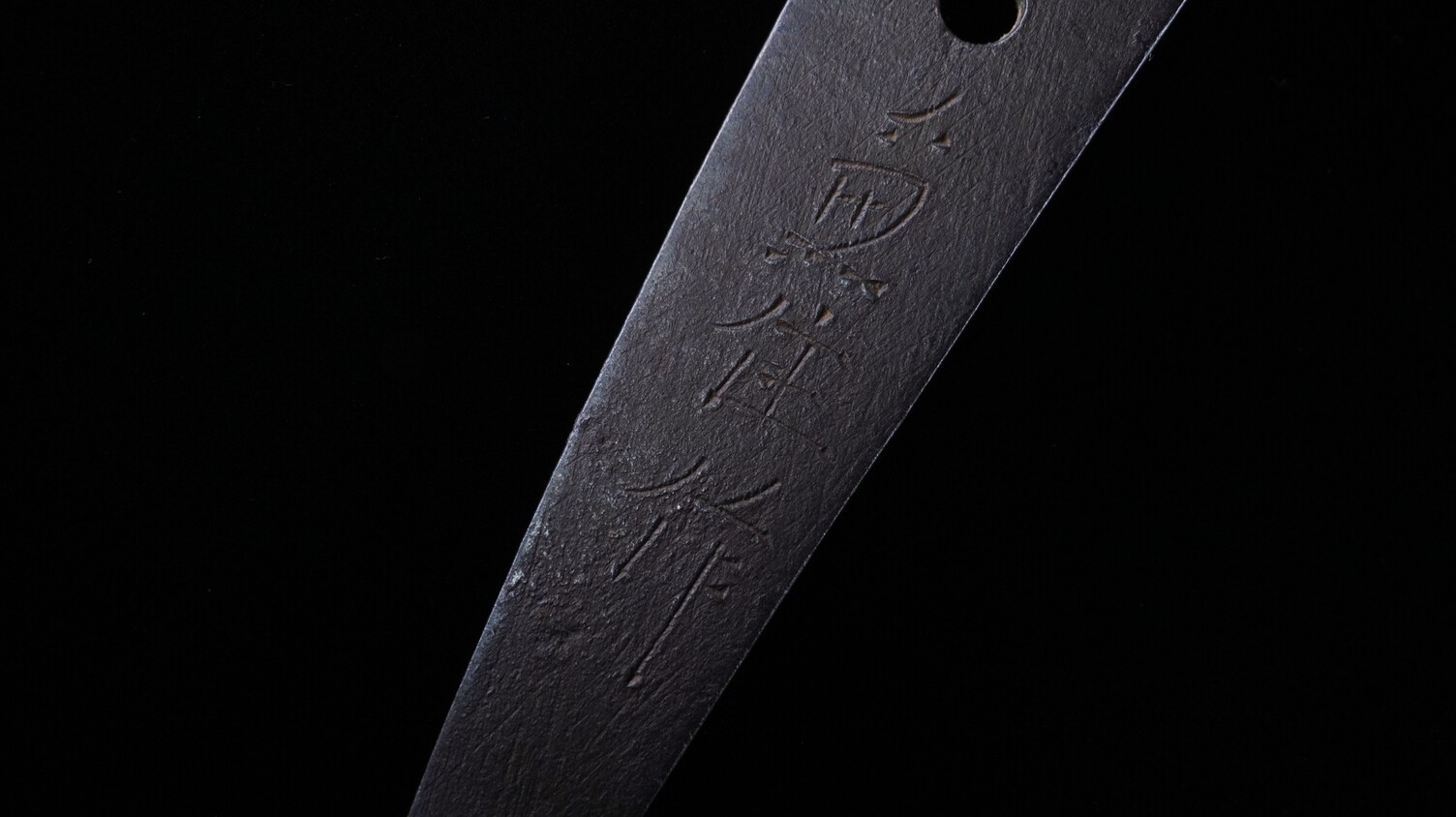
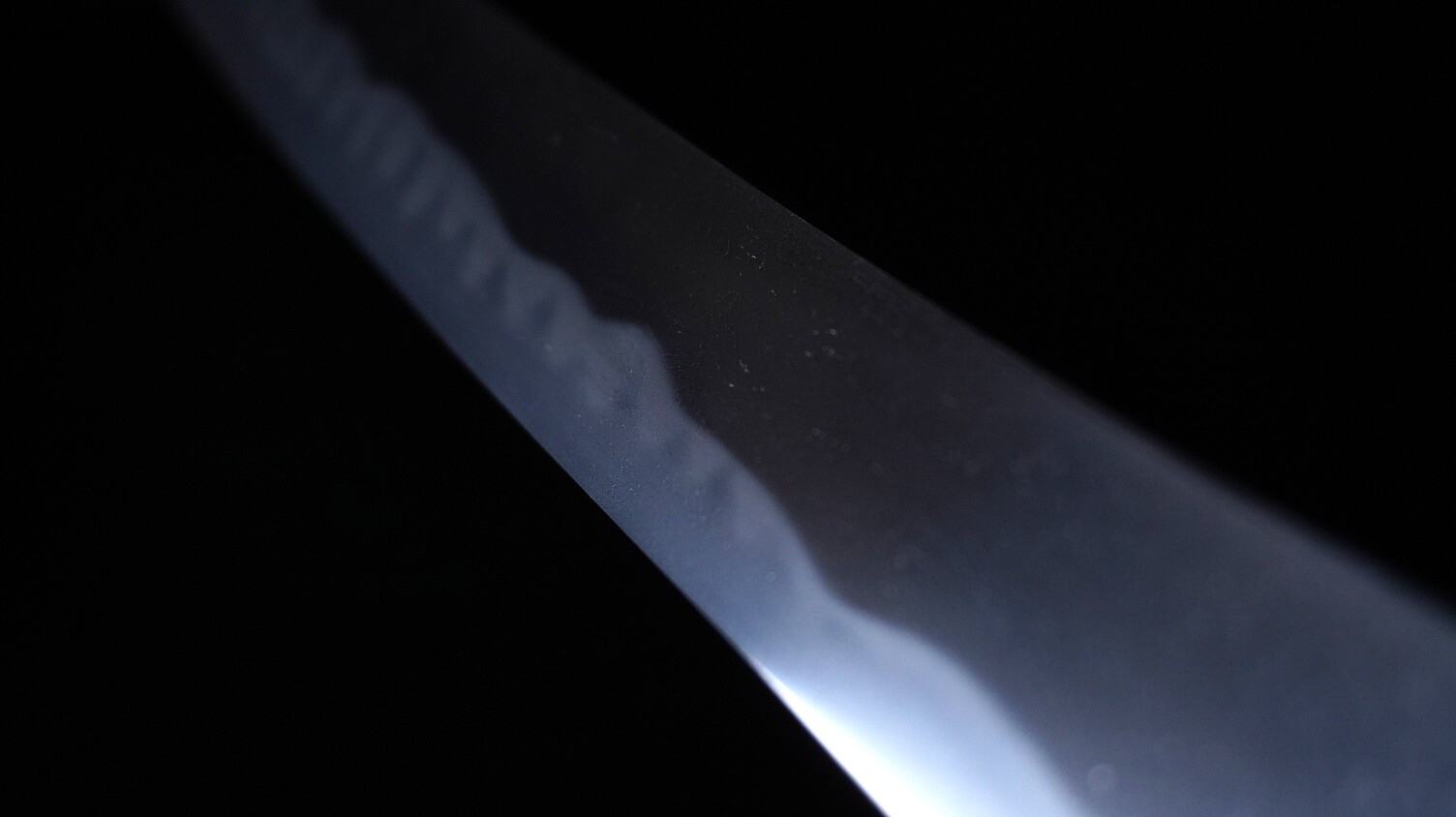
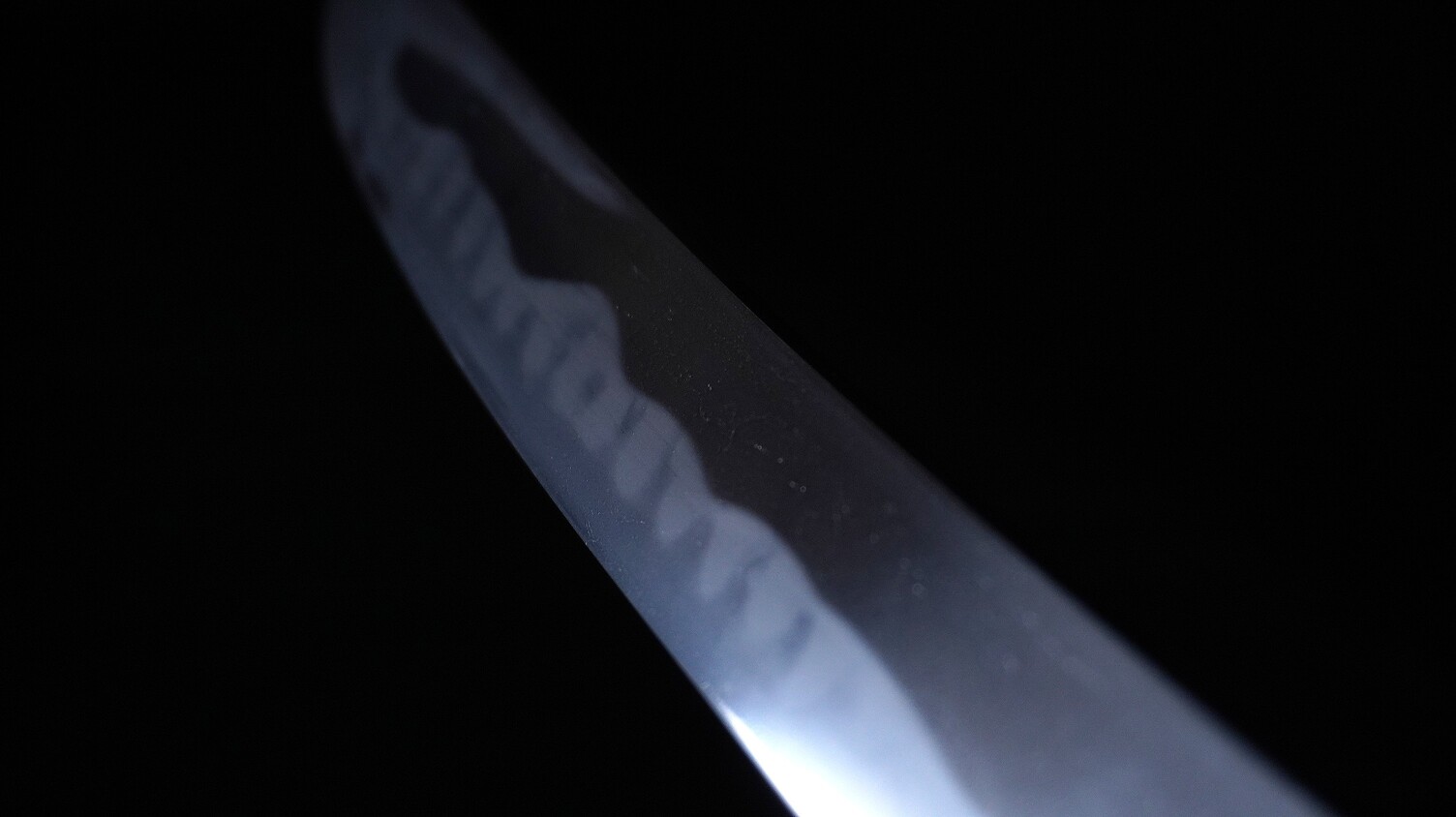
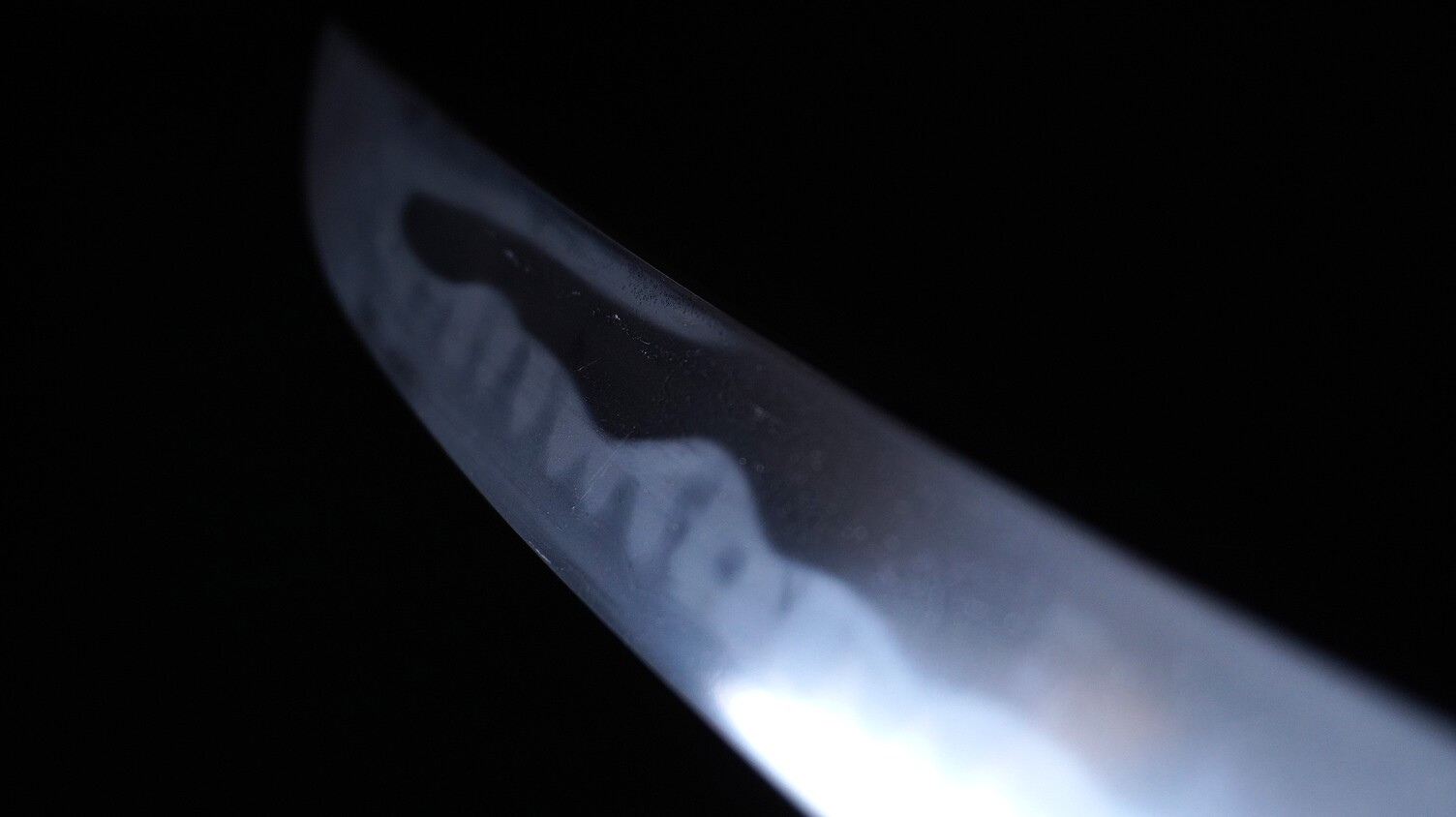
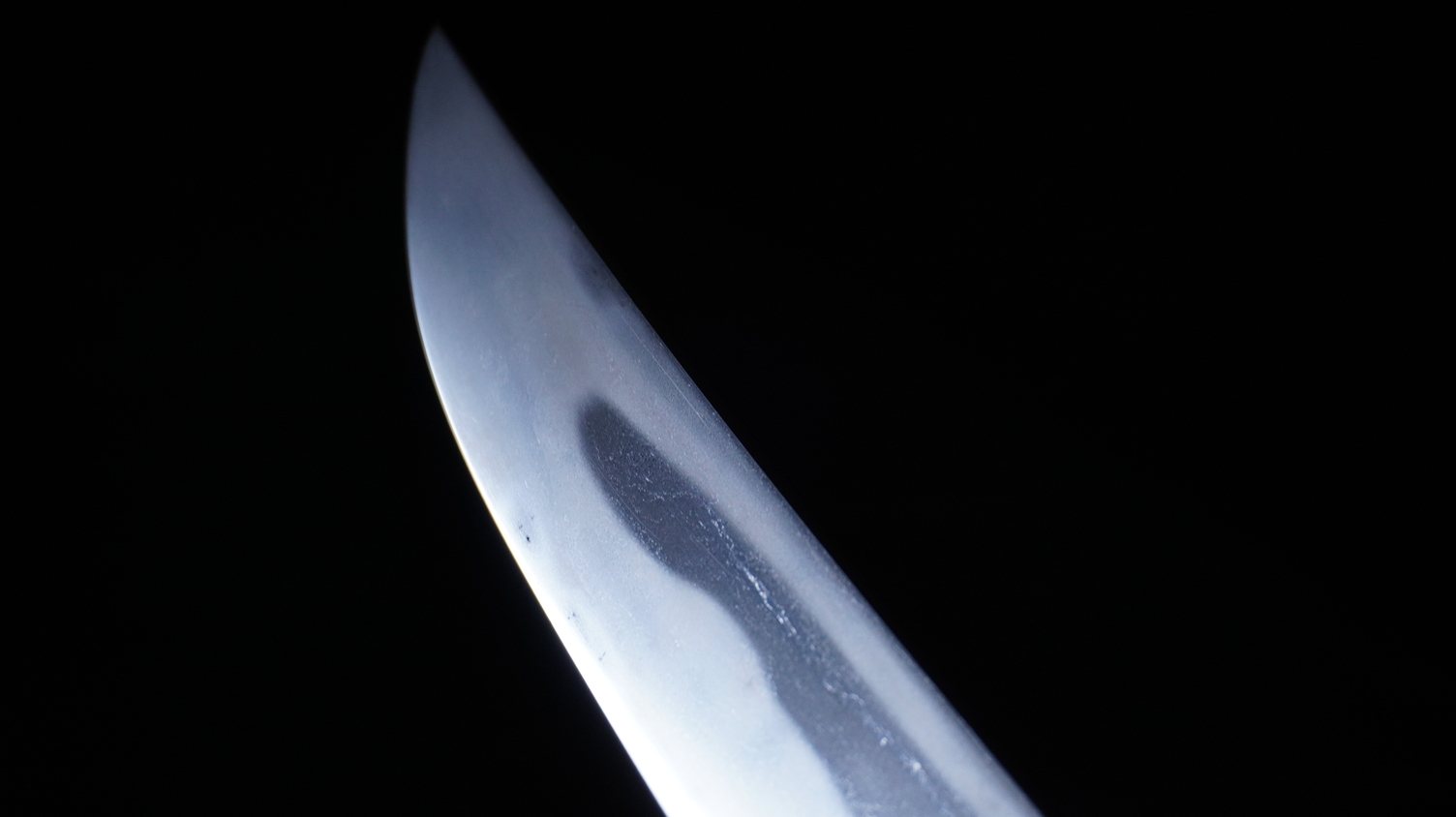
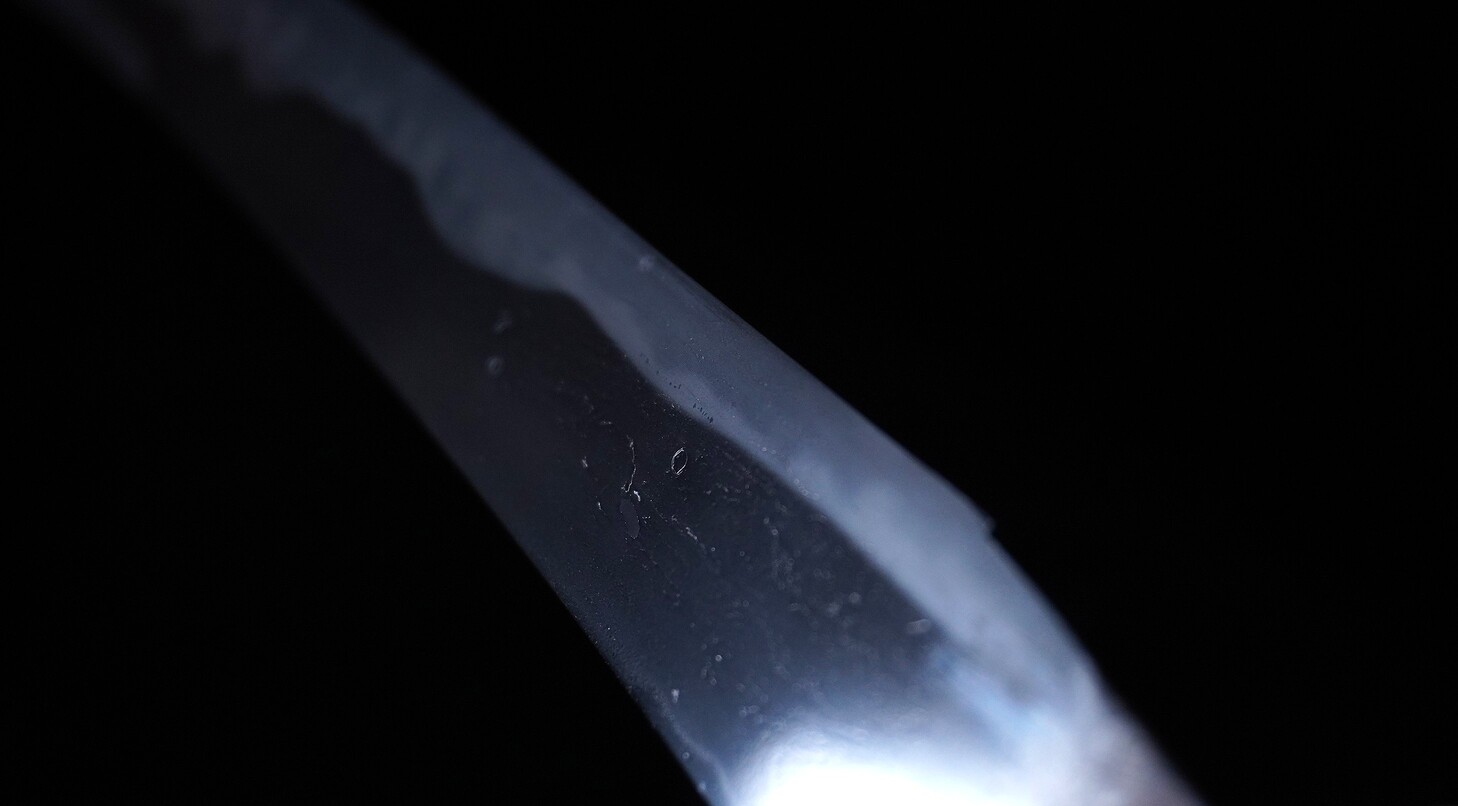
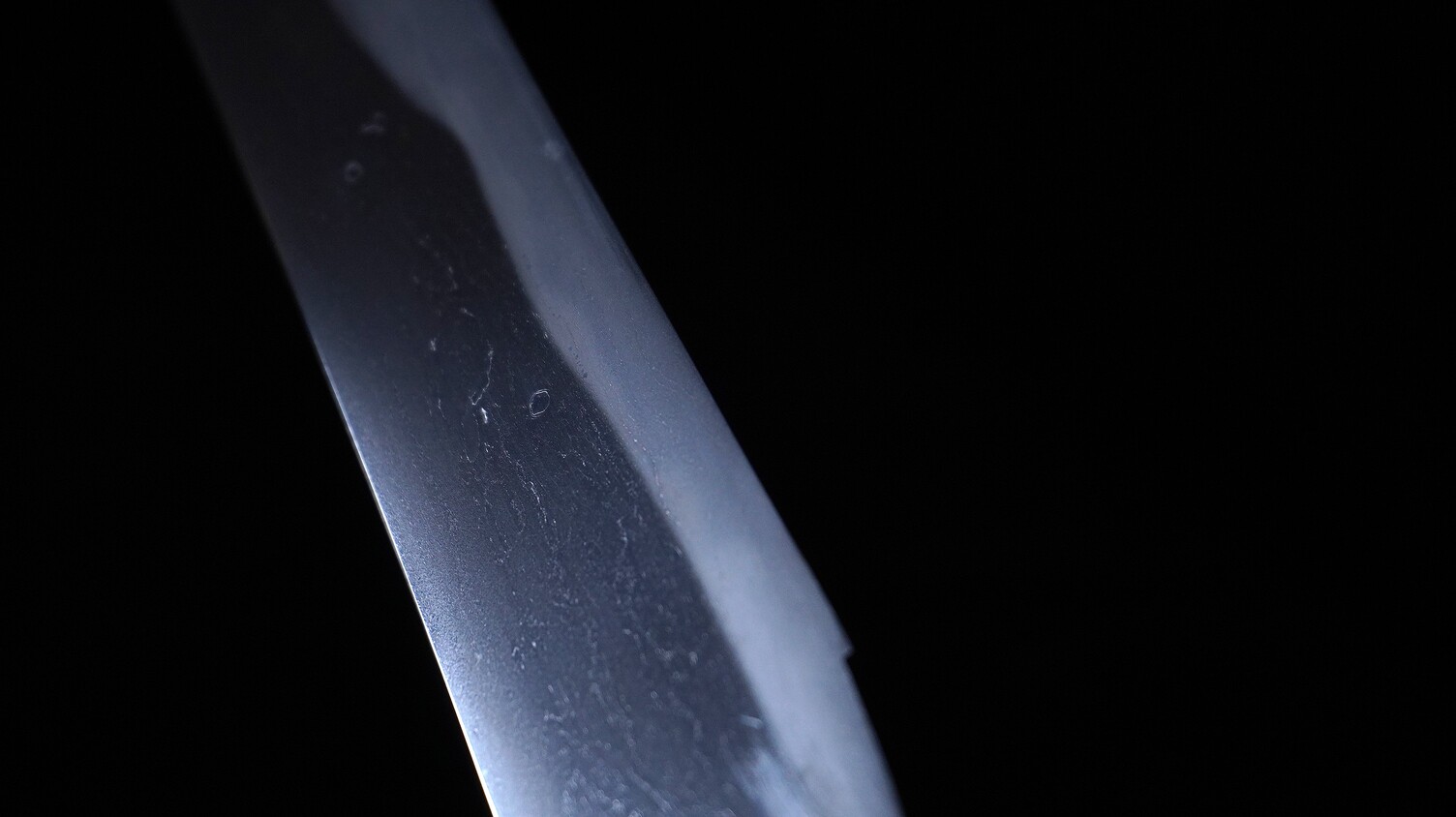
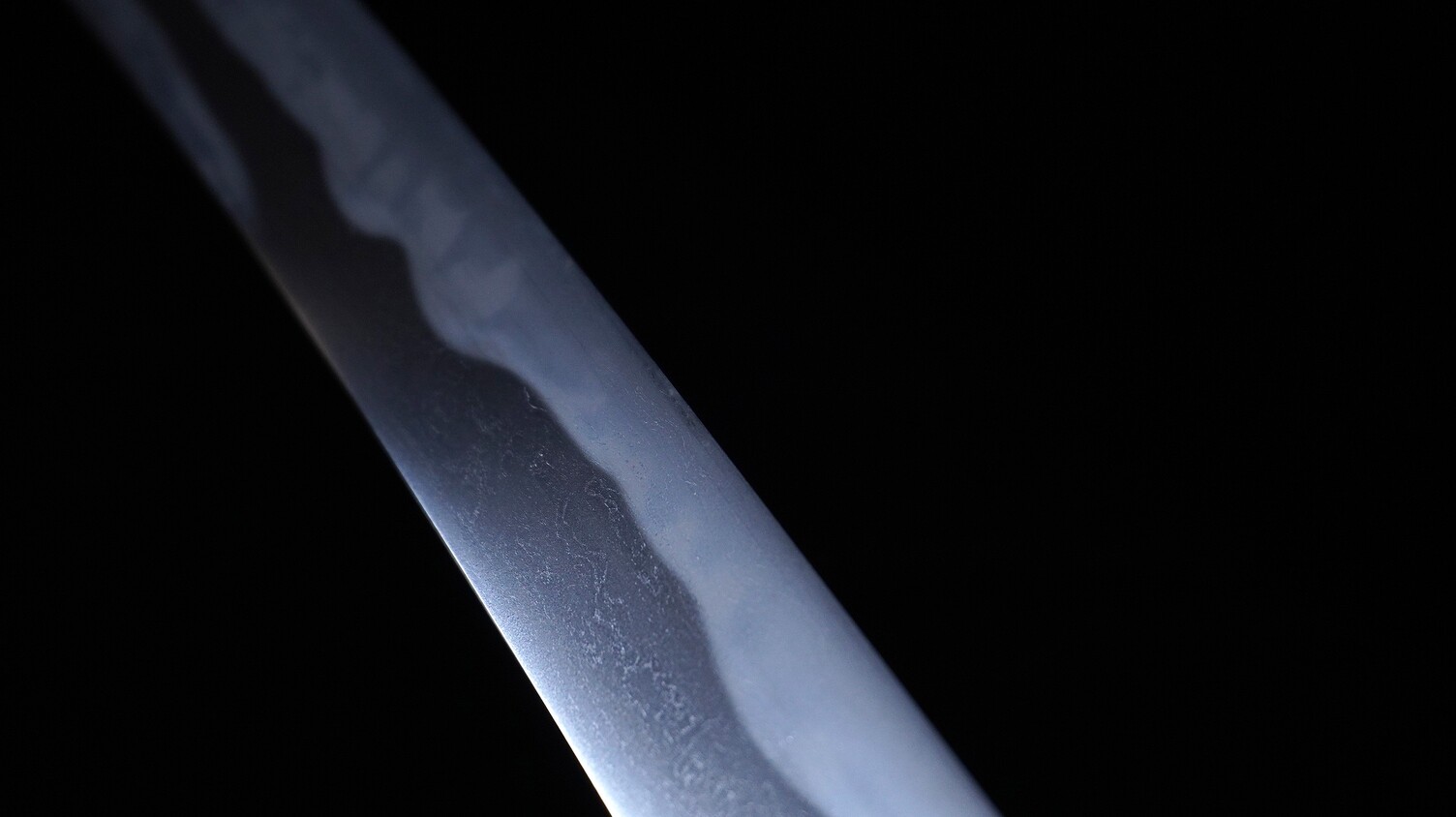
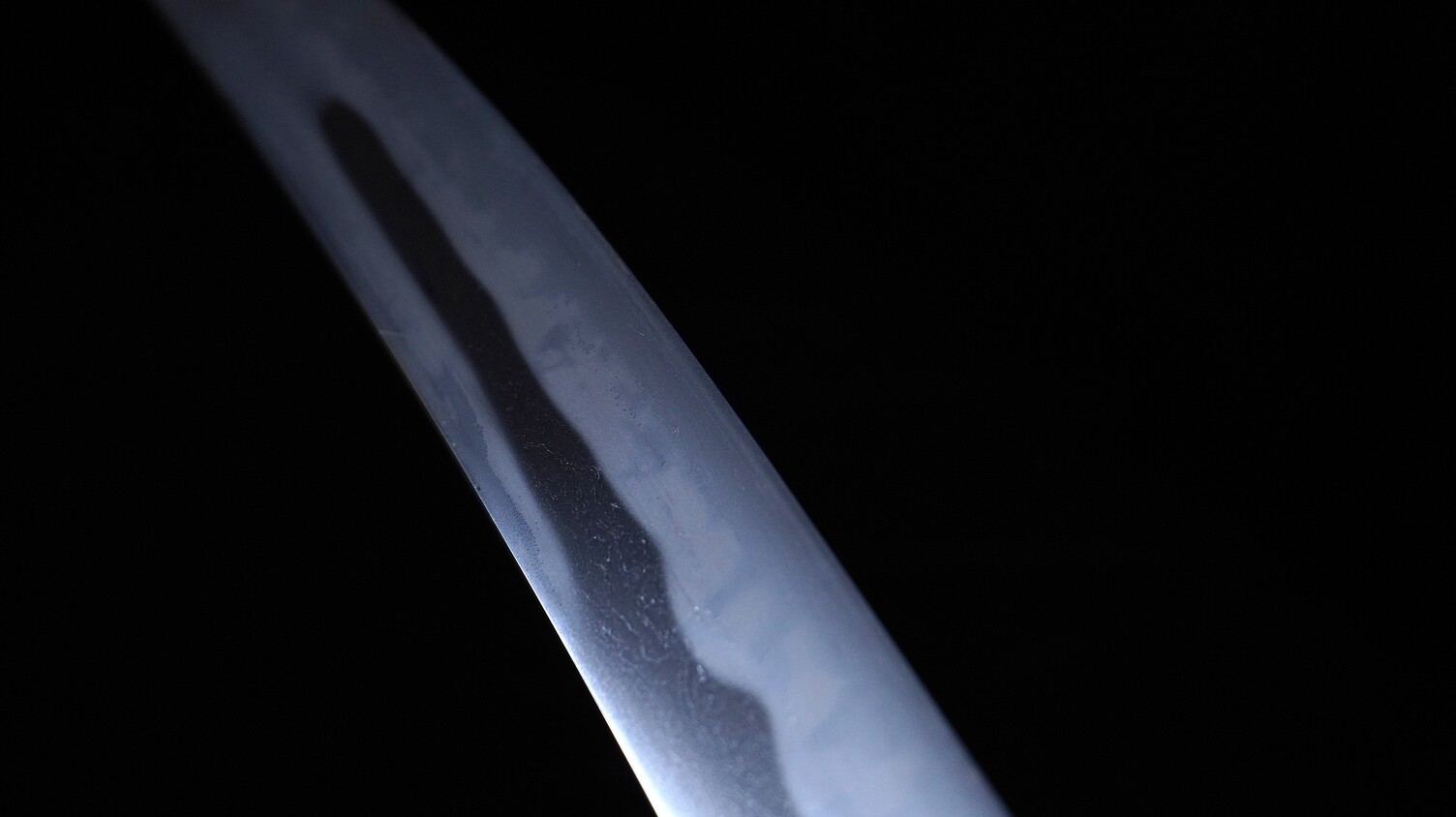
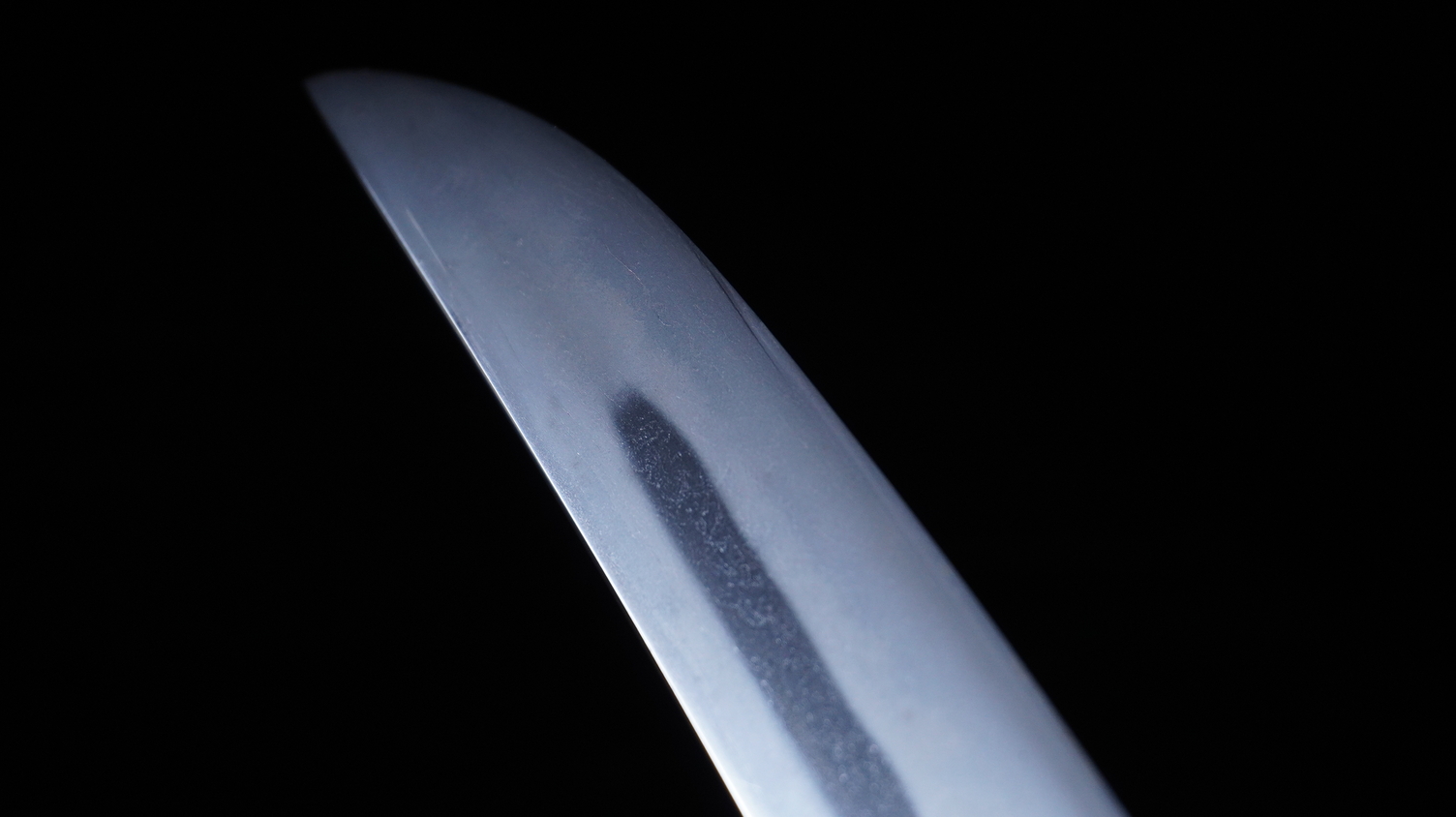
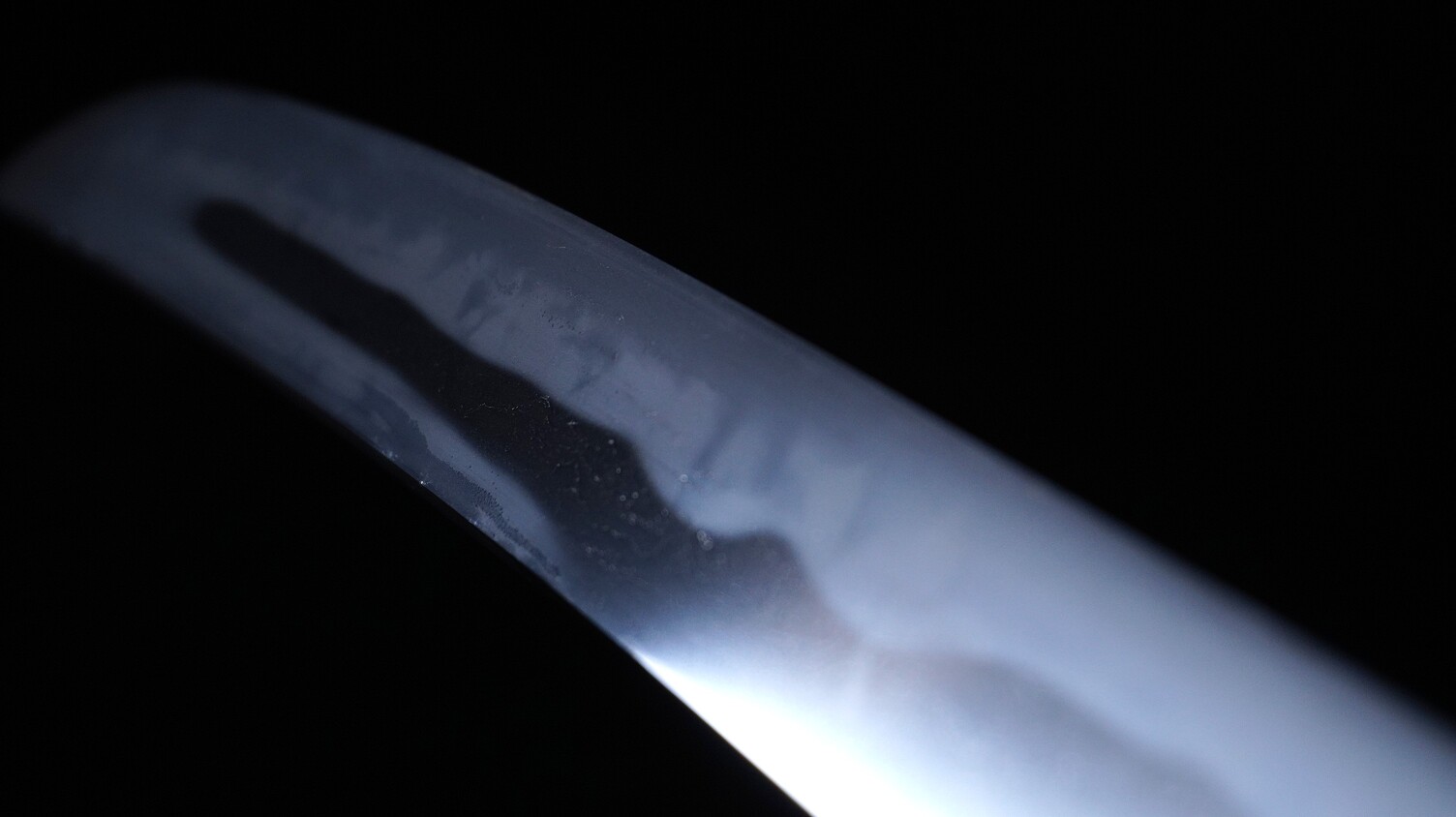
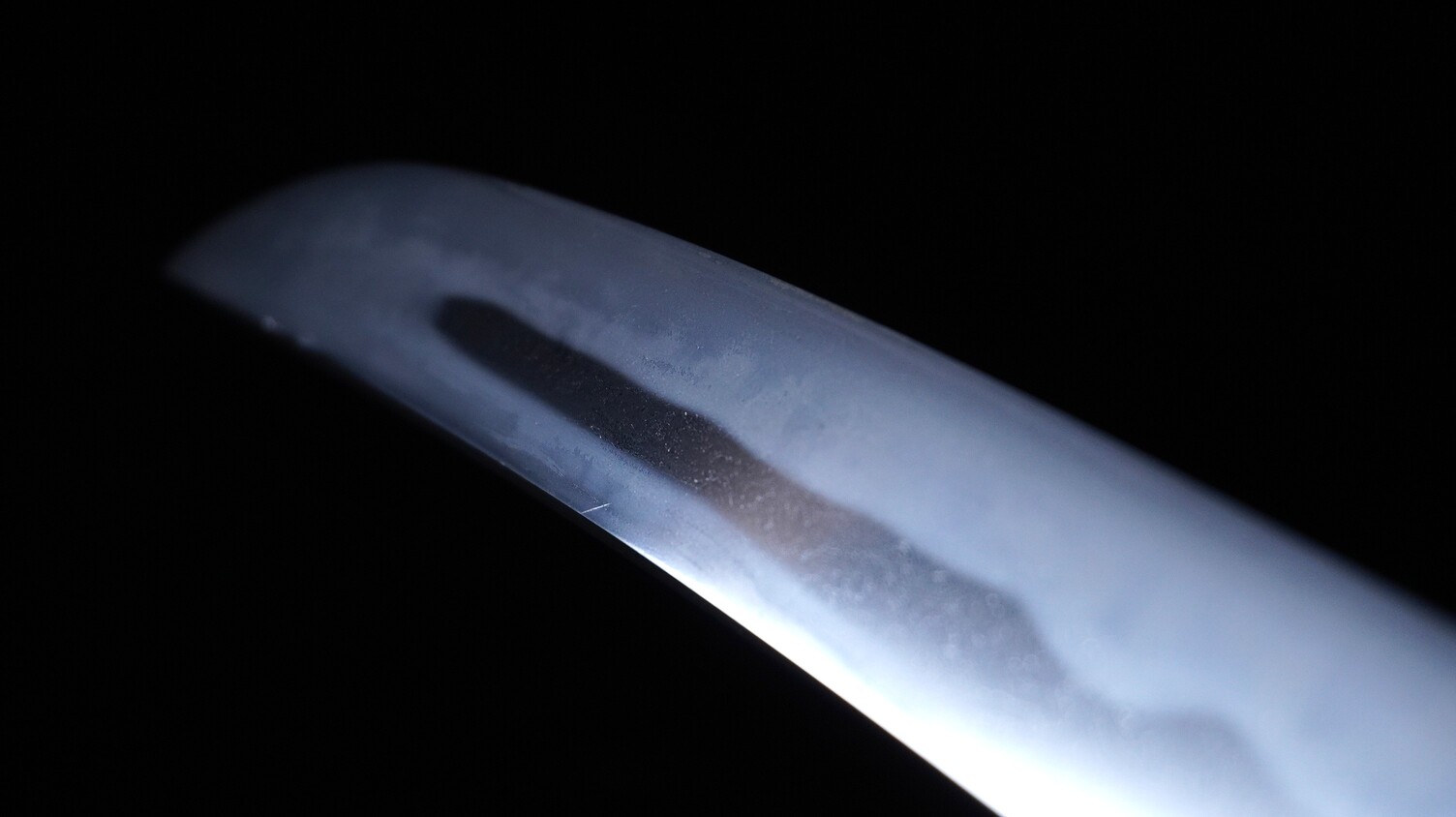
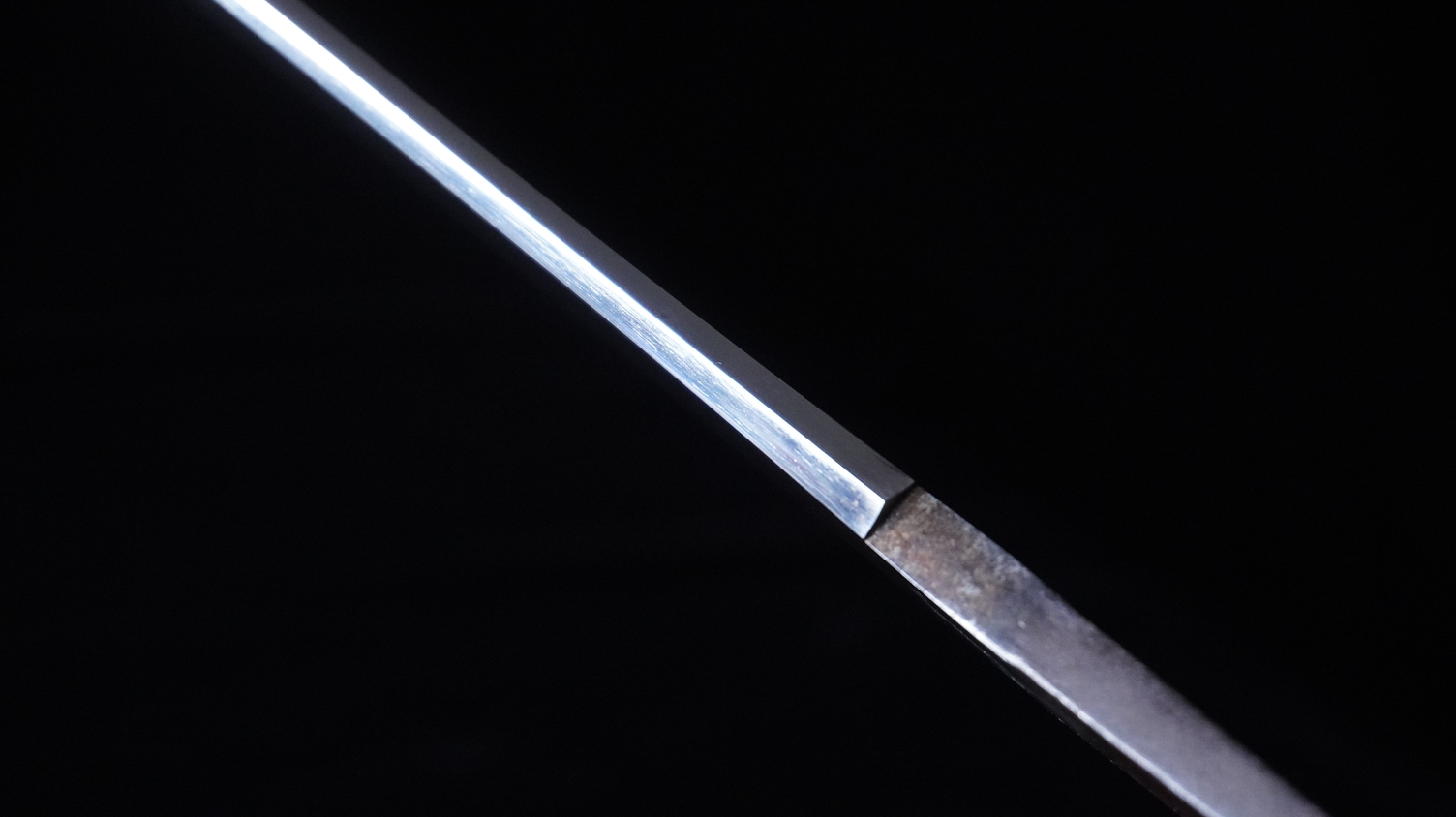
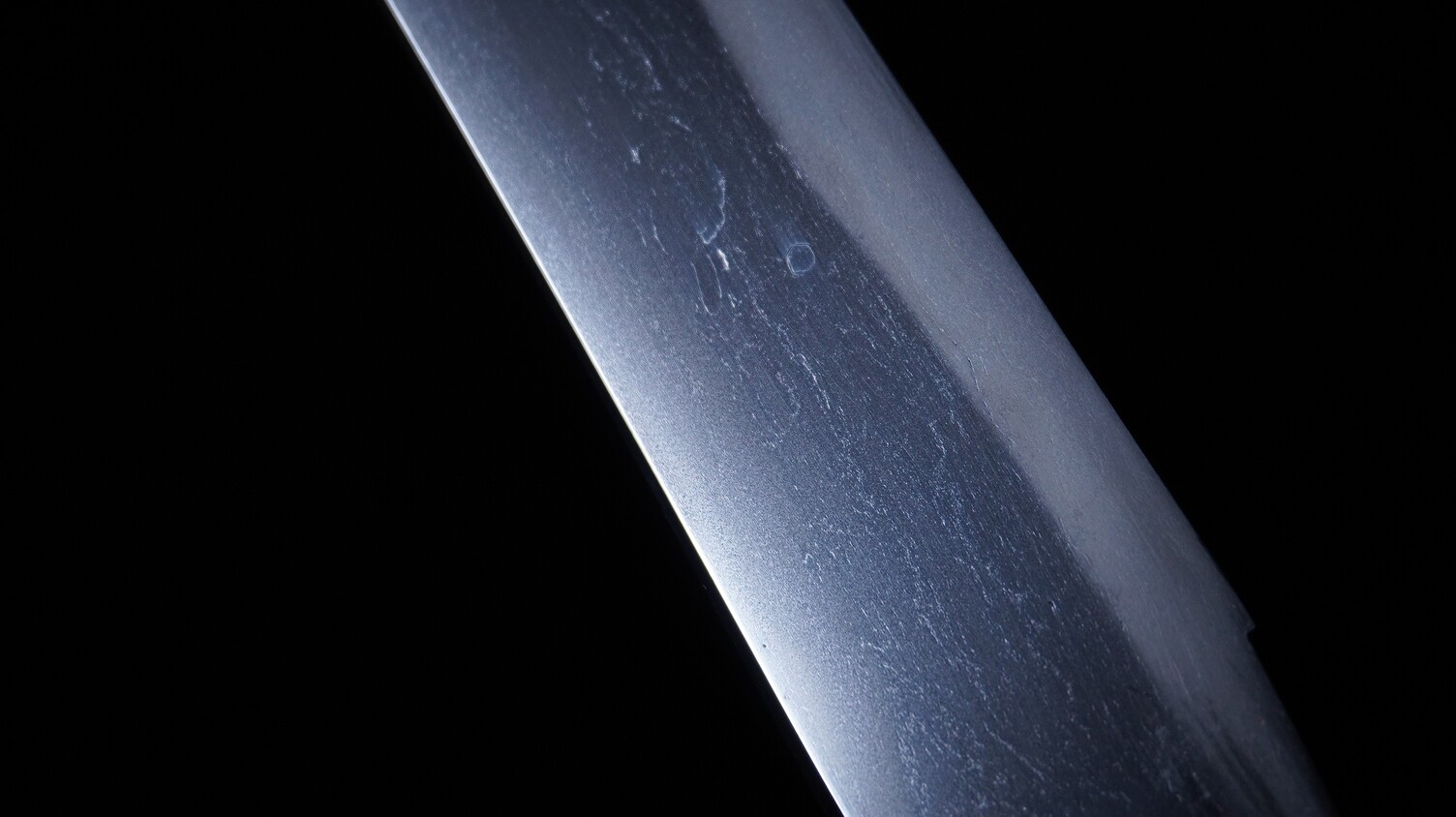
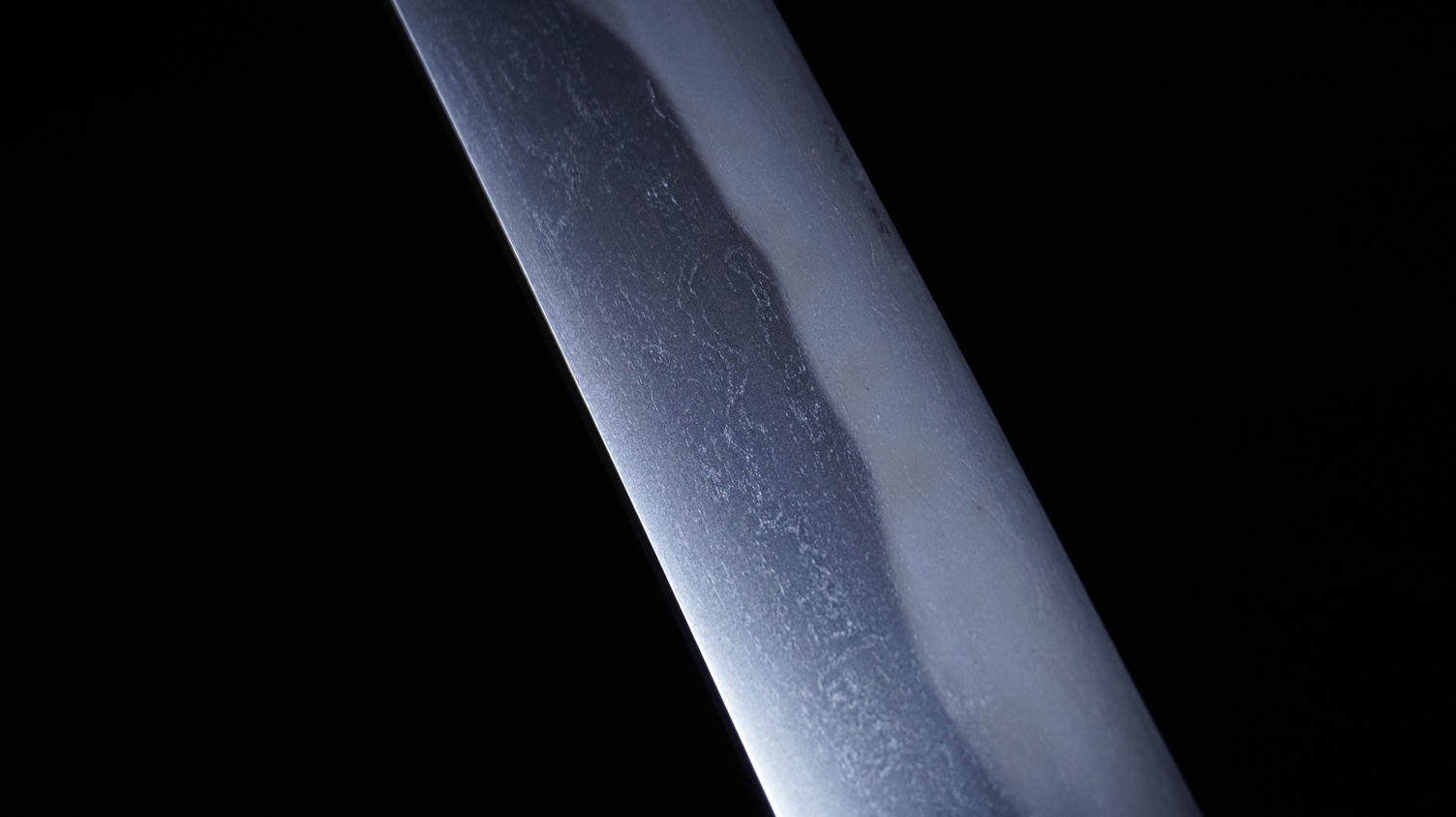
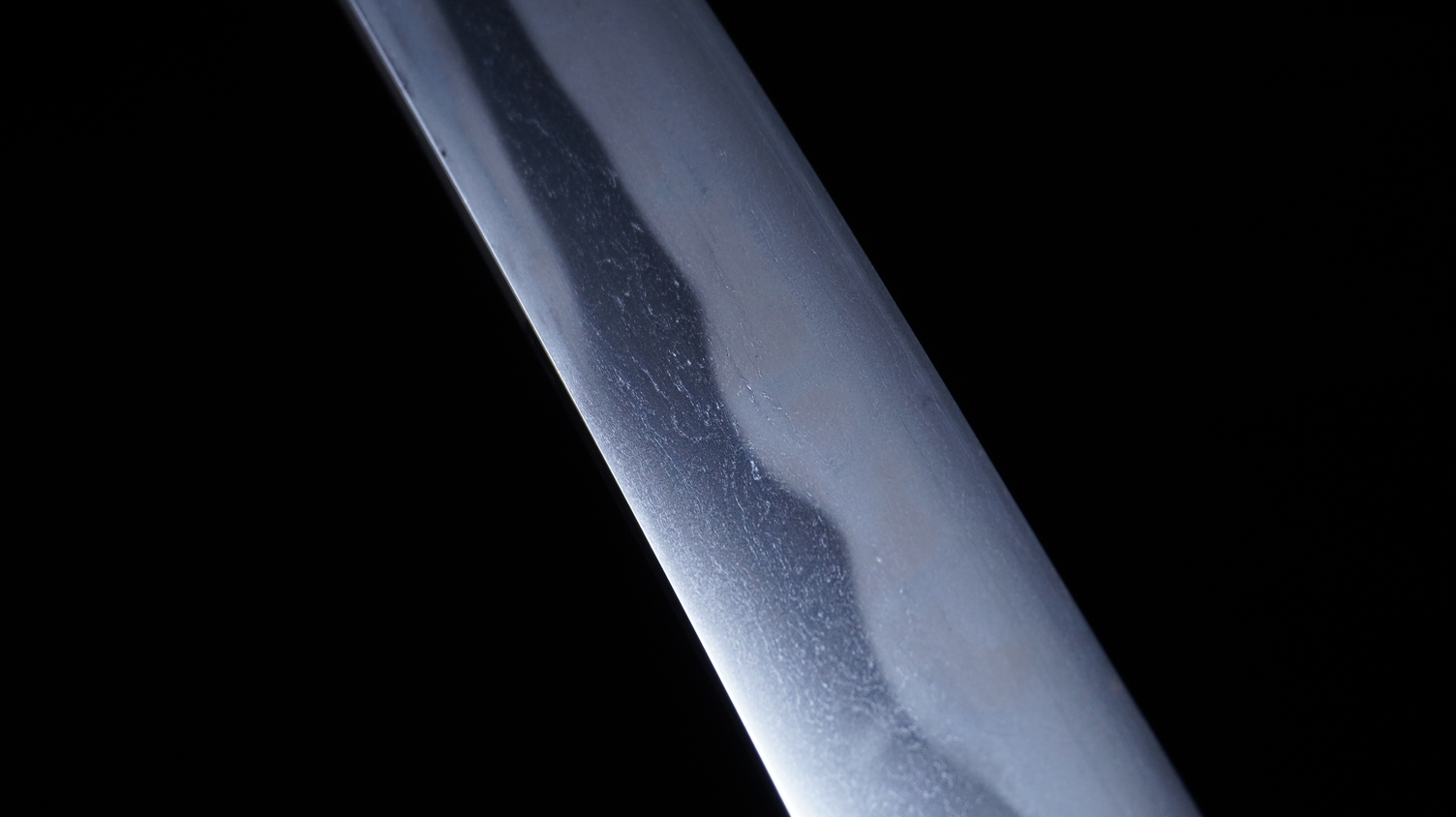
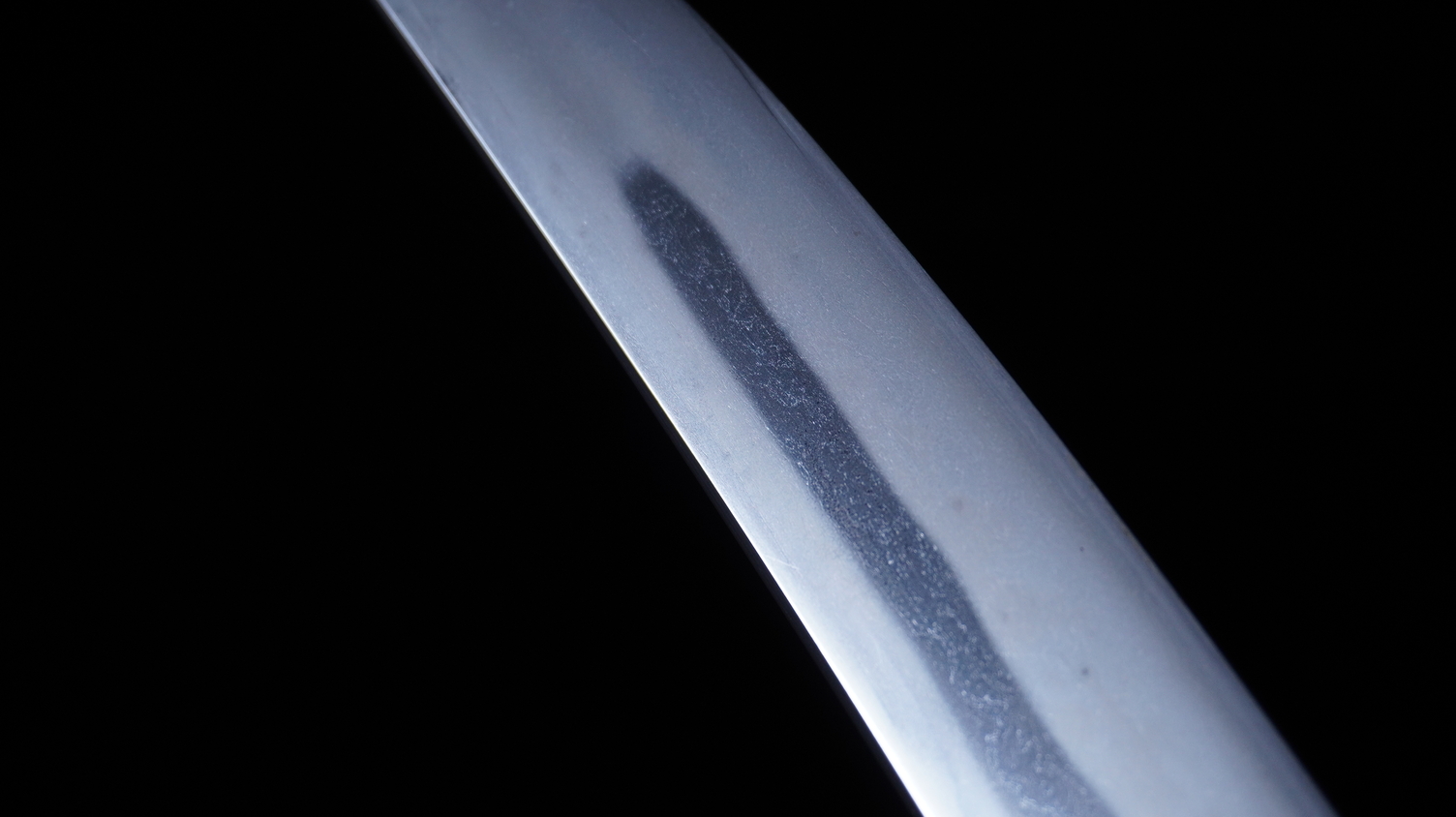
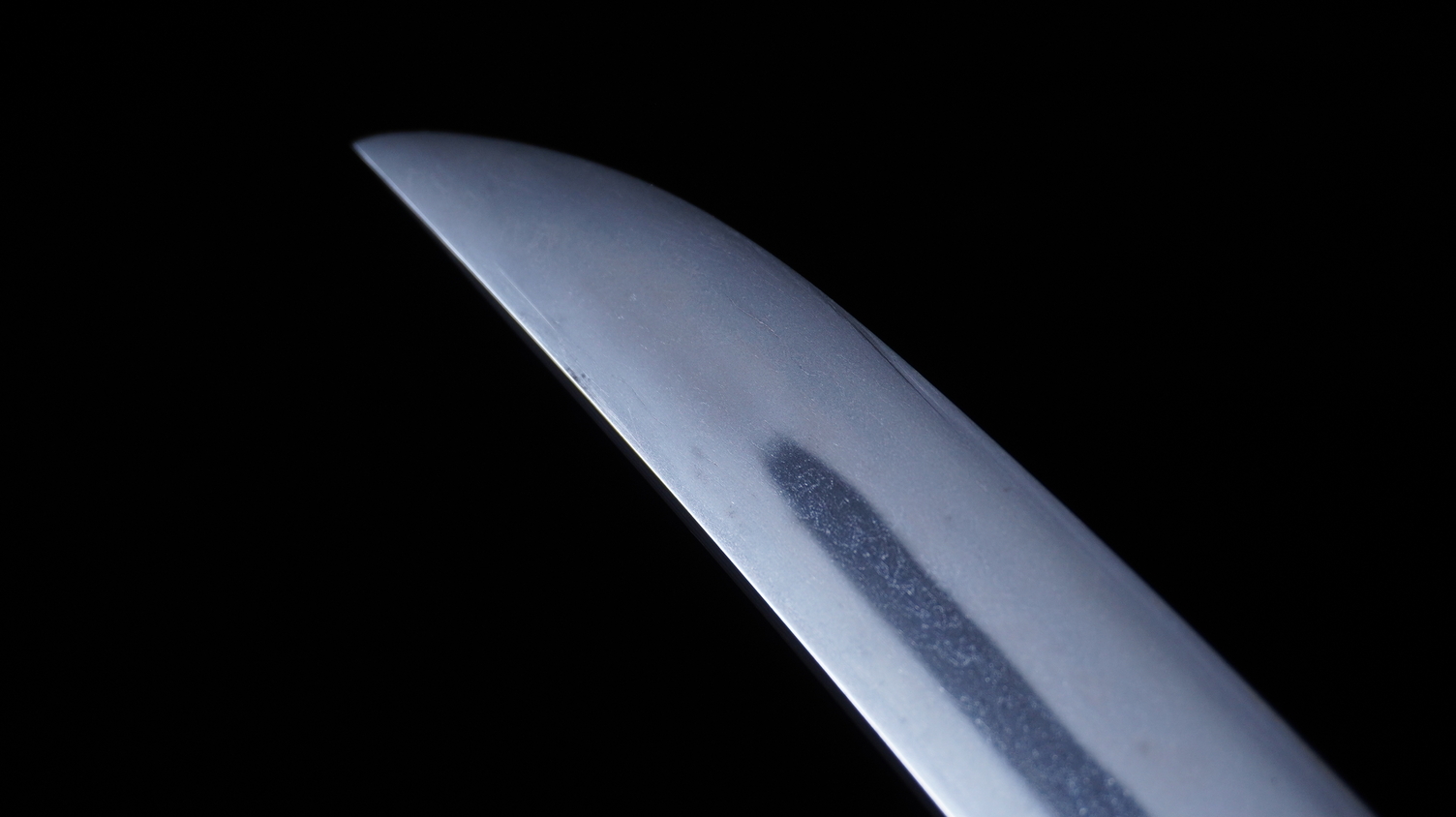
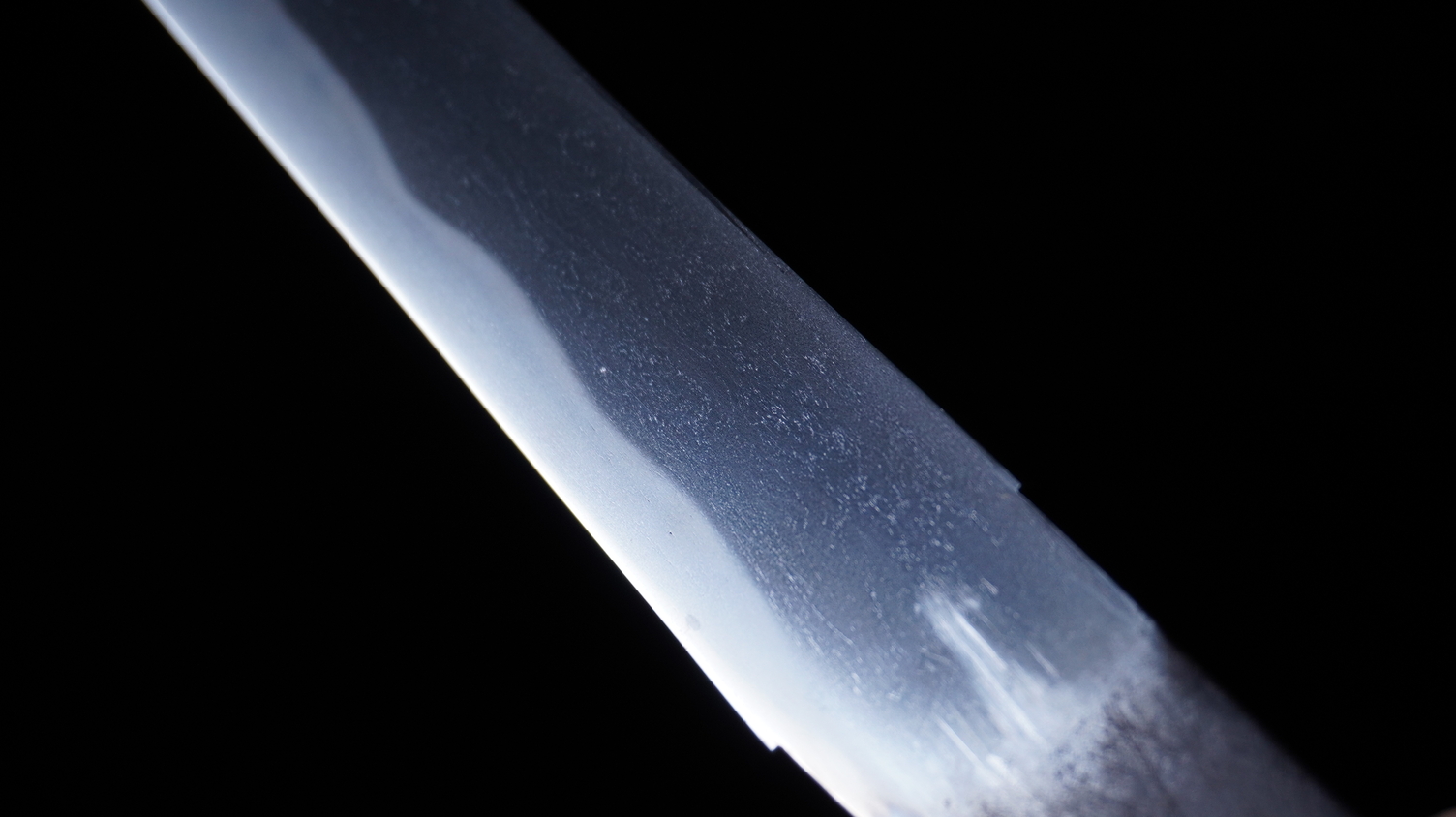
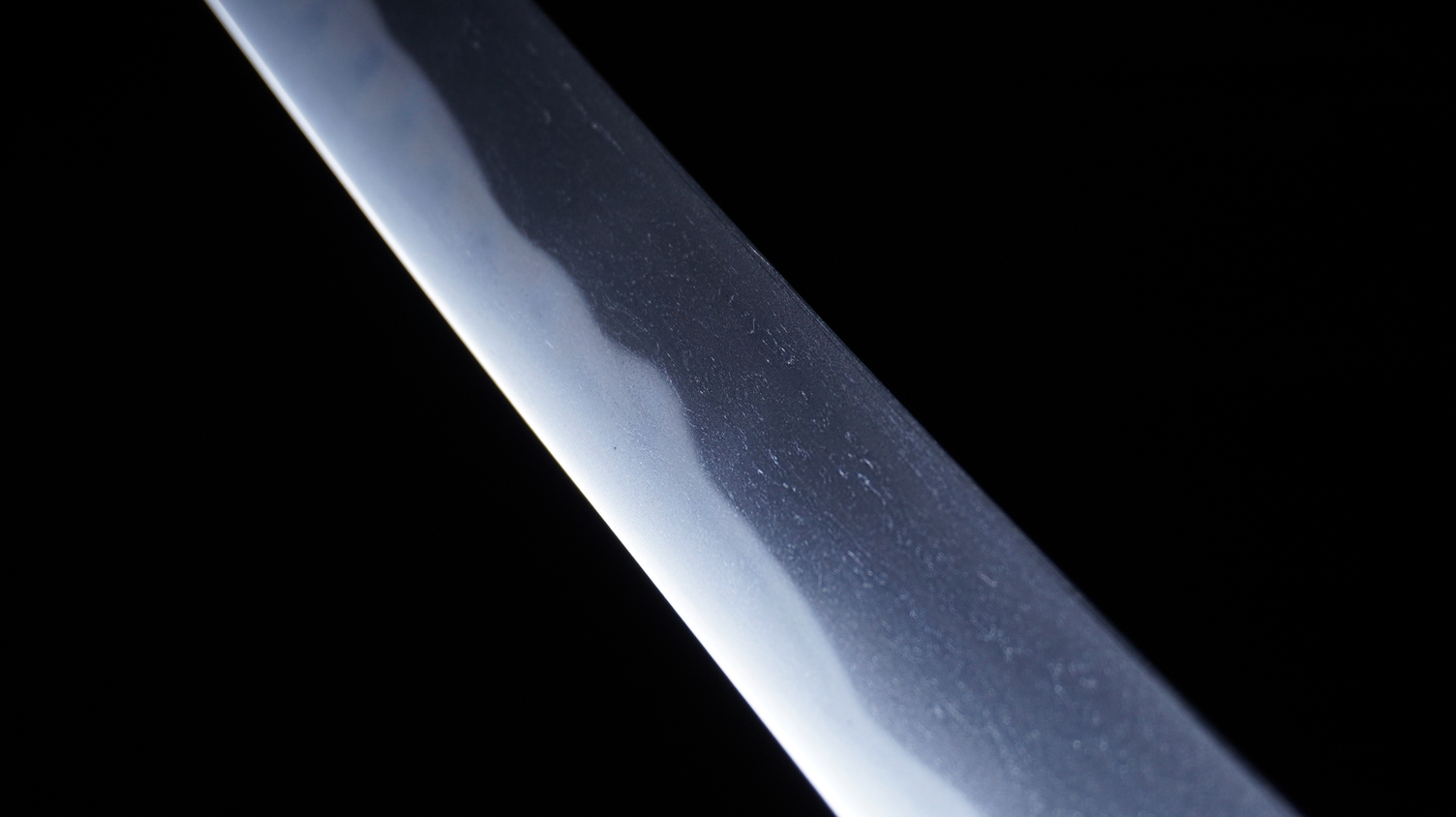
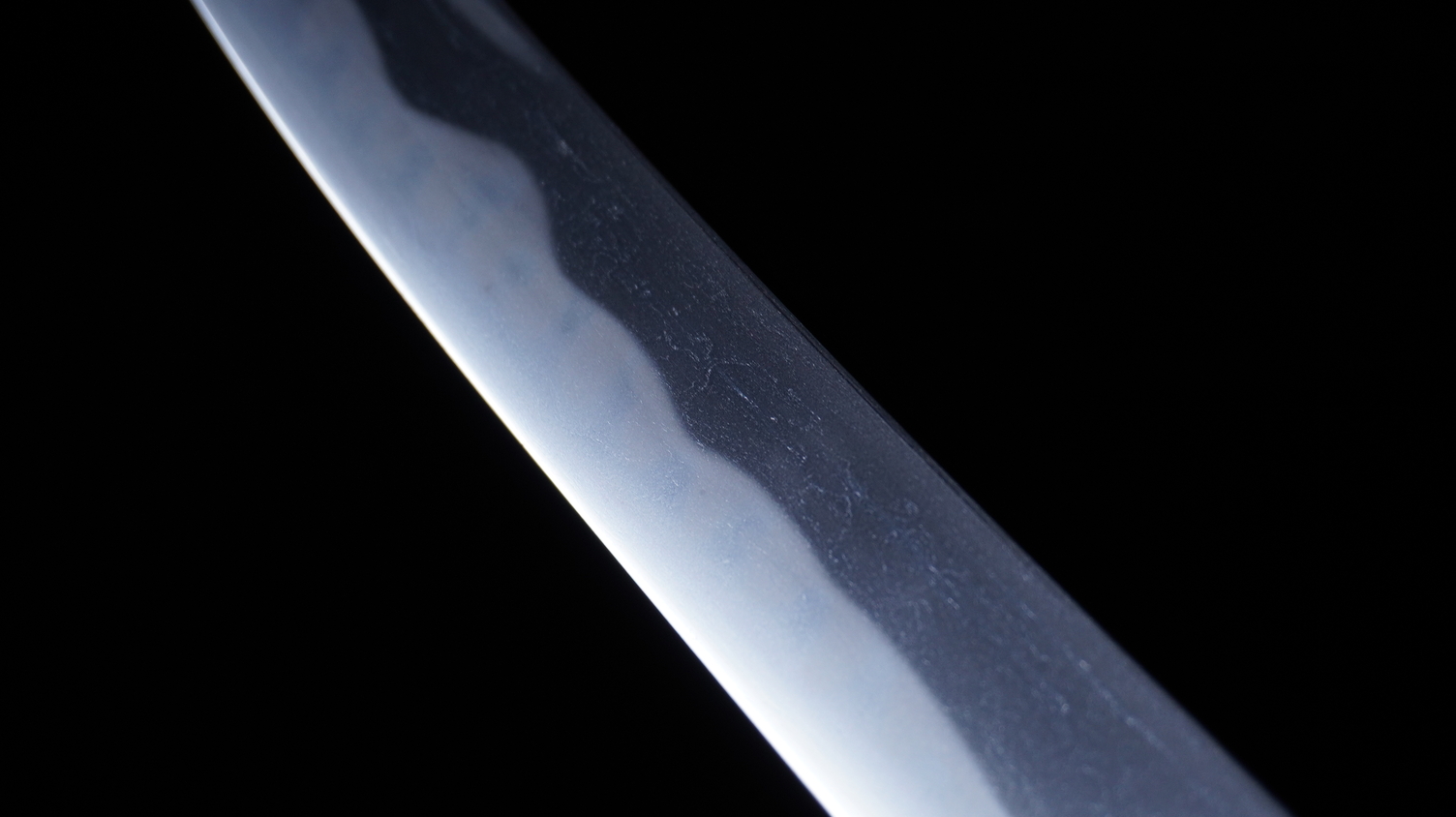
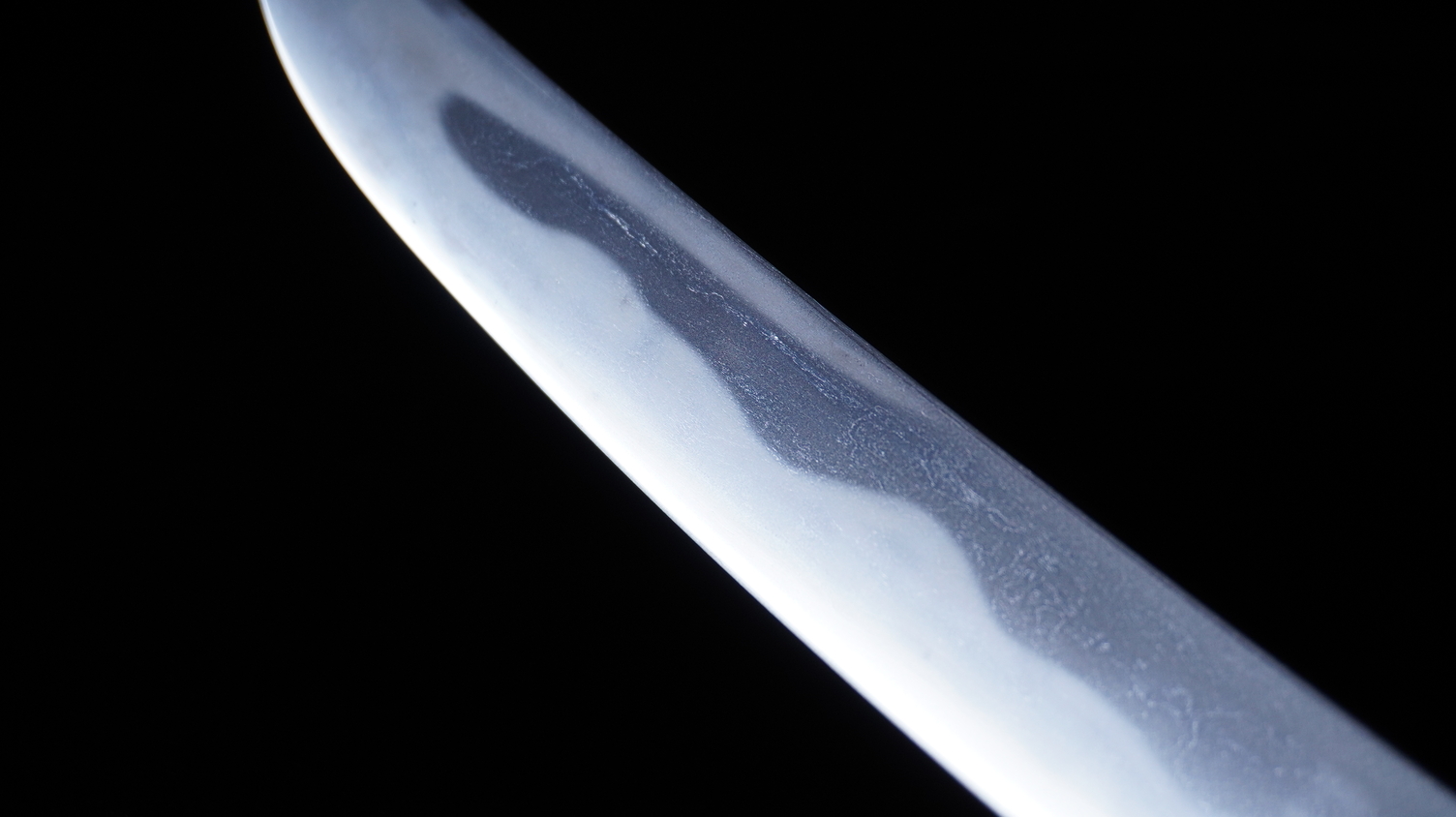
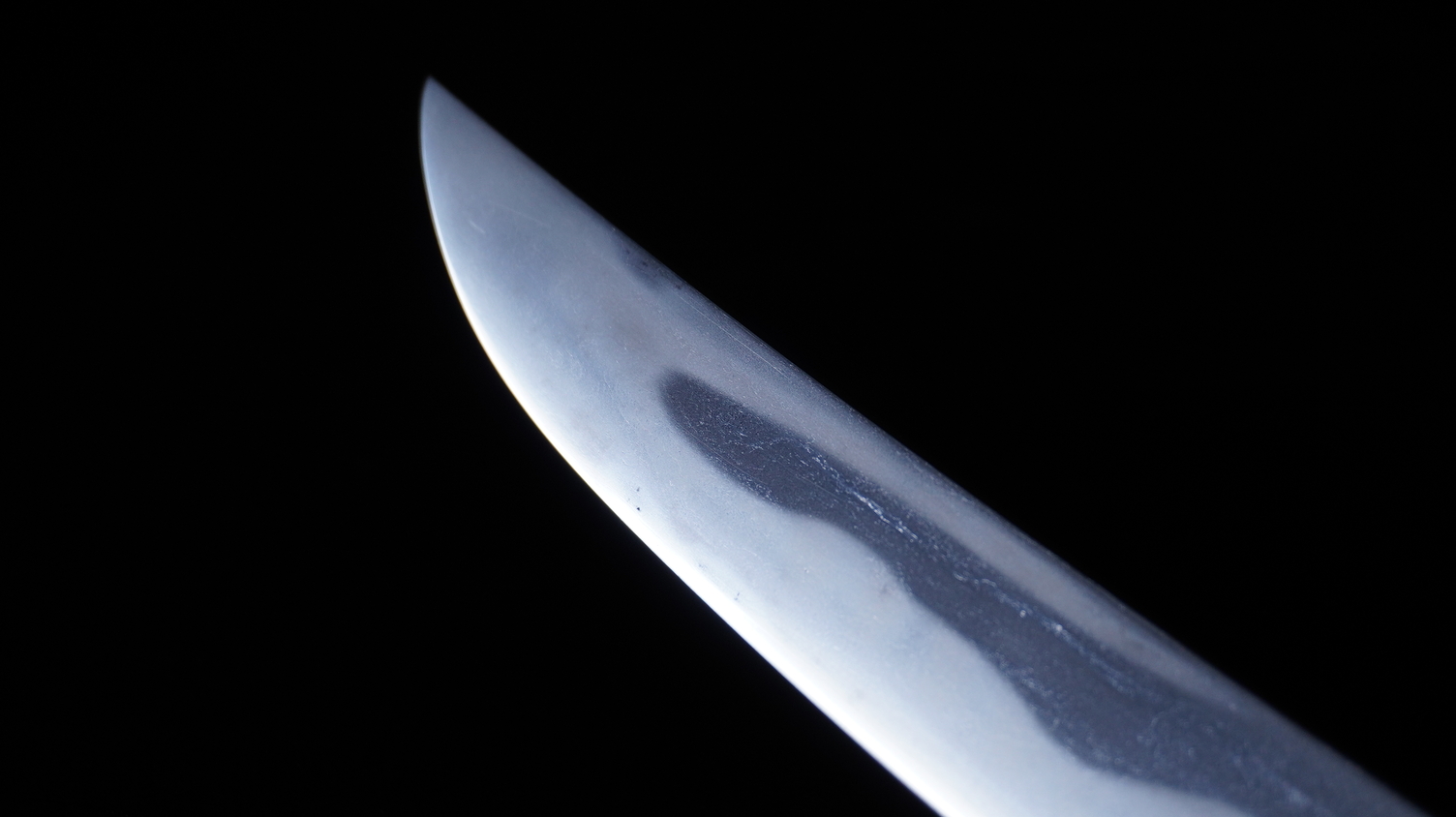
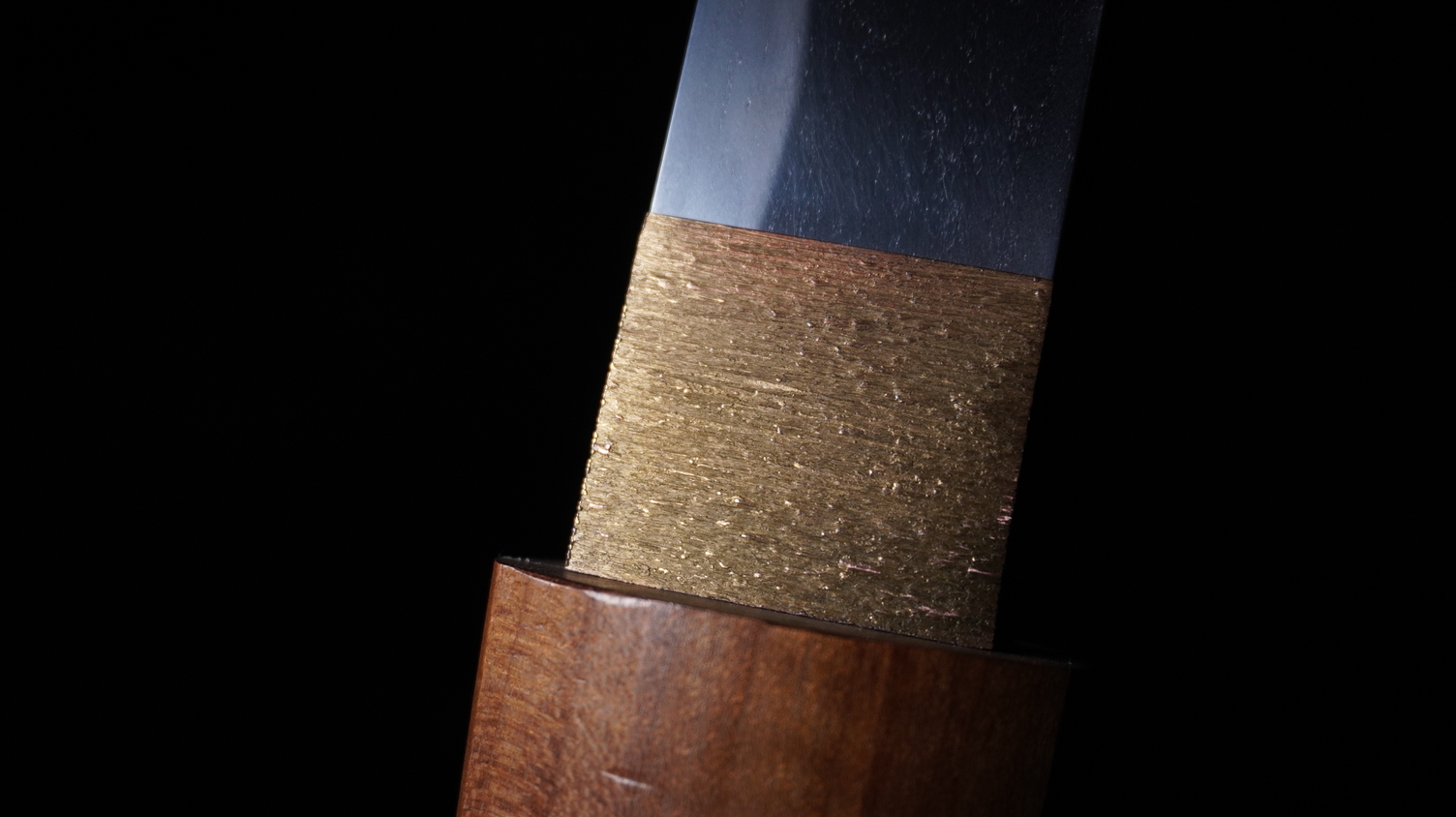
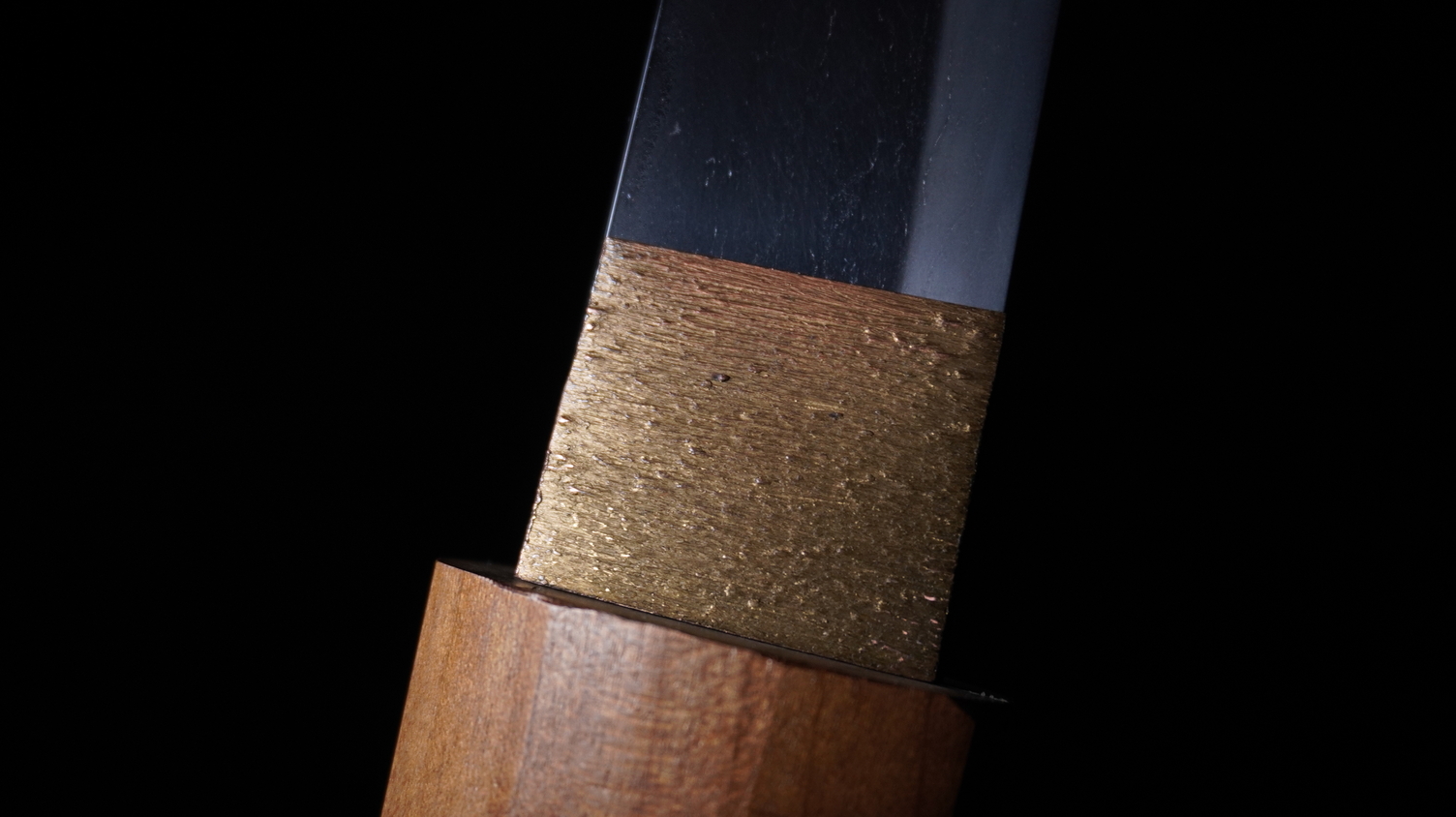
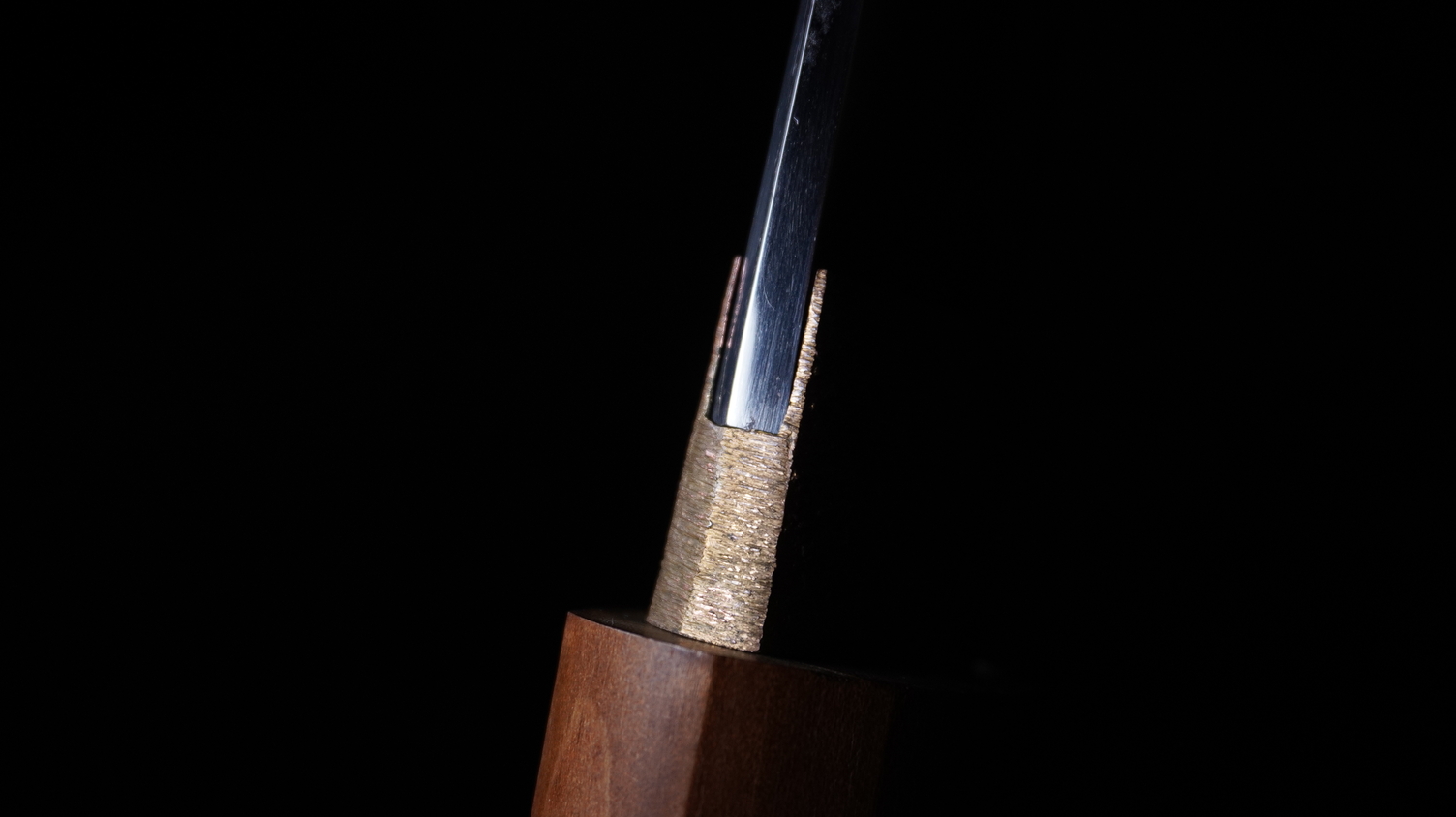
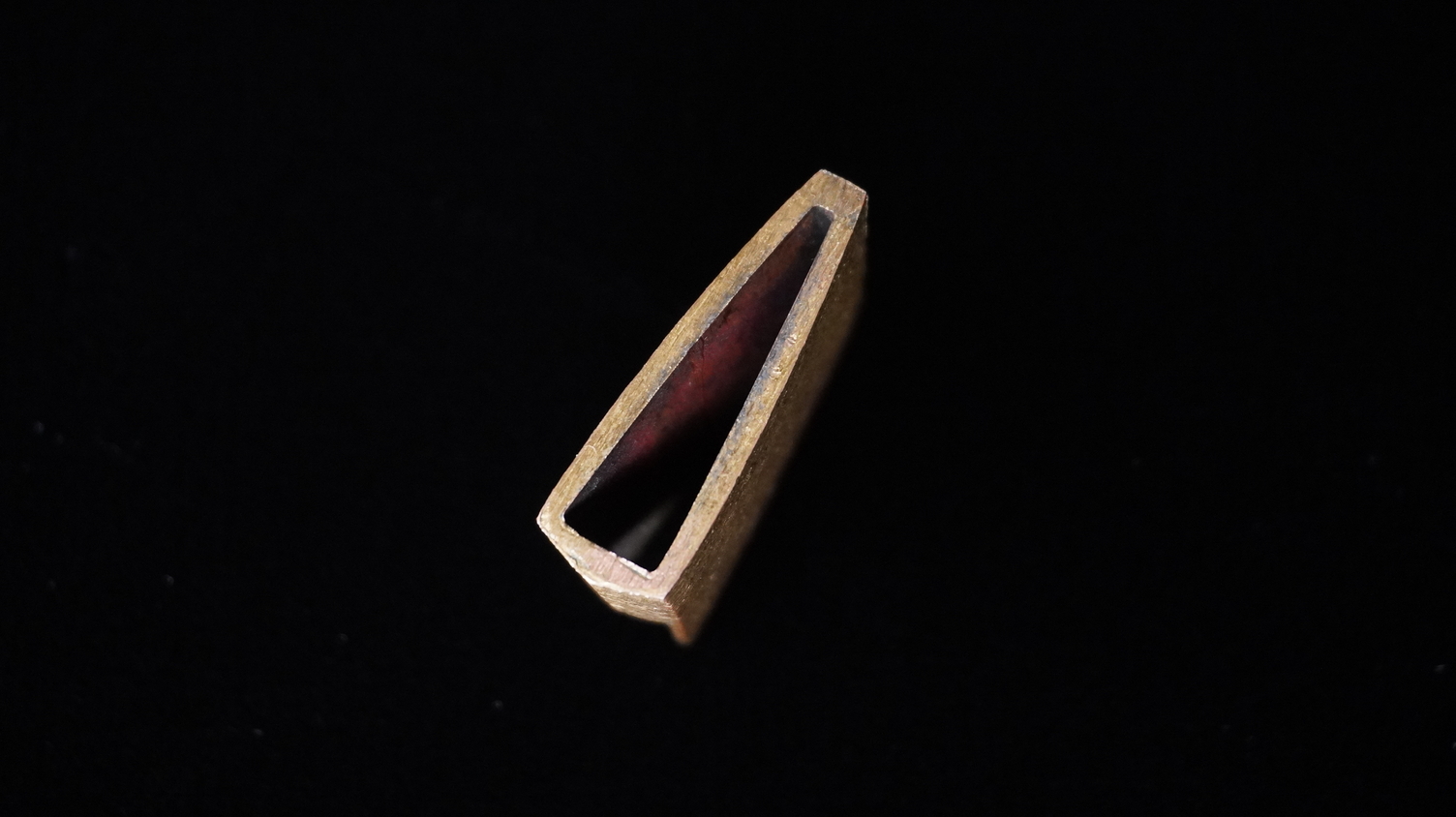
This is a wakizashi by Kanezumi, a swordsmith from Mino province and part of the Nara school. The blade features a complex midare-ba hamon with a flowing itame hada. Despite some unfortunate buried iron (umegane) on the ura side, it is a rare and valuable example from the Koto period.
 NihontoWatch
mei · Nara · Muromachi · nagasa 36.2cm · sori 0.7cm




Mino-den · Mino · around 1429-1441
Tōken Taikan top 60%
1 piece on the market now
Mino-den · Mino
7 pieces on the market now
Akasaka in Mino Province was the seat of a group the NBTHK setsumei records under two names, Mino Senjuin and Akasaka Senjuin, and the documents are consistent on its descent: the line traces to the Yamato Senjuin tradition, whose craftsmen relocated north into Mino. The setsumei place that migration around the end of the Nanbokuchō period, with the group then flourishing into the Muromachi. Learn more →
| Smith | Era | Designated |
|---|---|---|
| Kuniyuki國行 | 1362-1368 | 8 |
| Doin道印 | 1469-1487 | 0 |
| Yasumichi康道 | 1504-1521 | 0 |
| Kaneuji兼氏 | 1492-1501 | 0 |
| Yasutsugu康繼 | 1532-1555 | 0 |
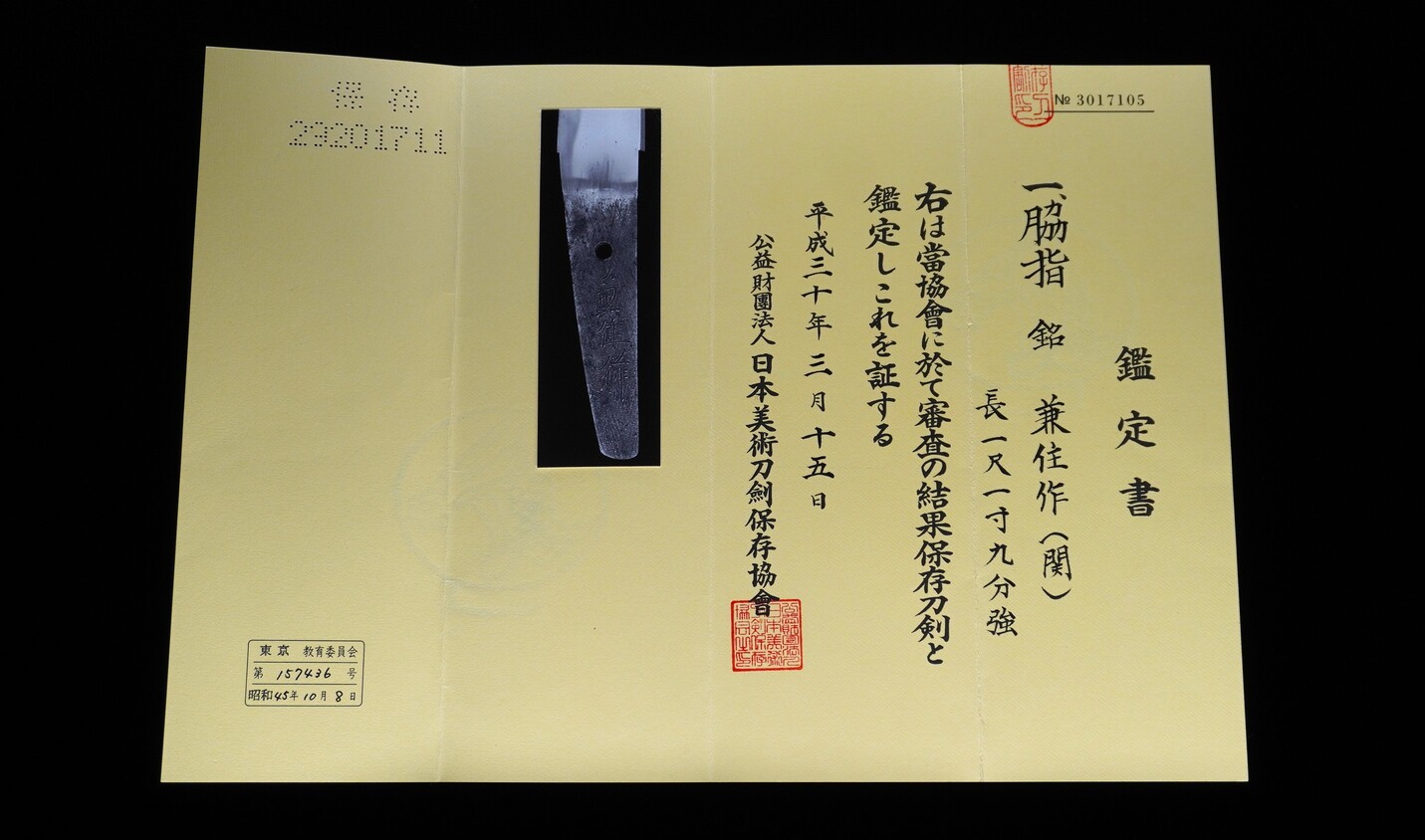
Certifies a genuine blade worth preserving: a signature confirmed correct, or, if unsigned, an era, province, and school that the NBTHK can reliably identify.
The NBTHK (Nihon Bijutsu Tōken Hozon Kyōkai, the Society for the Preservation of Japanese Art Swords) is a public-interest incorporated foundation founded in 1948 and supervised by Japan’s Agency for Cultural Affairs (Bunkachō); it is based at the Japanese Sword Museum in Tokyo. Its expert panels physically examine each submitted work (shinsa) and issue a certificate (kanteishō) ranking it by artistic and historical merit. NBTHK papers are the most widely recognized standard of authentication for Japanese swords and fittings.
NBTHK official siteThis is a wakizashi by Kanezumi, a swordsmith from Mino province and part of the Nara school. The blade features a complex midare-ba hamon with a flowing itame hada. Despite some unfortunate buried iron (umegane) on the ura side, it is a rare and valuable example from the Koto period.
NihontoWatchmei · Nara · Muromachi · nagasa 36.2cm · sori 0.7cm
Mino-den · Mino · around 1429-1441
Tōken Taikan top 60%
1 piece on the market now
Mino-den · Mino
7 pieces on the market now
Akasaka in Mino Province was the seat of a group the NBTHK setsumei records under two names, Mino Senjuin and Akasaka Senjuin, and the documents are consistent on its descent: the line traces to the Yamato Senjuin tradition, whose craftsmen relocated north into Mino. The setsumei place that migration around the end of the Nanbokuchō period, with the group then flourishing into the Muromachi. Learn more →
| Smith | Era | Designated |
|---|---|---|
| Kuniyuki國行 | 1362-1368 | 8 |
| Doin道印 | 1469-1487 | 0 |
| Yasumichi康道 | 1504-1521 | 0 |
| Kaneuji兼氏 | 1492-1501 | 0 |
| Yasutsugu康繼 | 1532-1555 | 0 |
Certifies a genuine blade worth preserving: a signature confirmed correct, or, if unsigned, an era, province, and school that the NBTHK can reliably identify.
The NBTHK (Nihon Bijutsu Tōken Hozon Kyōkai, the Society for the Preservation of Japanese Art Swords) is a public-interest incorporated foundation founded in 1948 and supervised by Japan’s Agency for Cultural Affairs (Bunkachō); it is based at the Japanese Sword Museum in Tokyo. Its expert panels physically examine each submitted work (shinsa) and issue a certificate (kanteishō) ranking it by artistic and historical merit. NBTHK papers are the most widely recognized standard of authentication for Japanese swords and fittings.
NBTHK official site