NihontoWatch Mon

NihontoWatchBETA

MarketAuctions
Encyclopedia
NihontoWatch Mon

NihontoWatchBETA

MarketAuctions
Encyclopedia

Description

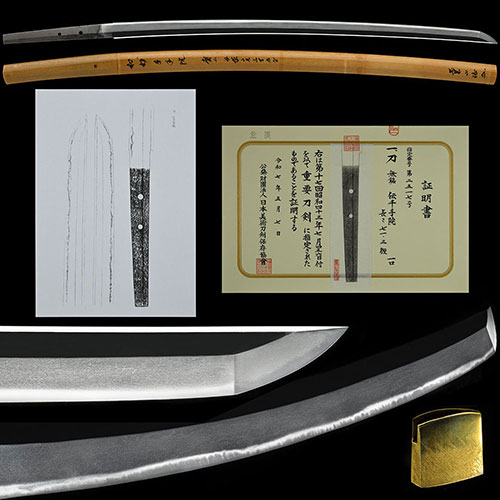
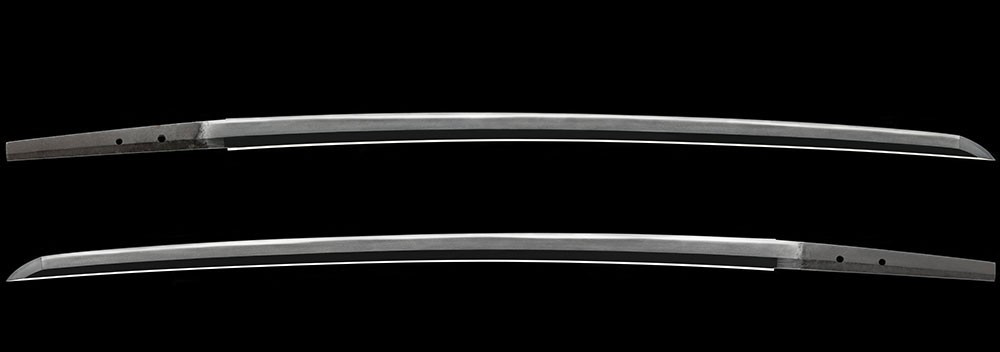
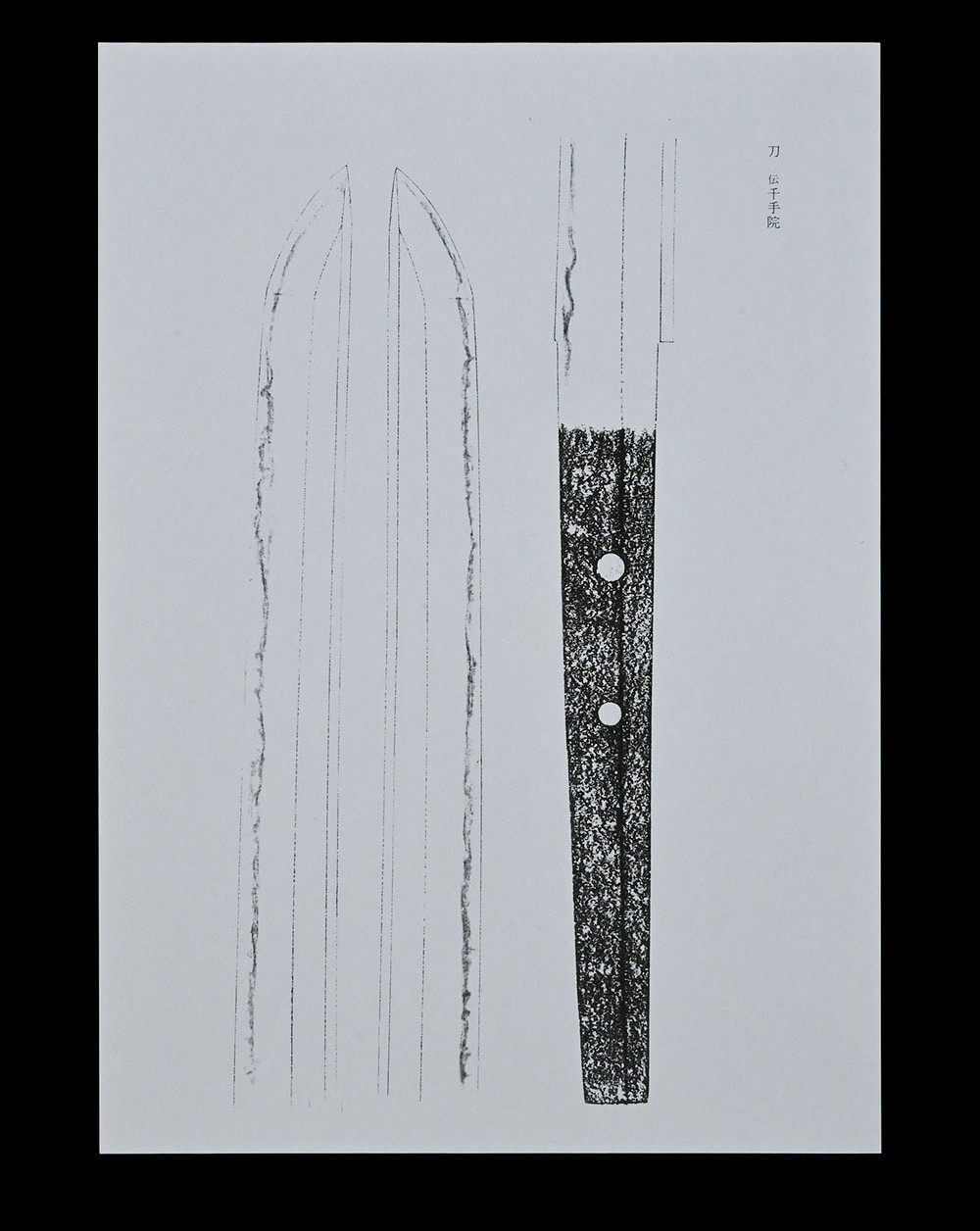
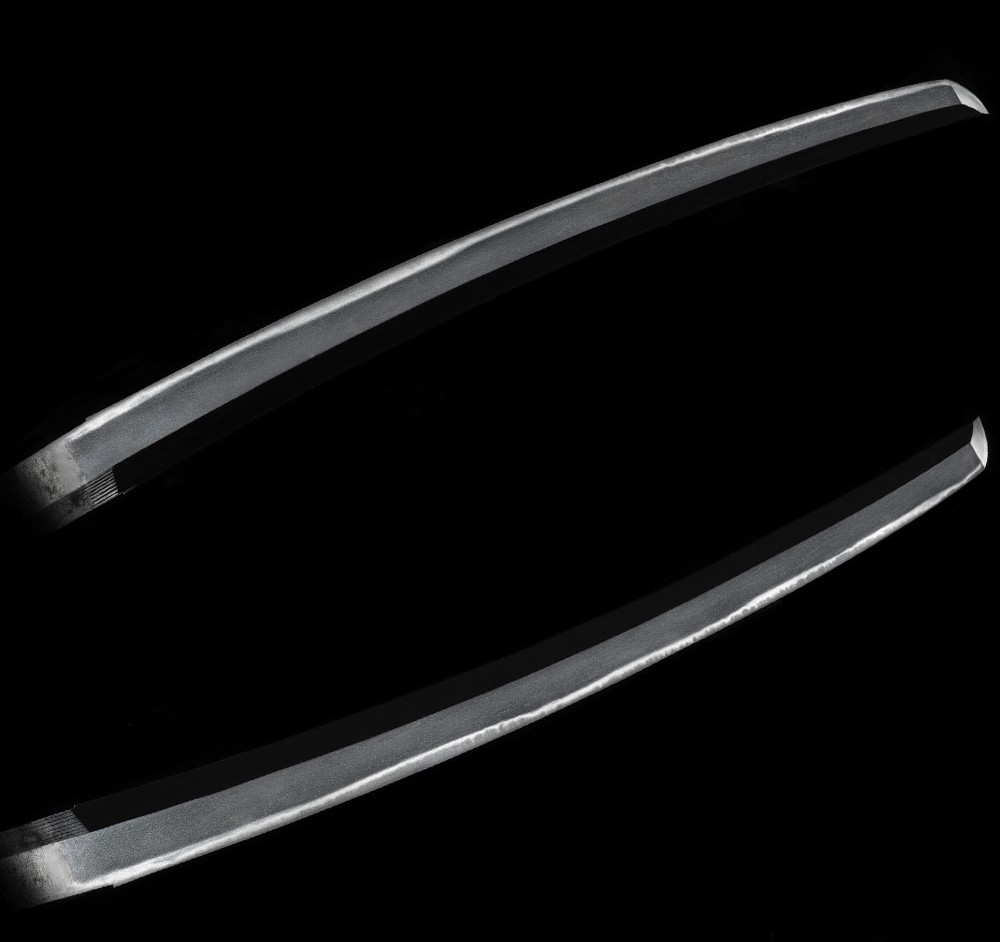
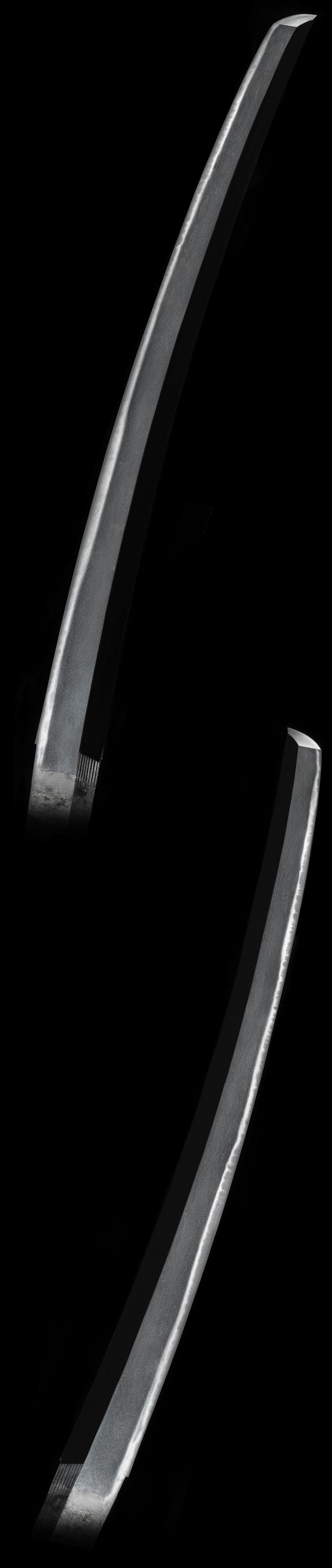
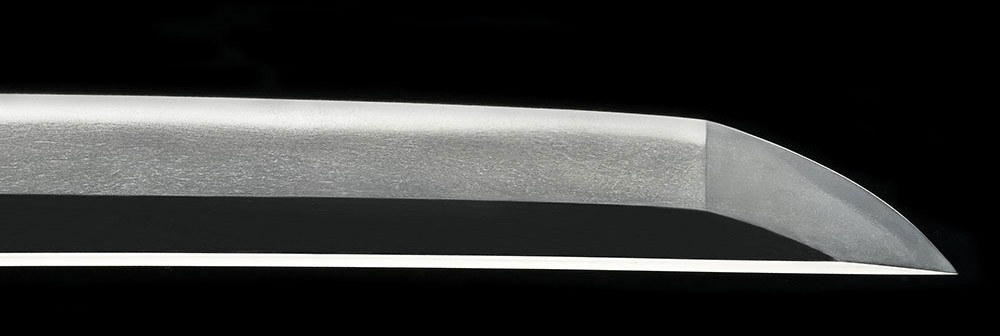
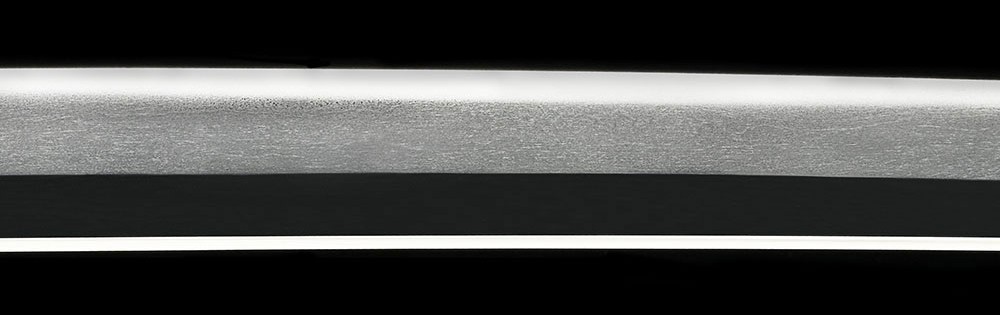
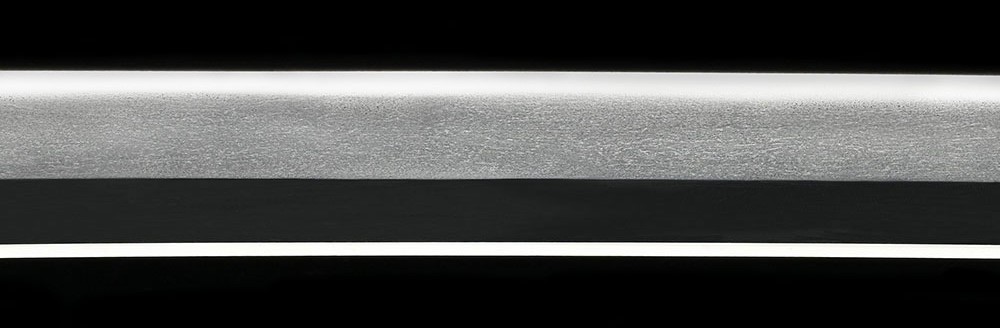
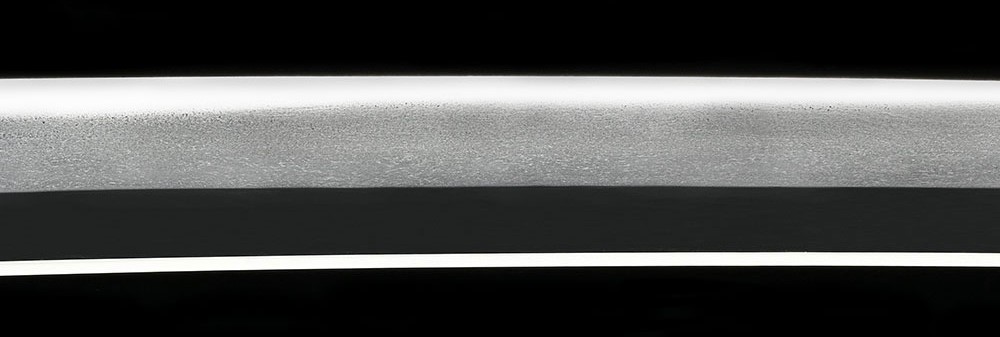
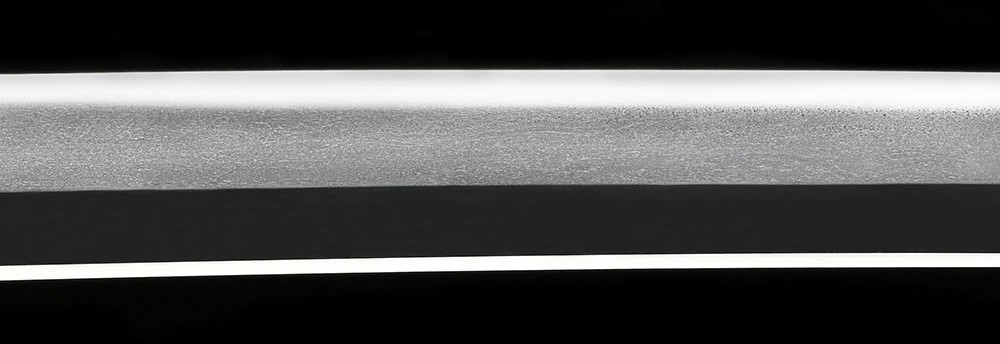
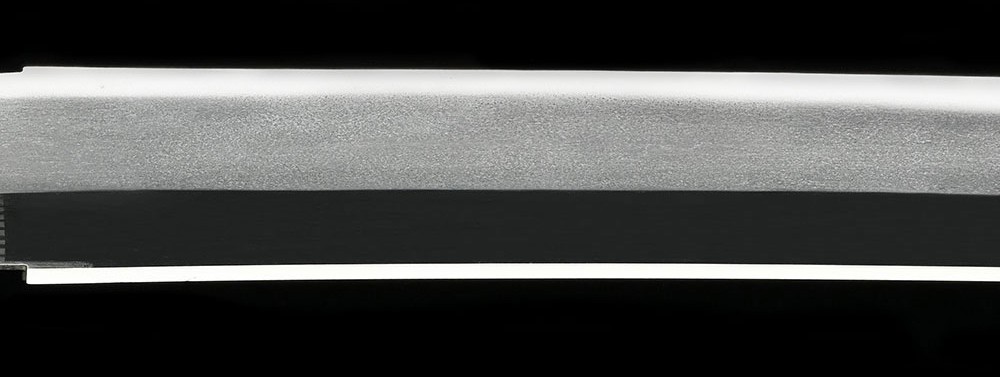
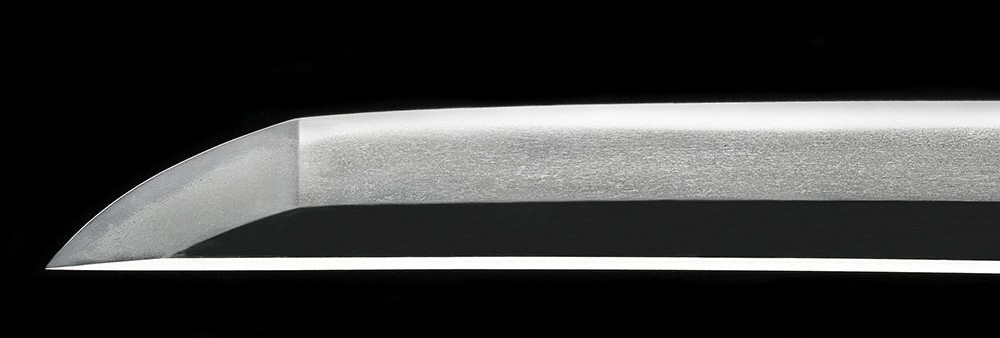
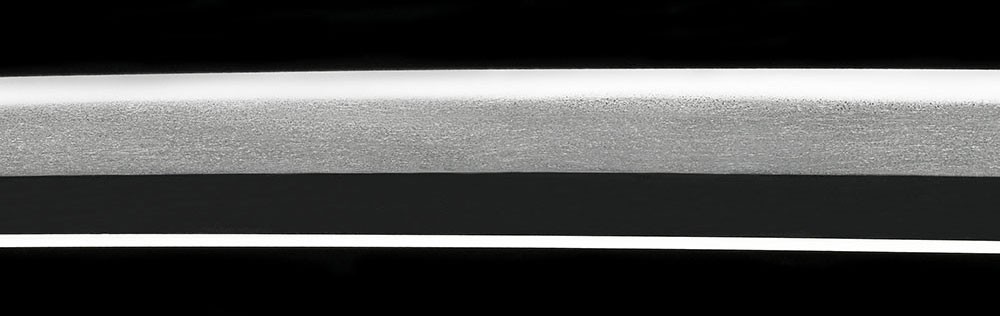
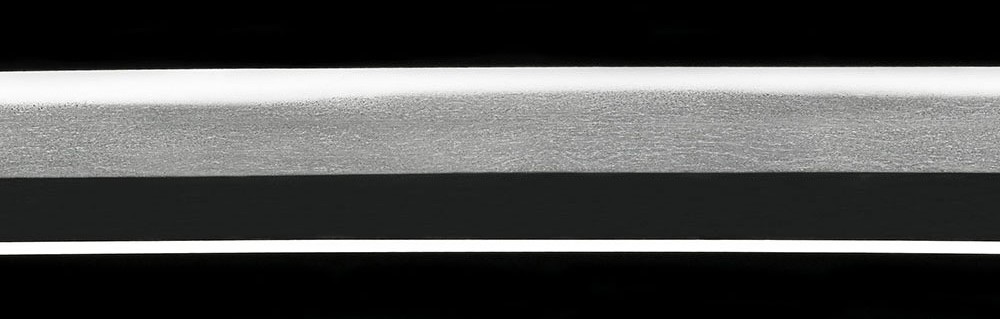
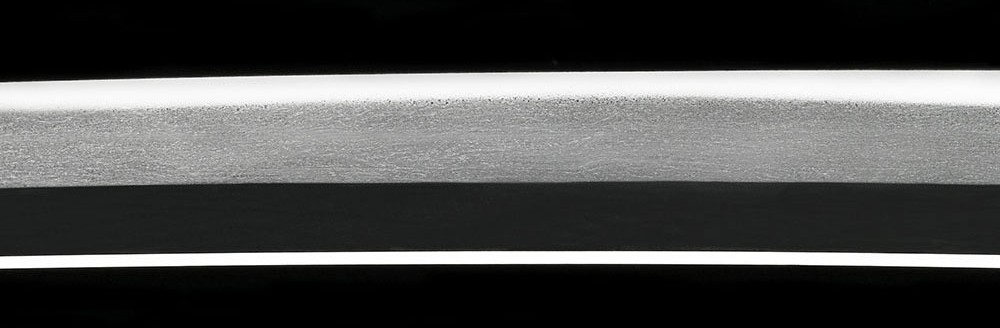
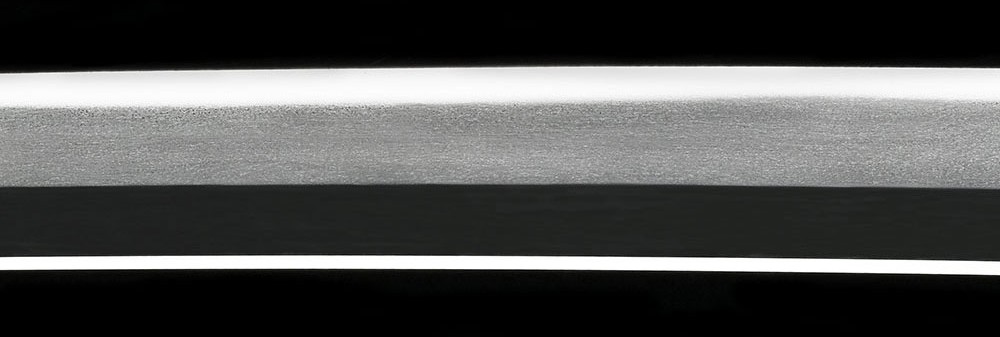
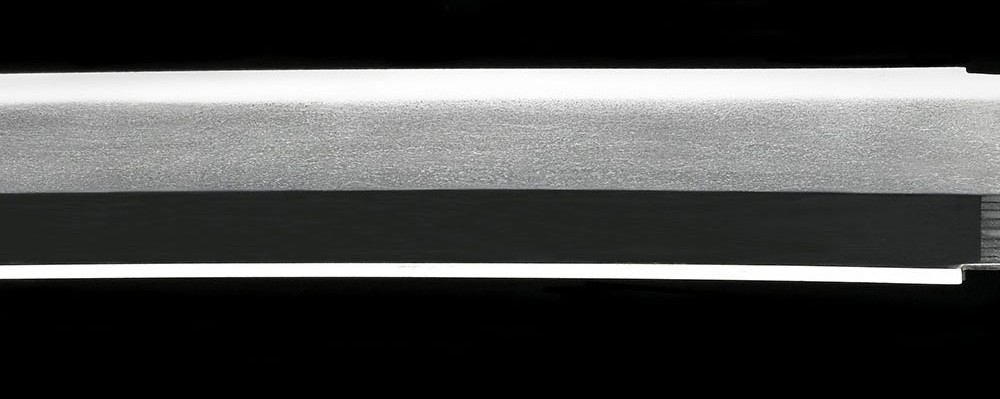
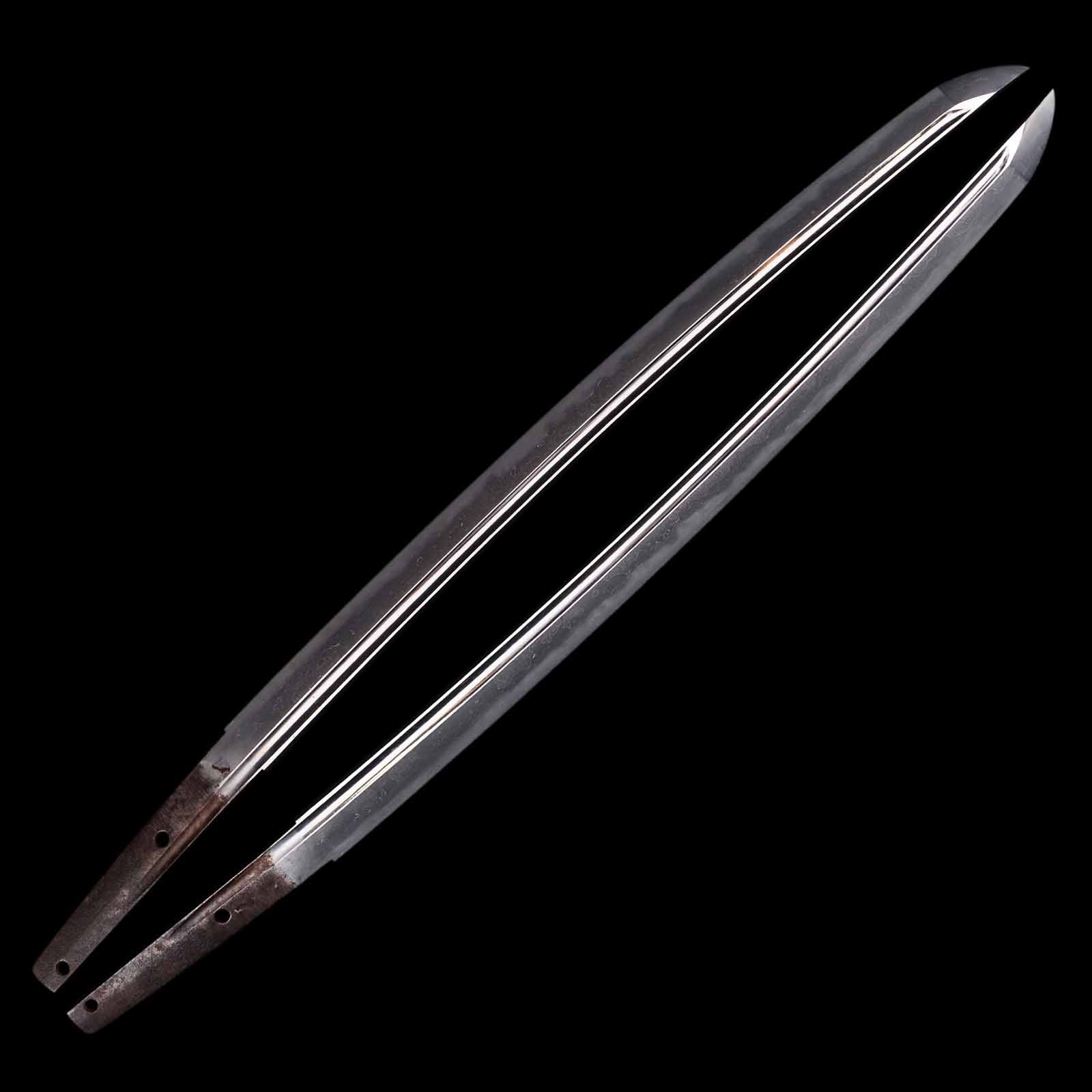
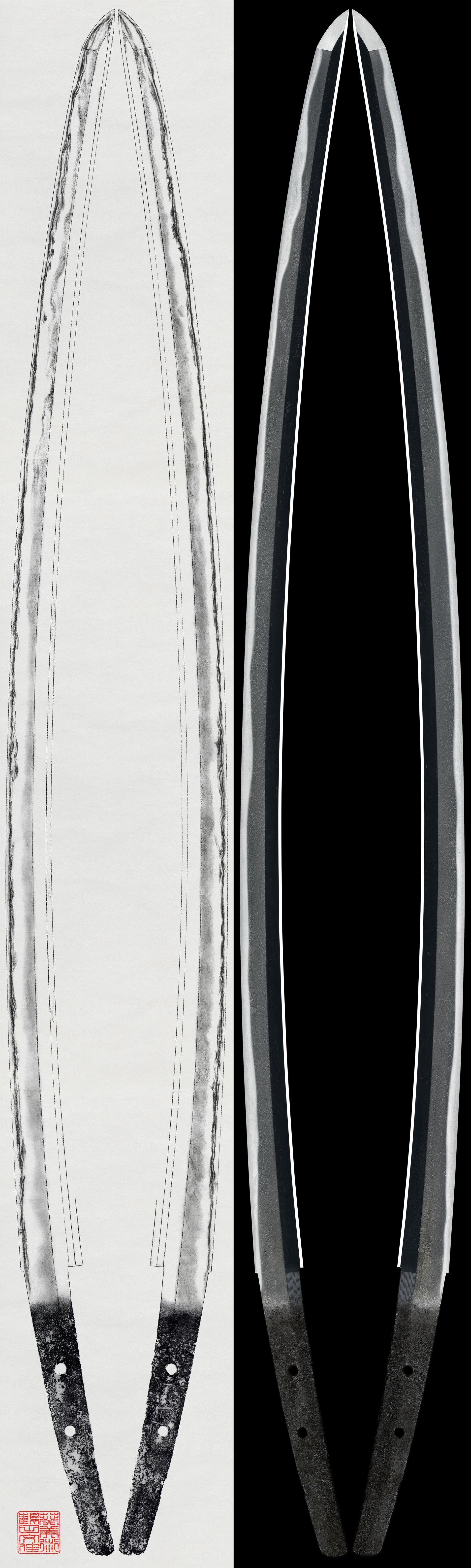
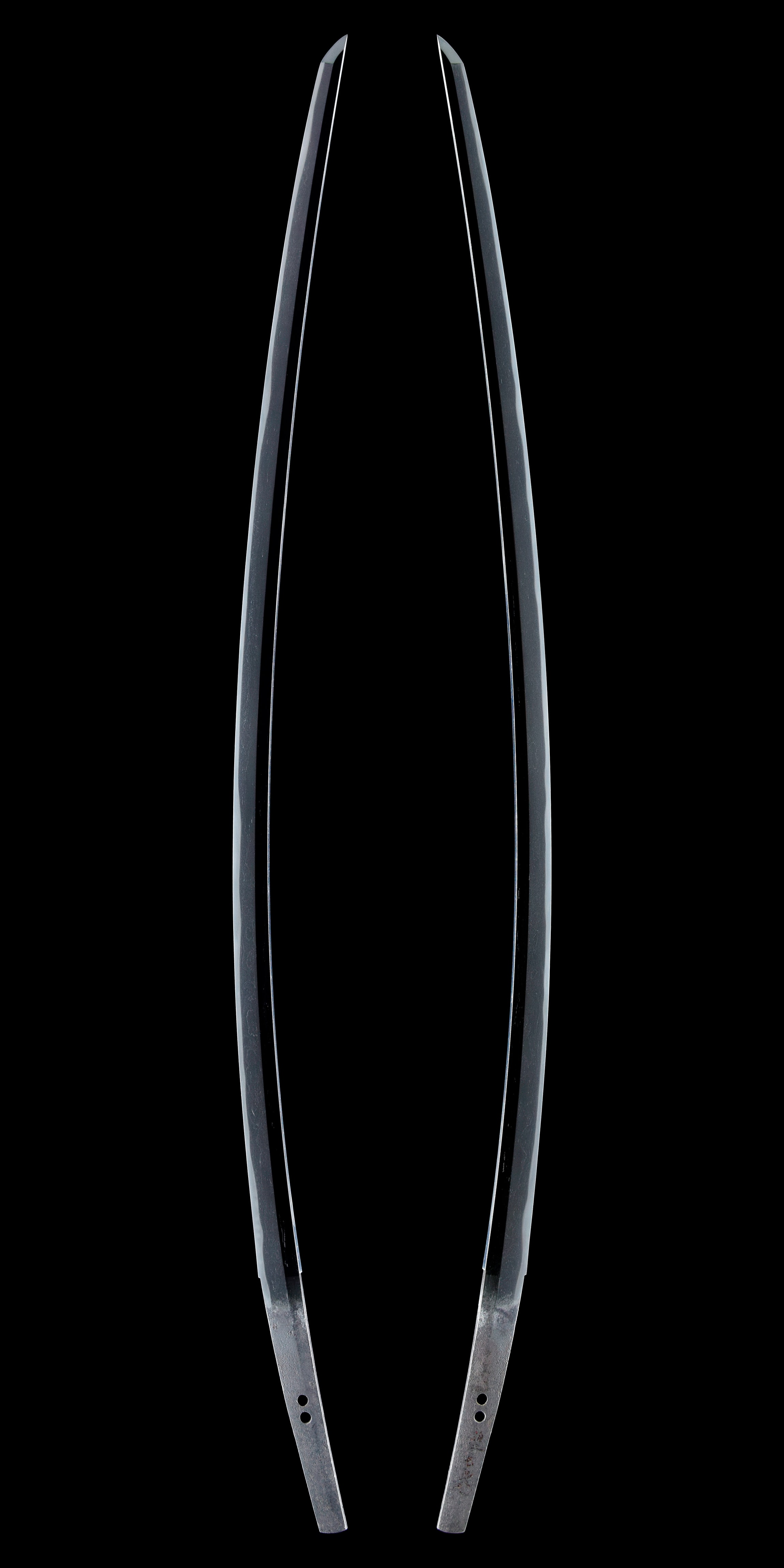
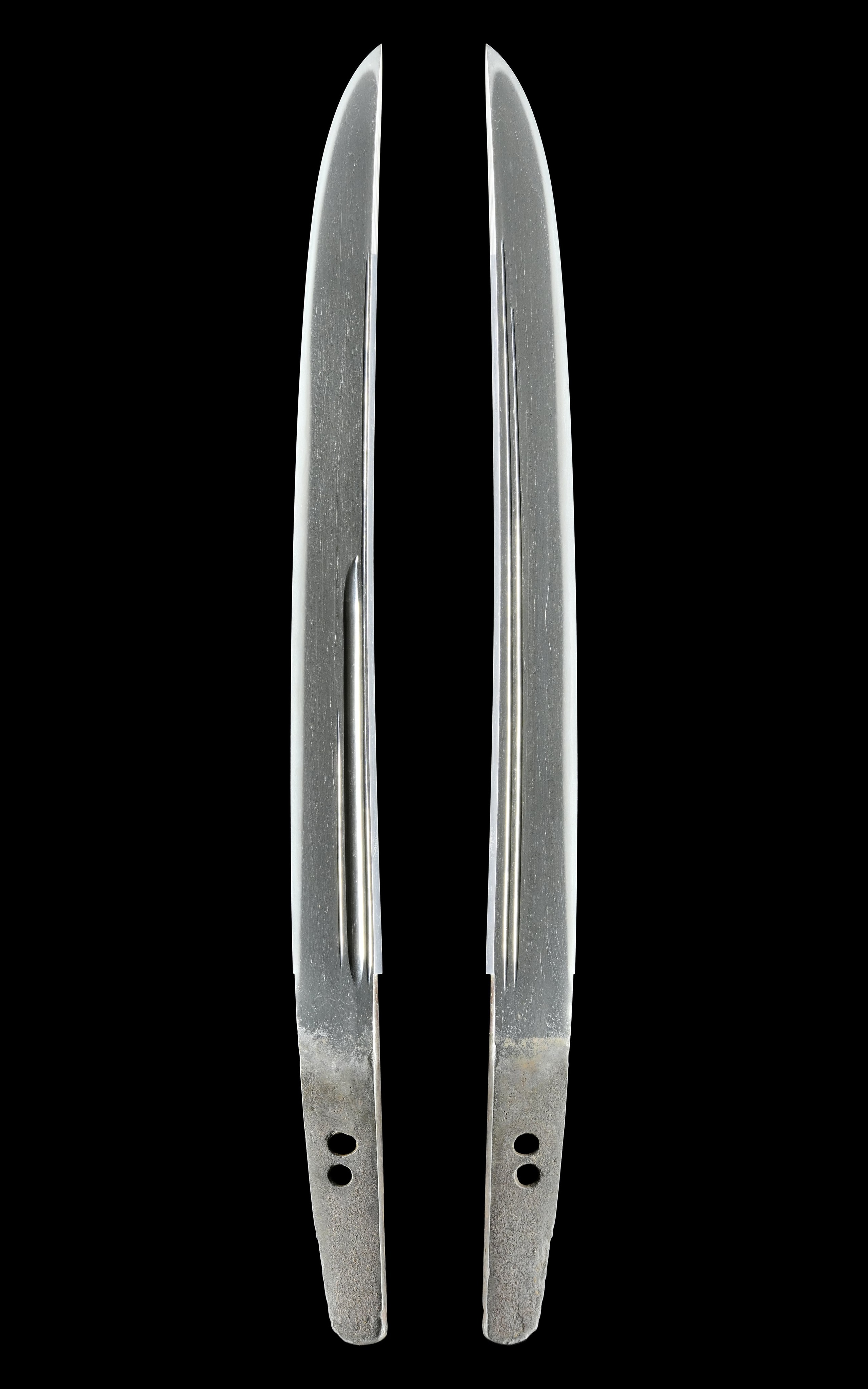
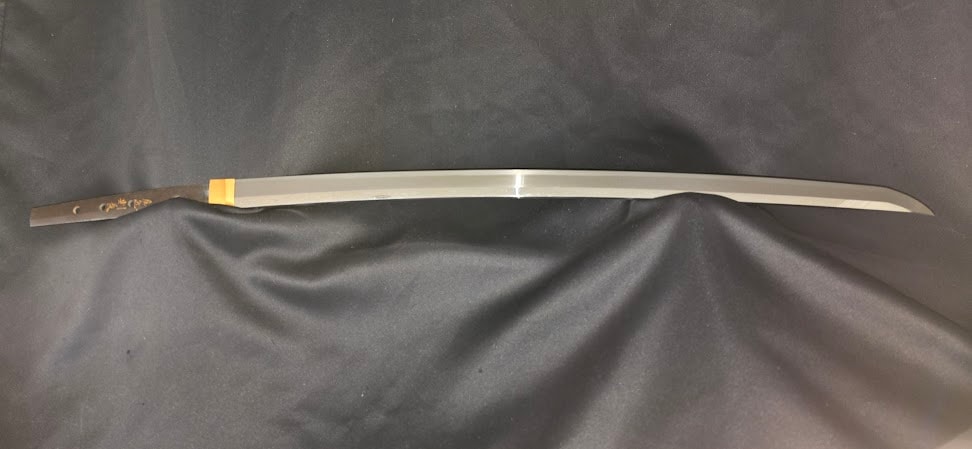
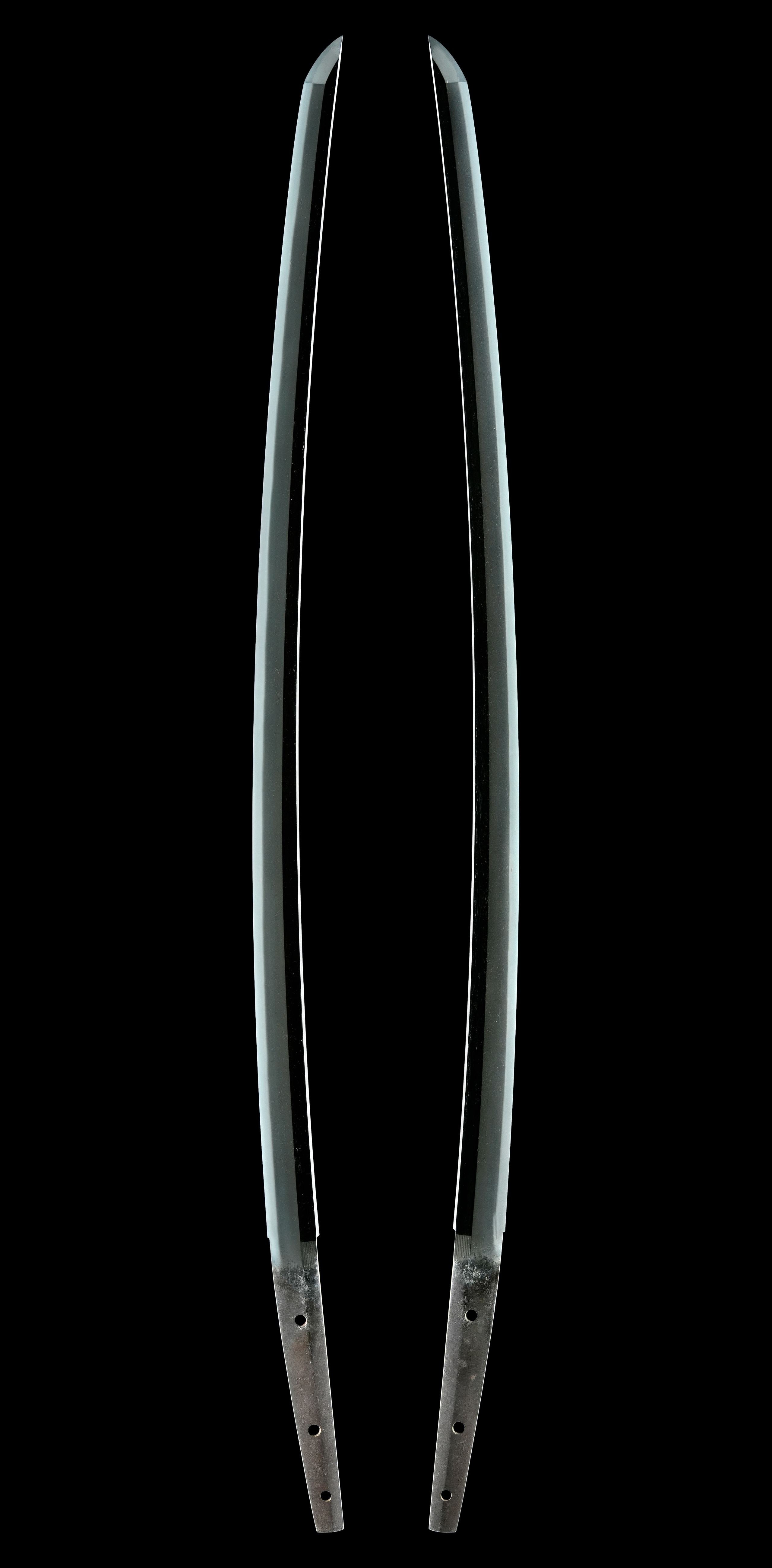
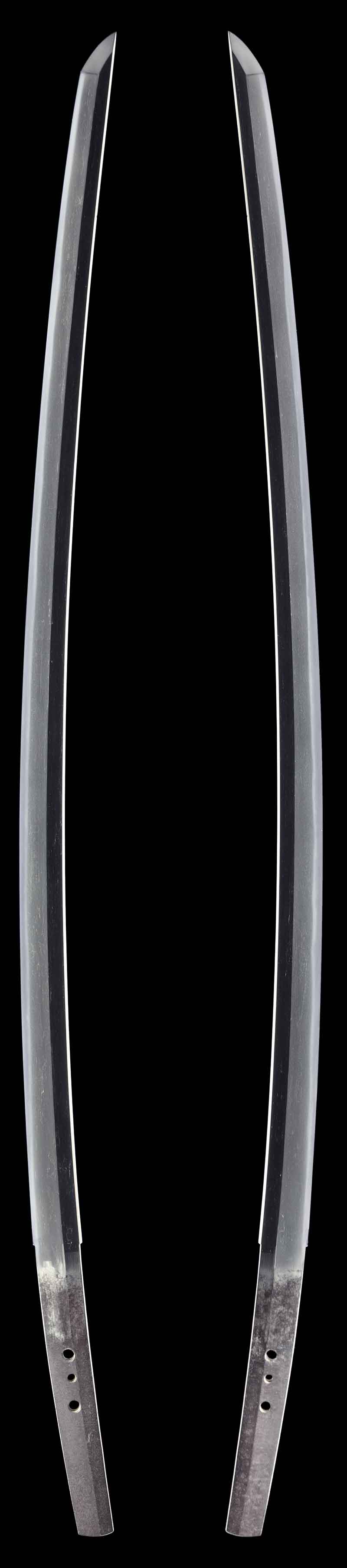
This is a katana made by Senjuin during the late Kamakura period. The blade features a wide mihaba, high shinogi, and shallow sori with koshizori. It has masamehada and abundant nie, with bright and clear nioikuchi. It is designated as a Juyo Token.

NBTHK Setsumei

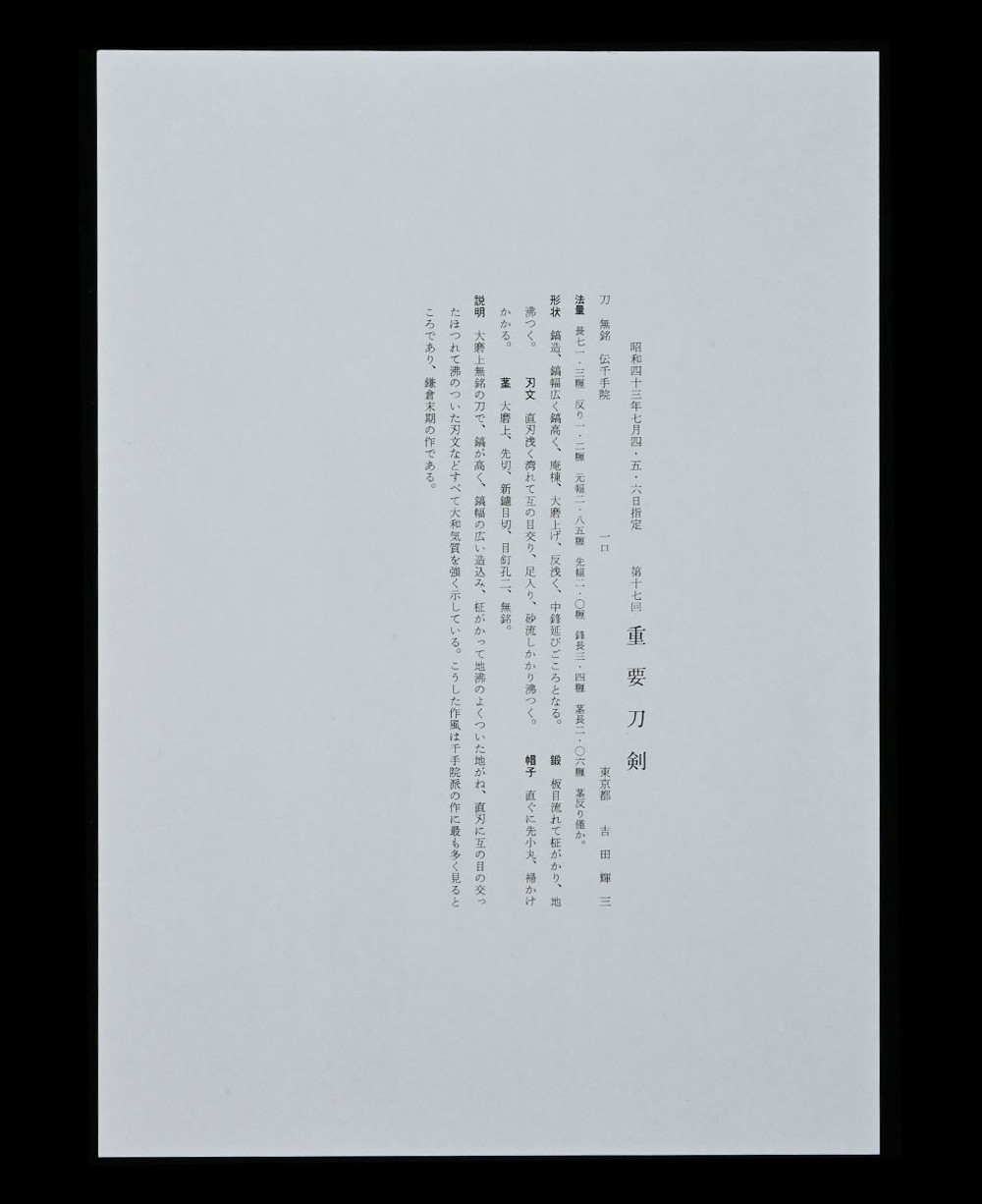
Juyo-Token, 17th Session — Designated July 4, 1968 Katana, mumei: den Senjuin school (千手院) Measurements Nagasa 71.3 cm, sori 1.2 cm, motohaba 2.85 cm, sakihaba 2.0 cm, kissaki-nagasa 3.4 cm, nakago-nagasa 20.6 cm, nakago-sori slight Description Keijo: shinogi-zukuri; the shinogi is wide and high; iori-mune; ō-suriage; shallow sori; chū-kissaki with a somewhat extended impression. Kitae: itame-hada with a tendency to nagare; ji-nie adheres. Hamon: suguha with irregularity, mixed with gunome; ashi enter; sunagashi appears; nie attaches. Boshi: sugu with a small ko-maru turnback, with a tendency toward hakikake. Horimono: None. Nakago: ō-suriage; fresh kiri-yasurime; two mekugi-ana; unsigned. Artisan Den Senjuin Era Late Kamakura period Explanation This is a katana that has been greatly shortened (ō-suriage) and is unsigned. It is characterized by a high shinogi and a broad shinogi-zukuri configuration; the jihada, with well-adhering ji-nie, has a slightly shinogi-zukuri (flowing) tendency; and the hamon—a suguha mixed with gunome, showing hotsure and nie—in all respects strongly manifests a Yamato temperament. Such a manner of workmanship is most frequently encountered among works of the Senjuin group, and this blade is therefore considered to be a product of the late Kamakura period. (Den Senjuin)

NihontoWatch MonNihontoWatchBETA
MarketAuctionsEncyclopedia
Swords›Yamato-den›Senjuin›Katana: Senjuin - Juyo Token
katanaJūyō
Senjuin

Katana: Senjuin - Juyo Token

mumei · Senjuin · Kamakura · nagasa 71.3cm · sori 0.8cm

¥3,900,000
Visit seller website →
Senjuin — 1 of 20
Senjuin — 2 of 20
Senjuin — 3 of 20
Senjuin — 4 of 20
Senjuin — 5 of 20
Senjuin — 6 of 20
Senjuin — 7 of 20
Senjuin — 8 of 20
Senjuin — 9 of 20
Senjuin — 10 of 20
Senjuin — 11 of 20
Senjuin — 12 of 20
Senjuin — 13 of 20
Senjuin — 14 of 20
Senjuin — 15 of 20
Senjuin — 16 of 20
Senjuin — 17 of 20
Senjuin — 18 of 20
Senjuin — 19 of 20
Senjuin — 20 of 20
1 / 20
1 / 20
Senjuin — 1 of 20Senjuin — 2 of 20Senjuin — 3 of 20Senjuin — 4 of 20Senjuin — 5 of 20Senjuin — 6 of 20Senjuin — 7 of 20Senjuin — 8 of 20Senjuin — 9 of 20Senjuin — 10 of 20Senjuin — 11 of 20Senjuin — 12 of 20Senjuin — 13 of 20Senjuin — 14 of 20Senjuin — 15 of 20Senjuin — 16 of 20Senjuin — 17 of 20Senjuin — 18 of 20Senjuin — 19 of 20Senjuin — 20 of 20
Measurements & details
Smith
Senjuin
Type
Katana
School
Senjuin
Period
Around 1222–1224(Teio)
Province
Yamato
Signature
Unsigned
Measurements
Nagasa 71.3cmSori 0.8cmMotohaba 3cmSakihaba 2.1cmKasane 0.61cmWeight 727g
Description

This is a katana made by Senjuin during the late Kamakura period. The blade features a wide mihaba, high shinogi, and shallow sori with koshizori. It has masamehada and abundant nie, with bright and clear nioikuchi. It is designated as a Juyo Token.

NBTHK Zufu Commentary

Juyo #17

AI translation — may contain errors

-, 17th Session — Designated July 4, 1968

, : Senjuin school (千手院)

Measurements 71.3 cm, 1.2 cm, 2.85 cm, 2.0 cm, 3.4 cm, 20.6 cm, slight

Description Keijo: ; the is wide and high; ; ; shallow ; with a somewhat extended impression. : with a tendency to ; adheres. : with irregularity, mixed with ; enter; appears; attaches. : with a small turnback, with a tendency toward . : None. : ; fresh ; two ; unsigned.

Artisan Senjuin

Era Late period

Explanation This is a that has been greatly shortened () and is unsigned. It is characterized by a high and a broad configuration; the , with well-adhering , has a slightly (flowing) tendency; and the —a mixed with , showing and —in all respects strongly manifests a Yamato temperament.

Such a manner of workmanship is most frequently encountered among works of the Senjuin group, and this blade is therefore considered to be a product of the late period.

( Senjuin)

About the maker

Senjuin

千手院

Yamato-den · Yamato · around 1222-1224

9 pieces on the market now

›

The Senjuin school takes its name from the Senjudo, a hall enshrining Senju Kannon (the Thousand-Armed Avalokitesvara) said to have stood at the western foothills of Mt. Wakakusa in Nara. Tradition holds that the group of swordsmiths residing in this area constituted the school, which is regarded as the earliest in origin among the five schools of Yamato. According to old transmitted writings, two master smiths, Yukinobu and Shigehiro, were active in the late Heian period; however, no secure extant works by either have yet been confirmed. For reasons unknown, signed works of the school are scarce even thereafter. The oldest surviving signed example is a tachi bearing the three-character inscription "Senjuin," thought to date to the early Kamakura period. Works prefixed Ko-Senjuin are attributed to the school's earliest phase and display forms that retain the lingering presence of the earlier straight-sword (chokuto) tradition, constituting indispensable material for research into the development of the curved shinogi-zukuri blade.

The school's technical hallmarks are firmly rooted in the Yamato tradition. The jigane characteristically shows itame-hada mixed with mokume and areas of nagare-masame, frequently tending toward hada-dachi; thick ji-nie adheres well, with abundant chikei, and in finer examples a faint nie-utsuri appears, yielding a steel that is bright and clear. The hamon is fundamentally suguha-based with a shallow notare tendency, mixing ko-choji, ko-gunome, and ko-midare; the habuchi is characteristically frayed with hotsure, and activities such as uchi-noke, nijuba, kuichigai-ba, and yubashiri appear in profusion. Thick ko-nie adheres along the nioiguchi, which is bright and clear, while kinsuji and sunagashi run vigorously throughout. The boshi typically enters straight, forming ko-maru with vigorous hakikake, or terminates in yakizume. It has been observed from old times that within the Yamato Five Schools, a hamon of unusually vigorous and changeable character should be appraised as Senjuin, distinguishing the school from the more restrained temper patterns of the Taima, Tegai, Hosho, and Shikkake groups.

The Senjuin school occupies a position of singular importance in the study of early Japanese swordsmithing. Its production spans from the late Heian period through the Nanbokucho era, and the school's close association with temple warrior-monks is thought to account for the rarity of signed works. Surviving blades encompass tachi, katana, kodachi, ken, and yari, the last of these being exceptionally rare as signed examples from this period. Many works retain their ubu nakago, preserving classical forms of pronounced koshizori with funbari that overflow with an archaic elegance. The school's ken served not as weapons of the warrior class but as goshintai and ritual implements, and surviving examples in this form are notably numerous among Yamato works. Pieces transmitted through such collections as Tanzan Shrine and Kyoo Gokoku-ji (To-ji) further attest to the school's deep connections with religious institutions. In both ji and ha, the finest Senjuin works display a powerful forging woven through with thick ji-nie and supported by frequent chikei, combined with a luminous hamon rich in nie activity, producing blades that are at once archaic in character and technically outstanding.

9 works by Senjuin on the market→
Senjuin — full profileYamato-den school
About the school

Senjuin

千手院

Yamato-den · Yamato

21 pieces on the market now

›

Among the five schools of the Yamato-den, Senjuin (千手院) is held to be the earliest in origin, its name drawn from the Senjudo, a hall enshrining Senju Kannon (the Thousand-Armed Avalokitesvara) said to have stood at the western foothills of Mt. Wakakusa in Nara. Learn more →
40 recorded smiths232 designated works
Leading smiths
SmithEraDesignated
Nobuyoshi延吉1288-129329
Sukemitsu助光1243-12476
Yoshihiro吉弘1352-13565
Yoshihiro義弘1312-13173
Yukise行瀬Mid-Kamakura to Nanbokucho0
Explore the Senjuin school →
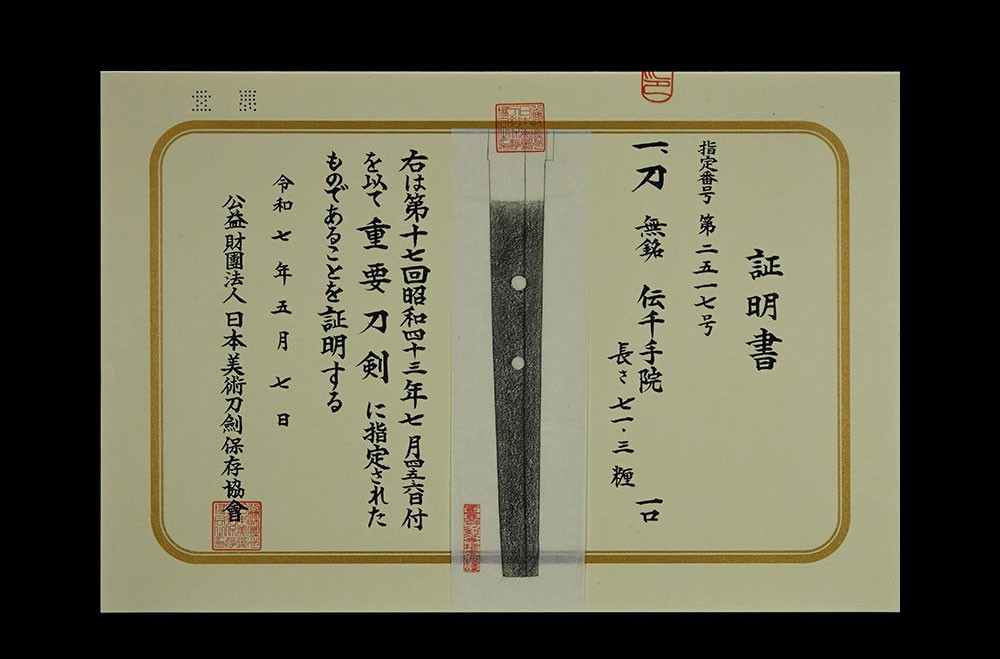
NBTHK Certificate
Jūyō Tōken重要刀剣
Important Sword
›

A blade of top-grade workmanship and condition, formally judged to rank with a nationally recognized Important Art Object (Jūyō Bijutsuhin). Awarded only at the NBTHK’s competitive annual examination.

Of Japan’s roughly 2.5 million registered swords, only 12,358 (about 1 in 202) have ever attained Jūyō.

About the NBTHK›

The NBTHK (Nihon Bijutsu Tōken Hozon Kyōkai, the Society for the Preservation of Japanese Art Swords) is a public-interest incorporated foundation founded in 1948 and supervised by Japan’s Agency for Cultural Affairs (Bunkachō); it is based at the Japanese Sword Museum in Tokyo. Its expert panels physically examine each submitted work (shinsa) and issue a certificate (kanteishō) ranking it by artistic and historical merit. NBTHK papers are the most widely recognized standard of authentication for Japanese swords and fittings.

NBTHK official site→
Seller
E
Eirakudo
🇯🇵Ships from Japan
›
✓Verified dealereirakudo.shop
Settles in JPY
✓Ships worldwide✓English supportWire transferCredit card
Return policy

Returns/exchanges/cancellations not accepted after shipment except for significant defects; if defective, return/exchange possible within 3 days of arrival (return shipping paid by customer).

View all of Eirakudo’s listings→View this item on the dealer’s site→

More works by Senjuin

View all →
Aoi Art
Jūyō
Tachi - Jūyō - by Senjuin - in Shirasaya with Koshirae Signature: SenjuinTachi - Jūyō - by Senjuin - in Shirasaya with Koshirae Signature: Senjuin

Tachi

BySenjuin
Starting Bid¥8,000,000
Touken Komachi
Tokuho
Katana - Tokuho - by Senjuin - Senjuin - ShirasayaKatana - Tokuho - by Senjuin - Senjuin - Shirasaya

Katana

BySenjuin
¥880,000
Ayakashi
Tokuho
Ken - Tokuho - by Senjuin - Ken: SenjuinKen - Tokuho - by Senjuin - Ken: Senjuin

Ken

BySenjuin
¥1,800,000
Touken Komachi
Tokuho
Katana - Tokuho - by Senjuin - Attributed to Senjuin, in ShirasayaKatana - Tokuho - by Senjuin - Attributed to Senjuin, in Shirasaya

Katana

BySenjuin
¥800,000
Touken Komachi
Tokuho
Katana - Tokuho - by Senjuin - Mumei (attributed to Senju-in) with Shirasaya and KoshiraeKatana - Tokuho - by Senjuin - Mumei (attributed to Senju-in) with Shirasaya and Koshirae

Katana

BySenjuin
¥1,250,000
Nihonto Australia
Hozon
Ken - Hozon - by Senjuin - Ken: Senjuin - with NBTHK Hozon CertificateKen - Hozon - by Senjuin - Ken: Senjuin - with NBTHK Hozon Certificate

Ken

BySenjuin
¥15,000
Toushin
Hozon
Tachi - Hozon - by Senjuin - MorihisaTachi - Hozon - by Senjuin - Morihisa

Tachi

BySenjuin
¥2,750,000
Shoubudou
Tokuho
Tachi - Tokuho - by Senjuin - Mumei attributed to SenjyuinTachi - Tokuho - by Senjuin - Mumei attributed to Senjyuin

Tachi

BySenjuin
¥2,800,000

Previously sold by Senjuin

Choshuya
Katana - by Senjuin - O-suriage Mumei SenjuinKatana - by Senjuin - O-suriage Mumei Senjuin
Sold

Katana

BySenjuin
SOLD
Choshuya
Tokuho
Katana - Tokuho - by Senjuin - O-suriage Mumei, Attributed to SenjuinKatana - Tokuho - by Senjuin - O-suriage Mumei, Attributed to Senjuin
Sold

Katana

BySenjuin
SOLD
Nihon Art
by Senjuin - Naginata-Naoshi Katana: Ko-Senjuinby Senjuin - Naginata-Naoshi Katana: Ko-Senjuin
Sold

Naginata-Naoshi Katana: Ko-Senjuin

BySenjuin
SOLD
Choshuya
Katana - by Senjuin - Mumei, O-suriage SenjuinKatana - by Senjuin - Mumei, O-suriage Senjuin
Sold

Katana

BySenjuin
SOLD
Choshuya
Tachi - by Senjuin - Ubu-mumei SenjuinTachi - by Senjuin - Ubu-mumei Senjuin
Sold

Tachi

BySenjuin
SOLD
Eirakudo
Tokuho
Katana - Tokuho - by Senjuin - Senjuin - Tokubetsu Hozon TokenKatana - Tokuho - by Senjuin - Senjuin - Tokubetsu Hozon Token
Sold

Katana

BySenjuin
SOLD
Nipponto
Jūyō
Katana - Jūyō - by Senjuin - Juyo Tachi attributed to Ko-SenjuinKatana - Jūyō - by Senjuin - Juyo Tachi attributed to Ko-Senjuin
Sold

Katana

BySenjuin
SOLD
Eirakudo
Tokuho
Katana - Tokuho - by Senjuin - Senjuin - Tokubetsu Hozon TokenKatana - Tokuho - by Senjuin - Senjuin - Tokubetsu Hozon Token
Sold

Katana

BySenjuin
SOLD

More from the Yamato tradition

View all →
Tsuruginoya
Jūyō
Katana - Jūyō - by Tegai Kanenaga - Tegai KanenagaKatana - Jūyō - by Tegai Kanenaga - Tegai Kanenaga

Katana

ByTegai Kanenaga
¥7,500,000
Touken Komachi
Tokuho
Katana - Tokuho - by Tegai Kanenaga - Katana in ShirasayaKatana - Tokuho - by Tegai Kanenaga - Katana in Shirasaya

Katana

ByTegai Kanenaga
¥3,000,000
Aoi Art
Tokuho
Katana - Tokuho - by Satsuma Masayuki - Satsuma Koku Hoki Kami Ason Masayuki Dated February, Kyowa 1, Year of the Rooster (1801)Katana - Tokuho - by Satsuma Masayuki - Satsuma Koku Hoki Kami Ason Masayuki Dated February, Kyowa 1, Year of the Rooster (1801)

Katana

BySatsuma Masayuki
Starting Bid¥1,800,000
Bushido Antique Japanese Swords
Jūyō
Katana - Jūyō - by Shikkake Norinaga - Shikkake Norinaga Juyo Token KatanaKatana - Jūyō - by Shikkake Norinaga - Shikkake Norinaga Juyo Token Katana

Katana

ByShikkake Norinaga
¥42,000
Eirakudo
Tokuho
Katana - Tokuho - by Monju Shigekuni - Nanki Shigekuni - Tokubetsu Hozon TokenKatana - Tokuho - by Monju Shigekuni - Nanki Shigekuni - Tokubetsu Hozon Token

Katana

ByMonju Shigekuni
¥5,500,000
Toushin
Tokuho
Tanto - Tokuho - by Tegai School - Tegai KanetoshiTanto - Tokuho - by Tegai School - Tegai Kanetoshi

Tantō

ByTegai School
¥1,100,000
Goushuya
Tokujū
Katana - Tokuju - by Satsuma Yasuyo - Tokubetsu Juyo Token (One-Leaf Aoi Mon) Shume no Kami Ichihei Fujiwara Ason Yasuyo, Made in Satsushu Kirei-gun on an Auspicious Day in March, Kyoho 12Katana - Tokuju - by Satsuma Yasuyo - Tokubetsu Juyo Token (One-Leaf Aoi Mon) Shume no Kami Ichihei Fujiwara Ason Yasuyo, Made in Satsushu Kirei-gun on an Auspicious Day in March, Kyoho 12

Katana

BySatsuma Yasuyo
Ask
Eirakudo
Tokuho
Katana - Tokuho - by Hosho School - Hosho Katana: Tokubetsu Hozon TokenKatana - Tokuho - by Hosho School - Hosho Katana: Tokubetsu Hozon Token

Katana

ByHosho School
¥4,200,000

Swords

  • Katana
  • Wakizashi
  • Tantō
  • Tachi
  • Naginata
  • Yari

Fittings

  • Tsuba
  • Fuchi-Kashira
  • Kozuka
  • Menuki

By Certification

  • Tokujū
  • Jūyō
  • Tokuho
  • Hozon

Resources

  • Dealer Directory
  • Artist Directory
  • Glossary
  • Browse All
Nihontowatch© 2026
TermsPrivacyCookies

Description

This is a katana made by Senjuin during the late Kamakura period. The blade features a wide mihaba, high shinogi, and shallow sori with koshizori. It has masamehada and abundant nie, with bright and clear nioikuchi. It is designated as a Juyo Token.

NBTHK Setsumei

Juyo-Token, 17th Session — Designated July 4, 1968 Katana, mumei: den Senjuin school (千手院) Measurements Nagasa 71.3 cm, sori 1.2 cm, motohaba 2.85 cm, sakihaba 2.0 cm, kissaki-nagasa 3.4 cm, nakago-nagasa 20.6 cm, nakago-sori slight Description Keijo: shinogi-zukuri; the shinogi is wide and high; iori-mune; ō-suriage; shallow sori; chū-kissaki with a somewhat extended impression. Kitae: itame-hada with a tendency to nagare; ji-nie adheres. Hamon: suguha with irregularity, mixed with gunome; ashi enter; sunagashi appears; nie attaches. Boshi: sugu with a small ko-maru turnback, with a tendency toward hakikake. Horimono: None. Nakago: ō-suriage; fresh kiri-yasurime; two mekugi-ana; unsigned. Artisan Den Senjuin Era Late Kamakura period Explanation This is a katana that has been greatly shortened (ō-suriage) and is unsigned. It is characterized by a high shinogi and a broad shinogi-zukuri configuration; the jihada, with well-adhering ji-nie, has a slightly shinogi-zukuri (flowing) tendency; and the hamon—a suguha mixed with gunome, showing hotsure and nie—in all respects strongly manifests a Yamato temperament. Such a manner of workmanship is most frequently encountered among works of the Senjuin group, and this blade is therefore considered to be a product of the late Kamakura period. (Den Senjuin)

NihontoWatch MonNihontoWatchBETA
MarketAuctionsEncyclopedia
Swords›Yamato-den›Senjuin›Katana: Senjuin - Juyo Token
katanaJūyō
Senjuin

Katana: Senjuin - Juyo Token

mumei · Senjuin · Kamakura · nagasa 71.3cm · sori 0.8cm

¥3,900,000
Visit seller website →
Senjuin — 1 of 20
Senjuin — 2 of 20
Senjuin — 3 of 20
Senjuin — 4 of 20
Senjuin — 5 of 20
Senjuin — 6 of 20
Senjuin — 7 of 20
Senjuin — 8 of 20
Senjuin — 9 of 20
Senjuin — 10 of 20
Senjuin — 11 of 20
Senjuin — 12 of 20
Senjuin — 13 of 20
Senjuin — 14 of 20
Senjuin — 15 of 20
Senjuin — 16 of 20
Senjuin — 17 of 20
Senjuin — 18 of 20
Senjuin — 19 of 20
Senjuin — 20 of 20
1 / 20
1 / 20
Senjuin — 1 of 20Senjuin — 2 of 20Senjuin — 3 of 20Senjuin — 4 of 20Senjuin — 5 of 20Senjuin — 6 of 20Senjuin — 7 of 20Senjuin — 8 of 20Senjuin — 9 of 20Senjuin — 10 of 20Senjuin — 11 of 20Senjuin — 12 of 20Senjuin — 13 of 20Senjuin — 14 of 20Senjuin — 15 of 20Senjuin — 16 of 20Senjuin — 17 of 20Senjuin — 18 of 20Senjuin — 19 of 20Senjuin — 20 of 20
Measurements & details
Smith
Senjuin
Type
Katana
School
Senjuin
Period
Around 1222–1224(Teio)
Province
Yamato
Signature
Unsigned
Measurements
Nagasa 71.3cmSori 0.8cmMotohaba 3cmSakihaba 2.1cmKasane 0.61cmWeight 727g
Description

This is a katana made by Senjuin during the late Kamakura period. The blade features a wide mihaba, high shinogi, and shallow sori with koshizori. It has masamehada and abundant nie, with bright and clear nioikuchi. It is designated as a Juyo Token.

NBTHK Zufu Commentary

Juyo #17

AI translation — may contain errors

-, 17th Session — Designated July 4, 1968

, : Senjuin school (千手院)

Measurements 71.3 cm, 1.2 cm, 2.85 cm, 2.0 cm, 3.4 cm, 20.6 cm, slight

Description Keijo: ; the is wide and high; ; ; shallow ; with a somewhat extended impression. : with a tendency to ; adheres. : with irregularity, mixed with ; enter; appears; attaches. : with a small turnback, with a tendency toward . : None. : ; fresh ; two ; unsigned.

Artisan Senjuin

Era Late period

Explanation This is a that has been greatly shortened () and is unsigned. It is characterized by a high and a broad configuration; the , with well-adhering , has a slightly (flowing) tendency; and the —a mixed with , showing and —in all respects strongly manifests a Yamato temperament.

Such a manner of workmanship is most frequently encountered among works of the Senjuin group, and this blade is therefore considered to be a product of the late period.

( Senjuin)

About the maker

Senjuin

千手院

Yamato-den · Yamato · around 1222-1224

9 pieces on the market now

›

The Senjuin school takes its name from the Senjudo, a hall enshrining Senju Kannon (the Thousand-Armed Avalokitesvara) said to have stood at the western foothills of Mt. Wakakusa in Nara. Tradition holds that the group of swordsmiths residing in this area constituted the school, which is regarded as the earliest in origin among the five schools of Yamato. According to old transmitted writings, two master smiths, Yukinobu and Shigehiro, were active in the late Heian period; however, no secure extant works by either have yet been confirmed. For reasons unknown, signed works of the school are scarce even thereafter. The oldest surviving signed example is a tachi bearing the three-character inscription "Senjuin," thought to date to the early Kamakura period. Works prefixed Ko-Senjuin are attributed to the school's earliest phase and display forms that retain the lingering presence of the earlier straight-sword (chokuto) tradition, constituting indispensable material for research into the development of the curved shinogi-zukuri blade.

The school's technical hallmarks are firmly rooted in the Yamato tradition. The jigane characteristically shows itame-hada mixed with mokume and areas of nagare-masame, frequently tending toward hada-dachi; thick ji-nie adheres well, with abundant chikei, and in finer examples a faint nie-utsuri appears, yielding a steel that is bright and clear. The hamon is fundamentally suguha-based with a shallow notare tendency, mixing ko-choji, ko-gunome, and ko-midare; the habuchi is characteristically frayed with hotsure, and activities such as uchi-noke, nijuba, kuichigai-ba, and yubashiri appear in profusion. Thick ko-nie adheres along the nioiguchi, which is bright and clear, while kinsuji and sunagashi run vigorously throughout. The boshi typically enters straight, forming ko-maru with vigorous hakikake, or terminates in yakizume. It has been observed from old times that within the Yamato Five Schools, a hamon of unusually vigorous and changeable character should be appraised as Senjuin, distinguishing the school from the more restrained temper patterns of the Taima, Tegai, Hosho, and Shikkake groups.

The Senjuin school occupies a position of singular importance in the study of early Japanese swordsmithing. Its production spans from the late Heian period through the Nanbokucho era, and the school's close association with temple warrior-monks is thought to account for the rarity of signed works. Surviving blades encompass tachi, katana, kodachi, ken, and yari, the last of these being exceptionally rare as signed examples from this period. Many works retain their ubu nakago, preserving classical forms of pronounced koshizori with funbari that overflow with an archaic elegance. The school's ken served not as weapons of the warrior class but as goshintai and ritual implements, and surviving examples in this form are notably numerous among Yamato works. Pieces transmitted through such collections as Tanzan Shrine and Kyoo Gokoku-ji (To-ji) further attest to the school's deep connections with religious institutions. In both ji and ha, the finest Senjuin works display a powerful forging woven through with thick ji-nie and supported by frequent chikei, combined with a luminous hamon rich in nie activity, producing blades that are at once archaic in character and technically outstanding.

9 works by Senjuin on the market→
Senjuin — full profileYamato-den school
About the school

Senjuin

千手院

Yamato-den · Yamato

21 pieces on the market now

›

Among the five schools of the Yamato-den, Senjuin (千手院) is held to be the earliest in origin, its name drawn from the Senjudo, a hall enshrining Senju Kannon (the Thousand-Armed Avalokitesvara) said to have stood at the western foothills of Mt. Wakakusa in Nara. Learn more →
40 recorded smiths232 designated works
Leading smiths
SmithEraDesignated
Nobuyoshi延吉1288-129329
Sukemitsu助光1243-12476
Yoshihiro吉弘1352-13565
Yoshihiro義弘1312-13173
Yukise行瀬Mid-Kamakura to Nanbokucho0
Explore the Senjuin school →
NBTHK Certificate
Jūyō Tōken重要刀剣
Important Sword
›

A blade of top-grade workmanship and condition, formally judged to rank with a nationally recognized Important Art Object (Jūyō Bijutsuhin). Awarded only at the NBTHK’s competitive annual examination.

Of Japan’s roughly 2.5 million registered swords, only 12,358 (about 1 in 202) have ever attained Jūyō.

About the NBTHK›

The NBTHK (Nihon Bijutsu Tōken Hozon Kyōkai, the Society for the Preservation of Japanese Art Swords) is a public-interest incorporated foundation founded in 1948 and supervised by Japan’s Agency for Cultural Affairs (Bunkachō); it is based at the Japanese Sword Museum in Tokyo. Its expert panels physically examine each submitted work (shinsa) and issue a certificate (kanteishō) ranking it by artistic and historical merit. NBTHK papers are the most widely recognized standard of authentication for Japanese swords and fittings.

NBTHK official site→
Seller
E
Eirakudo
🇯🇵Ships from Japan
›
✓Verified dealereirakudo.shop
Settles in JPY
✓Ships worldwide✓English supportWire transferCredit card
Return policy

Returns/exchanges/cancellations not accepted after shipment except for significant defects; if defective, return/exchange possible within 3 days of arrival (return shipping paid by customer).

View all of Eirakudo’s listings→View this item on the dealer’s site→

More works by Senjuin

View all →
Aoi Art
Jūyō
Tachi - Jūyō - by Senjuin - in Shirasaya with Koshirae Signature: SenjuinTachi - Jūyō - by Senjuin - in Shirasaya with Koshirae Signature: Senjuin

Tachi

BySenjuin
Starting Bid¥8,000,000
Touken Komachi
Tokuho
Katana - Tokuho - by Senjuin - Senjuin - ShirasayaKatana - Tokuho - by Senjuin - Senjuin - Shirasaya

Katana

BySenjuin
¥880,000
Ayakashi
Tokuho
Ken - Tokuho - by Senjuin - Ken: SenjuinKen - Tokuho - by Senjuin - Ken: Senjuin

Ken

BySenjuin
¥1,800,000
Touken Komachi
Tokuho
Katana - Tokuho - by Senjuin - Attributed to Senjuin, in ShirasayaKatana - Tokuho - by Senjuin - Attributed to Senjuin, in Shirasaya

Katana

BySenjuin
¥800,000
Touken Komachi
Tokuho
Katana - Tokuho - by Senjuin - Mumei (attributed to Senju-in) with Shirasaya and KoshiraeKatana - Tokuho - by Senjuin - Mumei (attributed to Senju-in) with Shirasaya and Koshirae

Katana

BySenjuin
¥1,250,000
Nihonto Australia
Hozon
Ken - Hozon - by Senjuin - Ken: Senjuin - with NBTHK Hozon CertificateKen - Hozon - by Senjuin - Ken: Senjuin - with NBTHK Hozon Certificate

Ken

BySenjuin
¥15,000
Toushin
Hozon
Tachi - Hozon - by Senjuin - MorihisaTachi - Hozon - by Senjuin - Morihisa

Tachi

BySenjuin
¥2,750,000
Shoubudou
Tokuho
Tachi - Tokuho - by Senjuin - Mumei attributed to SenjyuinTachi - Tokuho - by Senjuin - Mumei attributed to Senjyuin

Tachi

BySenjuin
¥2,800,000

Previously sold by Senjuin

Choshuya
Katana - by Senjuin - O-suriage Mumei SenjuinKatana - by Senjuin - O-suriage Mumei Senjuin
Sold

Katana

BySenjuin
SOLD
Choshuya
Tokuho
Katana - Tokuho - by Senjuin - O-suriage Mumei, Attributed to SenjuinKatana - Tokuho - by Senjuin - O-suriage Mumei, Attributed to Senjuin
Sold

Katana

BySenjuin
SOLD
Nihon Art
by Senjuin - Naginata-Naoshi Katana: Ko-Senjuinby Senjuin - Naginata-Naoshi Katana: Ko-Senjuin
Sold

Naginata-Naoshi Katana: Ko-Senjuin

BySenjuin
SOLD
Choshuya
Katana - by Senjuin - Mumei, O-suriage SenjuinKatana - by Senjuin - Mumei, O-suriage Senjuin
Sold

Katana

BySenjuin
SOLD
Choshuya
Tachi - by Senjuin - Ubu-mumei SenjuinTachi - by Senjuin - Ubu-mumei Senjuin
Sold

Tachi

BySenjuin
SOLD
Eirakudo
Tokuho
Katana - Tokuho - by Senjuin - Senjuin - Tokubetsu Hozon TokenKatana - Tokuho - by Senjuin - Senjuin - Tokubetsu Hozon Token
Sold

Katana

BySenjuin
SOLD
Nipponto
Jūyō
Katana - Jūyō - by Senjuin - Juyo Tachi attributed to Ko-SenjuinKatana - Jūyō - by Senjuin - Juyo Tachi attributed to Ko-Senjuin
Sold

Katana

BySenjuin
SOLD
Eirakudo
Tokuho
Katana - Tokuho - by Senjuin - Senjuin - Tokubetsu Hozon TokenKatana - Tokuho - by Senjuin - Senjuin - Tokubetsu Hozon Token
Sold

Katana

BySenjuin
SOLD

More from the Yamato tradition

View all →
Tsuruginoya
Jūyō
Katana - Jūyō - by Tegai Kanenaga - Tegai KanenagaKatana - Jūyō - by Tegai Kanenaga - Tegai Kanenaga

Katana

ByTegai Kanenaga
¥7,500,000
Touken Komachi
Tokuho
Katana - Tokuho - by Tegai Kanenaga - Katana in ShirasayaKatana - Tokuho - by Tegai Kanenaga - Katana in Shirasaya

Katana

ByTegai Kanenaga
¥3,000,000
Aoi Art
Tokuho
Katana - Tokuho - by Satsuma Masayuki - Satsuma Koku Hoki Kami Ason Masayuki Dated February, Kyowa 1, Year of the Rooster (1801)Katana - Tokuho - by Satsuma Masayuki - Satsuma Koku Hoki Kami Ason Masayuki Dated February, Kyowa 1, Year of the Rooster (1801)

Katana

BySatsuma Masayuki
Starting Bid¥1,800,000
Bushido Antique Japanese Swords
Jūyō
Katana - Jūyō - by Shikkake Norinaga - Shikkake Norinaga Juyo Token KatanaKatana - Jūyō - by Shikkake Norinaga - Shikkake Norinaga Juyo Token Katana

Katana

ByShikkake Norinaga
¥42,000
Eirakudo
Tokuho
Katana - Tokuho - by Monju Shigekuni - Nanki Shigekuni - Tokubetsu Hozon TokenKatana - Tokuho - by Monju Shigekuni - Nanki Shigekuni - Tokubetsu Hozon Token

Katana

ByMonju Shigekuni
¥5,500,000
Toushin
Tokuho
Tanto - Tokuho - by Tegai School - Tegai KanetoshiTanto - Tokuho - by Tegai School - Tegai Kanetoshi

Tantō

ByTegai School
¥1,100,000
Goushuya
Tokujū
Katana - Tokuju - by Satsuma Yasuyo - Tokubetsu Juyo Token (One-Leaf Aoi Mon) Shume no Kami Ichihei Fujiwara Ason Yasuyo, Made in Satsushu Kirei-gun on an Auspicious Day in March, Kyoho 12Katana - Tokuju - by Satsuma Yasuyo - Tokubetsu Juyo Token (One-Leaf Aoi Mon) Shume no Kami Ichihei Fujiwara Ason Yasuyo, Made in Satsushu Kirei-gun on an Auspicious Day in March, Kyoho 12

Katana

BySatsuma Yasuyo
Ask
Eirakudo
Tokuho
Katana - Tokuho - by Hosho School - Hosho Katana: Tokubetsu Hozon TokenKatana - Tokuho - by Hosho School - Hosho Katana: Tokubetsu Hozon Token

Katana

ByHosho School
¥4,200,000

Swords

  • Katana
  • Wakizashi
  • Tantō
  • Tachi
  • Naginata
  • Yari

Fittings

  • Tsuba
  • Fuchi-Kashira
  • Kozuka
  • Menuki

By Certification

  • Tokujū
  • Jūyō
  • Tokuho
  • Hozon

Resources

  • Dealer Directory
  • Artist Directory
  • Glossary
  • Browse All
Nihontowatch© 2026
TermsPrivacyCookies
NihontoWatch Mon

NihontoWatchBETA

MarketAuctions
Encyclopedia
NihontoWatch Mon

NihontoWatchBETA

MarketAuctions
Encyclopedia