NihontoWatch Mon

NihontoWatch

Market
Encyclopedia
Kantei
NihontoWatch Mon

NihontoWatch

Market
Encyclopedia
Kantei

Description

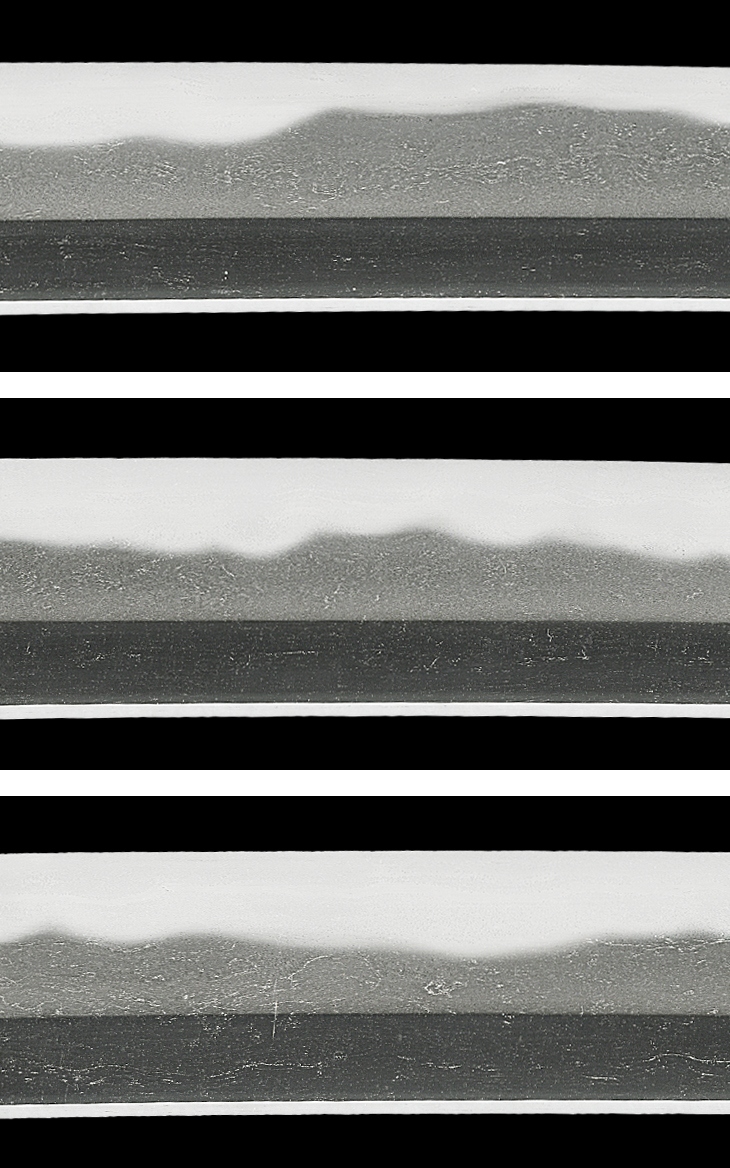
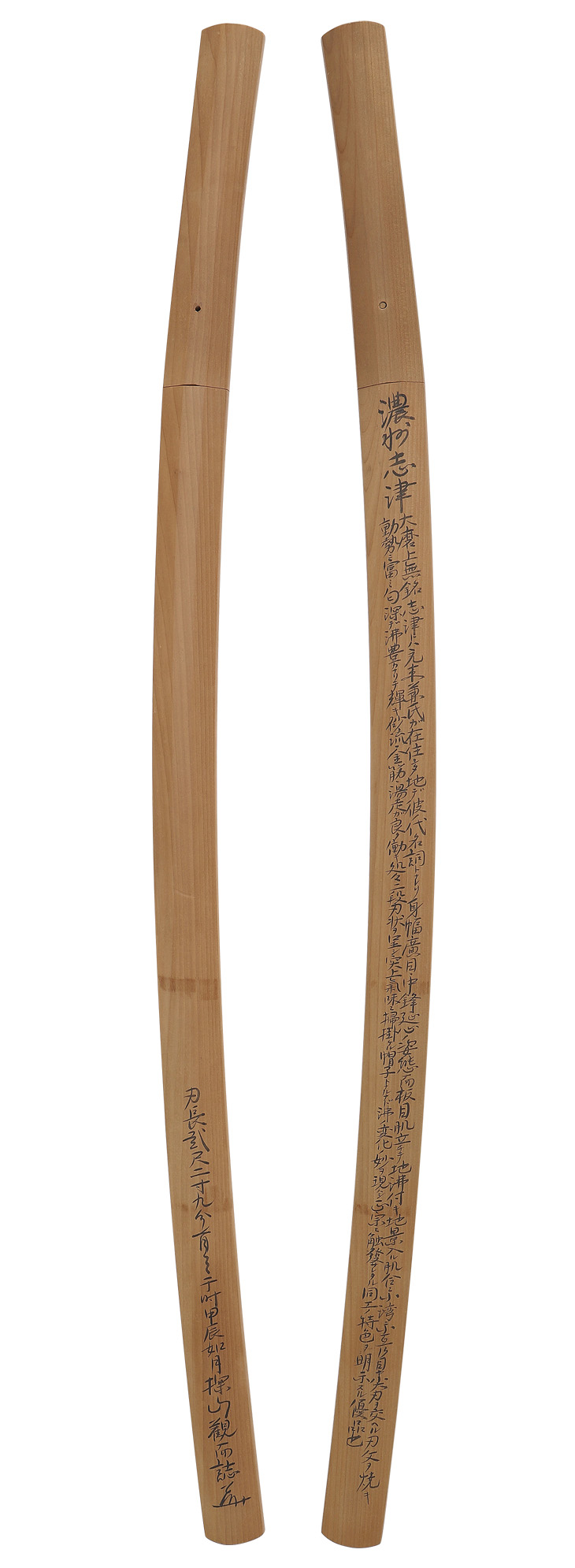
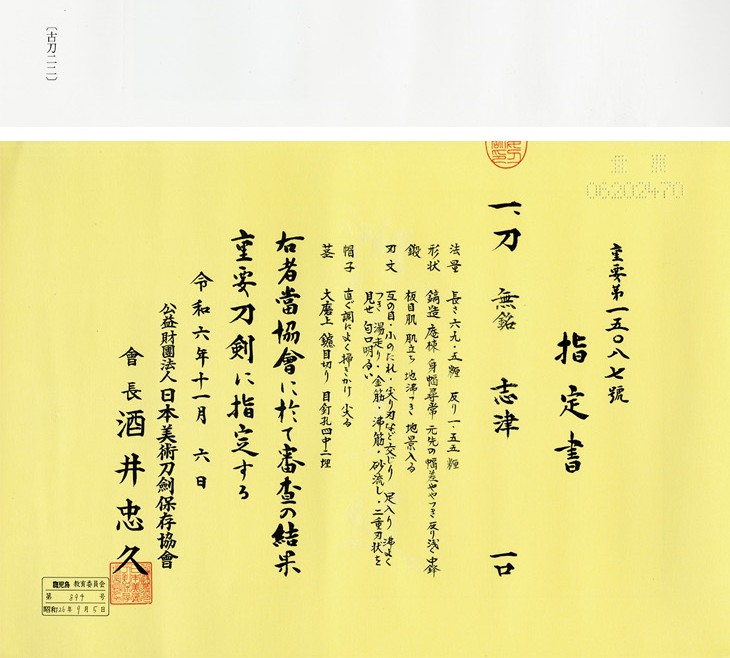
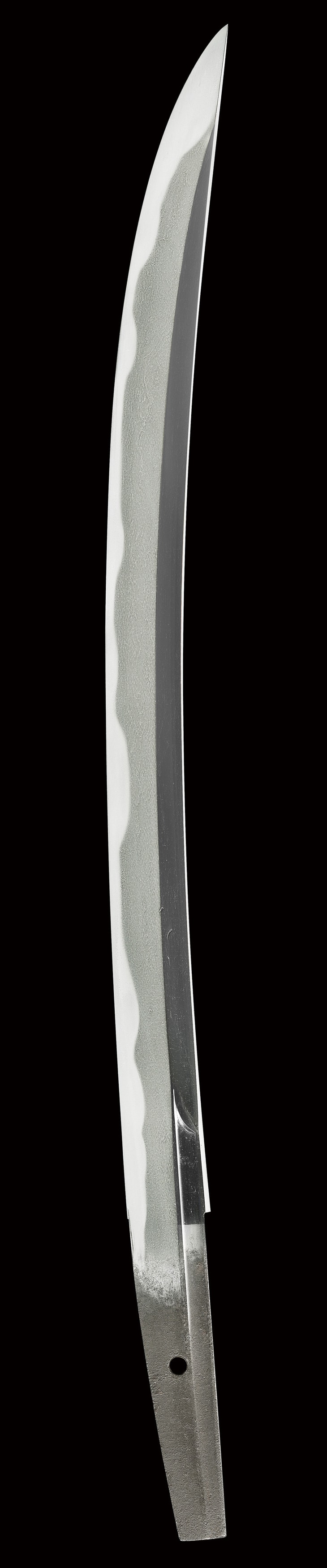
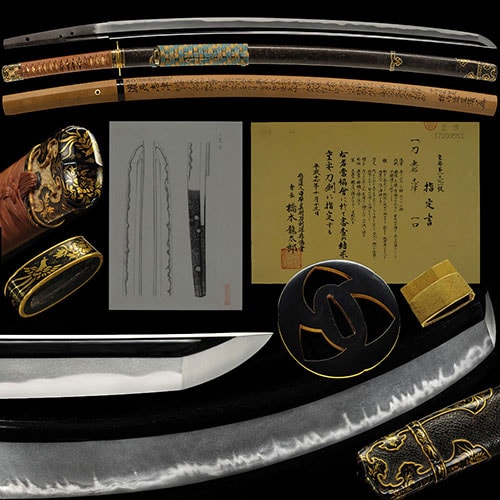
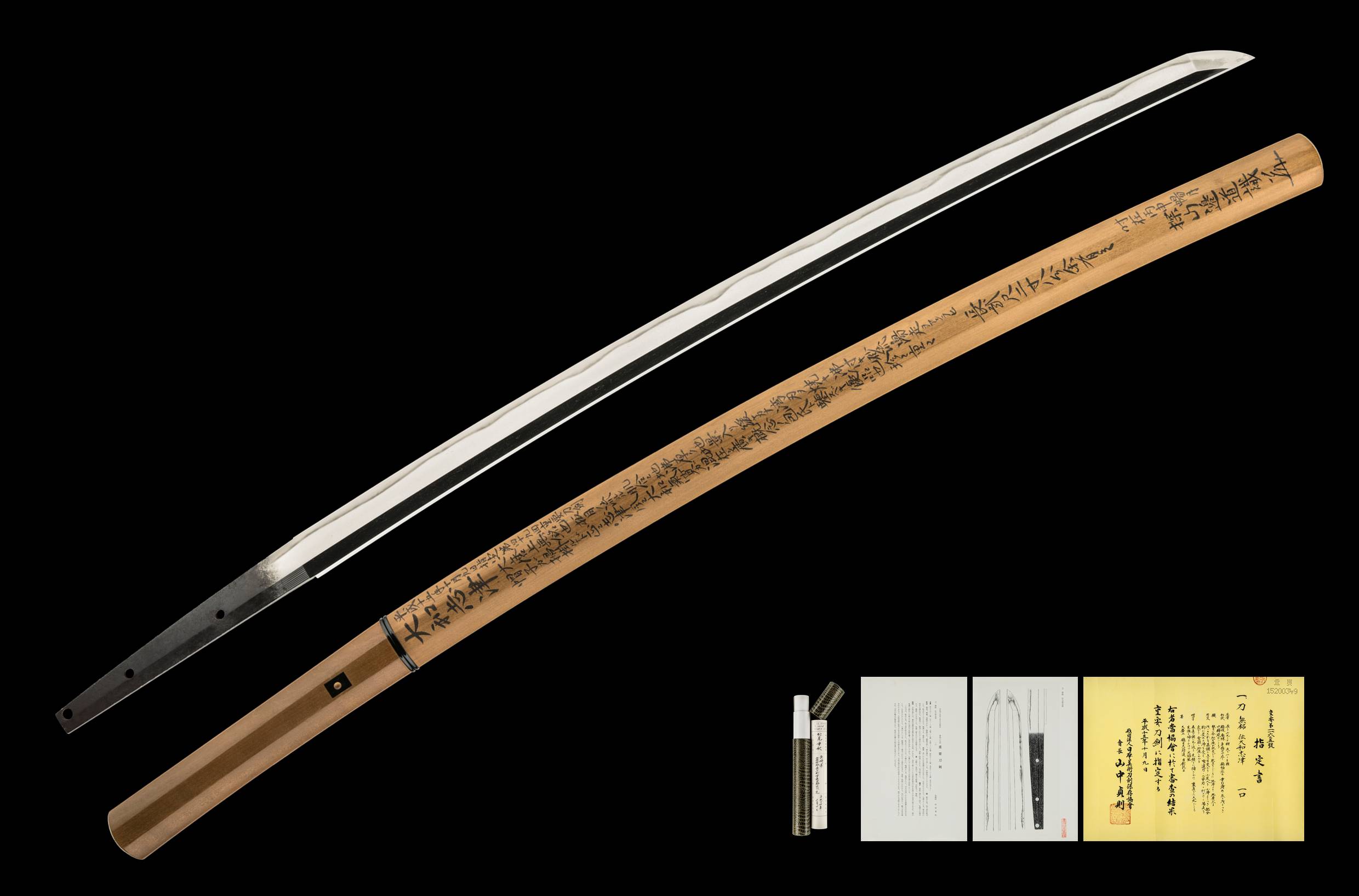
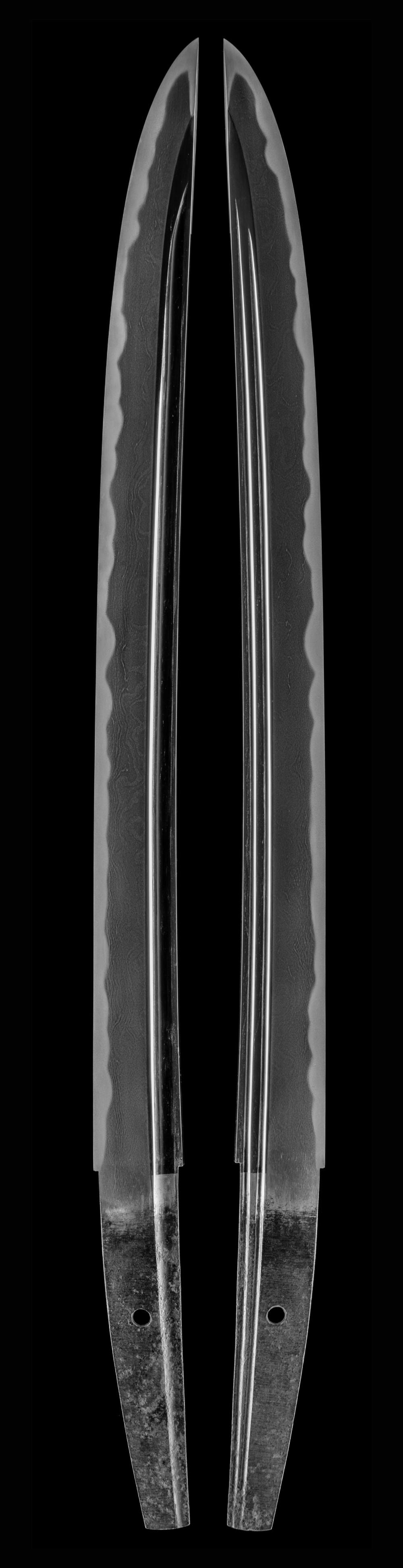
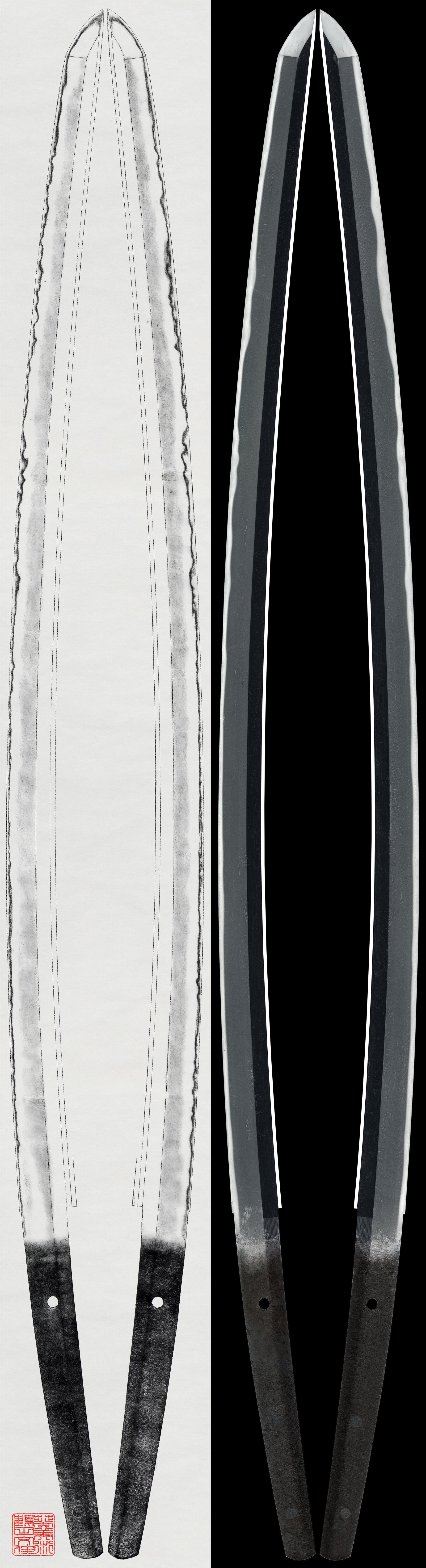
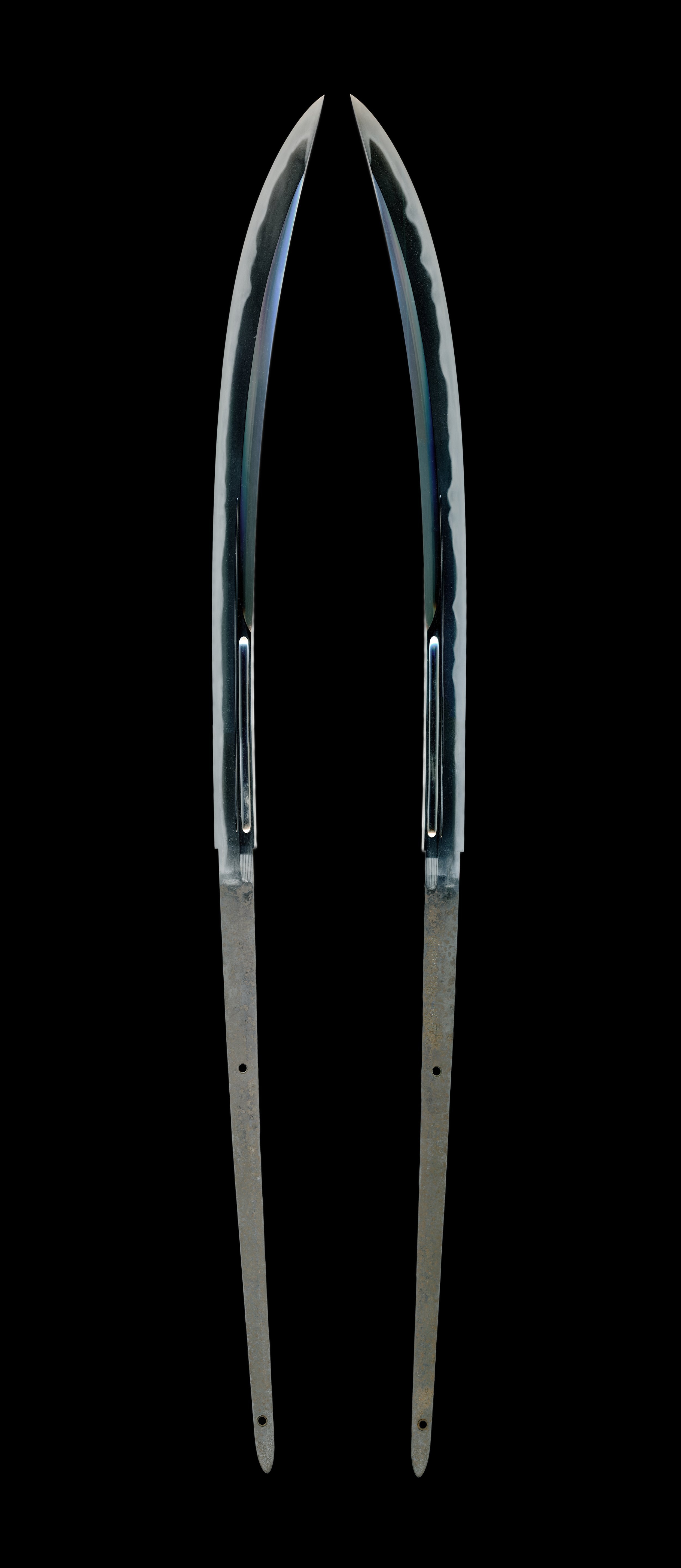
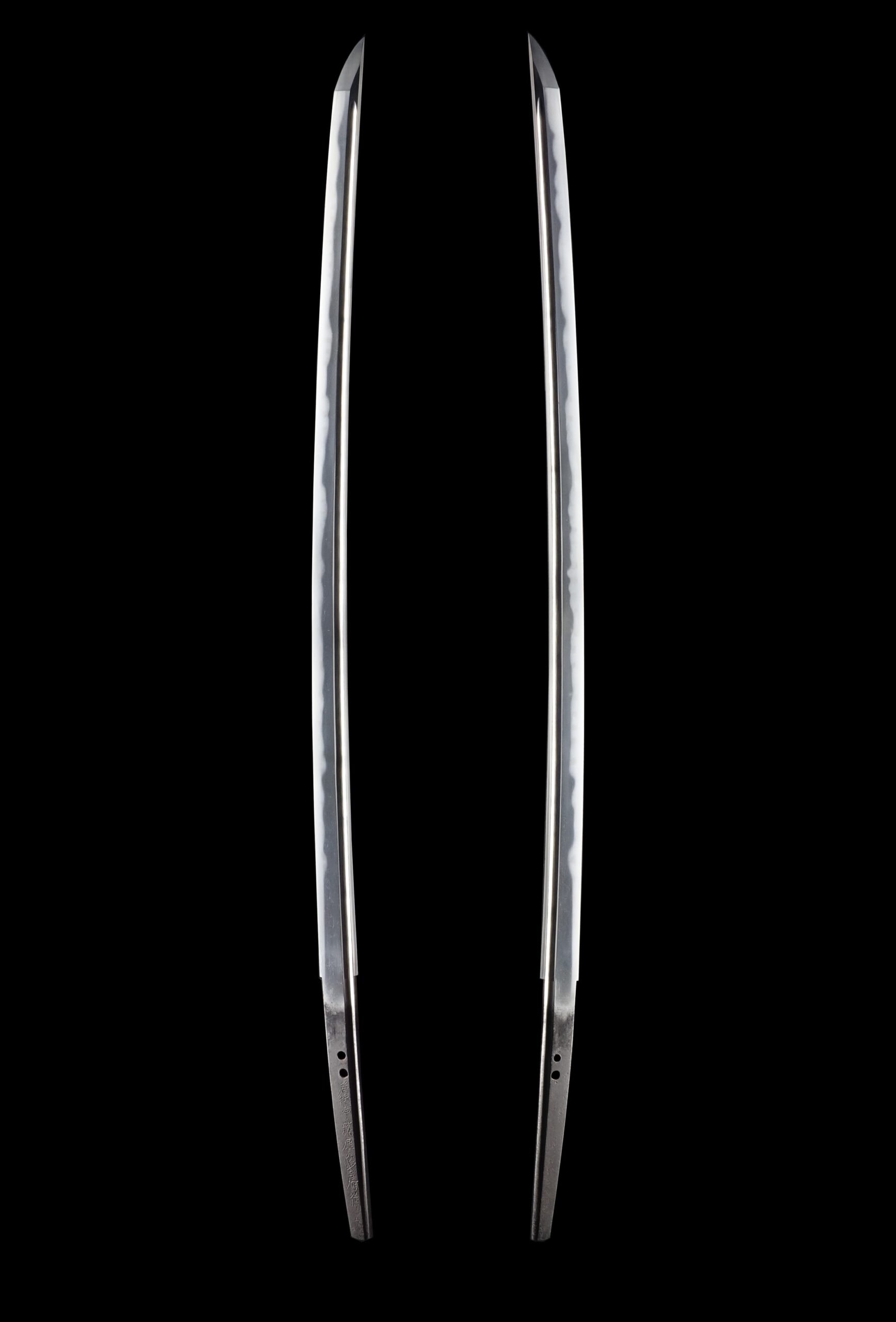
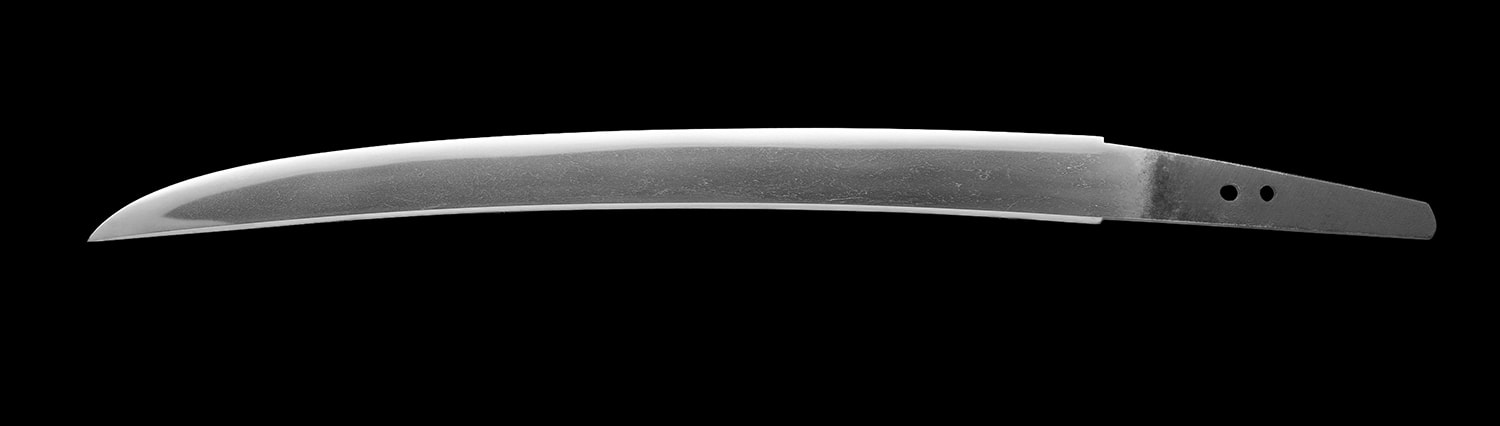
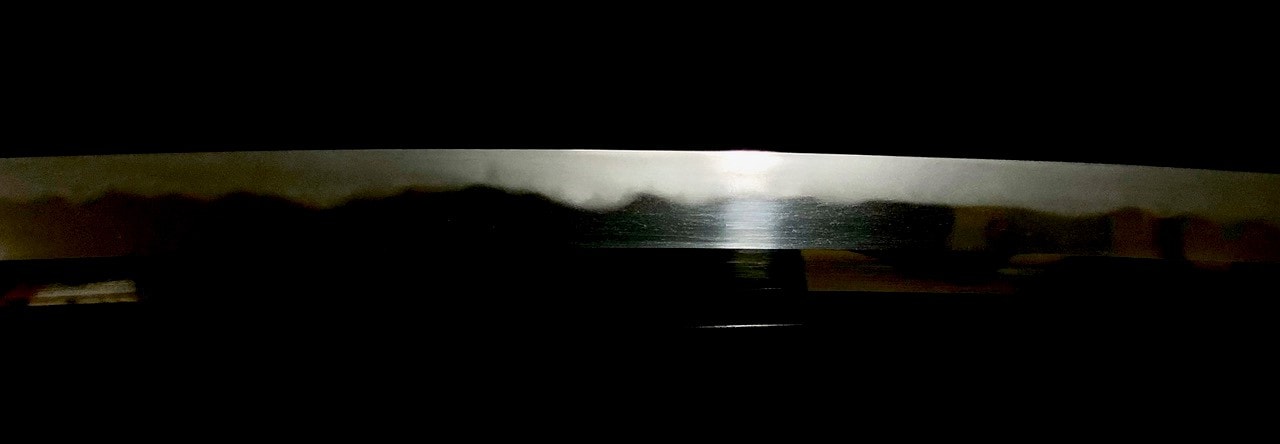
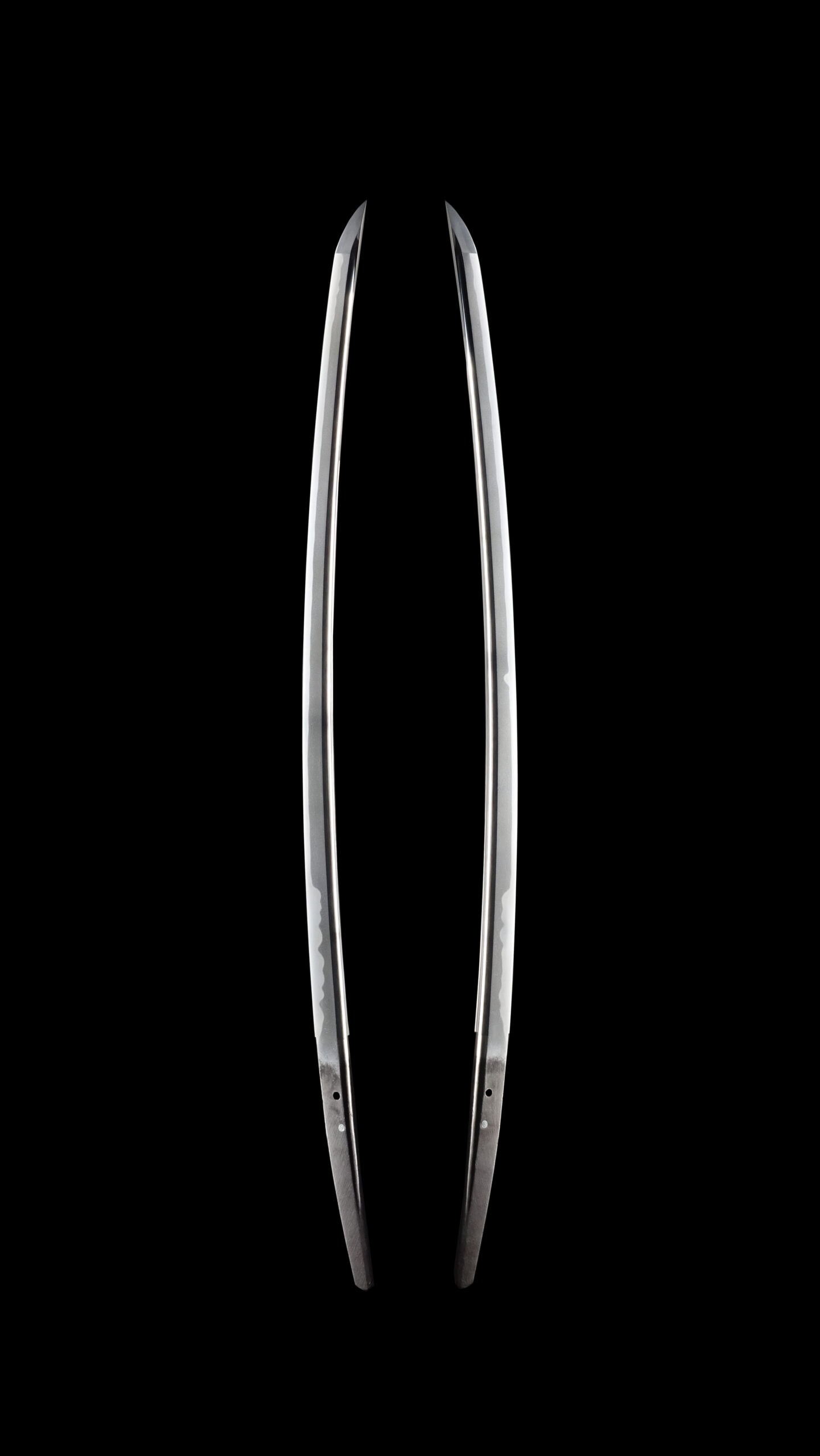
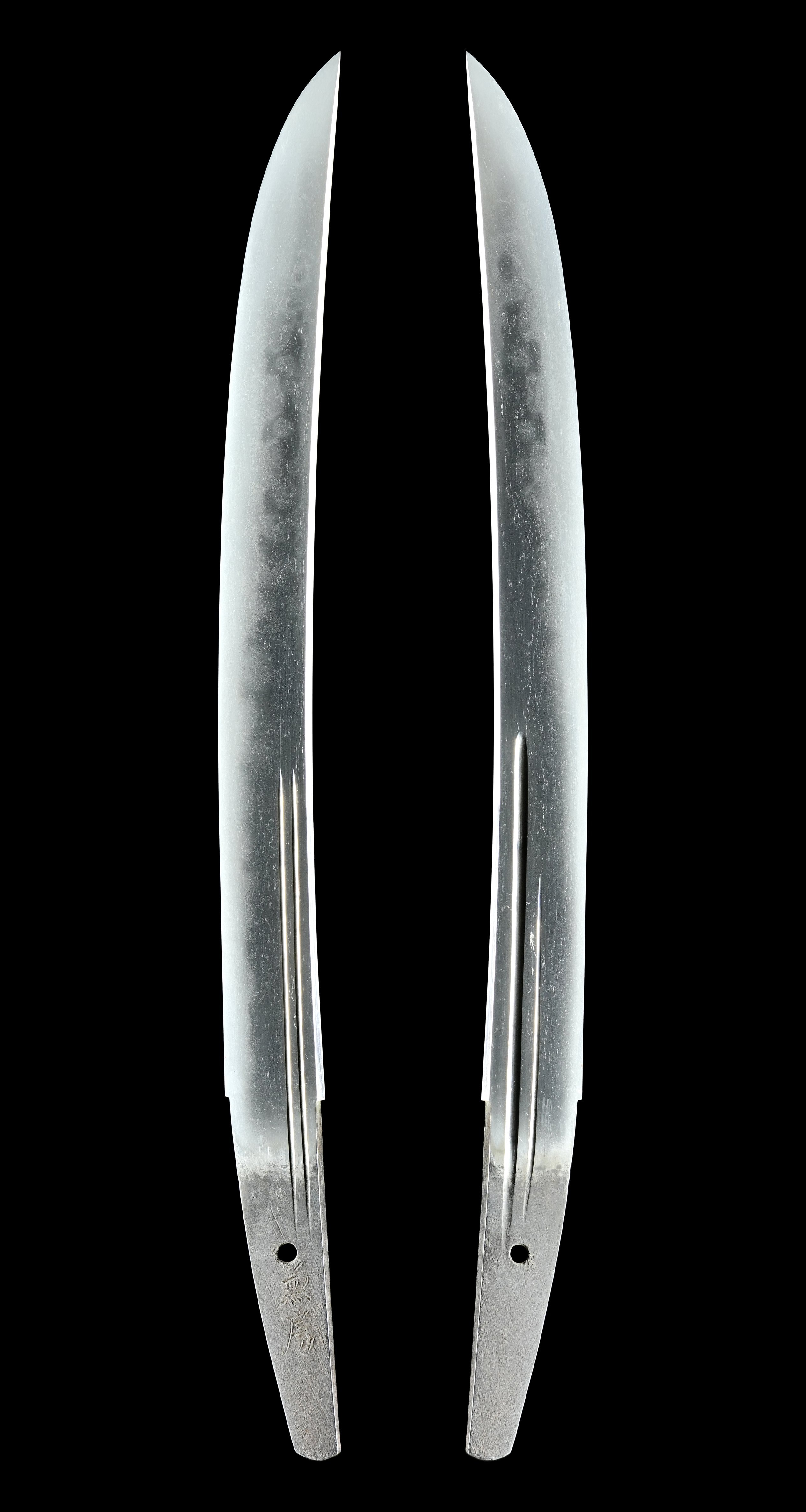
This is a mumei katana attributed to Shizu, a master smith of the Mino school and one of the Masamune Juttetsu. It is a 70th session Juyo Token designated in 2024, praised for its vibrant jitetsu and hamon reminiscent of Masamune's work. The blade comes with a shirasaya and a sayagaki by Tanzan sensei.

NBTHK Setsumei

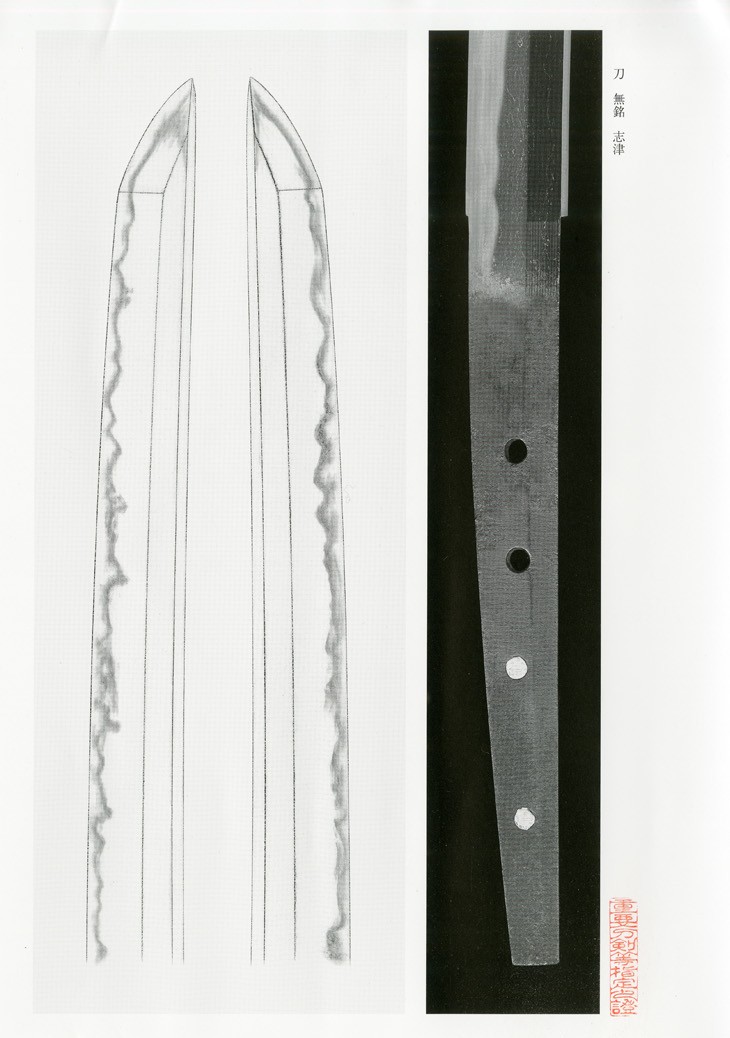
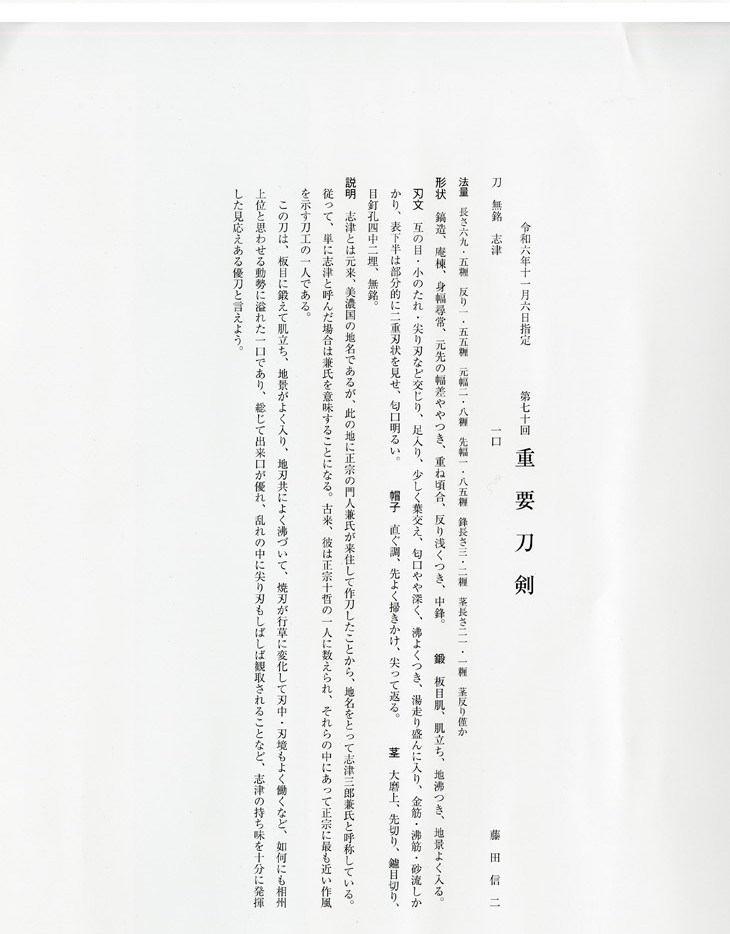
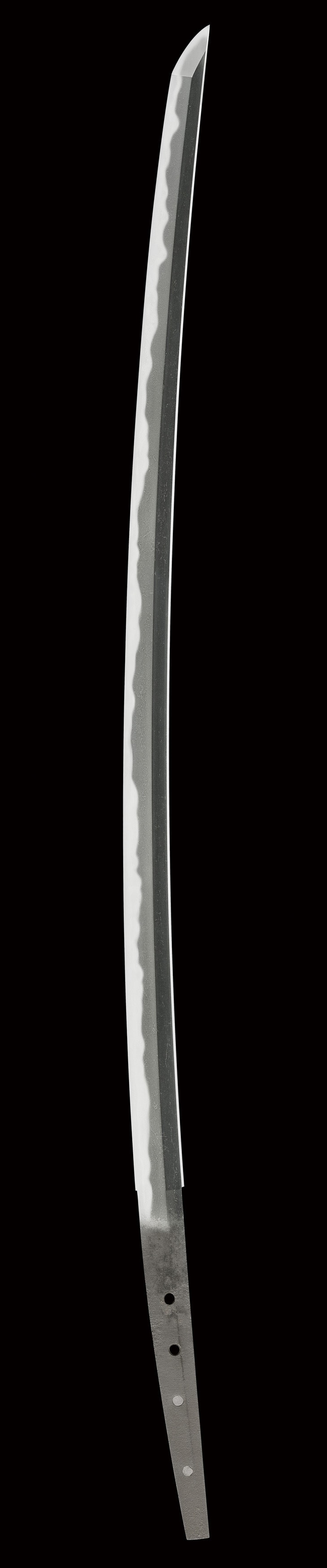
Jūyō-Tōken, 70th Session — Designated November 6, 2024 Katana, mumei: Shizu (志津) Measurements Nagasa 69.5 cm, sori 1.55 cm, motohaba 2.8 cm, sakihaba 1.85 cm, kissaki-nagasa 3.2 cm, nakago-nagasa 21.0 cm, nakago-sori slight Description Keijō: shinogi-zukuri, iori-mune; mihaba of standard width, with a somewhat pronounced difference between base and tip widths; kasane of moderate thickness; shallow sori; chū-kissaki. Kitae: itame-hada with standing grain; ji-nie attached; chikei well visible. Hamon: mixed gunome, ko-notare, and togariba; with ashi; with some yō intermingled; nioiguchi somewhat deep; nie well attached; abundant yubashiri; accompanied by kinsuji, nie-suji, and sunagashi; on the lower half of the omote it shows, in places, an appearance like nijūba; the nioiguchi is bright. Bōshi: sugu tone; the point strongly hakikake; turns back pointedly. Horimono: None. Nakago: ō-suriage; tip kiri; yasurime kiri; four mekugi-ana (two filled); unsigned. Artisan Shizu Kaneuji (志津兼氏) Era Nanbokuchō period Explanation “Shizu” was originally a place-name in Mino Province; however, because Kaneuji—disciple of Masamune—came to reside there and forged swords in that locale, he was called “Shizu Saburō Kaneuji,” taking the name of the place. Accordingly, when one simply says “Shizu,” it denotes Kaneuji. From ancient times he has been counted as one of the “Ten Great Disciples of Masamune” (Masamune jittetsu), and among them he is one of the swordsmiths whose style shows particular closeness to Masamune. This katana is forged in itame with a conspicuously standing grain; chikei enter well; both ji and ha are well covered in nie; and the hardened edge changes freely in a cursive-and-formal manner (gyōsō), while both the interior of the hamon and its boundary display lively activity. Altogether it is a work brimming with vigor that unmistakably suggests a high-ranking Sōshū manner. Its overall workmanship is excellent, and features such as the frequent appearance of togariba within the irregular temper fully bring out Shizu’s distinctive character. It may be termed an impressive and superior sword.

NihontoWatch MonNihontoWatch
MarketEncyclopediaKantei
Swords›Mino-den›Shizu›Kaneuji›Katana: Shizu (Mumei)
katanaJūyō
Shizu Kaneuji

Katana: Shizu (Mumei)

mumei · Mino · Geno (1319-1321) · nagasa 69.5cm · sori 1.6cm

¥9,500,000
Visit seller website →
Shizu Kaneuji — 1 of 7
Shizu Kaneuji — 2 of 7
Shizu Kaneuji — 3 of 7
Shizu Kaneuji — 4 of 7
Shizu Kaneuji — 5 of 7
Shizu Kaneuji — 6 of 7
Shizu Kaneuji — 7 of 7
1 / 7
1 / 7
Shizu Kaneuji — 1 of 7Shizu Kaneuji — 2 of 7Shizu Kaneuji — 3 of 7Shizu Kaneuji — 4 of 7Shizu Kaneuji — 5 of 7Shizu Kaneuji — 6 of 7Shizu Kaneuji — 7 of 7
Measurements & details
Smith
Shizu Kaneuji
Type
Katana
School
Shizu
Period
Around 1319–1321(Geno)
Province
Mino
Signature
Unsigned(5% of this smith's designated works are signed)
Measurements
Nagasa 69.5cmSori 1.6cmMotohaba 2.96cmSakihaba 2cmKasane 0.6cm
Description

This is a mumei katana attributed to Shizu, a master smith of the Mino school and one of the Masamune Juttetsu. It is a 70th session Juyo Token designated in 2024, praised for its vibrant jitetsu and hamon reminiscent of Masamune's work. The blade comes with a shirasaya and a sayagaki by Tanzan sensei.

NBTHK Zufu Commentary

Juyo #70

AI translation — may contain errors

-, 70th Session — Designated November 6, 2024

, : (志津)

[ 22]

Measurements 69.5 cm, 1.55 cm, 2.8 cm, 1.85 cm, 3.2 cm, 21.0 cm, slight

Description Keijō: , ; of standard width, with a somewhat pronounced difference between base and tip widths; of moderate thickness; shallow ; . : with standing grain; attached; well visible. : mixed , , and ; with ; with some intermingled; somewhat deep; well attached; abundant ; accompanied by , , and ; on the lower half of the it shows, in places, an appearance like ; the is bright. : tone; the point strongly ; turns back pointedly. : None. : ; tip ; ; four (two filled); unsigned.

Artisan Kaneuji (志津兼氏)

Era period

Explanation “” was originally a place-name in Province; however, because Kaneuji—disciple of Masamune—came to reside there and forged swords in that locale, he was called “ Saburō Kaneuji,” taking the name of the place. Accordingly, when one simply says “,” it denotes Kaneuji. From ancient times he has been counted as one of the “Ten Great Disciples of Masamune” (Masamune jittetsu), and among them he is one of the swordsmiths whose style shows particular closeness to Masamune.

This is forged in with a conspicuously standing grain; enter well; both and are well covered in ; and the hardened edge changes freely in a cursive-and-formal manner (gyōsō), while both the interior of the and its boundary display lively activity. Altogether it is a work brimming with vigor that unmistakably suggests a high-ranking manner. Its overall workmanship is excellent, and features such as the frequent appearance of within the irregular temper fully bring out ’s distinctive character. It may be termed an impressive and superior sword.

About the maker

Kaneuji

兼氏

Shizu (Mino) · Mino · around 1319-1321

Fujishiro Sai-jo saku · Tōken Taikan top 2%

2 pieces on the market now

›

Shizu is in origin a place name in Mino: because Masamune's pupil Kaneuji came to live and forge there, the name passed from village to man, and in the appraisal tradition a blade attributed simply Shizu means Kaneuji[[c:1]]. He began in Yamato as a Tegai smith signing 包氏, entered the gate of Soshu Masamune, and at Shizu changed the writing to 兼氏. Counted from old among the Masamune Juttetsu, he is, in the sentence his designation texts repeat, the one whose manner stands closest to Masamune[[c:2]]. No dated work survives; the sources fix his period from the Kanno 1 (1350) date of his reputed pupil Kanetsugu, the very end of Kamakura into early Nanbokucho. One gold-inlaid katana goes further: in settling there he created the foundation of the Mino smiths[[c:3]].

The kantei against the master is stated in one clause: what differs from Masamune is that masame mixes into the kitae and the gunome run linked within the ha[[c:4]]. His itame flows and leans toward masame far more often than in Masamune, Sadamune, Norishige or Yukimitsu, the Tegai hand surviving inside finished Soshu work. The pointed teeth are a second tell, togari-ba mixing into his gunome across much of the corpus where on the Soshu homeland smiths they are an occasional accident. Where Masamune's midare never shows the same form twice, Kaneuji lets two or three gunome of one shape run linked in series, and the texts call the linked ko-gunome his habit of hand[[c:5]]. The boshi sweeps with hakikake and turns back gently round, the calm round return named among his traits.

The manner itself is grand Nanbokucho work. The katana run wide with little taper, shallow in sori, the kissaki extended or grown to o-kissaki. The jigane is itame mixed with mokume and flowing hada, the ji-nie thick, minute on the finest pieces, with fine chikei entering incessantly. Over it he tempers a notare base with gunome, ko-gunome and togari-ba, the nioiguchi deep, the nie thick and bright with rough nie in places; kinsuji, sunagashi, yubashiri and tobiyaki work through ha and ji, and the boshi runs midare-komi or notare into ko-maru or o-maru with hakikake. Yamato shows through this Soshu surface at the edge, in hotsure, kuichigai-ba, nijuba and uchinoke. The first Tokubetsu Juyo text settled a first-glance Soshu masterpiece on exactly these points, reading the flowing itame, pointed gunome and swept, yakizume-like boshi as a Yamato air[[c:6]]; another finds the Yamato temperament[[c:7]] in the masa-leaning kitae and shallow return; a recurring formula resolves the whole: Yamato-den with Soshu-den added[[c:8]].

Signed works are exceedingly rare, the record repeating it in nearly the same words across decades[[c:9]]: eight signed records stand against one hundred thirty-six titled mumei, the kiwame sustained by gold-inlaid and red-lacquer attribution inscriptions and by Hon'ami origami: the Edo kinzogan of Sugawara Naganori, a Hon'ami Kochu origami of Kyoho 3 (1718) at 1,500 kan, the tanto whose gold-inlaid name Hanagatami is attributed to Hon'ami Koetsu. The rare signed pieces form a register of their own, maru-mune tachi, some carved with futasuji-hi whose tips sit slightly low, and ubu tanto with uchizori, short for their era; the sources turn the point into a trait: builds that never become especially long are rather characteristic of Kaneuji. Within the mumei corpus two poles stand apart. At the bold extreme the yaki rises and falls strongly, tobiyaki and long yubashiri scatter, and the boshi fills with fire: one Tokubetsu Juyo katana is called a blade of particular daring among Shizu attributions[[c:10]]; another, of Enbun-Joji build with a flame-form boshi burning down the mune, is named the very finest of the smith's attributions[[c:11]]; a third, gold-inlaid, is so daring that the text takes the Kaneuji kinzogan as confirmed by the work itself. At the calm extreme the temper sits low and even, a shallow notare with ko-gunome; one signed Jubi tachi in suguha-cho stands apart even from his other signed blades. At least two Kaneuji are thought to have worked in Nanbokucho; Honma records that on the whole the large mei belong to the first generation, the small to the second and after, the first generation's signature angular and large in its cutting[[c:12]].

The appraisal tradition keeps a lattice of distinct targets around him. A Shizu attribution in the broad sense, the so-called O-Shizu, can reach past the first Kaneuji to the second and third generations and the direct pupils; blades of the direct line are marked as not descending to what is called Naoe Shizu[[c:13]]. Naoe Shizu is the school after the move to Naoe in the same province, its jigane showing, against the master's, the feeling of less ji-nie with chikei growing fewer[[c:14]]; one katana published at Juyo session 15 as Naoe Shizu was raised at Tokubetsu Juyo session 7 as den Shizu. The boundary runs upward as well. The katana that opened his Tokubetsu Juyo record had carried a Hon'ami Koyu origami to Sadamune and a sayagaki to Masamune; the NBTHK settled it as Shizu on the flowing itame, pointed gunome and swept boshi, calling it the finest deki among Shizu works[[c:15]]. What he founded ran forward: the Mino tradition the sources credit him with beginning, and, two and a half centuries on, the Keicho revival of Soshu-den that Horikawa Kunihiro built above all on the model of Shizu.

Fujishiro rates him Sai-jo saku. He has no National Treasures; six blades are Important Cultural Properties, patrimony outside the market, among them three signed tachi and the meibutsu Inaba Shizu, the tanto his texts cite as the yardstick for his short blades. Nine works are prewar Juyo Bijutsuhin; nineteen Tokubetsu Juyo and one hundred twenty-two Juyo make one hundred forty-one blades in those two tiers, of one hundred fifty-six designated works on record. Thirty-two blades carry recorded provenance, a roll running through Tokugawa Ieyasu and Hidetada, Maeda Toshitsune, Kuroda Nagamasa, the Date, Satake Yoshinobu, the Hosokawa marquis house, the Naito of Nobeoka, the Owari Tokugawa and the Choshu Mori; the Kuroda Shizu, a Tokubetsu Juyo blade, carries the sayagaki of Hirai Chiba. One tanto, given by Ii Naomasa to Kimata Seizaburo Morikatsu after the Wakamiko standoff with the Hojo in Tensho 10 (1582), descended in the Kimata, first house of elders of the Hikone Ii. Of recorded whereabouts today, holders include Futarasan Jinja, the Tokugawa Art Museum and the Sano Art Museum. What a private collector may realistically encounter is the Tokubetsu Juyo and Juyo tier; those blades are held closely, and one comes to market only rarely. When it does, the nakago is almost always bare, the attribution reading simply Shizu, in this tradition the name of one man.

Historical importance

Where Kaneuji stands among comparable artisans: across all of nihontō, and within tradition, era, and period. The tiers (Foremost · Leading · Major · Notable) weigh official designations from the NBTHK and Japan's Agency for Cultural Affairs, together with historical honors of lasting repute such as the Sansaku and Meibutsu-chō.

随一
Foremost
屈指
Leading
有数
Major
著名
Notable

Select a lens to see how it's measured.

Designation record
156 designated works
Jūyō Bunkazai
6
Jūyō Bijutsuhin
9
Tokubetsu Jūyō
19
Jūyō
122
2 works by Kaneuji on the market→
Kaneuji — full profileShizu (Mino) school
About the school

Shizu

志津

Mino-den · Mino

27 pieces on the market now

›

The Shizu tradition originated in Mino Province during the late Kamakura period when Kaneuji—originally of the Yamato Tegai school—relocated from his studies under Masamune of Sagami to the village of Shizu in Tagai District. Taking the place-name as his appellation, he became known as Shizu Saburō Kaneuji, and established a lineage that would become one of the most celebrated branches among the so-called Masamune Jittetsu (Ten Great Disciples of Masamune). While Kaneuji himself is often considered the paramount master of this group, the designation "Shizu" came to be applied broadly to unsigned works displaying the characteristic manner of this school, encompassing not only Kaneuji but also his contemporaries and successors working within the same stylistic orbit. A related category, Yamato Shizu, refers either to Kaneuji's early production before settling in Mino—when his work retained stronger Yamato Tegai characteristics—or to smiths of the Kanetsugu lineage who remained in Yamato rather than migrating to Mino. The collective hallmarks of Shizu workmanship reveal a distinctive synthesis of Sōshū-den brilliance and Yamato structural sensibilities. The forging typically displays flowing itame-hada mixed with mokume, frequently tending toward hada-dachi (standing grain), with areas where masame inclinations appear along the edge. A defining feature is the dense application of fine ji-nie, often described as thickly adhering, accompanied by abundant chikei that enter repeatedly to produce a notably clear and bright appearance. The hamon favors shallow notare as a foundation, mixed with gunome, ko-gunome, and pointed elements (togariba), forming compositions that range from gentle undulations to boldly disturbed patterns.

The temper is richly nie-based, with vigorous sunagashi streaming through the pattern, frequent kinsuji, and in many examples a "wet" quality (nureba) within the tempered area. Characteristic activities include hotsure along the habuchi, occasional nijūba (double-temper) effects that recall Yamato influence, and in some works the presence of linked gunome sequences. The bōshi commonly enters in midare-komi or notare-komi, turning back with pointed or rounded forms, and frequently displays hakikake at the tip. Among the upper tier of Sōshū-den productions, works attributed to the Shizu lineage are particularly valued for the way their gleaming ha-nie activities create patterns that are both vigorous and refined. The thick ji-nie and prominent chikei in the forging, combined with the bright, clear nioiguchi in the temper, result in blades that are described as saeru—possessing a luminous clarity that distinguishes superior examples. While the style stands closest to Masamune among his disciples, the Shizu manner retains its own individuality: the blending of Yamato characteristics into the Sōshū tradition produces a distinctive temperament in both ji and ha that connoisseurs recognize at a glance. Many extant examples survive only as greatly shortened (ō-suriage) and unsigned (mumei) blades, yet the workmanship in such pieces typically remains sound and well-preserved (kenzen), testifying to the fundamental excellence of forging and tempering that defines this celebrated school. Learn more →

10 recorded smiths454 designated works
Leading smiths
SmithEraDesignated
Kaneuji兼氏1319-1321156
Naoshizu直鎭1532-15550
Explore the Shizu school →

Historical context

Nearly every later authority calls Kamakura the golden age of the sword: the first warrior government as patron, the great traditions at full strength simultaneously, and, tradition holds, the finest smiths of the realm rotating through Go-Toba’s court.

The Kamakura period (1185 to 1333) →

NBTHK Certificate
Jūyō Tōken重要刀剣
Important Sword
›

A blade of top-grade workmanship and condition, formally judged to rank with a nationally recognized Important Art Object (Jūyō Bijutsuhin). Awarded only at the NBTHK’s competitive annual examination.

Of Japan’s roughly 2.5 million registered swords, only 12,307 (about 1 in 203) have ever attained Jūyō.

About the NBTHK›

The NBTHK (Nihon Bijutsu Tōken Hozon Kyōkai, the Society for the Preservation of Japanese Art Swords) is a public-interest incorporated foundation founded in 1948 and supervised by Japan’s Agency for Cultural Affairs (Bunkachō); it is based at the Japanese Sword Museum in Tokyo. Its expert panels physically examine each submitted work (shinsa) and issue a certificate (kanteishō) ranking it by artistic and historical merit. NBTHK papers are the most widely recognized standard of authentication for Japanese swords and fittings.

NBTHK official site→
Seller
S
Samurai Nippon
Established 1977 · 49 yrs on the market
🇯🇵Ships from Japan
›
✓Verified dealersamurai-nippon.net
Settles in JPY
✓Ships worldwide✓English supportWire transferPayPalCredit card
Return policy

For one-of-a-kind items such as swords, sword fittings, and antiques, please contact us about a return within 3 days of the item's arrival and ship it back within 8 days. Refunds are issued the same day the returned item arrives.

View all of Samurai Nippon’s listings→View this item on the dealer’s site→

More works by Shizu Kaneuji

View all →
Samurai Nippon
Tokuho
Wakizashi - Tokuho - by Shizu Kaneuji - Naginata-naoshi Wakizashi: Mumei (Attributed to Shizu)Wakizashi - Tokuho - by Shizu Kaneuji - Naginata-naoshi Wakizashi: Mumei (Attributed to Shizu)

Wakizashi

ByShizu Kaneuji
¥1,550,000

Previously sold by Shizu Kaneuji

Nihonto US
Katana - by Shizu Kaneuji - Shizu Saburo KaneujiKatana - by Shizu Kaneuji - Shizu Saburo Kaneuji
Sold

Katana

ByShizu Kaneuji
SOLD
Samurai Museum
Hozon
Wakizashi - Hozon - by Shizu Kaneuji - Antique Japanese Sword Wakizashi Signed by Kaneuji NBTHK Hozon CertificateWakizashi - Hozon - by Shizu Kaneuji - Antique Japanese Sword Wakizashi Signed by Kaneuji NBTHK Hozon Certificate
Sold

Wakizashi

ByShizu Kaneuji
SOLD
Eirakudo
Jūyō
Katana - Jūyō - by Shizu Kaneuji - Shizu Saburou Kaneuji - Juyo TokenKatana - Jūyō - by Shizu Kaneuji - Shizu Saburou Kaneuji - Juyo Token
Sold

Katana

ByShizu Kaneuji
SOLD
Unique Japan
Jūyō
Katana - Jūyō - by Shizu Kaneuji - Yamato Shizu, attributed to KaneujiKatana - Jūyō - by Shizu Kaneuji - Yamato Shizu, attributed to Kaneuji
Sold

Katana

ByShizu Kaneuji
SOLD
Samurai Nippon
Jūyō
Katana - Jūyō - by Shizu Kaneuji - Shizu (Mumei)Katana - Jūyō - by Shizu Kaneuji - Shizu (Mumei)
Sold

Katana

ByShizu Kaneuji
SOLD
Eirakudo
Jūyō
Katana - Jūyō - by Shizu Kaneuji - Shizu - Juyo TokenKatana - Jūyō - by Shizu Kaneuji - Shizu - Juyo Token
Sold

Katana

ByShizu Kaneuji
SOLD

More from the Shizu school

View all →
Aoi Art
Tokuho
Katana - Tokuho - by Naoe Shizu School - Mumei (Attributed to Naoe Shizu)Katana - Tokuho - by Naoe Shizu School - Mumei (Attributed to Naoe Shizu)

Katana

ByNaoe Shizu School
¥2,200,000
Choshuya
Tokuho
Katana - Tokuho - by Naoe Shizu School - O-suriage Mumei, attributed to Naoe ShizuKatana - Tokuho - by Naoe Shizu School - O-suriage Mumei, attributed to Naoe Shizu

Katana

ByNaoe Shizu School
¥2,500,000
Aoi Art
Tokuho
Katana - Tokuho - by Yamato Shizu School - Yamato Shizu Kaneuji (with gold-inlaid attribution) Hon'ami (kao) (Koson)Katana - Tokuho - by Yamato Shizu School - Yamato Shizu Kaneuji (with gold-inlaid attribution) Hon'ami (kao) (Koson)

Katana

ByYamato Shizu School
¥2,300,000
Shoubudou
Tokuho
Wakizashi - Tokuho - by Naoe Shizu School - Mumei (Naoeshizu)Wakizashi - Tokuho - by Naoe Shizu School - Mumei (Naoeshizu)

Wakizashi

ByNaoe Shizu School
¥1,200,000
Sanmei
Tokuho
Katana - Tokuho - by Naoe Shizu School - Naoe-Shizu - Unsigned, attributedKatana - Tokuho - by Naoe Shizu School - Naoe-Shizu - Unsigned, attributed

Katana

ByNaoe Shizu School
¥1,350,000
Aoi Art
Jūyō
Katana - Jūyō - by Yamato Shizu School - Mumei (Unsigned)(Yamato-Shizu)Katana - Jūyō - by Yamato Shizu School - Mumei (Unsigned)(Yamato-Shizu)

Katana

ByYamato Shizu School
¥2,700,000
Nipponto
Hozon
Katana - Hozon - by Naoe Shizu Kanenobu - Japanese Sword: Naoe Kanenobu, authenticated by Koson (with Kao) (Kinpun-mei), son of Shizu Saburo Kaneuji (one of Masamune Juttetsu)Katana - Hozon - by Naoe Shizu Kanenobu - Japanese Sword: Naoe Kanenobu, authenticated by Koson (with Kao) (Kinpun-mei), son of Shizu Saburo Kaneuji (one of Masamune Juttetsu)

Katana

ByNaoe Shizu Kanenobu
¥1,200,000
Tokka Biz
Tokuho
Wakizashi - Tokuho - by Naoe Shizu School - Mumei Naoe ShizuWakizashi - Tokuho - by Naoe Shizu School - Mumei Naoe Shizu

Wakizashi

ByNaoe Shizu School
¥880,000

More from the Mino tradition

View all →
Toukentakarado
Tokuho
Naginata - Tokuho - by Aki Teruhiro School - Harima no Kami Fujiwara TeruhiroNaginata - Tokuho - by Aki Teruhiro School - Harima no Kami Fujiwara Teruhiro

Naginata

ByAki Teruhiro School
¥850,000
Supein Nihonto
Tokuho
Katana - Tokuho - by Sakakura Seki Masatoshi - Japanese Katana: Masatoshi – Sakakura Seki | NBTHK Tokubetsu HozonKatana - Tokuho - by Sakakura Seki Masatoshi - Japanese Katana: Masatoshi – Sakakura Seki | NBTHK Tokubetsu Hozon

Katana

BySakakura Seki Masatoshi
¥12,500
Samurai Museum
Tokuho
Katana - Tokuho - by Seki Ujifusa - Wakasa no Kami Fujiwara UjifusaKatana - Tokuho - by Seki Ujifusa - Wakasa no Kami Fujiwara Ujifusa

Katana

BySeki Ujifusa
¥18,862
Nihontocraft
Tokuho
Wakizashi - Tokuho - by Seki School - Wakizashi by Bizen no Kami Fujiwara UjifusaWakizashi - Tokuho - by Seki School - Wakizashi by Bizen no Kami Fujiwara Ujifusa

Wakizashi

BySeki School
¥5,700
Connoisseur Arms
Jūyō
Katana - Jūyō - by Kanemoto - Historic Katana by Sekino Magoroku KanemotoKatana - Jūyō - by Kanemoto - Historic Katana by Sekino Magoroku Kanemoto

Katana

ByKanemoto
Ask
Samurai Museum
Tokuho
Katana - Tokuho - by Seki Kanefusa - Late Muromachi Katana Signed by Kanefusa with NBTHK Tokubetsu Hozon CertificateKatana - Tokuho - by Seki Kanefusa - Late Muromachi Katana Signed by Kanefusa with NBTHK Tokubetsu Hozon Certificate

Katana

BySeki Kanefusa
¥22,634
Toushin
Tokuho
Wakizashi - Tokuho - by Seki Kanefusa - KanefusaWakizashi - Tokuho - by Seki Kanefusa - Kanefusa

Wakizashi

BySeki Kanefusa
¥1,650,000
Aoi Art
Hozon
Wakizashi - Hozon - by Aki Teruhiro School - Wakizashi (Sunobi Tanto): Harima no Kami Teruhiro SakuWakizashi - Hozon - by Aki Teruhiro School - Wakizashi (Sunobi Tanto): Harima no Kami Teruhiro Saku

Wakizashi

ByAki Teruhiro School
¥350,000

Swords

  • Katana
  • Wakizashi
  • Tantō
  • Tachi
  • Naginata
  • Yari

Fittings

  • Tsuba
  • Fuchi-Kashira
  • Kozuka
  • Menuki

Armor

  • Kabuto
  • Samurai Armor

By Certification

  • Tokujū
  • Jūyō
  • Tokuho
  • Hozon

Resources

  • Dealer Directory
  • Artist Directory
  • The Daily Kantei
  • Glossary
  • Browse All
Nihontowatch© 2026
TermsPrivacyCookiesAbout

Description

This is a mumei katana attributed to Shizu, a master smith of the Mino school and one of the Masamune Juttetsu. It is a 70th session Juyo Token designated in 2024, praised for its vibrant jitetsu and hamon reminiscent of Masamune's work. The blade comes with a shirasaya and a sayagaki by Tanzan sensei.

NBTHK Setsumei

Jūyō-Tōken, 70th Session — Designated November 6, 2024 Katana, mumei: Shizu (志津) Measurements Nagasa 69.5 cm, sori 1.55 cm, motohaba 2.8 cm, sakihaba 1.85 cm, kissaki-nagasa 3.2 cm, nakago-nagasa 21.0 cm, nakago-sori slight Description Keijō: shinogi-zukuri, iori-mune; mihaba of standard width, with a somewhat pronounced difference between base and tip widths; kasane of moderate thickness; shallow sori; chū-kissaki. Kitae: itame-hada with standing grain; ji-nie attached; chikei well visible. Hamon: mixed gunome, ko-notare, and togariba; with ashi; with some yō intermingled; nioiguchi somewhat deep; nie well attached; abundant yubashiri; accompanied by kinsuji, nie-suji, and sunagashi; on the lower half of the omote it shows, in places, an appearance like nijūba; the nioiguchi is bright. Bōshi: sugu tone; the point strongly hakikake; turns back pointedly. Horimono: None. Nakago: ō-suriage; tip kiri; yasurime kiri; four mekugi-ana (two filled); unsigned. Artisan Shizu Kaneuji (志津兼氏) Era Nanbokuchō period Explanation “Shizu” was originally a place-name in Mino Province; however, because Kaneuji—disciple of Masamune—came to reside there and forged swords in that locale, he was called “Shizu Saburō Kaneuji,” taking the name of the place. Accordingly, when one simply says “Shizu,” it denotes Kaneuji. From ancient times he has been counted as one of the “Ten Great Disciples of Masamune” (Masamune jittetsu), and among them he is one of the swordsmiths whose style shows particular closeness to Masamune. This katana is forged in itame with a conspicuously standing grain; chikei enter well; both ji and ha are well covered in nie; and the hardened edge changes freely in a cursive-and-formal manner (gyōsō), while both the interior of the hamon and its boundary display lively activity. Altogether it is a work brimming with vigor that unmistakably suggests a high-ranking Sōshū manner. Its overall workmanship is excellent, and features such as the frequent appearance of togariba within the irregular temper fully bring out Shizu’s distinctive character. It may be termed an impressive and superior sword.

NihontoWatch MonNihontoWatch
MarketEncyclopediaKantei
Swords›Mino-den›Shizu›Kaneuji›Katana: Shizu (Mumei)
katanaJūyō
Shizu Kaneuji

Katana: Shizu (Mumei)

mumei · Mino · Geno (1319-1321) · nagasa 69.5cm · sori 1.6cm

¥9,500,000
Visit seller website →
Shizu Kaneuji — 1 of 7
Shizu Kaneuji — 2 of 7
Shizu Kaneuji — 3 of 7
Shizu Kaneuji — 4 of 7
Shizu Kaneuji — 5 of 7
Shizu Kaneuji — 6 of 7
Shizu Kaneuji — 7 of 7
1 / 7
1 / 7
Shizu Kaneuji — 1 of 7Shizu Kaneuji — 2 of 7Shizu Kaneuji — 3 of 7Shizu Kaneuji — 4 of 7Shizu Kaneuji — 5 of 7Shizu Kaneuji — 6 of 7Shizu Kaneuji — 7 of 7
Measurements & details
Smith
Shizu Kaneuji
Type
Katana
School
Shizu
Period
Around 1319–1321(Geno)
Province
Mino
Signature
Unsigned(5% of this smith's designated works are signed)
Measurements
Nagasa 69.5cmSori 1.6cmMotohaba 2.96cmSakihaba 2cmKasane 0.6cm
Description

This is a mumei katana attributed to Shizu, a master smith of the Mino school and one of the Masamune Juttetsu. It is a 70th session Juyo Token designated in 2024, praised for its vibrant jitetsu and hamon reminiscent of Masamune's work. The blade comes with a shirasaya and a sayagaki by Tanzan sensei.

NBTHK Zufu Commentary

Juyo #70

AI translation — may contain errors

-, 70th Session — Designated November 6, 2024

, : (志津)

[ 22]

Measurements 69.5 cm, 1.55 cm, 2.8 cm, 1.85 cm, 3.2 cm, 21.0 cm, slight

Description Keijō: , ; of standard width, with a somewhat pronounced difference between base and tip widths; of moderate thickness; shallow ; . : with standing grain; attached; well visible. : mixed , , and ; with ; with some intermingled; somewhat deep; well attached; abundant ; accompanied by , , and ; on the lower half of the it shows, in places, an appearance like ; the is bright. : tone; the point strongly ; turns back pointedly. : None. : ; tip ; ; four (two filled); unsigned.

Artisan Kaneuji (志津兼氏)

Era period

Explanation “” was originally a place-name in Province; however, because Kaneuji—disciple of Masamune—came to reside there and forged swords in that locale, he was called “ Saburō Kaneuji,” taking the name of the place. Accordingly, when one simply says “,” it denotes Kaneuji. From ancient times he has been counted as one of the “Ten Great Disciples of Masamune” (Masamune jittetsu), and among them he is one of the swordsmiths whose style shows particular closeness to Masamune.

This is forged in with a conspicuously standing grain; enter well; both and are well covered in ; and the hardened edge changes freely in a cursive-and-formal manner (gyōsō), while both the interior of the and its boundary display lively activity. Altogether it is a work brimming with vigor that unmistakably suggests a high-ranking manner. Its overall workmanship is excellent, and features such as the frequent appearance of within the irregular temper fully bring out ’s distinctive character. It may be termed an impressive and superior sword.

About the maker

Kaneuji

兼氏

Shizu (Mino) · Mino · around 1319-1321

Fujishiro Sai-jo saku · Tōken Taikan top 2%

2 pieces on the market now

›

Shizu is in origin a place name in Mino: because Masamune's pupil Kaneuji came to live and forge there, the name passed from village to man, and in the appraisal tradition a blade attributed simply Shizu means Kaneuji[[c:1]]. He began in Yamato as a Tegai smith signing 包氏, entered the gate of Soshu Masamune, and at Shizu changed the writing to 兼氏. Counted from old among the Masamune Juttetsu, he is, in the sentence his designation texts repeat, the one whose manner stands closest to Masamune[[c:2]]. No dated work survives; the sources fix his period from the Kanno 1 (1350) date of his reputed pupil Kanetsugu, the very end of Kamakura into early Nanbokucho. One gold-inlaid katana goes further: in settling there he created the foundation of the Mino smiths[[c:3]].

The kantei against the master is stated in one clause: what differs from Masamune is that masame mixes into the kitae and the gunome run linked within the ha[[c:4]]. His itame flows and leans toward masame far more often than in Masamune, Sadamune, Norishige or Yukimitsu, the Tegai hand surviving inside finished Soshu work. The pointed teeth are a second tell, togari-ba mixing into his gunome across much of the corpus where on the Soshu homeland smiths they are an occasional accident. Where Masamune's midare never shows the same form twice, Kaneuji lets two or three gunome of one shape run linked in series, and the texts call the linked ko-gunome his habit of hand[[c:5]]. The boshi sweeps with hakikake and turns back gently round, the calm round return named among his traits.

The manner itself is grand Nanbokucho work. The katana run wide with little taper, shallow in sori, the kissaki extended or grown to o-kissaki. The jigane is itame mixed with mokume and flowing hada, the ji-nie thick, minute on the finest pieces, with fine chikei entering incessantly. Over it he tempers a notare base with gunome, ko-gunome and togari-ba, the nioiguchi deep, the nie thick and bright with rough nie in places; kinsuji, sunagashi, yubashiri and tobiyaki work through ha and ji, and the boshi runs midare-komi or notare into ko-maru or o-maru with hakikake. Yamato shows through this Soshu surface at the edge, in hotsure, kuichigai-ba, nijuba and uchinoke. The first Tokubetsu Juyo text settled a first-glance Soshu masterpiece on exactly these points, reading the flowing itame, pointed gunome and swept, yakizume-like boshi as a Yamato air[[c:6]]; another finds the Yamato temperament[[c:7]] in the masa-leaning kitae and shallow return; a recurring formula resolves the whole: Yamato-den with Soshu-den added[[c:8]].

Signed works are exceedingly rare, the record repeating it in nearly the same words across decades[[c:9]]: eight signed records stand against one hundred thirty-six titled mumei, the kiwame sustained by gold-inlaid and red-lacquer attribution inscriptions and by Hon'ami origami: the Edo kinzogan of Sugawara Naganori, a Hon'ami Kochu origami of Kyoho 3 (1718) at 1,500 kan, the tanto whose gold-inlaid name Hanagatami is attributed to Hon'ami Koetsu. The rare signed pieces form a register of their own, maru-mune tachi, some carved with futasuji-hi whose tips sit slightly low, and ubu tanto with uchizori, short for their era; the sources turn the point into a trait: builds that never become especially long are rather characteristic of Kaneuji. Within the mumei corpus two poles stand apart. At the bold extreme the yaki rises and falls strongly, tobiyaki and long yubashiri scatter, and the boshi fills with fire: one Tokubetsu Juyo katana is called a blade of particular daring among Shizu attributions[[c:10]]; another, of Enbun-Joji build with a flame-form boshi burning down the mune, is named the very finest of the smith's attributions[[c:11]]; a third, gold-inlaid, is so daring that the text takes the Kaneuji kinzogan as confirmed by the work itself. At the calm extreme the temper sits low and even, a shallow notare with ko-gunome; one signed Jubi tachi in suguha-cho stands apart even from his other signed blades. At least two Kaneuji are thought to have worked in Nanbokucho; Honma records that on the whole the large mei belong to the first generation, the small to the second and after, the first generation's signature angular and large in its cutting[[c:12]].

The appraisal tradition keeps a lattice of distinct targets around him. A Shizu attribution in the broad sense, the so-called O-Shizu, can reach past the first Kaneuji to the second and third generations and the direct pupils; blades of the direct line are marked as not descending to what is called Naoe Shizu[[c:13]]. Naoe Shizu is the school after the move to Naoe in the same province, its jigane showing, against the master's, the feeling of less ji-nie with chikei growing fewer[[c:14]]; one katana published at Juyo session 15 as Naoe Shizu was raised at Tokubetsu Juyo session 7 as den Shizu. The boundary runs upward as well. The katana that opened his Tokubetsu Juyo record had carried a Hon'ami Koyu origami to Sadamune and a sayagaki to Masamune; the NBTHK settled it as Shizu on the flowing itame, pointed gunome and swept boshi, calling it the finest deki among Shizu works[[c:15]]. What he founded ran forward: the Mino tradition the sources credit him with beginning, and, two and a half centuries on, the Keicho revival of Soshu-den that Horikawa Kunihiro built above all on the model of Shizu.

Fujishiro rates him Sai-jo saku. He has no National Treasures; six blades are Important Cultural Properties, patrimony outside the market, among them three signed tachi and the meibutsu Inaba Shizu, the tanto his texts cite as the yardstick for his short blades. Nine works are prewar Juyo Bijutsuhin; nineteen Tokubetsu Juyo and one hundred twenty-two Juyo make one hundred forty-one blades in those two tiers, of one hundred fifty-six designated works on record. Thirty-two blades carry recorded provenance, a roll running through Tokugawa Ieyasu and Hidetada, Maeda Toshitsune, Kuroda Nagamasa, the Date, Satake Yoshinobu, the Hosokawa marquis house, the Naito of Nobeoka, the Owari Tokugawa and the Choshu Mori; the Kuroda Shizu, a Tokubetsu Juyo blade, carries the sayagaki of Hirai Chiba. One tanto, given by Ii Naomasa to Kimata Seizaburo Morikatsu after the Wakamiko standoff with the Hojo in Tensho 10 (1582), descended in the Kimata, first house of elders of the Hikone Ii. Of recorded whereabouts today, holders include Futarasan Jinja, the Tokugawa Art Museum and the Sano Art Museum. What a private collector may realistically encounter is the Tokubetsu Juyo and Juyo tier; those blades are held closely, and one comes to market only rarely. When it does, the nakago is almost always bare, the attribution reading simply Shizu, in this tradition the name of one man.
Historical importance

Where Kaneuji stands among comparable artisans: across all of nihontō, and within tradition, era, and period. The tiers (Foremost · Leading · Major · Notable) weigh official designations from the NBTHK and Japan's Agency for Cultural Affairs, together with historical honors of lasting repute such as the Sansaku and Meibutsu-chō.

随一
Foremost
屈指
Leading
有数
Major
著名
Notable

Select a lens to see how it's measured.

Designation record
156 designated works
Jūyō Bunkazai
6
Jūyō Bijutsuhin
9
Tokubetsu Jūyō
19
Jūyō
122
2 works by Kaneuji on the market→
Kaneuji — full profileShizu (Mino) school
About the school

Shizu

志津

Mino-den · Mino

27 pieces on the market now

›

The Shizu tradition originated in Mino Province during the late Kamakura period when Kaneuji—originally of the Yamato Tegai school—relocated from his studies under Masamune of Sagami to the village of Shizu in Tagai District. Taking the place-name as his appellation, he became known as Shizu Saburō Kaneuji, and established a lineage that would become one of the most celebrated branches among the so-called Masamune Jittetsu (Ten Great Disciples of Masamune). While Kaneuji himself is often considered the paramount master of this group, the designation "Shizu" came to be applied broadly to unsigned works displaying the characteristic manner of this school, encompassing not only Kaneuji but also his contemporaries and successors working within the same stylistic orbit. A related category, Yamato Shizu, refers either to Kaneuji's early production before settling in Mino—when his work retained stronger Yamato Tegai characteristics—or to smiths of the Kanetsugu lineage who remained in Yamato rather than migrating to Mino. The collective hallmarks of Shizu workmanship reveal a distinctive synthesis of Sōshū-den brilliance and Yamato structural sensibilities. The forging typically displays flowing itame-hada mixed with mokume, frequently tending toward hada-dachi (standing grain), with areas where masame inclinations appear along the edge. A defining feature is the dense application of fine ji-nie, often described as thickly adhering, accompanied by abundant chikei that enter repeatedly to produce a notably clear and bright appearance. The hamon favors shallow notare as a foundation, mixed with gunome, ko-gunome, and pointed elements (togariba), forming compositions that range from gentle undulations to boldly disturbed patterns.

The temper is richly nie-based, with vigorous sunagashi streaming through the pattern, frequent kinsuji, and in many examples a "wet" quality (nureba) within the tempered area. Characteristic activities include hotsure along the habuchi, occasional nijūba (double-temper) effects that recall Yamato influence, and in some works the presence of linked gunome sequences. The bōshi commonly enters in midare-komi or notare-komi, turning back with pointed or rounded forms, and frequently displays hakikake at the tip. Among the upper tier of Sōshū-den productions, works attributed to the Shizu lineage are particularly valued for the way their gleaming ha-nie activities create patterns that are both vigorous and refined. The thick ji-nie and prominent chikei in the forging, combined with the bright, clear nioiguchi in the temper, result in blades that are described as saeru—possessing a luminous clarity that distinguishes superior examples. While the style stands closest to Masamune among his disciples, the Shizu manner retains its own individuality: the blending of Yamato characteristics into the Sōshū tradition produces a distinctive temperament in both ji and ha that connoisseurs recognize at a glance. Many extant examples survive only as greatly shortened (ō-suriage) and unsigned (mumei) blades, yet the workmanship in such pieces typically remains sound and well-preserved (kenzen), testifying to the fundamental excellence of forging and tempering that defines this celebrated school. Learn more →

10 recorded smiths454 designated works
Leading smiths
SmithEraDesignated
Kaneuji兼氏1319-1321156
Naoshizu直鎭1532-15550
Explore the Shizu school →

Historical context

Nearly every later authority calls Kamakura the golden age of the sword: the first warrior government as patron, the great traditions at full strength simultaneously, and, tradition holds, the finest smiths of the realm rotating through Go-Toba’s court.

The Kamakura period (1185 to 1333) →

NBTHK Certificate
Jūyō Tōken重要刀剣
Important Sword
›

A blade of top-grade workmanship and condition, formally judged to rank with a nationally recognized Important Art Object (Jūyō Bijutsuhin). Awarded only at the NBTHK’s competitive annual examination.

Of Japan’s roughly 2.5 million registered swords, only 12,307 (about 1 in 203) have ever attained Jūyō.

About the NBTHK›

The NBTHK (Nihon Bijutsu Tōken Hozon Kyōkai, the Society for the Preservation of Japanese Art Swords) is a public-interest incorporated foundation founded in 1948 and supervised by Japan’s Agency for Cultural Affairs (Bunkachō); it is based at the Japanese Sword Museum in Tokyo. Its expert panels physically examine each submitted work (shinsa) and issue a certificate (kanteishō) ranking it by artistic and historical merit. NBTHK papers are the most widely recognized standard of authentication for Japanese swords and fittings.

NBTHK official site→
Seller
S
Samurai Nippon
Established 1977 · 49 yrs on the market
🇯🇵Ships from Japan
›
✓Verified dealersamurai-nippon.net
Settles in JPY
✓Ships worldwide✓English supportWire transferPayPalCredit card
Return policy

For one-of-a-kind items such as swords, sword fittings, and antiques, please contact us about a return within 3 days of the item's arrival and ship it back within 8 days. Refunds are issued the same day the returned item arrives.

View all of Samurai Nippon’s listings→View this item on the dealer’s site→

More works by Shizu Kaneuji

View all →
Samurai Nippon
Tokuho
Wakizashi - Tokuho - by Shizu Kaneuji - Naginata-naoshi Wakizashi: Mumei (Attributed to Shizu)Wakizashi - Tokuho - by Shizu Kaneuji - Naginata-naoshi Wakizashi: Mumei (Attributed to Shizu)

Wakizashi

ByShizu Kaneuji
¥1,550,000

Previously sold by Shizu Kaneuji

Nihonto US
Katana - by Shizu Kaneuji - Shizu Saburo KaneujiKatana - by Shizu Kaneuji - Shizu Saburo Kaneuji
Sold

Katana

ByShizu Kaneuji
SOLD
Samurai Museum
Hozon
Wakizashi - Hozon - by Shizu Kaneuji - Antique Japanese Sword Wakizashi Signed by Kaneuji NBTHK Hozon CertificateWakizashi - Hozon - by Shizu Kaneuji - Antique Japanese Sword Wakizashi Signed by Kaneuji NBTHK Hozon Certificate
Sold

Wakizashi

ByShizu Kaneuji
SOLD
Eirakudo
Jūyō
Katana - Jūyō - by Shizu Kaneuji - Shizu Saburou Kaneuji - Juyo TokenKatana - Jūyō - by Shizu Kaneuji - Shizu Saburou Kaneuji - Juyo Token
Sold

Katana

ByShizu Kaneuji
SOLD
Unique Japan
Jūyō
Katana - Jūyō - by Shizu Kaneuji - Yamato Shizu, attributed to KaneujiKatana - Jūyō - by Shizu Kaneuji - Yamato Shizu, attributed to Kaneuji
Sold

Katana

ByShizu Kaneuji
SOLD
Samurai Nippon
Jūyō
Katana - Jūyō - by Shizu Kaneuji - Shizu (Mumei)Katana - Jūyō - by Shizu Kaneuji - Shizu (Mumei)
Sold

Katana

ByShizu Kaneuji
SOLD
Eirakudo
Jūyō
Katana - Jūyō - by Shizu Kaneuji - Shizu - Juyo TokenKatana - Jūyō - by Shizu Kaneuji - Shizu - Juyo Token
Sold

Katana

ByShizu Kaneuji
SOLD

More from the Shizu school

View all →
Aoi Art
Tokuho
Katana - Tokuho - by Naoe Shizu School - Mumei (Attributed to Naoe Shizu)Katana - Tokuho - by Naoe Shizu School - Mumei (Attributed to Naoe Shizu)

Katana

ByNaoe Shizu School
¥2,200,000
Choshuya
Tokuho
Katana - Tokuho - by Naoe Shizu School - O-suriage Mumei, attributed to Naoe ShizuKatana - Tokuho - by Naoe Shizu School - O-suriage Mumei, attributed to Naoe Shizu

Katana

ByNaoe Shizu School
¥2,500,000
Aoi Art
Tokuho
Katana - Tokuho - by Yamato Shizu School - Yamato Shizu Kaneuji (with gold-inlaid attribution) Hon'ami (kao) (Koson)Katana - Tokuho - by Yamato Shizu School - Yamato Shizu Kaneuji (with gold-inlaid attribution) Hon'ami (kao) (Koson)

Katana

ByYamato Shizu School
¥2,300,000
Shoubudou
Tokuho
Wakizashi - Tokuho - by Naoe Shizu School - Mumei (Naoeshizu)Wakizashi - Tokuho - by Naoe Shizu School - Mumei (Naoeshizu)

Wakizashi

ByNaoe Shizu School
¥1,200,000
Sanmei
Tokuho
Katana - Tokuho - by Naoe Shizu School - Naoe-Shizu - Unsigned, attributedKatana - Tokuho - by Naoe Shizu School - Naoe-Shizu - Unsigned, attributed

Katana

ByNaoe Shizu School
¥1,350,000
Aoi Art
Jūyō
Katana - Jūyō - by Yamato Shizu School - Mumei (Unsigned)(Yamato-Shizu)Katana - Jūyō - by Yamato Shizu School - Mumei (Unsigned)(Yamato-Shizu)

Katana

ByYamato Shizu School
¥2,700,000
Nipponto
Hozon
Katana - Hozon - by Naoe Shizu Kanenobu - Japanese Sword: Naoe Kanenobu, authenticated by Koson (with Kao) (Kinpun-mei), son of Shizu Saburo Kaneuji (one of Masamune Juttetsu)Katana - Hozon - by Naoe Shizu Kanenobu - Japanese Sword: Naoe Kanenobu, authenticated by Koson (with Kao) (Kinpun-mei), son of Shizu Saburo Kaneuji (one of Masamune Juttetsu)

Katana

ByNaoe Shizu Kanenobu
¥1,200,000
Tokka Biz
Tokuho
Wakizashi - Tokuho - by Naoe Shizu School - Mumei Naoe ShizuWakizashi - Tokuho - by Naoe Shizu School - Mumei Naoe Shizu

Wakizashi

ByNaoe Shizu School
¥880,000

More from the Mino tradition

View all →
Toukentakarado
Tokuho
Naginata - Tokuho - by Aki Teruhiro School - Harima no Kami Fujiwara TeruhiroNaginata - Tokuho - by Aki Teruhiro School - Harima no Kami Fujiwara Teruhiro

Naginata

ByAki Teruhiro School
¥850,000
Supein Nihonto
Tokuho
Katana - Tokuho - by Sakakura Seki Masatoshi - Japanese Katana: Masatoshi – Sakakura Seki | NBTHK Tokubetsu HozonKatana - Tokuho - by Sakakura Seki Masatoshi - Japanese Katana: Masatoshi – Sakakura Seki | NBTHK Tokubetsu Hozon

Katana

BySakakura Seki Masatoshi
¥12,500
Samurai Museum
Tokuho
Katana - Tokuho - by Seki Ujifusa - Wakasa no Kami Fujiwara UjifusaKatana - Tokuho - by Seki Ujifusa - Wakasa no Kami Fujiwara Ujifusa

Katana

BySeki Ujifusa
¥18,862
Nihontocraft
Tokuho
Wakizashi - Tokuho - by Seki School - Wakizashi by Bizen no Kami Fujiwara UjifusaWakizashi - Tokuho - by Seki School - Wakizashi by Bizen no Kami Fujiwara Ujifusa

Wakizashi

BySeki School
¥5,700
Connoisseur Arms
Jūyō
Katana - Jūyō - by Kanemoto - Historic Katana by Sekino Magoroku KanemotoKatana - Jūyō - by Kanemoto - Historic Katana by Sekino Magoroku Kanemoto

Katana

ByKanemoto
Ask
Samurai Museum
Tokuho
Katana - Tokuho - by Seki Kanefusa - Late Muromachi Katana Signed by Kanefusa with NBTHK Tokubetsu Hozon CertificateKatana - Tokuho - by Seki Kanefusa - Late Muromachi Katana Signed by Kanefusa with NBTHK Tokubetsu Hozon Certificate

Katana

BySeki Kanefusa
¥22,634
Toushin
Tokuho
Wakizashi - Tokuho - by Seki Kanefusa - KanefusaWakizashi - Tokuho - by Seki Kanefusa - Kanefusa

Wakizashi

BySeki Kanefusa
¥1,650,000
Aoi Art
Hozon
Wakizashi - Hozon - by Aki Teruhiro School - Wakizashi (Sunobi Tanto): Harima no Kami Teruhiro SakuWakizashi - Hozon - by Aki Teruhiro School - Wakizashi (Sunobi Tanto): Harima no Kami Teruhiro Saku

Wakizashi

ByAki Teruhiro School
¥350,000

Swords

  • Katana
  • Wakizashi
  • Tantō
  • Tachi
  • Naginata
  • Yari

Fittings

  • Tsuba
  • Fuchi-Kashira
  • Kozuka
  • Menuki

Armor

  • Kabuto
  • Samurai Armor

By Certification

  • Tokujū
  • Jūyō
  • Tokuho
  • Hozon

Resources

  • Dealer Directory
  • Artist Directory
  • The Daily Kantei
  • Glossary
  • Browse All
Nihontowatch© 2026
TermsPrivacyCookiesAbout
NihontoWatch Mon

NihontoWatch

Market
Encyclopedia
Kantei
NihontoWatch Mon

NihontoWatch

Market
Encyclopedia
Kantei