The Yamato schools grew up in the shadow of Nara’s great monasteries: Tegai took its name from a gate of Tōdaiji. Their austere masame and quiet suguha are a temple aesthetic, prized ever since for exactly that restraint.
 NihontoWatchNihontoWatch
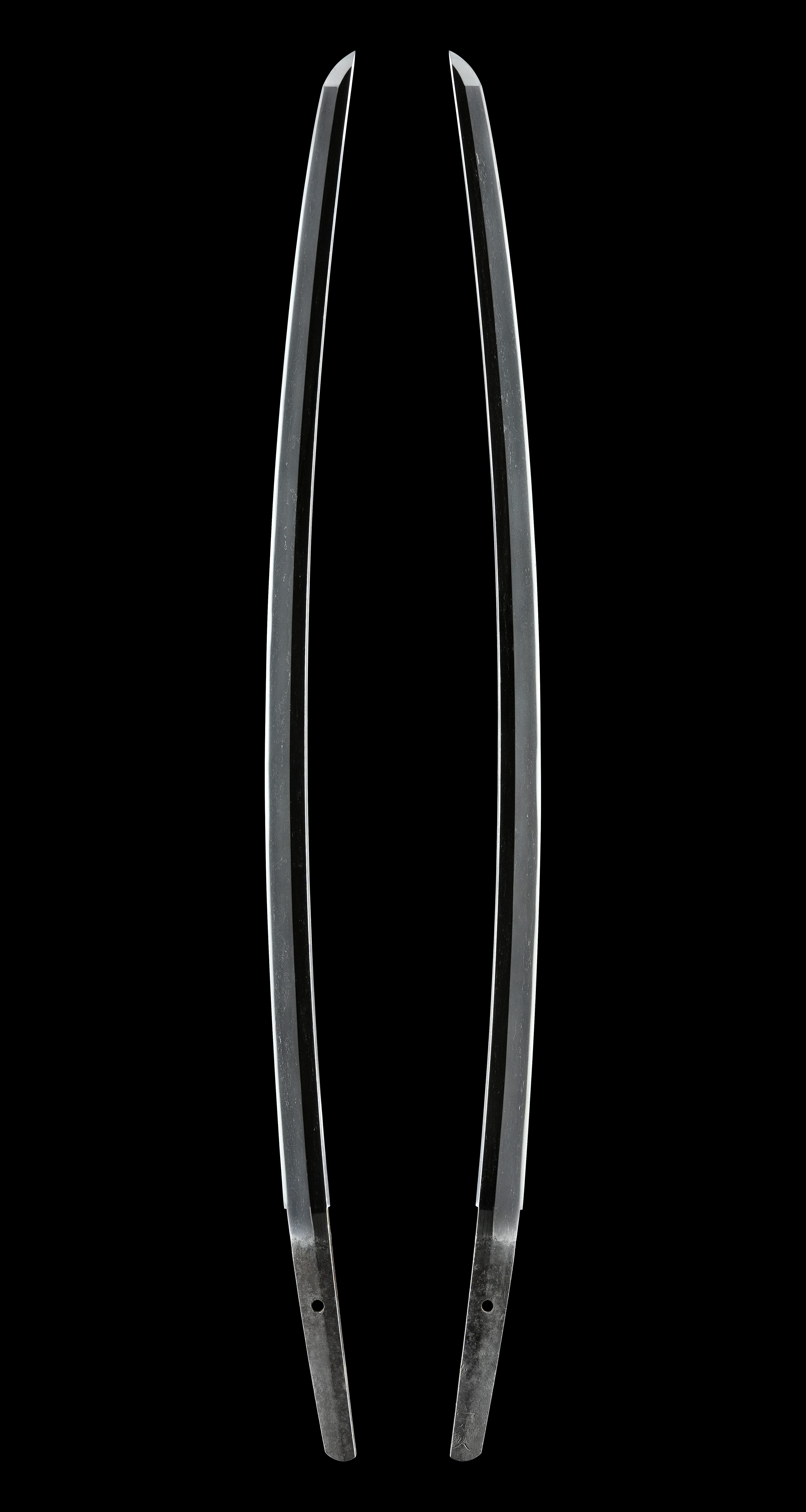
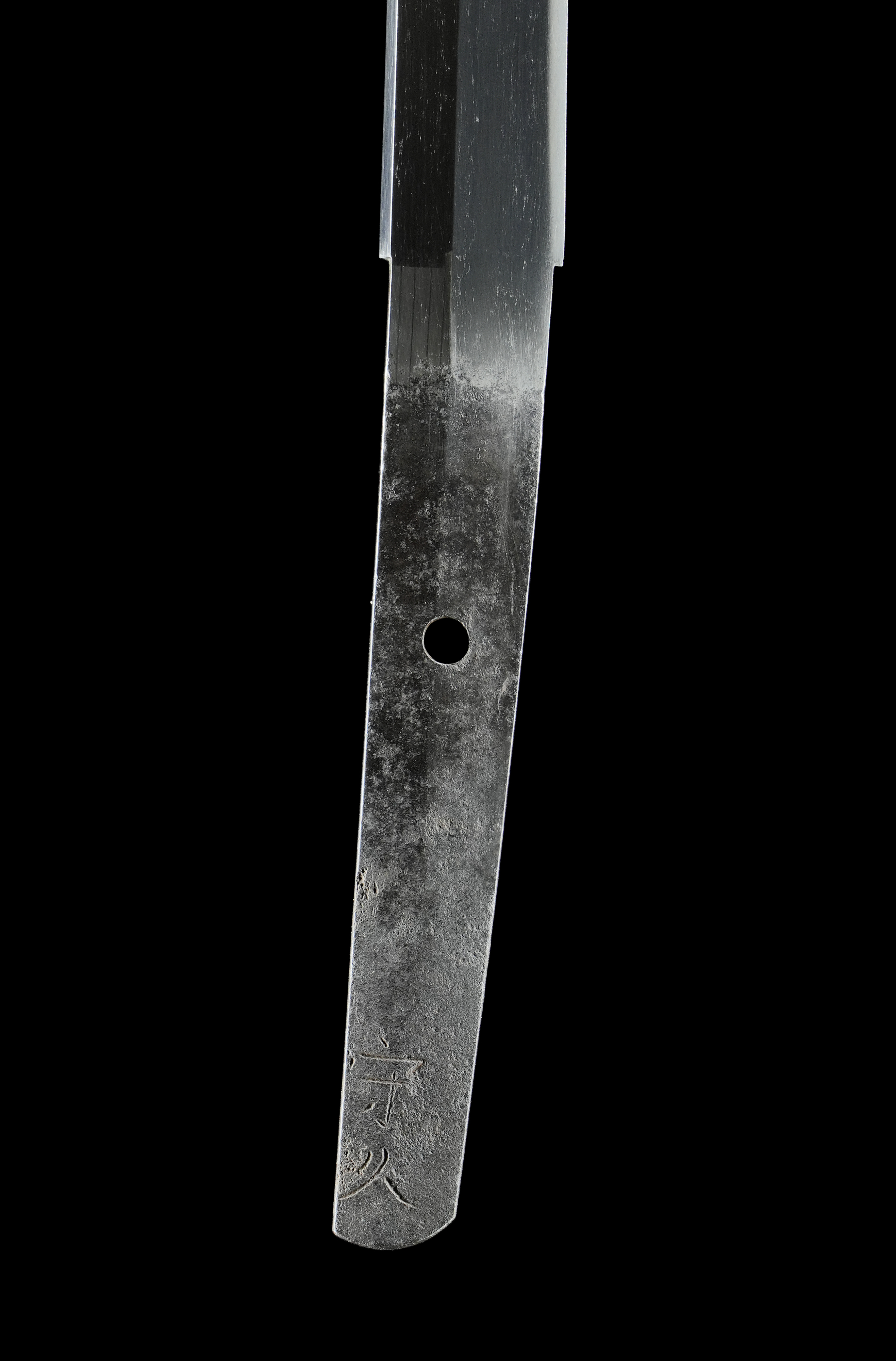
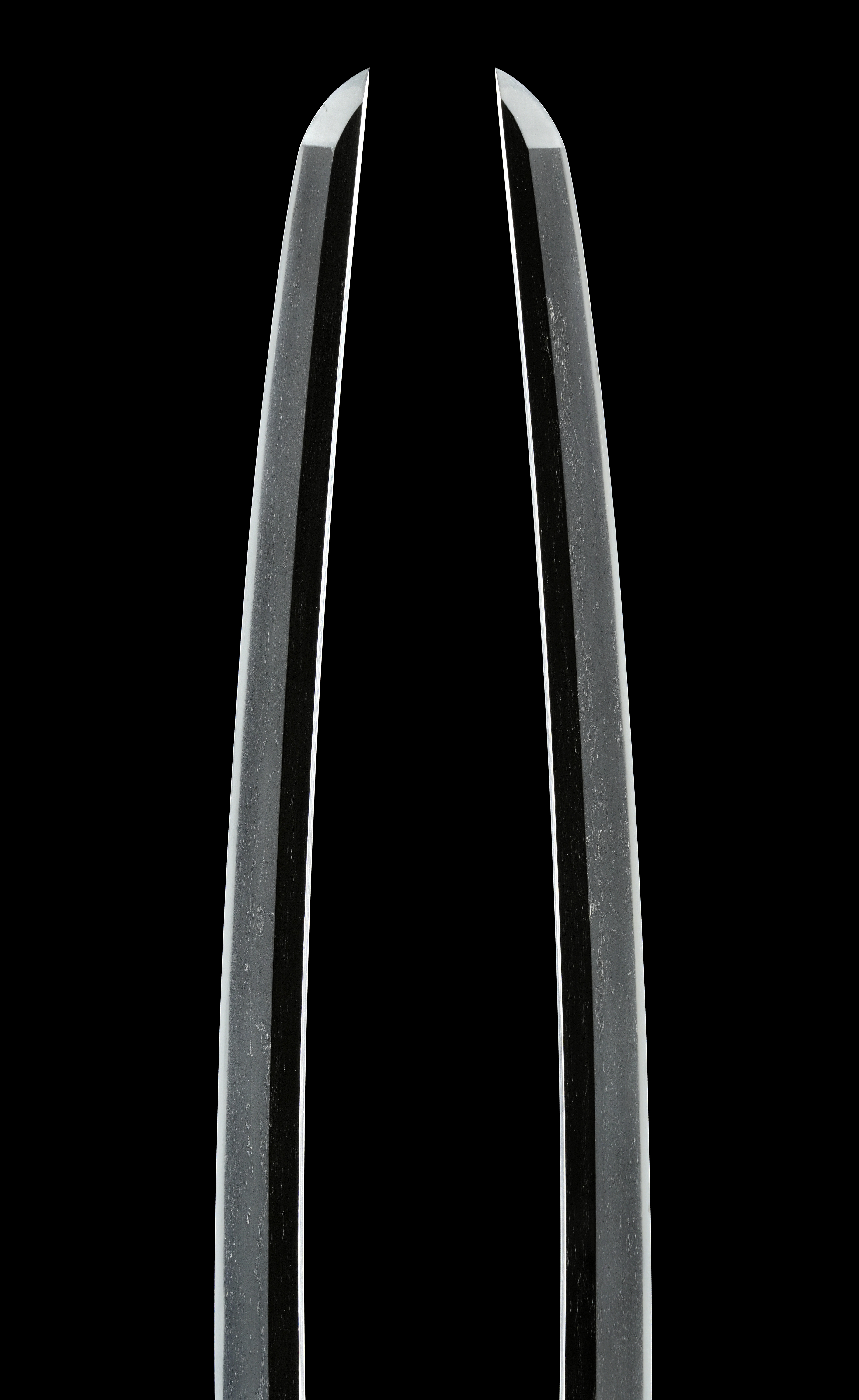
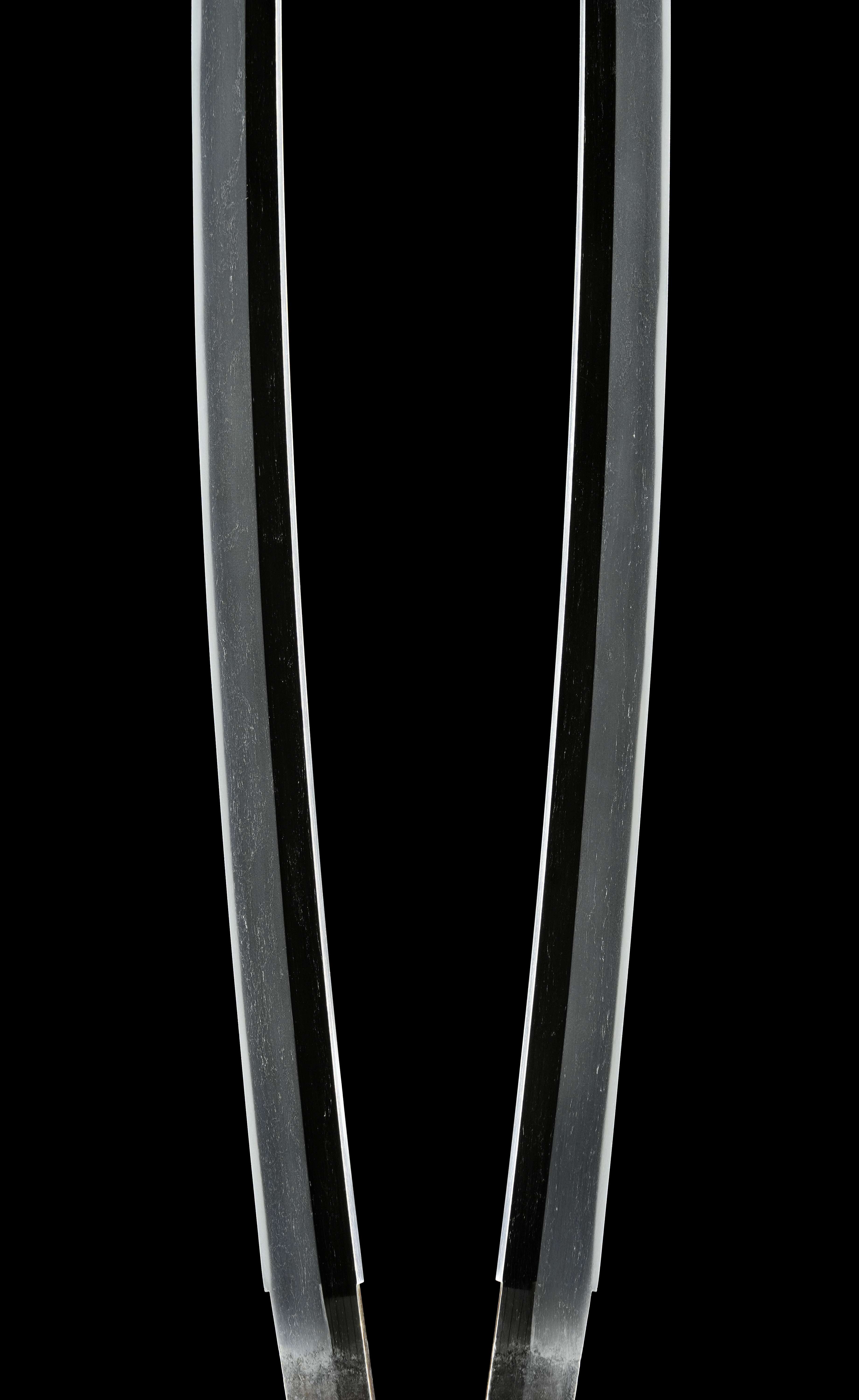
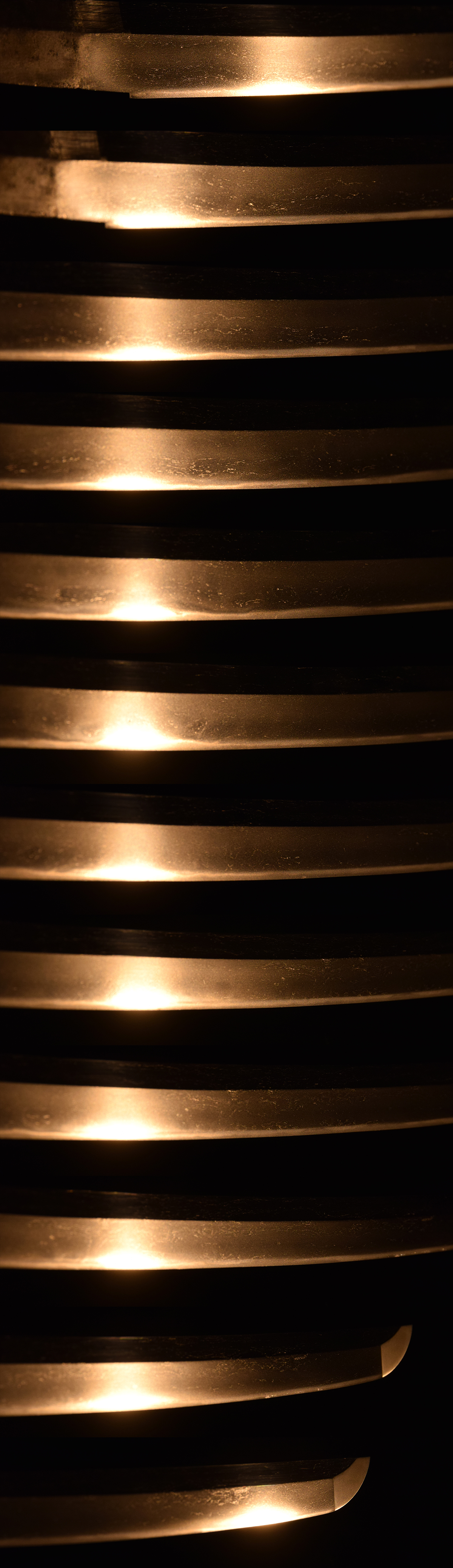
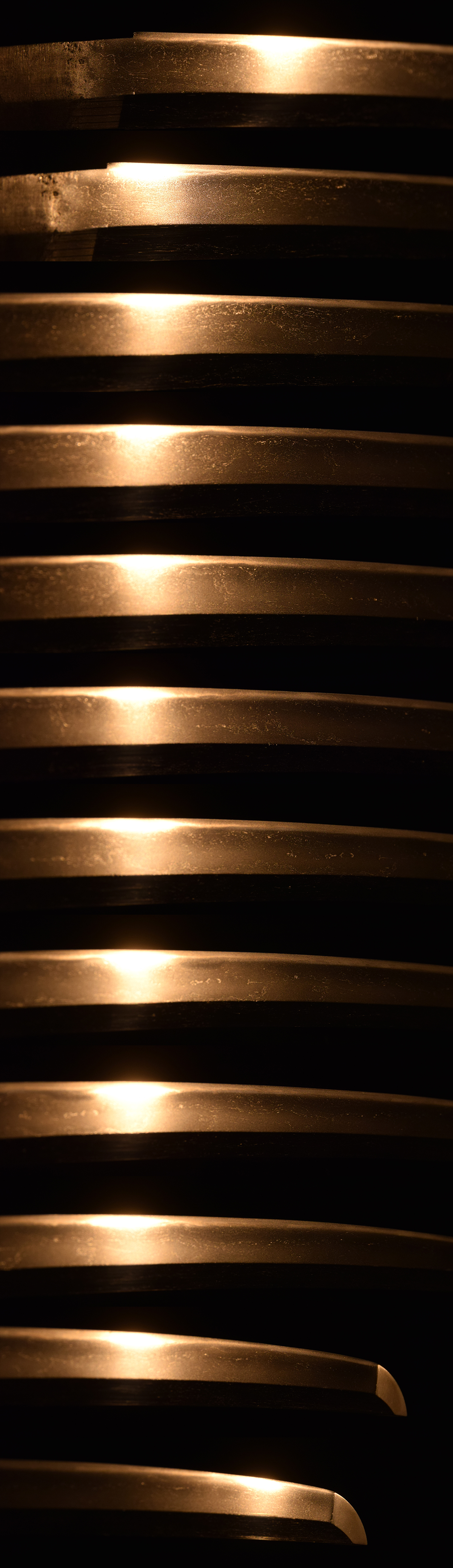
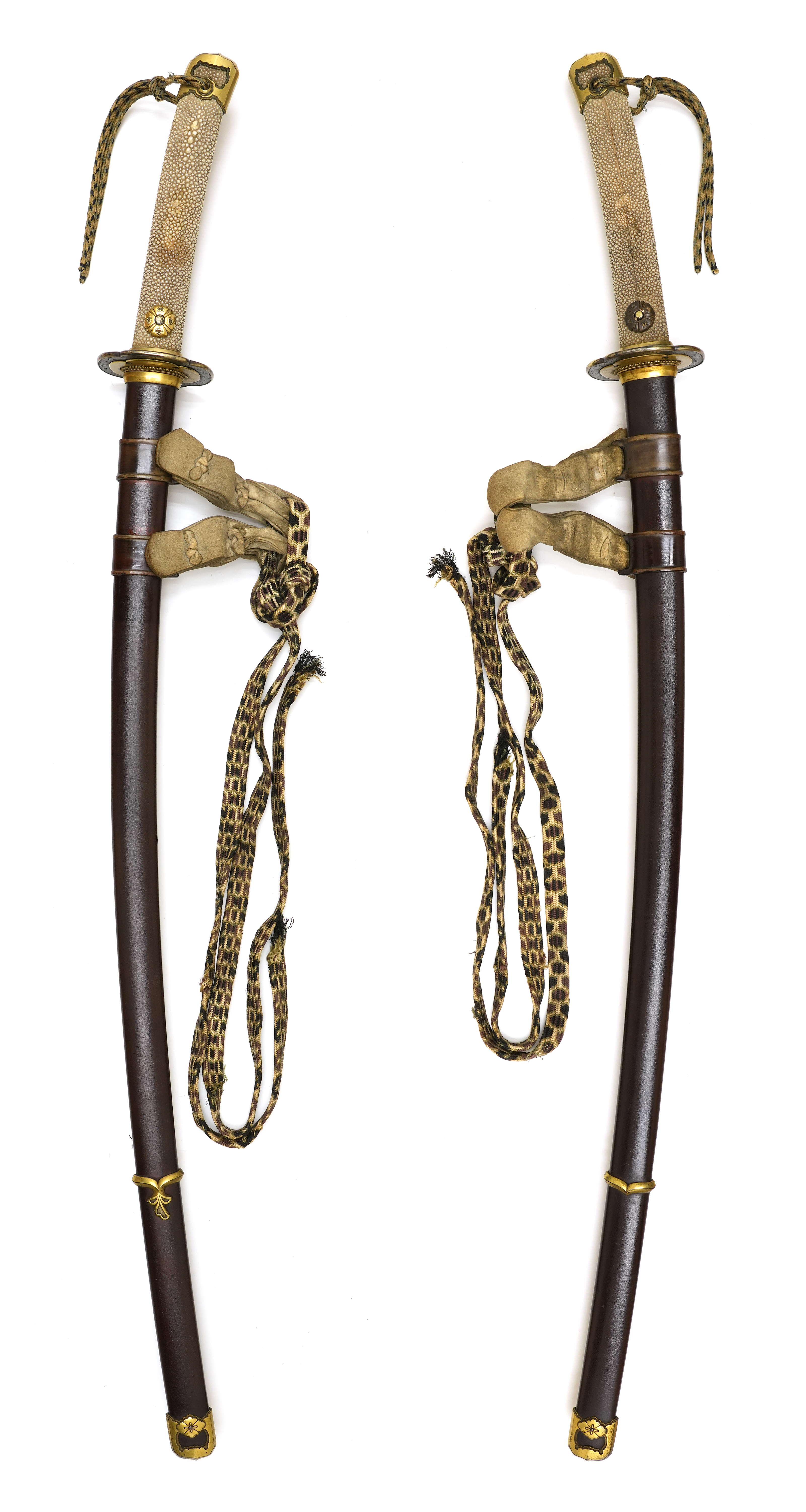
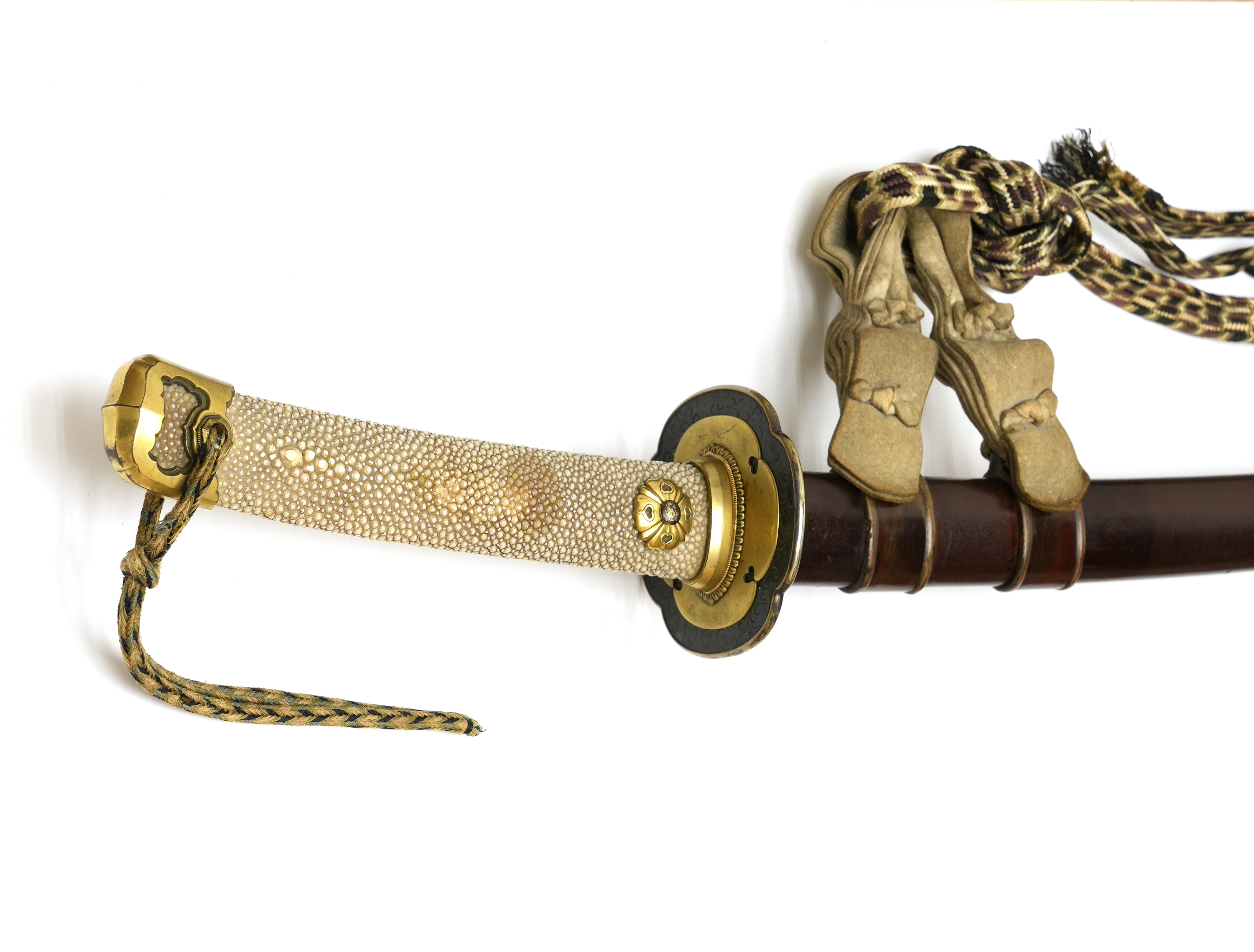
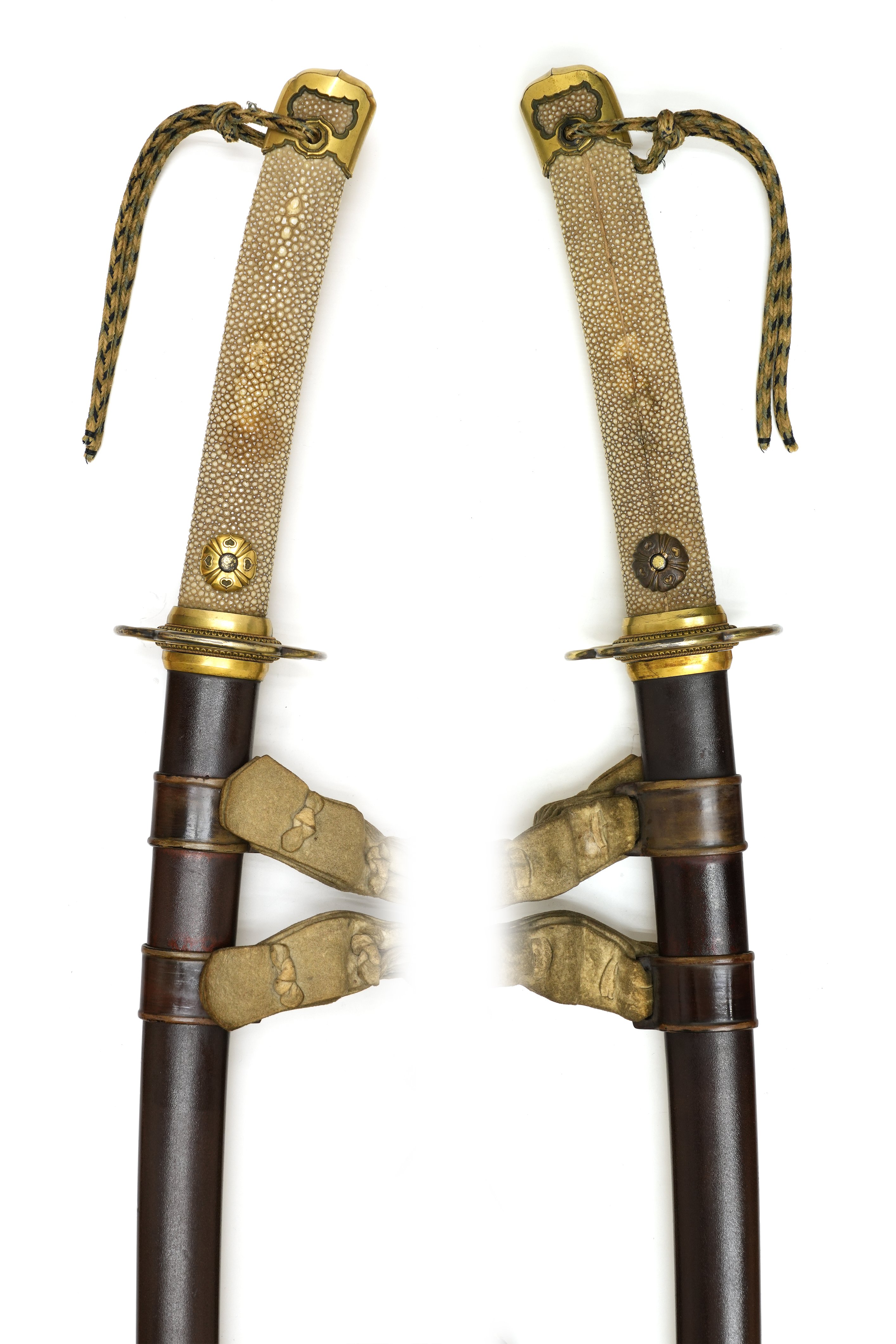
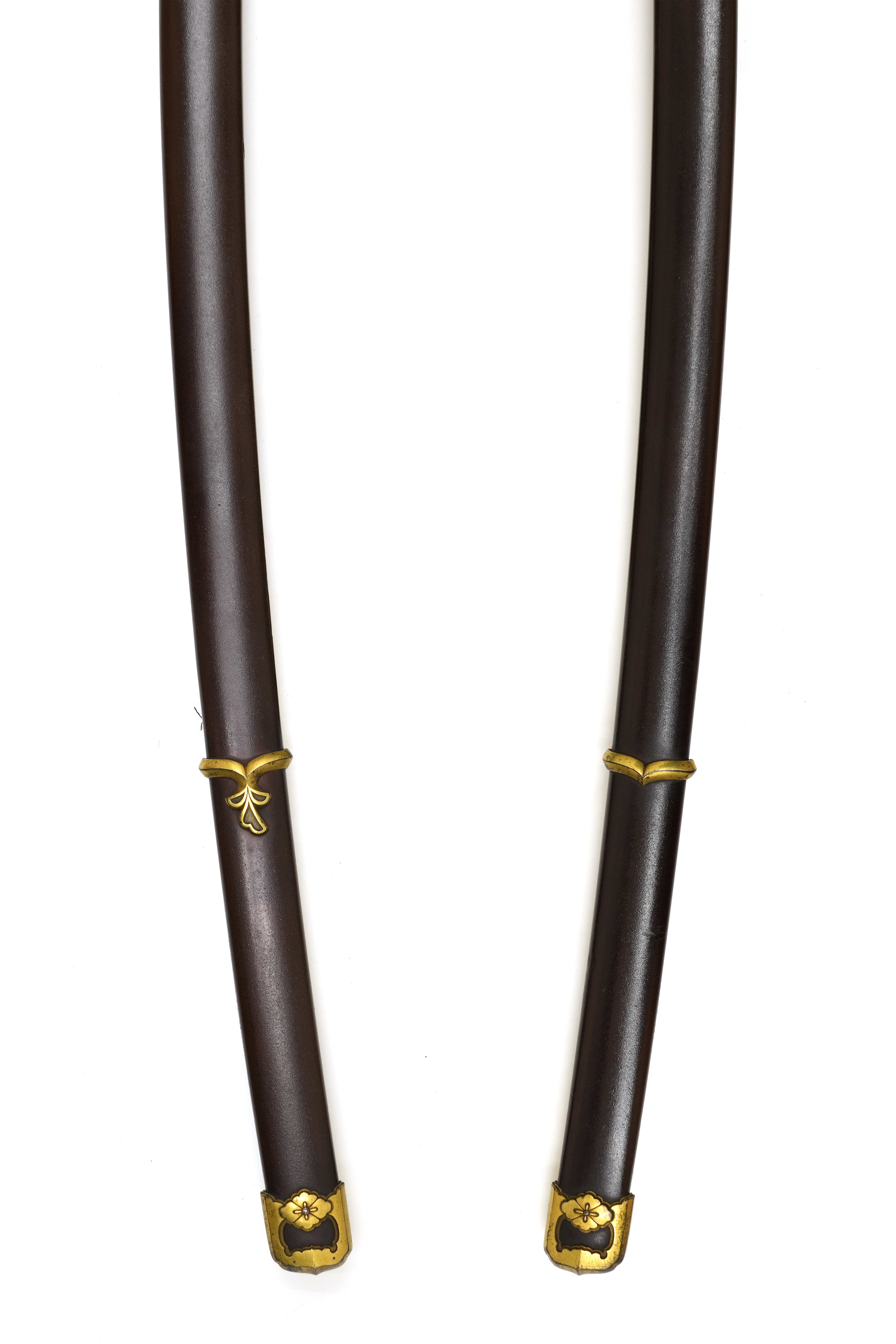
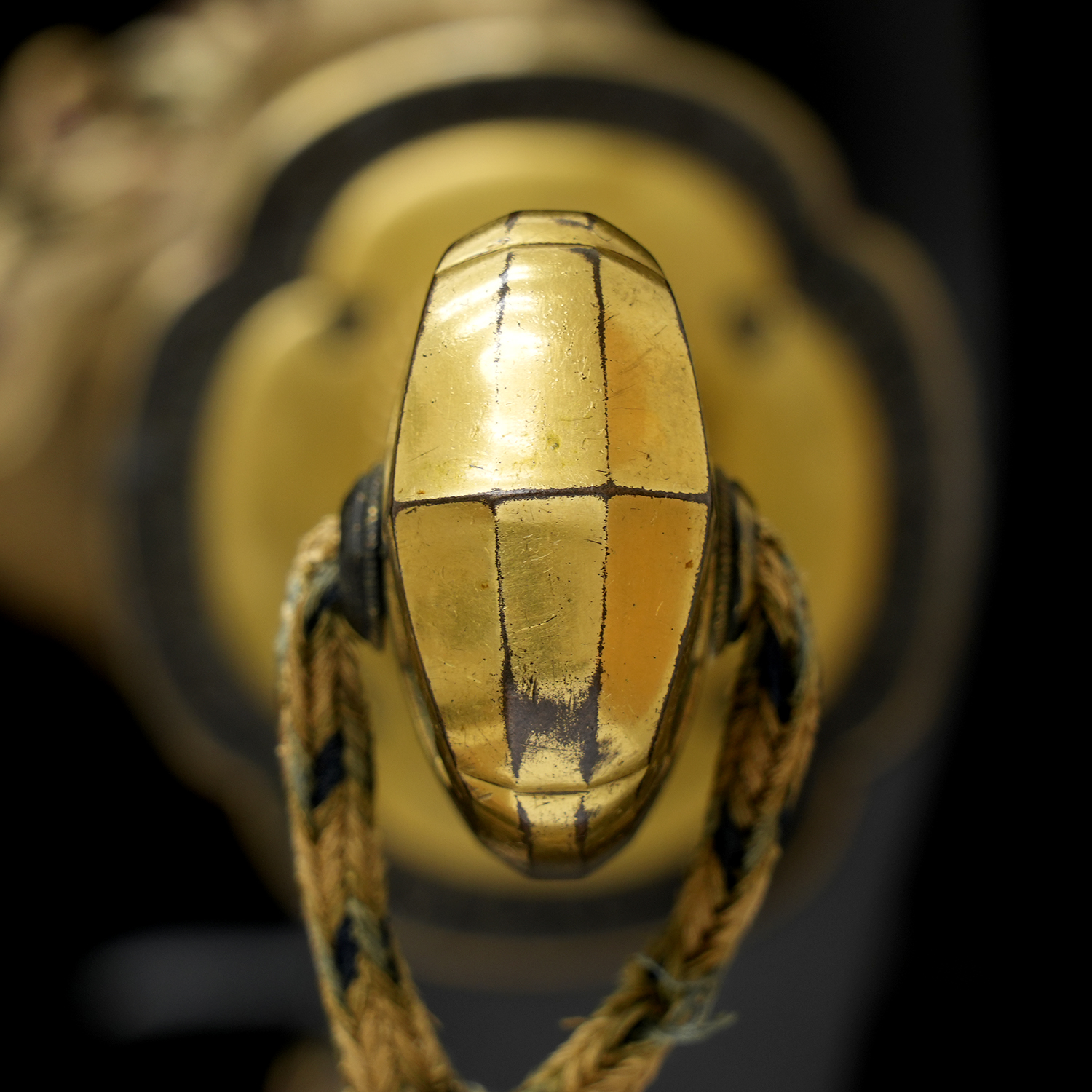
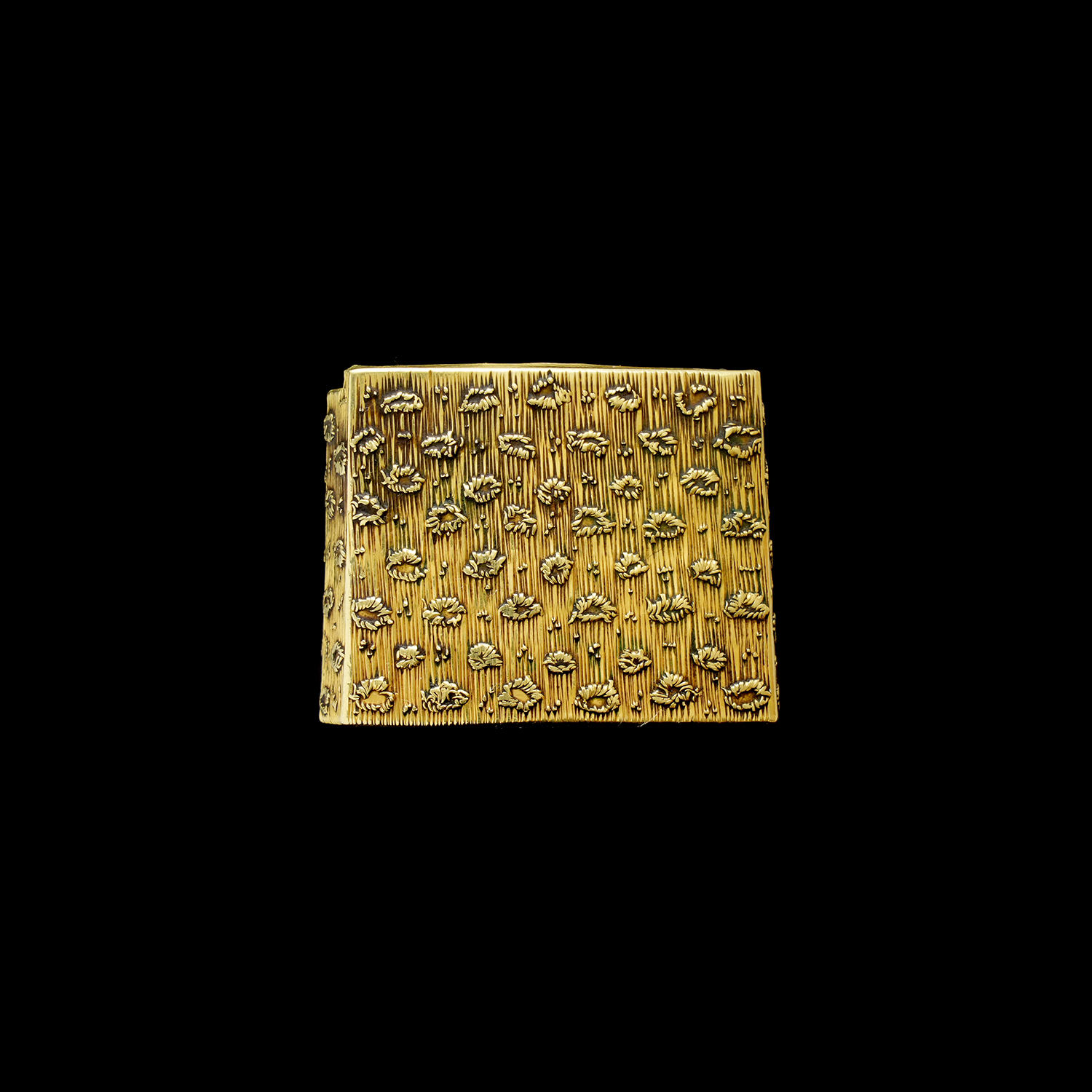
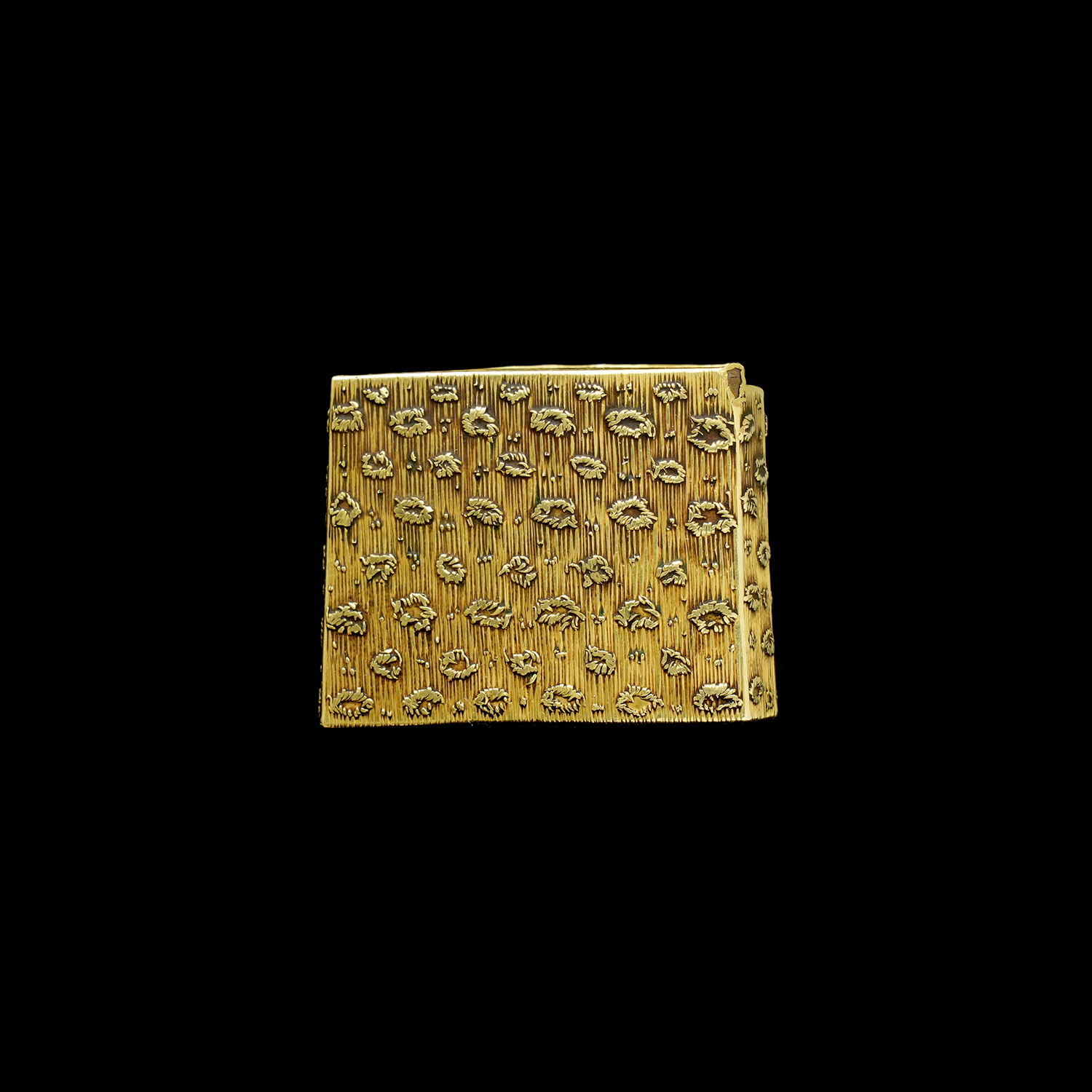
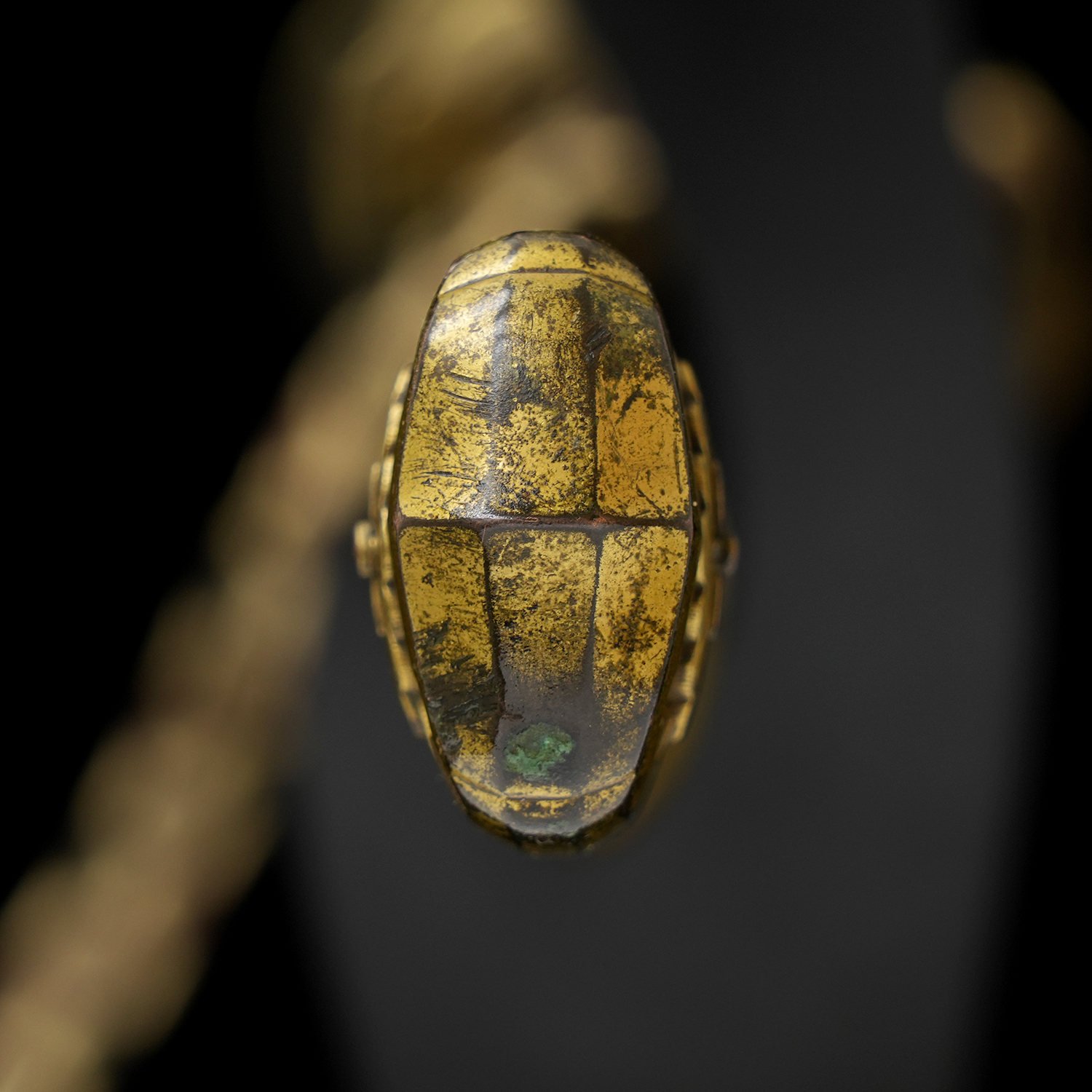
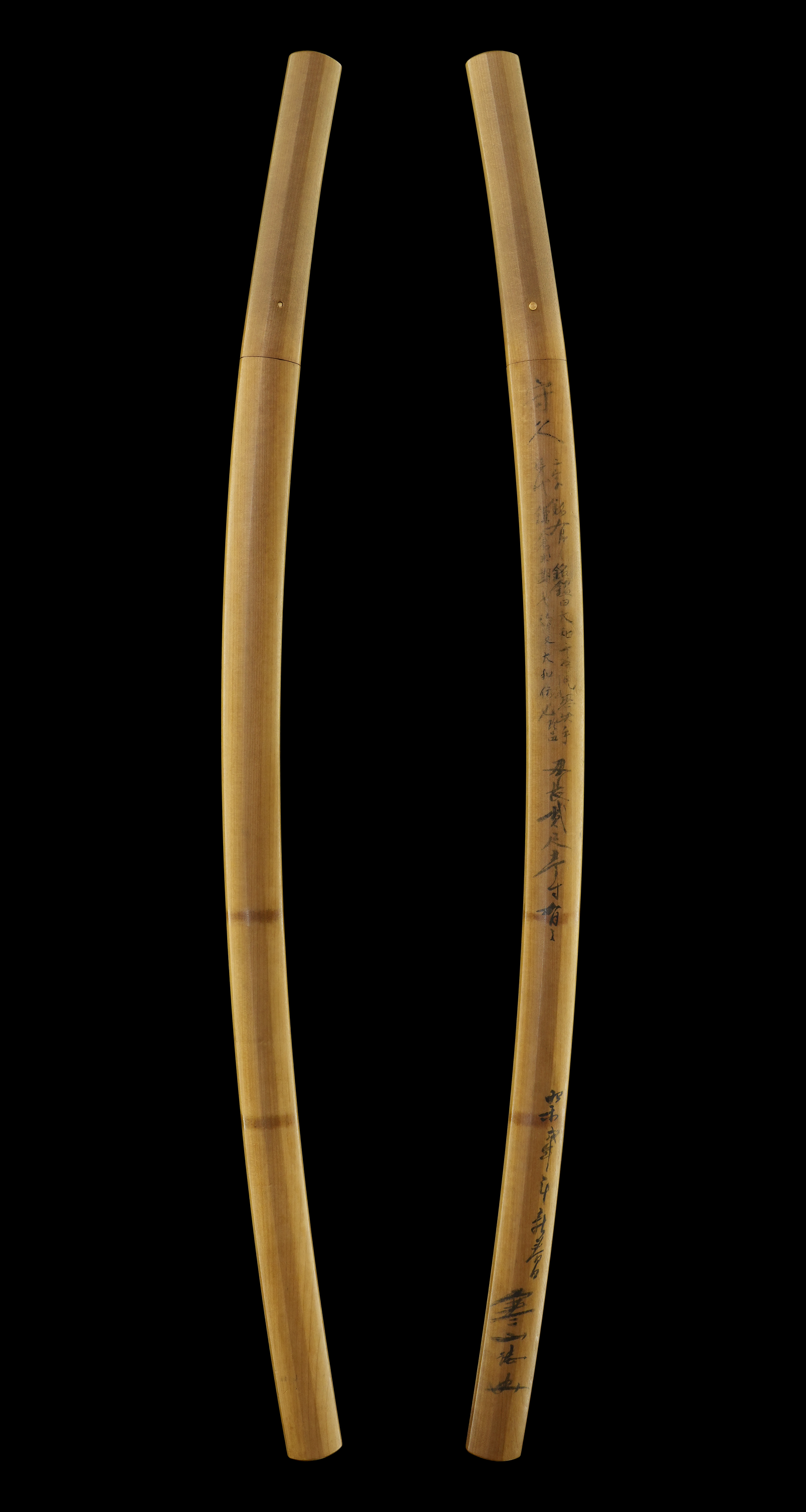
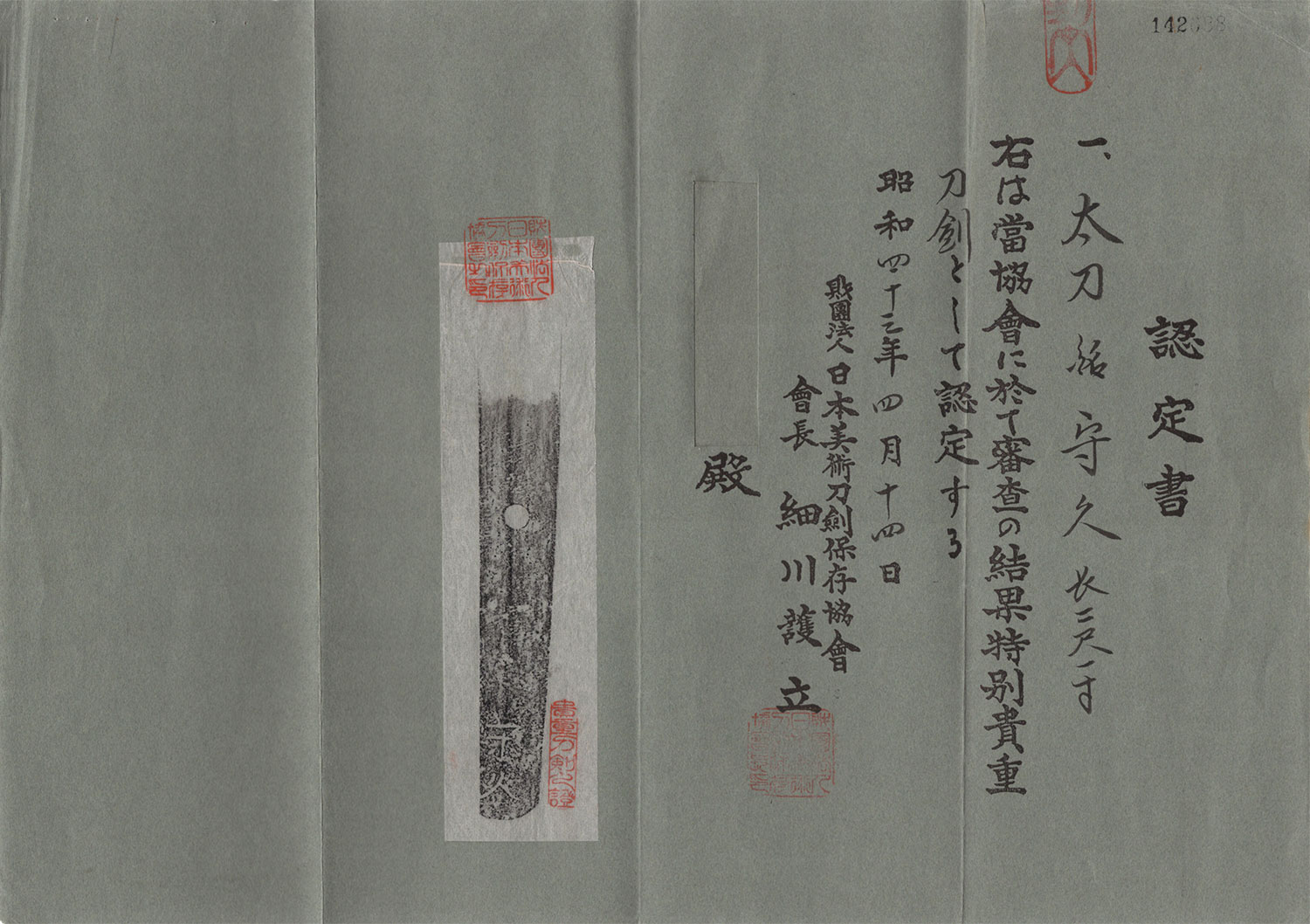
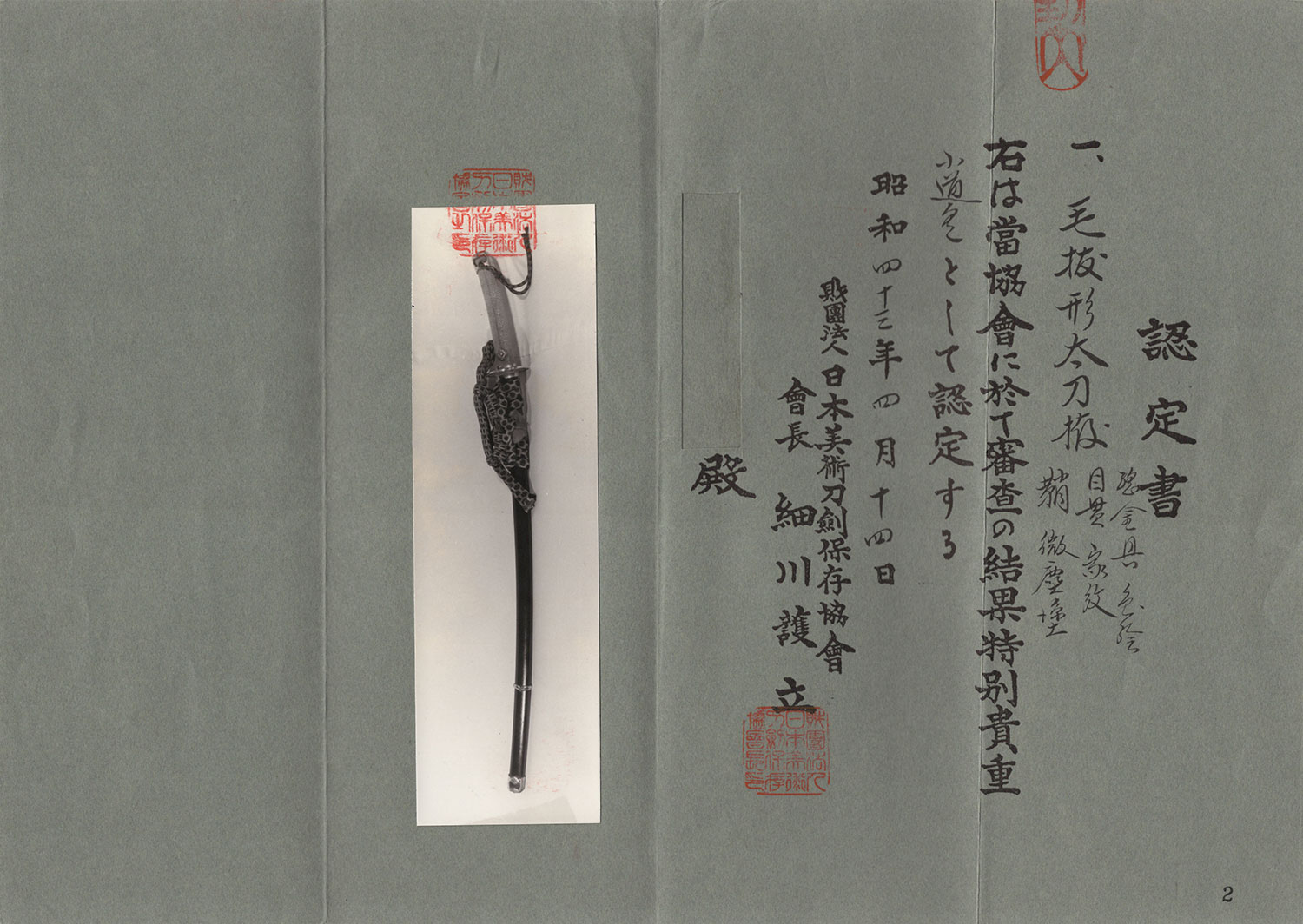
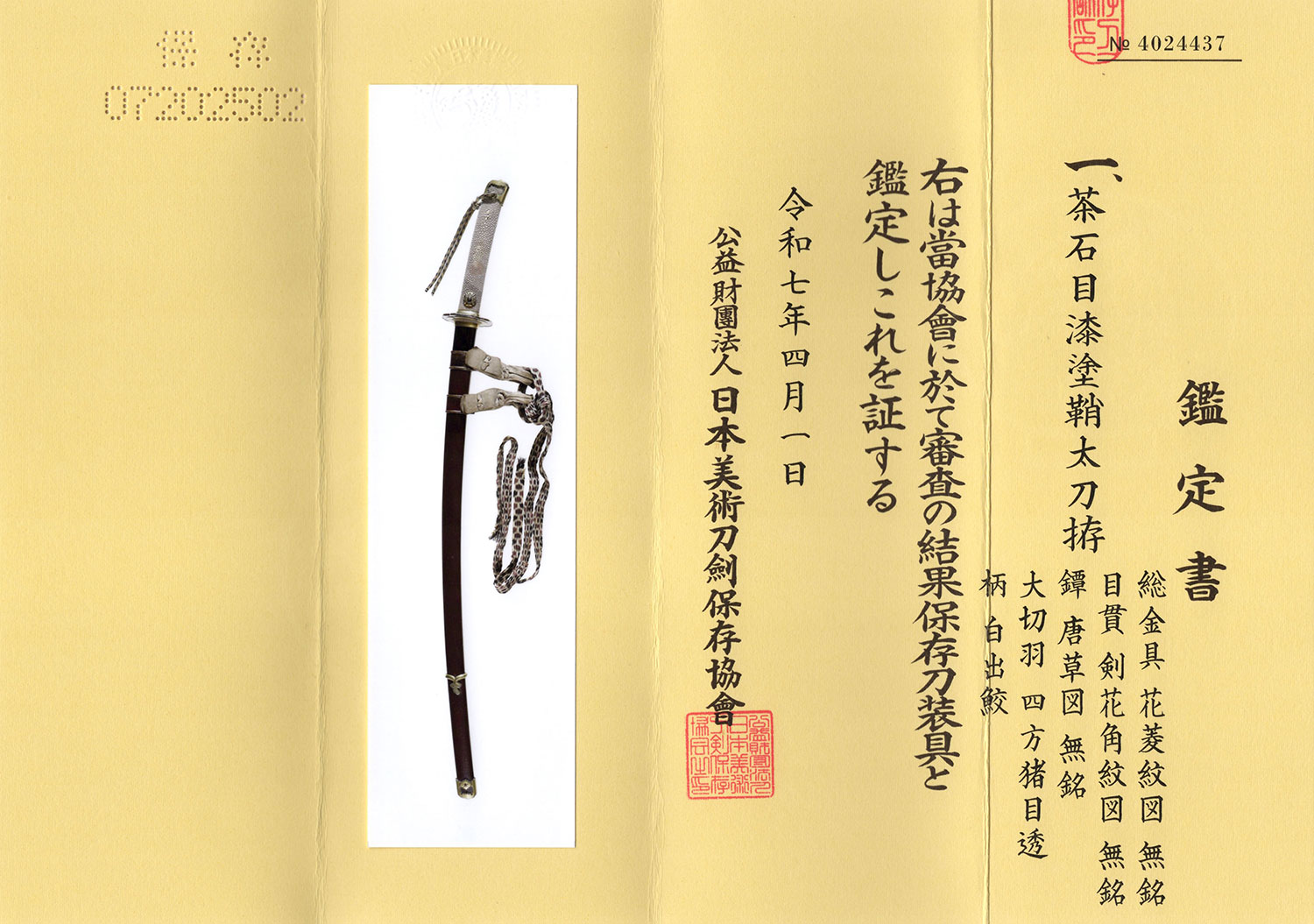
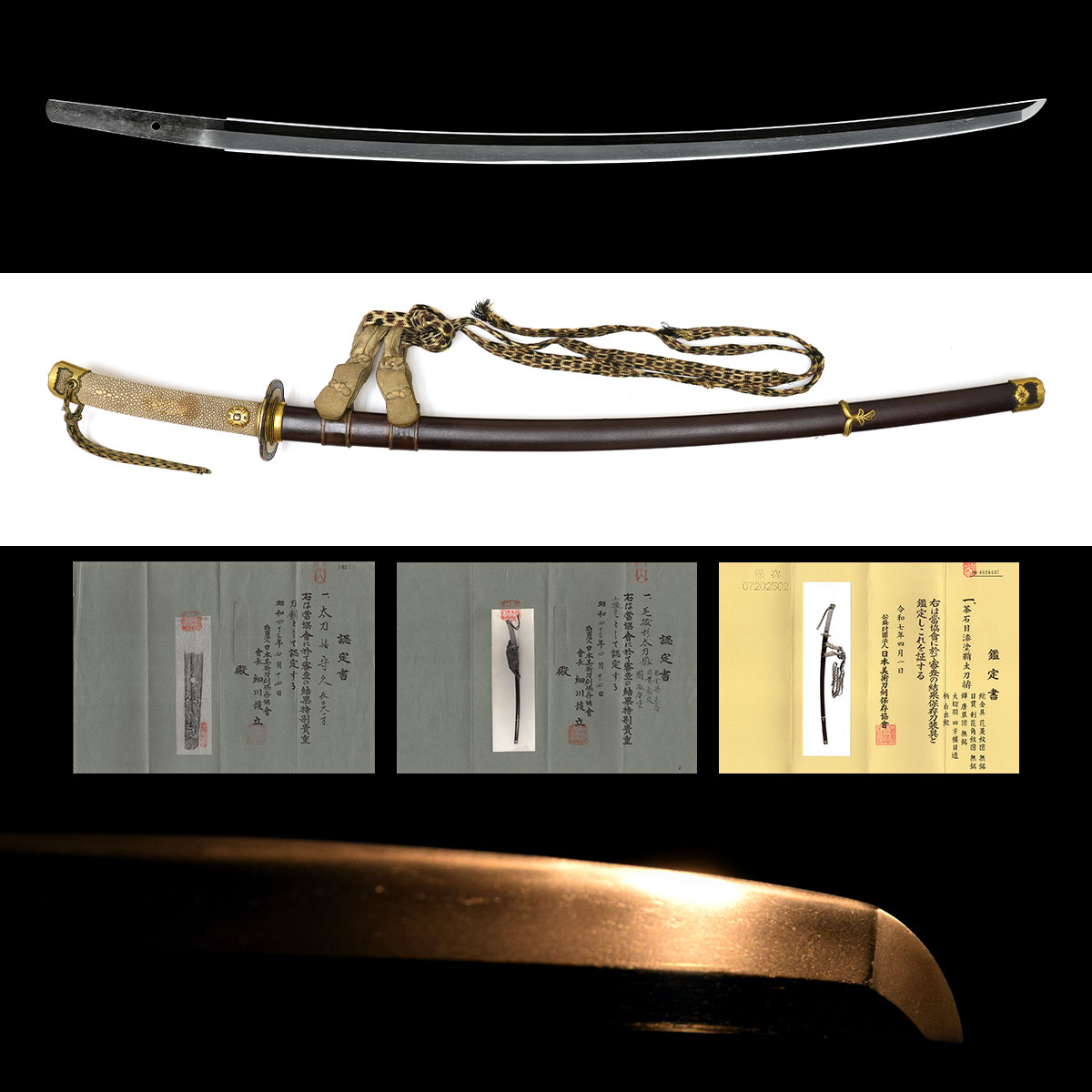
守久を名乗る刀工は複数名いますが、本刀は地鉄の鍛え等から、大和千手院派の守久と鑑せられる太刀です。 元より小太刀として鍛えられた一刀で、更に磨り上げられるも茎尻には守久の二字銘がしっかりと残っており、杢交じりの柾目鍛えの地鉄は粕立ち、匂口寄りにほんのりと乱れ映りが見られます。 匂口は鎌倉期の作品らしく沸が強く、直刃明るく冴え、所々小さく湾れ、刃中には金筋、稲妻が入り、刃縁には打除が連なって二重刃風を呈するなど大和物古作の見所多き作品です。 附属の太刀拵は、足金物部分を金属ではなく練り革で誂えた、古格漂う意匠。亀甲柄の太刀緒は両端こそ千切れが見られるものの、しっかりと残存しており、永き時代の経過を静かに物語っており、その格調高い造りから鑑みるに、古くは社寺仏閣に奉納されていた可能性が推測されます。 鐔鳴りは僅かにありますが、柄にがたつきはなく堅牢で、鞘を払って構えると手元重心の良好なバランスが手に伝わり、扱いやすさと品位を同時に感じさせます。 鎌倉期の太刀といえば、深い腰反りと長寸の姿を思い浮かべますが、それらは主に馬上での佩用を想定したもの。本作のような短寸の小太刀は、殿中や徒士用として鍛えられたと考えられ、反りも浅めで、姿形はむしろ室町初期頃の趣を帯びています。 このような時代の遡る小太刀は、現代刀剣界では長寸の馬上用太刀を基準とする傾向により、鑑定審査において保留とされる例が少なくありません。本刀もその例に漏れず、平成26年5月の審査にて保留の判定を受けるという憂き目に遭っております。しかし、目利きの方であれば、地刃の出来映えからその真贋は一目瞭然。確かな時代と技量を備えた作であることを即座にご理解いただけることでしょう。 古雅なる姿と堂々たる出来を誇る在銘太刀。内外共に古格を湛えた本刀を、ぜひこの機会にお手元のコレクションにお加えください。
NihontoWatchOffered by Toushin
This piece has sold
14 on the market
Get an email when new Senjuin School work hits the market.

Yamato-den · Yamato
14 pieces on the market now
Among the five schools of the Yamato-den, Senjuin (千手院) is held to be the earliest in origin, its name drawn from the Senjudo, a hall enshrining Senju Kannon (the Thousand-Armed Avalokitesvara) said to have stood at the western foothills of Mt. Wakakusa in Nara. The smiths who gathered in that quarter, working under the patronage and within the orbit of the great temples, formed the group, and their close association with the warrior-monks of the monastic establishments is thought to account for the scarcity of signed work that marks the school across its whole span. Old transmitted writings name two masters of the late Heian period, Yukinobu and Shigehiro, though no secure example by either has been confirmed; the oldest surviving signed piece is a tachi cut with the three-character inscription "Senjuin," placed in the early Kamakura period. Blades prefixed Ko-Senjuin are assigned to the earliest phase and retain the lingering presence of the straight-sword (chokuto) tradition, material indispensable to the study of how the curved shinogi-zukuri blade took form. Production runs from the late Heian period through the Nanbokucho era. The school's vocabulary is rooted firmly in Yamato practice. The jigane is an itame mixed with mokume and passages of nagare-masame, often tending toward hada-dachi, with thick ji-nie adhering well, abundant chikei, and in finer examples a faint nie-utsuri that leaves the steel bright and clear; the masame gathers and strengthens toward the edge on the most Yamato of the blades. The hamon is fundamentally a suguha with a shallow notare tendency, mixing ko-choji, ko-gunome, and ko-midare, the habuchi fraying into hotsure with uchi-noke, nijuba, kuichigai-ba, and yubashiri worked in profusion; thick ko-nie lies along a clear nioiguchi, while kinsuji and sunagashi run vigorously through the ji and ha. The boshi enters straight and forms a ko-maru with vigorous hakikake, or finishes in yakizume.
Within this shared foundation the hands diverge. Yoshihiro is singled out as the smith whose ji and ha vary most, his nie especially strong, swelling from the school's quiet suguha into a flamboyant large midare with kinsuji and sunagashi that reads toward Soshu. Sukemitsu gathers ko-choji, ko-gunome, and small midare on a bright suguha-cho, a Bizen-leaning admixture set against the school's plainer temper, his bold two-character mei itself a mark of the hand. Nobuyoshi of the Ryumon group, a Yamato branch, divides between a lively midare carrying utsuri and a Bizen character and a subdued suguha fraying into hotsure in which the Yamato color stands strongest. To kantei a Senjuin blade is to read its position among its neighbours, and the long-standing rule holds that within the Yamato Five Schools a hamon of unusually vigorous and changeable character should be appraised as Senjuin, against the more restrained tempers of Tegai, Shikkake, Taima, and Hosho. The masame in the ha, the hotsure, kuichigai-ba, and nijuba, and the yakizume or hakikake boshi keep the work within Yamato, while the brightness of the nioiguchi and the ko-midare on the edge set it apart from the plainer suguha of its sister schools. Surviving forms span tachi, katana, kodachi, ken, and yari, the ken notably numerous because they served as goshintai and ritual implements rather than weapons of the warrior class; many blades keep their ubu nakago, with pronounced koshizori and funbari of archaic bearing. Yoshihiro's dated signatures give him a face among many anonymous hands, his manner the touchstone for Soshu-tinged mumei attributions; Nobuyoshi is carried to high standing by a single great signed tachi recorded in Honma's inventory of the Imperial collection; Sukemitsu is anchored by a dated reference tachi in the Tokyo National Museum. The bulk of the school's record is mumei, the attributions resting on construction, the flowing masame-inclined forging, and the bright suguha alone, and provenance runs through religious institutions such as Tanzan Shrine and Kyoo Gokoku-ji (To-ji), attesting to the school's monastic roots. Learn more →
| Smith | Era | Designated |
|---|---|---|
| Nobuyoshi延吉 | 1288-1293 | 29 |
| Yoshihiro吉弘 | 1352-1356 | 5 |
| Yoshihiro義弘 | 1312-1317 | 3 |
| Akimitsu日光 | 1303-1306 | 0 |
| Noritsune則常 | 1069-1074 | 0 |
Yamato in the Kamakura period
The Yamato schools grew up in the shadow of Nara’s great monasteries: Tegai took its name from a gate of Tōdaiji. Their austere masame and quiet suguha are a temple aesthetic, prized ever since for exactly that restraint.
Certifies a genuine blade worth preserving: a signature confirmed correct, or, if unsigned, an era, province, and school that the NBTHK can reliably identify.
The NBTHK (Nihon Bijutsu Tōken Hozon Kyōkai, the Society for the Preservation of Japanese Art Swords) is a public-interest incorporated foundation founded in 1948 and supervised by Japan’s Agency for Cultural Affairs (Bunkachō); it is based at the Japanese Sword Museum in Tokyo. Its expert panels physically examine each submitted work (shinsa) and issue a certificate (kanteishō) ranking it by artistic and historical merit. NBTHK papers are the most widely recognized standard of authentication for Japanese swords and fittings.
NBTHK official siteAs a rule we do not accept returns, except when we have sent a different item from the one ordered or when there is a significant discrepancy between the description and the item. If you wish to return an item, please contact us within 3 days of its arrival and then send it back.