The Yamato schools grew up in the shadow of Nara’s great monasteries: Tegai took its name from a gate of Tōdaiji. Their austere masame and quiet suguha are a temple aesthetic, prized ever since for exactly that restraint.
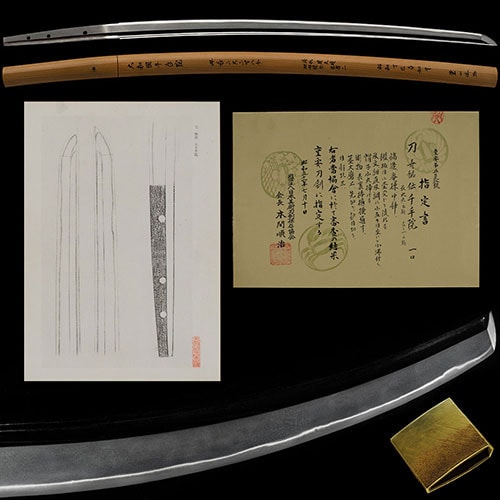
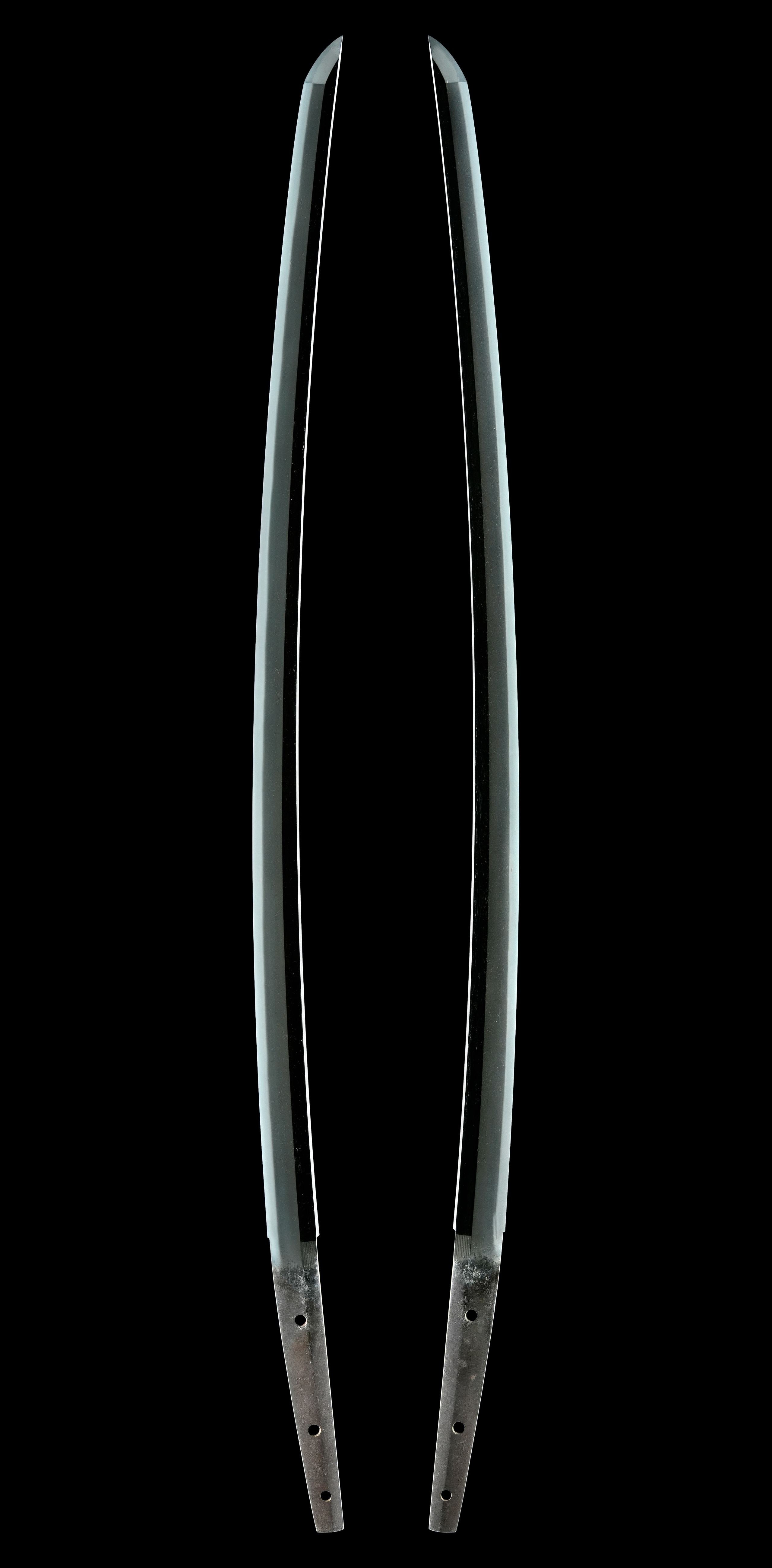
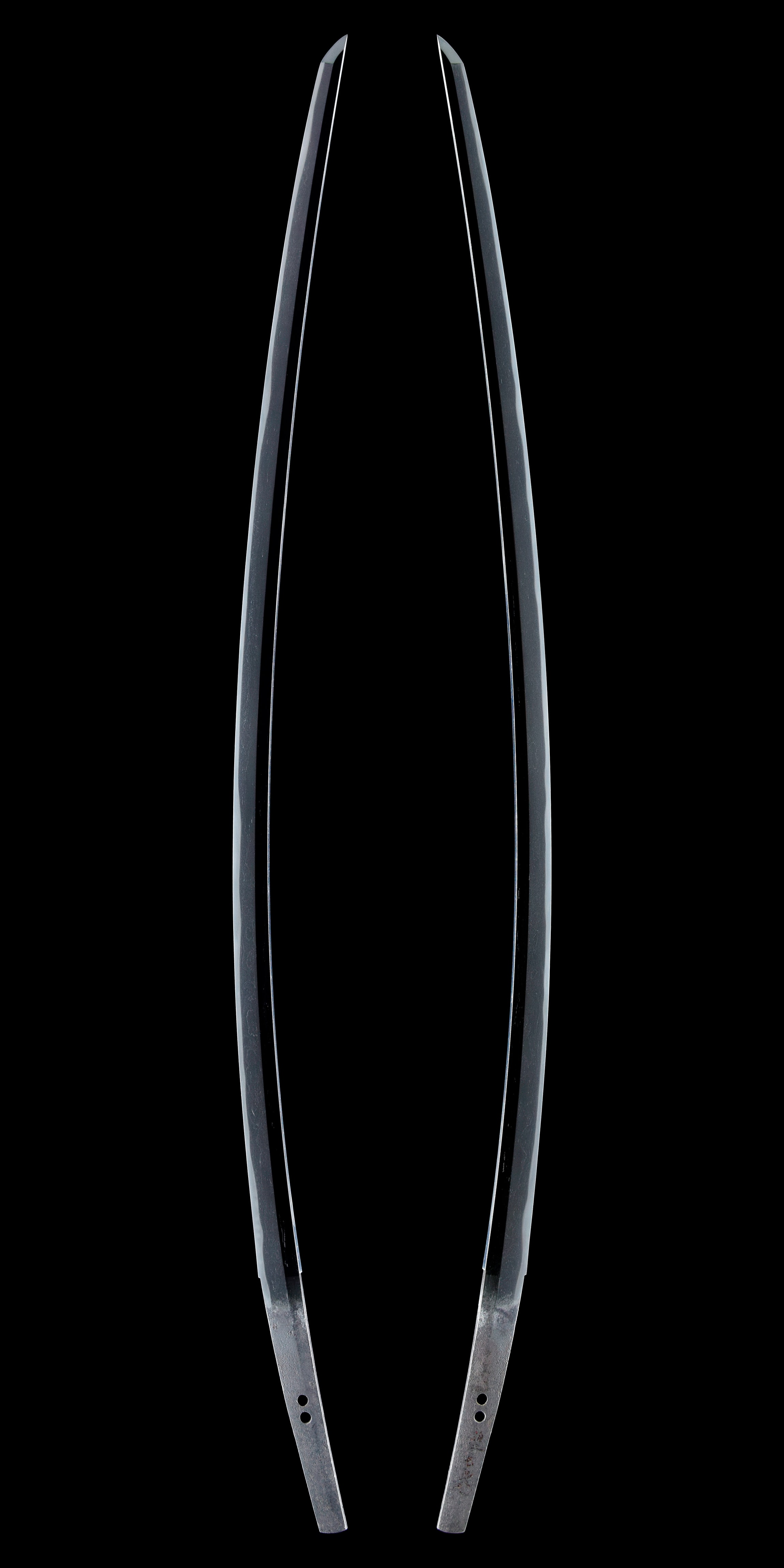
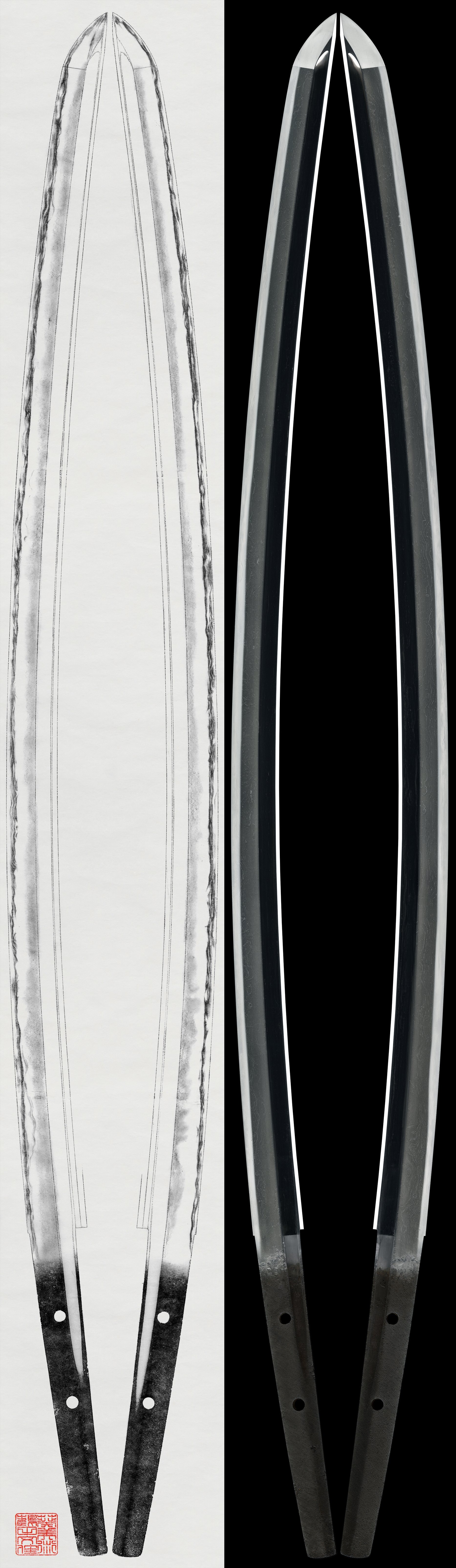
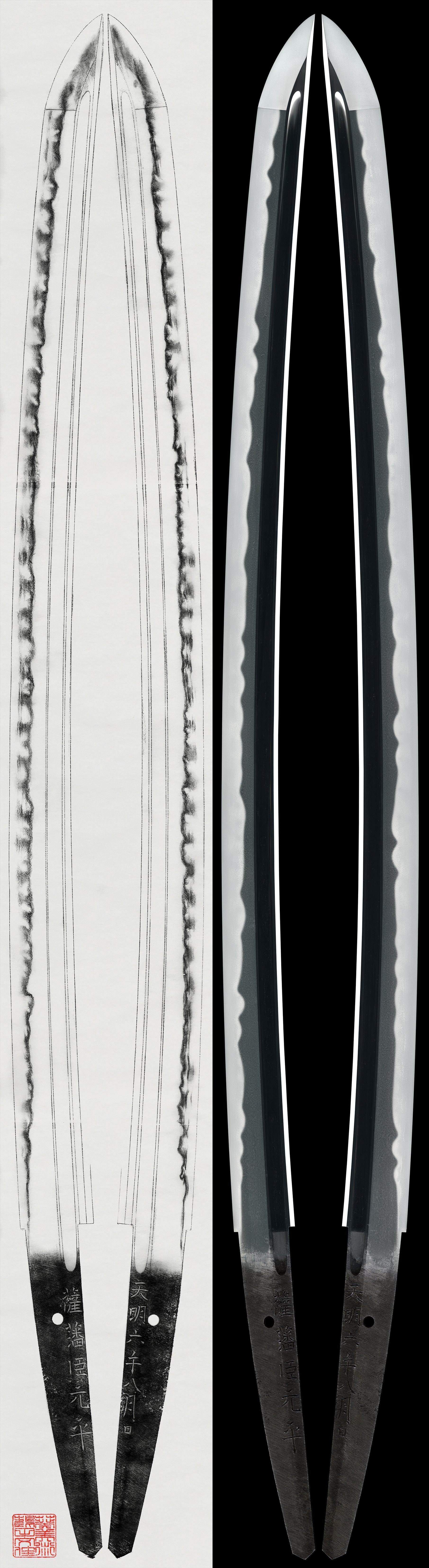
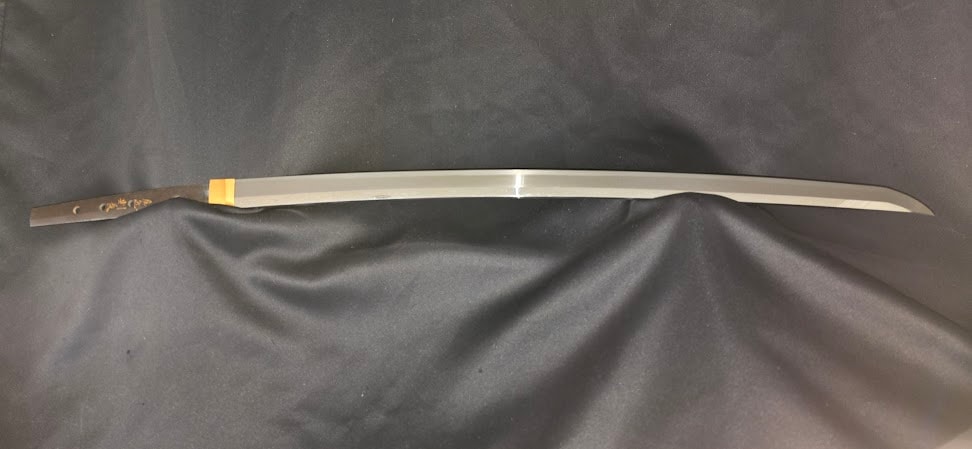
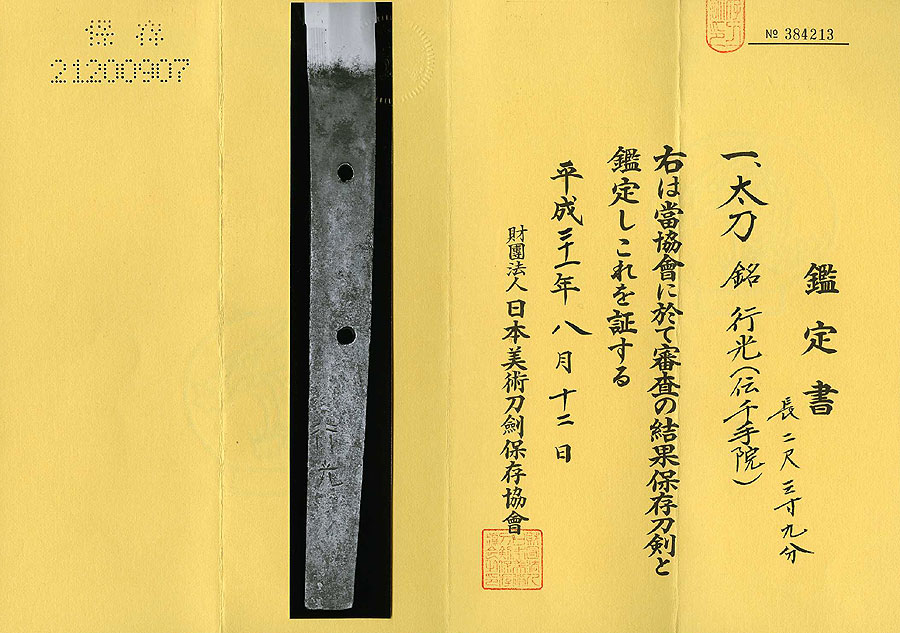
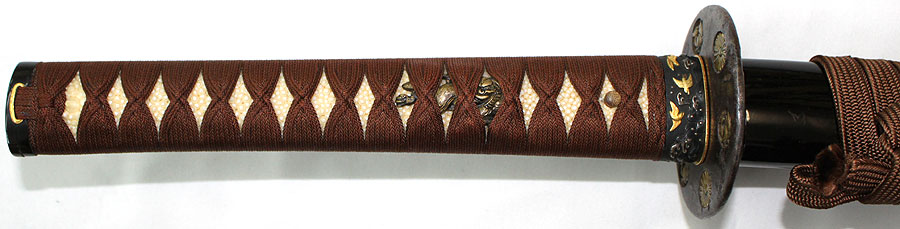
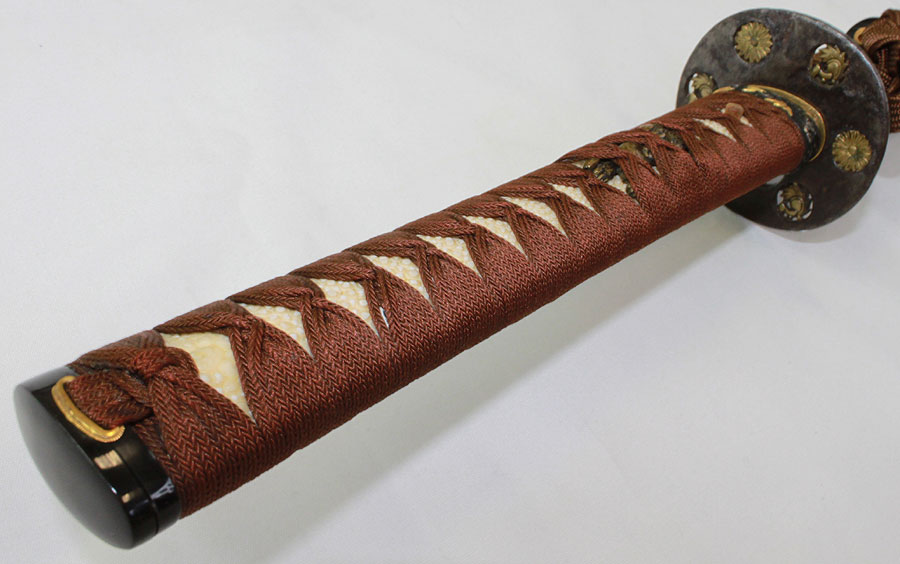
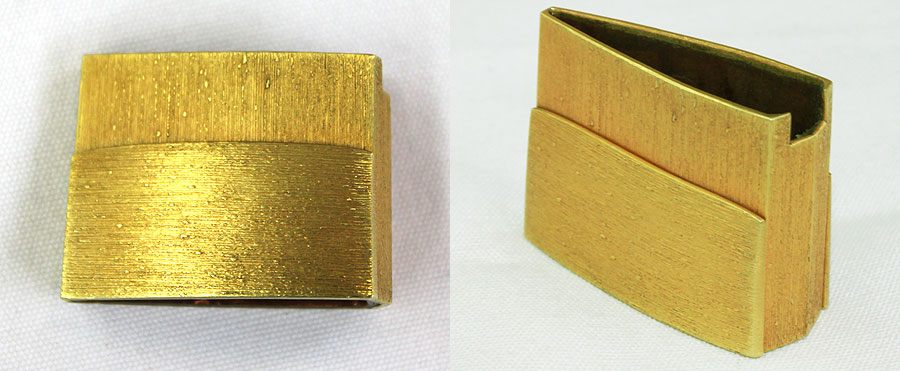
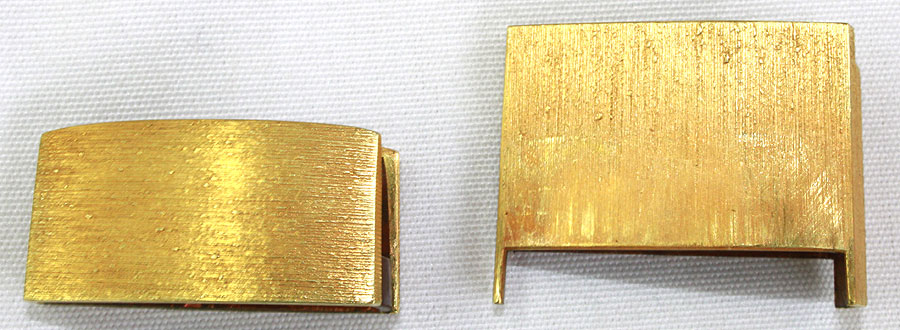
Legend NBTHK: Tokuju (Tokubetsu Juyo Token), Ju (Juyo Token), Toku (Tokubetsu Hozon Token), Ho (Hozon Token), Ko (Koshu Tokubetsu Kicho Token), Maru (Tokubetsu Kicho Token), Ki (Kicho Token) Other Appraisals: Kai (Nihon Token Hozon Kai), Fuji (Fujishiro Matsuo), Shiba (Shibata Mitsuo), Mise (Shop Guarantee) Quality: ☆ (Exceptional), ◎ (Excellent), ○ (Standard), △ (Slightly Substandard), ▲ (Mei Defect/Reference Item) Accessories: Shiro (Shirasaya), Soto (Koshirae) Type: Katana Era: Late Kamakura Nagasa (cm): 72.4 Sori: 2.5 Kasane: 0.65 Certificate: Ho Quality: ○ Accessories: Shiro, Koshirae Among the five Yamato schools, the Senjuin school was the earliest to emerge. This tachi is a rare extant work bearing a niji-mei by Senjuin Yukimitsu, dating to the late Kamakura period, likely corresponding to the Enkyo era as noted in the Meikan. The tachi-sugata is long with pronounced funbari, appearing dignified and strong. The jigane has a slightly darkish tone with utsuri, possessing moisture and clarity. The yaki-ba shows a midare-ba rich in variation not seen in the other four schools, strongly displaying the characteristics of the Senjuin school. Please enjoy this precious, zaimei masterpiece by Senjuin.
 NihontoWatch













Yamato-den · Yamato · around 1308-1311
Where Yukimitsu stands among comparable artisans: across all of nihontō, and within tradition, era, and period. The tiers (Foremost · Leading · Major · Notable) weigh official designations from the NBTHK and Japan's Agency for Cultural Affairs, together with historical honors of lasting repute such as the Sansaku and Meibutsu-chō.
Select a lens to see how it's measured.
Yamato-den · Yamato
20 pieces on the market now
Among the five schools of the Yamato-den, Senjuin (千手院) is held to be the earliest in origin, its name drawn from the Senjudo, a hall enshrining Senju Kannon (the Thousand-Armed Avalokitesvara) said to have stood at the western foothills of Mt. Wakakusa in Nara. The smiths who gathered in that quarter, working under the patronage and within the orbit of the great temples, formed the group, and their close association with the warrior-monks of the monastic establishments is thought to account for the scarcity of signed work that marks the school across its whole span. Old transmitted writings name two masters of the late Heian period, Yukinobu and Shigehiro, though no secure example by either has been confirmed; the oldest surviving signed piece is a tachi cut with the three-character inscription "Senjuin," placed in the early Kamakura period. Blades prefixed Ko-Senjuin are assigned to the earliest phase and retain the lingering presence of the straight-sword (chokuto) tradition, material indispensable to the study of how the curved shinogi-zukuri blade took form. Production runs from the late Heian period through the Nanbokucho era. The school's vocabulary is rooted firmly in Yamato practice. The jigane is an itame mixed with mokume and passages of nagare-masame, often tending toward hada-dachi, with thick ji-nie adhering well, abundant chikei, and in finer examples a faint nie-utsuri that leaves the steel bright and clear; the masame gathers and strengthens toward the edge on the most Yamato of the blades. The hamon is fundamentally a suguha with a shallow notare tendency, mixing ko-choji, ko-gunome, and ko-midare, the habuchi fraying into hotsure with uchi-noke, nijuba, kuichigai-ba, and yubashiri worked in profusion; thick ko-nie lies along a clear nioiguchi, while kinsuji and sunagashi run vigorously through the ji and ha. The boshi enters straight and forms a ko-maru with vigorous hakikake, or finishes in yakizume.
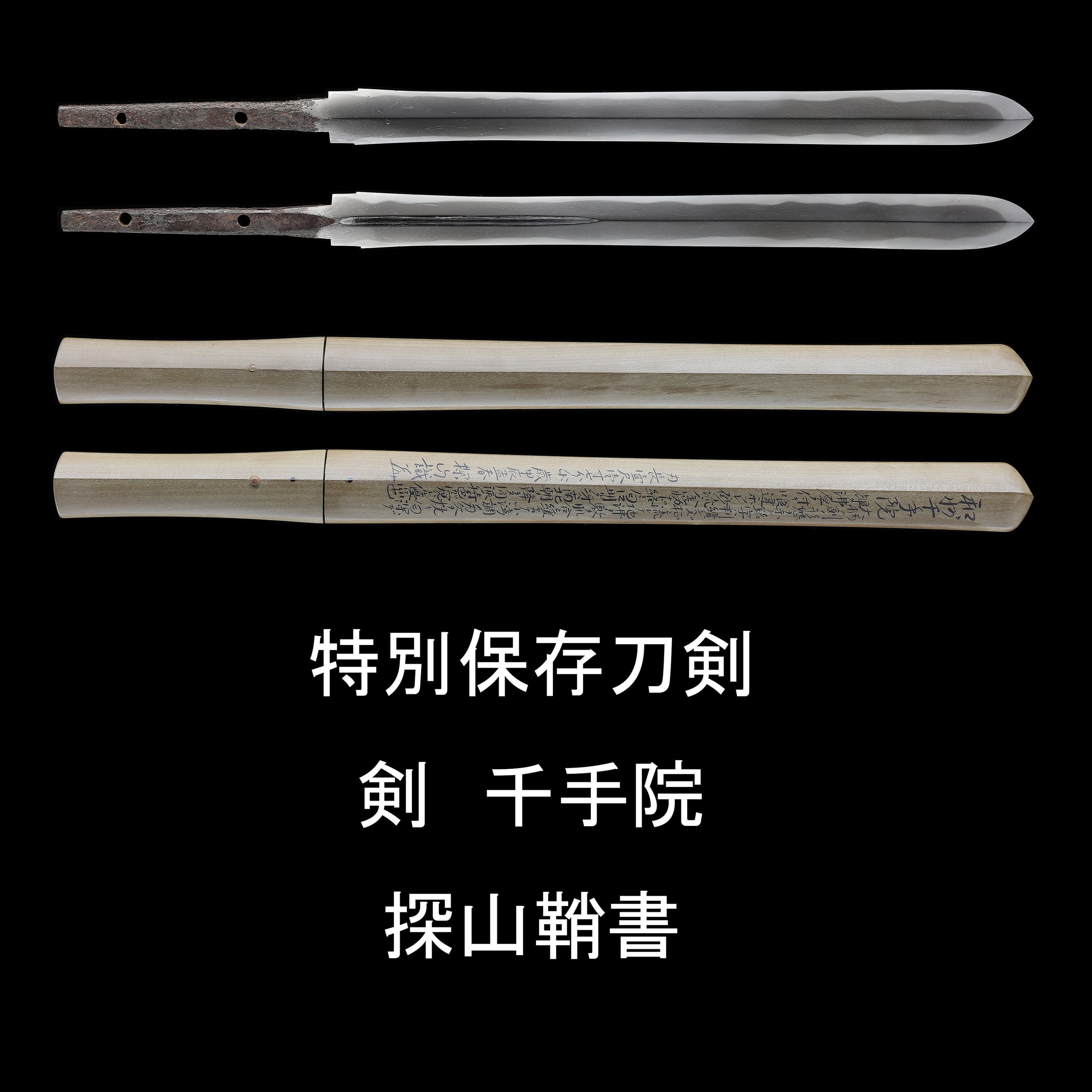
Within this shared foundation the hands diverge. Yoshihiro is singled out as the smith whose ji and ha vary most, his nie especially strong, swelling from the school's quiet suguha into a flamboyant large midare with kinsuji and sunagashi that reads toward Soshu. Sukemitsu gathers ko-choji, ko-gunome, and small midare on a bright suguha-cho, a Bizen-leaning admixture set against the school's plainer temper, his bold two-character mei itself a mark of the hand. Nobuyoshi of the Ryumon group, a Yamato branch, divides between a lively midare carrying utsuri and a Bizen character and a subdued suguha fraying into hotsure in which the Yamato color stands strongest. To kantei a Senjuin blade is to read its position among its neighbours, and the long-standing rule holds that within the Yamato Five Schools a hamon of unusually vigorous and changeable character should be appraised as Senjuin, against the more restrained tempers of Tegai, Shikkake, Taima, and Hosho. The masame in the ha, the hotsure, kuichigai-ba, and nijuba, and the yakizume or hakikake boshi keep the work within Yamato, while the brightness of the nioiguchi and the ko-midare on the edge set it apart from the plainer suguha of its sister schools. Surviving forms span tachi, katana, kodachi, ken, and yari, the ken notably numerous because they served as goshintai and ritual implements rather than weapons of the warrior class; many blades keep their ubu nakago, with pronounced koshizori and funbari of archaic bearing. Yoshihiro's dated signatures give him a face among many anonymous hands, his manner the touchstone for Soshu-tinged mumei attributions; Nobuyoshi is carried to high standing by a single great signed tachi held as an imperial heritage; Sukemitsu is anchored by a dated reference tachi in the Tokyo National Museum. The bulk of the school's record is mumei, the attributions resting on construction, the flowing masame-inclined forging, and the bright suguha alone, and provenance runs through religious institutions such as Tanzan Shrine and Kyoo Gokoku-ji (To-ji), attesting to the school's monastic roots. Learn more →
| Smith | Era | Designated |
|---|---|---|
| Nobuyoshi延吉 | 1288-1293 | 29 |
| Sukemitsu助光 | 1243-1247 | 6 |
| Yoshihiro吉弘 | 1352-1356 | 5 |
| Yoshihiro義弘 | 1312-1317 | 3 |
| Aritoshi有俊 | 1293-1299 | 1 |
Yamato in the Kamakura period
The Yamato schools grew up in the shadow of Nara’s great monasteries: Tegai took its name from a gate of Tōdaiji. Their austere masame and quiet suguha are a temple aesthetic, prized ever since for exactly that restraint.
The NTHK’s principal certificate, issued for a blade of considerable quality. It confirms a genuine signature, or, for an unsigned (mumei) work, records the judges’ attribution to a smith or school. The paper carries a detailed worksheet with a numerical point score.
The NTHK (Nihon Tōken Hozon Kai, the Society for the Preservation of the Japanese Sword) is the oldest of Japan’s sword-appraisal bodies, founded in 1910, decades before the NBTHK. After the death of its long-serving head it divided into two successor societies, the NTHK and the NTHK-NPO, both of which continue to hold shinsa. NTHK certificates are known for a detailed worksheet that records a numerical point score alongside the judges’ written opinion, and the society is especially respected for its attribution of unsigned (mumei) work.
For returns due to customer circumstances, the cost is the customer's responsibility. For returns due to our mis-shipment or a defective item, we bear the cost.
Legend NBTHK: Tokuju (Tokubetsu Juyo Token), Ju (Juyo Token), Toku (Tokubetsu Hozon Token), Ho (Hozon Token), Ko (Koshu Tokubetsu Kicho Token), Maru (Tokubetsu Kicho Token), Ki (Kicho Token) Other Appraisals: Kai (Nihon Token Hozon Kai), Fuji (Fujishiro Matsuo), Shiba (Shibata Mitsuo), Mise (Shop Guarantee) Quality: ☆ (Exceptional), ◎ (Excellent), ○ (Standard), △ (Slightly Substandard), ▲ (Mei Defect/Reference Item) Accessories: Shiro (Shirasaya), Soto (Koshirae) Type: Katana Era: Late Kamakura Nagasa (cm): 72.4 Sori: 2.5 Kasane: 0.65 Certificate: Ho Quality: ○ Accessories: Shiro, Koshirae Among the five Yamato schools, the Senjuin school was the earliest to emerge. This tachi is a rare extant work bearing a niji-mei by Senjuin Yukimitsu, dating to the late Kamakura period, likely corresponding to the Enkyo era as noted in the Meikan. The tachi-sugata is long with pronounced funbari, appearing dignified and strong. The jigane has a slightly darkish tone with utsuri, possessing moisture and clarity. The yaki-ba shows a midare-ba rich in variation not seen in the other four schools, strongly displaying the characteristics of the Senjuin school. Please enjoy this precious, zaimei masterpiece by Senjuin.
NihontoWatchYamato-den · Yamato · around 1308-1311
Where Yukimitsu stands among comparable artisans: across all of nihontō, and within tradition, era, and period. The tiers (Foremost · Leading · Major · Notable) weigh official designations from the NBTHK and Japan's Agency for Cultural Affairs, together with historical honors of lasting repute such as the Sansaku and Meibutsu-chō.
Select a lens to see how it's measured.
Yamato-den · Yamato
20 pieces on the market now
Among the five schools of the Yamato-den, Senjuin (千手院) is held to be the earliest in origin, its name drawn from the Senjudo, a hall enshrining Senju Kannon (the Thousand-Armed Avalokitesvara) said to have stood at the western foothills of Mt. Wakakusa in Nara. The smiths who gathered in that quarter, working under the patronage and within the orbit of the great temples, formed the group, and their close association with the warrior-monks of the monastic establishments is thought to account for the scarcity of signed work that marks the school across its whole span. Old transmitted writings name two masters of the late Heian period, Yukinobu and Shigehiro, though no secure example by either has been confirmed; the oldest surviving signed piece is a tachi cut with the three-character inscription "Senjuin," placed in the early Kamakura period. Blades prefixed Ko-Senjuin are assigned to the earliest phase and retain the lingering presence of the straight-sword (chokuto) tradition, material indispensable to the study of how the curved shinogi-zukuri blade took form. Production runs from the late Heian period through the Nanbokucho era. The school's vocabulary is rooted firmly in Yamato practice. The jigane is an itame mixed with mokume and passages of nagare-masame, often tending toward hada-dachi, with thick ji-nie adhering well, abundant chikei, and in finer examples a faint nie-utsuri that leaves the steel bright and clear; the masame gathers and strengthens toward the edge on the most Yamato of the blades. The hamon is fundamentally a suguha with a shallow notare tendency, mixing ko-choji, ko-gunome, and ko-midare, the habuchi fraying into hotsure with uchi-noke, nijuba, kuichigai-ba, and yubashiri worked in profusion; thick ko-nie lies along a clear nioiguchi, while kinsuji and sunagashi run vigorously through the ji and ha. The boshi enters straight and forms a ko-maru with vigorous hakikake, or finishes in yakizume.
Within this shared foundation the hands diverge. Yoshihiro is singled out as the smith whose ji and ha vary most, his nie especially strong, swelling from the school's quiet suguha into a flamboyant large midare with kinsuji and sunagashi that reads toward Soshu. Sukemitsu gathers ko-choji, ko-gunome, and small midare on a bright suguha-cho, a Bizen-leaning admixture set against the school's plainer temper, his bold two-character mei itself a mark of the hand. Nobuyoshi of the Ryumon group, a Yamato branch, divides between a lively midare carrying utsuri and a Bizen character and a subdued suguha fraying into hotsure in which the Yamato color stands strongest. To kantei a Senjuin blade is to read its position among its neighbours, and the long-standing rule holds that within the Yamato Five Schools a hamon of unusually vigorous and changeable character should be appraised as Senjuin, against the more restrained tempers of Tegai, Shikkake, Taima, and Hosho. The masame in the ha, the hotsure, kuichigai-ba, and nijuba, and the yakizume or hakikake boshi keep the work within Yamato, while the brightness of the nioiguchi and the ko-midare on the edge set it apart from the plainer suguha of its sister schools. Surviving forms span tachi, katana, kodachi, ken, and yari, the ken notably numerous because they served as goshintai and ritual implements rather than weapons of the warrior class; many blades keep their ubu nakago, with pronounced koshizori and funbari of archaic bearing. Yoshihiro's dated signatures give him a face among many anonymous hands, his manner the touchstone for Soshu-tinged mumei attributions; Nobuyoshi is carried to high standing by a single great signed tachi held as an imperial heritage; Sukemitsu is anchored by a dated reference tachi in the Tokyo National Museum. The bulk of the school's record is mumei, the attributions resting on construction, the flowing masame-inclined forging, and the bright suguha alone, and provenance runs through religious institutions such as Tanzan Shrine and Kyoo Gokoku-ji (To-ji), attesting to the school's monastic roots. Learn more →
| Smith | Era | Designated |
|---|---|---|
| Nobuyoshi延吉 | 1288-1293 | 29 |
| Sukemitsu助光 | 1243-1247 | 6 |
| Yoshihiro吉弘 | 1352-1356 | 5 |
| Yoshihiro義弘 | 1312-1317 | 3 |
| Aritoshi有俊 | 1293-1299 | 1 |
Yamato in the Kamakura period
The Yamato schools grew up in the shadow of Nara’s great monasteries: Tegai took its name from a gate of Tōdaiji. Their austere masame and quiet suguha are a temple aesthetic, prized ever since for exactly that restraint.
The NTHK’s principal certificate, issued for a blade of considerable quality. It confirms a genuine signature, or, for an unsigned (mumei) work, records the judges’ attribution to a smith or school. The paper carries a detailed worksheet with a numerical point score.
The NTHK (Nihon Tōken Hozon Kai, the Society for the Preservation of the Japanese Sword) is the oldest of Japan’s sword-appraisal bodies, founded in 1910, decades before the NBTHK. After the death of its long-serving head it divided into two successor societies, the NTHK and the NTHK-NPO, both of which continue to hold shinsa. NTHK certificates are known for a detailed worksheet that records a numerical point score alongside the judges’ written opinion, and the society is especially respected for its attribution of unsigned (mumei) work.
For returns due to customer circumstances, the cost is the customer's responsibility. For returns due to our mis-shipment or a defective item, we bear the cost.