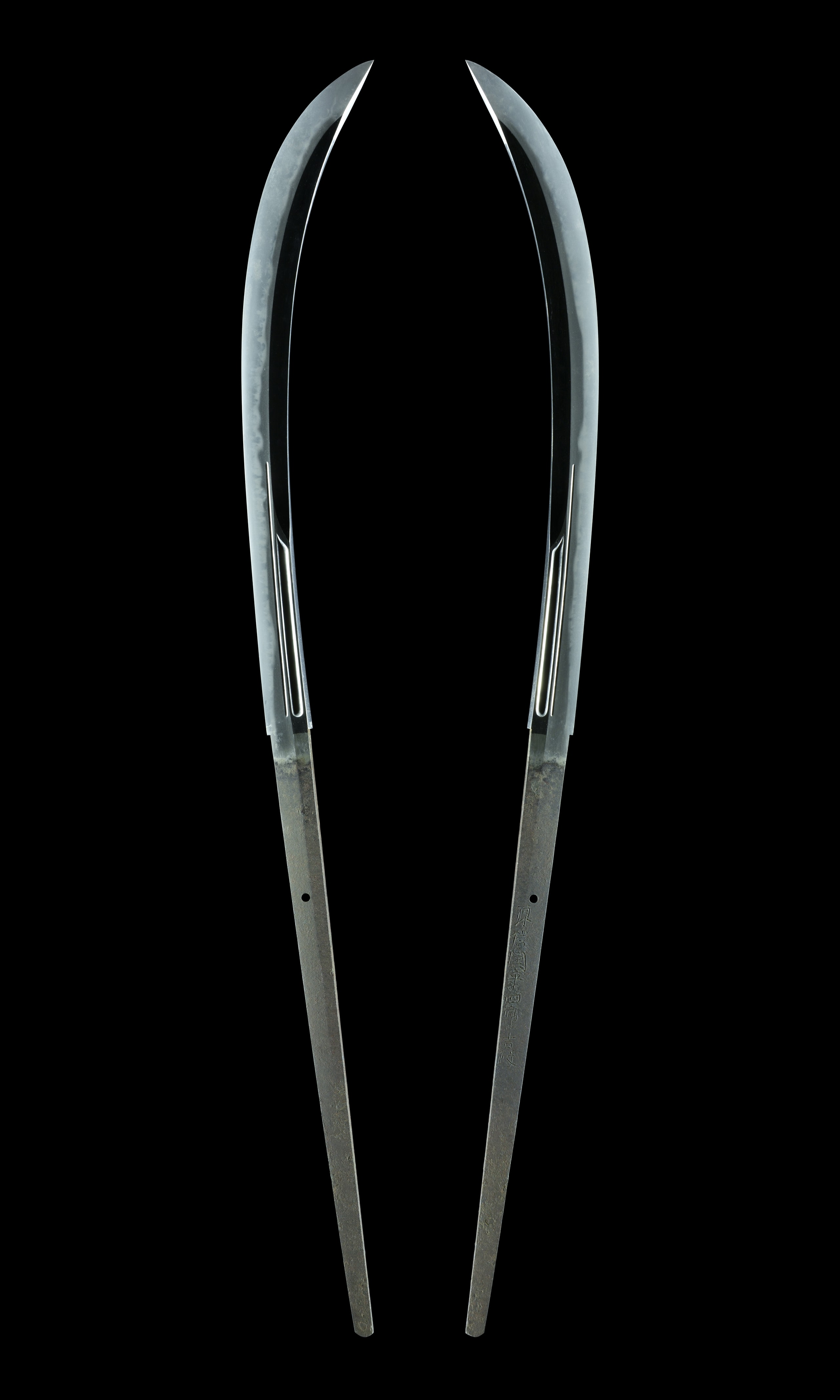
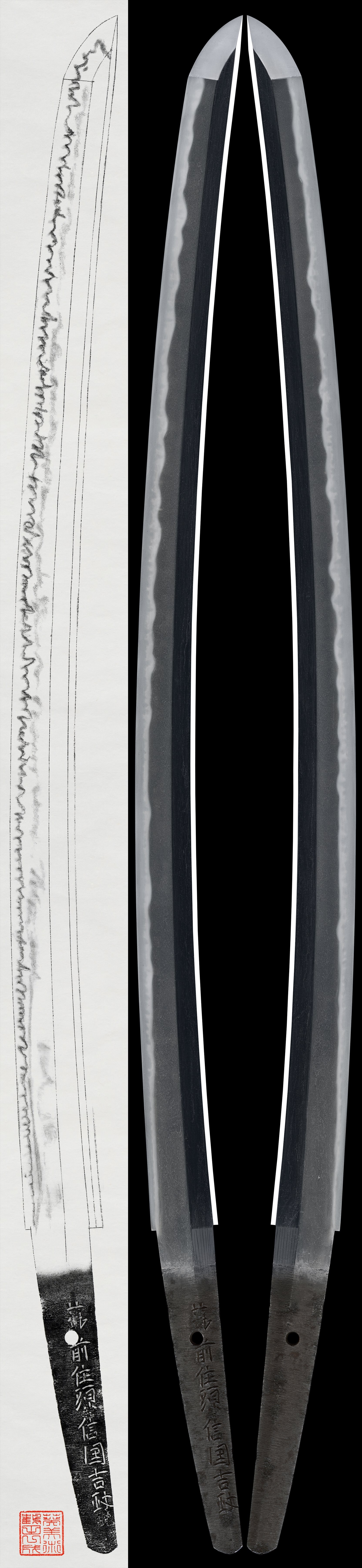
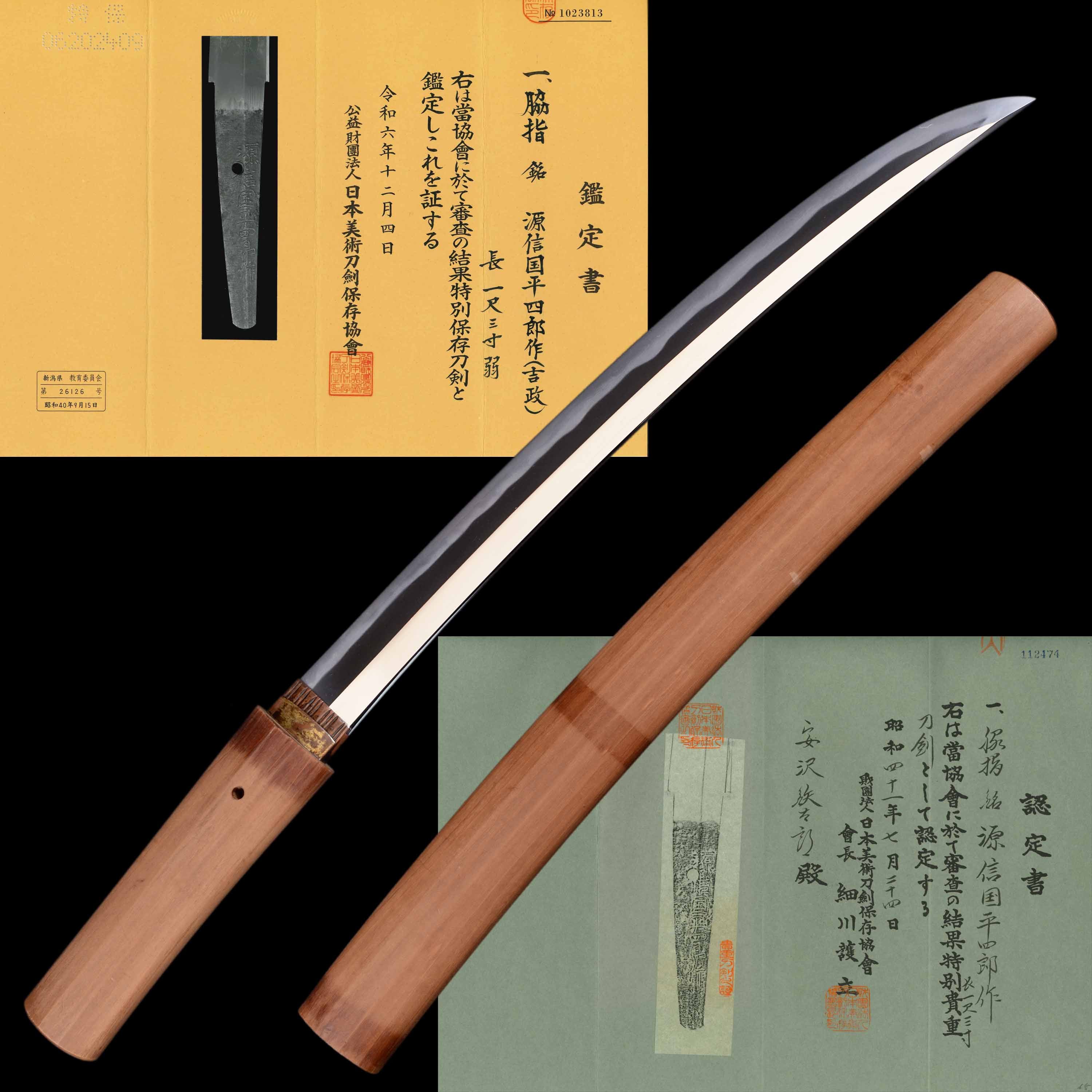
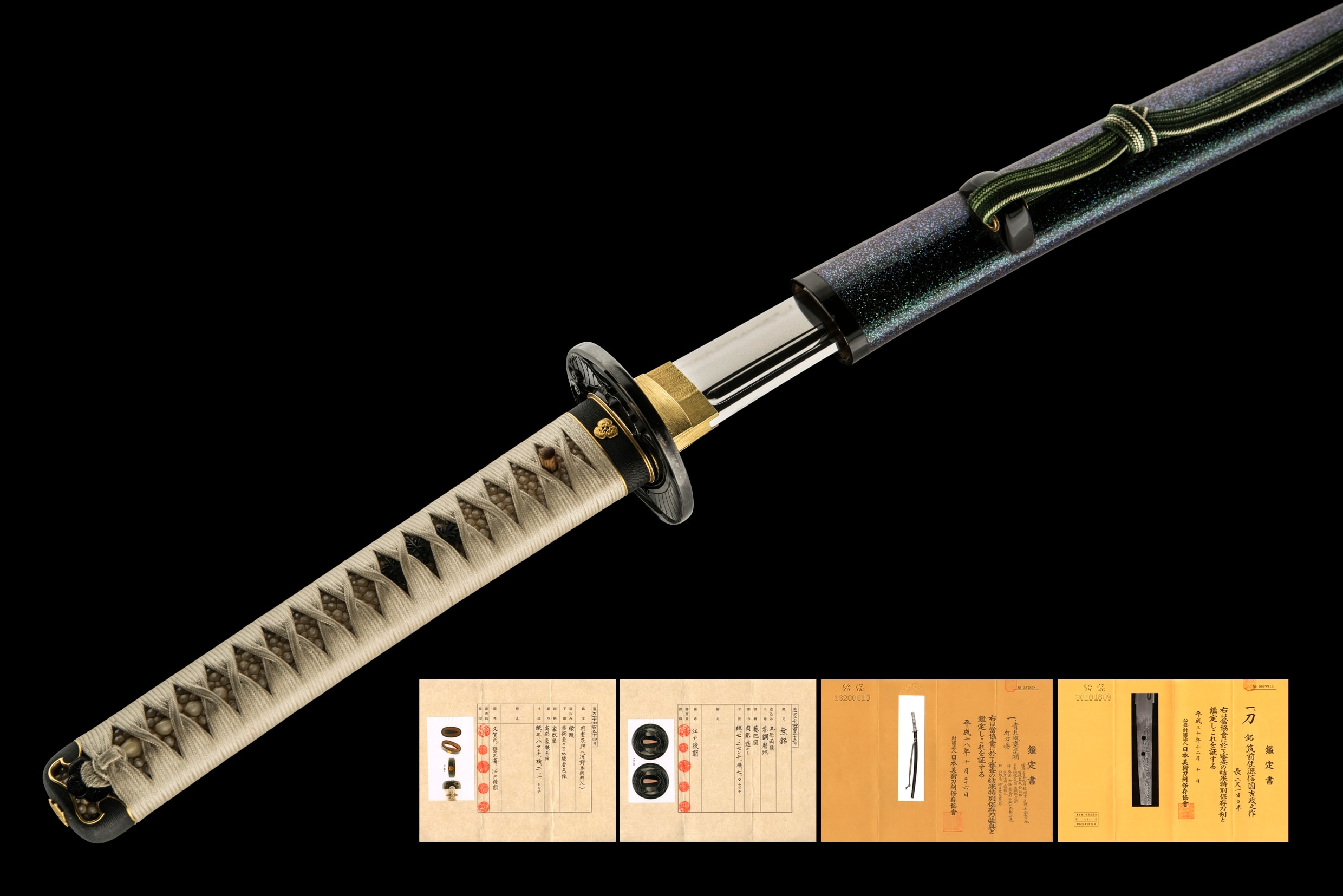
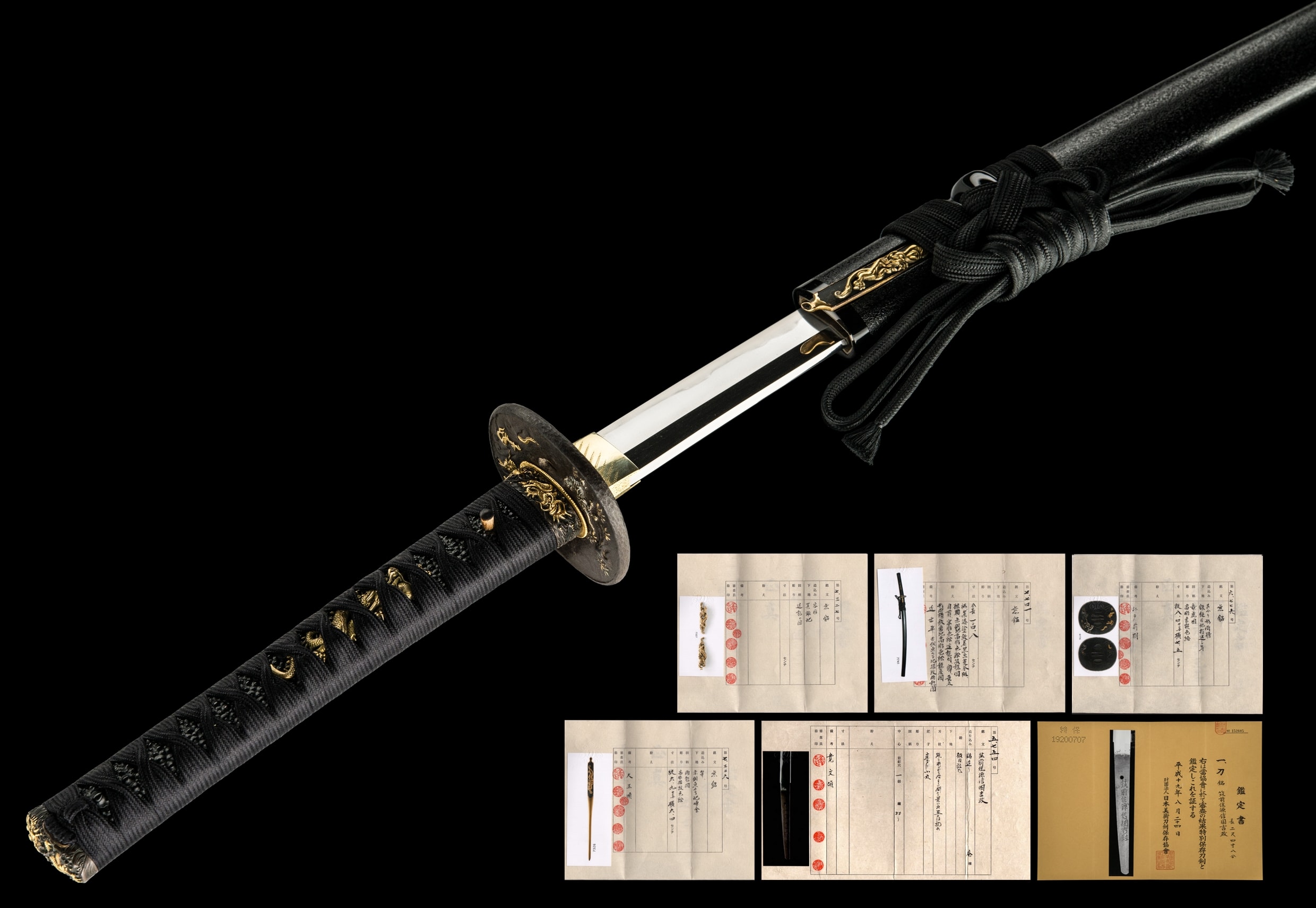
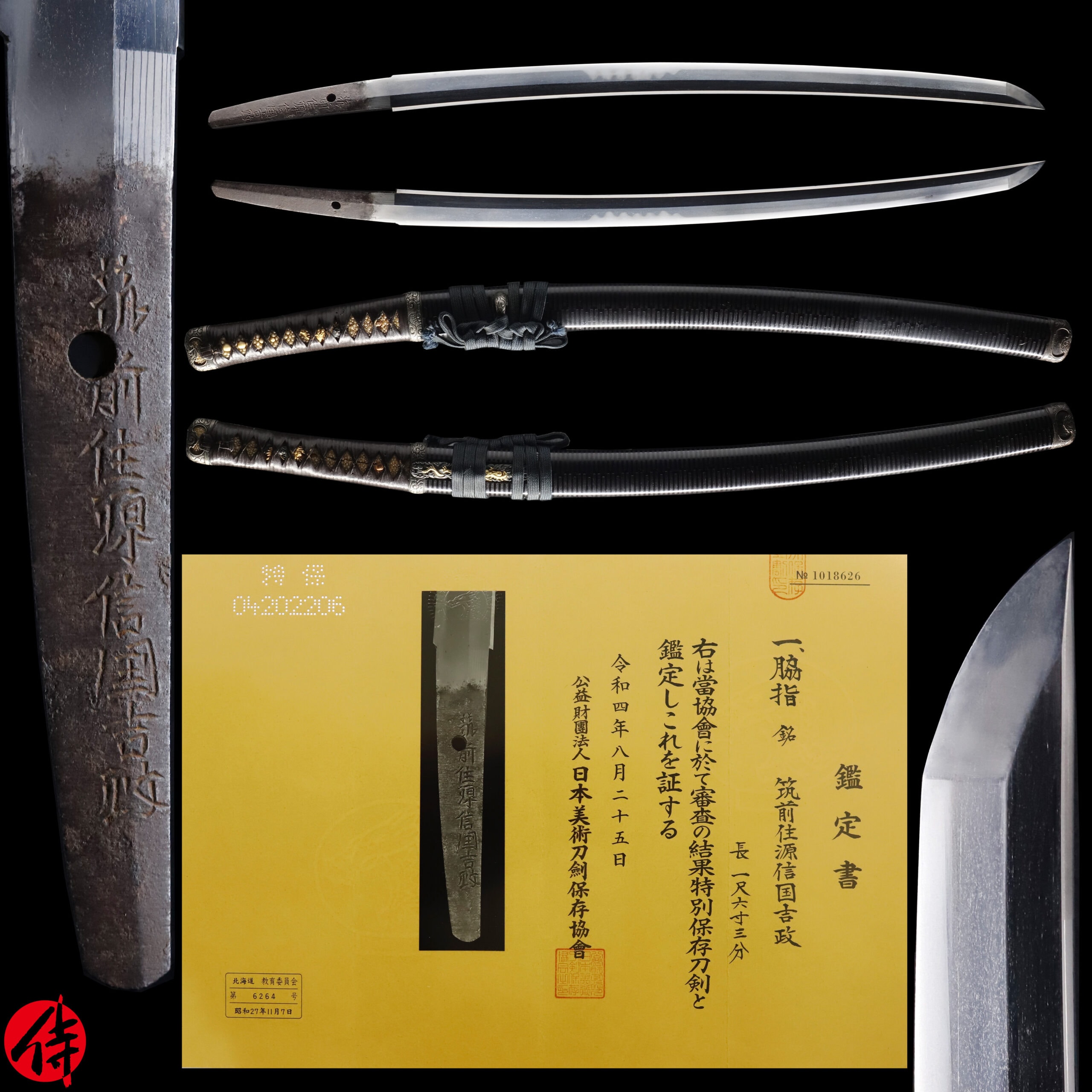
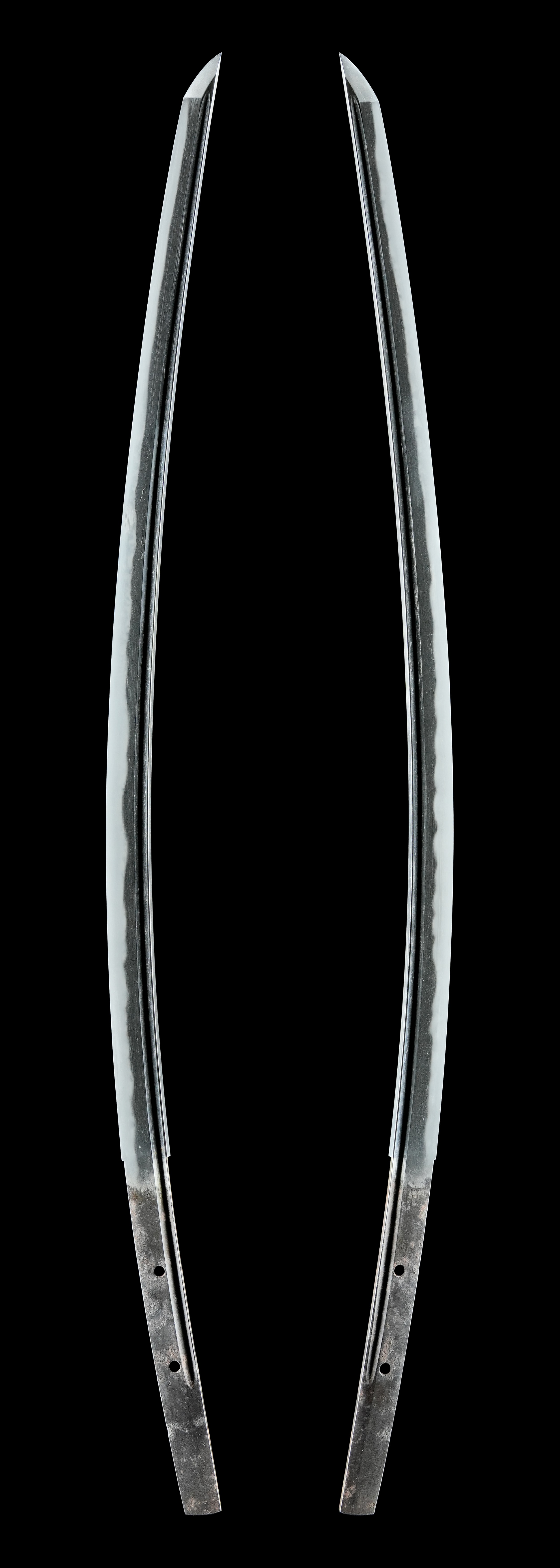
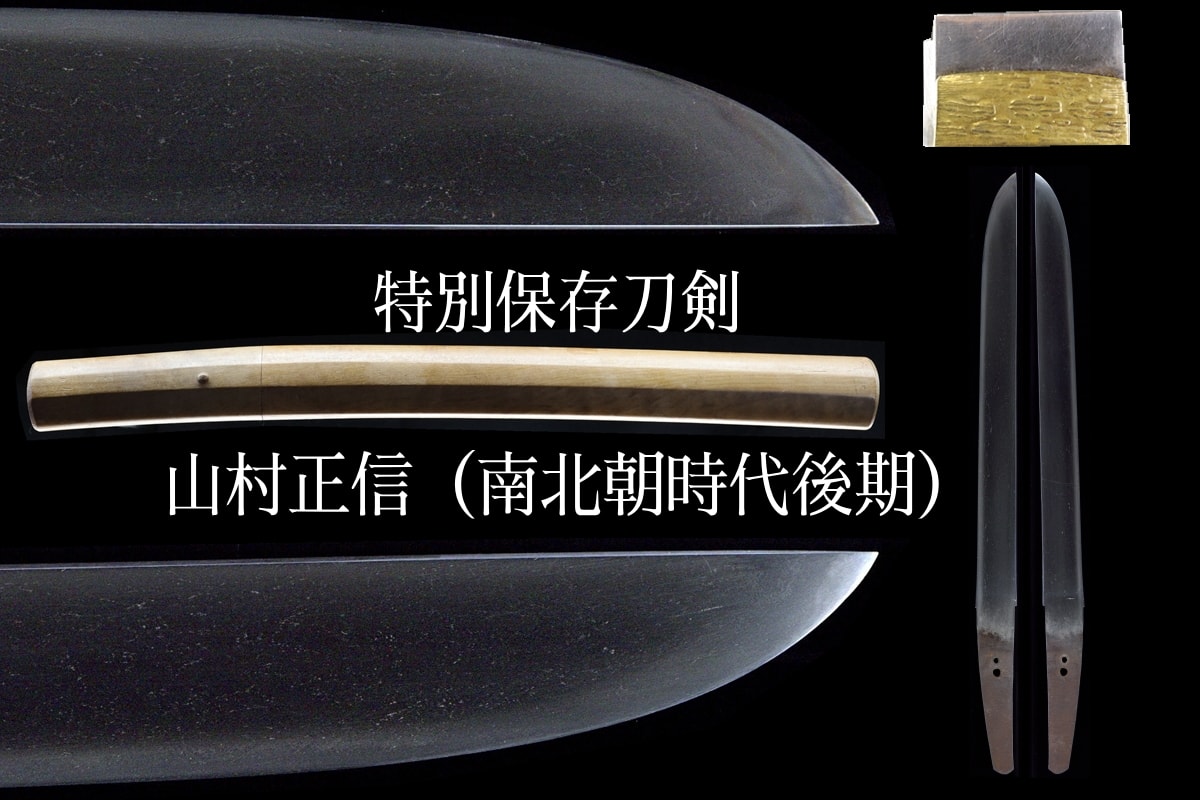
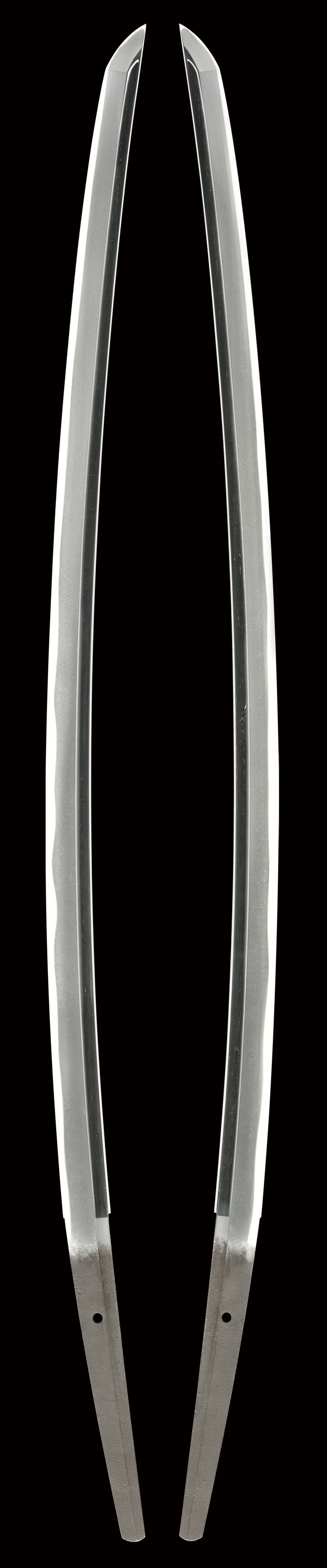
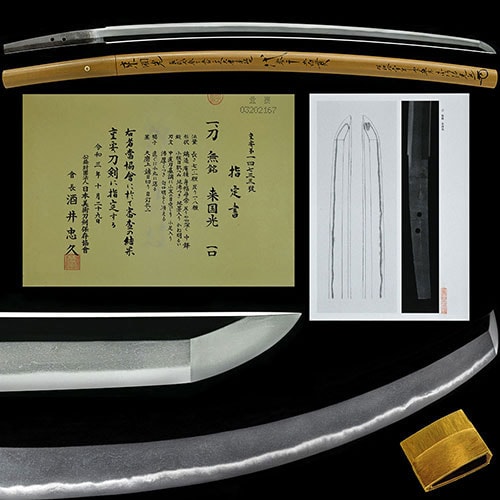
Few Kyoto houses bridged two traditions as deliberately as Nobukuni (信国), the Yamashiro-den lineage whose work runs from the Nanbokucho period through Muromachi and on, in a western branch, into the shinto age. The first generation, the smith the NBTHK counts as shodai, is the master of the Enbun, Koan and Joji years; the older registers placed a founding Nobukuni back in the Kenmu era, but the published sources set that legend aside, since no work survives so early and the style of the oldest dated blades connects directly with that of Sadamune. Two inheritances meet in him. By blood he belongs to the Ryokai line, recorded as son or grandson of Ryo Hisanobu and therefore of Rai descent; by training he is said to have studied under Soshu Sadamune, counted among the Sadamune Santetsu, the three brilliant pupils. The name then passed on: a change-of-generation Nobukuni with Eitoku, Shitoku and Meitoku dates stands at the close of Nanbokucho, and in early Muromachi come the so-called Oei Nobukuni, Saemon-no-jo and Shikibu-no-jo, conventionally the third generation. The published commentary keeps these hands apart and notes that several smiths of the same signature appear within the Nanbokucho period alone. Through Muromachi the line moved to Buzen and then Chikuzen, where it served the Kuroda house of Fukuoka as retained smiths and flourished as the Chikuzen Nobukuni group of Yoshisada, Yoshimasa, Yoshitsugu, Yoshikane and Shigekane. A single steel underlies the whole school. The jigane is an itame mixed with mokume that flows toward the ha and stands into masame, with thick ji-nie and chikei entering frequently; on the finer-forged pieces a streak-like nie-utsuri rises, and that masame-tinged surface is read as the visible token of the Ryokai pedigree.
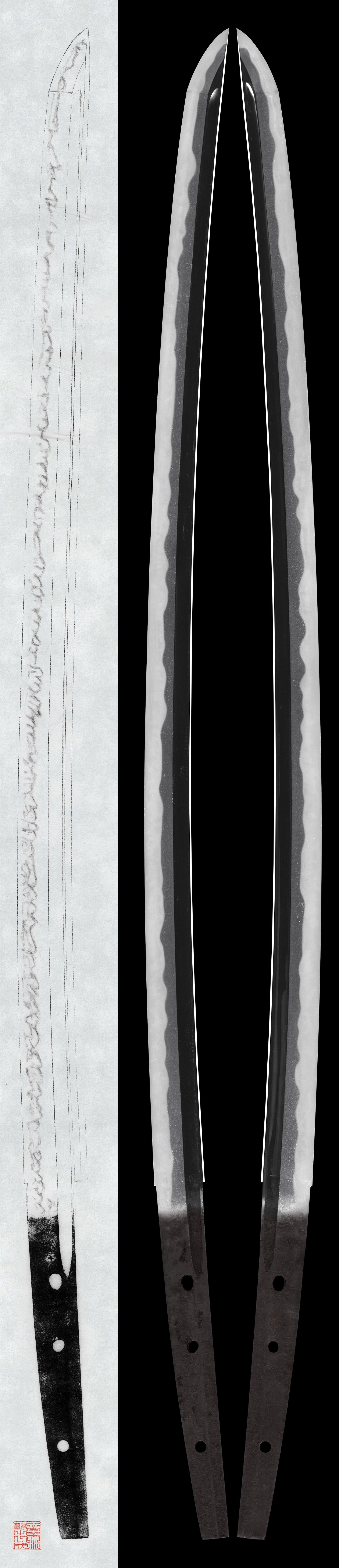
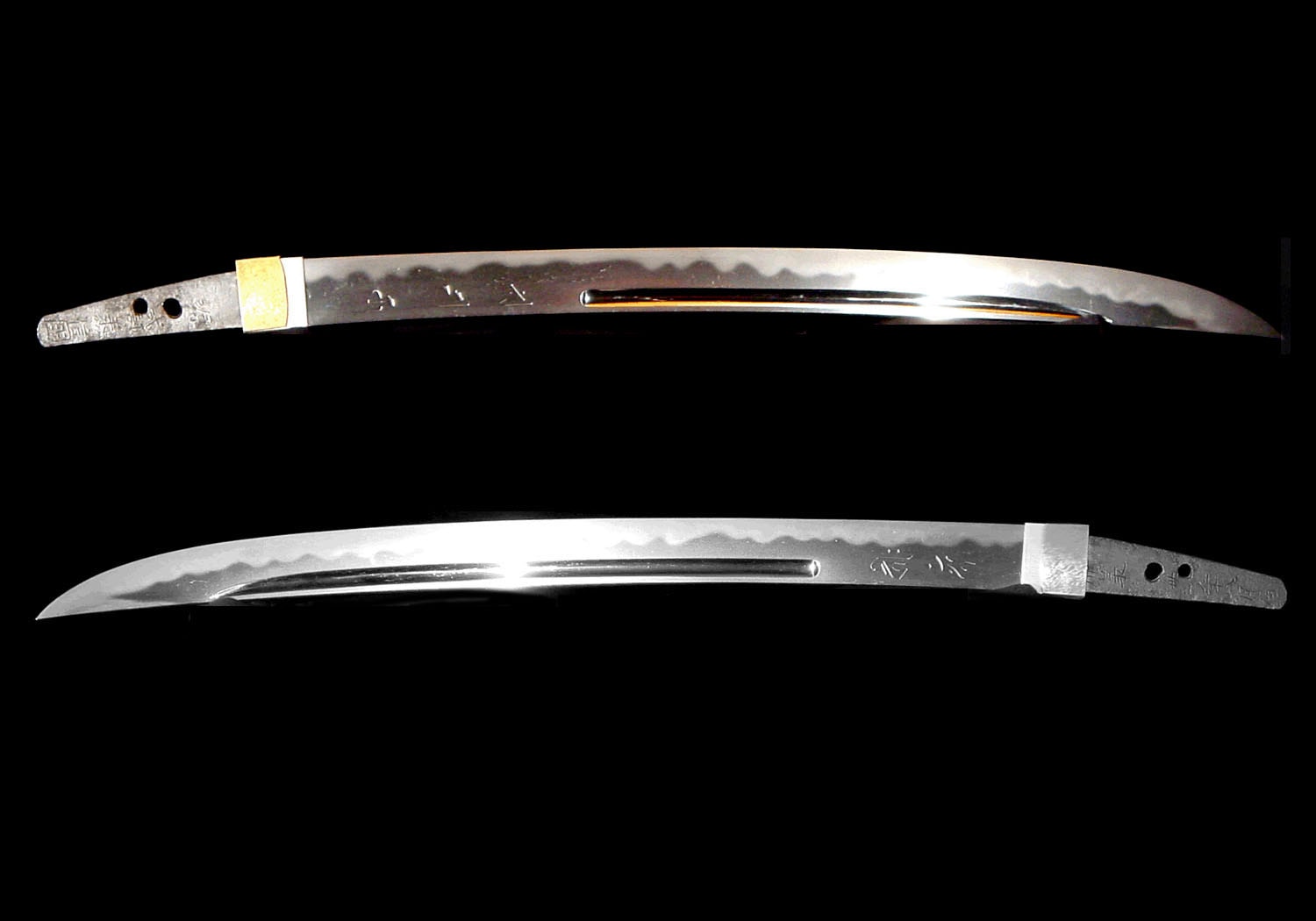
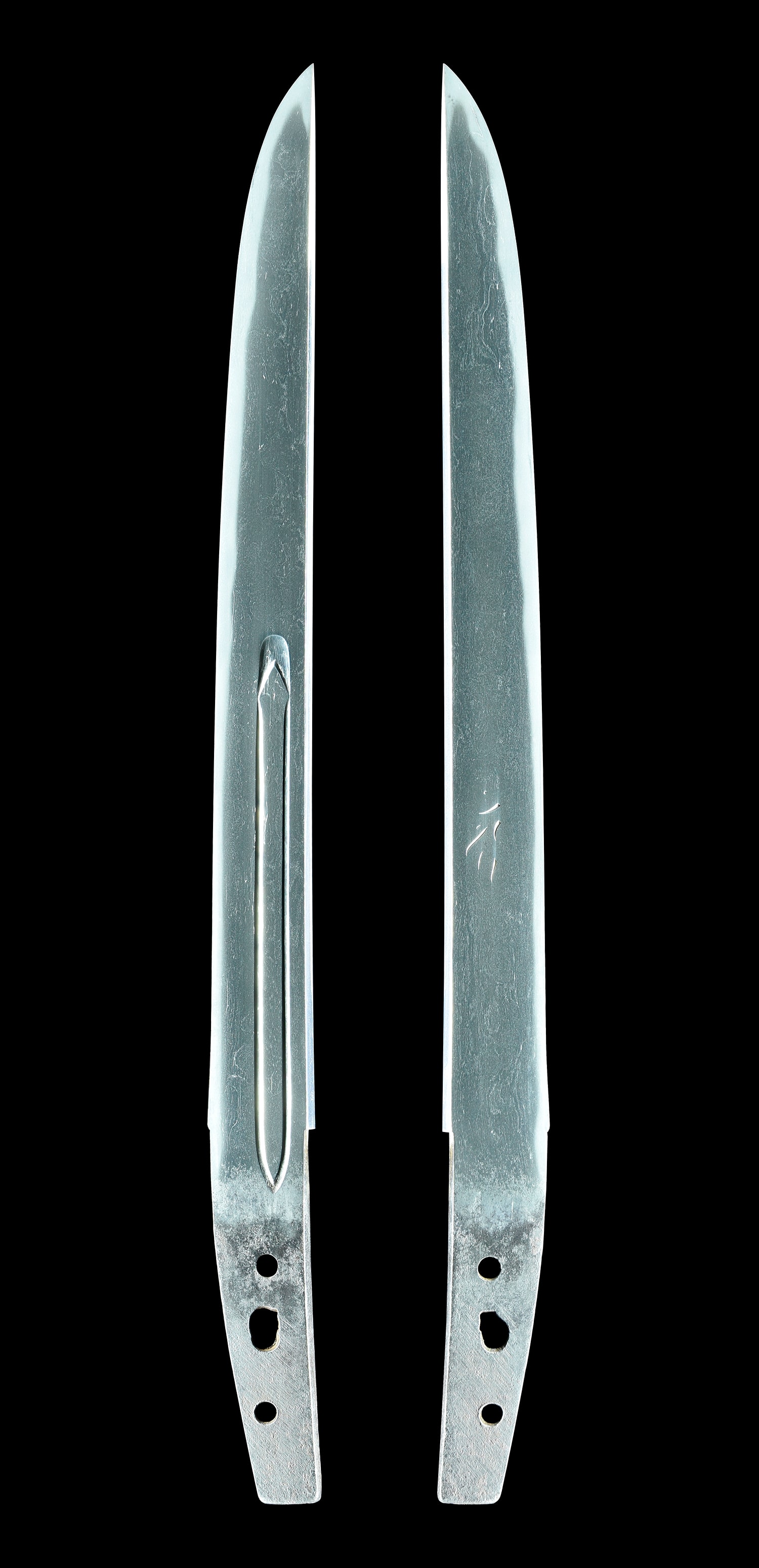
Over it the temper divides into the manners the sources name together: a suguha expressing the Kyoto tradition, refined in ko-nie with fine hotsure and a niju-ba tendency, carried on tanto and ko-wakizashi; and a ko-notare mixed with gunome inheriting the Sadamune style, laid thick in nie, with kinsuji, sunagashi, hotsure and conspicuous yubashiri, on the most flamboyant pieces stringing into a two-tiered ha. From the late Nanbokucho succession into the Oei generation a third range enters, a gunome-led midare whose tell is paired gunome linked across the valleys by a low ko-notare into a yahazu, arrow-notch, profile, with muneyaki, tobiyaki and niju-ba on the liveliest blades. Above all stands the carving the sources call the house art, the horimono of bonji, kurikara, suken, gomabashi, sanko-ken and the invocation of Hachiman Daibosatsu, often layered one over another in kasanebori; few smiths of the age are so consistently identified by what they carved. The Chikuzen branch carried the masame-leaning itame forward and added a choji-midare with midare-utsuri, Yoshikane reaching toward Soshu-den with deep nioi and thick nie, Shigekane ranked highest in skill within his group and noted as a copyist of meibutsu who emulated Fudo Kuniyuki at the Hama Palace. To kantei Nobukuni is to read the Kyoto traces that part him from Sadamune: the nie-utsuri, the niju-ba, and the hada that drifts into masame along the ha. Within the long succession the shodai remains the touchstone, his dated work the standard against which unsigned blades and generation questions are resolved, the reversed left-form kuni marking the Oei Saemon-no-jo, the yahazu the daigawari hand. The best members rank Jo-jo saku under Fujishiro, and the carving reputation is the constant thread, distinguishing these blades from the plainer utilitarian grooving of contemporary Bizen. Provenance runs through the great houses: the Kuroda wakizashi once carried by Kuroda Nagamasa, a Hongan-ji meibutsu held to have been cherished by Rennyo Shonin, the signed Arao Nobukuni descended in the Asano of Geishu, pieces in the Sanada, Tosa Yamauchi and Tamura families, and a tachi bestowed on the Owari Tokugawa. Examples rest today in the Tokugawa Art Museum, the Kyoto National Museum, shrines such as Atsuta and Ise, and long-held private collections, with the Chikuzen smiths' shogunal-command pieces preserving the historical episodes that produced them. Learn more →