 NihontoWatchNihontoWatch
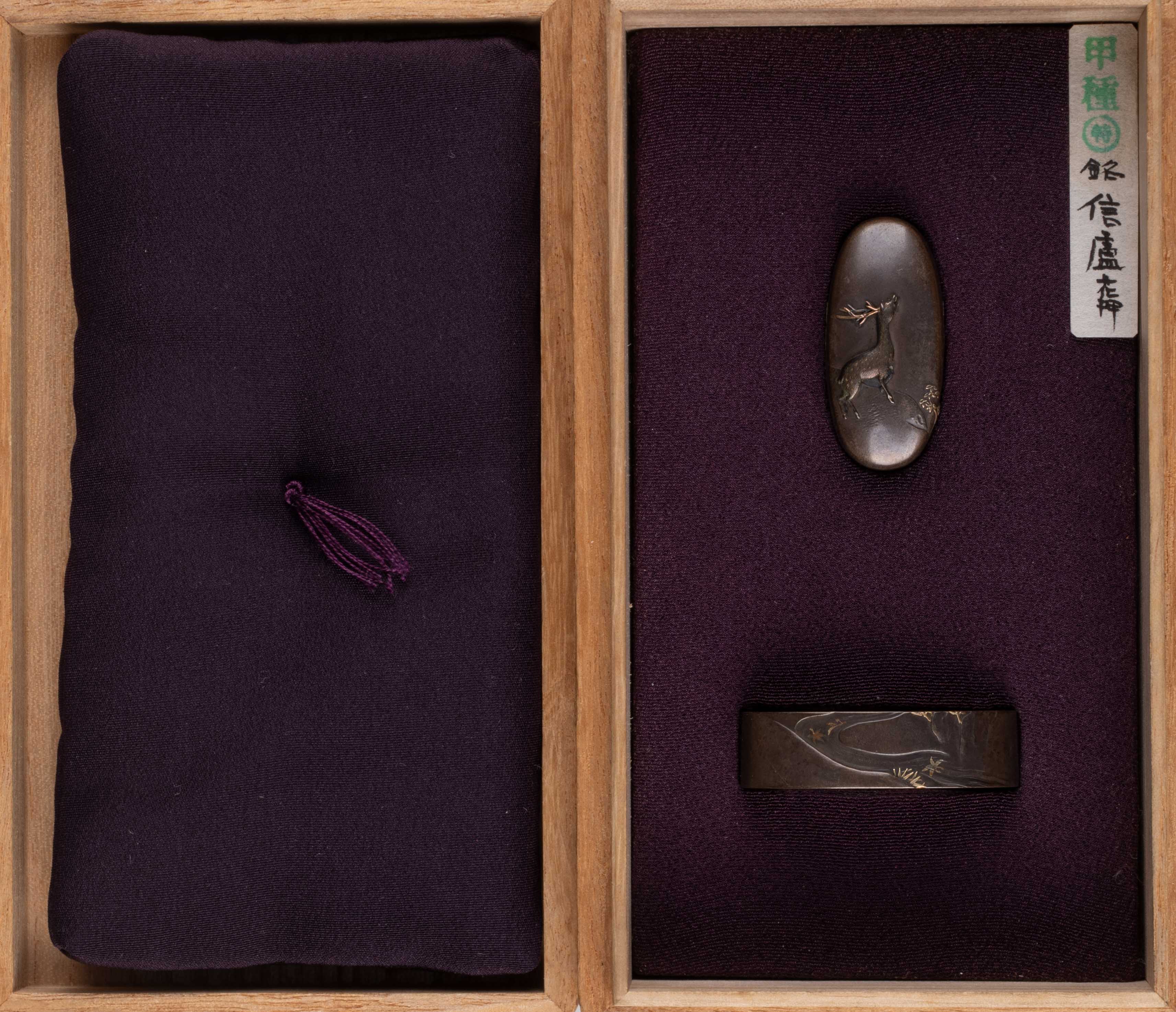
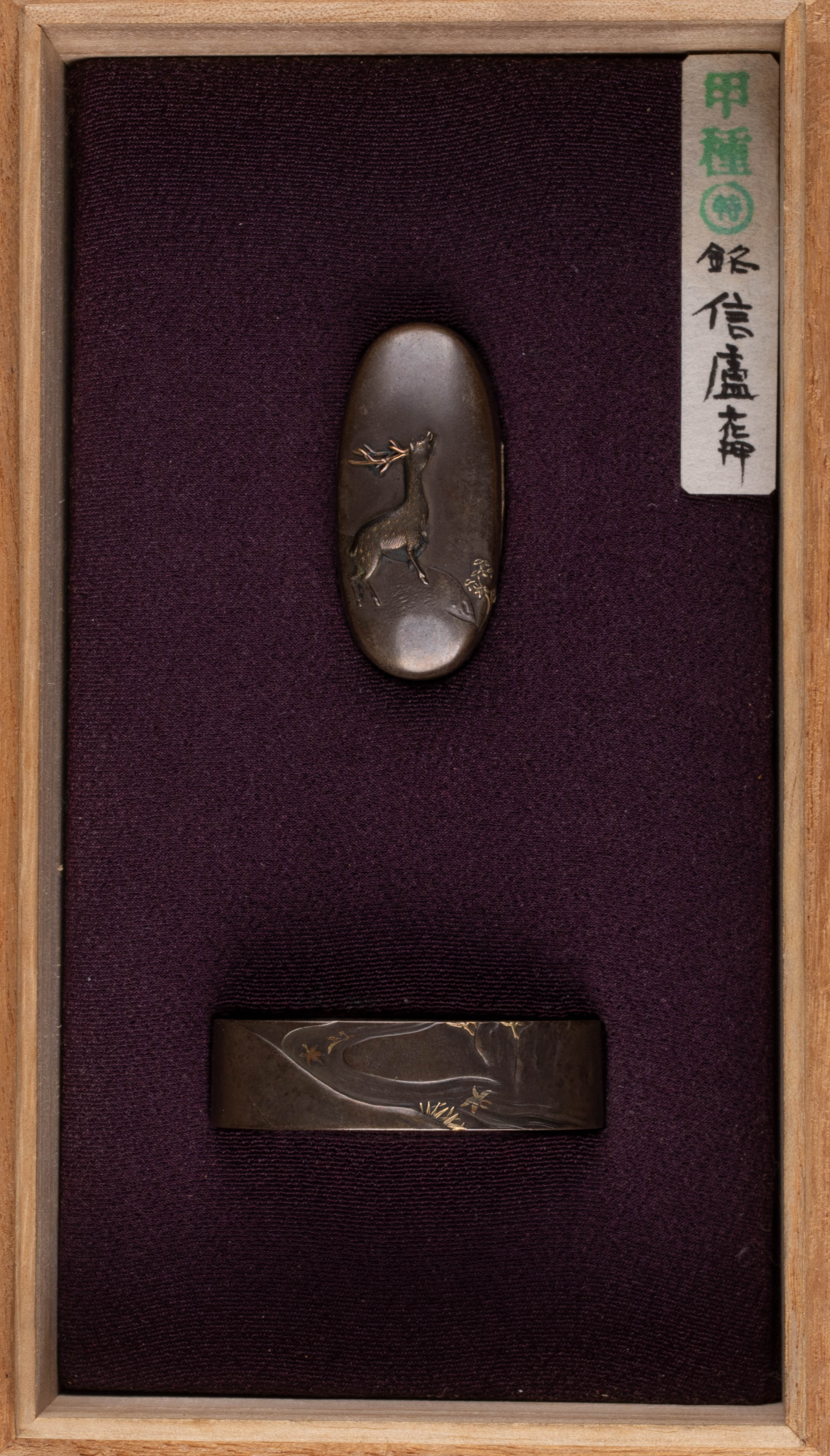
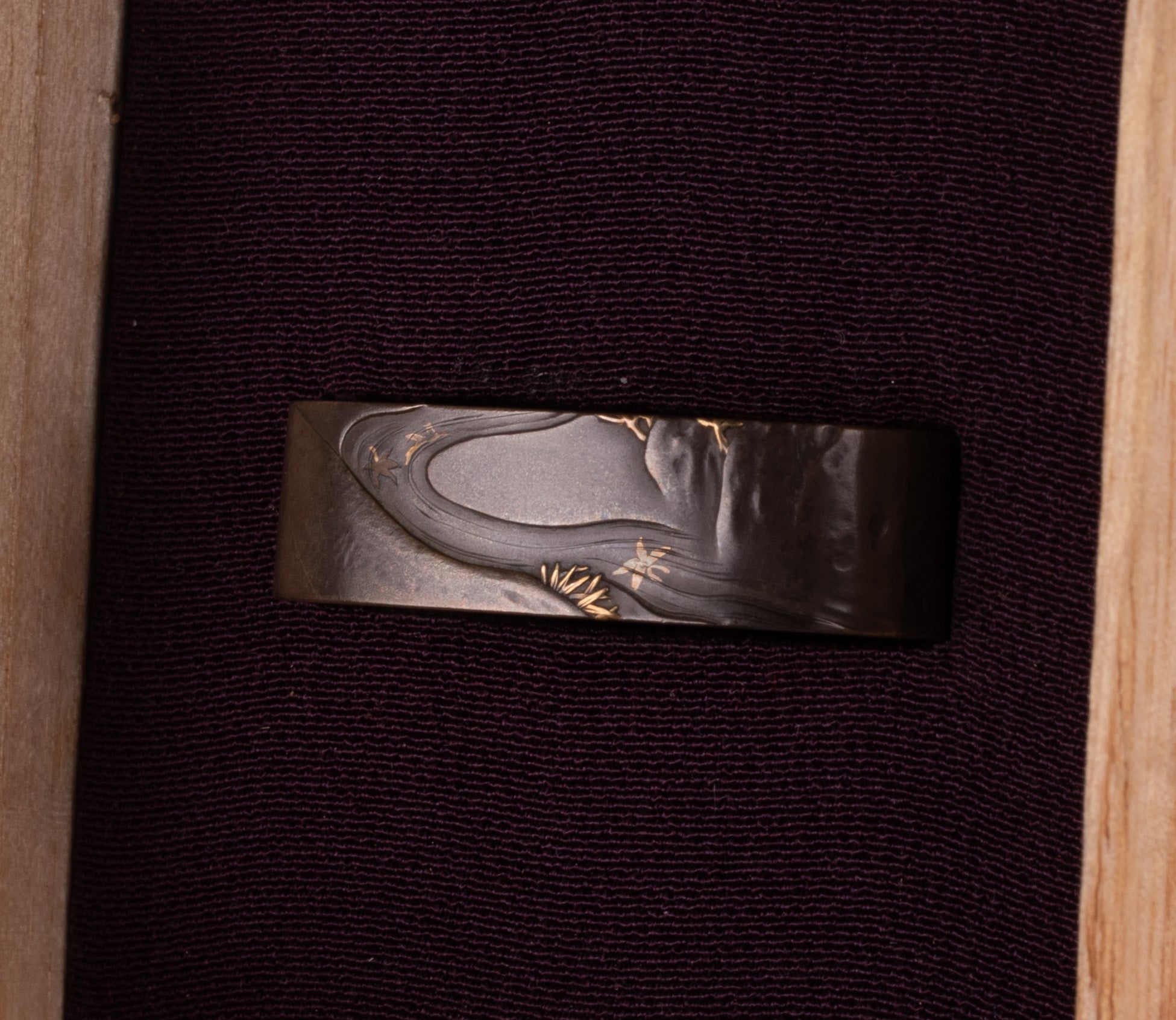
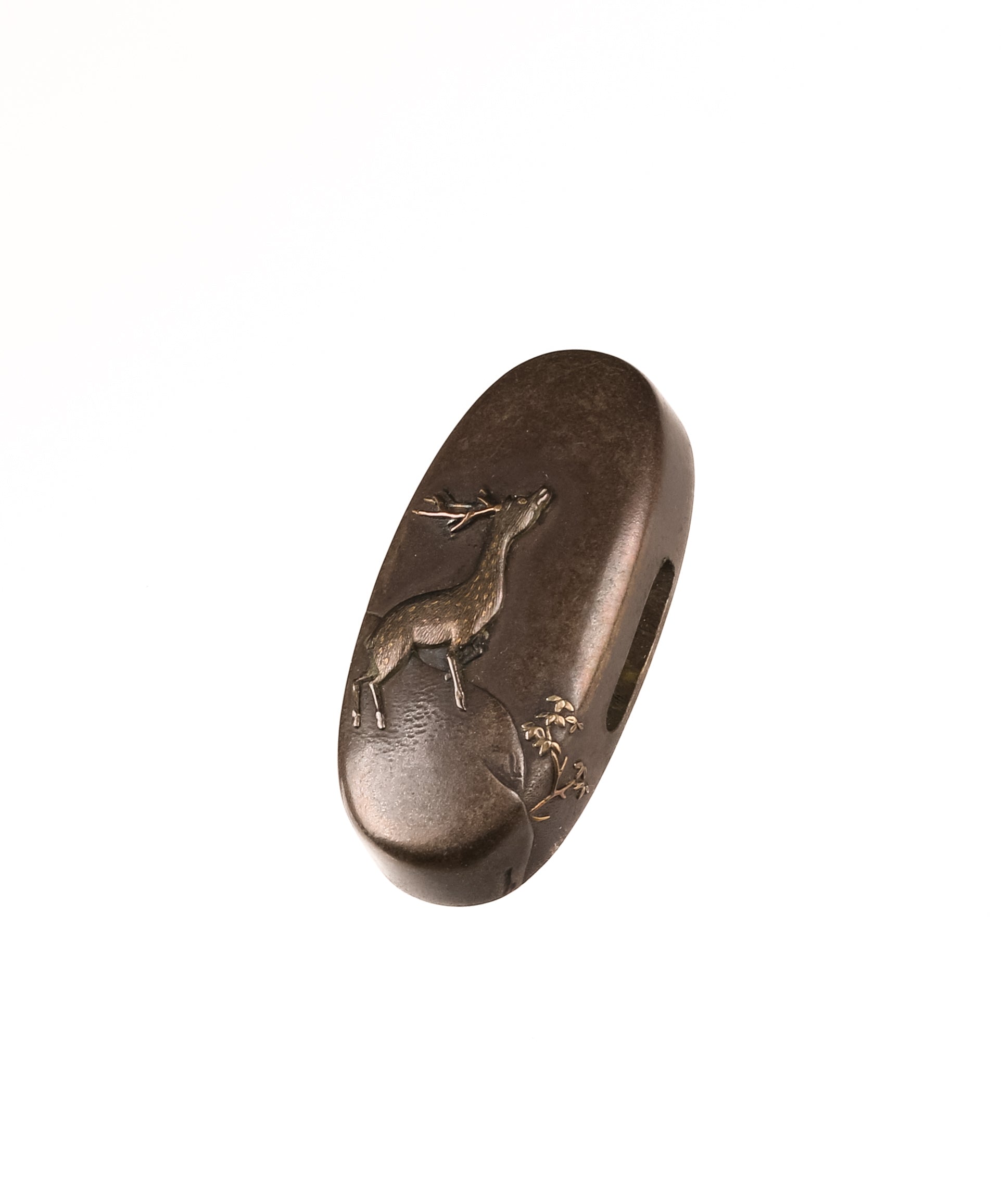
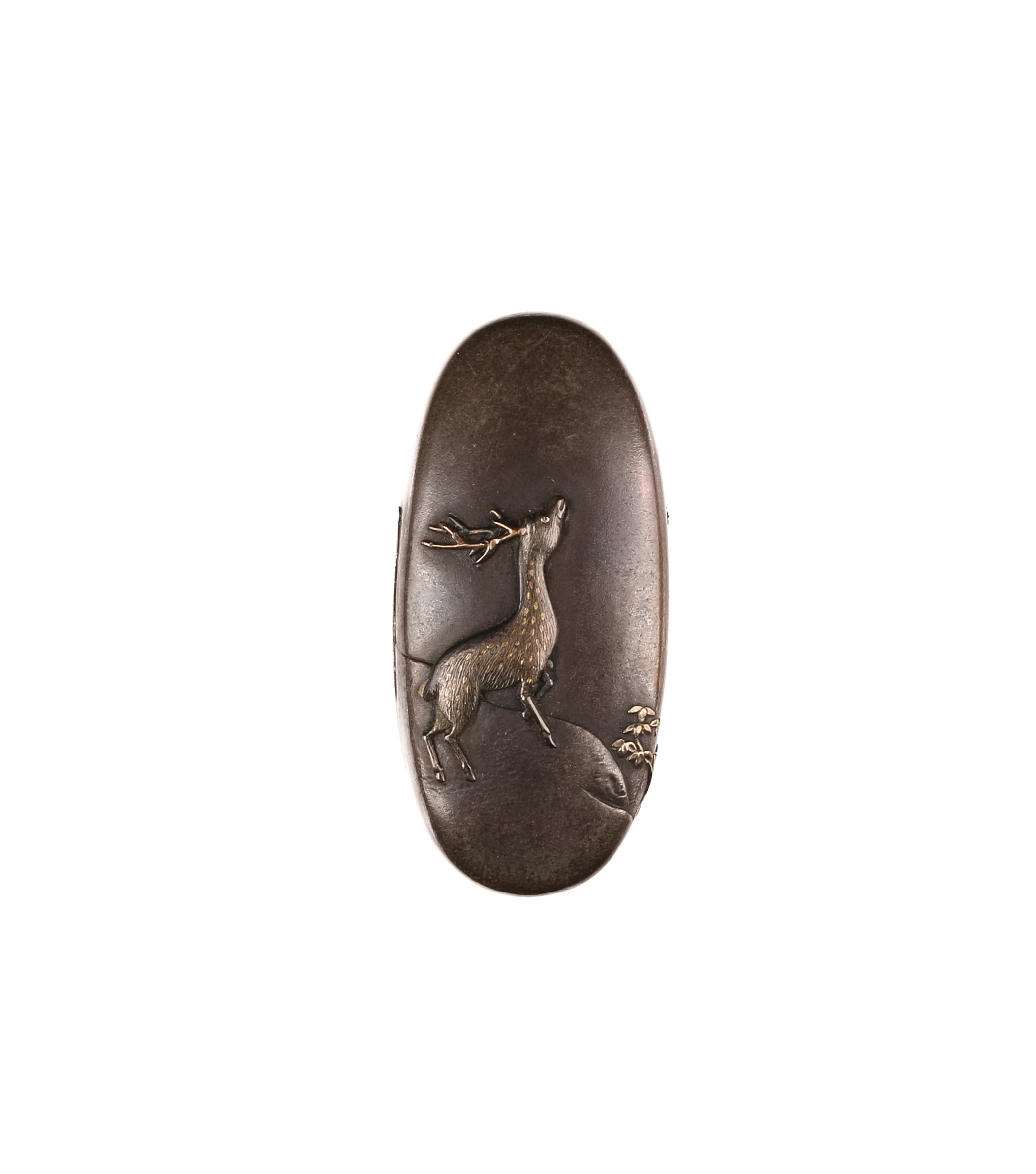
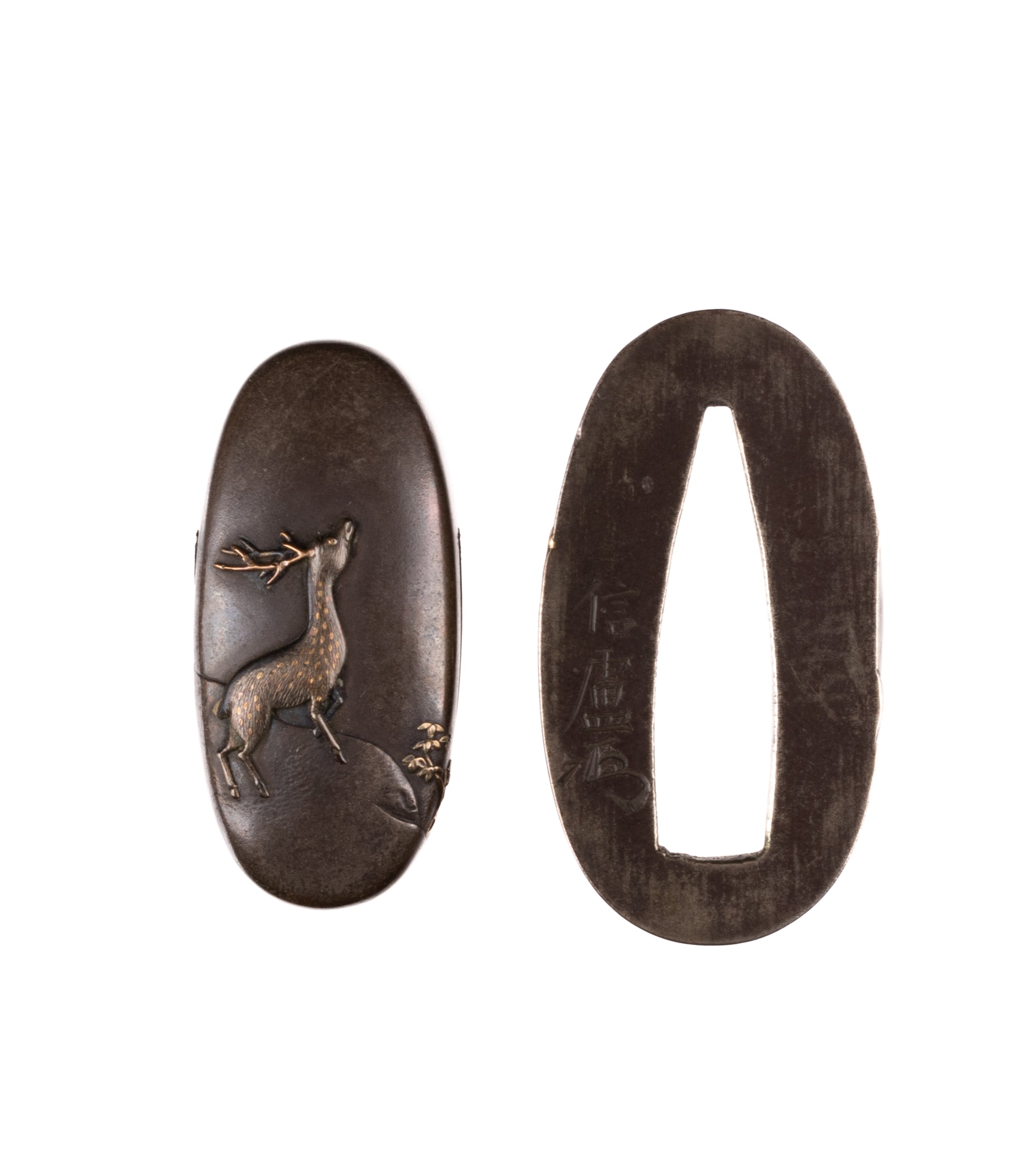
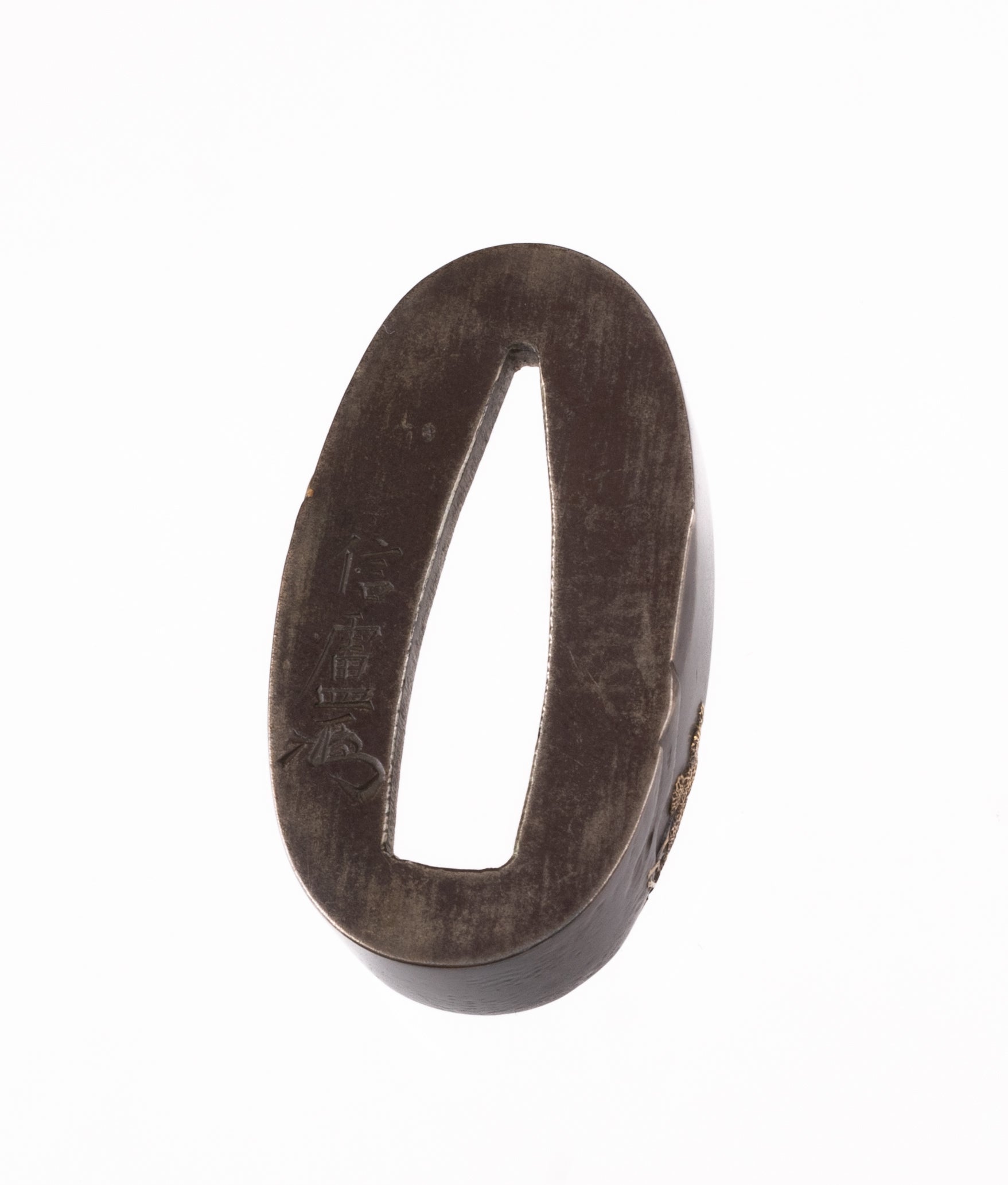
Shibuichi fuchikashira signed "Nobuyoshi" with Kao. Iwama Nobuyoshi was born in 1807 and died 1878. He was a student of Iwama Masayoshi who himself was a student of Hamano Naoyuki, Nobuyuki and Toshiyuki. Nobuyoshi was both a swordsmith and fittings maker. This piece comes without certificate however based on quality of design and signature I have no doubt it is an authentic piece. Decorated with deer in the moonlight in autumn. Deer is made in a high relief to highlight that he is the one best visible in the moonlight. River and trees and very gently carved while leafs in the water are made in hira zogan. It is really amazingly well designed piece. This depiction is based on the Waka poem, so it is nice to study those two together. Made in 19th century Size: Fuchi: 38 mm x 20 mm x 10 mm Kashira: 34 mm x 16 mm x 9 mm In custom made kiri box.
NihontoWatchOffered by Soryu
This piece has sold
Get an email when a new Iwama Nobuyoshi piece hits the market.

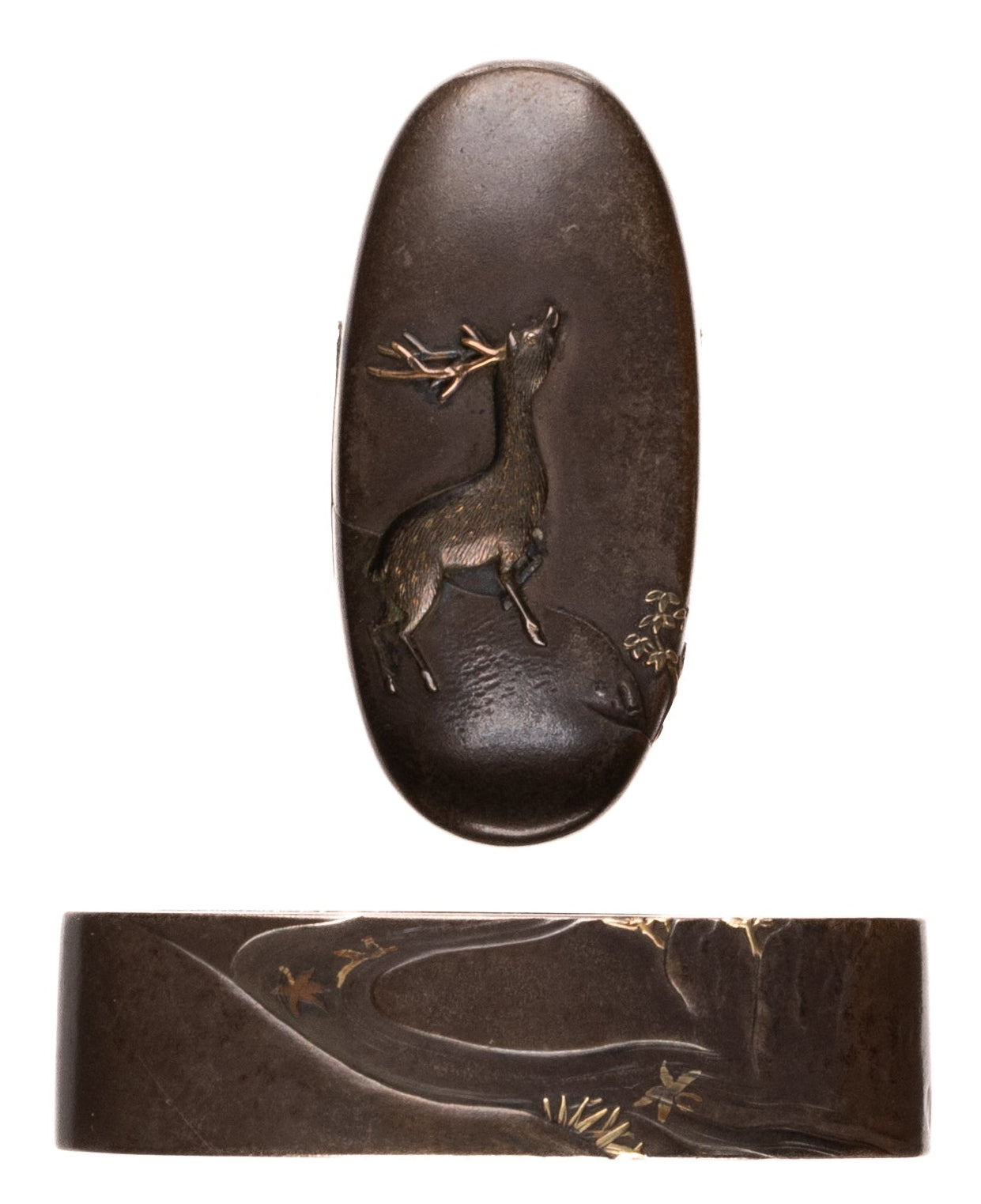
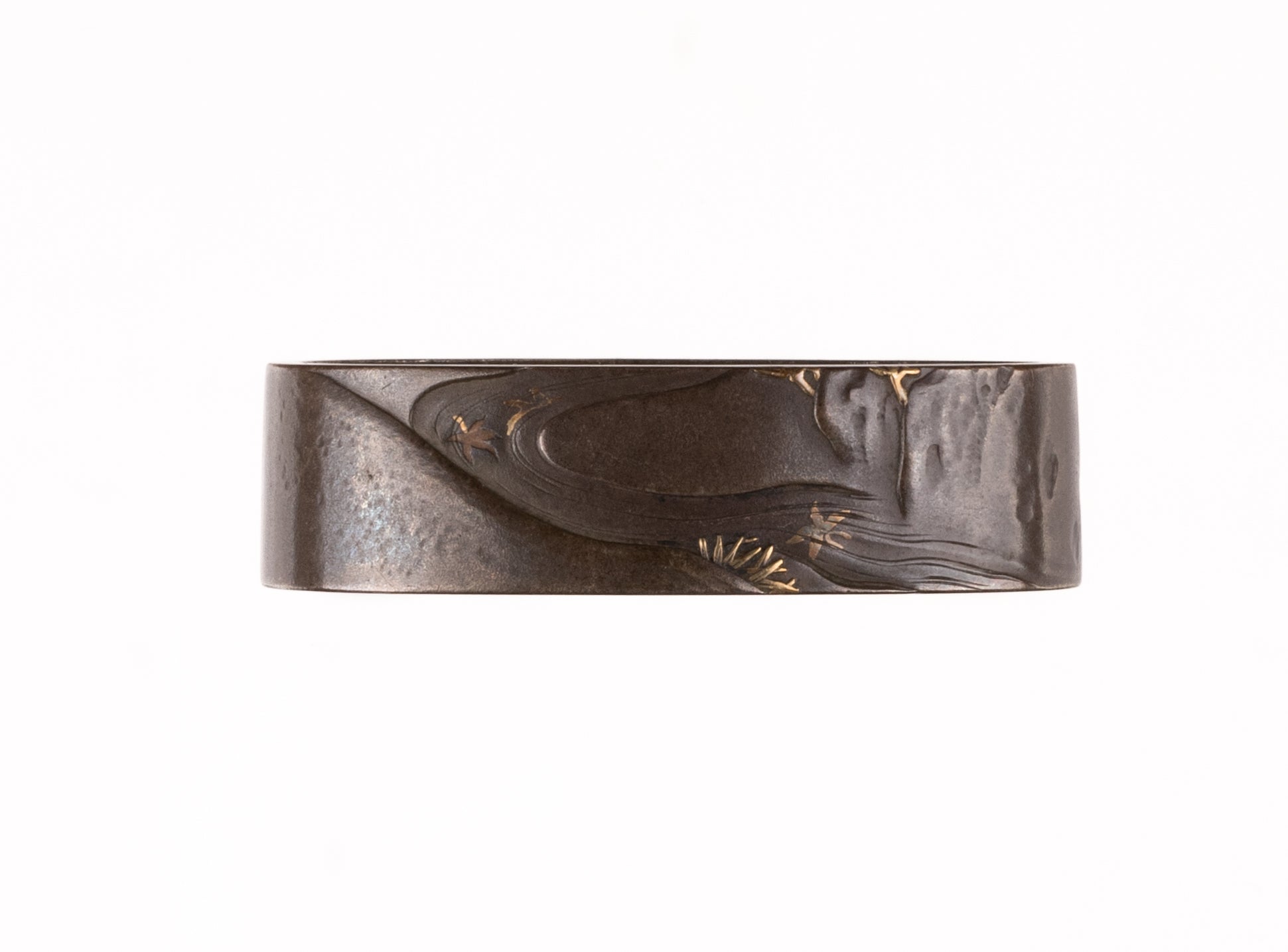
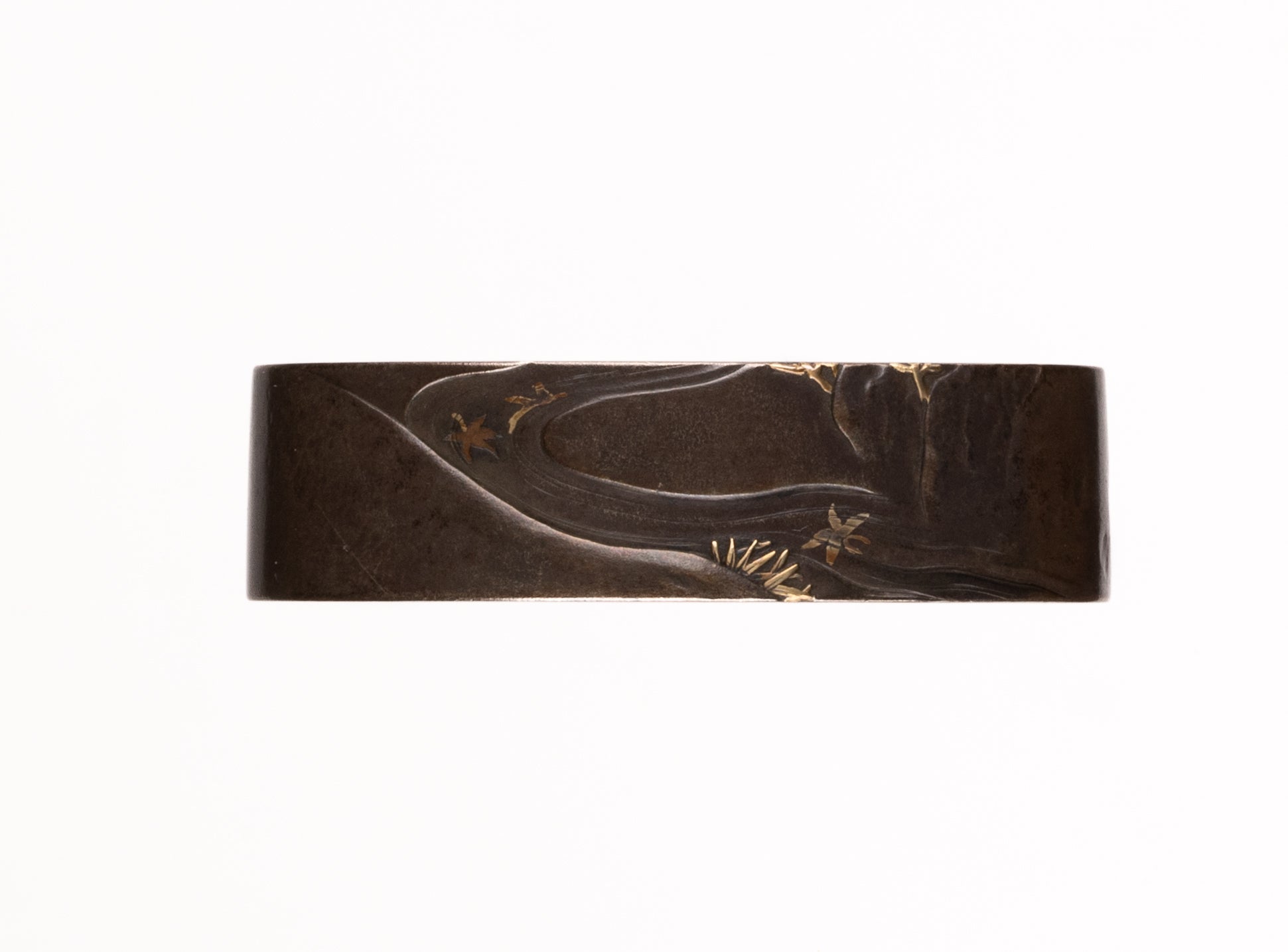
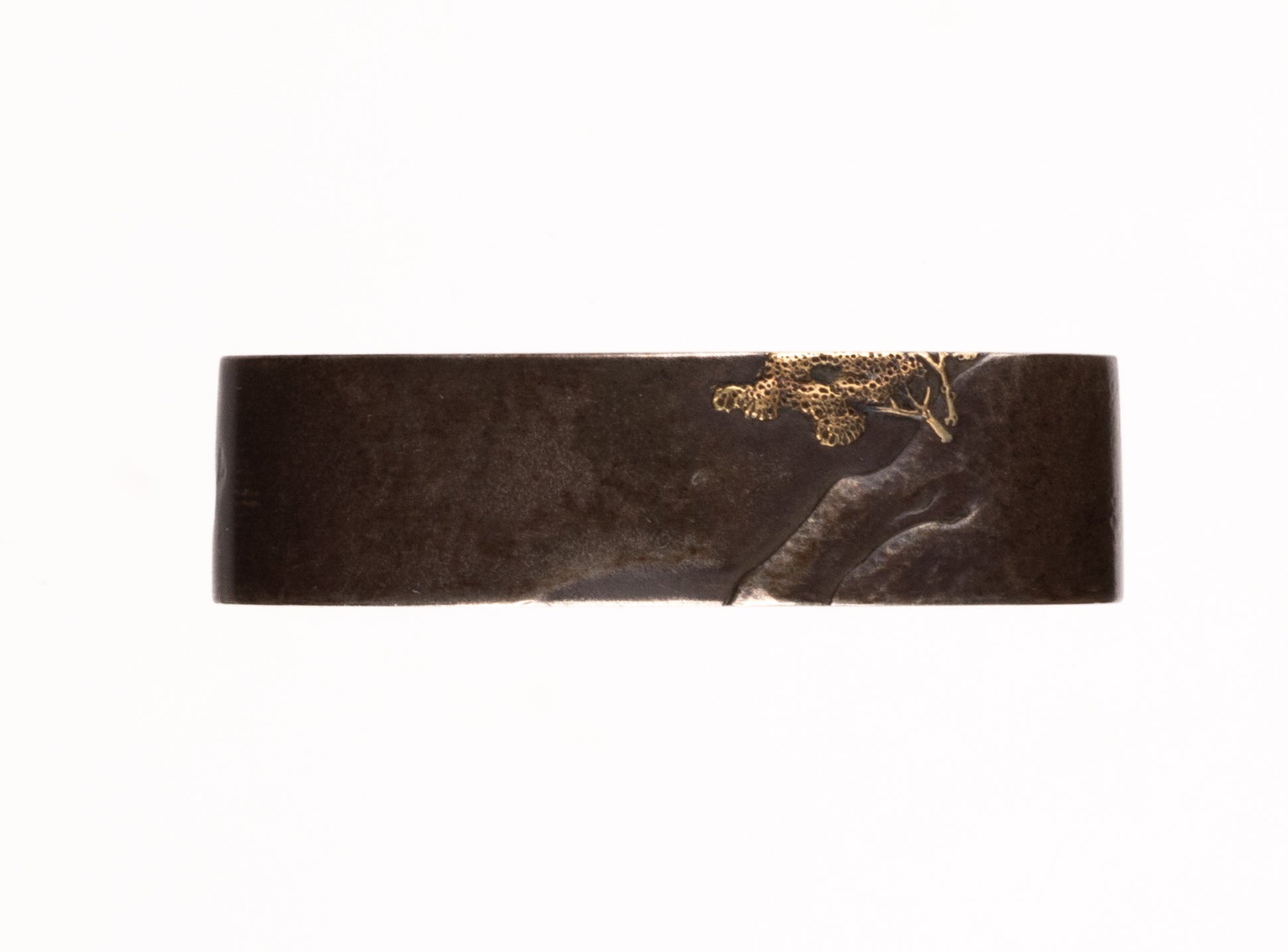
Edo
Signed
Machibori · Musashi · around 1670
1 piece on the market now
Where Nobuyoshi stands among comparable artisans: across all of nihontō, and within tradition, era, and period. The tiers (Foremost · Leading · Major · Notable) weigh official designations from the NBTHK and Japan's Agency for Cultural Affairs, together with historical honors of lasting repute such as the Sansaku and Meibutsu-chō.
Select a lens to see how it's measured.
Machibori · Edo
32 pieces on the market now
The Hamano school of machibori carving was established in mid-Edo Edo by Hamano Masazui (浜野政隨), commonly known as Tarōbei, an exceptionally gifted pupil of Nara Toshihisa. As the Edo Kinkō Meifu states of him that he "thunders through the world," Masazui won widespread renown as one of the "Four Guardian Kings of Nara" (Nara Shitennō). Training many disciples and employing numerous art names—including Otsuryūken, Aji-zumi, Kankei, Rifūdō, Yūkotei, Shūhōsai, Hankei-shi, and Isshunan—he formed what came to be known as the Hamano school, establishing one of the principal lineages of machibori artistry and founding an independent house. " Works are rendered by means of yōbori (sculptural carving) upon varied grounds—gold-and-silver imo-tsugi-ji, solid gold (kinmuku)—with details frequently treated in the in'yō-kon mode, suggesting the early Gotō masters as models.
The carving is executed with "ample, well-judged volume (nikudori)" and "exceptionally full, weighty presence," while applied metal (okigane) in silver and shakudō with shakudō iroe tightens pictorial fields and imparts additional movement. Later Hamano artists such as Katsurano Akafumi maintained this technical versatility, favoring polychrome inlay applied to high-relief compositions. " The NBTHK repeatedly notes that works "clearly demonstrate the high level of technique," "amply demonstrate advanced technical mastery," and possess "a composed dignity"—attestations to the school's sustained excellence across generations and its enduring place within the broader machibori tradition. Learn more →
| Smith | Era | Designated |
|---|---|---|
| Shozui政随 | — | 17 |
| Sekibun赤文 | 1670 | 8 |
| Noriyuki矩随 | — | 4 |
| Naotoshi直寿 | — | 0 |
| Naoharu直春 | — | 0 |
Inspection period (per the shop's shipping policy): after receiving the item, each customer has two weeks for inspection. In that time you may decide to return it, and the item will be refunded in full. Shipping costs are not refunded. Returns (per the shop's refund policy): the policy lasts 30 days; once 30 days have passed since purchase, no refund or exchange is possible. To be eligible for a return, the item must be in the same condition in which it was received and in its original packaging. Customized products cannot be returned. In certain situations only a partial refund is granted. Return shipping is at the customer's expense, and shipping costs are non-refundable.