NihontoWatch Mon

NihontoWatchBETA

MarketAuctions
Encyclopedia
NihontoWatch Mon

NihontoWatchBETA

MarketAuctions
Encyclopedia

Description

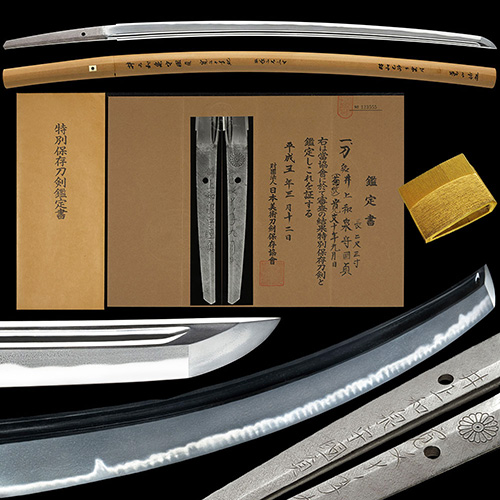
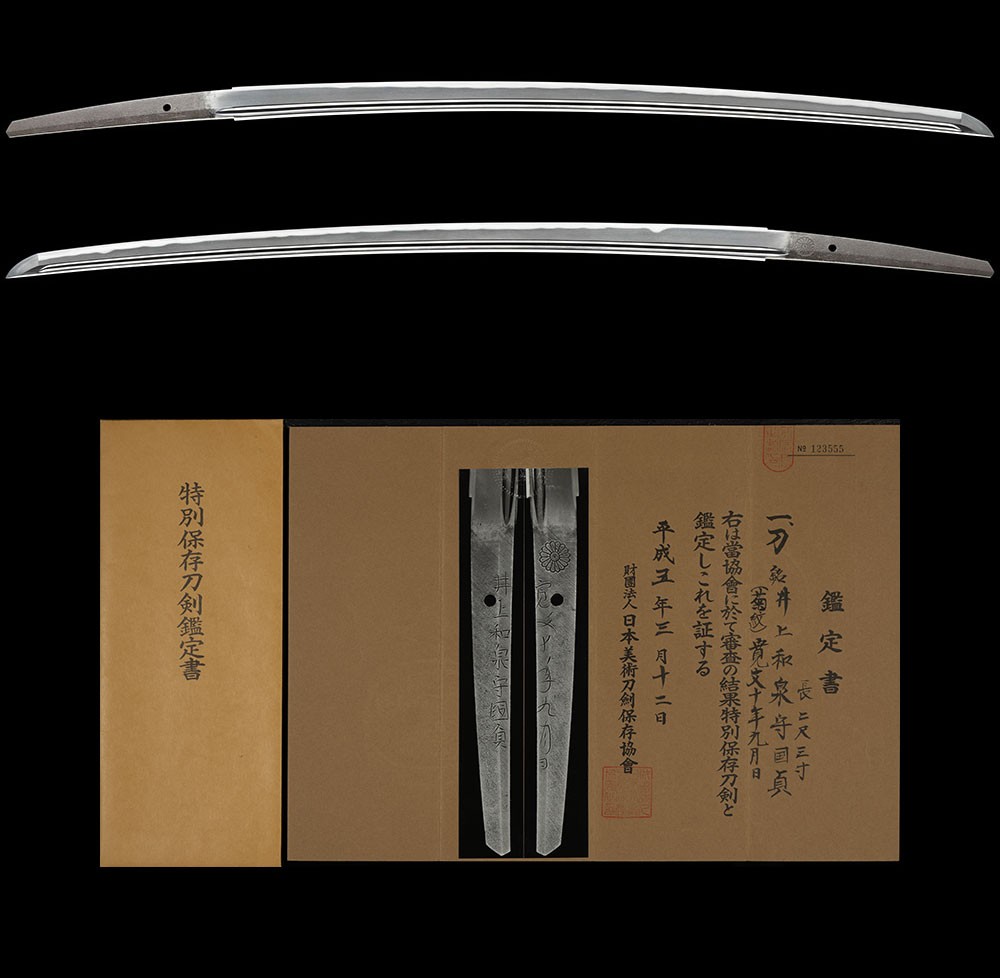
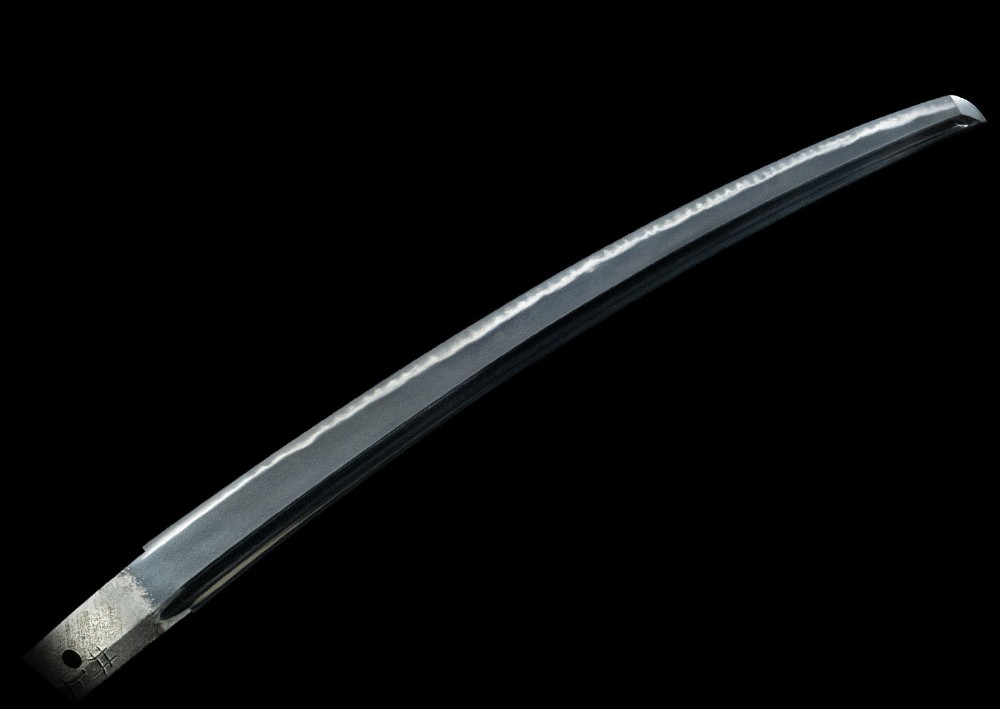
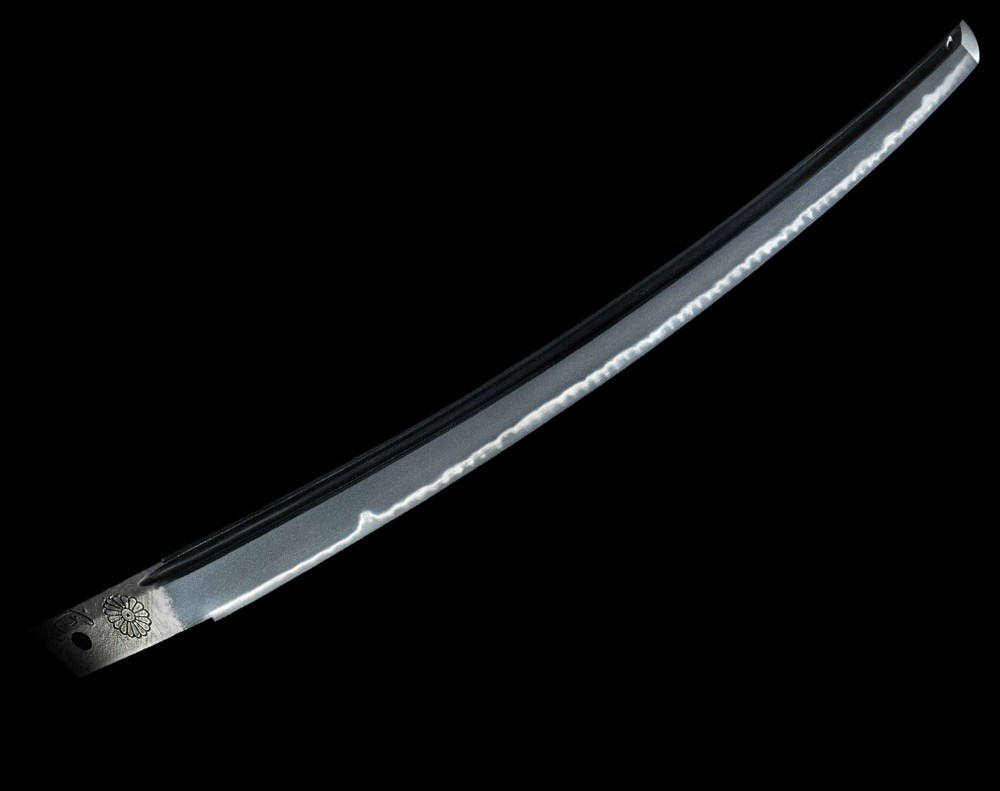
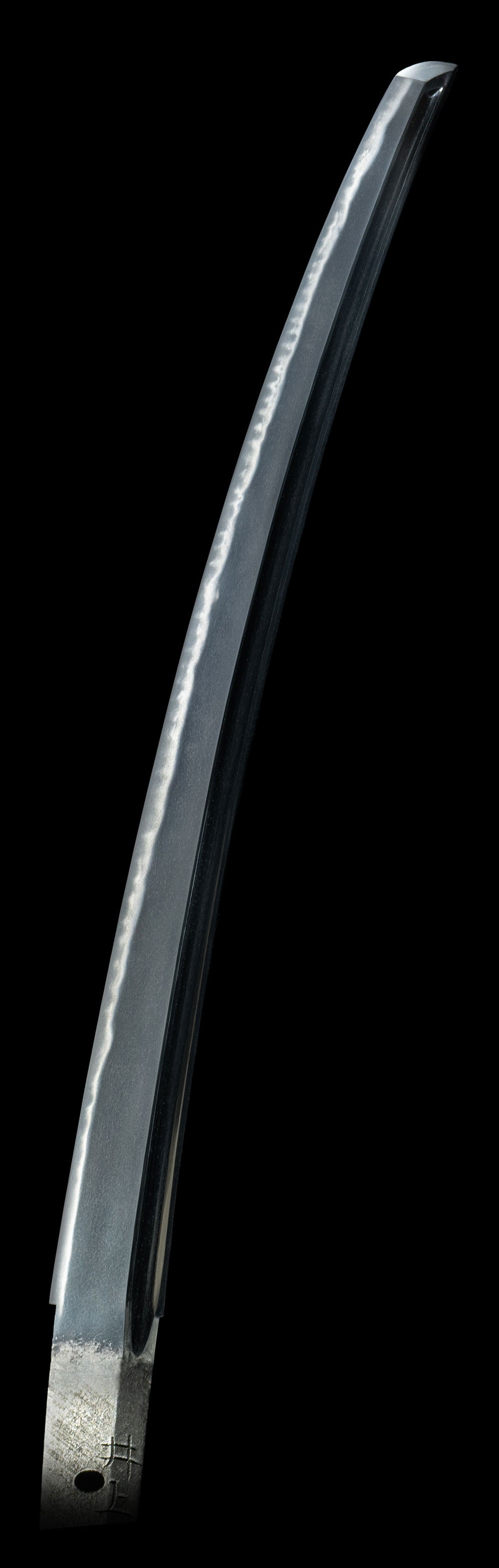
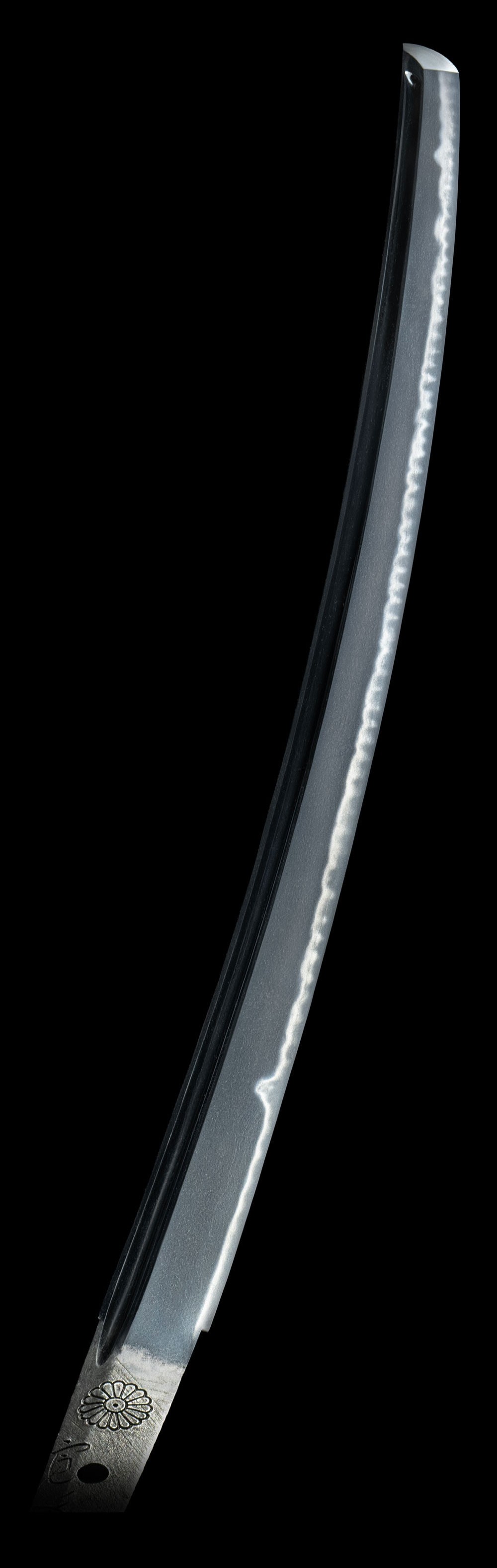
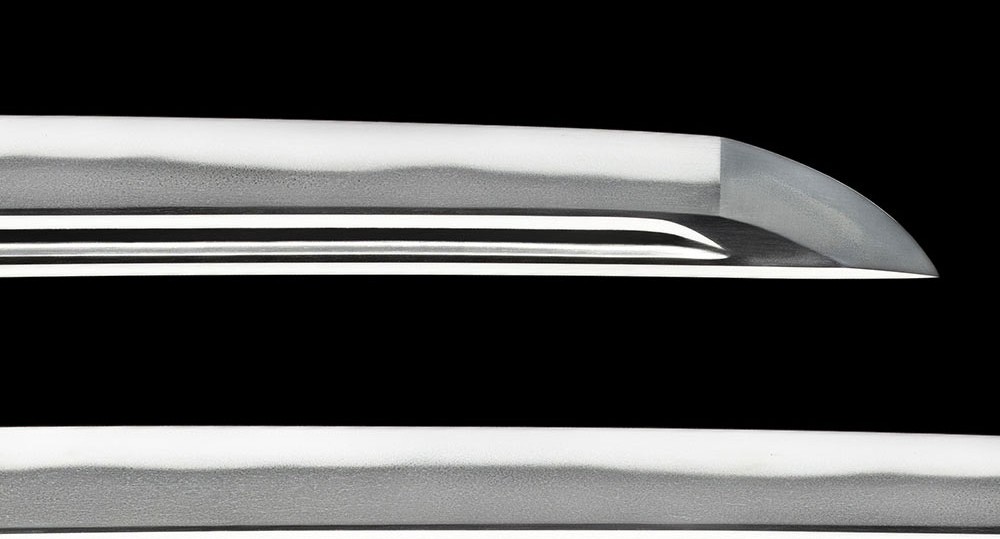
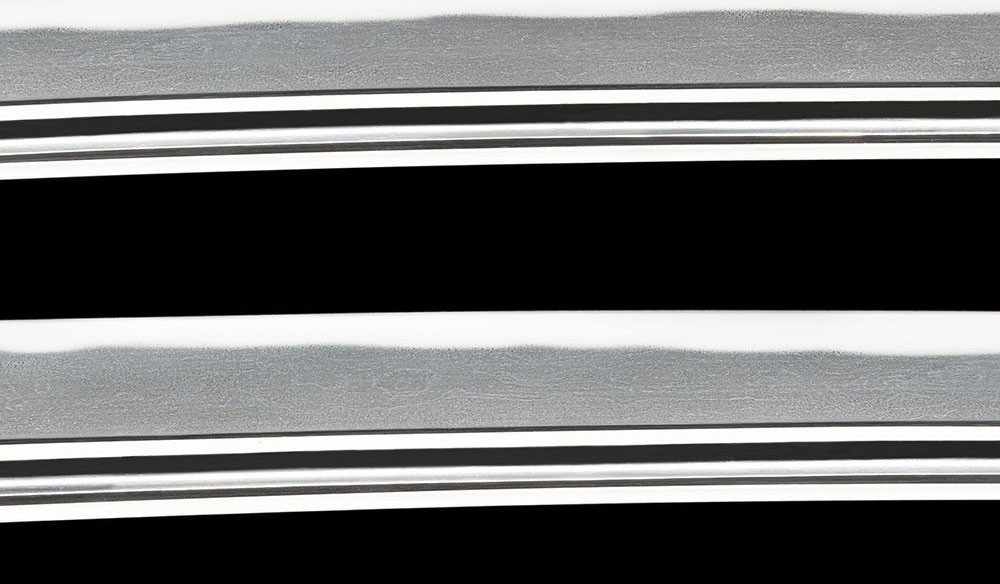
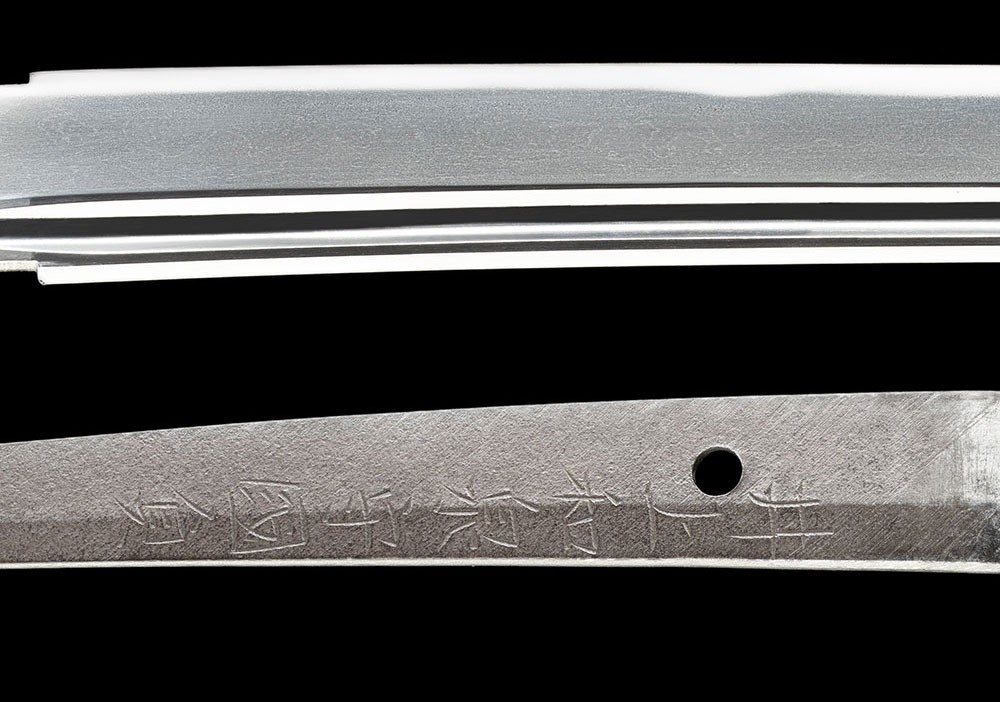
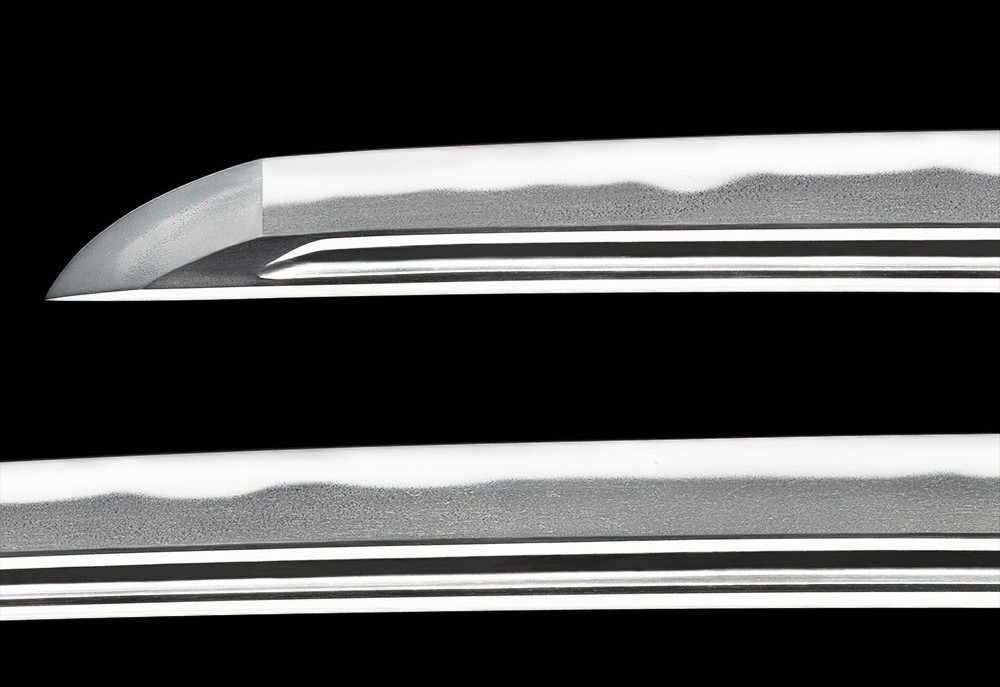
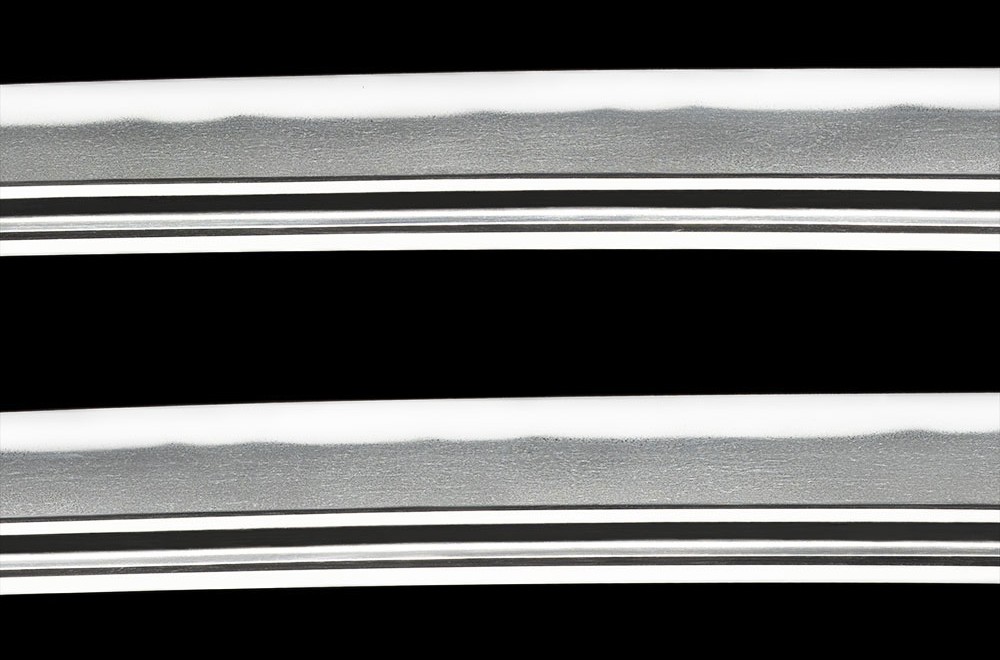
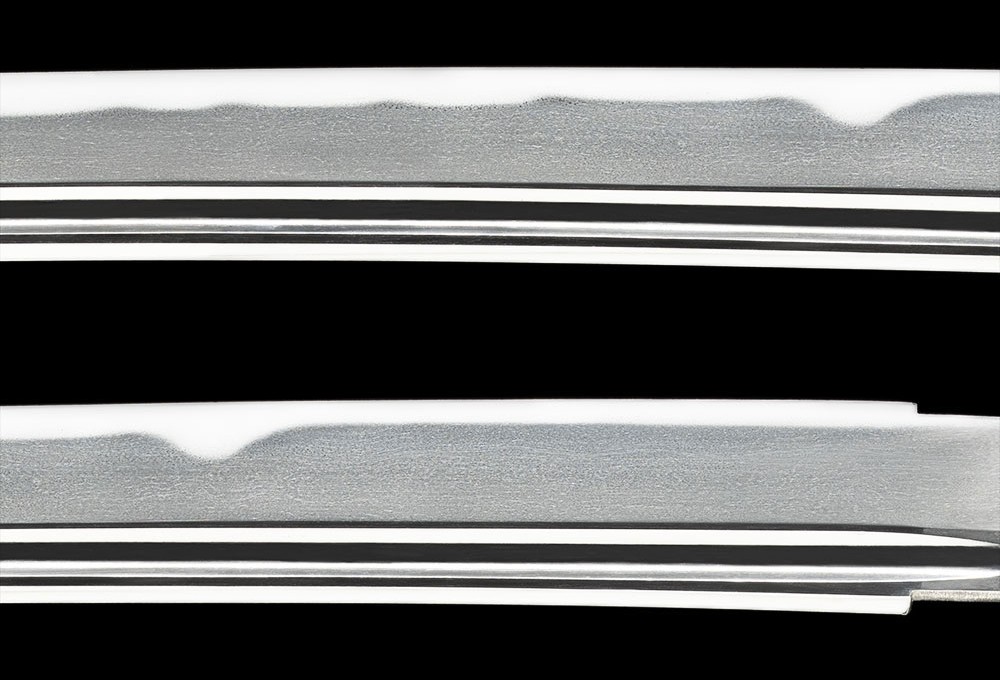
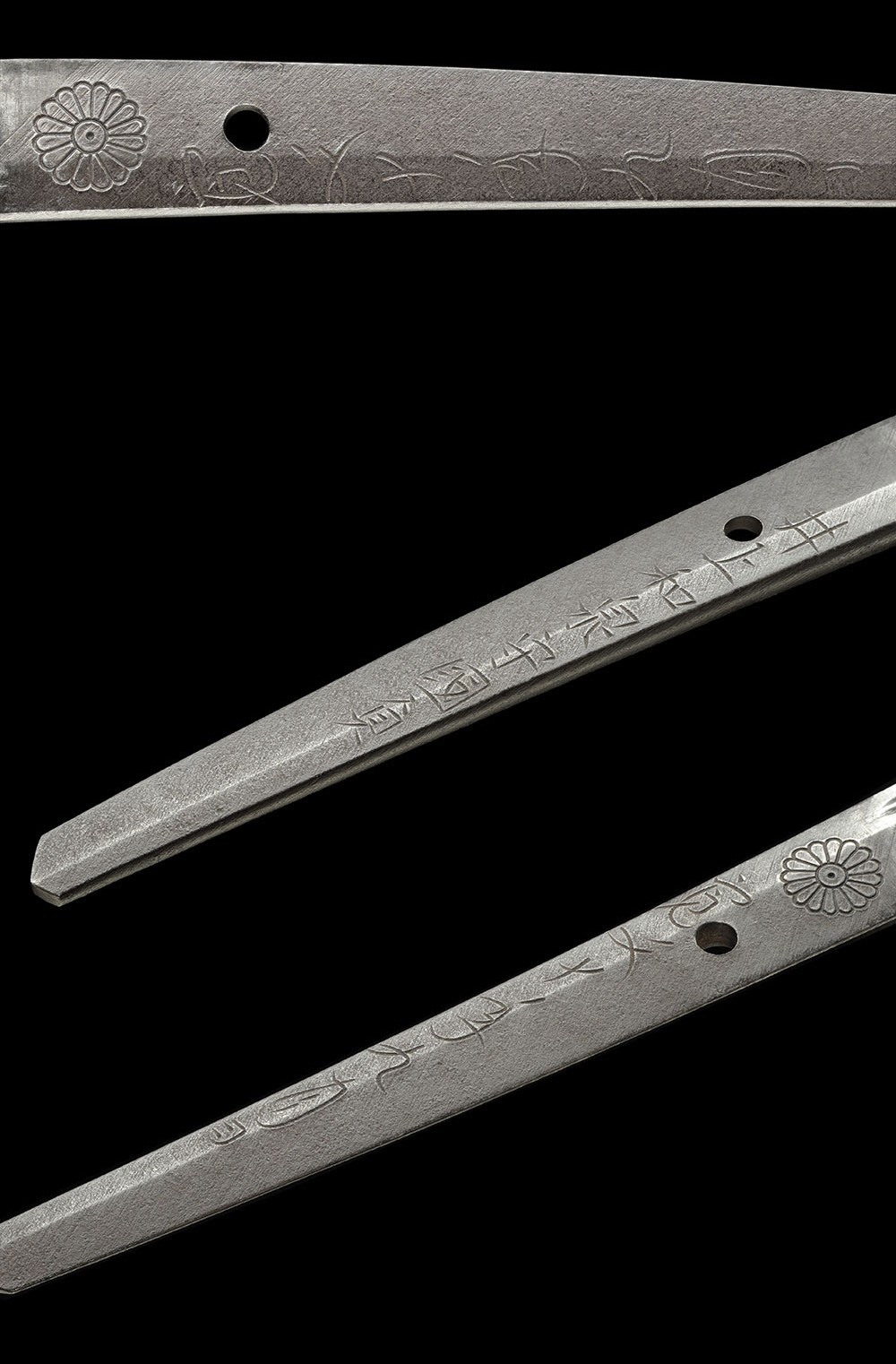
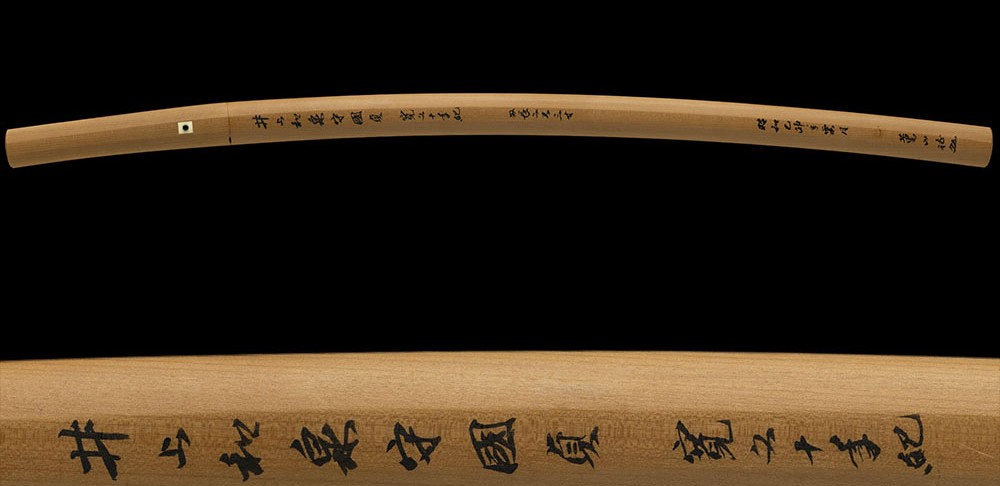
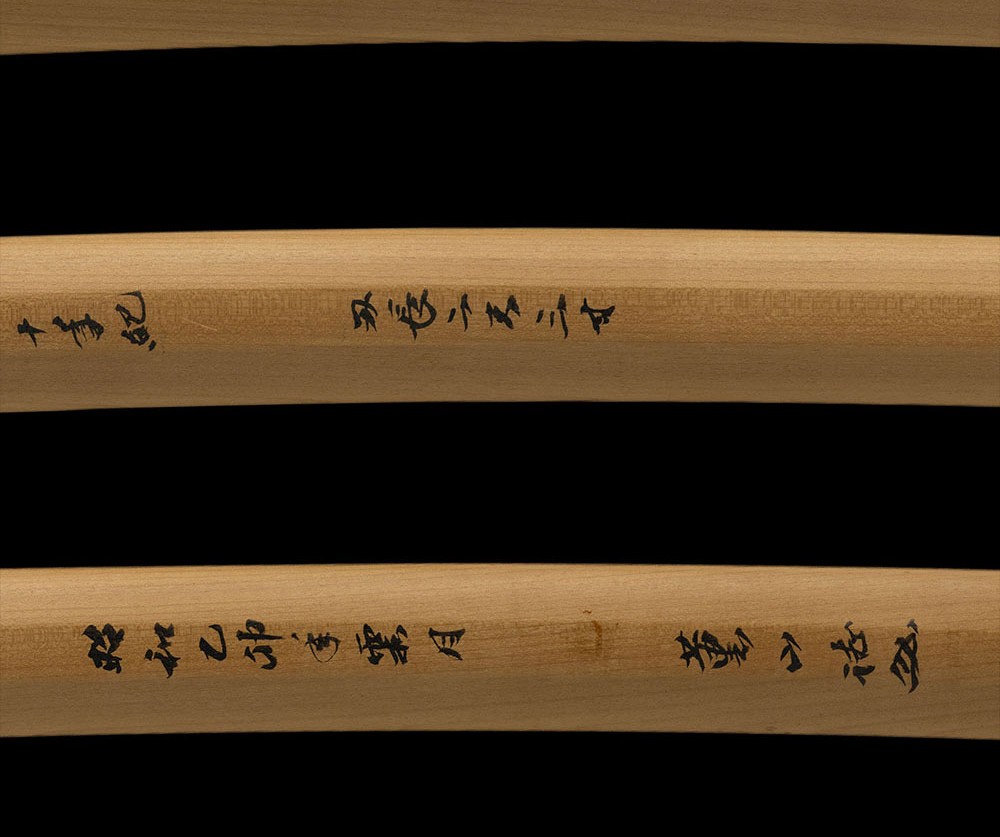
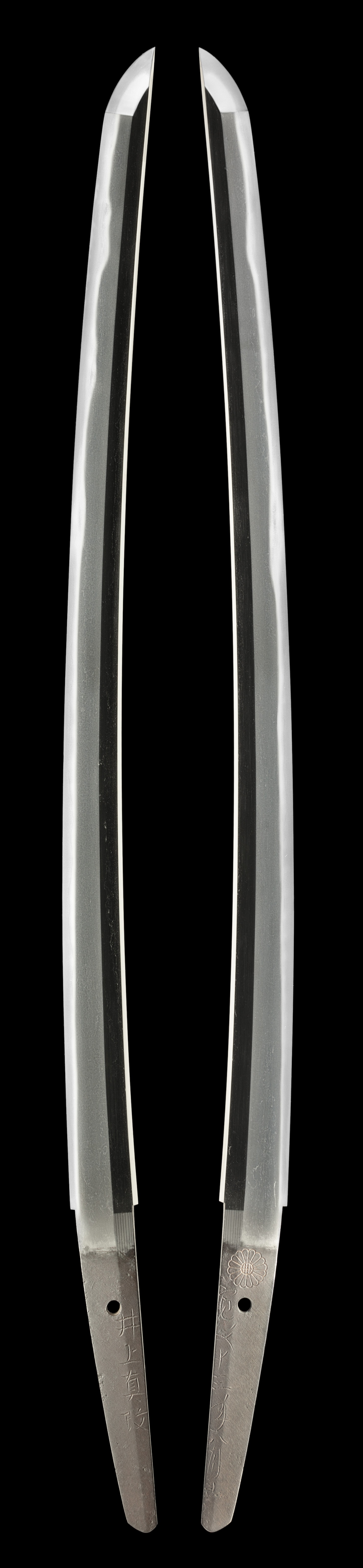
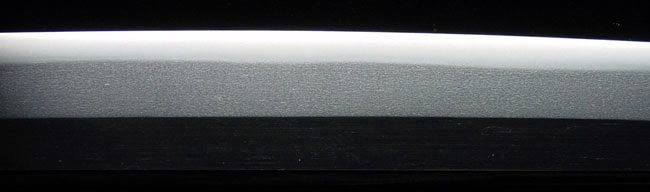
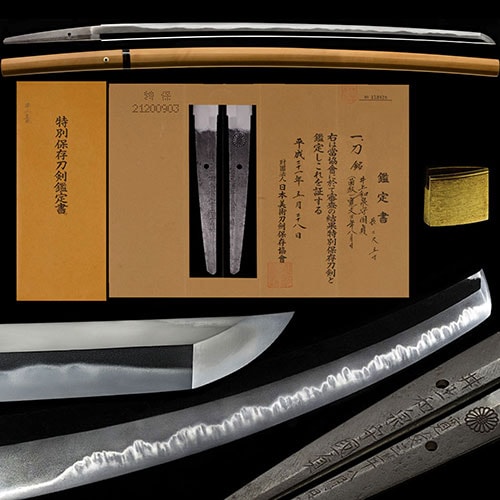
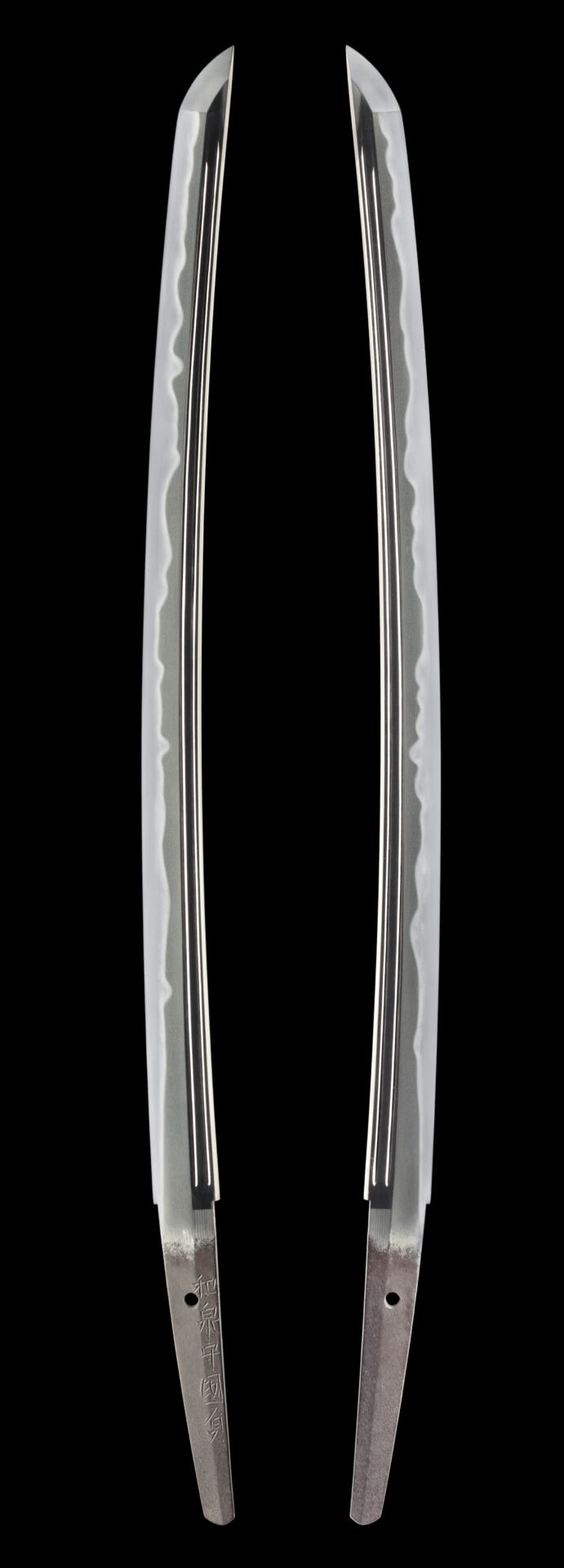
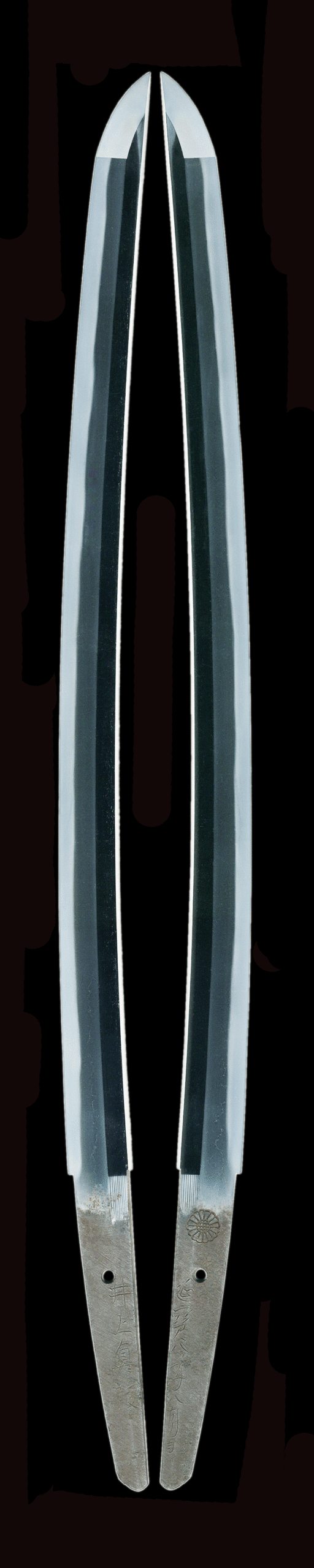
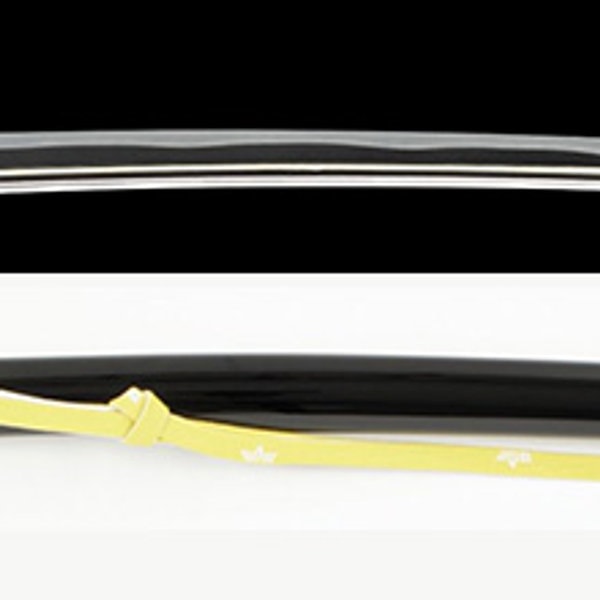
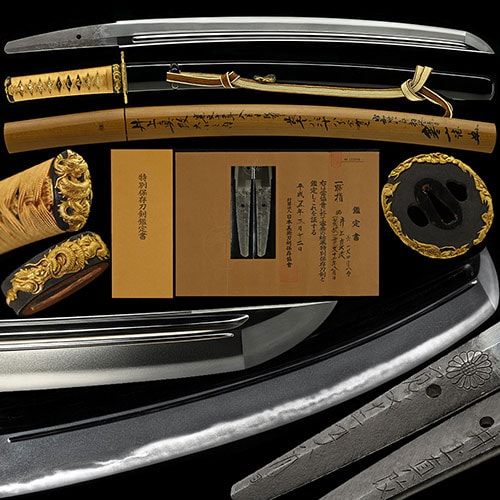
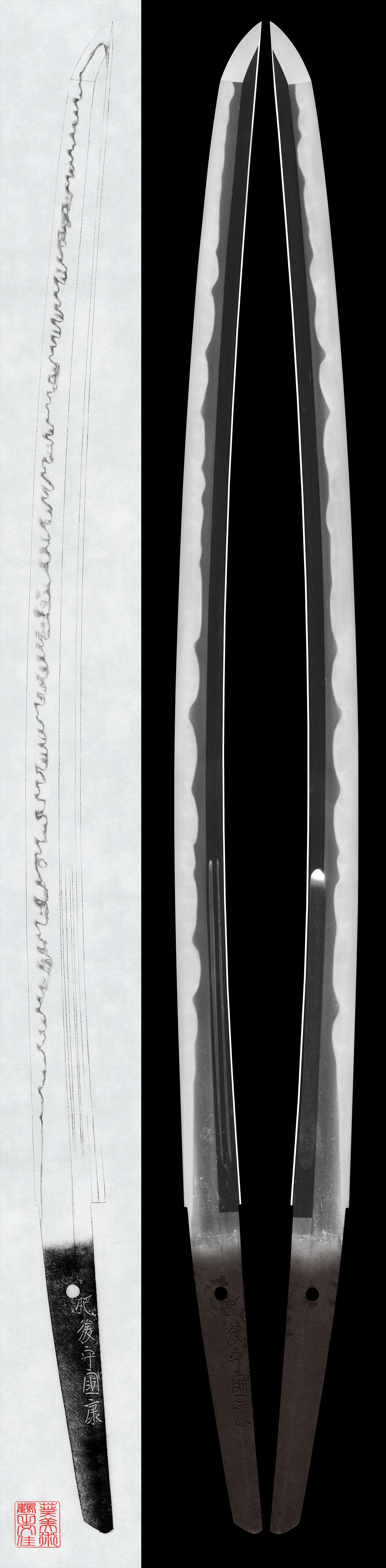
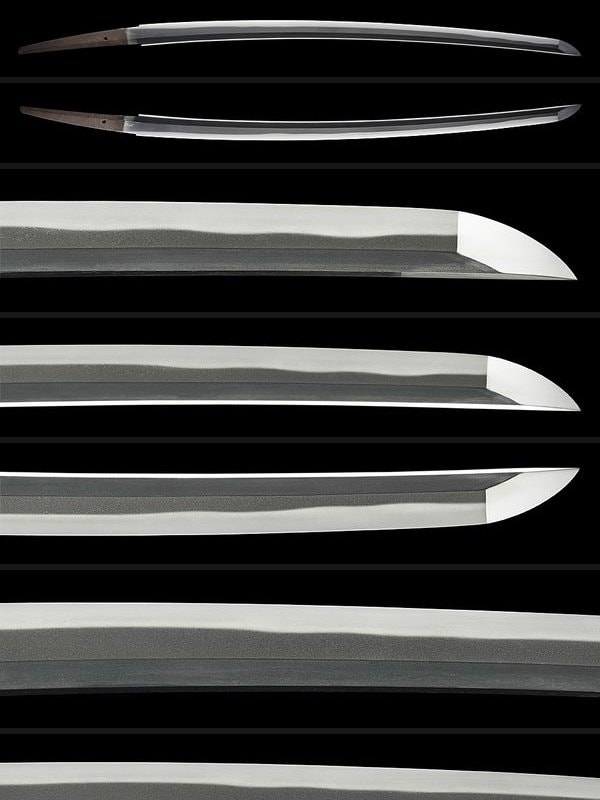
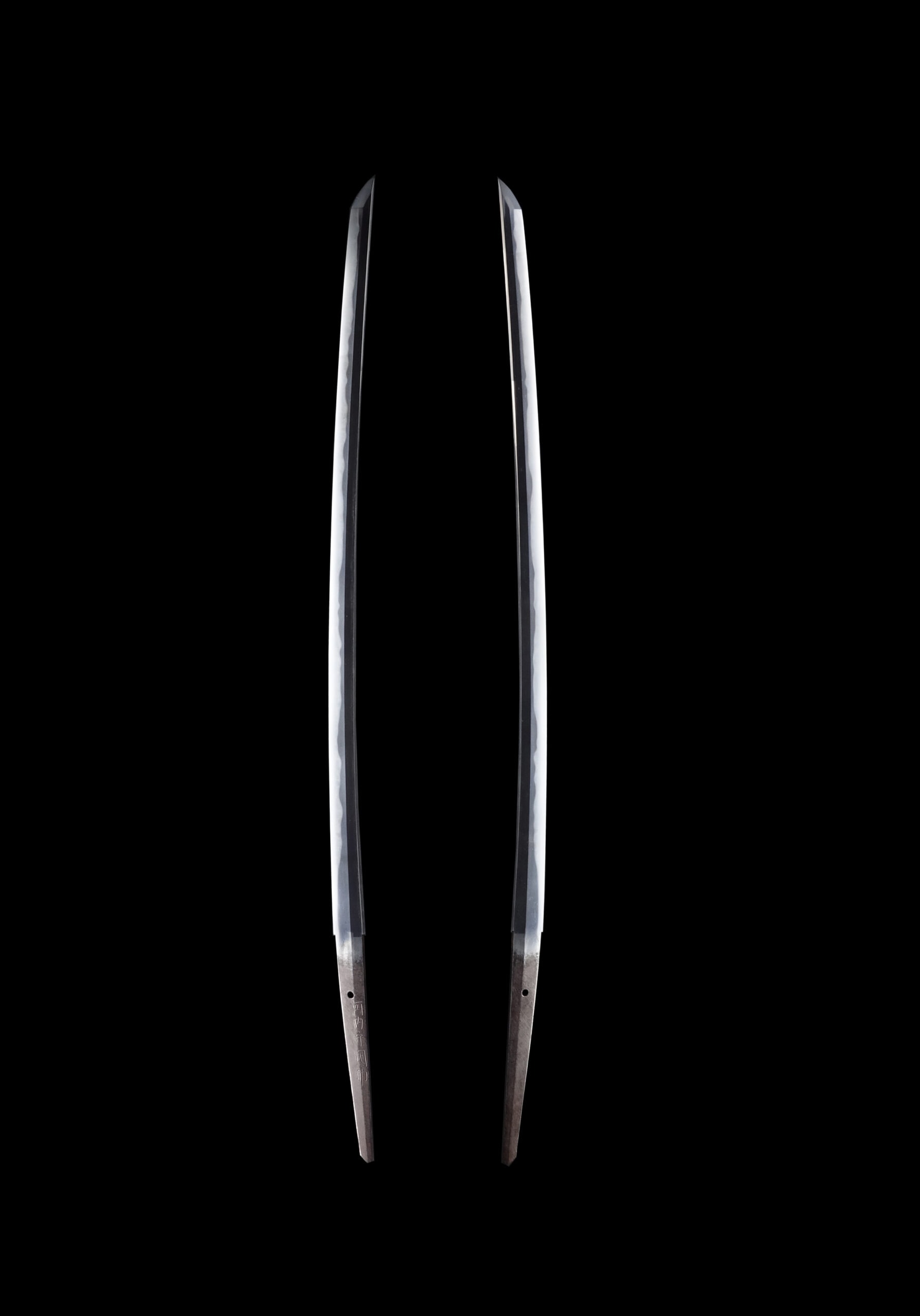
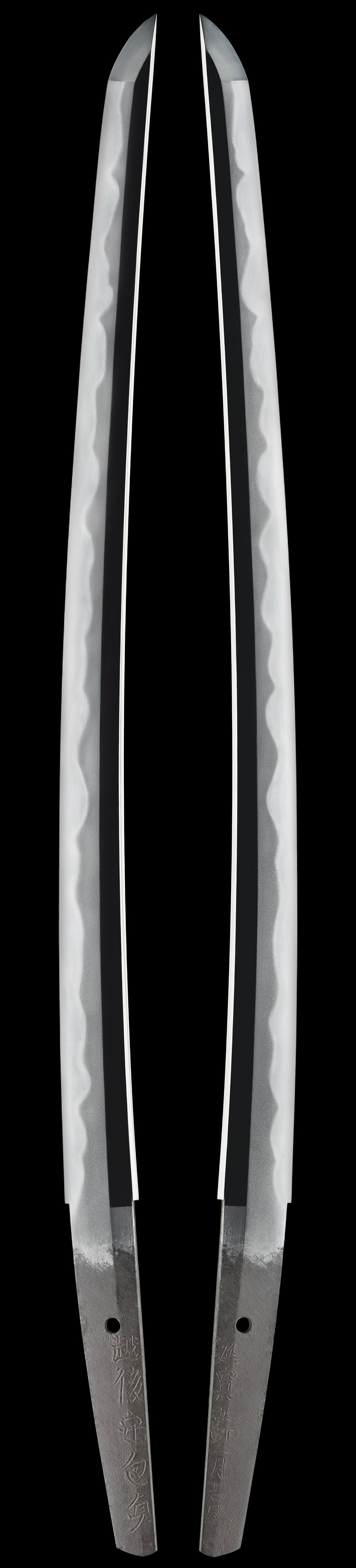
This is a masterpiece katana by Shinkai Inoue Izuminokami Kunisada, dated Kanbun 9 (1669). It features a wide mihaba and graceful sori, with a brilliant jigane covered in large, sparkling jinie. The hamon is a mix of gunome and chojiba with frequent ashi and yo, deep nie, and bright nioikuchi, characteristic of Osaka Shinto blades.
NihontoWatch MonNihontoWatchBETA
MarketAuctionsEncyclopedia
Swords›Horikawa›Kunisada›Kunisada Katana with Chrysanthemum Crest - Tokubetsu Hozon Token
katanaTokubetsu Hozon
Horikawa Kunisada

Kunisada Katana with Chrysanthemum Crest - Tokubetsu Hozon Token

mei · Shinto · nagasa 69.7cm · sori 1.5cm

¥5,000,000
Visit seller website →
Horikawa Kunisada — 1 of 18
Horikawa Kunisada — 2 of 18
Horikawa Kunisada — 3 of 18
Horikawa Kunisada — 4 of 18
Horikawa Kunisada — 5 of 18
Horikawa Kunisada — 6 of 18
Horikawa Kunisada — 7 of 18
Horikawa Kunisada — 8 of 18
Horikawa Kunisada — 9 of 18
Horikawa Kunisada — 10 of 18
Horikawa Kunisada — 11 of 18
Horikawa Kunisada — 12 of 18
Horikawa Kunisada — 13 of 18
Horikawa Kunisada — 14 of 18
Horikawa Kunisada — 15 of 18
Horikawa Kunisada — 16 of 18
Horikawa Kunisada — 17 of 18
Horikawa Kunisada — 18 of 18
1 / 18
1 / 18
Horikawa Kunisada — 1 of 18Horikawa Kunisada — 2 of 18Horikawa Kunisada — 3 of 18Horikawa Kunisada — 4 of 18Horikawa Kunisada — 5 of 18Horikawa Kunisada — 6 of 18Horikawa Kunisada — 7 of 18Horikawa Kunisada — 8 of 18Horikawa Kunisada — 9 of 18Horikawa Kunisada — 10 of 18Horikawa Kunisada — 11 of 18Horikawa Kunisada — 12 of 18Horikawa Kunisada — 13 of 18Horikawa Kunisada — 14 of 18Horikawa Kunisada — 15 of 18Horikawa Kunisada — 16 of 18Horikawa Kunisada — 17 of 18Horikawa Kunisada — 18 of 18
Measurements & details
Smith
Horikawa Kunisada
Type
Katana
School
Horikawa
Period
Around 1624–1646(Genna-Keian)
Province
Settsu
Signature
Signed(100% of this smith's designated works are signed)
Measurements
Nagasa 69.7cmSori 1.5cmMotohaba 3.1cmSakihaba 2cmKasane 0.71cmWeight 645g
Description

This is a masterpiece katana by Shinkai Inoue Izuminokami Kunisada, dated Kanbun 9 (1669). It features a wide mihaba and graceful sori, with a brilliant jigane covered in large, sparkling jinie. The hamon is a mix of gunome and chojiba with frequent ashi and yo, deep nie, and bright nioikuchi, characteristic of Osaka Shinto blades.
About the maker

Kunisada

國貞

Horikawa school, Osaka Shinto (Settsu) · Settsu · around 1624-1646

Fujishiro Jo-jo saku · Tōken Taikan top 14%

6 pieces on the market now

›

Izumi no Kami Kunisada signed himself, on a sword dated the eighth month of Genna 7, "Sesshu Osaka-ju Fujiwara Kunisada," and that one inscription fixes both the man and the moment: a Horikawa-trained smith already settled in Osaka, at the founding of what would become the city's own tradition of swordmaking. Collectors call him Oya Kunisada, "Kunisada the Elder," and the published sources are explicit that the name exists to separate him from his heir, written that he is so called "to distinguish him from his adopted son, Inoue Izumi no Kami Kunisada"[[c:1]], the man later known as Inoue Shinkai. He was born in Hyuga, went up to Kyoto, and is said to have entered the school of Horikawa Kunihiro; but Kunihiro died in Keicho 19 when Kunisada was only twenty-five, and the judges read his early style and signatures as in fact following his senior fellow-disciple, Echigo no Kami Kunitomo. He moved to Osaka with Kawachi no Kami Kunisuke, received the title Izumi no Kami in Genna 9, took the tonsure in old age under the name Dowa, and died in Keian 5 at the age of sixty-three, "one of the pioneers who opened the path for the Osaka smiths"[[c:2]].

His recognized hand is a broad, imposing katana in the Keicho-shinto taste, wide in body with little taper from base to tip, thick in kasane, and carried out to an extended chu-kissaki or o-kissaki. The forging is itame, frequently mixed with mokume and tending to stand a little, hada-dachi, with thick ji-nie and chikei entering freely; where the grain opens, the published sources name it the loose, vigorous zanguri texture of the Horikawa school, the steel of his teacher carried into Osaka. This is the jigane his work is read on. Over that jigane he tempers a notare base into which he sets gunome, ko-gunome and choji, the line opening from a short straight yakidashi in the Edo manner, deep in nioi with ko-nie well adhered, sunagashi and kinsuji running through it, often with muneyaki and drifting tobiyaki. The boshi runs straight into a ko-maru or enters in midare with hakikake, turning back rather long or deep. On his finest blades he adds carving: a relief shin-no-kurikara dragon set within the groove, with a bonji and paired goma-bashi, work the judges call distinctive and superb and count among his tells.

The jigane is the steady base beneath the temper. Itame with thick ji-nie and frequent chikei appears across his oeuvre, sometimes standing into that rustic zanguri surface, sometimes drawing tight; the deep, bright nioiguchi and the ko-nie along the edge are constants, and the activity is carried in ashi and yo, in sunagashi and kinsuji, rather than in towering clove heads. Where one Tokubetsu Juyo katana of the 27th session widens and turns vigorous, the published sources find it "rather than resembling Kunitomo, his de-facto teacher, closer to the calm, unforced character of Kunihiro himself," naming the ko-maru-sagari boshi and the frequent muneyaki as the elder Kunisada's own marks. The nioiguchi at times deepens, at times falls subdued, and that deliberate variation in how the nie gathers is itself part of his manner.

Three registers run through the work. The first is this prime notare-gunome katana over the bold Horikawa jigane. The second is a Soshu-leaning manner that looks back through his masters: the published sources read one Juyo katana as a Shizu-style piece made in emulation of his teacher, the choji not conspicuous yet the whole vigorous, and call a wakizashi an emulation of Soshu Sadamune, written "modelled on the manner of Soshu Sadamune, and well made"[[c:3]]. The third is a quiet, bright suguha of his late years, of which the judges note "the first generation's suguha work, though skillful"[[c:4]], survives in very few examples, and that such a blade "at a glance appears closer rather to that of the second-generation Shinkai"[[c:5]]. To these late years belong his cursive sosho signatures of the Dowa period, which the sources connect to his old age, when his second generation, Inoue Shinkai, is said to have served often as proxy in both forging and signing; whether a given cursive blade is the elder's own work or Shinkai's daimei, and whether such pieces should be read as a separate second-generation Shinkai Kunisada, remain matters the published record leaves open for further study.

What sets him apart is named in his own designation papers. Against the tightly packed ko-itame of the old Bizen and Yamashiro lines, his standing zanguri jigane and his notare opening from a straight yakidashi are the Osaka-shinto signature, not a Bizen choji; against his own son Shinkai's brighter, more refined steel, the elder's hand reads as the rougher, more vigorous root from which the Osaka tradition grew. The judges place him with Kawachi no Kami Kunisuke at the head of that movement, his de-facto teacher Kunitomo behind him and his master Kunihiro behind that, and his heir Shinkai carrying the name forward into its most celebrated generation.

For the collector he is a major Osaka-shinto name held within reach but never common. Fujishiro grades him Jo-jo saku. He has no National Treasures and no Important Cultural Properties; his record runs instead through the Juyo rank in number, with three Tokubetsu Juyo and several prewar Juyo Bijutsuhin, eighty-four blades standing in the Tokubetsu Juyo and Juyo tiers. The provenance that survives is distinguished: blades that passed through the Imperial Family, the Sanada house, and the Ito family of his native Hyuga, with one Juyo Bijutsuhin now held at the Sano Art Museum. The published sources reserve their highest words for his signed katana, calling one "a quintessential work of the first-generation Kunisada, especially deep and splendid in nioiguchi, an outstanding example among his works"[[c:6]], and another, the Soshu-flavoured Tokubetsu Juyo, simply "a blade after the elder Kunisada's own heart"[[c:7]]. Most of these are held rather than traded, and only a handful of the Tokubetsu Juyo and Juyo blades change hands in any decade; a signed Oya Kunisada in good condition comes to a private collector from time to time, with patience, and is a substantial acquisition when it does, a document of the founding of Osaka steel.

Historical importance

Where Kunisada stands among comparable artisans: across all of nihontō, and within tradition, era, and period. The tiers (Foremost · Leading · Major · Notable) weigh official designations from the NBTHK and Japan's Agency for Cultural Affairs, together with historical honors of lasting repute such as the Sansaku and Meibutsu-chō.

随一
Foremost
屈指
Leading
有数
Major
著名
Notable

Select a lens to see how it's measured.

Designation record
88 designated works
Jūyō Bijutsuhin
3
Gyobutsu (Imperial)
1
Tokubetsu Jūyō
3
Jūyō
81
6 works by Kunisada on the market→
Kunisada — full profileHorikawa school, Osaka Shinto (Settsu) school

Dated Works

Years he was demonstrably active, proven by signed-and-dated blades

Active period
1626–1646Editorial estimate: 1624–1646
4 of 87 designated works carry a date
1620
1630
1640
1650
About the school

Horikawa

堀川

Shinto · Yamashiro

63 pieces on the market now

›

At Ichijo Horikawa in Kyoto, from Keicho 4 (1599), Horikawa Kunihiro gathered the pupils whose work the published sources name with his own as the opening of the shinto age. Kunihiro himself reached forging late and by a roundabout road. Learn more →

25 recorded smiths496 designated works
Leading smiths
SmithEraDesignated
Kunihiro國廣1573-1613148
Kunimichi國路1615-162474
Kunisada國貞1624-164688
Kunitomo國儔1596-161527
Masahiro正弘1596-161514
Explore the Horikawa school →
NBTHK Certificate
Tokubetsu Hozon Tōken特別保存刀剣
Sword Especially Worthy of Preservation
›

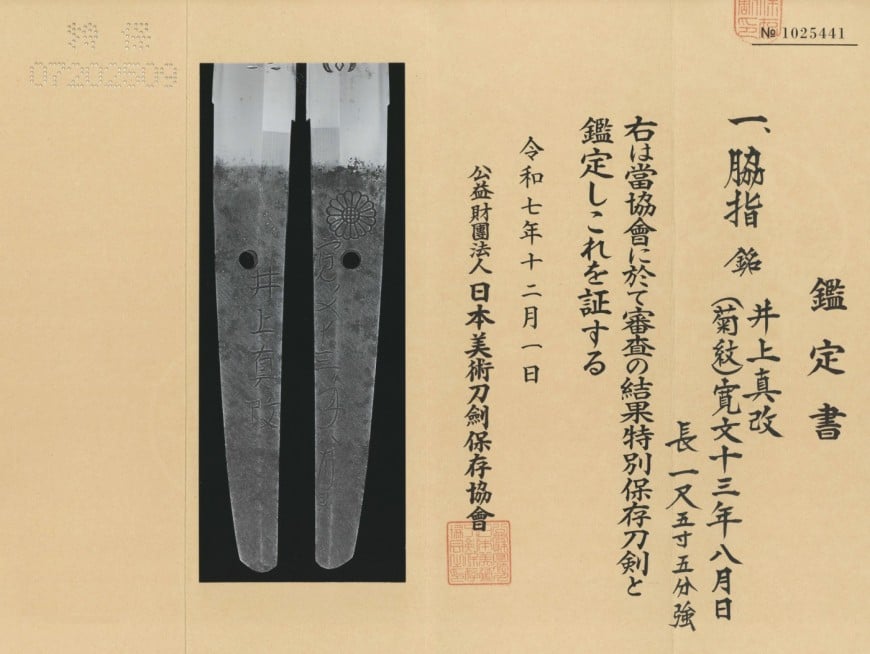
A Hozon-certified blade judged to show notably superior workmanship and a better state of preservation. The bar is higher: re-tempered blades and most unsigned Muromachi/Edo works are excluded.

About the NBTHK›

The NBTHK (Nihon Bijutsu Tōken Hozon Kyōkai, the Society for the Preservation of Japanese Art Swords) is a public-interest incorporated foundation founded in 1948 and supervised by Japan’s Agency for Cultural Affairs (Bunkachō); it is based at the Japanese Sword Museum in Tokyo. Its expert panels physically examine each submitted work (shinsa) and issue a certificate (kanteishō) ranking it by artistic and historical merit. NBTHK papers are the most widely recognized standard of authentication for Japanese swords and fittings.

NBTHK official site→
Seller
E
Eirakudo
🇯🇵Ships from Japan
›
✓Verified dealereirakudo.shop
Settles in JPY
✓Ships worldwide✓English supportWire transferCredit card
Return policy

Returns/exchanges/cancellations not accepted after shipment except for significant defects; if defective, return/exchange possible within 3 days of arrival (return shipping paid by customer).

View all of Eirakudo’s listings→View this item on the dealer’s site→

More works by Horikawa Kunisada

View all →
Token-Net
Jūyō
Katana - Jūyō - by Horikawa Kunisada - Izumi no Kami Kunisada (Settsu) - 17th Juyo TokenKatana - Jūyō - by Horikawa Kunisada - Izumi no Kami Kunisada (Settsu) - 17th Juyo Token

Katana

ByHorikawa Kunisada
¥7,800,000
Eirakudo
Tokuho
Katana - Tokuho - by Horikawa Kunisada - Inoue Izuminokami Kunisada - Tokubetsu Hozon TokenKatana - Tokuho - by Horikawa Kunisada - Inoue Izuminokami Kunisada - Tokubetsu Hozon Token

Katana

ByHorikawa Kunisada
¥6,000,000
Kanda Toukodo
Tokuho
Katana - Tokuho - by Horikawa Kunisada - Izumi no Kami Fujiwara KunisadaKatana - Tokuho - by Horikawa Kunisada - Izumi no Kami Fujiwara Kunisada

Katana

ByHorikawa Kunisada
¥2,400,000
Swords of Japan
Wakizashi - by Horikawa Kunisada - Oya Kunisada WakizashiWakizashi - by Horikawa Kunisada - Oya Kunisada Wakizashi

Wakizashi

ByHorikawa Kunisada
¥6,950
Nipponto
Tokuho
Katana - Tokuho - by Horikawa Kunisada - Katana by Izuminokami Fujiwara Kunisada with Cursive SignatureKatana - Tokuho - by Horikawa Kunisada - Katana by Izuminokami Fujiwara Kunisada with Cursive Signature

Katana

ByHorikawa Kunisada
Ask

Previously sold by Horikawa Kunisada

Samurai Nippon
Hozon
Wakizashi - Hozon - by Horikawa Kunisada - Fujiwara KunisadaWakizashi - Hozon - by Horikawa Kunisada - Fujiwara Kunisada
Sold

Wakizashi

ByHorikawa Kunisada
SOLD
Aoi Art
Katana - by Horikawa Kunisada - Izumi Kami Fujiwara Kunisada - NBTHK Tokubetsu Hozon TokenKatana - by Horikawa Kunisada - Izumi Kami Fujiwara Kunisada - NBTHK Tokubetsu Hozon Token
Sold

Katana

ByHorikawa Kunisada
SOLD
Tokka Biz
Tokuho
Katana - Tokuho - by Horikawa Kunisada - Izumi no Kami Fujiwara KunisadaKatana - Tokuho - by Horikawa Kunisada - Izumi no Kami Fujiwara Kunisada
Sold

Katana

ByHorikawa Kunisada
SOLD
Iida Koendo
Jūyō
Katana - Jūyō - by Horikawa Kunisada - Izumi no kami Fujiwara KunisadaKatana - Jūyō - by Horikawa Kunisada - Izumi no kami Fujiwara Kunisada
Sold

Katana

ByHorikawa Kunisada
SOLD
Choshuya
Tokuho
Katana - Tokuho - by Horikawa Kunisada - Izumi no kami Kunisada - Osaka, O WazamonoKatana - Tokuho - by Horikawa Kunisada - Izumi no kami Kunisada - Osaka, O Wazamono
Sold

Katana

ByHorikawa Kunisada
SOLD
Kusanagi
Hozon
Katana - Hozon - by Horikawa Kunisada - O-wazamono Jojo-saku, Founder of Osaka Shinto, Signed "Izumi no Kami Fujiwara Kunisada", Hozon Token, Daimyo Registration.Katana - Hozon - by Horikawa Kunisada - O-wazamono Jojo-saku, Founder of Osaka Shinto, Signed "Izumi no Kami Fujiwara Kunisada", Hozon Token, Daimyo Registration.
Sold

Katana

ByHorikawa Kunisada
SOLD
Samurai Museum
Tokuho
Katana - Tokuho - by Horikawa Kunisada - Antique Japanese Sword Katana Signed by Izumi no Kami Fujiwara Kunisada NBTHK Tokubetsu Hozon CertificateKatana - Tokuho - by Horikawa Kunisada - Antique Japanese Sword Katana Signed by Izumi no Kami Fujiwara Kunisada NBTHK Tokubetsu Hozon Certificate
Sold

Katana

ByHorikawa Kunisada
SOLD
Kusanagi
Hozon
Katana - Hozon - by Horikawa Kunisada - 最上作『長曽祢興正』本阿弥光瞭極札 大業物『和泉守国貞』保存刀剣Katana - Hozon - by Horikawa Kunisada - 最上作『長曽祢興正』本阿弥光瞭極札 大業物『和泉守国貞』保存刀剣
Sold

Katana

ByHorikawa Kunisada
SOLD

More from the Horikawa school

View all →
Iida Koendo
Jūyō
Katana - Jūyō - by Horikawa Kunihiro - Kunihiro (Horikawa)Katana - Jūyō - by Horikawa Kunihiro - Kunihiro (Horikawa)

Katana

ByHorikawa Kunihiro
¥19,800,000
Goushuya
Jūyō
Katana - Jūyō - by Horikawa Kunihiro - Juyo Token: KunihiroKatana - Jūyō - by Horikawa Kunihiro - Juyo Token: Kunihiro

Katana

ByHorikawa Kunihiro
Ask
Iida Koendo
Jūyō
Katana - Jūyō - by Horikawa Masahiro - Osumi no jo Fujiwara MasahiroKatana - Jūyō - by Horikawa Masahiro - Osumi no jo Fujiwara Masahiro

Katana

ByHorikawa Masahiro
¥11,000,000
Choshuya
Tokuho
Katana - Tokuho - by Horikawa Kunihiro - KunihiroKatana - Tokuho - by Horikawa Kunihiro - Kunihiro

Katana

ByHorikawa Kunihiro
¥4,000,000
Aoi Art
Jūyō
Katana - Jūyō - by Horikawa Kunitomo - Echigo no Kami Fujiwara KunitomoKatana - Jūyō - by Horikawa Kunitomo - Echigo no Kami Fujiwara Kunitomo

Katana

ByHorikawa Kunitomo
¥4,500,000
Token-Net
Jūyō
Katana - Jūyō - by Horikawa Kunimichi - Dewadaijo Fujiwara Kunimichi (Yamashiro)Katana - Jūyō - by Horikawa Kunimichi - Dewadaijo Fujiwara Kunimichi (Yamashiro)

Katana

ByHorikawa Kunimichi
¥7,800,000
Iida Koendo
Jūyō
Katana - Jūyō - by Horikawa Kunimasa - Kunimasa (Horikawa)Katana - Jūyō - by Horikawa Kunimasa - Kunimasa (Horikawa)

Katana

ByHorikawa Kunimasa
¥7,700,000
Iida Koendo
Jūyō
Tanto - Jūyō - by Horikawa Kuniyasu - Kuniyasu (Horikawa)Tanto - Jūyō - by Horikawa Kuniyasu - Kuniyasu (Horikawa)

Tantō

ByHorikawa Kuniyasu
¥6,600,000

Swords

  • Katana
  • Wakizashi
  • Tantō
  • Tachi
  • Naginata
  • Yari

Fittings

  • Tsuba
  • Fuchi-Kashira
  • Kozuka
  • Menuki

By Certification

  • Tokujū
  • Jūyō
  • Tokuho
  • Hozon

Resources

  • Dealer Directory
  • Artist Directory
  • Glossary
  • Browse All
Nihontowatch© 2026
TermsPrivacyCookies

Description

This is a masterpiece katana by Shinkai Inoue Izuminokami Kunisada, dated Kanbun 9 (1669). It features a wide mihaba and graceful sori, with a brilliant jigane covered in large, sparkling jinie. The hamon is a mix of gunome and chojiba with frequent ashi and yo, deep nie, and bright nioikuchi, characteristic of Osaka Shinto blades.

NihontoWatch MonNihontoWatchBETA
MarketAuctionsEncyclopedia
Swords›Horikawa›Kunisada›Kunisada Katana with Chrysanthemum Crest - Tokubetsu Hozon Token
katanaTokubetsu Hozon
Horikawa Kunisada

Kunisada Katana with Chrysanthemum Crest - Tokubetsu Hozon Token

mei · Shinto · nagasa 69.7cm · sori 1.5cm

¥5,000,000
Visit seller website →
Horikawa Kunisada — 1 of 18
Horikawa Kunisada — 2 of 18
Horikawa Kunisada — 3 of 18
Horikawa Kunisada — 4 of 18
Horikawa Kunisada — 5 of 18
Horikawa Kunisada — 6 of 18
Horikawa Kunisada — 7 of 18
Horikawa Kunisada — 8 of 18
Horikawa Kunisada — 9 of 18
Horikawa Kunisada — 10 of 18
Horikawa Kunisada — 11 of 18
Horikawa Kunisada — 12 of 18
Horikawa Kunisada — 13 of 18
Horikawa Kunisada — 14 of 18
Horikawa Kunisada — 15 of 18
Horikawa Kunisada — 16 of 18
Horikawa Kunisada — 17 of 18
Horikawa Kunisada — 18 of 18
1 / 18
1 / 18
Horikawa Kunisada — 1 of 18Horikawa Kunisada — 2 of 18Horikawa Kunisada — 3 of 18Horikawa Kunisada — 4 of 18Horikawa Kunisada — 5 of 18Horikawa Kunisada — 6 of 18Horikawa Kunisada — 7 of 18Horikawa Kunisada — 8 of 18Horikawa Kunisada — 9 of 18Horikawa Kunisada — 10 of 18Horikawa Kunisada — 11 of 18Horikawa Kunisada — 12 of 18Horikawa Kunisada — 13 of 18Horikawa Kunisada — 14 of 18Horikawa Kunisada — 15 of 18Horikawa Kunisada — 16 of 18Horikawa Kunisada — 17 of 18Horikawa Kunisada — 18 of 18
Measurements & details
Smith
Horikawa Kunisada
Type
Katana
School
Horikawa
Period
Around 1624–1646(Genna-Keian)
Province
Settsu
Signature
Signed(100% of this smith's designated works are signed)
Measurements
Nagasa 69.7cmSori 1.5cmMotohaba 3.1cmSakihaba 2cmKasane 0.71cmWeight 645g
Description

This is a masterpiece katana by Shinkai Inoue Izuminokami Kunisada, dated Kanbun 9 (1669). It features a wide mihaba and graceful sori, with a brilliant jigane covered in large, sparkling jinie. The hamon is a mix of gunome and chojiba with frequent ashi and yo, deep nie, and bright nioikuchi, characteristic of Osaka Shinto blades.

About the maker

Kunisada

國貞

Horikawa school, Osaka Shinto (Settsu) · Settsu · around 1624-1646

Fujishiro Jo-jo saku · Tōken Taikan top 14%

6 pieces on the market now

›

Izumi no Kami Kunisada signed himself, on a sword dated the eighth month of Genna 7, "Sesshu Osaka-ju Fujiwara Kunisada," and that one inscription fixes both the man and the moment: a Horikawa-trained smith already settled in Osaka, at the founding of what would become the city's own tradition of swordmaking. Collectors call him Oya Kunisada, "Kunisada the Elder," and the published sources are explicit that the name exists to separate him from his heir, written that he is so called "to distinguish him from his adopted son, Inoue Izumi no Kami Kunisada"[[c:1]], the man later known as Inoue Shinkai. He was born in Hyuga, went up to Kyoto, and is said to have entered the school of Horikawa Kunihiro; but Kunihiro died in Keicho 19 when Kunisada was only twenty-five, and the judges read his early style and signatures as in fact following his senior fellow-disciple, Echigo no Kami Kunitomo. He moved to Osaka with Kawachi no Kami Kunisuke, received the title Izumi no Kami in Genna 9, took the tonsure in old age under the name Dowa, and died in Keian 5 at the age of sixty-three, "one of the pioneers who opened the path for the Osaka smiths"[[c:2]].

His recognized hand is a broad, imposing katana in the Keicho-shinto taste, wide in body with little taper from base to tip, thick in kasane, and carried out to an extended chu-kissaki or o-kissaki. The forging is itame, frequently mixed with mokume and tending to stand a little, hada-dachi, with thick ji-nie and chikei entering freely; where the grain opens, the published sources name it the loose, vigorous zanguri texture of the Horikawa school, the steel of his teacher carried into Osaka. This is the jigane his work is read on. Over that jigane he tempers a notare base into which he sets gunome, ko-gunome and choji, the line opening from a short straight yakidashi in the Edo manner, deep in nioi with ko-nie well adhered, sunagashi and kinsuji running through it, often with muneyaki and drifting tobiyaki. The boshi runs straight into a ko-maru or enters in midare with hakikake, turning back rather long or deep. On his finest blades he adds carving: a relief shin-no-kurikara dragon set within the groove, with a bonji and paired goma-bashi, work the judges call distinctive and superb and count among his tells.

The jigane is the steady base beneath the temper. Itame with thick ji-nie and frequent chikei appears across his oeuvre, sometimes standing into that rustic zanguri surface, sometimes drawing tight; the deep, bright nioiguchi and the ko-nie along the edge are constants, and the activity is carried in ashi and yo, in sunagashi and kinsuji, rather than in towering clove heads. Where one Tokubetsu Juyo katana of the 27th session widens and turns vigorous, the published sources find it "rather than resembling Kunitomo, his de-facto teacher, closer to the calm, unforced character of Kunihiro himself," naming the ko-maru-sagari boshi and the frequent muneyaki as the elder Kunisada's own marks. The nioiguchi at times deepens, at times falls subdued, and that deliberate variation in how the nie gathers is itself part of his manner.

Three registers run through the work. The first is this prime notare-gunome katana over the bold Horikawa jigane. The second is a Soshu-leaning manner that looks back through his masters: the published sources read one Juyo katana as a Shizu-style piece made in emulation of his teacher, the choji not conspicuous yet the whole vigorous, and call a wakizashi an emulation of Soshu Sadamune, written "modelled on the manner of Soshu Sadamune, and well made"[[c:3]]. The third is a quiet, bright suguha of his late years, of which the judges note "the first generation's suguha work, though skillful"[[c:4]], survives in very few examples, and that such a blade "at a glance appears closer rather to that of the second-generation Shinkai"[[c:5]]. To these late years belong his cursive sosho signatures of the Dowa period, which the sources connect to his old age, when his second generation, Inoue Shinkai, is said to have served often as proxy in both forging and signing; whether a given cursive blade is the elder's own work or Shinkai's daimei, and whether such pieces should be read as a separate second-generation Shinkai Kunisada, remain matters the published record leaves open for further study.

What sets him apart is named in his own designation papers. Against the tightly packed ko-itame of the old Bizen and Yamashiro lines, his standing zanguri jigane and his notare opening from a straight yakidashi are the Osaka-shinto signature, not a Bizen choji; against his own son Shinkai's brighter, more refined steel, the elder's hand reads as the rougher, more vigorous root from which the Osaka tradition grew. The judges place him with Kawachi no Kami Kunisuke at the head of that movement, his de-facto teacher Kunitomo behind him and his master Kunihiro behind that, and his heir Shinkai carrying the name forward into its most celebrated generation.

For the collector he is a major Osaka-shinto name held within reach but never common. Fujishiro grades him Jo-jo saku. He has no National Treasures and no Important Cultural Properties; his record runs instead through the Juyo rank in number, with three Tokubetsu Juyo and several prewar Juyo Bijutsuhin, eighty-four blades standing in the Tokubetsu Juyo and Juyo tiers. The provenance that survives is distinguished: blades that passed through the Imperial Family, the Sanada house, and the Ito family of his native Hyuga, with one Juyo Bijutsuhin now held at the Sano Art Museum. The published sources reserve their highest words for his signed katana, calling one "a quintessential work of the first-generation Kunisada, especially deep and splendid in nioiguchi, an outstanding example among his works"[[c:6]], and another, the Soshu-flavoured Tokubetsu Juyo, simply "a blade after the elder Kunisada's own heart"[[c:7]]. Most of these are held rather than traded, and only a handful of the Tokubetsu Juyo and Juyo blades change hands in any decade; a signed Oya Kunisada in good condition comes to a private collector from time to time, with patience, and is a substantial acquisition when it does, a document of the founding of Osaka steel.

Historical importance

Where Kunisada stands among comparable artisans: across all of nihontō, and within tradition, era, and period. The tiers (Foremost · Leading · Major · Notable) weigh official designations from the NBTHK and Japan's Agency for Cultural Affairs, together with historical honors of lasting repute such as the Sansaku and Meibutsu-chō.

随一
Foremost
屈指
Leading
有数
Major
著名
Notable

Select a lens to see how it's measured.

Designation record
88 designated works
Jūyō Bijutsuhin
3
Gyobutsu (Imperial)
1
Tokubetsu Jūyō
3
Jūyō
81
6 works by Kunisada on the market→
Kunisada — full profileHorikawa school, Osaka Shinto (Settsu) school

Dated Works

Years he was demonstrably active, proven by signed-and-dated blades

Active period
1626–1646Editorial estimate: 1624–1646
4 of 87 designated works carry a date
1620
1630
1640
1650
About the school

Horikawa

堀川

Shinto · Yamashiro

63 pieces on the market now

›

At Ichijo Horikawa in Kyoto, from Keicho 4 (1599), Horikawa Kunihiro gathered the pupils whose work the published sources name with his own as the opening of the shinto age. Kunihiro himself reached forging late and by a roundabout road. Learn more →

25 recorded smiths496 designated works
Leading smiths
SmithEraDesignated
Kunihiro國廣1573-1613148
Kunimichi國路1615-162474
Kunisada國貞1624-164688
Kunitomo國儔1596-161527
Masahiro正弘1596-161514
Explore the Horikawa school →
NBTHK Certificate
Tokubetsu Hozon Tōken特別保存刀剣
Sword Especially Worthy of Preservation
›

A Hozon-certified blade judged to show notably superior workmanship and a better state of preservation. The bar is higher: re-tempered blades and most unsigned Muromachi/Edo works are excluded.

About the NBTHK›

The NBTHK (Nihon Bijutsu Tōken Hozon Kyōkai, the Society for the Preservation of Japanese Art Swords) is a public-interest incorporated foundation founded in 1948 and supervised by Japan’s Agency for Cultural Affairs (Bunkachō); it is based at the Japanese Sword Museum in Tokyo. Its expert panels physically examine each submitted work (shinsa) and issue a certificate (kanteishō) ranking it by artistic and historical merit. NBTHK papers are the most widely recognized standard of authentication for Japanese swords and fittings.

NBTHK official site→
Seller
E
Eirakudo
🇯🇵Ships from Japan
›
✓Verified dealereirakudo.shop
Settles in JPY
✓Ships worldwide✓English supportWire transferCredit card
Return policy

Returns/exchanges/cancellations not accepted after shipment except for significant defects; if defective, return/exchange possible within 3 days of arrival (return shipping paid by customer).

View all of Eirakudo’s listings→View this item on the dealer’s site→

More works by Horikawa Kunisada

View all →
Token-Net
Jūyō
Katana - Jūyō - by Horikawa Kunisada - Izumi no Kami Kunisada (Settsu) - 17th Juyo TokenKatana - Jūyō - by Horikawa Kunisada - Izumi no Kami Kunisada (Settsu) - 17th Juyo Token

Katana

ByHorikawa Kunisada
¥7,800,000
Eirakudo
Tokuho
Katana - Tokuho - by Horikawa Kunisada - Inoue Izuminokami Kunisada - Tokubetsu Hozon TokenKatana - Tokuho - by Horikawa Kunisada - Inoue Izuminokami Kunisada - Tokubetsu Hozon Token

Katana

ByHorikawa Kunisada
¥6,000,000
Kanda Toukodo
Tokuho
Katana - Tokuho - by Horikawa Kunisada - Izumi no Kami Fujiwara KunisadaKatana - Tokuho - by Horikawa Kunisada - Izumi no Kami Fujiwara Kunisada

Katana

ByHorikawa Kunisada
¥2,400,000
Swords of Japan
Wakizashi - by Horikawa Kunisada - Oya Kunisada WakizashiWakizashi - by Horikawa Kunisada - Oya Kunisada Wakizashi

Wakizashi

ByHorikawa Kunisada
¥6,950
Nipponto
Tokuho
Katana - Tokuho - by Horikawa Kunisada - Katana by Izuminokami Fujiwara Kunisada with Cursive SignatureKatana - Tokuho - by Horikawa Kunisada - Katana by Izuminokami Fujiwara Kunisada with Cursive Signature

Katana

ByHorikawa Kunisada
Ask

Previously sold by Horikawa Kunisada

Samurai Nippon
Hozon
Wakizashi - Hozon - by Horikawa Kunisada - Fujiwara KunisadaWakizashi - Hozon - by Horikawa Kunisada - Fujiwara Kunisada
Sold

Wakizashi

ByHorikawa Kunisada
SOLD
Aoi Art
Katana - by Horikawa Kunisada - Izumi Kami Fujiwara Kunisada - NBTHK Tokubetsu Hozon TokenKatana - by Horikawa Kunisada - Izumi Kami Fujiwara Kunisada - NBTHK Tokubetsu Hozon Token
Sold

Katana

ByHorikawa Kunisada
SOLD
Tokka Biz
Tokuho
Katana - Tokuho - by Horikawa Kunisada - Izumi no Kami Fujiwara KunisadaKatana - Tokuho - by Horikawa Kunisada - Izumi no Kami Fujiwara Kunisada
Sold

Katana

ByHorikawa Kunisada
SOLD
Iida Koendo
Jūyō
Katana - Jūyō - by Horikawa Kunisada - Izumi no kami Fujiwara KunisadaKatana - Jūyō - by Horikawa Kunisada - Izumi no kami Fujiwara Kunisada
Sold

Katana

ByHorikawa Kunisada
SOLD
Choshuya
Tokuho
Katana - Tokuho - by Horikawa Kunisada - Izumi no kami Kunisada - Osaka, O WazamonoKatana - Tokuho - by Horikawa Kunisada - Izumi no kami Kunisada - Osaka, O Wazamono
Sold

Katana

ByHorikawa Kunisada
SOLD
Kusanagi
Hozon
Katana - Hozon - by Horikawa Kunisada - O-wazamono Jojo-saku, Founder of Osaka Shinto, Signed "Izumi no Kami Fujiwara Kunisada", Hozon Token, Daimyo Registration.Katana - Hozon - by Horikawa Kunisada - O-wazamono Jojo-saku, Founder of Osaka Shinto, Signed "Izumi no Kami Fujiwara Kunisada", Hozon Token, Daimyo Registration.
Sold

Katana

ByHorikawa Kunisada
SOLD
Samurai Museum
Tokuho
Katana - Tokuho - by Horikawa Kunisada - Antique Japanese Sword Katana Signed by Izumi no Kami Fujiwara Kunisada NBTHK Tokubetsu Hozon CertificateKatana - Tokuho - by Horikawa Kunisada - Antique Japanese Sword Katana Signed by Izumi no Kami Fujiwara Kunisada NBTHK Tokubetsu Hozon Certificate
Sold

Katana

ByHorikawa Kunisada
SOLD
Kusanagi
Hozon
Katana - Hozon - by Horikawa Kunisada - 最上作『長曽祢興正』本阿弥光瞭極札 大業物『和泉守国貞』保存刀剣Katana - Hozon - by Horikawa Kunisada - 最上作『長曽祢興正』本阿弥光瞭極札 大業物『和泉守国貞』保存刀剣
Sold

Katana

ByHorikawa Kunisada
SOLD

More from the Horikawa school

View all →
Iida Koendo
Jūyō
Katana - Jūyō - by Horikawa Kunihiro - Kunihiro (Horikawa)Katana - Jūyō - by Horikawa Kunihiro - Kunihiro (Horikawa)

Katana

ByHorikawa Kunihiro
¥19,800,000
Goushuya
Jūyō
Katana - Jūyō - by Horikawa Kunihiro - Juyo Token: KunihiroKatana - Jūyō - by Horikawa Kunihiro - Juyo Token: Kunihiro

Katana

ByHorikawa Kunihiro
Ask
Iida Koendo
Jūyō
Katana - Jūyō - by Horikawa Masahiro - Osumi no jo Fujiwara MasahiroKatana - Jūyō - by Horikawa Masahiro - Osumi no jo Fujiwara Masahiro

Katana

ByHorikawa Masahiro
¥11,000,000
Choshuya
Tokuho
Katana - Tokuho - by Horikawa Kunihiro - KunihiroKatana - Tokuho - by Horikawa Kunihiro - Kunihiro

Katana

ByHorikawa Kunihiro
¥4,000,000
Aoi Art
Jūyō
Katana - Jūyō - by Horikawa Kunitomo - Echigo no Kami Fujiwara KunitomoKatana - Jūyō - by Horikawa Kunitomo - Echigo no Kami Fujiwara Kunitomo

Katana

ByHorikawa Kunitomo
¥4,500,000
Token-Net
Jūyō
Katana - Jūyō - by Horikawa Kunimichi - Dewadaijo Fujiwara Kunimichi (Yamashiro)Katana - Jūyō - by Horikawa Kunimichi - Dewadaijo Fujiwara Kunimichi (Yamashiro)

Katana

ByHorikawa Kunimichi
¥7,800,000
Iida Koendo
Jūyō
Katana - Jūyō - by Horikawa Kunimasa - Kunimasa (Horikawa)Katana - Jūyō - by Horikawa Kunimasa - Kunimasa (Horikawa)

Katana

ByHorikawa Kunimasa
¥7,700,000
Iida Koendo
Jūyō
Tanto - Jūyō - by Horikawa Kuniyasu - Kuniyasu (Horikawa)Tanto - Jūyō - by Horikawa Kuniyasu - Kuniyasu (Horikawa)

Tantō

ByHorikawa Kuniyasu
¥6,600,000

Swords

  • Katana
  • Wakizashi
  • Tantō
  • Tachi
  • Naginata
  • Yari

Fittings

  • Tsuba
  • Fuchi-Kashira
  • Kozuka
  • Menuki

By Certification

  • Tokujū
  • Jūyō
  • Tokuho
  • Hozon

Resources

  • Dealer Directory
  • Artist Directory
  • Glossary
  • Browse All
Nihontowatch© 2026
TermsPrivacyCookies
NihontoWatch Mon

NihontoWatchBETA

MarketAuctions
Encyclopedia
NihontoWatch Mon

NihontoWatchBETA

MarketAuctions
Encyclopedia