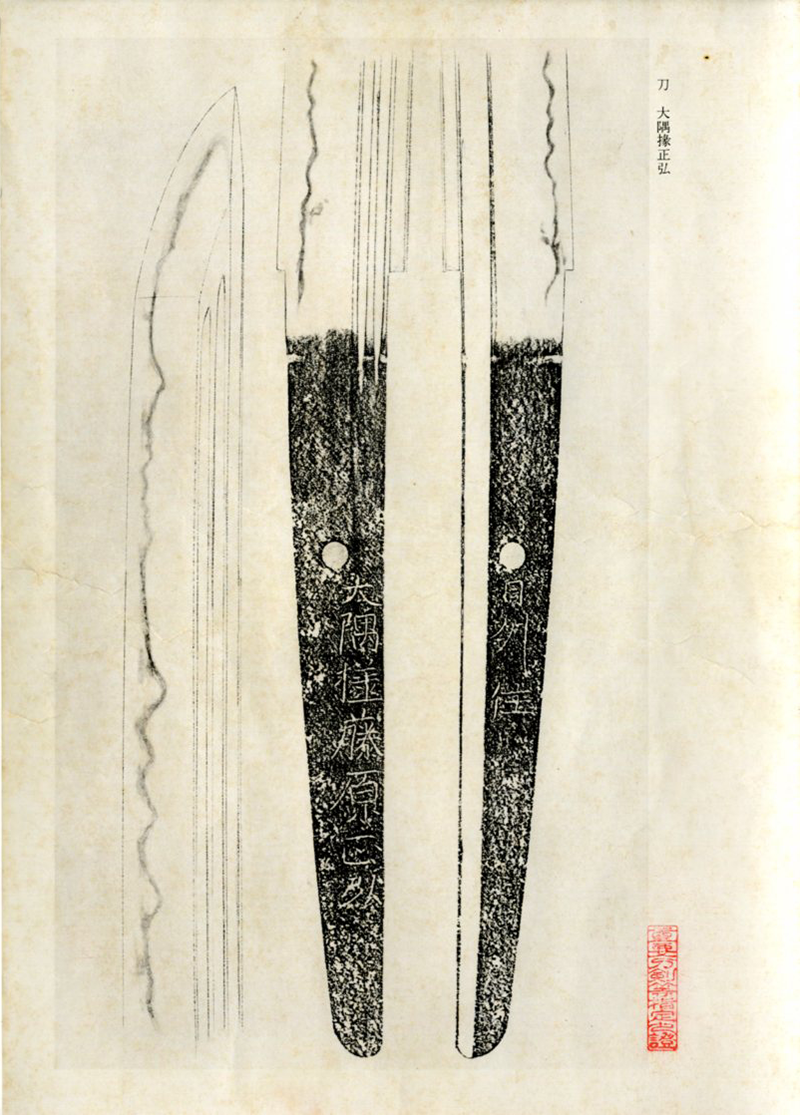
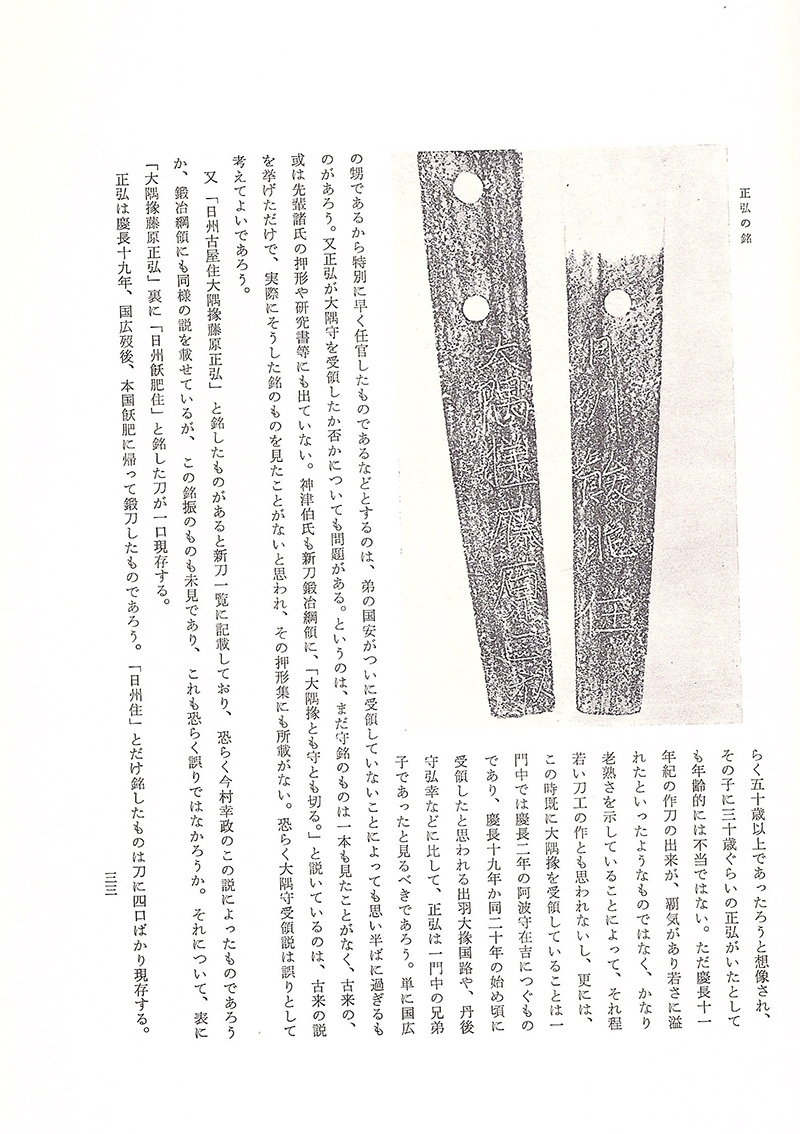
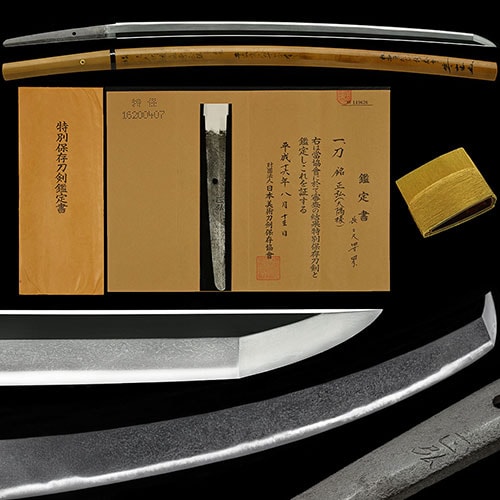
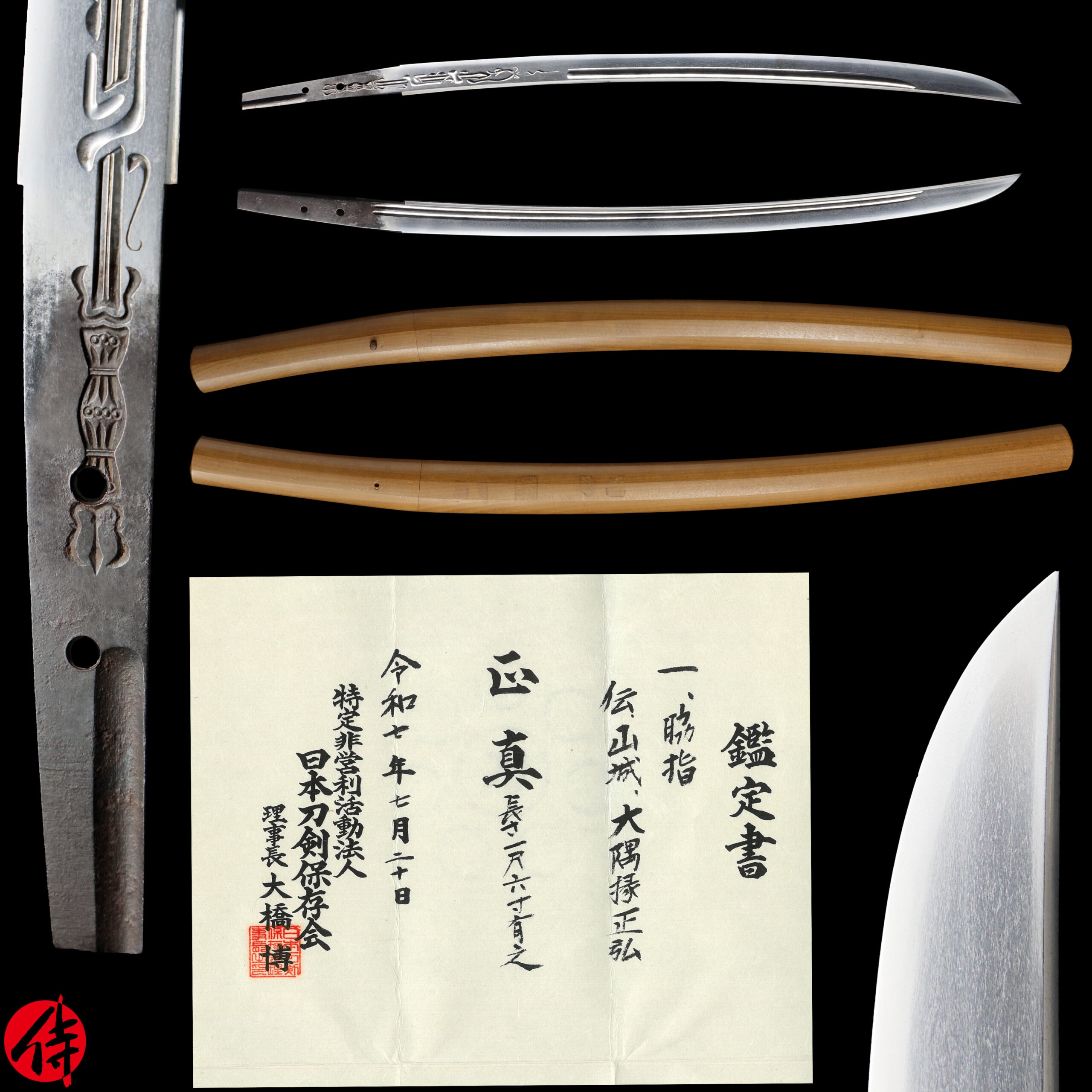
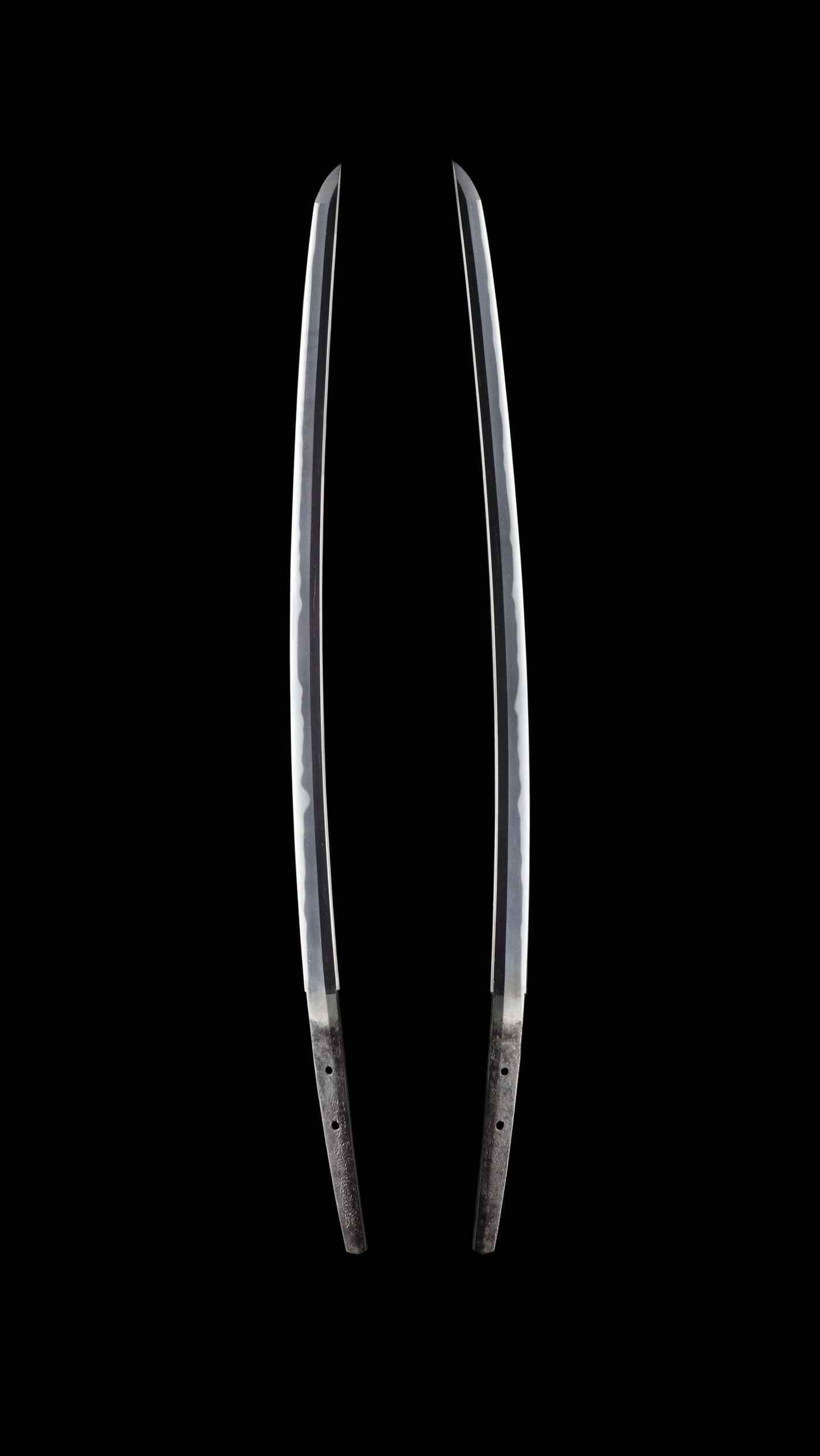
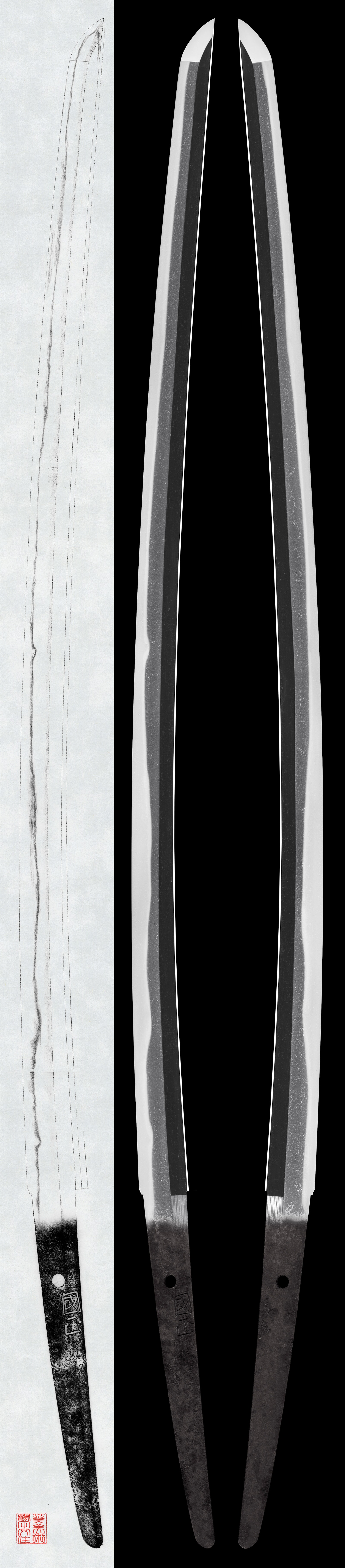
Three blades survive dated Keichō 11, third month, one each a katana, a wakizashi and a tantō, and they are the only dated works Ōsumi-jō Fujiwara Masahiro left behind. He was a native of Obi in Hyūga who came up to the capital and entered the gate of Horikawa Kunihiro, the smith who reshaped Kyoto forging at the opening of the Shintō age; the published sources record him variously as Kunihiro's nephew or as his pupil and leave the question open. By the time of those Keichō 11 pieces he had already received the title Ōsumi-jō, second in early dating within the school only to a Keichō 2 work of Awa-no-kami Zaikichi, so he stood among the seniors of the Horikawa circle. Above all he is held to be the closest of all Kunihiro's pupils to the master, and is counted one of the smiths who forged in his stead. The Yakō Meishūshi appraises him in a single line, that he is said to have served as Kunihiro's deputy, and was extremely skilled ("Kunihiro ga dai o tsutomu to ieri, itatte jōzu nari")[[c:1]].
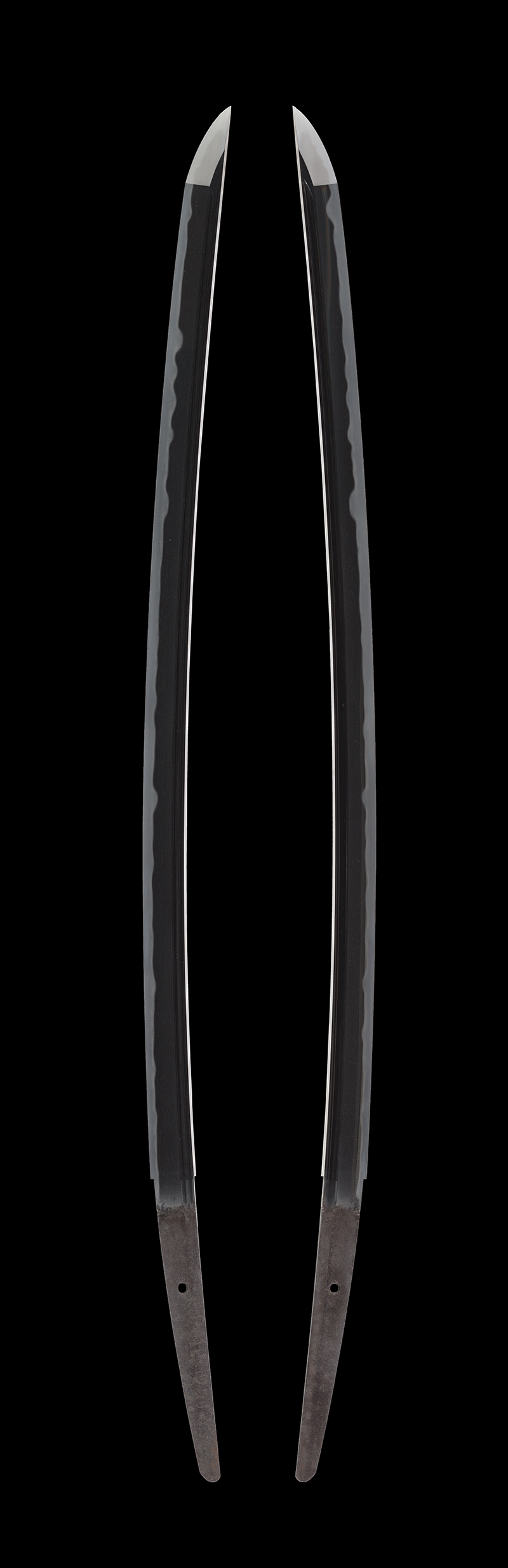
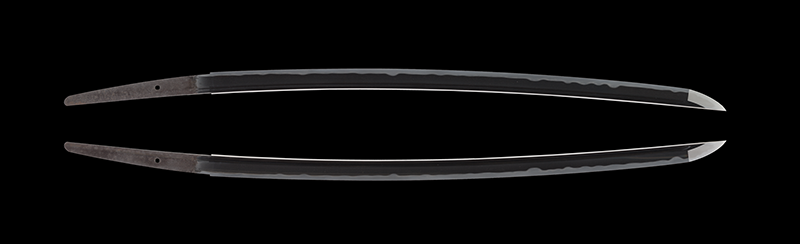
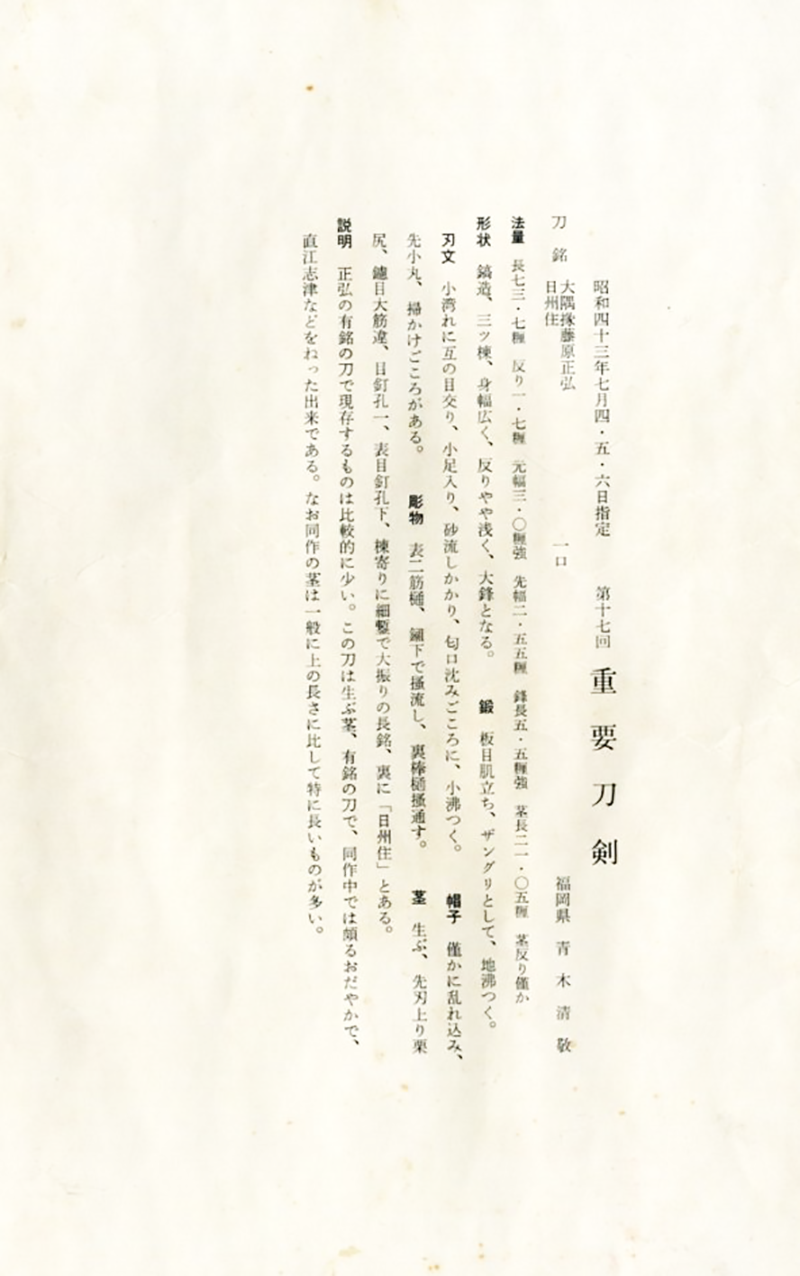
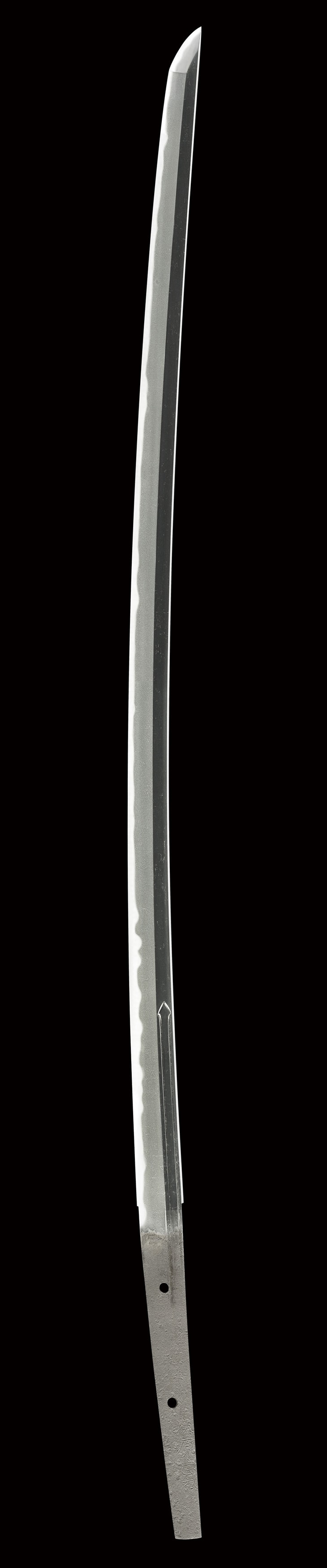
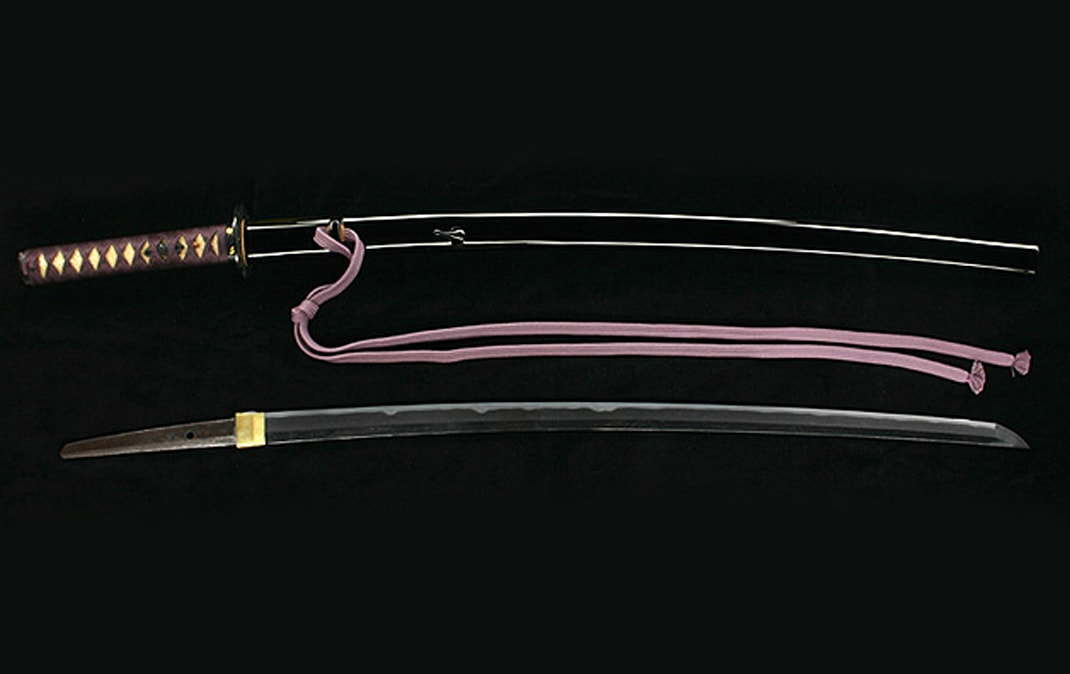
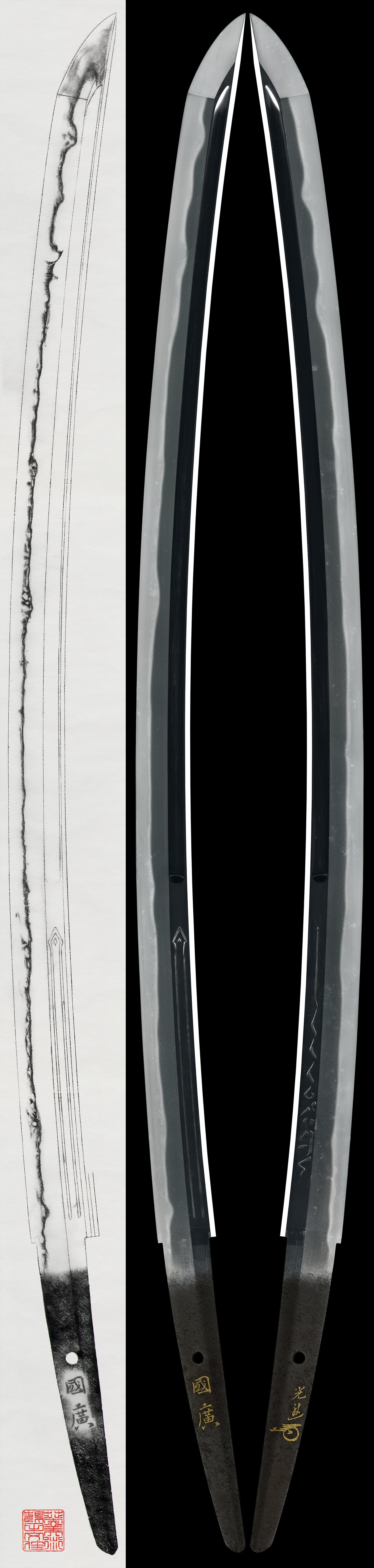
His characteristic hand is the long katana of Keichō-shintō shape: wide in body with little taper from base to tip, shallow in sori, with an extended chū-kissaki or a large kissaki, the build the published sources compare to a greatly shortened Nanbokuchō ōdachi. Many are long and weighty, and the commentary remarks more than once on "a long and heavy build, weighty in the hand" (chōdai de zusshiri to temochi no omoi taihai)[[c:2]] as something frequent in this smith even within the group. Over that shape he tempers the Sōshū tradition, but not in the showy manner usual to the Horikawa school. His is a calm hand. The body of the temper is a suguha-toned base or a ko-notare into which gunome, ko-gunome, angular and slightly pointed elements gather, with ashi entering, ko-nie adhering and at times thickening unevenly into coarse nie, sunagashi running and kinsuji entering, and the nioiguchi sunk in character. The published sources say of him plainly that "one does not see the large midare" (ō-midare no mono wa minai)[[c:3]], and it is that restraint, more than any flamboyant copy, that identifies him.
The jigane is the constant beneath both his quieter and his more active blades. It is an itame that stands up, dry and coarse in the zanguri texture typical of Horikawa work, with thick ji-nie and chikei entering. What sets his jigane apart within that shared school texture is the mokume: it is mixed in with marked prominence, and the commentary singles out the conspicuous mokume as a distinctive trait of this smith. On several blades a mizukage rises from the machi, a feature transmitted from his teacher. The bōshi enters in a midare-komi and turns in ko-maru with hakikake, and where the temper is calmest it runs in a near-straight suguha manner that rounds off gently.
Across his small body of work the published sources read two registers of one hand. The frequent one is this restrained Sōshū copy, looking to the superior Sōshū masters and to Shizu above all, and on one wakizashi, with its devotional bonji, suken and gomabashi carving, to Sadamune; the commentary calls his best katana "superior works among this smith's production" (dōsaku-chū no yūhin), forged in "the Horikawa manner that emulates the high-ranking Sōshū masters" (Sōshū jōkō ni naratta Horikawa-mono no sakufū)[[c:4]]. The other register is the one the daisaku tradition rests upon: where the nioiguchi sinks, the nie thickens and gathers unevenly, and the temper is run down below the machi in the yakikomi the sources name as Kunihiro's own habit at the start of the temper. One Tokubetsu-Jūyō katana of this quieter kind is read as so close to the master that it speaks directly to Kunihiro's range. His dates, for reasons the sources cannot explain, are confined to Keichō 11, and after Kunihiro's death in Keichō 19 he is thought to have returned home to Hyūga, where he signed "Nisshū-jū", "Nisshū Obi-jū" and "Hyūga-no-kuni-jū".
What distinguishes Masahiro within the Horikawa group is exactly this quietness. The general Horikawa manner copies the high Sōshū masters in a lively, flamboyant midare; his does not. He keeps the temper low and the line subdued, so that the teacher's flamboyant idiom is comparatively faint in his work, while the deeper marks of the master remain. His own bright distinctions are the conspicuous mokume in the zanguri jigane, the sunken nioiguchi, the yakikomi below the machi and the mizukage at the machi. The published sources go further still: his working manner, the form of his signature, his file marks and his tang construction are all the closest to Kunihiro of anyone in the school, and even the two characters "Fujiwara" in his signature are entirely like the master's. He is the deputy hand of the Horikawa, the same Sōshū-den worked at lower temperature.
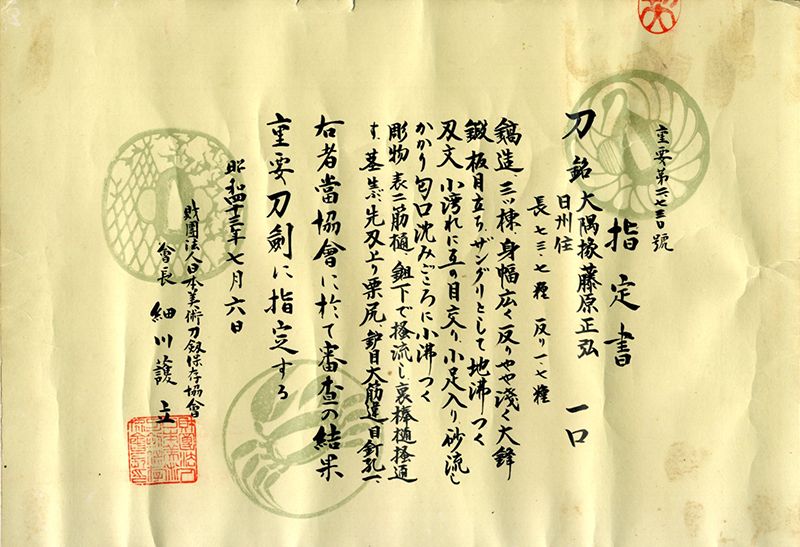
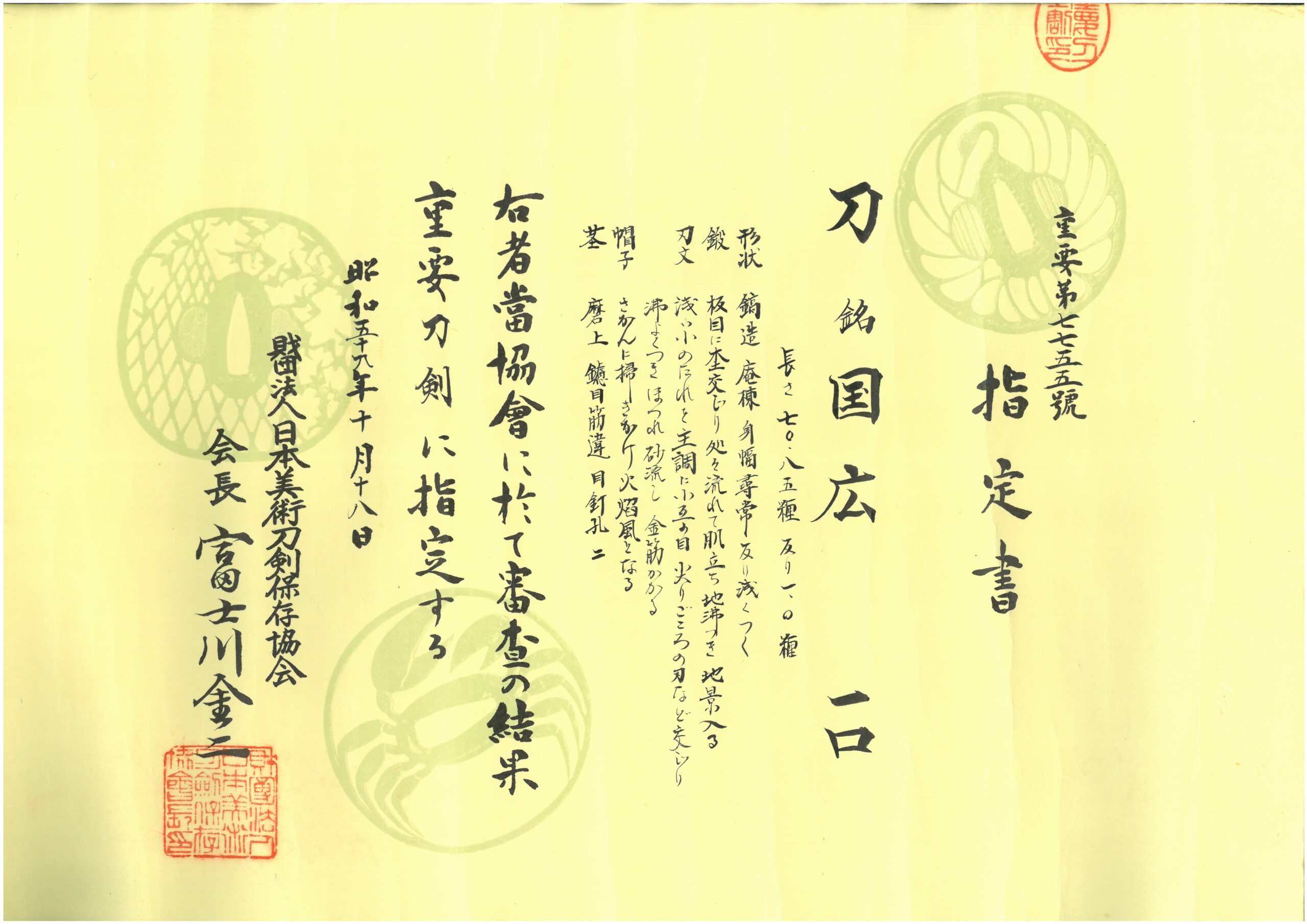
For the collector he is a scarce name, and an instructive one. Fujishiro grades him Jō-jō saku. He has no National Treasures; his record runs through one Important Cultural Property, three katana at Tokubetsu-Jūyō and ten works at Jūyō, fourteen designated works on record in all. Because his blades are mostly long and were mostly shortened, an ubu signed katana is rare, and the published sources prize such pieces especially, counting the finest "superior works that show no breakdown despite their great length." His extant output is genuinely small, and the recorded whereabouts of his blades are private rather than institutional, so a signed Ōsumi-jō Masahiro comes to light only seldom. When one does, it carries two things at once, a fine Keichō-shintō sword in its own right, and the nearest surviving window onto Horikawa Kunihiro's own hand, which is what a privately held example is worth to a collector.