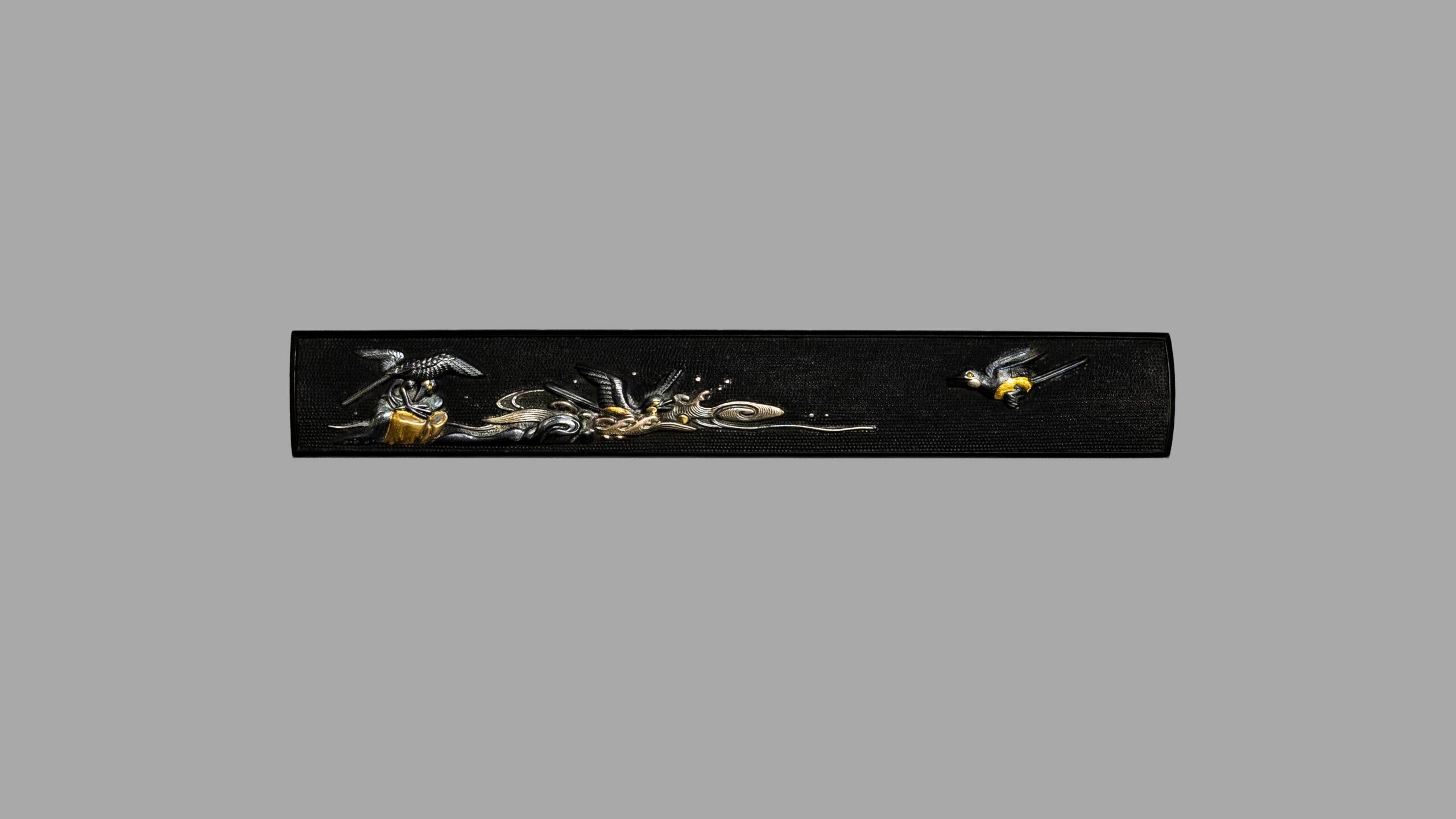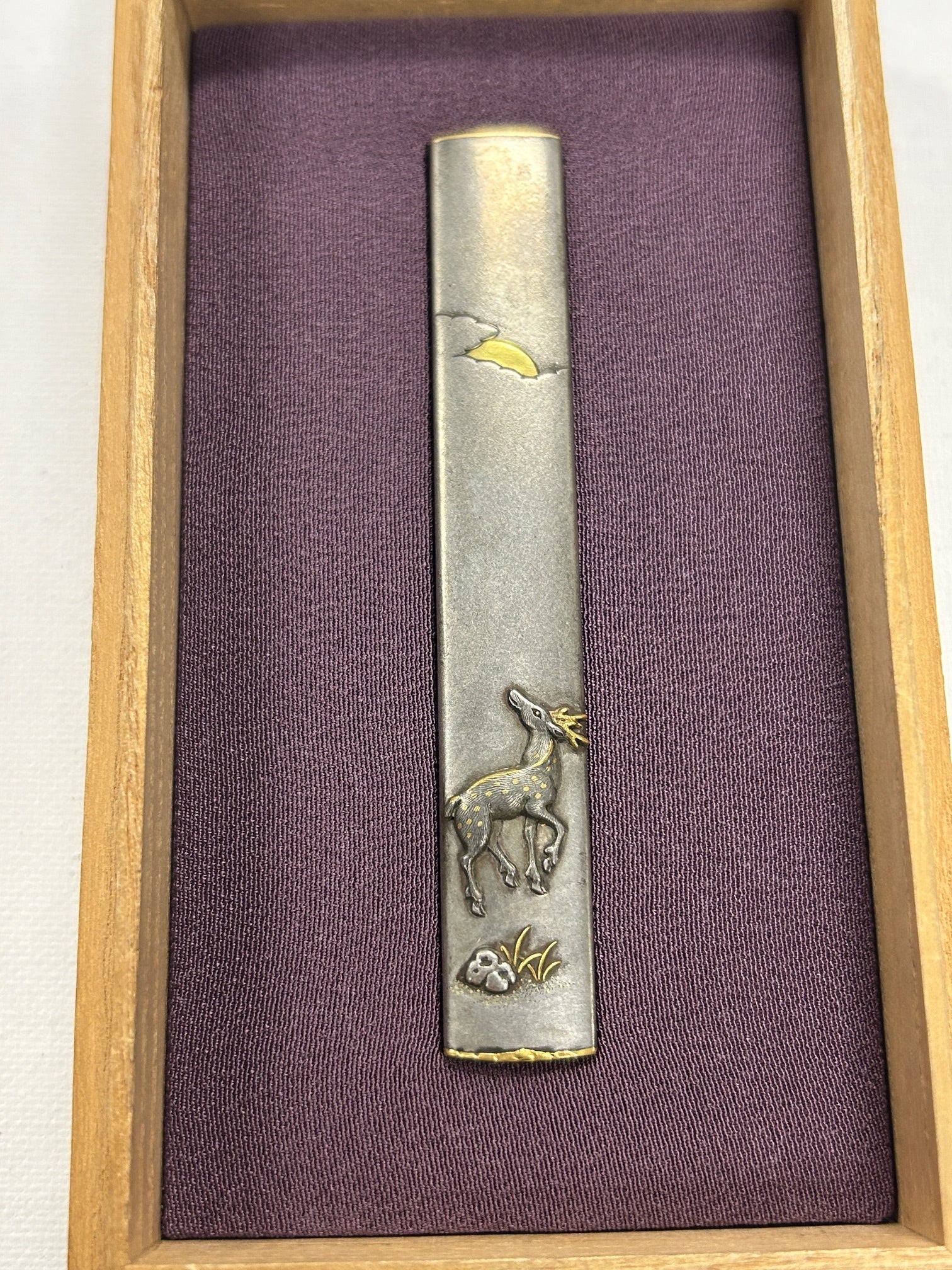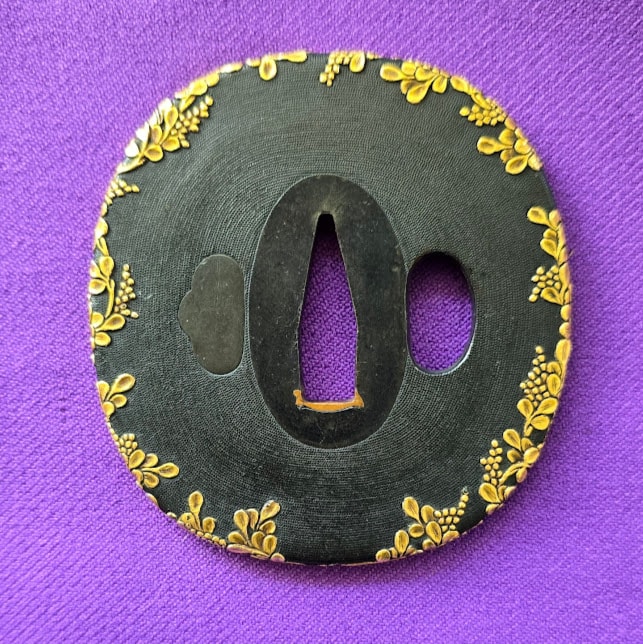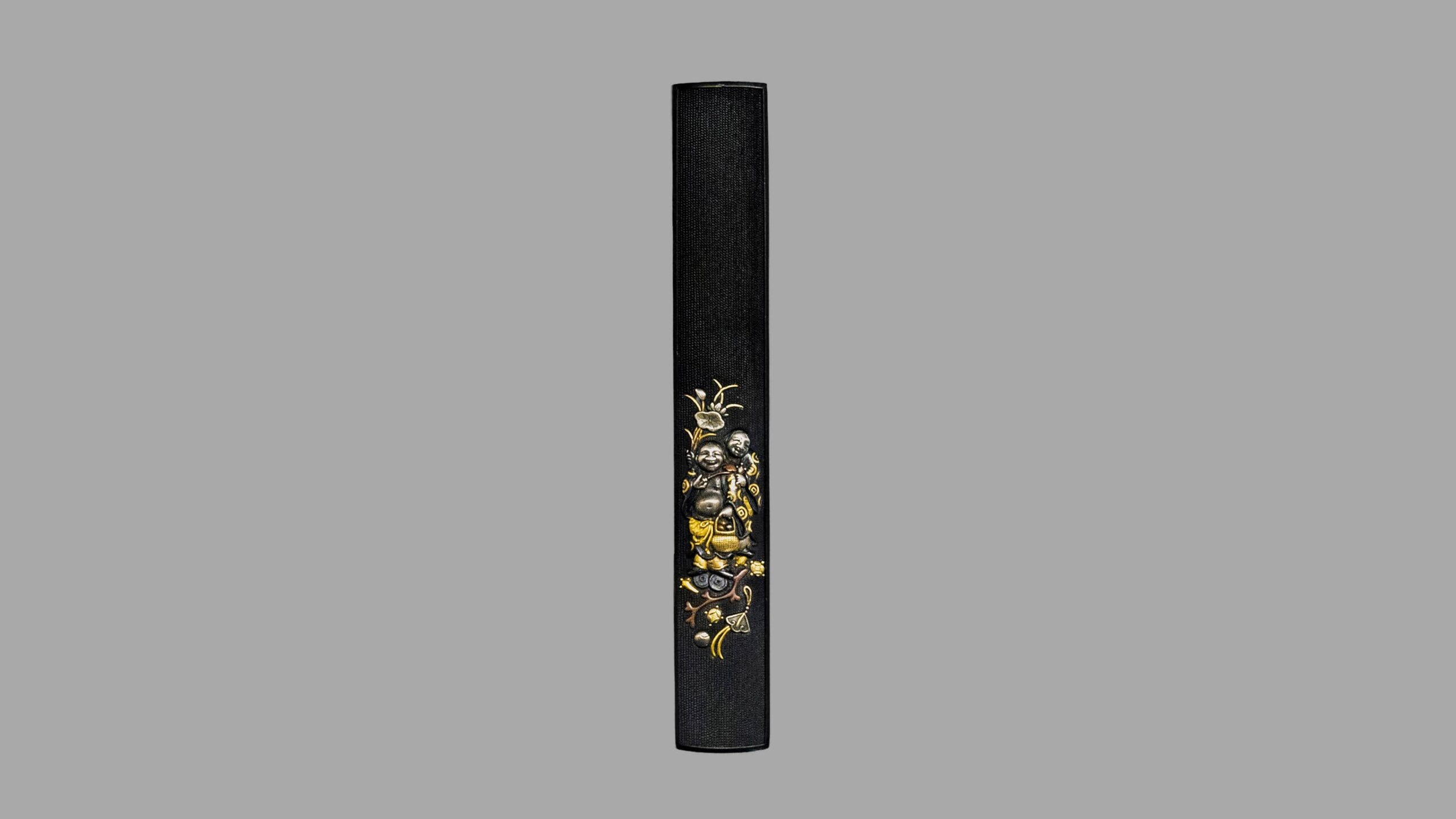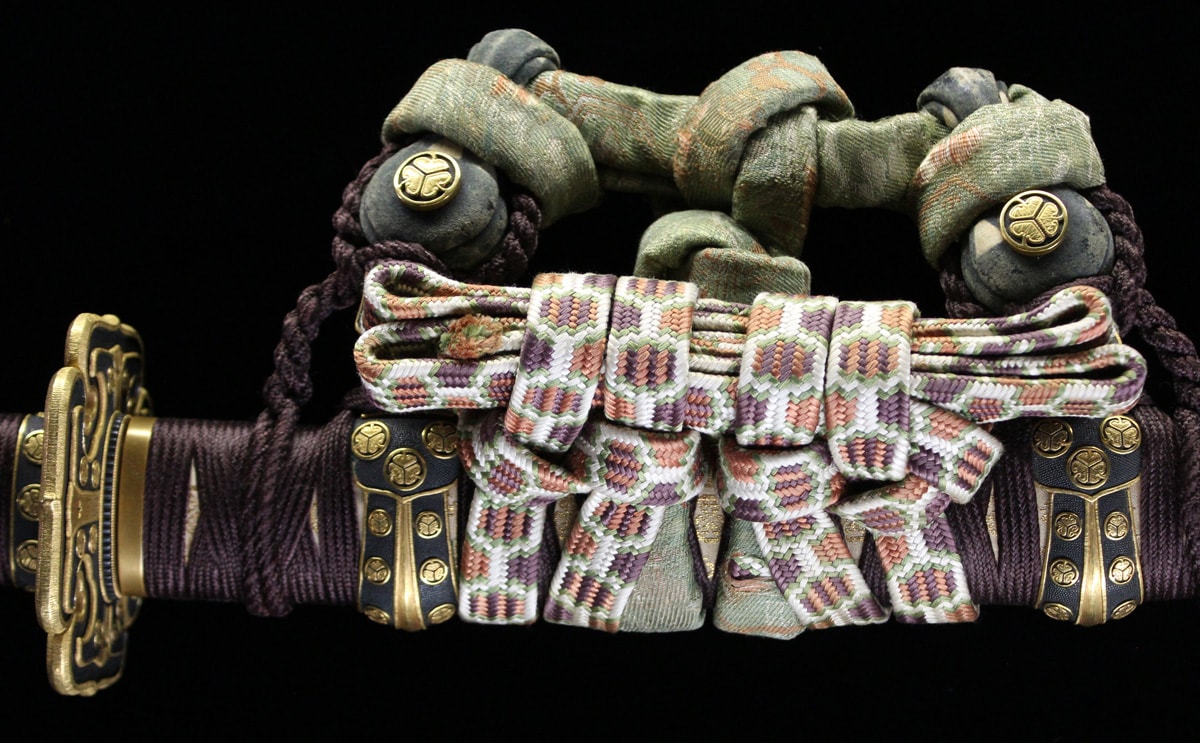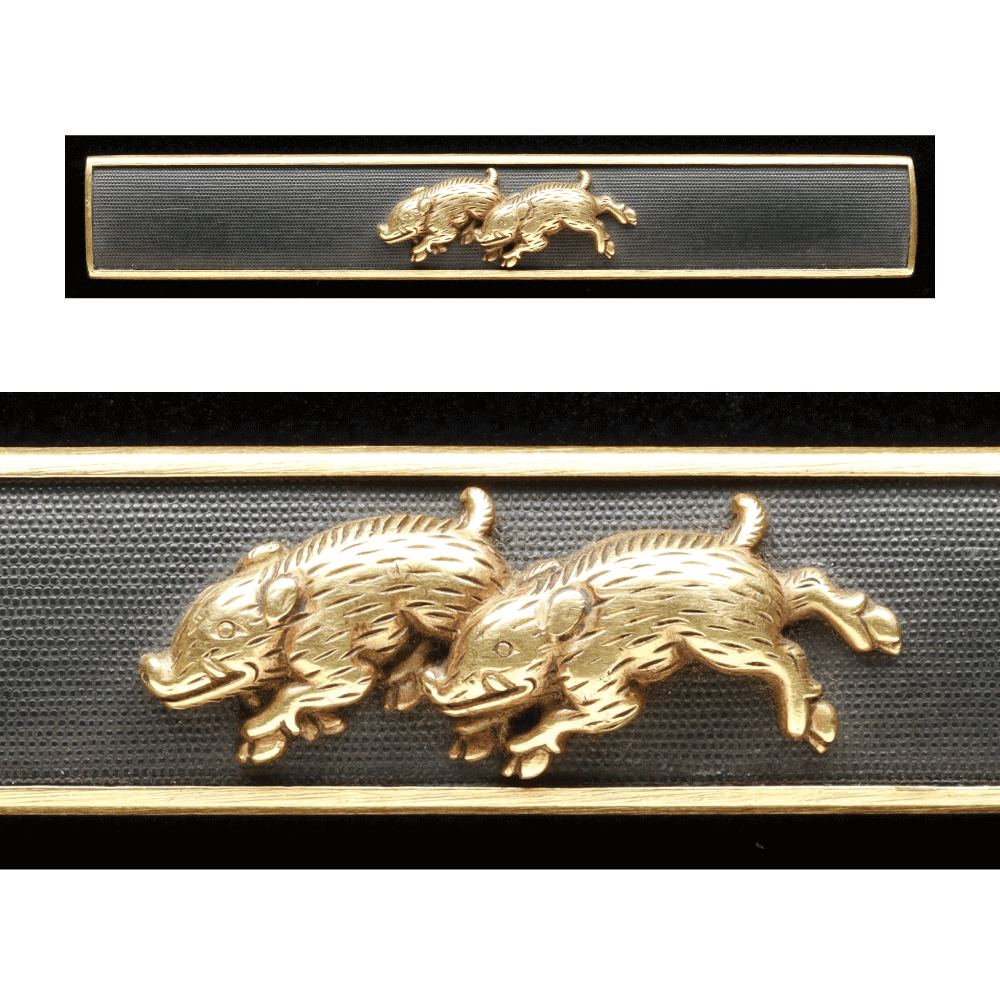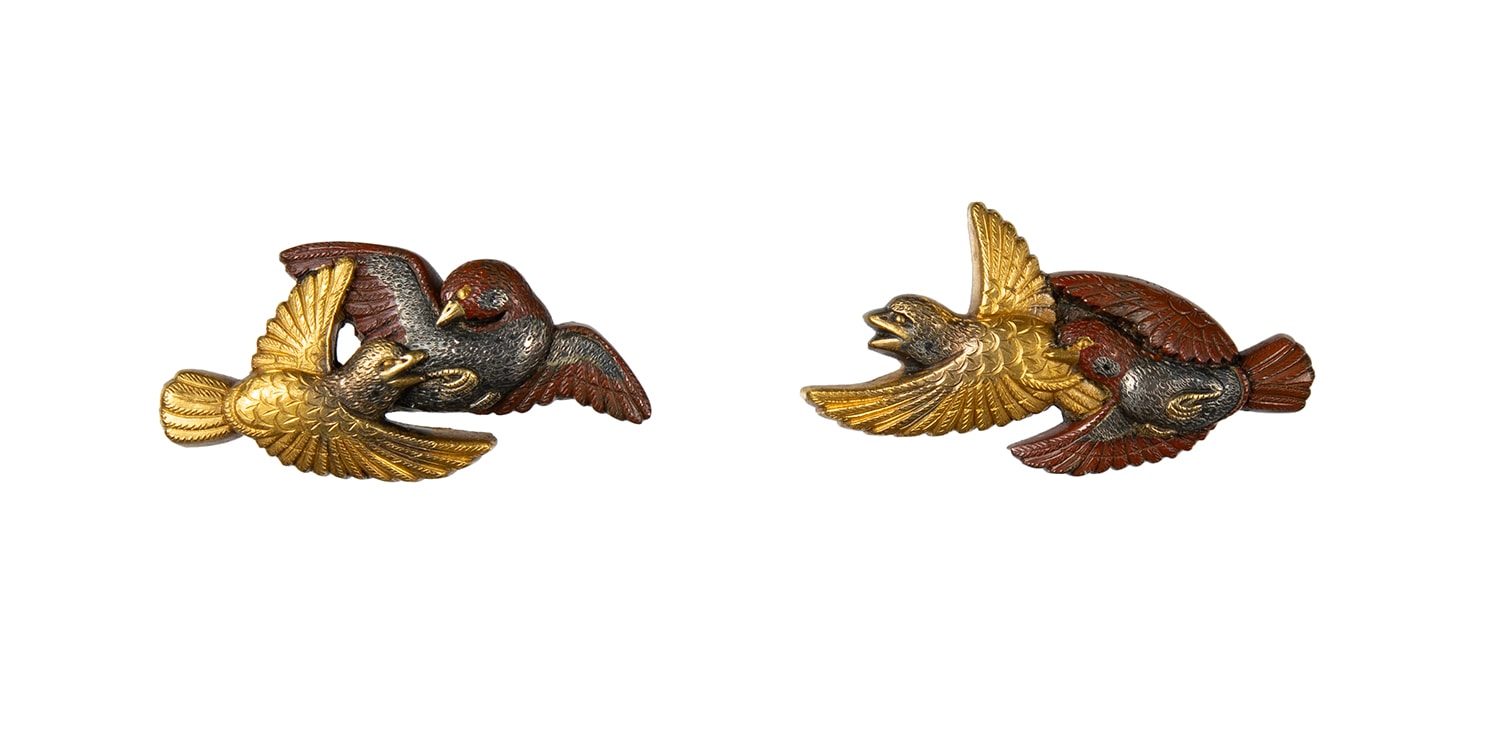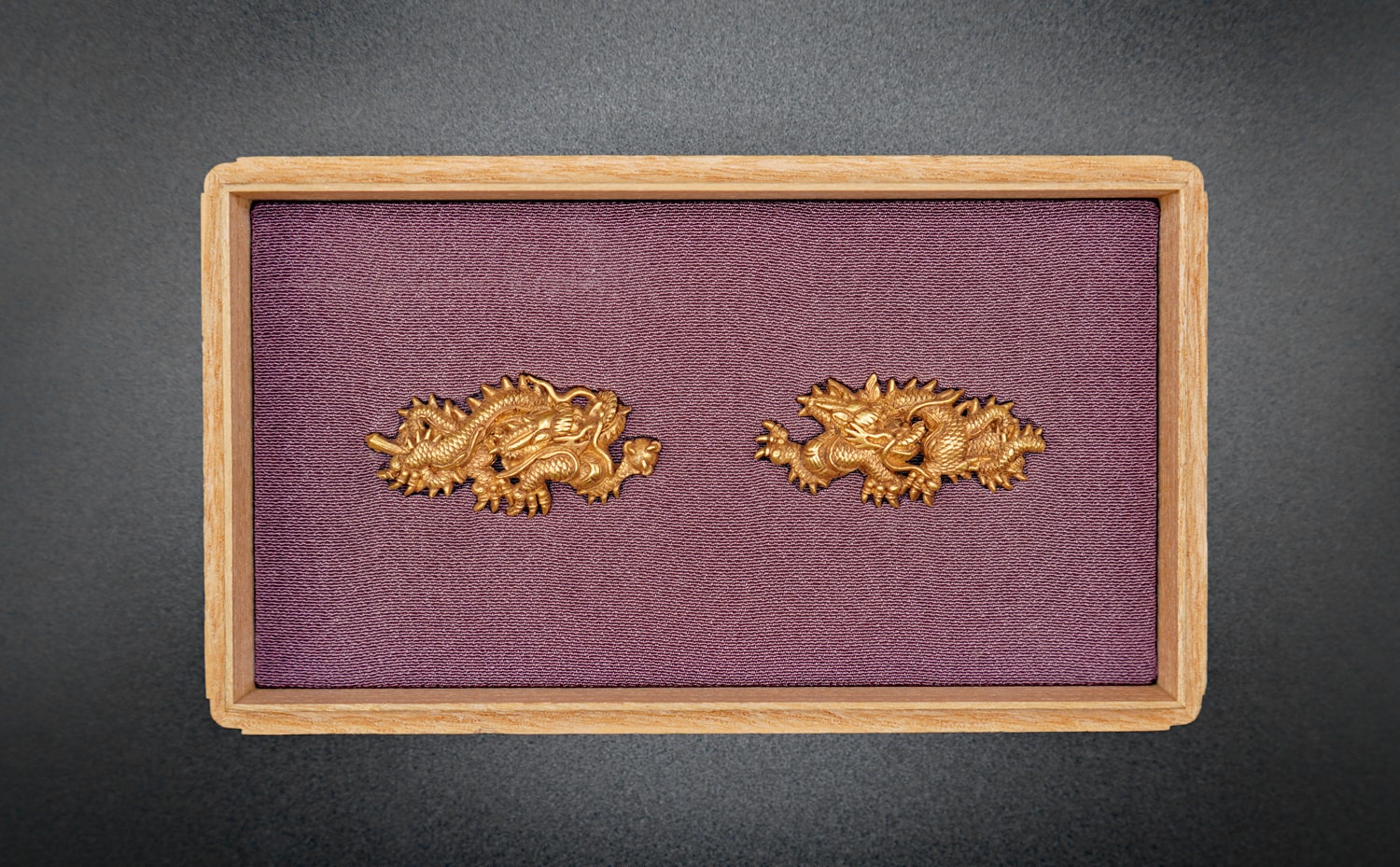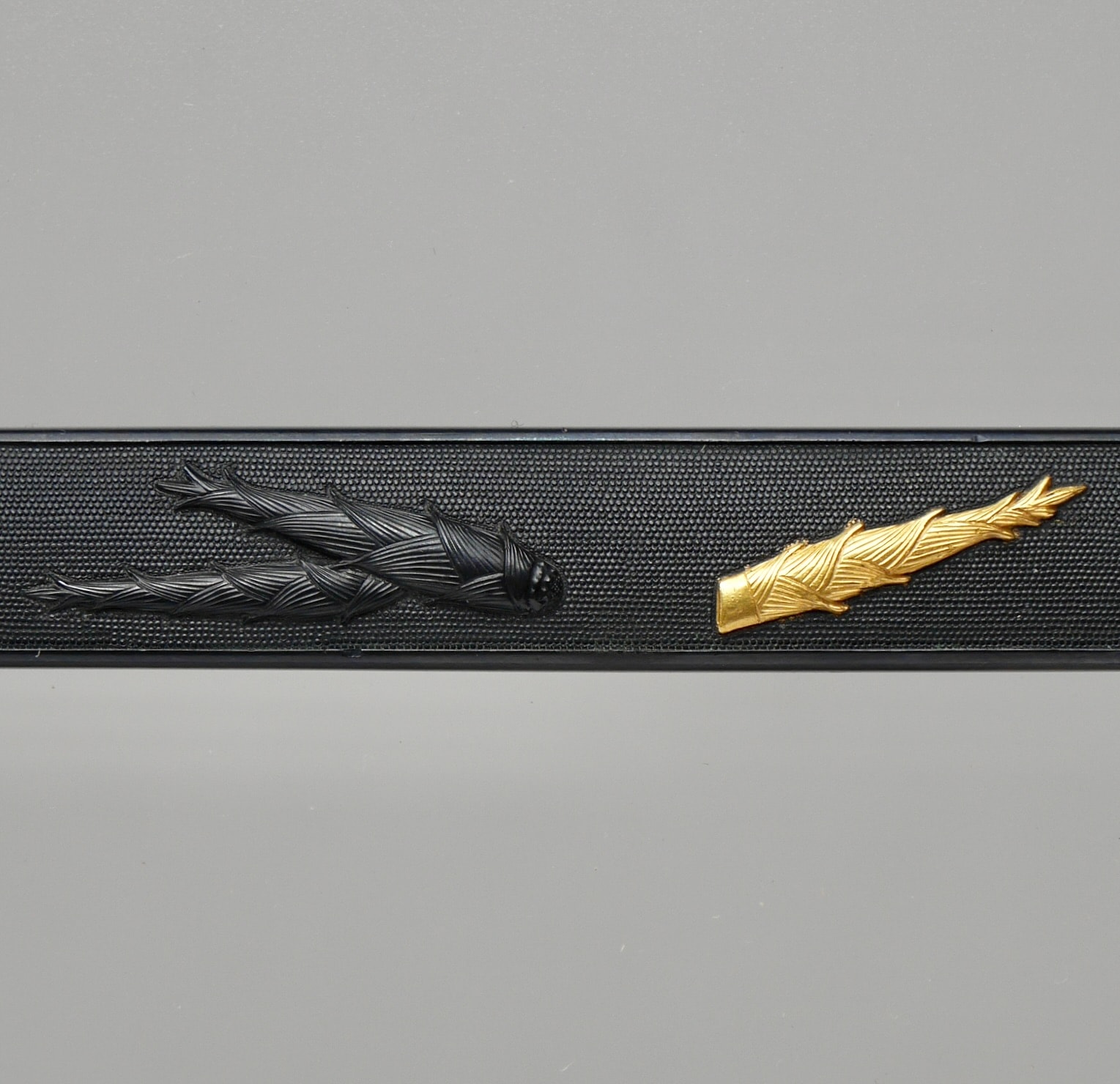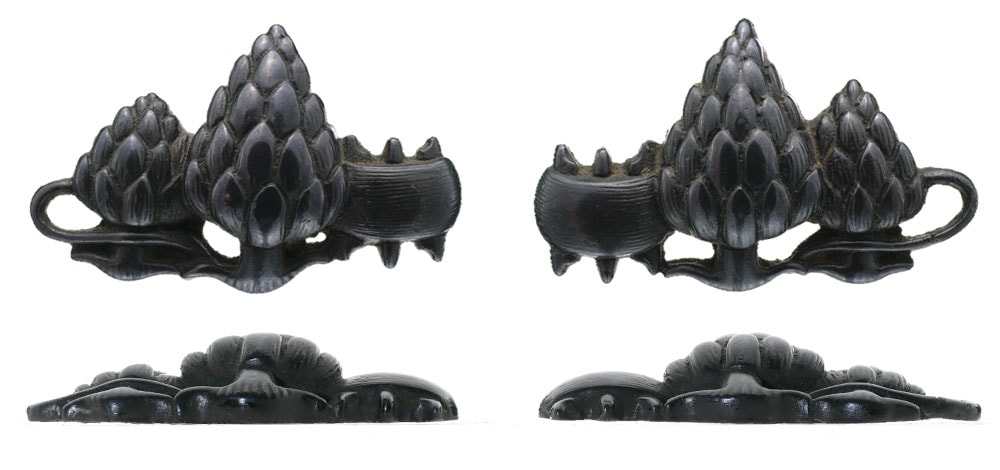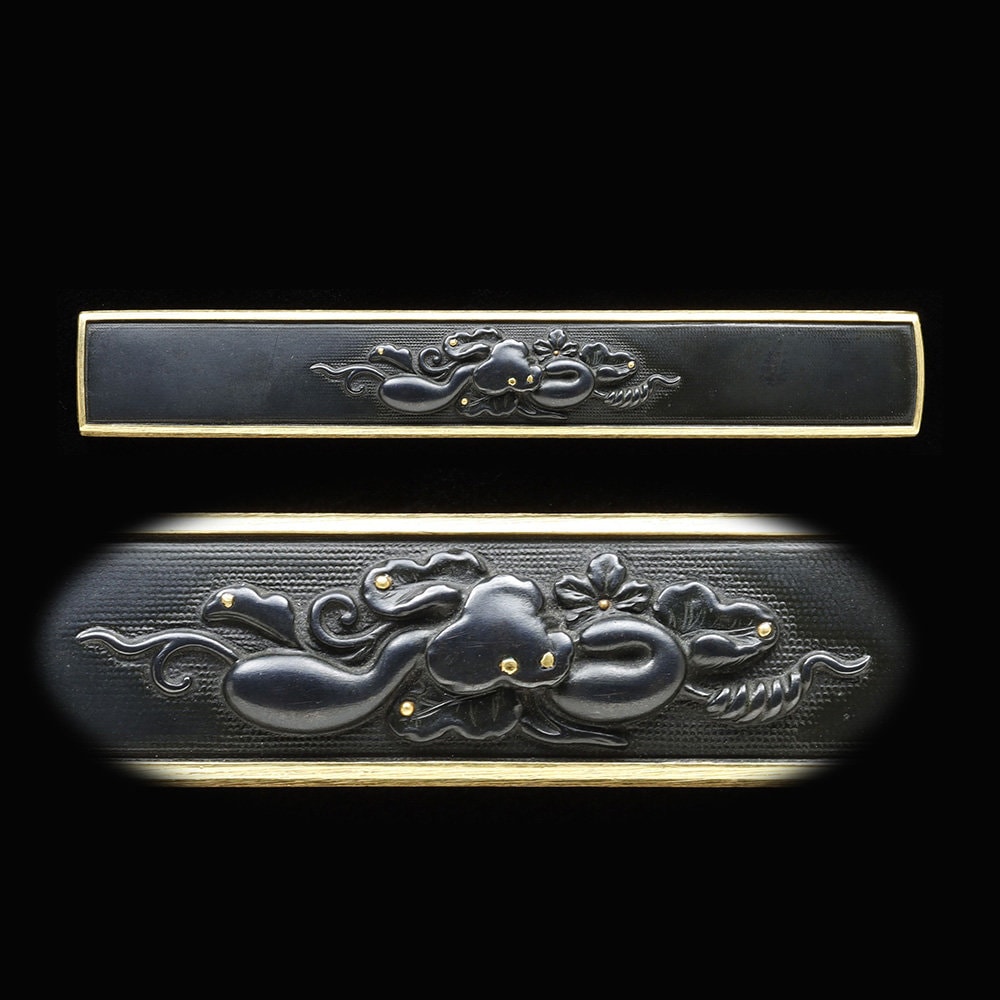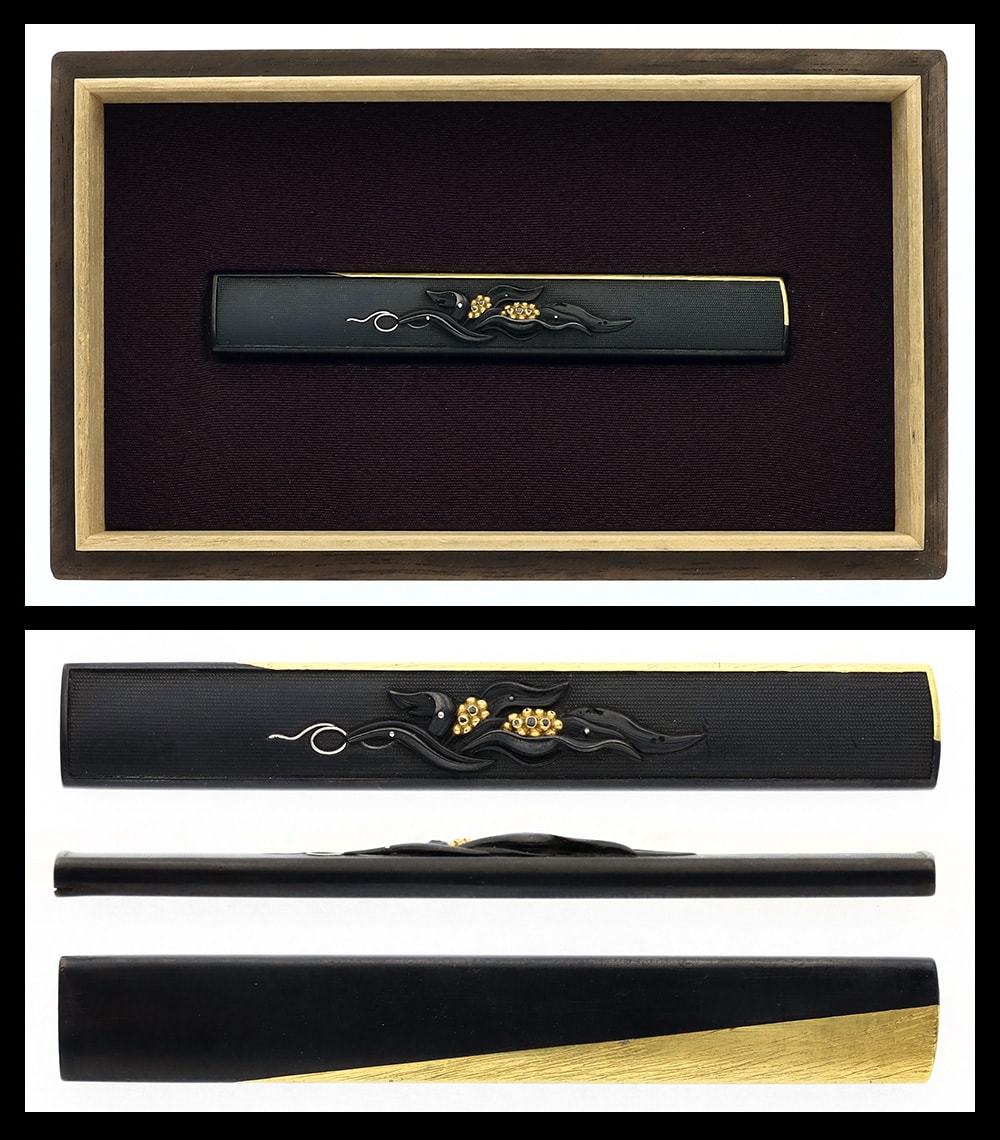
-Tōsōgu, 63rd Session — Designated November 17, 2017
, : Ginshōtei Tōmei (吟松亭東明)
Measurements
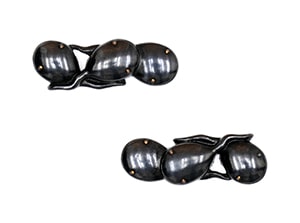
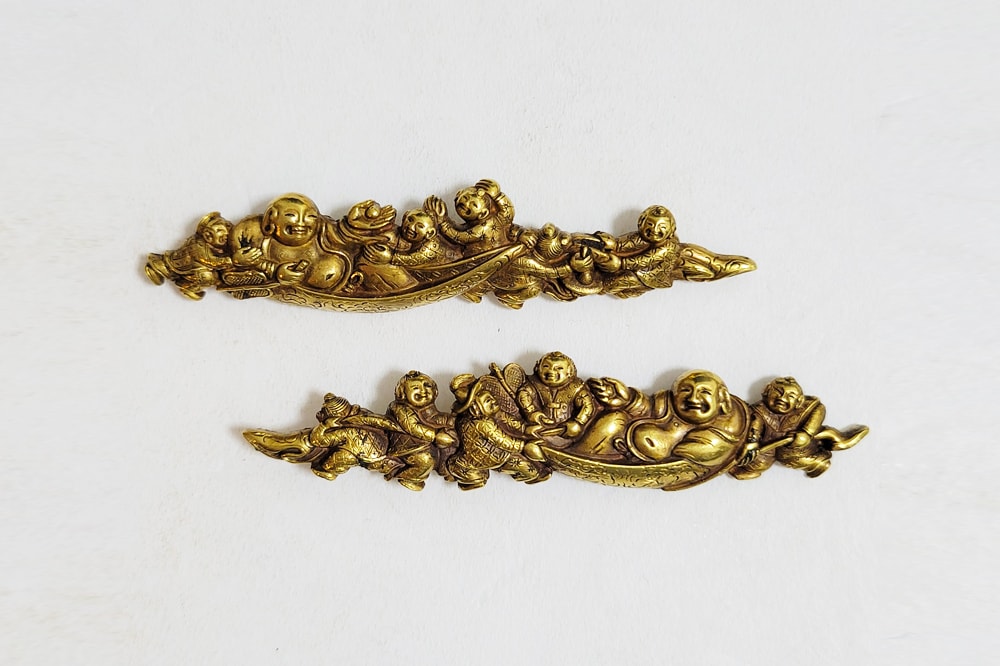
- Dai (large): length 3.85 cm; width 1.00 cm; height 1.10 cm. length 3.50 cm; width 1.65 cm; height 0.55 cm.
- Shō (small): length 3.75 cm; width 1.95 cm; height 1.00 cm. length 3.45 cm; width 1.55 cm; height 0.50 cm.
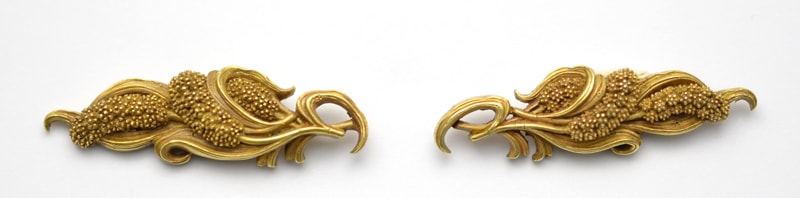
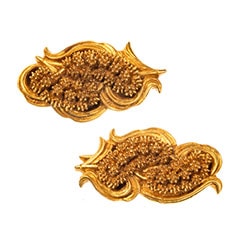
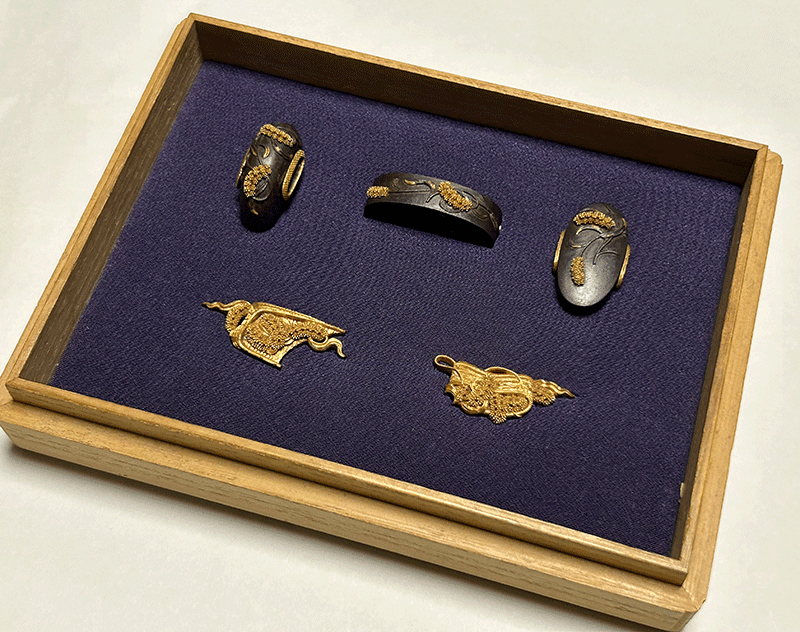
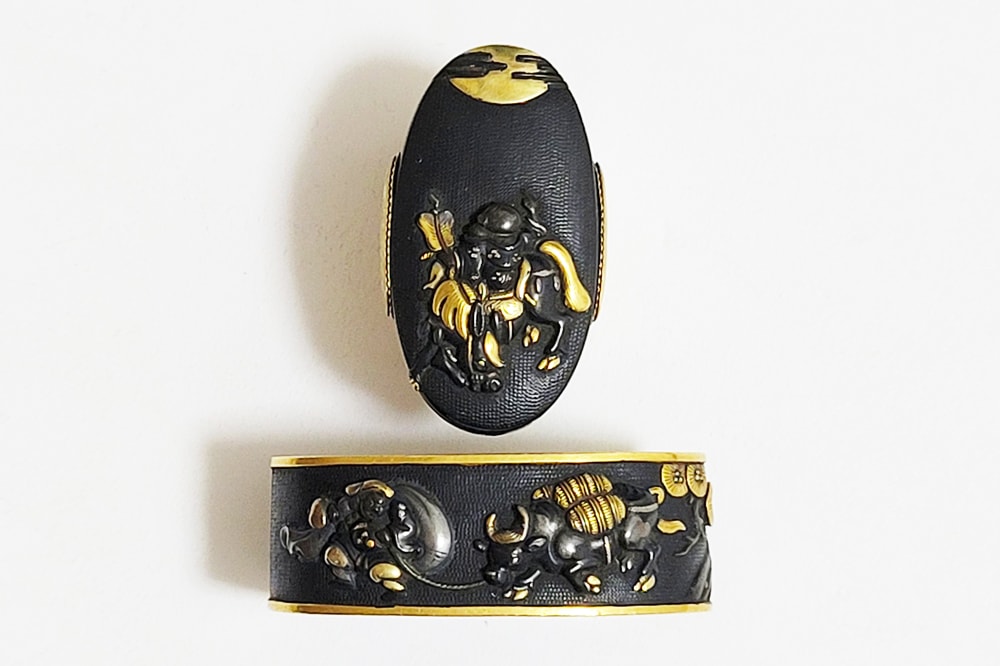
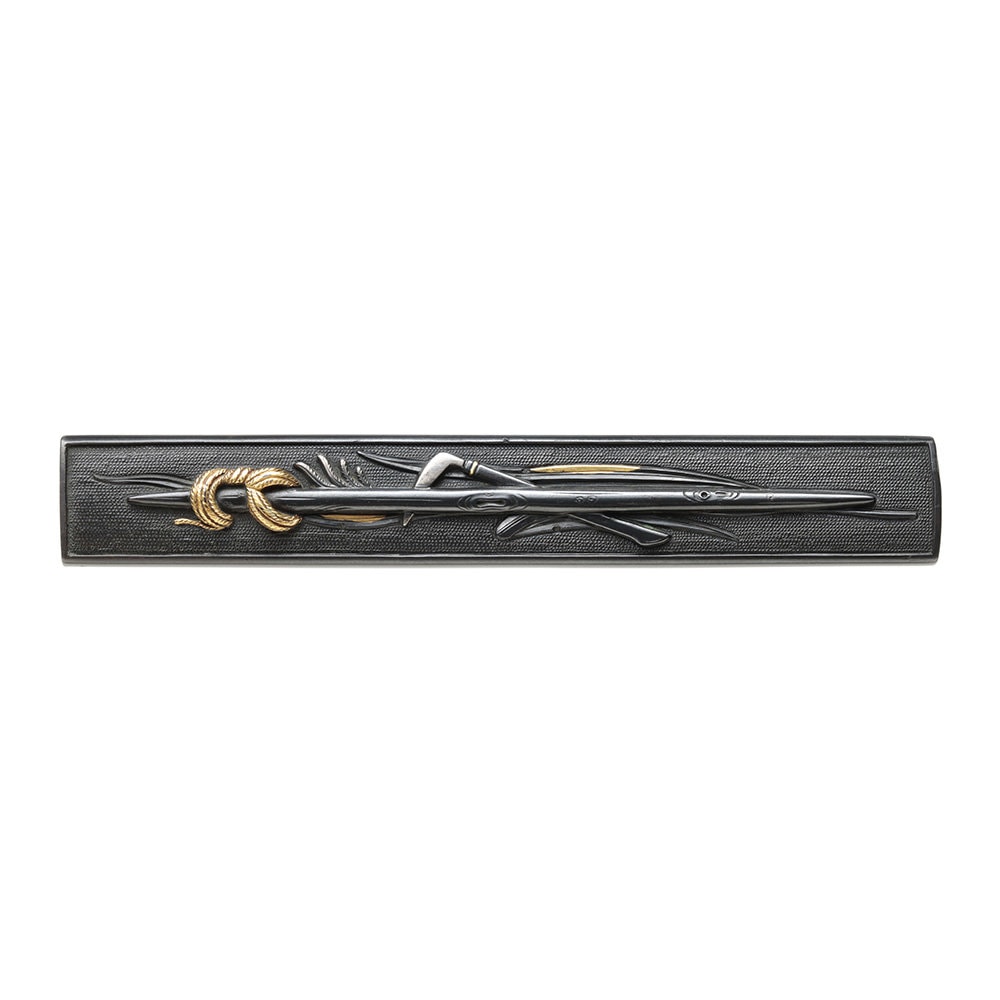
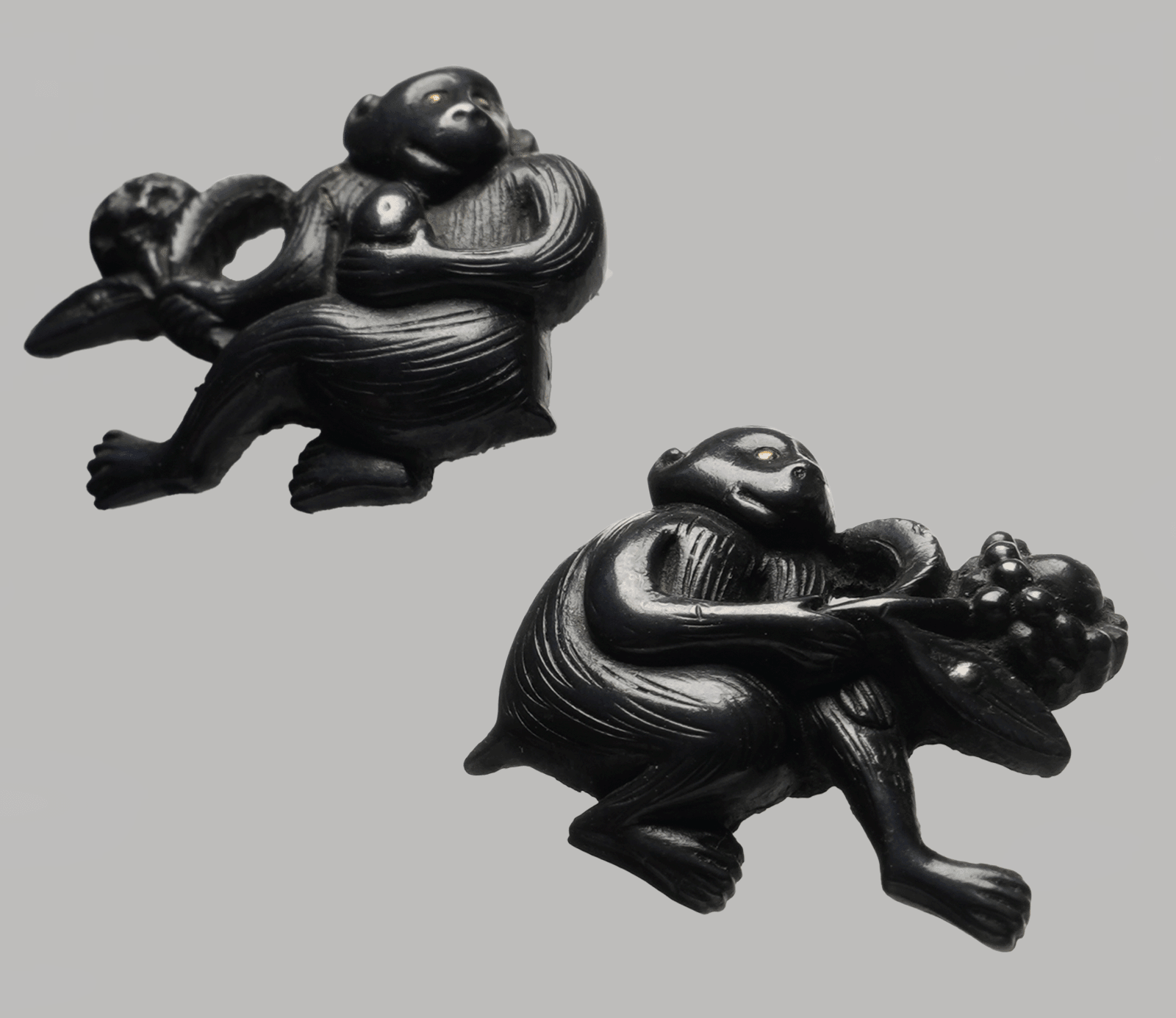
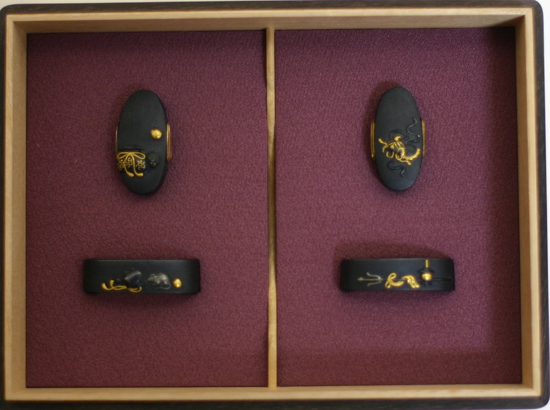
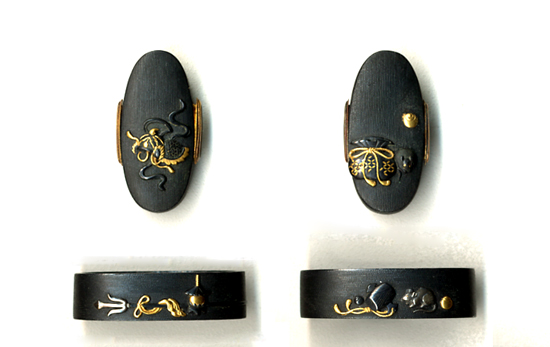
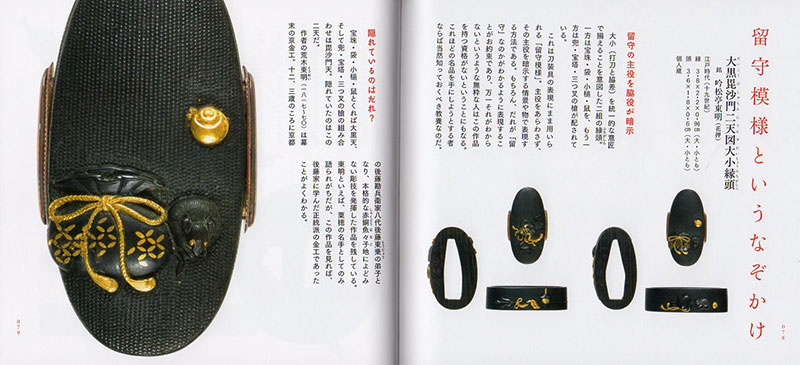
Description Form: set of . Material: ground. Design: “Daikoku and Bishamonten, the Two Deities” (Daikoku Bishamon niten). The dai represents Daikokuten, furnished with a treasure-bag, the mallet of good fortune (uchide no kozuchi), and mice. The shō represents Bishamonten by means of “absence motifs” (rusumoyō), arranged with a helmet, treasure pagoda, and halberd. Decoration: with gold and silver . Signature: signature “Ginshōtei Tōmei” with .
Artisan Araki Tōmei (Ginshōtei Tōmei), a Kyoto kinkō associated with the Gotō Ichijō lineage.
Era Late period.
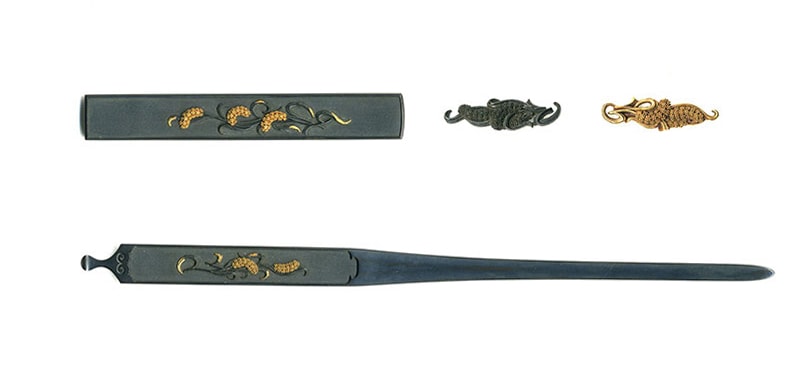
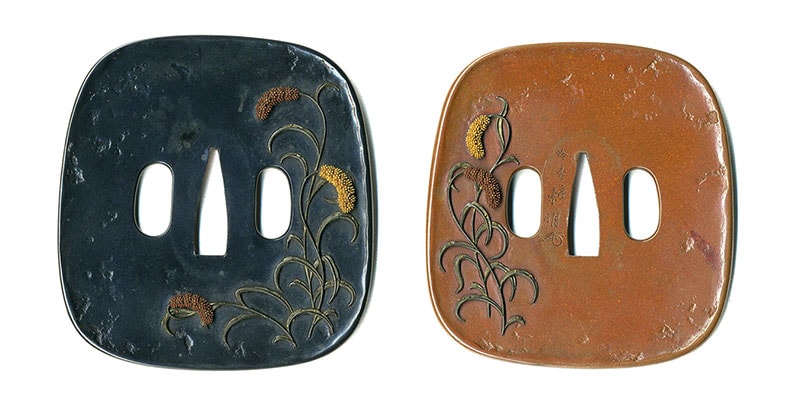
Explanation Araki Tōmei was born in Kyoto in Bunka 14 (1817). At the age of thirteen he entered the school of Gotō Tōjō; he was granted the character “Tō” (東) and took the name Tōmei. He later studied under Gotō Ichijō and was permitted the art name “Issai,” signing “Issai Tōmei.” He also learned preparatory drawing under the Kyoto painter Hayashi Ranga. It is said that his specialty—carvings of millet ears (awaho)—was devised through study undertaken together with Ranga, and that he became well known from that time for this motif.
This is not among Tōmei’s celebrated millet-ear works; however, it employs a dense, lustrous, high-quality black . Moreover, exceptionally precise carving is applied to details such as the mice’s fur and the patterns on the lucky mallet, bringing the subject vividly into relief and demonstrating the artist’s high level of technical ability—an excellent work.
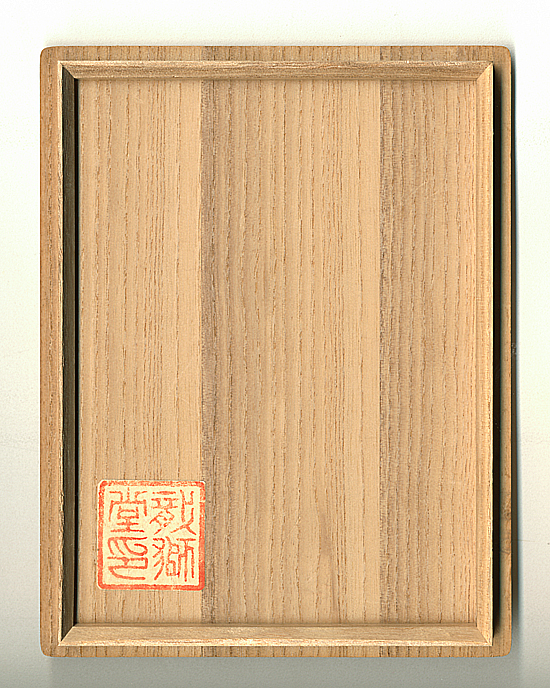
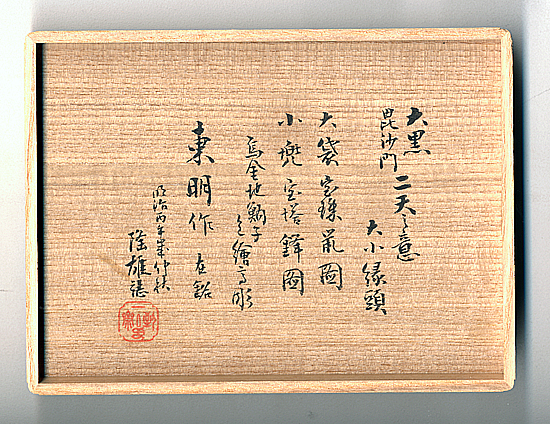
Additionally, the outer storage box, made up as a former holding of Ryūshidō, is accompanied by an inner box bearing an inscription () by Ikeda Takao.
(Tōsōgu 35)