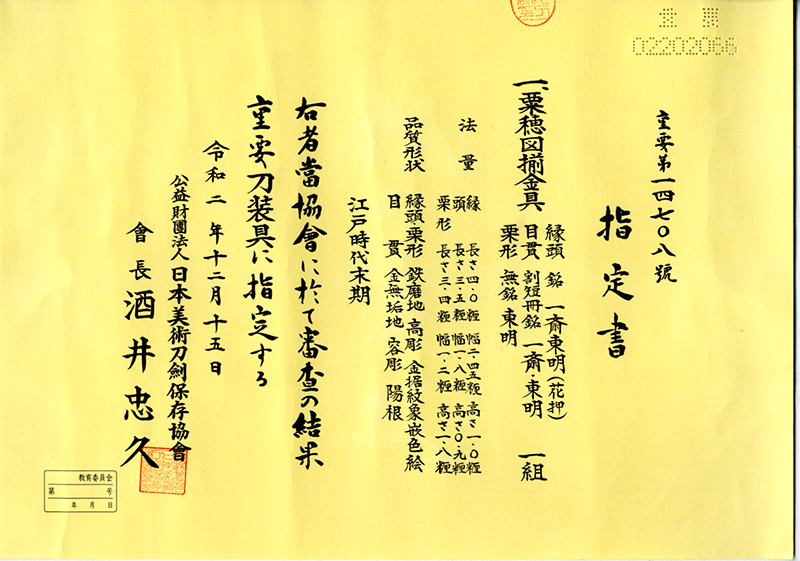
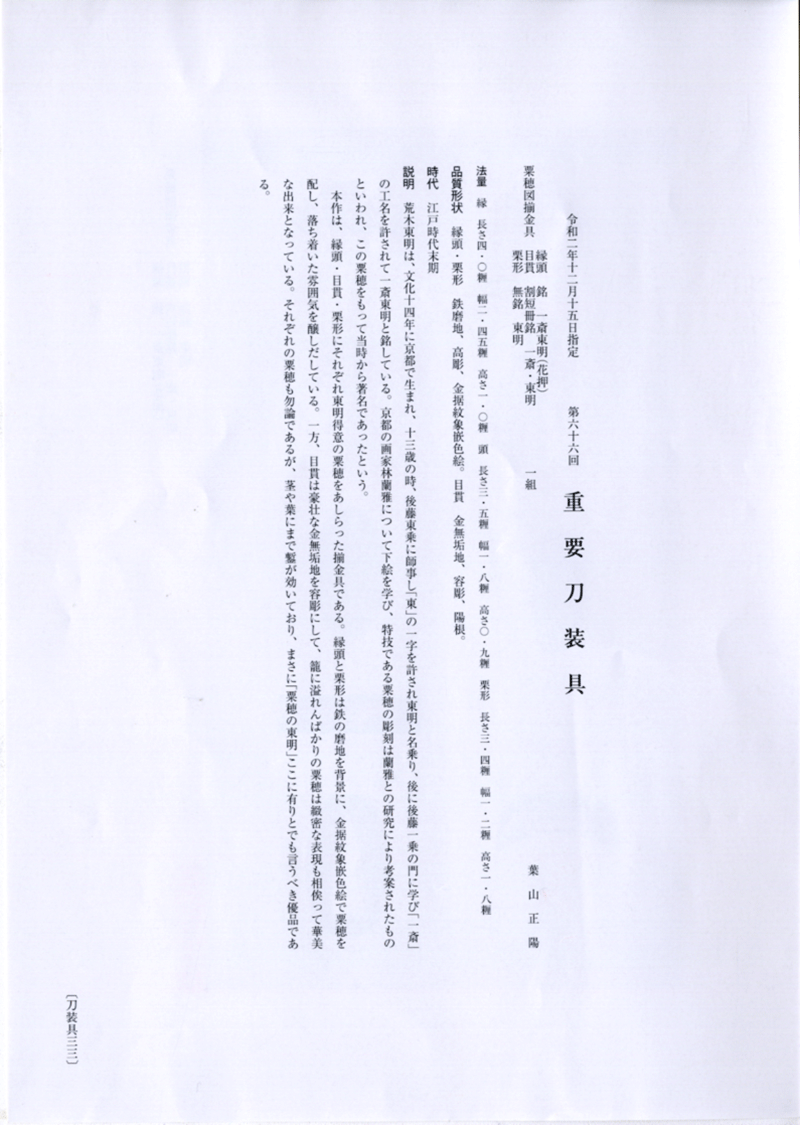
-Tōsōgu, 66th Session — Designated December 15, 2020
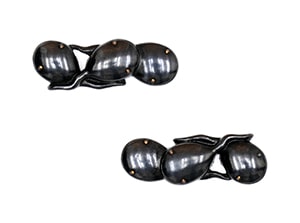
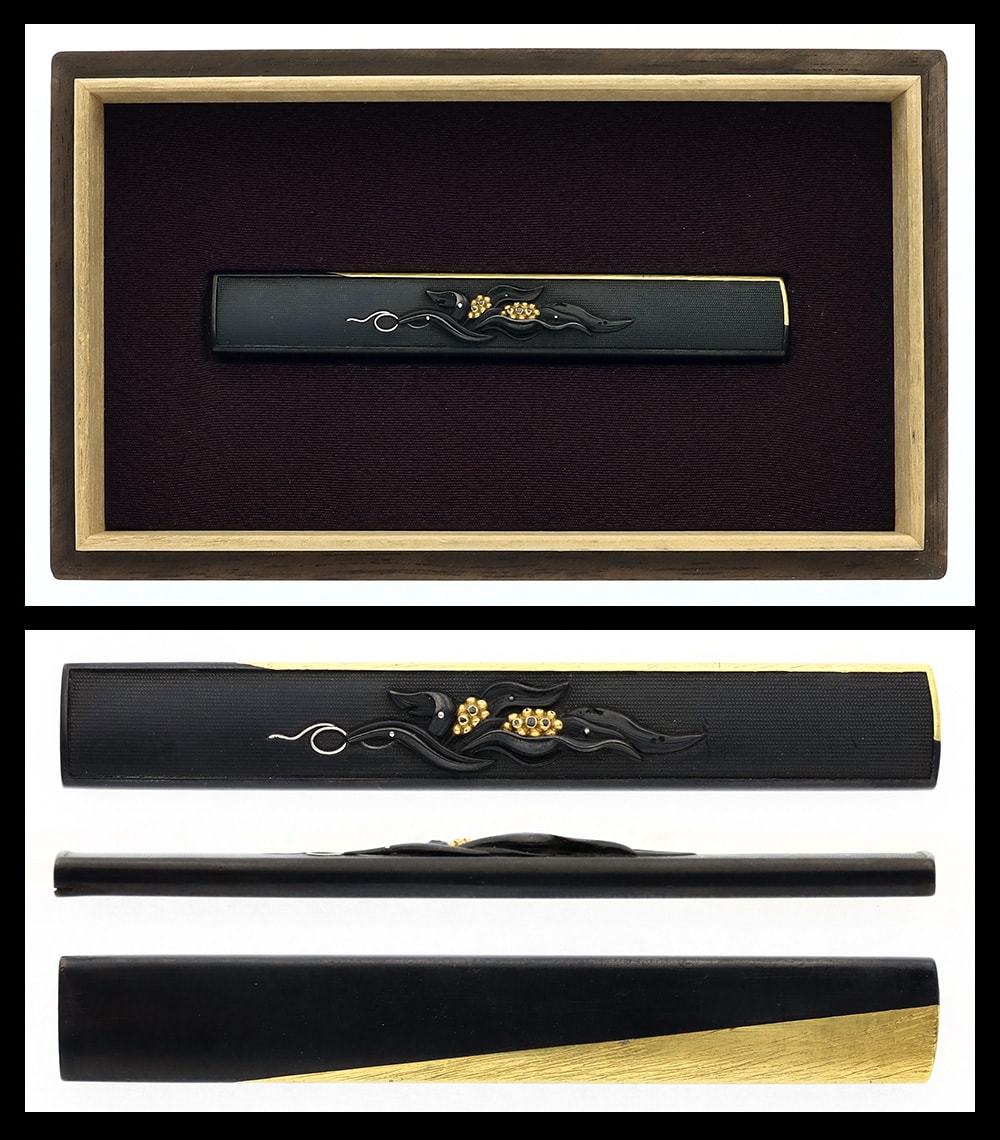
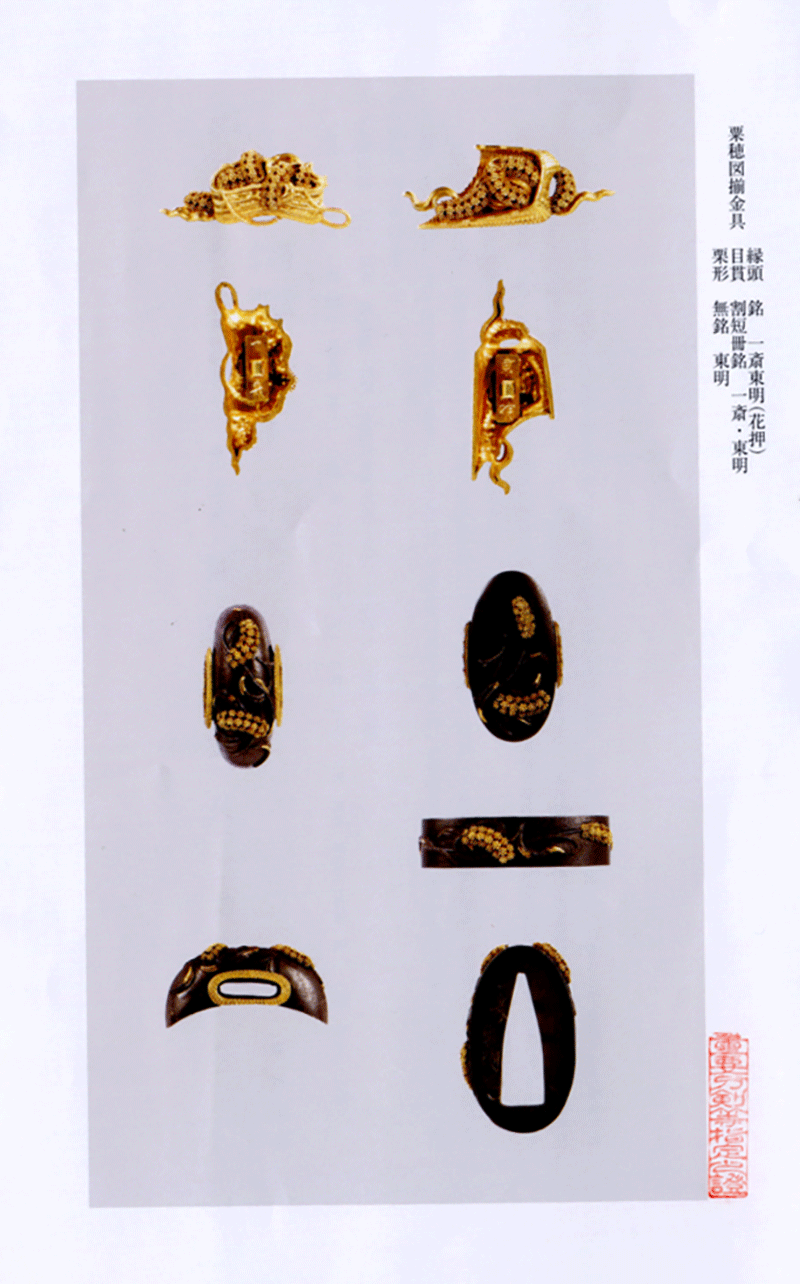
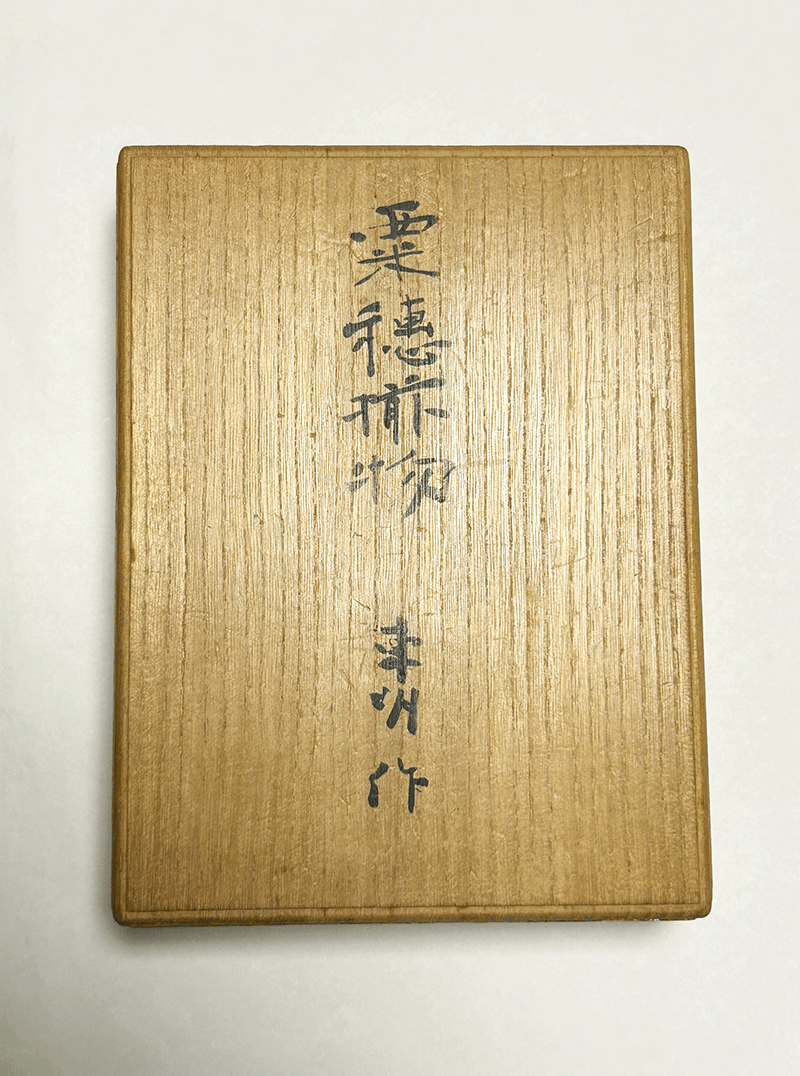
Mitsudōgu (, , and ), : Issai Tōmei (一斎東明)
Measurements
- : length 4.0 cm; width 2.45 cm; height 1.0 cm
- : length 3.5 cm; width 1.0 cm; height 0.9 cm
- : length 3.4 cm; width 1.2 cm; height 1.8 cm
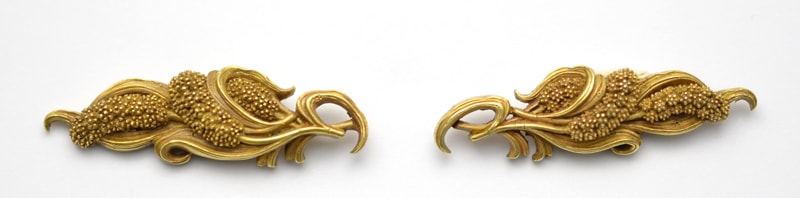
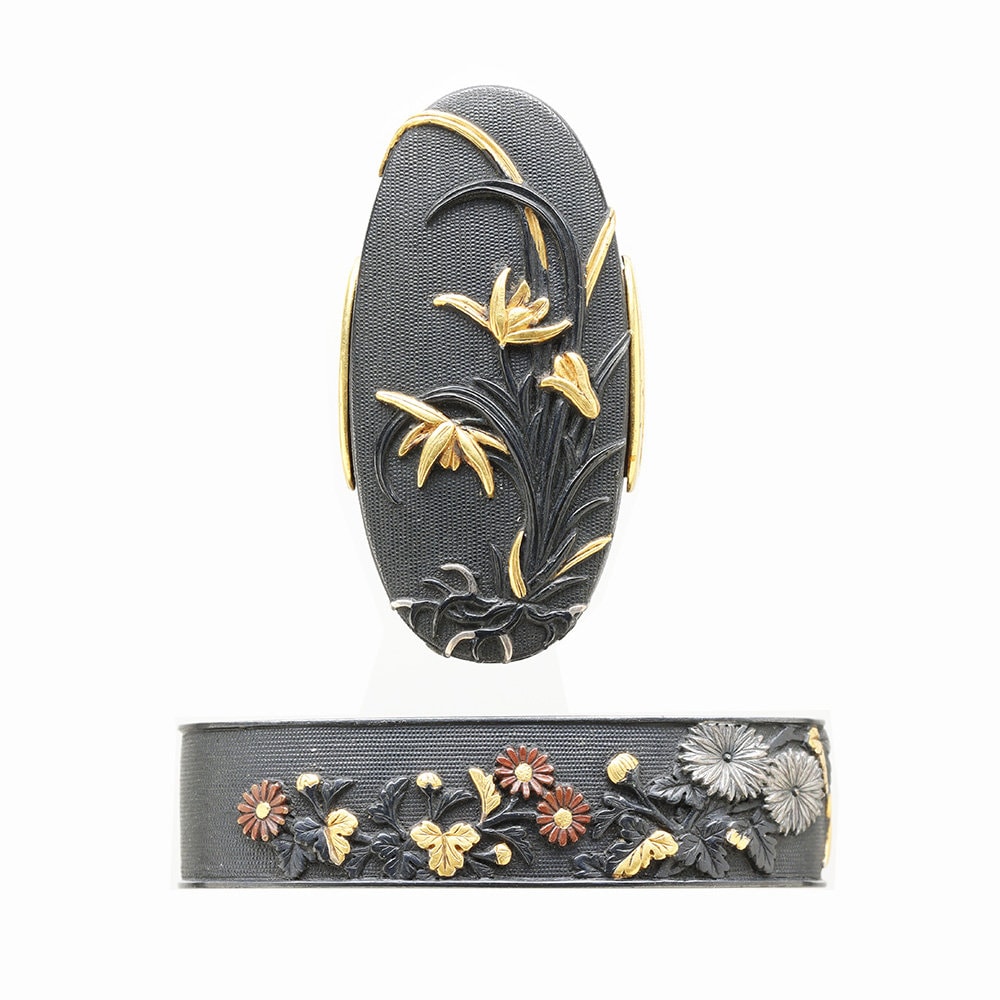
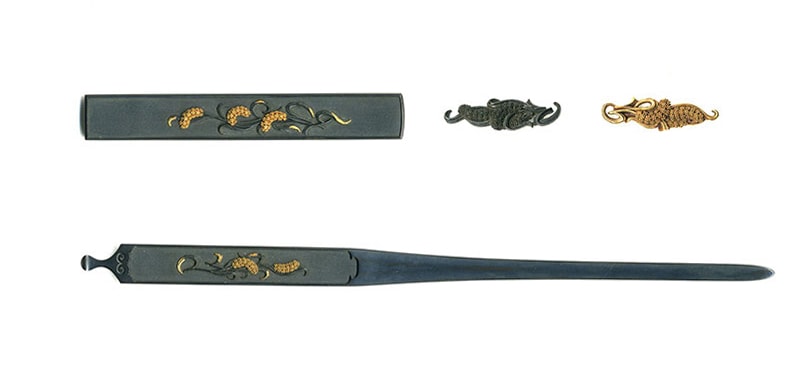
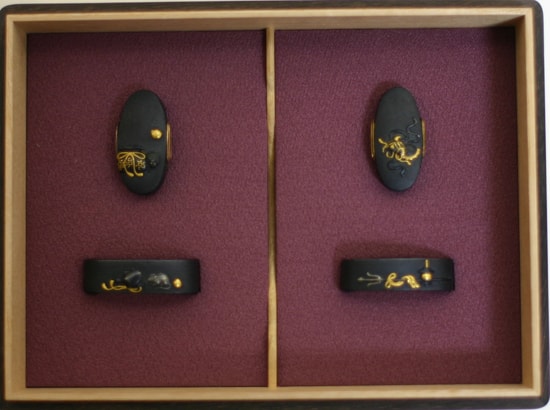
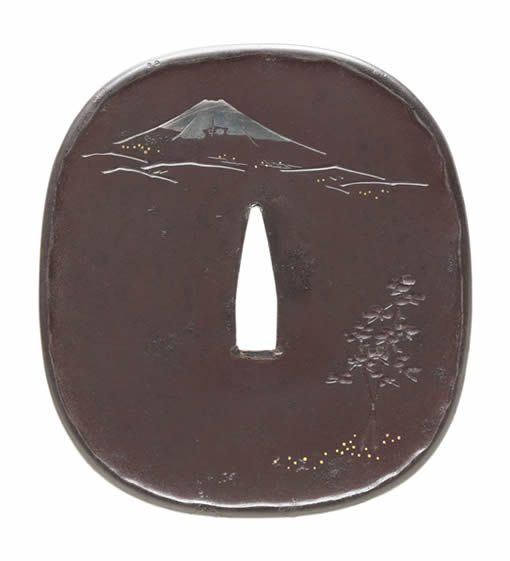
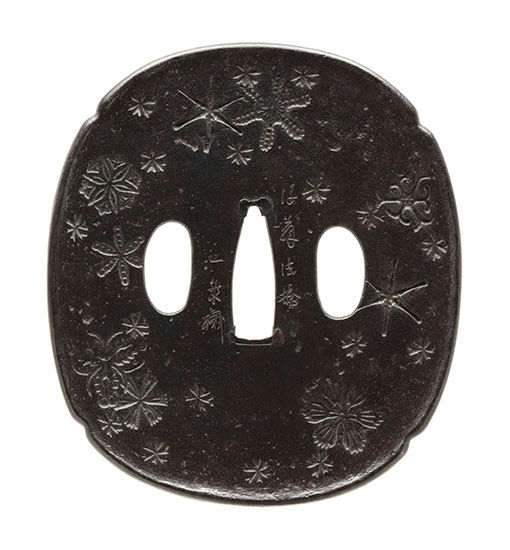
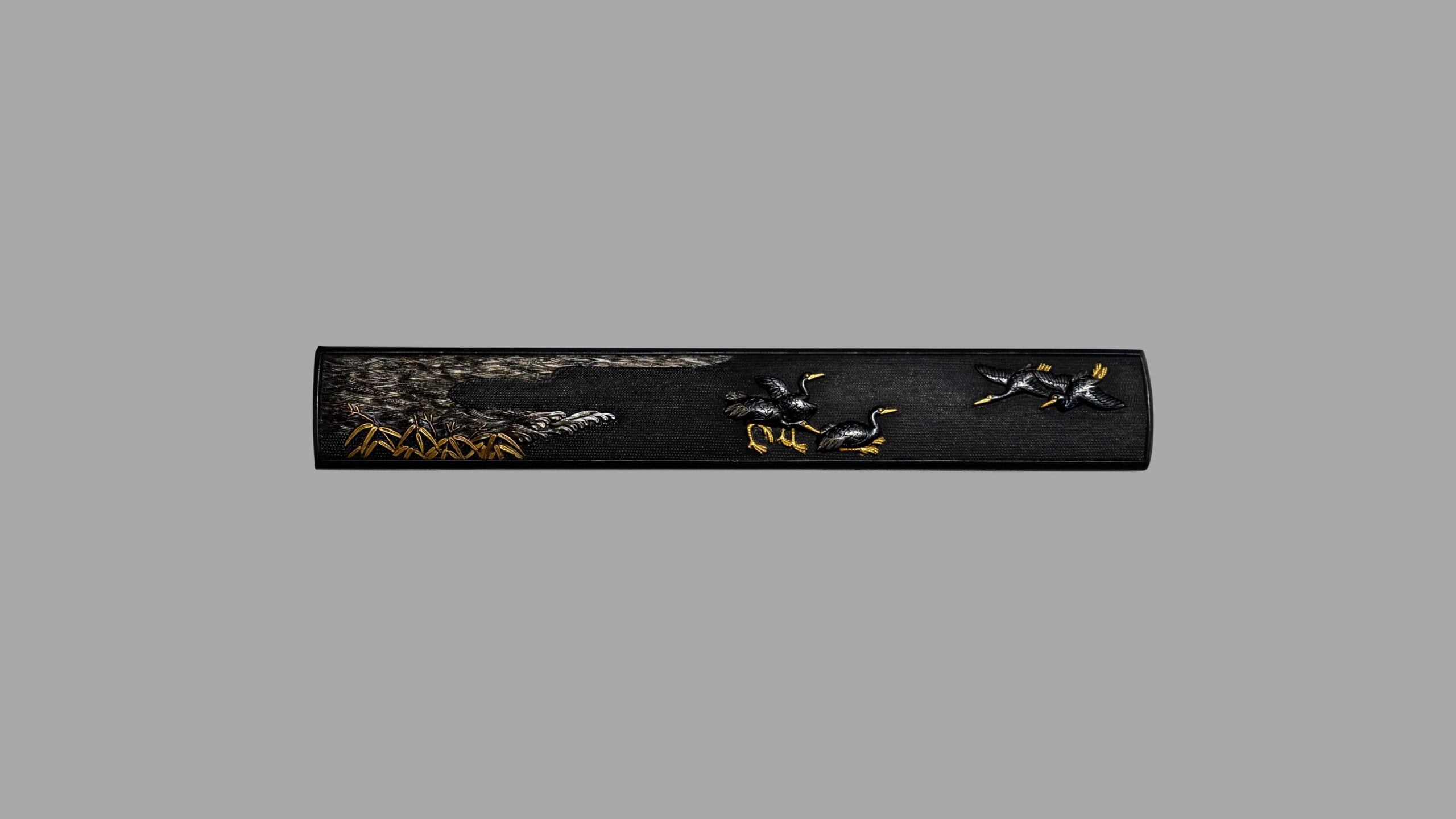
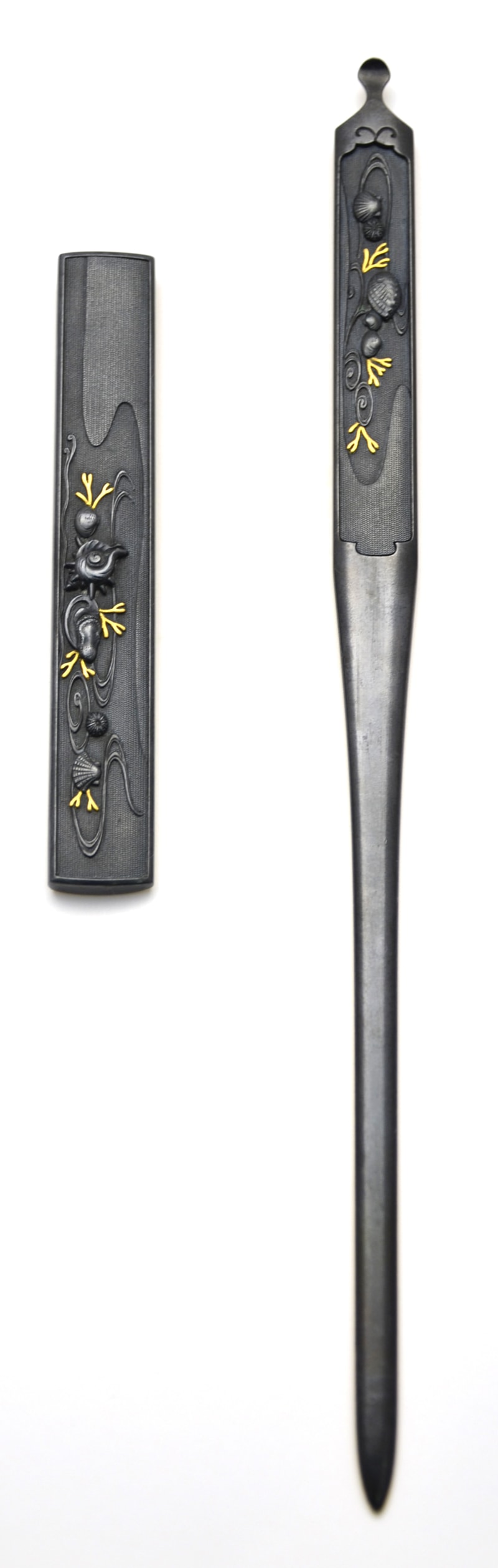
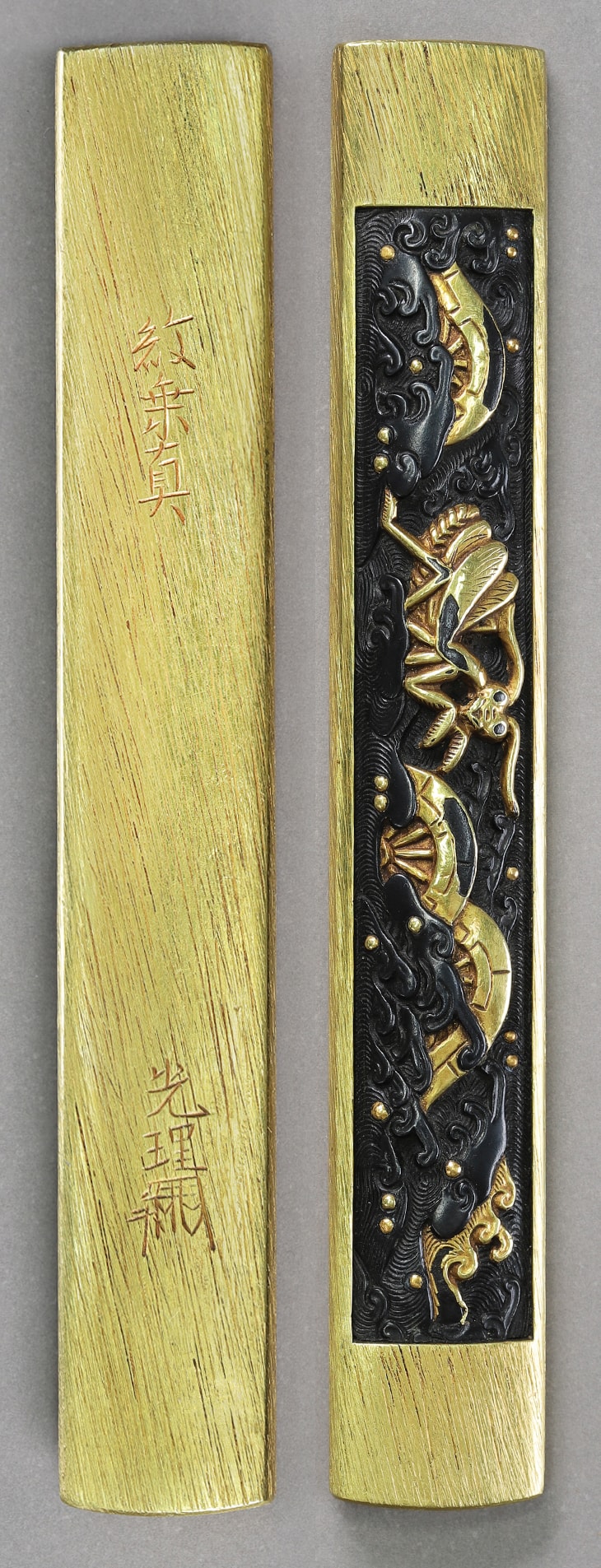
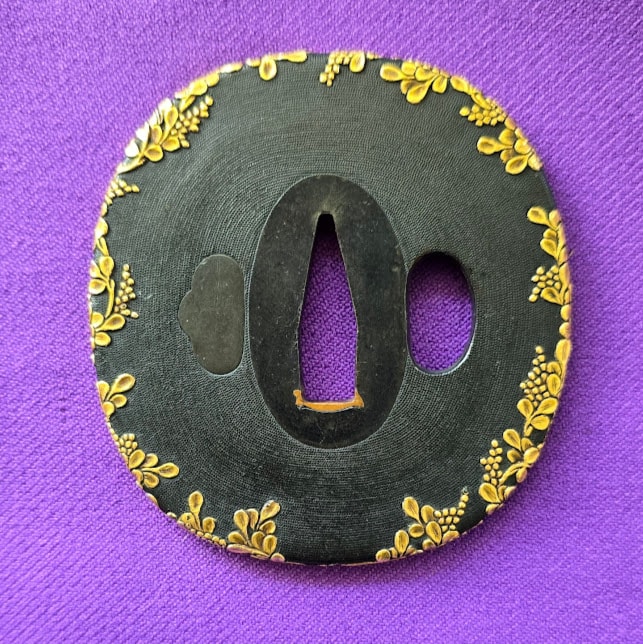
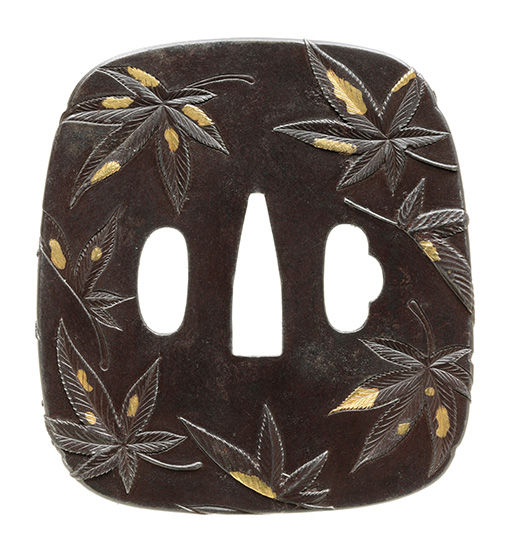
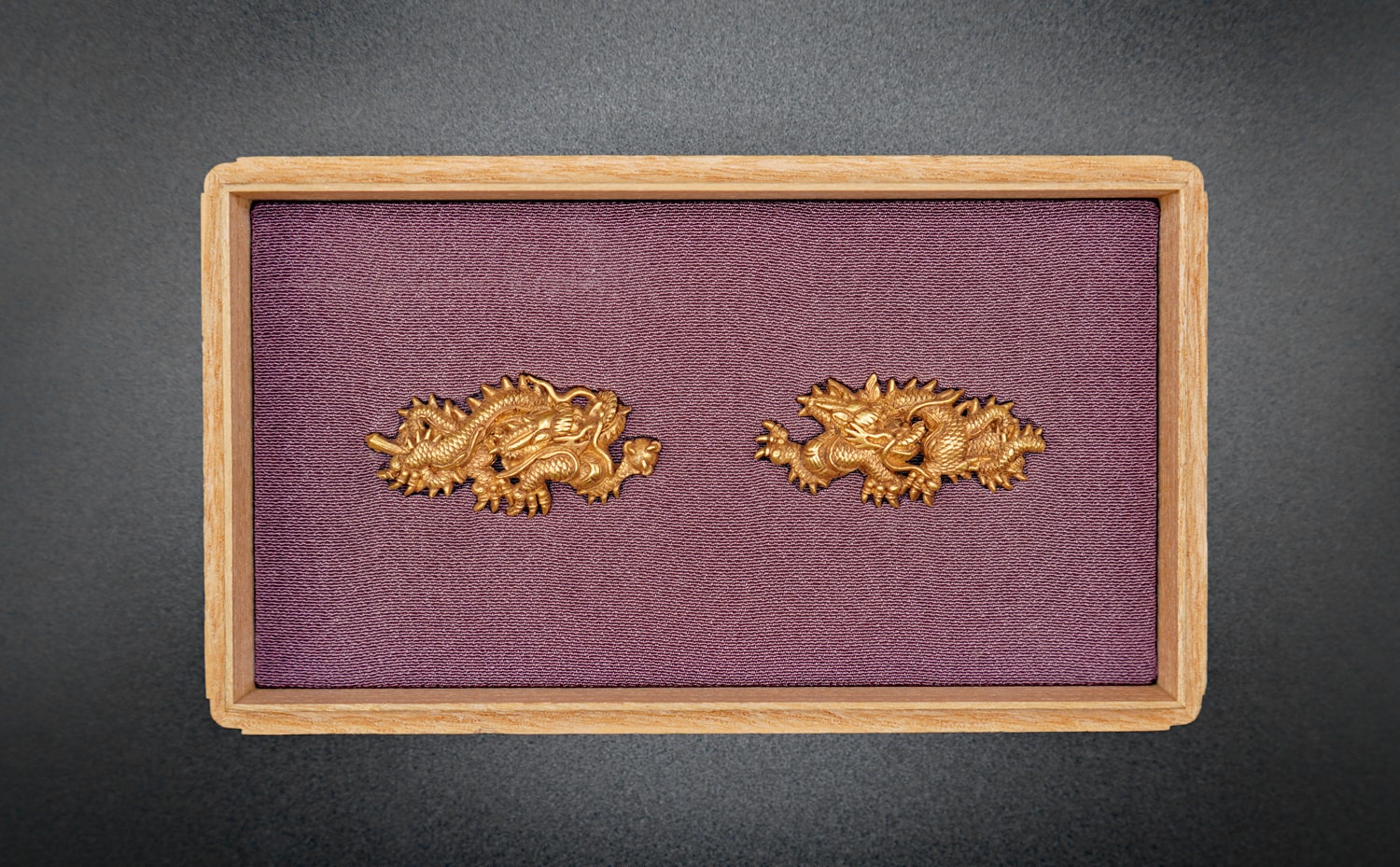
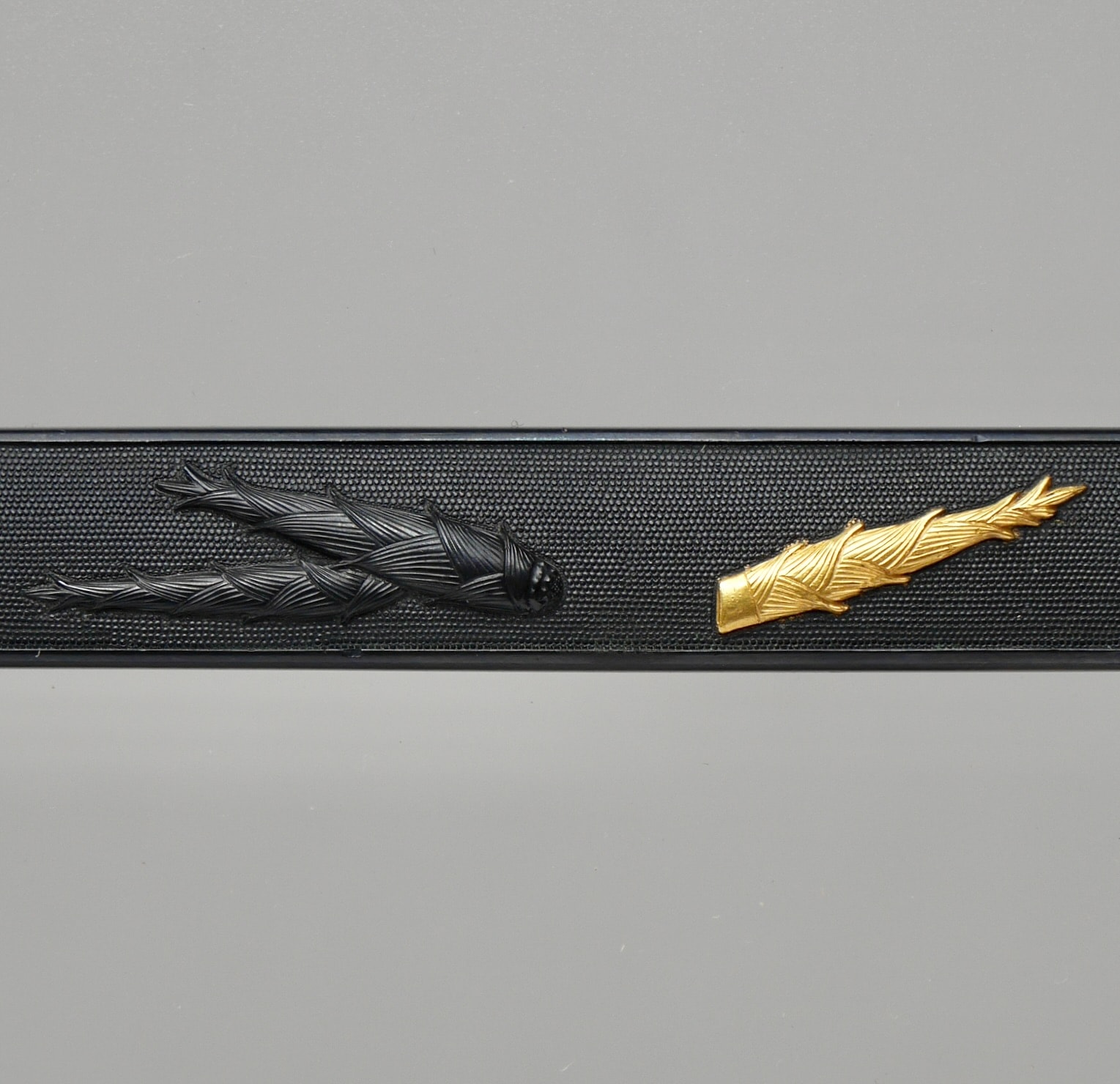
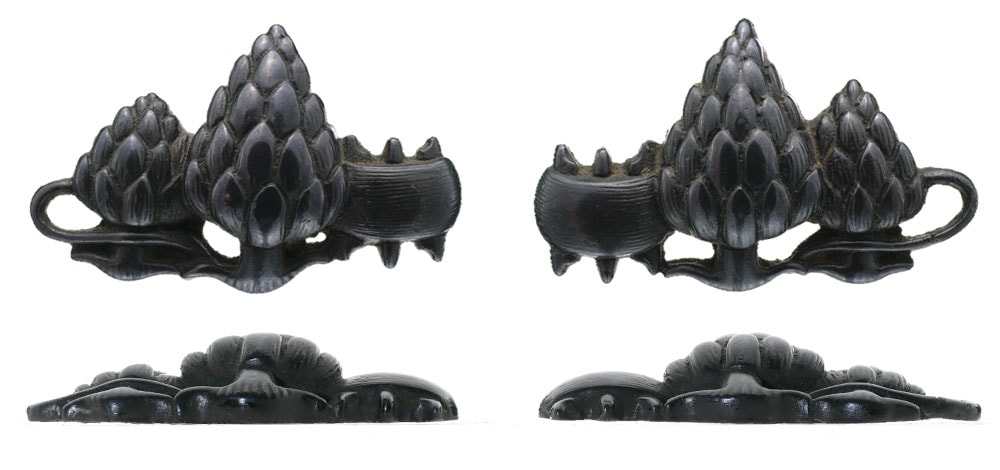
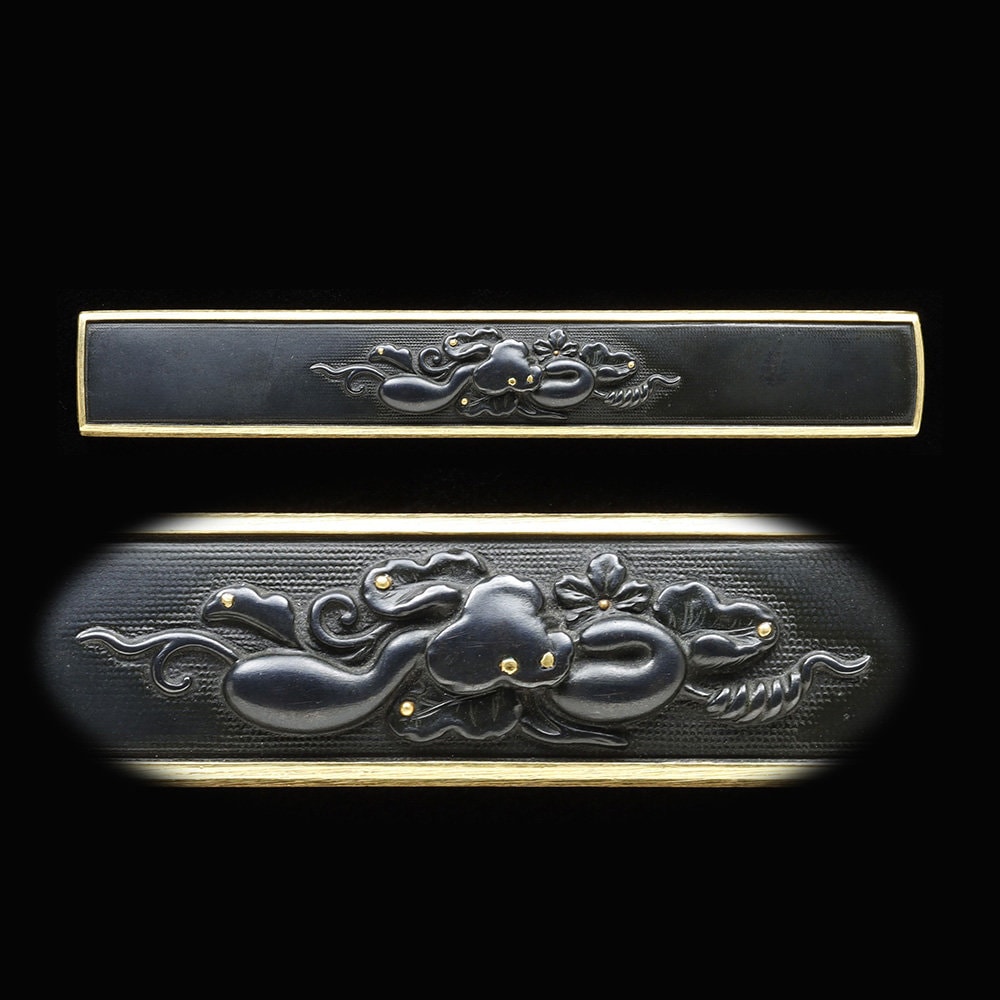
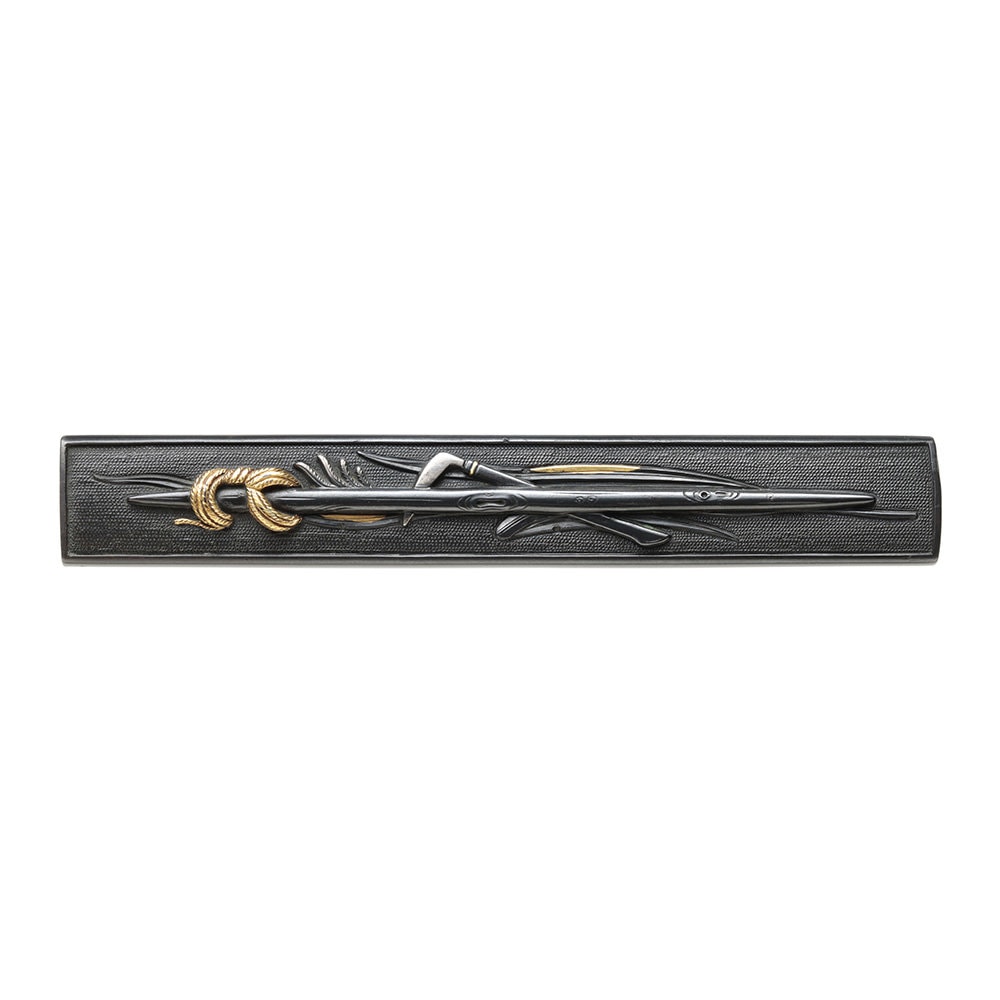
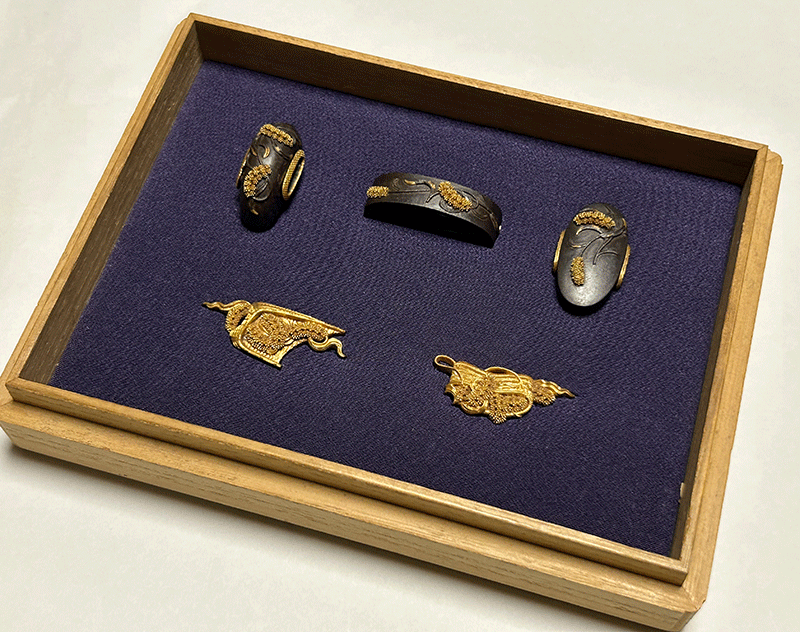
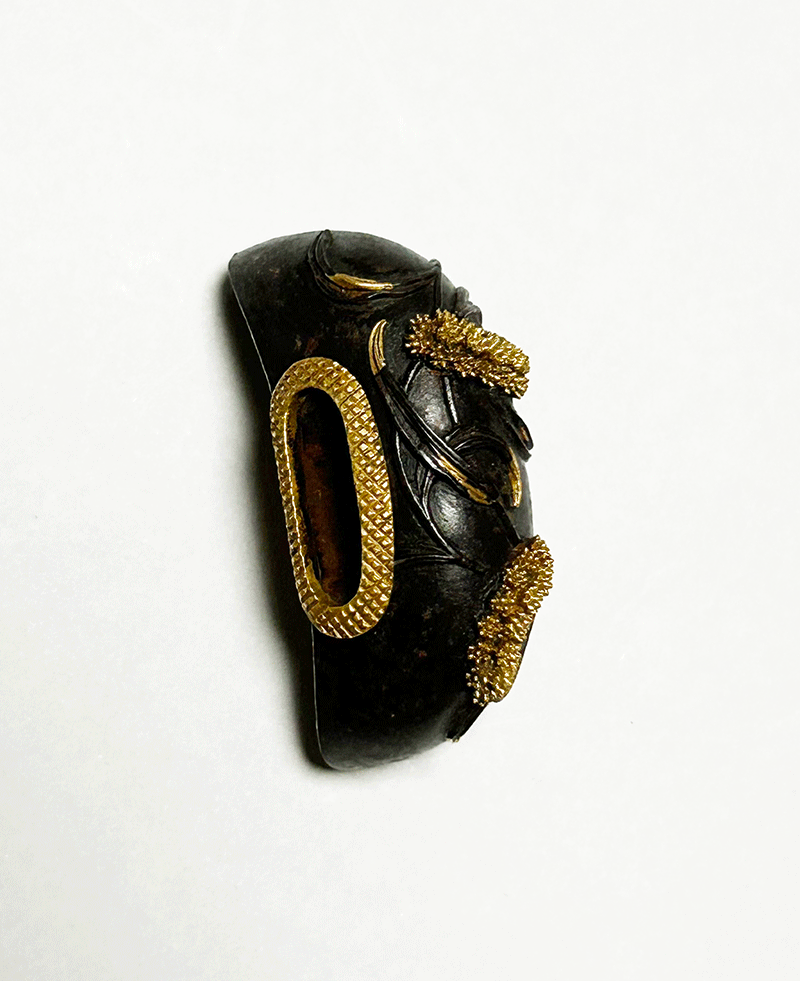
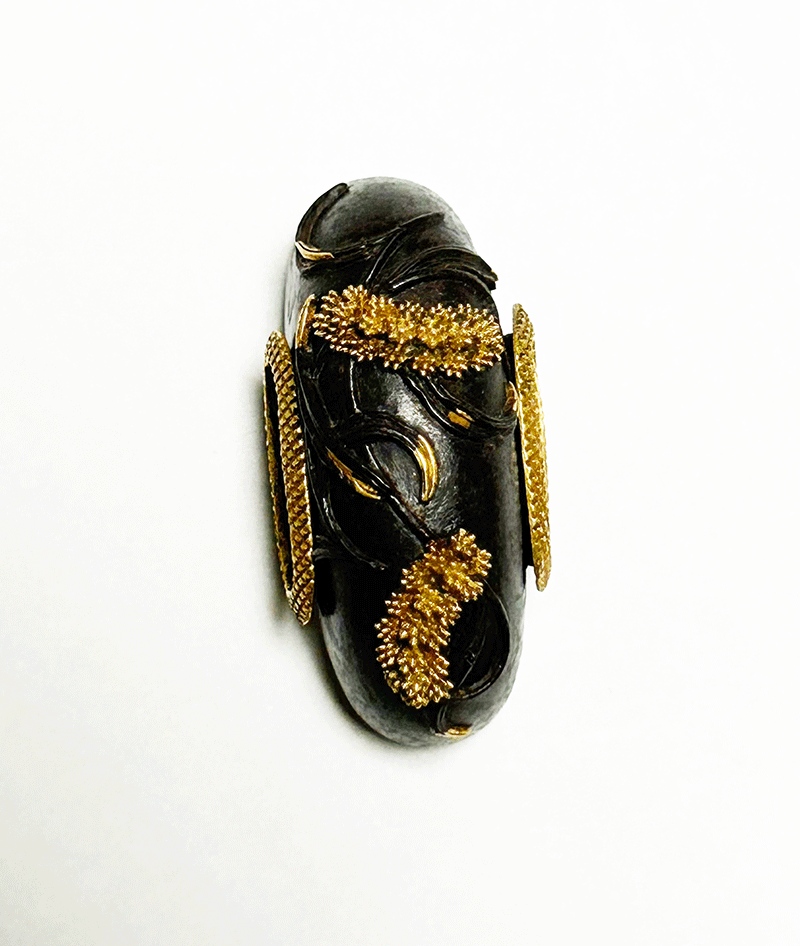
Description Form: A matching set (soroe-) of , , and with a unified motif of millet ears (awaho). Material:
- and : iron, polished ground (tetsu )
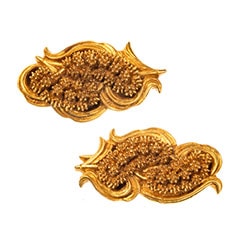
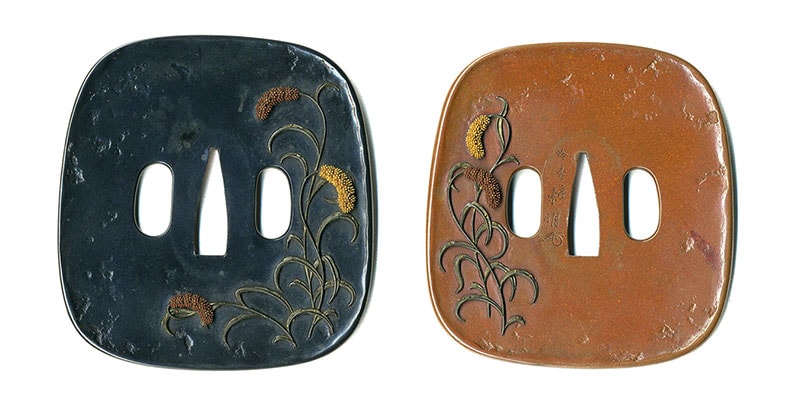
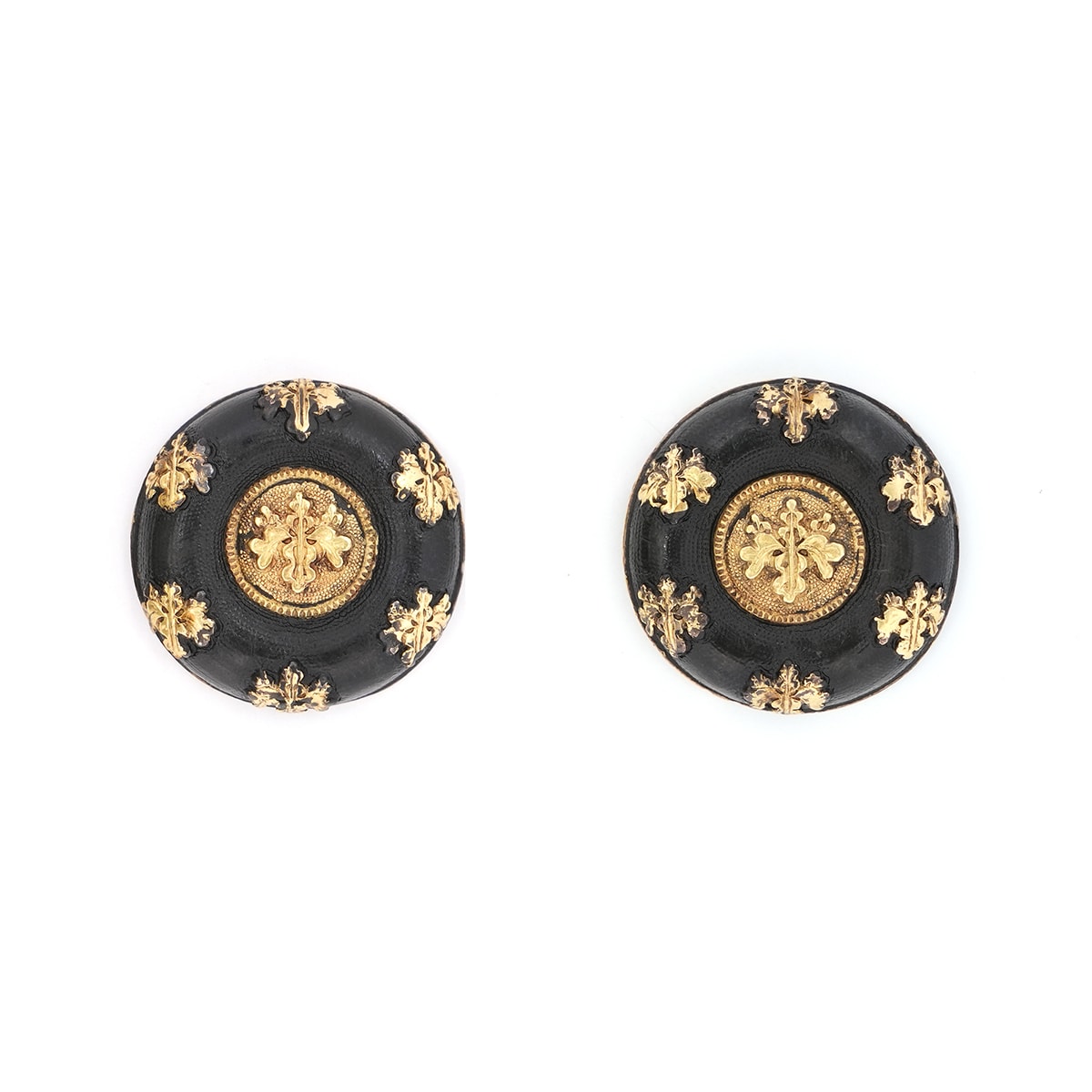
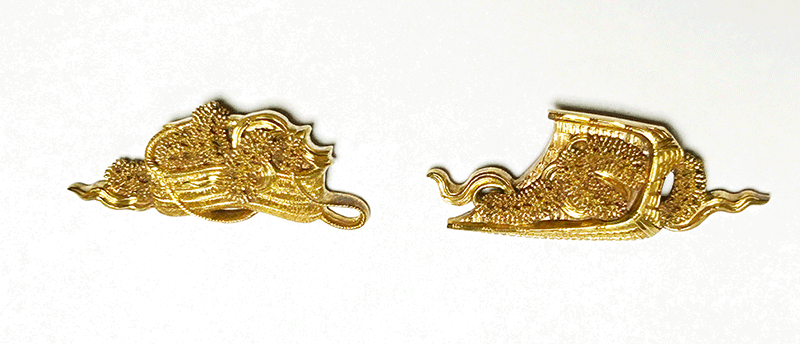
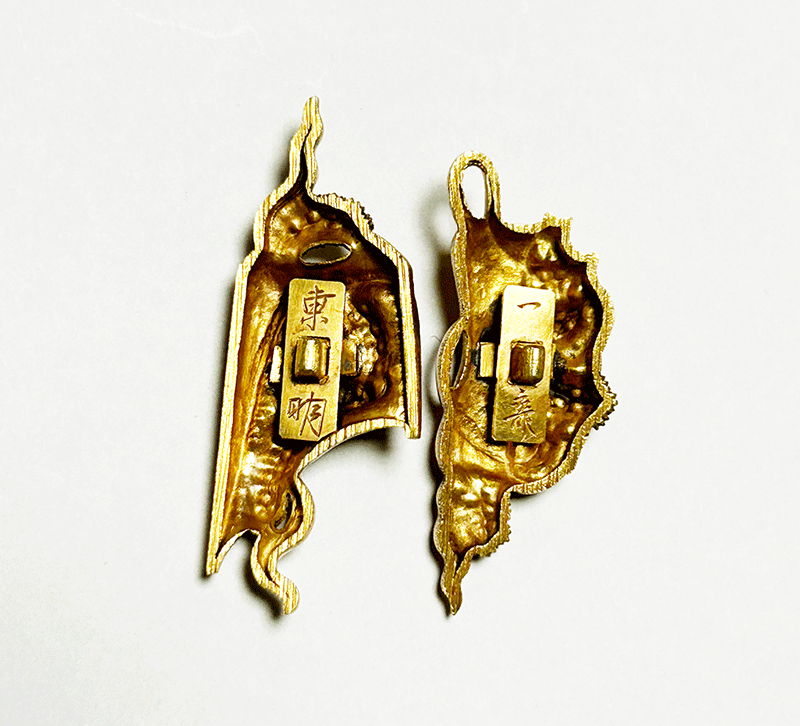
- : solid gold (-muku-) Design: Millet ears (awaho); on the , millet heaped to the point of overflowing a basket. Decoration:
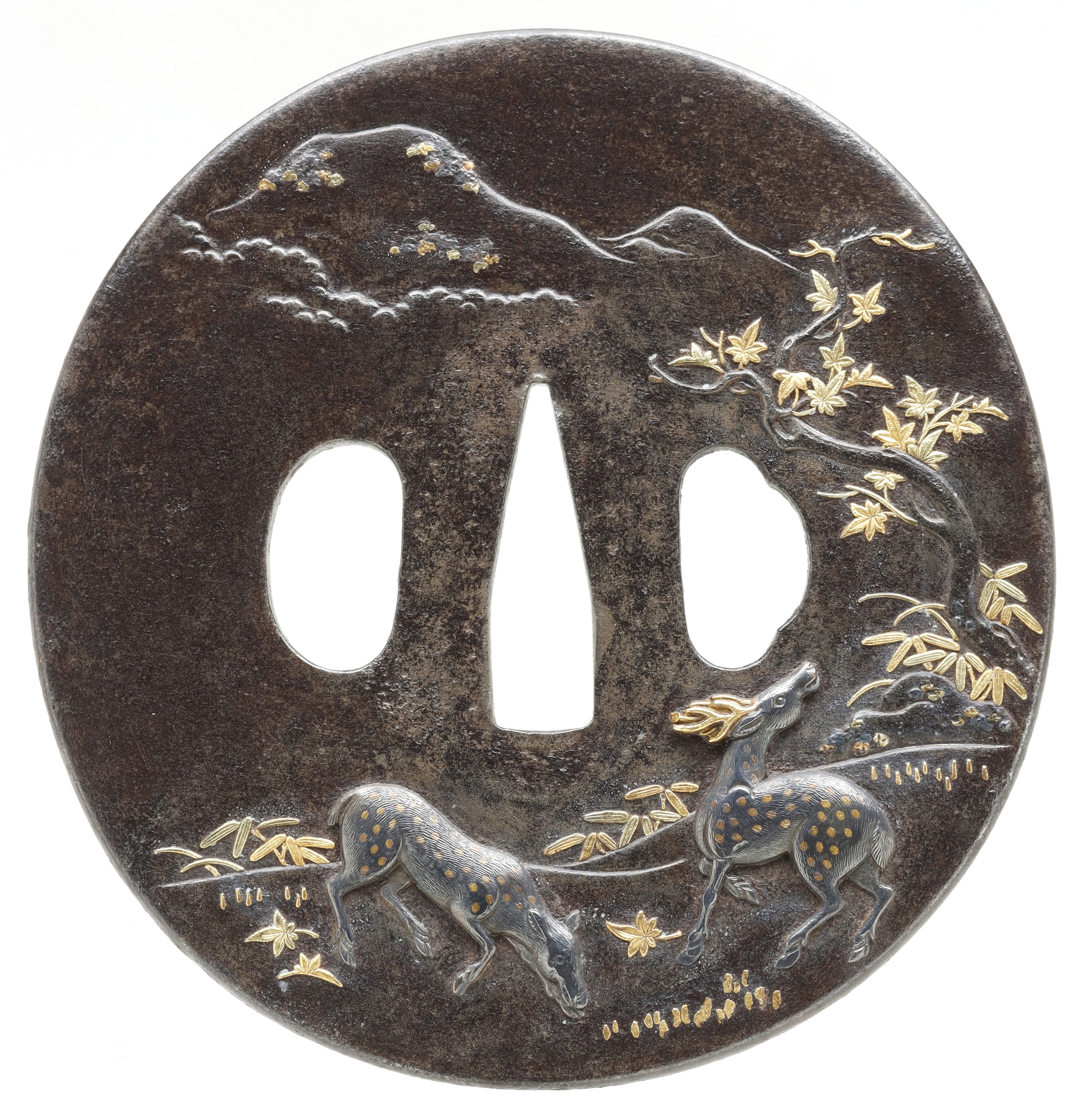
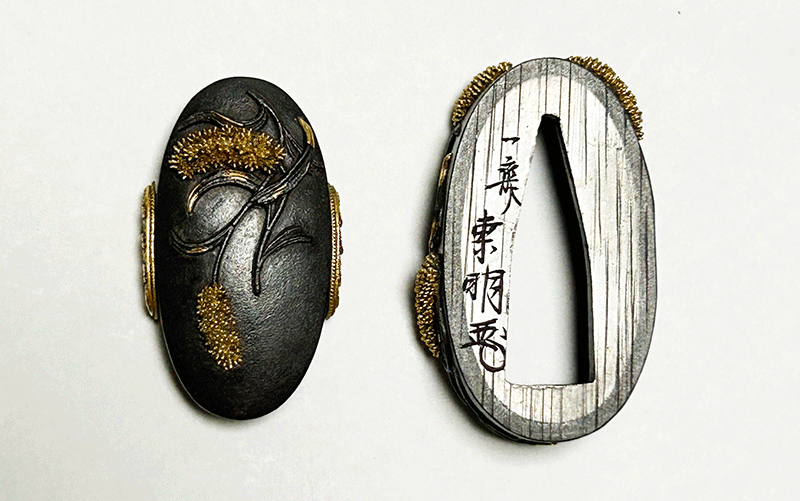
- and : , gold inlay () and with applied gold ornament/inlay (-sue- zōgan iroe)
- : sculpted carving (yōbori) on a solid-gold ground, with undercutting (yōkon) Signature:
- : “Issai Tōmei” with (一斎東明〈花押〉)
- : split reading “Issai” and “Tōmei” (短冊銘 一斎・東明)
- : unsigned (無銘), attributed within the set to Tōmei
Artisan Araki Issai Tōmei (荒木一斎東明)
Era Late period
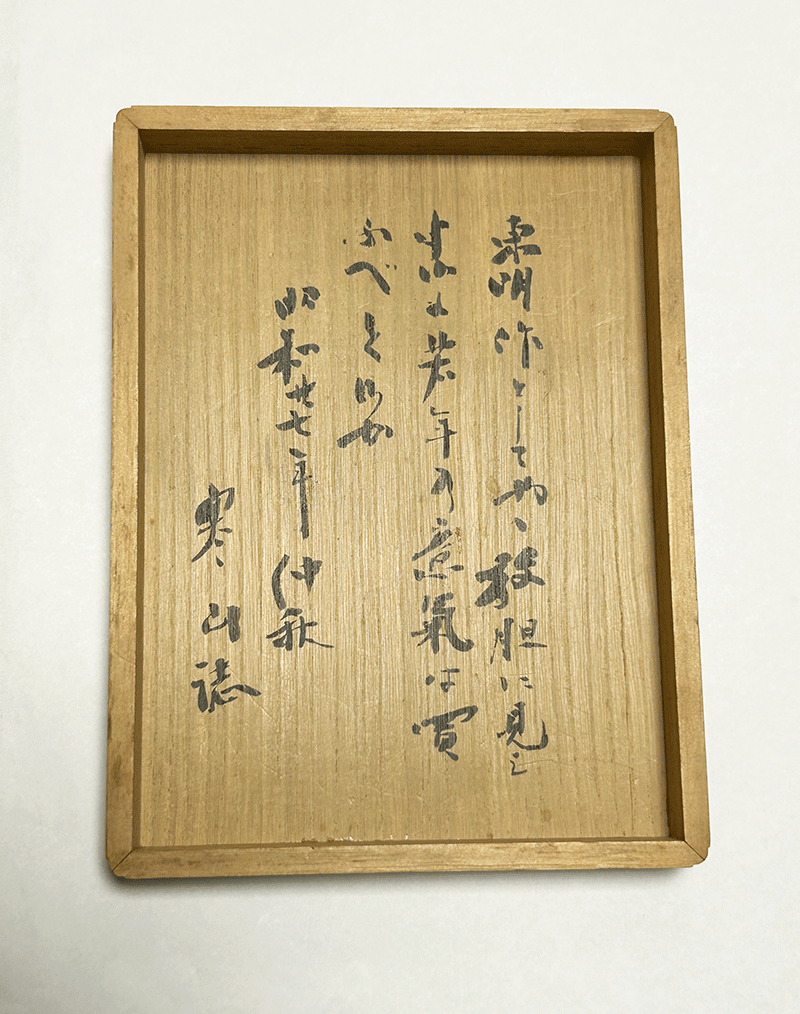
Explanation Araki Tōmei was born in Kyōto in Bunka 14 (1817). At the age of thirteen he became a pupil of Gotō Tōjō, from whom he was permitted the use of the character tō (東) and took the name Tōmei. Later he studied under Gotō Ichijō and, receiving the art name () “Issai,” signed his works “Issai Tōmei.”
He also studied preparatory drawing under the Kyōto painter Hayashi Ranga. It is said that his specialty—the carving of millet ears—was devised through research undertaken together with Ranga, and that he was already famous in his day for this millet motif.
This work is a coordinated set in which millet ears, Tōmei’s favored subject, are applied to the , the , and the . For the and , the millet is arranged in gold inlay and against a polished iron ground, creating a subdued and composed atmosphere. In contrast, the employ a bold solid-gold ground with sculptural carving: the millet—so abundant it seems about to spill from the basket—together with the minute detailing, results in a splendidly sumptuous effect. Not only the millet ears themselves, but also the stems and leaves are effectively handled, making this an excellent piece that fully merits the appellation “Tōmei of the millet ears.”
[Tōsōgu 33]