 NihontoWatchNihontoWatch
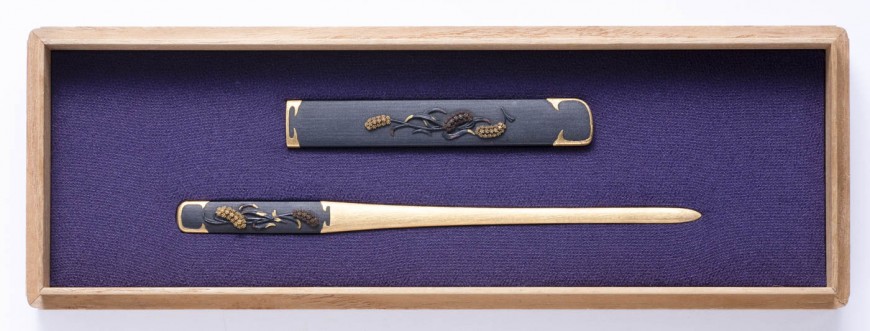
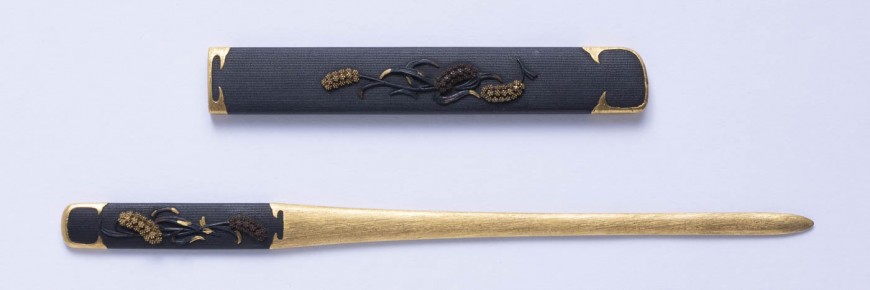
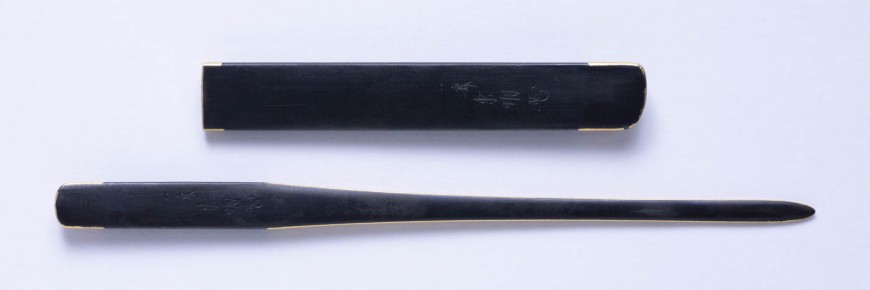
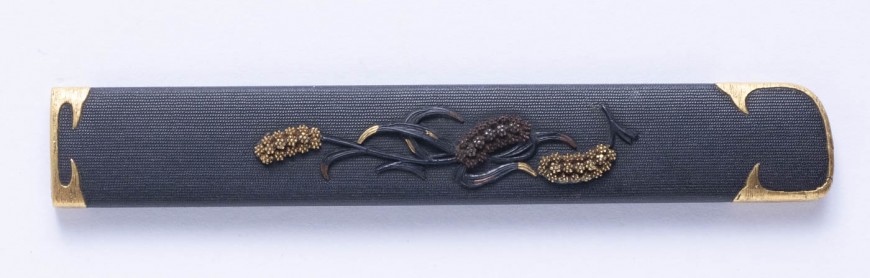
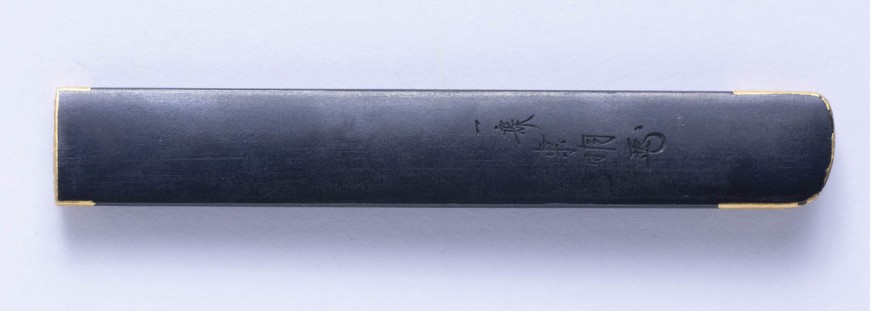
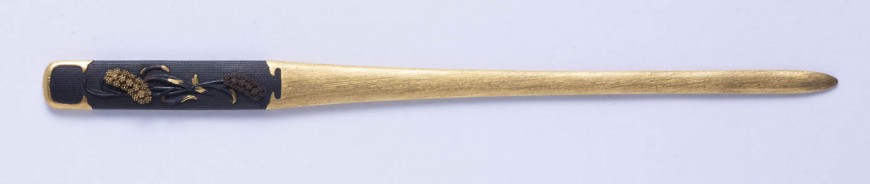
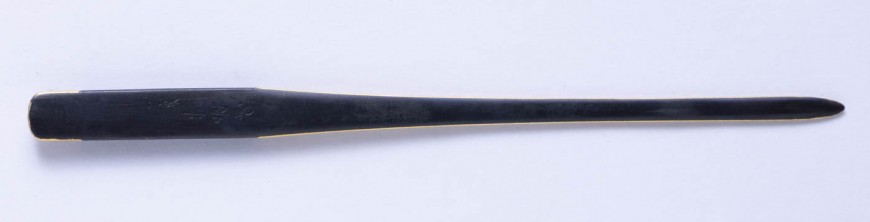
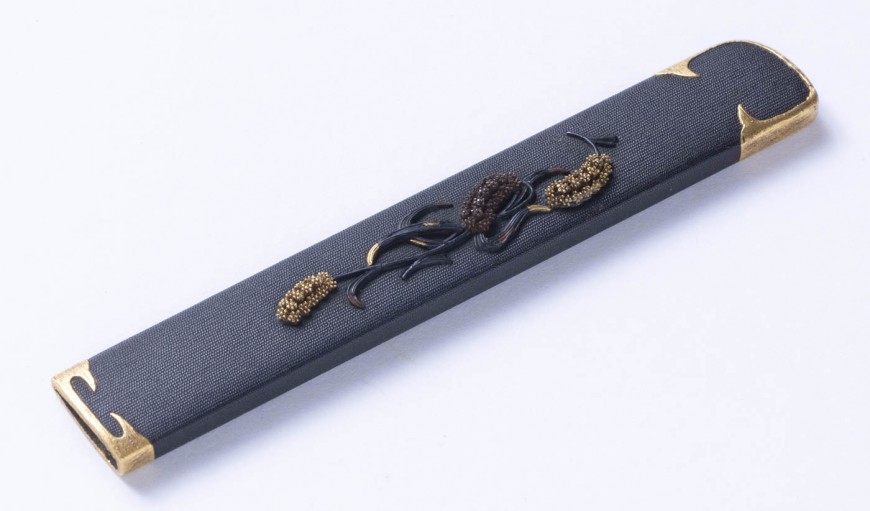
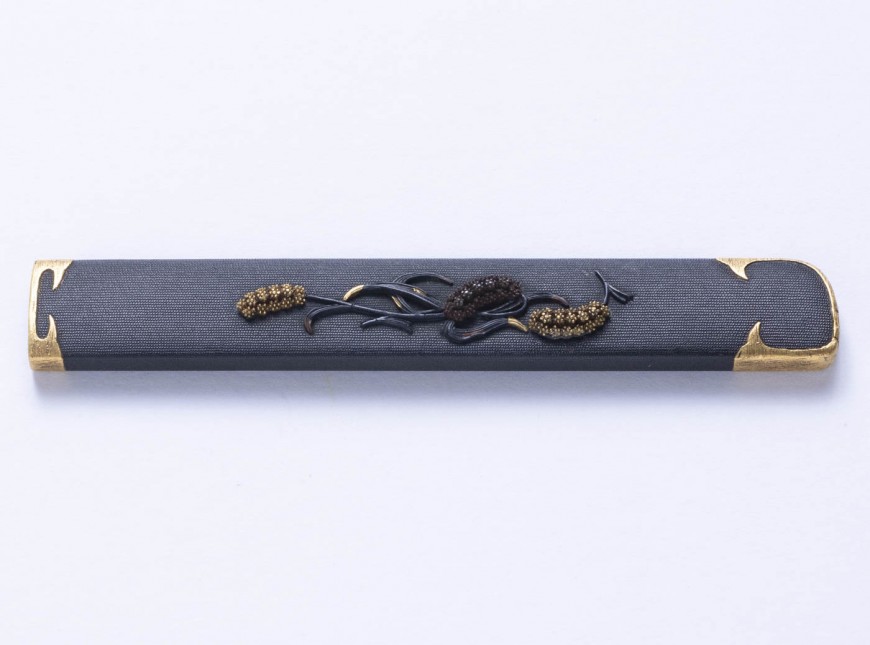
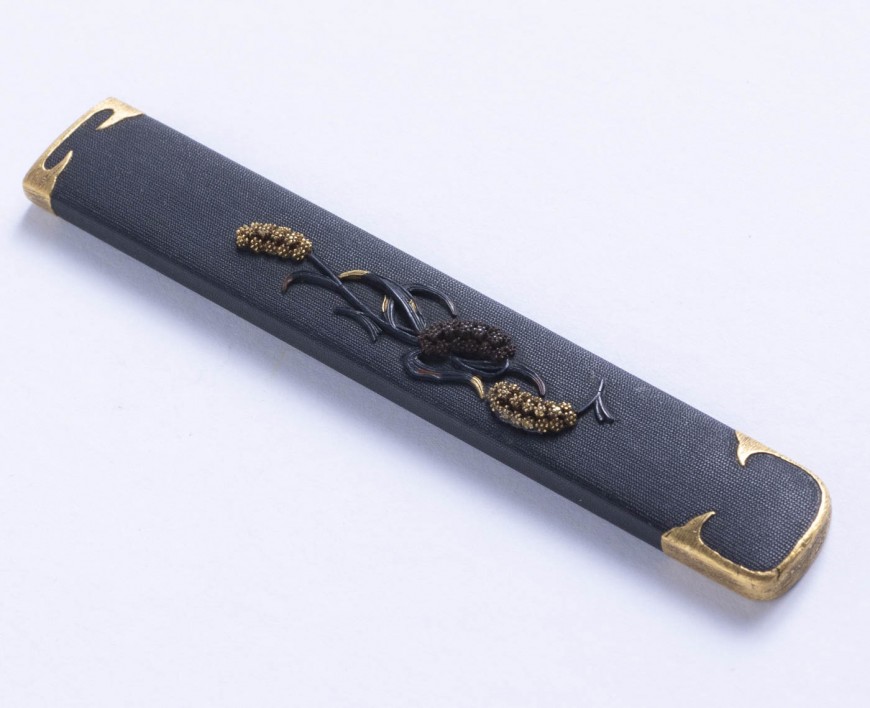
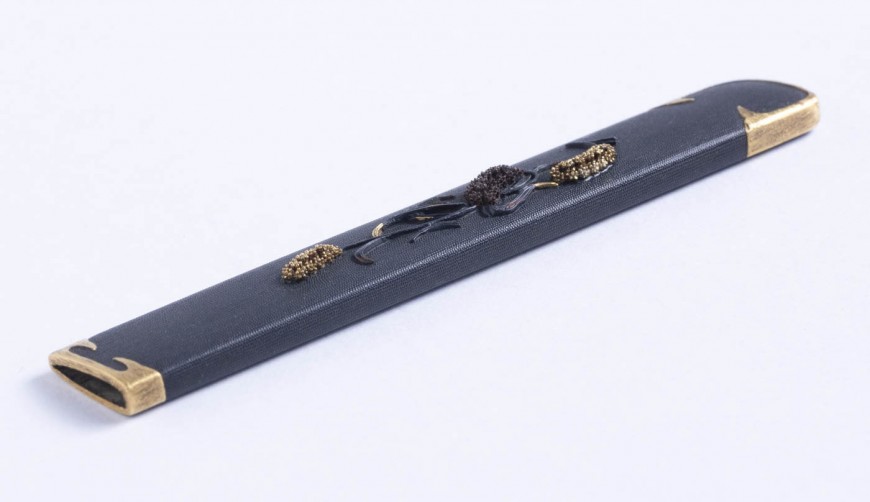
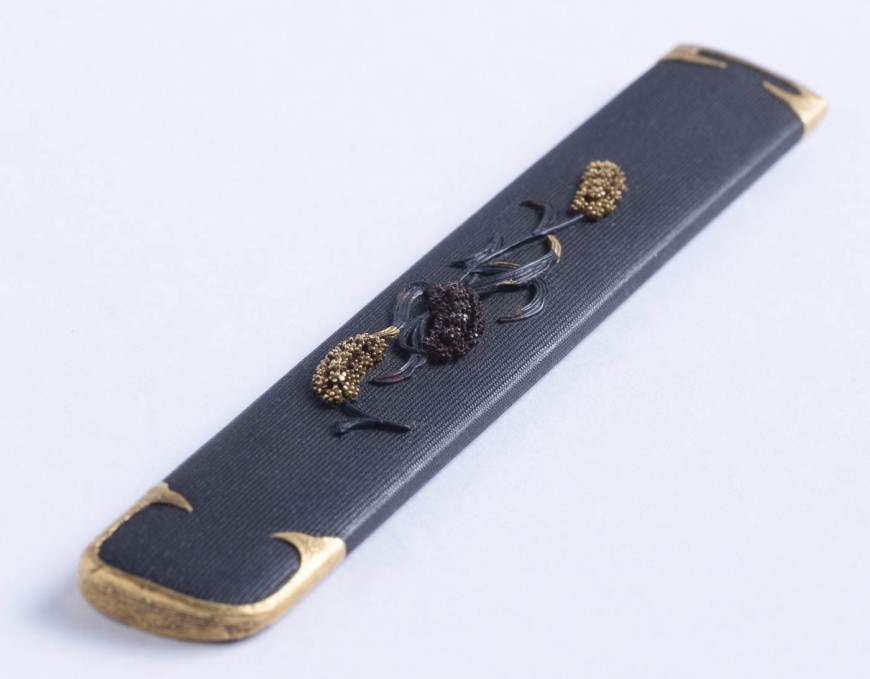
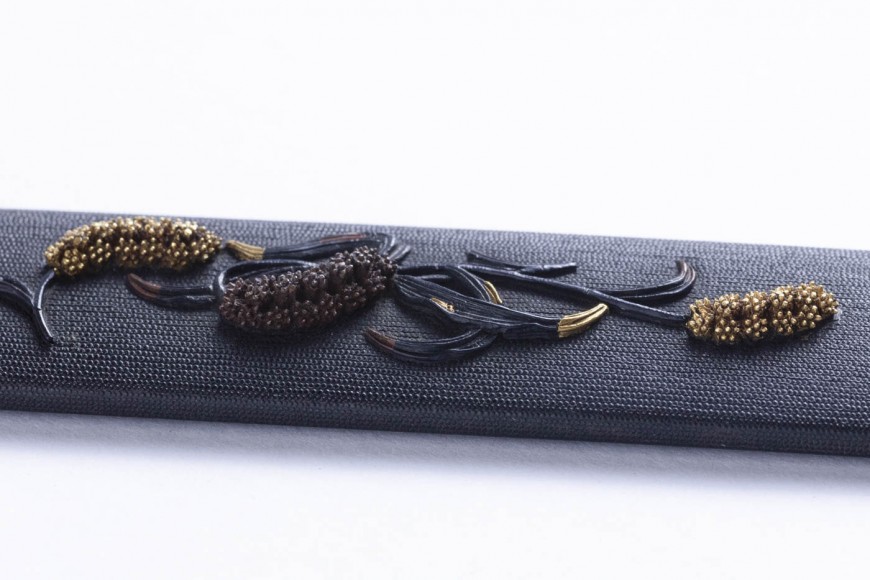
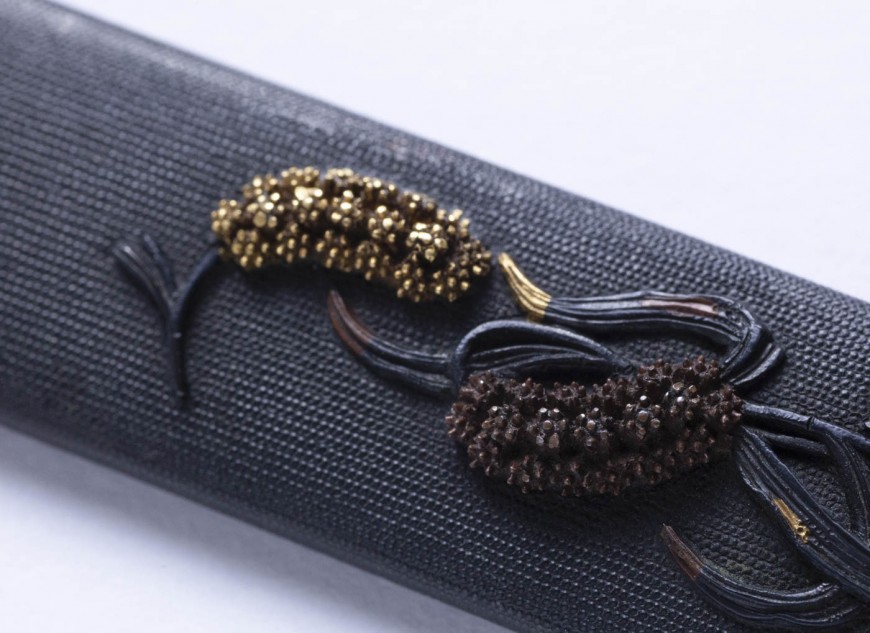
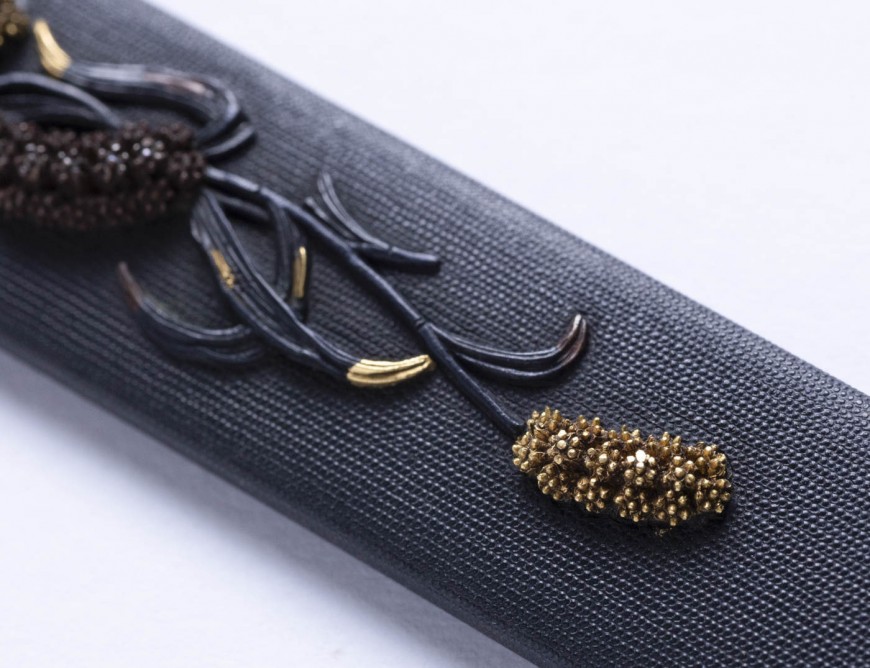
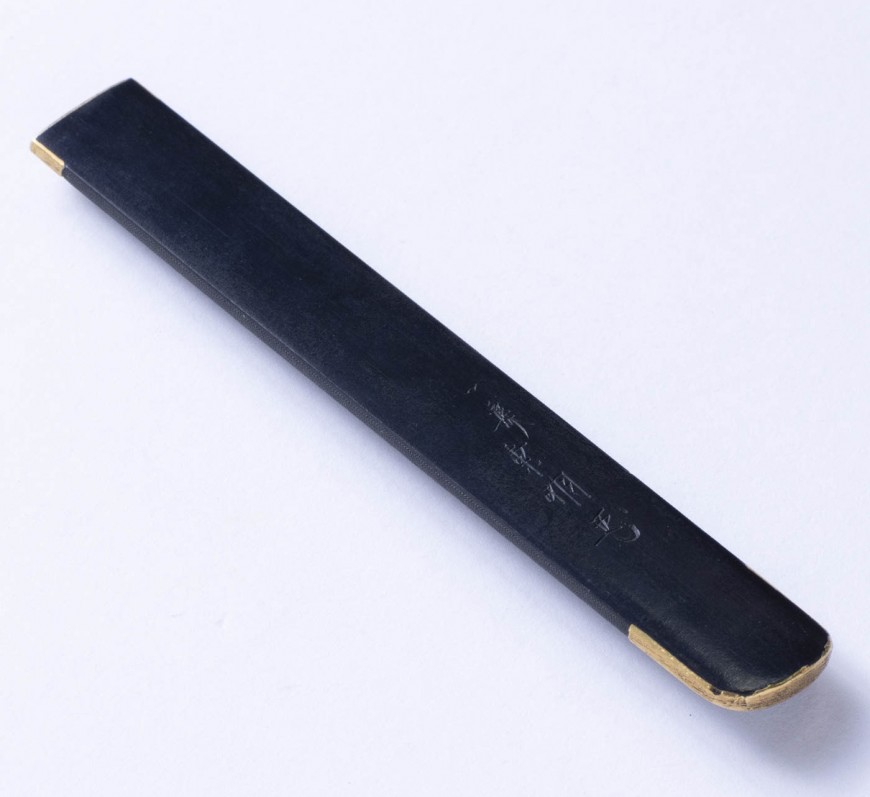
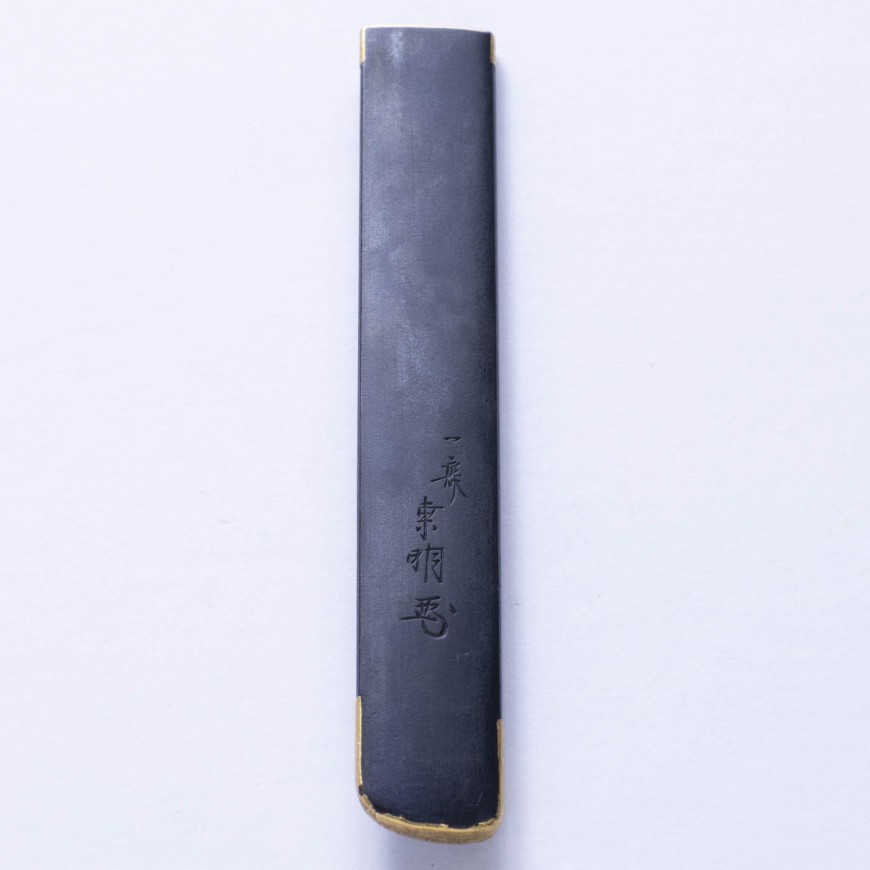
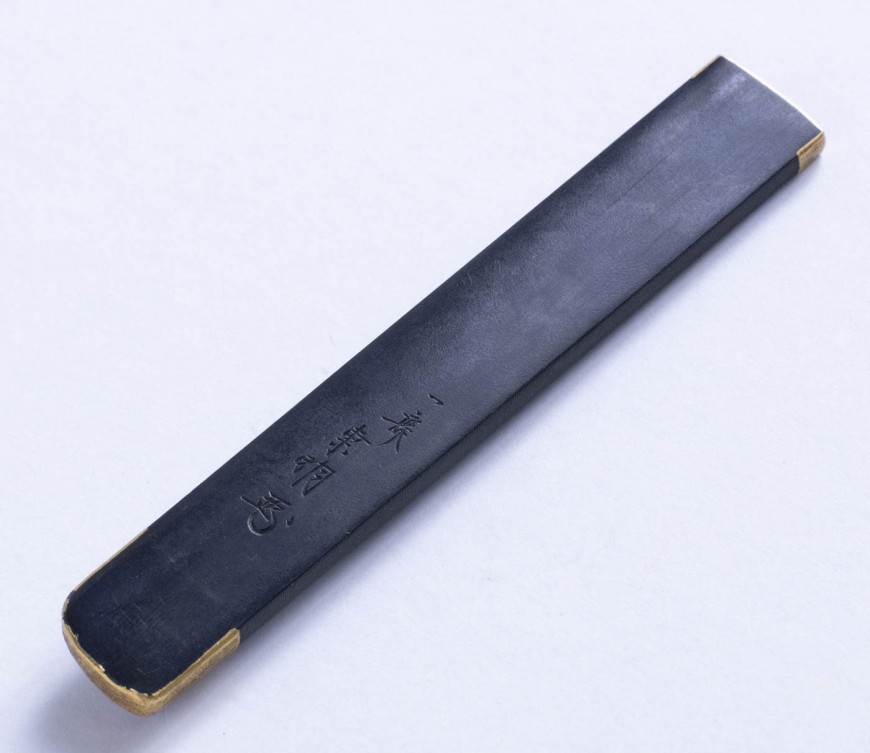
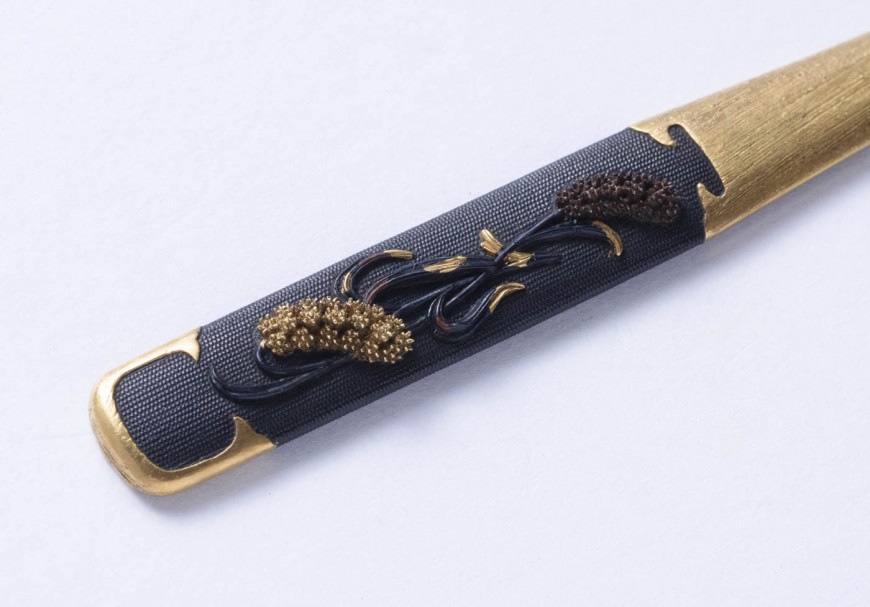
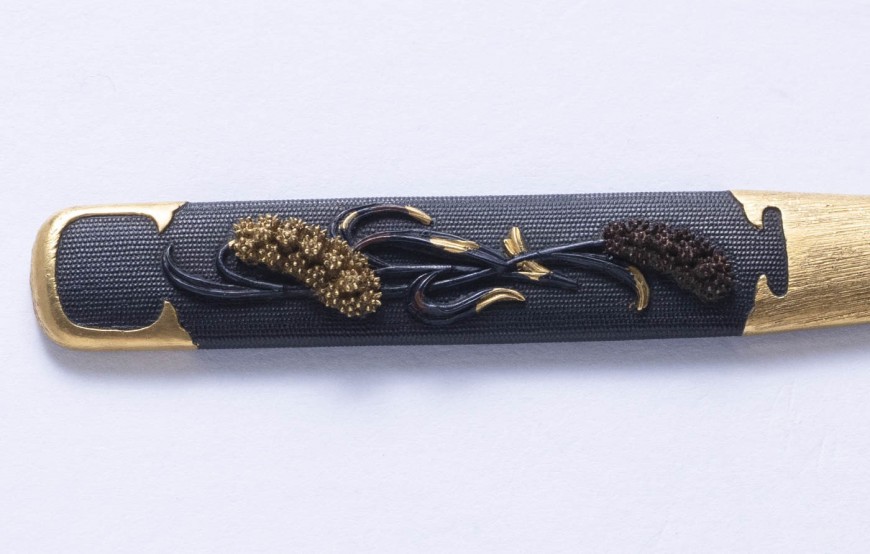
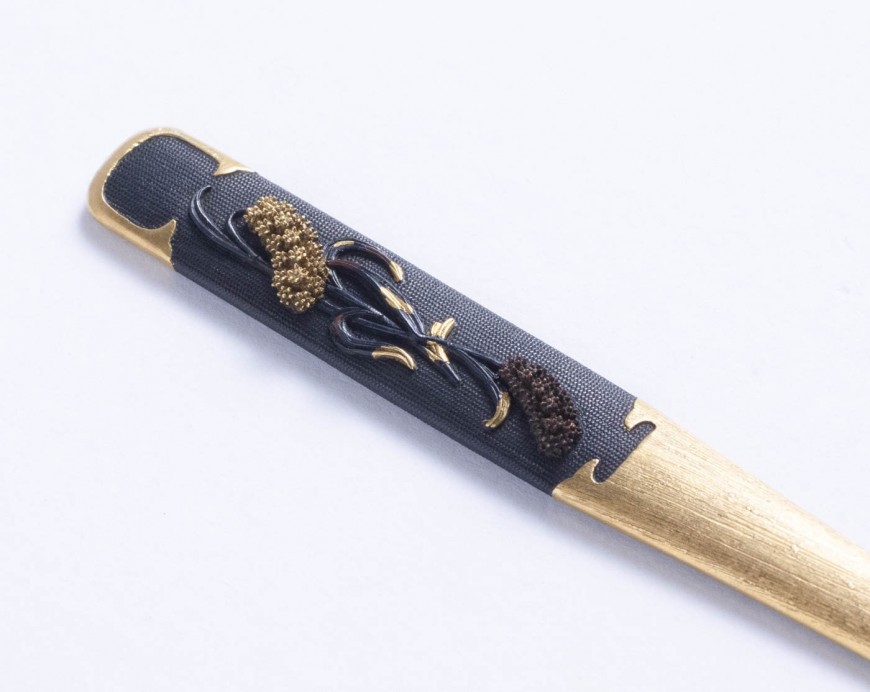
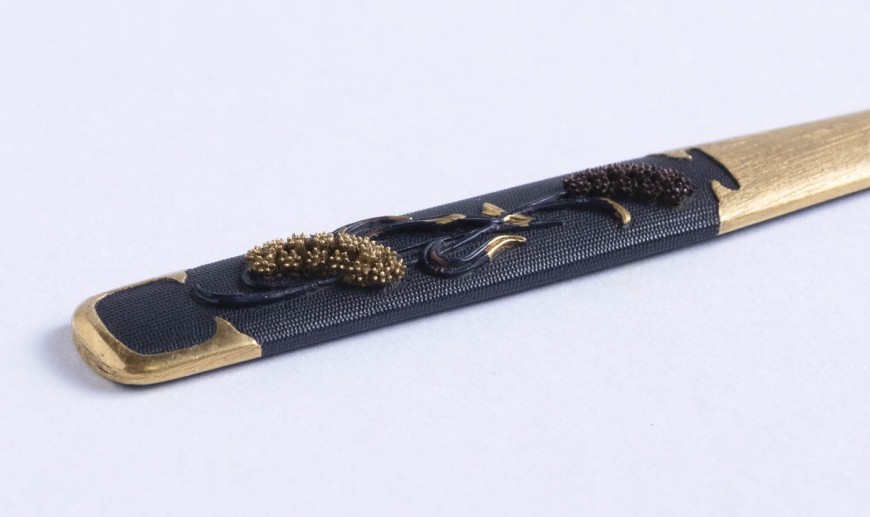
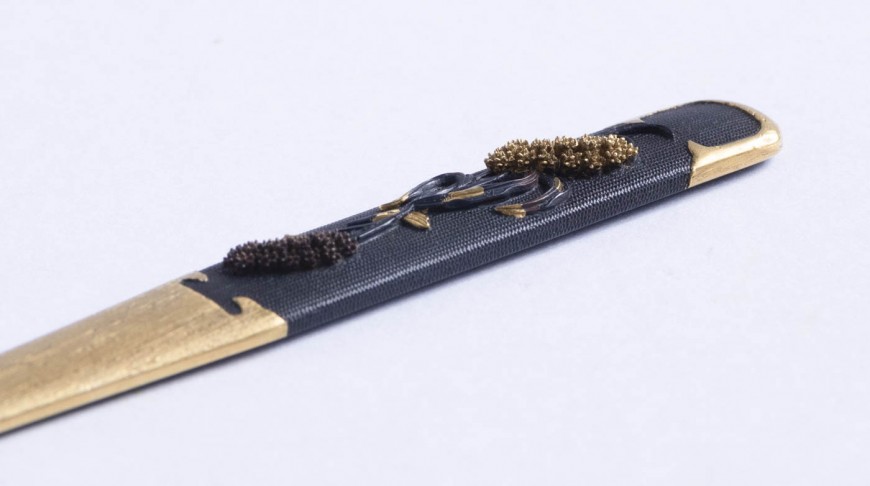
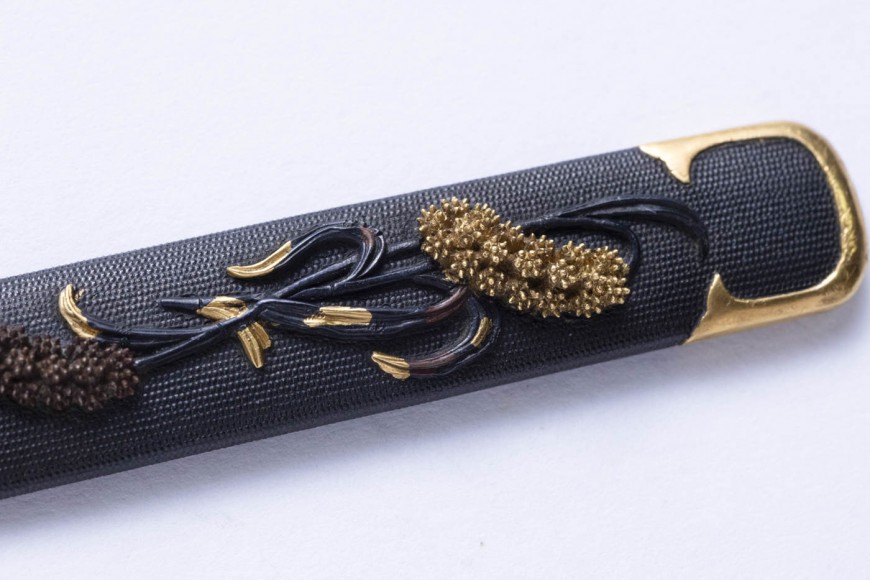
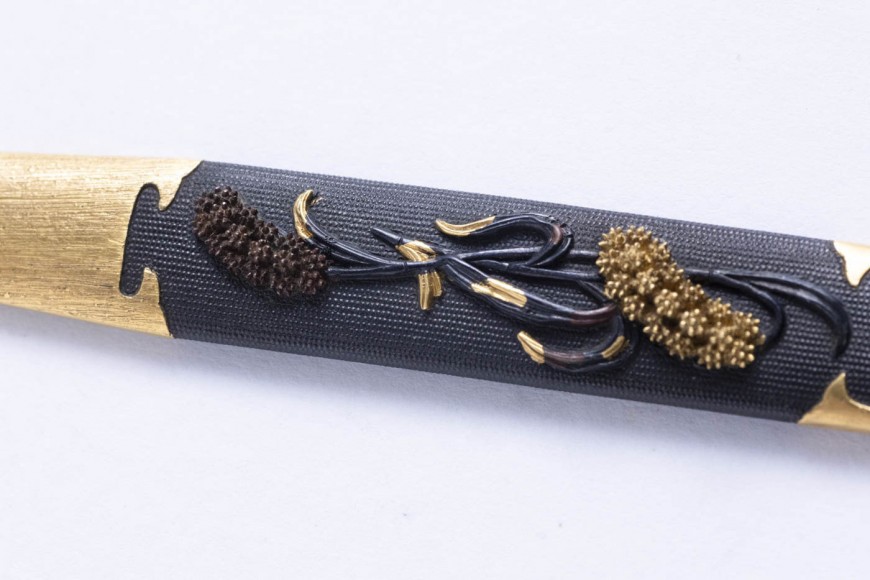
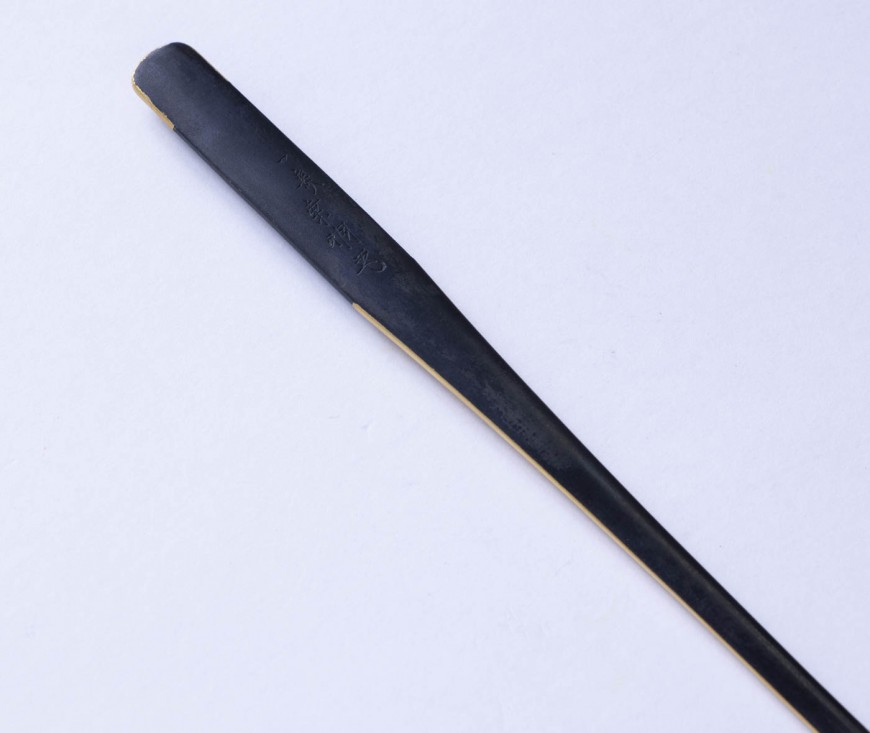
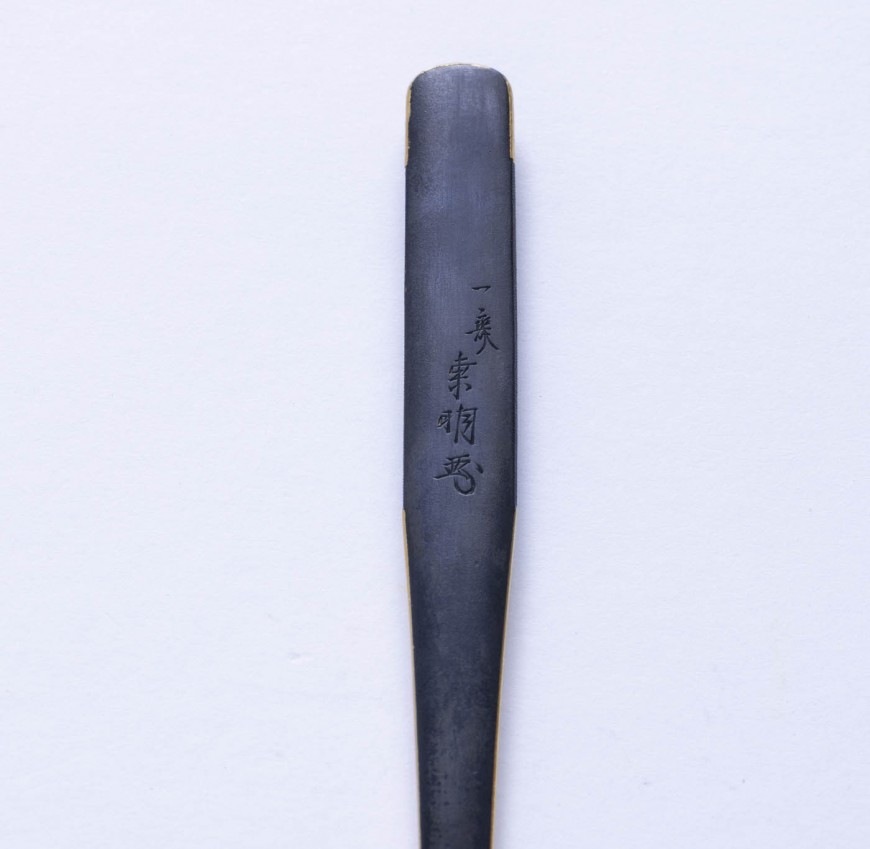
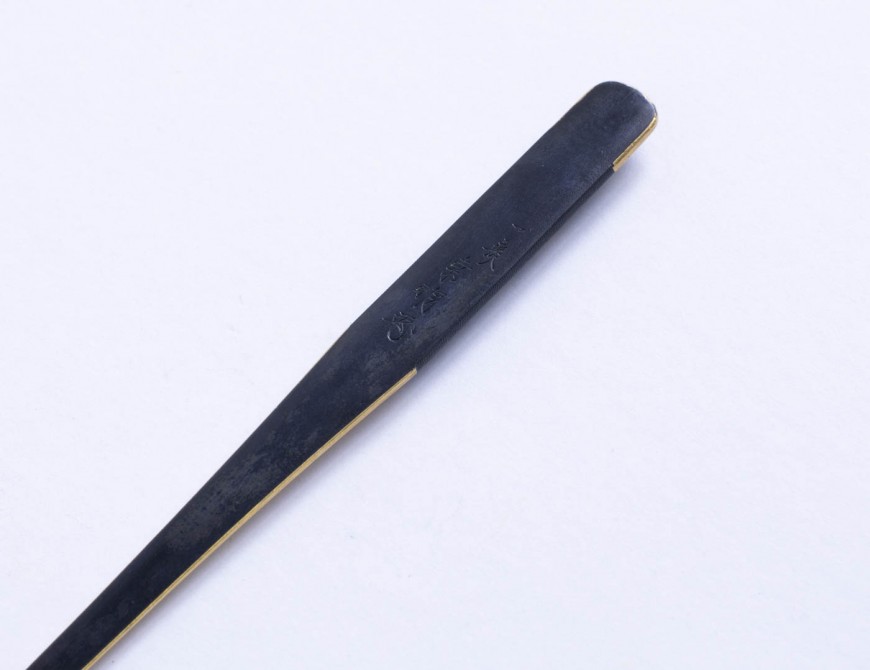
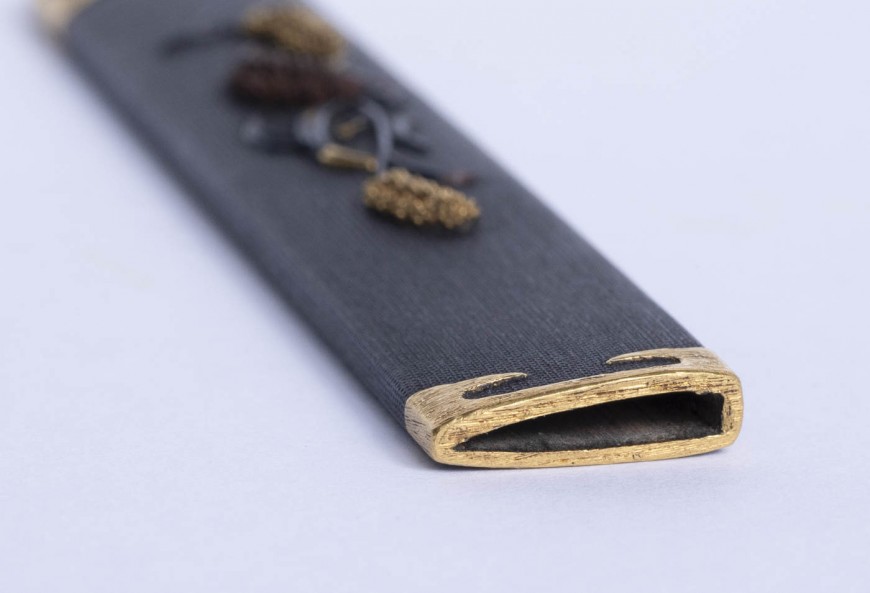
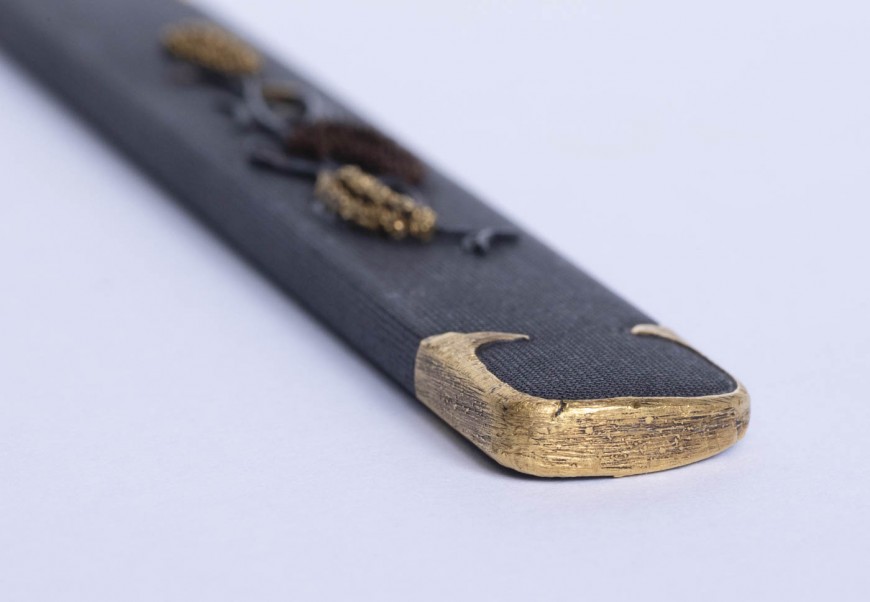
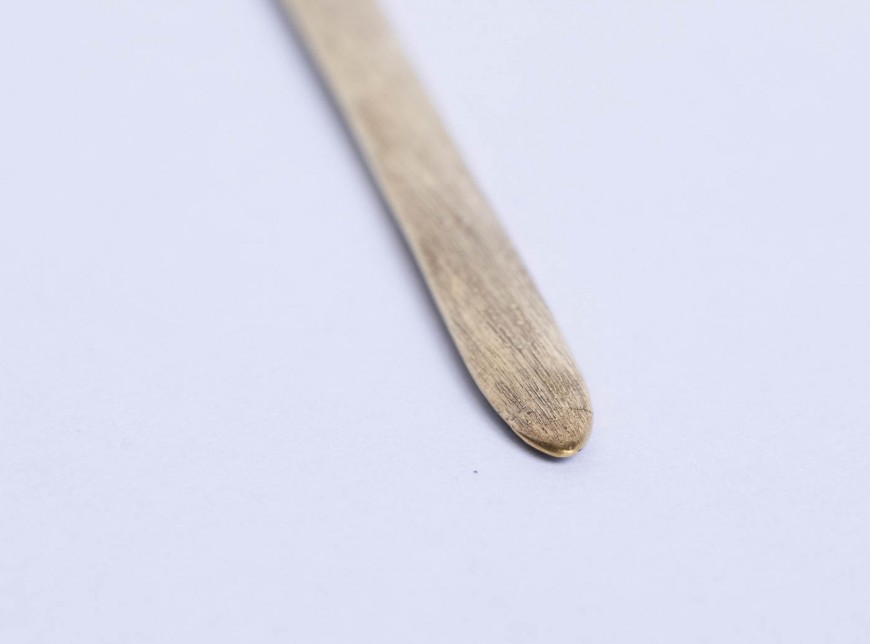
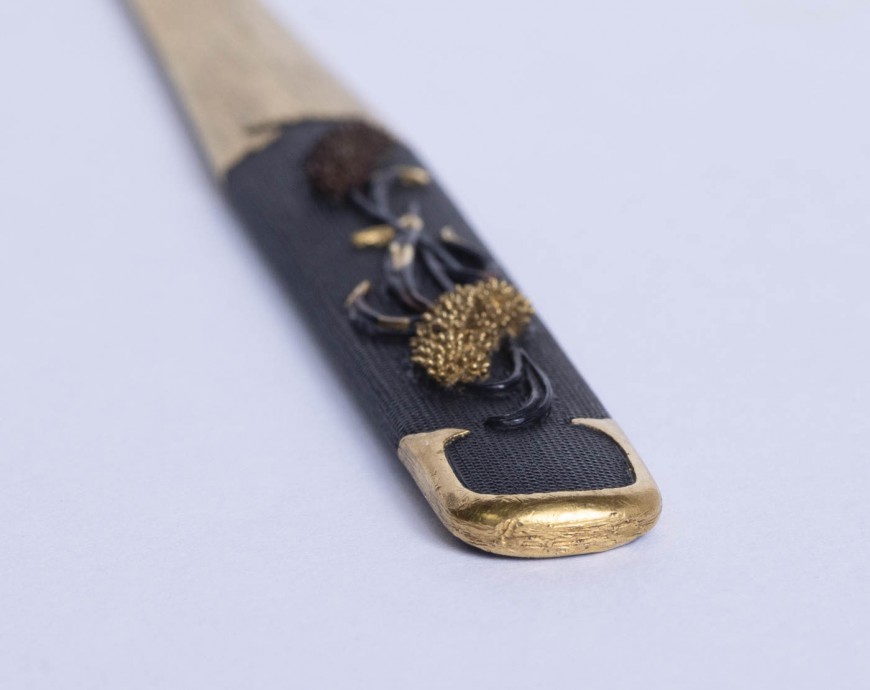
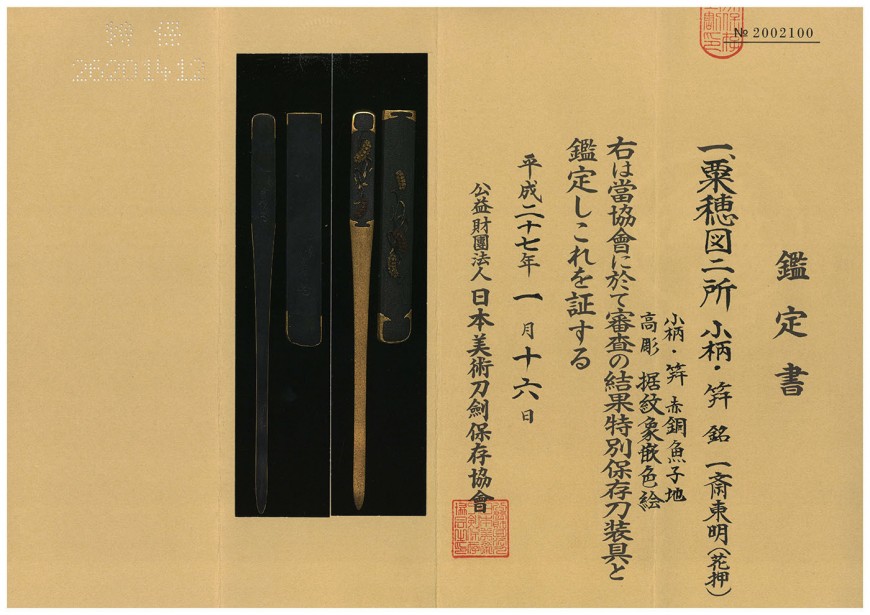
This is a futatokoro (matching set of kozuka and kogai) by Issai Toumei, a master craftsman from the Goto Ichijo school. Born in Kyoto in 1801, Toumei was renowned for his millet ear (awaho) motif, which is expertly rendered with sharp chisel work. The set is accompanied by an NBTHK Tokubetsu Hozon certificate and dates to the late Edo period.
NihontoWatchOffered by Wakeidou

Araki Tomei
late Edo (1817–1870)
Signed
Tokuho (NBTHK)
Iebori · Yamashiro
7 pieces on the market now
Araki Tomei was born in Kyoto in Bunka 14 (1817). At thirteen he became a pupil of Goto Tojo, who allowed him the character To, and so he took the name Tomei. He later studied under Goto Ichijo, who granted him the workshop name Issai, and he signs Issai Tomei; he also used the art name Ginshotei. One record places him precisely in that circle as "a senior pupil of Ichijo, the grand master of the metalwork world of the bakumatsu"[[c:1]]. He also studied under-drawing with the Kyoto painter Hayashi Ranga, and the published sources say that his special subject, the ear of foxtail millet (awabo), was devised through study with Ranga, and that the millet already made him famous in his own day.
The millet ear is the whole of his reputation, and the published sources describe it with unusual precision. Each ear is built from seven conical grains forming a single cluster, the tips of the ears are sharp, and the ripe heads seem about to spill over on every side. On one wakizashi mounting they note that the grains run in three rows with the middle row raised a step higher, struck up in three dimensions with a special chisel driven into the metal. Of the daisho set raised to Tokubetsu Juyo they write that this abundance is "truly the essence of Tomei"[[c:2]]. Later records call it his sole domain. One observes that many millet works were made in imitation of the technique, "yet no master, however skilled, could reach Tomei's art"[[c:3]], and another states that among all metalworkers, as far as millet is concerned, "past or present, none equals Tomei"[[c:4]].
His material is the orthodox one of his Goto training. Most of his fittings are shakudo with fine nanako-ji, worked in takabori with iroe and applied suemon in gold and suaka, the kozuka often with a gold-covered back, the menuki in solid gold carved in the round. He ranges beyond it: a worked ishime on shakudo for the Tokubetsu Juyo set, suaka nanako on a tsuba and fuchi-kashira, and on one aikuchi mounting oborogin nanako, a metal the record calls difficult to work and the more precious for it. For larger tsuba he turns to iron, carving the millet under the rising sun on the large guard and under the evening moon on the small, with gold and silver sunago inlay suggesting haze. The published sources repeatedly find his training in the details: the shigure file on the rim and the ceiling plate of the fuchi is called "a skill handed down from his teacher Ichijo"[[c:5]], and the file on the ceilings and mouths of his fuchi-kashira is said to show the character of the Ichijo school clearly. Yet one record adds that, although transmitted as an Ichijo pupil, his work "differs somewhat in flavour from Ichijo"[[c:6]], and it is the millet that makes the difference.
Around the millet he builds the harvest field. Sparrows and quail peck at the ears, and beside them stand bird clappers, a torn sedge hat, a winnowing basket and a hand basket, so that a set of fittings suggests a whole rural scene. In the leaves he shows autumn: on one pair of fuchi-kashira the withering, colour-changing leaves are set in gold and suaka, and the stems and leaves move more than usual. A daisho pair of tsuba, called a late Issai-signed work, spreads a quiet morning across four faces, the sun rising through mist while sparrows and quail feed. A few pieces leave the millet entirely. On a daisho of shakudo given a surface "that could be mistaken for fine silk crepe"[[c:7]], he carved Mount Fuji with the star god of longevity on clouds and a moonlit mountain stream, each paired with a Chinese poem; and on a pair of fuchi-kashira he alluded to Daikoku and Bishamonten through their attributes alone. The published sources note that these are not his usual millet work, and praise the quality of the shakudo and the precision of the carving.
His signatures document the man. Most pieces read Issai Tomei or Ginshotei Tomei, each with a kao; on split menuki the two names are divided. A few carry his real name, Araki Hidenobu, cut in the abbreviated form 東明荒秀信, which the published sources call rare and valuable as documentary evidence. The Tokubetsu Juyo set bears both the Issai and the Hidenobu forms, and one pair of kozuka and kogai comes with a sealed letter in his own hand signed Ginshotei Tomei. One aikuchi mounting is dated on the fuchi, spring of Ansei 5 (1858). Many of his works are complete sets of matched fittings, often still on their original mountings, and one small sword mounting pairs his millet menuki and kozuka with maki-e by Shibata Zeshin. Another wakizashi mounting is described as "a refined wakizashi mounting in the true Kyoto taste, splendour and restraint well balanced"[[c:8]]. The records name no pupils of his own.
Tomei's record is thirty designated works, all at the Juyo rank, one of them, the millet daisho set, raised to Tokubetsu Juyo Tosogu. He has no National Treasures and no Important Cultural Properties. That Tokubetsu Juyo set is published in Tagane no Hana, kept in a box of the Ryushido collection, with a box inscription of Meiji 37 by Ikeda Takao, and three further pieces also come in boxes from the Ryushido collection. No current holder is recorded against his designated work. A private collector may meet a signed Tomei millet set from time to time rather than often, and one more record sums up what such a set should show: a work that realizes, "in the literal sense, 'Here is Tomei'"[[c:9]].
Where Tomei stands among comparable artisans: across all of nihontō, and within tradition, era, and period. The tiers (Foremost · Leading · Major · Notable) weigh official designations from the NBTHK and Japan's Agency for Cultural Affairs, together with historical honors of lasting repute such as the Sansaku and Meibutsu-chō.
Select a lens to see how it's measured.
Iebori · Kyoto
34 pieces on the market now
" Ichijo was the fifth-generation head of the Shichiroemon house, a cadet branch of the Goto family, and trained under Hanzaemon Kamejo before succeeding to the headship at fifteen. His imperial commissions -- fittings for Emperor Kokaku in 1824 and Emperor Komei in 1862 -- earned him the ranks of Hokyo and Hogen respectively, and his atelier in Kyoto attracted a circle of gifted disciples who extended his aesthetic into the Bakumatsu and early Meiji periods. Among them, the celebrated "Five Tigers" (Goko) -- Funada Ikkin, Imai Nagatake, Hashimoto Isshi, Nakagawa Issho, and Wada Isshin -- together with the master's younger brother Goto Koran, constituted one of the most prolific and technically accomplished workshops in the history of Japanese tosogu production. The collective technical identity of the Ichijo school rests upon a foundation of shakudo nanako-ji of surpassing fineness -- described as "minute and orderly, deep and limpid," meriting the appellation kinume-nanako -- upon which elaborate pictorial compositions are built through takabori enriched by polychrome iroe employing gold, silver, shakudo, shibuichi, and suaka. Ichijo himself established the artistic direction by shifting from the canonical iebori subjects of dragons and lions toward compositions centered on close observation (shasei), rendering grasses, flowers, insects, birds, and landscapes with meticulous carving and refined dignity. This painterly sensibility pervades the entire school. Nagatake brought a distinctive ornamental density, arranging seasonal plants across entire surfaces with richly varied colored metals.
" Ikkin developed an unrivaled command of kosuki-bori -- a bold, thick chiseling technique that even Ichijo conceded was "beyond my own reach[[c:1]]" -- and his dragon subjects carried a distinctive forcefulness. " Isshin absorbed the hereditary vocabulary while concentrating creative zeal into individual passages of invention, and Issho achieved works of luxurious, courtly elegance through refined kinu-nanako and precise kebori. Koran, working in a manner akin to his elder brother yet "finished with an even more delicate and nuanced sensibility," brought the Shichiroemon branch to its most accomplished expression. Across the school, the favored tsuba form is the sumi-iri mokko-gata, and many works exhibit chuya shitate -- "day-and-night" construction using contrasting alloys on obverse and reverse. Complete daisho soroe kanagu sets, coordinated around seasonal, auspicious, or literary-historical themes, represent the school's highest format. " This standard was transmitted faithfully through the circle. " The school's productions are consistently praised for an elevated, Kyoto-inflected refinement that balances splendor and restraint in just measure. Learn more →
| Smith | Era | Designated |
|---|---|---|
| Goto Ichijo後藤一乗 | — | 91 |
| Tomei東明 | — | 30 |
| Nagatake永武 | — | 13 |
| Ikkin一琴 | — | 11 |
| Issho一匠 | 1828-1876 | 10 |
A Hozon-certified blade judged to show notably superior workmanship and a better state of preservation. The bar is higher: re-tempered blades and most unsigned Muromachi/Edo works are excluded.
The NBTHK (Nihon Bijutsu Tōken Hozon Kyōkai, the Society for the Preservation of Japanese Art Swords) is a public-interest incorporated foundation founded in 1948 and supervised by Japan’s Agency for Cultural Affairs (Bunkachō); it is based at the Japanese Sword Museum in Tokyo. Its expert panels physically examine each submitted work (shinsa) and issue a certificate (kanteishō) ranking it by artistic and historical merit. NBTHK papers are the most widely recognized standard of authentication for Japanese swords and fittings.
NBTHK official siteReturns accepted within 7 days for internet purchases.
¥3,500,000