-Tōsōgu, 65th Session — Designated November 7, 2019
Category: Tōsōgu 26
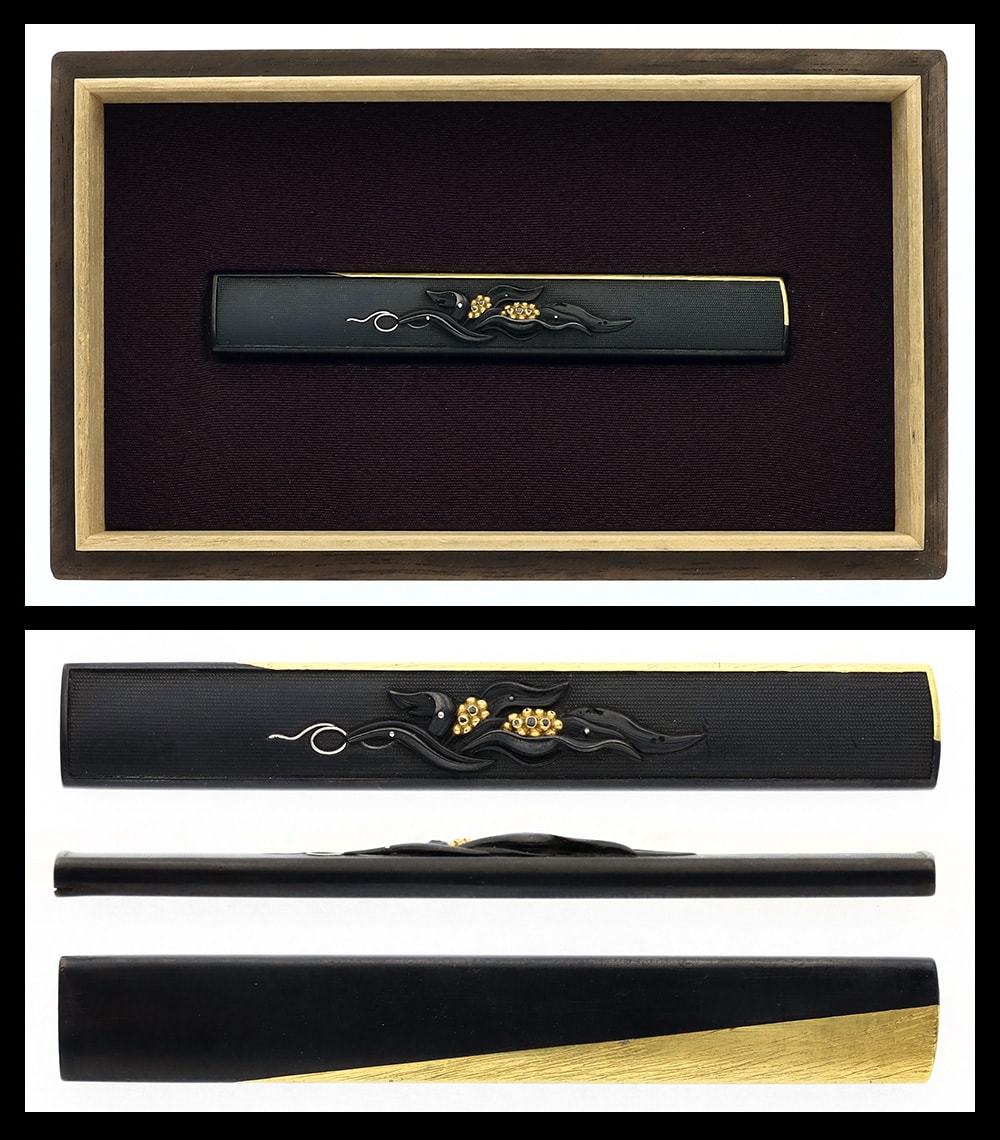
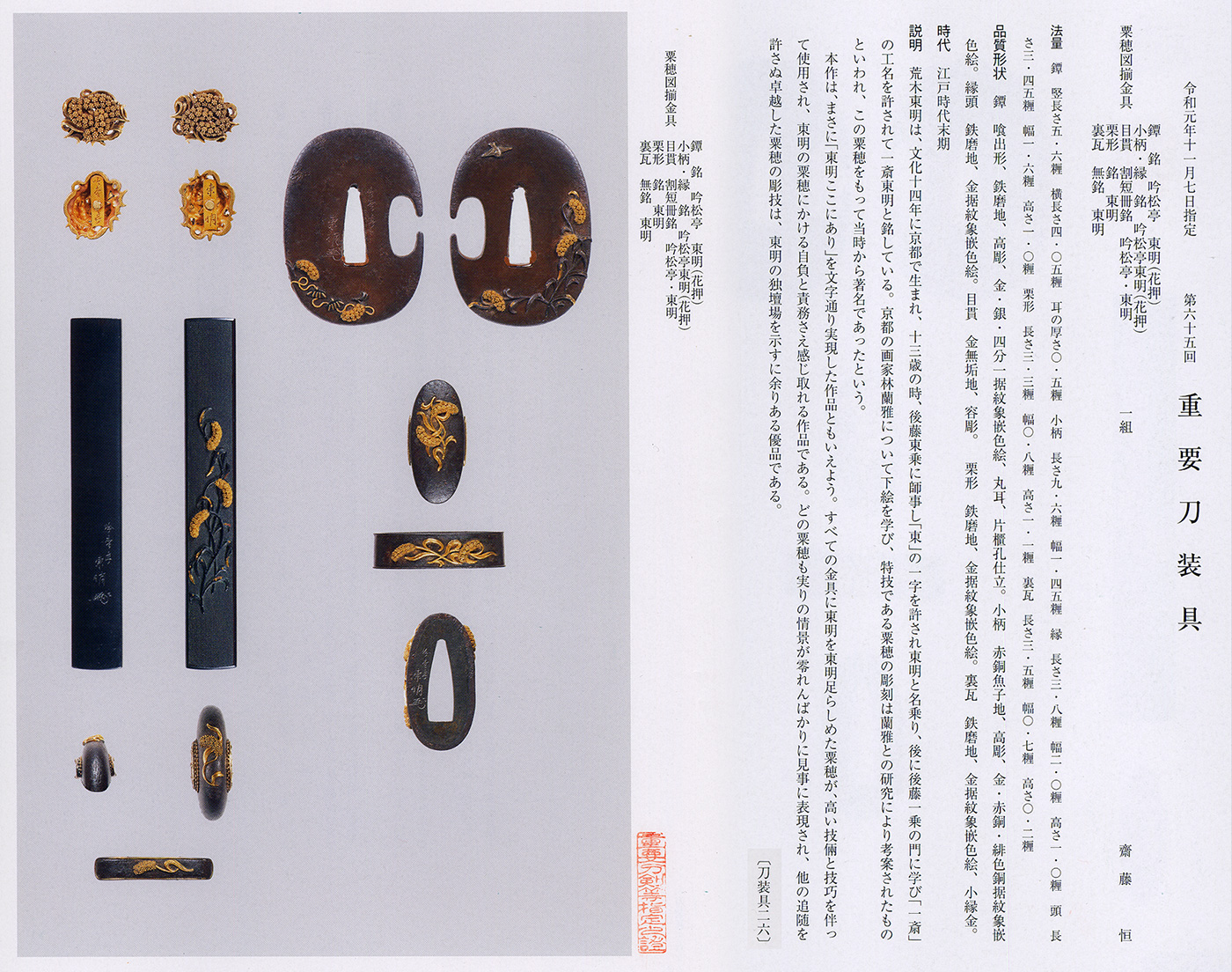
Matching fitting set (soroi-), : Ginshōtei Tōmei (吟松亭東明)
Measurements
- : height 5.6 cm; width 4.05 cm; rim thickness 0.5 cm
- : length 9.6 cm
- : length 3.8 cm; width 2.0 cm; height 1.0 cm
- : length 4.5 cm
- : length 3.3 cm; width 0.8 cm; height 1.0 cm
- : length 3.5 cm; width 0.7 cm; height 0.2 cm
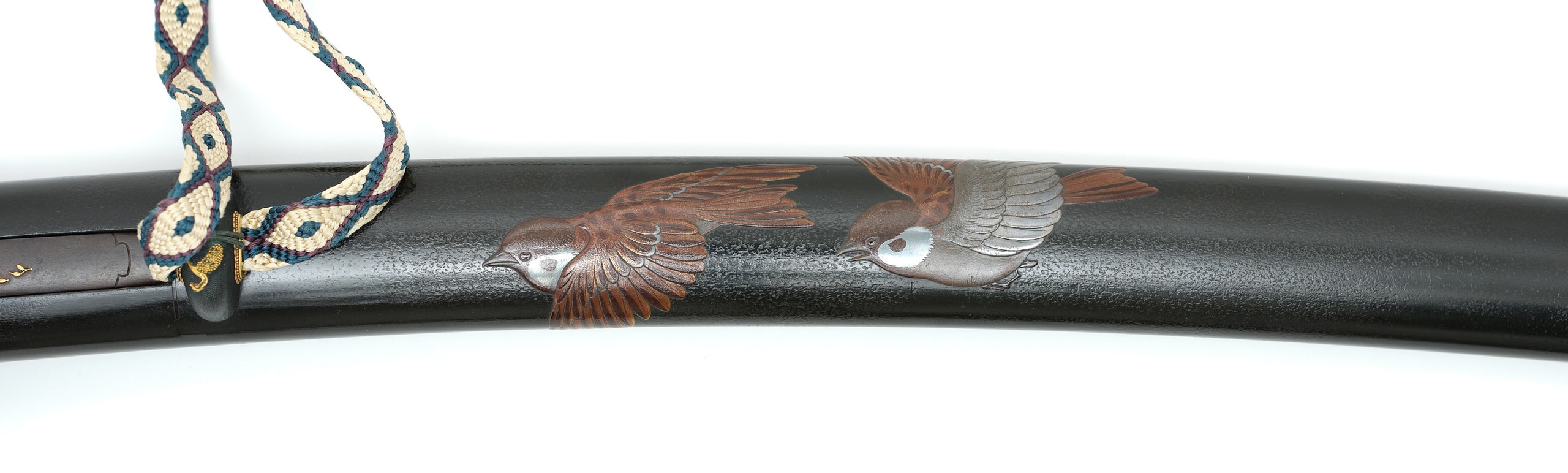
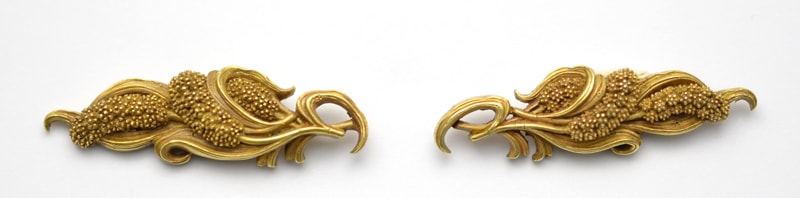
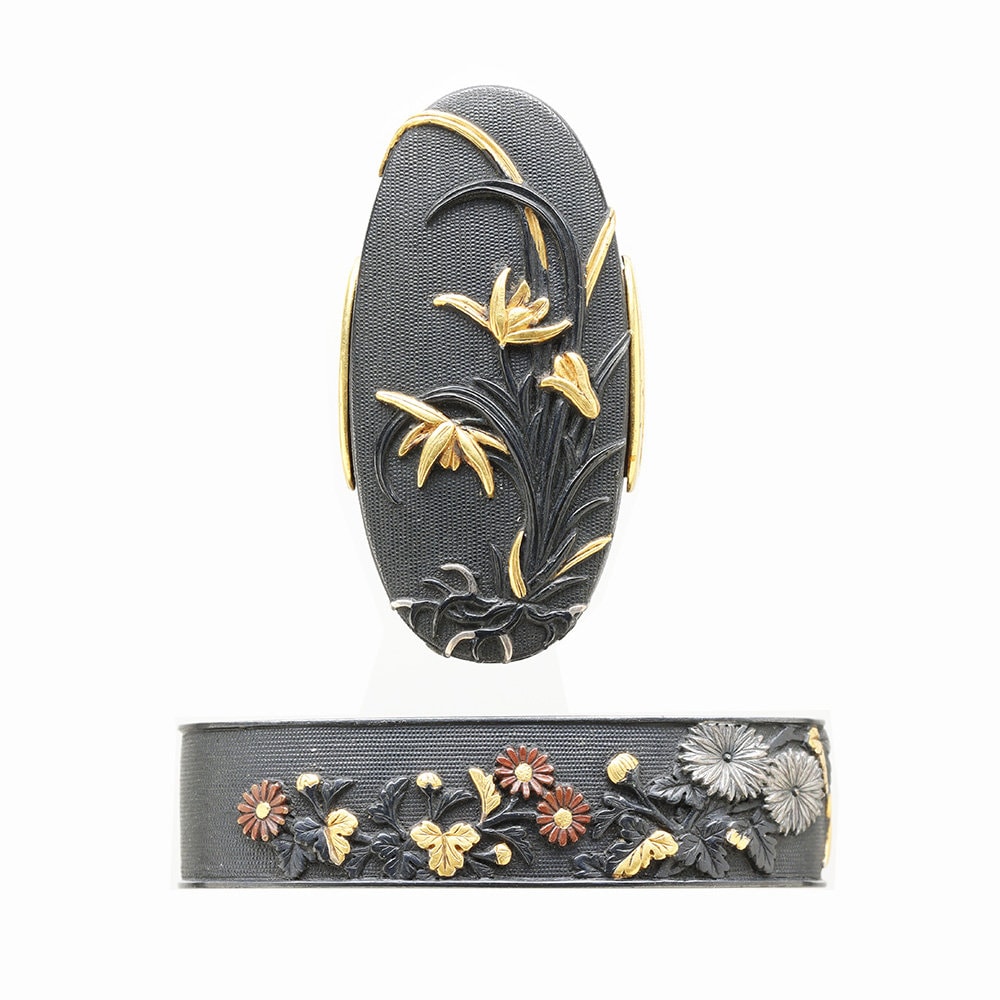
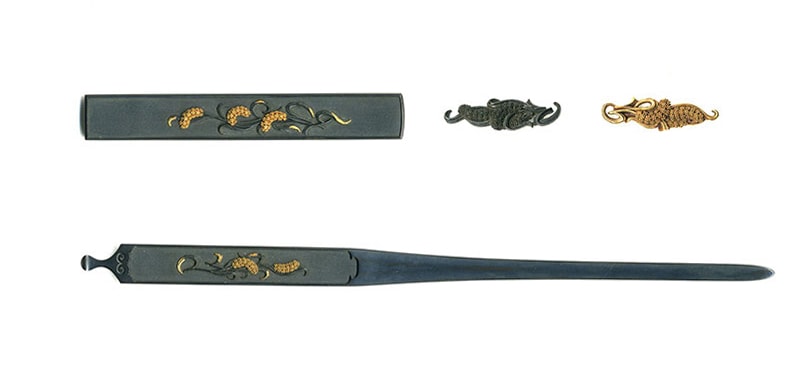
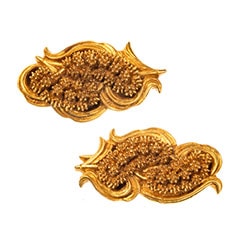
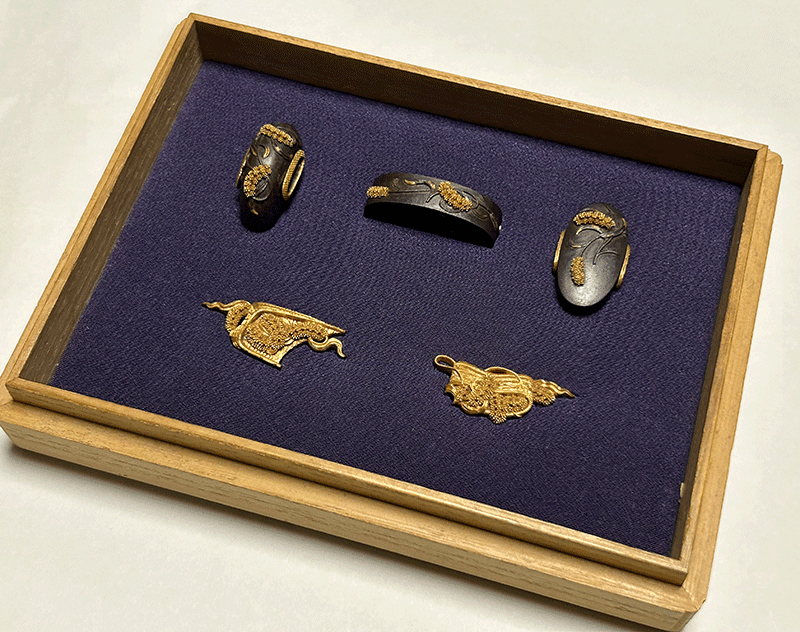
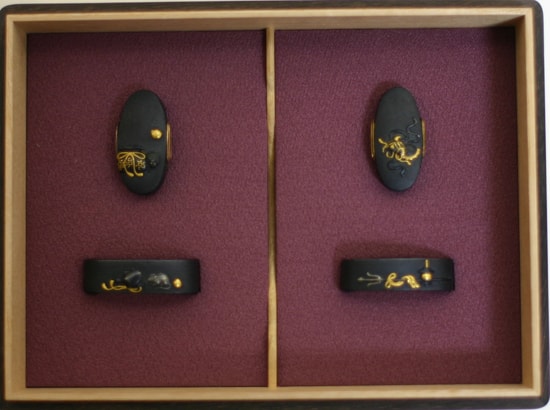
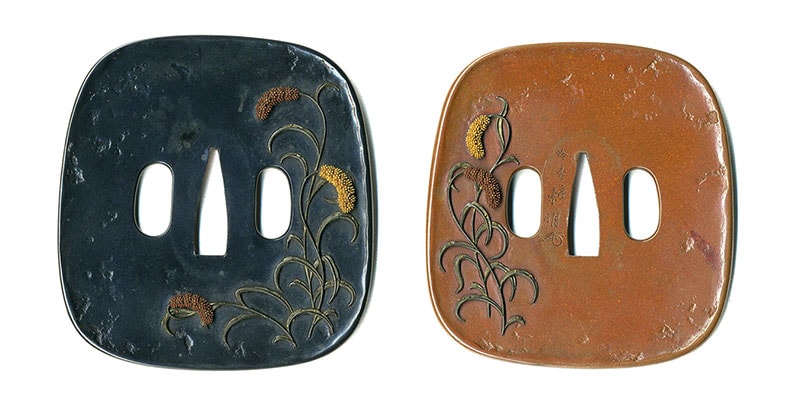
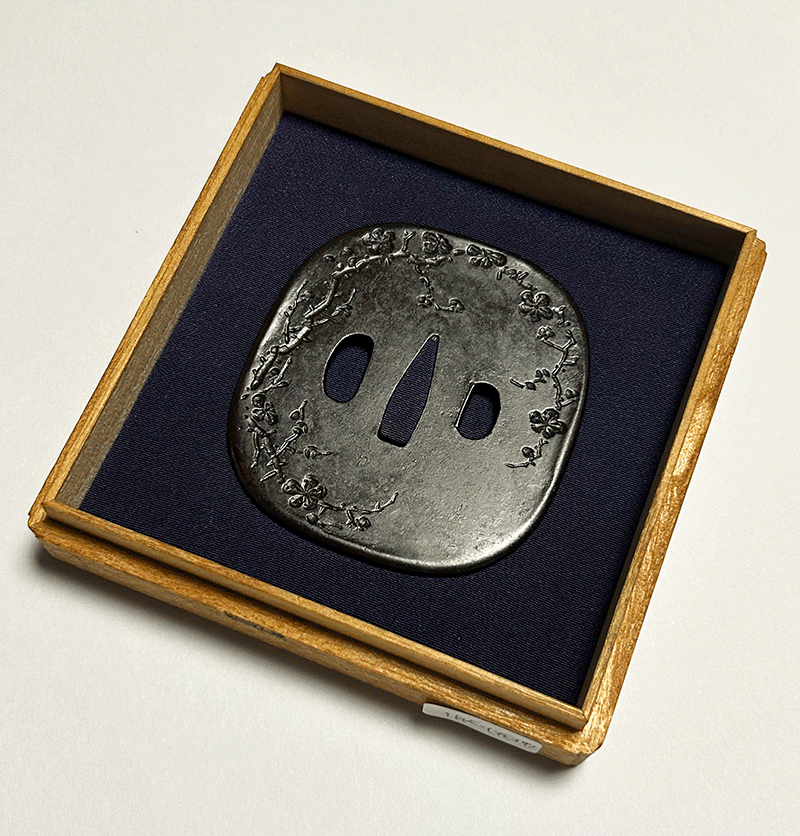
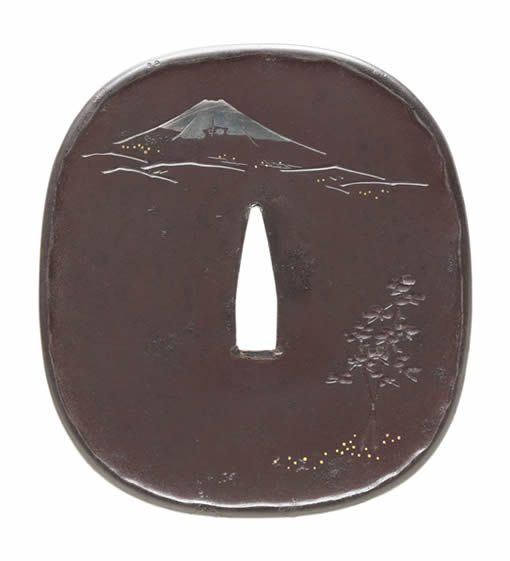
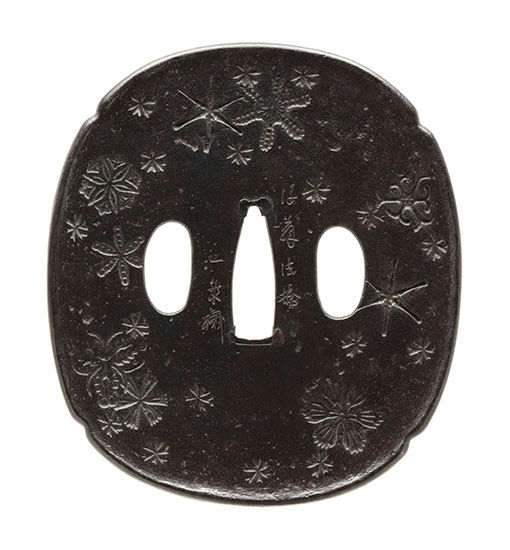
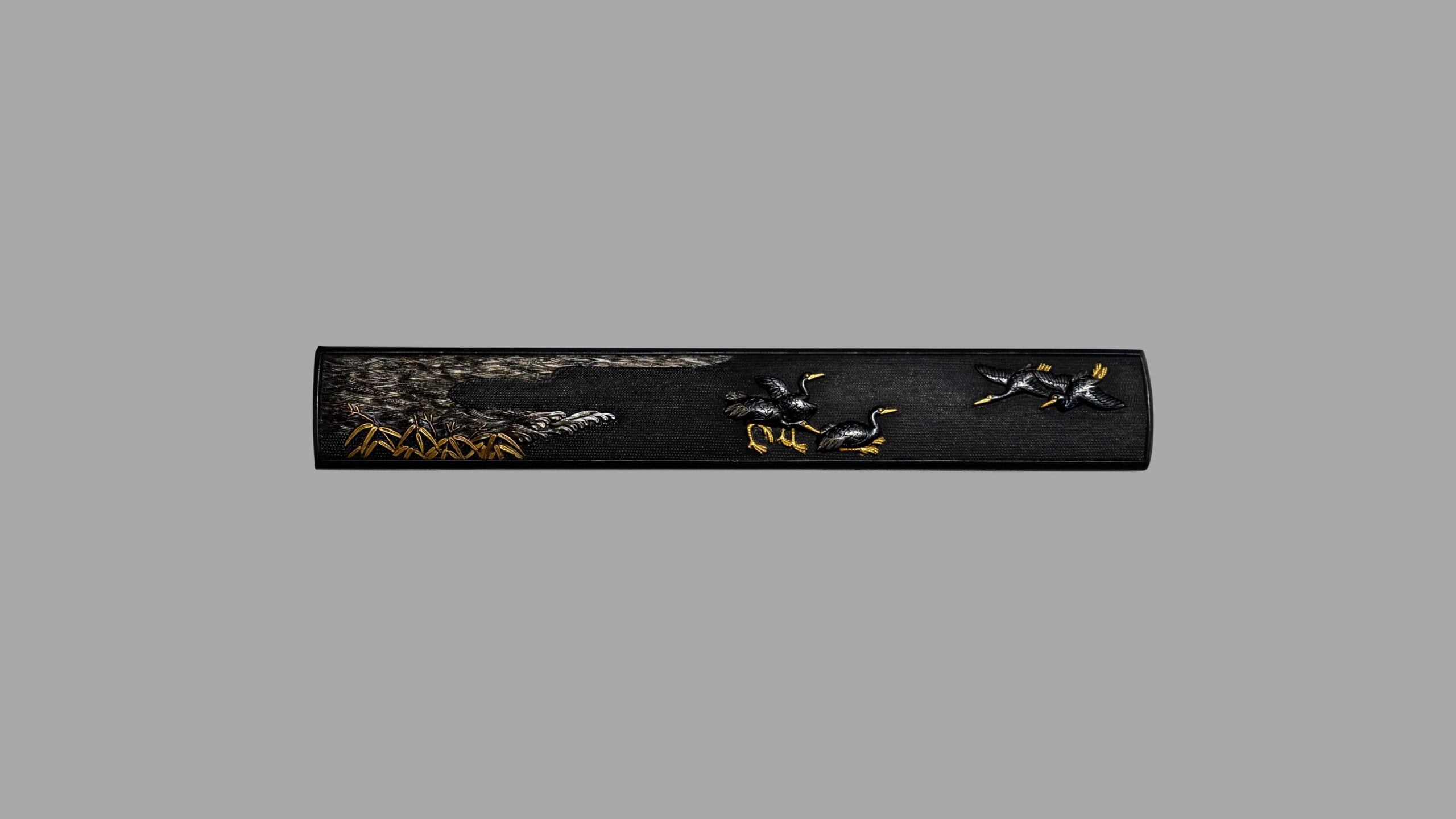
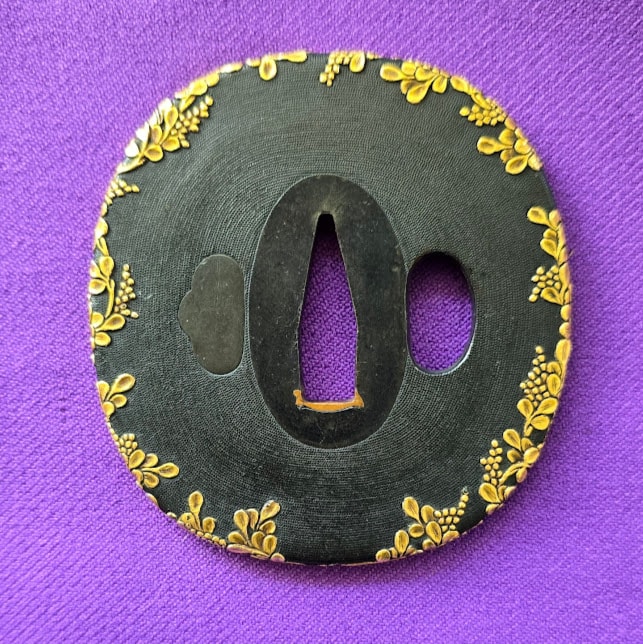
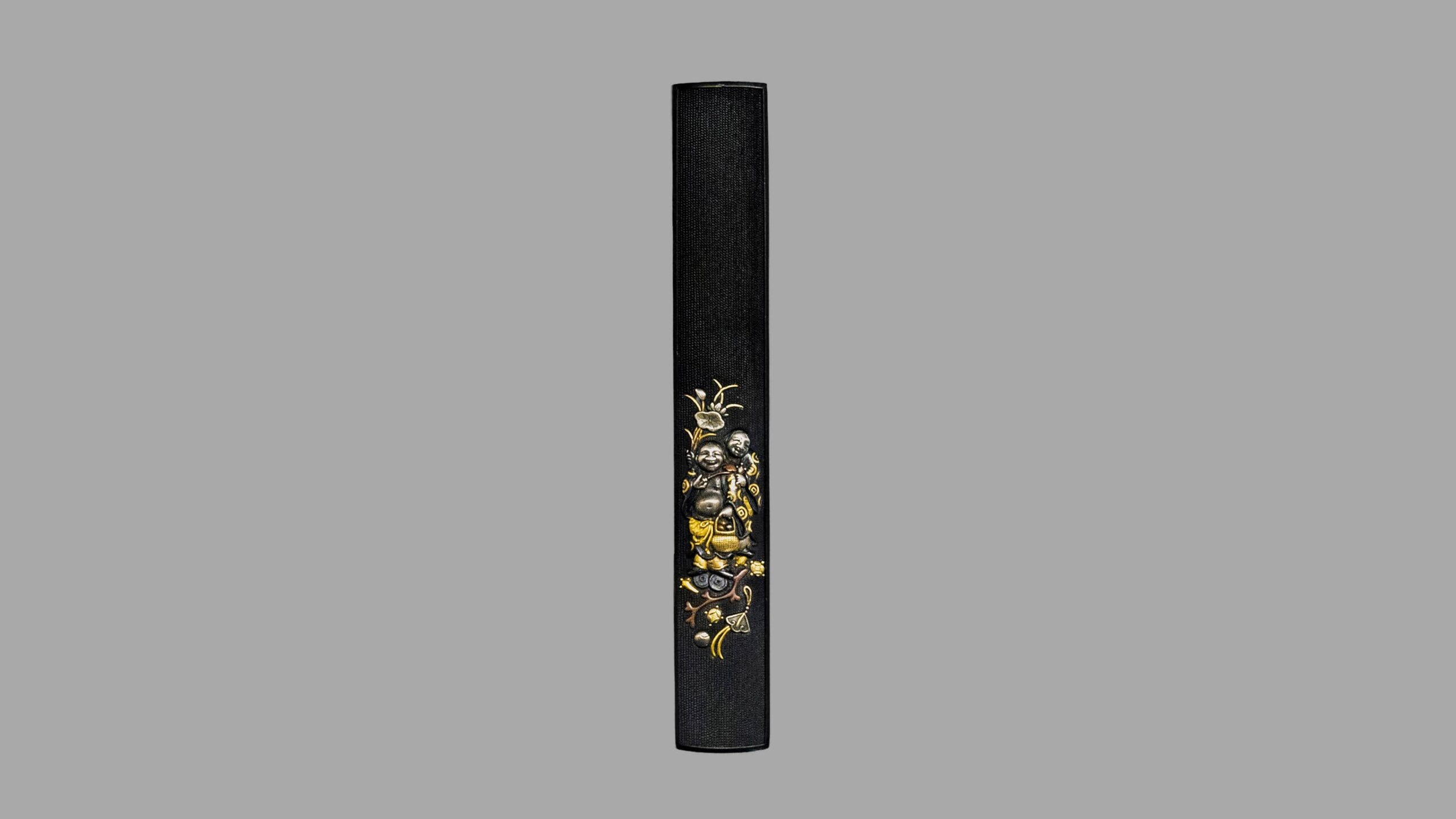
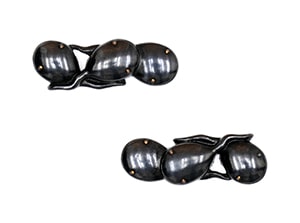
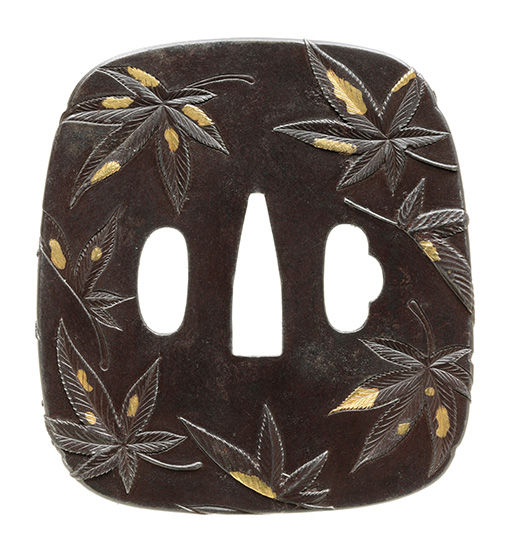
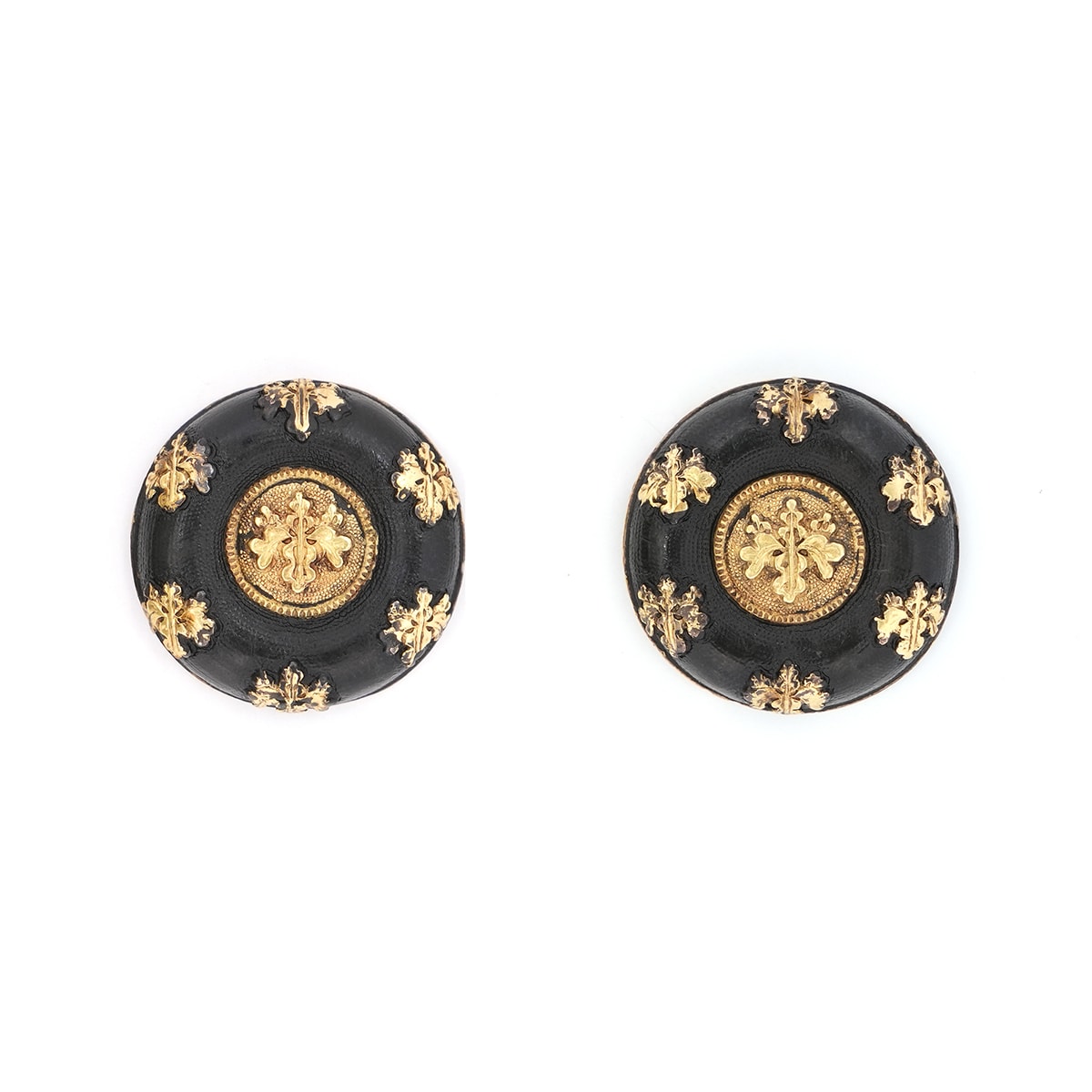
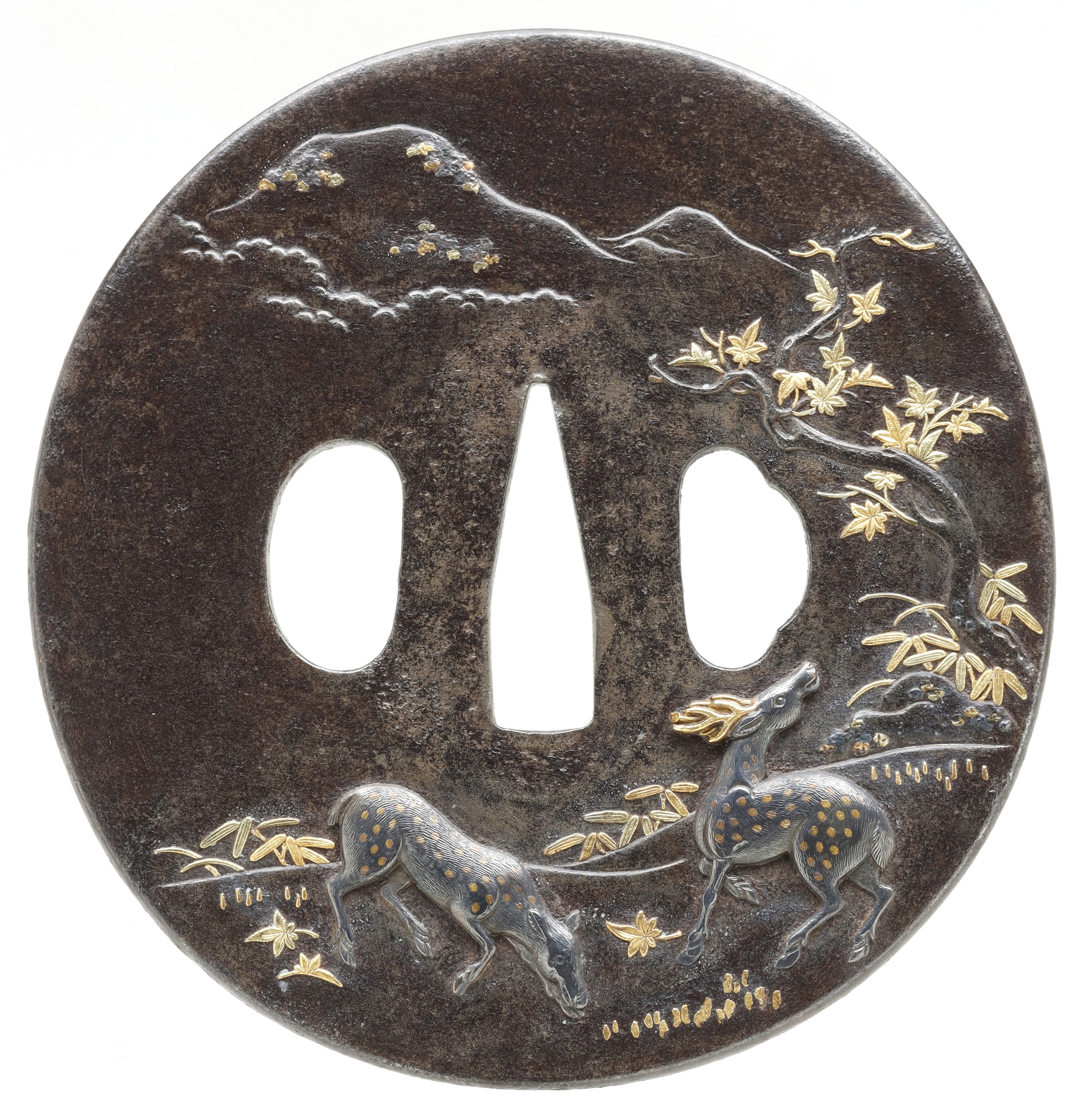
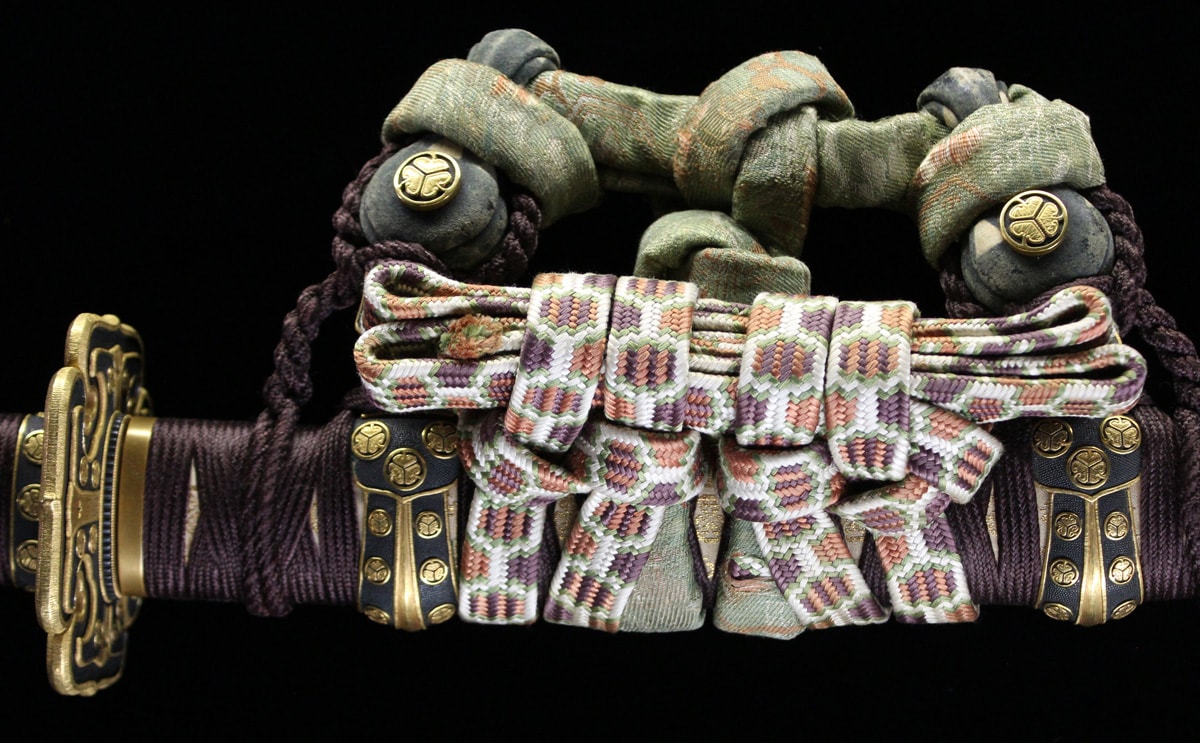
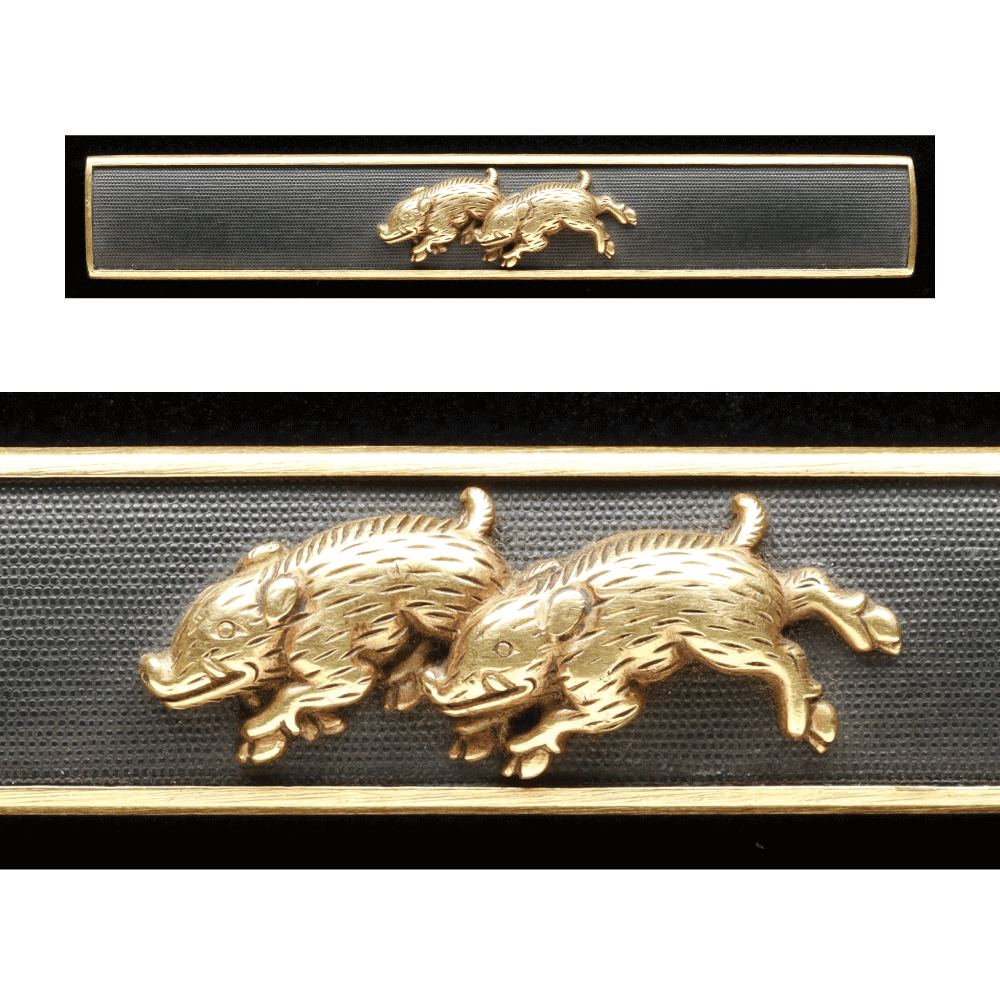
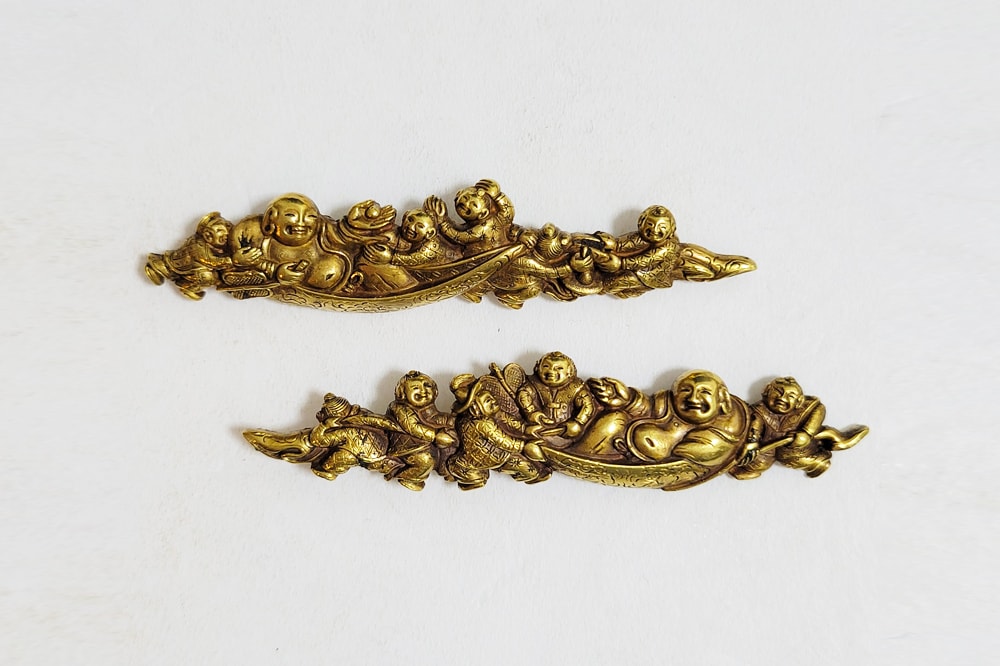
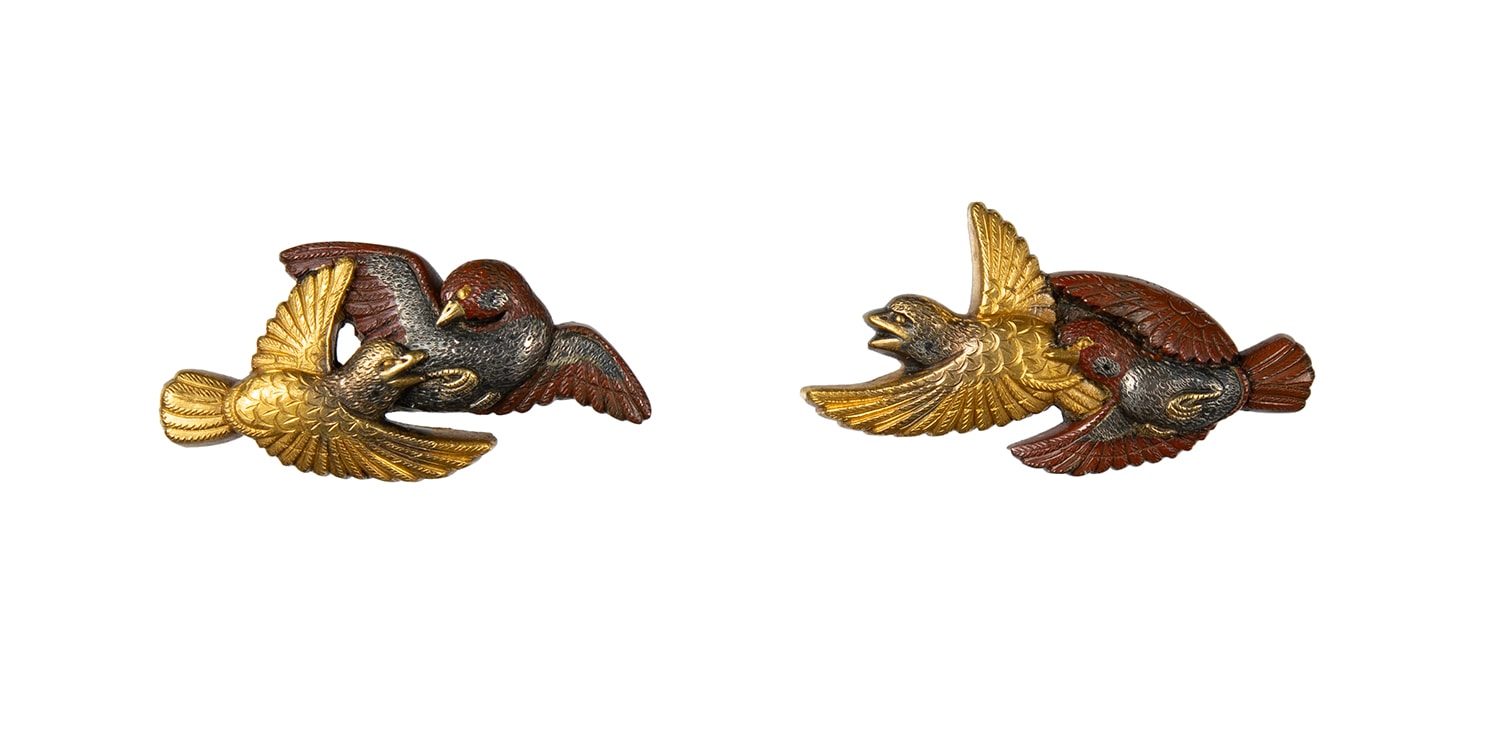
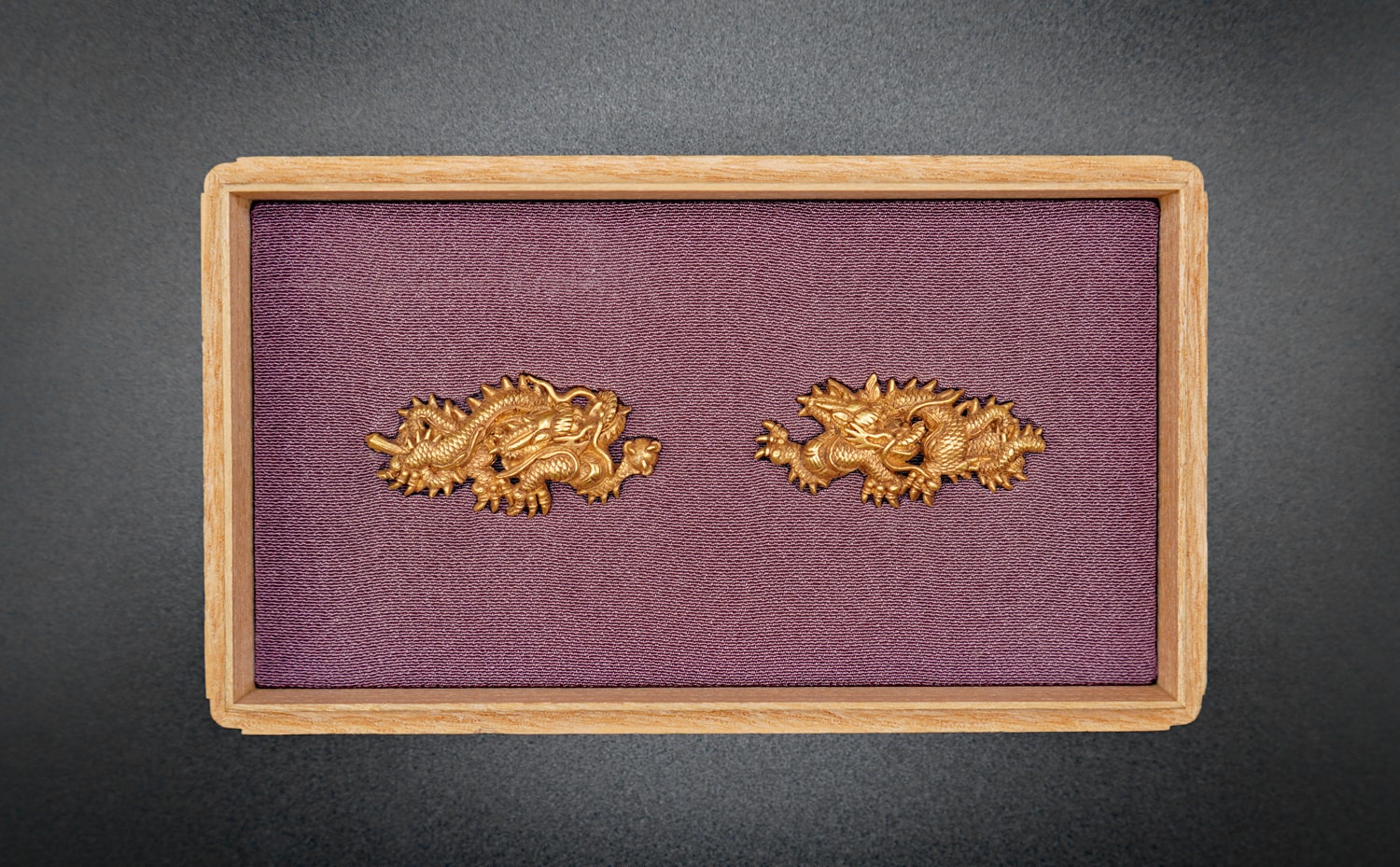
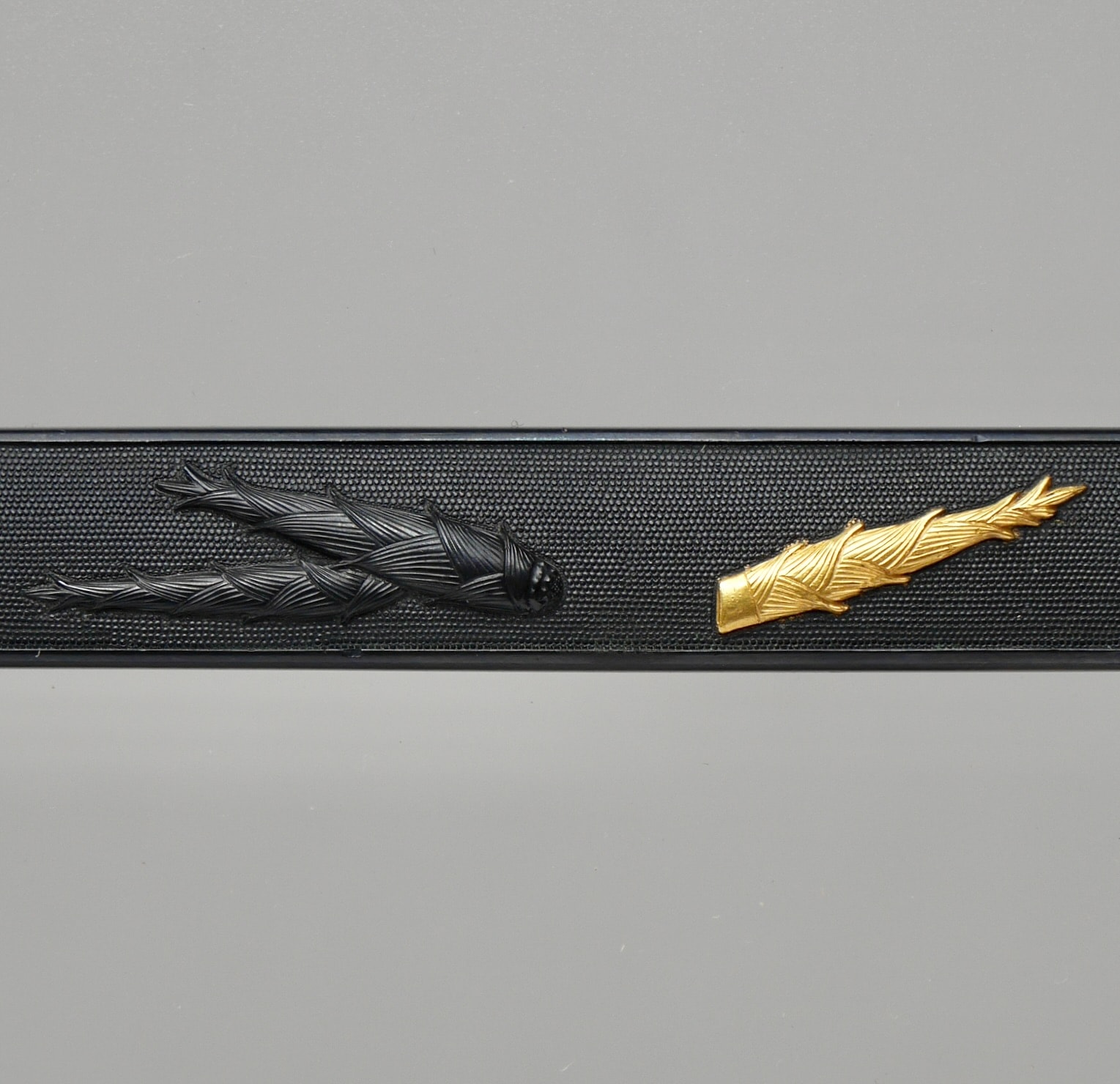
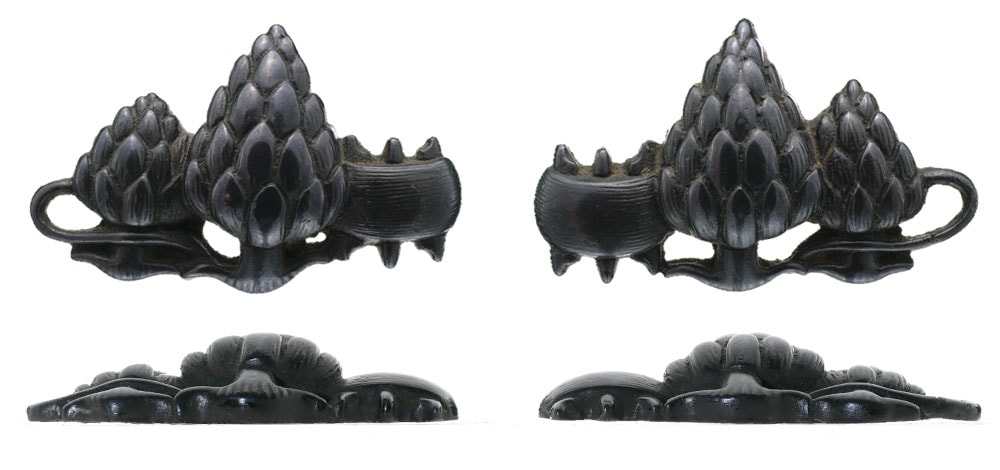
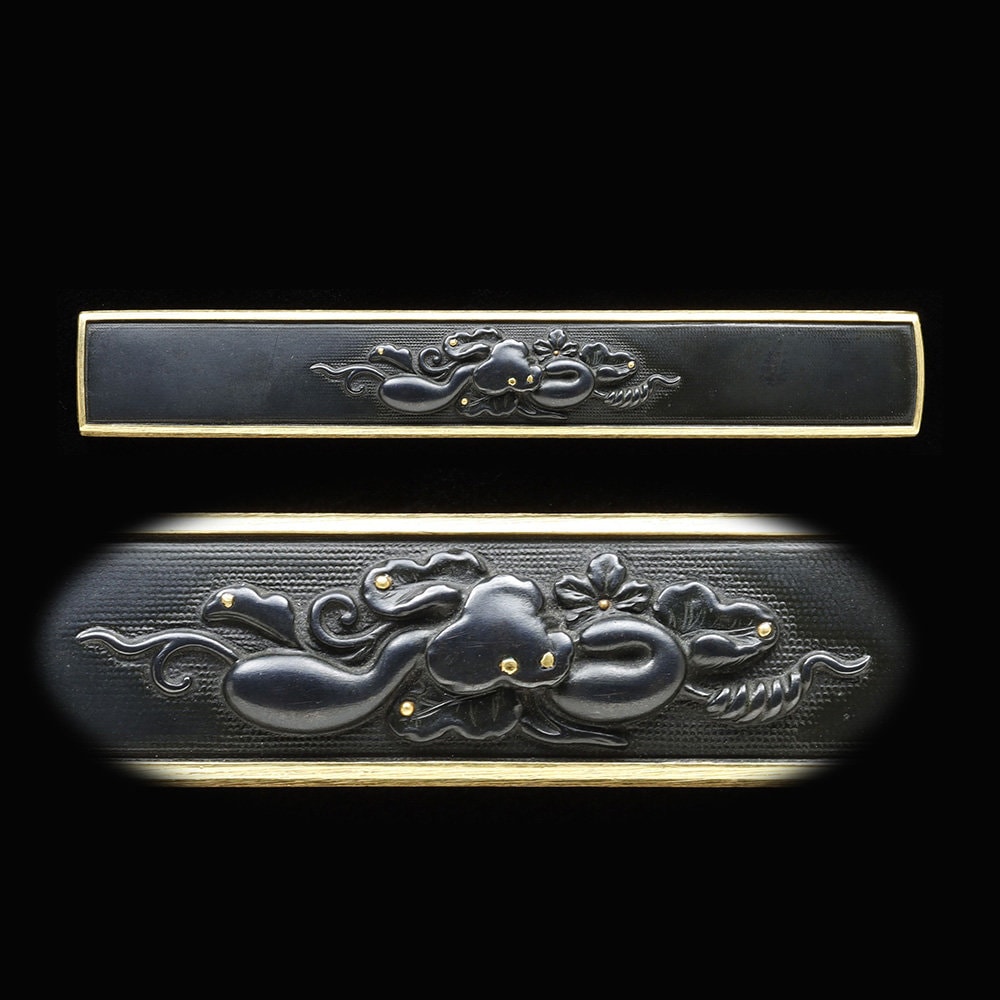
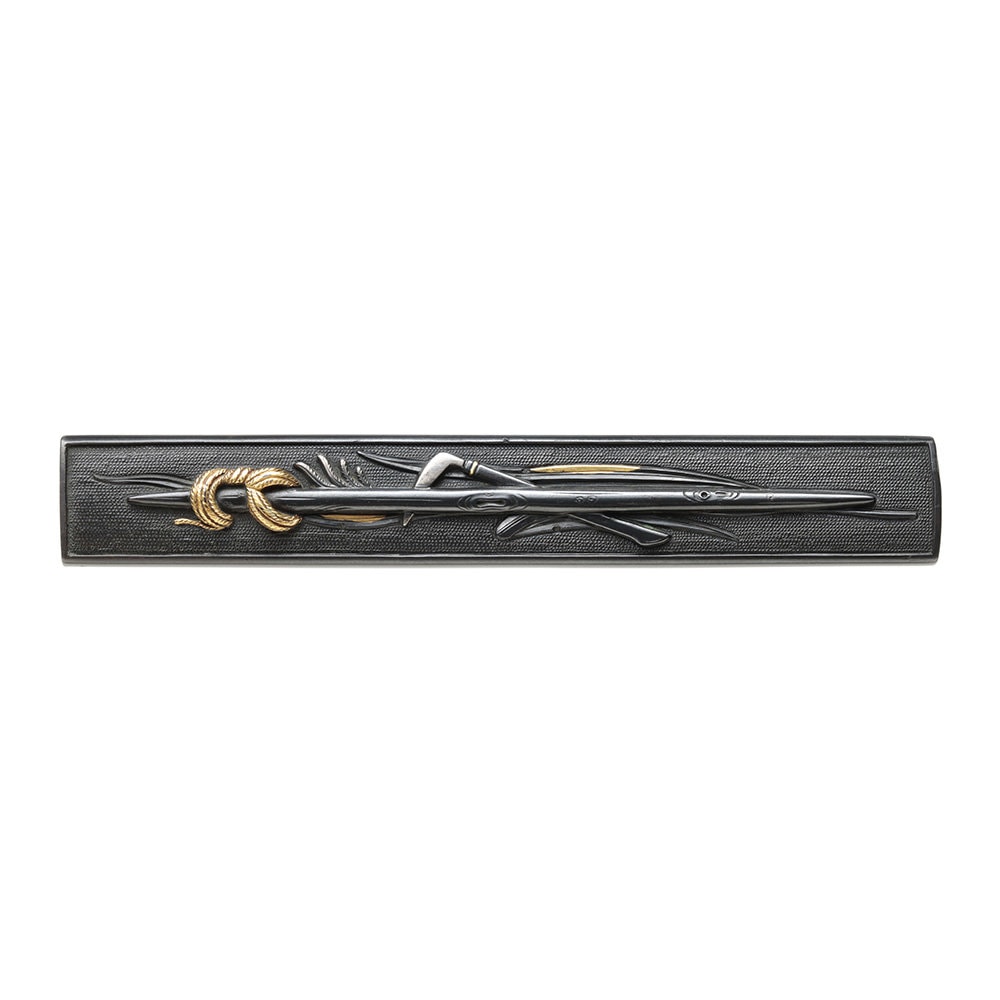
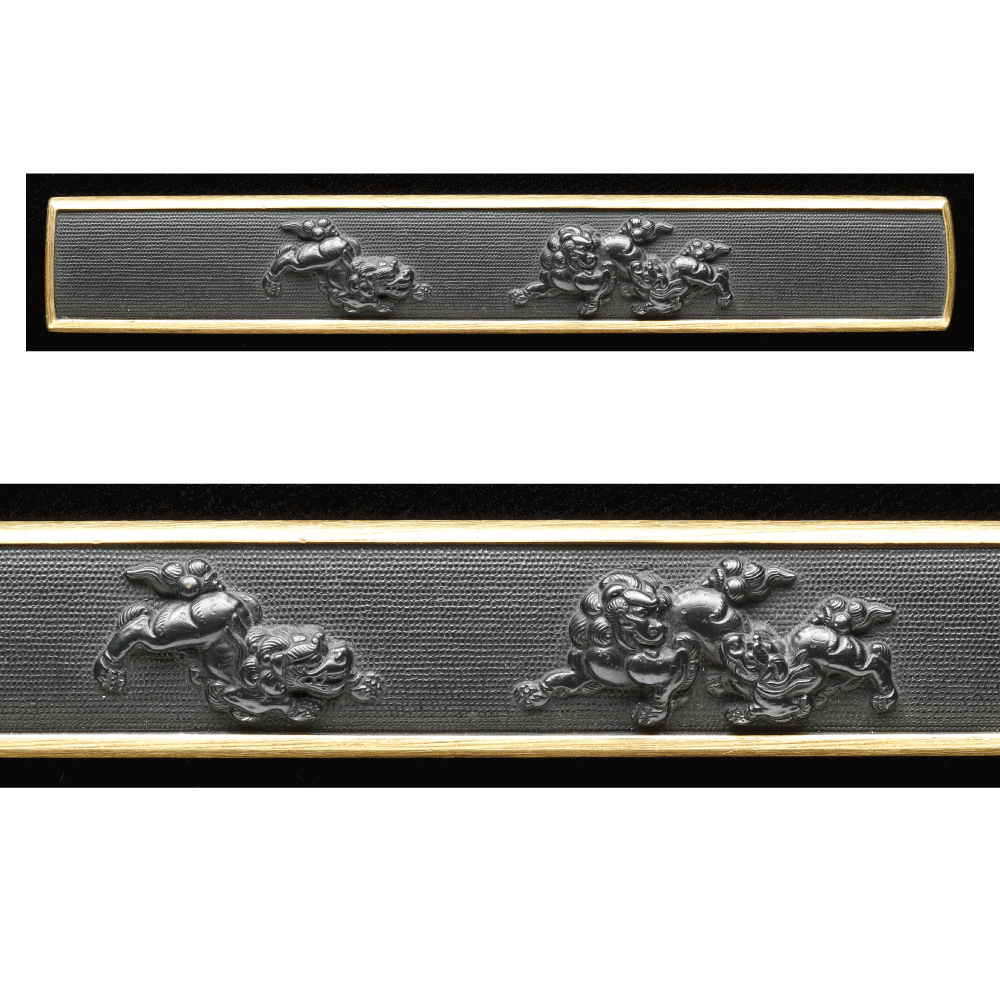
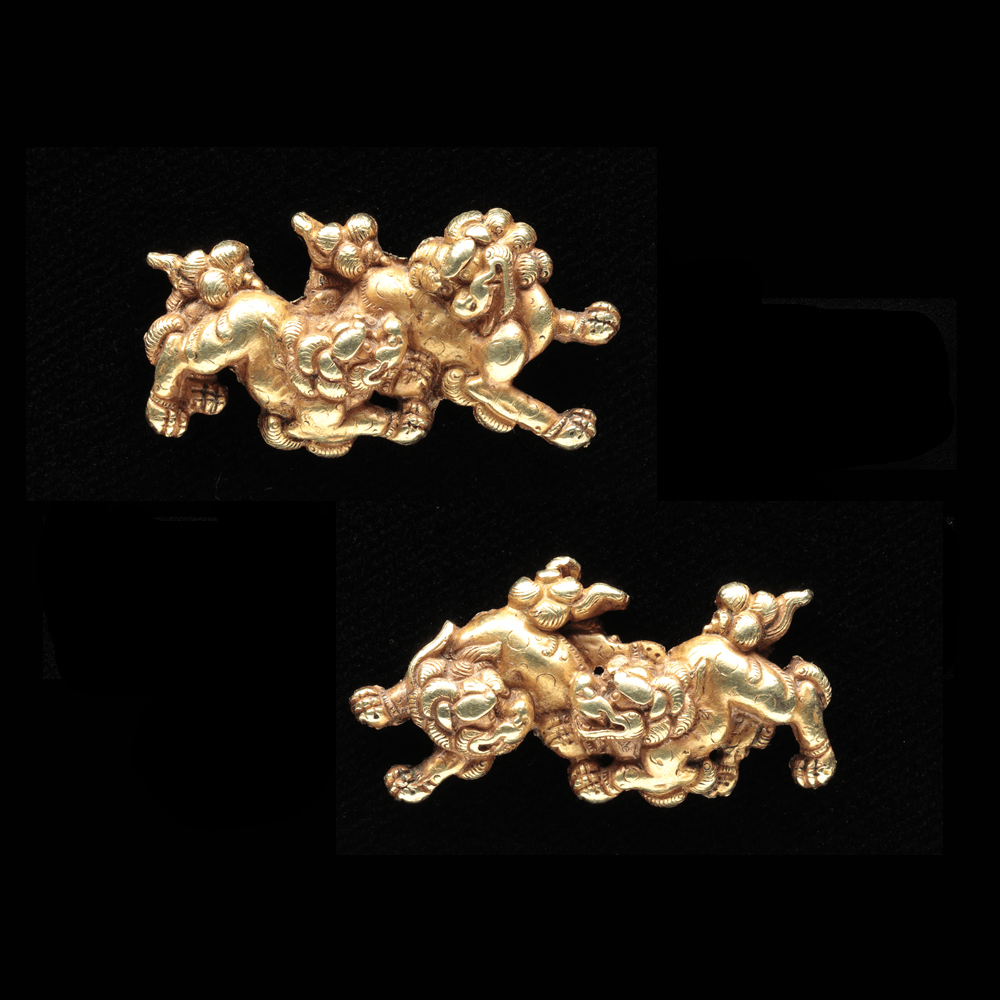
Description Form: () funshutsu-gata (irregular “sprouting/erupting” form) Material: () iron, polished ground () Design: a unified theme of ripened millet ears (awa-ho) across all pieces Decoration:
- : ; suemon-zōgan and polychrome inlay () in gold, silver, and ; one
- : ; ; suemon-zōgan and in gold, , and hi-irodō
- –: iron ; gold suemon-zōgan and
- : solid gold (-muku) ground; rounded carving (yōbori)
- : iron ; gold suemon-zōgan and
- : iron ; gold suemon-zōgan and ; small raised rim in gold (ko-buchi ) Rim: () round rim () : () one () Signature: inscriptions include “Tōmei” with , and “Ginshōtei Tōmei” with ; some components are unsigned
Artisan Araki Tōmei (荒木東明), working name Ginshōtei Tōmei (吟松亭東明); associated with the Gotō tradition through training.
Era Late period.
Explanation Araki Tōmei was born in Kyoto in Bunka 14 (1817). At the age of thirteen he became a student of Gotō Tōjō; he was granted permission to use the character “Tō” (東) and took the name Tōmei. Later he studied under Gotō Ichijō and was granted the art name “Issai,” signing works as Issai Tōmei.
He also studied draftsmanship for designs under the Kyoto painter Hayashi Ranga. It is said that Tōmei’s specialty—the carving of millet ears (awa-ho)—was devised through research undertaken together with Ranga, and that these millet motifs made him famous already in his own time.
This set may truly be said to realize, in the most literal sense, the phrase “Here is Tōmei.” Across every fitting, the millet ears that define Tōmei as Tōmei are employed with elevated technique and virtuoso skill, to the point that one even senses the artist’s pride in—and responsibility toward—this motif. Each ear of millet is rendered superbly, as though the scene of ripening abundance might spill forth. The outstanding carving technique devoted to millet, permitting no rival to follow, is more than sufficient to demonstrate that this was Tōmei’s unrivaled domain, making this a particularly superior work.