NihontoWatch MonNihontoWatch
Market
Encyclopedia
Kantei
NihontoWatch MonNihontoWatch
Market
Encyclopedia
Kantei

Description

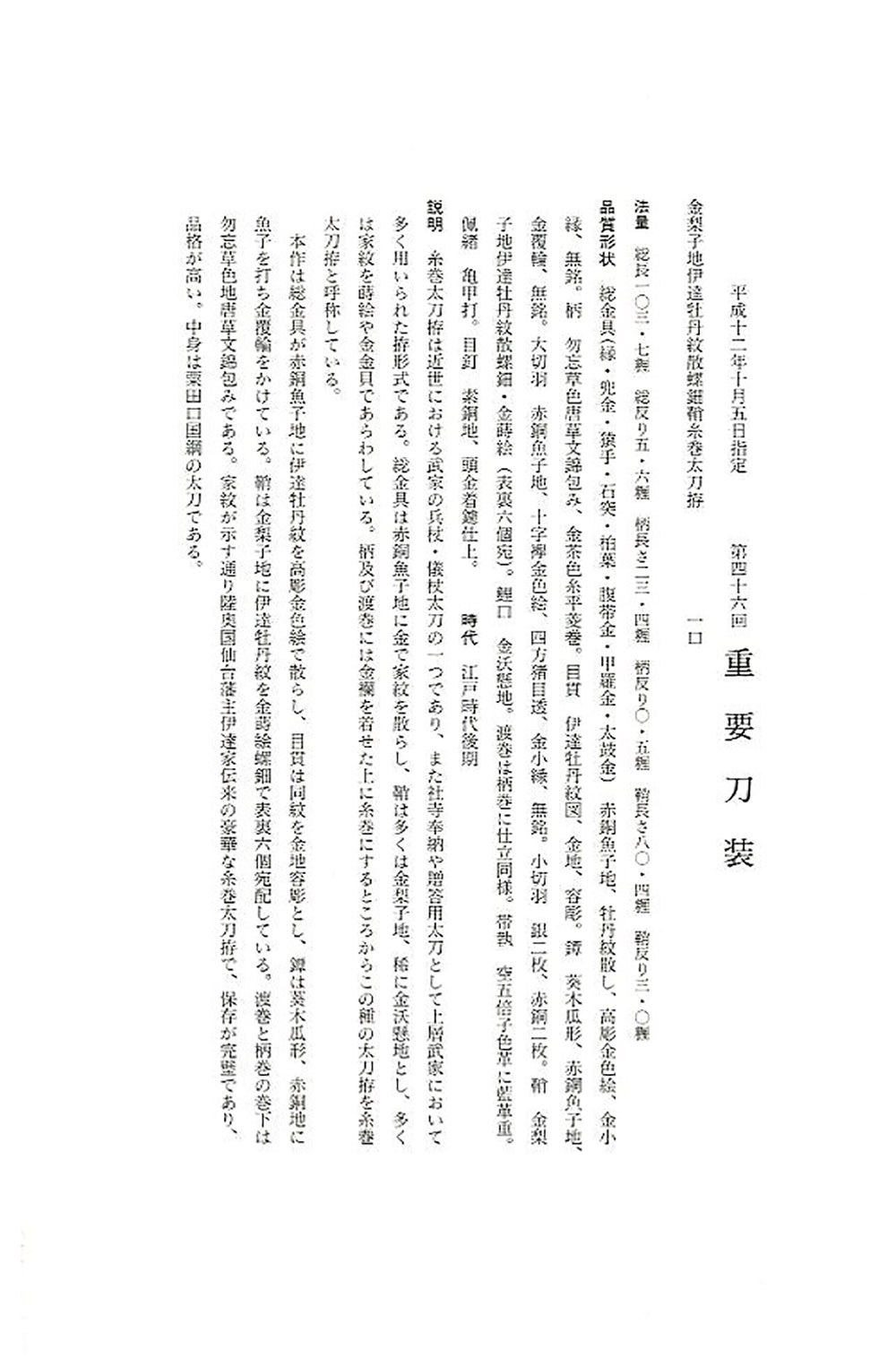
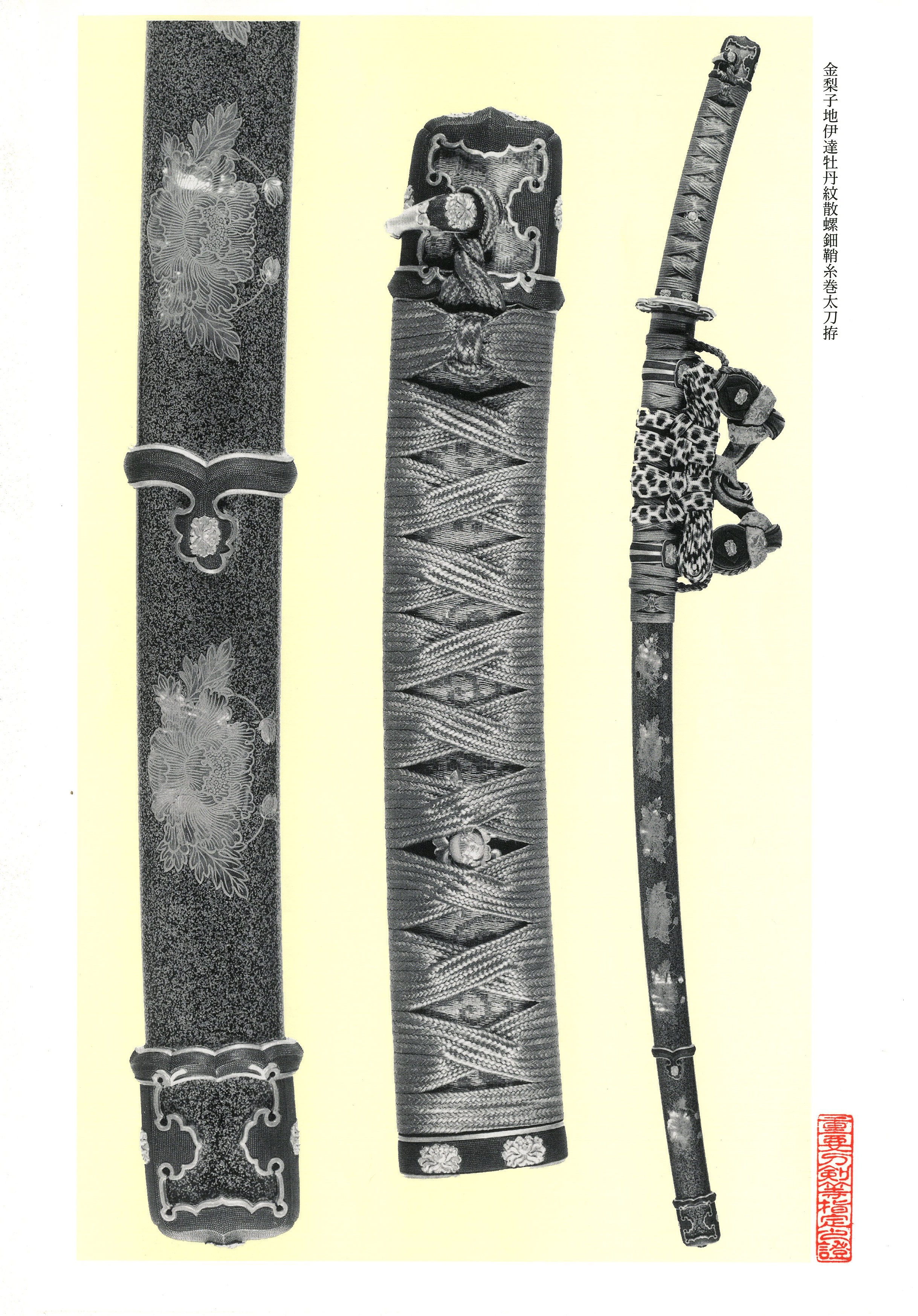
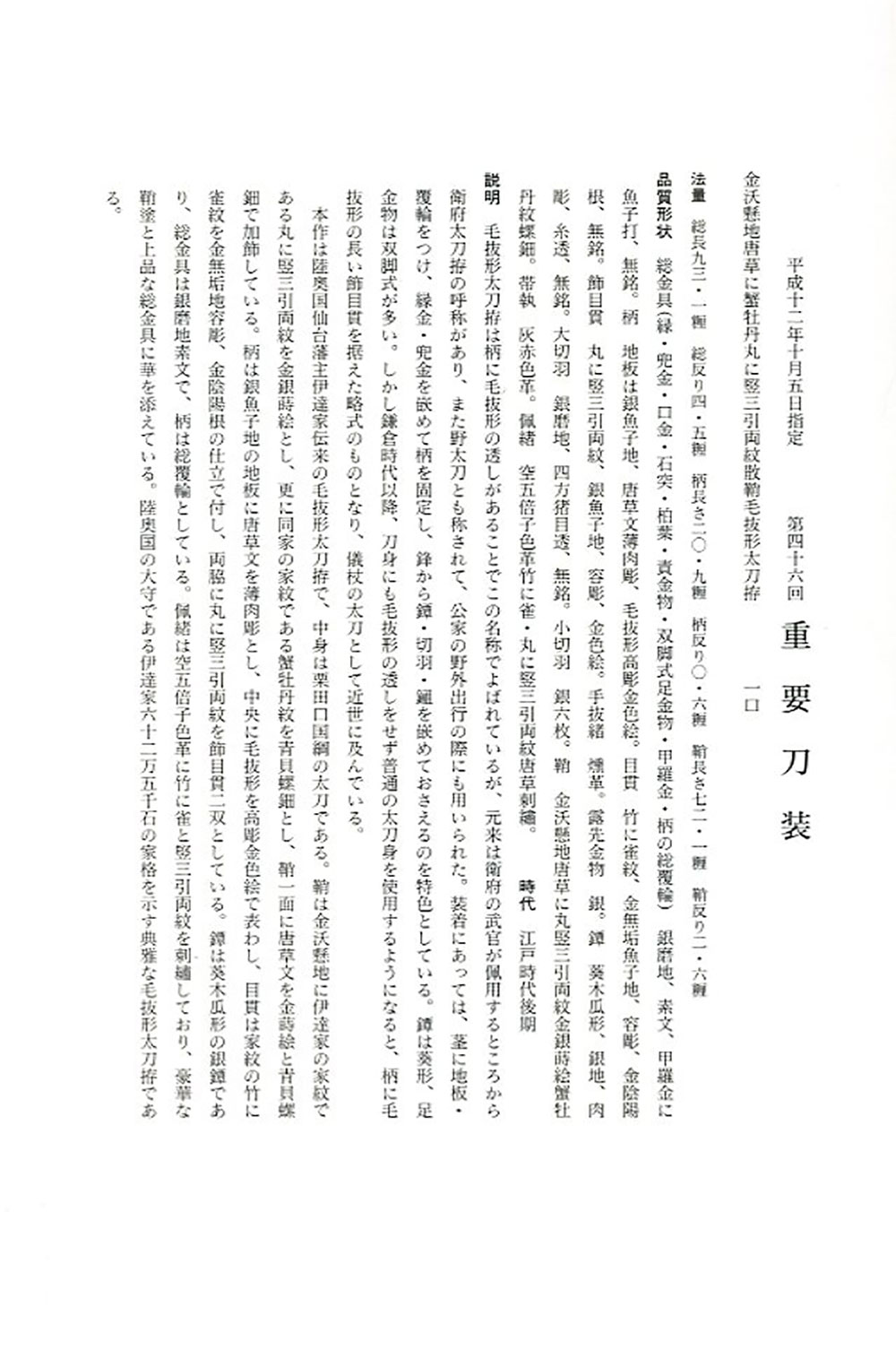
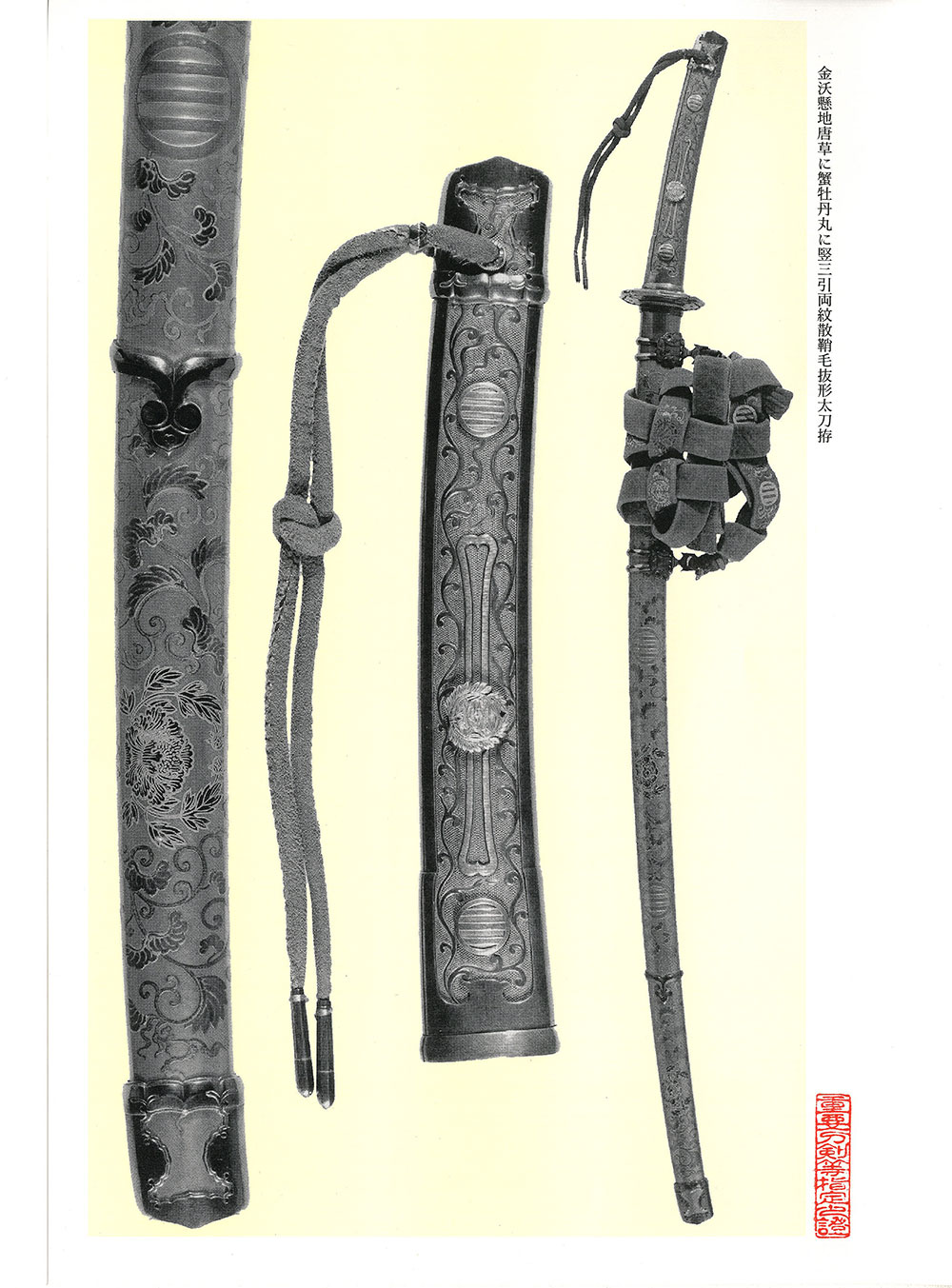
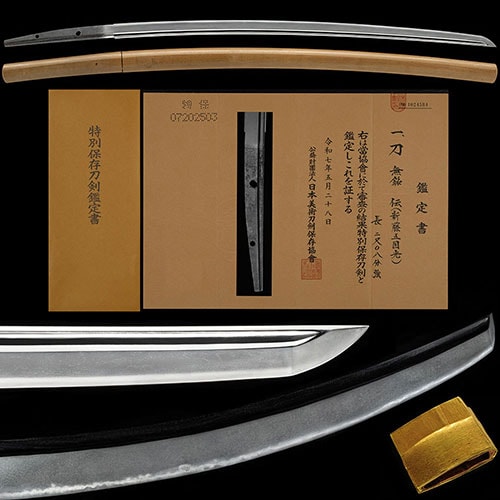
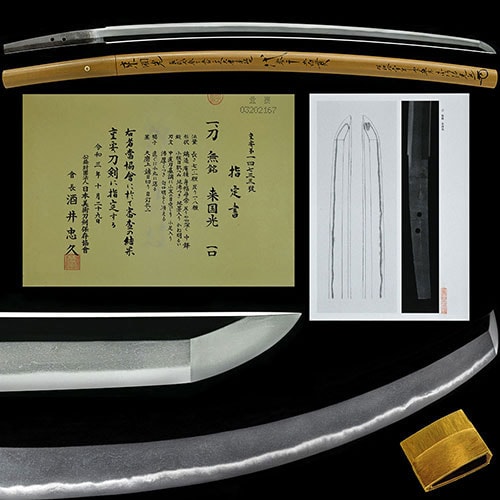
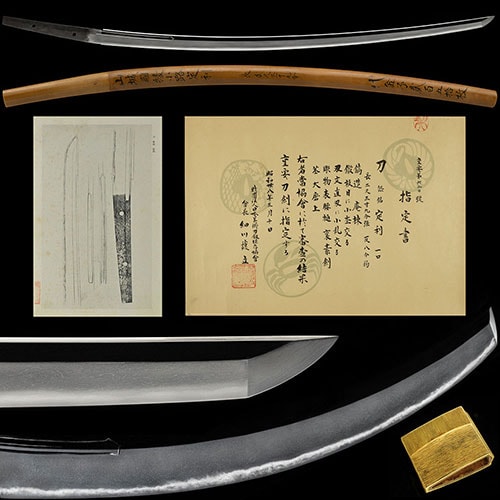
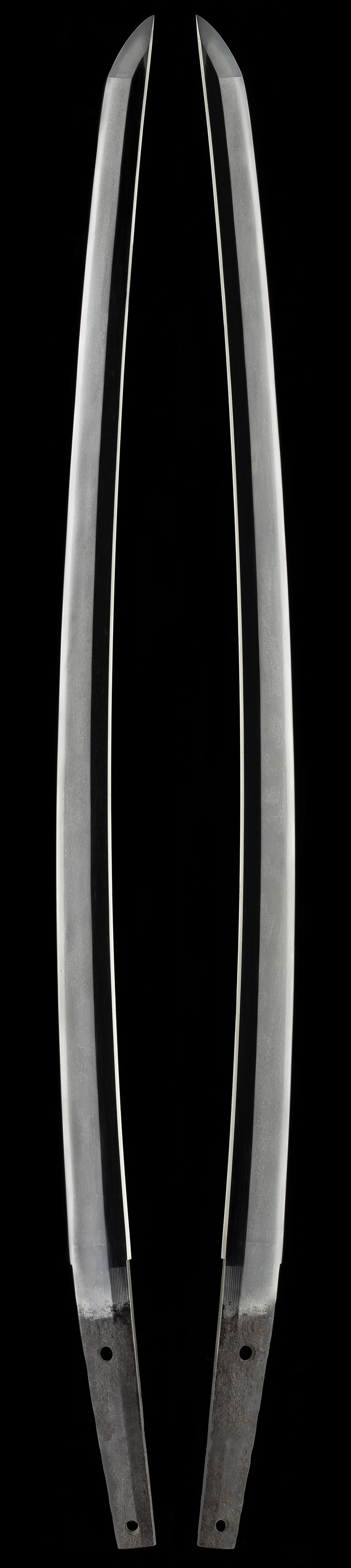
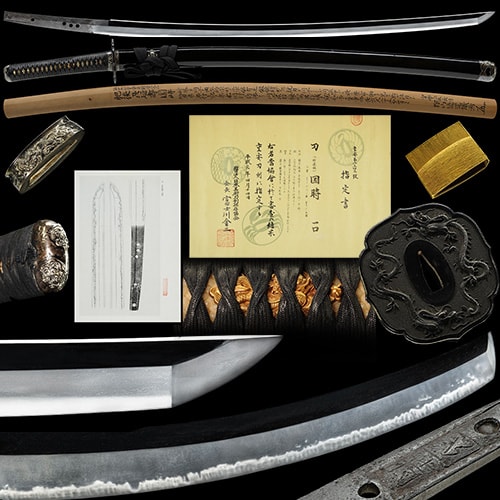
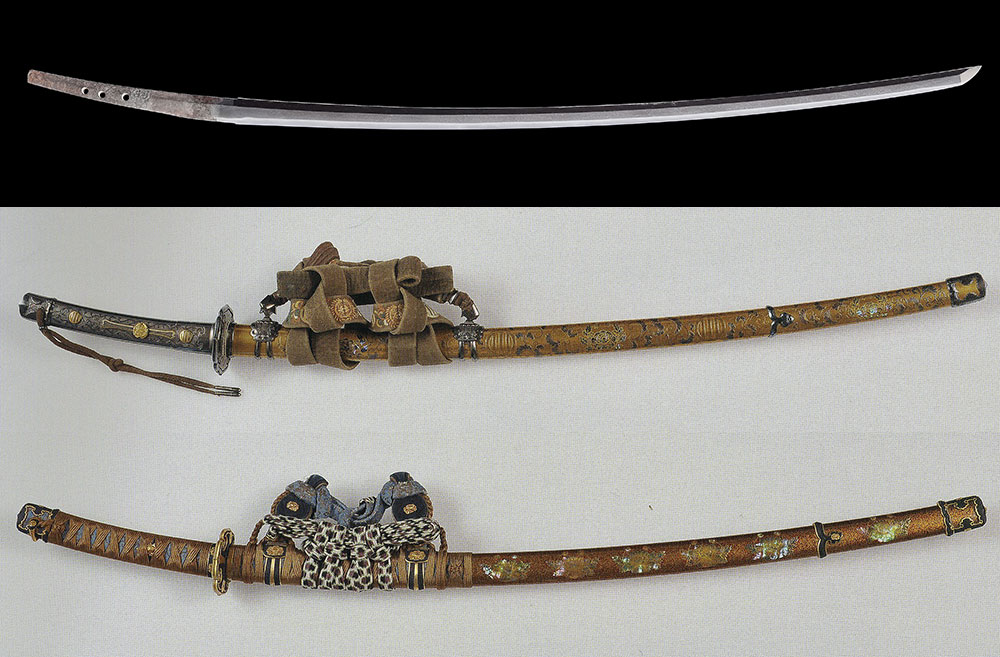
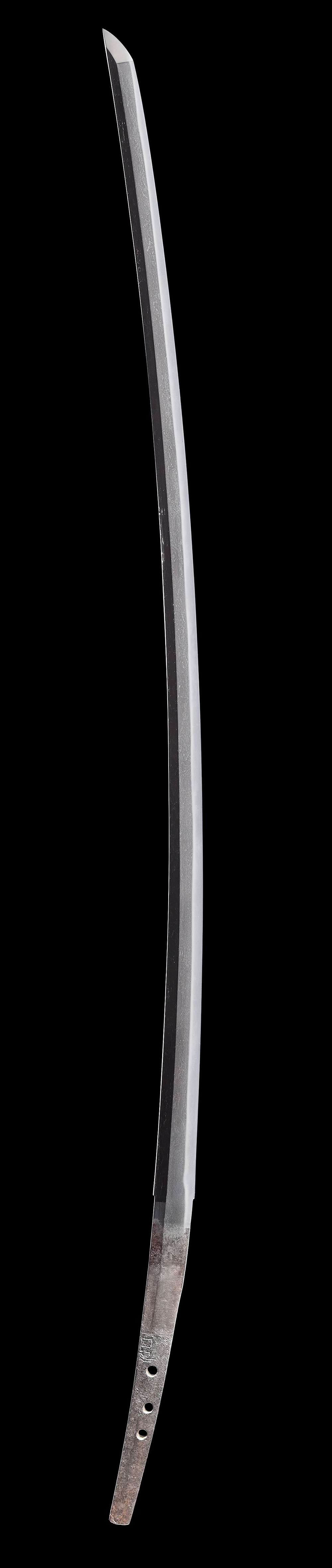
A rare Koto period tachi by Awata-guchi Kunitsuna, a smith from Yamashiro province active during the Kamakura period. This blade is a designated Juyo Token by the NBTHK and comes with two Juyo Tosogu koshirae. It was a treasured possession of the Date clan, specifically Date Tsunamura, the 4th lord of the Sendai domain.

NBTHK Setsumei

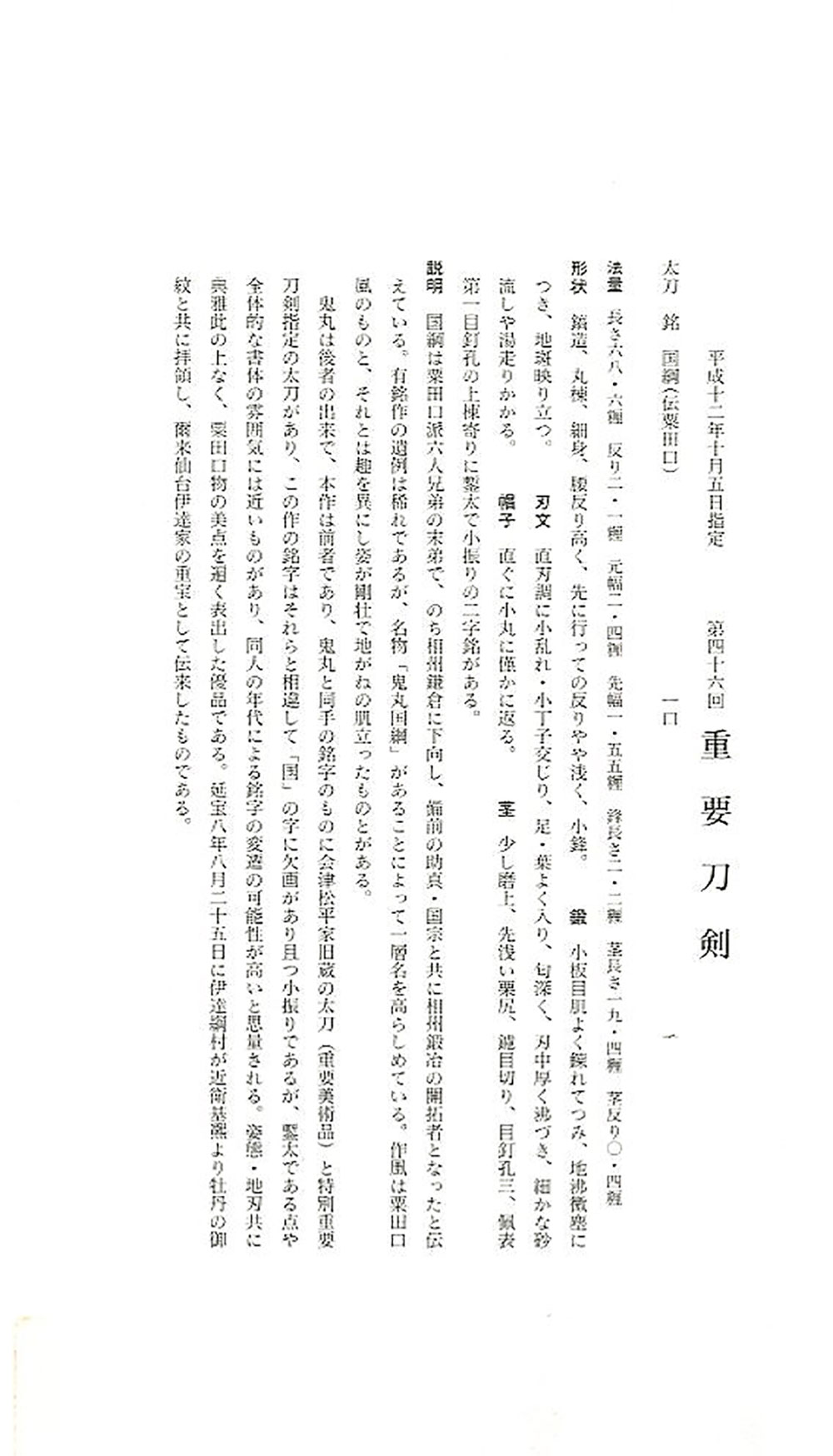
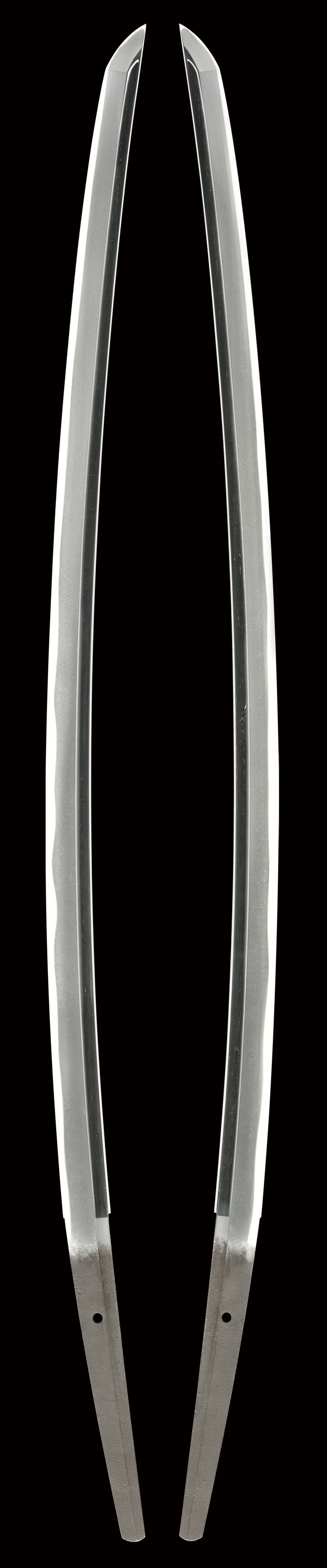
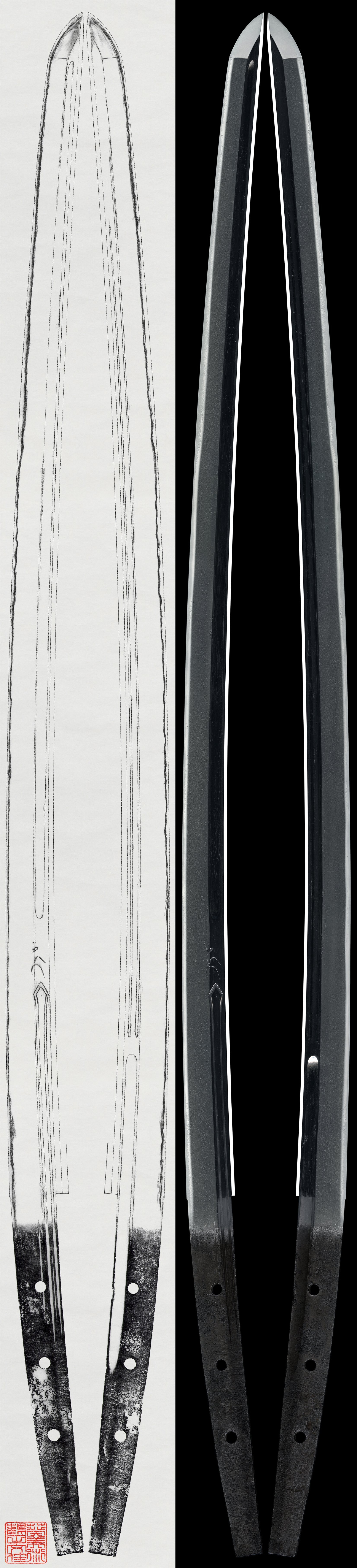
Jūyō-Tōken, 46th Session — Designated October 5, 2000 Tachi, mei: den Awataguchi Kunitsuna (国綱) Measurements Nagasa 68.6 cm, sori 2.1 cm, motohaba 2.4 cm, sakihaba 1.55 cm, kissaki-nagasa 2.0 cm, nakago-nagasa 19.4 cm, nakago-sori 0.4 cm Description Keijō: shinogi-zukuri, maru-mune; slender with high koshizori, the curvature becoming slightly shallower toward the tip; ko-kissaki. Kitae: Well-forged ko-itame-hada closely worked; very fine ji-nie; chihan-utsuri appears. Hamon: A suguha-based temper with ko-midare and ko-chōji intermingled; abundant ashi and yō; deep nioi; thick nie in the ha with fine sunagashi and yubashiri appearing. Bōshi: Straight, ending in ko-maru with a very slight kaeri. Horimono: None. Nakago: Slightly shortened; tip is shallow kurijiri; kiri-yasurime; three mekugi-ana; on the ha-omote, above the first mekugi-ana and toward the ridge (mune side), there is a small two-character signature cut with a thick chisel. Artisan Kunitsuna (国綱), Awataguchi school (den Awataguchi) Era Kamakura period (Kotō) Explanation Kunitsuna was the youngest of the six brothers of the Awataguchi group. It is transmitted that he later went down to Kamakura in Sagami Province and, together with Sukemasa and Kunimune of Bizen, became a pioneer in opening the way for Sōshū swordsmithing. Signed works by him are rare; moreover, his reputation is elevated all the more by the existence of the celebrated meibutsu “Onimaru Kunitsuna.” In terms of workmanship, there are works that follow an Awataguchi manner, and others of a different character—powerfully built, with a more standing texture in the jihada. The Onimaru belongs to the latter type, whereas this sword represents the former. Among signed pieces executed in the same general manner as the Onimaru, there are a tachi formerly in the possession of the Aizu Matsudaira family (designated Important Art Object) and another tachi designated Tokubetsu-Jūyō-Tōken. Compared with those, the signature on this work differs in that the character kuni (国) shows a missing stroke and the inscription is smaller; however, the thick-chisel cutting and the overall atmosphere of the calligraphy are close. It is therefore judged highly likely that this reflects a change in the maker’s manner of signing over time. Both the sugata and the ji-ha are supremely elegant, and this is an outstanding work that fully reveals the virtues of Awataguchi workmanship. On the 25th day of the 8th month of Enpō 8 (1680), Date Tsunamura received it from Konoe Motohiro together with the peony crest, and since then it has been transmitted as a treasured heirloom of the Sendai Date family.

NihontoWatch MonNihontoWatch
MarketEncyclopediaKantei
Swords›Yamashiro-den›Awataguchi›Kunitsuna›Koto Awata-guchi Kunitsuna Tachi with Koshirae
tachiJūyō
Awataguchi Kunitsuna

Koto Awata-guchi Kunitsuna Tachi with Koshirae

mei · Awata-Guchi · Kamakura · nagasa 68.6cm · sori 2.1cm

SOLD
Awataguchi Kunitsuna (國綱) · Awata-Guchi · KamakuraView artist page →
TachiJūyō
Could you name the smith from the blade alone? Today’s kantei →
Awataguchi Kunitsuna — 1 of 7
Awataguchi Kunitsuna — 2 of 7
Awataguchi Kunitsuna — 3 of 7
Awataguchi Kunitsuna — 4 of 7
Awataguchi Kunitsuna — 5 of 7
Awataguchi Kunitsuna — 6 of 7
Awataguchi Kunitsuna — 7 of 7
1 / 7
1 / 7
Awataguchi Kunitsuna — 1 of 7Awataguchi Kunitsuna — 2 of 7Awataguchi Kunitsuna — 3 of 7Awataguchi Kunitsuna — 4 of 7Awataguchi Kunitsuna — 5 of 7Awataguchi Kunitsuna — 6 of 7Awataguchi Kunitsuna — 7 of 7
Awataguchi Kunitsuna (國綱) · Awata-Guchi · KamakuraView artist page →
TachiJūyō
Could you name the smith from the blade alone? Today’s kantei →
Measurements & details
Smith
Awataguchi Kunitsuna
Type
Tachi
School
Awataguchi
Period
Around 1240–1264(Shoji)
Province
Yamashiro
Signature
Signed(83% of this smith's designated works are signed)
Measurements
Nagasa 68.6cmSori 2.1cmMotohaba 2.4cmSakihaba 1.5cmKasane 0.5cm
Description

A rare Koto period tachi by Awata-guchi Kunitsuna, a smith from Yamashiro province active during the Kamakura period. This blade is a designated Juyo Token by the NBTHK and comes with two Juyo Tosogu koshirae. It was a treasured possession of the Date clan, specifically Date Tsunamura, the 4th lord of the Sendai domain.

NBTHK Zufu Commentary

Juyo #46

AI translation — may contain errors

-, 46th Session — Designated October 5, 2000

, : Kunitsuna (国綱)

Measurements 68.6 cm, 2.1 cm, 2.4 cm, 1.55 cm, 2.0 cm, 19.4 cm, 0.4 cm

Description Keijō: , ; slender with high , the curvature becoming slightly shallower toward the tip; . : Well-forged closely worked; very fine ; appears. : A -based temper with and intermingled; abundant and ; deep ; thick in the with fine and appearing. : Straight, ending in with a very slight . : None. : Slightly shortened; tip is shallow ; ; three ; on the , above the first and toward the ridge ( side), there is a small two-character signature cut with a thick chisel.

Artisan Kunitsuna (国綱), school ( )

Era period ()

Explanation Kunitsuna was the youngest of the six brothers of the group. It is transmitted that he later went down to in Province and, together with Sukemasa and Kunimune of , became a pioneer in opening the way for swordsmithing. Signed works by him are rare; moreover, his reputation is elevated all the more by the existence of the celebrated “ Kunitsuna.”

In terms of workmanship, there are works that follow an manner, and others of a different character—powerfully built, with a more standing texture in the . The belongs to the latter type, whereas this sword represents the former.

Among signed pieces executed in the general manner as the , there are a formerly in the possession of the Aizu Matsudaira family (designated Important Art Object) and another designated -. Compared with those, the signature on this work differs in that the character (国) shows a missing stroke and the inscription is smaller; however, the thick-chisel cutting and the overall atmosphere of the calligraphy are close. It is therefore judged highly likely that this reflects a change in the maker’s manner of signing over time.

Both the and the are supremely elegant, and this is an outstanding work that fully reveals the virtues of workmanship. On the 25th day of the 8th month of Enpō 8 (1680), Date Tsunamura received it from Konoe Motohiro together with the peony crest, and since then it has been transmitted as a treasured heirloom of the Sendai Date family.

About the maker

Kunitsuna

國綱

Awataguchi (Yamashiro) · Yamashiro · around 1240-1264

Fujishiro Sai-jo saku · Tōken Taikan top 1%

›

Awataguchi Kunitsuna worked in early Kamakura Kyōto as the youngest of the six Awataguchi brothers, the eldest being Kunitomo, and he styled himself Tōroku Sakon. The published sources transmit that he later went down to Kamakura, summoned by the Hōjō, and there, together with Kunimune and Sukezane of Bizen, became one of the smiths who opened the way for the Sagami tradition. They also concede how little of his hand survives: genuine signed works that can be accepted with confidence are recorded as extremely few[[c:1]], the celebrated Onimaru Kunitsuna standing as the representative piece. He worked under the name 国綱, and a long ōdachi survives signed in full 鎌倉住藤六左近国綱 and dated 建長五年八月日, the only dated trace of the Kamakura years.

The published sources draw a sharp line between him and the rest of the school. Awataguchi work is generally an earnest, classical elegance, but his shape, his forging and his temper are called distinctive: a tachi with high koshizori that does not droop toward the tip, a forging in which the itame stands large and prominent over thickly laid ji-nie, and a wide, varied temper in which the ha-nie is conspicuously strong[[c:2]]. The way both ji and ha are vigorously animated, the sources say, is precisely the hallmark of his art[[c:3]]. This is the recognition core: where his brothers refine, Kunitsuna pushes the nie forward, and the steel leans toward the bold Sagami manner that was about to be born.

Over that jigane runs a suguha base in shallow notare, mixed with ko-midare, chōji and ko-gunome, with thick ashi and yō, the nioi deep and the interior of the ha thickly covered in nie; kinsuji run frequently, sunagashi hangs, and in places the habuchi shows hotsure with uchinoke and yubashiri. The jigane is the tight Awataguchi steel carried thick with ji-nie and chikei, often standing into ō-itame, with a mizukage rising from the togidame that connects into a jifu-utsuri-like midare-utsuri, an aspect the sources note as often seen in his work. The bōshi is where the older profile had to be corrected: it is not simply a calm ko-maru. On the Tokubetsu-Jūyō tachi it runs straight into a ko-maru with a slight kaeri and the point sweeps a little hakikake[[c:4]], and on the kinzōgan-mei katana it sweeps straight in hakikake toward a yakizume tendency[[c:5]]; elsewhere it enters midarekomi with a pointed turn. That swept, nie-broken point is as much his tell as the standing grain.

The published sources are explicit that he has two faces. There are pieces in the orthodox Awataguchi manner, and there are works of a different cast, robust in form with a standing jihada[[c:6]]. The Onimaru belongs to the second, robust group; many of the surviving signed tachi belong to the first, where the forging tightens to a finer ko-itame, the temper a calmer suguha base, the whole quieter and more obviously of the court tradition. For the kantei eye the two faces share the same engine: the conspicuous ha-nie, the busy kinsuji and sunagashi, the midare-utsuri, and the swept hakikake bōshi. The subdued, sunken nioiguchi on the quieter tachi parts him from bright Bizen; the openly strong nie and the standing grain part him from the orthodox Awataguchi suguha of his brothers.

The Onimaru is the heart of his fame and the reason a smith of so few blades is known to every collector. Its later transmission reads as a history of power, passing through the great houses and into the Imperial collection, where it survives as an Imperial heirloom and one of the Five Great Swords, shown to almost no one. The published record names, beside it, a Tokubetsu-Jūyō tachi once held by the Viscount Nishitakatsuji family and an Important Art Object once owned by the Aizu Matsudaira house, and counts among the Important Cultural Properties attributed to him the tachi preserved at Hie Shrine. The kinzōgan and kinpun attributions on several of the shortened katana, cut by Hon'ami Kōson and his line, show how seriously the Hon'ami house took a Kunitsuna ascription.

For the collector this is among the rarest of the Awataguchi names. Fujishiro grades him Sai-jō saku, and his finest signed work descends through houses of the first rank: the Tosa Yamanouchi family held one kinzōgan-mei katana, and the Sendai Date family received another tachi from Konoe Motohiro and kept it as a treasured heirloom. A handful fall in the Tokubetsu-Jūyō and Jūyō tiers, with a small body of Important Cultural Properties, while the masterpiece itself can never leave the Imperial collection. A signed Kunitsuna in private hands is therefore one of the scarcest things a student of the early Kamakura sword can hope to meet, and the very scarcity is part of why his Sagami descent, by tradition the bridge that ran on to Shintōgo Kunimitsu and the Sōshū line, carries the weight that it does.

Historical importance

Where Kunitsuna stands among comparable artisans: across all of nihontō, and within tradition, era, and period. The tiers (Foremost · Leading · Major · Notable) weigh official designations from the NBTHK and Japan's Agency for Cultural Affairs, together with historical honors of lasting repute such as the Sansaku and Meibutsu-chō.

随一
Foremost
屈指
Leading
有数
Major
著名
Notable

Select a lens to see how it's measured.

Designation record
18 designated works
Jūyō Bunkazai
5
Jūyō Bijutsuhin
3
Gyobutsu (Imperial)
1
Tokubetsu Jūyō
4
Jūyō
5
Kunitsuna — full profileAwataguchi (Yamashiro) school

Dated Works

Years he was demonstrably active, proven by signed-and-dated blades

Active period
1253Editorial estimate: 1240–1264
1 of 9 designated works carry a date

Study this maker →

About the school

Awataguchi

粟田口

Yamashiro-den · Yamashiro

4 pieces on the market now

›

The steel is the first thing one learns to read in Awataguchi work: a ko-itame kneaded so tight that the surface takes on the pear-skin sheen the texts name nashiji-hada, the ji-nie dusted over it fine and even, slender chikei threading through, the whole carrying a moist luster (潤い) and a clarity that recurs in notice after notice. This is the steel of the early Yamashiro tradition at its summit. The forge stood at the foot of the Awataguchi slope in Kyoto, on the highway running toward Omi, and a community of smiths already worked there by the early Kamakura period; the tale collection Uji Shui Monogatari attests their presence, so this is a house with a documented place in the literature of its own century. The school is conventionally founded on the six brothers, Kunitomo the eldest, then Hisakuni, Kuniyasu, Kunikiyo, Arikuni and Kunitsuna, sons of the founder Kunika (also given as Kuniie). Kunitomo, Hisakuni and Kuniyasu were summoned as goban-kaji to forge on rotation at the cloistered court of the Retired Emperor Go-Toba, and Hisakuni is even transmitted as a teacher to the sovereign; that imperial patronage is the reason a slender tachi with so quiet a temper carries the authority it does. What binds the house across four generations is restraint married to refinement. Over the nashiji-hada the brothers set a calm suguha leaning into a shallow notare, mixed with ko-midare, ko-gunome and ko-choji, the nioiguchi tight and bright, ko-ashi and yo entering, kinsuji and sunagashi running within the ha; the boshi turns in a refined ko-maru that very often sweeps with hakikake. This is the opposite pole from the clove-flower flamboyance of contemporary Bizen, an edge whose interest lies in the activity within rather than the height of the pattern. Within that shared vocabulary the members are told apart by habit. Kunitomo and Kuniyasu hold to the compressed ko-midare of the founding generation, their nioiguchi clouding into urumi; Kuniyasu's linked ko-gunome picks him out alone within the school.

Kunitsuna is the divergence, a robust o-itame standing prominently over thick ji-nie, with conspicuously strong ha-nie that leans toward the Sagami manner about to be born. The later course runs through Norikuni, the bridge generation, into the tanto age of Kuniyoshi and Yoshimitsu, where the temper settles into bright suguha in fine ko-nie. Kuniyoshi's tell is the nijuba, the doubled (at times trebled) line along the ha; Yoshimitsu's is the linear kuisagari dropping of nie into the ji beneath the boshi, his suguha a narrow hoso-suguha under a bright nioiguchi. For the collector the school divides into work that can be studied and work that can be owned. Its summit, Toshiro Yoshimitsu, crowns the close of the line; paired with Shintogo Kunimitsu of Sagami as a master of the tanto and a virtuoso of suguha, and ranked in the Edo period with Masamune and Go among the Three Great Works under Heaven, he is a smith met in the great collections rather than possessed, his signed tanto the standard against which every attribution is measured. His teacher Kuniyoshi, whose nashiji-hada the texts name outright, is by Awataguchi measure not wholly beyond reach, his o-suriage mumei katana anchored on the doubled line. The house also seeded the eastern tradition: Kunitsuna's transmitted descent runs on to Shintogo Kunimitsu, the de facto founder of Soshu, whose own refined nashiji steel passes for Awataguchi until the chikei and kinsuji betray it, and from whose quiet nie-laden suguha Yukimitsu, Masamune and Norishige drew the nie-midare of the mature tradition. The refined nie-suguha the brothers fixed was likewise the wellspring the Rai masters drew from, the two hands sitting so close in the eye that gold-inlaid Rai attributions appear on blades grouped with Hisakuni. To kantei an Awataguchi blade is to read the pear-skin steel first, then the quiet nie-laden suguha, then the swept boshi, and to know which brother or pupil the habits name; to acquire one, of any generation, is among the scarcest encounters early Yamashiro affords. Learn more →

16 recorded smiths226 designated works
Leading smiths
SmithEraDesignated
Yoshimitsu吉光1259-126044
Kuniyoshi國吉1275-127851
Kunitsuna國綱1240-126418
Hisakuni久國1190-119921
Norikuni則國1222-122415
Explore the Awataguchi school →

Historical context

Yamashiro in the Kamakura period

›

Power sat in Kamakura, but taste was still made in Kyōto. The Awataguchi school’s pear-skin steel became a byword for perfection, and the Rai line supplied dignified tachi to the court, senior warriors, and the great temples alike.

Yamashiro in the Kamakura period →

NBTHK Certificate
Jūyō Tōken重要刀剣
Important Sword
›

A blade of top-grade workmanship and condition, formally judged to rank with a nationally recognized Important Art Object (Jūyō Bijutsuhin). Awarded only at the NBTHK’s competitive annual examination.

Of Japan’s roughly 2.5 million registered swords, only 12,307 (about 1 in 203) have ever attained Jūyō.

About the NBTHK›

The NBTHK (Nihon Bijutsu Tōken Hozon Kyōkai, the Society for the Preservation of Japanese Art Swords) is a public-interest incorporated foundation founded in 1948 and supervised by Japan’s Agency for Cultural Affairs (Bunkachō); it is based at the Japanese Sword Museum in Tokyo. Its expert panels physically examine each submitted work (shinsa) and issue a certificate (kanteishō) ranking it by artistic and historical merit. NBTHK papers are the most widely recognized standard of authentication for Japanese swords and fittings.

NBTHK official site→
Seller
I
Iida Koendo
Established 1880 · 146 yrs on the market
🇯🇵Ships from Japan
›
✓Verified dealeriidakoendo.com
✓Ships worldwide✓English supportWire transfer
Return policy

Customer-initiated returns accepted within two days of arrival; return shipping paid by customer and fees non-refundable. Returns/refunds unavailable for overseas deliveries.

View all of Iida Koendo’s listings→View this item on the dealer’s site→

More from the Awataguchi school

View all →
Samurai Nippon
Tokujū
Katana - Tokuju - by Awataguchi Kuniyoshi - Mumei (Attributed to Awataguchi Kuniyoshi)Katana - Tokuju - by Awataguchi Kuniyoshi - Mumei (Attributed to Awataguchi Kuniyoshi)

Katana

ByAwataguchi Kuniyoshi
Ask
Eirakudo
Tokuho
Katana - Tokuho - by Shintogo Kunimitsu - Shintogo Kunimitsu - Tokubetsu Hozon TokenKatana - Tokuho - by Shintogo Kunimitsu - Shintogo Kunimitsu - Tokubetsu Hozon Token

Katana

ByShintogo Kunimitsu
¥7,500,000
Aoi Art
Tokuho
Katana - Tokuho - by Shintogo Kunimitsu - Unsigned (Attributed to Shintogo)Katana - Tokuho - by Shintogo Kunimitsu - Unsigned (Attributed to Shintogo)

Katana

ByShintogo Kunimitsu
¥7,800,000

More from the Yamashiro tradition

View all →
Choshuya
Jūyō
Tanto - Jūyō - by Rai Kunitoshi - Rai KunitoshiTanto - Jūyō - by Rai Kunitoshi - Rai Kunitoshi

Tantō

ByRai Kunitoshi
Ask
Eirakudo
Jūyō
Katana - Jūyō - by Rai Kunimitsu - Raikunimitsu - Juyo TokenKatana - Jūyō - by Rai Kunimitsu - Raikunimitsu - Juyo Token

Katana

ByRai Kunimitsu
¥7,800,000
Eirakudo
Tokuho
Katana - Tokuho - by Nakajima Rai School - Nakajima Rai - Tokubetsu Hozon TokenKatana - Tokuho - by Nakajima Rai School - Nakajima Rai - Tokubetsu Hozon Token

Katana

ByNakajima Rai School
¥2,300,000
Choshuya
Tokuho
Tanto - Tokuho - by Rai Kunitoshi - Rai KunitoshiTanto - Tokuho - by Rai Kunitoshi - Rai Kunitoshi

Tantō

ByRai Kunitoshi
¥4,300,000
Yazawa Shokai
Tokuho
Tachi - Tokuho - by Rai Kuniyuki - Consignment: Rai Kuniyuki Mid-Kamakura Period, Blade Length 69.7cm, Sori 1.9cm, in Shirasaya with Tachi KoshiraeTachi - Tokuho - by Rai Kuniyuki - Consignment: Rai Kuniyuki Mid-Kamakura Period, Blade Length 69.7cm, Sori 1.9cm, in Shirasaya with Tachi Koshirae

Tachi

ByRai Kuniyuki
¥3,000,000
Eirakudo
Jūyō
Tachi - Jūyō - by Ayanokoji Sadatoshi - Sadatoshi - Juyo TokenTachi - Jūyō - by Ayanokoji Sadatoshi - Sadatoshi - Juyo Token

Tachi

ByAyanokoji Sadatoshi
¥7,700,000
Eirakudo
Tokuho
Kodachi - Tokuho - by Ryokai School - Ryokai Kodachi - Tokubetsu Hozon TokenKodachi - Tokuho - by Ryokai School - Ryokai Kodachi - Tokubetsu Hozon Token

Kodachi

ByRyokai School
¥1,300,000
Eirakudo
Jūyō
Katana - Jūyō - by Enju Kunitoki - Kunitoki Katana Juyo TokenKatana - Jūyō - by Enju Kunitoki - Kunitoki Katana Juyo Token

Katana

ByEnju Kunitoki
Ask

Swords

  • Katana
  • Wakizashi
  • Tantō
  • Tachi
  • Naginata
  • Yari
  • Japanese Swords
  • Samurai Swords

Fittings

  • Tsuba
  • Fuchi-Kashira
  • Kozuka
  • Menuki
  • Sword Guards (Tsuba)

Armor

  • Kabuto
  • Samurai Armor
  • All Samurai Armor

By Certification

  • Tokujū
  • Jūyō
  • Tokuho
  • Hozon

Resources

  • Dealer Directory
  • Artist Directory
  • The Daily Kantei
  • Glossary
  • Browse All
Nihontowatch© 2026
TermsPrivacyCookiesAbout
Sold

Description

A rare Koto period tachi by Awata-guchi Kunitsuna, a smith from Yamashiro province active during the Kamakura period. This blade is a designated Juyo Token by the NBTHK and comes with two Juyo Tosogu koshirae. It was a treasured possession of the Date clan, specifically Date Tsunamura, the 4th lord of the Sendai domain.

NBTHK Setsumei

Jūyō-Tōken, 46th Session — Designated October 5, 2000 Tachi, mei: den Awataguchi Kunitsuna (国綱) Measurements Nagasa 68.6 cm, sori 2.1 cm, motohaba 2.4 cm, sakihaba 1.55 cm, kissaki-nagasa 2.0 cm, nakago-nagasa 19.4 cm, nakago-sori 0.4 cm Description Keijō: shinogi-zukuri, maru-mune; slender with high koshizori, the curvature becoming slightly shallower toward the tip; ko-kissaki. Kitae: Well-forged ko-itame-hada closely worked; very fine ji-nie; chihan-utsuri appears. Hamon: A suguha-based temper with ko-midare and ko-chōji intermingled; abundant ashi and yō; deep nioi; thick nie in the ha with fine sunagashi and yubashiri appearing. Bōshi: Straight, ending in ko-maru with a very slight kaeri. Horimono: None. Nakago: Slightly shortened; tip is shallow kurijiri; kiri-yasurime; three mekugi-ana; on the ha-omote, above the first mekugi-ana and toward the ridge (mune side), there is a small two-character signature cut with a thick chisel. Artisan Kunitsuna (国綱), Awataguchi school (den Awataguchi) Era Kamakura period (Kotō) Explanation Kunitsuna was the youngest of the six brothers of the Awataguchi group. It is transmitted that he later went down to Kamakura in Sagami Province and, together with Sukemasa and Kunimune of Bizen, became a pioneer in opening the way for Sōshū swordsmithing. Signed works by him are rare; moreover, his reputation is elevated all the more by the existence of the celebrated meibutsu “Onimaru Kunitsuna.” In terms of workmanship, there are works that follow an Awataguchi manner, and others of a different character—powerfully built, with a more standing texture in the jihada. The Onimaru belongs to the latter type, whereas this sword represents the former. Among signed pieces executed in the same general manner as the Onimaru, there are a tachi formerly in the possession of the Aizu Matsudaira family (designated Important Art Object) and another tachi designated Tokubetsu-Jūyō-Tōken. Compared with those, the signature on this work differs in that the character kuni (国) shows a missing stroke and the inscription is smaller; however, the thick-chisel cutting and the overall atmosphere of the calligraphy are close. It is therefore judged highly likely that this reflects a change in the maker’s manner of signing over time. Both the sugata and the ji-ha are supremely elegant, and this is an outstanding work that fully reveals the virtues of Awataguchi workmanship. On the 25th day of the 8th month of Enpō 8 (1680), Date Tsunamura received it from Konoe Motohiro together with the peony crest, and since then it has been transmitted as a treasured heirloom of the Sendai Date family.

NihontoWatch MonNihontoWatch
MarketEncyclopediaKantei
Swords›Yamashiro-den›Awataguchi›Kunitsuna›Koto Awata-guchi Kunitsuna Tachi with Koshirae
tachiJūyō
Awataguchi Kunitsuna

Koto Awata-guchi Kunitsuna Tachi with Koshirae

mei · Awata-Guchi · Kamakura · nagasa 68.6cm · sori 2.1cm

SOLD
Awataguchi Kunitsuna (國綱) · Awata-Guchi · KamakuraView artist page →
TachiJūyō
Could you name the smith from the blade alone? Today’s kantei →
Awataguchi Kunitsuna — 1 of 7
Awataguchi Kunitsuna — 2 of 7
Awataguchi Kunitsuna — 3 of 7
Awataguchi Kunitsuna — 4 of 7
Awataguchi Kunitsuna — 5 of 7
Awataguchi Kunitsuna — 6 of 7
Awataguchi Kunitsuna — 7 of 7
1 / 7
1 / 7
Awataguchi Kunitsuna — 1 of 7Awataguchi Kunitsuna — 2 of 7Awataguchi Kunitsuna — 3 of 7Awataguchi Kunitsuna — 4 of 7Awataguchi Kunitsuna — 5 of 7Awataguchi Kunitsuna — 6 of 7Awataguchi Kunitsuna — 7 of 7
Awataguchi Kunitsuna (國綱) · Awata-Guchi · KamakuraView artist page →
TachiJūyō
Could you name the smith from the blade alone? Today’s kantei →
Measurements & details
Smith
Awataguchi Kunitsuna
Type
Tachi
School
Awataguchi
Period
Around 1240–1264(Shoji)
Province
Yamashiro
Signature
Signed(83% of this smith's designated works are signed)
Measurements
Nagasa 68.6cmSori 2.1cmMotohaba 2.4cmSakihaba 1.5cmKasane 0.5cm
Description

A rare Koto period tachi by Awata-guchi Kunitsuna, a smith from Yamashiro province active during the Kamakura period. This blade is a designated Juyo Token by the NBTHK and comes with two Juyo Tosogu koshirae. It was a treasured possession of the Date clan, specifically Date Tsunamura, the 4th lord of the Sendai domain.

NBTHK Zufu Commentary

Juyo #46

AI translation — may contain errors

-, 46th Session — Designated October 5, 2000

, : Kunitsuna (国綱)

Measurements 68.6 cm, 2.1 cm, 2.4 cm, 1.55 cm, 2.0 cm, 19.4 cm, 0.4 cm

Description Keijō: , ; slender with high , the curvature becoming slightly shallower toward the tip; . : Well-forged closely worked; very fine ; appears. : A -based temper with and intermingled; abundant and ; deep ; thick in the with fine and appearing. : Straight, ending in with a very slight . : None. : Slightly shortened; tip is shallow ; ; three ; on the , above the first and toward the ridge ( side), there is a small two-character signature cut with a thick chisel.

Artisan Kunitsuna (国綱), school ( )

Era period ()

Explanation Kunitsuna was the youngest of the six brothers of the group. It is transmitted that he later went down to in Province and, together with Sukemasa and Kunimune of , became a pioneer in opening the way for swordsmithing. Signed works by him are rare; moreover, his reputation is elevated all the more by the existence of the celebrated “ Kunitsuna.”

In terms of workmanship, there are works that follow an manner, and others of a different character—powerfully built, with a more standing texture in the . The belongs to the latter type, whereas this sword represents the former.

Among signed pieces executed in the general manner as the , there are a formerly in the possession of the Aizu Matsudaira family (designated Important Art Object) and another designated -. Compared with those, the signature on this work differs in that the character (国) shows a missing stroke and the inscription is smaller; however, the thick-chisel cutting and the overall atmosphere of the calligraphy are close. It is therefore judged highly likely that this reflects a change in the maker’s manner of signing over time.

Both the and the are supremely elegant, and this is an outstanding work that fully reveals the virtues of workmanship. On the 25th day of the 8th month of Enpō 8 (1680), Date Tsunamura received it from Konoe Motohiro together with the peony crest, and since then it has been transmitted as a treasured heirloom of the Sendai Date family.

About the maker

Kunitsuna

國綱

Awataguchi (Yamashiro) · Yamashiro · around 1240-1264

Fujishiro Sai-jo saku · Tōken Taikan top 1%

›

Awataguchi Kunitsuna worked in early Kamakura Kyōto as the youngest of the six Awataguchi brothers, the eldest being Kunitomo, and he styled himself Tōroku Sakon. The published sources transmit that he later went down to Kamakura, summoned by the Hōjō, and there, together with Kunimune and Sukezane of Bizen, became one of the smiths who opened the way for the Sagami tradition. They also concede how little of his hand survives: genuine signed works that can be accepted with confidence are recorded as extremely few[[c:1]], the celebrated Onimaru Kunitsuna standing as the representative piece. He worked under the name 国綱, and a long ōdachi survives signed in full 鎌倉住藤六左近国綱 and dated 建長五年八月日, the only dated trace of the Kamakura years.

The published sources draw a sharp line between him and the rest of the school. Awataguchi work is generally an earnest, classical elegance, but his shape, his forging and his temper are called distinctive: a tachi with high koshizori that does not droop toward the tip, a forging in which the itame stands large and prominent over thickly laid ji-nie, and a wide, varied temper in which the ha-nie is conspicuously strong[[c:2]]. The way both ji and ha are vigorously animated, the sources say, is precisely the hallmark of his art[[c:3]]. This is the recognition core: where his brothers refine, Kunitsuna pushes the nie forward, and the steel leans toward the bold Sagami manner that was about to be born.

Over that jigane runs a suguha base in shallow notare, mixed with ko-midare, chōji and ko-gunome, with thick ashi and yō, the nioi deep and the interior of the ha thickly covered in nie; kinsuji run frequently, sunagashi hangs, and in places the habuchi shows hotsure with uchinoke and yubashiri. The jigane is the tight Awataguchi steel carried thick with ji-nie and chikei, often standing into ō-itame, with a mizukage rising from the togidame that connects into a jifu-utsuri-like midare-utsuri, an aspect the sources note as often seen in his work. The bōshi is where the older profile had to be corrected: it is not simply a calm ko-maru. On the Tokubetsu-Jūyō tachi it runs straight into a ko-maru with a slight kaeri and the point sweeps a little hakikake[[c:4]], and on the kinzōgan-mei katana it sweeps straight in hakikake toward a yakizume tendency[[c:5]]; elsewhere it enters midarekomi with a pointed turn. That swept, nie-broken point is as much his tell as the standing grain.

The published sources are explicit that he has two faces. There are pieces in the orthodox Awataguchi manner, and there are works of a different cast, robust in form with a standing jihada[[c:6]]. The Onimaru belongs to the second, robust group; many of the surviving signed tachi belong to the first, where the forging tightens to a finer ko-itame, the temper a calmer suguha base, the whole quieter and more obviously of the court tradition. For the kantei eye the two faces share the same engine: the conspicuous ha-nie, the busy kinsuji and sunagashi, the midare-utsuri, and the swept hakikake bōshi. The subdued, sunken nioiguchi on the quieter tachi parts him from bright Bizen; the openly strong nie and the standing grain part him from the orthodox Awataguchi suguha of his brothers.

The Onimaru is the heart of his fame and the reason a smith of so few blades is known to every collector. Its later transmission reads as a history of power, passing through the great houses and into the Imperial collection, where it survives as an Imperial heirloom and one of the Five Great Swords, shown to almost no one. The published record names, beside it, a Tokubetsu-Jūyō tachi once held by the Viscount Nishitakatsuji family and an Important Art Object once owned by the Aizu Matsudaira house, and counts among the Important Cultural Properties attributed to him the tachi preserved at Hie Shrine. The kinzōgan and kinpun attributions on several of the shortened katana, cut by Hon'ami Kōson and his line, show how seriously the Hon'ami house took a Kunitsuna ascription.

For the collector this is among the rarest of the Awataguchi names. Fujishiro grades him Sai-jō saku, and his finest signed work descends through houses of the first rank: the Tosa Yamanouchi family held one kinzōgan-mei katana, and the Sendai Date family received another tachi from Konoe Motohiro and kept it as a treasured heirloom. A handful fall in the Tokubetsu-Jūyō and Jūyō tiers, with a small body of Important Cultural Properties, while the masterpiece itself can never leave the Imperial collection. A signed Kunitsuna in private hands is therefore one of the scarcest things a student of the early Kamakura sword can hope to meet, and the very scarcity is part of why his Sagami descent, by tradition the bridge that ran on to Shintōgo Kunimitsu and the Sōshū line, carries the weight that it does.
Historical importance

Where Kunitsuna stands among comparable artisans: across all of nihontō, and within tradition, era, and period. The tiers (Foremost · Leading · Major · Notable) weigh official designations from the NBTHK and Japan's Agency for Cultural Affairs, together with historical honors of lasting repute such as the Sansaku and Meibutsu-chō.

随一
Foremost
屈指
Leading
有数
Major
著名
Notable

Select a lens to see how it's measured.

Designation record
18 designated works
Jūyō Bunkazai
5
Jūyō Bijutsuhin
3
Gyobutsu (Imperial)
1
Tokubetsu Jūyō
4
Jūyō
5
Kunitsuna — full profileAwataguchi (Yamashiro) school

Dated Works

Years he was demonstrably active, proven by signed-and-dated blades

Active period
1253Editorial estimate: 1240–1264
1 of 9 designated works carry a date

Study this maker →

About the school

Awataguchi

粟田口

Yamashiro-den · Yamashiro

4 pieces on the market now

›

The steel is the first thing one learns to read in Awataguchi work: a ko-itame kneaded so tight that the surface takes on the pear-skin sheen the texts name nashiji-hada, the ji-nie dusted over it fine and even, slender chikei threading through, the whole carrying a moist luster (潤い) and a clarity that recurs in notice after notice. This is the steel of the early Yamashiro tradition at its summit. The forge stood at the foot of the Awataguchi slope in Kyoto, on the highway running toward Omi, and a community of smiths already worked there by the early Kamakura period; the tale collection Uji Shui Monogatari attests their presence, so this is a house with a documented place in the literature of its own century. The school is conventionally founded on the six brothers, Kunitomo the eldest, then Hisakuni, Kuniyasu, Kunikiyo, Arikuni and Kunitsuna, sons of the founder Kunika (also given as Kuniie). Kunitomo, Hisakuni and Kuniyasu were summoned as goban-kaji to forge on rotation at the cloistered court of the Retired Emperor Go-Toba, and Hisakuni is even transmitted as a teacher to the sovereign; that imperial patronage is the reason a slender tachi with so quiet a temper carries the authority it does. What binds the house across four generations is restraint married to refinement. Over the nashiji-hada the brothers set a calm suguha leaning into a shallow notare, mixed with ko-midare, ko-gunome and ko-choji, the nioiguchi tight and bright, ko-ashi and yo entering, kinsuji and sunagashi running within the ha; the boshi turns in a refined ko-maru that very often sweeps with hakikake. This is the opposite pole from the clove-flower flamboyance of contemporary Bizen, an edge whose interest lies in the activity within rather than the height of the pattern. Within that shared vocabulary the members are told apart by habit. Kunitomo and Kuniyasu hold to the compressed ko-midare of the founding generation, their nioiguchi clouding into urumi; Kuniyasu's linked ko-gunome picks him out alone within the school.

Kunitsuna is the divergence, a robust o-itame standing prominently over thick ji-nie, with conspicuously strong ha-nie that leans toward the Sagami manner about to be born. The later course runs through Norikuni, the bridge generation, into the tanto age of Kuniyoshi and Yoshimitsu, where the temper settles into bright suguha in fine ko-nie. Kuniyoshi's tell is the nijuba, the doubled (at times trebled) line along the ha; Yoshimitsu's is the linear kuisagari dropping of nie into the ji beneath the boshi, his suguha a narrow hoso-suguha under a bright nioiguchi. For the collector the school divides into work that can be studied and work that can be owned. Its summit, Toshiro Yoshimitsu, crowns the close of the line; paired with Shintogo Kunimitsu of Sagami as a master of the tanto and a virtuoso of suguha, and ranked in the Edo period with Masamune and Go among the Three Great Works under Heaven, he is a smith met in the great collections rather than possessed, his signed tanto the standard against which every attribution is measured. His teacher Kuniyoshi, whose nashiji-hada the texts name outright, is by Awataguchi measure not wholly beyond reach, his o-suriage mumei katana anchored on the doubled line. The house also seeded the eastern tradition: Kunitsuna's transmitted descent runs on to Shintogo Kunimitsu, the de facto founder of Soshu, whose own refined nashiji steel passes for Awataguchi until the chikei and kinsuji betray it, and from whose quiet nie-laden suguha Yukimitsu, Masamune and Norishige drew the nie-midare of the mature tradition. The refined nie-suguha the brothers fixed was likewise the wellspring the Rai masters drew from, the two hands sitting so close in the eye that gold-inlaid Rai attributions appear on blades grouped with Hisakuni. To kantei an Awataguchi blade is to read the pear-skin steel first, then the quiet nie-laden suguha, then the swept boshi, and to know which brother or pupil the habits name; to acquire one, of any generation, is among the scarcest encounters early Yamashiro affords. Learn more →

16 recorded smiths226 designated works
Leading smiths
SmithEraDesignated
Yoshimitsu吉光1259-126044
Kuniyoshi國吉1275-127851
Kunitsuna國綱1240-126418
Hisakuni久國1190-119921
Norikuni則國1222-122415
Explore the Awataguchi school →

Historical context

Yamashiro in the Kamakura period

›

Power sat in Kamakura, but taste was still made in Kyōto. The Awataguchi school’s pear-skin steel became a byword for perfection, and the Rai line supplied dignified tachi to the court, senior warriors, and the great temples alike.

Yamashiro in the Kamakura period →

NBTHK Certificate
Jūyō Tōken重要刀剣
Important Sword
›

A blade of top-grade workmanship and condition, formally judged to rank with a nationally recognized Important Art Object (Jūyō Bijutsuhin). Awarded only at the NBTHK’s competitive annual examination.

Of Japan’s roughly 2.5 million registered swords, only 12,307 (about 1 in 203) have ever attained Jūyō.

About the NBTHK›

The NBTHK (Nihon Bijutsu Tōken Hozon Kyōkai, the Society for the Preservation of Japanese Art Swords) is a public-interest incorporated foundation founded in 1948 and supervised by Japan’s Agency for Cultural Affairs (Bunkachō); it is based at the Japanese Sword Museum in Tokyo. Its expert panels physically examine each submitted work (shinsa) and issue a certificate (kanteishō) ranking it by artistic and historical merit. NBTHK papers are the most widely recognized standard of authentication for Japanese swords and fittings.

NBTHK official site→
Seller
I
Iida Koendo
Established 1880 · 146 yrs on the market
🇯🇵Ships from Japan
›
✓Verified dealeriidakoendo.com
✓Ships worldwide✓English supportWire transfer
Return policy

Customer-initiated returns accepted within two days of arrival; return shipping paid by customer and fees non-refundable. Returns/refunds unavailable for overseas deliveries.

View all of Iida Koendo’s listings→View this item on the dealer’s site→

More from the Awataguchi school

View all →
Samurai Nippon
Tokujū
Katana - Tokuju - by Awataguchi Kuniyoshi - Mumei (Attributed to Awataguchi Kuniyoshi)Katana - Tokuju - by Awataguchi Kuniyoshi - Mumei (Attributed to Awataguchi Kuniyoshi)

Katana

ByAwataguchi Kuniyoshi
Ask
Eirakudo
Tokuho
Katana - Tokuho - by Shintogo Kunimitsu - Shintogo Kunimitsu - Tokubetsu Hozon TokenKatana - Tokuho - by Shintogo Kunimitsu - Shintogo Kunimitsu - Tokubetsu Hozon Token

Katana

ByShintogo Kunimitsu
¥7,500,000
Aoi Art
Tokuho
Katana - Tokuho - by Shintogo Kunimitsu - Unsigned (Attributed to Shintogo)Katana - Tokuho - by Shintogo Kunimitsu - Unsigned (Attributed to Shintogo)

Katana

ByShintogo Kunimitsu
¥7,800,000

More from the Yamashiro tradition

View all →
Choshuya
Jūyō
Tanto - Jūyō - by Rai Kunitoshi - Rai KunitoshiTanto - Jūyō - by Rai Kunitoshi - Rai Kunitoshi

Tantō

ByRai Kunitoshi
Ask
Eirakudo
Jūyō
Katana - Jūyō - by Rai Kunimitsu - Raikunimitsu - Juyo TokenKatana - Jūyō - by Rai Kunimitsu - Raikunimitsu - Juyo Token

Katana

ByRai Kunimitsu
¥7,800,000
Eirakudo
Tokuho
Katana - Tokuho - by Nakajima Rai School - Nakajima Rai - Tokubetsu Hozon TokenKatana - Tokuho - by Nakajima Rai School - Nakajima Rai - Tokubetsu Hozon Token

Katana

ByNakajima Rai School
¥2,300,000
Choshuya
Tokuho
Tanto - Tokuho - by Rai Kunitoshi - Rai KunitoshiTanto - Tokuho - by Rai Kunitoshi - Rai Kunitoshi

Tantō

ByRai Kunitoshi
¥4,300,000
Yazawa Shokai
Tokuho
Tachi - Tokuho - by Rai Kuniyuki - Consignment: Rai Kuniyuki Mid-Kamakura Period, Blade Length 69.7cm, Sori 1.9cm, in Shirasaya with Tachi KoshiraeTachi - Tokuho - by Rai Kuniyuki - Consignment: Rai Kuniyuki Mid-Kamakura Period, Blade Length 69.7cm, Sori 1.9cm, in Shirasaya with Tachi Koshirae

Tachi

ByRai Kuniyuki
¥3,000,000
Eirakudo
Jūyō
Tachi - Jūyō - by Ayanokoji Sadatoshi - Sadatoshi - Juyo TokenTachi - Jūyō - by Ayanokoji Sadatoshi - Sadatoshi - Juyo Token

Tachi

ByAyanokoji Sadatoshi
¥7,700,000
Eirakudo
Tokuho
Kodachi - Tokuho - by Ryokai School - Ryokai Kodachi - Tokubetsu Hozon TokenKodachi - Tokuho - by Ryokai School - Ryokai Kodachi - Tokubetsu Hozon Token

Kodachi

ByRyokai School
¥1,300,000
Eirakudo
Jūyō
Katana - Jūyō - by Enju Kunitoki - Kunitoki Katana Juyo TokenKatana - Jūyō - by Enju Kunitoki - Kunitoki Katana Juyo Token

Katana

ByEnju Kunitoki
Ask

Swords

  • Katana
  • Wakizashi
  • Tantō
  • Tachi
  • Naginata
  • Yari
  • Japanese Swords
  • Samurai Swords

Fittings

  • Tsuba
  • Fuchi-Kashira
  • Kozuka
  • Menuki
  • Sword Guards (Tsuba)

Armor

  • Kabuto
  • Samurai Armor
  • All Samurai Armor

By Certification

  • Tokujū
  • Jūyō
  • Tokuho
  • Hozon

Resources

  • Dealer Directory
  • Artist Directory
  • The Daily Kantei
  • Glossary
  • Browse All
Nihontowatch© 2026
TermsPrivacyCookiesAbout
Sold
NihontoWatch MonNihontoWatch
Market
Encyclopedia
Kantei
NihontoWatch MonNihontoWatch
Market
Encyclopedia
Kantei