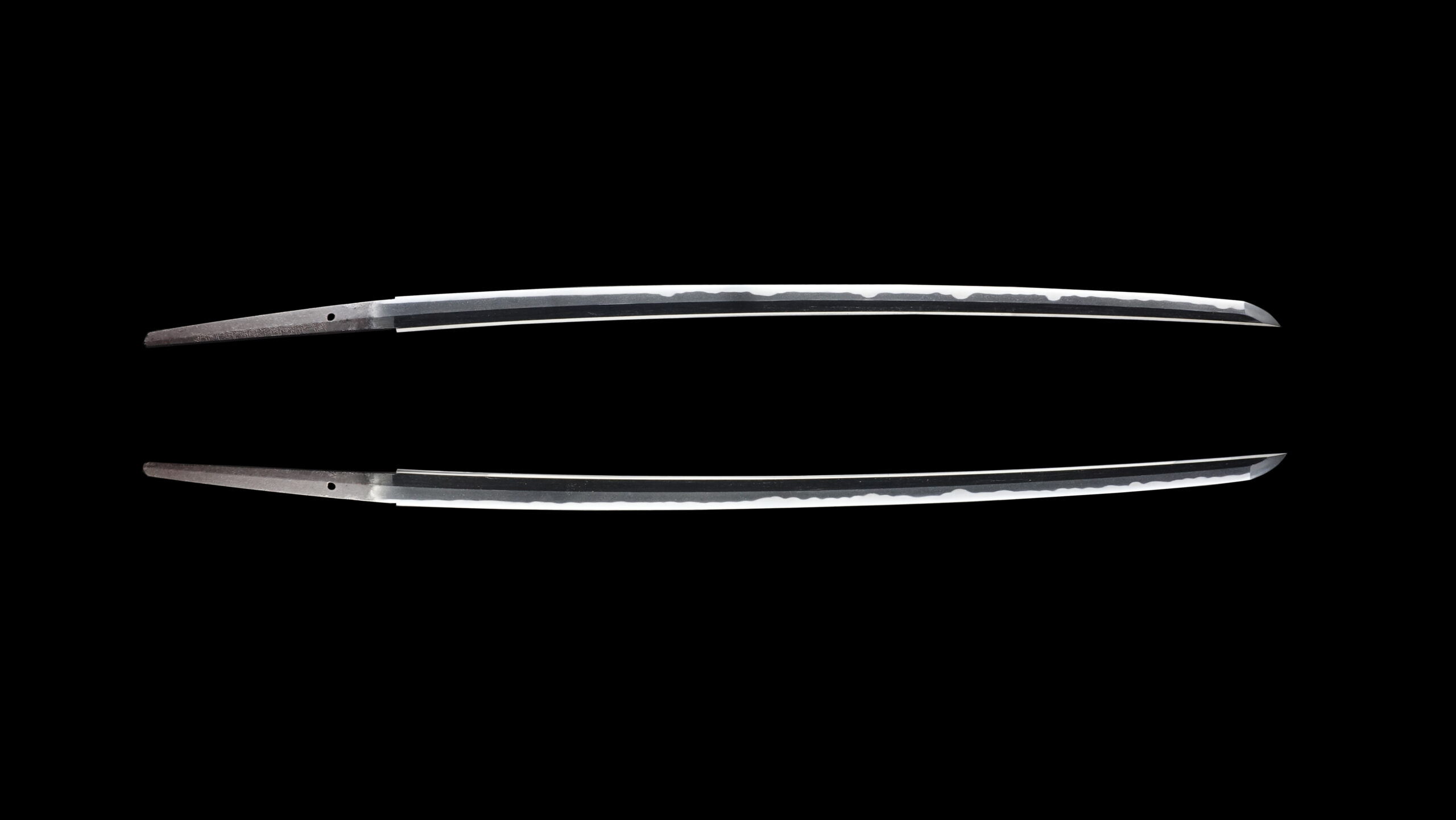
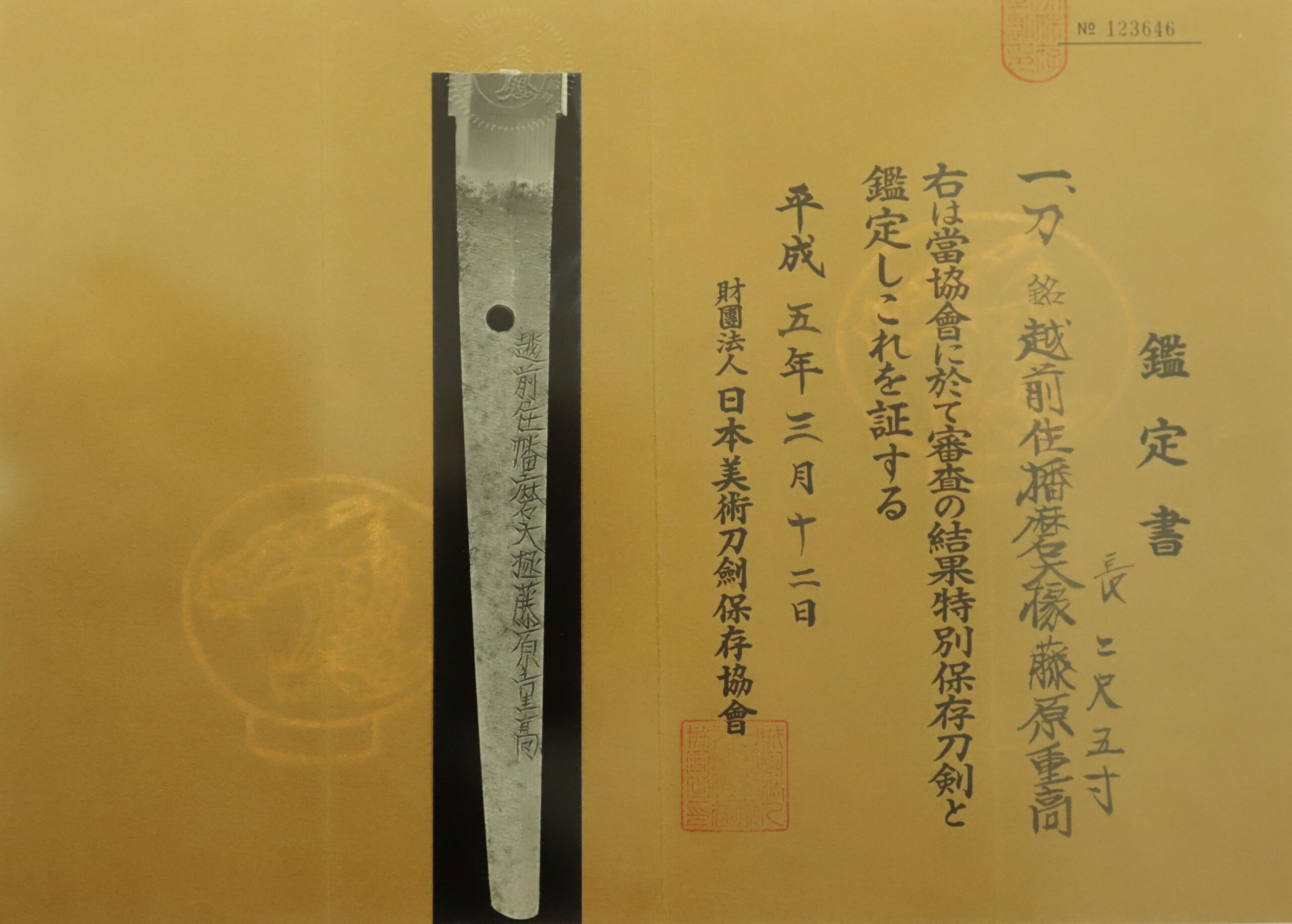
Shigetaka signed Harima Daijō Fujiwara Shigetaka, often adding Echizen-jū, and the published sources identify him as a pupil of the first-generation Echizen Yasutsugu who was skilled in the manner of his master. A wakizashi dated in the Genna era survives and fixes his period in the first years of the Edo period. The name ran on through several generations to the bakumatsu, but the sources hold that the first generation was by far the most skilled, and that some of his work reaches a level that approaches the first Yasutsugu himself[[c:1]]. Surviving work by the shodai is not common. Katana are few, hira-zukuri wakizashi relatively many, and his tanto are made in hira-zukuri or kanmuri-otoshi form.
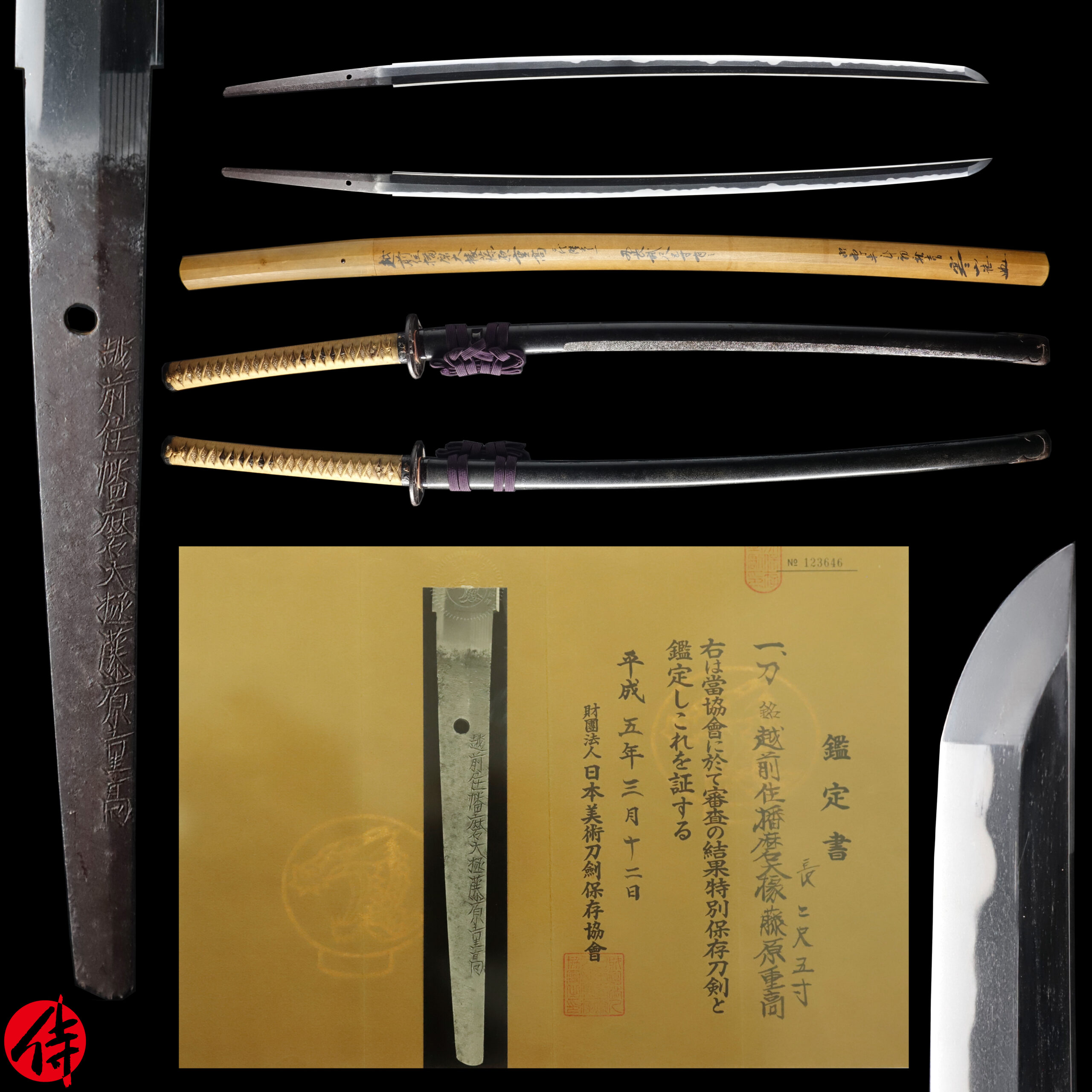
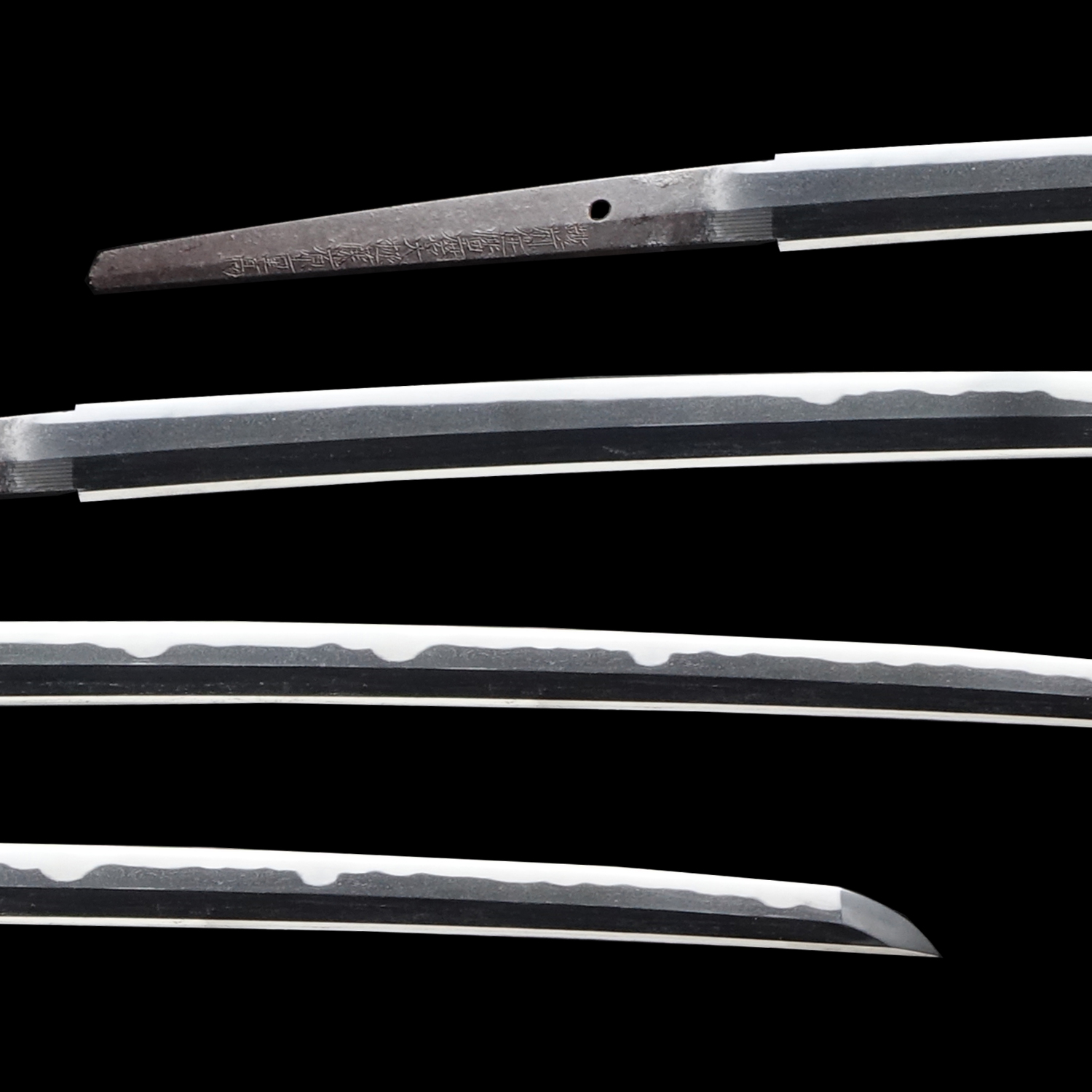
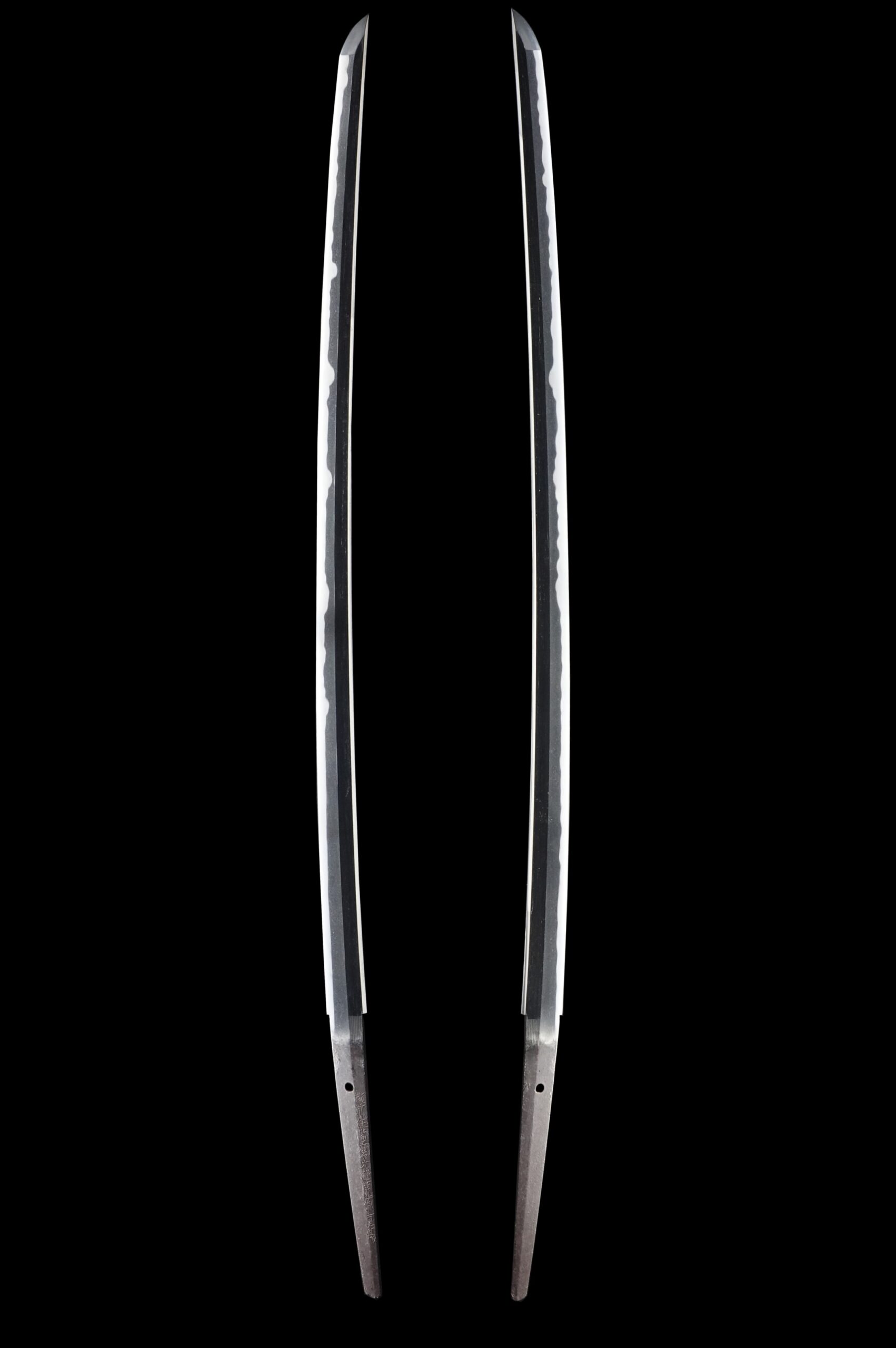
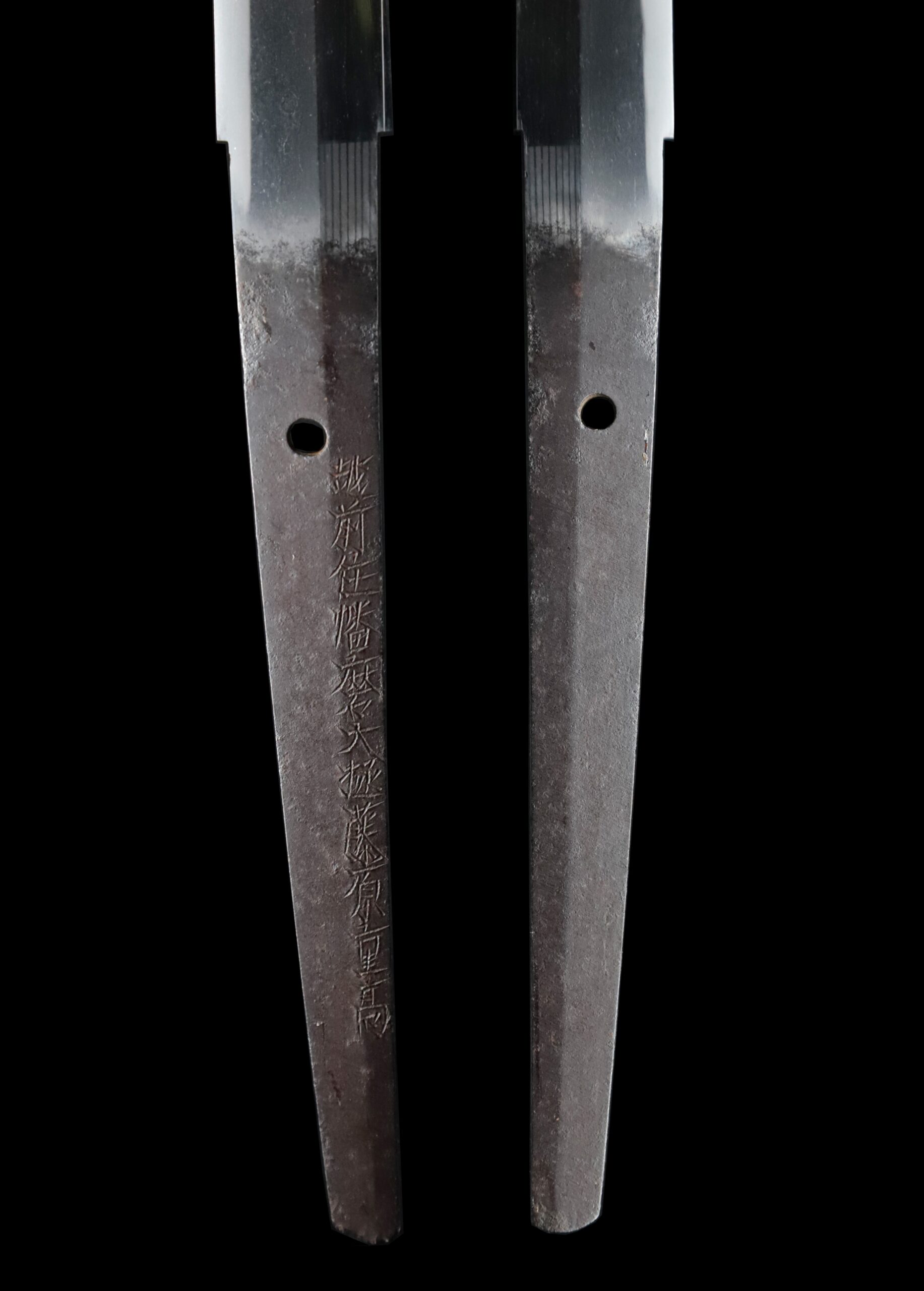
The most constant mark of his hand lies in the tang. Where Yasutsugu and most of the Echizen smiths cut the nakago tip to a sword shape, Shigetaka finishes it in a chestnut-shaped kuri-jiri, a point the published sources say "deserves special mention"[[c:2]]. The kuri-jiri continues through every generation, the shodai's a little shallower. His signature is squat and cut with a thick chisel, while the later generations write slightly elongated, squared characters with a thin chisel.
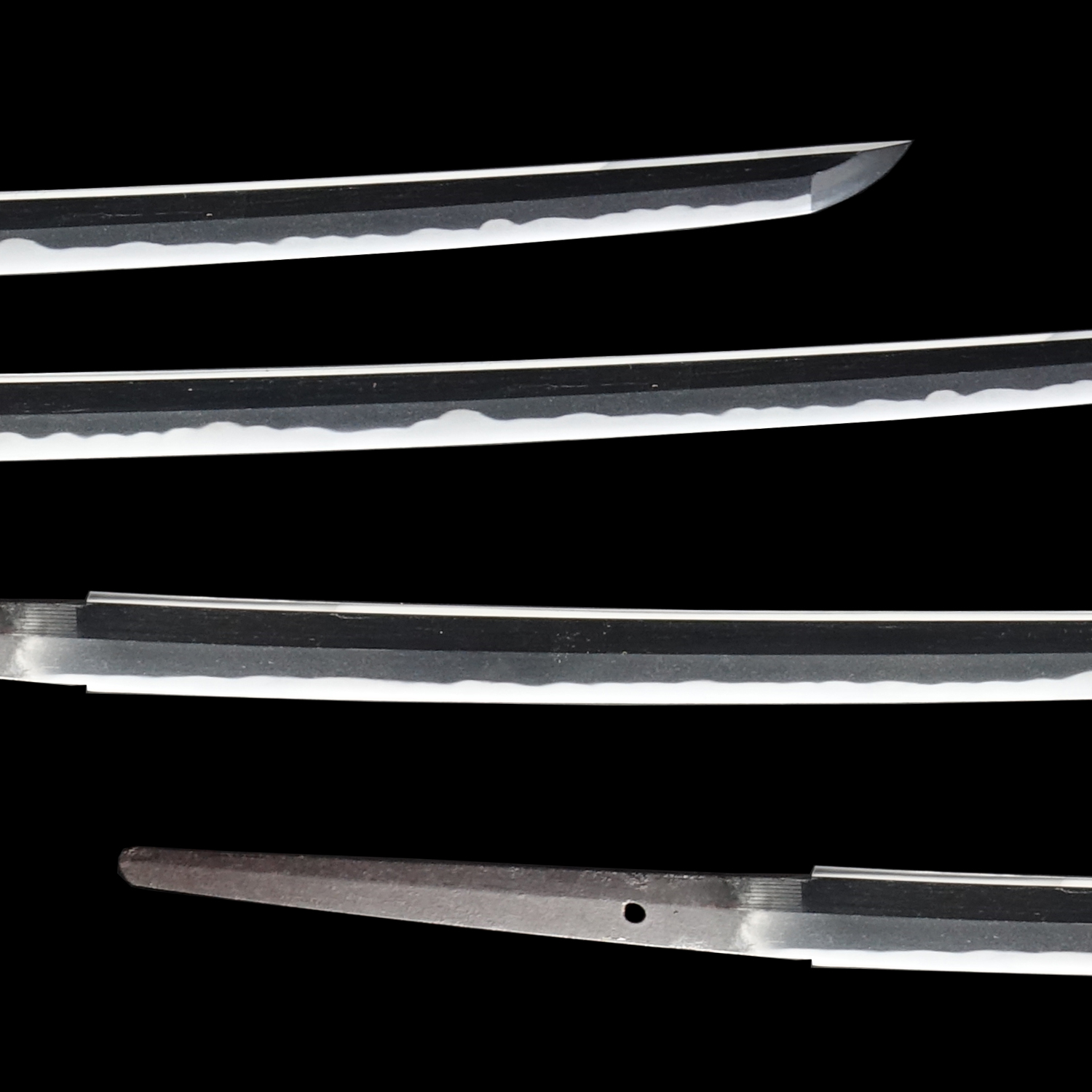
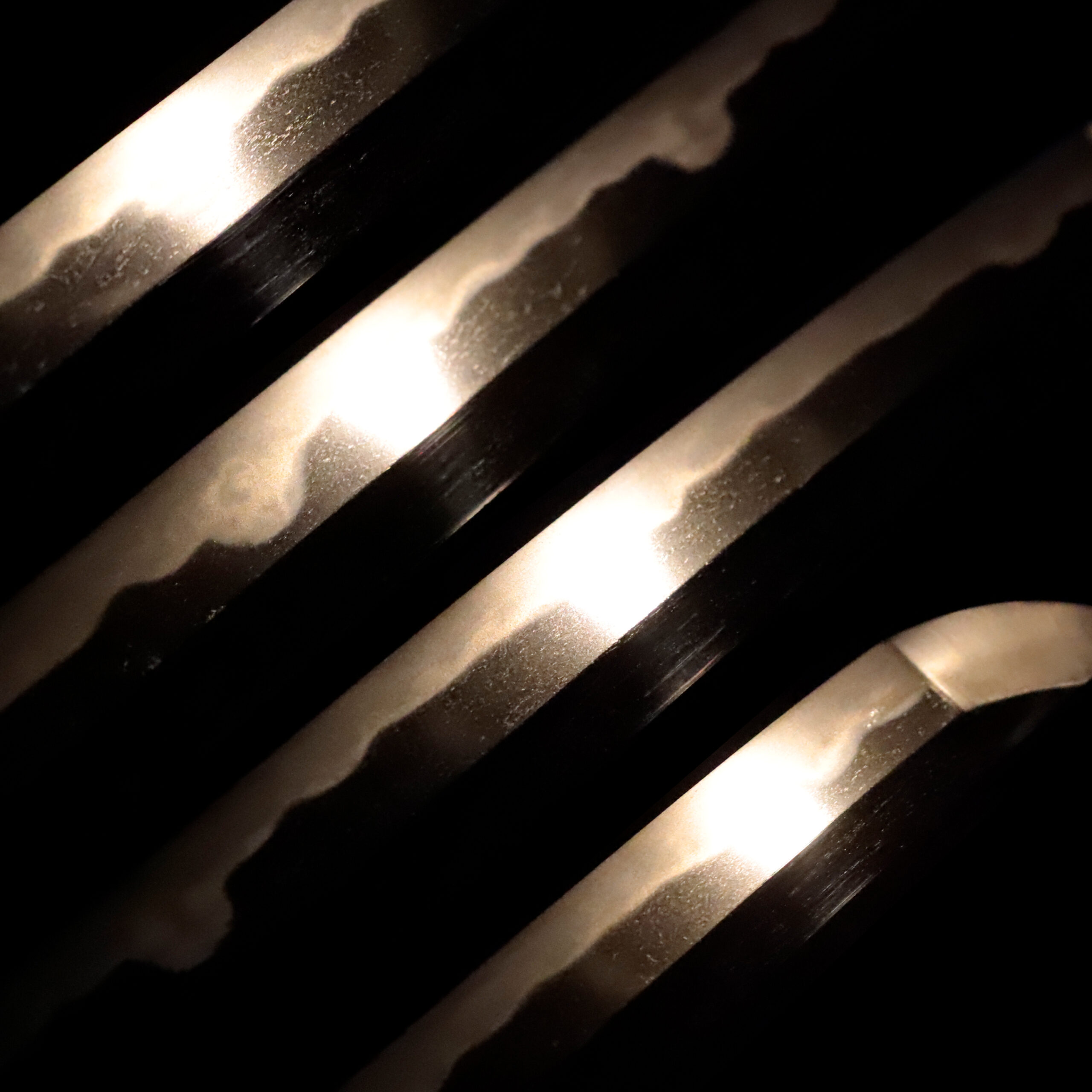
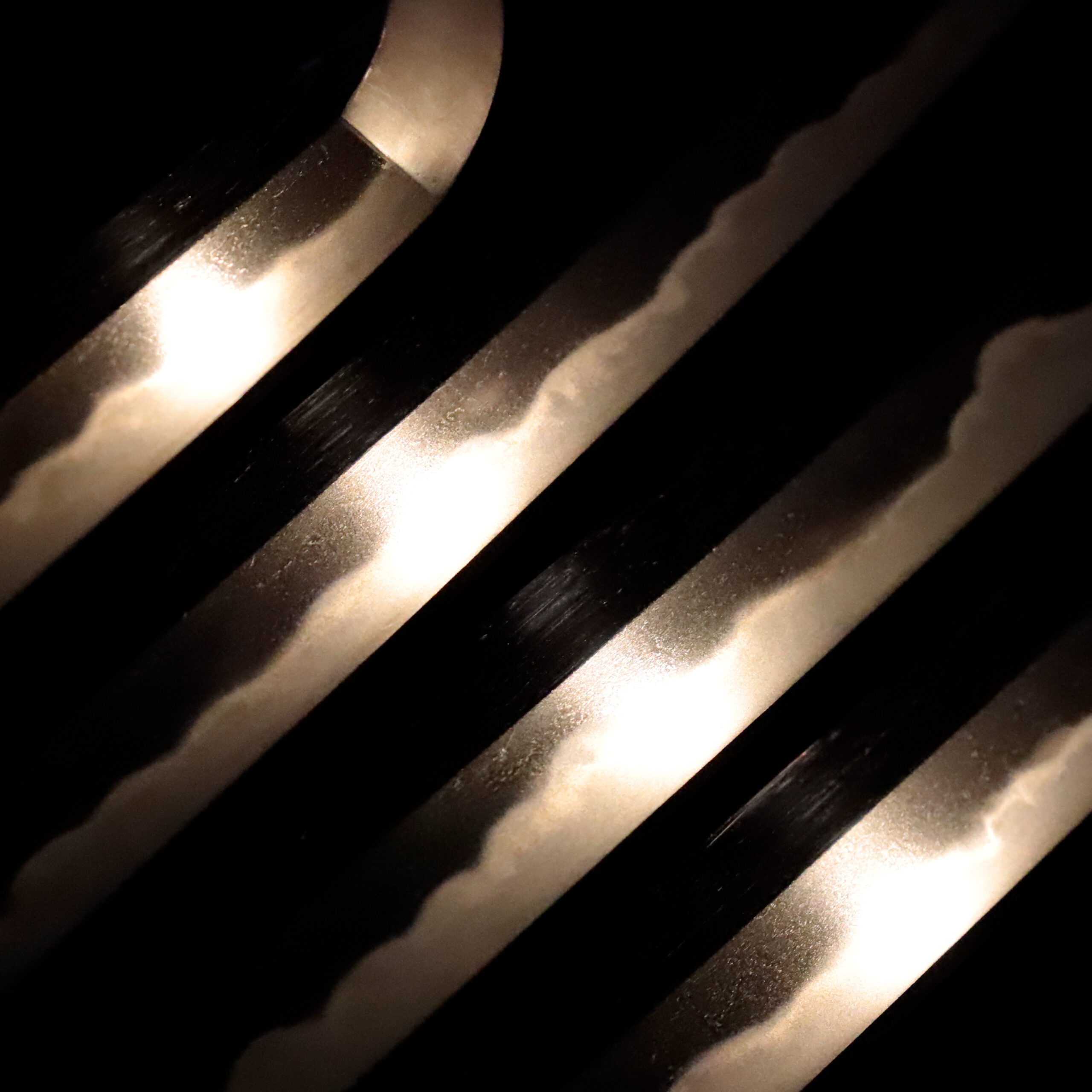
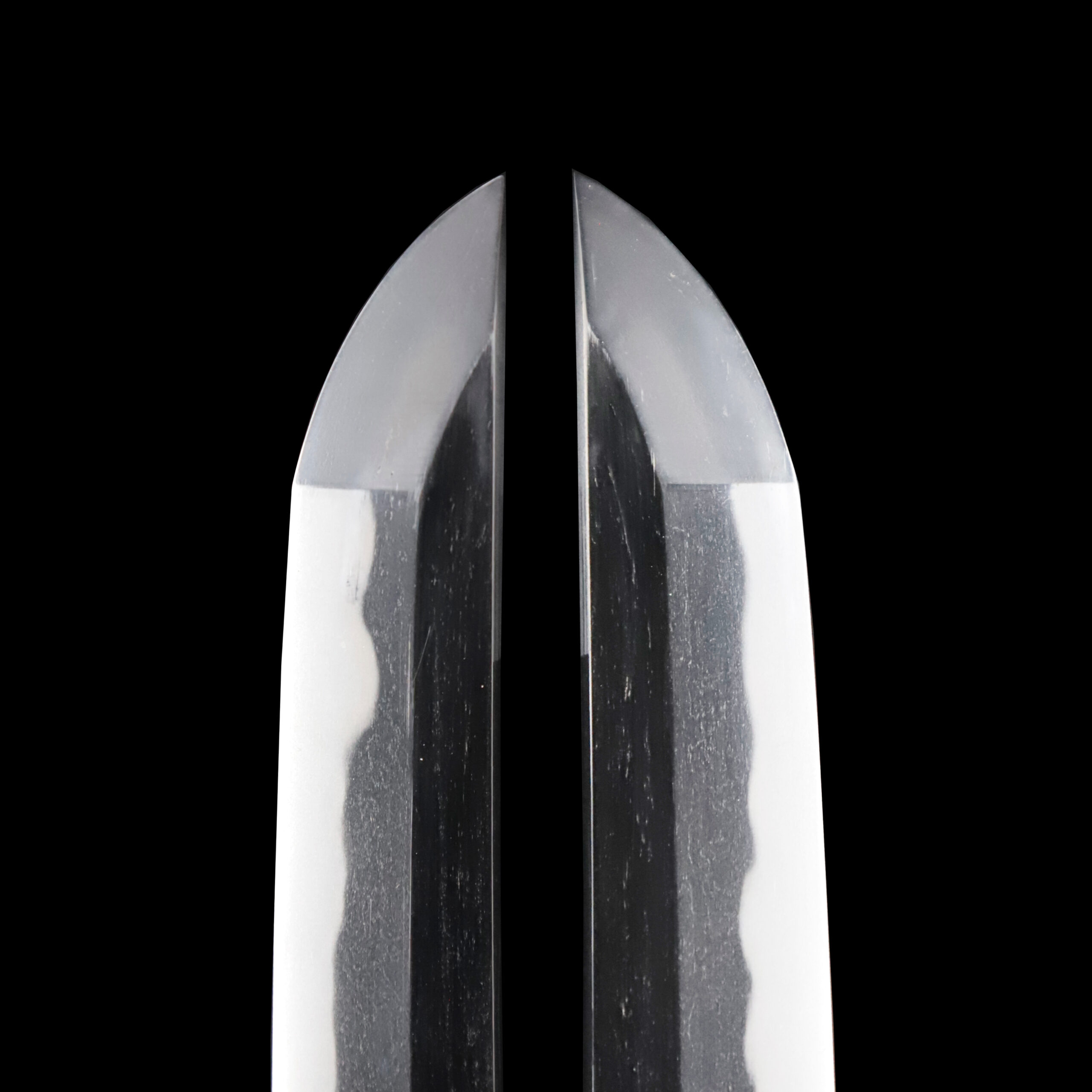
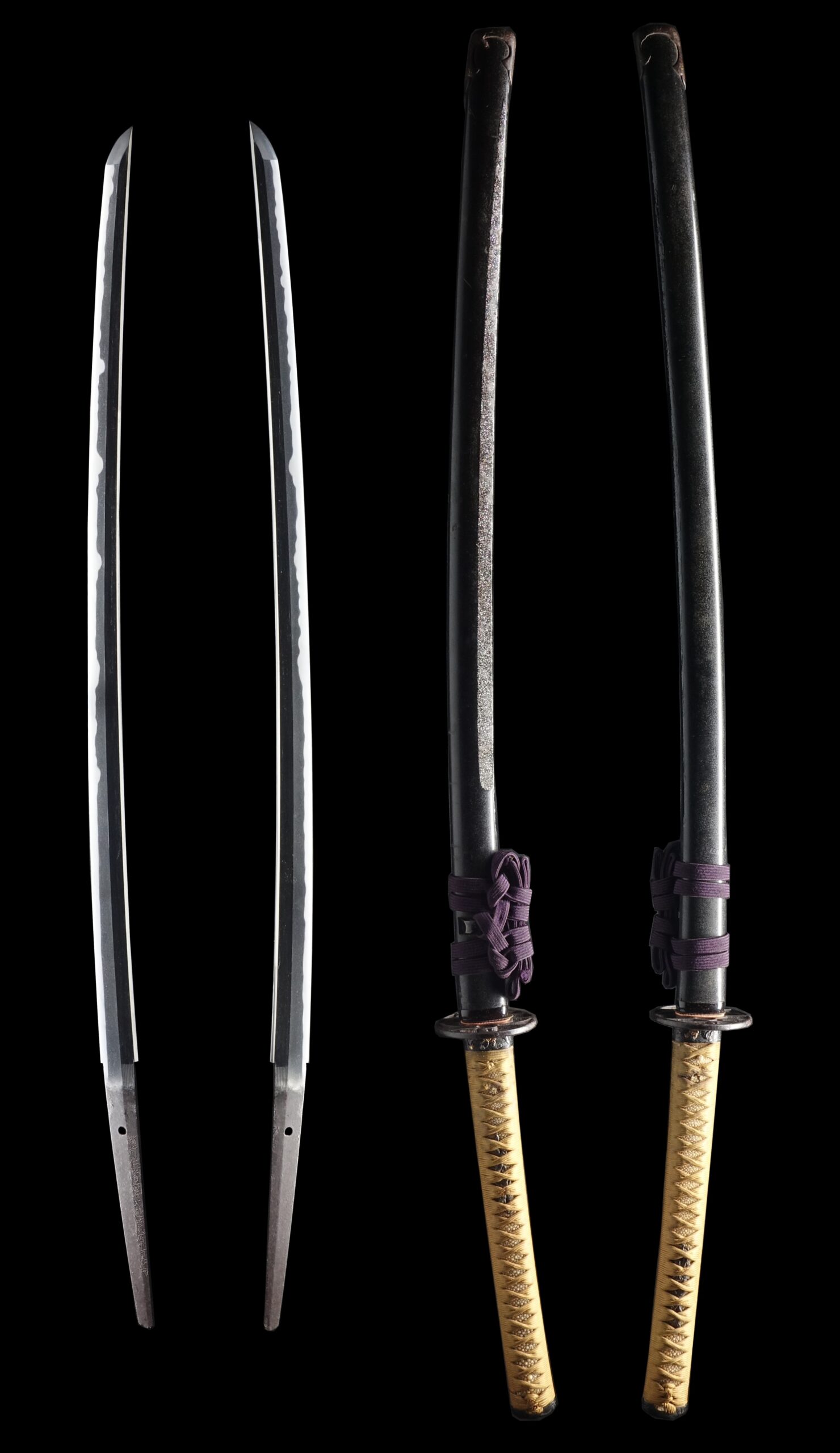
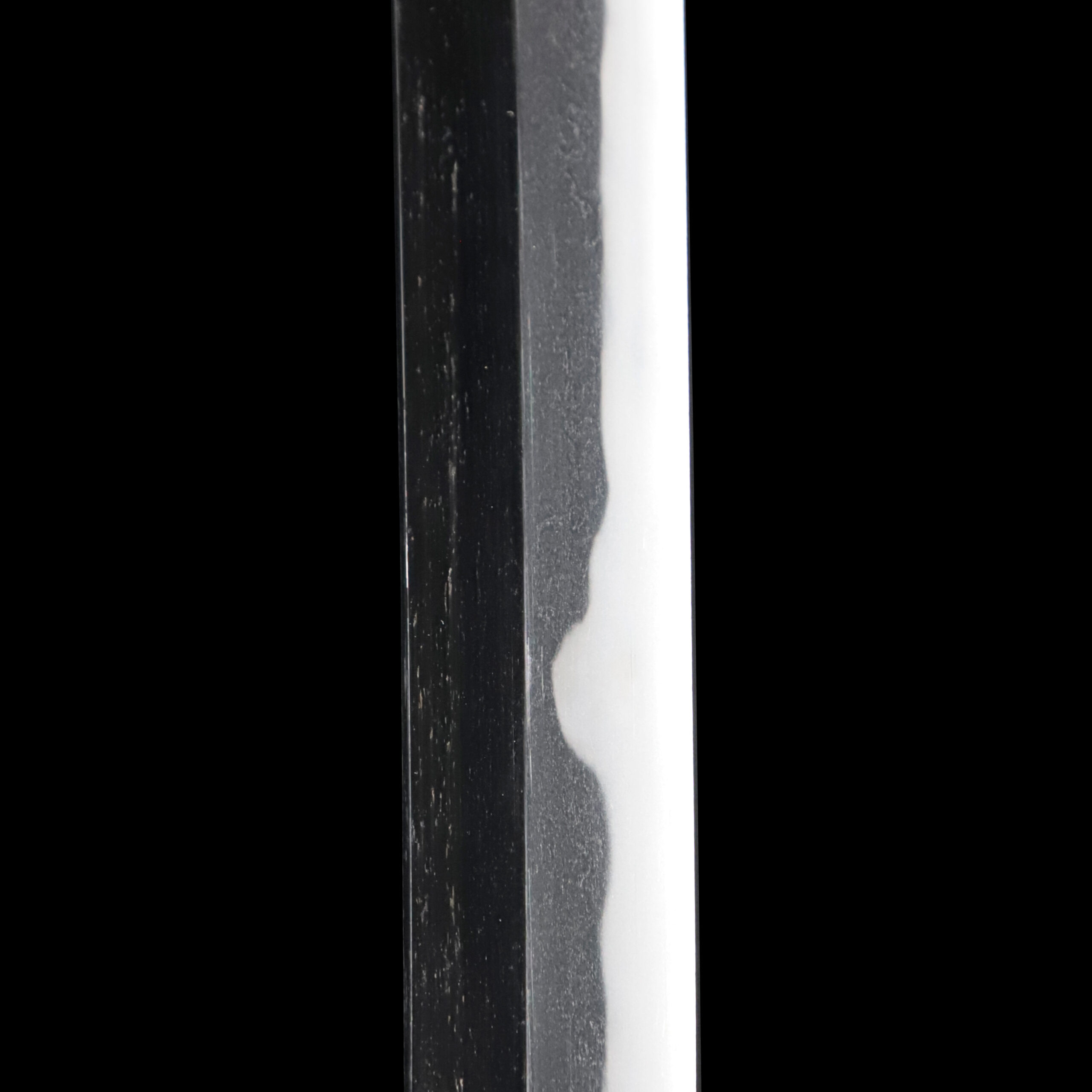
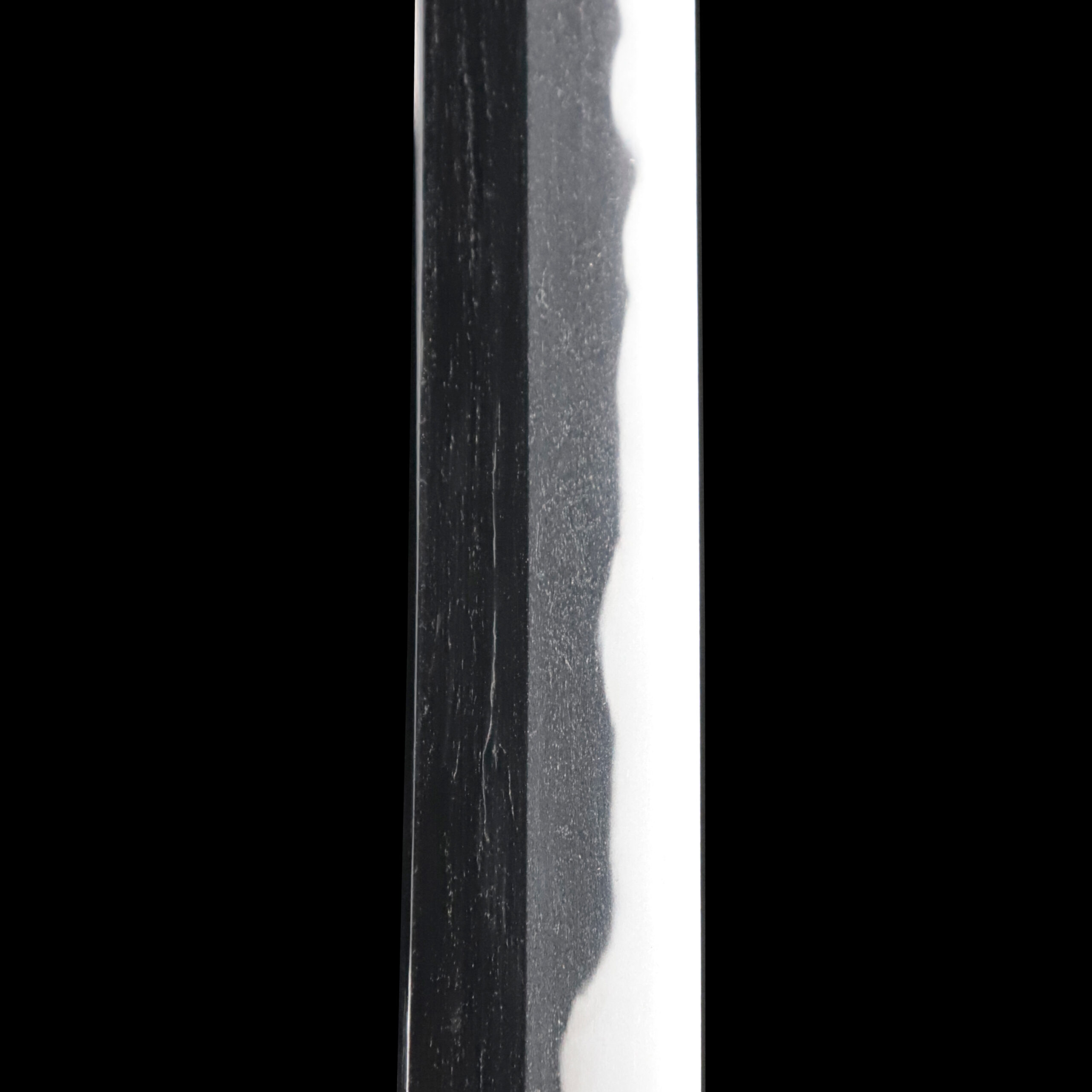
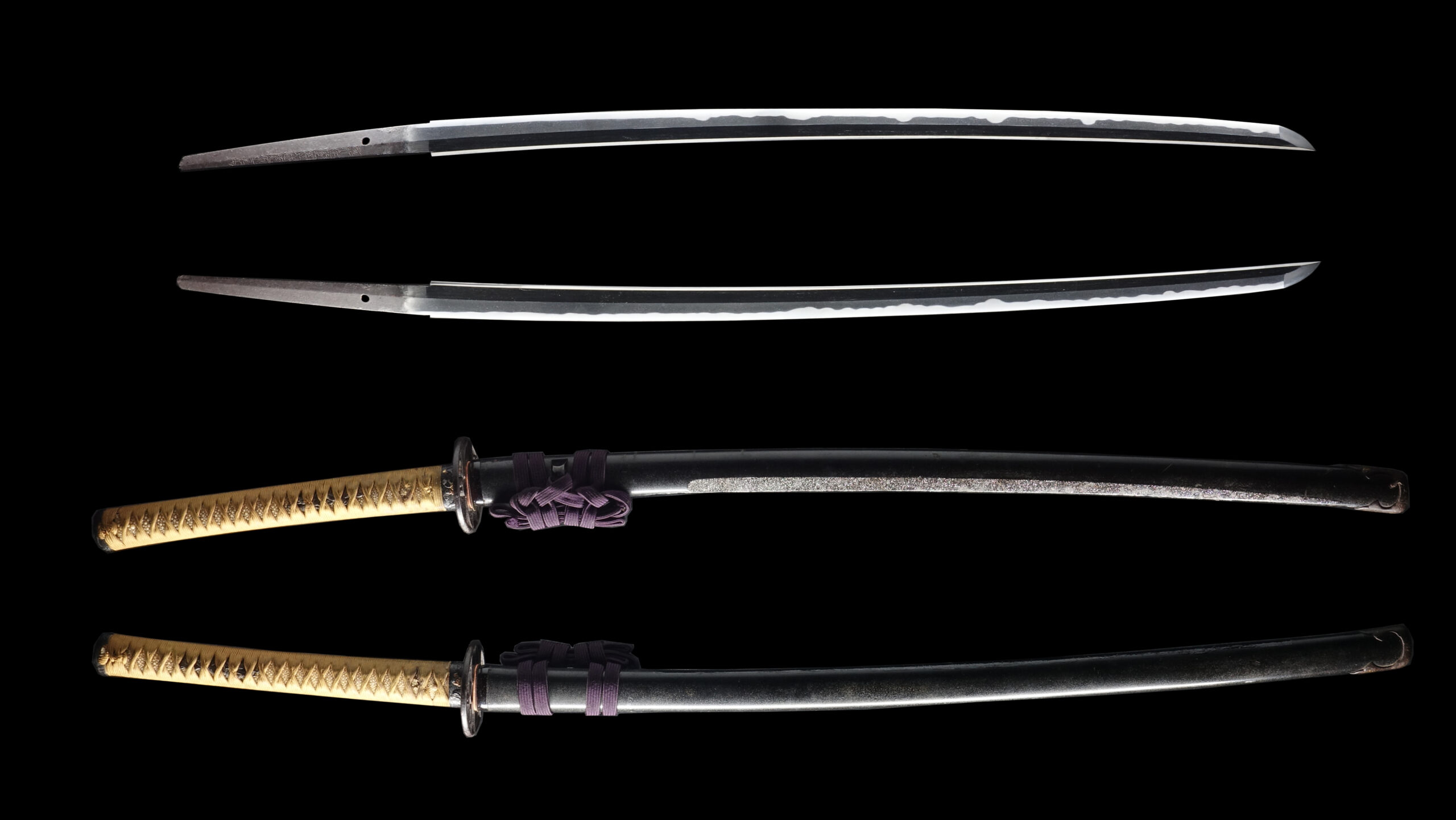
His jigane is an itame mixed with mokume and flowing grain, standing slightly over the whole, with ji-nie and fine chikei, and the steel takes on a blackish cast. On a broad Keichō-style wakizashi the hamon is a suguha-chō that undulates here and there in a small, shallow notare with a hint of ko-gunome. Ashi and yō work actively, the nie is thick and in places a little rough, sunagashi runs over the whole, fine kinsuji enter, and the nioiguchi tends to sink. The published sources call this a calm manner that shows the features of the school well, with a quality approaching the first Yasutsugu[[c:3]]. A katana repeats the same temper with gunome and pointed elements and patches of coarse, clustering nie. The commentary notes that its forging is especially tight and refined compared with ordinary Echizen work, and that it "brings the first Yasutsugu vividly to mind"[[c:4]]. The bōshi runs straight or shallowly notare to a small round tip, at times thrusting up to a point, with hakikake and a fairly deep return.
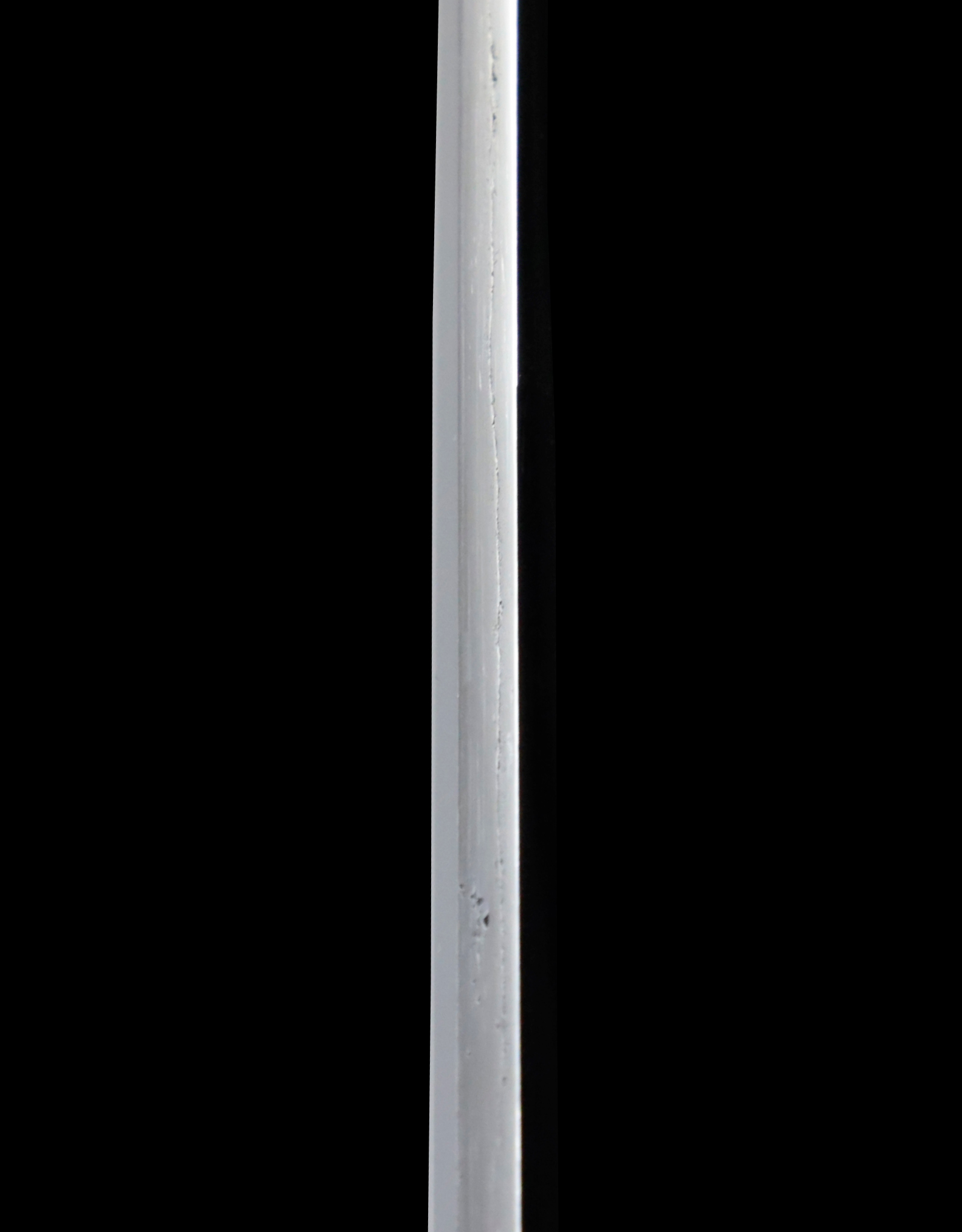
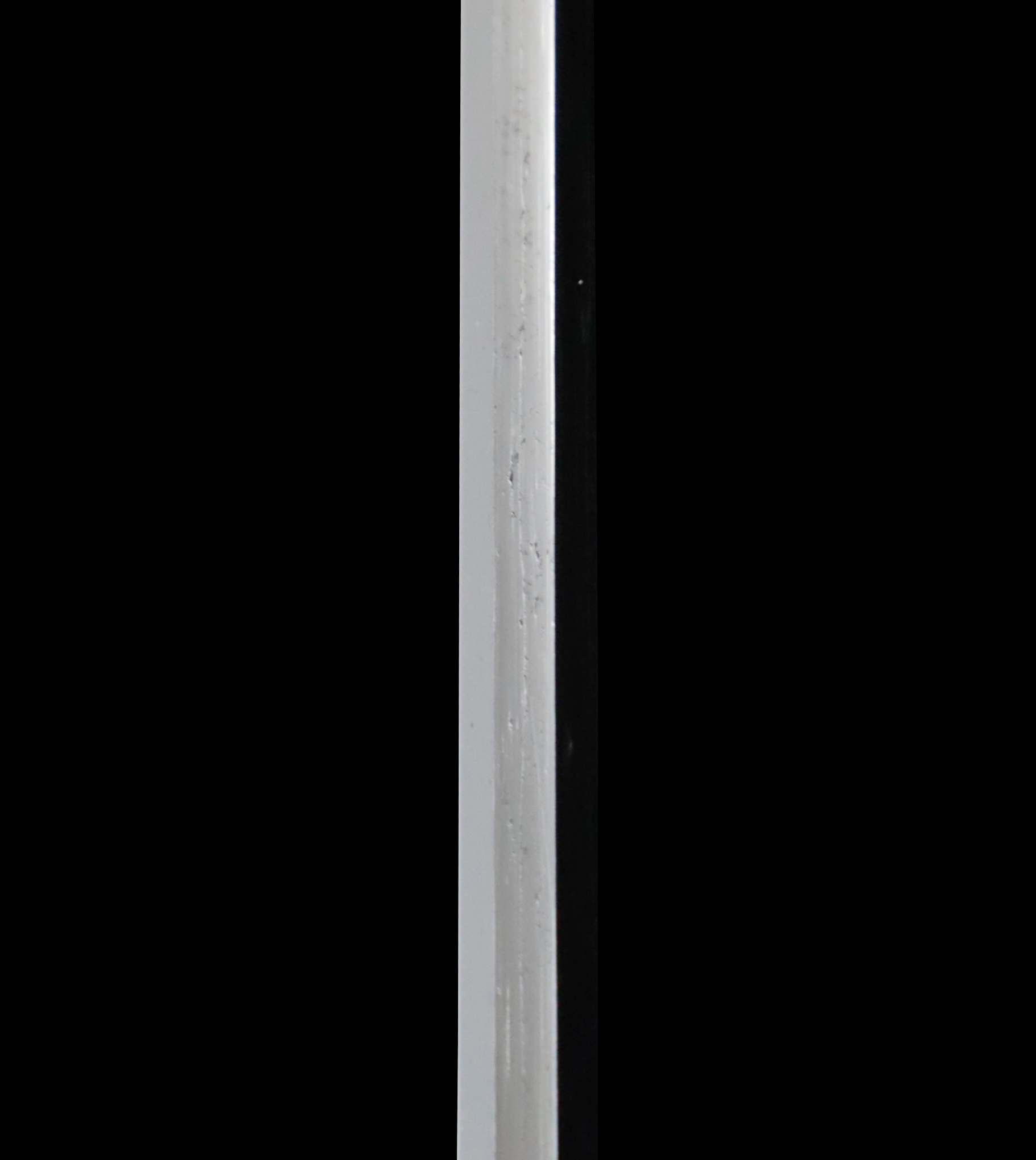
A second register appears in his kanmuri-otoshi tanto. There the temper narrows to a fine suguha with ko-nie, fine sunagashi, frayed edges and kinsuji, burned in at the machi, and the published sources read the construction and the workmanship as deliberately aimed at old Yamato work, "truly an archaic piece"[[c:5]]. The finest of his blades carry deep, powerful Kinai-style carving. A hira tanto bears a Kurikara on one side and a sankoken on the other, and the commentary calls it a masterwork of the first Shigetaka[[c:6]], its carving strong and the deep cutting showing the character of Kinai-bori. On the broad wakizashi the carving shows Fudō Myōō with his two attendant child-deities, a composition also found on the first Yasutsugu's blades.
His most celebrated work is a copy of the meibutsu Honebami Tōshirō, the naginata of Awataguchi Yoshimitsu. The published sources recount the original's history: long famed as the Ōtomo naginata, it passed from the Ōtomo to Ashikaga Takauji, later became one of Hideyoshi's favourite swords, went to Hideyori and then to Tokugawa Hidetada, burned in the Meireki fire, and was re-tempered by the third Yasutsugu. The first Yasutsugu also made a copy, signed as modelled on the Honebami Yoshimitsu. Of Shigetaka's version the commentary says that it is "truly faithful to the original"[[c:7]], well made, with fine carving, and one of his greatest masterpieces.
A seventh blade, a hira tanto, is recorded in Honma's inventory of the Imperial collection. Its hamon is a large, shallow notare with sunagashi in the lower half and a tighter nioiguchi above, and the groove holds a Kurikara carved in relief. Honma's commentary widens the picture of his range: notare or gunome work is common and suguha rare[[c:8]], and some of his carving is exactly like that on Yasutsugu's blades, which Honma takes as evidence that the same carver worked for both[[c:9]]. The round kuri-jiri, by contrast, differs from Yasutsugu. Honma closes by calling this tanto doubtless his masterpiece.
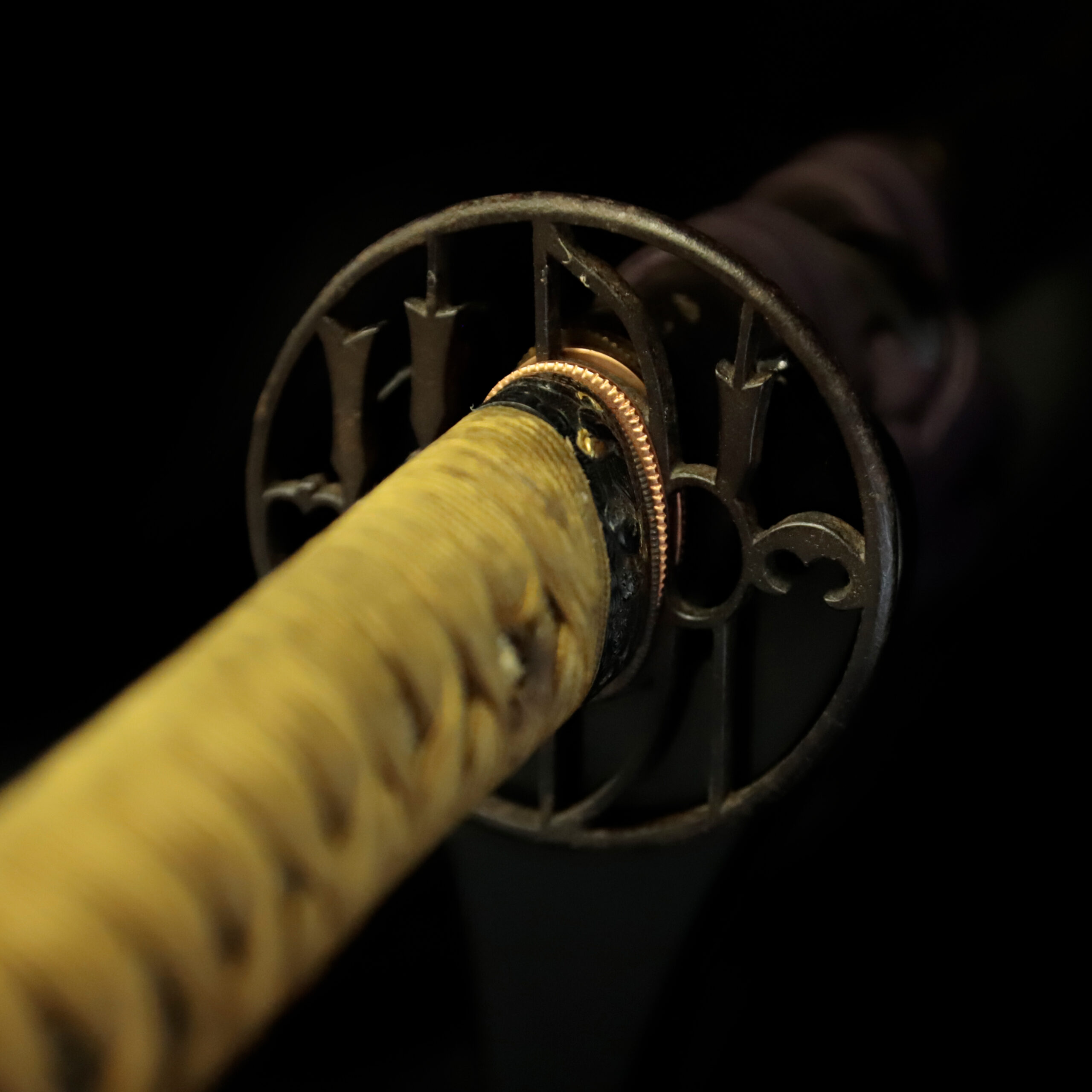
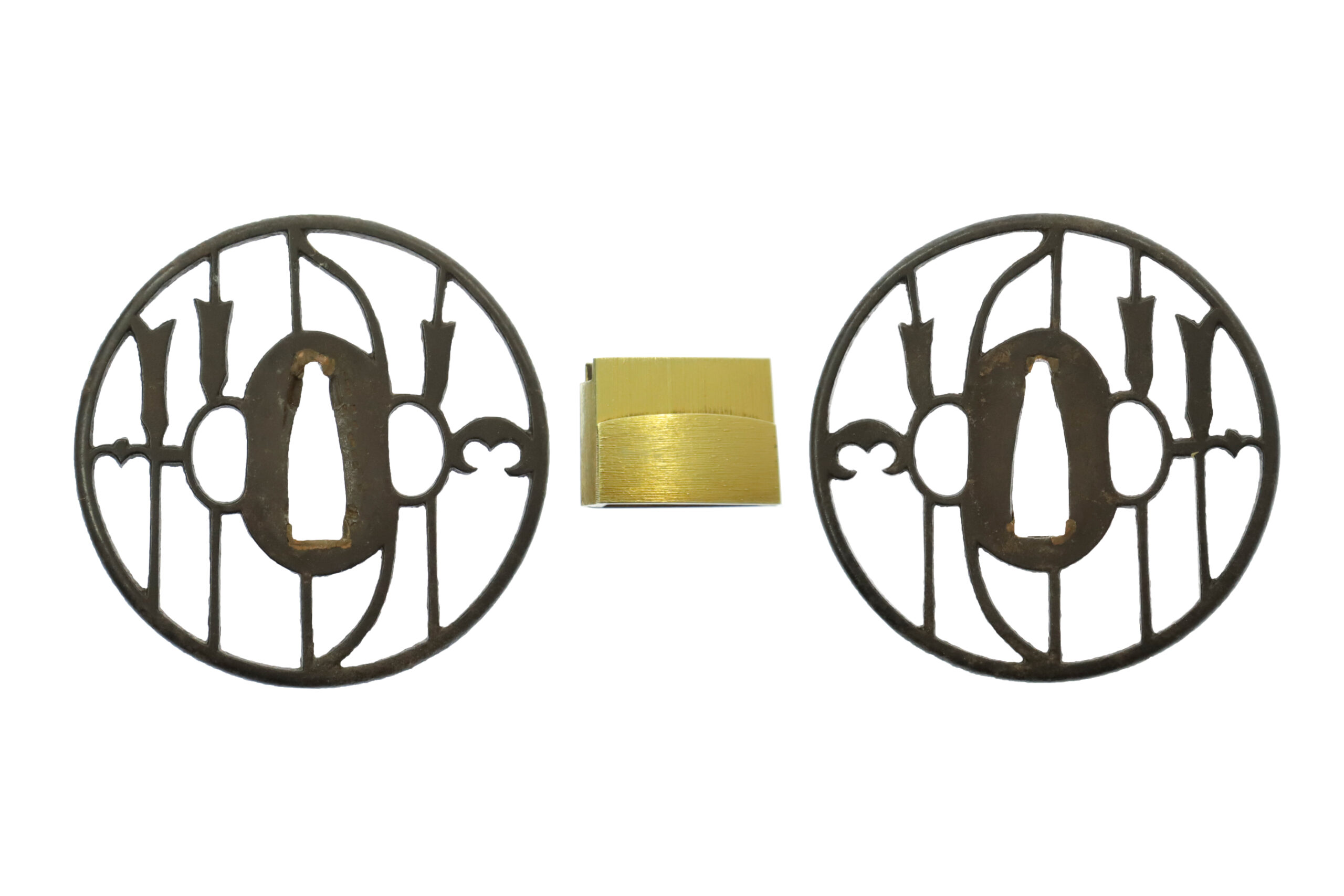
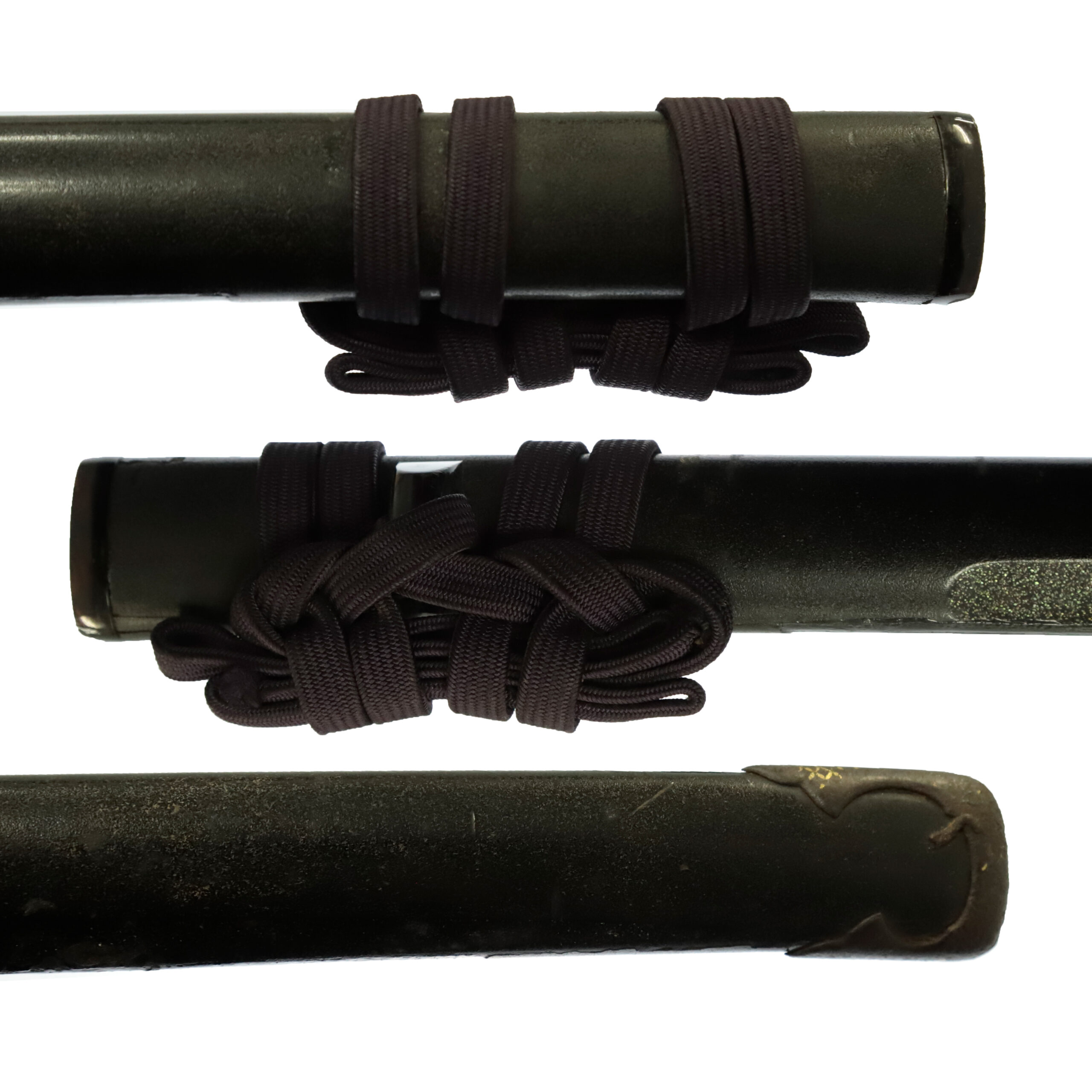
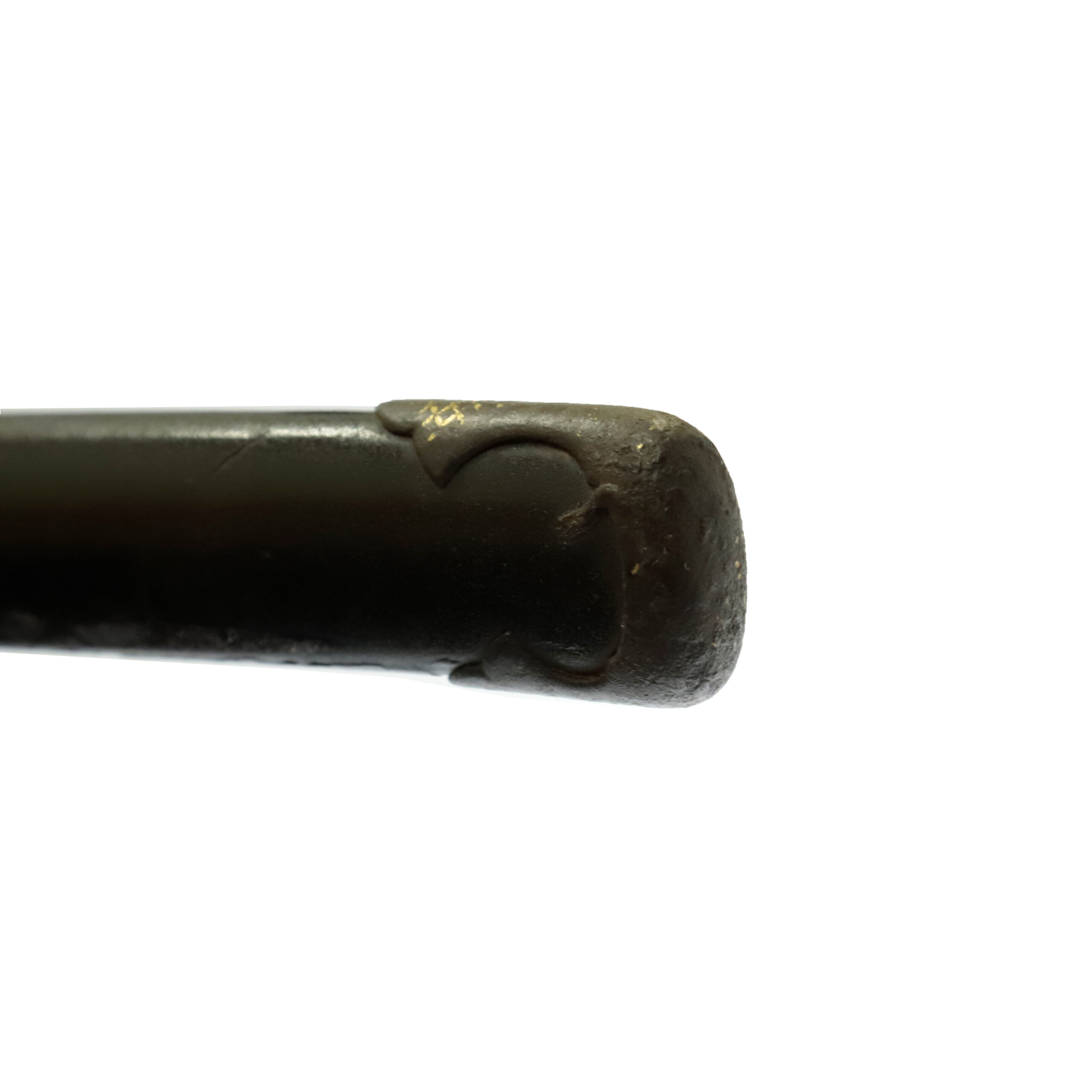
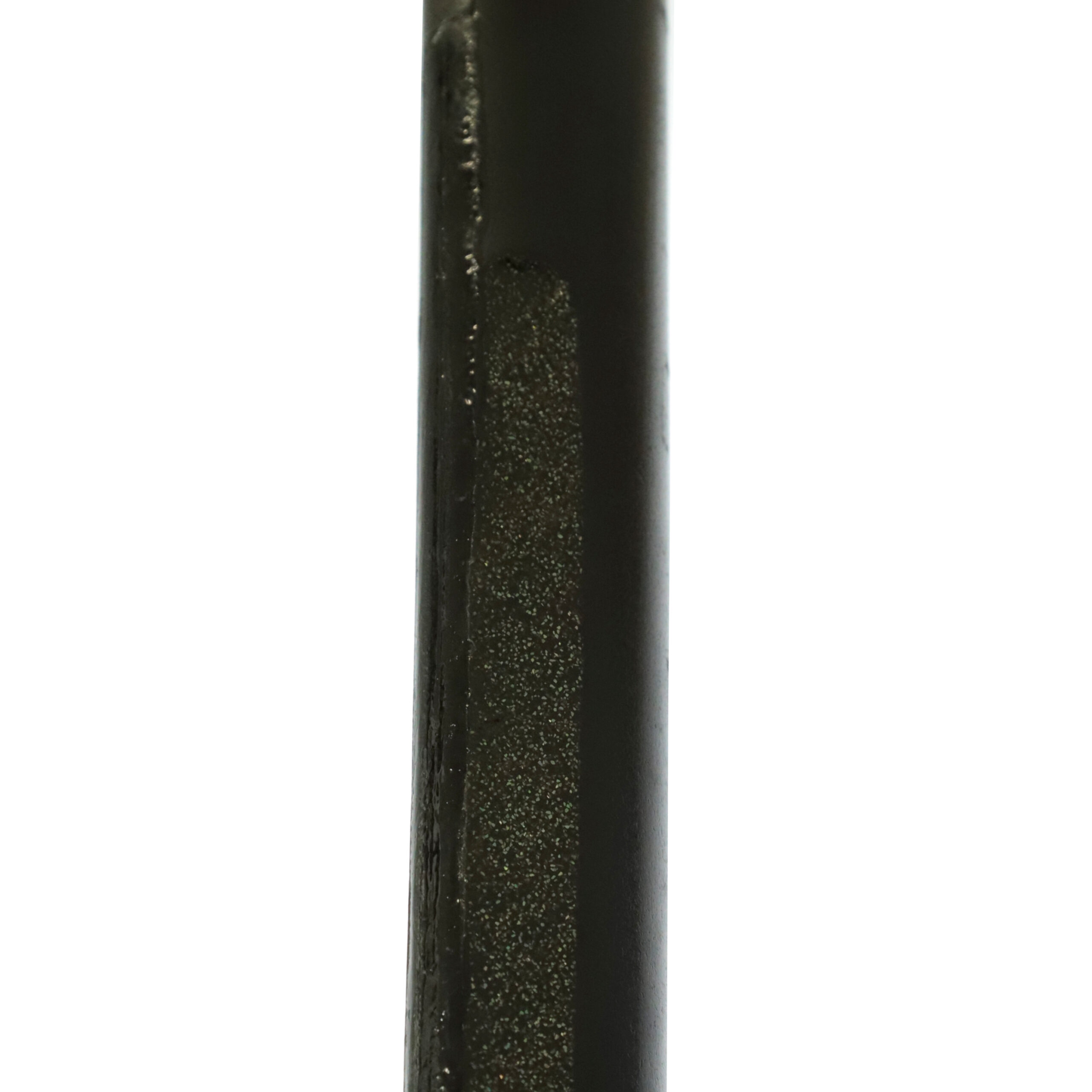
For the collector, Shigetaka is graded Chū-jō saku by Fujishiro. His record is small but uniformly high: six blades designated Jūyō, every one signed, and none in any higher tier. Provenance is recorded for one, the broad wakizashi, which was handed down in the Takizawa family of the Honjō domain in Akita during the Edo period and survives with its black-lacquered mounting inlaid with a dragon in mother-of-pearl. Work by the shodai appears only seldom, and a signed blade with Kinai carving and his chestnut tang is a rare encounter within Echizen Shintō.

 NihontoWatch