NihontoWatch MonNihontoWatch
Market
Encyclopedia
Kantei
NihontoWatch MonNihontoWatch
Market
Encyclopedia
Kantei

Description

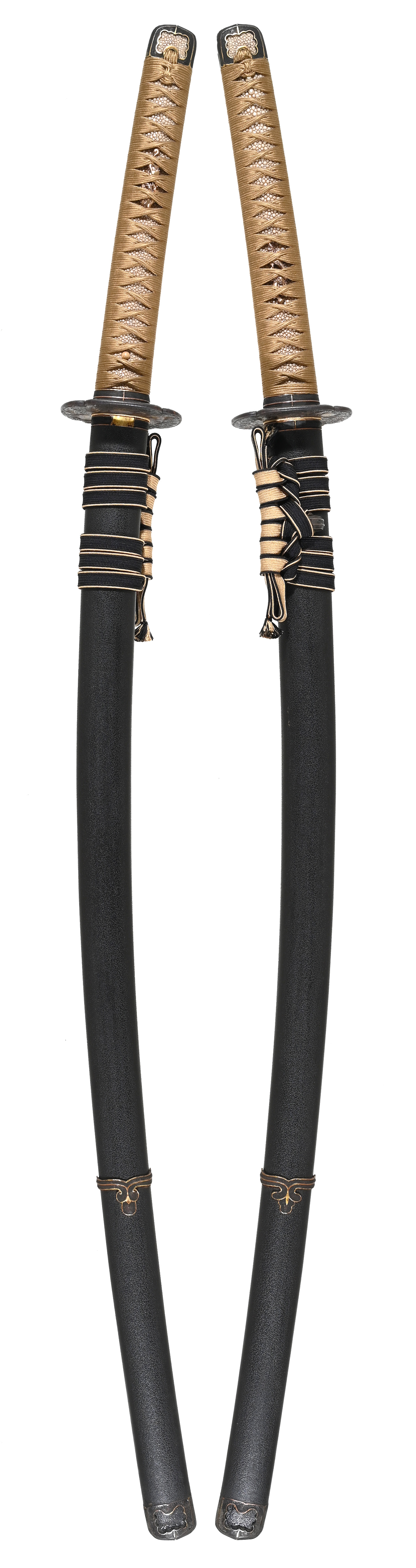
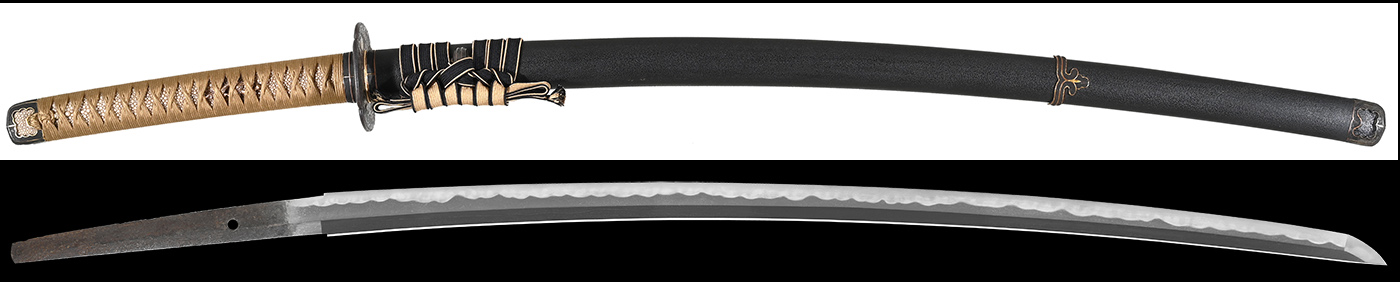
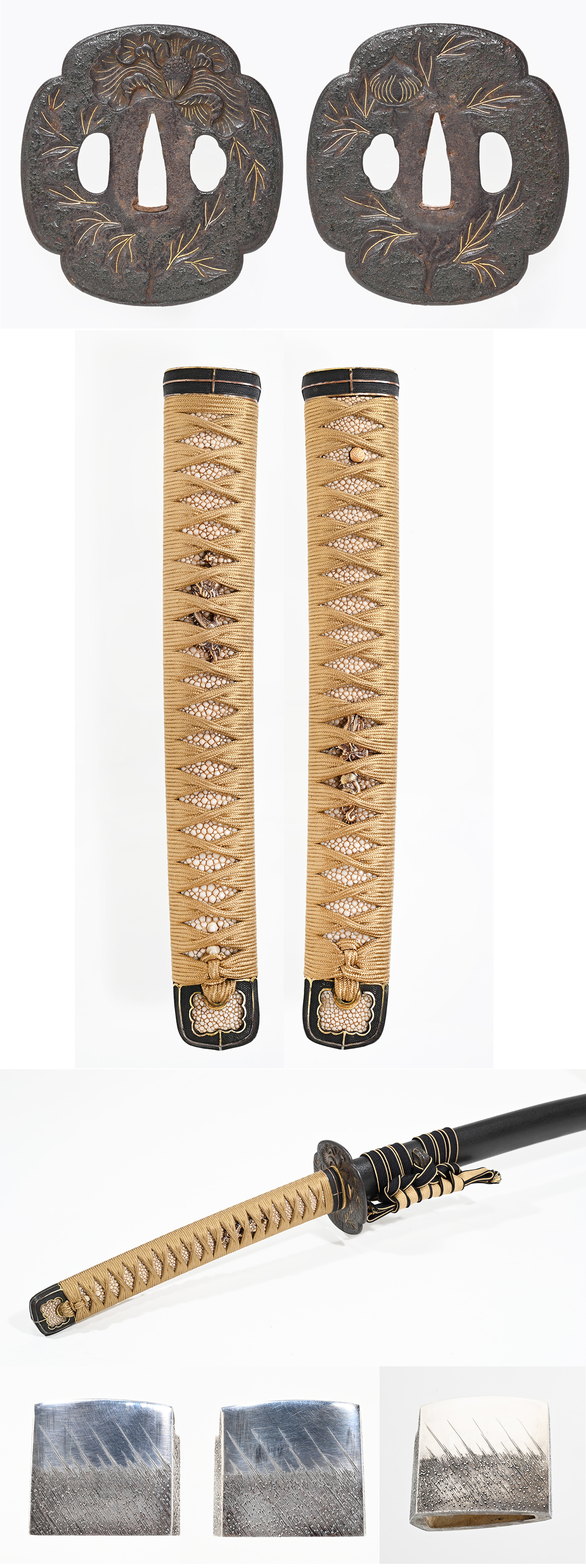
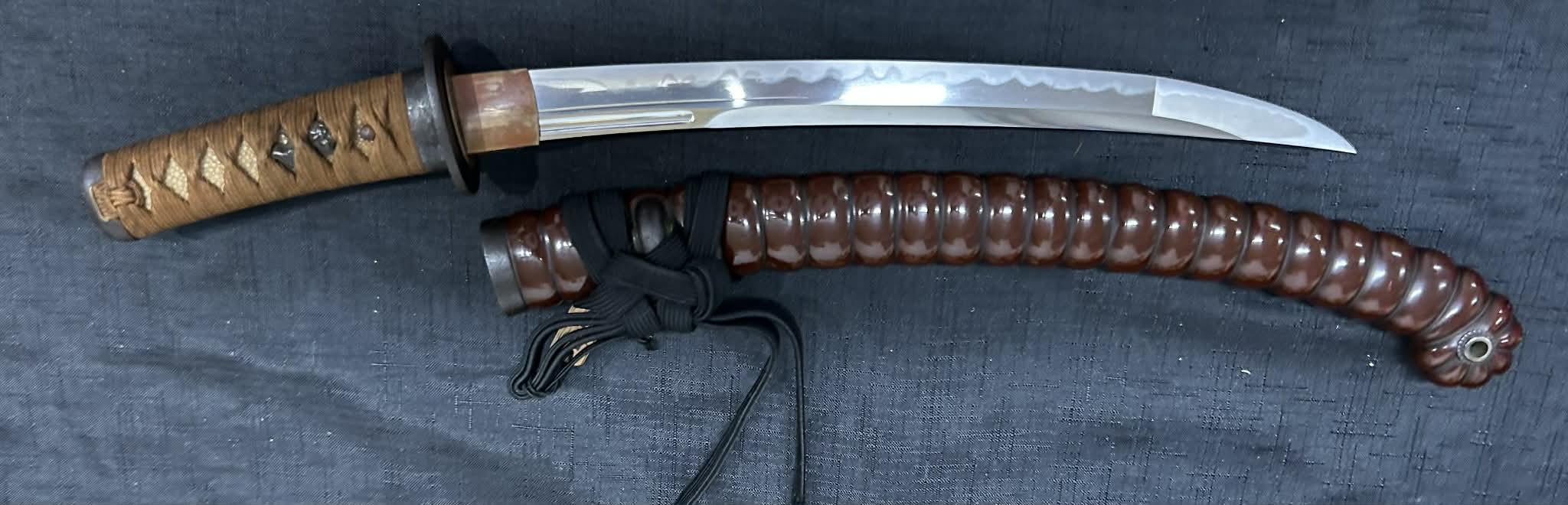
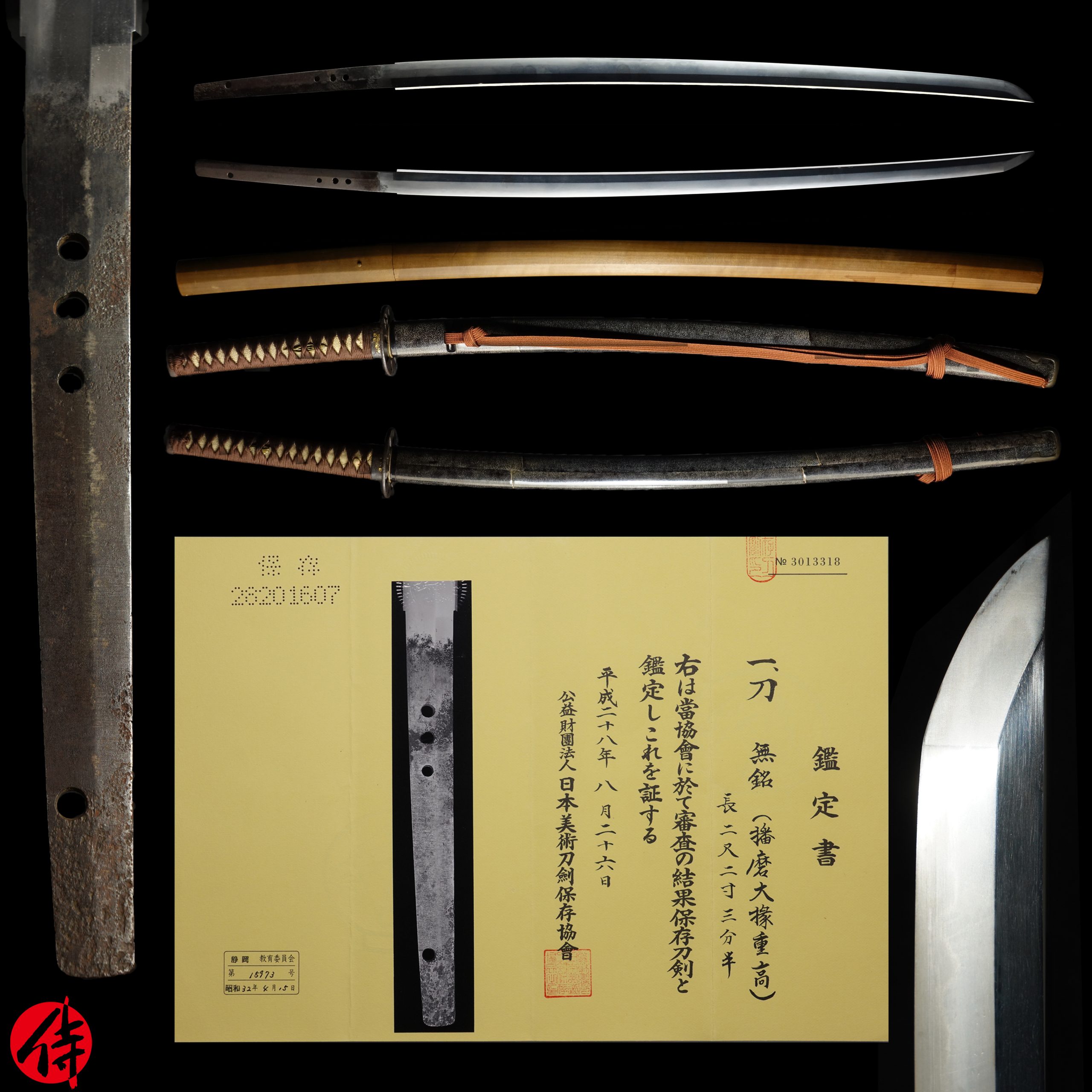
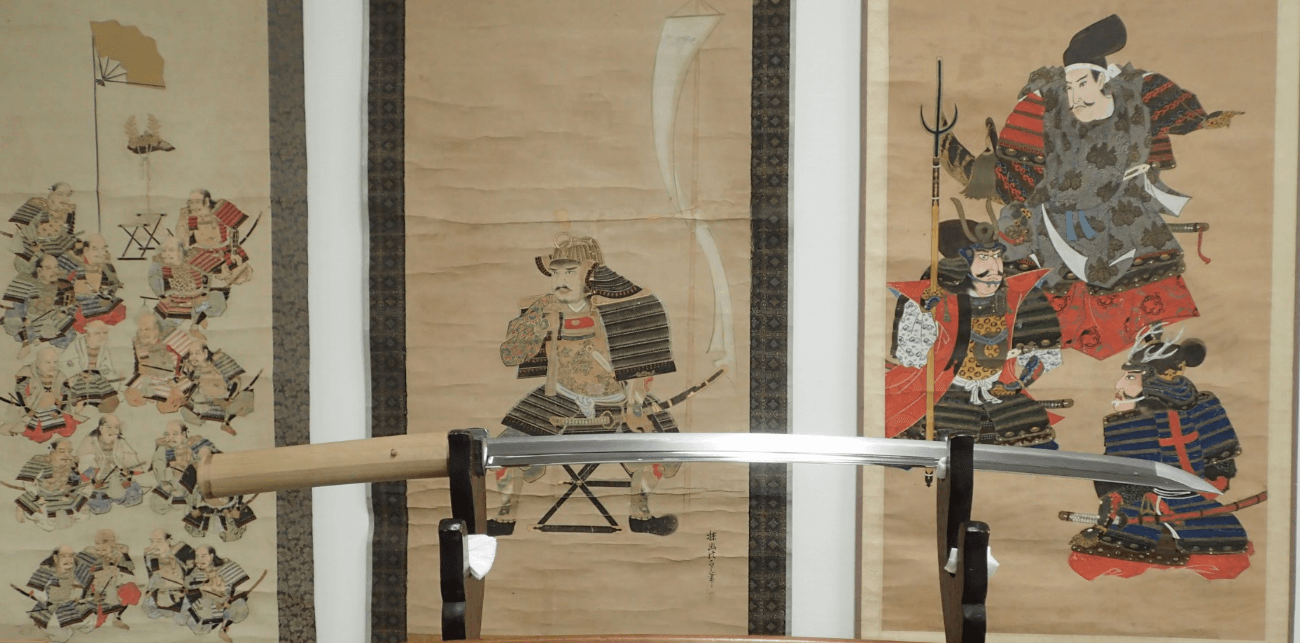
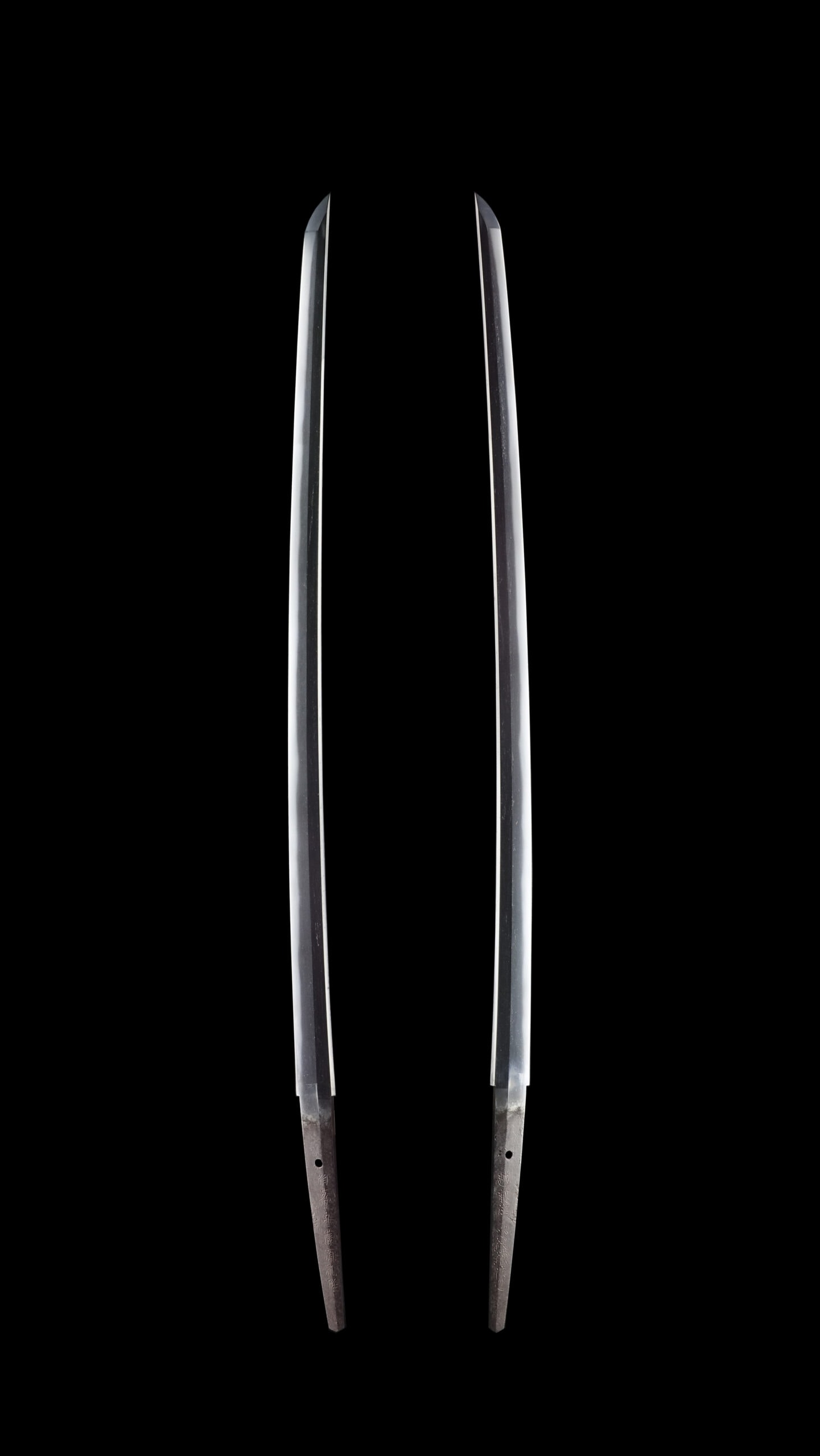
This is a katana by the first generation Harima Daijo Fujiwara Shigetaka, a prominent smith from Echizen province during the Shinto period, active around 1624. He studied under Kanenori of Seki and later moved to Ichijodani in Echizen with his master. The blade is certified Hozon by the NBTHK.

Certificate Reading

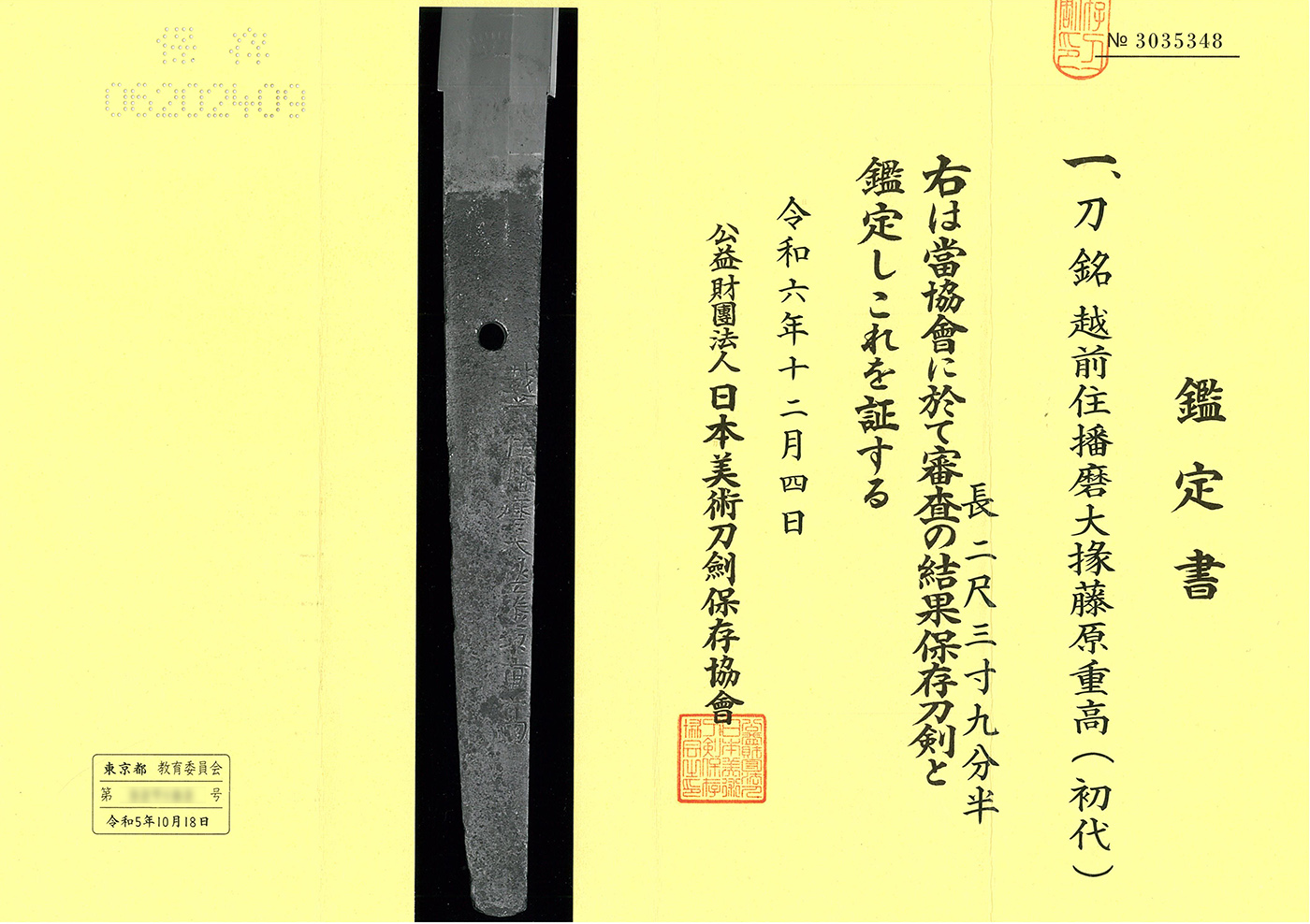
Certificate reading — 銘 越前住播磨大掾藤原重高

NihontoWatch MonNihontoWatch
MarketEncyclopediaKantei
Swords›Shimosaka›Shigetaka›Katana: Echizen ju Harima Daijo Fujiwara Shigetaka (1st Generation)
katanaHozon
Shimosaka Shigetaka

Katana: Echizen ju Harima Daijo Fujiwara Shigetaka (1st Generation)

mei · Keicho (1596-1615) · nagasa 72.6cm · sori 2.1cm

SOLD
Shimosaka Shigetaka (重高) · Keicho (1596-1615)5 works for sale · median ask ¥1,000,000 →
KatanaHozon
Could you name the smith from the blade alone? Today’s kantei →
Shimosaka Shigetaka — 1 of 6
Shimosaka Shigetaka — 2 of 6
Shimosaka Shigetaka — 3 of 6
Shimosaka Shigetaka — 4 of 6
Shimosaka Shigetaka — 5 of 6
Shimosaka Shigetaka — 6 of 6
1 / 6
1 / 6
Shimosaka Shigetaka — 1 of 6Shimosaka Shigetaka — 2 of 6Shimosaka Shigetaka — 3 of 6Shimosaka Shigetaka — 4 of 6Shimosaka Shigetaka — 5 of 6Shimosaka Shigetaka — 6 of 6
Shimosaka Shigetaka (重高) · Keicho (1596-1615)5 works for sale · median ask ¥1,000,000 →
KatanaHozon
Could you name the smith from the blade alone? Today’s kantei →
Measurements & details
Smith
Shimosaka Shigetaka
Type
Katana
School
Shimosaka
Period
Around 1596–1615(Keicho)
Province
Echizen
Signature
Signed(100% of this smith's designated works are signed)
Measurements
Nagasa 72.6cmSori 2.1cmMotohaba 3.1cmSakihaba 1.9cmKasane 0.7cm
Description

This is a katana by the first generation Harima Daijo Fujiwara Shigetaka, a prominent smith from Echizen province during the Shinto period, active around 1624. He studied under Kanenori of Seki and later moved to Ichijodani in Echizen with his master. The blade is certified Hozon by the NBTHK.

About the maker

Shigetaka

重高

Shimosaka / Echizen (Echizen shinto) · Echizen · around 1596-1615

Fujishiro Chu-jo saku · Tōken Taikan top 49%

5 pieces on the market now

›

Shigetaka signed his blades Harima Daijo Fujiwara Shigetaka[[c:1]] and worked in Echizen in the first decades of the Edo period, a pupil of the first-generation Echizen Yasutsugu whose activity a surviving wakizashi dated in the Genna era fixes to the Keicho and Genna years. The published sources describe him as a man who took after his master and was a fine hand in his own right, calling him simply skilled in the manner of his teacher. The name Shigetaka then ran on through several generations to the close of the Edo period, but the published record is consistent that the shodai stood highest among them in skill, and that his best work reached an order that approaches the first Yasutsugu himself. He belongs to the Shimosaka group of Echizen, the new-sword tradition that grew up around Yasutsugu, and his ji and ha keep that group's Soshu-leaning character: a darkish steel, deep nie, and a quiet, subdued temper rather than the bright flamboyance of the contemporary Bizen and Mino makers.

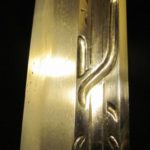
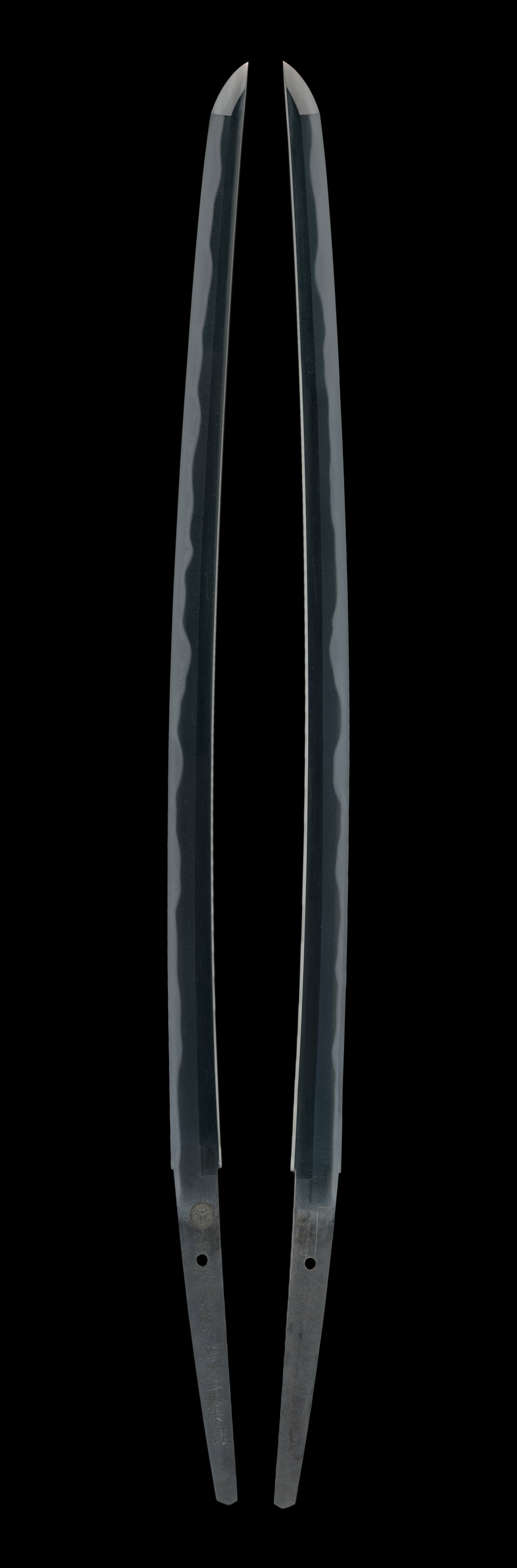
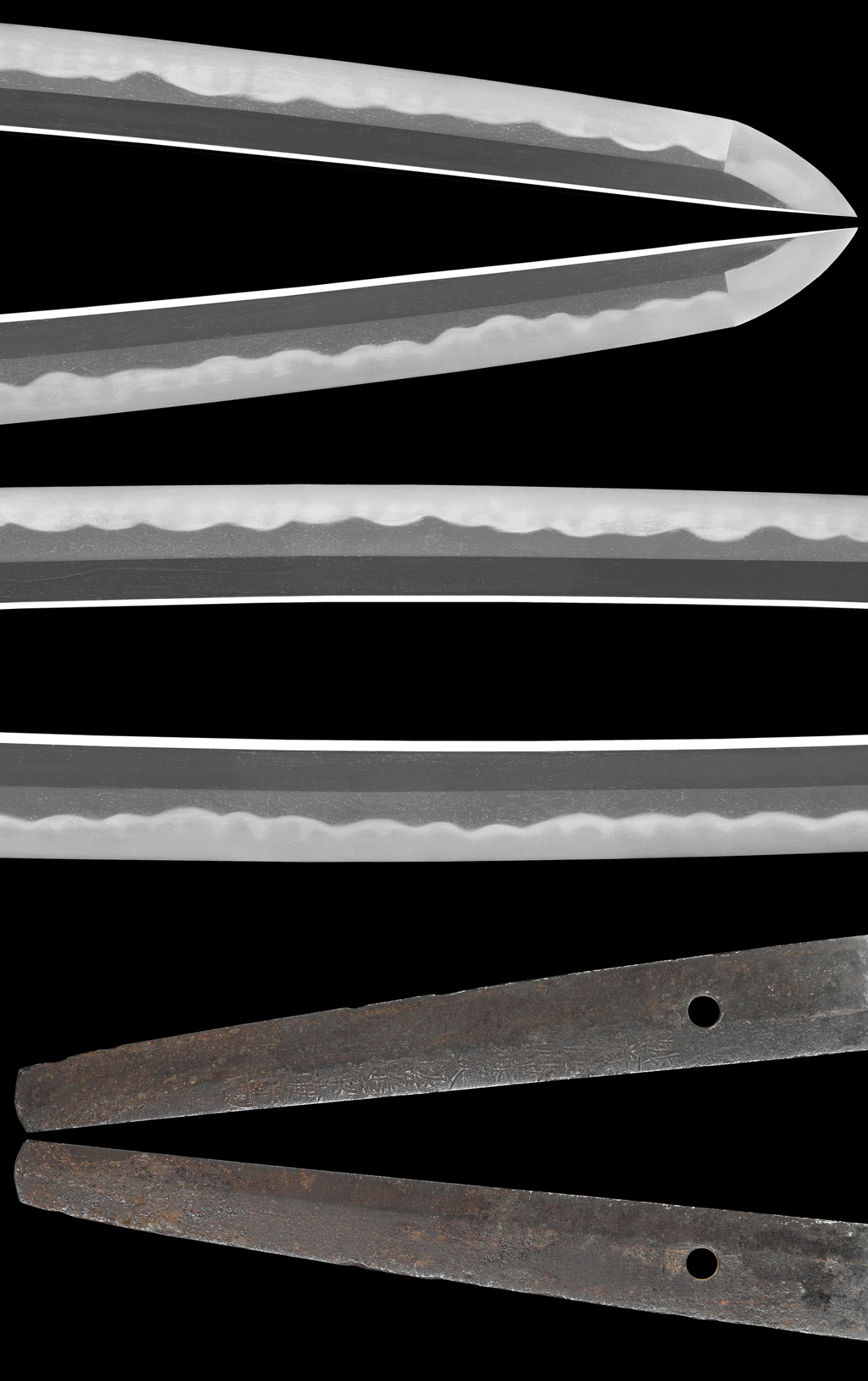
The surest way his hand is known sits in the nakago rather than the temper. Where Yasutsugu and the great majority of Echizen smiths finish the tang to a sword-shaped point, Shigetaka cuts a chestnut-shaped tip across every generation of the name[[c:2]], and the published sources single this out as the feature most worth noting in him. On the shodai's own blades that chestnut tail tends to run a little shallow, paired with a long signature cut in a squat, thick-chiseled hand, while the second and third generations sign in slightly elongated, squared characters with a thinner chisel. The other mark of his best work is the carving. On his finest blades he sets the deep, powerful Kinai-school relief the published sources name in him directly, a Kurikara dragon, a Fudo Myo-o flanked by the two attendant child-deities, long bonji and paired gomabashi, cut so cleanly that on his masterwork tanto the carving is judged to stand level with the blade itself.

His forging is an itame mixed with mokume and a flowing grain, in places standing a little, over which the ji-nie gathers finely and the chikei runs delicately, the steel taking on a blackish cast that the published sources count as the Echizen character of the jigane. The temper is built on a suguha base that grows shallowly undulating, ko-gunome and pointed elements mixed into it, with ashi and yo entering, the nioi deep, and the nie laid on thickly. Here and there those nie turn coarse and cluster, standing up into the ji and making the habuchi waver, while sunagashi runs across the whole and fine kinsuji enter through it, the nioiguchi tending to sink rather than to glitter. The boshi resolves either straight or with a shallow undulation into a small round, often rising in a thrusting motion to a pointed tip before it brushes into hakikake and turns back deeply. Read together, the darkish standing jigane, the deep thick nie, and the sinking nioiguchi give his work the muted, weighty quality the published sources read as Yasutsugu-approaching.

The six designated blades that survive divide cleanly into two registers of the one hand. On the broad Keicho-shinto wakizashi and the katana he works the prime Soshu-leaning manner: wide in the mihaba, thick in the kasane, sun-nobi with a shallow curvature, the suguha shallowly notare with deep nie, the carving worked at its boldest. The published sources call the katana close-grained and refined beyond the run of Echizen work, judge it a calm piece, and say plainly that it brings the first Yasutsugu to mind, holding that the broad wakizashi shows a workmanship that closes on the master. The tanto carry a second, quieter idea. On the kanmuri-otoshi and hira tanto the construction and the workmanship of the ji and ha are read as aimed at old work; of one the published sources judge that it was made looking to the older Yamato makers[[c:4]], an archaic character carried in a fine suguha narrowed to a thread, with ko-sunagashi, kinsuji, and the habuchi burned in hard at the machi. This is not a separate manner but the same smith turning to a classical model, where the older bearing and the conspicuous carving set his best tanto apart from the broad wakizashi.

Within Echizen his distinction is best drawn through his own grounded traits rather than by contrast. His Soshu-leaning suguha-notare, his blackish standing jigane, and above all his chestnut-tailed nakago mark him off from his fellow Shimosaka smiths, and the published sources repeatedly measure him against his teacher rather than against any later school: his finest blades, they say, approach the first Yasutsugu[[c:3]], and one calm wakizashi is held to call the master directly to mind. He stands in the record as the most skilled bearer of his name, the only generation reckoned to reach near that level, and the line that followed him is distinguished from his work chiefly by the slighter, squared signatures of the second and third hands. His range is narrow but coherent: one Echizen Soshu manner worked through two registers, the broad Keicho wakizashi and the classically aimed tanto, bound together by the carving and the tang.

Shigetaka is known through a small but uniformly high body of work, six blades all raised to the Juyo rank, with no National Treasures or Important Cultural Properties among them and his designation factor accordingly modest; his rating in the reference texts is a chu-jo saku, an upper-middle master. The single most celebrated piece is the wakizashi that copies the meibutsu Hossho Fujishiro tanto[[c:5]], the bone-gnawing Yoshimitsu whose long history the published sources recount, and which they hold faithful to its model in both blade and carving and rate his finest surviving work. To it stand the two kanmuri-otoshi tanto, the hira tanto with its superb Kinai carving, the broad Keicho-shinto wakizashi that descended in the Takizawa family of the Akita Honjo domain, and the refined katana. For a private collector this is a name encountered rarely. The six designated blades are held, not traded, and most of his work that survives is fixed in long-held collections; one in the Tokuju or Juyo range comes to market only from time to time and with patience, a substantial Echizen shinto piece when it does, valued as much for the chestnut-tail tang and the Kinai carving that name the maker as for the quiet Yasutsugu-approaching hand behind them.


Historical importance

Where Shigetaka stands among comparable artisans: across all of nihontō, and within tradition, era, and period. The tiers (Foremost · Leading · Major · Notable) weigh official designations from the NBTHK and Japan's Agency for Cultural Affairs, together with historical honors of lasting repute such as the Sansaku and Meibutsu-chō.

随一
Foremost
屈指
Leading
有数
Major
著名
Notable

Select a lens to see how it's measured.

Designation record
6 designated works
Jūyō
6
5 works by Shigetaka on the market→
Shigetaka — full profileShimosaka / Echizen (Echizen shinto) school

Study this maker →

About the school

Shimosaka

下坂

Shinto · Echizen

55 pieces on the market now

›

The Shimosaka name began not as a single hand but as a trademark shared by a band of Echizen smiths at the dawn of the shinto era, and the designated record gathers their work under that one signature rather than parsing it into individuals. The published sources read the early inscriptions, the generic Echizen no Kuni Shimosaka and the titled Higo Daijo Fujiwara Shimosaka, as the product of a group, of which the first-generation Yasutsugu served as the representative. Born in Shimosaka village of Sakata district in Omi, Yasutsugu moved to Echizen under the patronage of Yuki Hideyasu, signing in his early years Higo no Daijo Shimosaka before his Keicho 10 to 11 summons to Edo, where he forged before Ieyasu and Hidetada and received the character Yasu and the right to cut the Tokugawa hollyhock crest on his nakago. The titled signature was carried by several Echizen hands at once, and the texts list Yasutsugu, Sadakuni and Kanenori among the smiths whose chisel movement and brush intent are too alike to part on present evidence. From this band the Echizen Yasutsugu line descended, dividing after the second generation into the Edo and Echizen Shimosaka houses, and around it formed the deep relief carving the province made its own. The school is recognized first in its steel. The forging is itame mixed with mokume that stands and opens, often flowing into nagare, carrying thick ji-nie and fine chikei, the kane taking on the blackish cast the sources name outright as Echizen-gane; the same dark, standing jihada recurs from Yasutsugu through his son, through Sadatsugu, Shigetaka and the unnamed Shimosaka hands, and the commentary returns to it as the group's signature. Over it the hamon favors a suguha to chu-suguha or shallow notare into which linked gunome and ko-gunome mix, ko-ashi and yo entering, the nie thick and gathering unevenly into rough patches, kinsuji and sunagashi streaming through, the nioiguchi tending to a sinking shizumi.

The boshi is the steadiest tell, running to a ko-maru swept in hakikake and turning back long, with a Sanpin-flavored reminiscence of the Mishina and Echizen-Seki inheritance. Yet the house is not uniform: Sadakuni works an austere suguha over an unusually refined ji with little of the blackish mokume, Sadatsugu fires the brightest, most choji-laden midare of the circle, and the third generation cleans the forging and brightens the nioiguchi toward his Edo contemporaries. Binding the registers is the carving, the deep Echizen-bori and Kinai-bori of kurikara, Fudo Myoo, bonji and gomabashi set in relief within the hi, which Sadakuni may have first supplied to Yasutsugu's blades. For the collector the school rewards reading by register rather than by a single famous holding. Yasutsugu is its summit, rated Jo-jo saku, retained smith to the shogunal house, whose Sadamune and Toshiro copies (the Namazuo, the lost Oyako, the Shishi) show his own Echizen hand under the model, and whose best katana carry the possession inscriptions of his patron Honda Hida no Kami Narishige and provenance in the Echizen and Kishu Tokugawa houses. The second generation follows so faithfully that his finest blades part from the father chiefly by the form of the character tsugu; the Edo third generation continues the suguha and ko-notare manners with a straight yakidashi and a Hojoji affinity. Around them the specialists define the edges of the idiom: Sadakuni and his quiet suguha with a pair of tanto in the Imperial Collection, Sadatsugu with his Narishige-crested cutting-test blades, and Shigetaka, the most skilled of Yasutsugu's pupils, whose chestnut-tailed kurijiri nakago and Kinai carving (the Honebami and Hossho copies among his masterworks) name him at a glance and whose finest work approaches the master. A signed Shimosaka blade, whether a titled Yasutsugu beneath the aoi-mon, a named piece by one of the band, or a Higo Daijo pre-Yasutsugu register, comes to market only from time to time, valued as the wellspring from which the Echizen Yasutsugu line and its carving tradition arose. Learn more →

16 recorded smiths151 designated works
Leading smiths
SmithEraDesignated
Yasutsugu康繼1596-161573
Yasutsugu康繼1624-164427
Yasutsugu康繼1661-16738
Sadakuni貞國1596-161511
Shigetaka重高1596-16156
Explore the Shimosaka school →

Historical context

The Momoyama period (1573 to 1615)

›

Three unifiers ended the century of war, and the sword became an instrument of the new order: the 1588 sword hunt made it the warrior’s badge, famous blades passed between houses like treaties, and appraisal ever after divides the craft here, kotō from shintō.

The Momoyama period (1573 to 1615) →

NBTHK Certificate
Hozon Tōken保存刀剣
Sword Worthy of Preservation
›

Certifies a genuine blade worth preserving: a signature confirmed correct, or, if unsigned, an era, province, and school that the NBTHK can reliably identify.

Signed: 越前住播磨大掾藤原重高 (Shimosaka Shigetaka)
As written on the certificate
About the NBTHK›

The NBTHK (Nihon Bijutsu Tōken Hozon Kyōkai, the Society for the Preservation of Japanese Art Swords) is a public-interest incorporated foundation founded in 1948 and supervised by Japan’s Agency for Cultural Affairs (Bunkachō); it is based at the Japanese Sword Museum in Tokyo. Its expert panels physically examine each submitted work (shinsa) and issue a certificate (kanteishō) ranking it by artistic and historical merit. NBTHK papers are the most widely recognized standard of authentication for Japanese swords and fittings.

NBTHK official site→
Seller
S
Samurai Shokai
🇯🇵Ships from Japan
›
✓Verified dealersamuraishokai.jp
·Domestic shipping onlyWire transferCredit card
Return policy

Returns possible within 3 days of arrival. Customer pays return shipping and bank transfer fees. Excluded: condition differs from sale, 3+ days passed, overseas delivery, in-store purchases, and deposit transactions.

View all of Samurai Shokai’s listings→View this item on the dealer’s site→

More works by Shimosaka Shigetaka

View all →
Choshuya
Tokuho
Yari - Tokuho - by Shimosaka Shigetaka - Hira-sankaku Sugu-yari: Signed Harima daijo Fujiwara no SHIGETAKA (The founder), Echizen ju (Wazamono)Yari - Tokuho - by Shimosaka Shigetaka - Hira-sankaku Sugu-yari: Signed Harima daijo Fujiwara no SHIGETAKA (The founder), Echizen ju (Wazamono)

Yari

ByShimosaka Shigetaka
Ask
Yushindou
Tokuho
Katana - Tokuho - by Shimosaka Shigetaka - Echizen-jyu Harima no Daijyo Fujiwara no Shigetaka - Tokubetsu HozonKatana - Tokuho - by Shimosaka Shigetaka - Echizen-jyu Harima no Daijyo Fujiwara no Shigetaka - Tokubetsu Hozon

Katana

ByShimosaka Shigetaka
¥1,800,000
Nihonto Australia
Wakizashi - by Shimosaka Shigetaka - Shigetaka Wakizashi with NTHK CertificateWakizashi - by Shimosaka Shigetaka - Shigetaka Wakizashi with NTHK Certificate

Wakizashi

ByShimosaka Shigetaka
¥6,000
Aoi Art
Tokuho
Katana - Tokuho - by Shimosaka Shigetaka - Echizen Ju Harima Daijo Fujiwara Shigetaka (1st generation) / Iwami no Kami Fujiwara NobuyoriKatana - Tokuho - by Shimosaka Shigetaka - Echizen Ju Harima Daijo Fujiwara Shigetaka (1st generation) / Iwami no Kami Fujiwara Nobuyori

Katana

ByShimosaka Shigetaka
¥1,000,000
Nihonto Australia
Hozon
Katana - Hozon - by Shimosaka Shigetaka - Mumei Shigetaka with Gold Cutting Test NBTHK Hozon CertificateKatana - Hozon - by Shimosaka Shigetaka - Mumei Shigetaka with Gold Cutting Test NBTHK Hozon Certificate

Katana

ByShimosaka Shigetaka
Ask

Previously sold by Shimosaka Shigetaka

View all →
Japanese Sword Books and Tsuba
Hozon
Tanto - Hozon - by Shimosaka Shigetaka - Signed & Papered Ozoraku Zukuri Tanto with HorimonoTanto - Hozon - by Shimosaka Shigetaka - Signed & Papered Ozoraku Zukuri Tanto with Horimono
Sold

Tantō

ByShimosaka Shigetaka
SOLD
Samurai Store
Tokuho
Katana - Tokuho - by Shimosaka Shigetaka - Fujiwara ShigetakaKatana - Tokuho - by Shimosaka Shigetaka - Fujiwara Shigetaka
Sold

Katana

ByShimosaka Shigetaka
SOLD
Samurai Store
Hozon
Katana - Hozon - by Shimosaka Shigetaka - ShigetakaKatana - Hozon - by Shimosaka Shigetaka - Shigetaka
Sold

Katana

ByShimosaka Shigetaka
SOLD
Nihonto Antiques
Hozon
Katana - Hozon - by Shimosaka Shigetaka - Harima no Daijō ShigetakaKatana - Hozon - by Shimosaka Shigetaka - Harima no Daijō Shigetaka
Sold

Katana

ByShimosaka Shigetaka
SOLD
Supein Nihonto
Katana - by Shimosaka Shigetaka - ShigetakaKatana - by Shimosaka Shigetaka - Shigetaka
Sold

Katana

ByShimosaka Shigetaka
SOLD
Samurai Museum
Tokuho
Katana - Tokuho - by Shimosaka Shigetaka - Antique Japanese Sword Katana Signed by Shigetaka NBTHK Tokubetsu Hozon CertificateKatana - Tokuho - by Shimosaka Shigetaka - Antique Japanese Sword Katana Signed by Shigetaka NBTHK Tokubetsu Hozon Certificate
Sold

Katana

ByShimosaka Shigetaka
SOLD
Samurai Museum
Hozon
Katana - Hozon - by Shimosaka Shigetaka - Antique Japanese Sword Katana Attributed to Shigetaka NBTHK Hozon CertificateKatana - Hozon - by Shimosaka Shigetaka - Antique Japanese Sword Katana Attributed to Shigetaka NBTHK Hozon Certificate
Sold

Katana

ByShimosaka Shigetaka
SOLD
Tokka Biz
Hozon
Wakizashi - Hozon - by Shimosaka Shigetaka - Harima Daijo Fujiwara Shigetaka, Echizen JūWakizashi - Hozon - by Shimosaka Shigetaka - Harima Daijo Fujiwara Shigetaka, Echizen Jū
Sold

Wakizashi

ByShimosaka Shigetaka
SOLD

More from the Shimosaka school

View all →
Toukentakarado
Jūyō
Katana - Jūyō - by Shimosaka Yasutsugu - (Aoi mon) Echizen Yasutsugu, resident of Bushū EdoKatana - Jūyō - by Shimosaka Yasutsugu - (Aoi mon) Echizen Yasutsugu, resident of Bushū Edo

Katana

ByShimosaka Yasutsugu
¥8,000,000
Token-Net
Jūyō
Katana - Jūyō - by Shimosaka Yasutsugu - Oite Busyu Edo Echizen Yasutsugu motte Nanban-tetsu (1st Gen.)Katana - Jūyō - by Shimosaka Yasutsugu - Oite Busyu Edo Echizen Yasutsugu motte Nanban-tetsu (1st Gen.)

Katana

ByShimosaka Yasutsugu
¥9,800,000
Eirakudo
Tokuho
Tanto - Tokuho - by Shimosaka Yasutsugu - 1st Generation YasutsuguTanto - Tokuho - by Shimosaka Yasutsugu - 1st Generation Yasutsugu

Tantō

ByShimosaka Yasutsugu
¥5,000,000
Shoubudou
Tokuho
Wakizashi - Tokuho - by Shimosaka Yasutsugu - Oie Bushu Edo Echizen Yasutsugu (1st Generation)Wakizashi - Tokuho - by Shimosaka Yasutsugu - Oie Bushu Edo Echizen Yasutsugu (1st Generation)

Wakizashi

ByShimosaka Yasutsugu
¥2,500,000
Nihonto Australia
Tokuho
Katana - Tokuho - by Shimosaka Yasutsugu - First Generation Echizen Yasutsugu Katana, Utsushi of Ataki Sadamune, with NBTHK CertificateKatana - Tokuho - by Shimosaka Yasutsugu - First Generation Echizen Yasutsugu Katana, Utsushi of Ataki Sadamune, with NBTHK Certificate

Katana

ByShimosaka Yasutsugu
Ask
Samurai Museum
Tokuho
Katana - Tokuho - by Shimosaka Hirotaka - Hoki no Kami Fujiwara HirotakaKatana - Tokuho - by Shimosaka Hirotaka - Hoki no Kami Fujiwara Hirotaka

Katana

ByShimosaka Hirotaka
¥9,626
Aoi Art
Tokuho
Katana - Tokuho - by Shimosaka Yasutsugu - Echizen Yasutsugu (2nd generation)Katana - Tokuho - by Shimosaka Yasutsugu - Echizen Yasutsugu (2nd generation)

Katana

ByShimosaka Yasutsugu
¥1,650,000
Aoi Art
Tokuho
Katana - Tokuho - by Shimosaka Shigetaka - Echizen Ju Harima Daijo Fujiwara Shigetaka (2nd generation)Katana - Tokuho - by Shimosaka Shigetaka - Echizen Ju Harima Daijo Fujiwara Shigetaka (2nd generation)

Katana

ByShimosaka Shigetaka
¥750,000

Swords

  • Katana
  • Wakizashi
  • Tantō
  • Tachi
  • Naginata
  • Yari
  • Japanese Swords
  • Samurai Swords

Fittings

  • Tsuba
  • Fuchi-Kashira
  • Kozuka
  • Menuki
  • Sword Guards (Tsuba)

Armor

  • Kabuto
  • Samurai Armor
  • All Samurai Armor

By Certification

  • Tokujū
  • Jūyō
  • Tokuho
  • Hozon

Resources

  • Dealer Directory
  • Artist Directory
  • The Daily Kantei
  • Glossary
  • Browse All
Nihontowatch© 2026
TermsPrivacyCookiesAbout
Sold

Description

This is a katana by the first generation Harima Daijo Fujiwara Shigetaka, a prominent smith from Echizen province during the Shinto period, active around 1624. He studied under Kanenori of Seki and later moved to Ichijodani in Echizen with his master. The blade is certified Hozon by the NBTHK.

Certificate Reading

Certificate reading — 銘 越前住播磨大掾藤原重高

NihontoWatch MonNihontoWatch
MarketEncyclopediaKantei
Swords›Shimosaka›Shigetaka›Katana: Echizen ju Harima Daijo Fujiwara Shigetaka (1st Generation)
katanaHozon
Shimosaka Shigetaka

Katana: Echizen ju Harima Daijo Fujiwara Shigetaka (1st Generation)

mei · Keicho (1596-1615) · nagasa 72.6cm · sori 2.1cm

SOLD
Shimosaka Shigetaka (重高) · Keicho (1596-1615)5 works for sale · median ask ¥1,000,000 →
KatanaHozon
Could you name the smith from the blade alone? Today’s kantei →
Shimosaka Shigetaka — 1 of 6
Shimosaka Shigetaka — 2 of 6
Shimosaka Shigetaka — 3 of 6
Shimosaka Shigetaka — 4 of 6
Shimosaka Shigetaka — 5 of 6
Shimosaka Shigetaka — 6 of 6
1 / 6
1 / 6
Shimosaka Shigetaka — 1 of 6Shimosaka Shigetaka — 2 of 6Shimosaka Shigetaka — 3 of 6Shimosaka Shigetaka — 4 of 6Shimosaka Shigetaka — 5 of 6Shimosaka Shigetaka — 6 of 6
Shimosaka Shigetaka (重高) · Keicho (1596-1615)5 works for sale · median ask ¥1,000,000 →
KatanaHozon
Could you name the smith from the blade alone? Today’s kantei →
Measurements & details
Smith
Shimosaka Shigetaka
Type
Katana
School
Shimosaka
Period
Around 1596–1615(Keicho)
Province
Echizen
Signature
Signed(100% of this smith's designated works are signed)
Measurements
Nagasa 72.6cmSori 2.1cmMotohaba 3.1cmSakihaba 1.9cmKasane 0.7cm
Description

This is a katana by the first generation Harima Daijo Fujiwara Shigetaka, a prominent smith from Echizen province during the Shinto period, active around 1624. He studied under Kanenori of Seki and later moved to Ichijodani in Echizen with his master. The blade is certified Hozon by the NBTHK.

About the maker

Shigetaka

重高

Shimosaka / Echizen (Echizen shinto) · Echizen · around 1596-1615

Fujishiro Chu-jo saku · Tōken Taikan top 49%

5 pieces on the market now

›

Shigetaka signed his blades Harima Daijo Fujiwara Shigetaka[[c:1]] and worked in Echizen in the first decades of the Edo period, a pupil of the first-generation Echizen Yasutsugu whose activity a surviving wakizashi dated in the Genna era fixes to the Keicho and Genna years. The published sources describe him as a man who took after his master and was a fine hand in his own right, calling him simply skilled in the manner of his teacher. The name Shigetaka then ran on through several generations to the close of the Edo period, but the published record is consistent that the shodai stood highest among them in skill, and that his best work reached an order that approaches the first Yasutsugu himself. He belongs to the Shimosaka group of Echizen, the new-sword tradition that grew up around Yasutsugu, and his ji and ha keep that group's Soshu-leaning character: a darkish steel, deep nie, and a quiet, subdued temper rather than the bright flamboyance of the contemporary Bizen and Mino makers.

The surest way his hand is known sits in the nakago rather than the temper. Where Yasutsugu and the great majority of Echizen smiths finish the tang to a sword-shaped point, Shigetaka cuts a chestnut-shaped tip across every generation of the name[[c:2]], and the published sources single this out as the feature most worth noting in him. On the shodai's own blades that chestnut tail tends to run a little shallow, paired with a long signature cut in a squat, thick-chiseled hand, while the second and third generations sign in slightly elongated, squared characters with a thinner chisel. The other mark of his best work is the carving. On his finest blades he sets the deep, powerful Kinai-school relief the published sources name in him directly, a Kurikara dragon, a Fudo Myo-o flanked by the two attendant child-deities, long bonji and paired gomabashi, cut so cleanly that on his masterwork tanto the carving is judged to stand level with the blade itself.

His forging is an itame mixed with mokume and a flowing grain, in places standing a little, over which the ji-nie gathers finely and the chikei runs delicately, the steel taking on a blackish cast that the published sources count as the Echizen character of the jigane. The temper is built on a suguha base that grows shallowly undulating, ko-gunome and pointed elements mixed into it, with ashi and yo entering, the nioi deep, and the nie laid on thickly. Here and there those nie turn coarse and cluster, standing up into the ji and making the habuchi waver, while sunagashi runs across the whole and fine kinsuji enter through it, the nioiguchi tending to sink rather than to glitter. The boshi resolves either straight or with a shallow undulation into a small round, often rising in a thrusting motion to a pointed tip before it brushes into hakikake and turns back deeply. Read together, the darkish standing jigane, the deep thick nie, and the sinking nioiguchi give his work the muted, weighty quality the published sources read as Yasutsugu-approaching.

The six designated blades that survive divide cleanly into two registers of the one hand. On the broad Keicho-shinto wakizashi and the katana he works the prime Soshu-leaning manner: wide in the mihaba, thick in the kasane, sun-nobi with a shallow curvature, the suguha shallowly notare with deep nie, the carving worked at its boldest. The published sources call the katana close-grained and refined beyond the run of Echizen work, judge it a calm piece, and say plainly that it brings the first Yasutsugu to mind, holding that the broad wakizashi shows a workmanship that closes on the master. The tanto carry a second, quieter idea. On the kanmuri-otoshi and hira tanto the construction and the workmanship of the ji and ha are read as aimed at old work; of one the published sources judge that it was made looking to the older Yamato makers[[c:4]], an archaic character carried in a fine suguha narrowed to a thread, with ko-sunagashi, kinsuji, and the habuchi burned in hard at the machi. This is not a separate manner but the same smith turning to a classical model, where the older bearing and the conspicuous carving set his best tanto apart from the broad wakizashi.

Within Echizen his distinction is best drawn through his own grounded traits rather than by contrast. His Soshu-leaning suguha-notare, his blackish standing jigane, and above all his chestnut-tailed nakago mark him off from his fellow Shimosaka smiths, and the published sources repeatedly measure him against his teacher rather than against any later school: his finest blades, they say, approach the first Yasutsugu[[c:3]], and one calm wakizashi is held to call the master directly to mind. He stands in the record as the most skilled bearer of his name, the only generation reckoned to reach near that level, and the line that followed him is distinguished from his work chiefly by the slighter, squared signatures of the second and third hands. His range is narrow but coherent: one Echizen Soshu manner worked through two registers, the broad Keicho wakizashi and the classically aimed tanto, bound together by the carving and the tang.

Shigetaka is known through a small but uniformly high body of work, six blades all raised to the Juyo rank, with no National Treasures or Important Cultural Properties among them and his designation factor accordingly modest; his rating in the reference texts is a chu-jo saku, an upper-middle master. The single most celebrated piece is the wakizashi that copies the meibutsu Hossho Fujishiro tanto[[c:5]], the bone-gnawing Yoshimitsu whose long history the published sources recount, and which they hold faithful to its model in both blade and carving and rate his finest surviving work. To it stand the two kanmuri-otoshi tanto, the hira tanto with its superb Kinai carving, the broad Keicho-shinto wakizashi that descended in the Takizawa family of the Akita Honjo domain, and the refined katana. For a private collector this is a name encountered rarely. The six designated blades are held, not traded, and most of his work that survives is fixed in long-held collections; one in the Tokuju or Juyo range comes to market only from time to time and with patience, a substantial Echizen shinto piece when it does, valued as much for the chestnut-tail tang and the Kinai carving that name the maker as for the quiet Yasutsugu-approaching hand behind them.
Historical importance

Where Shigetaka stands among comparable artisans: across all of nihontō, and within tradition, era, and period. The tiers (Foremost · Leading · Major · Notable) weigh official designations from the NBTHK and Japan's Agency for Cultural Affairs, together with historical honors of lasting repute such as the Sansaku and Meibutsu-chō.

随一
Foremost
屈指
Leading
有数
Major
著名
Notable

Select a lens to see how it's measured.

Designation record
6 designated works
Jūyō
6
5 works by Shigetaka on the market→
Shigetaka — full profileShimosaka / Echizen (Echizen shinto) school

Study this maker →

About the school

Shimosaka

下坂

Shinto · Echizen

55 pieces on the market now

›

The Shimosaka name began not as a single hand but as a trademark shared by a band of Echizen smiths at the dawn of the shinto era, and the designated record gathers their work under that one signature rather than parsing it into individuals. The published sources read the early inscriptions, the generic Echizen no Kuni Shimosaka and the titled Higo Daijo Fujiwara Shimosaka, as the product of a group, of which the first-generation Yasutsugu served as the representative. Born in Shimosaka village of Sakata district in Omi, Yasutsugu moved to Echizen under the patronage of Yuki Hideyasu, signing in his early years Higo no Daijo Shimosaka before his Keicho 10 to 11 summons to Edo, where he forged before Ieyasu and Hidetada and received the character Yasu and the right to cut the Tokugawa hollyhock crest on his nakago. The titled signature was carried by several Echizen hands at once, and the texts list Yasutsugu, Sadakuni and Kanenori among the smiths whose chisel movement and brush intent are too alike to part on present evidence. From this band the Echizen Yasutsugu line descended, dividing after the second generation into the Edo and Echizen Shimosaka houses, and around it formed the deep relief carving the province made its own. The school is recognized first in its steel. The forging is itame mixed with mokume that stands and opens, often flowing into nagare, carrying thick ji-nie and fine chikei, the kane taking on the blackish cast the sources name outright as Echizen-gane; the same dark, standing jihada recurs from Yasutsugu through his son, through Sadatsugu, Shigetaka and the unnamed Shimosaka hands, and the commentary returns to it as the group's signature. Over it the hamon favors a suguha to chu-suguha or shallow notare into which linked gunome and ko-gunome mix, ko-ashi and yo entering, the nie thick and gathering unevenly into rough patches, kinsuji and sunagashi streaming through, the nioiguchi tending to a sinking shizumi.

The boshi is the steadiest tell, running to a ko-maru swept in hakikake and turning back long, with a Sanpin-flavored reminiscence of the Mishina and Echizen-Seki inheritance. Yet the house is not uniform: Sadakuni works an austere suguha over an unusually refined ji with little of the blackish mokume, Sadatsugu fires the brightest, most choji-laden midare of the circle, and the third generation cleans the forging and brightens the nioiguchi toward his Edo contemporaries. Binding the registers is the carving, the deep Echizen-bori and Kinai-bori of kurikara, Fudo Myoo, bonji and gomabashi set in relief within the hi, which Sadakuni may have first supplied to Yasutsugu's blades. For the collector the school rewards reading by register rather than by a single famous holding. Yasutsugu is its summit, rated Jo-jo saku, retained smith to the shogunal house, whose Sadamune and Toshiro copies (the Namazuo, the lost Oyako, the Shishi) show his own Echizen hand under the model, and whose best katana carry the possession inscriptions of his patron Honda Hida no Kami Narishige and provenance in the Echizen and Kishu Tokugawa houses. The second generation follows so faithfully that his finest blades part from the father chiefly by the form of the character tsugu; the Edo third generation continues the suguha and ko-notare manners with a straight yakidashi and a Hojoji affinity. Around them the specialists define the edges of the idiom: Sadakuni and his quiet suguha with a pair of tanto in the Imperial Collection, Sadatsugu with his Narishige-crested cutting-test blades, and Shigetaka, the most skilled of Yasutsugu's pupils, whose chestnut-tailed kurijiri nakago and Kinai carving (the Honebami and Hossho copies among his masterworks) name him at a glance and whose finest work approaches the master. A signed Shimosaka blade, whether a titled Yasutsugu beneath the aoi-mon, a named piece by one of the band, or a Higo Daijo pre-Yasutsugu register, comes to market only from time to time, valued as the wellspring from which the Echizen Yasutsugu line and its carving tradition arose. Learn more →

16 recorded smiths151 designated works
Leading smiths
SmithEraDesignated
Yasutsugu康繼1596-161573
Yasutsugu康繼1624-164427
Yasutsugu康繼1661-16738
Sadakuni貞國1596-161511
Shigetaka重高1596-16156
Explore the Shimosaka school →

Historical context

The Momoyama period (1573 to 1615)

›

Three unifiers ended the century of war, and the sword became an instrument of the new order: the 1588 sword hunt made it the warrior’s badge, famous blades passed between houses like treaties, and appraisal ever after divides the craft here, kotō from shintō.

The Momoyama period (1573 to 1615) →

NBTHK Certificate
Hozon Tōken保存刀剣
Sword Worthy of Preservation
›

Certifies a genuine blade worth preserving: a signature confirmed correct, or, if unsigned, an era, province, and school that the NBTHK can reliably identify.

Signed: 越前住播磨大掾藤原重高 (Shimosaka Shigetaka)
As written on the certificate
About the NBTHK›

The NBTHK (Nihon Bijutsu Tōken Hozon Kyōkai, the Society for the Preservation of Japanese Art Swords) is a public-interest incorporated foundation founded in 1948 and supervised by Japan’s Agency for Cultural Affairs (Bunkachō); it is based at the Japanese Sword Museum in Tokyo. Its expert panels physically examine each submitted work (shinsa) and issue a certificate (kanteishō) ranking it by artistic and historical merit. NBTHK papers are the most widely recognized standard of authentication for Japanese swords and fittings.

NBTHK official site→
Seller
S
Samurai Shokai
🇯🇵Ships from Japan
›
✓Verified dealersamuraishokai.jp
·Domestic shipping onlyWire transferCredit card
Return policy

Returns possible within 3 days of arrival. Customer pays return shipping and bank transfer fees. Excluded: condition differs from sale, 3+ days passed, overseas delivery, in-store purchases, and deposit transactions.

View all of Samurai Shokai’s listings→View this item on the dealer’s site→

More works by Shimosaka Shigetaka

View all →
Choshuya
Tokuho
Yari - Tokuho - by Shimosaka Shigetaka - Hira-sankaku Sugu-yari: Signed Harima daijo Fujiwara no SHIGETAKA (The founder), Echizen ju (Wazamono)Yari - Tokuho - by Shimosaka Shigetaka - Hira-sankaku Sugu-yari: Signed Harima daijo Fujiwara no SHIGETAKA (The founder), Echizen ju (Wazamono)

Yari

ByShimosaka Shigetaka
Ask
Yushindou
Tokuho
Katana - Tokuho - by Shimosaka Shigetaka - Echizen-jyu Harima no Daijyo Fujiwara no Shigetaka - Tokubetsu HozonKatana - Tokuho - by Shimosaka Shigetaka - Echizen-jyu Harima no Daijyo Fujiwara no Shigetaka - Tokubetsu Hozon

Katana

ByShimosaka Shigetaka
¥1,800,000
Nihonto Australia
Wakizashi - by Shimosaka Shigetaka - Shigetaka Wakizashi with NTHK CertificateWakizashi - by Shimosaka Shigetaka - Shigetaka Wakizashi with NTHK Certificate

Wakizashi

ByShimosaka Shigetaka
¥6,000
Aoi Art
Tokuho
Katana - Tokuho - by Shimosaka Shigetaka - Echizen Ju Harima Daijo Fujiwara Shigetaka (1st generation) / Iwami no Kami Fujiwara NobuyoriKatana - Tokuho - by Shimosaka Shigetaka - Echizen Ju Harima Daijo Fujiwara Shigetaka (1st generation) / Iwami no Kami Fujiwara Nobuyori

Katana

ByShimosaka Shigetaka
¥1,000,000
Nihonto Australia
Hozon
Katana - Hozon - by Shimosaka Shigetaka - Mumei Shigetaka with Gold Cutting Test NBTHK Hozon CertificateKatana - Hozon - by Shimosaka Shigetaka - Mumei Shigetaka with Gold Cutting Test NBTHK Hozon Certificate

Katana

ByShimosaka Shigetaka
Ask

Previously sold by Shimosaka Shigetaka

View all →
Japanese Sword Books and Tsuba
Hozon
Tanto - Hozon - by Shimosaka Shigetaka - Signed & Papered Ozoraku Zukuri Tanto with HorimonoTanto - Hozon - by Shimosaka Shigetaka - Signed & Papered Ozoraku Zukuri Tanto with Horimono
Sold

Tantō

ByShimosaka Shigetaka
SOLD
Samurai Store
Tokuho
Katana - Tokuho - by Shimosaka Shigetaka - Fujiwara ShigetakaKatana - Tokuho - by Shimosaka Shigetaka - Fujiwara Shigetaka
Sold

Katana

ByShimosaka Shigetaka
SOLD
Samurai Store
Hozon
Katana - Hozon - by Shimosaka Shigetaka - ShigetakaKatana - Hozon - by Shimosaka Shigetaka - Shigetaka
Sold

Katana

ByShimosaka Shigetaka
SOLD
Nihonto Antiques
Hozon
Katana - Hozon - by Shimosaka Shigetaka - Harima no Daijō ShigetakaKatana - Hozon - by Shimosaka Shigetaka - Harima no Daijō Shigetaka
Sold

Katana

ByShimosaka Shigetaka
SOLD
Supein Nihonto
Katana - by Shimosaka Shigetaka - ShigetakaKatana - by Shimosaka Shigetaka - Shigetaka
Sold

Katana

ByShimosaka Shigetaka
SOLD
Samurai Museum
Tokuho
Katana - Tokuho - by Shimosaka Shigetaka - Antique Japanese Sword Katana Signed by Shigetaka NBTHK Tokubetsu Hozon CertificateKatana - Tokuho - by Shimosaka Shigetaka - Antique Japanese Sword Katana Signed by Shigetaka NBTHK Tokubetsu Hozon Certificate
Sold

Katana

ByShimosaka Shigetaka
SOLD
Samurai Museum
Hozon
Katana - Hozon - by Shimosaka Shigetaka - Antique Japanese Sword Katana Attributed to Shigetaka NBTHK Hozon CertificateKatana - Hozon - by Shimosaka Shigetaka - Antique Japanese Sword Katana Attributed to Shigetaka NBTHK Hozon Certificate
Sold

Katana

ByShimosaka Shigetaka
SOLD
Tokka Biz
Hozon
Wakizashi - Hozon - by Shimosaka Shigetaka - Harima Daijo Fujiwara Shigetaka, Echizen JūWakizashi - Hozon - by Shimosaka Shigetaka - Harima Daijo Fujiwara Shigetaka, Echizen Jū
Sold

Wakizashi

ByShimosaka Shigetaka
SOLD

More from the Shimosaka school

View all →
Toukentakarado
Jūyō
Katana - Jūyō - by Shimosaka Yasutsugu - (Aoi mon) Echizen Yasutsugu, resident of Bushū EdoKatana - Jūyō - by Shimosaka Yasutsugu - (Aoi mon) Echizen Yasutsugu, resident of Bushū Edo

Katana

ByShimosaka Yasutsugu
¥8,000,000
Token-Net
Jūyō
Katana - Jūyō - by Shimosaka Yasutsugu - Oite Busyu Edo Echizen Yasutsugu motte Nanban-tetsu (1st Gen.)Katana - Jūyō - by Shimosaka Yasutsugu - Oite Busyu Edo Echizen Yasutsugu motte Nanban-tetsu (1st Gen.)

Katana

ByShimosaka Yasutsugu
¥9,800,000
Eirakudo
Tokuho
Tanto - Tokuho - by Shimosaka Yasutsugu - 1st Generation YasutsuguTanto - Tokuho - by Shimosaka Yasutsugu - 1st Generation Yasutsugu

Tantō

ByShimosaka Yasutsugu
¥5,000,000
Shoubudou
Tokuho
Wakizashi - Tokuho - by Shimosaka Yasutsugu - Oie Bushu Edo Echizen Yasutsugu (1st Generation)Wakizashi - Tokuho - by Shimosaka Yasutsugu - Oie Bushu Edo Echizen Yasutsugu (1st Generation)

Wakizashi

ByShimosaka Yasutsugu
¥2,500,000
Nihonto Australia
Tokuho
Katana - Tokuho - by Shimosaka Yasutsugu - First Generation Echizen Yasutsugu Katana, Utsushi of Ataki Sadamune, with NBTHK CertificateKatana - Tokuho - by Shimosaka Yasutsugu - First Generation Echizen Yasutsugu Katana, Utsushi of Ataki Sadamune, with NBTHK Certificate

Katana

ByShimosaka Yasutsugu
Ask
Samurai Museum
Tokuho
Katana - Tokuho - by Shimosaka Hirotaka - Hoki no Kami Fujiwara HirotakaKatana - Tokuho - by Shimosaka Hirotaka - Hoki no Kami Fujiwara Hirotaka

Katana

ByShimosaka Hirotaka
¥9,626
Aoi Art
Tokuho
Katana - Tokuho - by Shimosaka Yasutsugu - Echizen Yasutsugu (2nd generation)Katana - Tokuho - by Shimosaka Yasutsugu - Echizen Yasutsugu (2nd generation)

Katana

ByShimosaka Yasutsugu
¥1,650,000
Aoi Art
Tokuho
Katana - Tokuho - by Shimosaka Shigetaka - Echizen Ju Harima Daijo Fujiwara Shigetaka (2nd generation)Katana - Tokuho - by Shimosaka Shigetaka - Echizen Ju Harima Daijo Fujiwara Shigetaka (2nd generation)

Katana

ByShimosaka Shigetaka
¥750,000

Swords

  • Katana
  • Wakizashi
  • Tantō
  • Tachi
  • Naginata
  • Yari
  • Japanese Swords
  • Samurai Swords

Fittings

  • Tsuba
  • Fuchi-Kashira
  • Kozuka
  • Menuki
  • Sword Guards (Tsuba)

Armor

  • Kabuto
  • Samurai Armor
  • All Samurai Armor

By Certification

  • Tokujū
  • Jūyō
  • Tokuho
  • Hozon

Resources

  • Dealer Directory
  • Artist Directory
  • The Daily Kantei
  • Glossary
  • Browse All
Nihontowatch© 2026
TermsPrivacyCookiesAbout
Sold
NihontoWatch MonNihontoWatch
Market
Encyclopedia
Kantei
NihontoWatch MonNihontoWatch
Market
Encyclopedia
Kantei