Edo was the sword’s age of connoisseurship: the Hon’ami appraisers, the shogunal register of famous blades of 1719, and a thriving literature turned the sword into an object of study even as it ceased to be drawn in war.
 NihontoWatchNihontoWatch
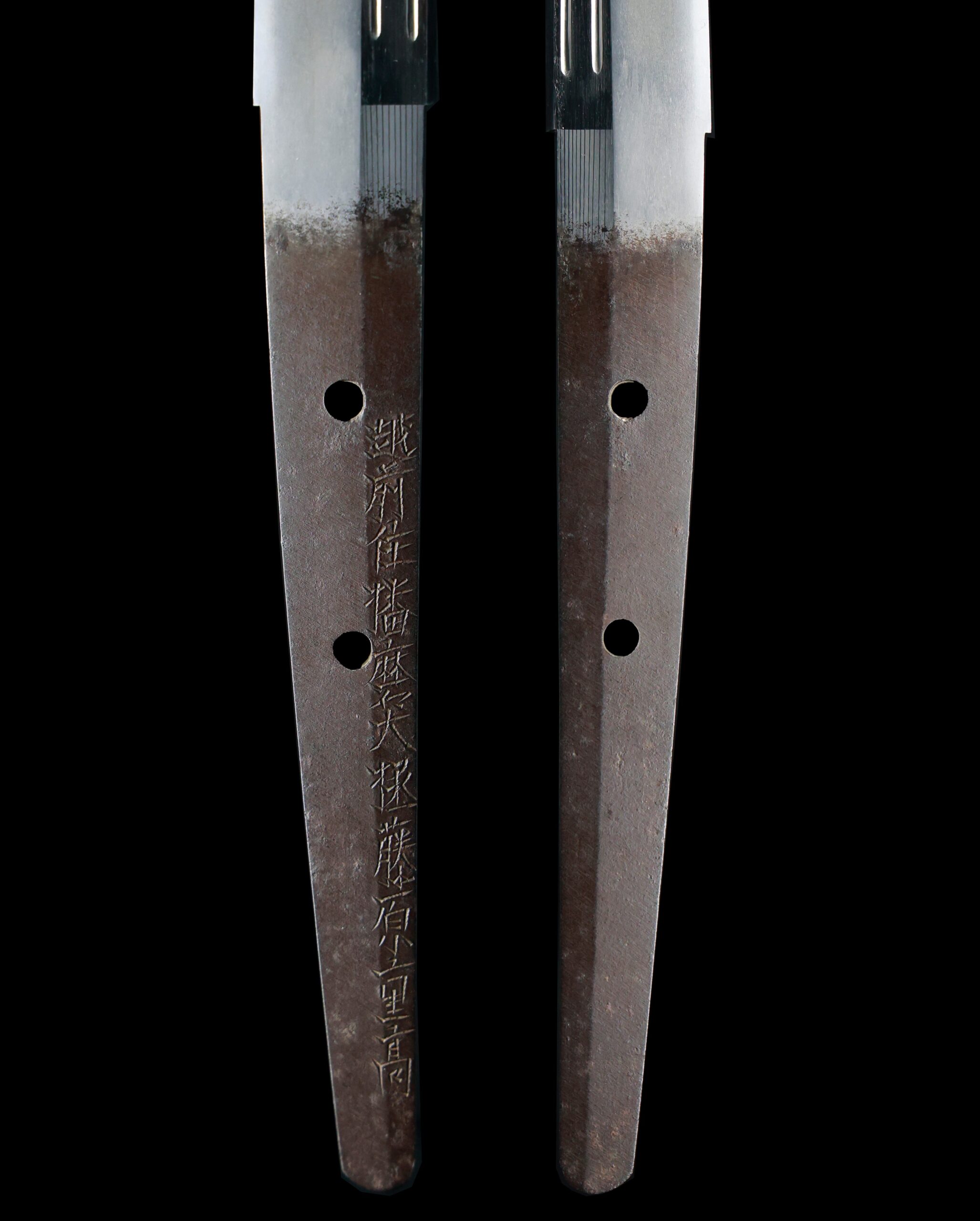
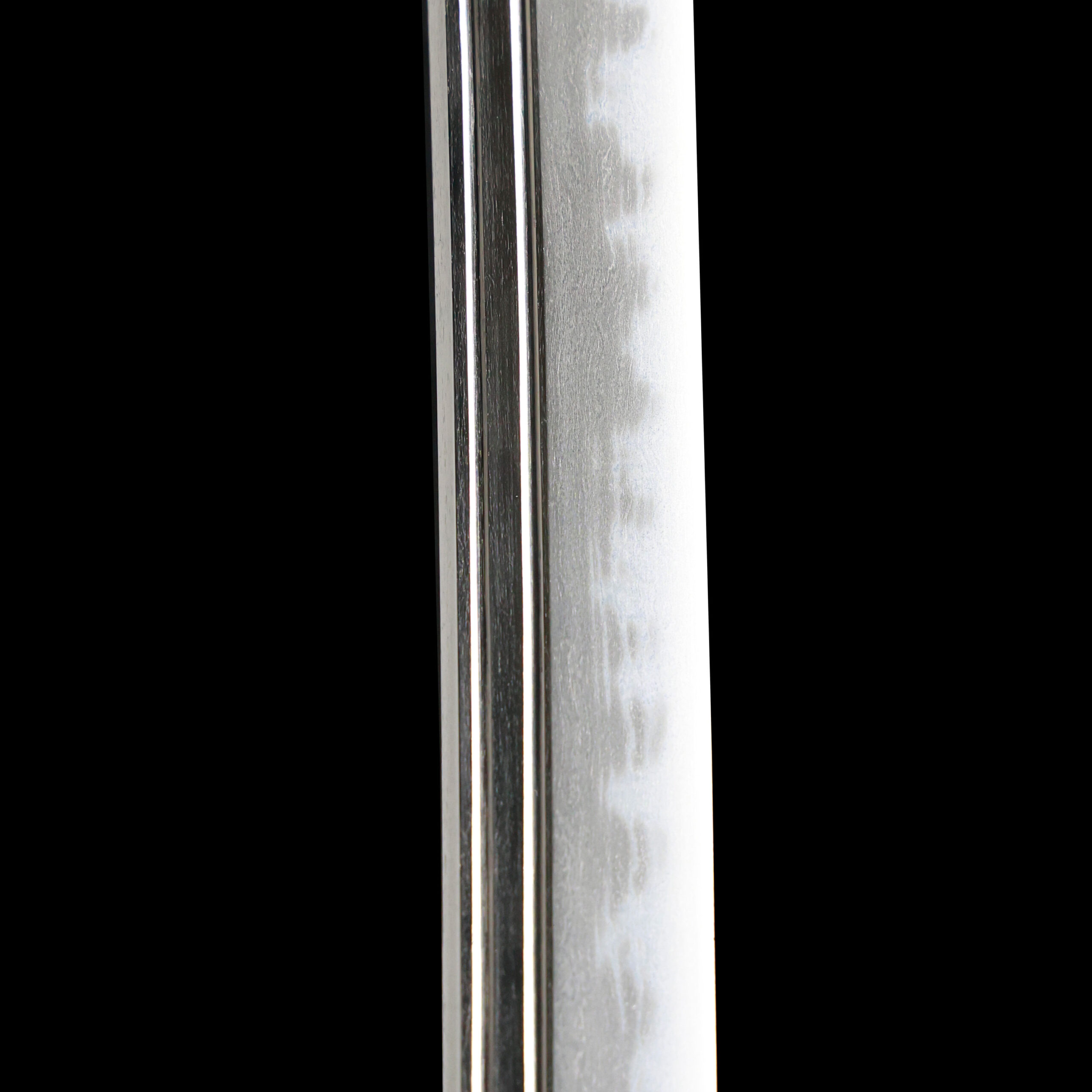
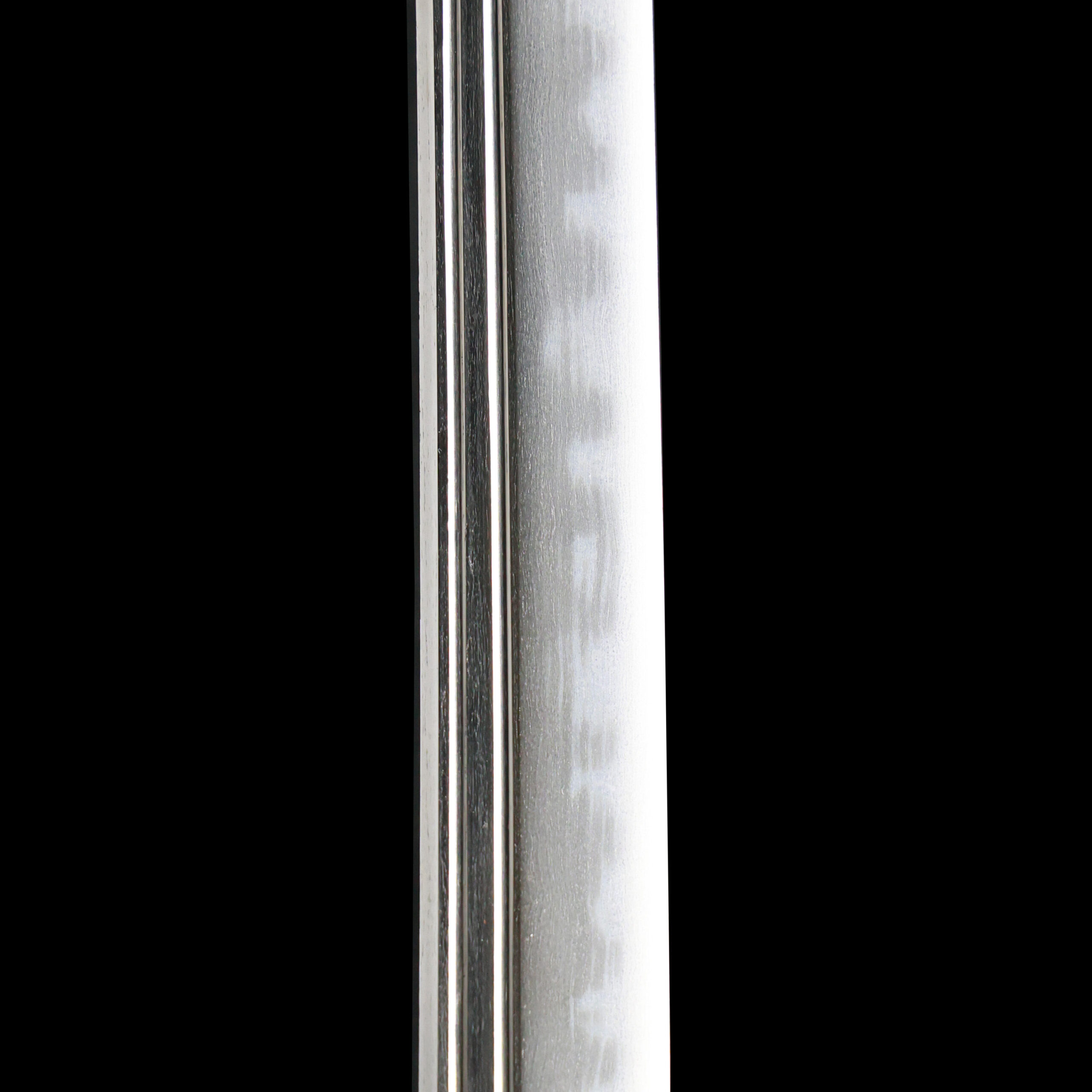
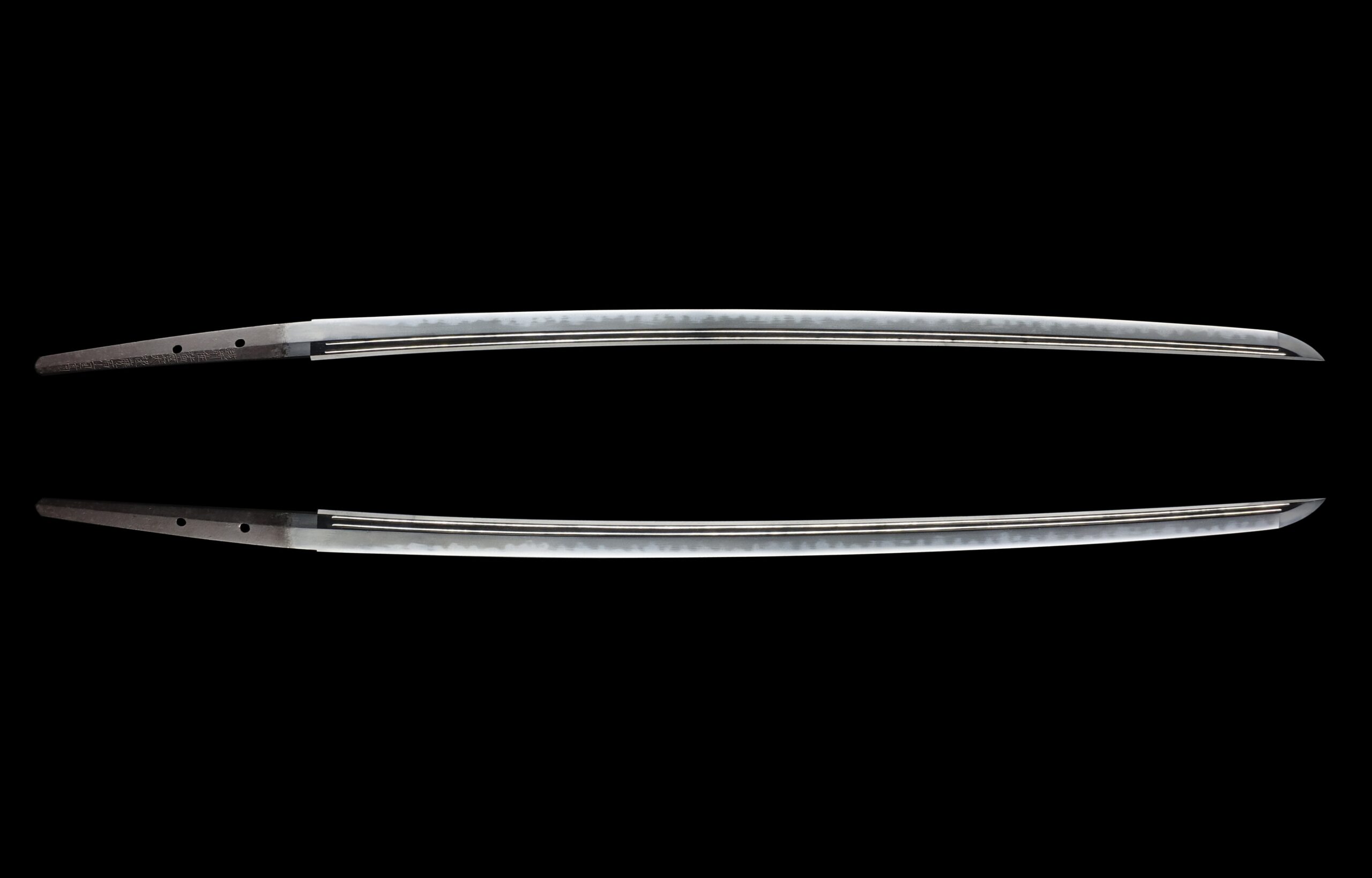
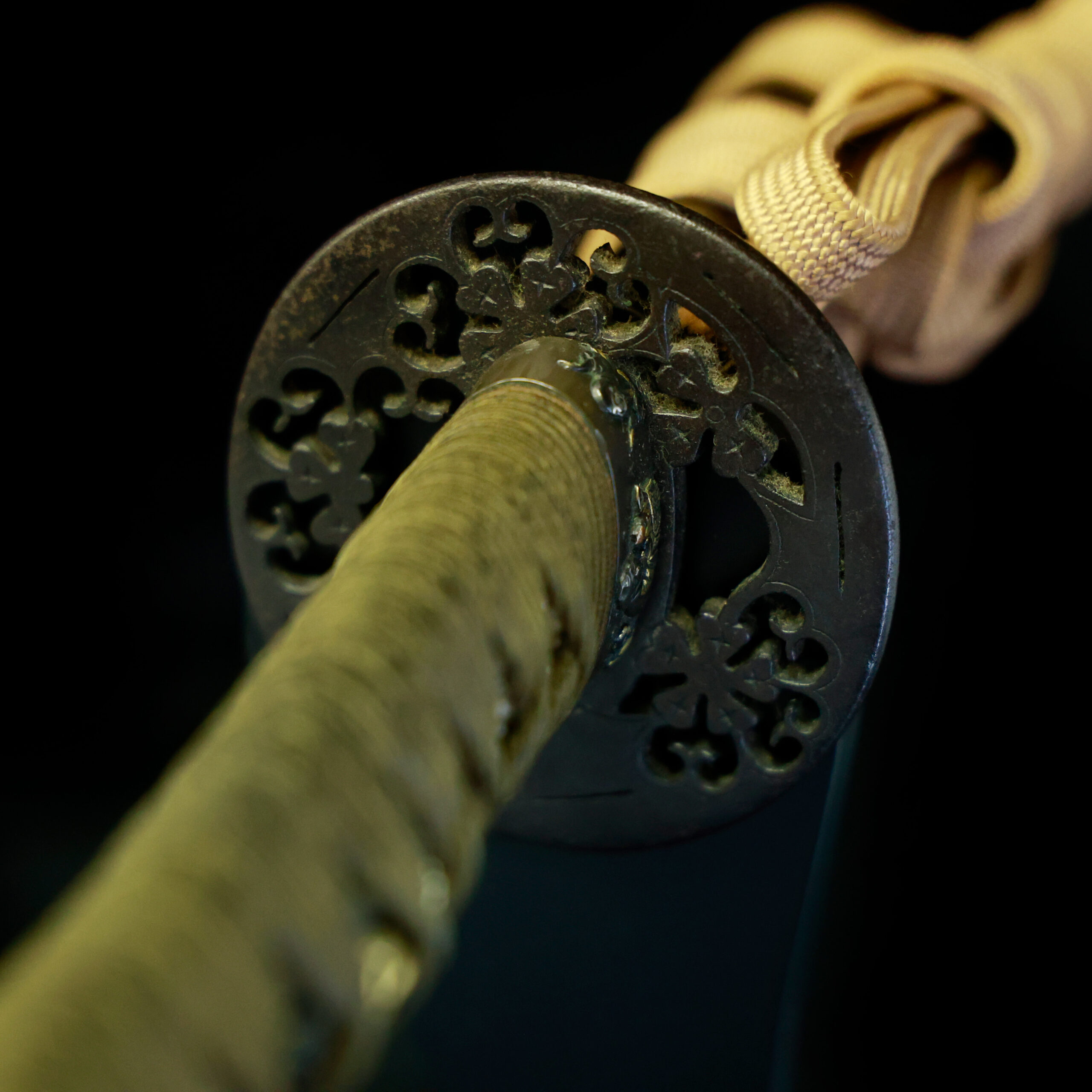
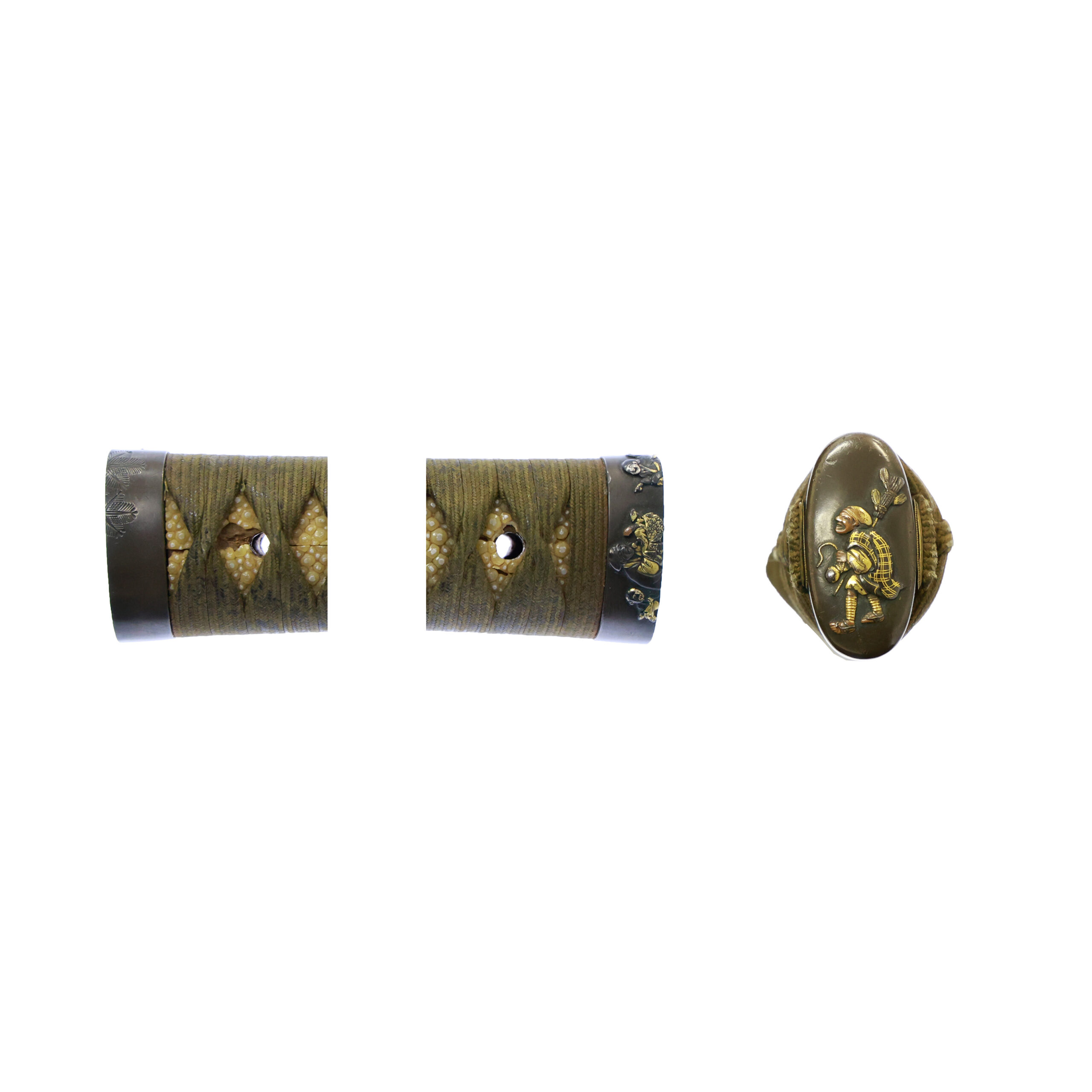
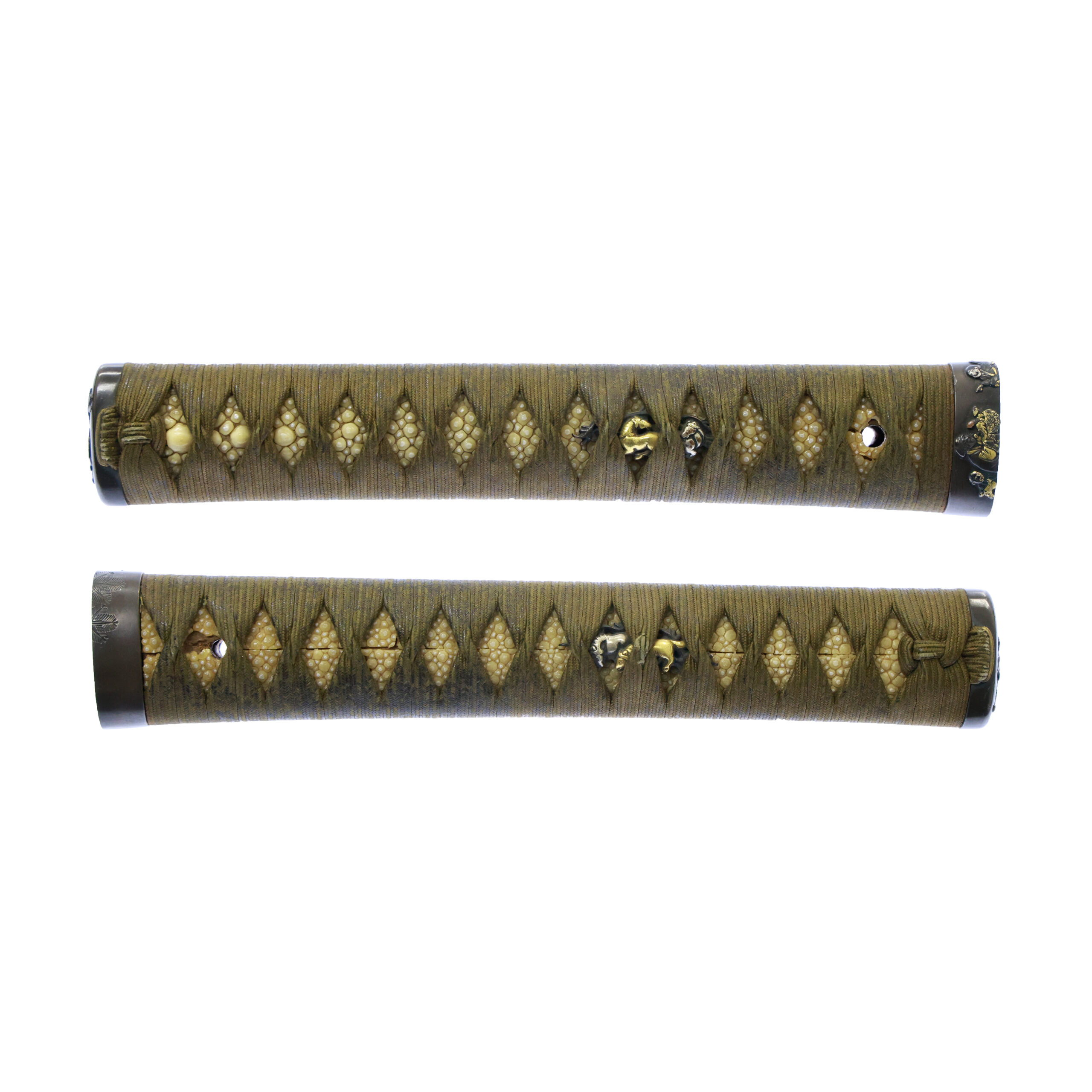
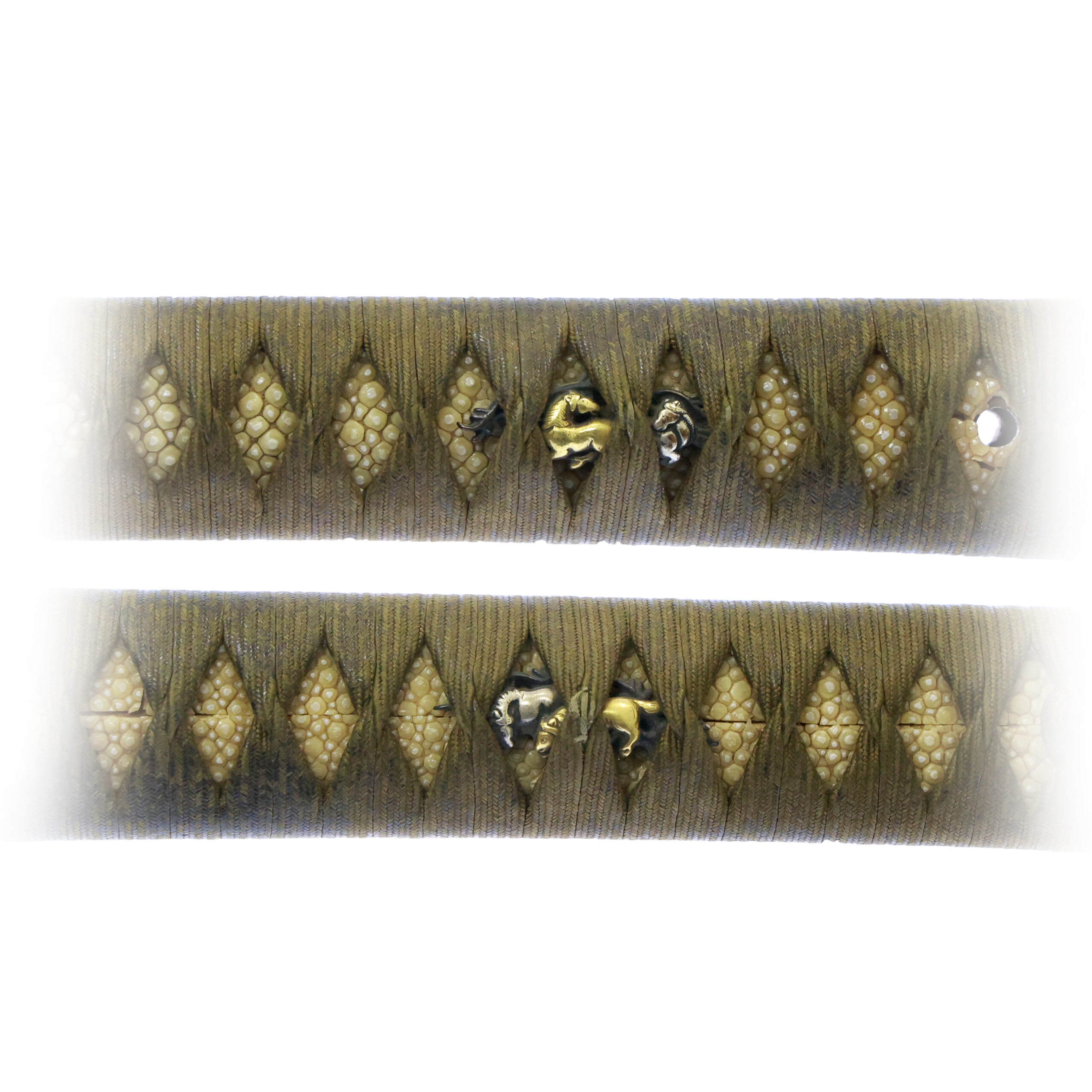
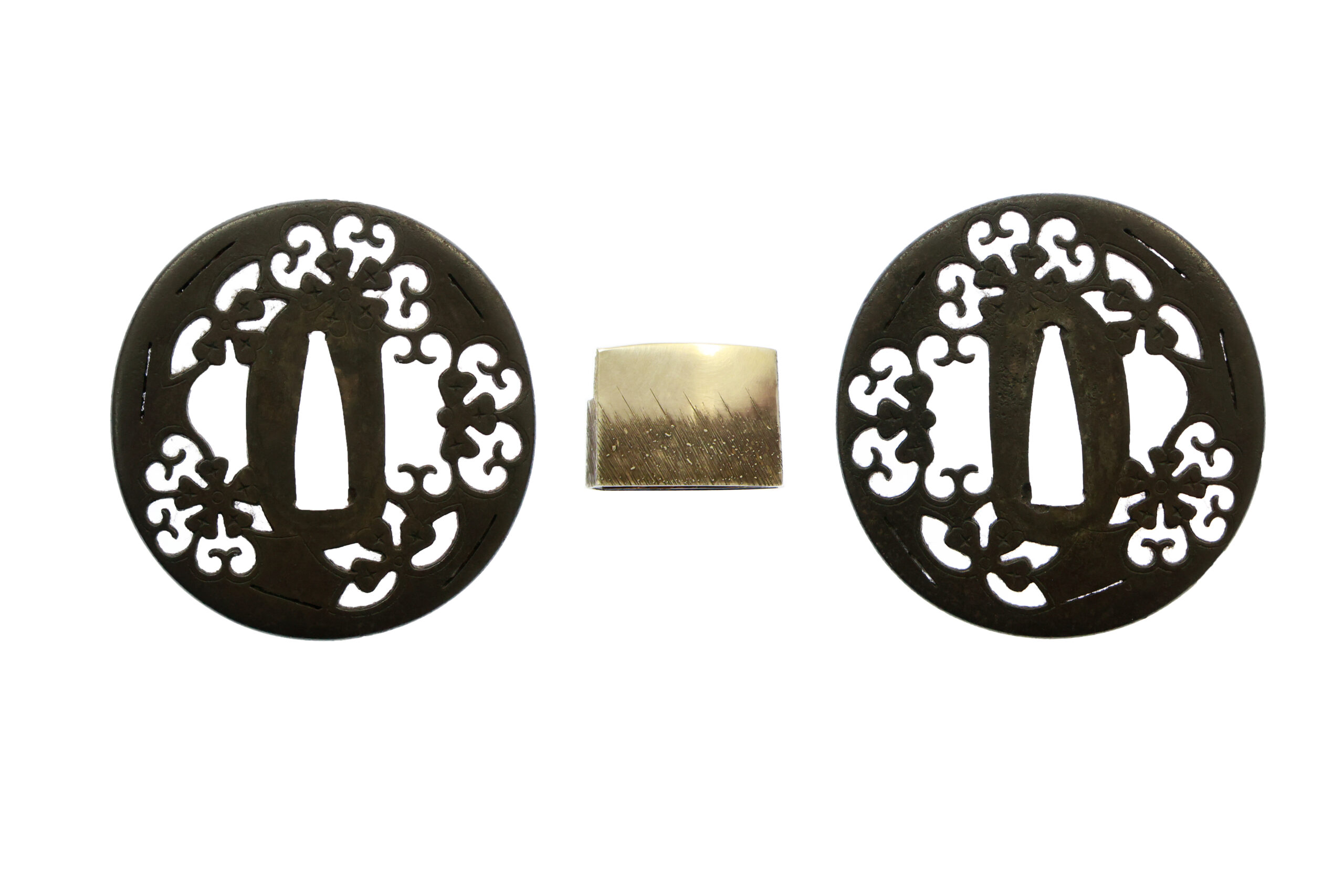
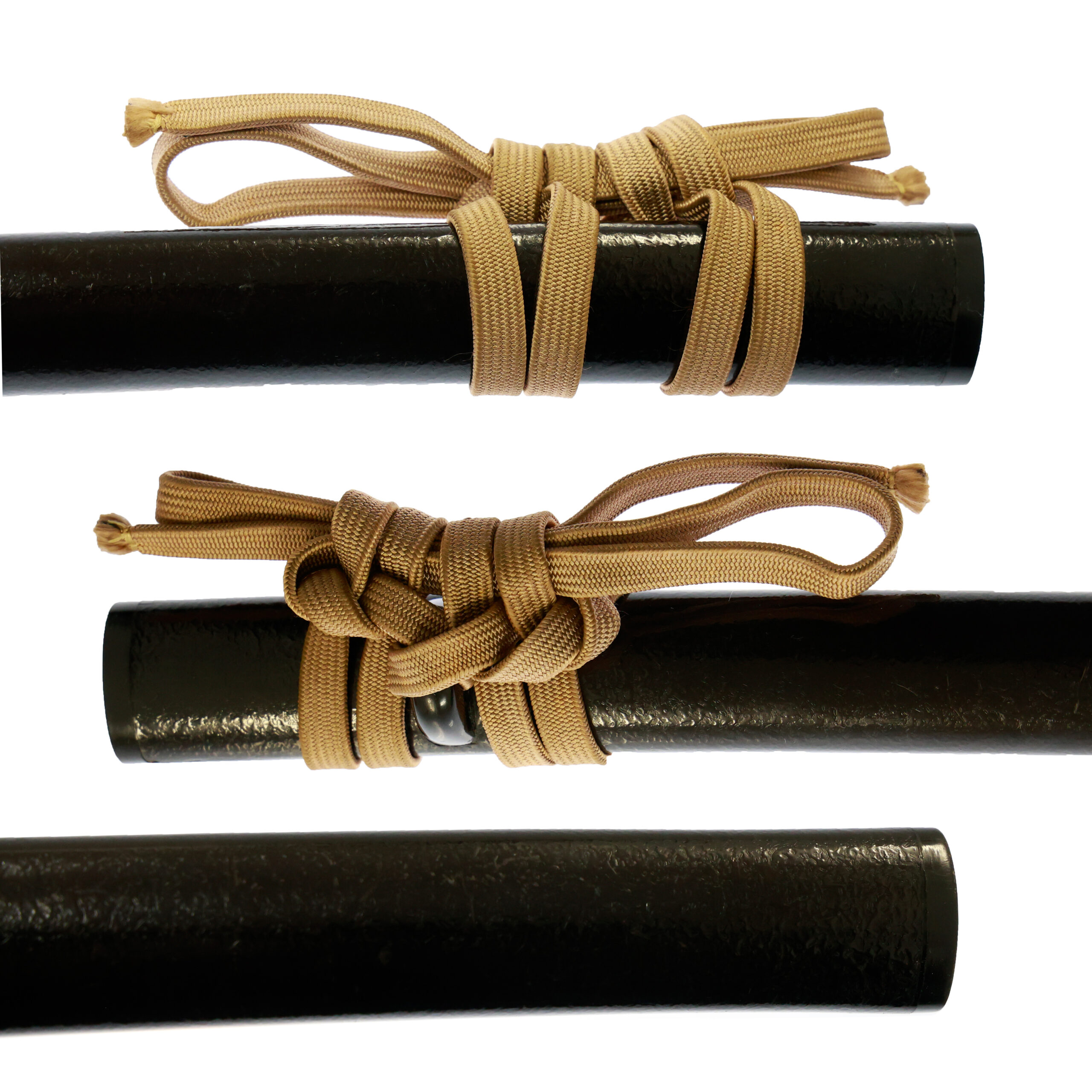
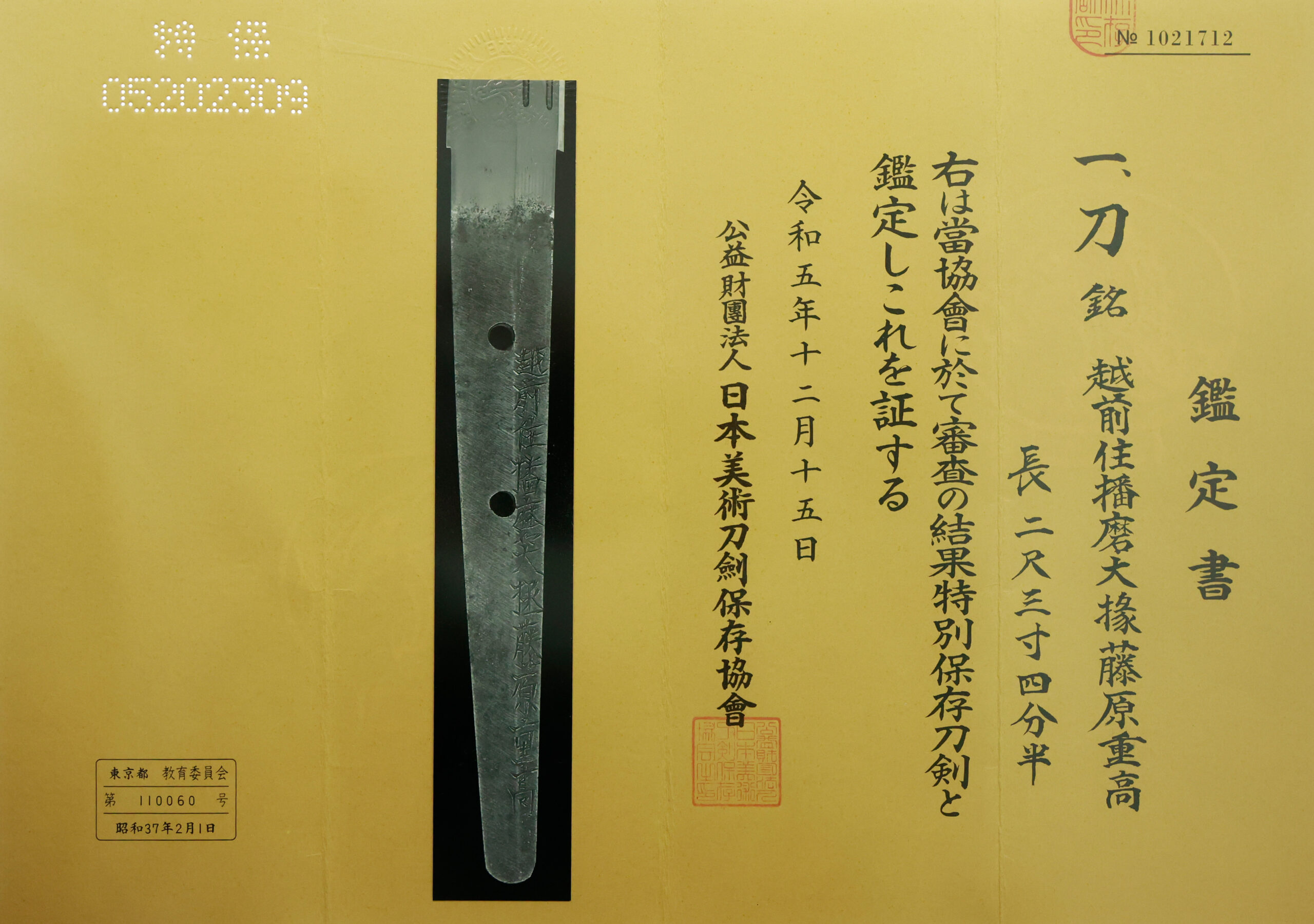
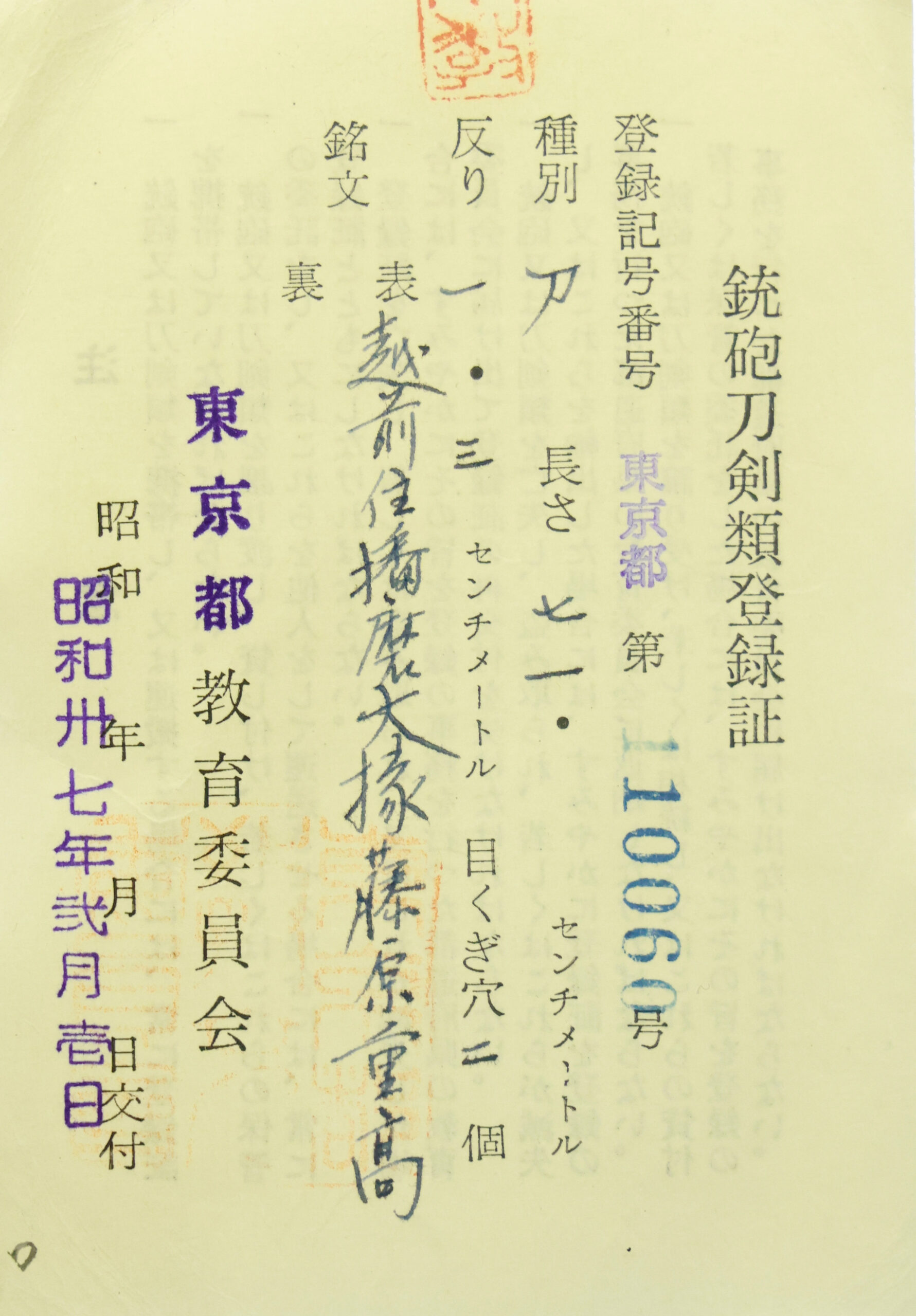
This blade was signed by Echizen Jyu Harima Daijyo Shigetaka(越前住播磨大掾重高). Echizen Jyu means living in Echizen province (Today’s Fukui prefecture), and Harima Daijyo is an honorable official title he received from the imperial court for his excellent craftsmanship. It was often the case that a swordsmith signed his signature with where he lived and a title he held. The maker’s name, Shigetaka, which lasted 11th generations until the end of the Edo period (Late 19th century), is one of the most renowned swordsmiths in Echizen province. From the first to the third generations, Shigetaka received the Harima Daijyo title. Considering this fact, this blade was made by one of the Shigetaka (1st-3rd generation). The first-gen Shigetaka was active during 1600-1624, the second-gen was active during 1624-1661, and the third-gen was during 1661-1681. It is said that the second-gen and third-gen were as skilled as the first-gen. The first-gen Shigetaka was born in the Shinshu area (today’s Nagano prefecture) and moved to Mino province (Today’s Gifu prefecture) to become an apprentice of Kanenori(兼則), one of the most renowned sword makers in the region. Mino province was also one of Japanese history’s most prominent sword-forging sites. During the late Muromachi period (the end of the 16th century), Shigetaka and the master Kaenenori moved to Echizen province. Since then, the generations of Shigetaka resided in this province, forging high-quality blades for the Matsudaira clan, who controlled this area. Echizen Province was prosperous during the Edo period, being ruled by the Echizen Matsudaira clan, a direct retainer of Tokugawa clan who ruled the Edo government. Many skilled swordsmiths from different regions moved to Echizen because of the high demand among the Samurai. Many renowned swordsmiths, such as the first-gen Shigetaka, were originally from the Mino province(Gifu prefecture). They are called Echizen Seki swordsmiths. It is appraised as a Tokubetsu Hozon Token(特別保存刀剣) issued by NBTHK(Nihon Bijutsu Touken Hozon Kyokai:日本美術刀剣保存協会). Fuchi-Kashira The Fuchi-Kashira depicts an elderly man with a cheerful expression. He is wearing a hood resembling the one traditionally associated with Daikokuten (大黒天), one of the Seven Lucky Gods (七福神, shichifukujin). This type of hood, round and low with bulging sides, was commonly used by monks and elderly people during Edo period. In Japanese culture, there is a custom to celebrate Kanreki (還暦), the 60th birthday, which marks a significant milestone as the zodiac cycle (干支) returns to the sign of one’s birth year. During this celebration, the honoree often wears a red vest called a chan-chanko (ちゃんちゃんこ). This tradition originates from the belief in red as a color that wards off evil spirits, stemming from a time when infant mortality was high. Newborns were dressed in red garments as a talisman to protect them and ensure their healthy growth. The practice of gifting a red chan-chanko for Kanreki symbolizes a “return to childhood” and serves as a blessing for continued health and longevity. This design, combining the cheerful elder and the cultural connection to Kanreki, reflects a deep appreciation for tradition and the celebration of life’s milestones in Japanese culture. Tsuka and Menuki The Menuki features two horses, one depicted in gold and the other in silver, symbolizing balance and elegance. In Japanese culture, horses hold significant historical and cultural importance. During the Edo period, horses were not only valued for their practical use in agriculture and transportation but also deeply revered for their association with divinity and good fortune. Horses were often considered sacred animals, believed to serve as messengers for the gods. They were prominently featured in Shinto rituals, and offerings called ema—wooden plaques with images of horses—were made at shrines to convey prayers and wishes for prosperity, health, and success. The term “ema” translates to “picture horse,” reflecting the historical practice of donating live horses to shrines as a gesture of devotion, which later evolved into the use of symbolic wooden plaques. In addition to their religious significance, horses were seen as symbols of vitality, strength, and speed. They were also considered a harbinger of good fortune and progress, as their ability to travel swiftly symbolized overcoming obstacles and moving forward in life. Tsuba and Habaki The Tsuba features a design of cherry blossoms (桜) crafted using the sukashi (透かし) technique, a traditional openwork method that creates intricate patterns by cutting through the material. Cherry blossoms hold a deeply significant place in Japanese culture, symbolizing the fleeting beauty of life, renewal, and the arrival of spring. In Japan, cherry blossoms are celebrated during hanami (花見), or flower-viewing festivals, where people gather under blooming cherry trees to appreciate their beauty and reflect on the impermanence of life, a concept known as mono no aware (物の哀れ). This cultural appreciation stems from the blossoms’ brief blooming period, which serves as a poignant reminder of life’s transient nature and the importance of cherishing each moment. The cherry blossom is also associated with renewal and hope, as its bloom coincides with the start of the new school and fiscal year in Japan. It has long been a symbol of optimism and fresh beginnings. Saya Raden technique is partially applied on this Saya. The Raden is a decorative technique that is often used for traditional craftwork. It uses the pearl part of seashells and puts it into the engraved surface of lacquer or wood. Thanks to its iridescent luster, it gives a luxurious look to works. Authentication Paper They authenticated the blade on Dec 15th in the 5th year of Reiwa (2023). They appraised it as Tokubetsu Hozon Touken, the blade especially worth preserving for Japanese society.
Offered by Samurai Museum
This piece has sold
Get an email when a new Shimosaka Shigetaka piece hits the market.

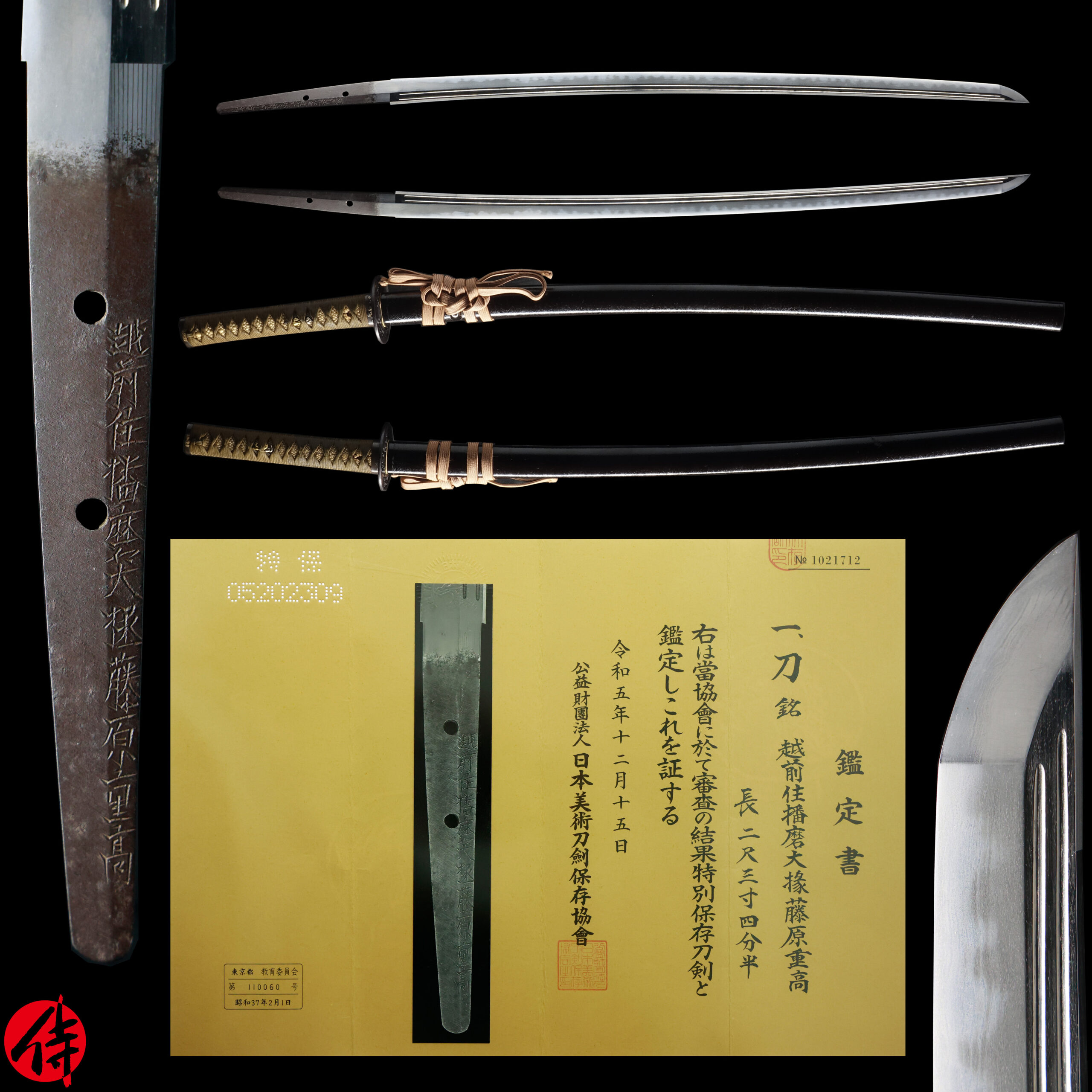
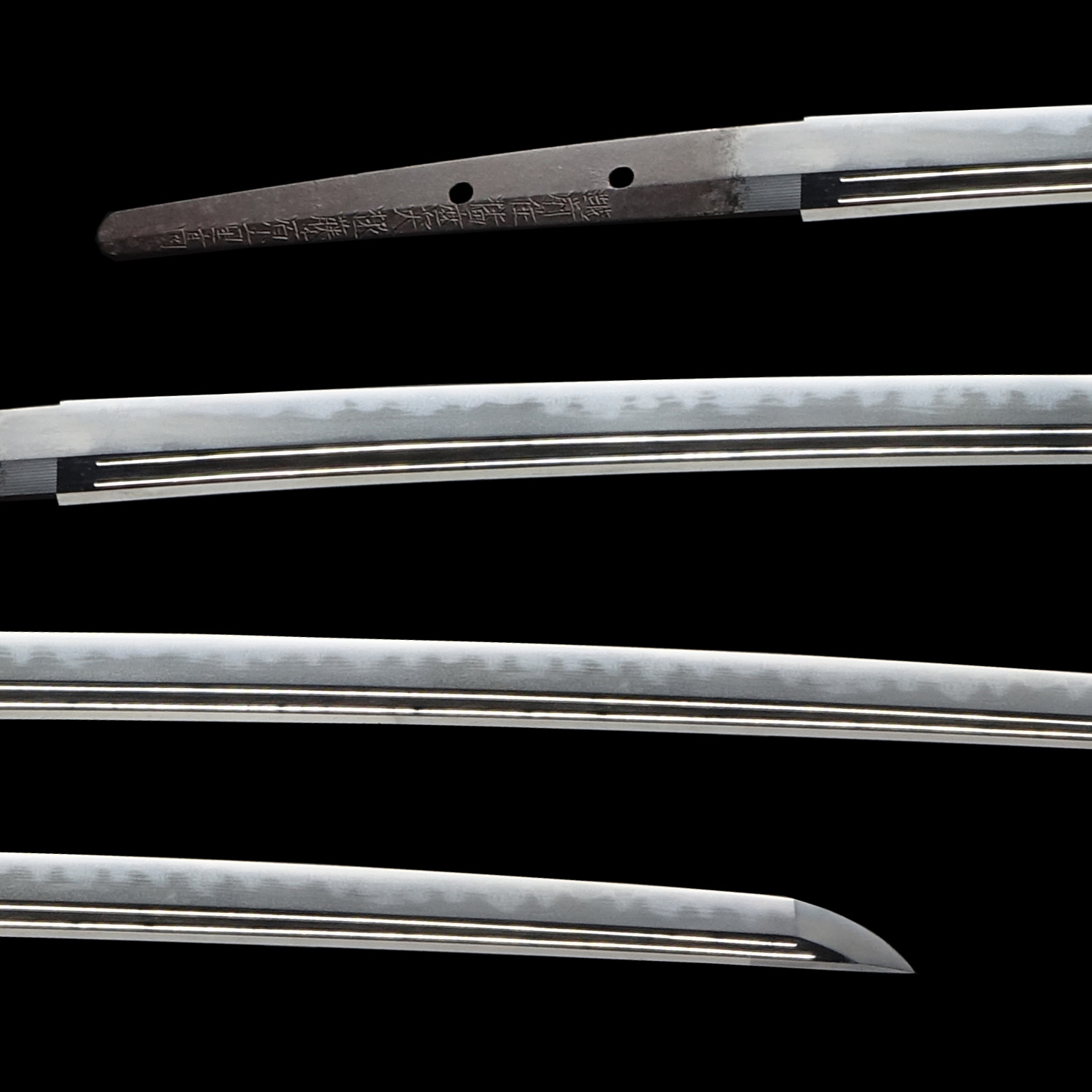
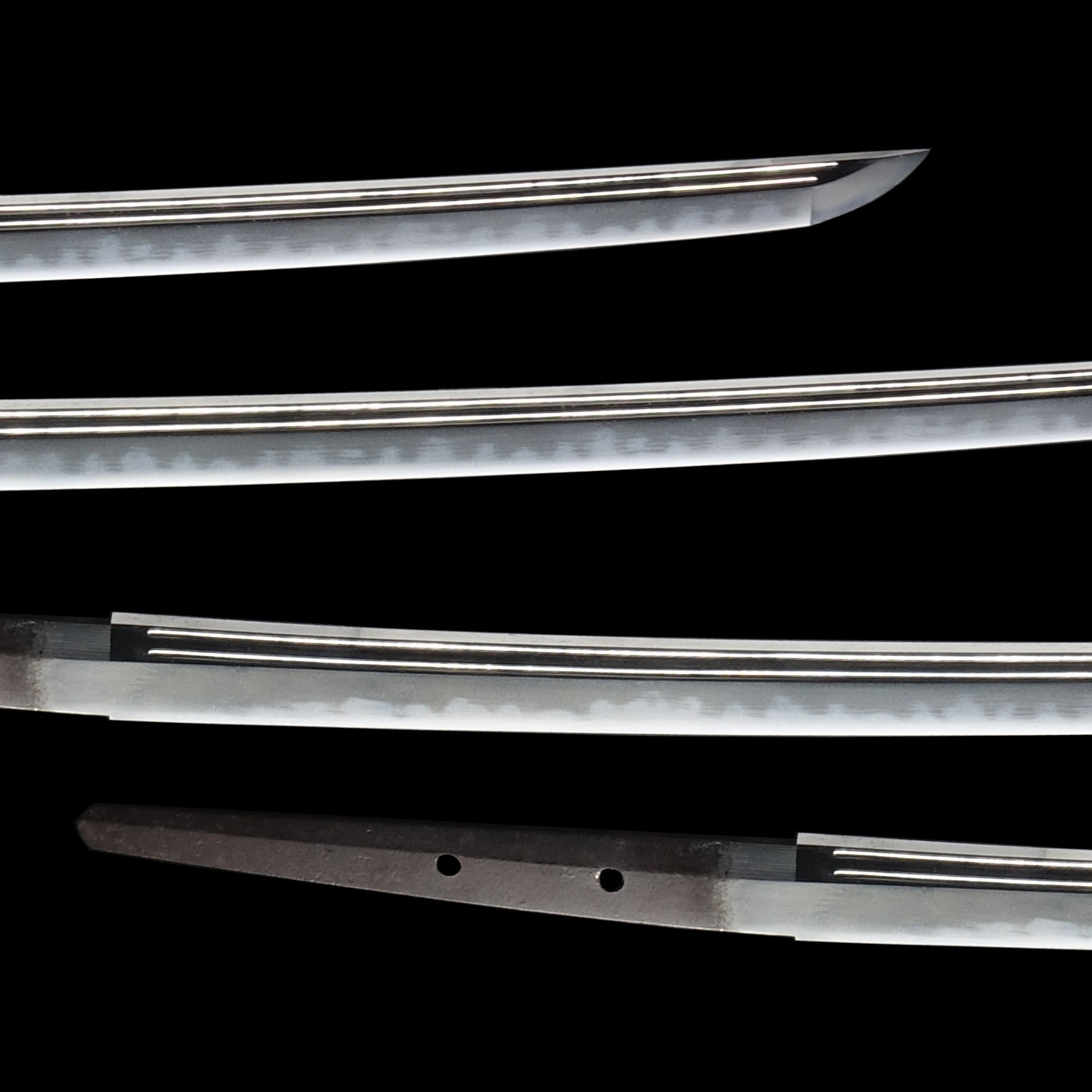
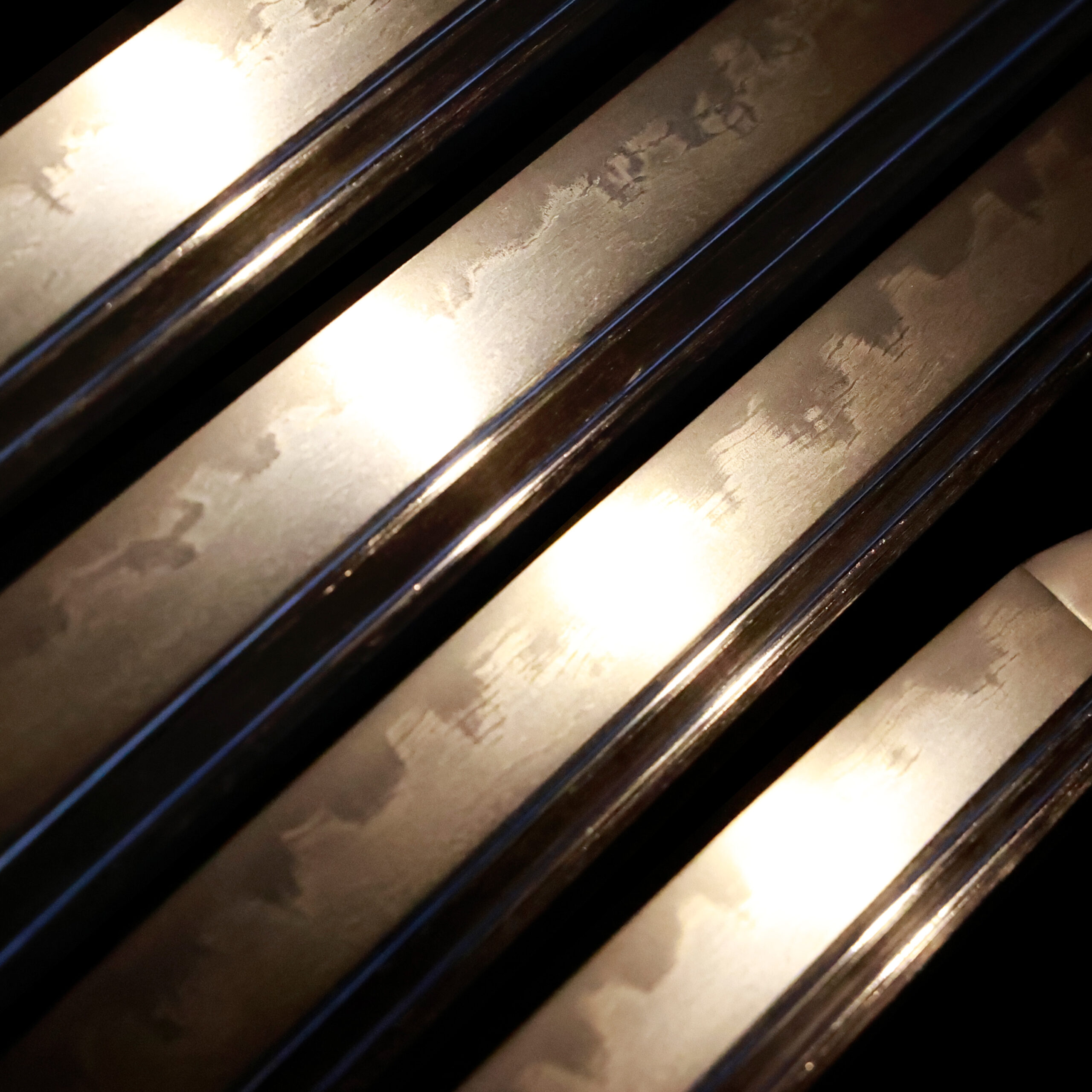
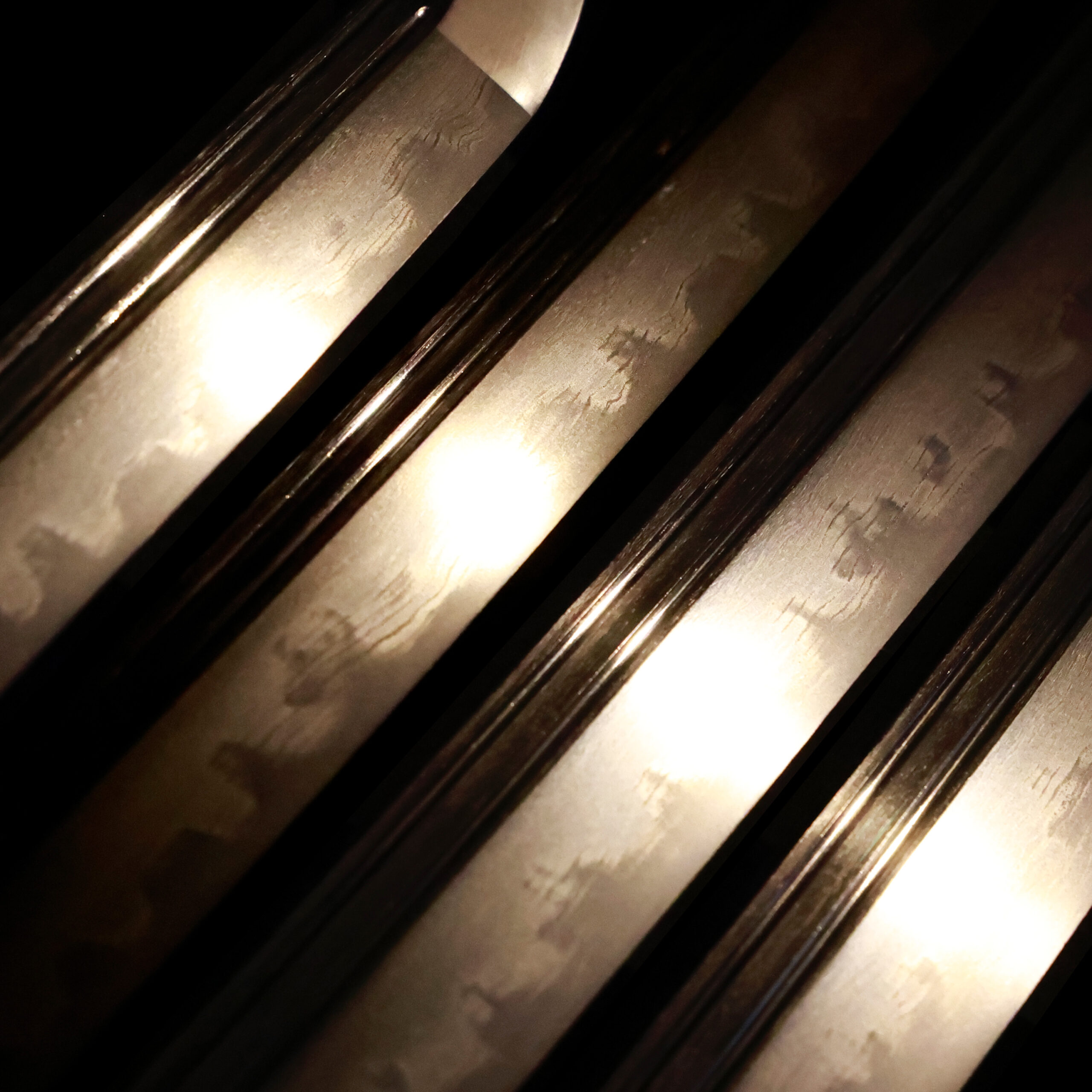
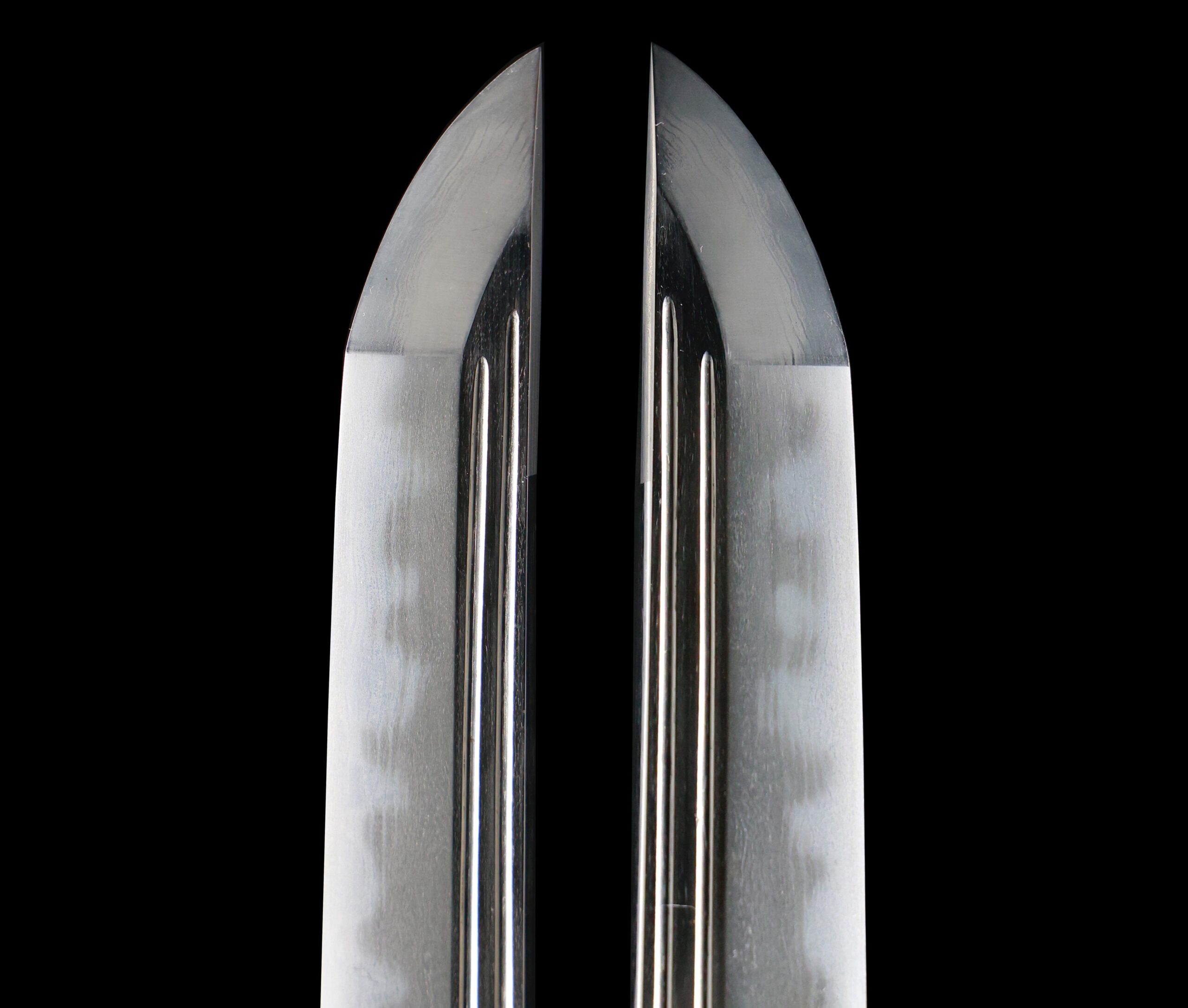
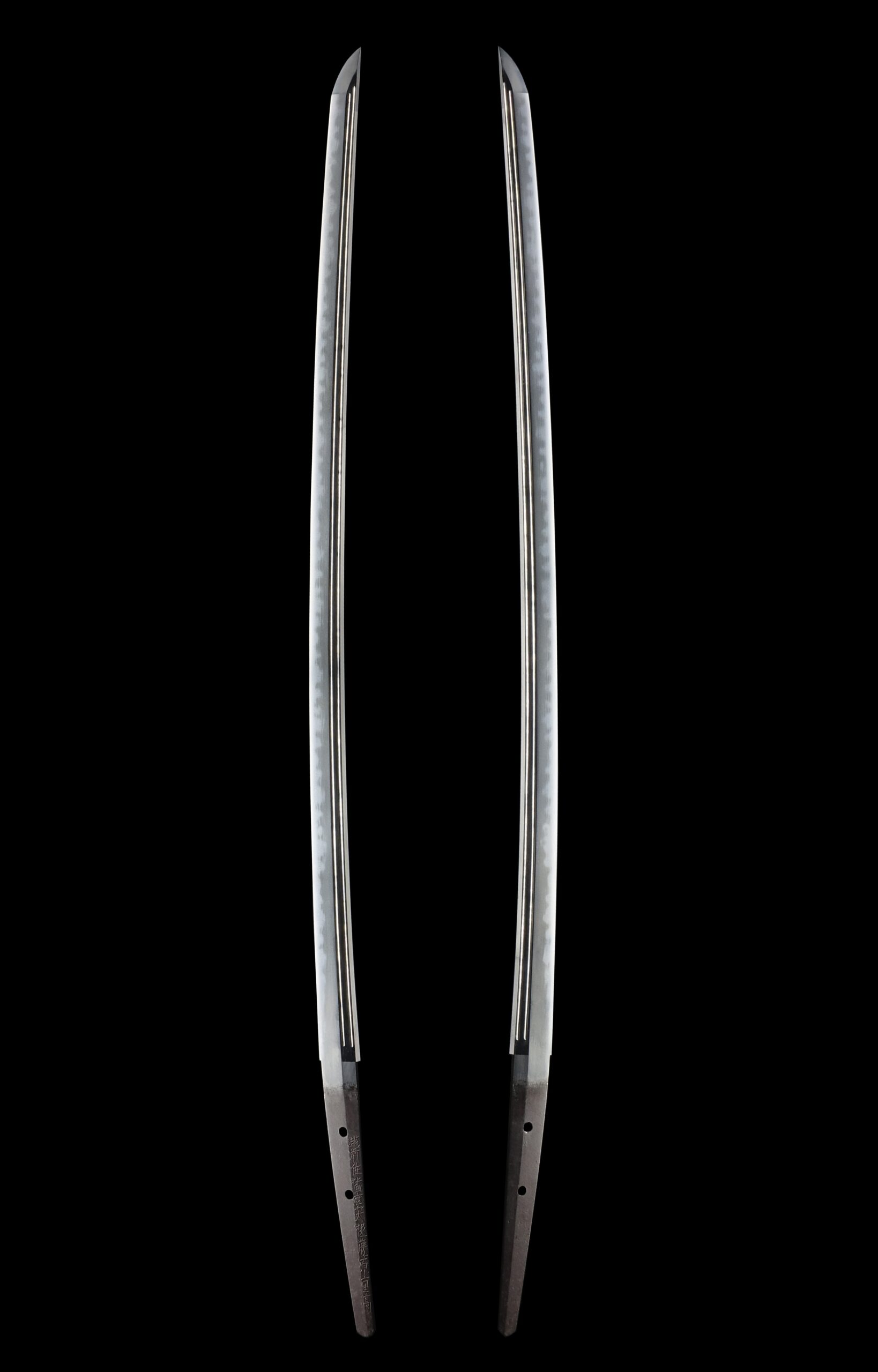
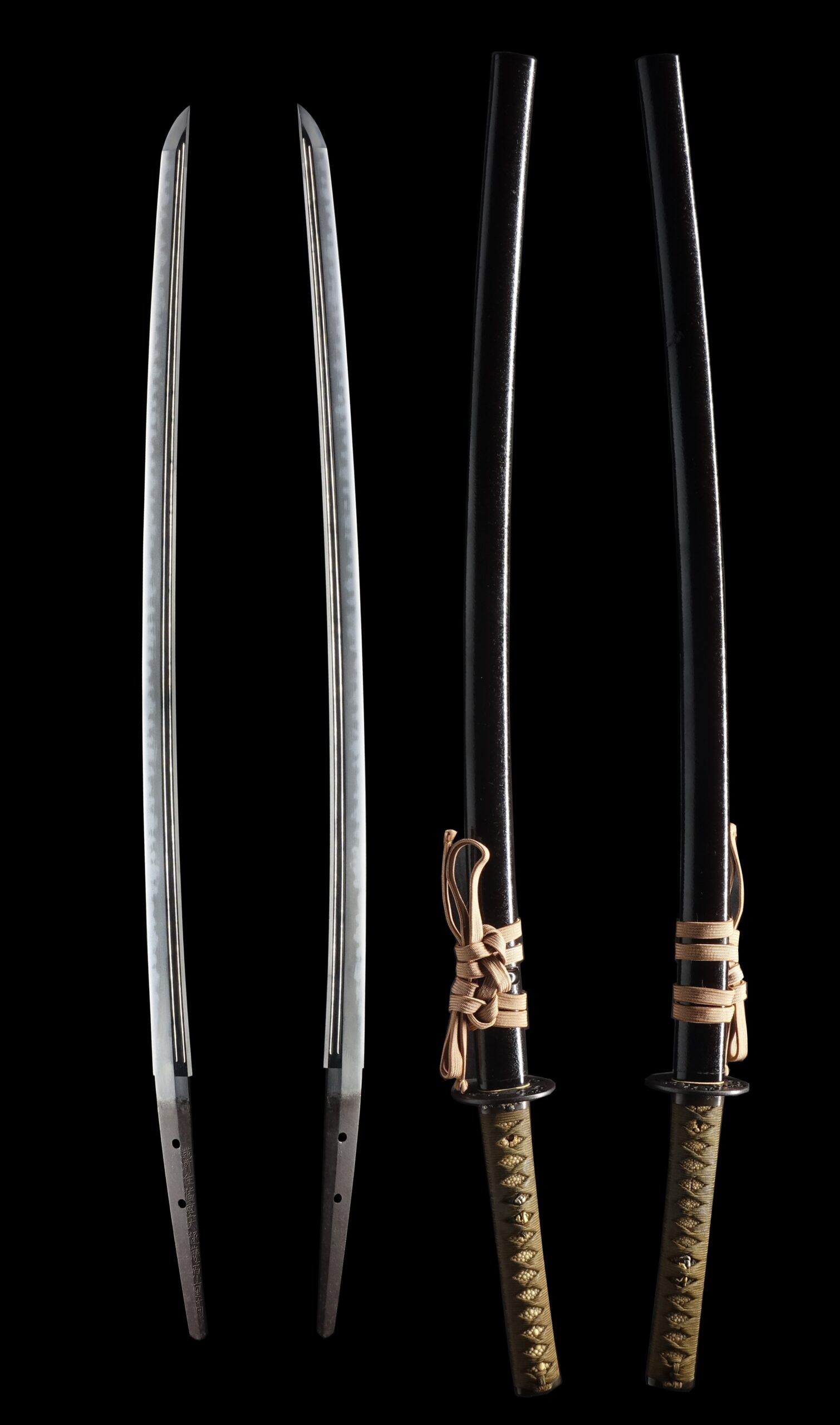
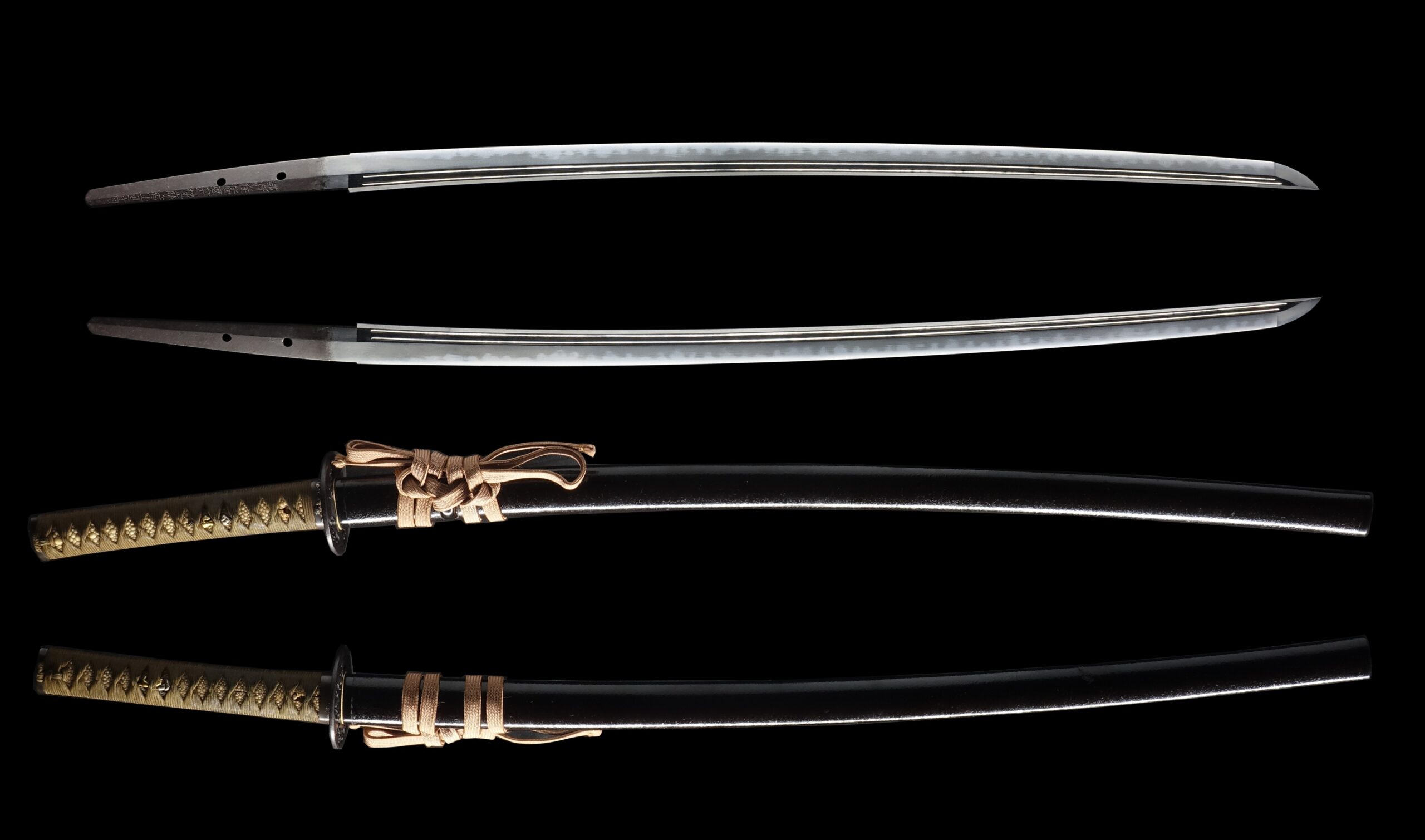
Shimosaka / Echizen (Echizen shinto) · Echizen · around 1596-1615
Fujishiro Chu-jo saku · Tōken Taikan top 49%
4 pieces on the market now
Shigetaka signed Harima Daijō Fujiwara Shigetaka, often adding Echizen-jū, and the published sources identify him as a pupil of the first-generation Echizen Yasutsugu who was skilled in the manner of his master. A wakizashi dated in the Genna era survives and fixes his period in the first years of the Edo period. The name ran on through several generations to the bakumatsu, but the sources hold that the first generation was by far the most skilled, and that some of his work reaches a level that approaches the first Yasutsugu himself[[c:1]]. Surviving work by the shodai is not common. Katana are few, hira-zukuri wakizashi relatively many, and his tanto are made in hira-zukuri or kanmuri-otoshi form.
The most constant mark of his hand lies in the tang. Where Yasutsugu and most of the Echizen smiths cut the nakago tip to a sword shape, Shigetaka finishes it in a chestnut-shaped kuri-jiri, a point the published sources say "deserves special mention"[[c:2]]. The kuri-jiri continues through every generation, the shodai's a little shallower. His signature is squat and cut with a thick chisel, while the later generations write slightly elongated, squared characters with a thin chisel.
His jigane is an itame mixed with mokume and flowing grain, standing slightly over the whole, with ji-nie and fine chikei, and the steel takes on a blackish cast. On a broad Keichō-style wakizashi the hamon is a suguha-chō that undulates here and there in a small, shallow notare with a hint of ko-gunome. Ashi and yō work actively, the nie is thick and in places a little rough, sunagashi runs over the whole, fine kinsuji enter, and the nioiguchi tends to sink. The published sources call this a calm manner that shows the features of the school well, with a quality approaching the first Yasutsugu[[c:3]]. A katana repeats the same temper with gunome and pointed elements and patches of coarse, clustering nie. The commentary notes that its forging is especially tight and refined compared with ordinary Echizen work, and that it "brings the first Yasutsugu vividly to mind"[[c:4]]. The bōshi runs straight or shallowly notare to a small round tip, at times thrusting up to a point, with hakikake and a fairly deep return.
A second register appears in his kanmuri-otoshi tanto. There the temper narrows to a fine suguha with ko-nie, fine sunagashi, frayed edges and kinsuji, burned in at the machi, and the published sources read the construction and the workmanship as deliberately aimed at old Yamato work, "truly an archaic piece"[[c:5]]. The finest of his blades carry deep, powerful Kinai-style carving. A hira tanto bears a Kurikara on one side and a sankoken on the other, and the commentary calls it a masterwork of the first Shigetaka[[c:6]], its carving strong and the deep cutting showing the character of Kinai-bori. On the broad wakizashi the carving shows Fudō Myōō with his two attendant child-deities, a composition also found on the first Yasutsugu's blades.
His most celebrated work is a copy of the meibutsu Honebami Tōshirō, the naginata of Awataguchi Yoshimitsu. The published sources recount the original's history: long famed as the Ōtomo naginata, it passed from the Ōtomo to Ashikaga Takauji, later became one of Hideyoshi's favourite swords, went to Hideyori and then to Tokugawa Hidetada, burned in the Meireki fire, and was re-tempered by the third Yasutsugu. The first Yasutsugu also made a copy, signed as modelled on the Honebami Yoshimitsu. Of Shigetaka's version the commentary says that it is "truly faithful to the original"[[c:7]], well made, with fine carving, and one of his greatest masterpieces.
A seventh blade, a hira tanto, is recorded in Honma's inventory of the Imperial collection. Its hamon is a large, shallow notare with sunagashi in the lower half and a tighter nioiguchi above, and the groove holds a Kurikara carved in relief. Honma's commentary widens the picture of his range: notare or gunome work is common and suguha rare[[c:8]], and some of his carving is exactly like that on Yasutsugu's blades, which Honma takes as evidence that the same carver worked for both[[c:9]]. The round kuri-jiri, by contrast, differs from Yasutsugu. Honma closes by calling this tanto doubtless his masterpiece.
For the collector, Shigetaka is graded Chū-jō saku by Fujishiro. His record is small but uniformly high: six blades designated Jūyō, every one signed, and none in any higher tier. Provenance is recorded for one, the broad wakizashi, which was handed down in the Takizawa family of the Honjō domain in Akita during the Edo period and survives with its black-lacquered mounting inlaid with a dragon in mother-of-pearl. Work by the shodai appears only seldom, and a signed blade with Kinai carving and his chestnut tang is a rare encounter within Echizen Shintō.
Where Shigetaka stands among comparable artisans: across all of nihontō, and within tradition, era, and period. The tiers (Foremost · Leading · Major · Notable) weigh official designations from the NBTHK and Japan's Agency for Cultural Affairs, together with historical honors of lasting repute such as the Sansaku and Meibutsu-chō.
Select a lens to see how it's measured.
Shinto · Echizen
39 pieces on the market now
The Shimosaka name began not as a single hand but as a trademark shared by a band of Echizen smiths at the dawn of the shinto era, and the designated record gathers their work under that one signature rather than parsing it into individuals. The published sources read the early inscriptions, the generic Echizen no Kuni Shimosaka and the titled Higo Daijo Fujiwara Shimosaka, as the product of a group, of which the first-generation Yasutsugu served as the representative. Born in Shimosaka village of Sakata district in Omi, Yasutsugu moved to Echizen under the patronage of Yuki Hideyasu, signing in his early years Higo no Daijo Shimosaka before his Keicho 10 to 11 summons to Edo, where he forged before Ieyasu and Hidetada and received the character Yasu and the right to cut the Tokugawa hollyhock crest on his nakago. The titled signature was carried by several Echizen hands at once, and the texts list Yasutsugu, Sadakuni and Kanenori among the smiths whose chisel movement and brush intent are too alike to part on present evidence. From this band the Echizen Yasutsugu line descended, dividing after the second generation into the Edo and Echizen Shimosaka houses, and around it formed the deep relief carving the province made its own. The school is recognized first in its steel. The forging is itame mixed with mokume that stands and opens, often flowing into nagare, carrying thick ji-nie and fine chikei, the kane taking on the blackish cast the sources name outright as Echizen-gane; the same dark, standing jihada recurs from Yasutsugu through his son, through Sadatsugu, Shigetaka and the unnamed Shimosaka hands, and the commentary returns to it as the group's signature. Over it the hamon favors a suguha to chu-suguha or shallow notare into which linked gunome and ko-gunome mix, ko-ashi and yo entering, the nie thick and gathering unevenly into rough patches, kinsuji and sunagashi streaming through, the nioiguchi tending to a sinking shizumi.
The boshi is the steadiest tell, running to a ko-maru swept in hakikake and turning back long, with a Sanpin-flavored reminiscence of the Mishina and Echizen-Seki inheritance. Yet the house is not uniform: Sadakuni works an austere suguha over an unusually refined ji with little of the blackish mokume, Sadatsugu fires the brightest, most choji-laden midare of the circle, and the third generation cleans the forging and brightens the nioiguchi toward his Edo contemporaries. Binding the registers is the carving, the deep Echizen-bori and Kinai-bori of kurikara, Fudo Myoo, bonji and gomabashi set in relief within the hi, which Sadakuni may have first supplied to Yasutsugu's blades. For the collector the school rewards reading by register rather than by a single famous holding. Yasutsugu is its summit, rated Jo-jo saku, retained smith to the shogunal house, whose Sadamune and Toshiro copies (the Namazuo, the lost Oyako, the Shishi) show his own Echizen hand under the model, and whose best katana carry the possession inscriptions of his patron Honda Hida no Kami Narishige and provenance in the Echizen and Kishu Tokugawa houses. The second generation follows so faithfully that his finest blades part from the father chiefly by the form of the character tsugu; the Edo third generation continues the suguha and ko-notare manners with a straight yakidashi and a Hojoji affinity. Around them the specialists define the edges of the idiom: Sadakuni and his quiet suguha with a pair of tanto recorded in Honma's inventory of the Imperial collection, Sadatsugu with his Narishige-crested cutting-test blades, and Shigetaka, the most skilled of Yasutsugu's pupils, whose chestnut-tailed kurijiri nakago and Kinai carving (the Honebami and Hossho copies among his masterworks) name him at a glance and whose finest work approaches the master. A signed Shimosaka blade, whether a titled Yasutsugu beneath the aoi-mon, a named piece by one of the band, or a Higo Daijo pre-Yasutsugu register, comes to market only from time to time, valued as the wellspring from which the Echizen Yasutsugu line and its carving tradition arose. Learn more →
| Smith | Era | Designated |
|---|---|---|
| Yasutsugu康繼 | 1596-1615 | 76 |
| Yasutsugu康繼 | 1624-1644 | 25 |
| Sadakuni貞國 | 1596-1615 | 11 |
| Yasutsugu康繼 | 1661-1673 | 8 |
| Shigetaka重高 | 1596-1615 | 7 |
The Edo period (1615 to 1868)
Edo was the sword’s age of connoisseurship: the Hon’ami appraisers, the shogunal register of famous blades of 1719, and a thriving literature turned the sword into an object of study even as it ceased to be drawn in war.
A Hozon-certified blade judged to show notably superior workmanship and a better state of preservation. The bar is higher: re-tempered blades and most unsigned Muromachi/Edo works are excluded.
The NBTHK (Nihon Bijutsu Tōken Hozon Kyōkai, the Society for the Preservation of Japanese Art Swords) is a public-interest incorporated foundation founded in 1948 and supervised by Japan’s Agency for Cultural Affairs (Bunkachō); it is based at the Japanese Sword Museum in Tokyo. Its expert panels physically examine each submitted work (shinsa) and issue a certificate (kanteishō) ranking it by artistic and historical merit. NBTHK papers are the most widely recognized standard of authentication for Japanese swords and fittings.
NBTHK official siteReturns/exchanges limited to defects caused by shipping (except willful misconduct or gross negligence by the company); customers must contact within 72 hours of receiving the product.