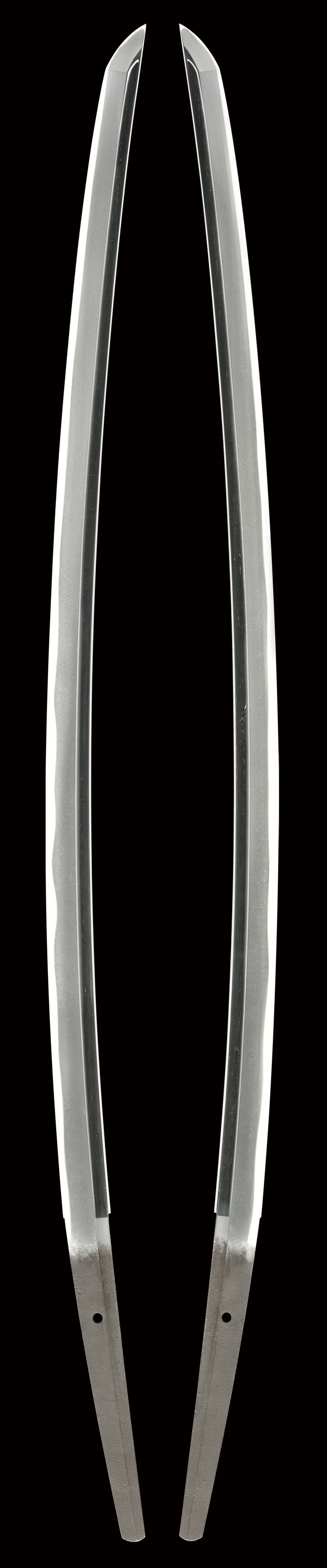
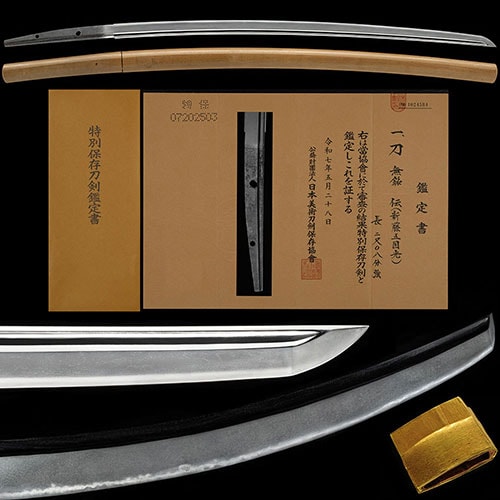
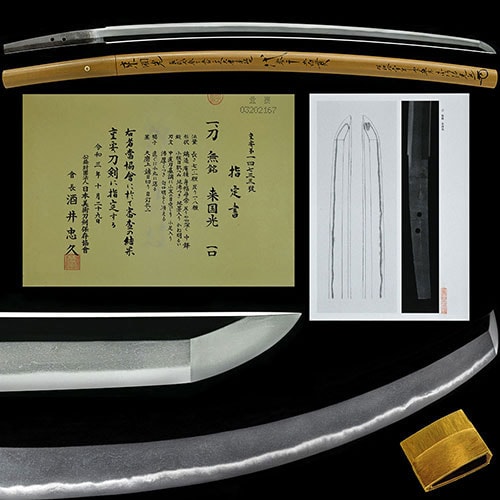
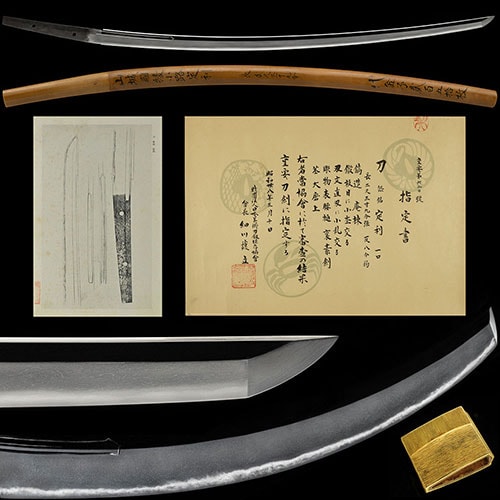
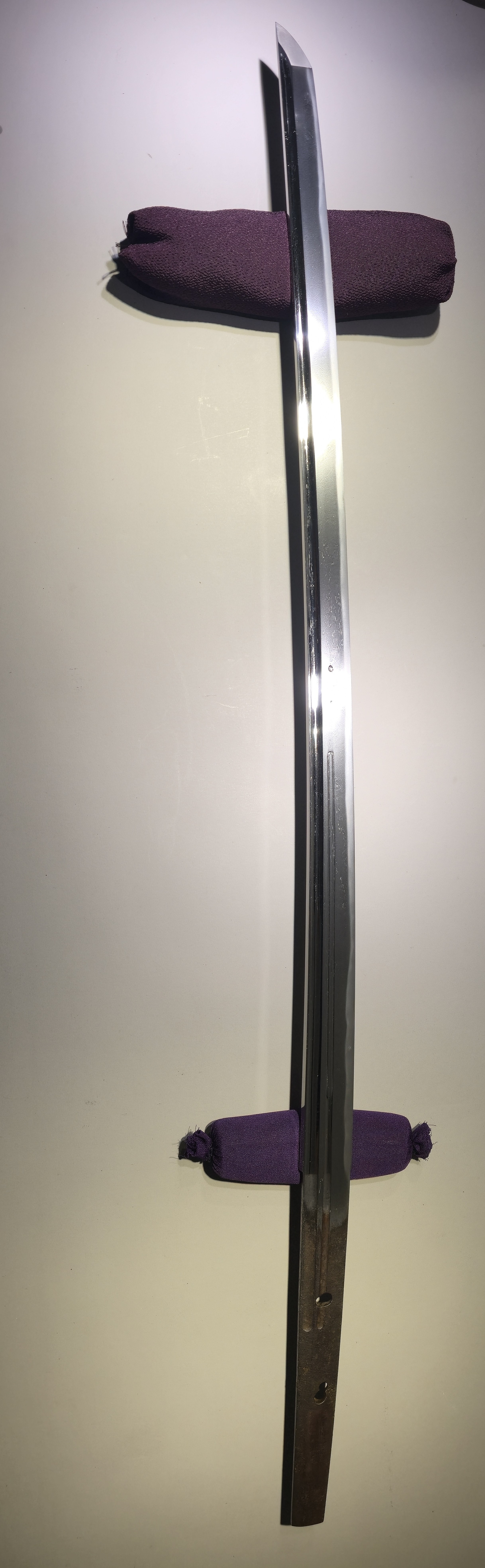
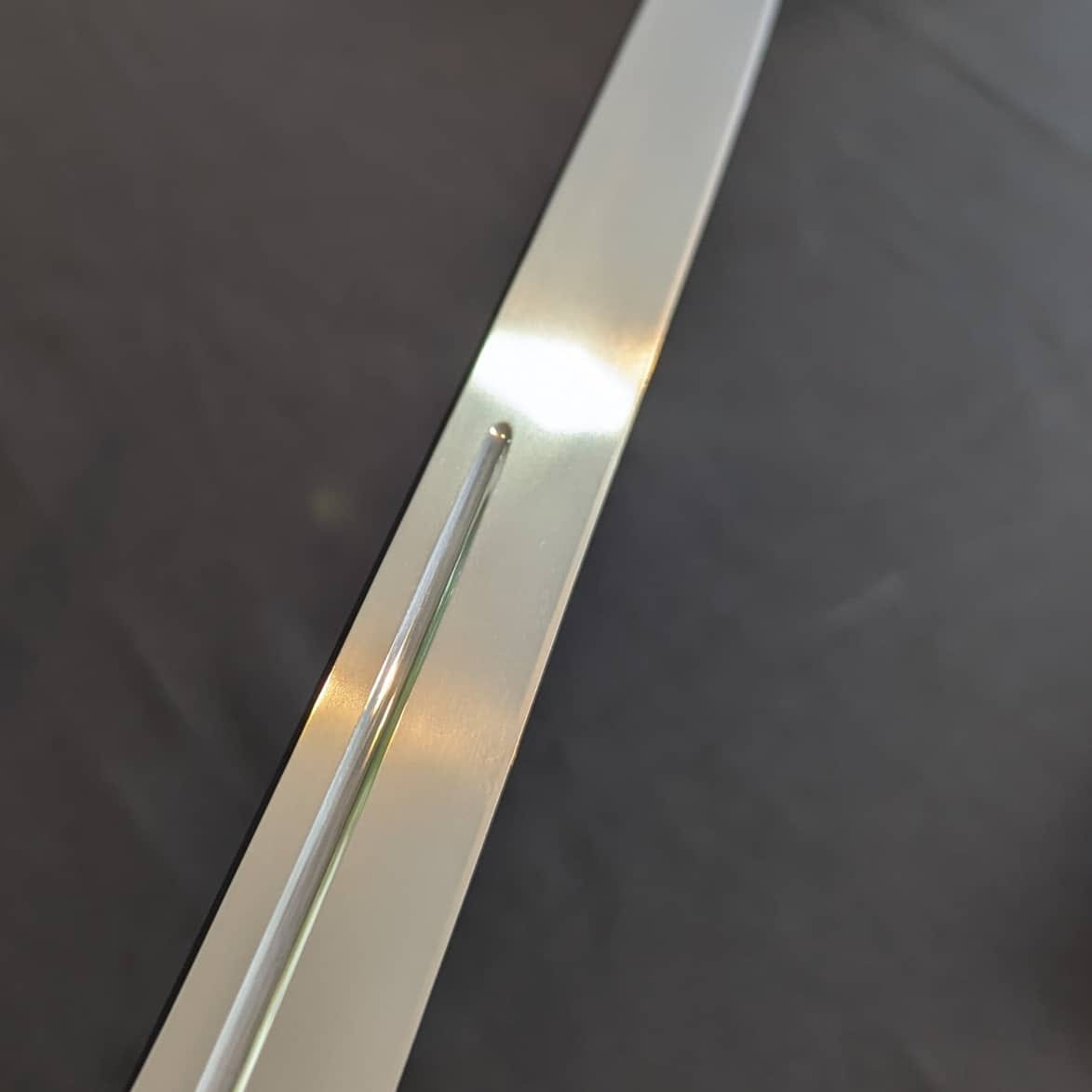
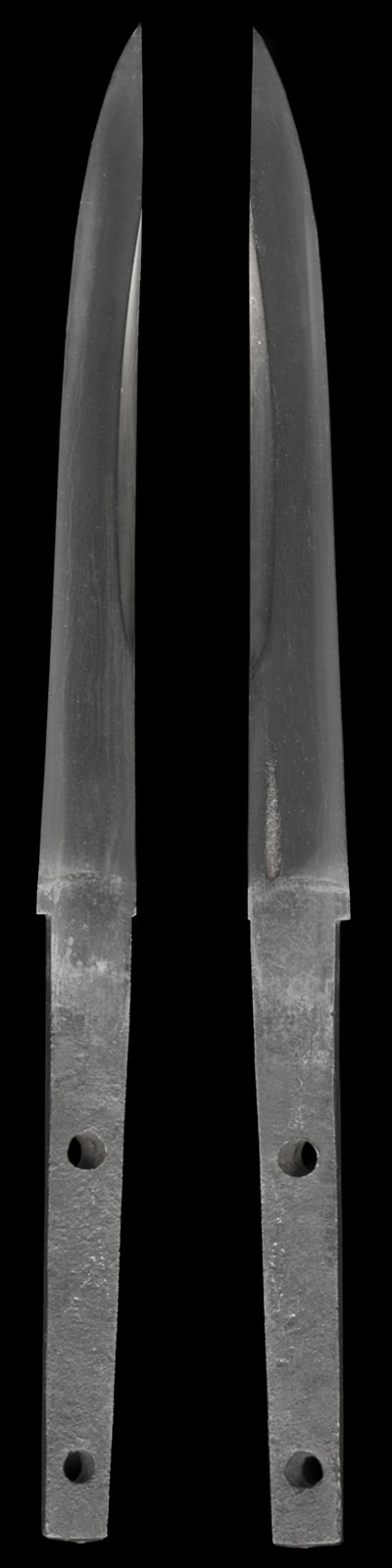
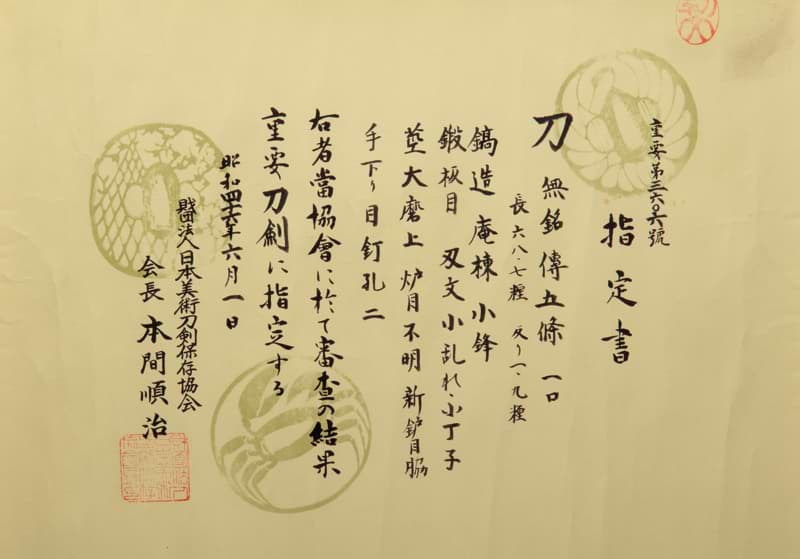
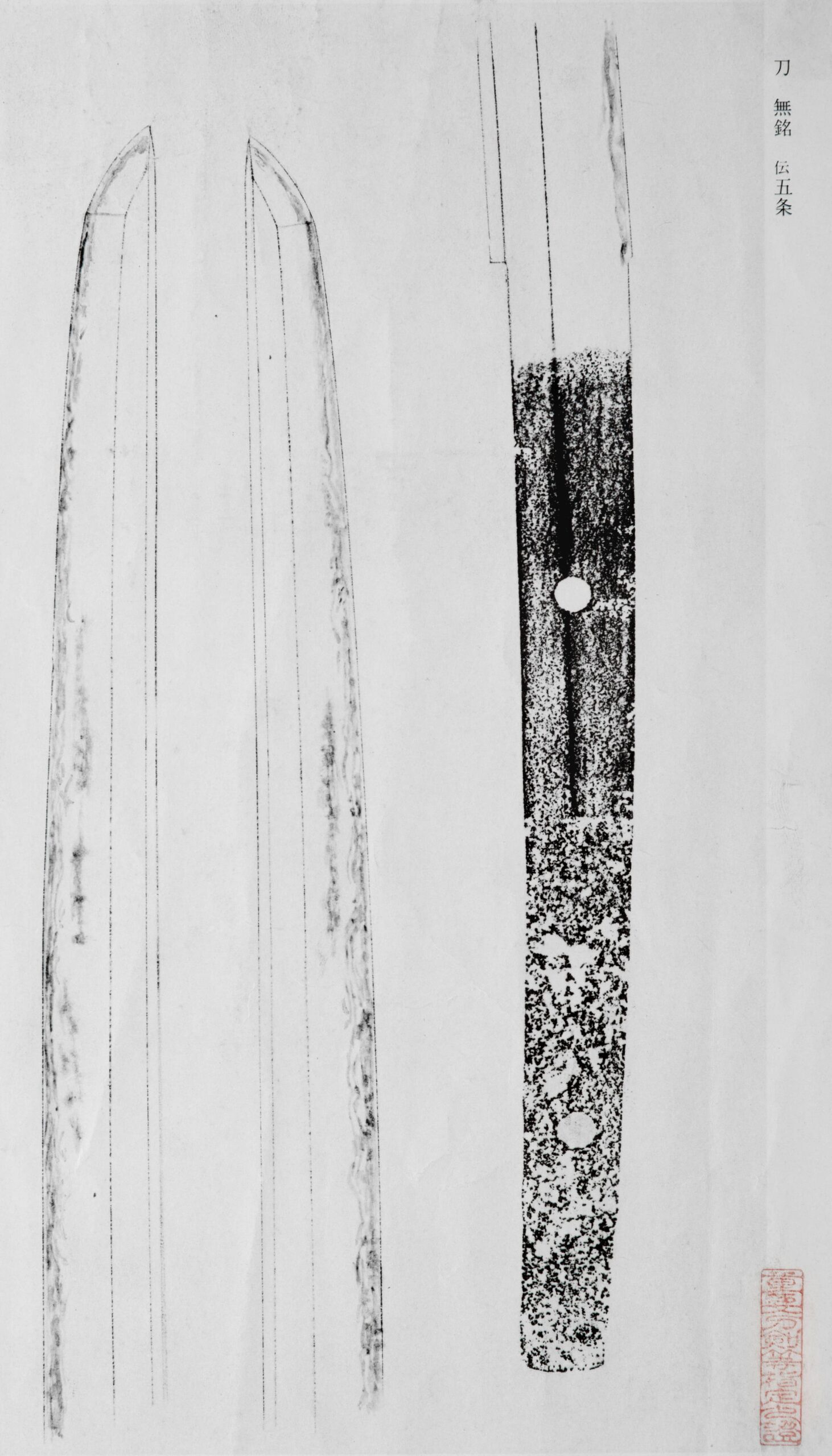
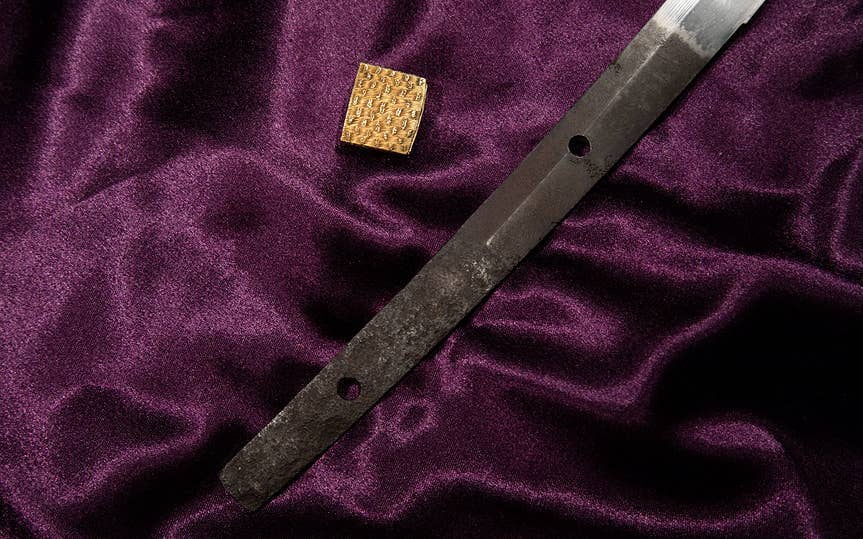
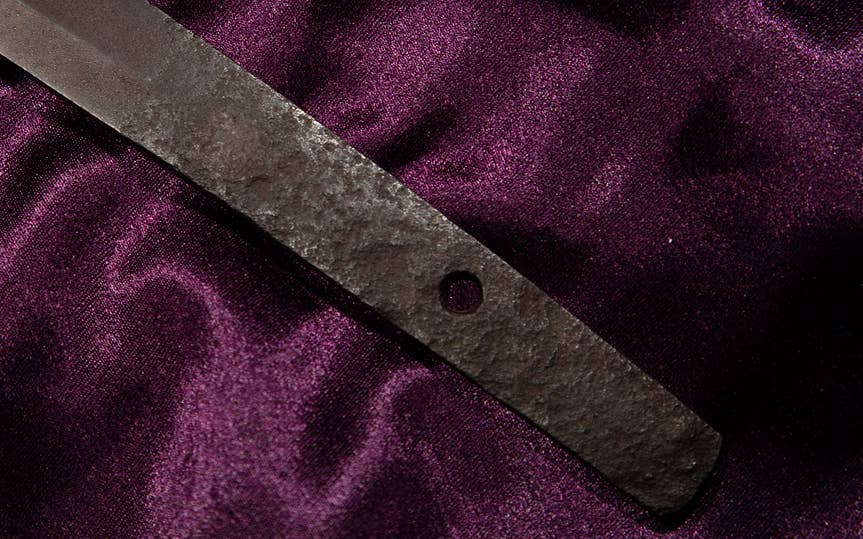
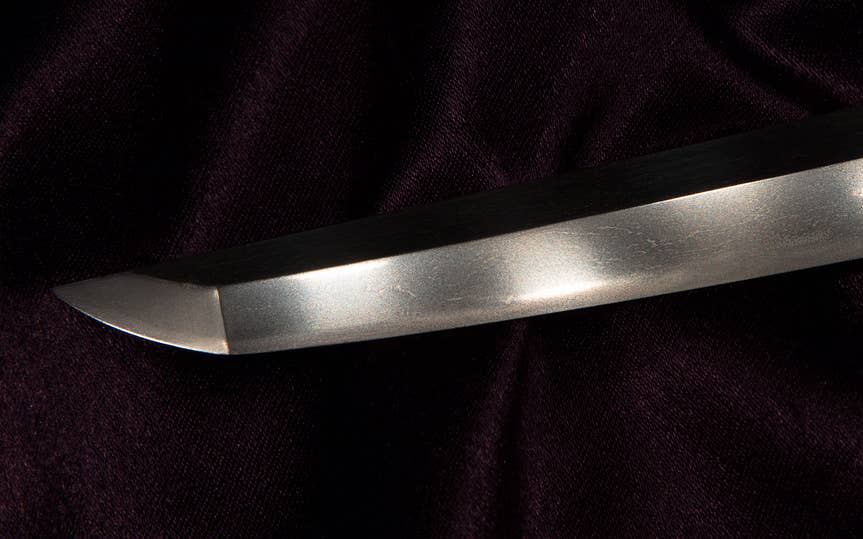
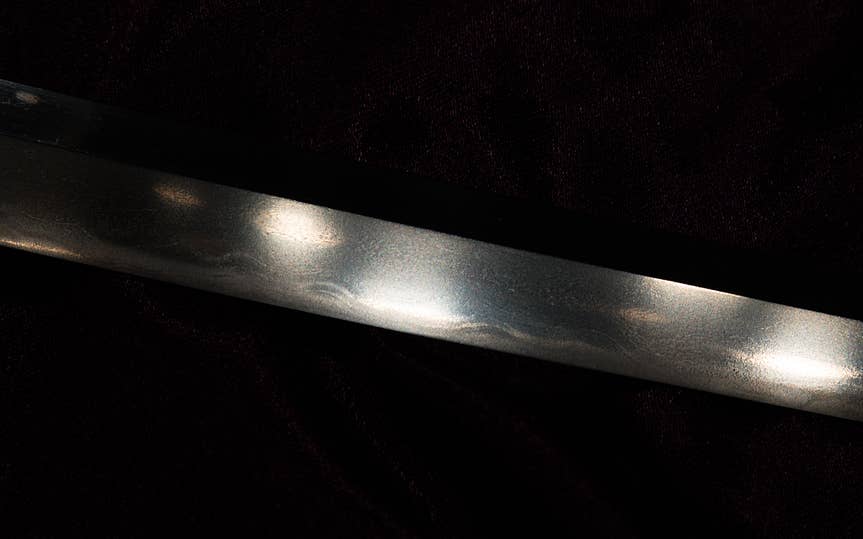
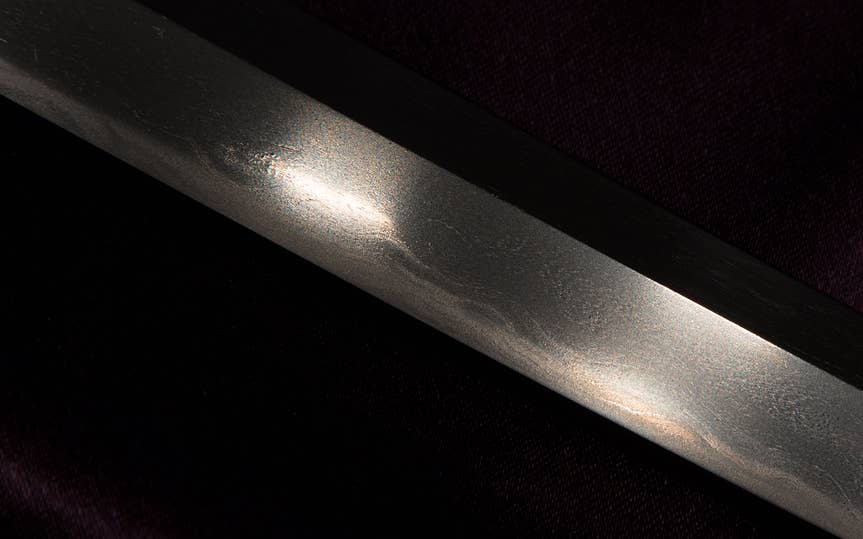
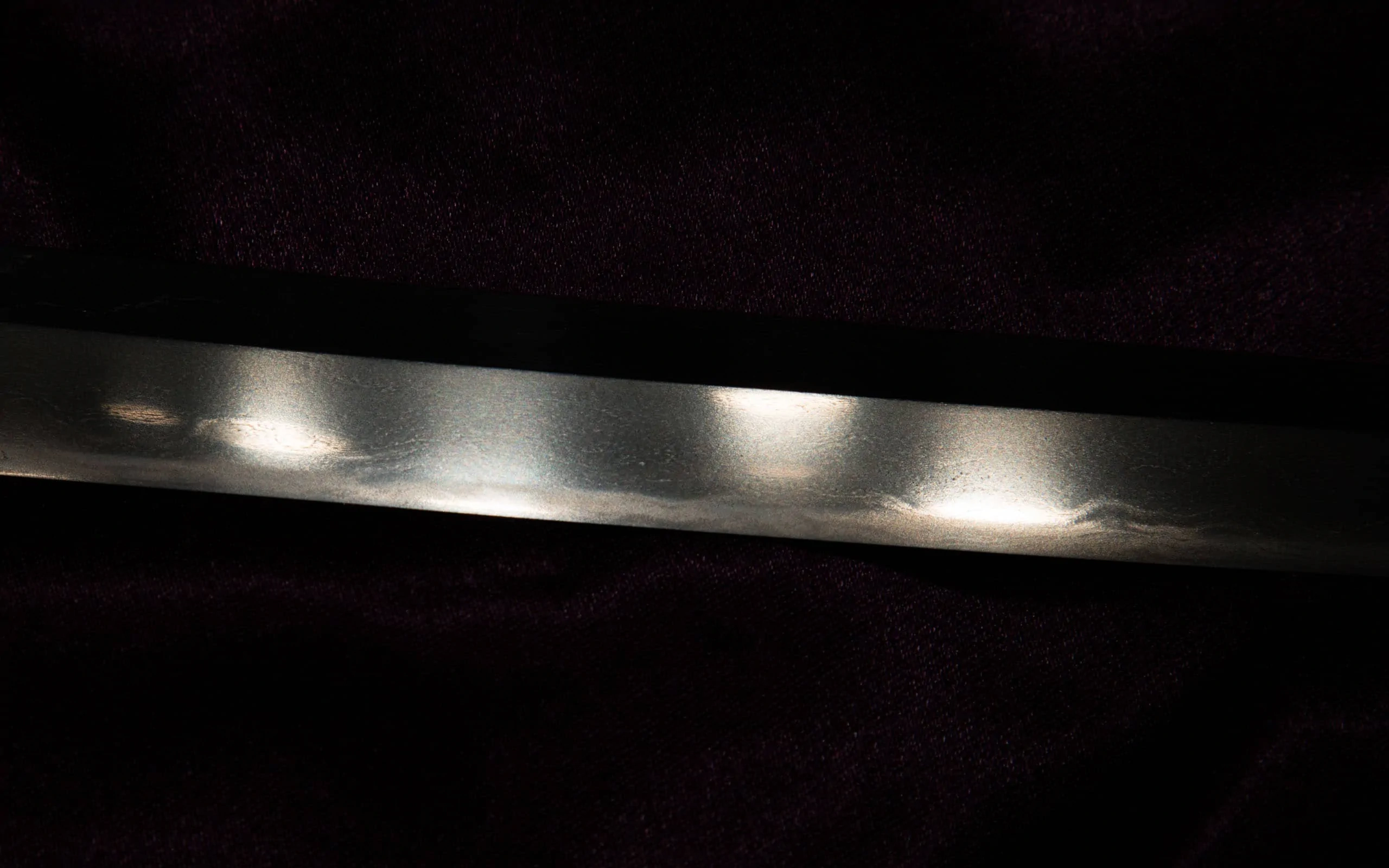
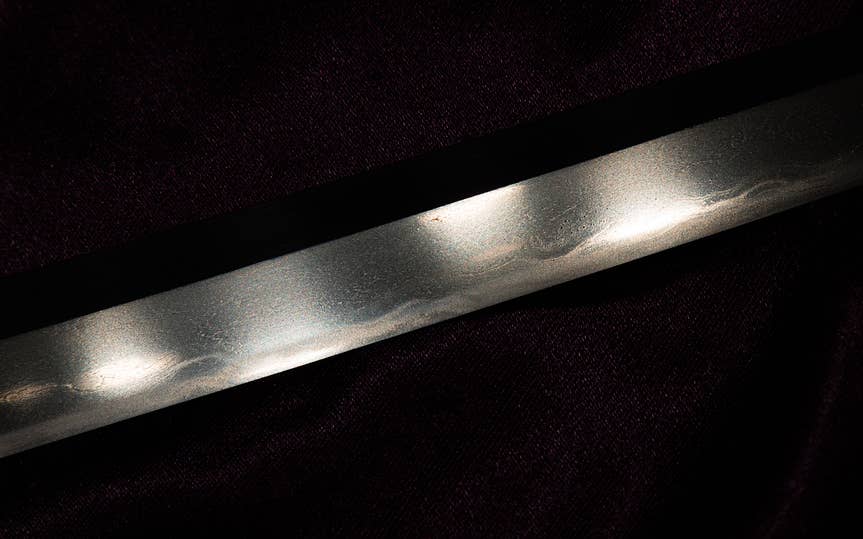
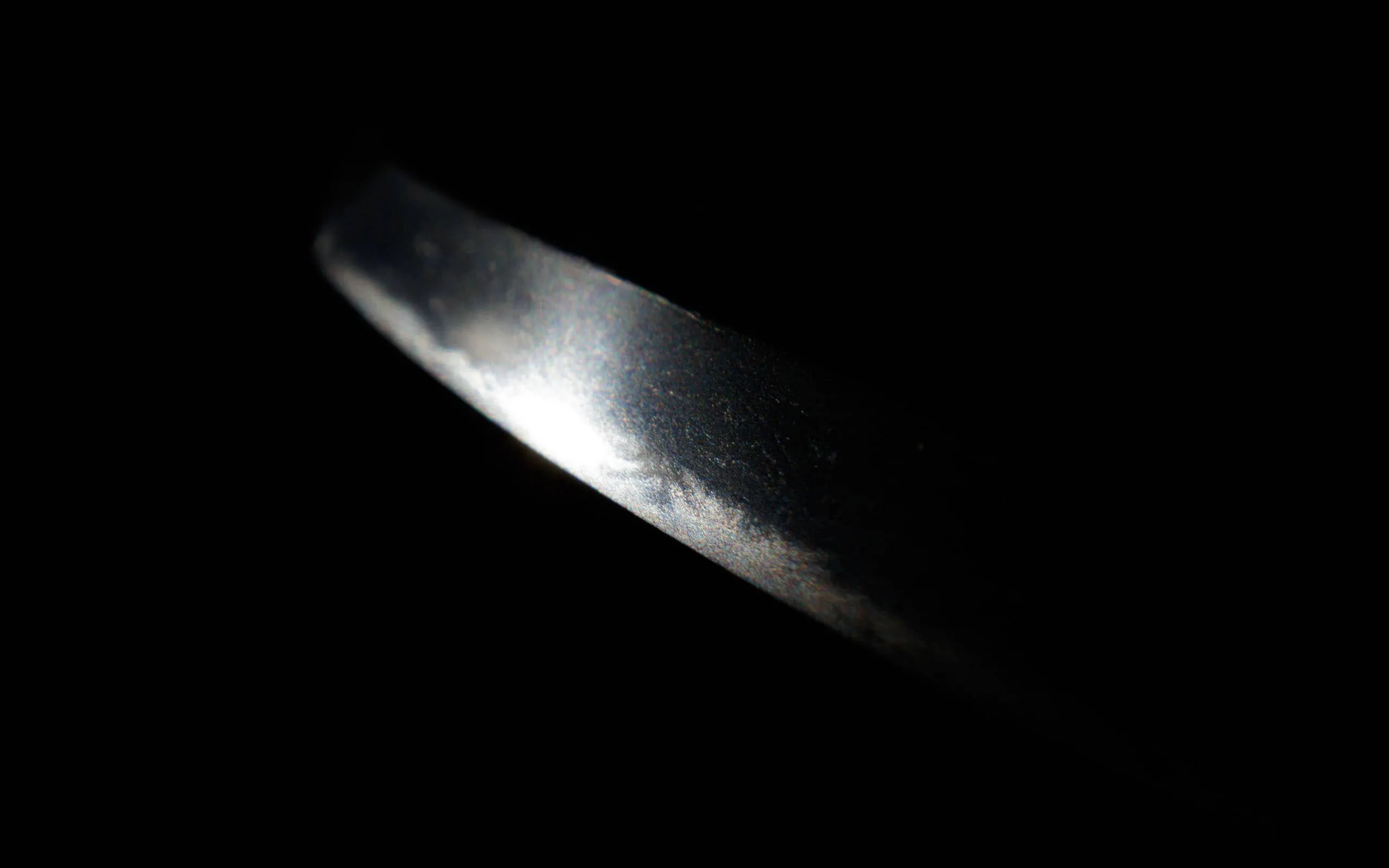
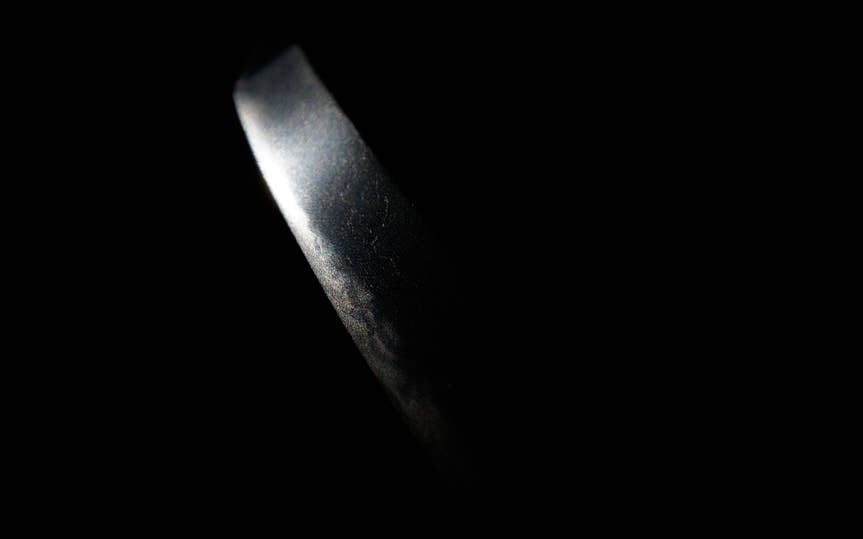
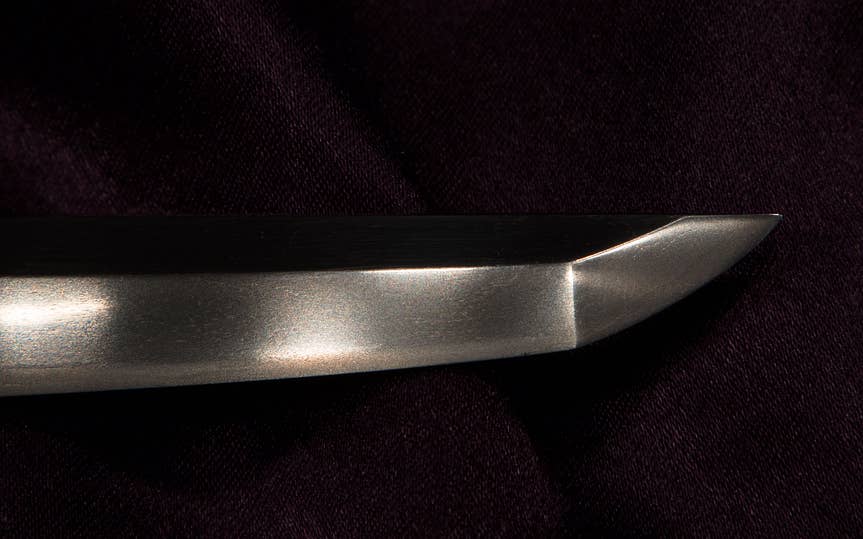
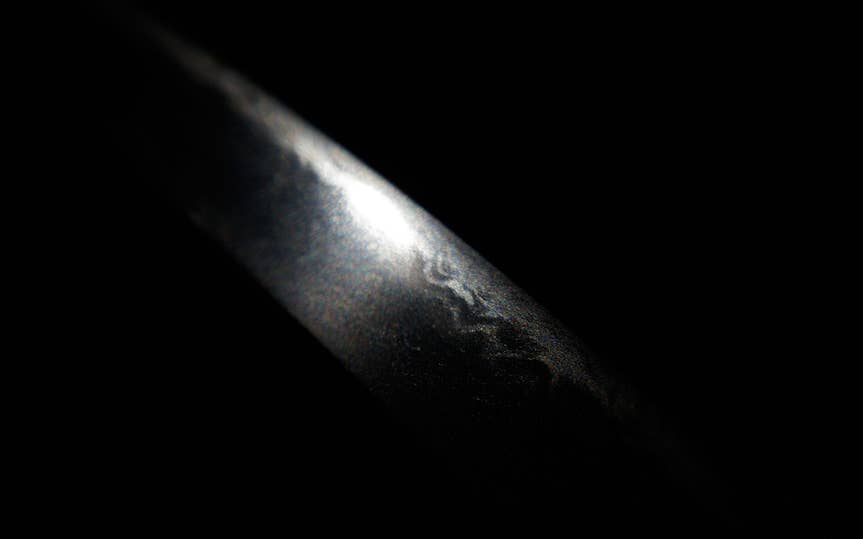
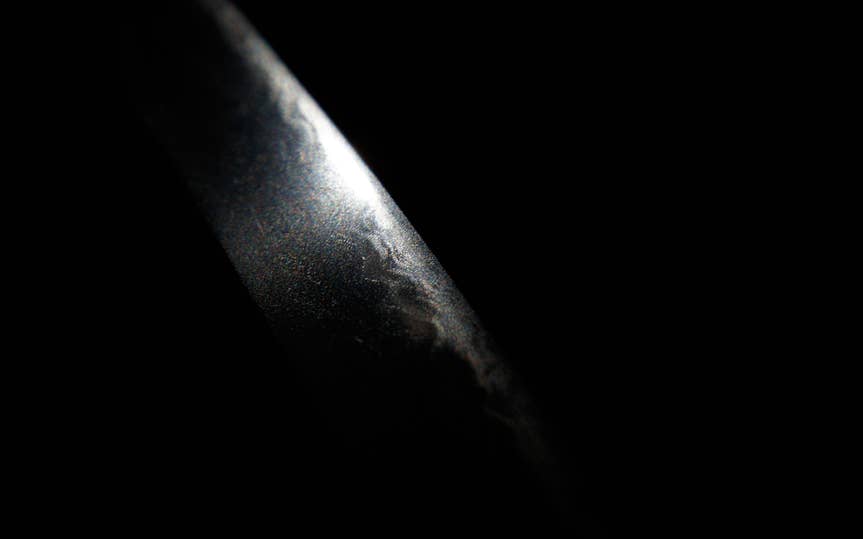
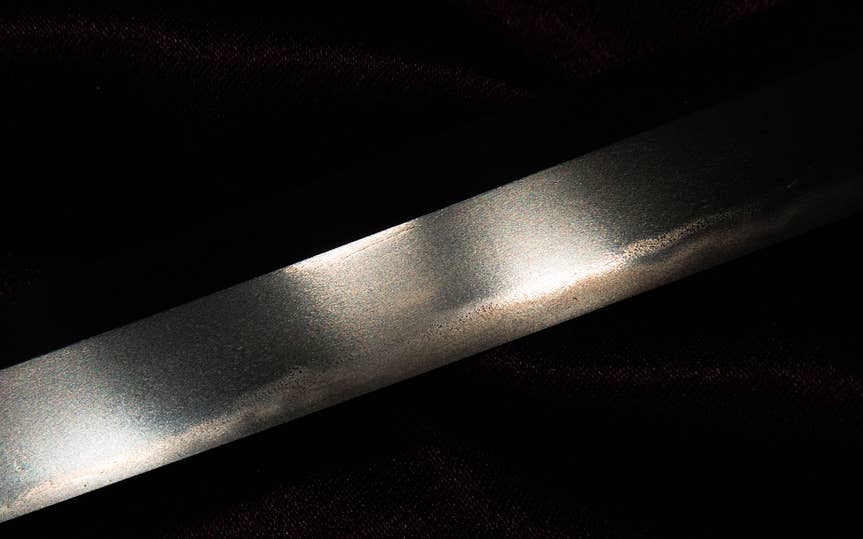
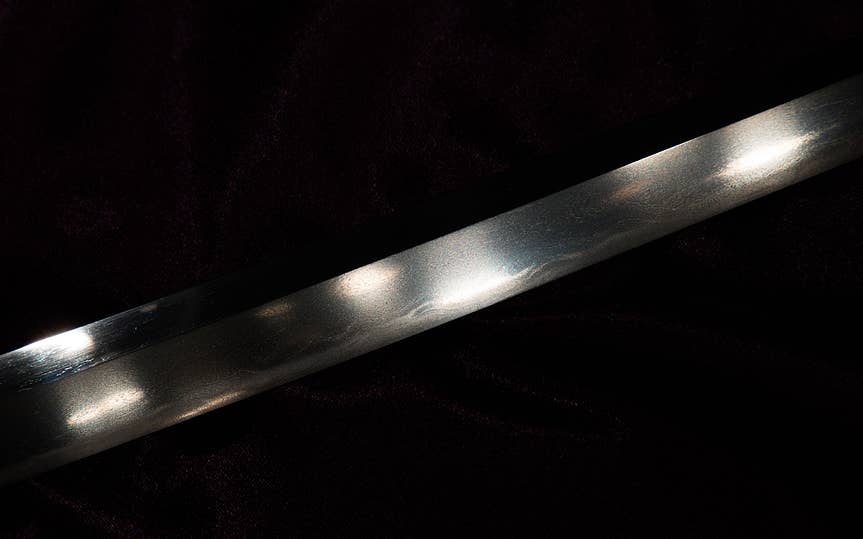
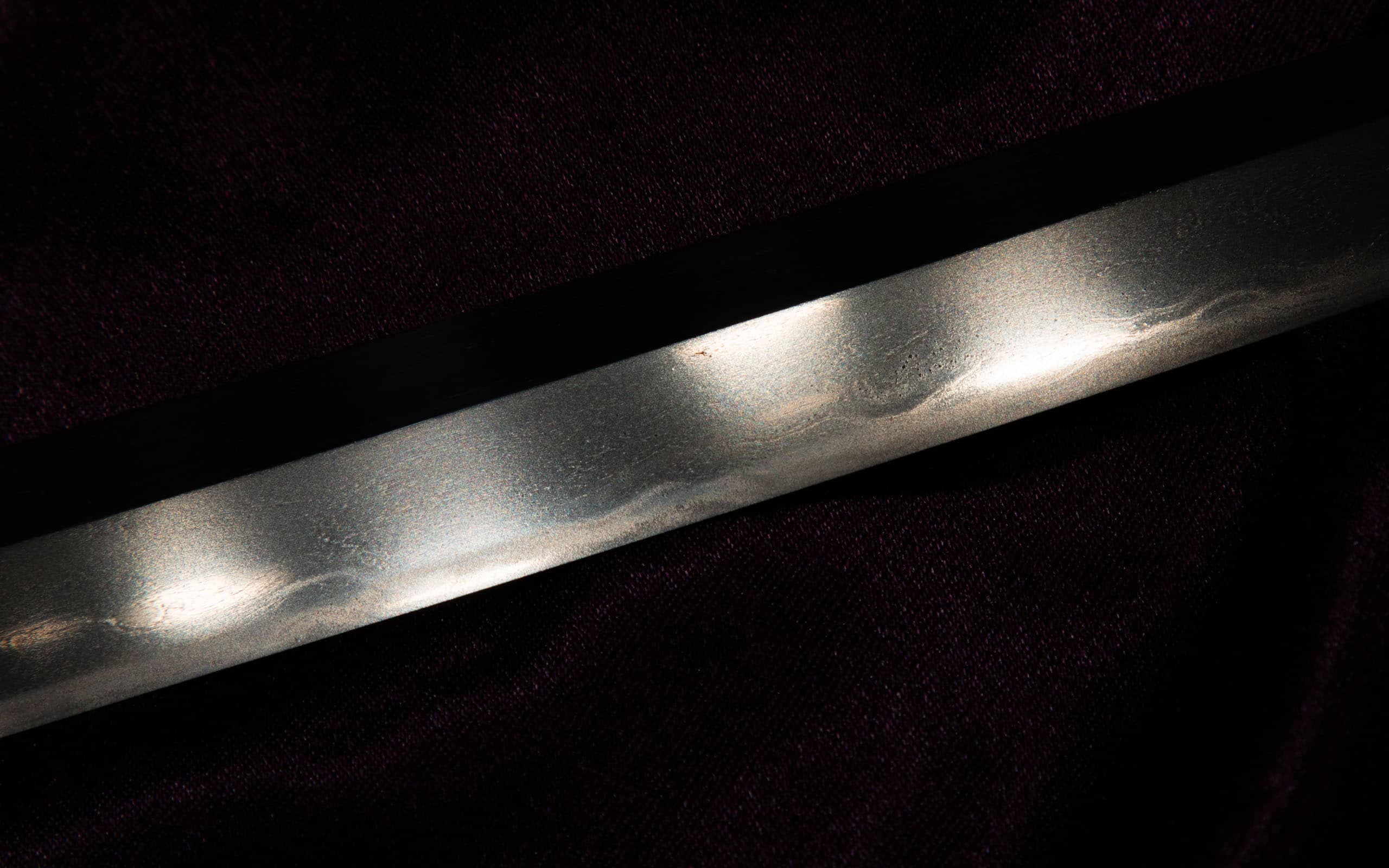
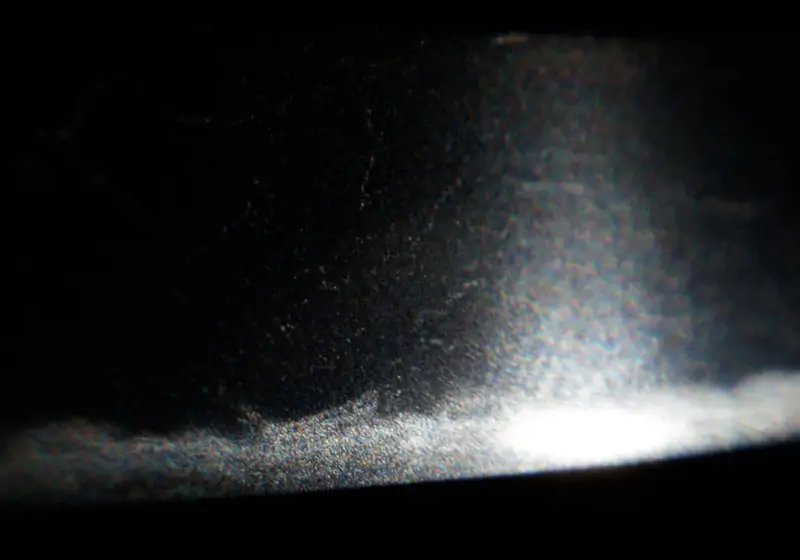
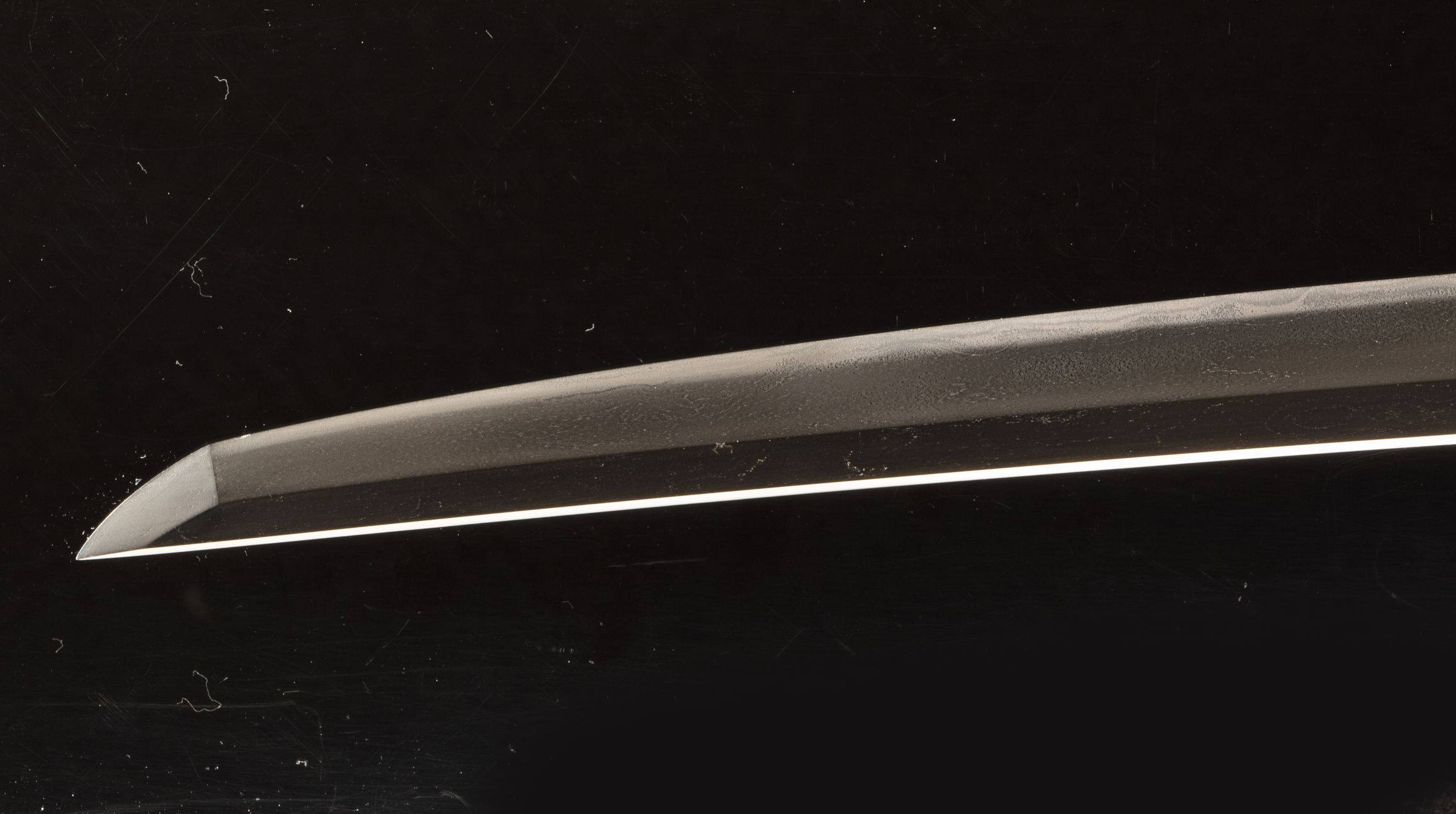
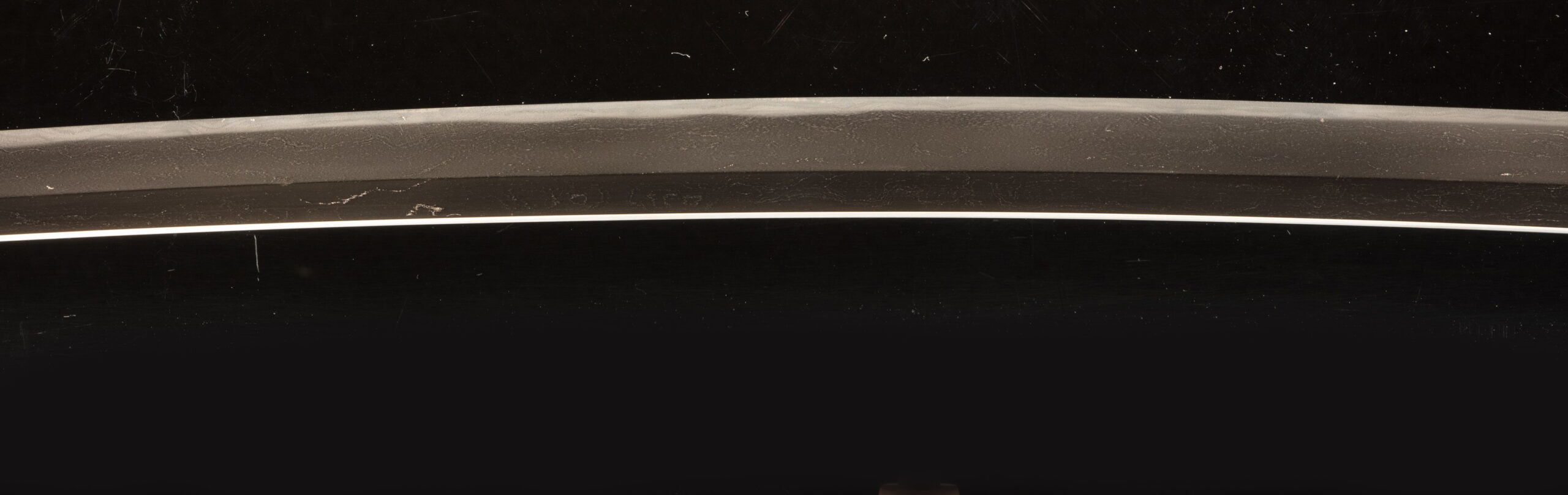
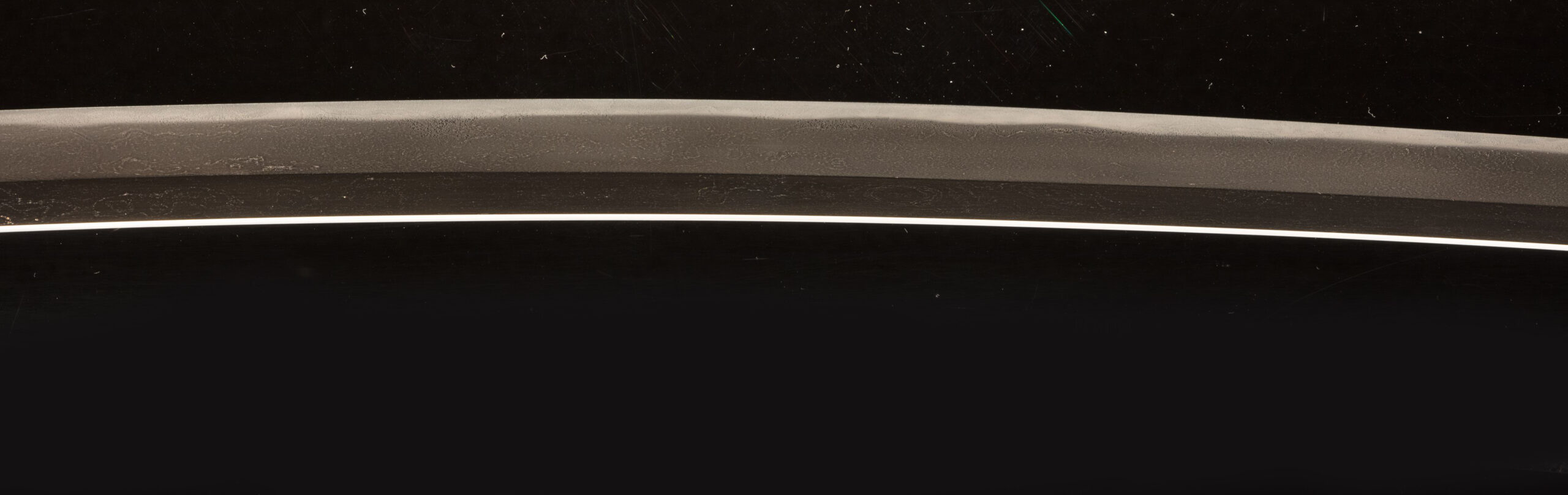
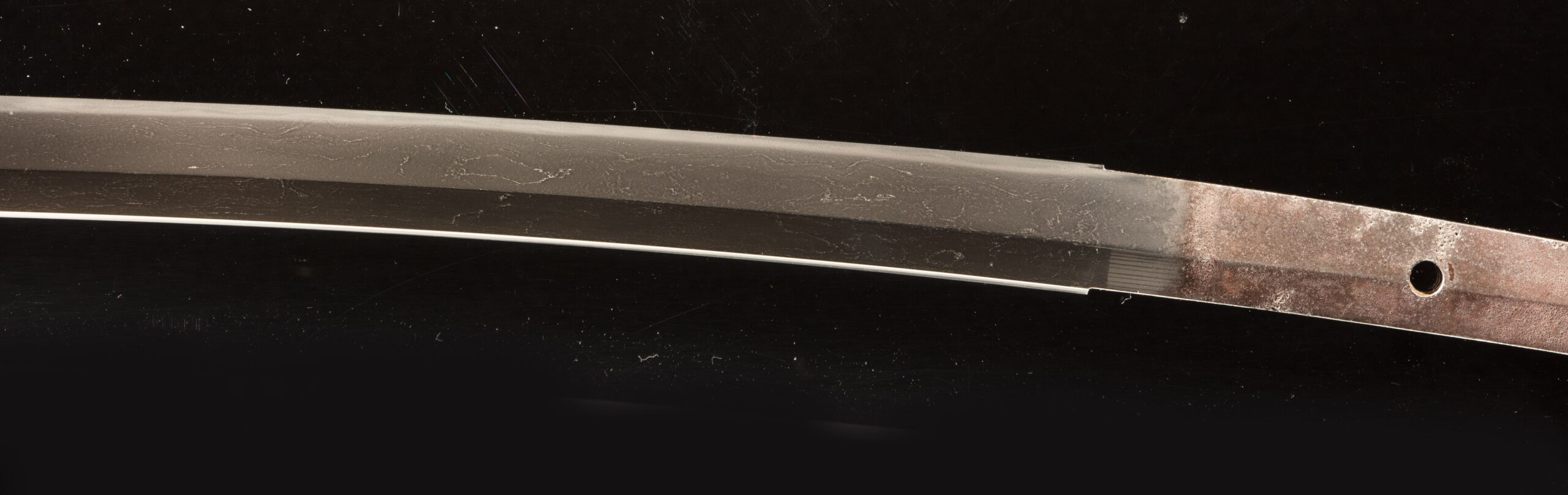
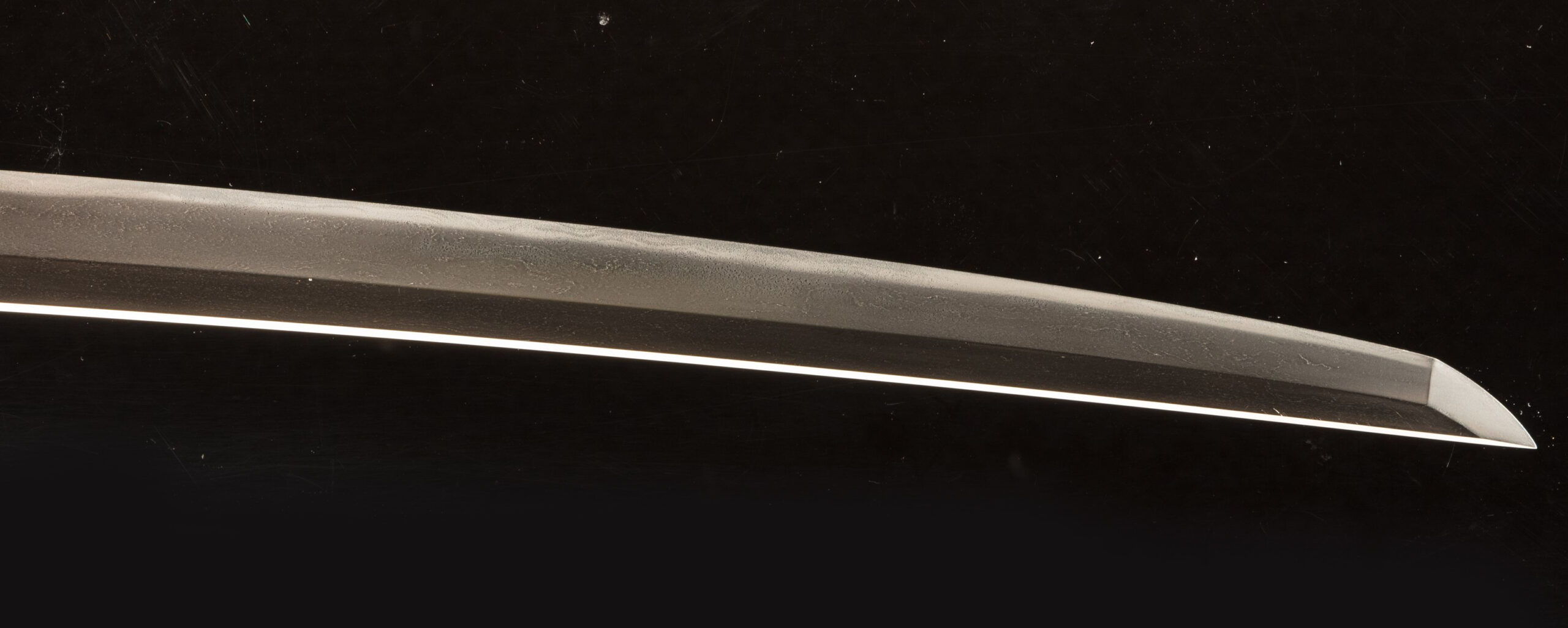
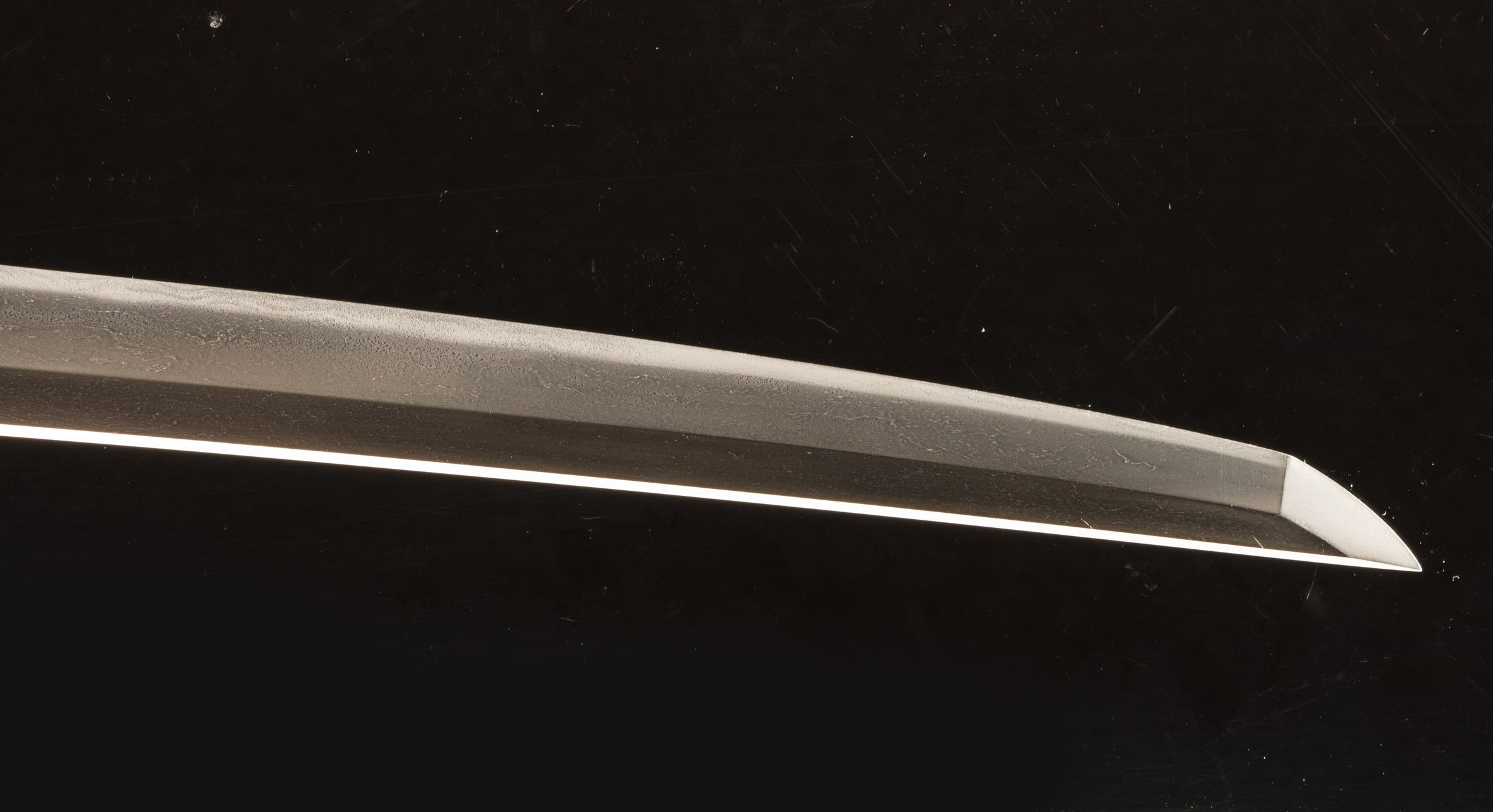
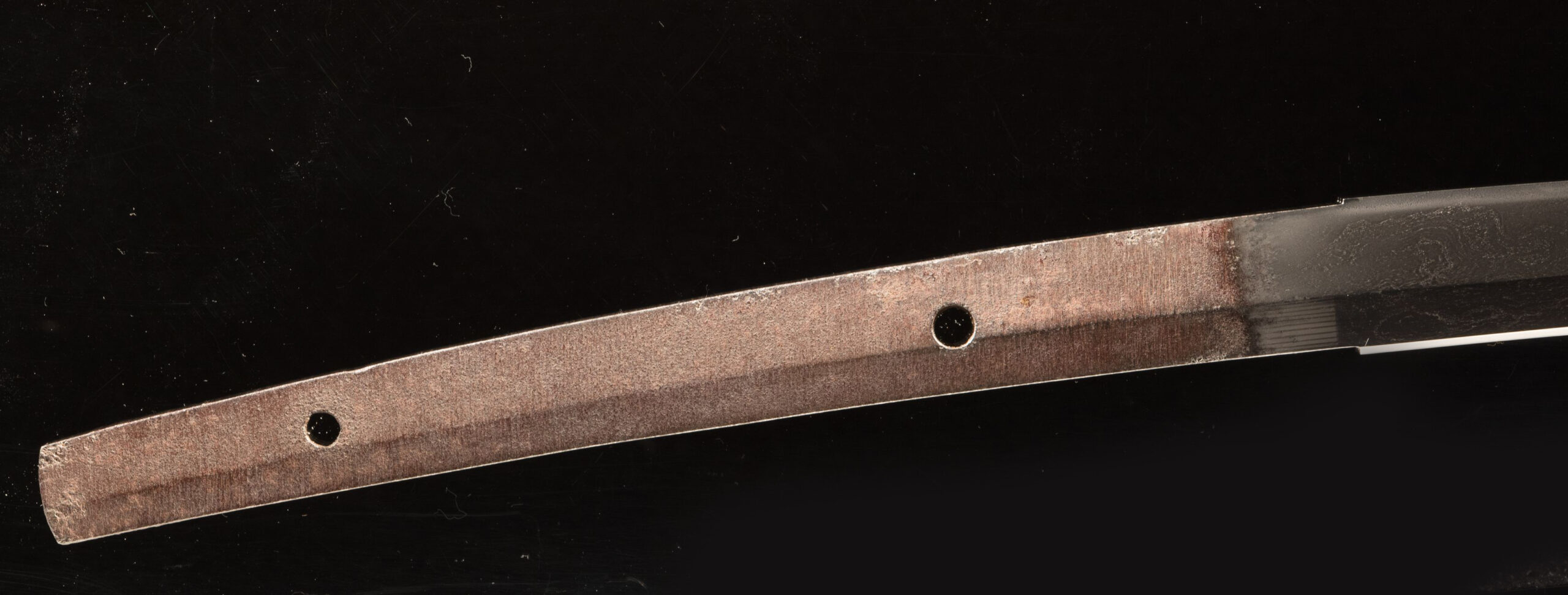
This is a Gojo school tachi from the Heian period, attributed to Kuninaga. The blade is suriage-mumei and has been designated as Juyo Token. It features a ko-midare hamon with ko-choji and ko-gunome, along with itame hada and nie utsuri.
 NihontoWatch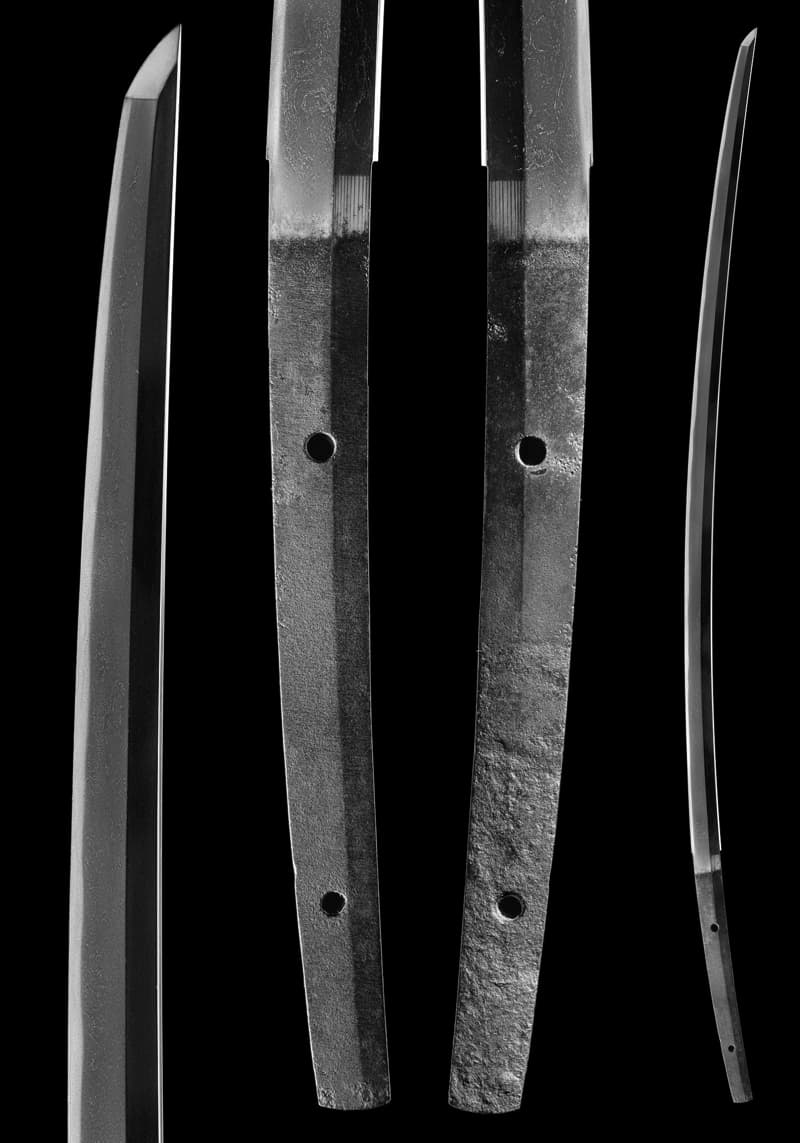



Yamashiro-den · Yamashiro
The Gojō school emerged in Yamashiro Province during the late Heian period, centered in the Gojō district of Kyoto. The tradition takes its name from Kanenaga, who is said to have been a disciple of Sanjō Munechika, and his son (or younger brother) Kuninaga. The lineage also includes smiths such as Kanetsugu, Kaneyasu, and Kanekuchi, though reliably signed works are rare outside those of Kanenaga and Kuninaga. Learn more →
| Smith | Era | Designated |
|---|---|---|
| Kanenaga兼永 | 1028-1037 | 11 |
| Kuninaga国永 | 1004-1046 | 9 |
| Kanetsune兼恒 | 1053-1058 | 0 |
| Kuninaga國永 | 1044-1046 | 0 |
| Kanetsugu兼次 | 1046-1053 | 0 |
A blade of top-grade workmanship and condition, formally judged to rank with a nationally recognized Important Art Object (Jūyō Bijutsuhin). Awarded only at the NBTHK’s competitive annual examination.
Of Japan’s roughly 2.5 million registered swords, only 12,307 (about 1 in 203) have ever attained Jūyō.
The NBTHK (Nihon Bijutsu Tōken Hozon Kyōkai, the Society for the Preservation of Japanese Art Swords) is a public-interest incorporated foundation founded in 1948 and supervised by Japan’s Agency for Cultural Affairs (Bunkachō); it is based at the Japanese Sword Museum in Tokyo. Its expert panels physically examine each submitted work (shinsa) and issue a certificate (kanteishō) ranking it by artistic and historical merit. NBTHK papers are the most widely recognized standard of authentication for Japanese swords and fittings.
NBTHK official siteThis is a Gojo school tachi from the Heian period, attributed to Kuninaga. The blade is suriage-mumei and has been designated as Juyo Token. It features a ko-midare hamon with ko-choji and ko-gunome, along with itame hada and nie utsuri.
NihontoWatchYamashiro-den · Yamashiro
The Gojō school emerged in Yamashiro Province during the late Heian period, centered in the Gojō district of Kyoto. The tradition takes its name from Kanenaga, who is said to have been a disciple of Sanjō Munechika, and his son (or younger brother) Kuninaga. The lineage also includes smiths such as Kanetsugu, Kaneyasu, and Kanekuchi, though reliably signed works are rare outside those of Kanenaga and Kuninaga. Learn more →
| Smith | Era | Designated |
|---|---|---|
| Kanenaga兼永 | 1028-1037 | 11 |
| Kuninaga国永 | 1004-1046 | 9 |
| Kanetsune兼恒 | 1053-1058 | 0 |
| Kuninaga國永 | 1044-1046 | 0 |
| Kanetsugu兼次 | 1046-1053 | 0 |
A blade of top-grade workmanship and condition, formally judged to rank with a nationally recognized Important Art Object (Jūyō Bijutsuhin). Awarded only at the NBTHK’s competitive annual examination.
Of Japan’s roughly 2.5 million registered swords, only 12,307 (about 1 in 203) have ever attained Jūyō.
The NBTHK (Nihon Bijutsu Tōken Hozon Kyōkai, the Society for the Preservation of Japanese Art Swords) is a public-interest incorporated foundation founded in 1948 and supervised by Japan’s Agency for Cultural Affairs (Bunkachō); it is based at the Japanese Sword Museum in Tokyo. Its expert panels physically examine each submitted work (shinsa) and issue a certificate (kanteishō) ranking it by artistic and historical merit. NBTHK papers are the most widely recognized standard of authentication for Japanese swords and fittings.
NBTHK official site