The Haitōrei edict of 1876 ended sword wearing and nearly ended the craft itself. Military demand and imperial patronage kept a remnant alive, and in 1906 Gassan Sadakazu and Miyamoto Kanenori were named Artists to the Imperial Household.
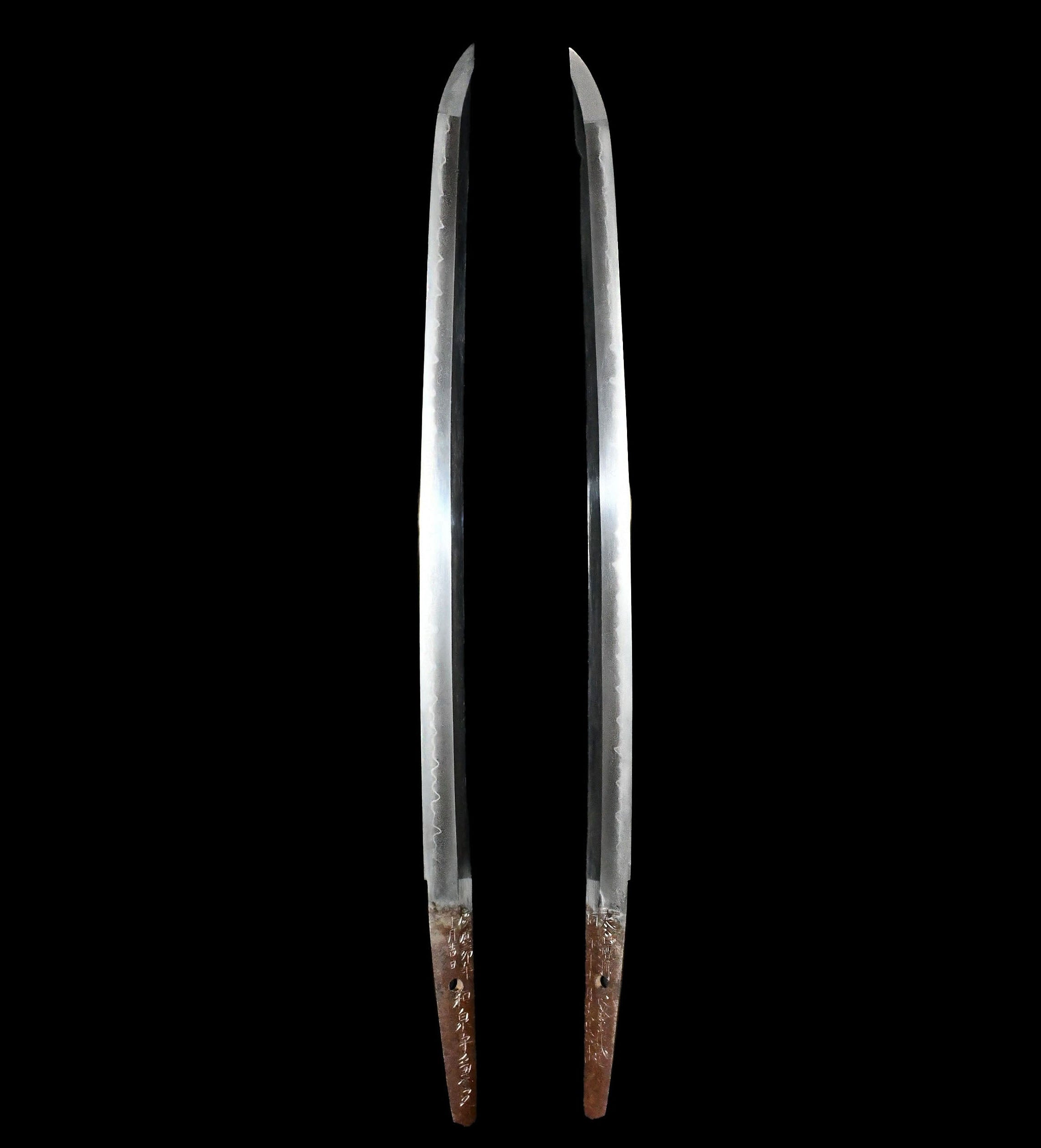
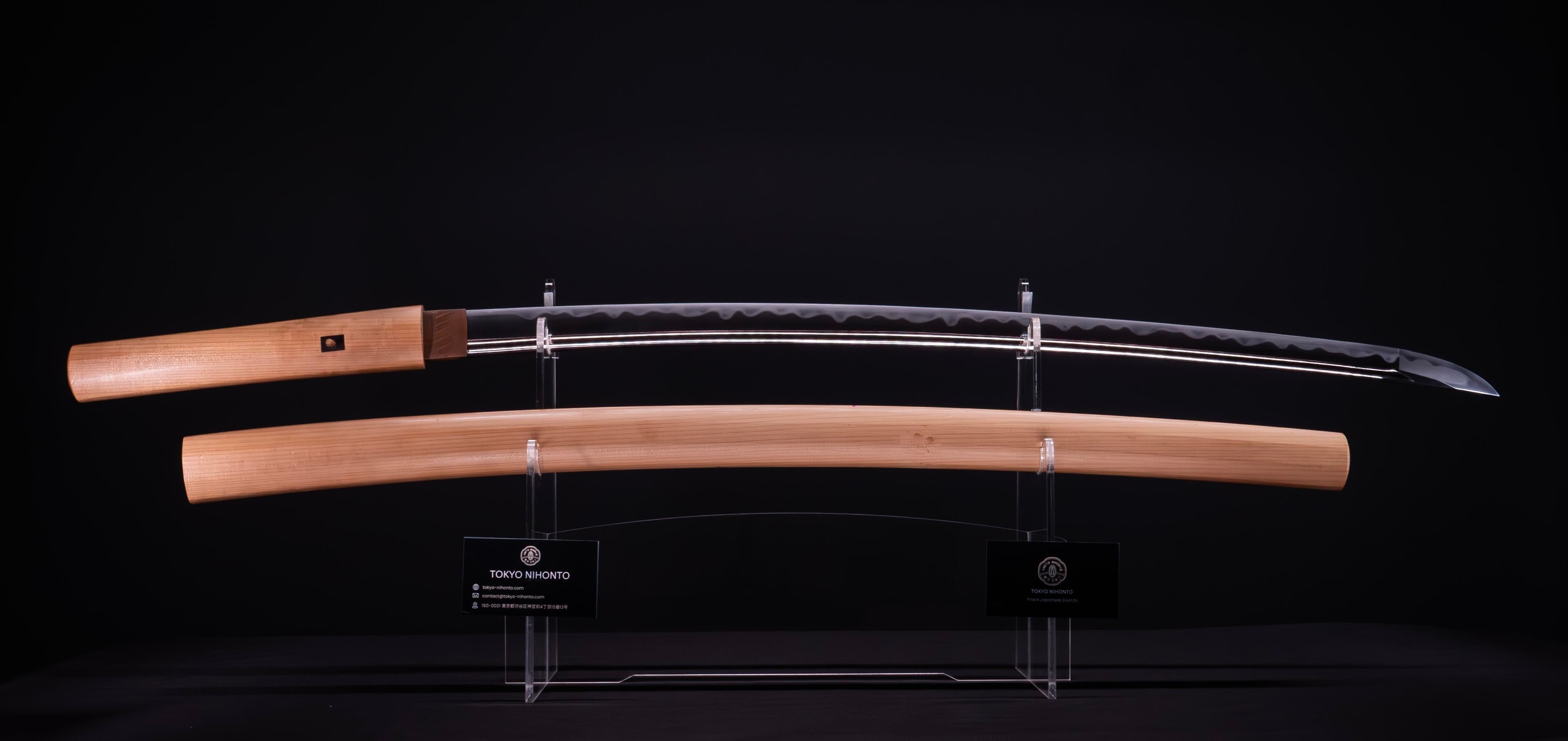
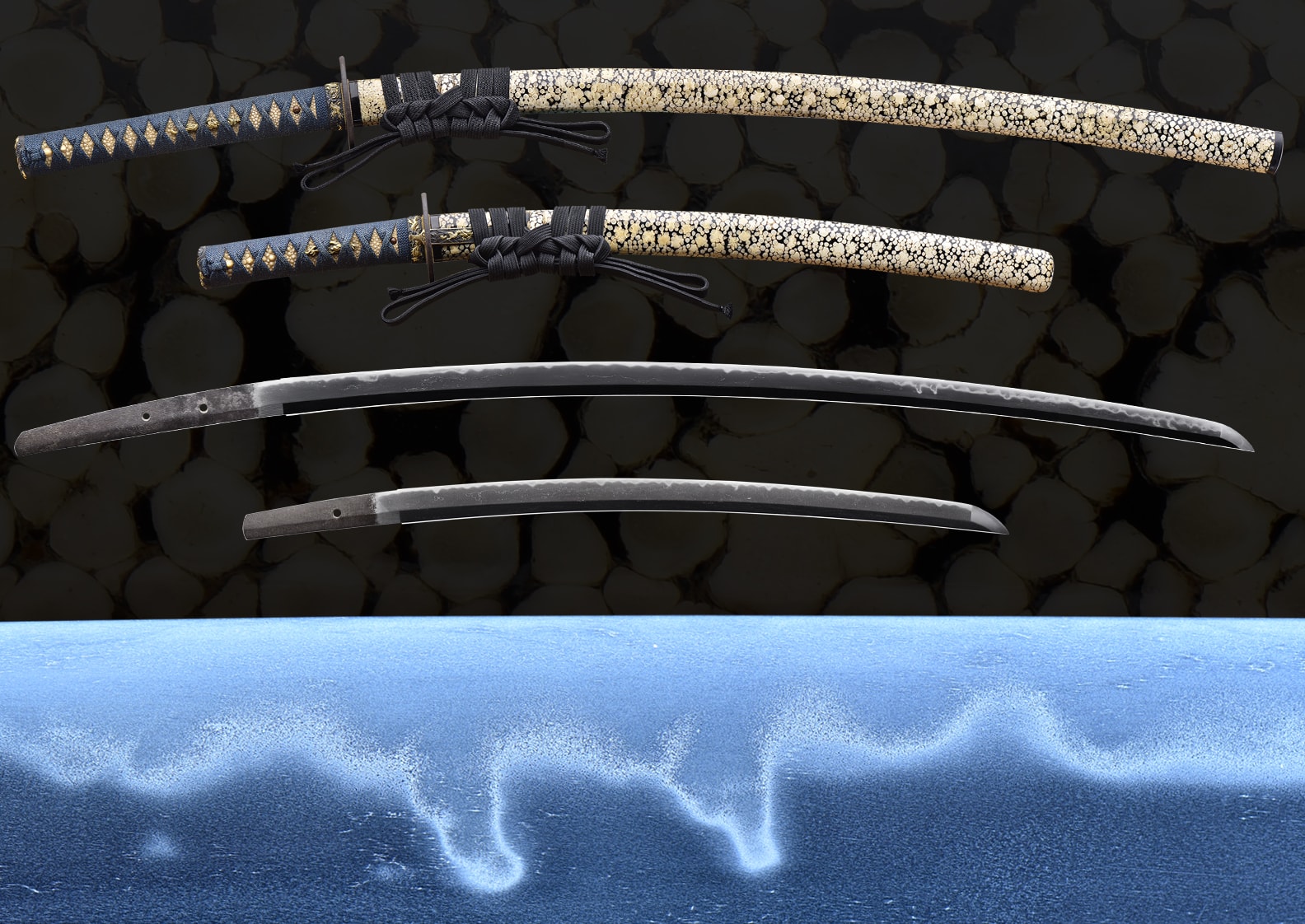
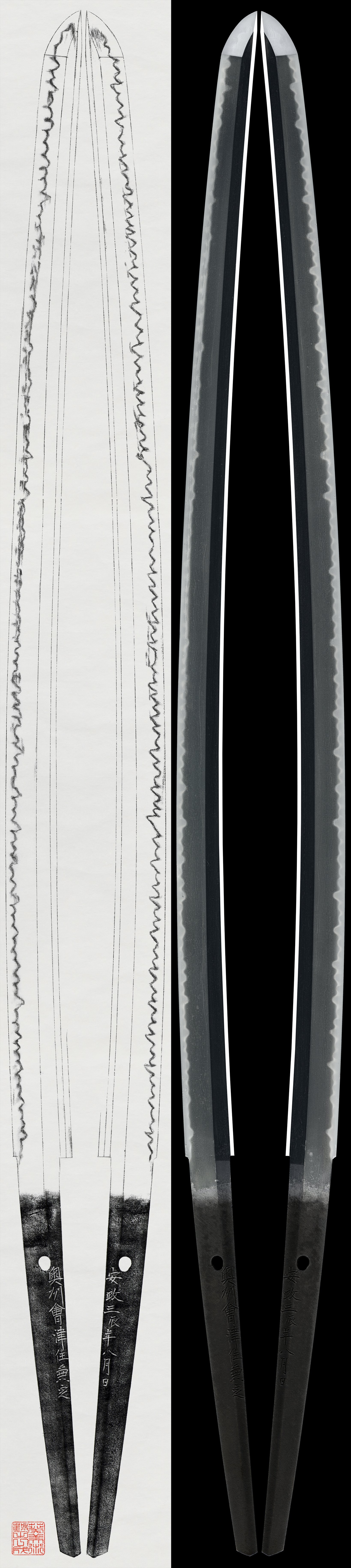
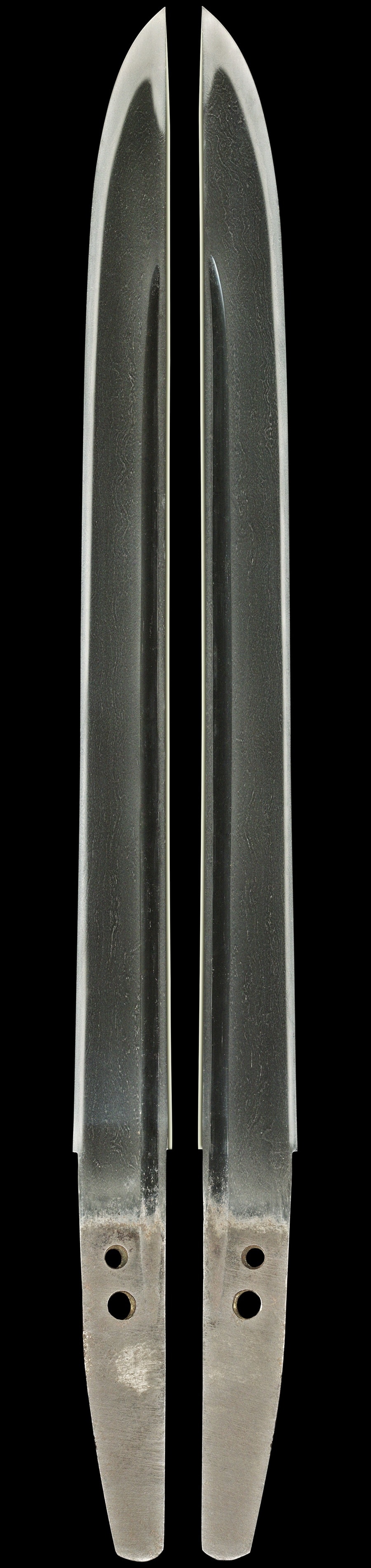
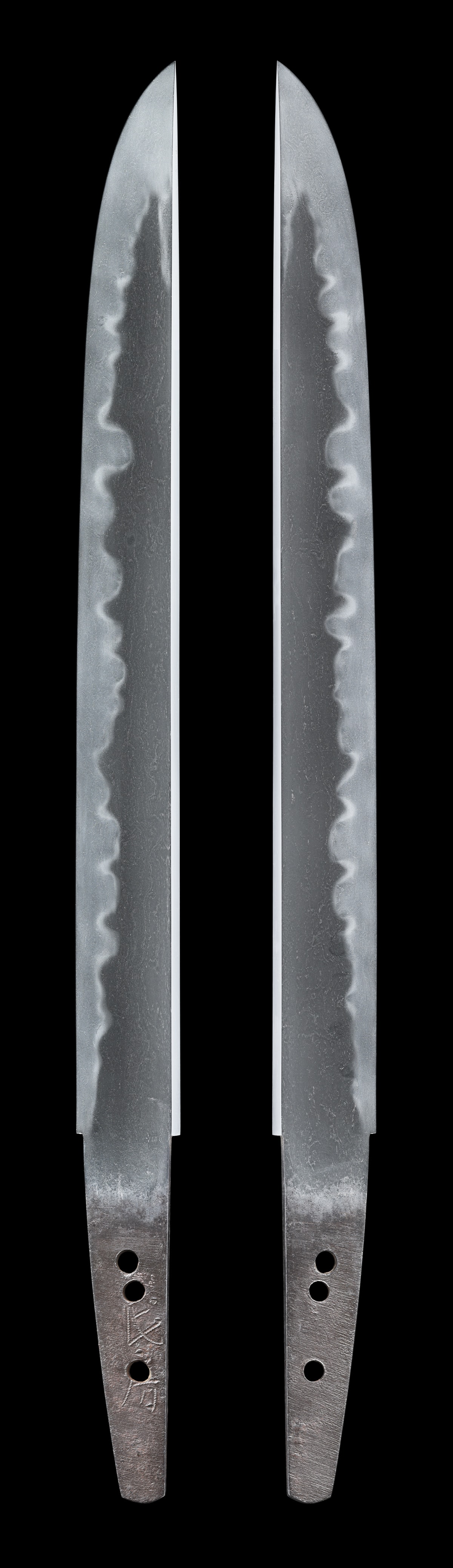
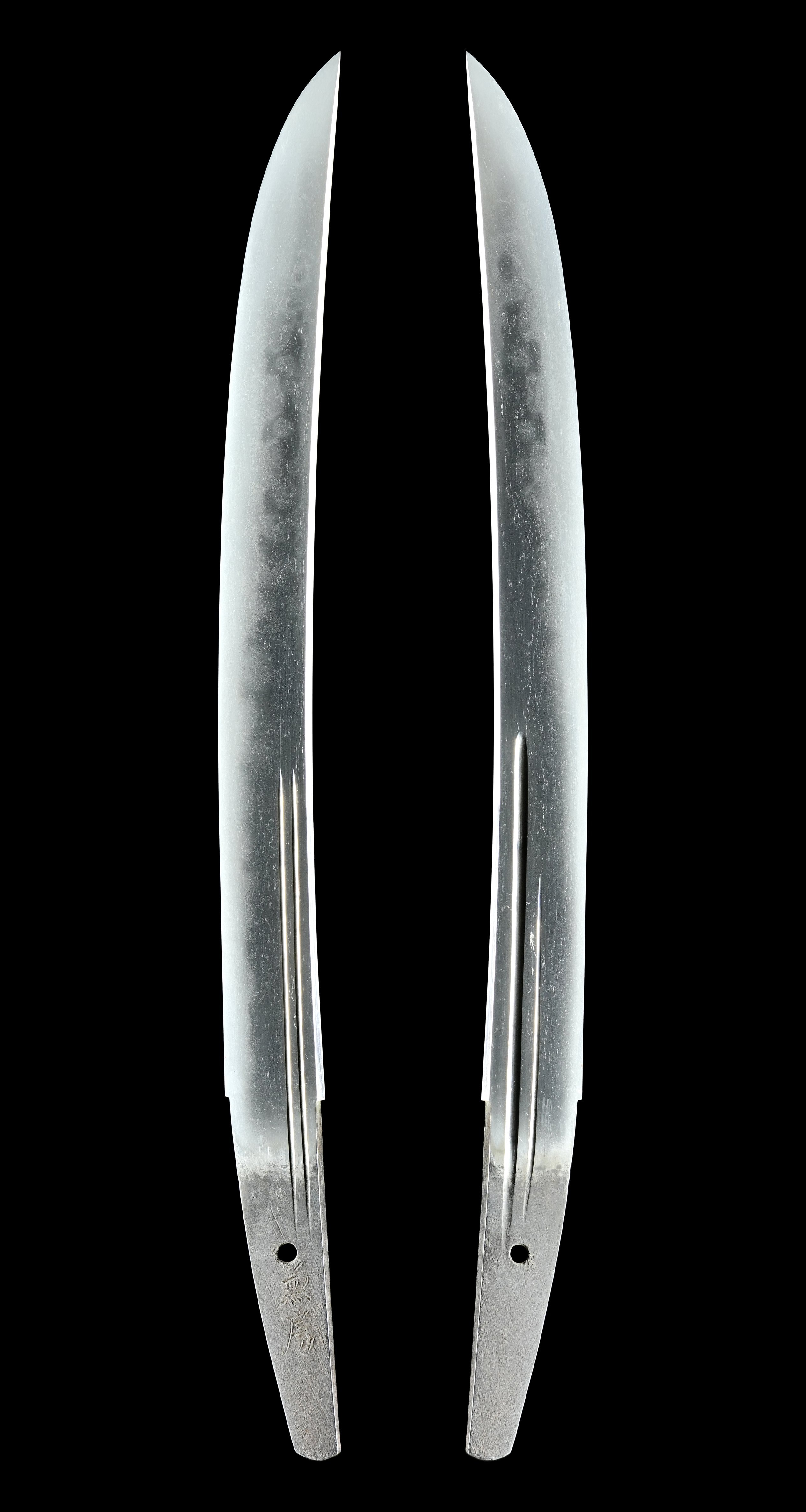
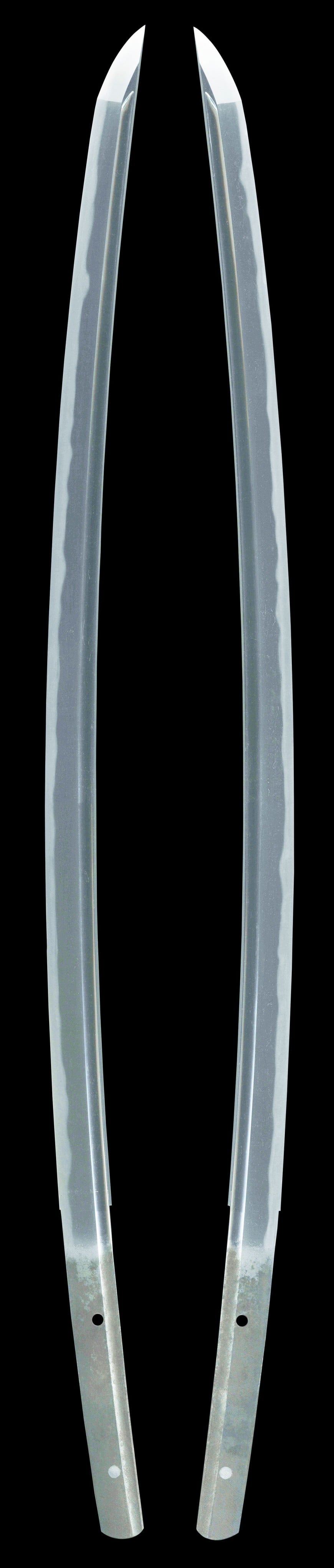
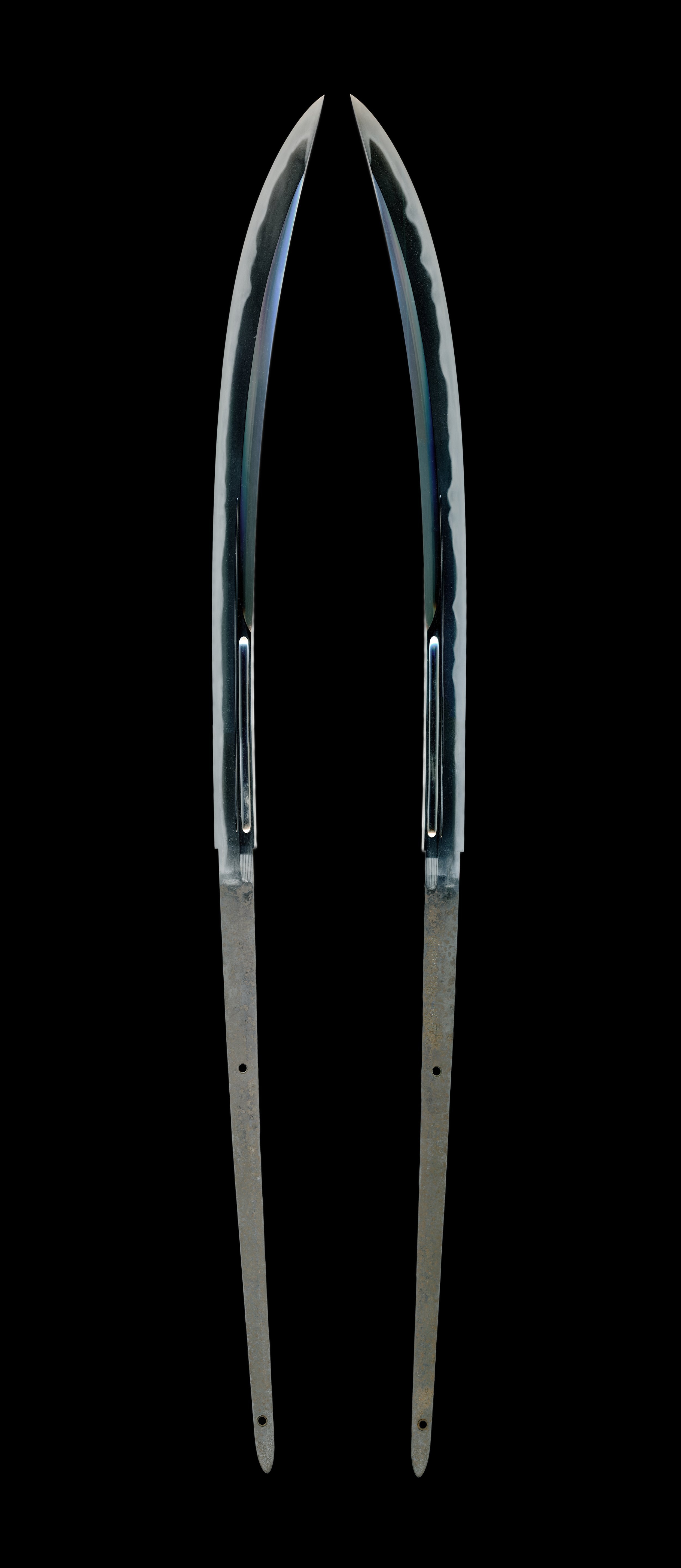
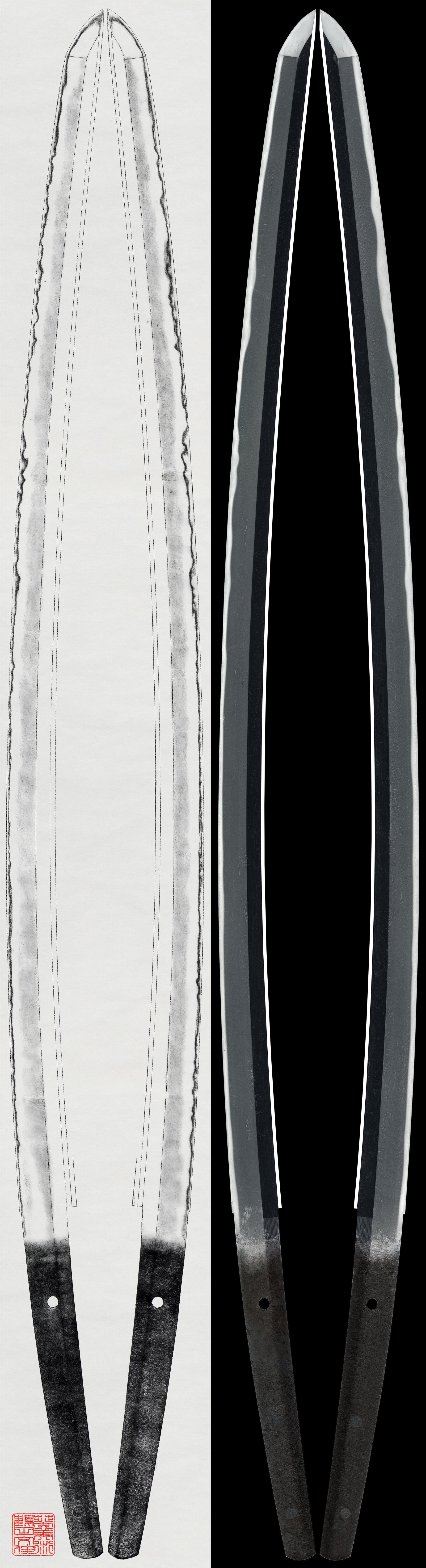
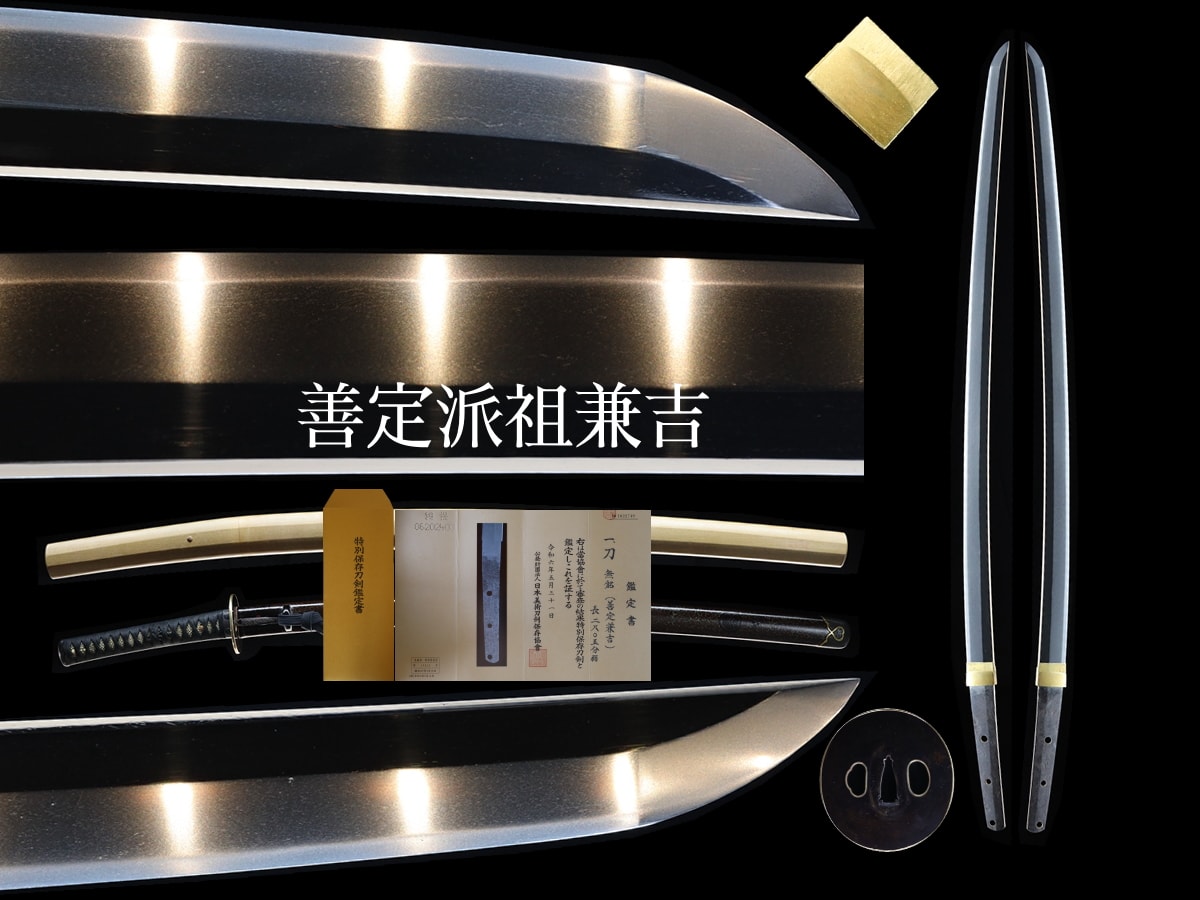
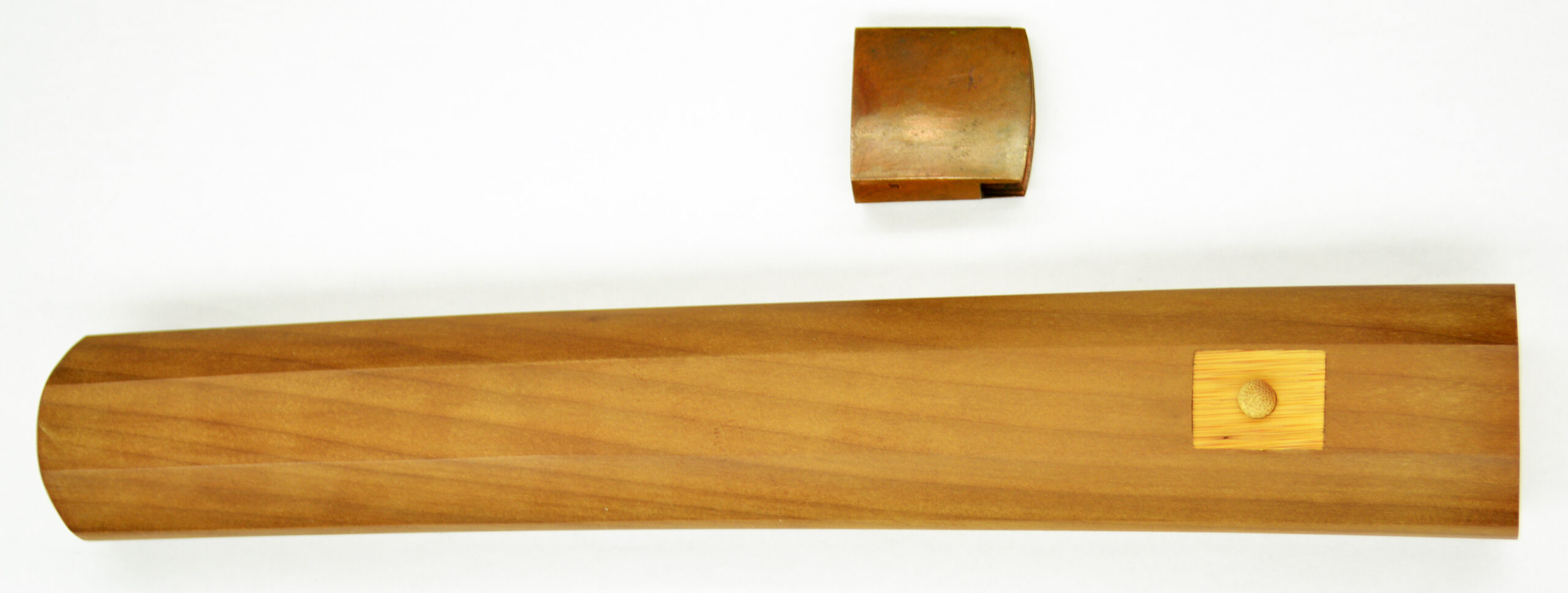
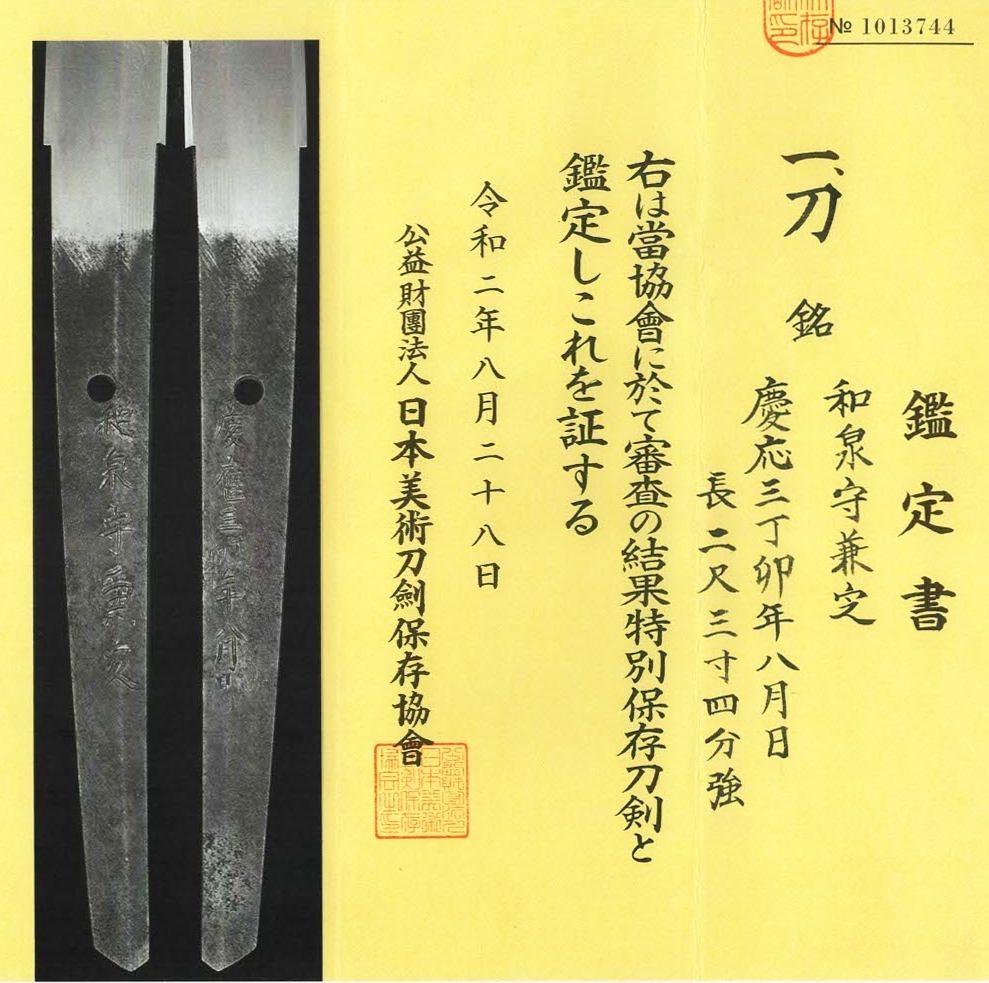
This katana is by the renowned smith Izumi no Kami Kanesada (11th Generation), famously known as the beloved sword of Shinsengumi Vice-Commander Hijikata Toshizo. Dated to Keio 3 (1867), the same year as the sword passed down in the Hijikata family, it features a masame-hada similar to Sendai Kunikane, known for its exceptional cutting ability. The overall style of this work showcases a robust form with exquisite masame-hada forging, conveying the powerful spirit of the 11th Generation Kanesada to survive battles.
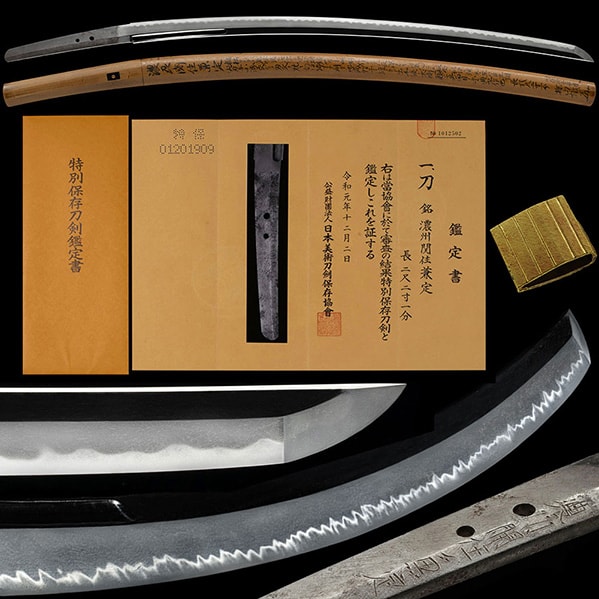
Certificate reading — 銘 和泉守兼定 慶応三丁卯年八月日
 NihontoWatch
mei · Shin-shinto · nagasa 71cm · sori 1.3cm











Mino-den · Mutsu · around 1837-1903
3 pieces on the market now
Mino-den · Iwashiro
7 pieces on the market now
| Smith | Era | Designated |
|---|---|---|
| Kanesada兼定 | 1818-1869 | 0 |
| Kanesada兼定 | 1624-1644 | 0 |
| Kanesada兼定 | 1624-1644 | 0 |
| Kanesada兼定 | 1655-1658 | 0 |
| Kanesada兼定 | 1661-1673 | 0 |
Meiji: survival after the edict
The Haitōrei edict of 1876 ended sword wearing and nearly ended the craft itself. Military demand and imperial patronage kept a remnant alive, and in 1906 Gassan Sadakazu and Miyamoto Kanenori were named Artists to the Imperial Household.
A Hozon-certified blade judged to show notably superior workmanship and a better state of preservation. The bar is higher: re-tempered blades and most unsigned Muromachi/Edo works are excluded.
The NBTHK (Nihon Bijutsu Tōken Hozon Kyōkai, the Society for the Preservation of Japanese Art Swords) is a public-interest incorporated foundation founded in 1948 and supervised by Japan’s Agency for Cultural Affairs (Bunkachō); it is based at the Japanese Sword Museum in Tokyo. Its expert panels physically examine each submitted work (shinsa) and issue a certificate (kanteishō) ranking it by artistic and historical merit. NBTHK papers are the most widely recognized standard of authentication for Japanese swords and fittings.
NBTHK official siteCooling-off available within one week after arrival, Japan domestic only. Defective items may be returned; no refund if condition differs from sale or item was used.
This katana is by the renowned smith Izumi no Kami Kanesada (11th Generation), famously known as the beloved sword of Shinsengumi Vice-Commander Hijikata Toshizo. Dated to Keio 3 (1867), the same year as the sword passed down in the Hijikata family, it features a masame-hada similar to Sendai Kunikane, known for its exceptional cutting ability. The overall style of this work showcases a robust form with exquisite masame-hada forging, conveying the powerful spirit of the 11th Generation Kanesada to survive battles.
Certificate reading — 銘 和泉守兼定 慶応三丁卯年八月日
NihontoWatchmei · Shin-shinto · nagasa 71cm · sori 1.3cm
Mino-den · Mutsu · around 1837-1903
3 pieces on the market now
Mino-den · Iwashiro
7 pieces on the market now
| Smith | Era | Designated |
|---|---|---|
| Kanesada兼定 | 1818-1869 | 0 |
| Kanesada兼定 | 1624-1644 | 0 |
| Kanesada兼定 | 1624-1644 | 0 |
| Kanesada兼定 | 1655-1658 | 0 |
| Kanesada兼定 | 1661-1673 | 0 |
Meiji: survival after the edict
The Haitōrei edict of 1876 ended sword wearing and nearly ended the craft itself. Military demand and imperial patronage kept a remnant alive, and in 1906 Gassan Sadakazu and Miyamoto Kanenori were named Artists to the Imperial Household.
A Hozon-certified blade judged to show notably superior workmanship and a better state of preservation. The bar is higher: re-tempered blades and most unsigned Muromachi/Edo works are excluded.
The NBTHK (Nihon Bijutsu Tōken Hozon Kyōkai, the Society for the Preservation of Japanese Art Swords) is a public-interest incorporated foundation founded in 1948 and supervised by Japan’s Agency for Cultural Affairs (Bunkachō); it is based at the Japanese Sword Museum in Tokyo. Its expert panels physically examine each submitted work (shinsa) and issue a certificate (kanteishō) ranking it by artistic and historical merit. NBTHK papers are the most widely recognized standard of authentication for Japanese swords and fittings.
NBTHK official siteCooling-off available within one week after arrival, Japan domestic only. Defective items may be returned; no refund if condition differs from sale or item was used.