The monasteries that had sustained Yamato lost ground through the Muromachi period, and the schools thinned with them; Sue-Tegai kept the old masame manner alive in quantity. The burning of Tōdaiji’s Great Buddha hall in 1567 closed the temple age.
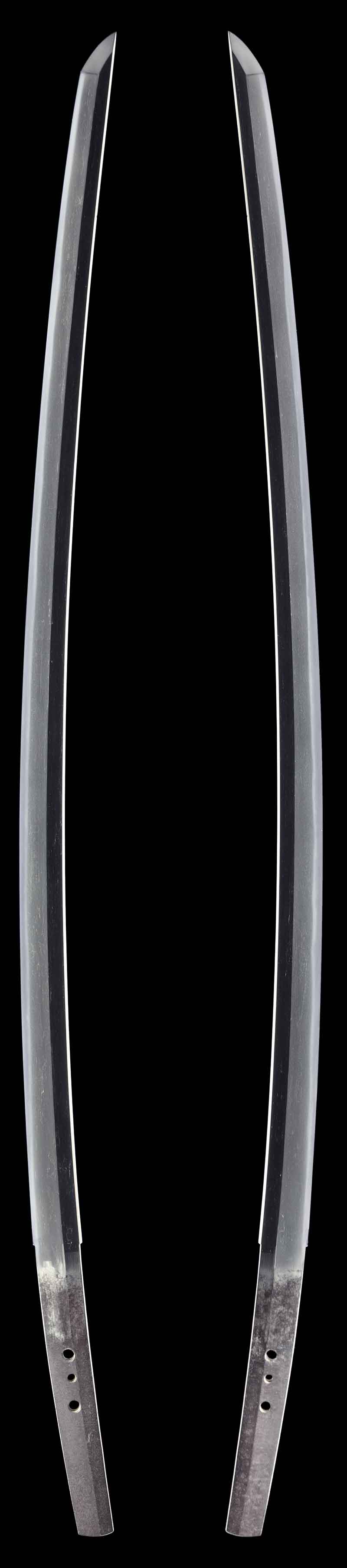
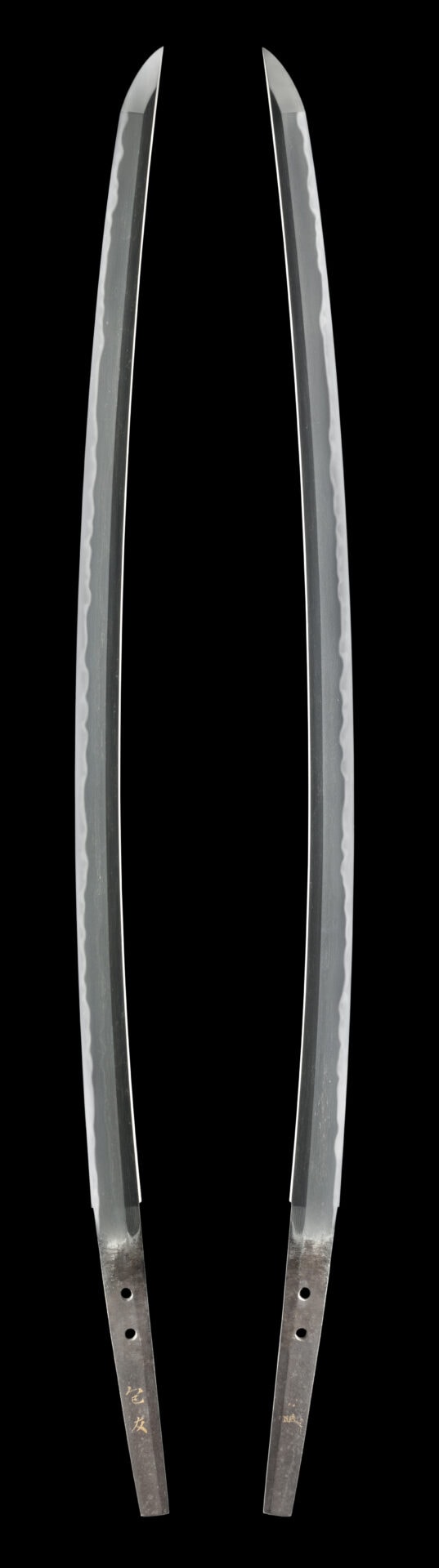
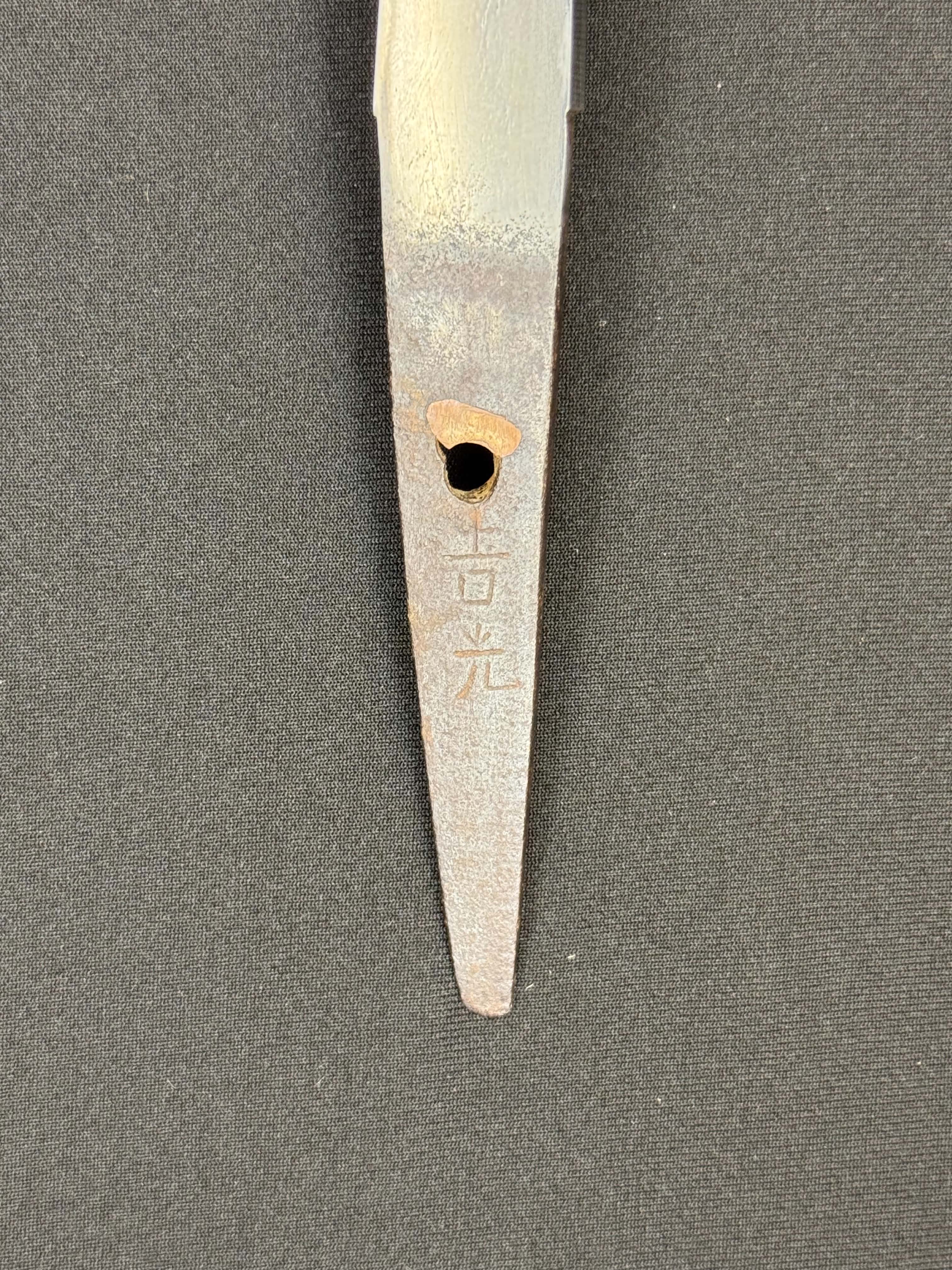
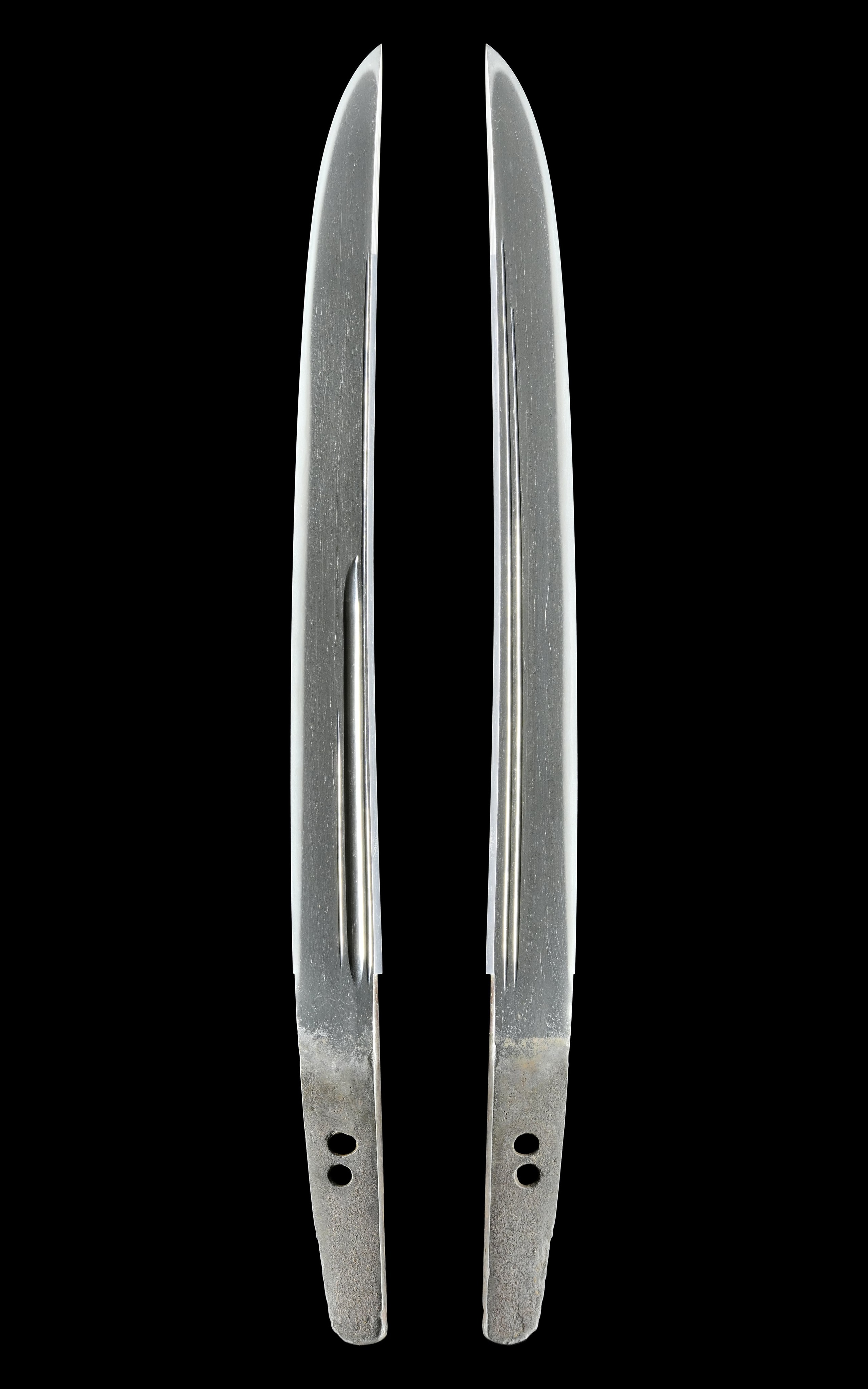
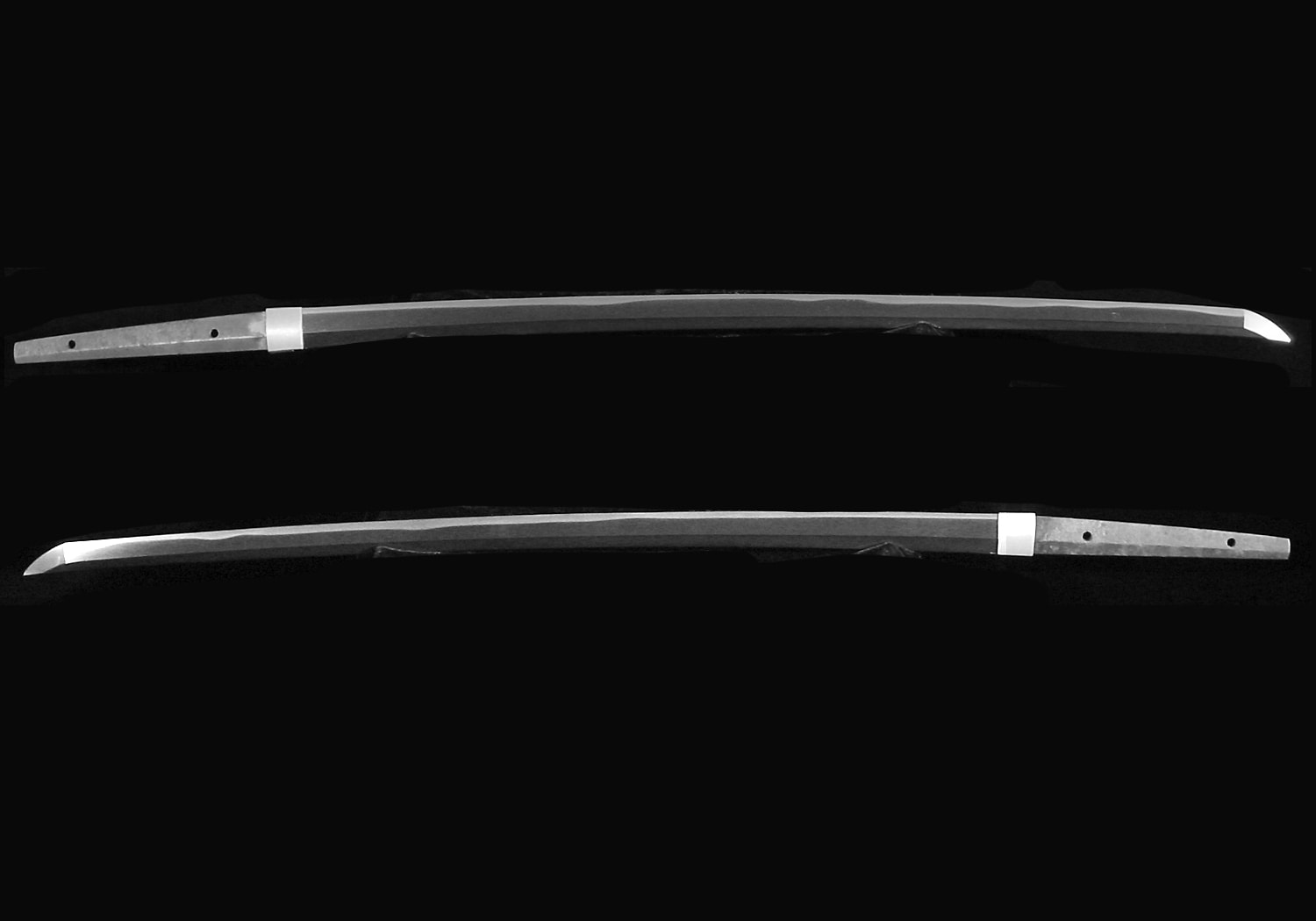
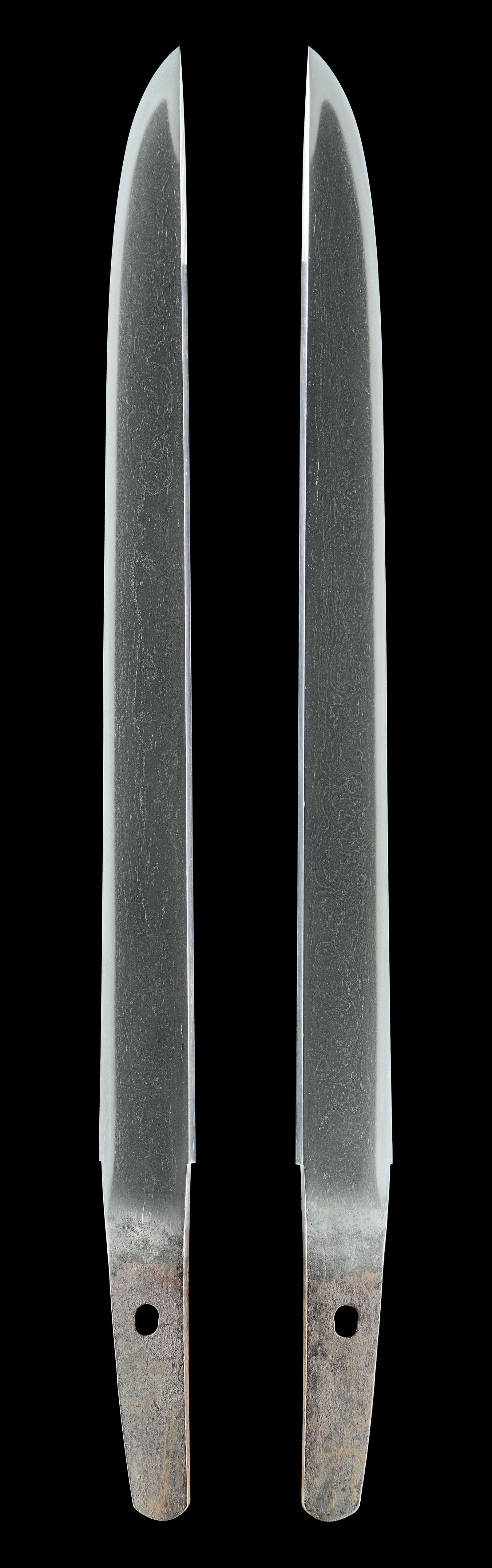
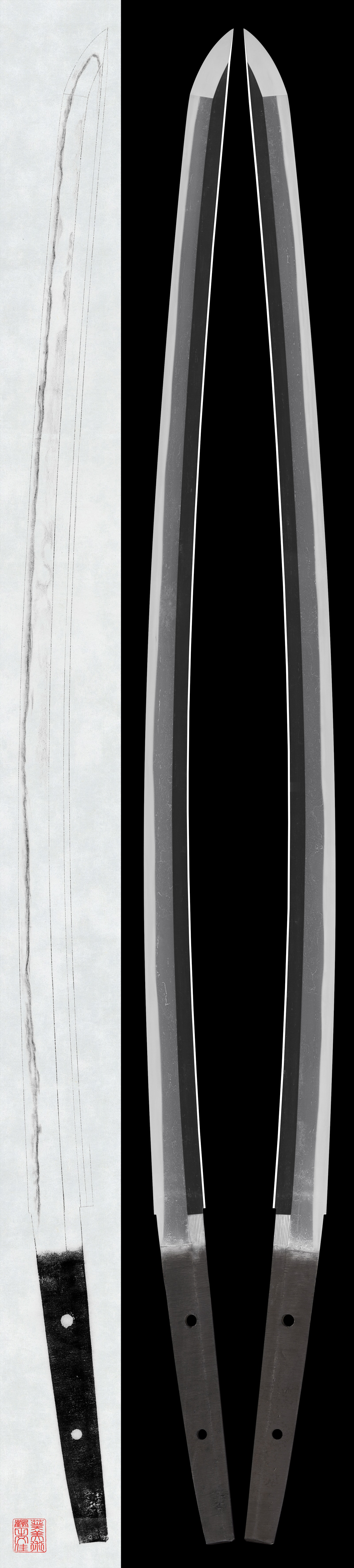
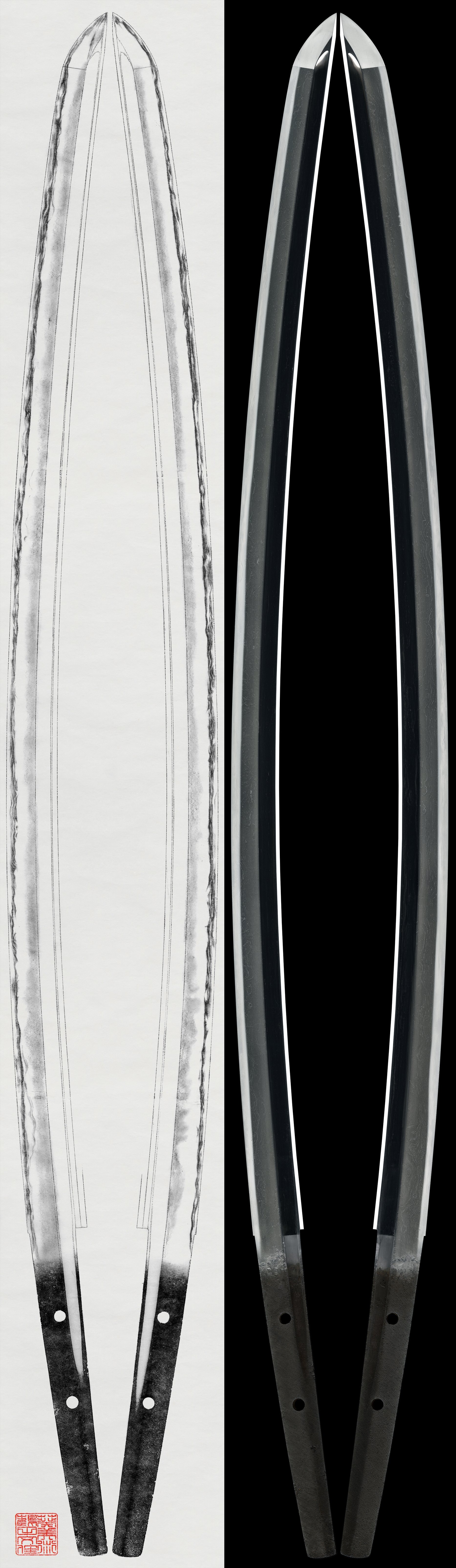
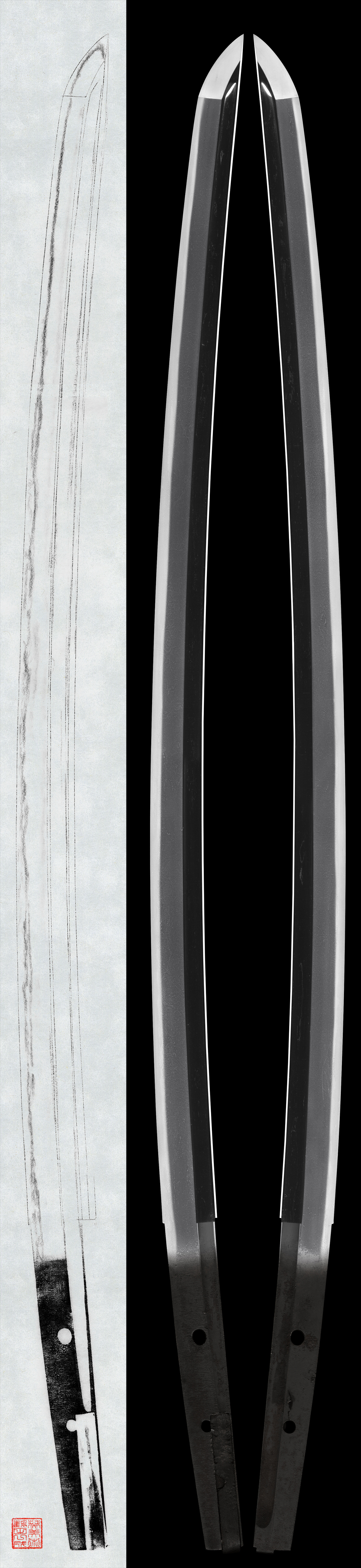
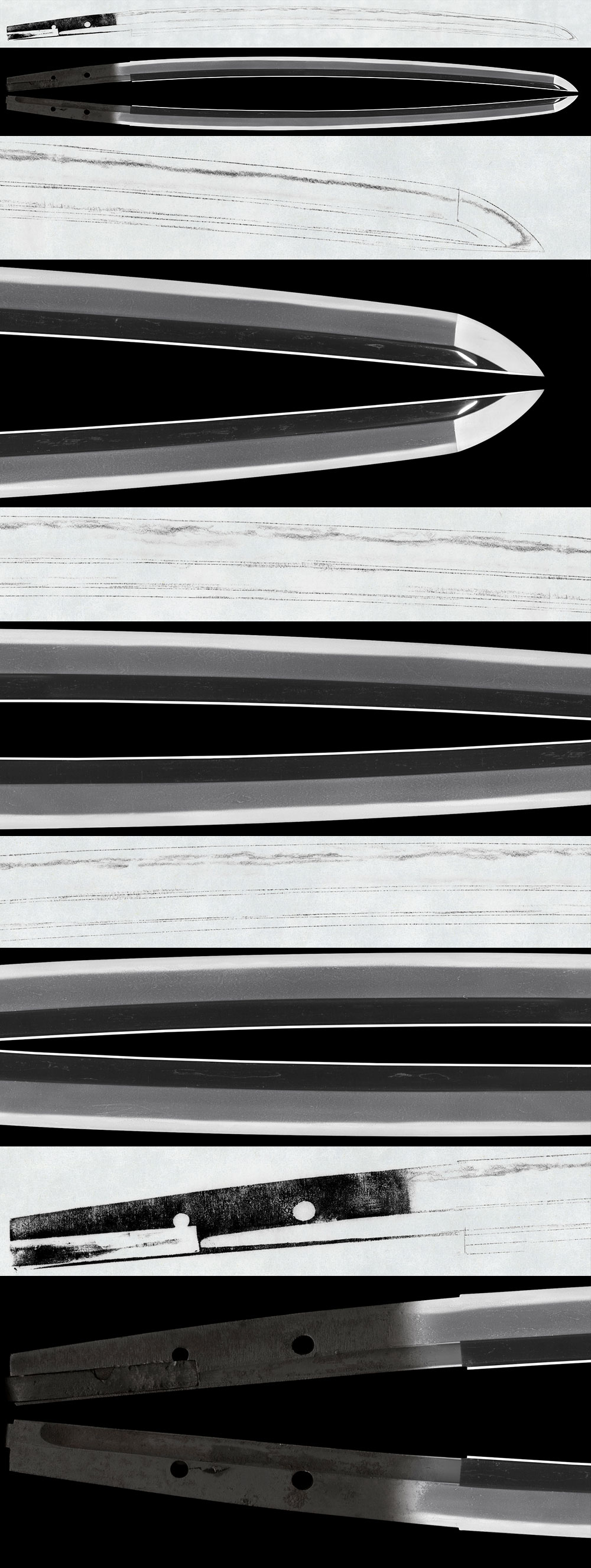
This is a wakizashi attributed to Tegai Kanetoshi, likely made around the mid-Muromachi period. The blade features a beautiful and tightly forged jigane in the Yamato tradition. It has been certified as NBTHK Tokubetsu Hozon Token.
 NihontoWatch
mumei · Tegai · Muromachi · nagasa 54.6cm · sori 1.2cm
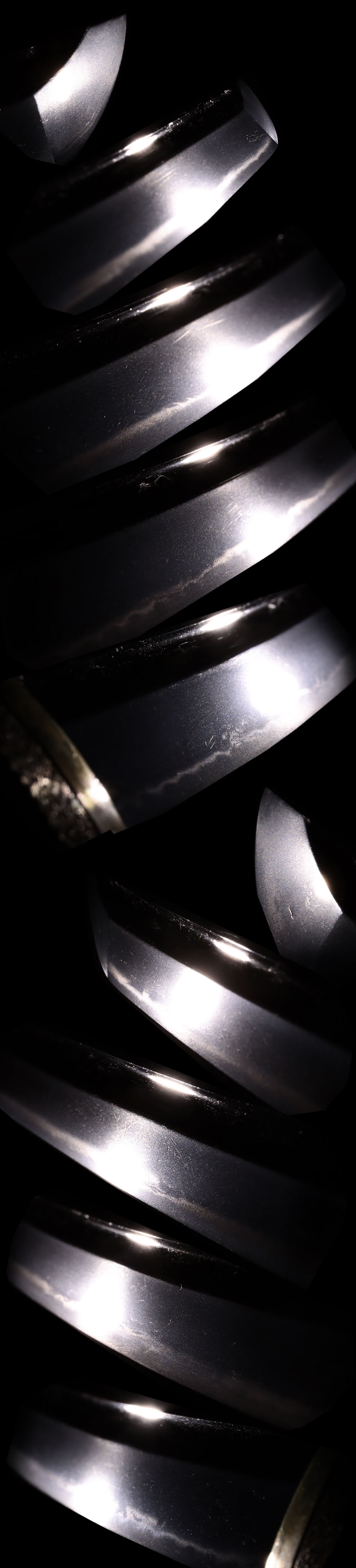

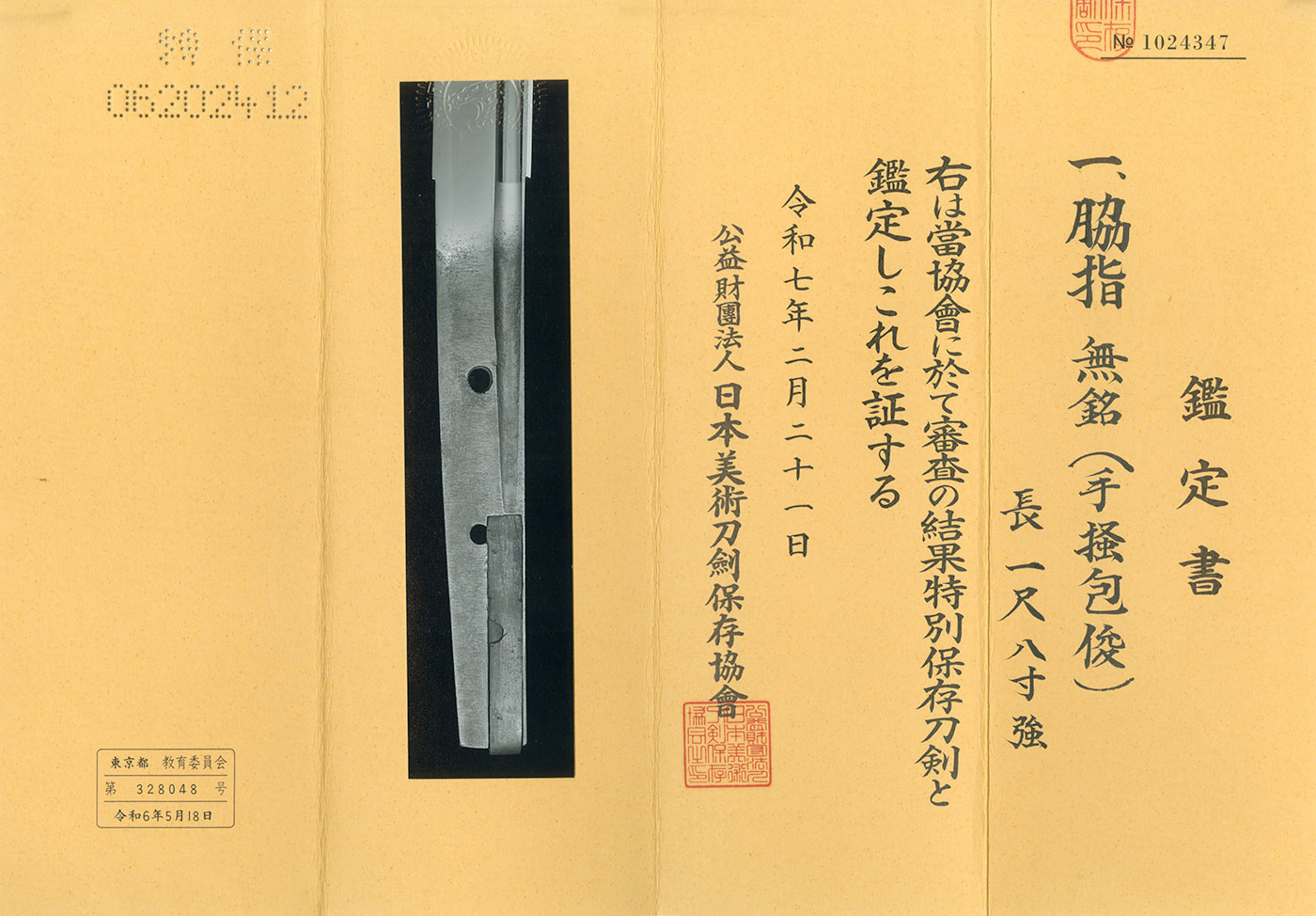
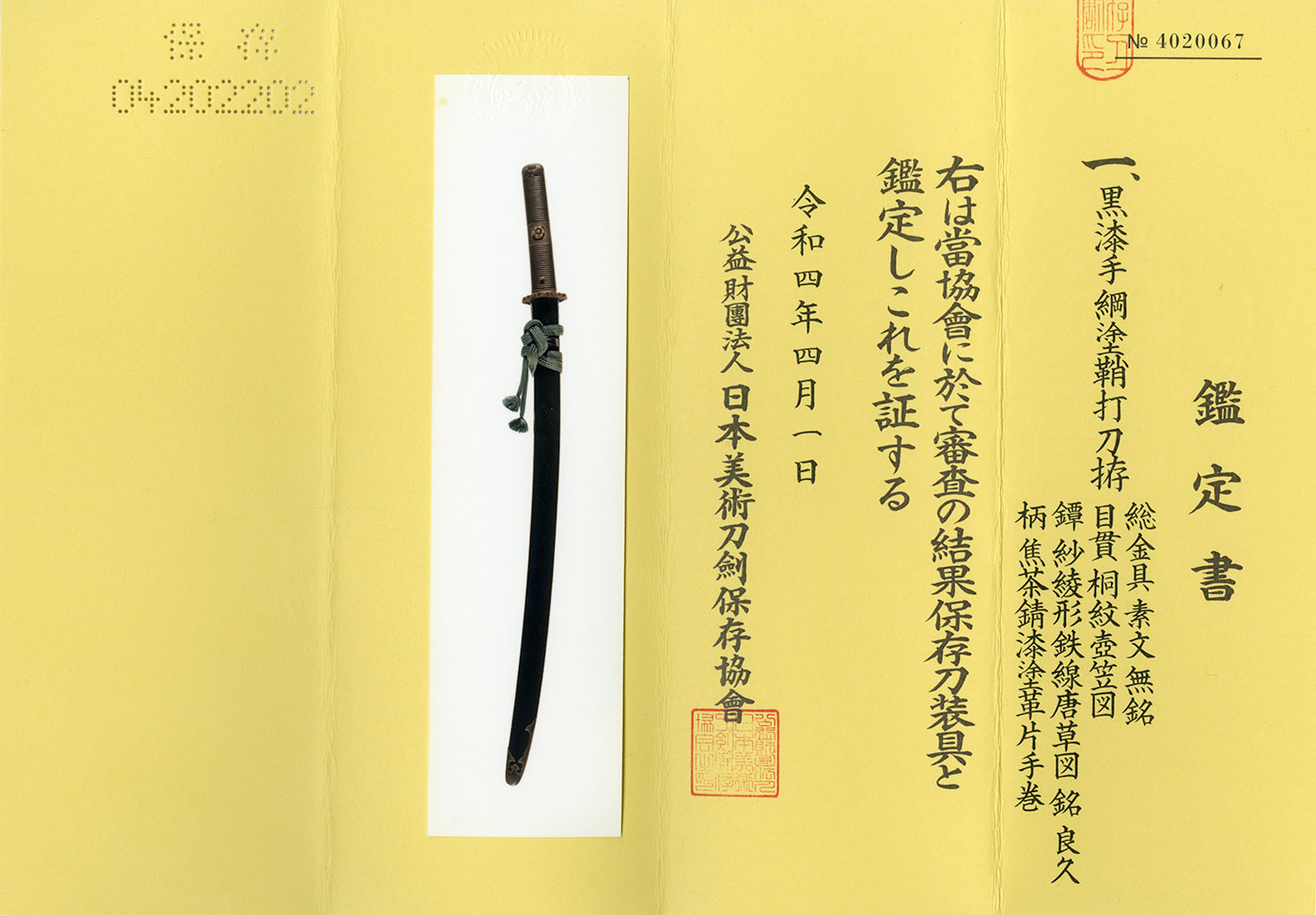
Tegai (Yamato) · Yamato · around 1381-1384
1 piece on the market now
A tantō with a relief kurikara carved within a recessed panel on its front and gomabashi on its back was transmitted in the Sendai Date family and is recorded in the Ken'yari Hiroku, the secret register of swords and spears, and it is the most fully documented of the four signed blades that carry Kanetoshi's two-character name. Kanetoshi was a swordsmith of the Yamato Tegai school, a group the published sources regard as a body of forgers attached to Tōdai-ji and the largest in scale of the five Yamato traditions. Its founder is given as Kanenaga, whose activity is placed around the Shōō era of the late Kamakura period, and from him the school flourished through the Nanbokuchō age and on into the Muromachi. In the reference compendia the Kanetoshi name is first cited around the Kōan era as an early signature of the first-generation Kanenaga, and is then seen inherited as a successive title down through the Nanbokuchō and Muromachi periods. The surviving signed pieces are all small tantō, read as no later than the Ōei era of the early Muromachi, and the published sources judge the better of them to express Kanetoshi's own character well.
His is a Yamato hand whose grain inclines toward masame. The forging is itame, often a tightly packed ko-itame, that flows and tends toward masame, with fine ji-nie thickly and evenly applied; toward the mune a faint, whitish utsuri stands across the ji, the shirake reflection that the judges name as the very feature setting this later Tegai work apart from the Kamakura-period Yamato blades. Over that ji he tempers a suguha, calm and shallow, that is never left plain. Hotsure frays the habuchi, small ashi enter, ko-nie adhere, and sunagashi runs delicately through, the nioiguchi kept bright and clear with a faintly subdued tendency that the published sources single out as a Tegai point of interest, naming it among the school's marks when they write of its 「沈みごころの匂口など手掻派の見どころ」[[c:1]]. The bōshi runs straight to a ko-maru with a somewhat long return, at times brushing into hakikake at the tip. The form holds to a standard hira-zukuri tantō with mitsu-mune, the kasane a little thick and the curvature an inward uchizori.
The ji is the more telling half. On the Juyo 62 tantō the ko-itame is densely packed with extremely fine ji-nie thickly applied and fine chikei entering, the steel bright in color and well worked, while toward the mune the whitish shirake-utsuri stands and near the edge the ji reads straight; the published sources call this a forging in which both ji and ha manifest the typical Tegai style of the Ōei era, 「地刃に応永頃の手掻派の典型的作風を現わしている」[[c:2]]. The faint utsuri here is not the deliberate reflection of Bizen steel but the natural cast of a Yamato ji forged in flowing, masame-inclined grain, and it carries across the smaller pieces as a whitish tone rather than a clear band. Against this ji the suguha keeps its discipline yet the activity never lets it settle: on the Juyo 11 tantō the wide suguha-chō appears shallowly wet with ko-nie and sunagashi, and on the Juyo 53 piece the temper becomes nijūba-like from around the monouchi, with small ashi entering the lower half and the nioiguchi bright and clear, the judges finding in it Kanetoshi's character well shown and the workmanship good, 「包俊の特色をよくあらわして, 出来がよい」[[c:3]].
The four tantō divide into two registers of one Ōei Tegai manner. Across all of them the spine is the fine suguha over masame-inclined itame, the whitish utsuri, the hotsure and the ko-maru bōshi that the school is read by. Two of the blades carry more in the temper than the calm suguha allows. The Juyo 53 tantō takes a nijūba tendency at the monouchi and carries a kuichigai shōbu-hi with a plain suken in its carving, while the Juyo 62 piece tempers from the machi with a yakidashi, then takes ko-gunome into the suguha-toned line with scattered hotsure along the habuchi and a bōshi that runs midare-komi, slightly angular on one face and tending to a pointed tip on the other, and bears the relief kurikara on its front. The judges note that signed examples of Kanetoshi are few, 「有銘は少い」, and that smiths of the same name from the mid-Muromachi onward tend to a more nioi-dominant temper with utsuri standing out in the ji, so that the calm, bright suguha of these Ōei pieces marks the better, earlier reach of the name.
What places him is best taken from his own blades. The Juyo 10 commentary reads these tantō as Yamashiro-style copies, a Yamashiro-mono utsushi, that differ from Kamakura-period examples in their slightly extended dimensions, their whitish jigane, the gunome intermixed here and there, and a bōshi return somewhat lacking in refinement, the four points by which a Tegai Ōei tantō is told from an older Yamato one. His masame-inclined ji with its whitish utsuri, his suguha laced with hotsure and the occasional nijūba, and his ko-maru bōshi with its long return are the marks of his hand drawn from his own blades, and they set his work within the Tegai descent without recourse to a borrowed comparison. The published sources weigh him against the standard of his own school rather than against another, finding that among Tegai works tantō of this period executed to such a level are rare, 「手搔物で, これだけ出来の優れたこの時代の短刀は稀である」[[c:4]], and valuing the soundest of them as reference material for the study of Tegai workmanship, 「手搔物研究上の好参考品である」[[c:5]].
Kanetoshi is held entirely in the Jūyō tier rather than in the higher designations: the record carries four Jūyō tantō and no National Treasures or Important Cultural Properties, his designation factor mid-range among kotō names. All four are ubu and signed in the two-character hand, which for so thinly recorded a smith is itself the value, since the published sources note how few signed examples survive. Of the Juyo 62 tantō, the Sendai Date heirloom recorded in the Ken'yari Hiroku, the judges write that both ji and ha are exceedingly sound and the carvings on both faces splendid, 「地刃共に頗る健全で, 表裏の彫物も見事である」[[c:6]], and they call the Juyo 11 piece 「健全で出来がよい」[[c:7]]. No other daimyō provenance and no current institutional holder attaches to the recorded blades, so the honest picture is of a smith preserved in private and designated hands rather than in the great museum collections. For a collector this means a signed Tegai Kanetoshi is among the rarer of the old Yamato tantō to encounter, the four designated pieces coming to light only from time to time and with patience, each prized less for scale than as a reference point for the Ōei reach of one of the largest Yamato schools.
Where Kanetoshi stands among comparable artisans: across all of nihontō, and within tradition, era, and period. The tiers (Foremost · Leading · Major · Notable) weigh official designations from the NBTHK and Japan's Agency for Cultural Affairs, together with historical honors of lasting repute such as the Sansaku and Meibutsu-chō.
Select a lens to see how it's measured.
Yamato-den · Yamato
Phase: Ko-Tegai古手掻· 1200–1394
36 pieces on the market now
Ko-Tegai (古手掻) is the founding and classical phase of the Tegai school, spanning the late Kamakura period through the Nanbokuchō era. 1288-1293). Kanenaga is reckoned among the foremost Yamato masters: his signed tachi are celebrated for combining the dignity of Kamakura form with the disciplined grain of the Yamato tradition, and several are designated at the highest levels. The mainline continued through a second-generation Kanenaga and the founder's sons and pupils — Kanetsugu (包次), Kanekiyo (包清), and the early Kanezane (包眞) — into the Nanbokuchō period. In workmanship Ko-Tegai is orthodox Yamato-den.
The jigane is itame with conspicuous masame, especially along the shinogi-ji, thick with ji-nie and threaded by chikei. The hamon is built on a narrow, nie-laden suguha, frequently broken by ko-midare and ko-gunome, with nijūba and hotsure along the habuchi and abundant kinsuji and sunagashi; the bōshi runs sugu to a ko-maru or hakikake finish, often continuing into muneyaki. Early works show a slender, deeply koshizori tachi-sugata with a small kissaki, broadening into the more powerful forms of the Nanbokuchō period. The school's masame-rich grain and quiet, nie-active suguha distinguish its blades from the choji-based exuberance of contemporaneous Bizen work and place Tegai squarely within the five Yamato schools. Learn more →
| Smith | Era | Designated |
|---|---|---|
| Kanenaga包永 | 1288-1312 | 62 |
| Kanekiyo包清 | 1362-1370 | 8 |
| Kanetoshi包俊 | 1381-1384 | 4 |
| Kanetsugu包次 | 1317-1333 | 4 |
| Kanekiyo包清 | 1429-1441 | 3 |
Yamato in the Muromachi period
The monasteries that had sustained Yamato lost ground through the Muromachi period, and the schools thinned with them; Sue-Tegai kept the old masame manner alive in quantity. The burning of Tōdaiji’s Great Buddha hall in 1567 closed the temple age.
A Hozon-certified blade judged to show notably superior workmanship and a better state of preservation. The bar is higher: re-tempered blades and most unsigned Muromachi/Edo works are excluded.
The NBTHK (Nihon Bijutsu Tōken Hozon Kyōkai, the Society for the Preservation of Japanese Art Swords) is a public-interest incorporated foundation founded in 1948 and supervised by Japan’s Agency for Cultural Affairs (Bunkachō); it is based at the Japanese Sword Museum in Tokyo. Its expert panels physically examine each submitted work (shinsa) and issue a certificate (kanteishō) ranking it by artistic and historical merit. NBTHK papers are the most widely recognized standard of authentication for Japanese swords and fittings.
NBTHK official siteIf you wish to return an item, please notify us within 3 days of receipt. After this period we cannot accept cancellations. Please ship the return to us within 5 business days. Cancellation is conditional on the item being kept in the same condition as at the time of sale, so please handle it with care.
This is a wakizashi attributed to Tegai Kanetoshi, likely made around the mid-Muromachi period. The blade features a beautiful and tightly forged jigane in the Yamato tradition. It has been certified as NBTHK Tokubetsu Hozon Token.
NihontoWatchmumei · Tegai · Muromachi · nagasa 54.6cm · sori 1.2cm
Tegai (Yamato) · Yamato · around 1381-1384
1 piece on the market now
A tantō with a relief kurikara carved within a recessed panel on its front and gomabashi on its back was transmitted in the Sendai Date family and is recorded in the Ken'yari Hiroku, the secret register of swords and spears, and it is the most fully documented of the four signed blades that carry Kanetoshi's two-character name. Kanetoshi was a swordsmith of the Yamato Tegai school, a group the published sources regard as a body of forgers attached to Tōdai-ji and the largest in scale of the five Yamato traditions. Its founder is given as Kanenaga, whose activity is placed around the Shōō era of the late Kamakura period, and from him the school flourished through the Nanbokuchō age and on into the Muromachi. In the reference compendia the Kanetoshi name is first cited around the Kōan era as an early signature of the first-generation Kanenaga, and is then seen inherited as a successive title down through the Nanbokuchō and Muromachi periods. The surviving signed pieces are all small tantō, read as no later than the Ōei era of the early Muromachi, and the published sources judge the better of them to express Kanetoshi's own character well.
His is a Yamato hand whose grain inclines toward masame. The forging is itame, often a tightly packed ko-itame, that flows and tends toward masame, with fine ji-nie thickly and evenly applied; toward the mune a faint, whitish utsuri stands across the ji, the shirake reflection that the judges name as the very feature setting this later Tegai work apart from the Kamakura-period Yamato blades. Over that ji he tempers a suguha, calm and shallow, that is never left plain. Hotsure frays the habuchi, small ashi enter, ko-nie adhere, and sunagashi runs delicately through, the nioiguchi kept bright and clear with a faintly subdued tendency that the published sources single out as a Tegai point of interest, naming it among the school's marks when they write of its 「沈みごころの匂口など手掻派の見どころ」[[c:1]]. The bōshi runs straight to a ko-maru with a somewhat long return, at times brushing into hakikake at the tip. The form holds to a standard hira-zukuri tantō with mitsu-mune, the kasane a little thick and the curvature an inward uchizori.
The ji is the more telling half. On the Juyo 62 tantō the ko-itame is densely packed with extremely fine ji-nie thickly applied and fine chikei entering, the steel bright in color and well worked, while toward the mune the whitish shirake-utsuri stands and near the edge the ji reads straight; the published sources call this a forging in which both ji and ha manifest the typical Tegai style of the Ōei era, 「地刃に応永頃の手掻派の典型的作風を現わしている」[[c:2]]. The faint utsuri here is not the deliberate reflection of Bizen steel but the natural cast of a Yamato ji forged in flowing, masame-inclined grain, and it carries across the smaller pieces as a whitish tone rather than a clear band. Against this ji the suguha keeps its discipline yet the activity never lets it settle: on the Juyo 11 tantō the wide suguha-chō appears shallowly wet with ko-nie and sunagashi, and on the Juyo 53 piece the temper becomes nijūba-like from around the monouchi, with small ashi entering the lower half and the nioiguchi bright and clear, the judges finding in it Kanetoshi's character well shown and the workmanship good, 「包俊の特色をよくあらわして, 出来がよい」[[c:3]].
The four tantō divide into two registers of one Ōei Tegai manner. Across all of them the spine is the fine suguha over masame-inclined itame, the whitish utsuri, the hotsure and the ko-maru bōshi that the school is read by. Two of the blades carry more in the temper than the calm suguha allows. The Juyo 53 tantō takes a nijūba tendency at the monouchi and carries a kuichigai shōbu-hi with a plain suken in its carving, while the Juyo 62 piece tempers from the machi with a yakidashi, then takes ko-gunome into the suguha-toned line with scattered hotsure along the habuchi and a bōshi that runs midare-komi, slightly angular on one face and tending to a pointed tip on the other, and bears the relief kurikara on its front. The judges note that signed examples of Kanetoshi are few, 「有銘は少い」, and that smiths of the same name from the mid-Muromachi onward tend to a more nioi-dominant temper with utsuri standing out in the ji, so that the calm, bright suguha of these Ōei pieces marks the better, earlier reach of the name.
What places him is best taken from his own blades. The Juyo 10 commentary reads these tantō as Yamashiro-style copies, a Yamashiro-mono utsushi, that differ from Kamakura-period examples in their slightly extended dimensions, their whitish jigane, the gunome intermixed here and there, and a bōshi return somewhat lacking in refinement, the four points by which a Tegai Ōei tantō is told from an older Yamato one. His masame-inclined ji with its whitish utsuri, his suguha laced with hotsure and the occasional nijūba, and his ko-maru bōshi with its long return are the marks of his hand drawn from his own blades, and they set his work within the Tegai descent without recourse to a borrowed comparison. The published sources weigh him against the standard of his own school rather than against another, finding that among Tegai works tantō of this period executed to such a level are rare, 「手搔物で, これだけ出来の優れたこの時代の短刀は稀である」[[c:4]], and valuing the soundest of them as reference material for the study of Tegai workmanship, 「手搔物研究上の好参考品である」[[c:5]].
Kanetoshi is held entirely in the Jūyō tier rather than in the higher designations: the record carries four Jūyō tantō and no National Treasures or Important Cultural Properties, his designation factor mid-range among kotō names. All four are ubu and signed in the two-character hand, which for so thinly recorded a smith is itself the value, since the published sources note how few signed examples survive. Of the Juyo 62 tantō, the Sendai Date heirloom recorded in the Ken'yari Hiroku, the judges write that both ji and ha are exceedingly sound and the carvings on both faces splendid, 「地刃共に頗る健全で, 表裏の彫物も見事である」[[c:6]], and they call the Juyo 11 piece 「健全で出来がよい」[[c:7]]. No other daimyō provenance and no current institutional holder attaches to the recorded blades, so the honest picture is of a smith preserved in private and designated hands rather than in the great museum collections. For a collector this means a signed Tegai Kanetoshi is among the rarer of the old Yamato tantō to encounter, the four designated pieces coming to light only from time to time and with patience, each prized less for scale than as a reference point for the Ōei reach of one of the largest Yamato schools.
Where Kanetoshi stands among comparable artisans: across all of nihontō, and within tradition, era, and period. The tiers (Foremost · Leading · Major · Notable) weigh official designations from the NBTHK and Japan's Agency for Cultural Affairs, together with historical honors of lasting repute such as the Sansaku and Meibutsu-chō.
Select a lens to see how it's measured.
Yamato-den · Yamato
Phase: Ko-Tegai古手掻· 1200–1394
36 pieces on the market now
Ko-Tegai (古手掻) is the founding and classical phase of the Tegai school, spanning the late Kamakura period through the Nanbokuchō era. 1288-1293). Kanenaga is reckoned among the foremost Yamato masters: his signed tachi are celebrated for combining the dignity of Kamakura form with the disciplined grain of the Yamato tradition, and several are designated at the highest levels. The mainline continued through a second-generation Kanenaga and the founder's sons and pupils — Kanetsugu (包次), Kanekiyo (包清), and the early Kanezane (包眞) — into the Nanbokuchō period. In workmanship Ko-Tegai is orthodox Yamato-den.
The jigane is itame with conspicuous masame, especially along the shinogi-ji, thick with ji-nie and threaded by chikei. The hamon is built on a narrow, nie-laden suguha, frequently broken by ko-midare and ko-gunome, with nijūba and hotsure along the habuchi and abundant kinsuji and sunagashi; the bōshi runs sugu to a ko-maru or hakikake finish, often continuing into muneyaki. Early works show a slender, deeply koshizori tachi-sugata with a small kissaki, broadening into the more powerful forms of the Nanbokuchō period. The school's masame-rich grain and quiet, nie-active suguha distinguish its blades from the choji-based exuberance of contemporaneous Bizen work and place Tegai squarely within the five Yamato schools. Learn more →
| Smith | Era | Designated |
|---|---|---|
| Kanenaga包永 | 1288-1312 | 62 |
| Kanekiyo包清 | 1362-1370 | 8 |
| Kanetoshi包俊 | 1381-1384 | 4 |
| Kanetsugu包次 | 1317-1333 | 4 |
| Kanekiyo包清 | 1429-1441 | 3 |
Yamato in the Muromachi period
The monasteries that had sustained Yamato lost ground through the Muromachi period, and the schools thinned with them; Sue-Tegai kept the old masame manner alive in quantity. The burning of Tōdaiji’s Great Buddha hall in 1567 closed the temple age.
A Hozon-certified blade judged to show notably superior workmanship and a better state of preservation. The bar is higher: re-tempered blades and most unsigned Muromachi/Edo works are excluded.
The NBTHK (Nihon Bijutsu Tōken Hozon Kyōkai, the Society for the Preservation of Japanese Art Swords) is a public-interest incorporated foundation founded in 1948 and supervised by Japan’s Agency for Cultural Affairs (Bunkachō); it is based at the Japanese Sword Museum in Tokyo. Its expert panels physically examine each submitted work (shinsa) and issue a certificate (kanteishō) ranking it by artistic and historical merit. NBTHK papers are the most widely recognized standard of authentication for Japanese swords and fittings.
NBTHK official siteIf you wish to return an item, please notify us within 3 days of receipt. After this period we cannot accept cancellations. Please ship the return to us within 5 business days. Cancellation is conditional on the item being kept in the same condition as at the time of sale, so please handle it with care.