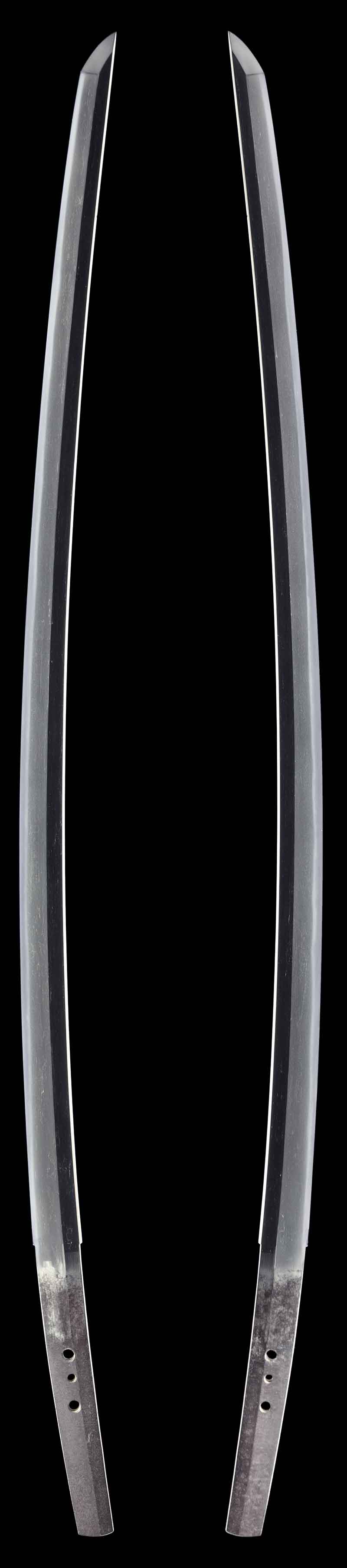
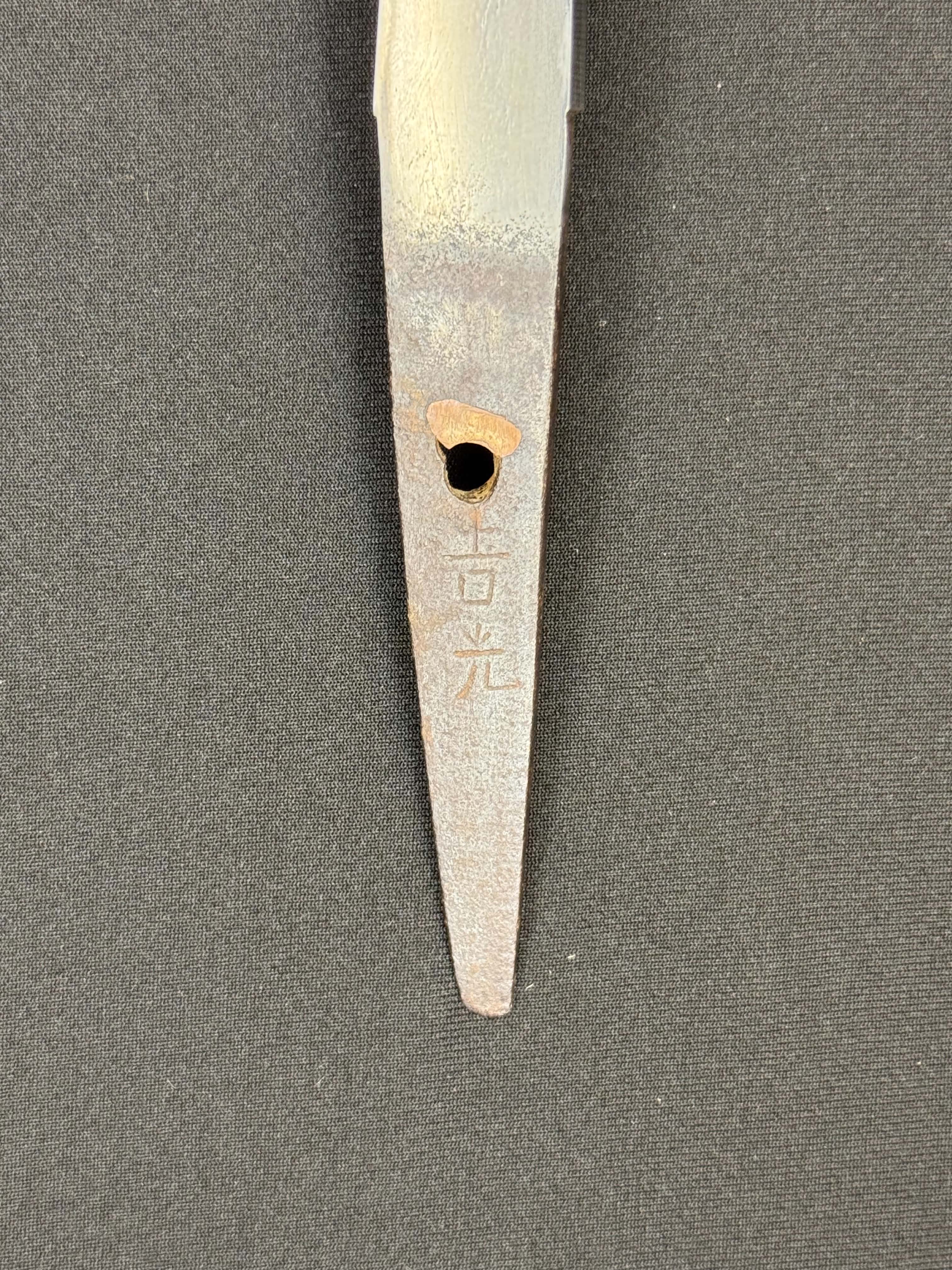
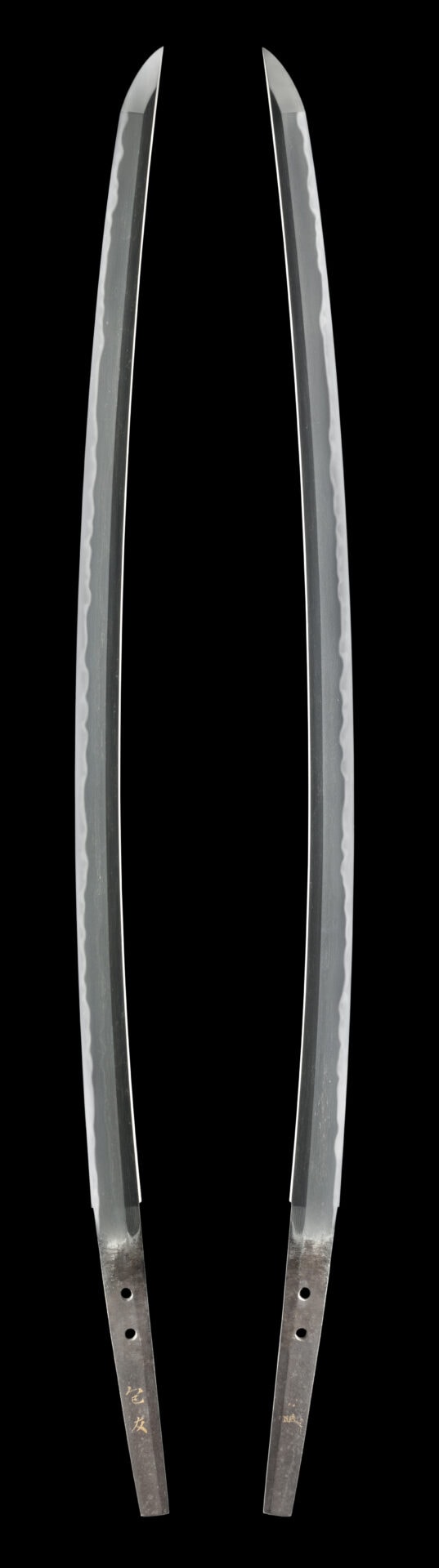
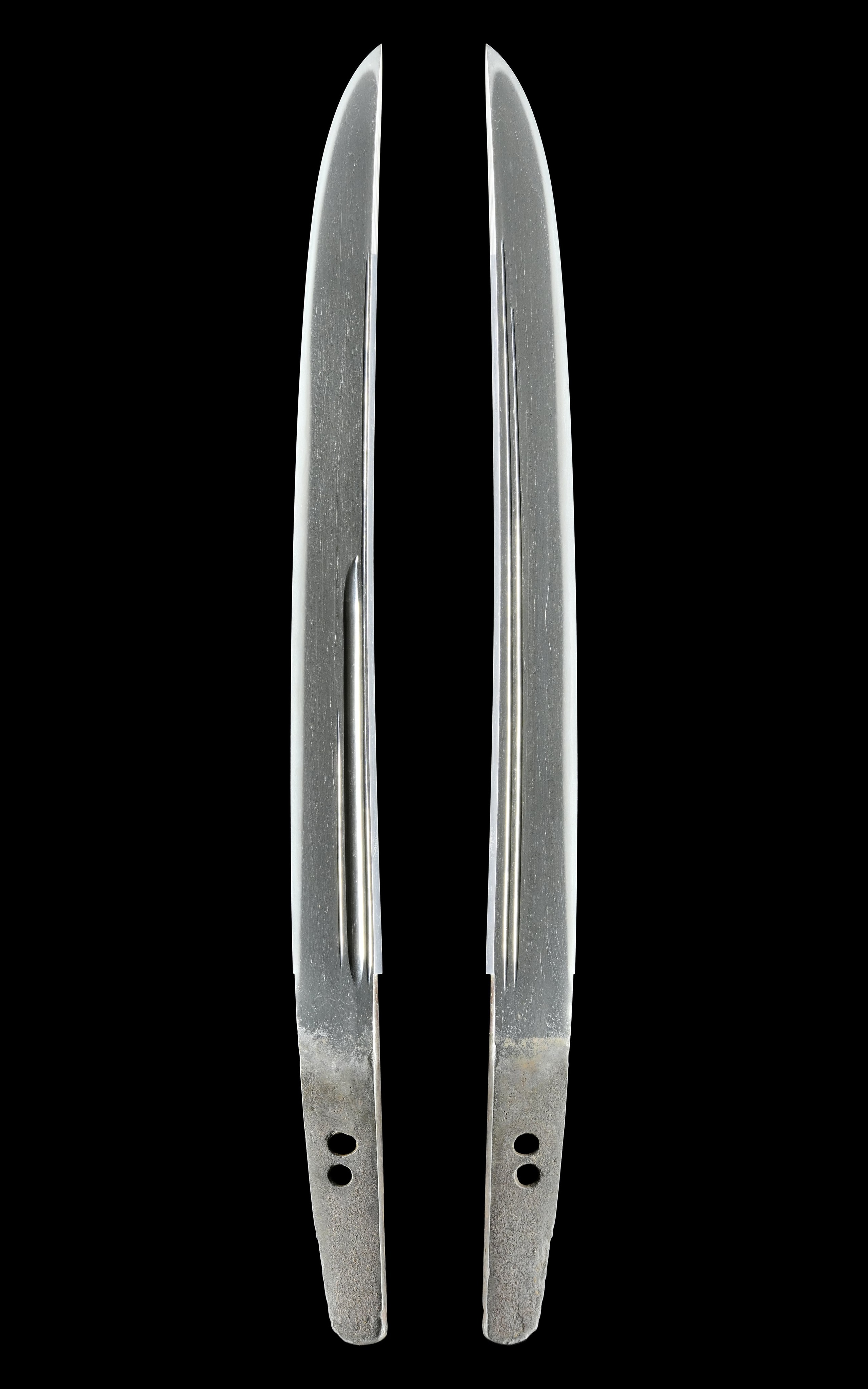
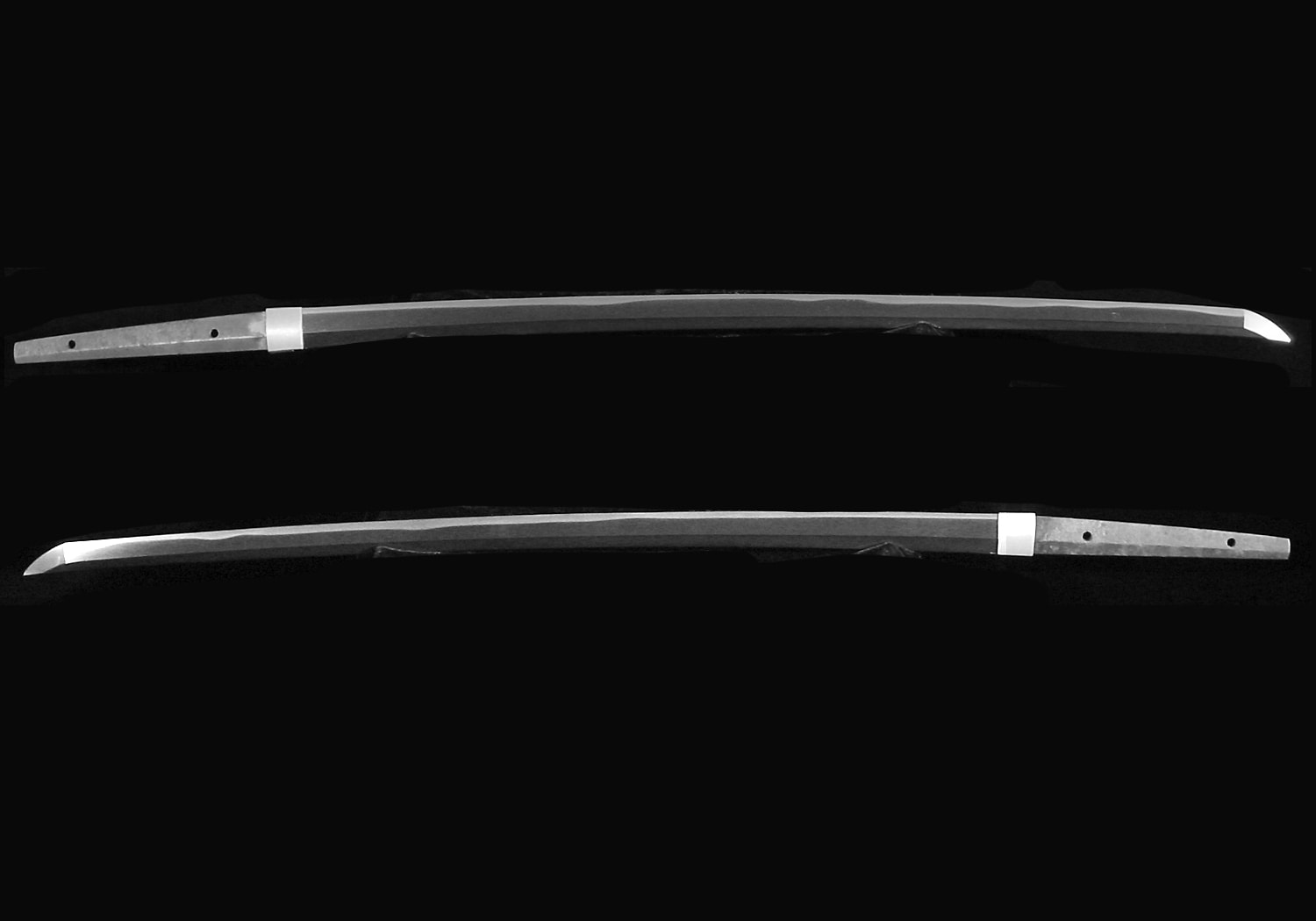
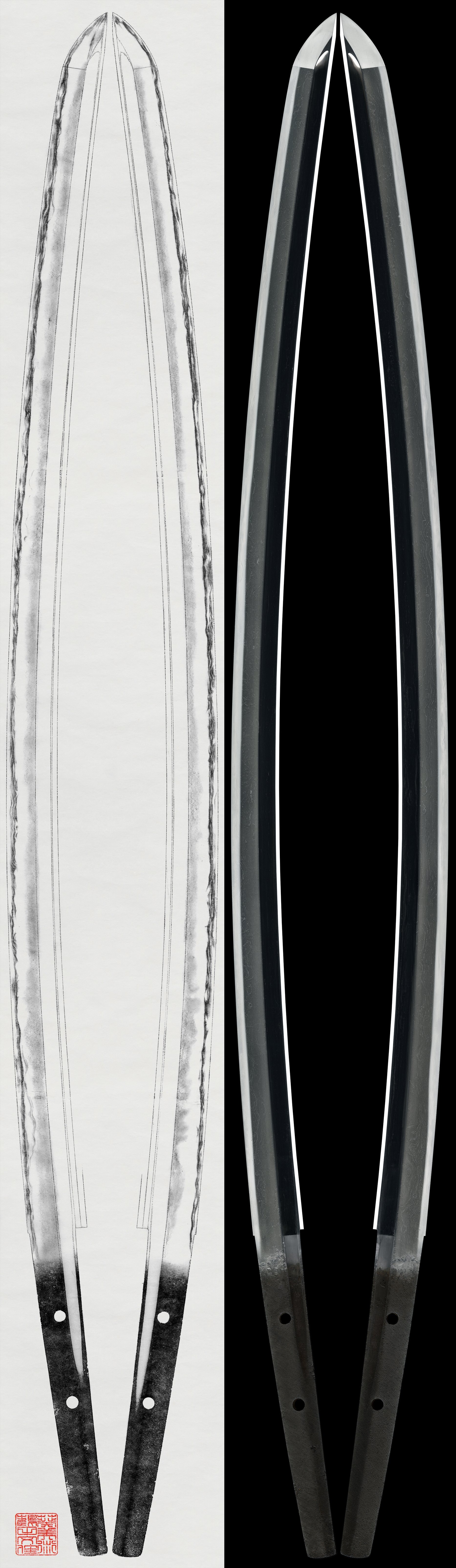
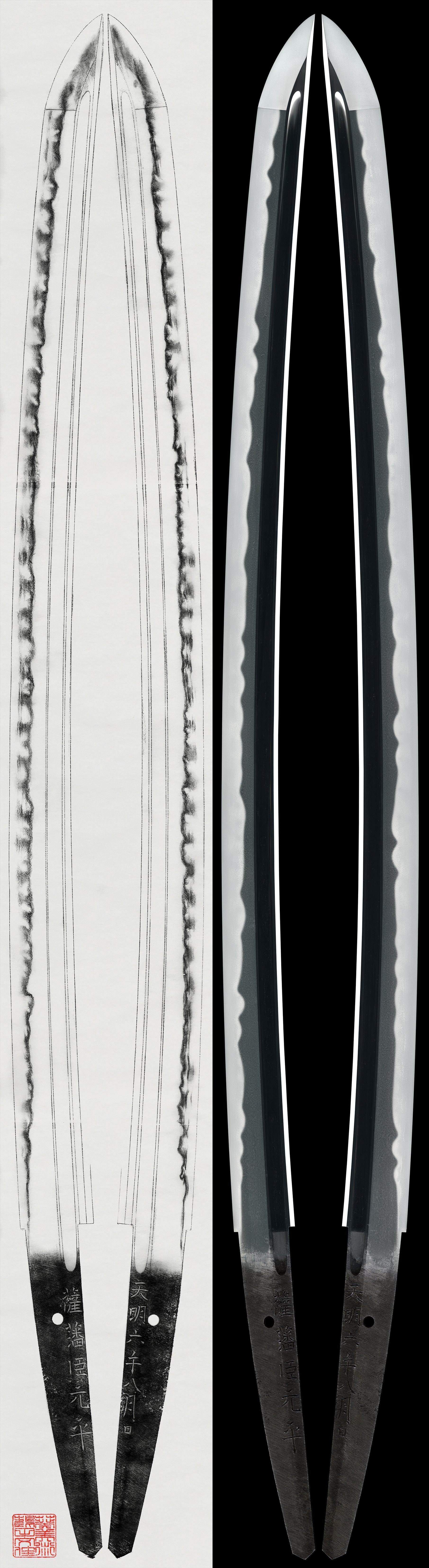
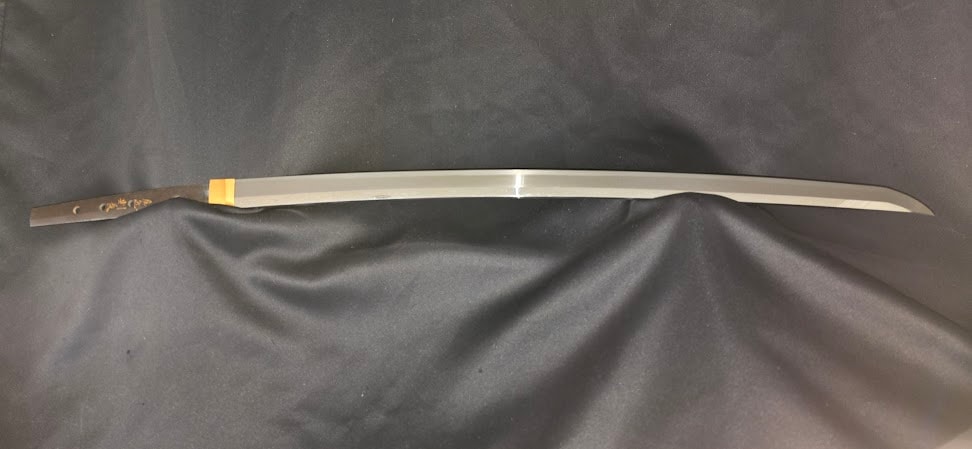
Ko-Tegai (古手掻) is the founding and classical phase of the Tegai school, spanning the late Kamakura period through the Nanbokuchō era. 1288-1293). Kanenaga is reckoned among the foremost Yamato masters: his signed tachi are celebrated for combining the dignity of Kamakura form with the disciplined grain of the Yamato tradition, and several are designated at the highest levels. The mainline continued through a second-generation Kanenaga and the founder's sons and pupils — Kanetsugu (包次), Kanekiyo (包清), and the early Kanezane (包眞) — into the Nanbokuchō period. In workmanship Ko-Tegai is orthodox Yamato-den.
The jigane is itame with conspicuous masame, especially along the shinogi-ji, thick with ji-nie and threaded by chikei. The hamon is built on a narrow, nie-laden suguha, frequently broken by ko-midare and ko-gunome, with nijūba and hotsure along the habuchi and abundant kinsuji and sunagashi; the bōshi runs sugu to a ko-maru or hakikake finish, often continuing into muneyaki. Early works show a slender, deeply koshizori tachi-sugata with a small kissaki, broadening into the more powerful forms of the Nanbokuchō period. The school's masame-rich grain and quiet, nie-active suguha distinguish its blades from the choji-based exuberance of contemporaneous Bizen work and place Tegai squarely within the five Yamato schools. Learn more →