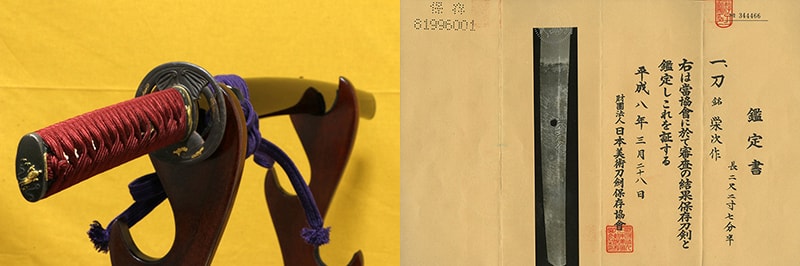
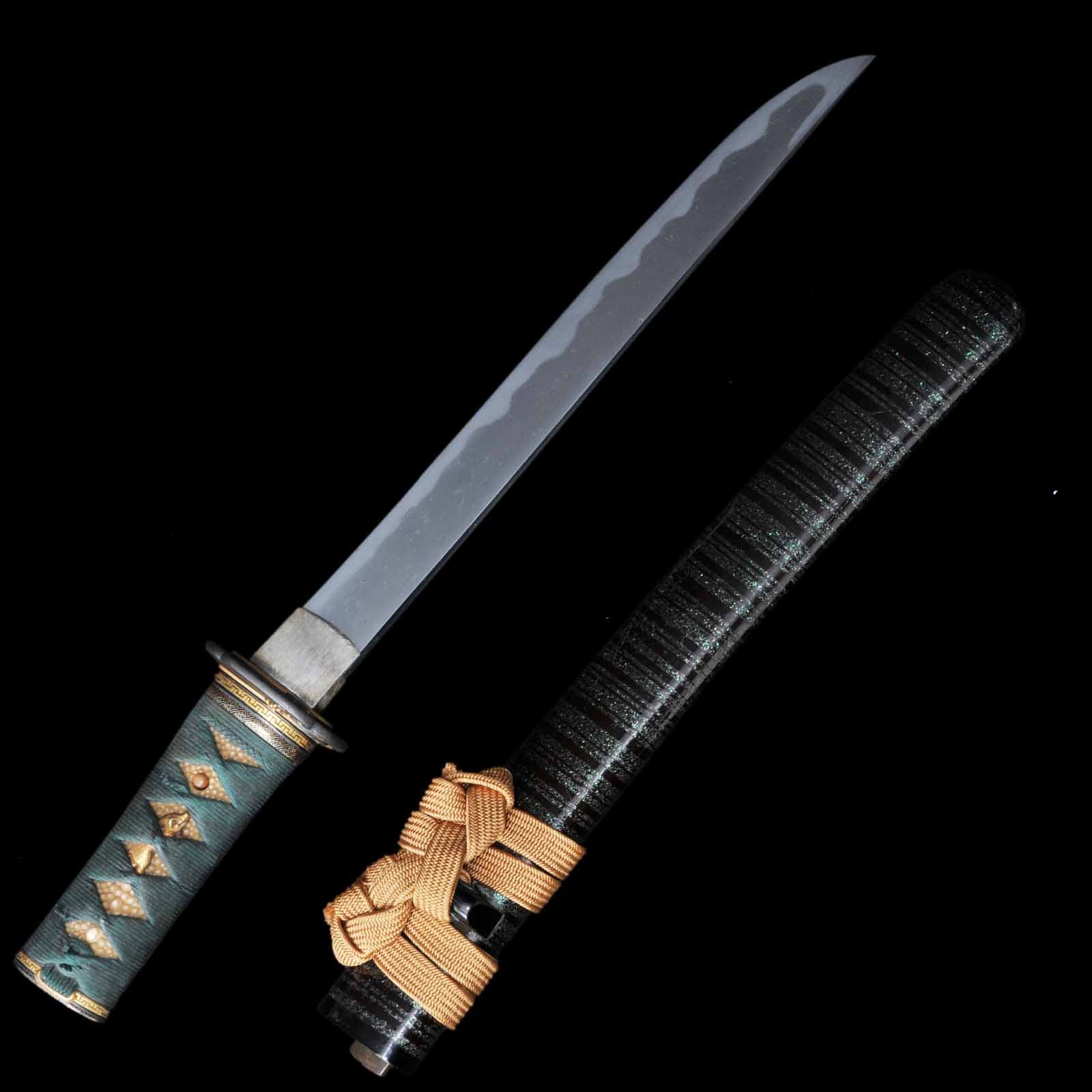
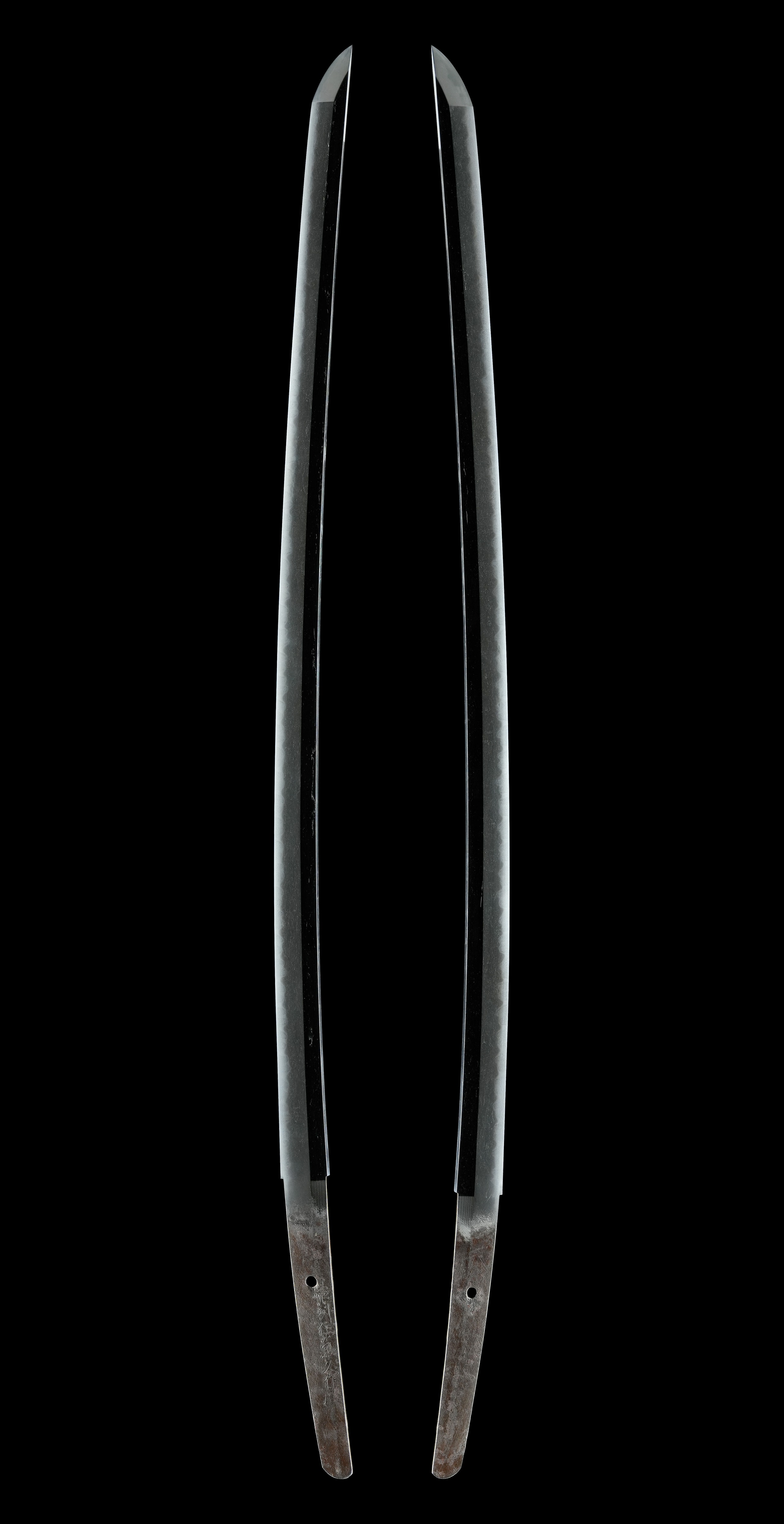
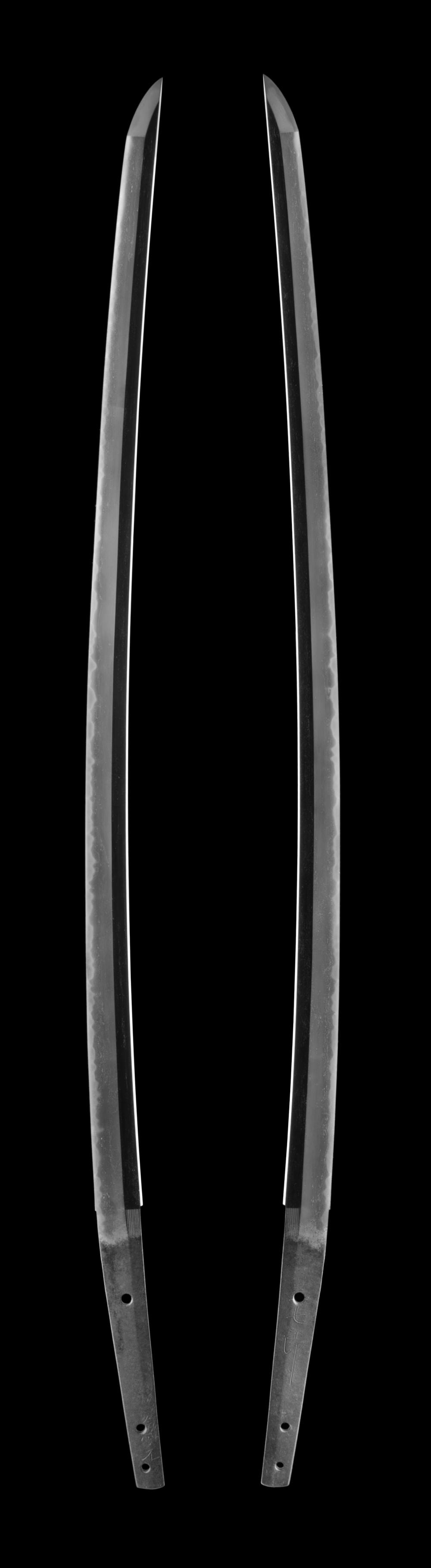
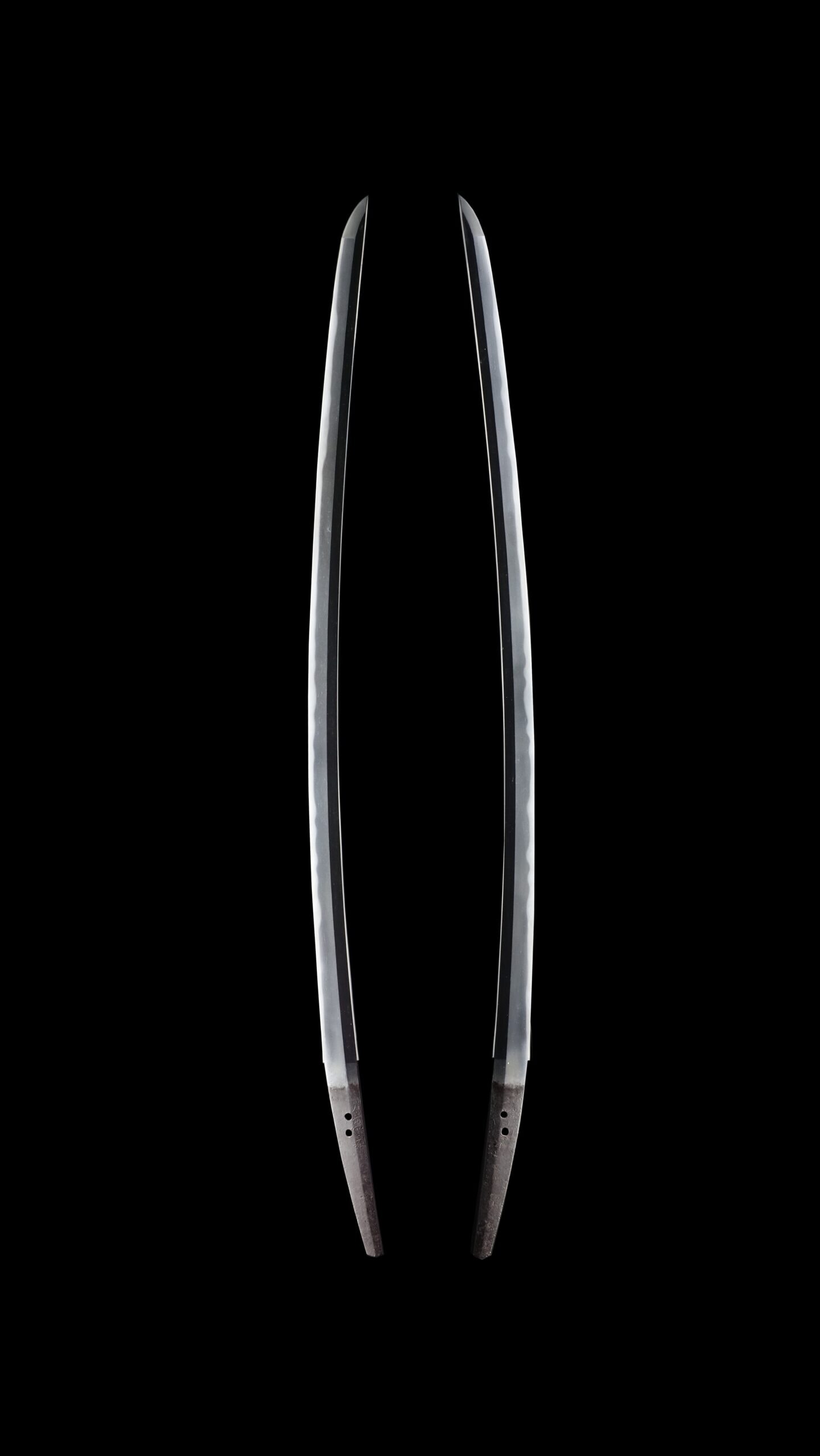
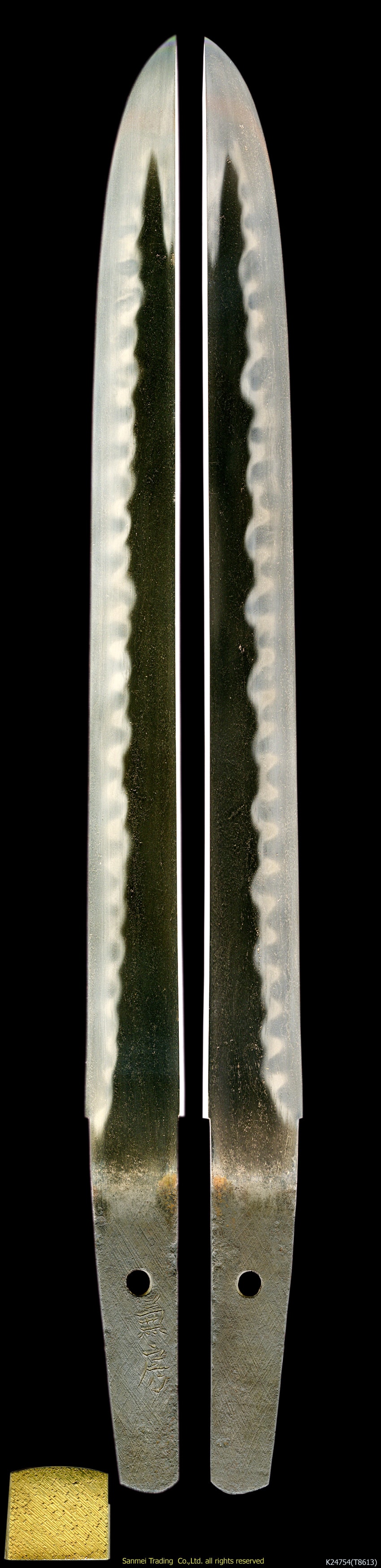
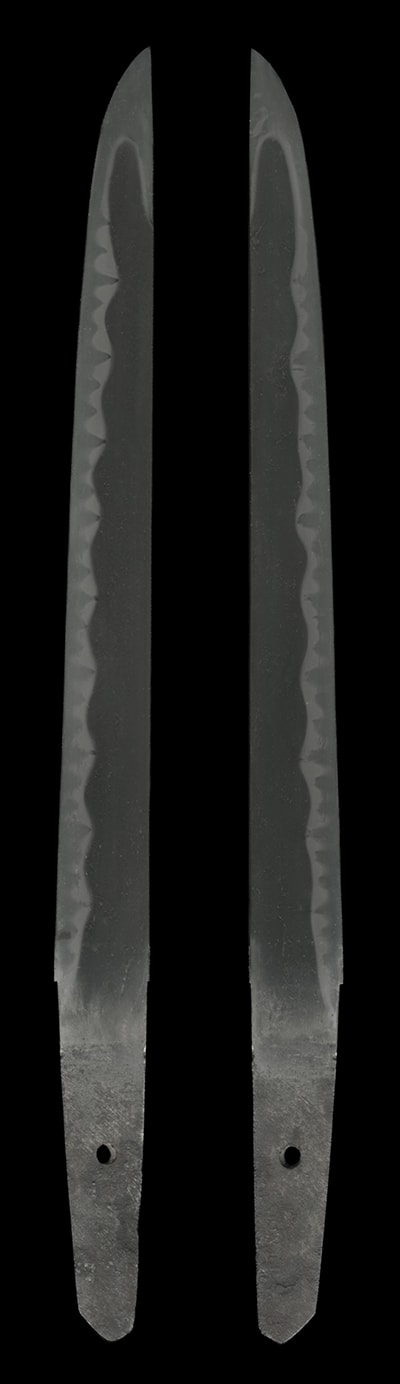
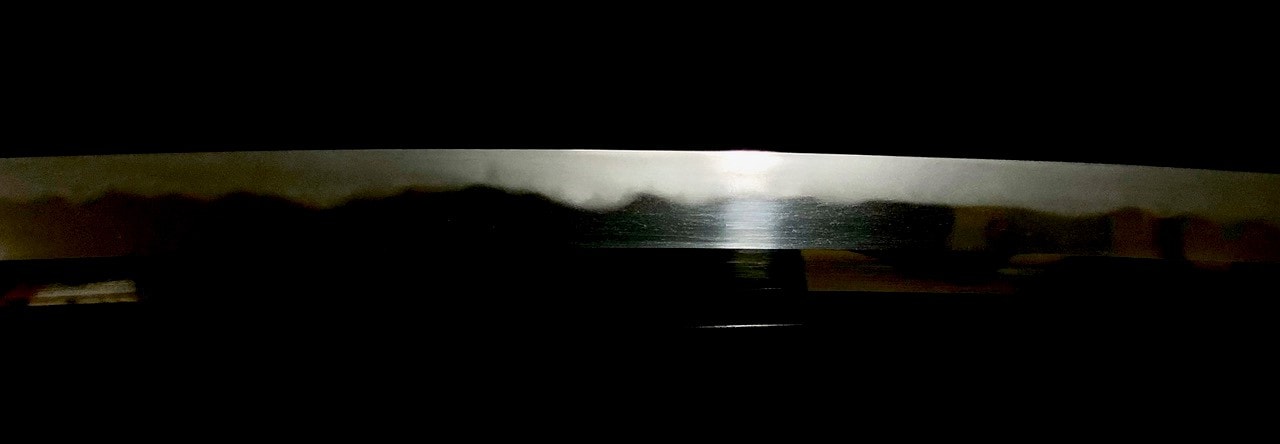
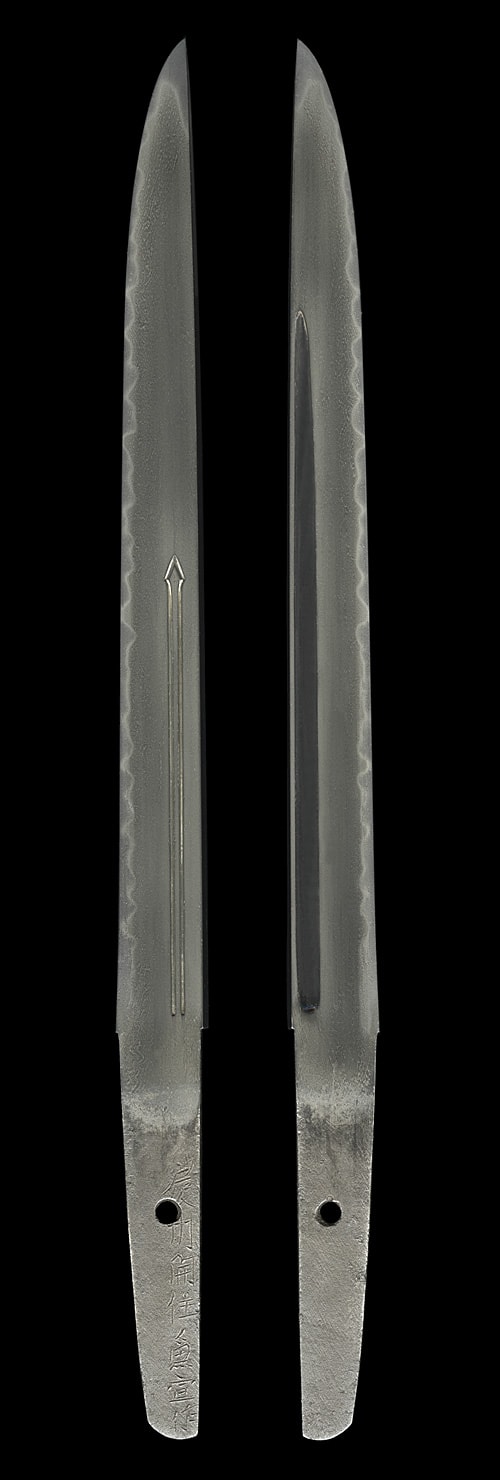
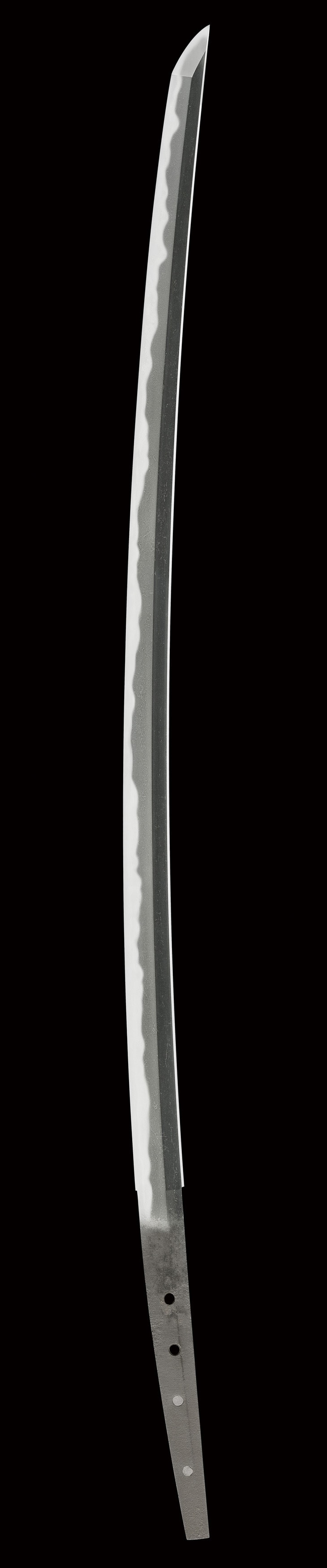
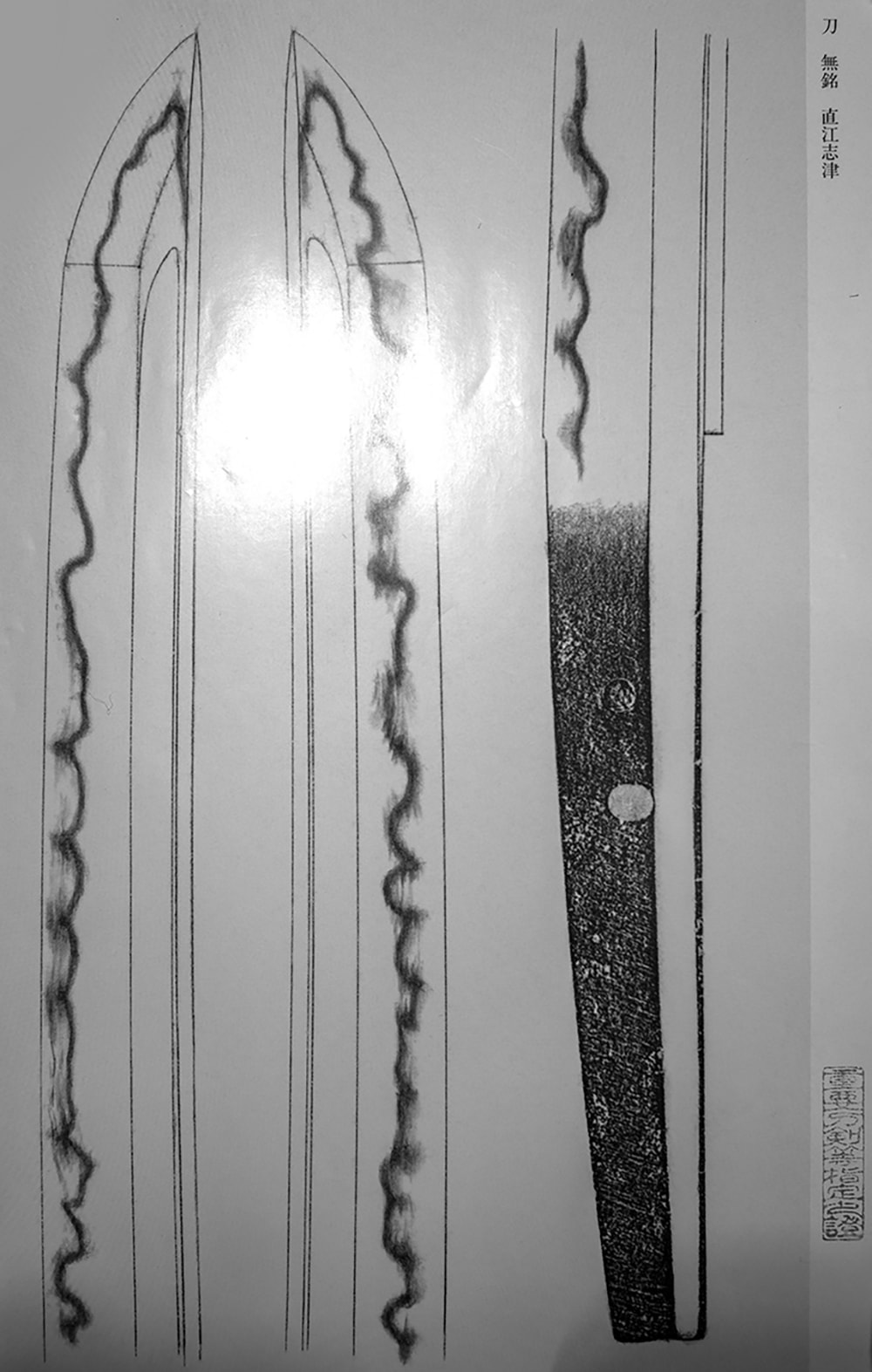
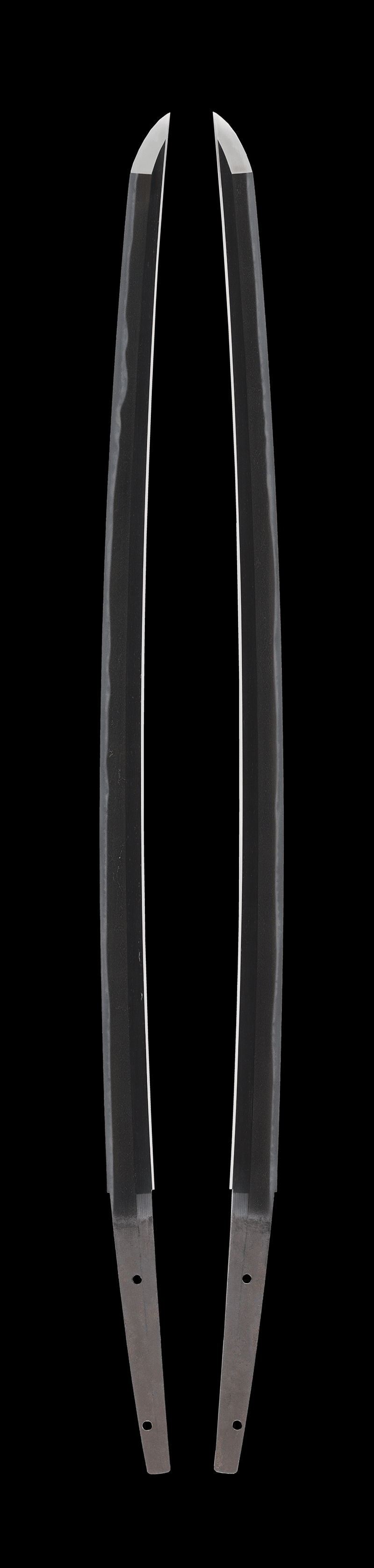
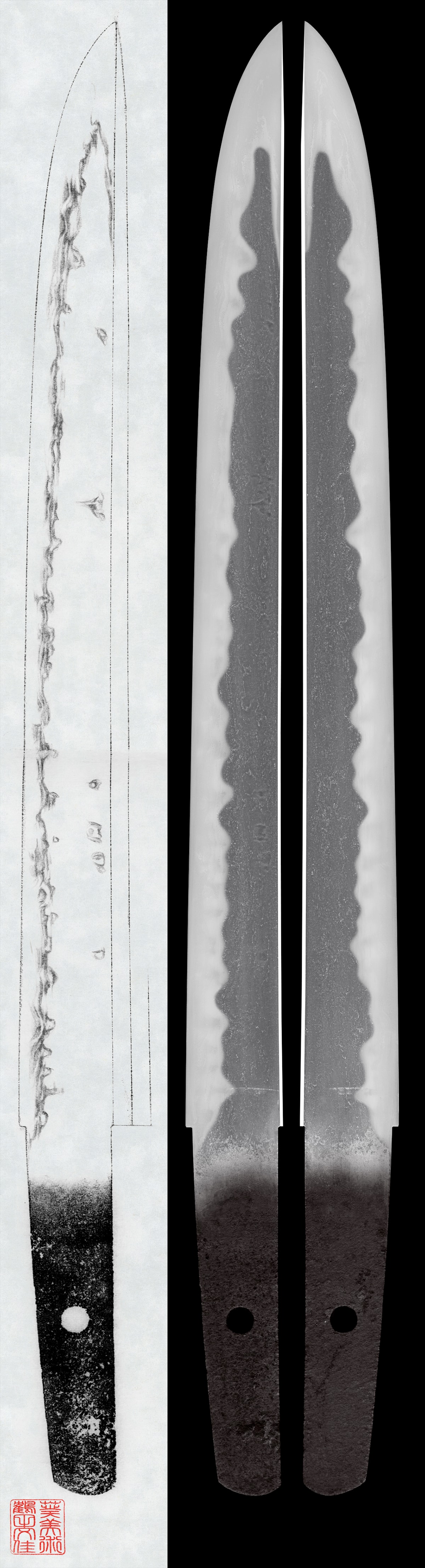
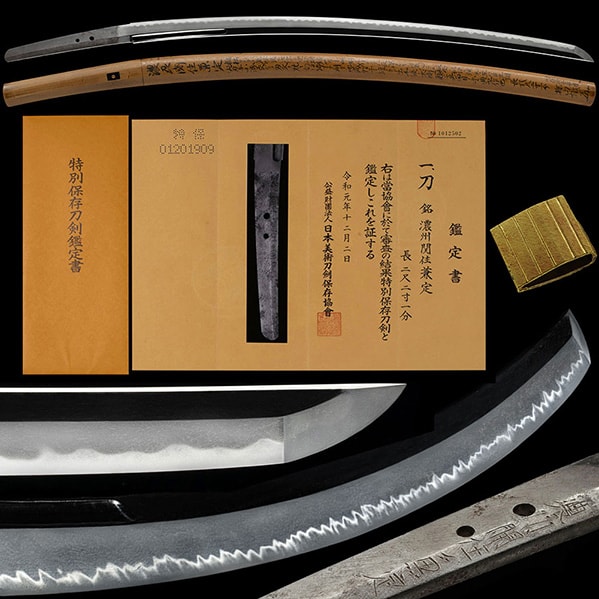
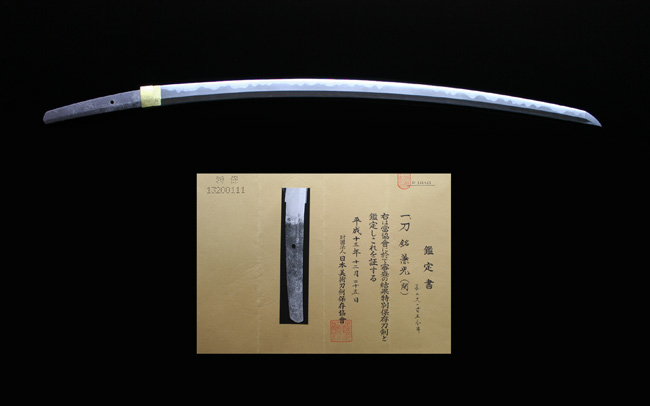
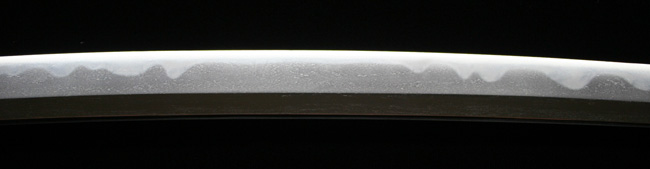
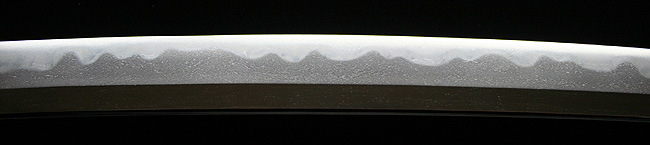
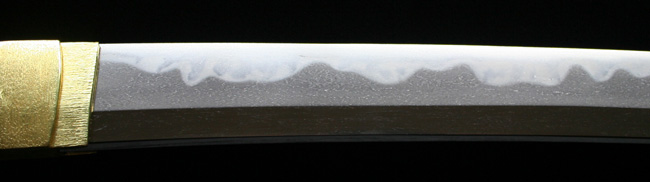
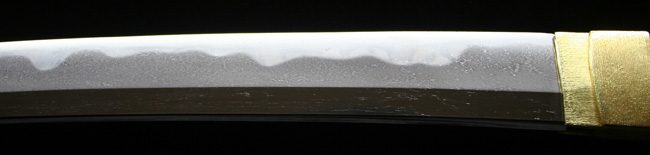
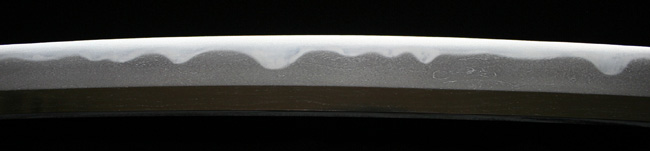
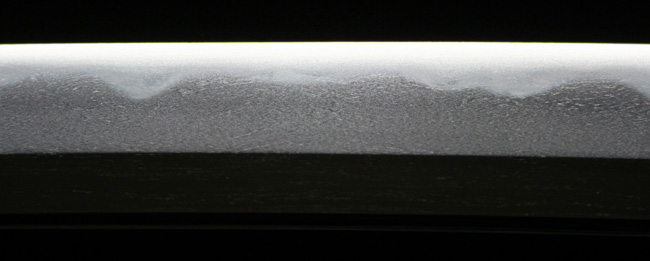
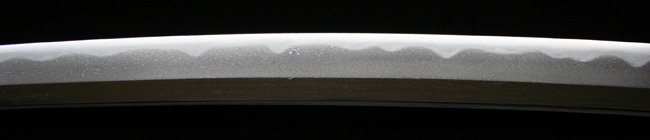
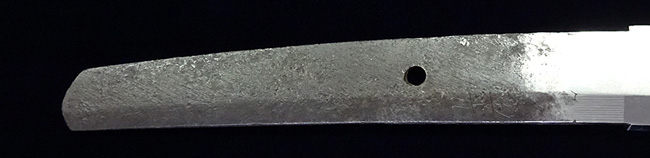
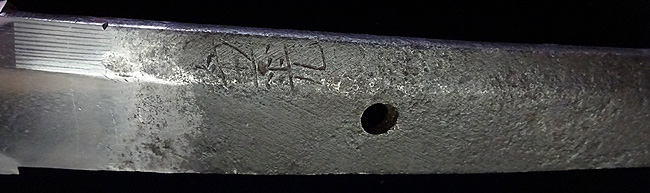
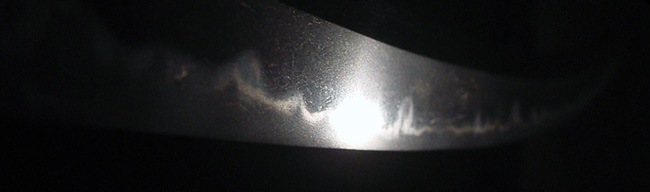
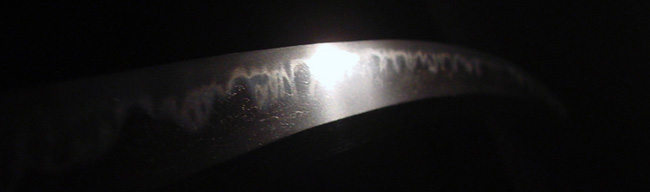
This is a katana by Kanemitsu from the Seki school, dating to the mid-Muromachi period (circa 1550). It has a Tokubetsu Hozon certificate from the NBTHK. The blade is described as being in the style of a "one-handed" katana, with a wide body, deep sori, and a striking hamon featuring a mix of gunome, choji, and togari elements.
 NihontoWatchBETA
mei · Kakitsu (1441-1444) · nagasa 65.4cm · sori 2.6cm


Mino-den · Mino
145 pieces on the market now
Seki (関), in Mino Province, grew from two roots set down in the Nanbokuchō period and rose to become the great center of mass sword production in the late medieval age. Learn more →
| Smith | Era | Designated |
|---|---|---|
| Kinju金重 | 1340-1346 | 45 |
| Ujifusa氏房 | 1596-1615 | 16 |
| Kaneyuki金行 | 1350-1352 | 10 |
| Ujifusa氏房 | 1571-1592 | 9 |
| Kanekore兼之 | 1504-1555 | 7 |
A Hozon-certified blade judged to show notably superior workmanship and a better state of preservation. The bar is higher: re-tempered blades and most unsigned Muromachi/Edo works are excluded.
The NBTHK (Nihon Bijutsu Tōken Hozon Kyōkai, the Society for the Preservation of Japanese Art Swords) is a public-interest incorporated foundation founded in 1948 and supervised by Japan’s Agency for Cultural Affairs (Bunkachō); it is based at the Japanese Sword Museum in Tokyo. Its expert panels physically examine each submitted work (shinsa) and issue a certificate (kanteishō) ranking it by artistic and historical merit. NBTHK papers are the most widely recognized standard of authentication for Japanese swords and fittings.
NBTHK official siteWe accept returns within 3 days counted from the item's arrival date. Items that have been altered cannot be handled. Return shipping is the customer's responsibility. If the destination is overseas, returns are as a rule not possible.
This is a katana by Kanemitsu from the Seki school, dating to the mid-Muromachi period (circa 1550). It has a Tokubetsu Hozon certificate from the NBTHK. The blade is described as being in the style of a "one-handed" katana, with a wide body, deep sori, and a striking hamon featuring a mix of gunome, choji, and togari elements.
NihontoWatchBETAmei · Kakitsu (1441-1444) · nagasa 65.4cm · sori 2.6cm
Mino-den · Mino
145 pieces on the market now
Seki (関), in Mino Province, grew from two roots set down in the Nanbokuchō period and rose to become the great center of mass sword production in the late medieval age. Learn more →
| Smith | Era | Designated |
|---|---|---|
| Kinju金重 | 1340-1346 | 45 |
| Ujifusa氏房 | 1596-1615 | 16 |
| Kaneyuki金行 | 1350-1352 | 10 |
| Ujifusa氏房 | 1571-1592 | 9 |
| Kanekore兼之 | 1504-1555 | 7 |
A Hozon-certified blade judged to show notably superior workmanship and a better state of preservation. The bar is higher: re-tempered blades and most unsigned Muromachi/Edo works are excluded.
The NBTHK (Nihon Bijutsu Tōken Hozon Kyōkai, the Society for the Preservation of Japanese Art Swords) is a public-interest incorporated foundation founded in 1948 and supervised by Japan’s Agency for Cultural Affairs (Bunkachō); it is based at the Japanese Sword Museum in Tokyo. Its expert panels physically examine each submitted work (shinsa) and issue a certificate (kanteishō) ranking it by artistic and historical merit. NBTHK papers are the most widely recognized standard of authentication for Japanese swords and fittings.
NBTHK official siteWe accept returns within 3 days counted from the item's arrival date. Items that have been altered cannot be handled. Return shipping is the customer's responsibility. If the destination is overseas, returns are as a rule not possible.