Sixty years of war between two courts drove blades long and broad, and Osafune met the demand: Kanemitsu and Chōgi led forges serving the provincial warriors who did the fighting, while Sōshū influence arrived with the armies to create Sōden-Bizen.
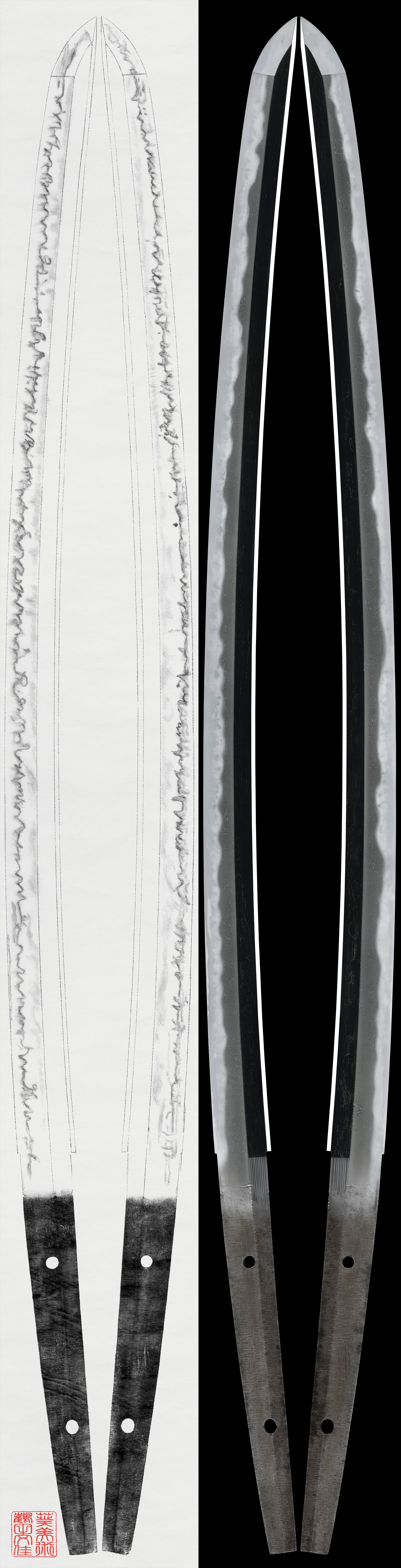
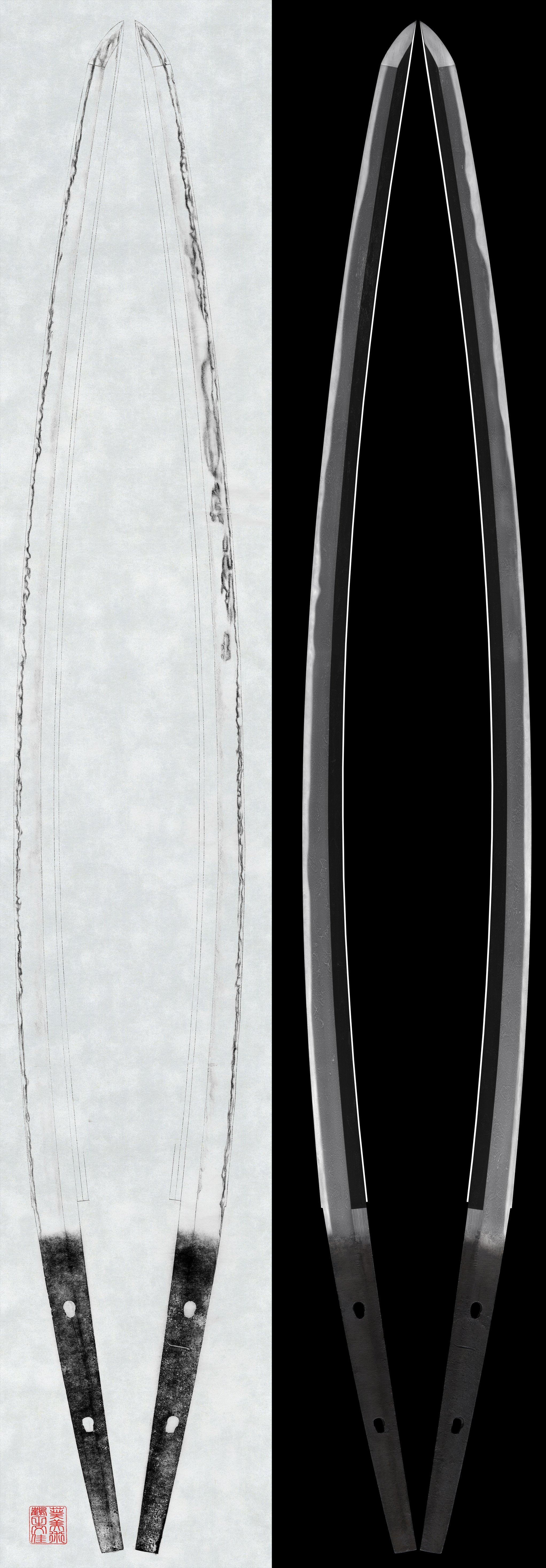
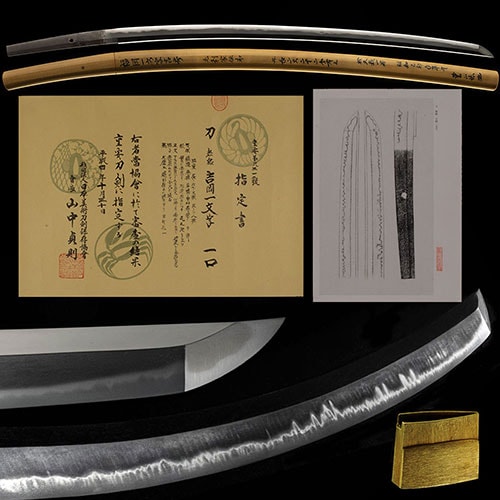
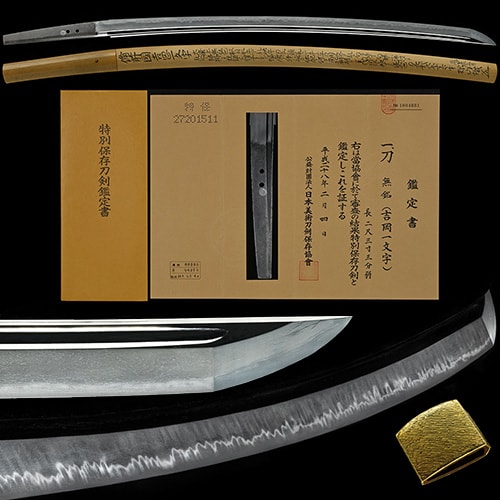
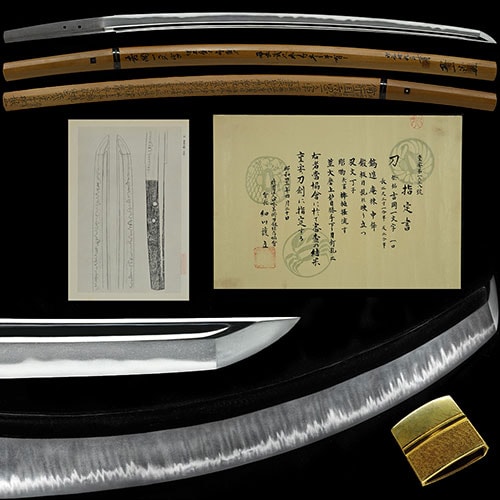
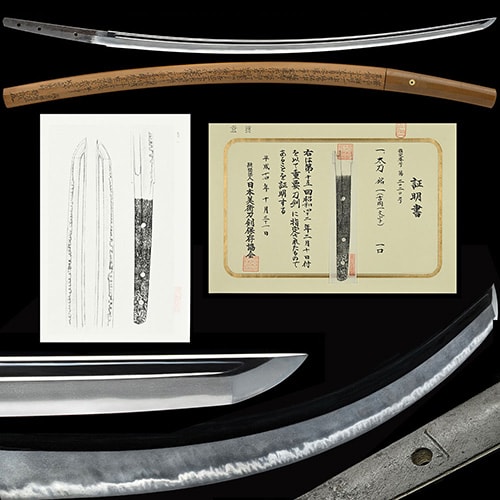
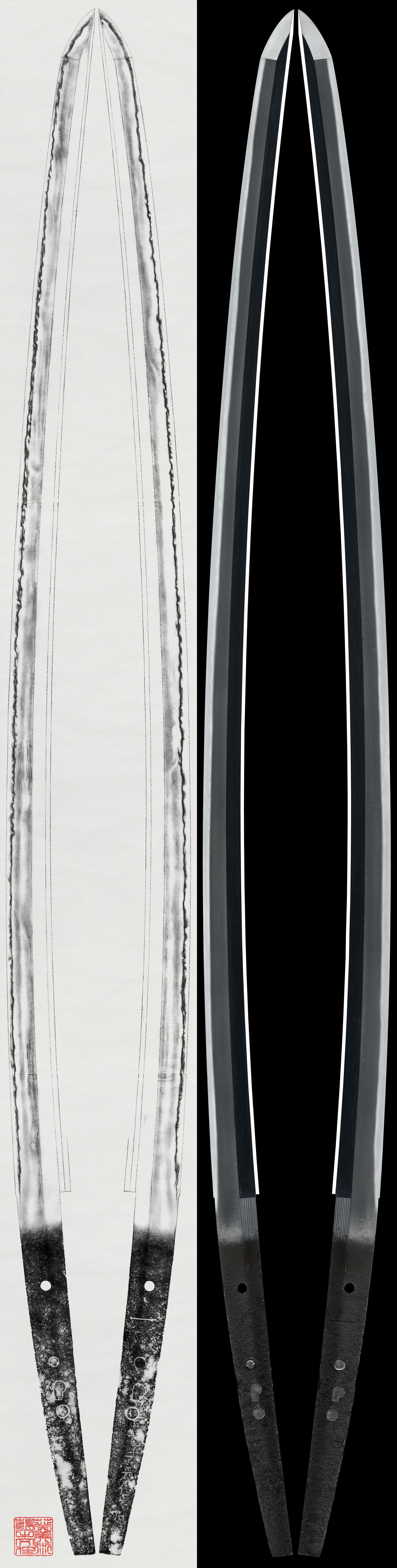
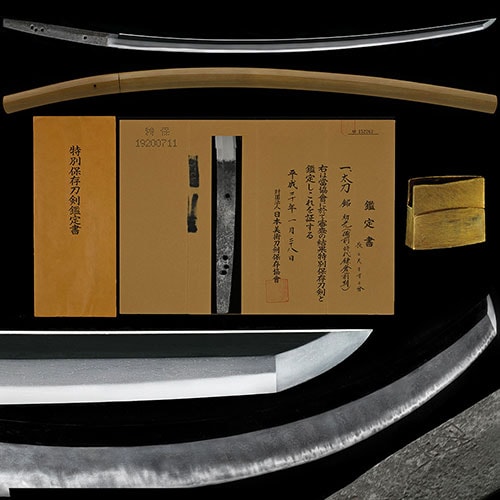
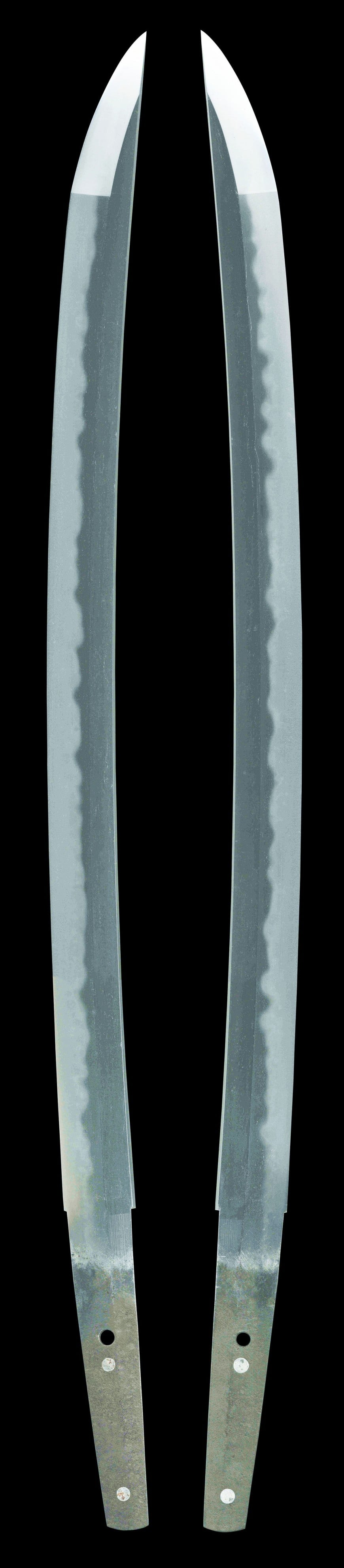
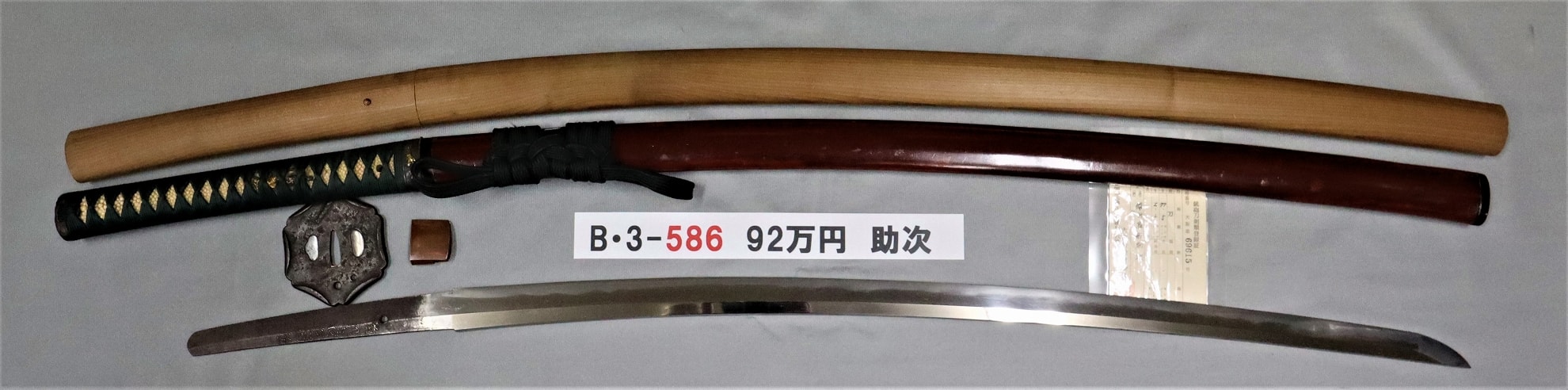
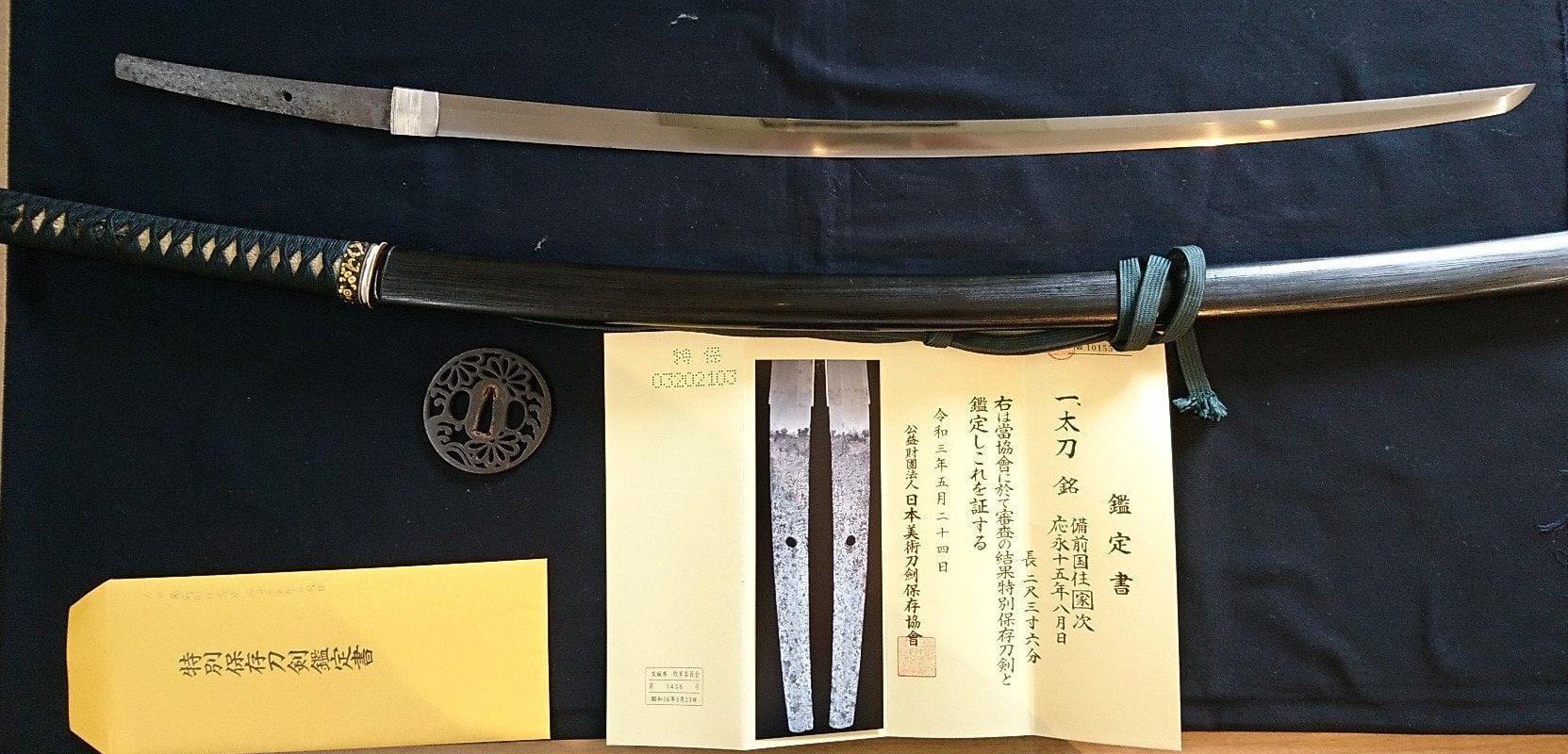
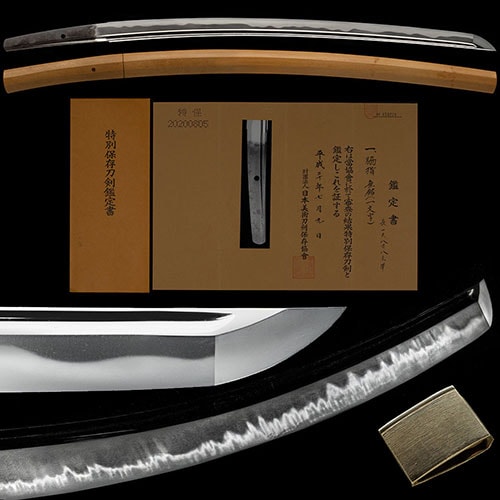
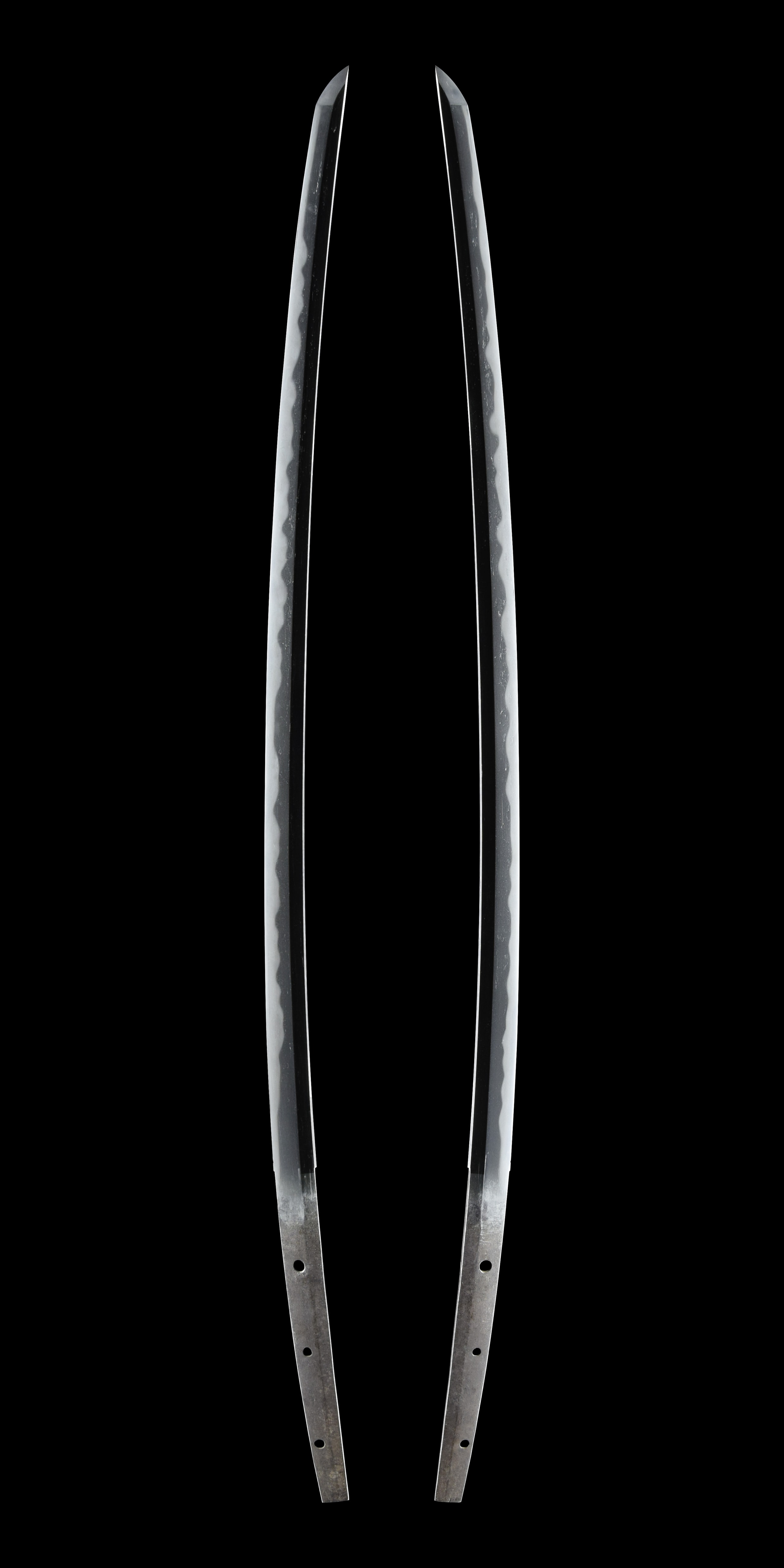
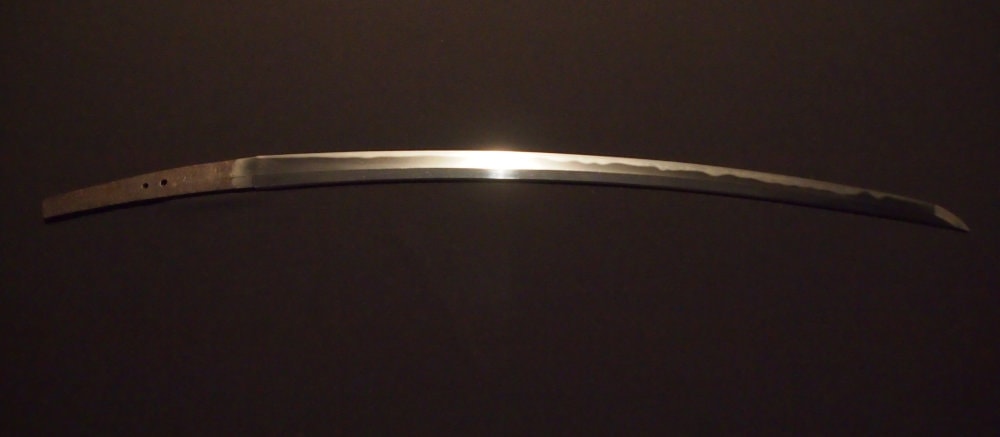
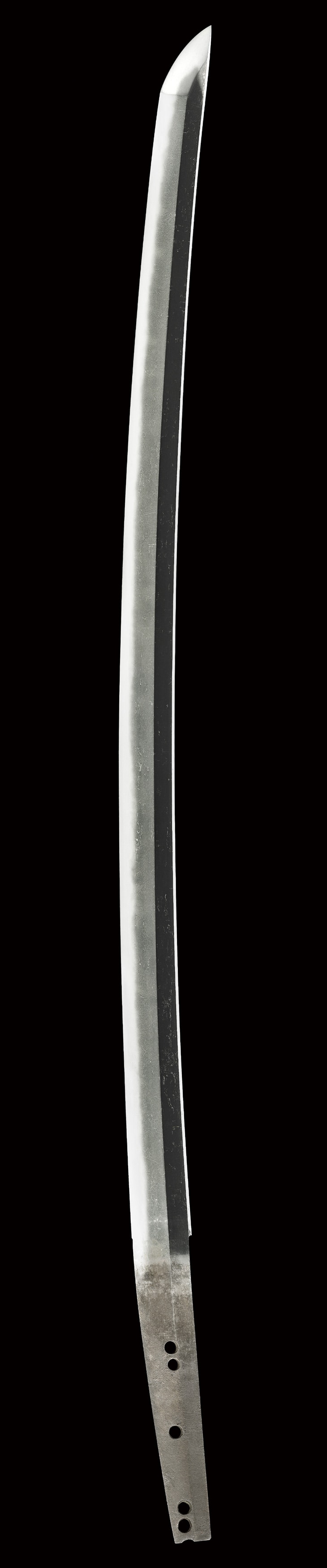
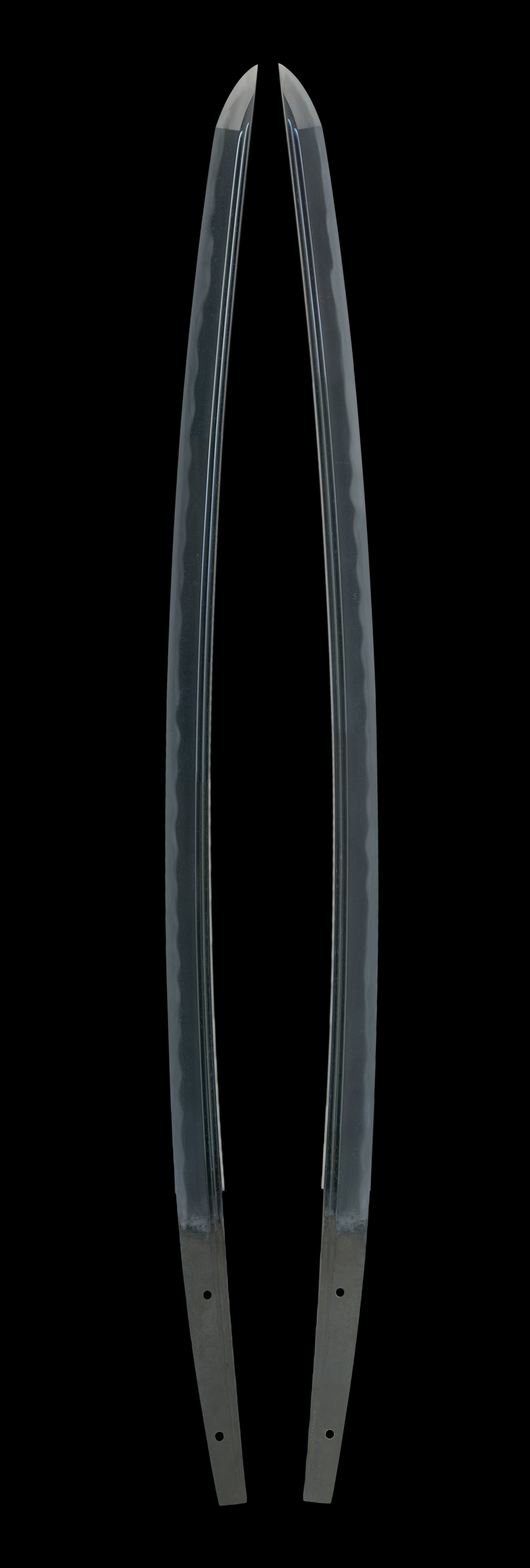
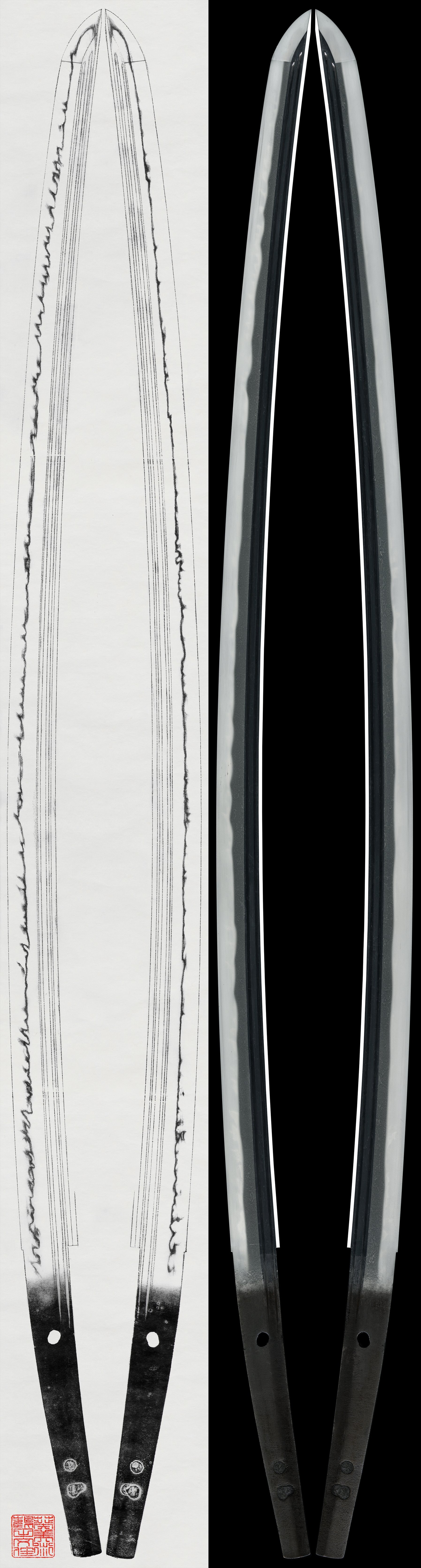
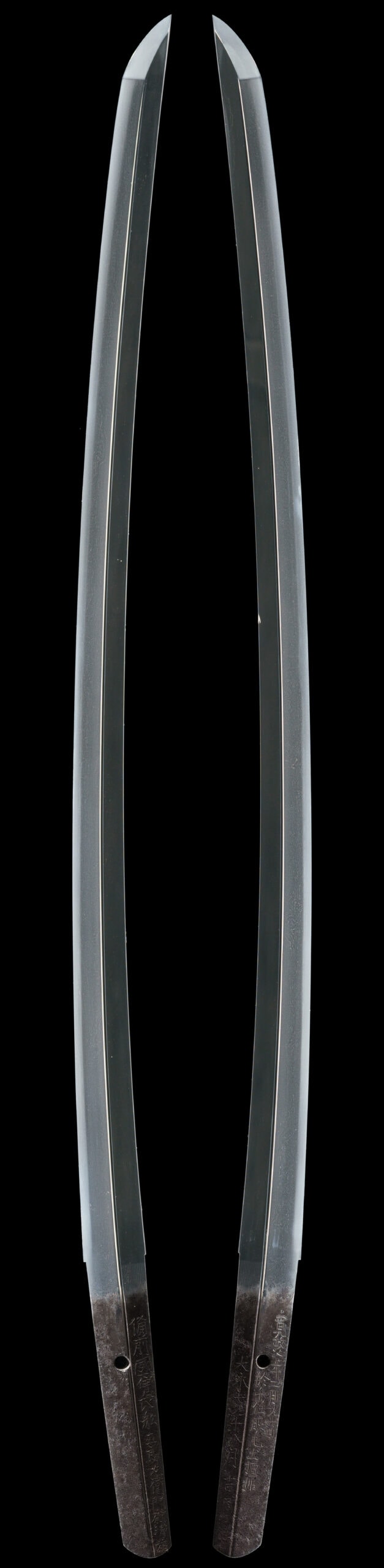
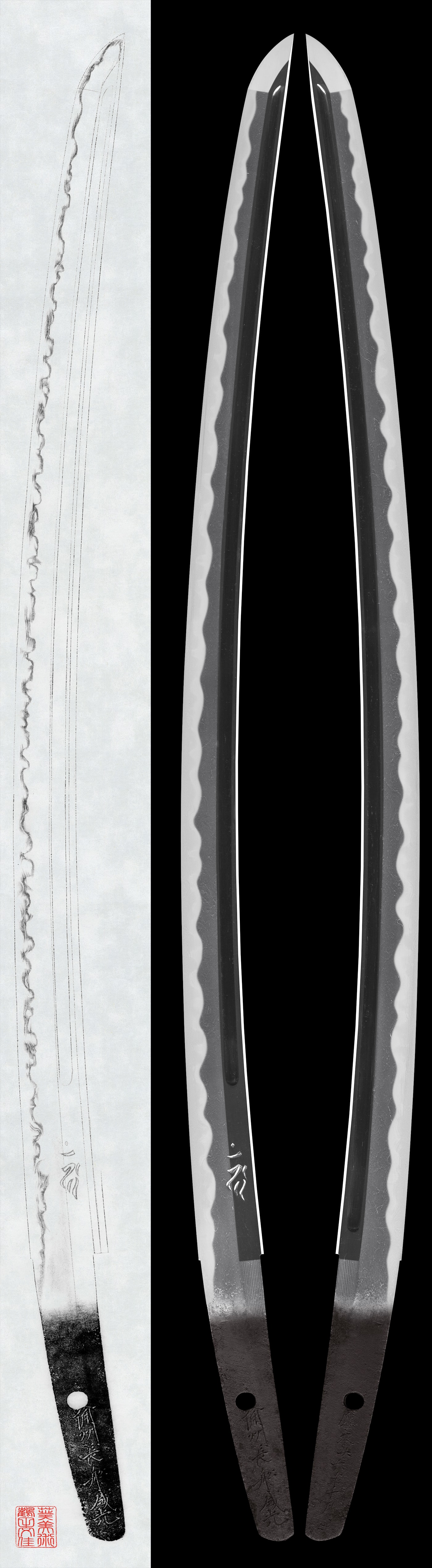
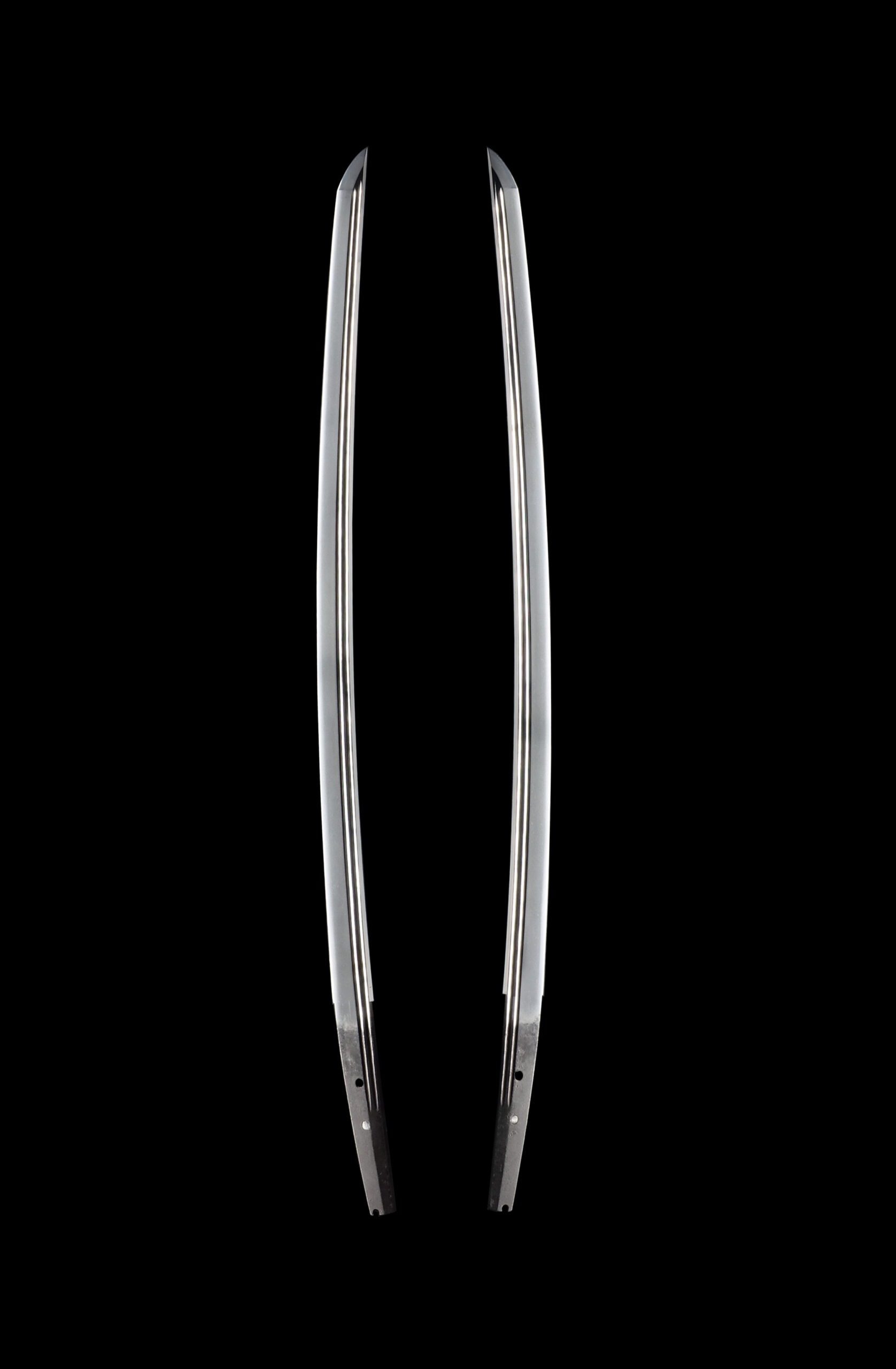
This katana is attributed to the Yoshioka Ichimonji school, active during the Nambokuchô period (early to mid-1300s). It features a vibrant ô-chôji-midare hamon in nioi-deki and a rich mokume-hada jihada with dramatic mune-yaki. The blade has been shortened twice from a long tachi and is presented in shirasaya, holding an NBTHK Tokubetsu Hozon certificate.
 NihontoWatch
mumei · Yoshioka Ichimonji · Kôtô – Early nambokuchô Period (circa 1333-1360) · nagasa 72.3cm · sori 1.1cm
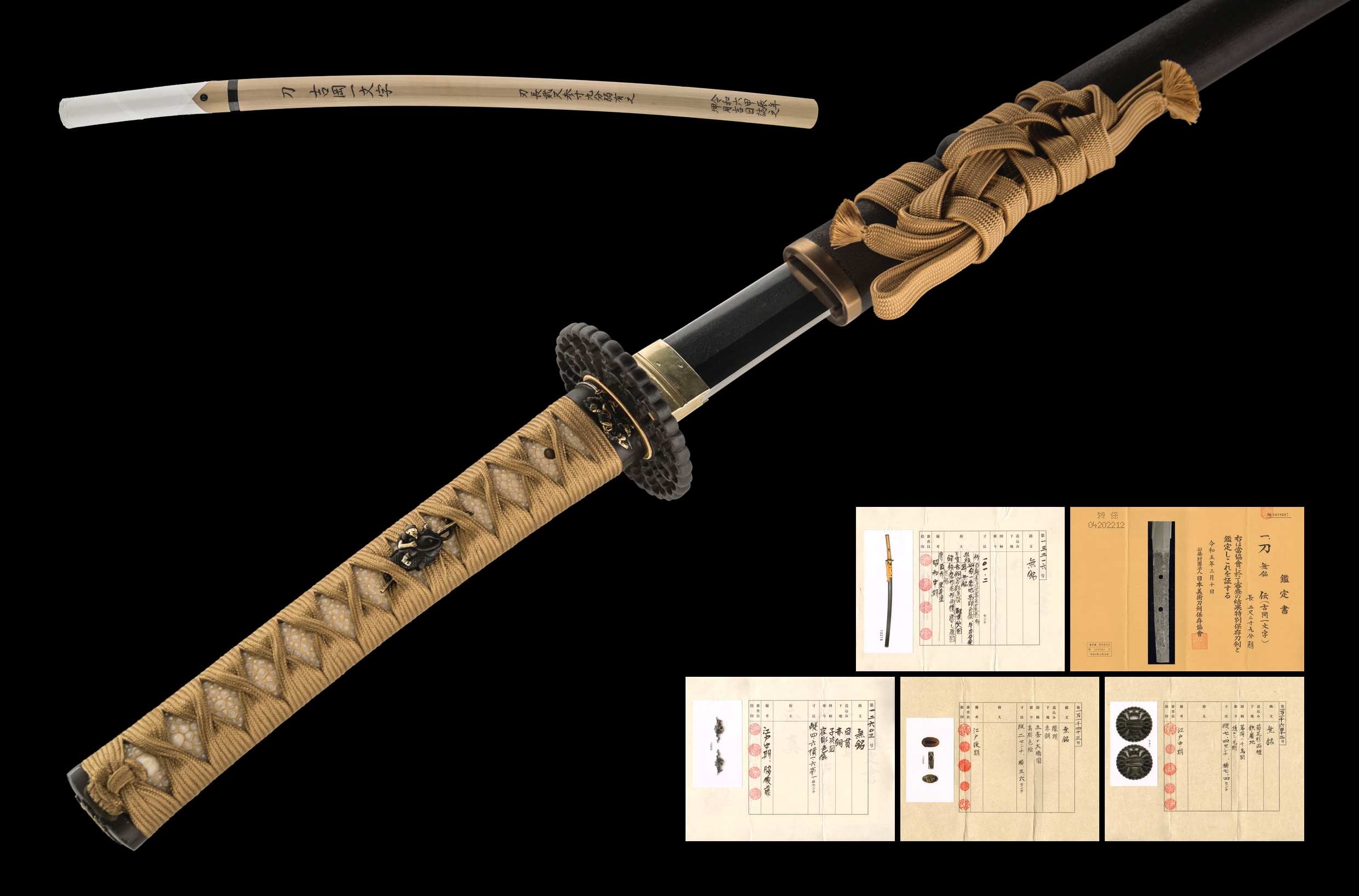
Bizen-den · Bizen
8 pieces on the market now
Working at Yoshioka in Bizen Province, this branch of the Ichimonji lineage arose toward the close of the Kamakura period (its dated works begin in the late thirteenth century) and carried the tradition forward into the Nanbokuchō era. It took shape as the successor to the Fukuoka Ichimonji once that earlier group had passed its apex, and the published sources rank it directly behind Fukuoka among the Ichimonji branches in both prosperity and quality. Its representative hands share the suke element in their names, the line led by Sukemitsu, who held the court title Sakon-no-shōgen and signed in full beneath the school's single character ichi (Bizen no Kuni Yoshioka-jū Sakon-no-shōgen Ki-no-Sukemitsu), together with Sukeyoshi, Sukeshige and Suketsugu. Several of these smiths left long signatures incorporating the Yoshioka residence, such as Bishū Yoshioka-jū Saemon-no-jō, and their dated blades run through the Einin, Genkō, Ryakuō, Jōwa (Sadawa) and Shōhei eras, a span reaching to the 1360s. Where Fukuoka built its name on towering, large-pattern chōji-midare, the Yoshioka hand turns to a calmer and more closely worked line, and the Bizen-den it practices is distinctly the more regular of the two. The fundamental Yoshioka manner sets a suguha-toned edge into which ko-chōji and ko-gunome intermingle, the chōji smaller and more subdued, and a marked tendency for gunome to stand out within the midare, at times inclining in reverse (saka-gakari) or compacting (kozumu) toward the monouchi, a leaning toward the Osafune manner of the period.
The ground is a well-forged itame, often tightening into ko-itame and mixed with mokume or nagare, carrying ji-nie and chikei under a clear midare-utsuri that stands across signed and attributed blades alike; the nioiguchi is bright and nioi-dominant with ko-nie, the temper carried in ashi and yō with fine kinsuji and sunagashi, and a bō-hi is commonly carved through. A rarer and more flamboyant face survives in certain works, a high chōji-midare mixing gunome and togariba with fine tobiyaki, which at a glance can be mistaken for Fukuoka; the published commentary holds the school apart from its parent by scale rather than by kind, the typical Yoshioka work being the more modest, gunome-marked line over the bright Yoshioka jigane. To kantei a Yoshioka Ichimonji blade is to read this division: the bright midare-utsuri and the small, gunome-inflected chōji over a refined ko-itame are the school's signature, the temper subdued and regular against Fukuoka's grander clove-flower, with the reverse-slanting and compacted passages serving as recognition points. Among the members Sukemitsu sets the standard, his dated and signed tachi the fixed reference against which the mumei attributions are measured, the published sources appraising his finest den mumei katana a superior work of the school[[c:1]]; Sukeyoshi, Sukeshige and the others fill out the recognized roster, several documented through long signatures and dated inscriptions, with a rare kanmuri-otoshi-zukuri tantō dated Gentoku 3 (1331) attesting to a breadth of form unusual for Bizen of the era. Signed Yoshioka works with reliable inscriptions are few, and dated ubu examples are valued as documentary anchors for the school's chronology; provenance runs through the great houses, with works transmitted via the Maeda of Kaga, the Honami appraisers and institutions such as the Tokugawa Art Museum. A signed Yoshioka Ichimonji blade coming to light remains a landmark, a record of how the Yoshioka kept the Ichimonji manner alive into the close of the Kamakura age and across the Nanbokuchō divide. Learn more →
| Smith | Era | Designated |
|---|---|---|
| Sukemitsu助光 | 1299-1302 | 7 |
| Ichi一 | 1288-1293 | 3 |
| Sukeyoshi助吉 | 1303-1306 | 3 |
| Kageyasu景泰 | 1326-1329 | 0 |
| Kagehide景秀 | 1329-1331 | 0 |
Bizen in the Nanbokuchō period
Sixty years of war between two courts drove blades long and broad, and Osafune met the demand: Kanemitsu and Chōgi led forges serving the provincial warriors who did the fighting, while Sōshū influence arrived with the armies to create Sōden-Bizen.
A Hozon-certified blade judged to show notably superior workmanship and a better state of preservation. The bar is higher: re-tempered blades and most unsigned Muromachi/Edo works are excluded.
The NBTHK (Nihon Bijutsu Tōken Hozon Kyōkai, the Society for the Preservation of Japanese Art Swords) is a public-interest incorporated foundation founded in 1948 and supervised by Japan’s Agency for Cultural Affairs (Bunkachō); it is based at the Japanese Sword Museum in Tokyo. Its expert panels physically examine each submitted work (shinsa) and issue a certificate (kanteishō) ranking it by artistic and historical merit. NBTHK papers are the most widely recognized standard of authentication for Japanese swords and fittings.
NBTHK official siteAll swords come with a three-day inspection period beginning from the date of delivery. If not satisfied, the sword may be returned within this period for a full refund of the purchase price. Outside of this period, all sales are final. Swords purchased on a layaway payment plan are not eligible for the three-day inspection period.

This katana is attributed to the Yoshioka Ichimonji school, active during the Nambokuchô period (early to mid-1300s). It features a vibrant ô-chôji-midare hamon in nioi-deki and a rich mokume-hada jihada with dramatic mune-yaki. The blade has been shortened twice from a long tachi and is presented in shirasaya, holding an NBTHK Tokubetsu Hozon certificate.
NihontoWatchmumei · Yoshioka Ichimonji · Kôtô – Early nambokuchô Period (circa 1333-1360) · nagasa 72.3cm · sori 1.1cm
Bizen-den · Bizen
8 pieces on the market now
Working at Yoshioka in Bizen Province, this branch of the Ichimonji lineage arose toward the close of the Kamakura period (its dated works begin in the late thirteenth century) and carried the tradition forward into the Nanbokuchō era. It took shape as the successor to the Fukuoka Ichimonji once that earlier group had passed its apex, and the published sources rank it directly behind Fukuoka among the Ichimonji branches in both prosperity and quality. Its representative hands share the suke element in their names, the line led by Sukemitsu, who held the court title Sakon-no-shōgen and signed in full beneath the school's single character ichi (Bizen no Kuni Yoshioka-jū Sakon-no-shōgen Ki-no-Sukemitsu), together with Sukeyoshi, Sukeshige and Suketsugu. Several of these smiths left long signatures incorporating the Yoshioka residence, such as Bishū Yoshioka-jū Saemon-no-jō, and their dated blades run through the Einin, Genkō, Ryakuō, Jōwa (Sadawa) and Shōhei eras, a span reaching to the 1360s. Where Fukuoka built its name on towering, large-pattern chōji-midare, the Yoshioka hand turns to a calmer and more closely worked line, and the Bizen-den it practices is distinctly the more regular of the two. The fundamental Yoshioka manner sets a suguha-toned edge into which ko-chōji and ko-gunome intermingle, the chōji smaller and more subdued, and a marked tendency for gunome to stand out within the midare, at times inclining in reverse (saka-gakari) or compacting (kozumu) toward the monouchi, a leaning toward the Osafune manner of the period.
The ground is a well-forged itame, often tightening into ko-itame and mixed with mokume or nagare, carrying ji-nie and chikei under a clear midare-utsuri that stands across signed and attributed blades alike; the nioiguchi is bright and nioi-dominant with ko-nie, the temper carried in ashi and yō with fine kinsuji and sunagashi, and a bō-hi is commonly carved through. A rarer and more flamboyant face survives in certain works, a high chōji-midare mixing gunome and togariba with fine tobiyaki, which at a glance can be mistaken for Fukuoka; the published commentary holds the school apart from its parent by scale rather than by kind, the typical Yoshioka work being the more modest, gunome-marked line over the bright Yoshioka jigane. To kantei a Yoshioka Ichimonji blade is to read this division: the bright midare-utsuri and the small, gunome-inflected chōji over a refined ko-itame are the school's signature, the temper subdued and regular against Fukuoka's grander clove-flower, with the reverse-slanting and compacted passages serving as recognition points. Among the members Sukemitsu sets the standard, his dated and signed tachi the fixed reference against which the mumei attributions are measured, the published sources appraising his finest den mumei katana a superior work of the school[[c:1]]; Sukeyoshi, Sukeshige and the others fill out the recognized roster, several documented through long signatures and dated inscriptions, with a rare kanmuri-otoshi-zukuri tantō dated Gentoku 3 (1331) attesting to a breadth of form unusual for Bizen of the era. Signed Yoshioka works with reliable inscriptions are few, and dated ubu examples are valued as documentary anchors for the school's chronology; provenance runs through the great houses, with works transmitted via the Maeda of Kaga, the Honami appraisers and institutions such as the Tokugawa Art Museum. A signed Yoshioka Ichimonji blade coming to light remains a landmark, a record of how the Yoshioka kept the Ichimonji manner alive into the close of the Kamakura age and across the Nanbokuchō divide. Learn more →
| Smith | Era | Designated |
|---|---|---|
| Sukemitsu助光 | 1299-1302 | 7 |
| Ichi一 | 1288-1293 | 3 |
| Sukeyoshi助吉 | 1303-1306 | 3 |
| Kageyasu景泰 | 1326-1329 | 0 |
| Kagehide景秀 | 1329-1331 | 0 |
Bizen in the Nanbokuchō period
Sixty years of war between two courts drove blades long and broad, and Osafune met the demand: Kanemitsu and Chōgi led forges serving the provincial warriors who did the fighting, while Sōshū influence arrived with the armies to create Sōden-Bizen.
A Hozon-certified blade judged to show notably superior workmanship and a better state of preservation. The bar is higher: re-tempered blades and most unsigned Muromachi/Edo works are excluded.
The NBTHK (Nihon Bijutsu Tōken Hozon Kyōkai, the Society for the Preservation of Japanese Art Swords) is a public-interest incorporated foundation founded in 1948 and supervised by Japan’s Agency for Cultural Affairs (Bunkachō); it is based at the Japanese Sword Museum in Tokyo. Its expert panels physically examine each submitted work (shinsa) and issue a certificate (kanteishō) ranking it by artistic and historical merit. NBTHK papers are the most widely recognized standard of authentication for Japanese swords and fittings.
NBTHK official siteAll swords come with a three-day inspection period beginning from the date of delivery. If not satisfied, the sword may be returned within this period for a full refund of the purchase price. Outside of this period, all sales are final. Swords purchased on a layaway payment plan are not eligible for the three-day inspection period.