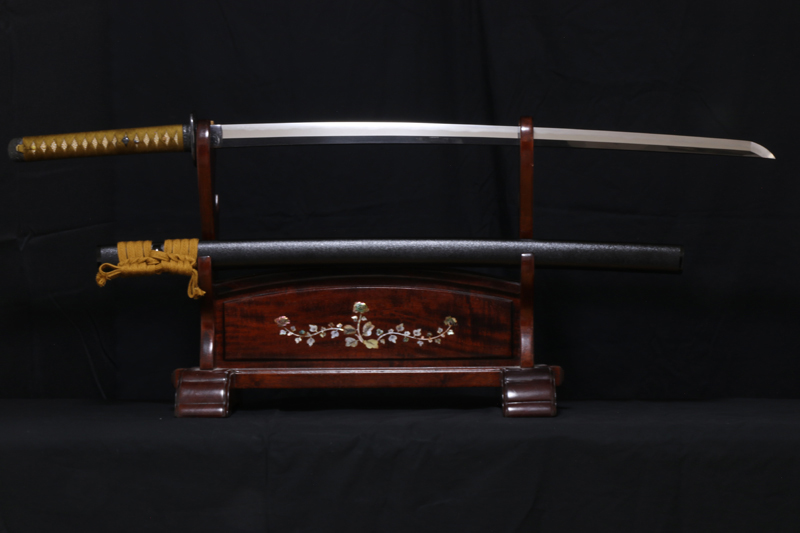
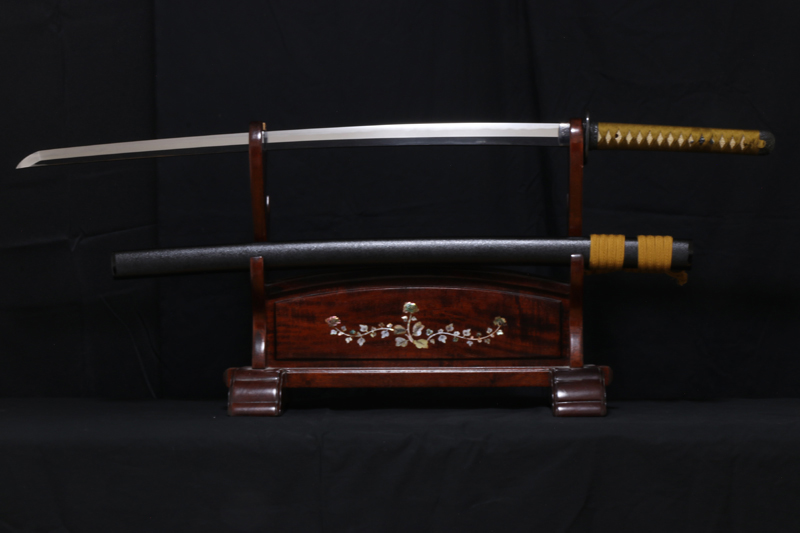
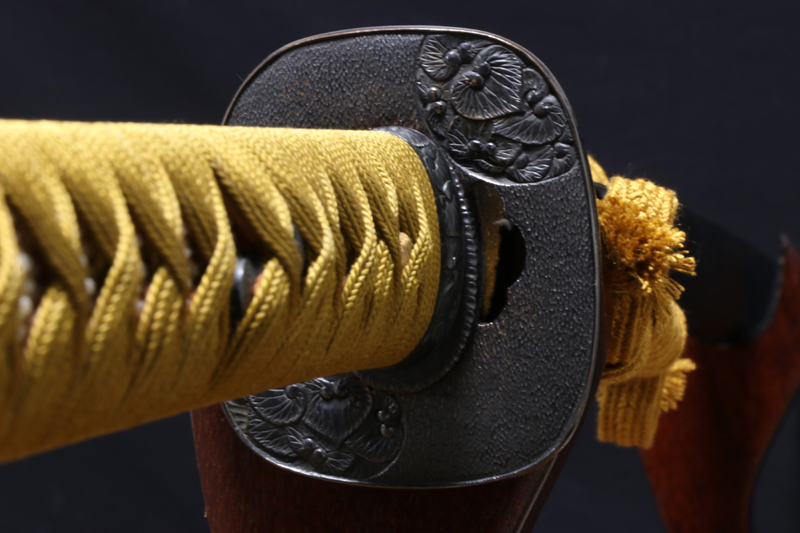
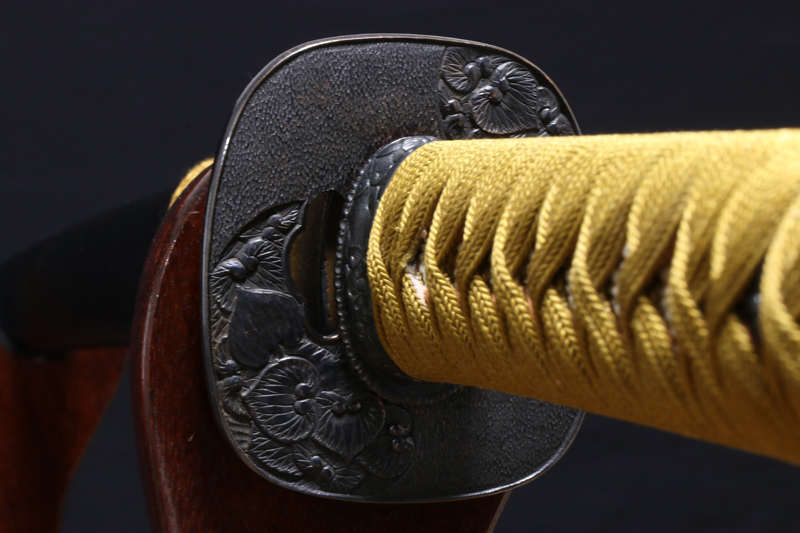
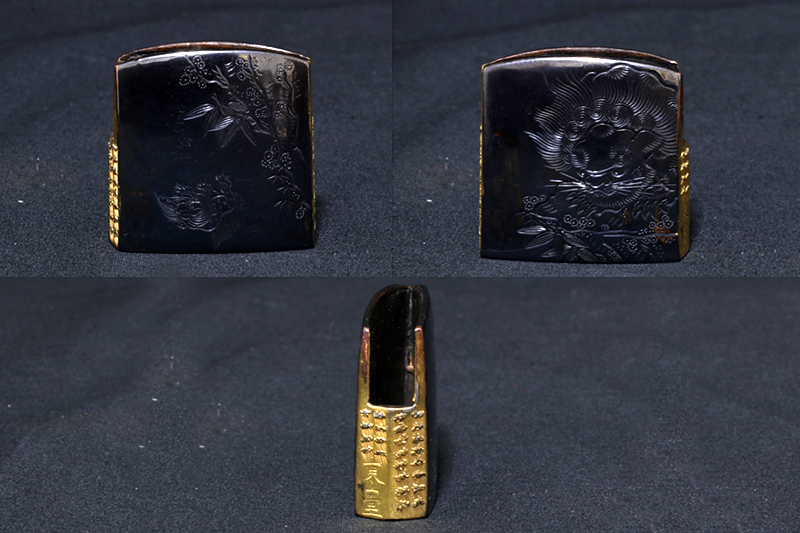
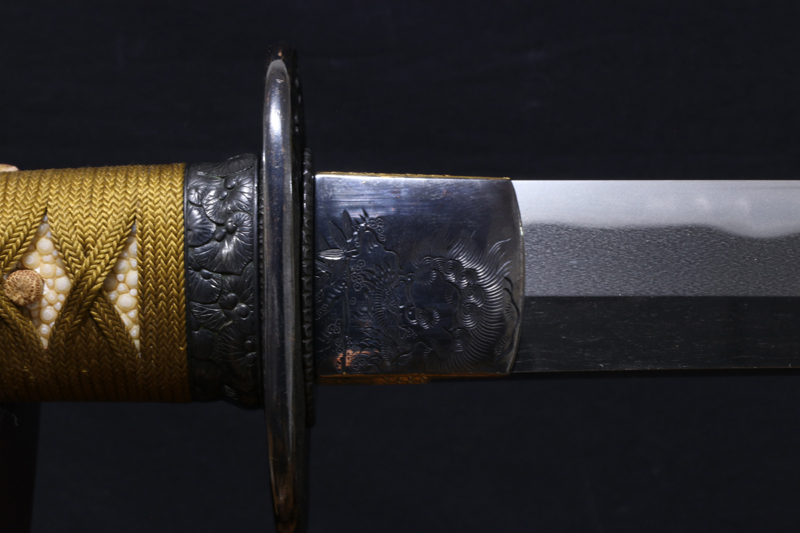
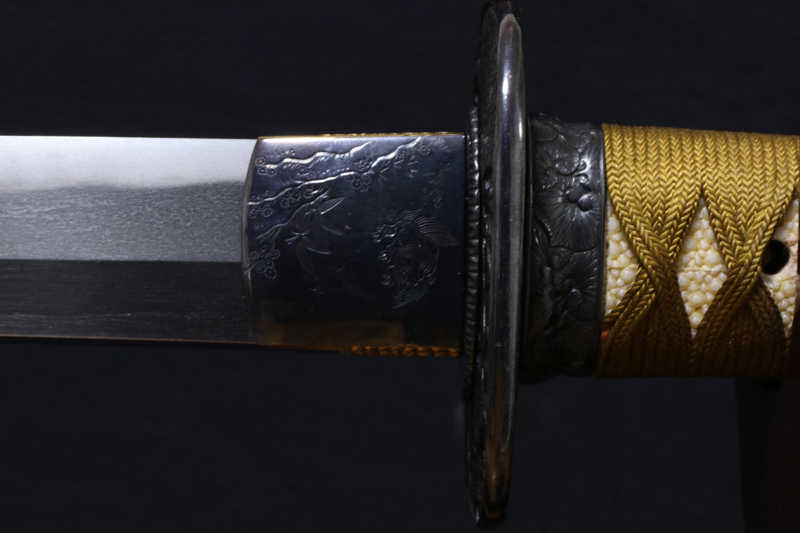
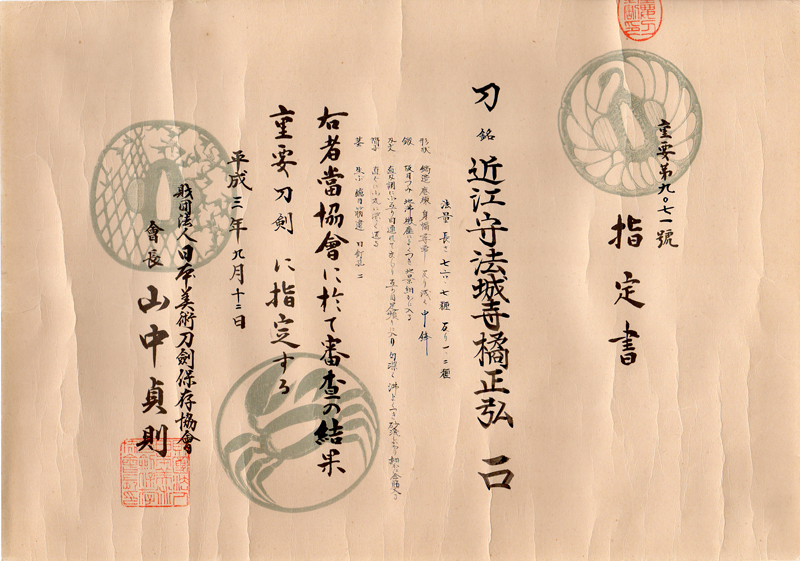
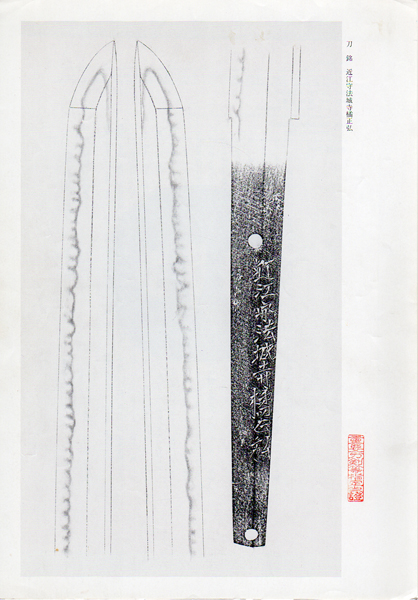
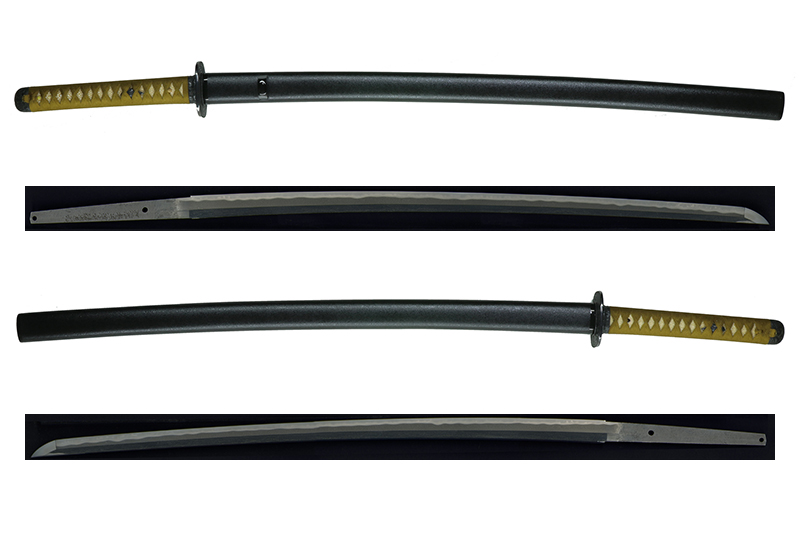
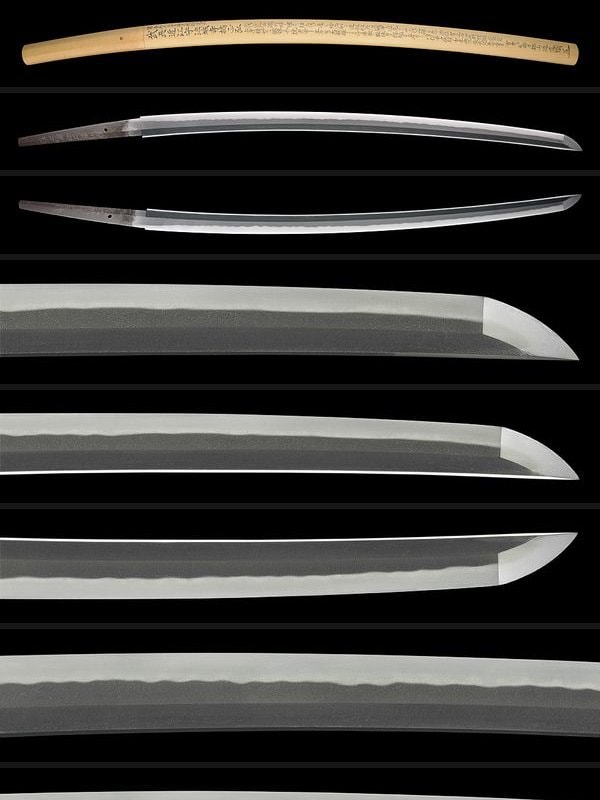
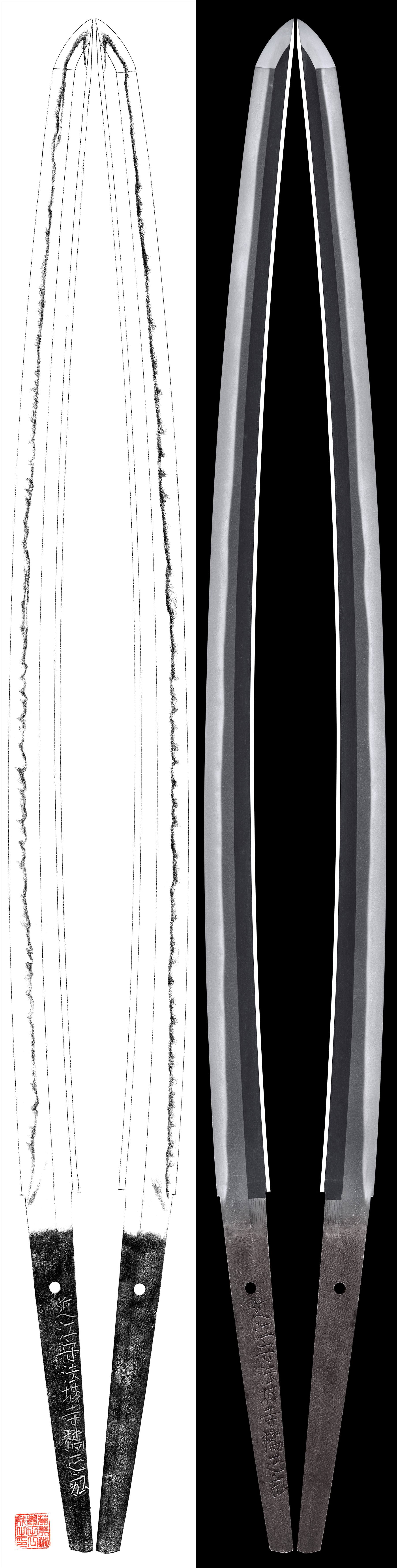
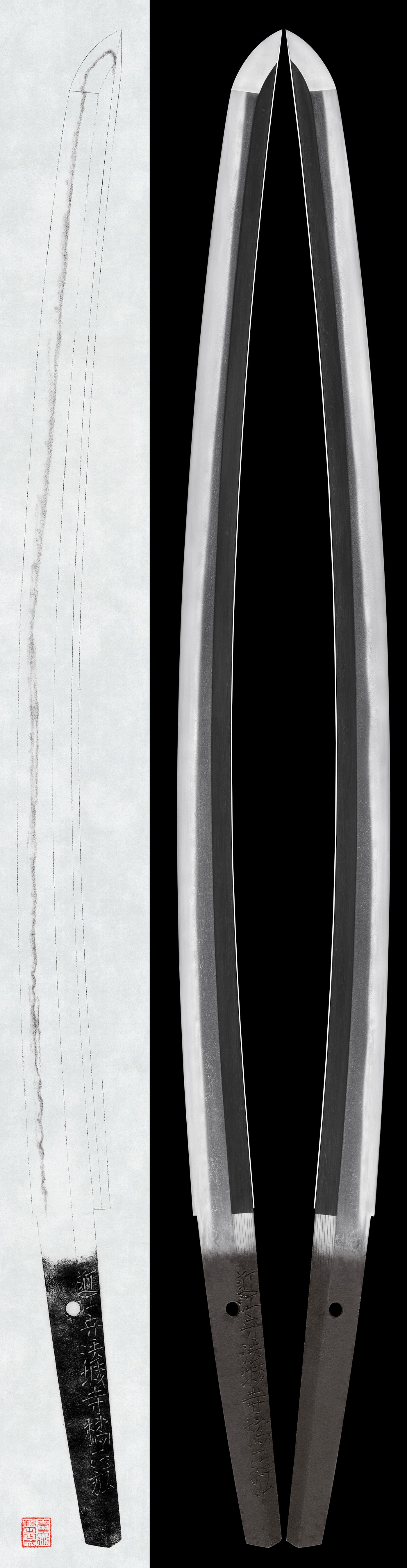
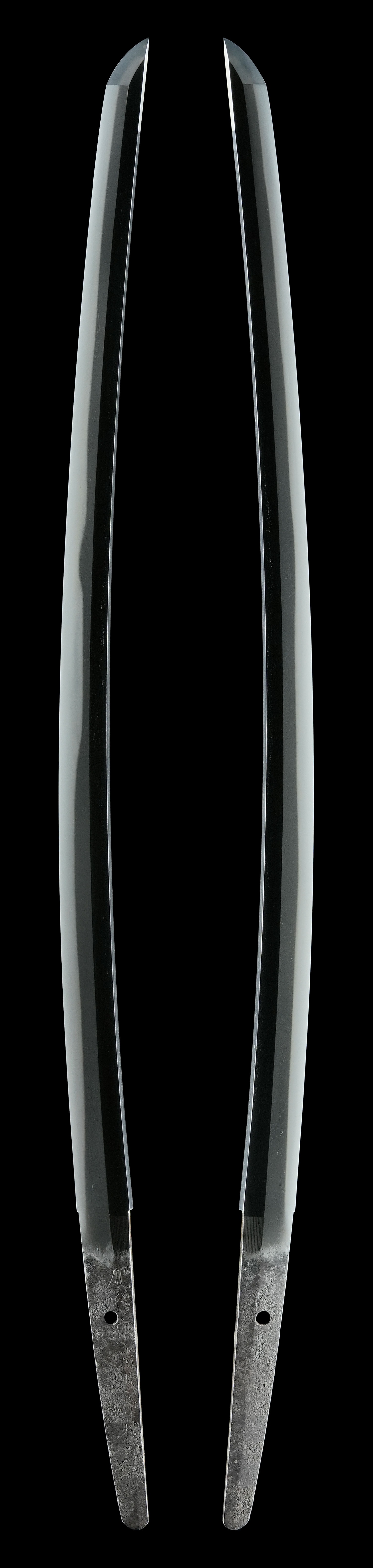
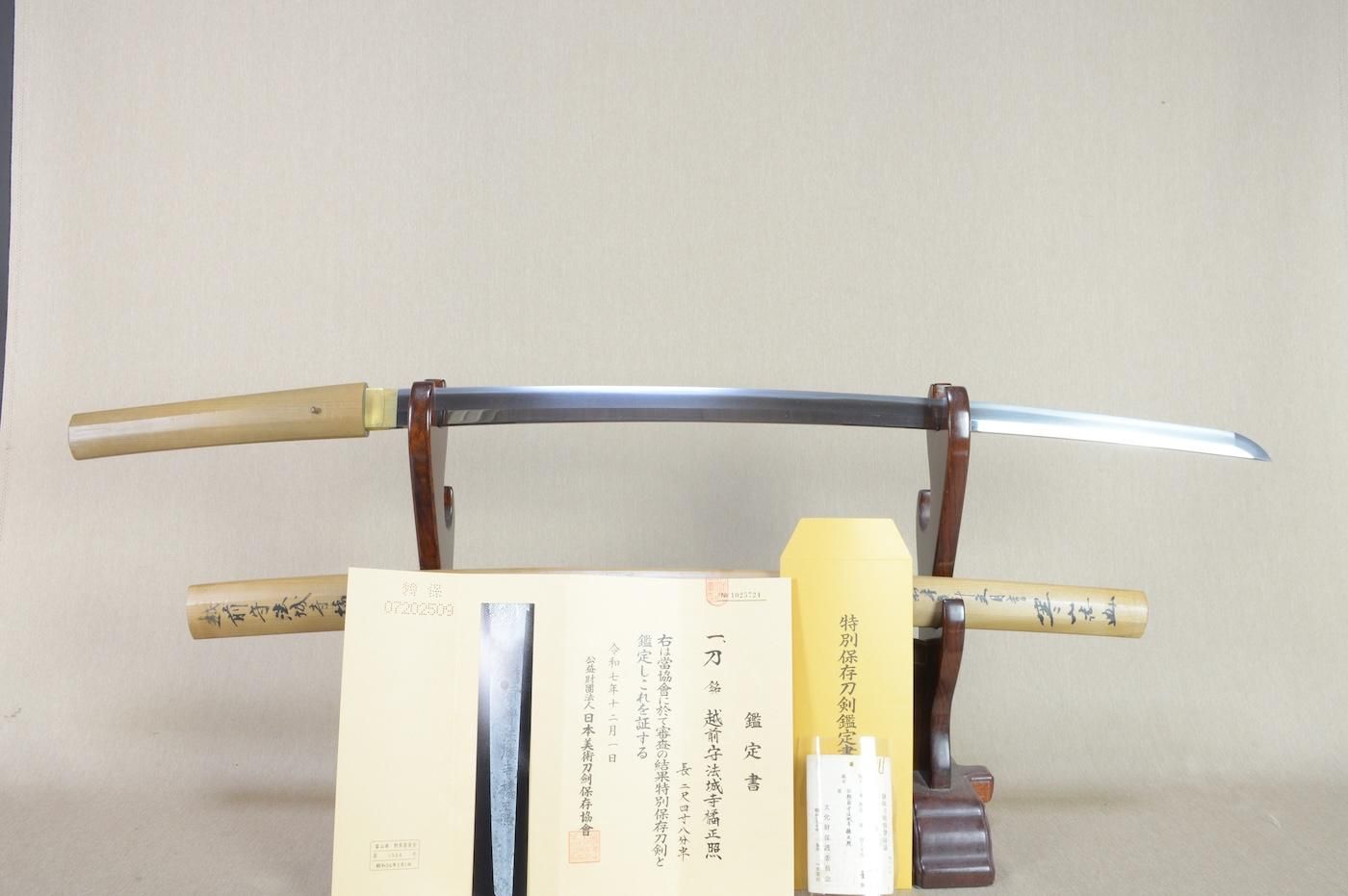
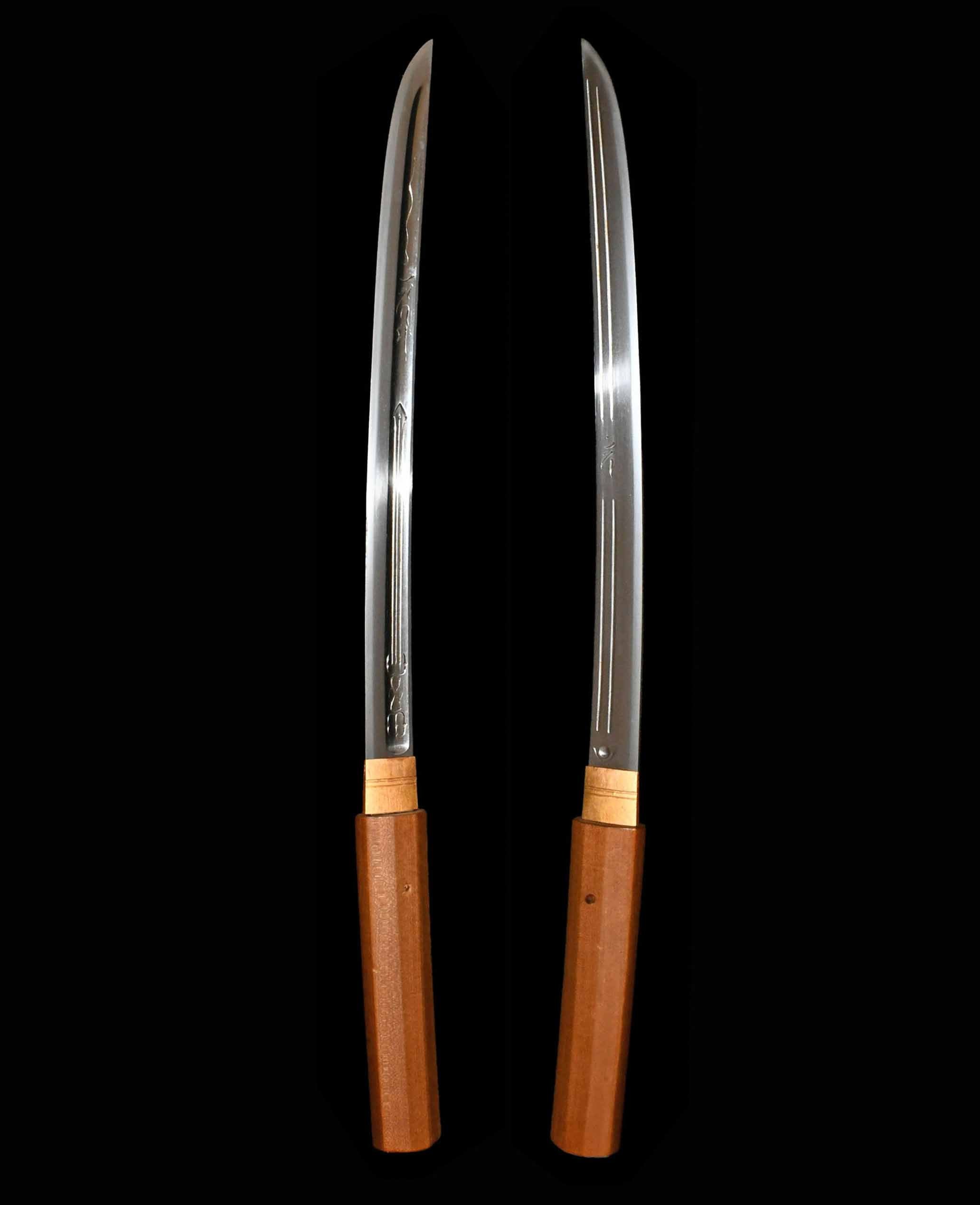
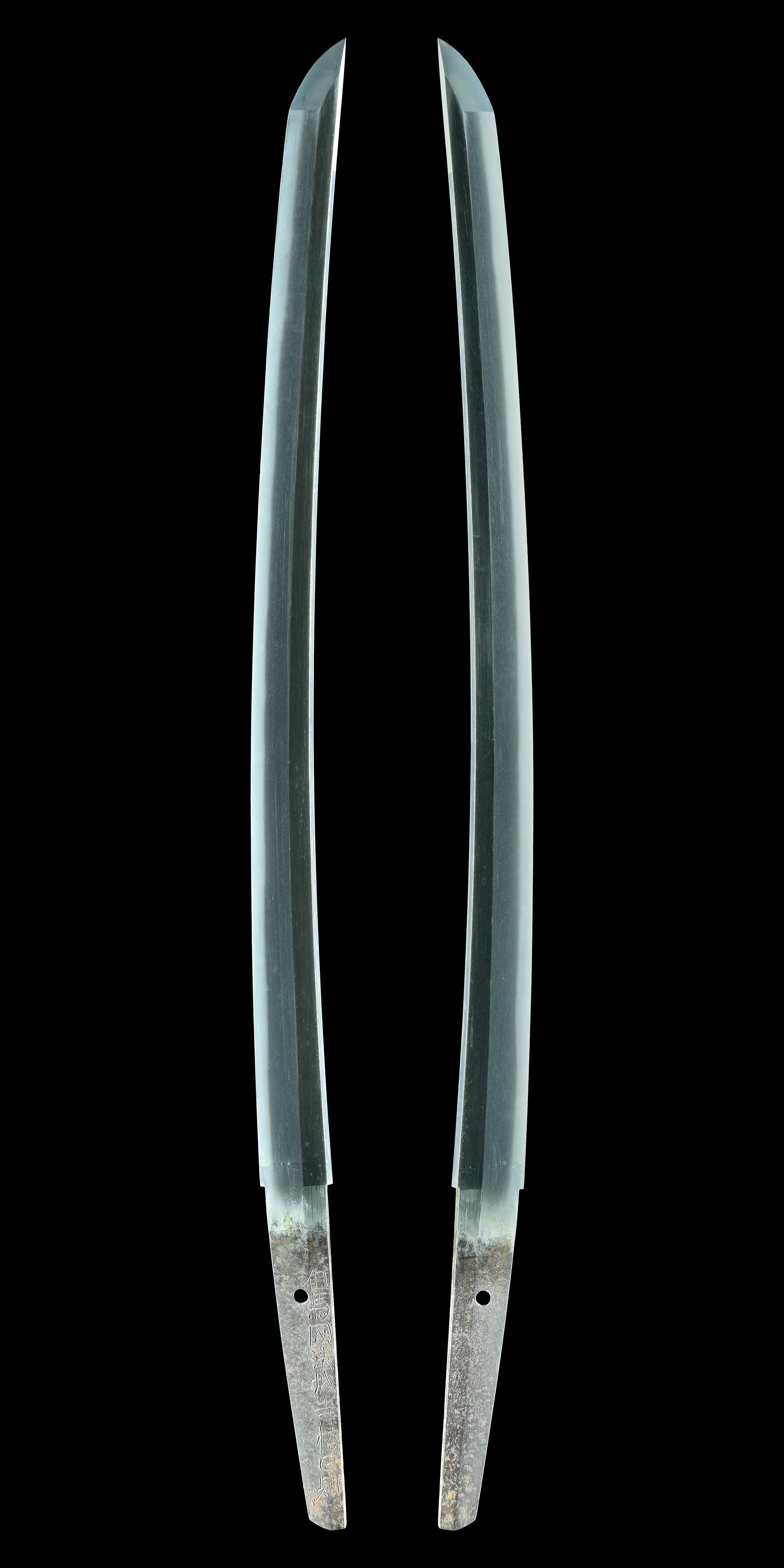
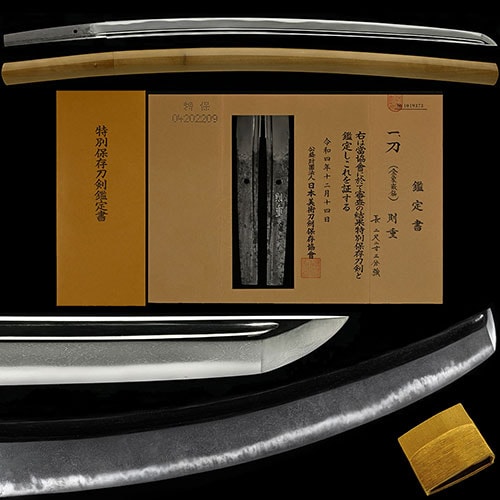
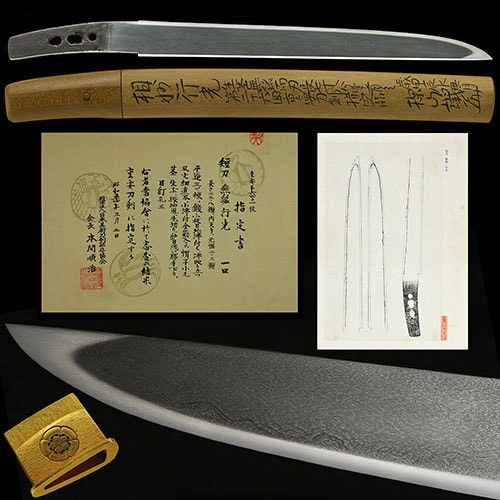
A katana dated Kanbun 6 (1666) and signed Ōmi no Kami Hōjōji Tachibana Masahiro carries on its reverse a gold-inlaid cutting-test inscription by Yamano Kanjūrō Hisahide recording a two-body test, and this pairing of a deep-nioi suguha blade with a Yamano severing record is the most concise portrait of the smith. Masahiro is the foremost hand of the Hōjōji group, a shintō line the published sources transmit as originally from Hōjōji in Tajima Province, descended from the kotō smith Hōjōji Kunimitsu, and later resettled in Edo, where the line flourished and produced such smiths as Sadakuni and Yoshitsugu. He bore the surname Takigawa and the title Ōmi no Kami, and of the many skilled men of the group the NBTHK's commentary places him at the head, writing that 「正弘はその首位に立つ上手」[[c:1]], that Masahiro stood foremost among them as an especially accomplished smith.
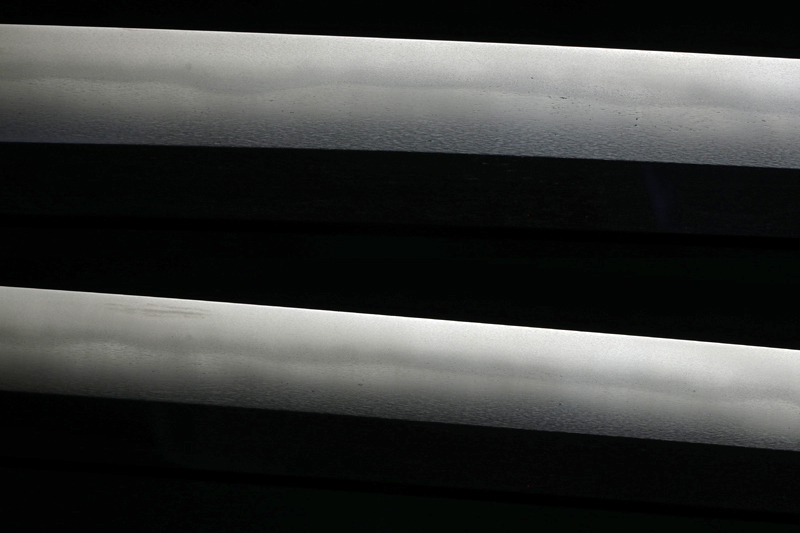
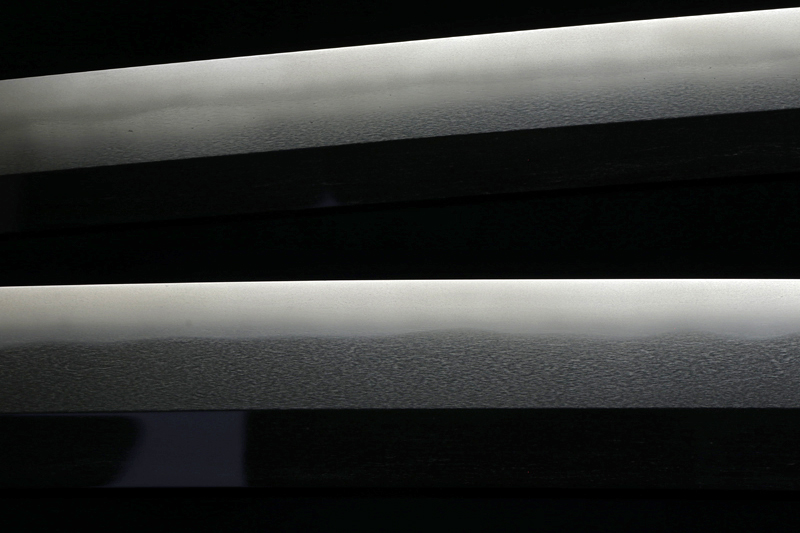
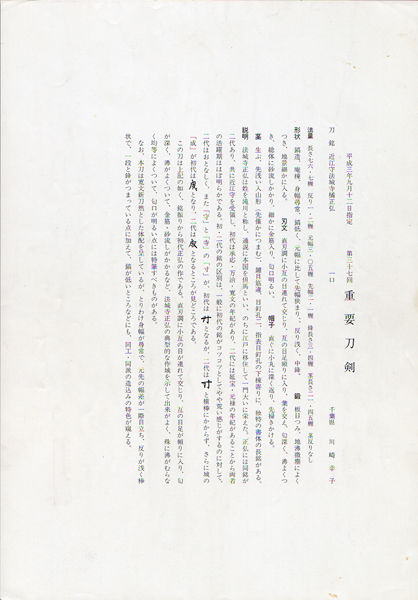
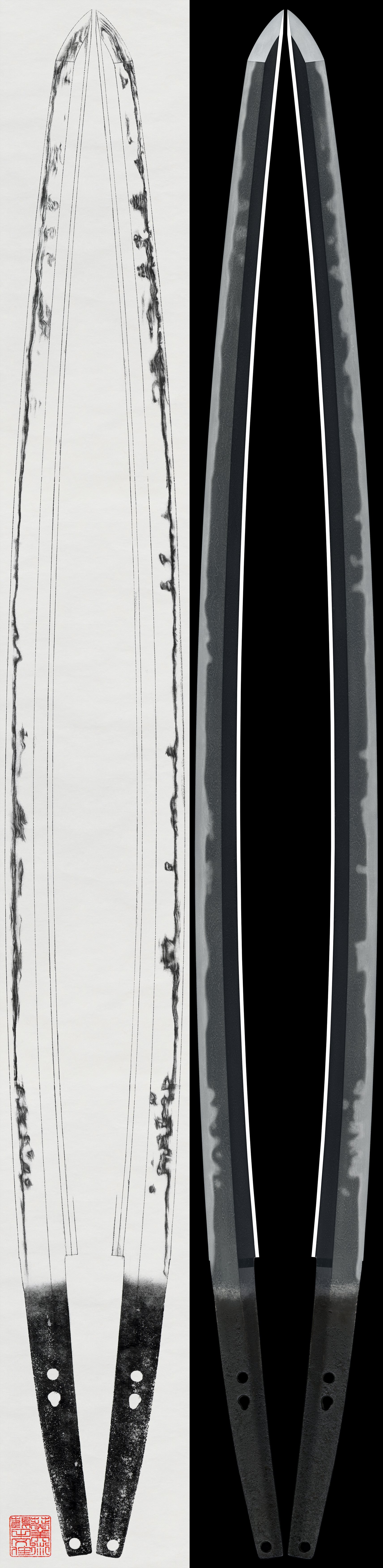
His hand is a suguha hand. On the great majority of his recorded katana the temper is laid as a suguha base, often a broad suguha, into which small gunome and gunome run together, the ashi entering freely and at times becoming thick. The published sources call the deep-nioi suguha the tempering that was his particular forte, attaching the phrase to a blade with the words 「彼の得意とする直刃調の刃文」[[c:2]], his characteristic suguha-toned temper. What lifts it above an ordinary straight line is the quality of the nie: the nioi is deep, the ko-nie adheres thickly and, on his best work, evenly and without irregularity, and through the temper run fine kinsuji and sunagashi, with small yubashiri-like forms gathering in places at the crest. A nijūba is not infrequently mixed in, and the published commentary names it as one of the smith's characteristic traits.
The jigane is the other half of his quality. He forges a well-packed ko-itame, at times a standing itame mixed with mokume, over which the ji-nie lies dust-fine and thick and fine chikei enter frequently, the steel itself bright. The bōshi runs straight into a ko-maru with hakikake at the point and a long, often deep turnback. The shape is the typical Kanbun-shintō figure read in his own particular way: standard to somewhat wide in body with a low shinogi, a conspicuous taper from base to point, shallow rod-like sori and a compact chū-kissaki, a construction the published sources treat as a recognizable mark of his hand.
The central scholarly question around the name is one of generations. The published sources record two smiths signing Masahiro, both titled Ōmi no Kami: the first generation dated from the Shōō, Manji and Kanbun eras, the second from Enpō and Genroku, so that the working span of each is largely clear. They are told apart chiefly by the signature rather than by a separate manner. The first generation's chisel-work has a firm, choppy kotsu-kotsu feeling and a somewhat rough impression, while the second generation's is calmer and more restrained, and the recurring points of discrimination are the variant forms of the sun component within 守 and 寺 and of the 成 element within 城. One borderline katana, whose 守 and 寺 follow the first generation but whose 城 follows the second, the judges set down as an early second-generation signature on the evidence of its overall tone, leaving the matter open for new material.
What sets Masahiro apart within the shintō field is named directly in his own commentaries. The published sources repeatedly hold his workmanship to be the closest of any smith to that of Nagasone Kotetsu, observing that he was nearly contemporary with Kotetsu and that his teacher remains unknown. The kinship is more than stylistic: because so many of his blades carry Yamano-family gold-inlaid cutting-test inscriptions, the same testing house associated with Kotetsu, the judges infer a real connection, writing that 「虎徹一門は法城寺一派と相当近い関係に」[[c:3]], that the Kotetsu group and the Hōjōji line stood in a fairly close relationship. His distinction is best drawn from his own traits, the deep-nioi suguha with even thick ko-nie and the bright nioiguchi, rather than from the comparison, and on his finest katana the commentary grants the point without reserve, calling one 「正弘の本領が遺憾無く発揮された一口」[[c:4]], a blade in which Masahiro's true strengths are shown to the full.
For the collector Masahiro is an attainable shintō name of high quality rather than a locked one. Fujishiro grades him Jō saku, and the Tōkō Taikan values his work in the upper-middle range. He has no National Treasures and no Important Cultural Properties; his designated record runs instead through the Jūyō tier, where signed first- and second-generation katana recur across many shinsa sessions, the published sources calling the typical deep-nioi suguha pieces 「同作中の優品」, excellent works among his own. Two of his blades are recorded as having been held by the Imperial Family, the only provenance set down for him, and beyond that the holders of his blades are largely unrecorded. Because most designated blades are kept rather than traded, a signed Hōjōji Masahiro of recorded whereabouts comes to market only from time to time; it is well within reach of a patient collector, and a sound first-generation example with a Yamano cutting-test inscription is the form in which his quality, and his nearness to Kotetsu, is most directly encountered.