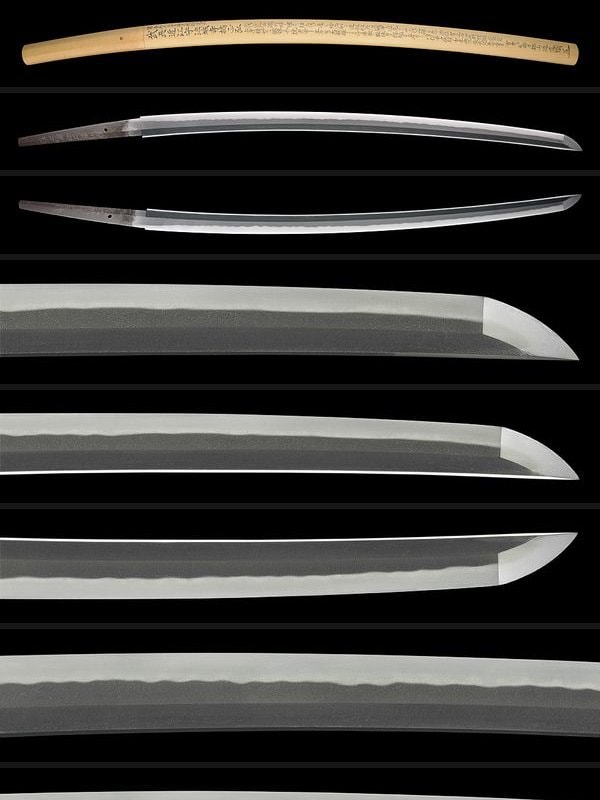
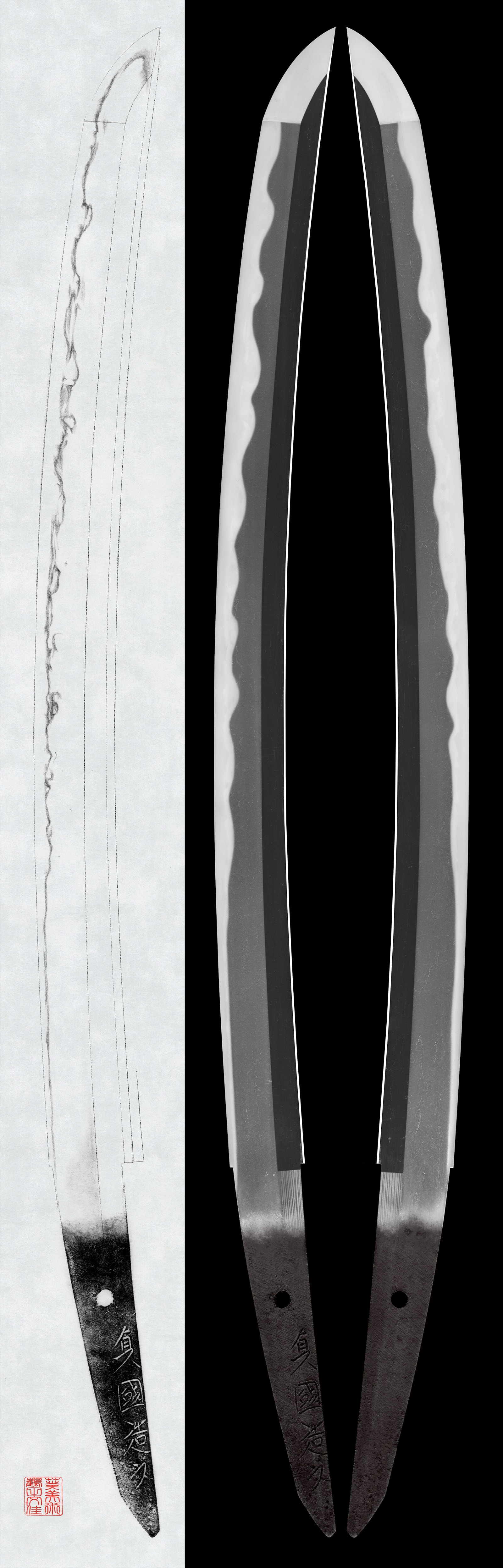
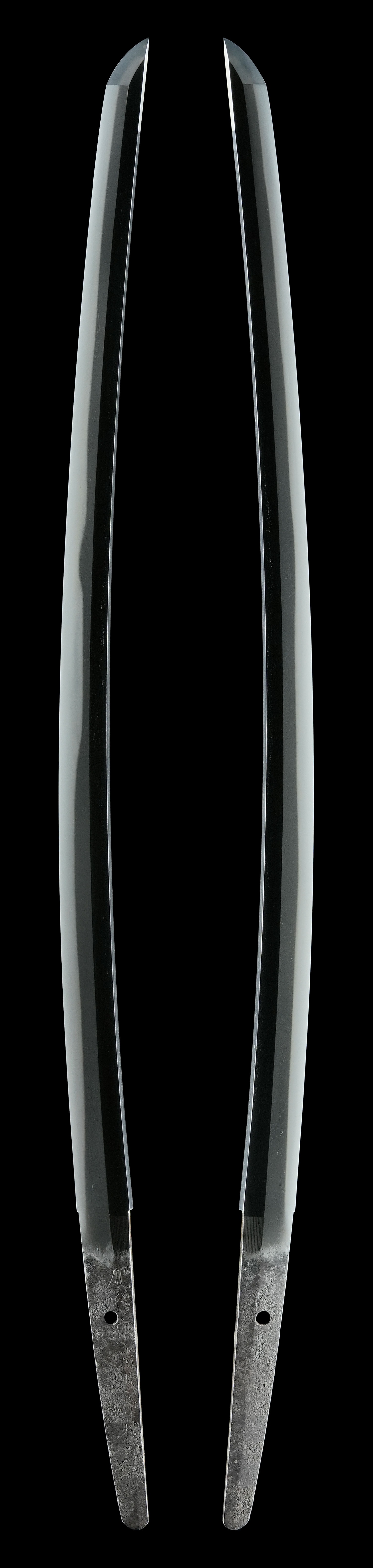
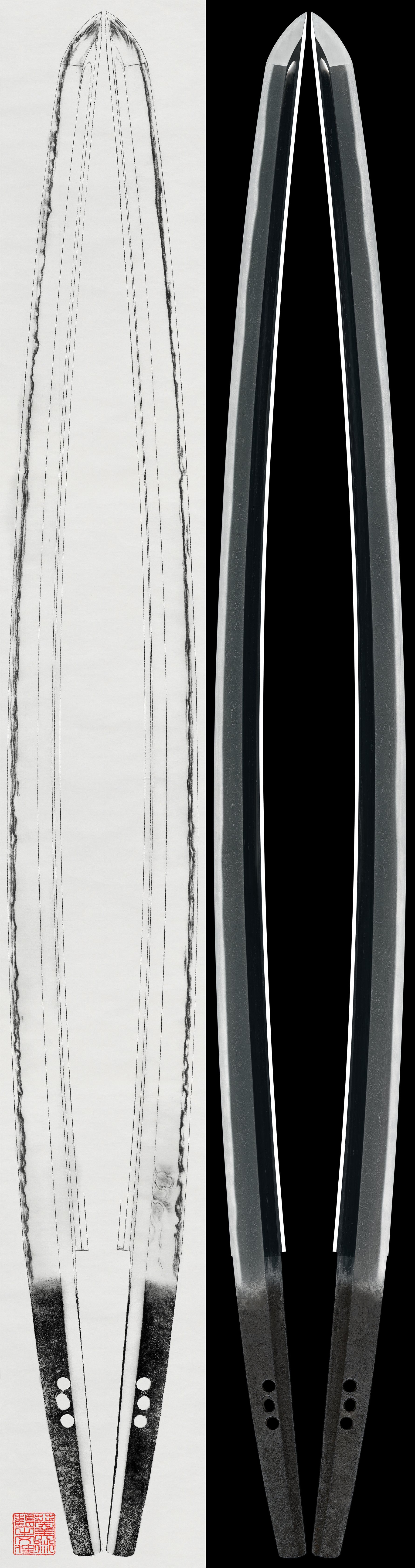
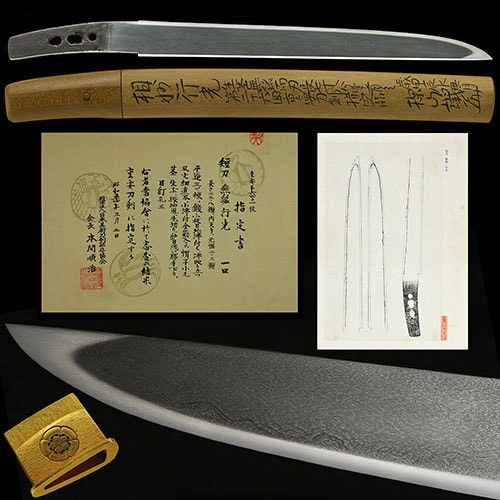
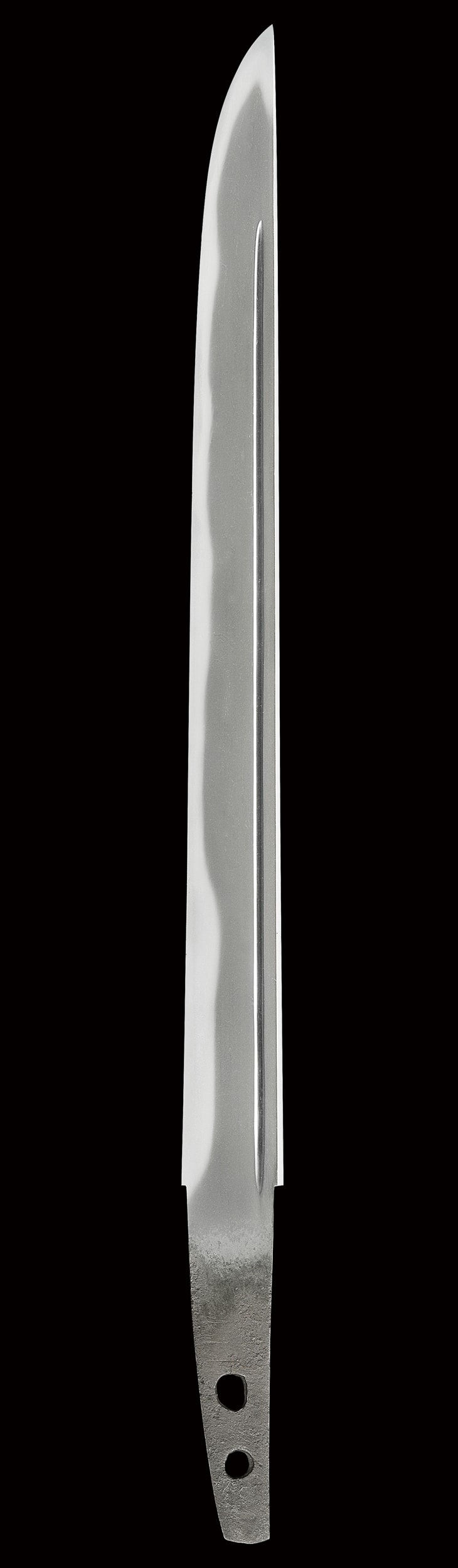
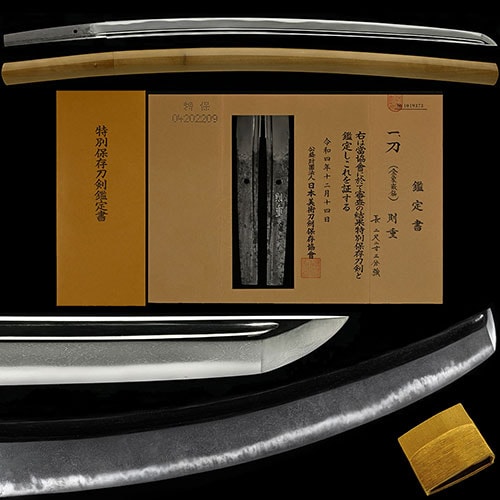
On a of the thirty-first session the published commentary writes that the blade is tempered in the maker's own specialty, a , the deep and the well applied, entering the temper and the bright, and closes by calling it an especially satisfying blade by Masateru. -no-kami Tachibana Masateru was a swordsmith of the -period Hojoji line, the -derived school whose root lay in Tajima and whose branch was carried into the period at . The published sources transmit that he studied under Hojoji Masahiro, received the court title -no-kami, and later resided at Akita in Ugo province, and they reckon him an accomplished hand within the group. His long signatures are cut on the below the and toward the , reading -no-kami Hojoji Tachibana Masateru, and on a small number of blades a chrysanthemum crest is chiselled above them in fine line work.
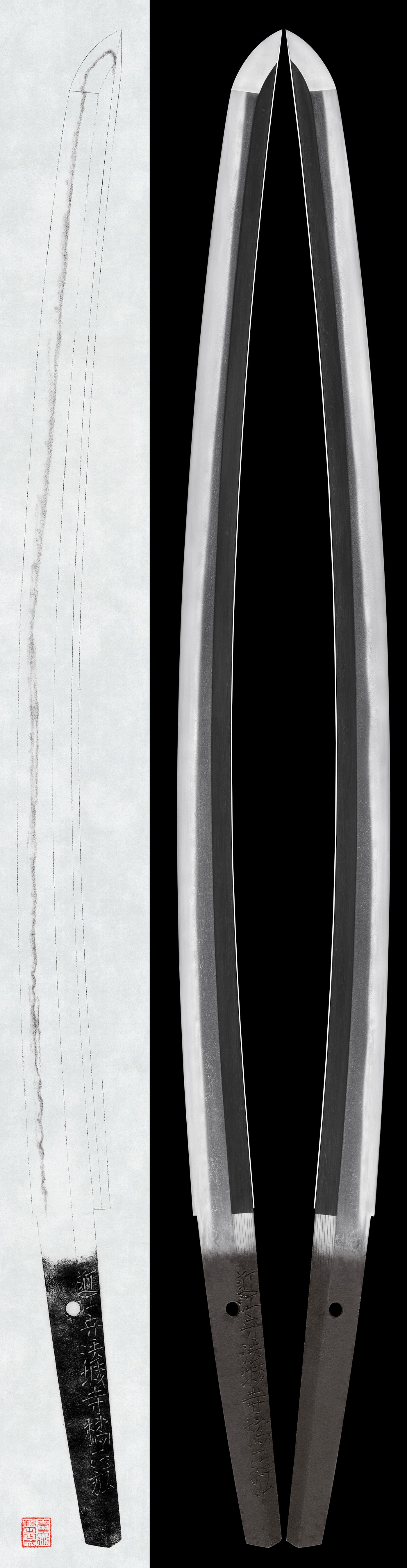
His characteristic hand is the middle the judges name his specialty. Of his work the published sources write that his pieces are especially excellent, and elsewhere that among his there are works of outstanding quality, and they name the the manner in which he excelled. The line is built on a into which enter, and on the broader works the takes on a slight tendency, entering vigorously through the upper half. The is deep, adheres well, the shows in places, fine runs along it and appear, and over all of this the reads bright and clear. The runs straight and turns in a small , on one showing slight .
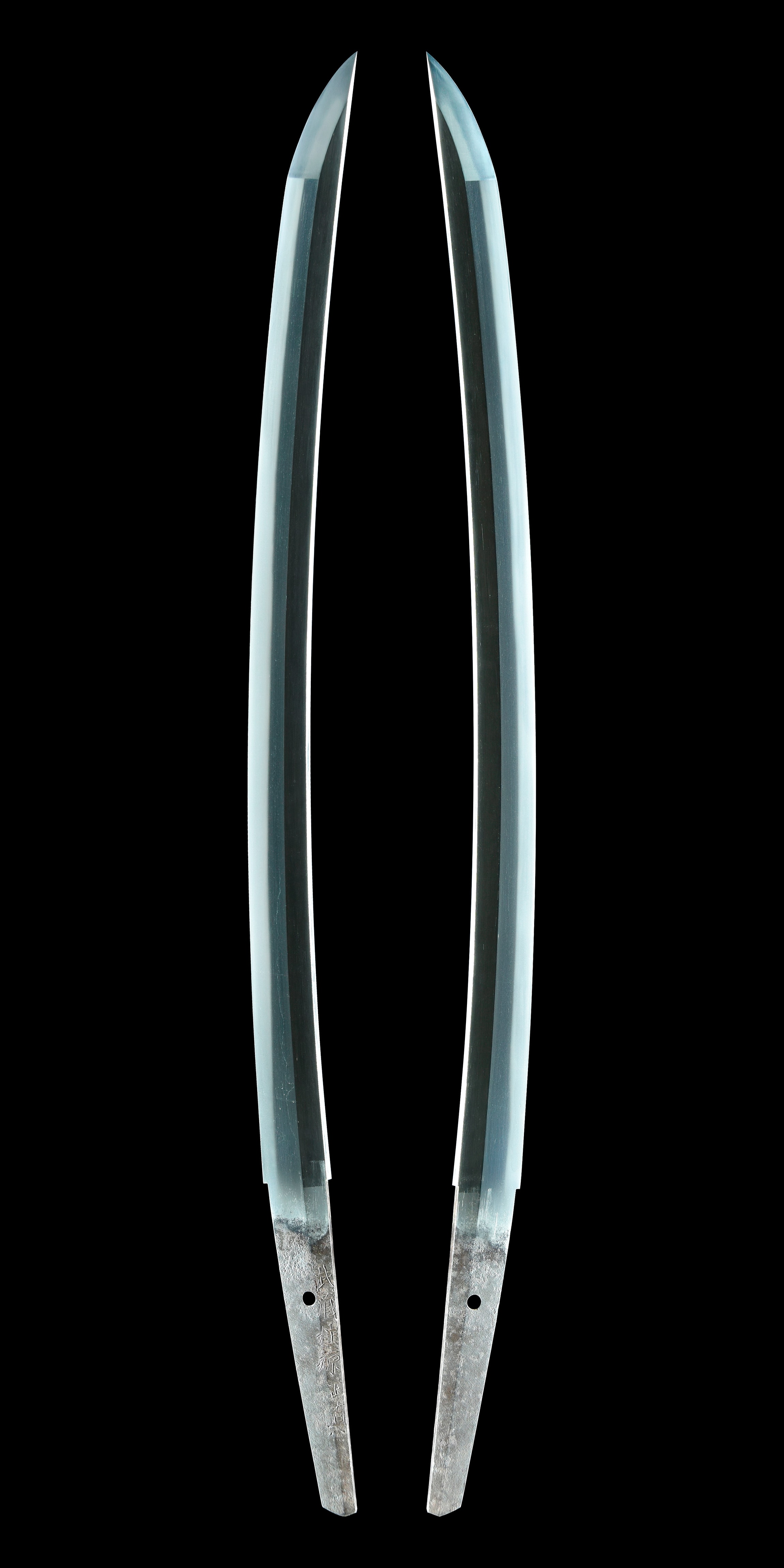
The is a tightly forged mixed at times with , the steel reading good in the published commentary; over it the adheres, finely and abundantly on his best work, with entering. The stance is the typical - figure, with , the shallow and the a compact chu, the showing a marked taper from base to tip and at times a feeling of ; one of the later is built instead with and a somewhat deeper curvature. , where present, is cut on both faces, a with on one blade and a with finished in on another. The whole reads, in the published account, as the typical high-quality output of the Hojoji line, the workmanship of a - figure outstanding in both and .
Within this one prime manner a single register stands apart, keyed to the rather than to a change of style: the chrysanthemum crest cut in fine chisel above the long signature. The published sources observe that the meaning of the crest is not clear and that among his other works examples bearing it are scarcely seen, which makes it the hinge of the generation question. Though it had been transmitted that the carving of the crest was the practice of a second smith of the name, the published commentary judges from a first-generation masterwork, whose standing it calls superb, that the crest was a practice from the first generation onward, and calls that blade one of the masterpieces of the first-generation Masateru. The signed run from the years through the later period; one of the chrysanthemum-crest blades carries, below Masateru's own signature, a separate gold-inlaid cutting-test inscription by Maejima Hachiro Tomotsugu recording two bodies and a wakige cut, and on its the long signature of Izumo-no-daijo Fujiwara Yoshitsugu, with whom it was jointly made.
The published sources place him by his school and its resemblances rather than by contrast. They read the Hojoji line as standing in some manner of relationship to Nagasone Kotetsu, writing that there are works of the school so reminiscent of Kotetsu that one might feel as though viewing Kotetsu himself, the good and the temper, whether in or in , deep in with well adhering and bright and clear in appearance, the too closely resembling Kotetsu's manner. His own grounded tells, the with its , the deep and bright , the dust-fine over a tight , set him within that line as one of its more accomplished hands, the resemblance the judges draw running upward to the great master of the -laden temper. The Hojoji circle around him was close: several extant blades record a three-smith collaboration by Masateru together with Kazusa-no- Kaneshige and Sukekuro Kanetsune, and beyond these survive joint works with Kaneshige and the fourth Yasutsugu and with Izumo-no-daijo Yoshitsugu, from which the sources infer that these smiths maintained close ties.
Fujishiro rates him Jo , and his designated record stands at five , none carried to a higher tier; four are signed in his own hand and one, read by the judges as a signed first-generation work, carries the chrysanthemum crest. No National Treasure or Important Cultural Property is among them, and no early provenance to a house is recorded for these blades, so the whole of his designated output sits in the tradeable tiers. Even so, the figures are not for-sale counts: most designated blades, in private hands as in public, are held rather than traded, and a signed -no-kami Hojoji Masateru comes to the market only from time to time, more rarely still one carrying a documented cutting-test inscription or a . The published sources call his best work a typical high-quality example of the Hojoji line and, on the thirty-first-session , an especially satisfying blade by Masateru, and on the fortieth-session a superior piece among his extant works; a blade of that standing is the kind a collector encounters seldom and with patience, valued as much for its place in the Hojoji record as for the bright it shows.