Edo was the sword’s age of connoisseurship: the Hon’ami appraisers, the shogunal register of famous blades of 1719, and a thriving literature turned the sword into an object of study even as it ceased to be drawn in war.
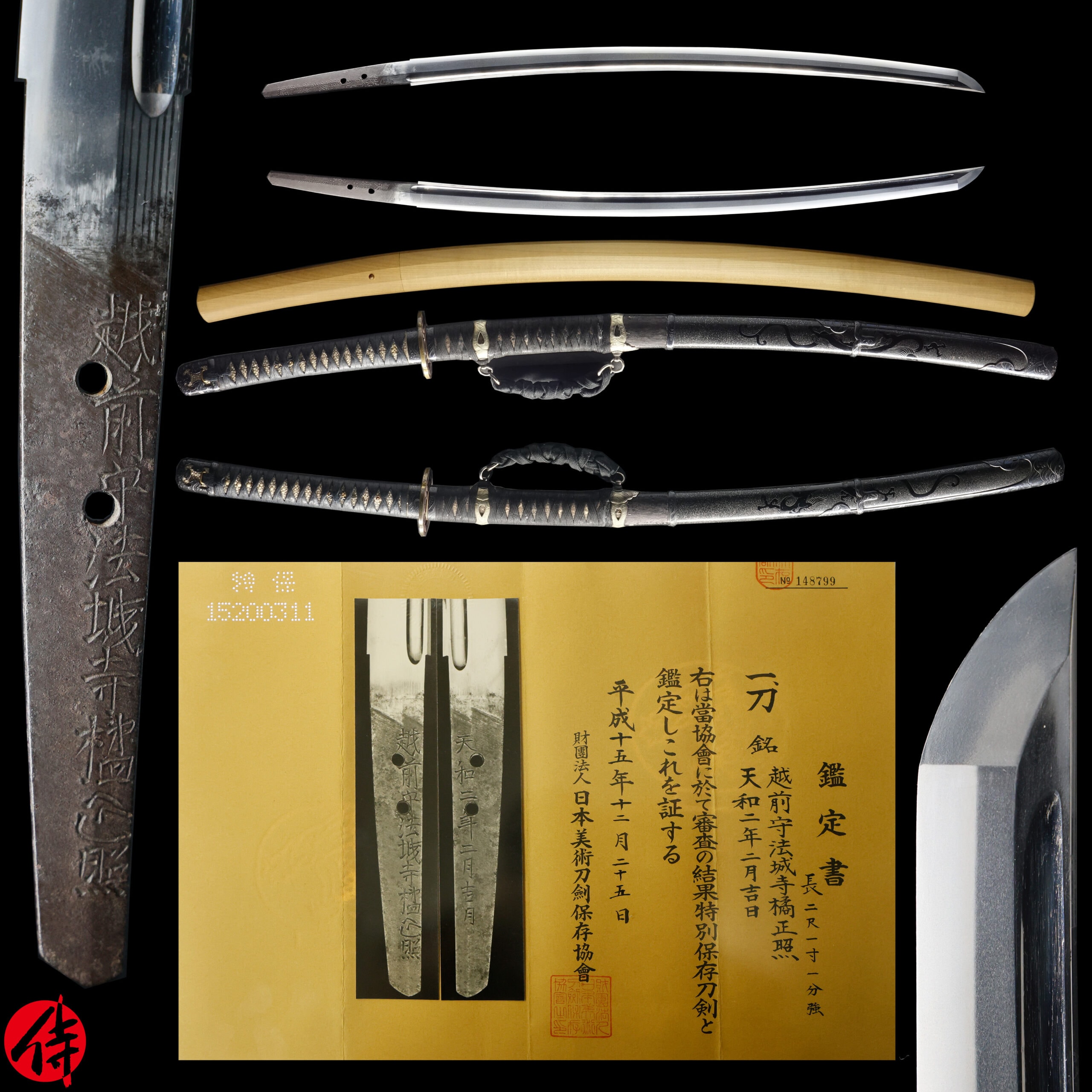
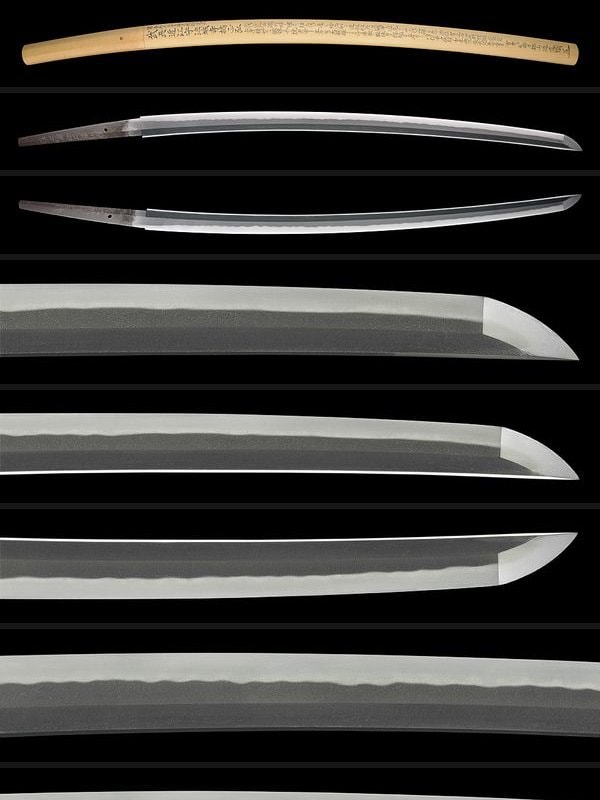
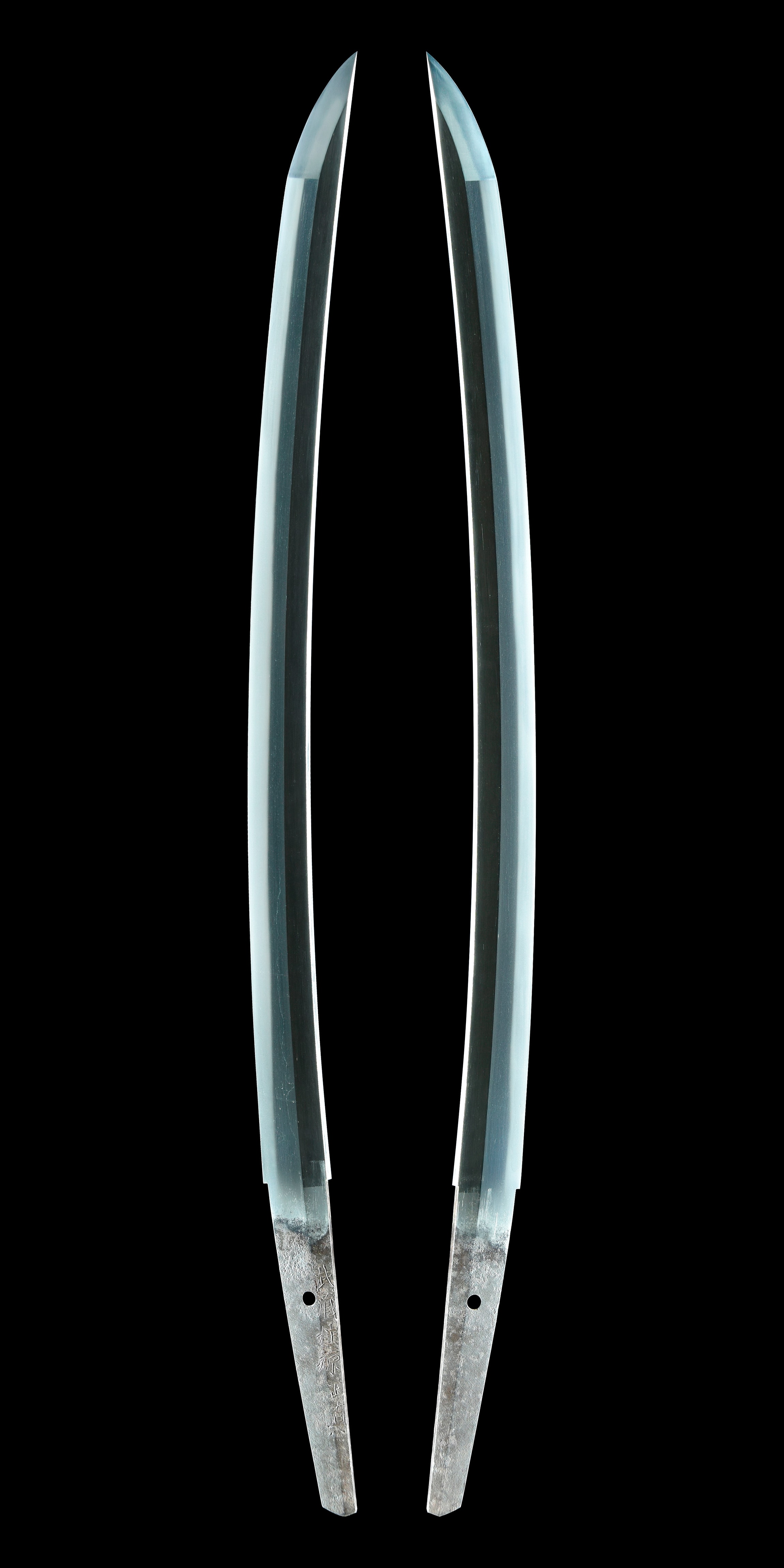
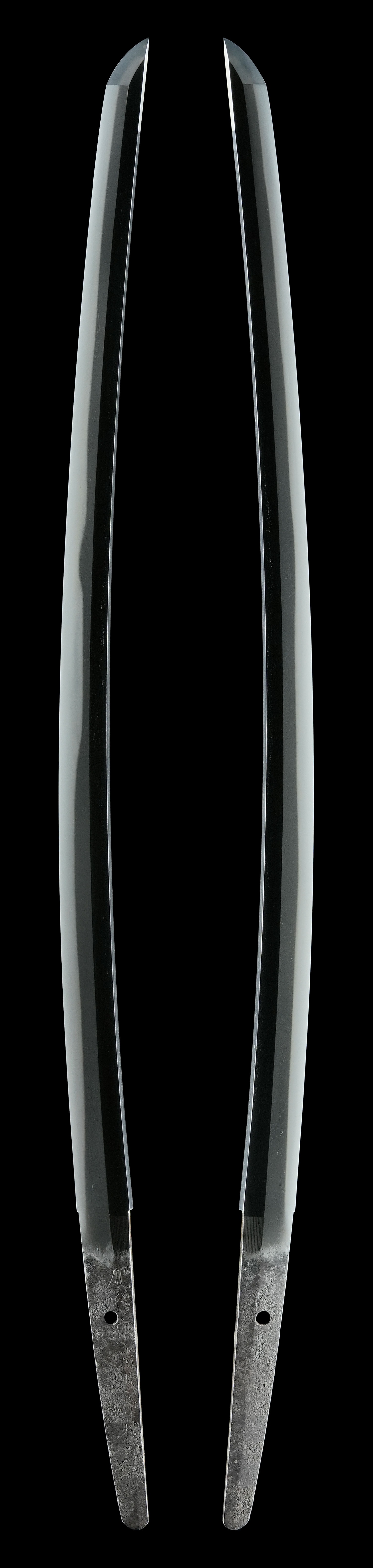
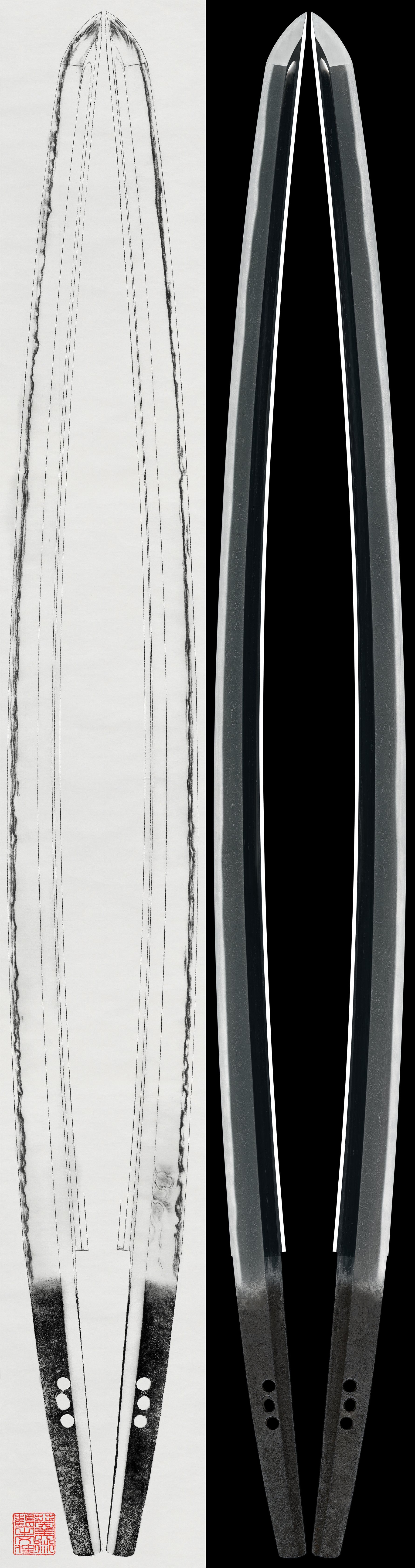
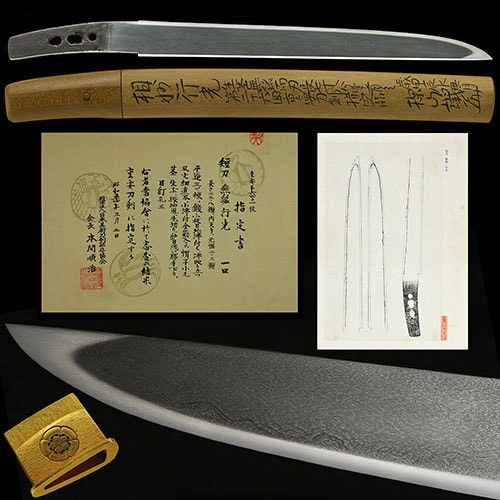
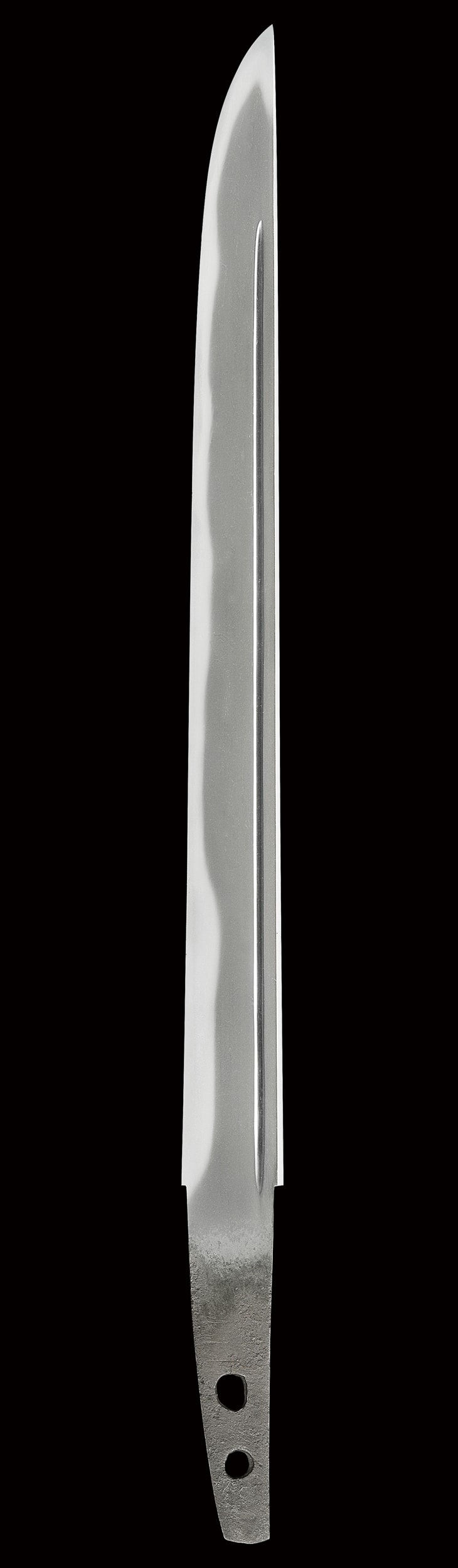
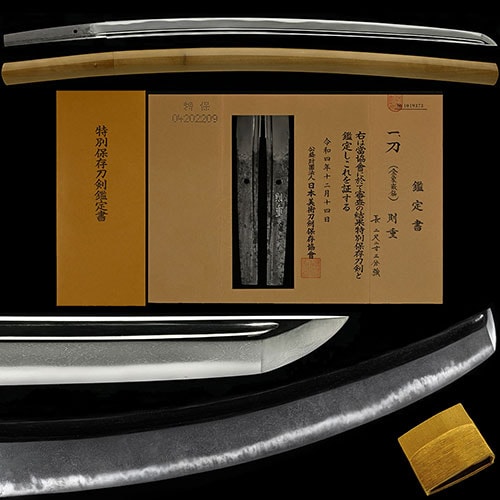
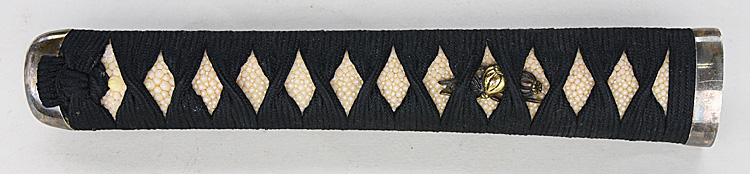
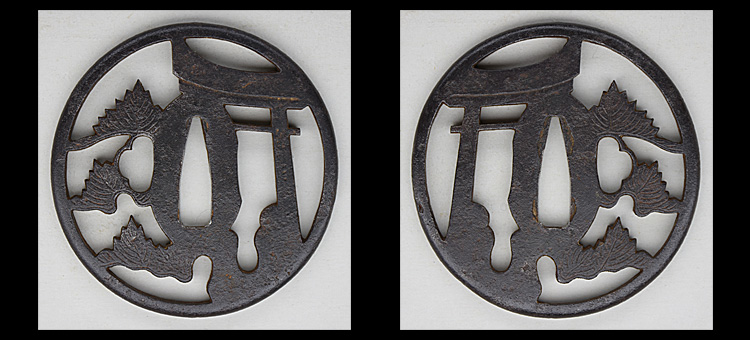
This katana by Hojoji Echizen no Kami Tachibana Masateru features a wide, magnificent body with a large kissaki. The blade exhibits a well-forged ko-itame hada mixed with mokume, dense ji-nie, and prominent chikei. The hamon is a wide suguha-cho with gunome交じる, deep nioi, abundant ko-nie, and active ashi, ha, kinsuji, and inazuma, with frequent sunagashi, creating a bright and clear appearance. It comes with a shirasaya and a kuro-ro-nuri uchigatana koshirae, and is accompanied by an NBTHK Tokubetsu Hozon certificate.
 NihontoWatch
mei · Hojoji · Jokyo (1684-1688) · nagasa 70.5cm · sori 2.4cm









Hojoji (Edo, Shinto) · Musashi · around 1684-1688
Fujishiro Jo saku · Tōken Taikan top 49%
1 piece on the market now
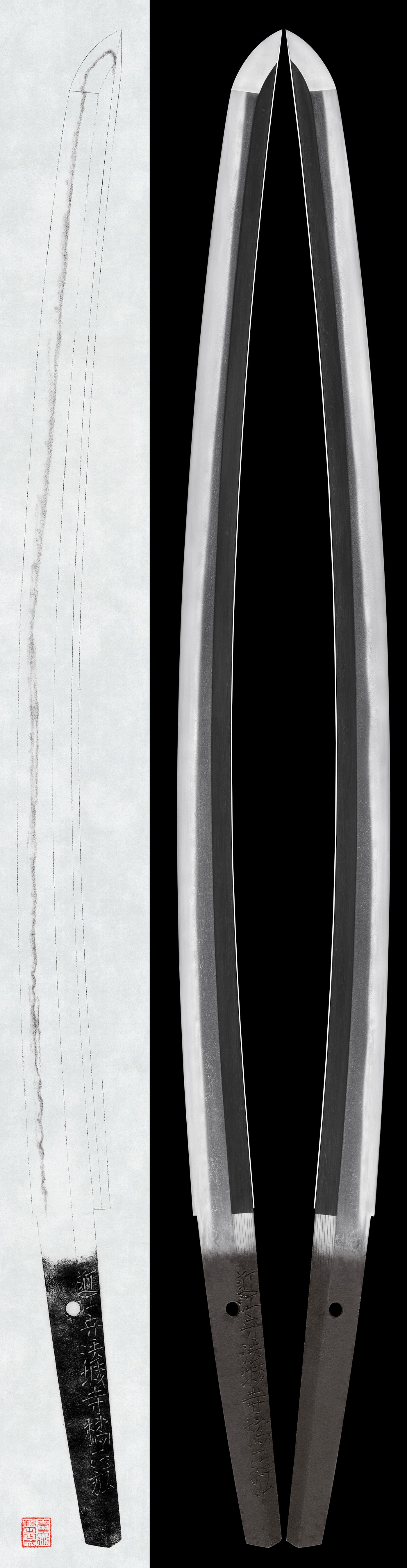
On a Juyo katana of the thirty-first session the published commentary writes that the blade is tempered in the maker's own specialty, a chu-suguha, the nioi deep and the ko-nie well applied, kinsuji entering the temper and the nioiguchi bright, and closes by calling it an especially satisfying blade by Masateru. Echizen-no-kami Tachibana Masateru was a swordsmith of the Edo-period Hojoji line, the Soshu-derived school whose root lay in Tajima and whose branch was carried into the Shinto period at Edo. The published sources transmit that he studied under Hojoji Masahiro, received the court title Echizen-no-kami, and later resided at Akita in Ugo province, and they reckon him an accomplished hand within the group[[c:1]]. His long signatures are cut on the sashi-omote below the mekugi-ana and toward the mune, reading Echizen-no-kami Hojoji Tachibana Masateru, and on a small number of blades a chrysanthemum crest is chiselled above them in fine line work.
His characteristic hand is the middle suguha the judges name his specialty. Of his work the published sources write that his suguha pieces are especially excellent[[c:2]], and elsewhere that among his suguha there are works of outstanding quality[[c:3]], and they name the chu-suguha the manner in which he excelled[[c:4]]. The line is built on a chu-suguha into which ko-gunome ashi enter, and on the broader works the suguha takes on a slight notare tendency, gunome-ashi entering vigorously through the upper half. The nioi is deep, ko-nie adheres well, the habuchi shows hotsure in places, fine sunagashi runs along it and kinsuji appear, and over all of this the nioiguchi reads bright and clear. The boshi runs straight and turns in a small ko-maru, on one ura showing slight hakikake.
The jigane is a tightly forged ko-itame mixed at times with mokume, the steel reading good in the published commentary; over it the ji-nie adheres, finely and abundantly on his best work, with chikei entering. The stance is the typical Kanbun-Shinto figure, shinogi-zukuri with iori-mune, the sori shallow and the kissaki a compact chu, the mihaba showing a marked taper from base to tip and at times a feeling of funbari; one of the later katana is built instead with mitsu-mune and a somewhat deeper curvature. Horimono, where present, is cut on both faces, a koshi-hi with soe-hi on one blade and a bo-hi with soe-hi finished in maru-dome on another. The whole reads, in the published account, as the typical high-quality output of the Hojoji line[[c:5]], the workmanship of a Kanbun-Shinto figure outstanding in both ji and ha[[c:6]].
Within this one prime manner a single register stands apart, keyed to the nakago rather than to a change of style: the chrysanthemum crest cut in fine chisel above the long signature. The published sources observe that the meaning of the crest is not clear[[c:7]] and that among his other works examples bearing it are scarcely seen, which makes it the hinge of the generation question. Though it had been transmitted that the carving of the crest was the practice of a second smith of the same name[[c:8]], the published commentary judges from a first-generation masterwork, whose standing suguha it calls superb, that the crest was a practice from the first generation onward, and calls that blade one of the masterpieces of the first-generation Masateru[[c:9]]. The signed katana run from the Kanbun years through the later Edo period; one of the chrysanthemum-crest blades carries, below Masateru's own signature, a separate gold-inlaid cutting-test inscription by Maejima Hachiro Tomotsugu recording two bodies and a wakige cut, and on its ura the long signature of Izumo-no-daijo Fujiwara Yoshitsugu, with whom it was jointly made.
The published sources place him by his school and its resemblances rather than by contrast. They read the Hojoji line as standing in some manner of relationship to Nagasone Kotetsu, writing that there are works of the school so reminiscent of Kotetsu that one might feel as though viewing Kotetsu himself[[c:10]], the jigane good and the temper, whether in gunome or in suguha, deep in nioi with ko-nie well adhering and bright and clear in appearance[[c:11]], the boshi too closely resembling Kotetsu's manner. His own grounded tells, the chu-suguha with its ko-gunome ashi, the deep nioi and bright nioiguchi, the dust-fine ji-nie over a tight ko-itame, set him within that line as one of its more accomplished suguha hands, the resemblance the judges draw running upward to the great Edo master of the nie-laden temper. The Edo Hojoji circle around him was close: several extant blades record a three-smith collaboration by Masateru together with Kazusa-no-suke Kaneshige and Sukekuro Kanetsune[[c:12]], and beyond these survive joint works with Kaneshige and the fourth Yasutsugu and with Izumo-no-daijo Yoshitsugu, from which the sources infer that these smiths maintained close ties.
Fujishiro rates him Jo saku, and his designated record stands at five Juyo katana, none carried to a higher tier; four are signed in his own hand and one, read by the judges as a signed first-generation work, carries the chrysanthemum crest. No National Treasure or Important Cultural Property is among them, and no early provenance to a daimyo house is recorded for these blades, so the whole of his designated output sits in the tradeable tiers. Even so, the figures are not for-sale counts: most designated blades, in private hands as in public, are held rather than traded, and a signed Echizen-no-kami Hojoji Masateru comes to the market only from time to time, more rarely still one carrying a documented cutting-test inscription or a gassaku mei. The published sources call his best suguha work a typical high-quality example of the Hojoji line and, on the thirty-first-session katana, an especially satisfying blade by Masateru[[c:13]], and on the fortieth-session katana a superior piece among his extant works[[c:14]]; a blade of that standing is the kind a collector encounters seldom and with patience, valued as much for its place in the Edo Hojoji record as for the bright suguha it shows.
Where Masateru stands among comparable artisans: across all of nihontō, and within tradition, era, and period. The tiers (Foremost · Leading · Major · Notable) weigh official designations from the NBTHK and Japan's Agency for Cultural Affairs, together with historical honors of lasting repute such as the Sansaku and Meibutsu-chō.
Select a lens to see how it's measured.
Soshu-den · Tajima
23 pieces on the market now
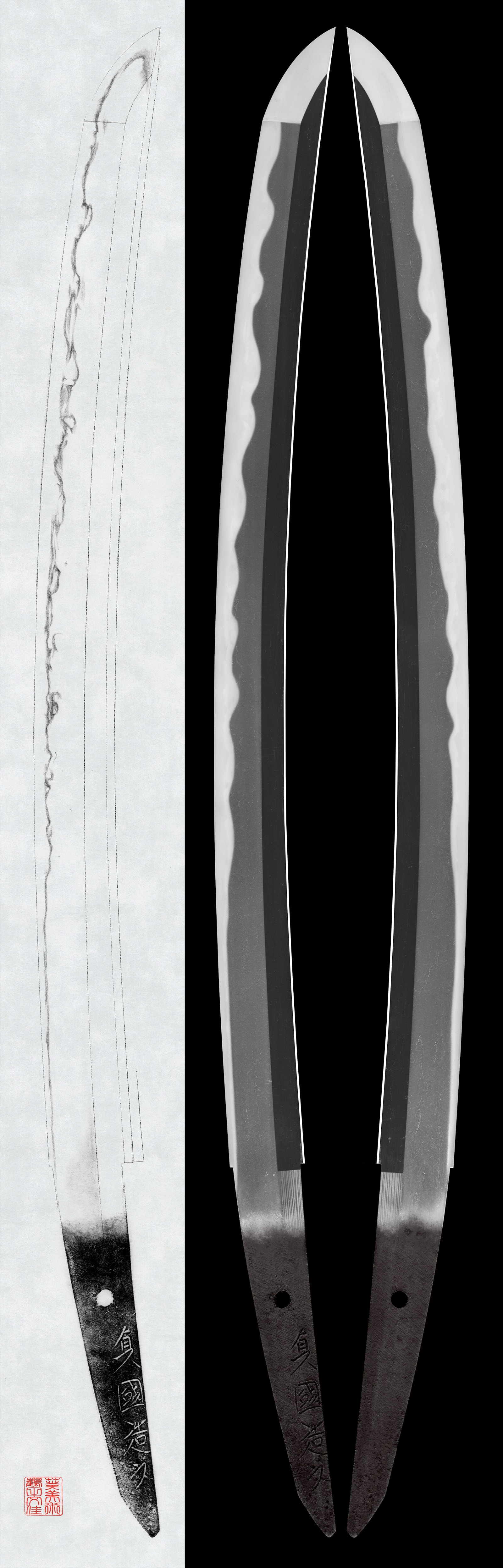
The Hojoji name (法城寺) begins as a place in Tajima province, where, the published sources relate, the Nanbokucho naginata master Kunimitsu lived at that spot and so took the place for his name, the man and the locality becoming one. The Meikan records a first generation of this Kunimitsu working in the Joji era (1362-68) and a second at Oei, the koto root from which the line descends. The old genealogies count this Tajima Kunimitsu among the three great pupils of Soshu Sadamune[[c:1]], a claim the NBTHK reports only to set aside as wanting plausibility and unwarranted[[c:2]], the texts finding the influence of Bizen work rather the stronger. From this Tajima stock an Edo branch carried the name into the shinto period, where it grew, in the words of the published sources, into the largest body of swordsmiths active in Edo through the Kanbun and Enpo years. Its founder was Omi no Kami Hojoji Tachibana Masahiro, named the head of the group and its most accomplished hand, and after him followed Tajima no Kami Sadakuni, Higo no Kami Yoshitsugu, Echizen no Kami Masateru, and Kunimasa, with Kawachi no Kami Nagakuni filed by common opinion within the same lineage, the whole bearing the Soshu-derived idiom out of Tajima and into a productive Edo workshop of many capable smiths. Two manners separate the koto root from the Edo branch, and the members describe each in its own vocabulary. The Tajima Kunimitsu survives almost wholly as mumei attribution: flamboyant choji-midare that can at first sight be mistaken for Bizen Ichimonji, settled against Bizen by the markedly stronger nie of ji and ha, chikei entering a large-patterned standing forging, and kinsuji and sunagashi worked incessantly through the ha, the build that of the long converted naginata with thin kasane and a large kissaki, the boshi often ending yakizume from the filing of the mune. The Edo smiths share a different and unified hand.
Over a tightly forged ko-itame, at times mixed with mokume, the ji-nie lies dust-fine and chikei enter, and the temper resolves into two registers across the branch: a suguha base, deep in nioi with ko-nie gathering, in which Masahiro, Sadakuni, Masateru, and Nagakuni excel, the nioiguchi bright and nijuba mixing in places; and a gunome hand, most conspicuous in Yoshitsugu, whose connected gunome run into a rosary-bead juzu-ba over ko-notare. Through nearly every Edo blade the sunagashi and kinsuji run, and the boshi turns back straight into ko-maru. The divergences are of degree: Sadakuni falls a small margin short of Masahiro in the clarity of the jihada and the strength of the nioiguchi; Nagakuni links his gunome into broader midare; Masateru keys his chu-suguha to a chrysanthemum crest cut above the signature. To kantei Hojoji Edo work, the published sources direct the eye to the deep nioi and bright nioiguchi over a tight, chikei-laden ko-itame, the sunagashi and kinsuji that keep the quiet suguha from reading flat, and the long thick-chisel signatures cut on the sashi-omote; the resemblance the judges draw runs upward to Nagasone Kotetsu and Kazusa no Suke Kaneshige, the Edo masters of the nie-laden temper, whose level the best work of Masahiro, Yoshitsugu, and Nagakuni is said to approach, the Kotetsu group and the Hojoji line held to stand in a fairly close relationship through the shared Yamano testing house. For the koto Kunimitsu the tells are the well-covered ji-nie with weak utsuri and the ko-nie of the ha, the points that part his work from the Bizen it resembles. The standing of the members ranges with their tier: Kunimitsu is the school's apex, graded Jo-jo saku, his blades vouched for across centuries by Honami attribution inscriptions and his finest tracing to the Akimoto and Maeda houses, with the tea master Kobori Enshu among his owners; Masahiro and the Edo hands are graded Jo saku, attainable signed shinto names whose blades carry their pedigree in the gold-inlaid Yamano cutting-test inscriptions rather than in named daimyo provenance. Yoshitsugu's Satsuma service for the Shimazu house left its trace on the later Kagoshima smiths, and a signed Hojoji blade, above all one bearing a documented test-cut, comes to the market only from time to time, rewarding patience. Learn more →
| Smith | Era | Designated |
|---|---|---|
| Kunimitsu國光 | 1345-1350 | 22 |
| Masahiro正弘 | 1658-1671 | 23 |
| Sadakuni貞國 | 1658-1673 | 8 |
| Yoshitsugu吉次 | 1661-1673 | 6 |
| Masateru正照 | 1684-1688 | 5 |
The Edo period (1615 to 1868)
Edo was the sword’s age of connoisseurship: the Hon’ami appraisers, the shogunal register of famous blades of 1719, and a thriving literature turned the sword into an object of study even as it ceased to be drawn in war.
A Hozon-certified blade judged to show notably superior workmanship and a better state of preservation. The bar is higher: re-tempered blades and most unsigned Muromachi/Edo works are excluded.
The NBTHK (Nihon Bijutsu Tōken Hozon Kyōkai, the Society for the Preservation of Japanese Art Swords) is a public-interest incorporated foundation founded in 1948 and supervised by Japan’s Agency for Cultural Affairs (Bunkachō); it is based at the Japanese Sword Museum in Tokyo. Its expert panels physically examine each submitted work (shinsa) and issue a certificate (kanteishō) ranking it by artistic and historical merit. NBTHK papers are the most widely recognized standard of authentication for Japanese swords and fittings.
NBTHK official siteWithin one week of the item's arrival (cooling-off is possible within Japan only). For defects that differ from the purchase conditions, we will accept the return and refund the payment. For other cases such as overseas, we will consult separately.
¥2,650,000