Sengoku Seki was an industry: smiths organized under their tutelary Kasuga shrine, arming the war bands of central Japan. Magoroku Kanemoto’s sanbonsugi and the finest Kanesada work prove quality survived inside mass production.
 NihontoWatchNihontoWatch
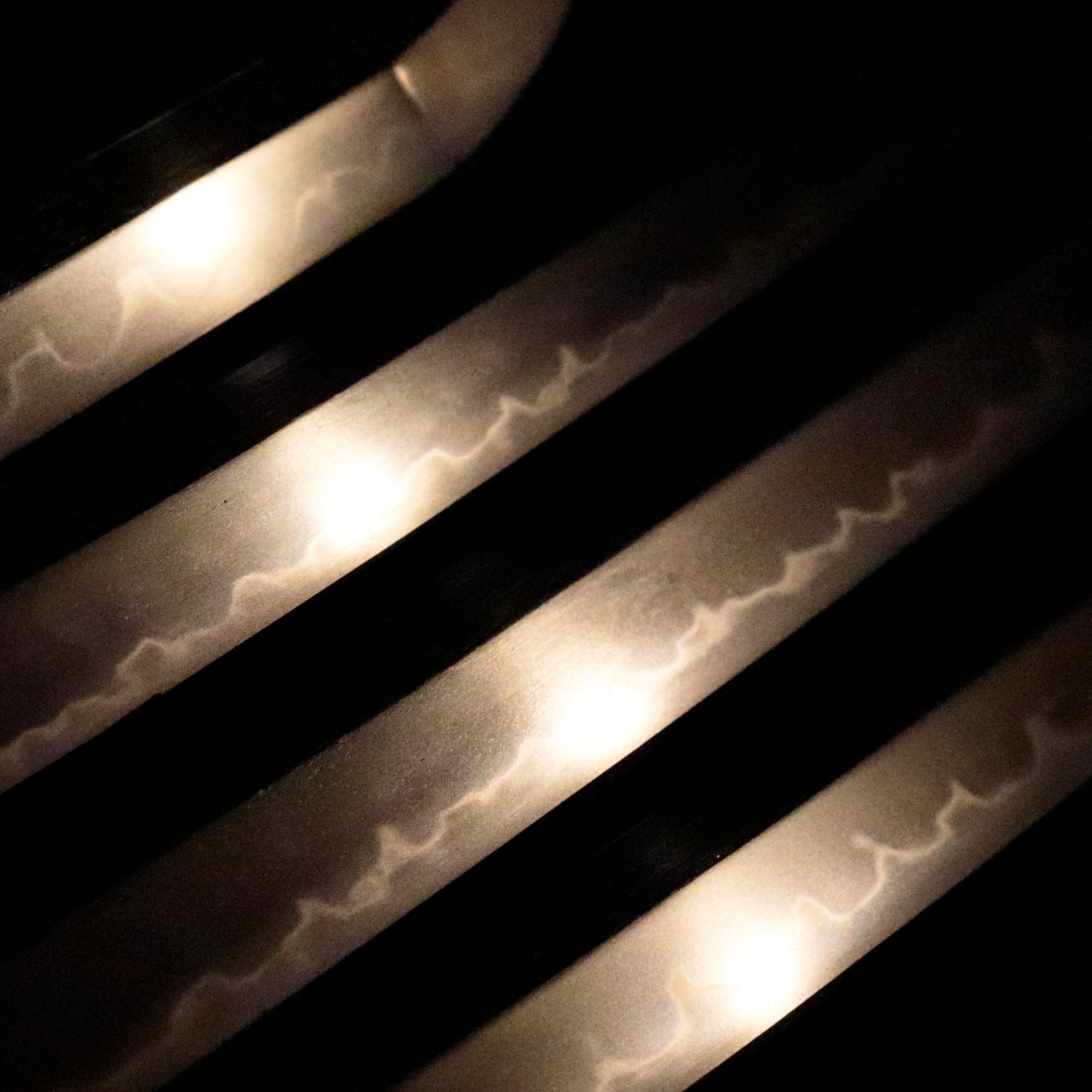
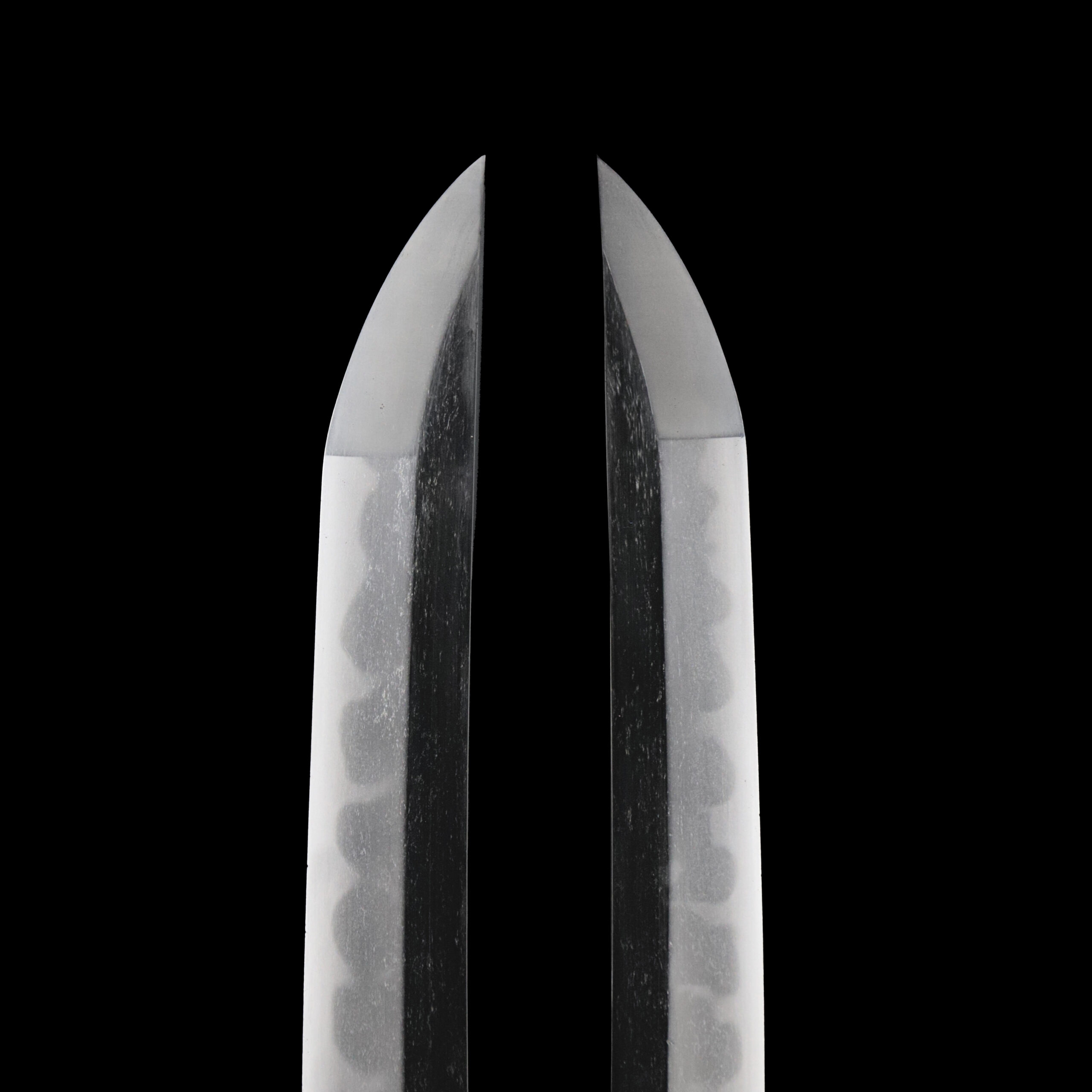
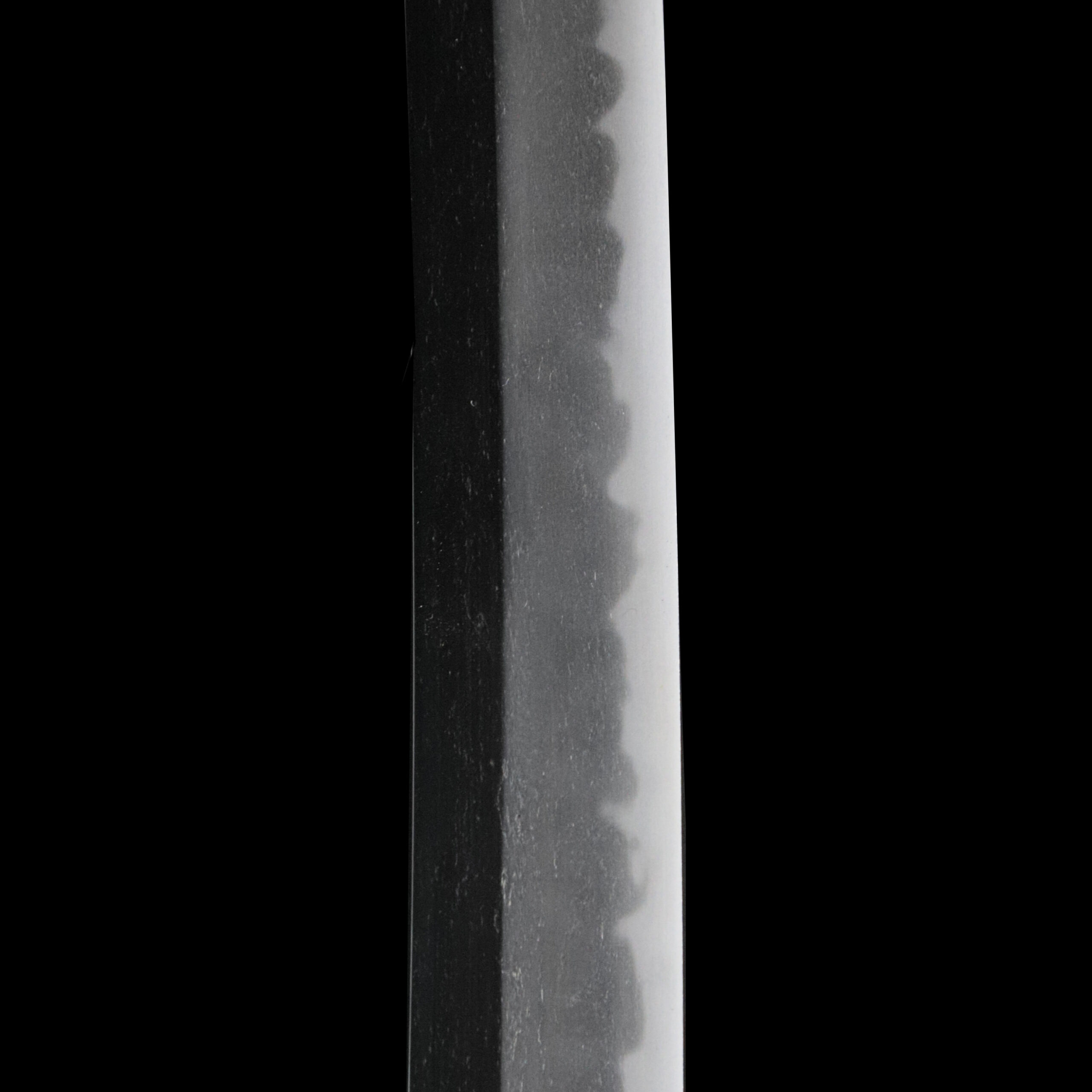
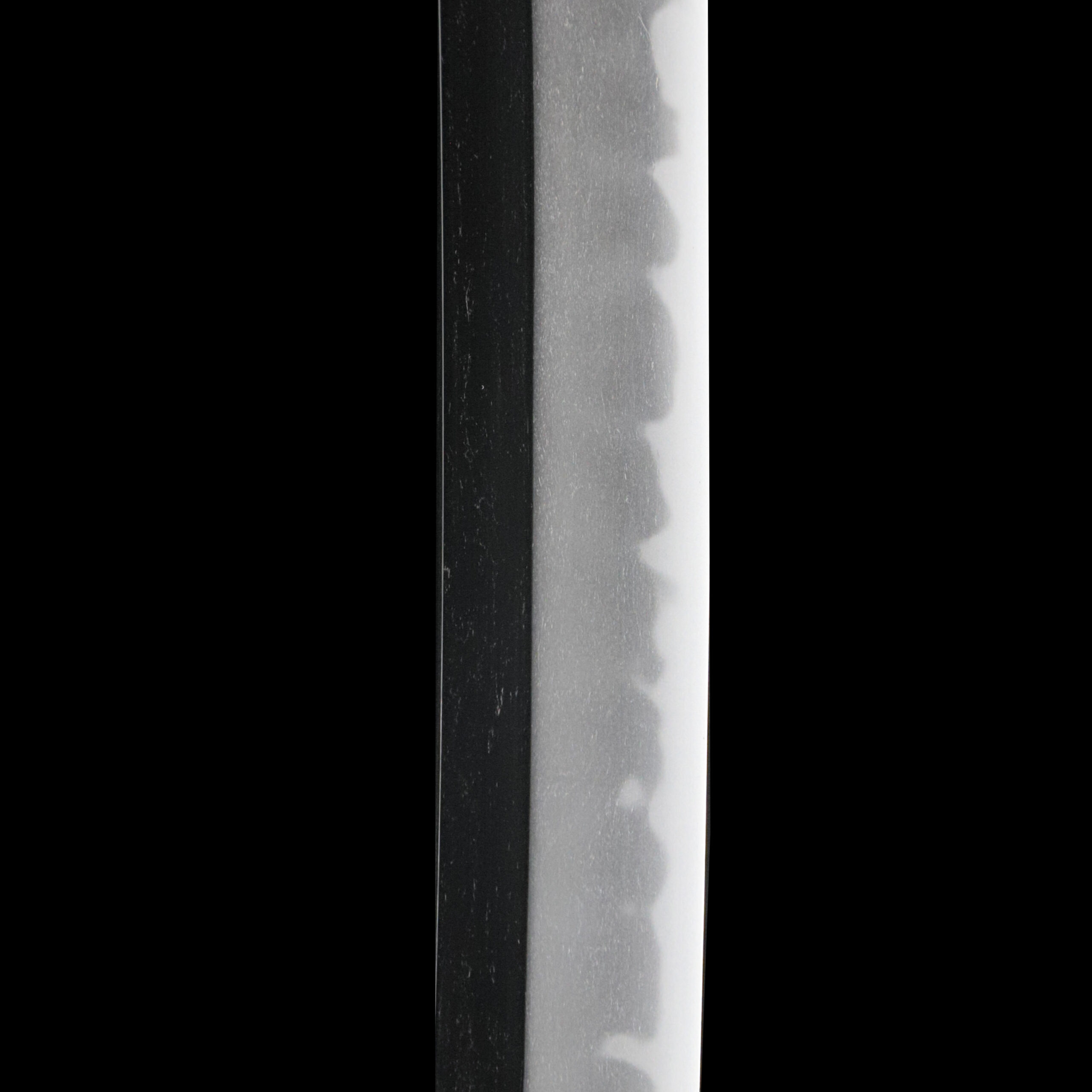
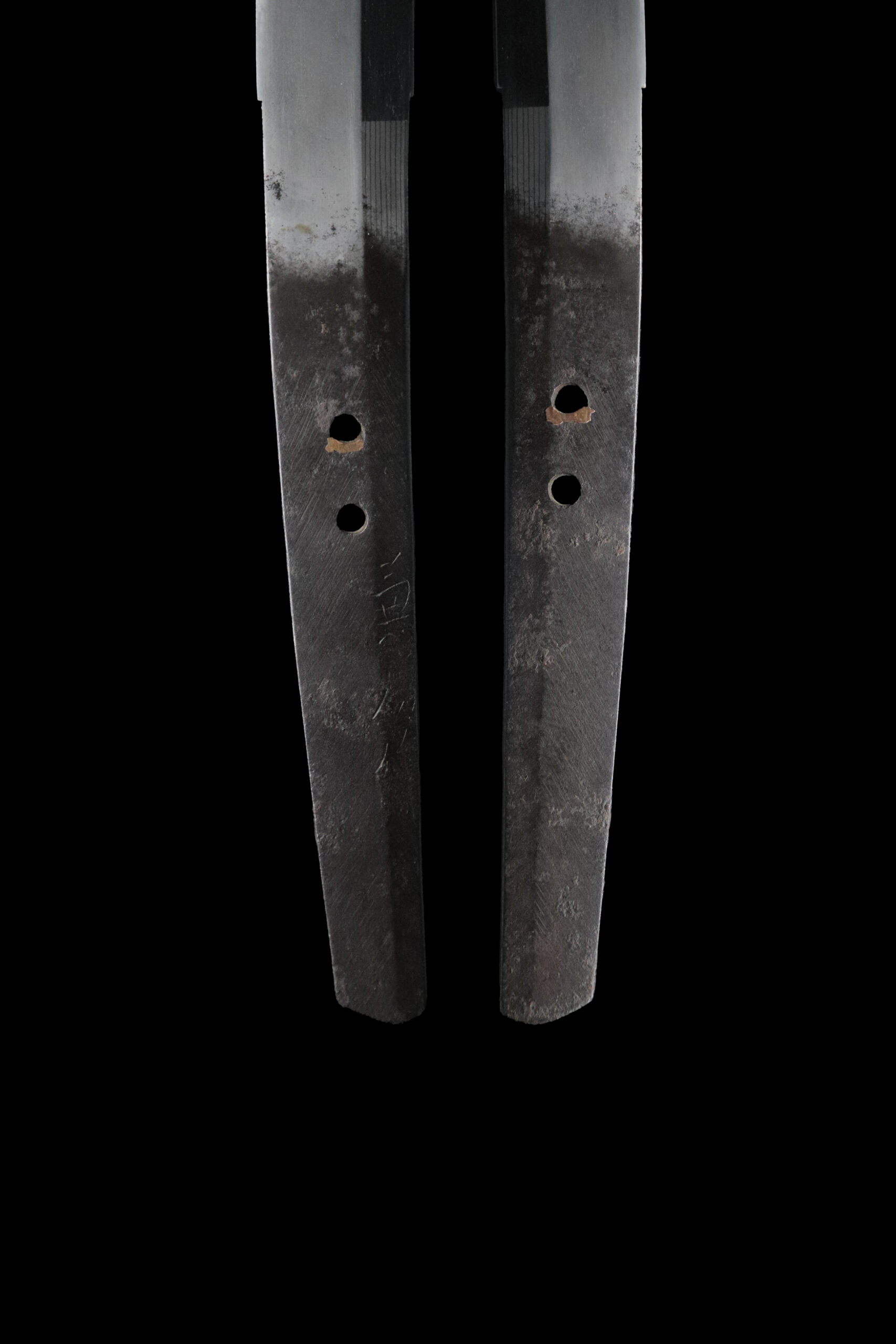
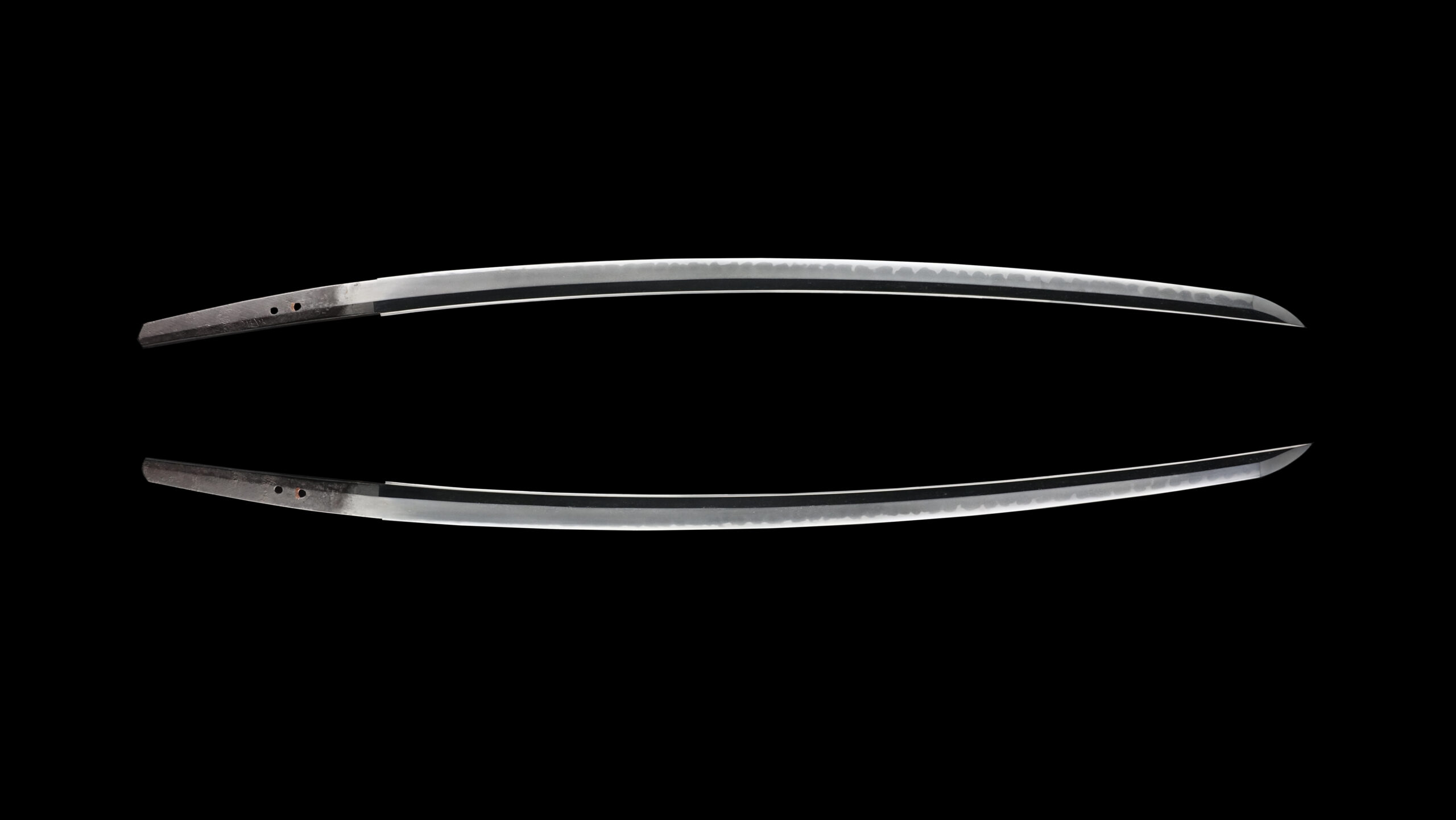
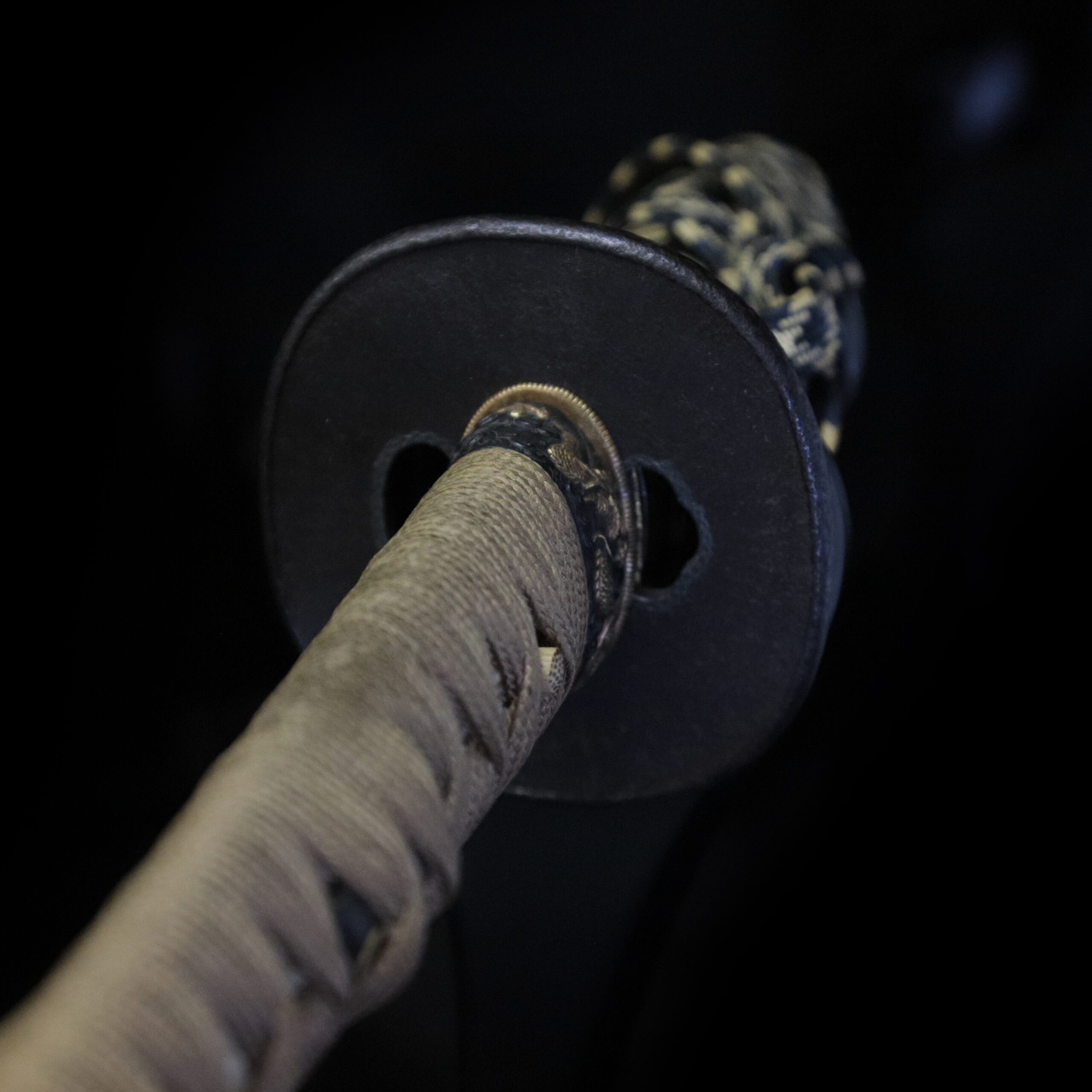
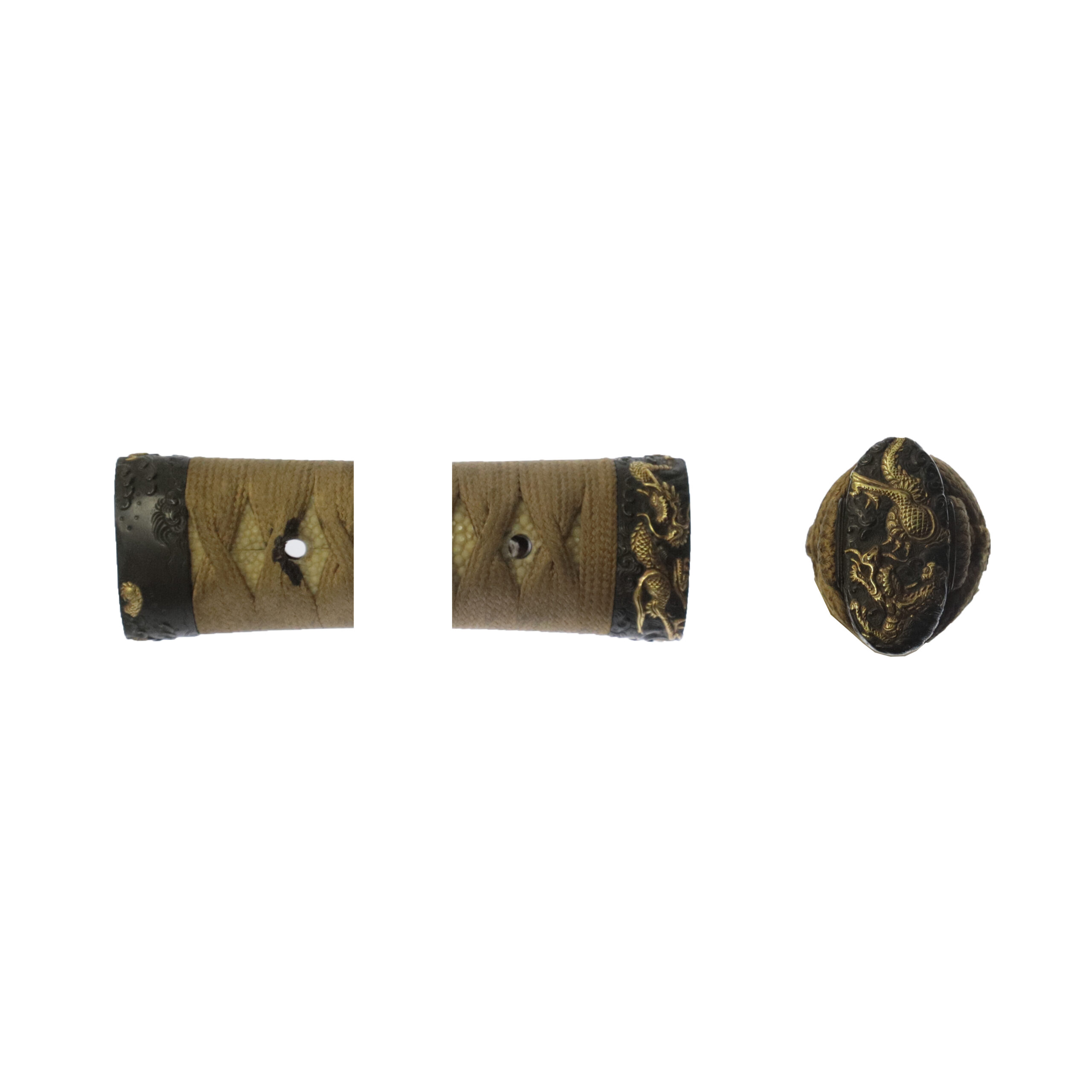
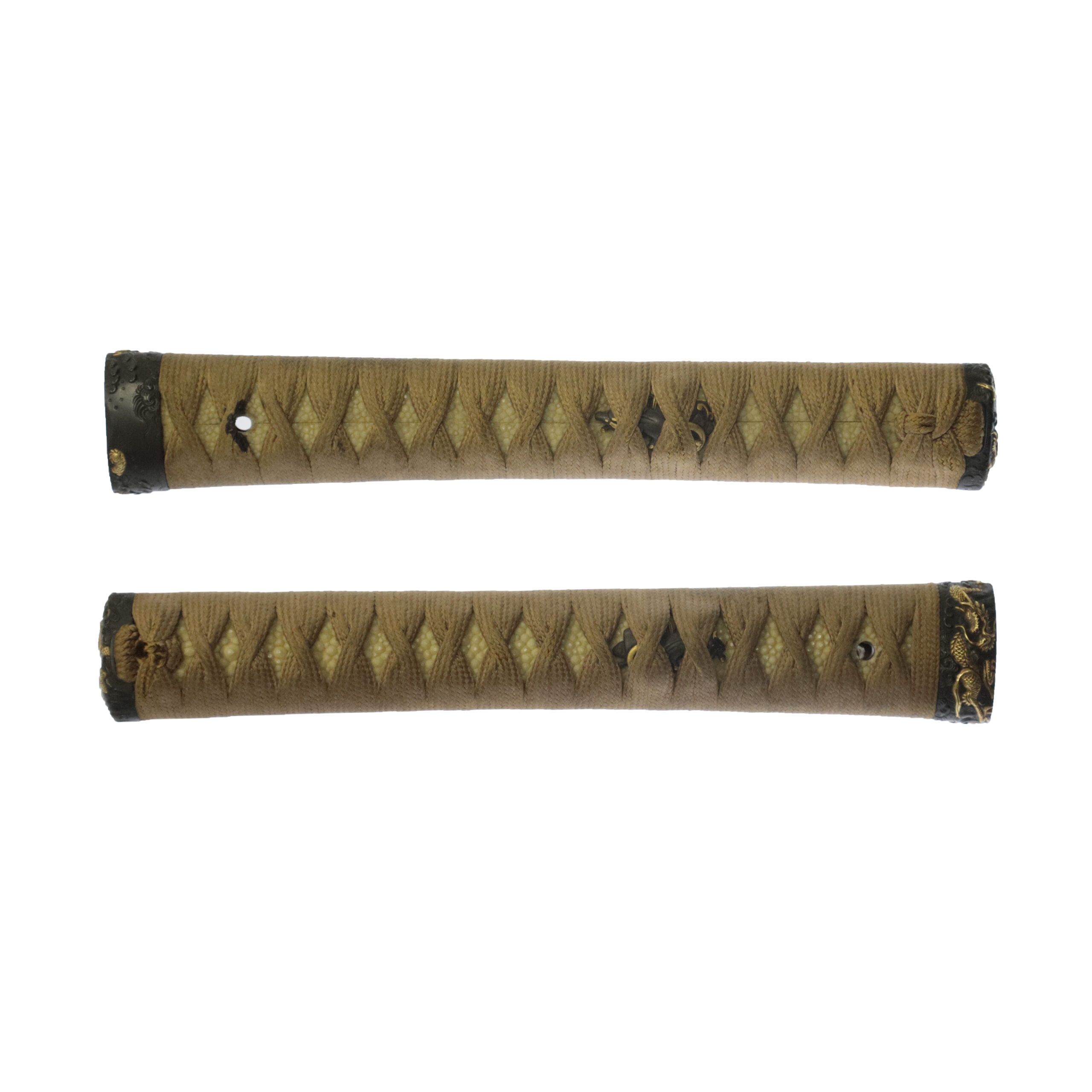
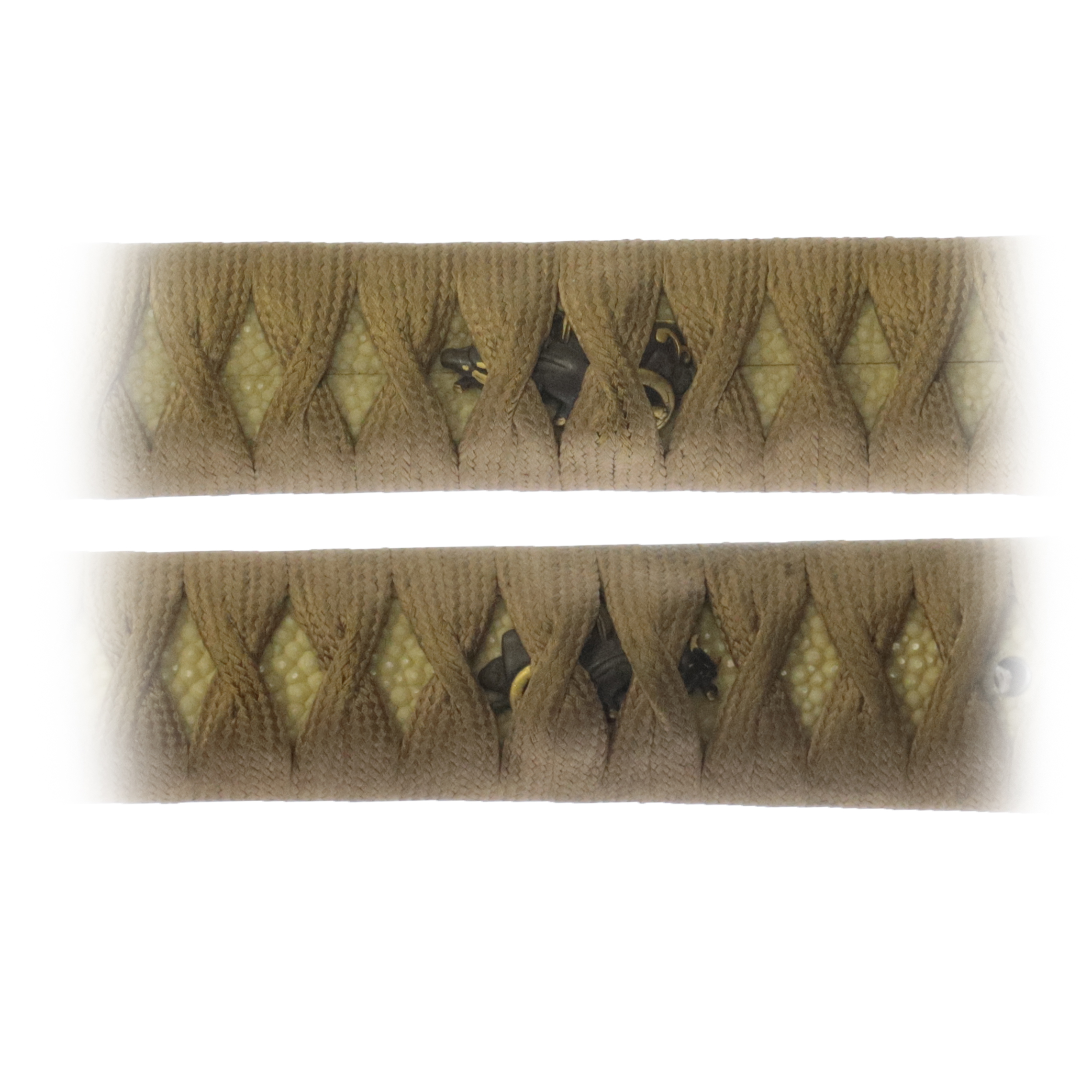
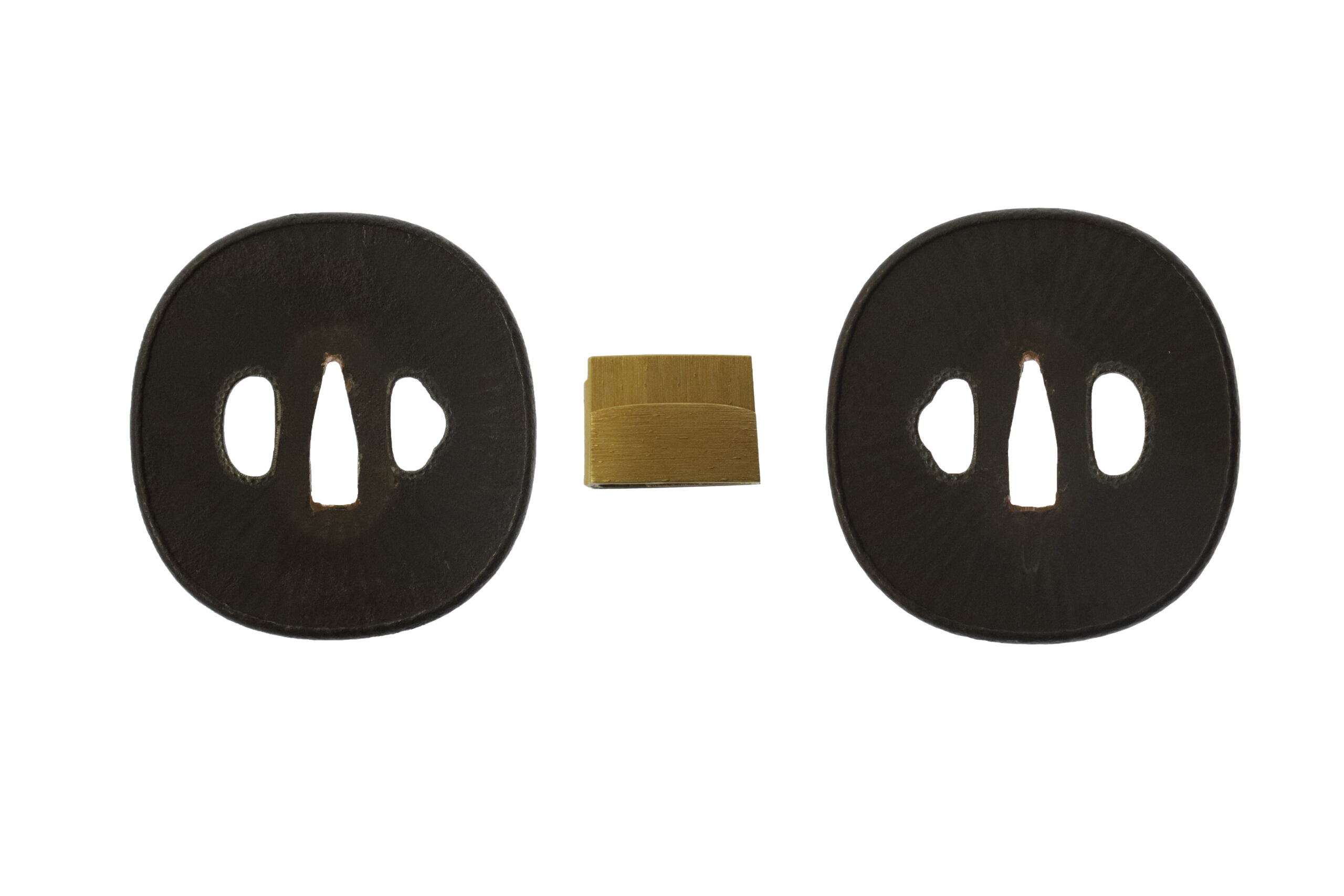
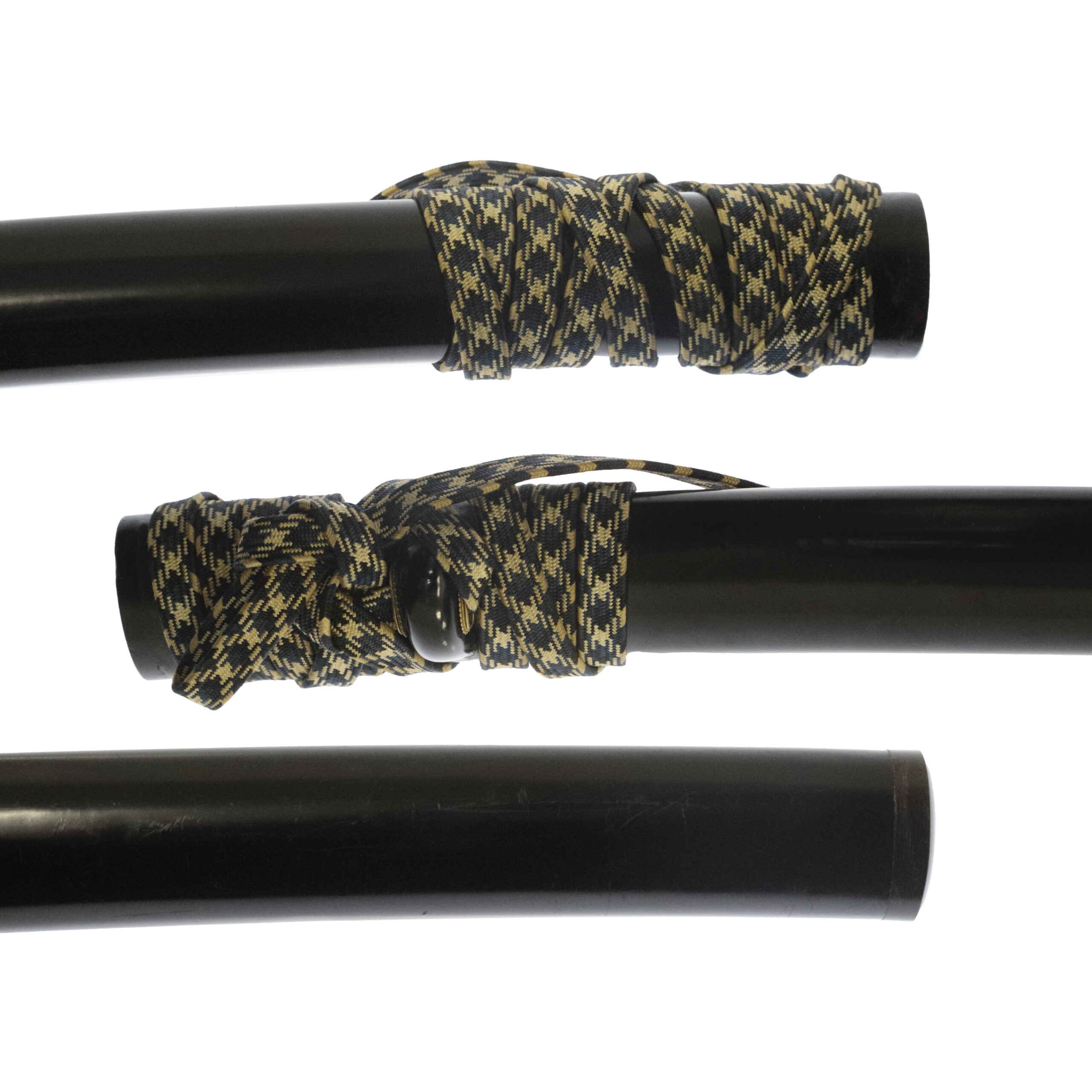
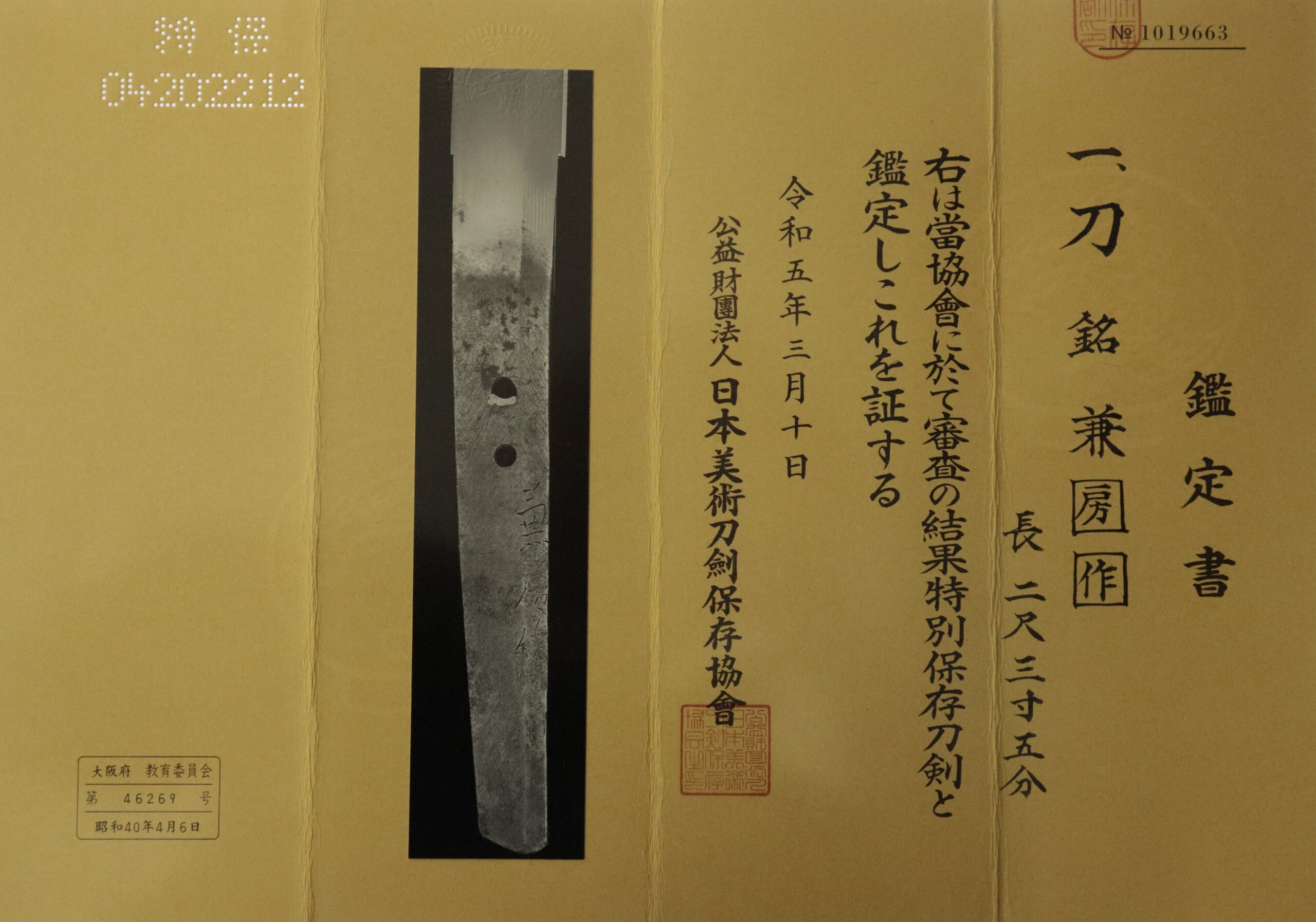
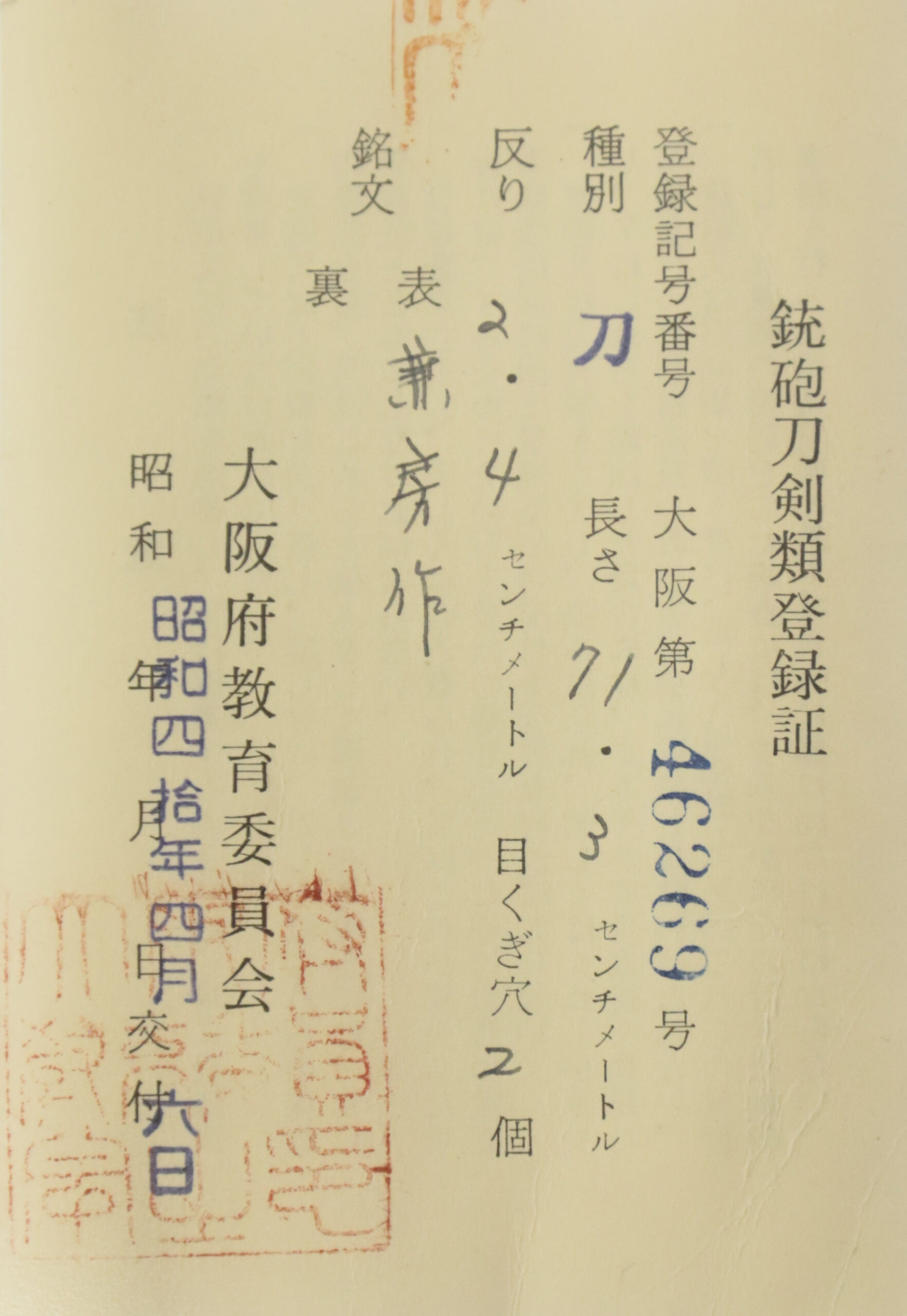
This blade was signed by Kanefusa (兼房). Due to the age of the blade, the letter, Fusa (房) is slightly illegible but NBTHK and the board of education in Osaka concluded that the remaining letters are Kanefusa (兼房). The maker’s name, Kanefusa, lasted a few generations during the Muromachi period. We believe this blade was made by the late-gen Kanefusa during the late Muromachi period (early-mid 16th century) based on its characteristic and NBTHK appraisal. The first-gen Kanefusa was active during the Eikyo era (1429-1441: mid-Muromachi period), and he was known as the son of Kaneshige, who belonged to Yoshisada school in Seki city. In Mino province, Seki City was the most active sword-forging site. And the first-gen Kanefusa was famous for inventing a particular Hamon (tempering line) called Kenbo Midare (兼房乱れ). The swordsmiths who resided in Mino province developed particular sword-forging tradition called MINO-DEN. Its characteristic is the TOGARI (Pointed shapes protruding from the Hamon ) in a classic straight line and random temper line with some white Utsuri. MINO-DEN had its origin from YAMATO-DEN in the late Kamakura period (1280-1330). It flourished in the Muromachi period (1333-1573) and continued until the Edo period (1603-1868). MINO-DEN especially prospered during Sengoku Jidai (Warring State period) due to the high demand for weapons. And the location of Mino province beat others. Akechi Mitsuhide controlled Mino province, and Nobunaga Oda ruled Owari province, and Tokugawa Ieyasu was the lord of Suruga (Neighboring areas). There was high demand from those powerful feudal lords and their retainers. Furthermore, so many wars occurred between the Kanto region and the Kyoto area. Mino was located in the middle, making feudal lords feel convenient to order swords from MINO-DEN. The blades forged in MINO provinces also had the reputation of its practical design and sharpness. Many feudal lords demanded swords forged in the Mino province. It is appraised as a Tokubetsu Hozon Token (特別保存刀剣) issued by NBTHK (Nihon Bijutsu Touken Hozon Kyokai:日本美術刀剣保存協会). Fuchi-Kashira This fuchi-kashira is decorated with a motif of a dragon (龍, ryu). The dragon is an imaginary creature originating in ancient Chinese traditions and myths, and it has long been regarded as an auspicious and symbolic beast. Its form is traditionally described as a composite of nine animals: antlers of a deer, the head of a camel, eyes of a demon, the neck of a snake, the belly of a mizuchi (a mythical Japanese creature resembling a horned, four-legged serpent), scales of a fish, claws of a falcon, paws of a tiger, and ears of a cow. Because of this extraordinary composite appearance, the dragon was believed to reign at the pinnacle of all animals. In Japan, dragons have also been revered as water deities in a belief system known as Ryujin Shinkō. As rice cultivation flourished, water became an indispensable resource, and for this reason, dragon motifs have been familiar and meaningful to the Japanese people since ancient times. Tsuka and Menuki The theme of the menuki is a Gissha (牛車), a traditional ox-drawn carriage used by aristocrats in the Heian period. Nobles are said to have competed with one another by lavishly decorating their carriages, making them symbols of status and refinement. However, the use of Gissha gradually declined with the rise of the samurai class. Tsuba and Habaki This tsuba features a decorative motif known as “hōsha-mon” (放射紋), or radiating pattern. The design consists of lines or rays that extend outward from a central point, creating a dynamic and symmetrical visual effect. Such patterns are often inspired by natural or spiritual imagery—most notably, the rays of the sun or light radiating from sacred figures in Buddhist iconography. In traditional Japanese art and design, the radiating motif symbolizes energy, vitality, and divine presence. While it can appear in religious contexts such as halos behind deities, it is also used purely for aesthetic purposes in sword fittings, textiles, ceramics, and architecture. Saya This scabbard is covered with black lacquer. Due to its high waterproof effect, lacquer has been used since ancient times in Asia. The blade of a Japanese sword is made of iron, and moisture is the greatest enemy of iron. For the purpose of carrying the blade without degrading it, people devised a method of coating the scabbard with lacquer. To prevent not only moisture but also rain and snow from penetrating the inside of the scabbard, it was necessary to apply multiple layers of lacquer. The Nushi (塗師, lacquerers) was born precisely because advanced techniques were required to handle the complicated processes. Authentication Paper They authenticated the blade on March 10th in the 5th year of Reiwa (2023). They appraised it as Tokubetsu Hozon Touken, the blade especially worth preserving for Japanese society.
Offered by Samurai Museum
This piece has sold
Get an email when a new Seki Kanefusa piece hits the market.

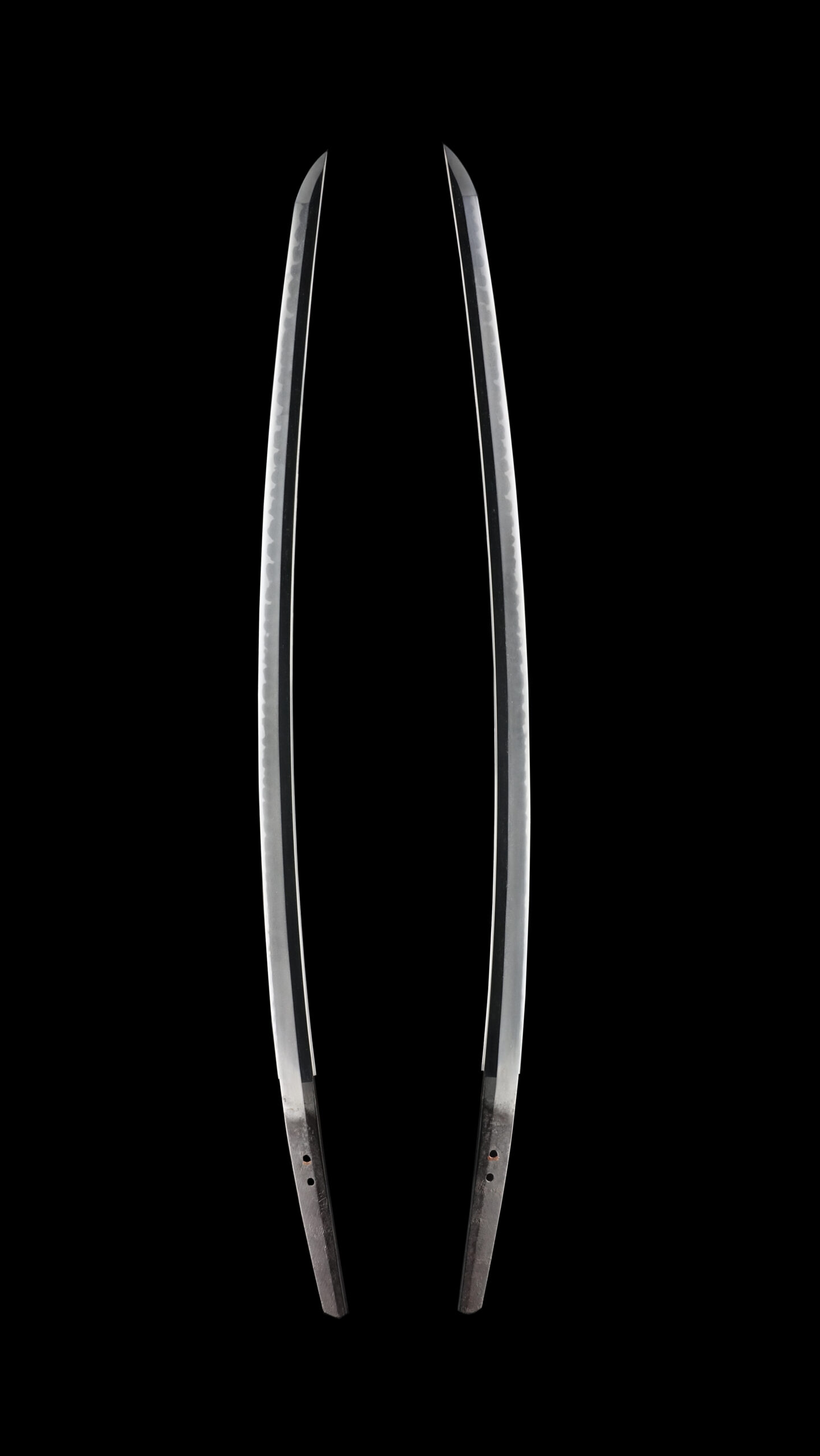
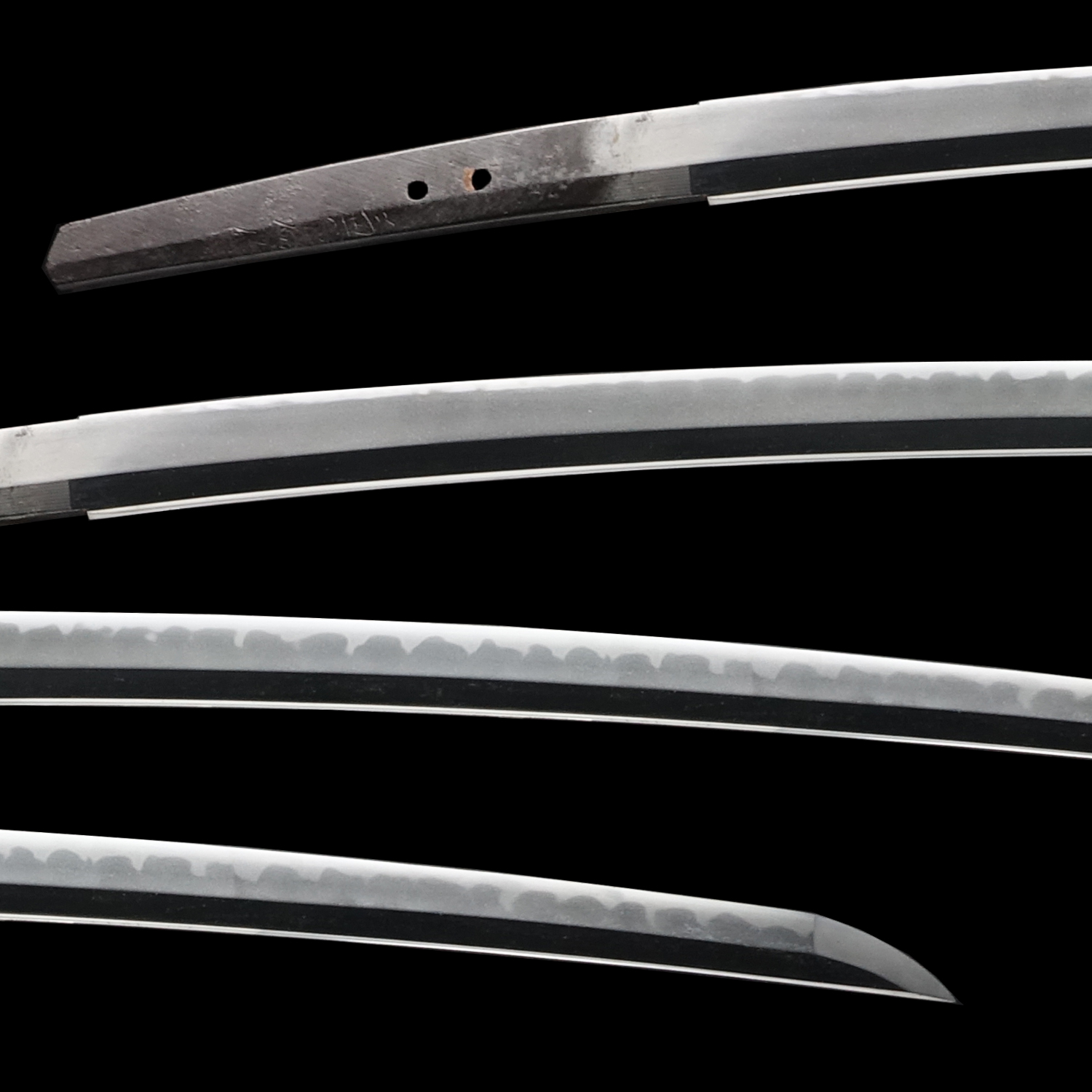
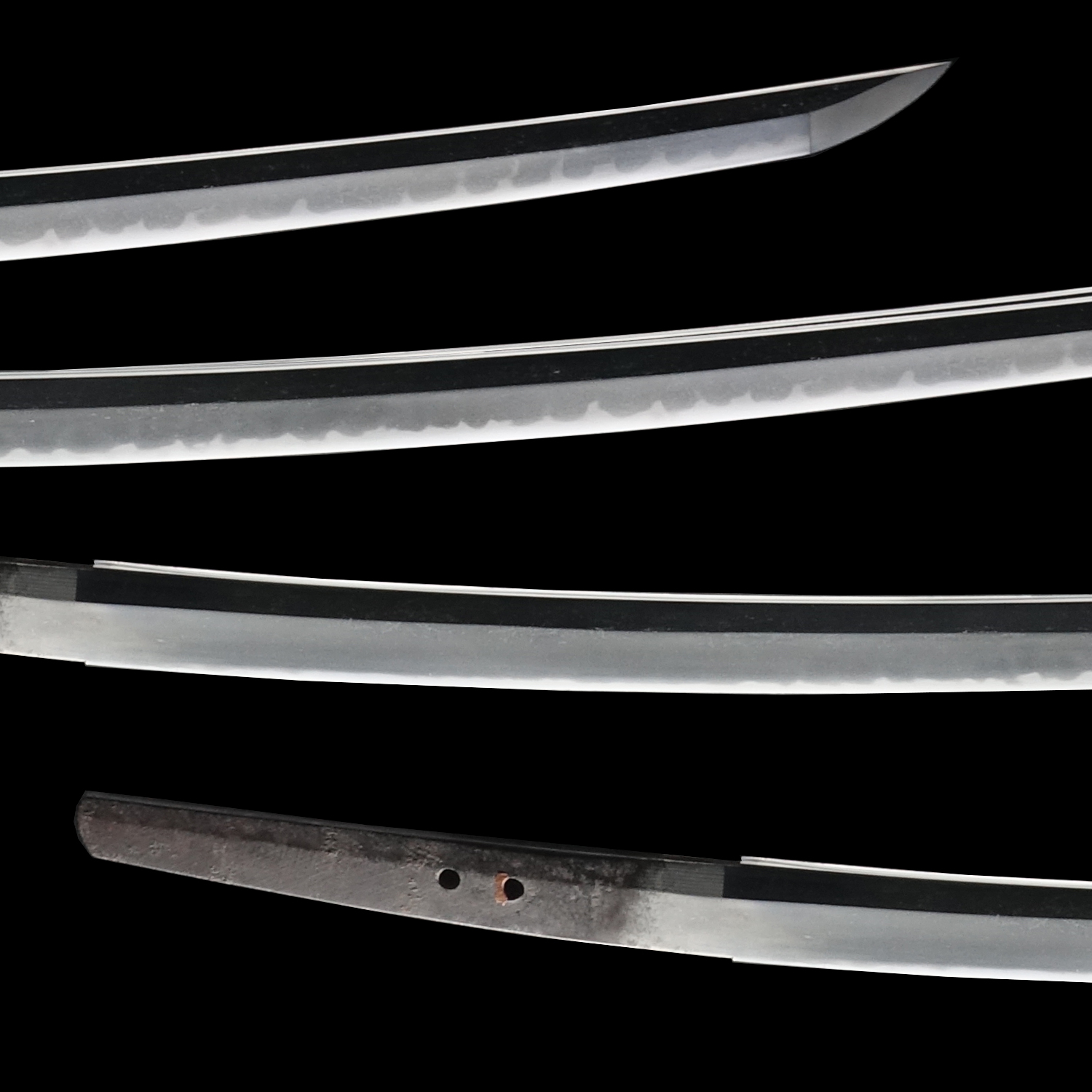
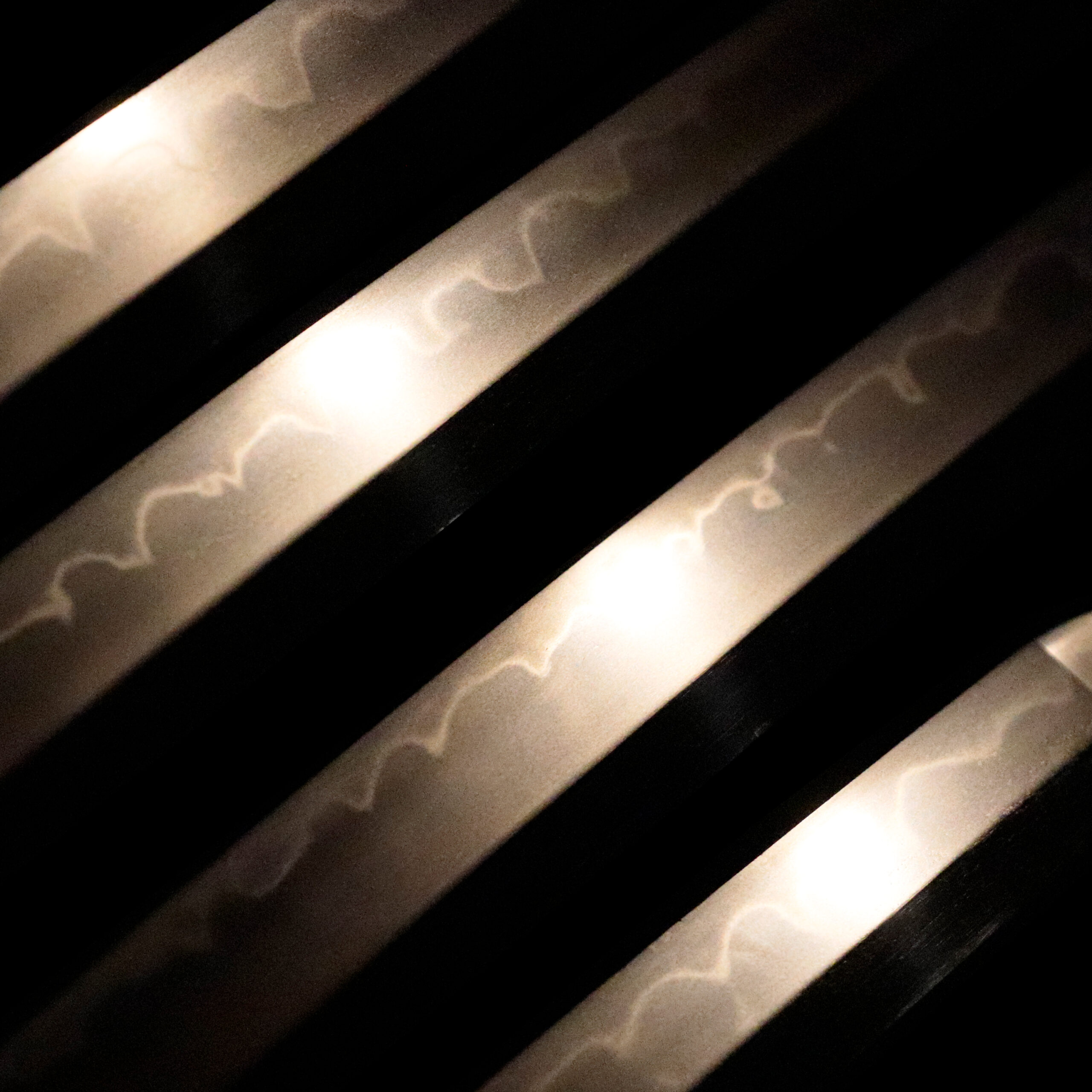
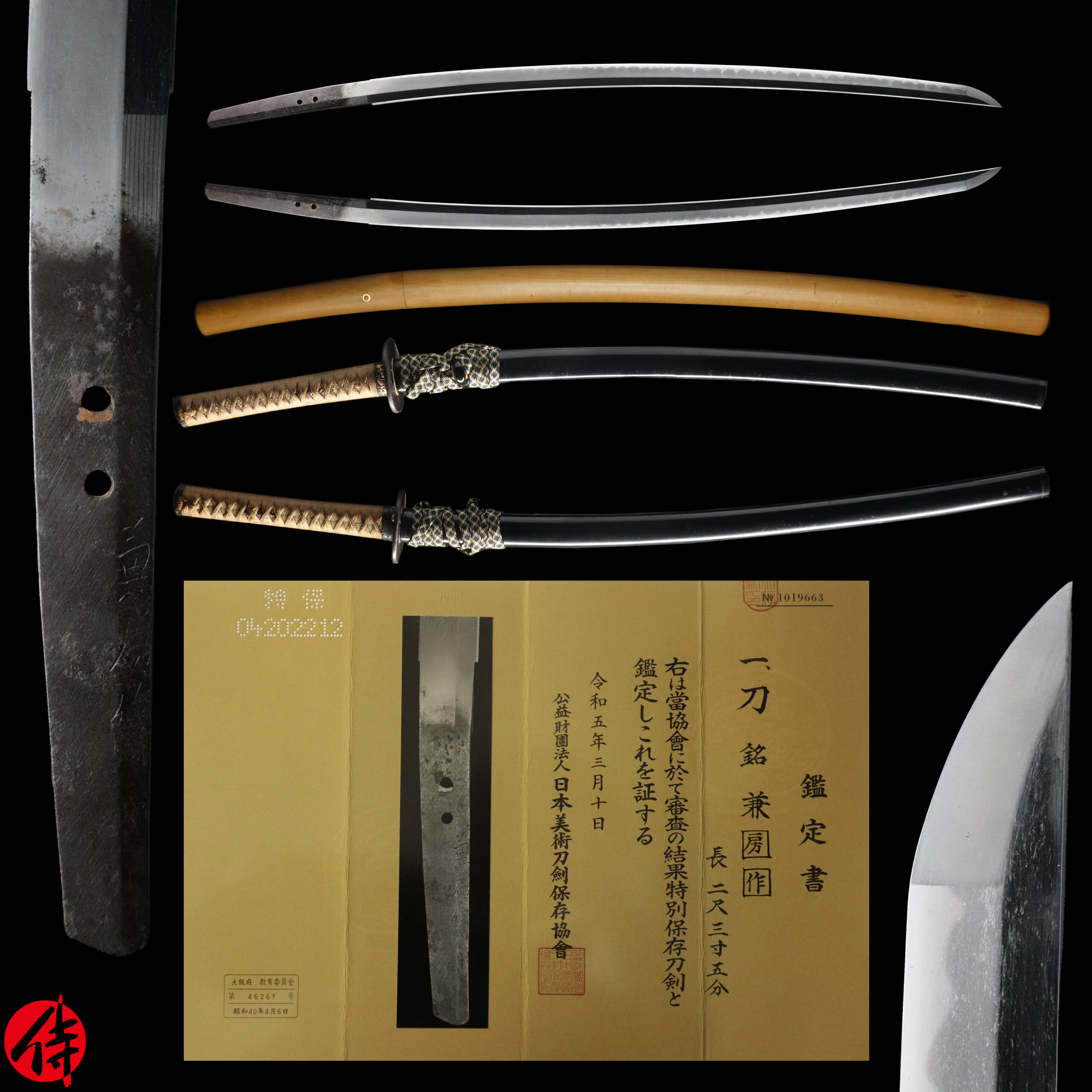
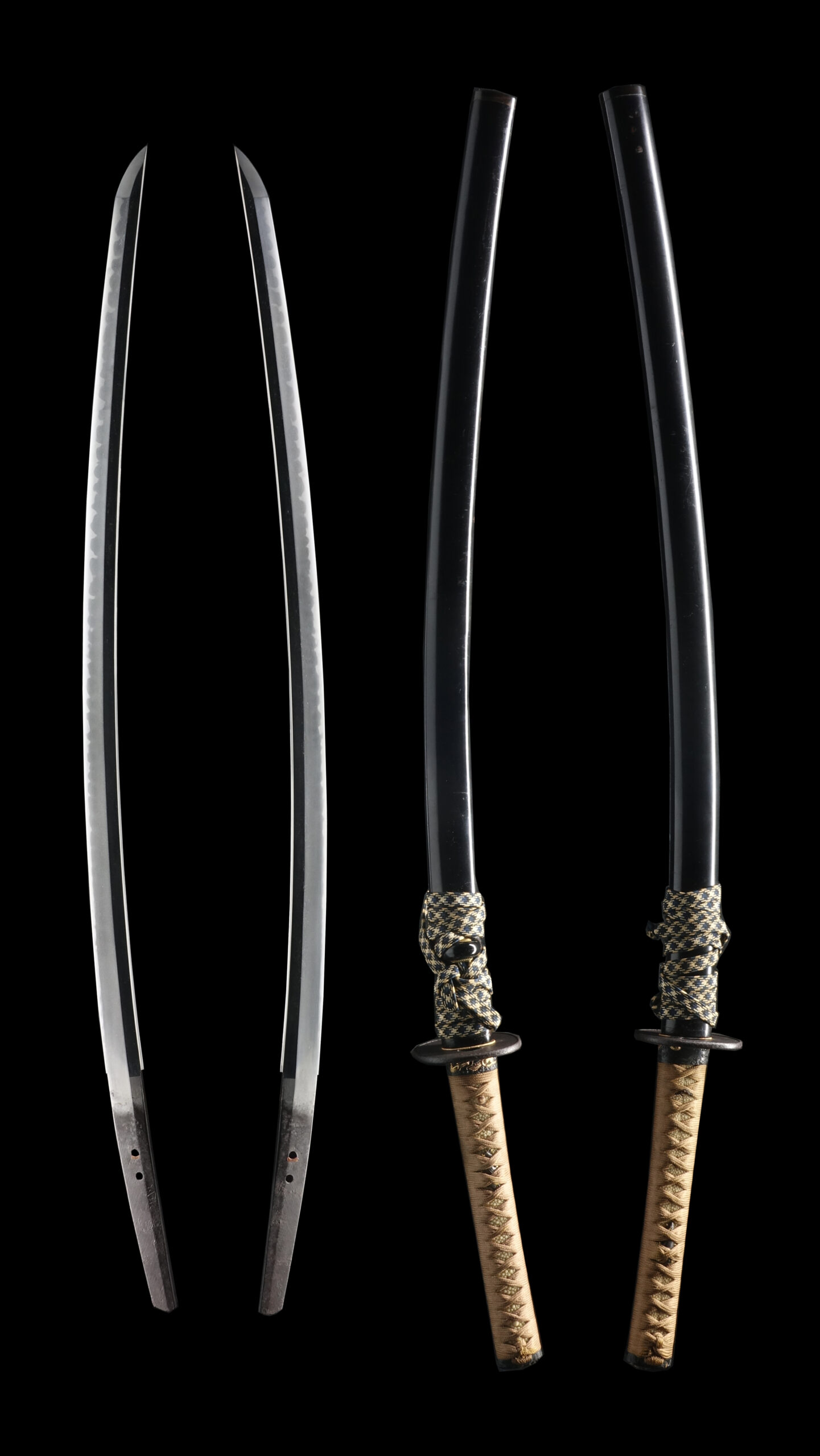
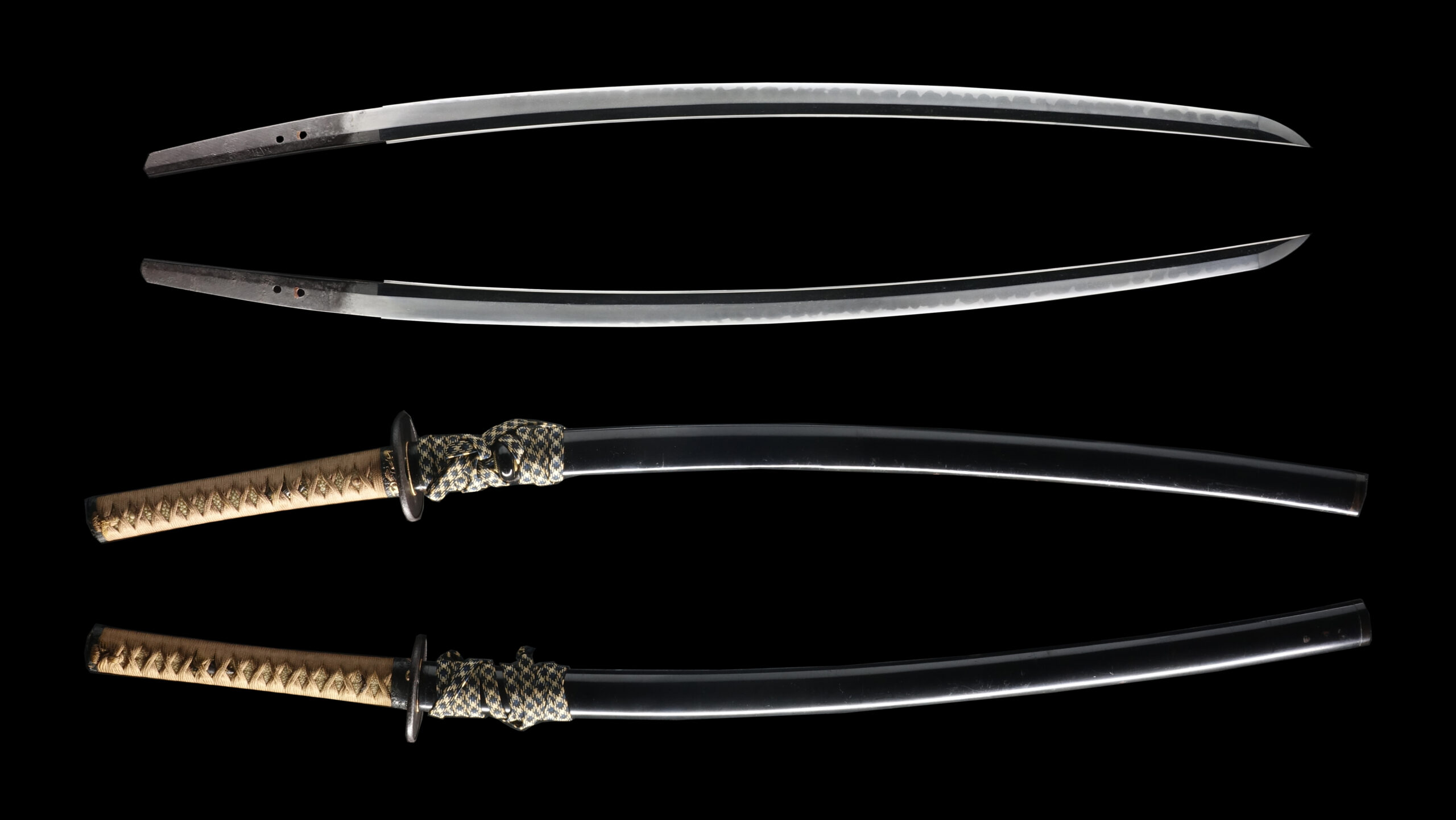
Mino-den · Mino · around 1558-1570
Tōken Taikan top 26%
3 pieces on the market now
Kanefusa is among the best-known smiths of the Mino tradition in the Muromachi period, working from the town of Seki in Noshu. According to sword-signature reference works, his origins lie with the Akasaka smiths, and the first generation is considered to have been Shigefusa, active around the Kakitsu era (1441-1444). The name continued under successive generations from the mid-Muromachi period into the shinto era. Among extant dated works, examples are recorded from the Bunmei, Tenbun, Eiroku, and Tensho eras, with the greatest number of surviving pieces — including those bearing two-character signatures — dating from approximately Eiroku through Tensho. Most long-signature examples are cut "Noshu Seki-ju," confirming that the smith resided in Seki.
Kanefusa is particularly famed for having devised the temper pattern known as "Kanefusa midare" (also termed Kenbo midare), an idiosyncratic gunome-choji whose heads are rounded and whose waists constrict. Beyond this signature style, works also appear in notare and in sanbonsugi-midare in the manner of Kanemoto, demonstrating a broad range of expression. The forging typically shows itame-hada with a tendency toward nagare, accompanied by ji-nie and an overall shirake-gokoro — a whitish cast characteristic of Mino workmanship. The nioiguchi tends toward tightness with ko-nie adhering, and finer examples display tobiyaki and muneyaki interspersed throughout, producing a varied and lively temper. The bold, vigorous style associated with later Mino workmanship is consistently evident.
Kanefusa's best works are praised by the NBTHK as notably vigorous and full of spirited force, with ample nikuoki and robust overall shape deemed particularly pleasing. Blades in sound condition are recognized as kenzen, with both ji and ha well executed. The flamboyant expression of the distinctive midare, combined with wide mihaba and o-kissaki, produces an imposing sugata of dignified presence. Several designated examples also bear gold-inlaid cutting-test inscriptions of considerable documentary value, attesting to the practical esteem in which these blades were held during the Edo period.
Where Kanefusa stands among comparable artisans: across all of nihontō, and within tradition, era, and period. The tiers (Foremost · Leading · Major · Notable) weigh official designations from the NBTHK and Japan's Agency for Cultural Affairs, together with historical honors of lasting repute such as the Sansaku and Meibutsu-chō.
Select a lens to see how it's measured.
Mino-den · Mino
129 pieces on the market now
Seki (関), in Mino Province, grew from two roots set down in the Nanbokuchō period and rose to become the great center of mass sword production in the late medieval age. The published sources trace the wellspring of Mino swordmaking to Kinju (whose name the commentary also reads Kaneshige), counted since antiquity among the Masamune Jittetsu, the ten disciples of Sōshū Masamune, and to Kaneuji of the Shizu line; the Kokon Meizukushi records Kinju as a native of Tsuruga in Echizen who "crossed over to Seki and resided there," carrying the Sōshū-den manner east. Beneath that Sagami inheritance lay a Yamato foundation, legible in the Tegai descent of the Seki Zensada line through Kaneyoshi, so that the Mino-den the Seki workshops forged stands as a fusion of Yamato grain and Sōshū activity in nie. From this Nanbokuchō founding the name multiplied across the Muromachi period into Sue-Seki, the last and largest body of the tradition; its representative masters at the close of the old-sword age were Magoroku Kanemoto, famed for the sanbonsugi, and Izumi no Kami Kanesada, the smith called Nosada, while the Kanefusa, Ujifusa and Daidō hands worked beside them and the move of Wakasa no Kami Ujifusa to Kiyosu carried the Mino body to the threshold of Owari shintō. A common Mino vocabulary binds the Seki body, however widely its members range. The forging is an itame that stands and runs to masame, often mixed with mokume and nagare, over which rises the cool whitish shirake-utsuri of Mino steel rather than the bright midare-utsuri of Bizen; this pale, standing jigane is the constant tell the judges read first, present alike on Kinju's Nanbokuchō katana, Kaneyoshi's Ōei tachi and Nosada's late-Muromachi blades. Over it the smiths temper gunome into which the pointed togariba of Mino enters, with ko-nie clinging to a tight nioiguchi, ashi and yō, and sunagashi streaming through; the bōshi answers in midare-komi turning to a pointed or jizō-cast ko-maru swept with hakikake. From this shared grammar the individual hands diverge.
Kanemoto fixed the regular three-cedar sanbonsugi of pointed teeth; Kanefusa devised the rounded-head, constricted-waist "Kanefusa midare"; Kinju and the early founders held a calmer, rounder gunome away from the restless Shizu line, their work laid with thicker ji-nie and dry, standing grain. The late masters carried the manner to a higher finish: Nosada wove togariba among rounder forms for a broader temper than Kanemoto's one-sided file, and turned at times to a slender Rai-styled suguha with a hidden gunome; Kaneyoshi held instead to a cool ito-suguha, the disciplined Yamato face of late Seki, lightly broken with ko-gunome. A collector seeks Seki because it is the connoisseur's ground for reading Mino-den across a vast body of signed and attributed work. The kantei runs through the jigane first: the standing, masame-leaning itame and the whitish shirake separate a Seki blade from Bizen and Yamashiro, after which the pointed togariba, the dry nie, and the pointed or jizō bōshi confirm the province; the discriminations the judges draw, Kinju held apart from Shizu by his rounder gunome, Nosada parted from Kanemoto by his breadth, give the eye its anchors. Within the school the standing of the best members is settled: Magoroku Kanemoto for the sanbonsugi, Nosada whom the swordbooks call simply "an excellent master" and the most accomplished of the several Kanesada hands, and the early Kinju as a rare and precious founding name, his record running through the Jūyō tier with the signed pieces few and the long blades attributed den. Signature works carry real provenance: a Kinju tantō presented to the Tokugawa shogunal house in 1679, a Nosada katana borne by a chief retainer of the Kii Tokugawa and a tachi forged for the father of Takeda Shingen, a Kaneyoshi tachi transmitted in the Chikuzen Kuroda family. Beyond connoisseurship, Seki's blades earned a battlefield reputation for cutting; the full hiraniku and stout build of the Sue-Seki katana, made to sever, set the wazamono standing that made Mino the working sword of its age. Learn more →
| Smith | Era | Designated |
|---|---|---|
| Kinju金重 | 1340-1346 | 42 |
| Kaneyuki金行 | 1350-1352 | 10 |
| Kanekore兼之 | 1504-1555 | 7 |
| Kanenori兼法 | 1579-1615 | 5 |
| Nagasada永貞 | 1862-1866 | 5 |
Mino in the Muromachi period
Sengoku Seki was an industry: smiths organized under their tutelary Kasuga shrine, arming the war bands of central Japan. Magoroku Kanemoto’s sanbonsugi and the finest Kanesada work prove quality survived inside mass production.
A Hozon-certified blade judged to show notably superior workmanship and a better state of preservation. The bar is higher: re-tempered blades and most unsigned Muromachi/Edo works are excluded.
The NBTHK (Nihon Bijutsu Tōken Hozon Kyōkai, the Society for the Preservation of Japanese Art Swords) is a public-interest incorporated foundation founded in 1948 and supervised by Japan’s Agency for Cultural Affairs (Bunkachō); it is based at the Japanese Sword Museum in Tokyo. Its expert panels physically examine each submitted work (shinsa) and issue a certificate (kanteishō) ranking it by artistic and historical merit. NBTHK papers are the most widely recognized standard of authentication for Japanese swords and fittings.
NBTHK official siteReturns/exchanges limited to defects caused by shipping (except willful misconduct or gross negligence by the company); customers must contact within 72 hours of receiving the product.
Certificate reading — 銘 兼房作