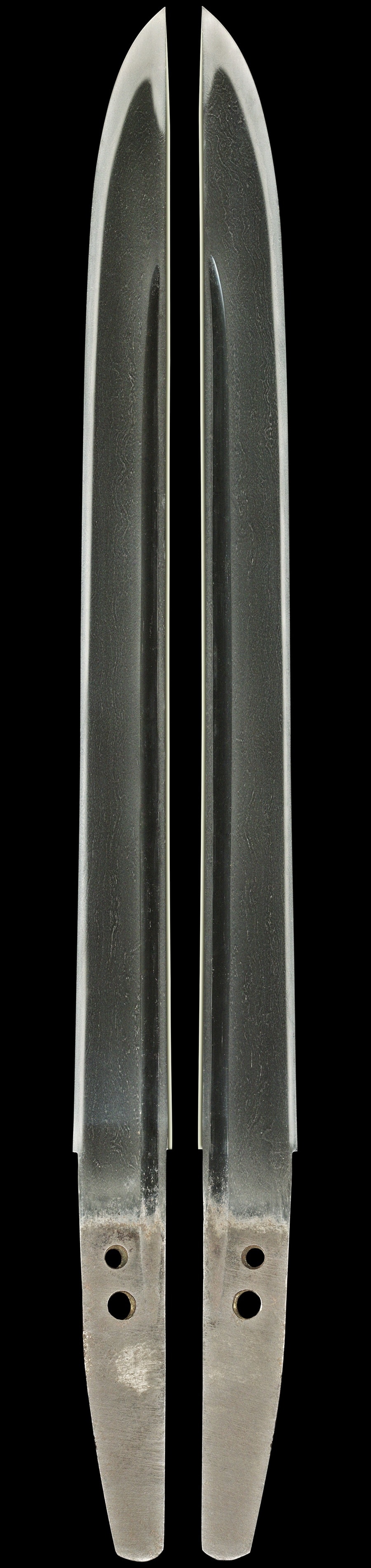
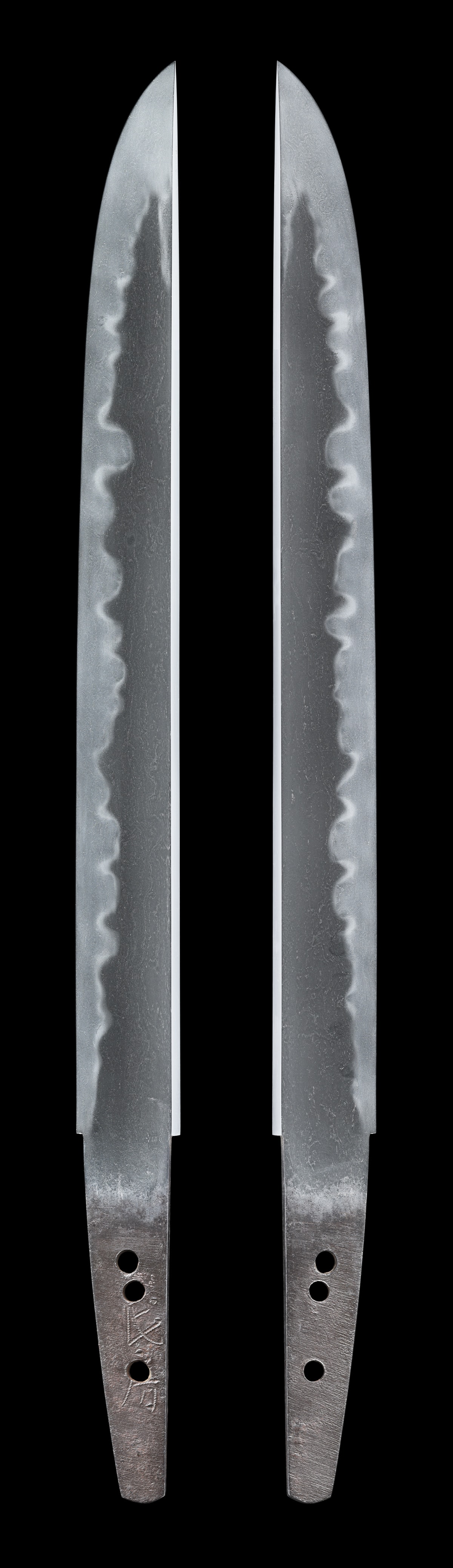
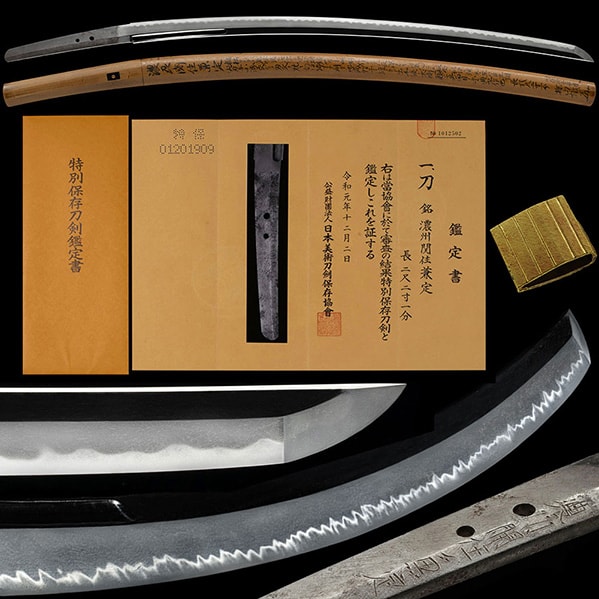
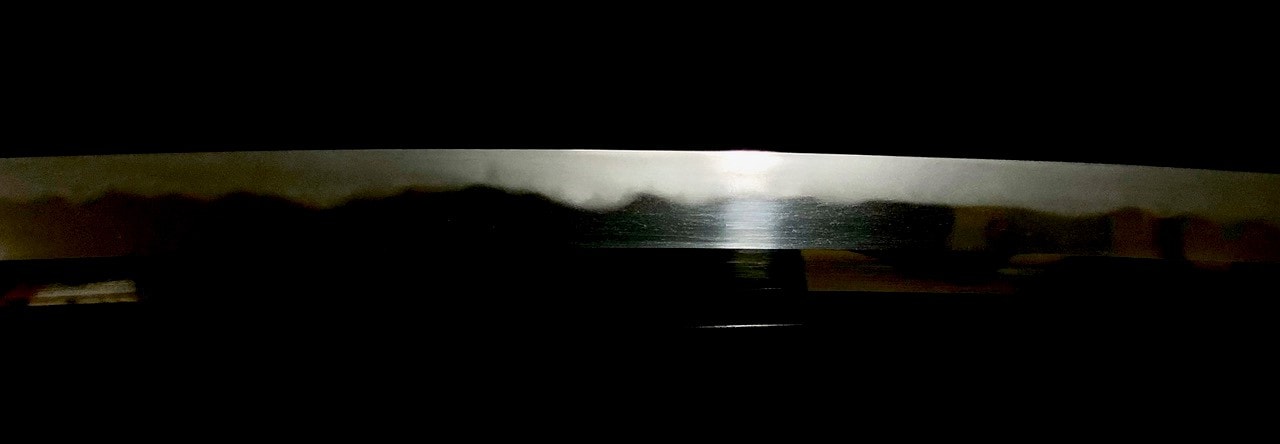
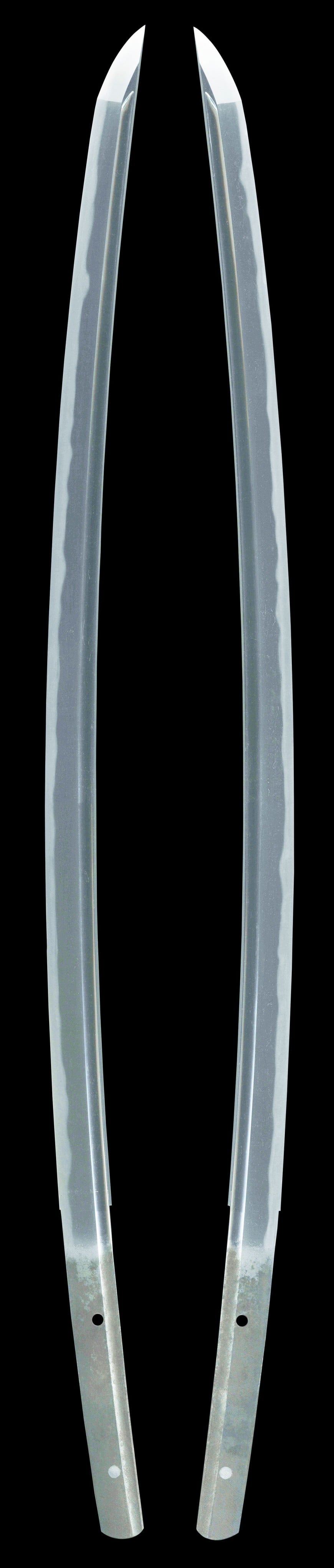
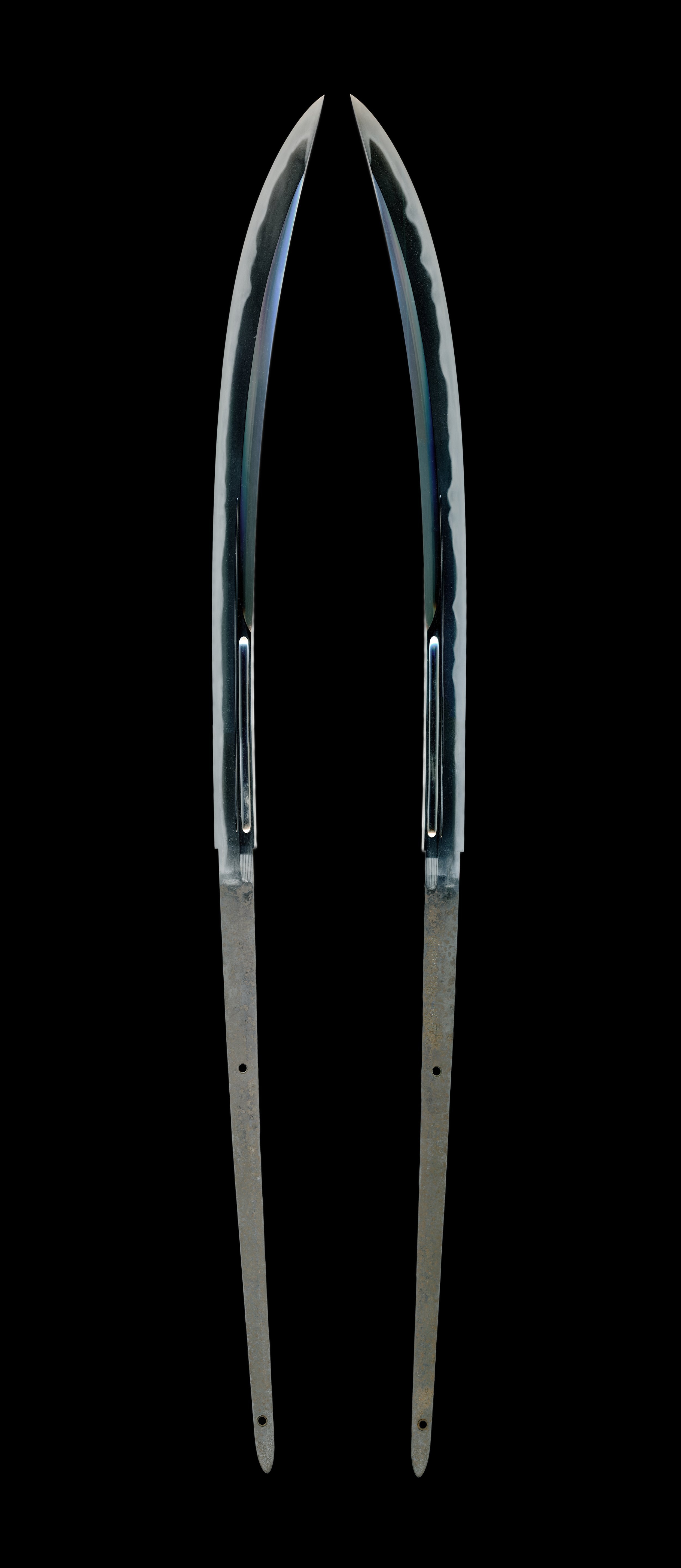
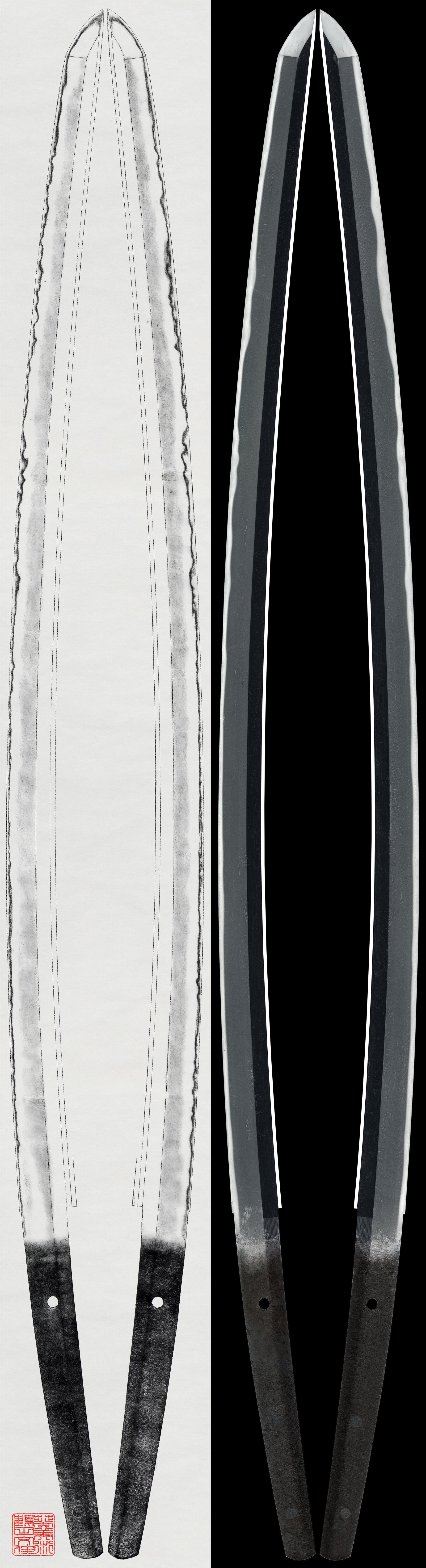
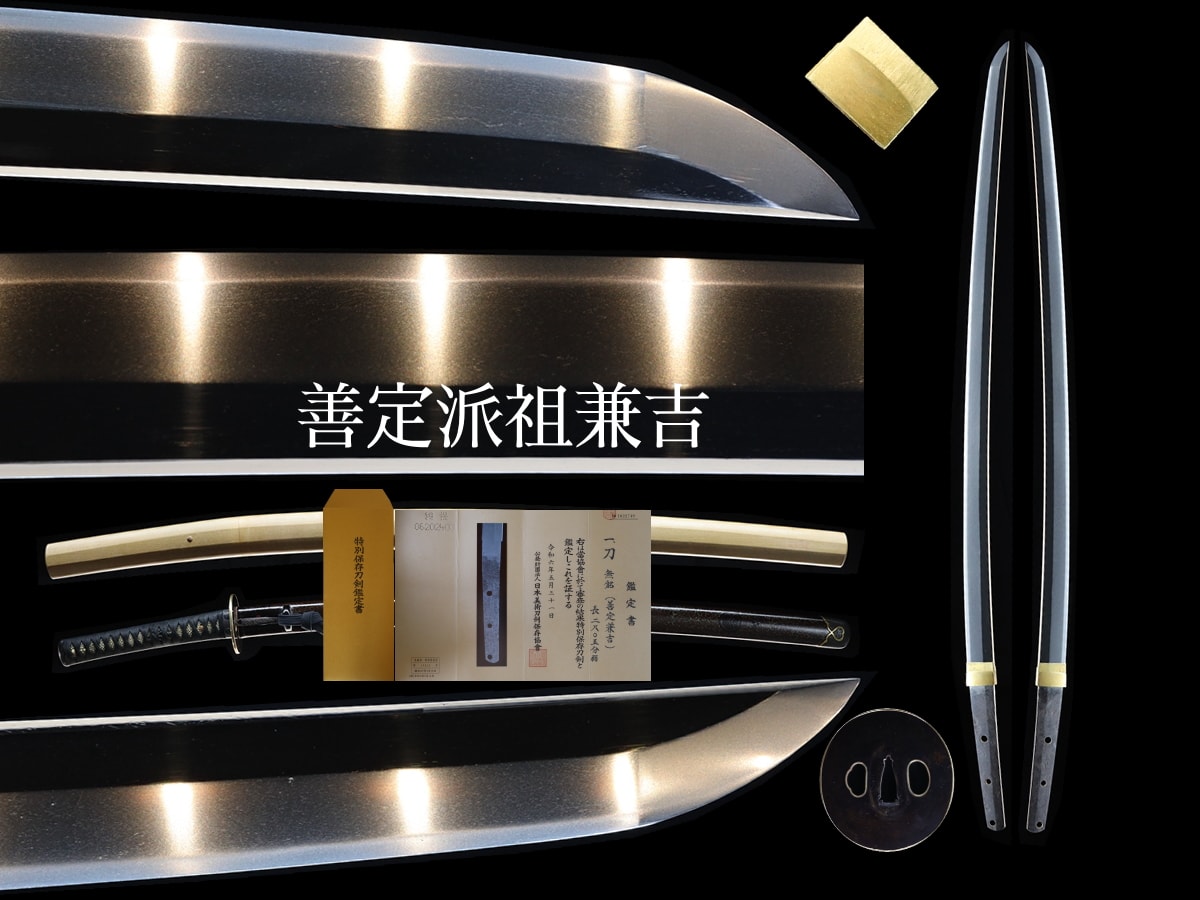
Kanefusa is among the best-known smiths of the tradition in the period, working from the town of Seki in Noshu. According to sword-signature reference works, his origins lie with the Akasaka smiths, and the first generation is considered to have been Shigefusa, active around the Kakitsu era (1441-1444). The name continued under successive generations from the mid- period into the era. Among extant dated works, examples are recorded from the Bunmei, Tenbun, Eiroku, and Tensho eras, with the greatest number of surviving pieces — including those bearing two-character signatures — dating from approximately Eiroku through Tensho. Most long-signature examples are cut "Noshu Seki-ju," confirming that the smith resided in Seki.
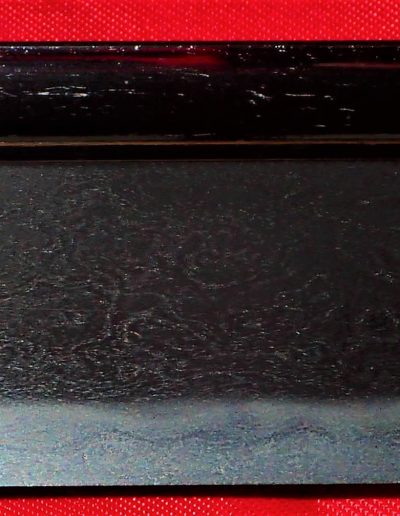
Kanefusa is particularly famed for having devised the temper pattern known as "Kanefusa " (also termed Kenbo midare), an idiosyncratic - whose heads are rounded and whose waists constrict. Beyond this signature style, works also appear in and in - in the manner of Kanemoto, demonstrating a broad range of expression. The forging typically shows with a tendency toward , accompanied by and an overall — a whitish cast characteristic of workmanship. The tends toward tightness with adhering, and finer examples display and interspersed throughout, producing a varied and lively temper. The bold, vigorous style associated with later workmanship is consistently evident.
Kanefusa's best works are praised by the as notably vigorous and full of spirited force, with ample and robust overall shape deemed particularly pleasing. Blades in sound condition are recognized as , with both and well executed. The flamboyant expression of the distinctive , combined with wide and , produces an imposing of dignified presence. Several designated examples also bear gold-inlaid cutting-test inscriptions of considerable documentary value, attesting to the practical esteem in which these blades were held during the period.