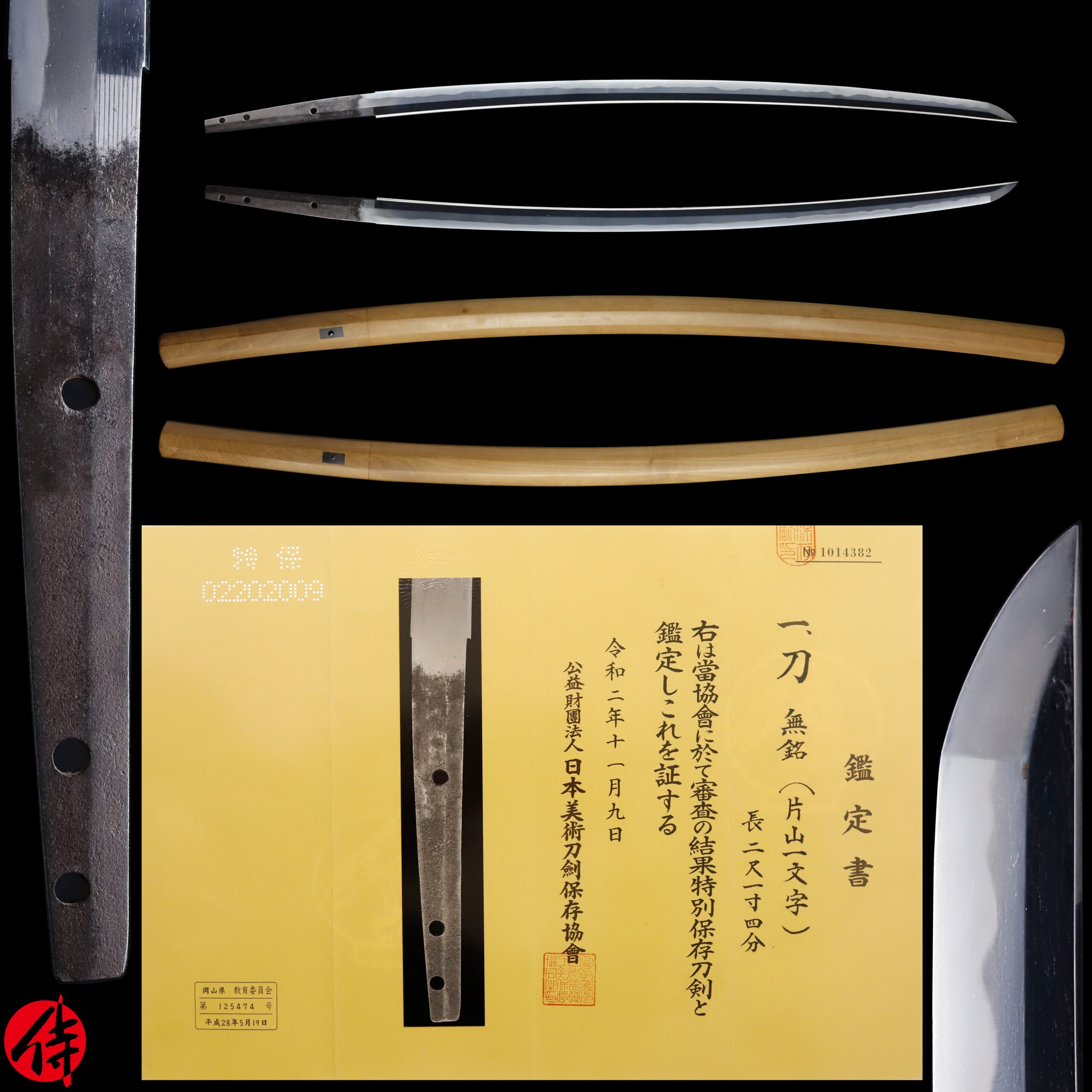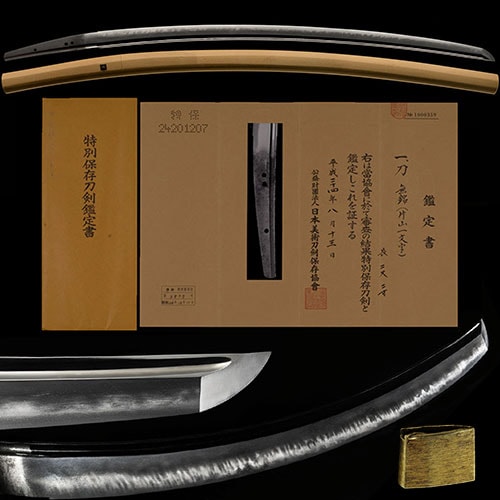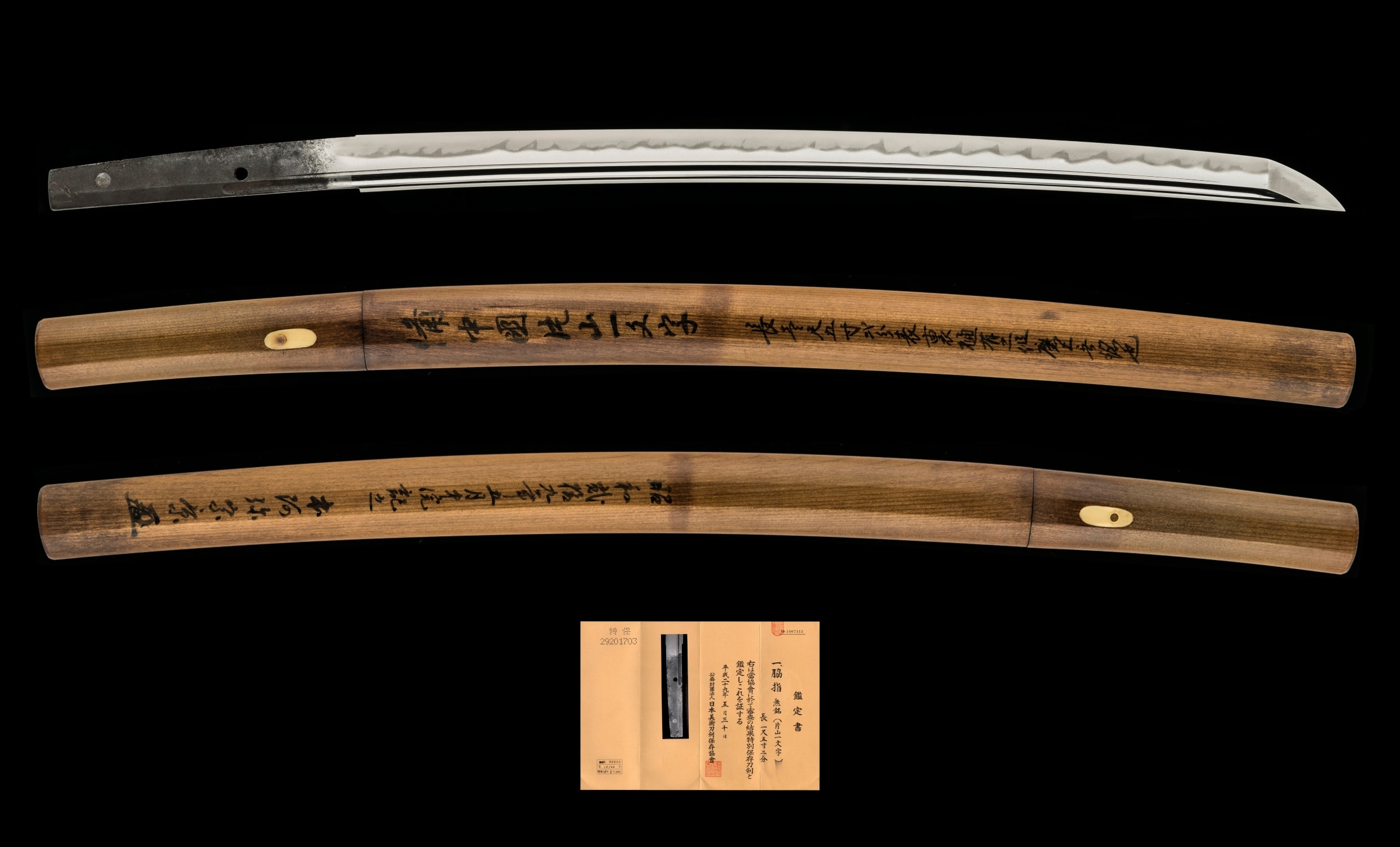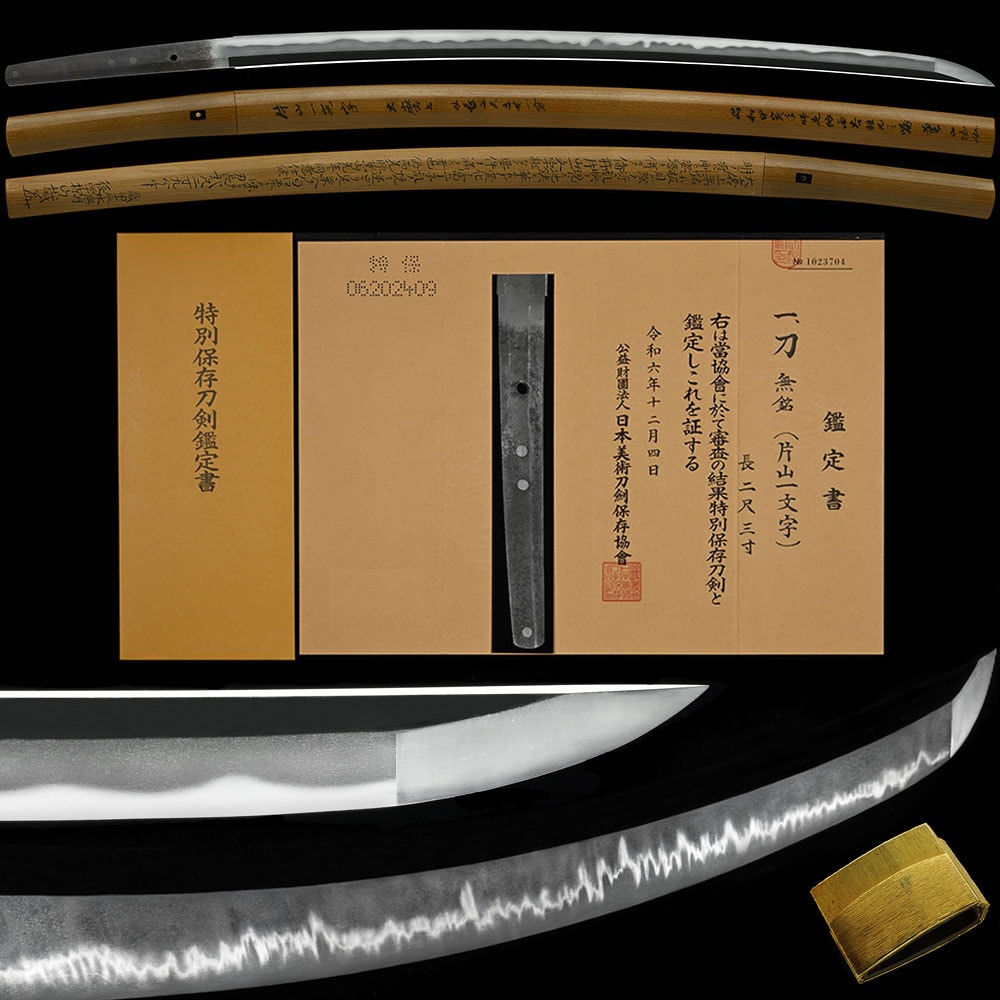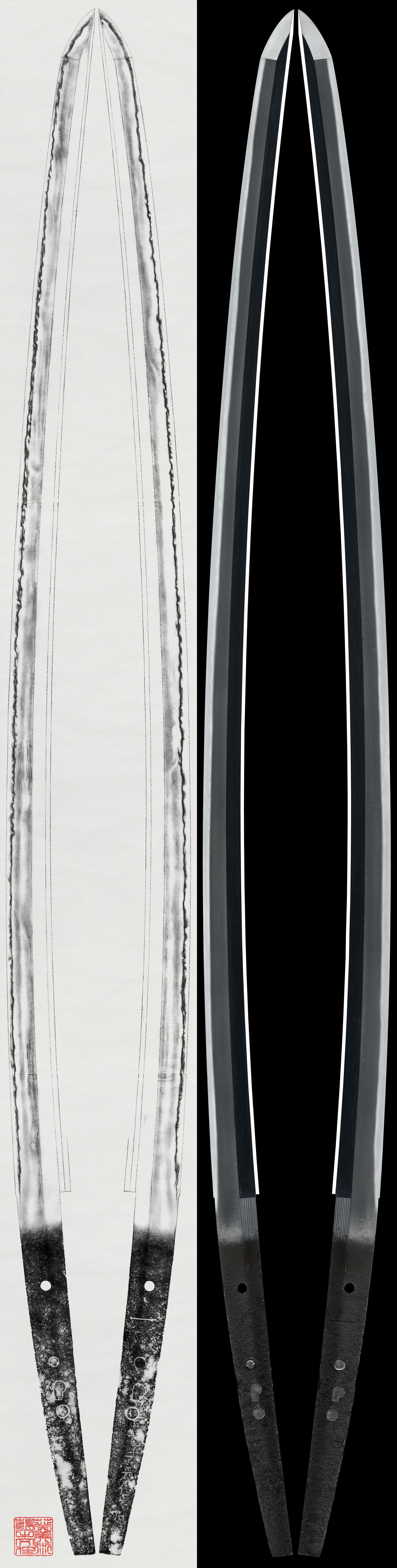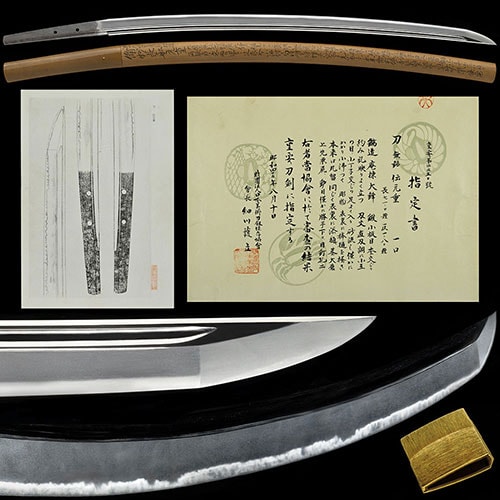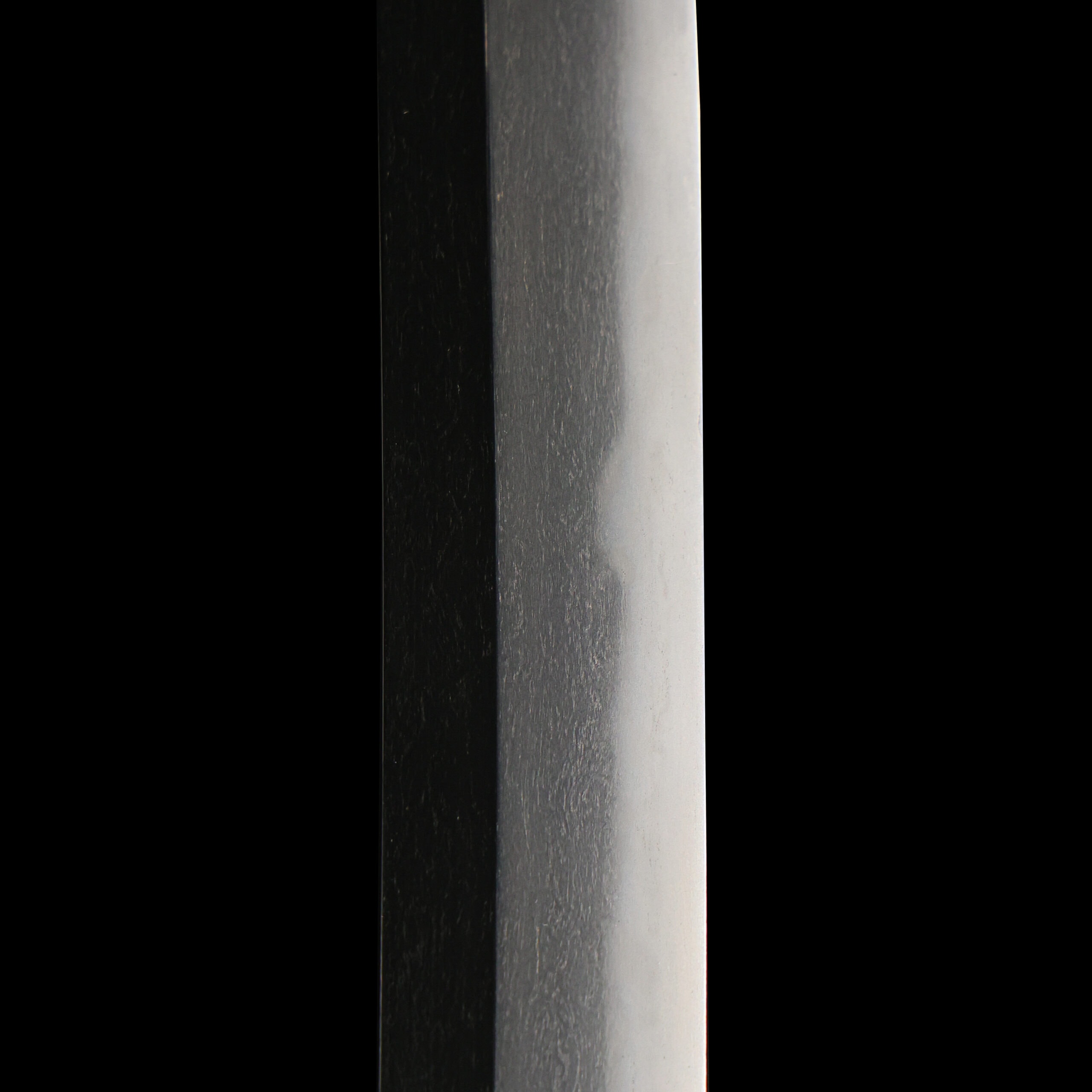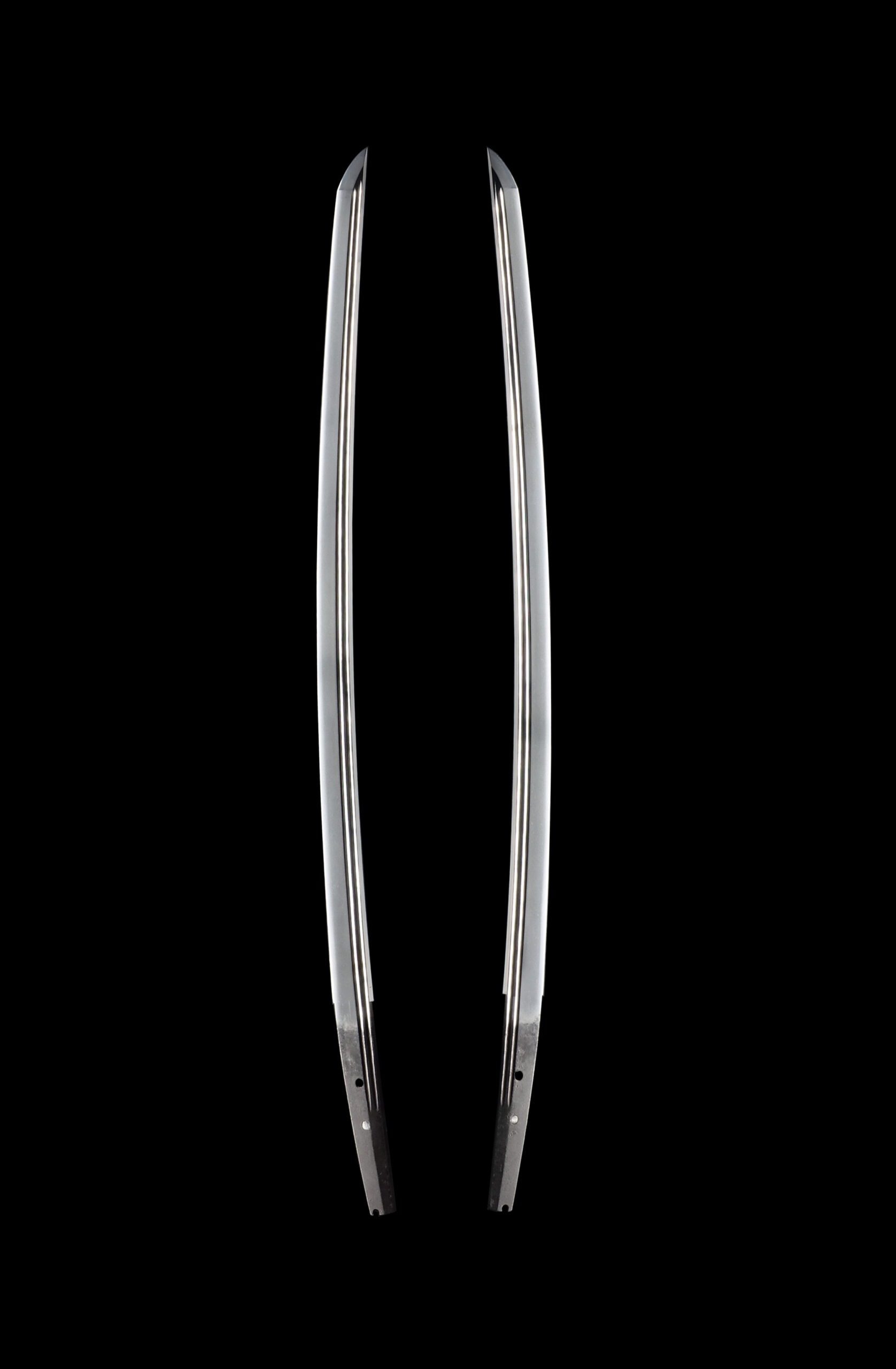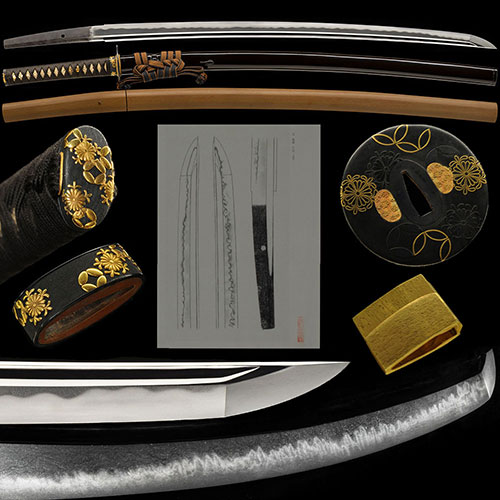
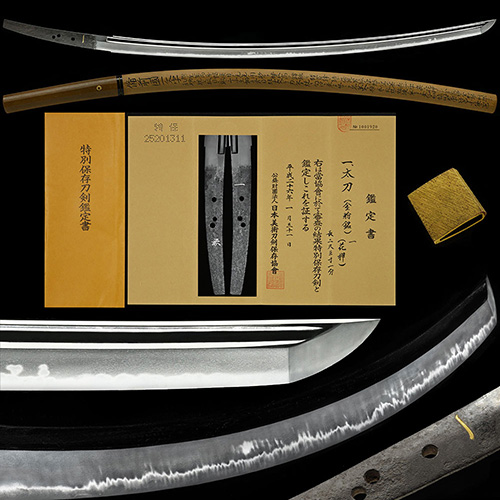


-, 51st Session — Designated October 13, 2005
, : Katayama school (片山一文字)
Measurements 68.6 cm, 1.4 cm, 2.9 cm, 1.9 cm, 3.5 cm, 17.7 cm, 1.1 cm
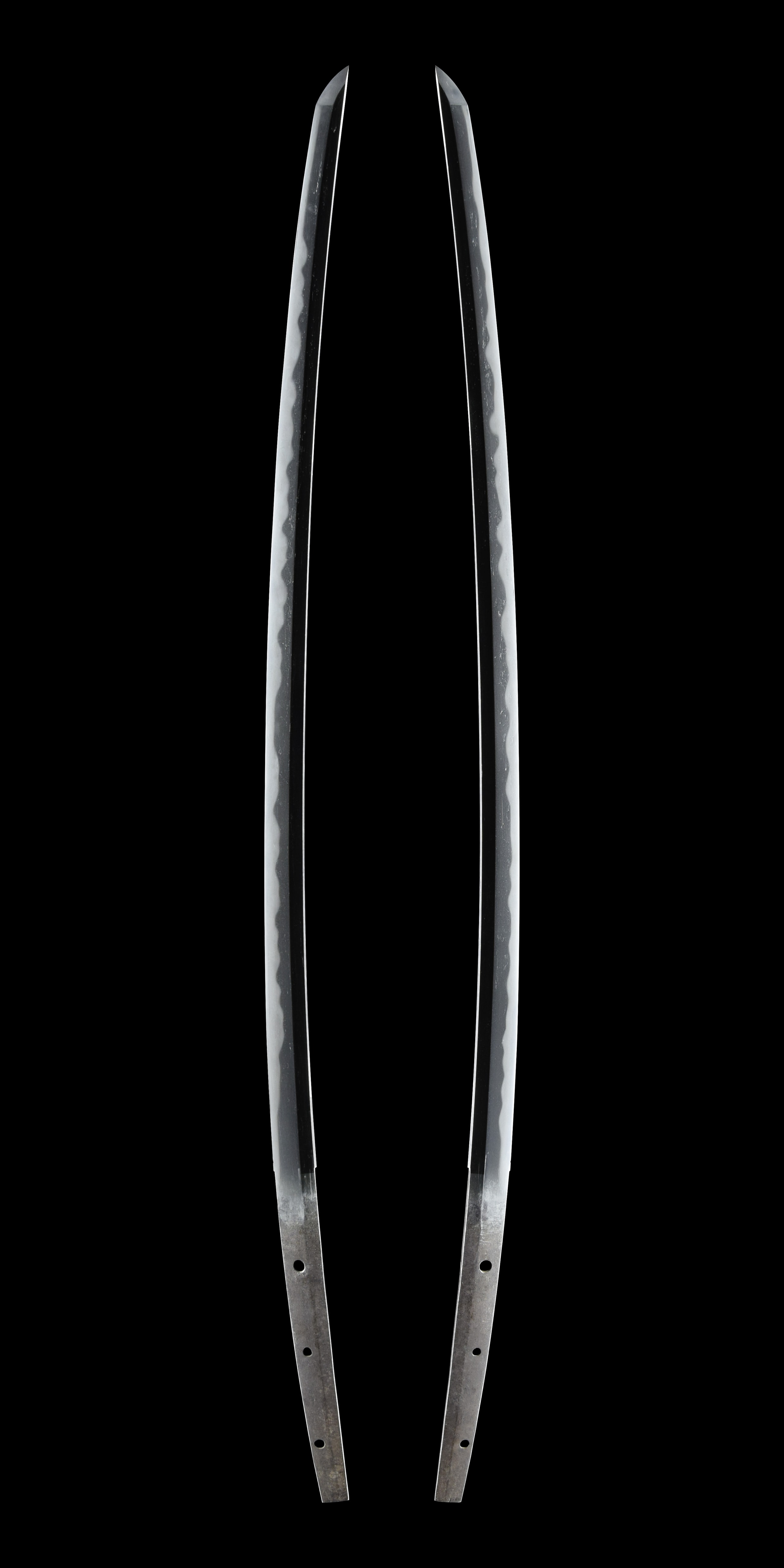
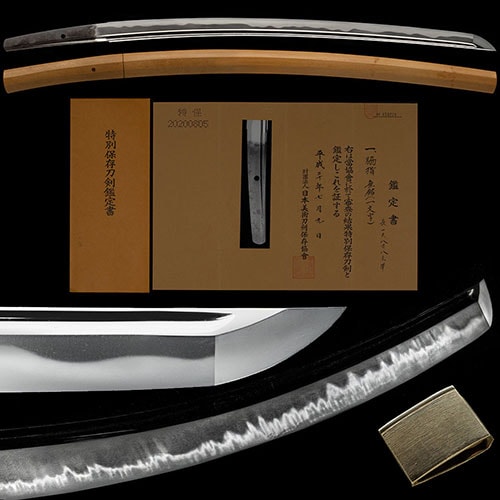
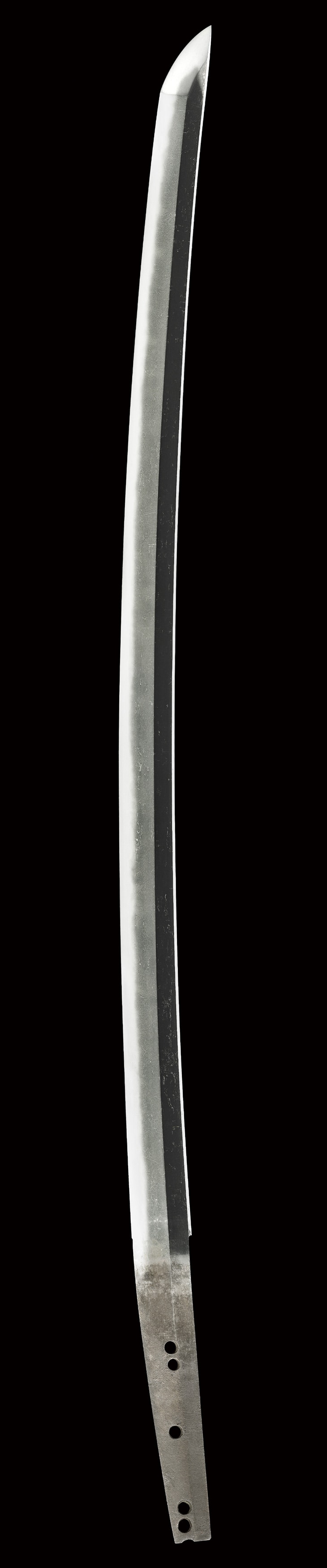
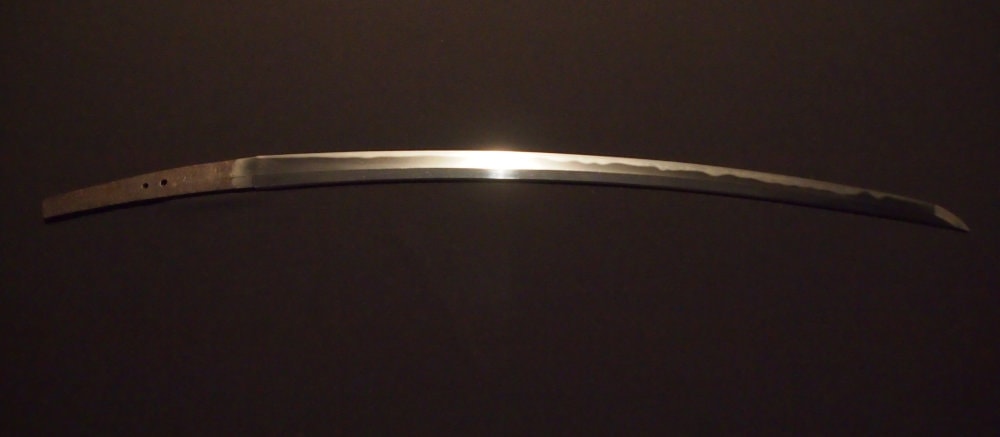
Description Keijo: , ; standard with little difference between base and tip width; shallow ; . : mixed with , tightly forged; very fine, thickly applied ; fine ; appears. : ; on the the is small, while on the large clustered (ōbusa) stands out; the temper shows height variation and forms a flamboyant irregularity; and enter well; adheres, with and . : on the straight, then tending to with slight return; on the it turns into with a somewhat pointed tendency toward the tip. : on both sides, carved as kaki-nagashi. : ; one ; unsigned.
Artisan Katayama school
Era period (late; inferred from school attribution)
Explanation The Katayama group arose when a line of the Fukuoka school later relocated to Katayama; thereafter the school flourished in that locality. Traditionally, the place-name “Katayama” has generally been taken to refer to Province; however, in recent years a theory has been advanced that it may instead indicate Katayama near Fukuoka in Province, a view that calls for further investigation. Hallmarks of this group include a strongly forged and clear and a that, compared with Fukuoka , tends toward smaller patterning; the often shows a reverse inclination (), and the within the are fine and closely spaced.
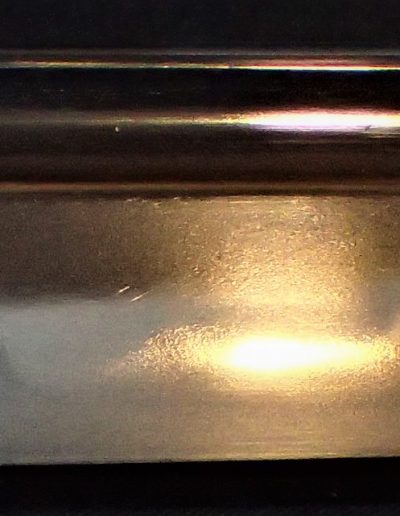
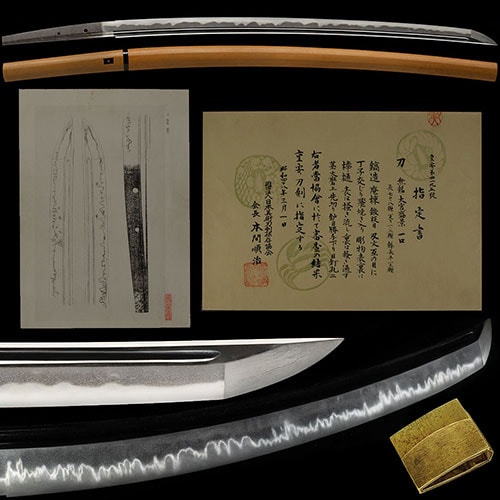
This blade shows a tightly forged construction of mixed with ; is applied in very fine particles, with fine , and a standing . The is : on the the is minute, while on the large clustered is conspicuous. and enter well; adheres; and and are present. These features clearly display the characteristics of the Katayama school, and the attribution is fully convincing. Moreover, even within this group the workmanship is notably refined, and the overall quality is outstanding.