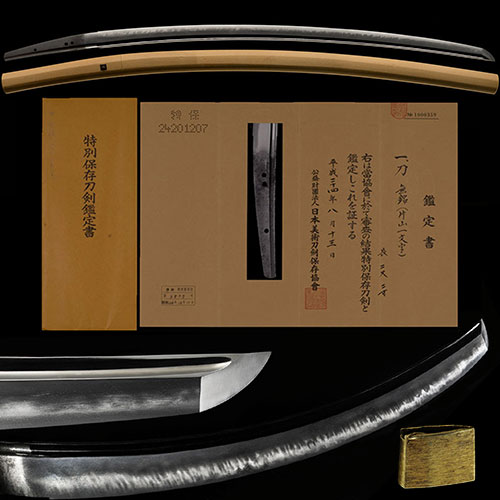
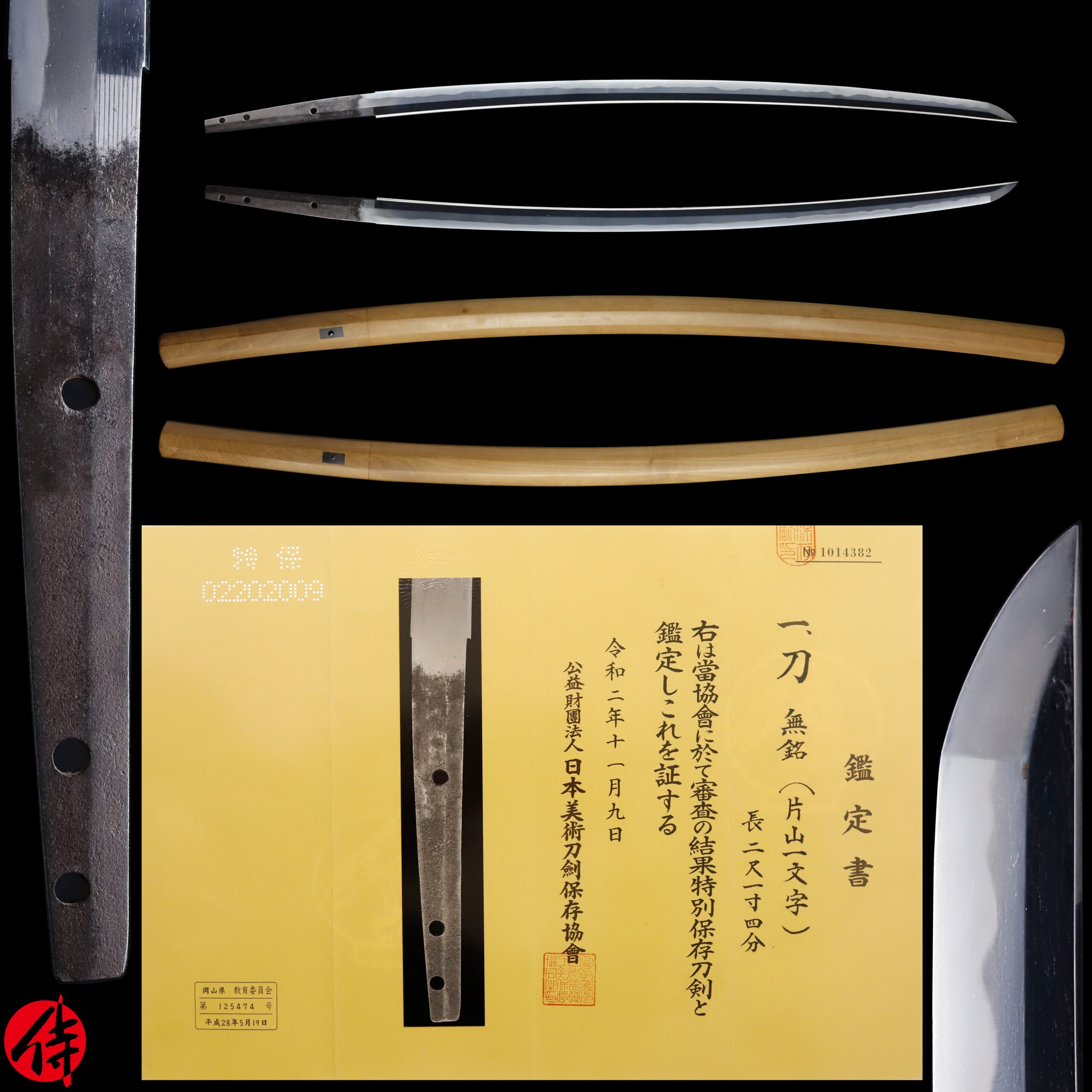
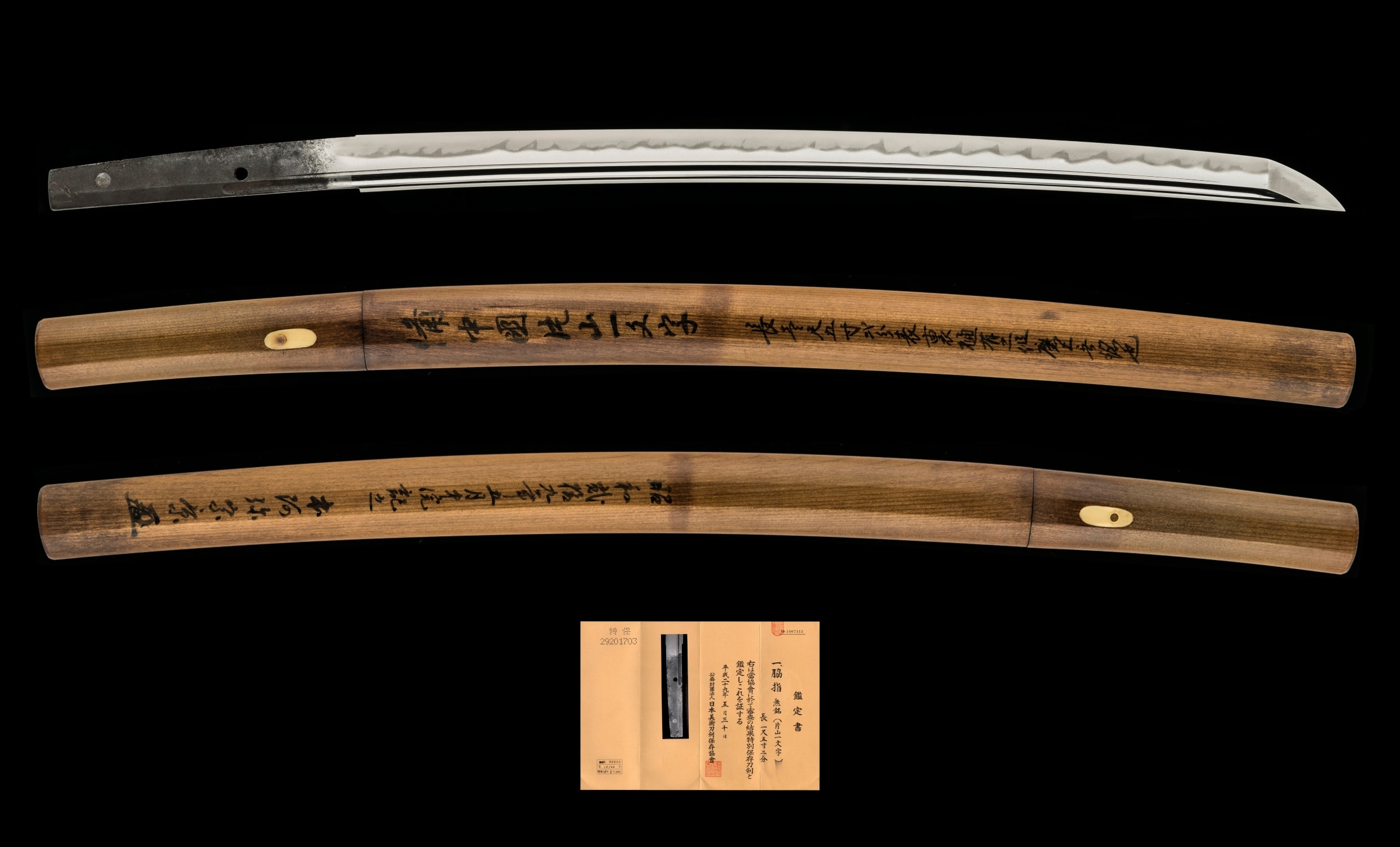
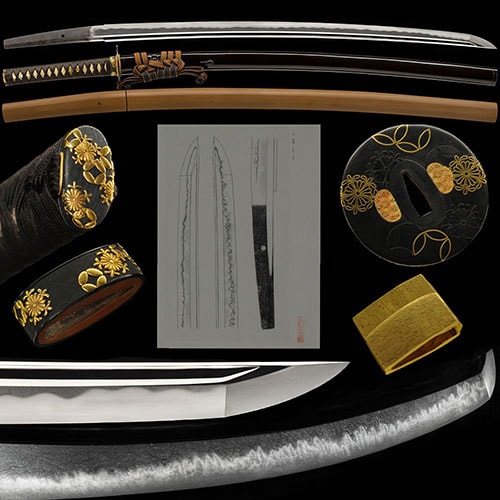
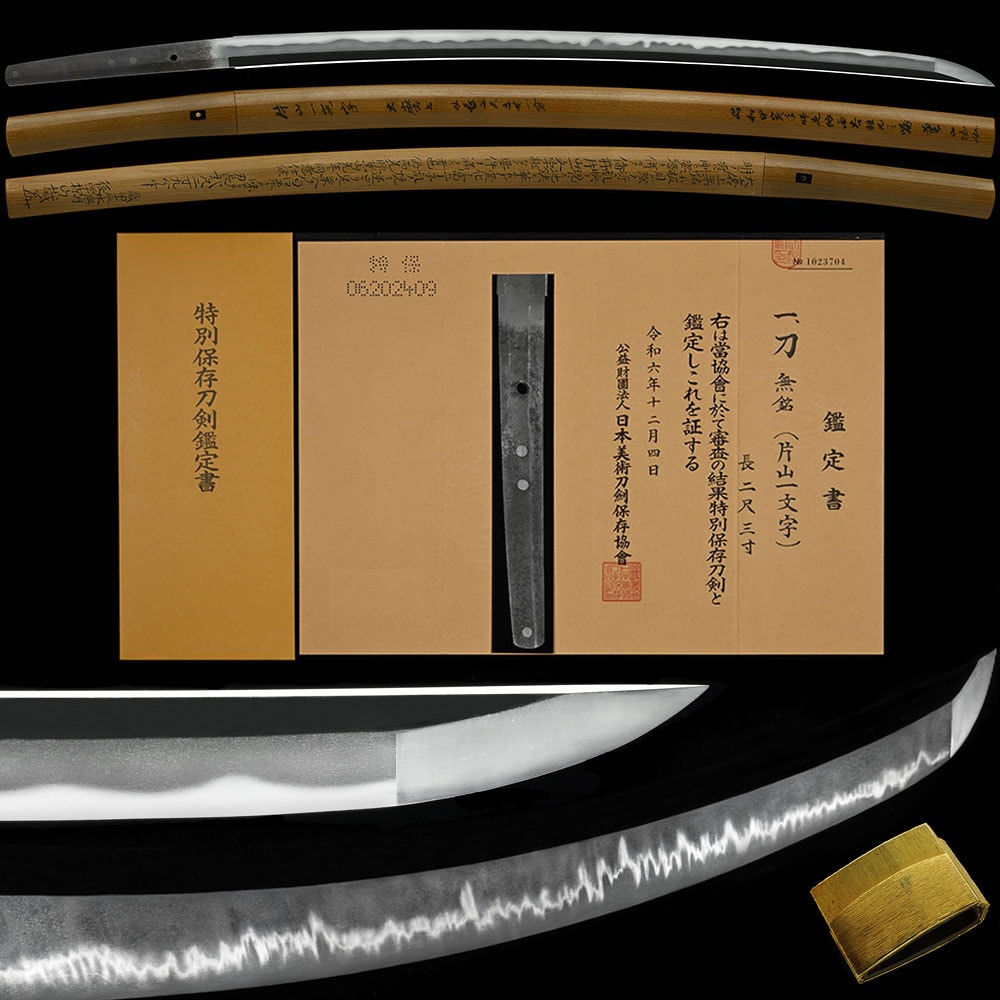
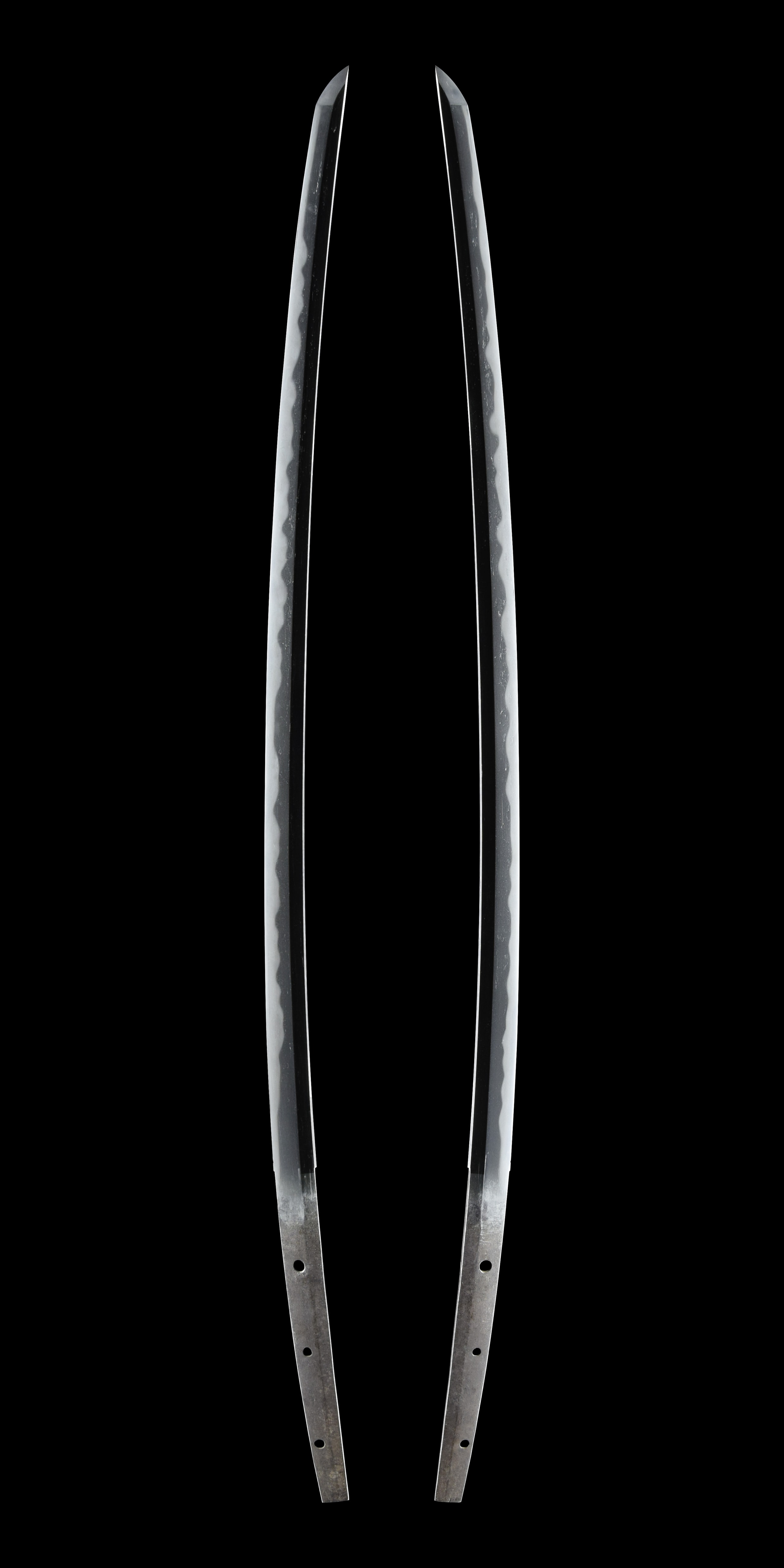
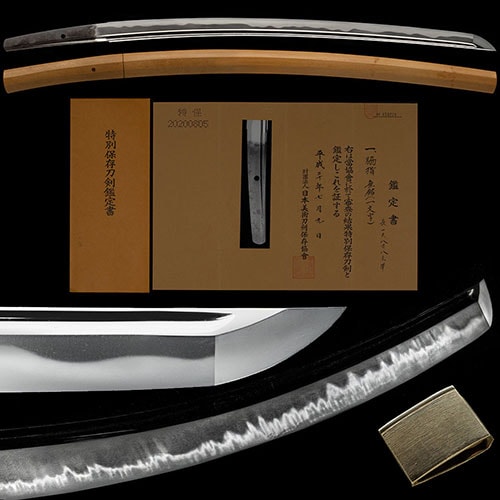
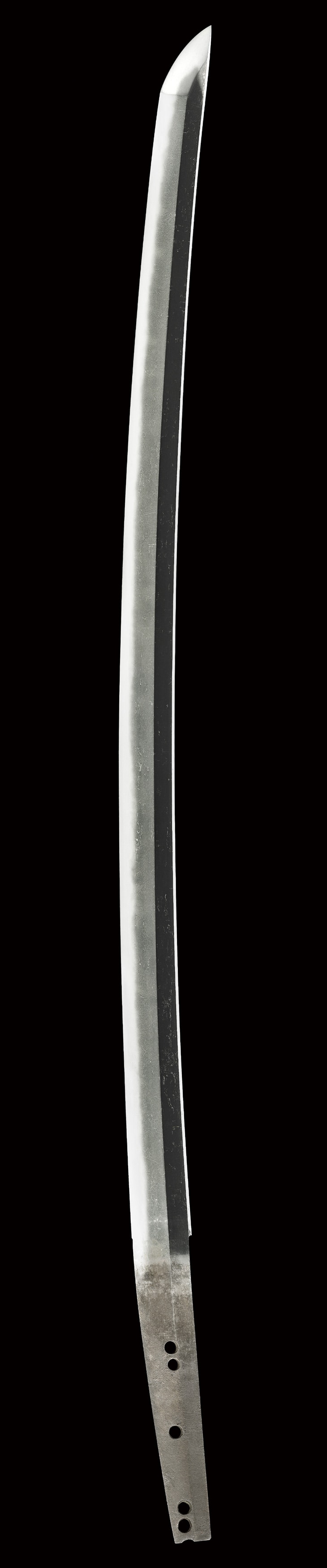
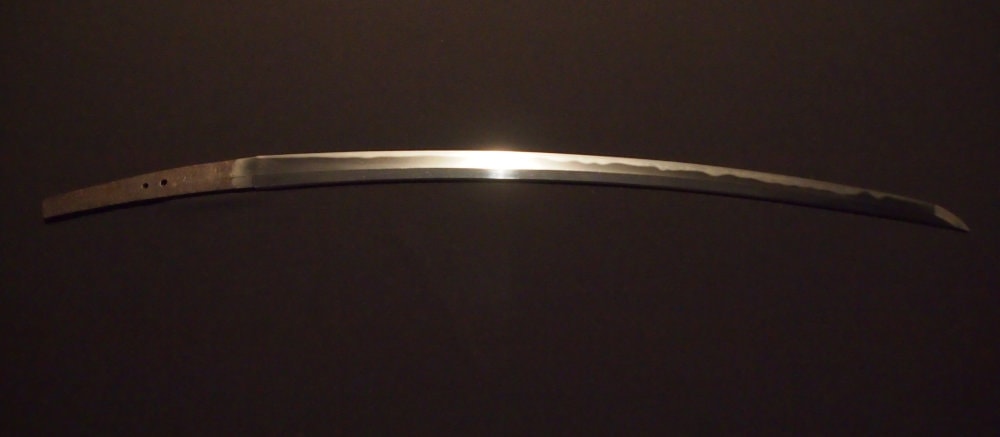
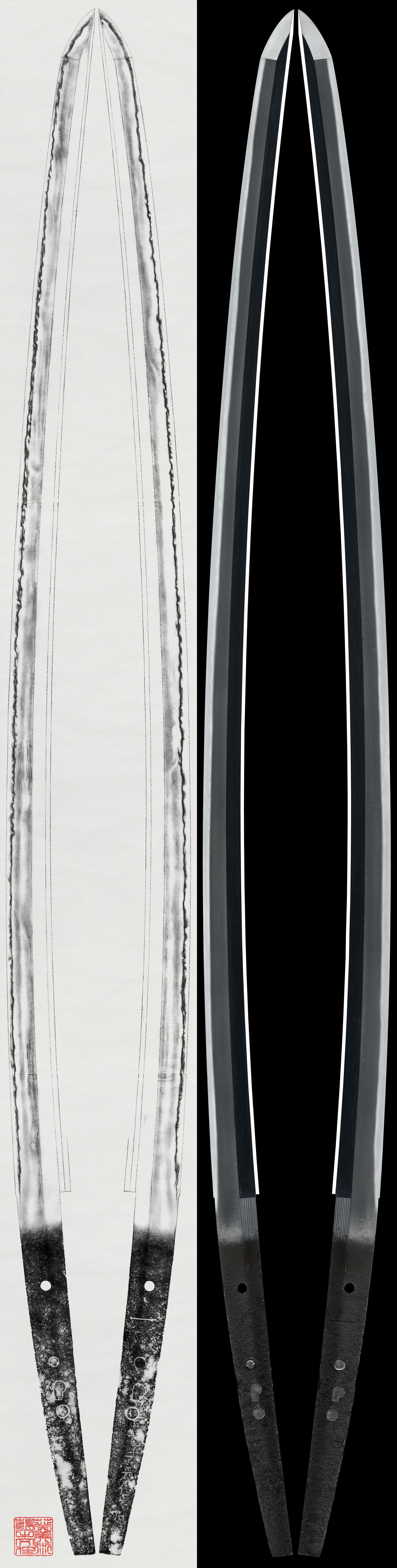
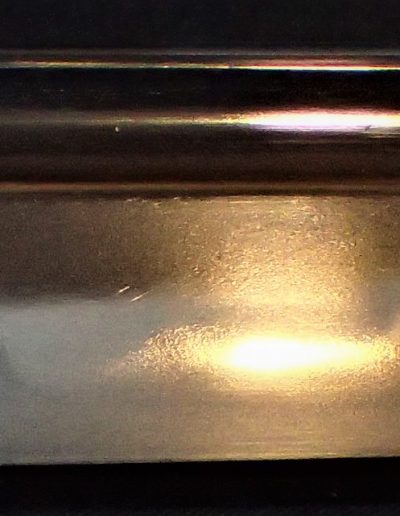
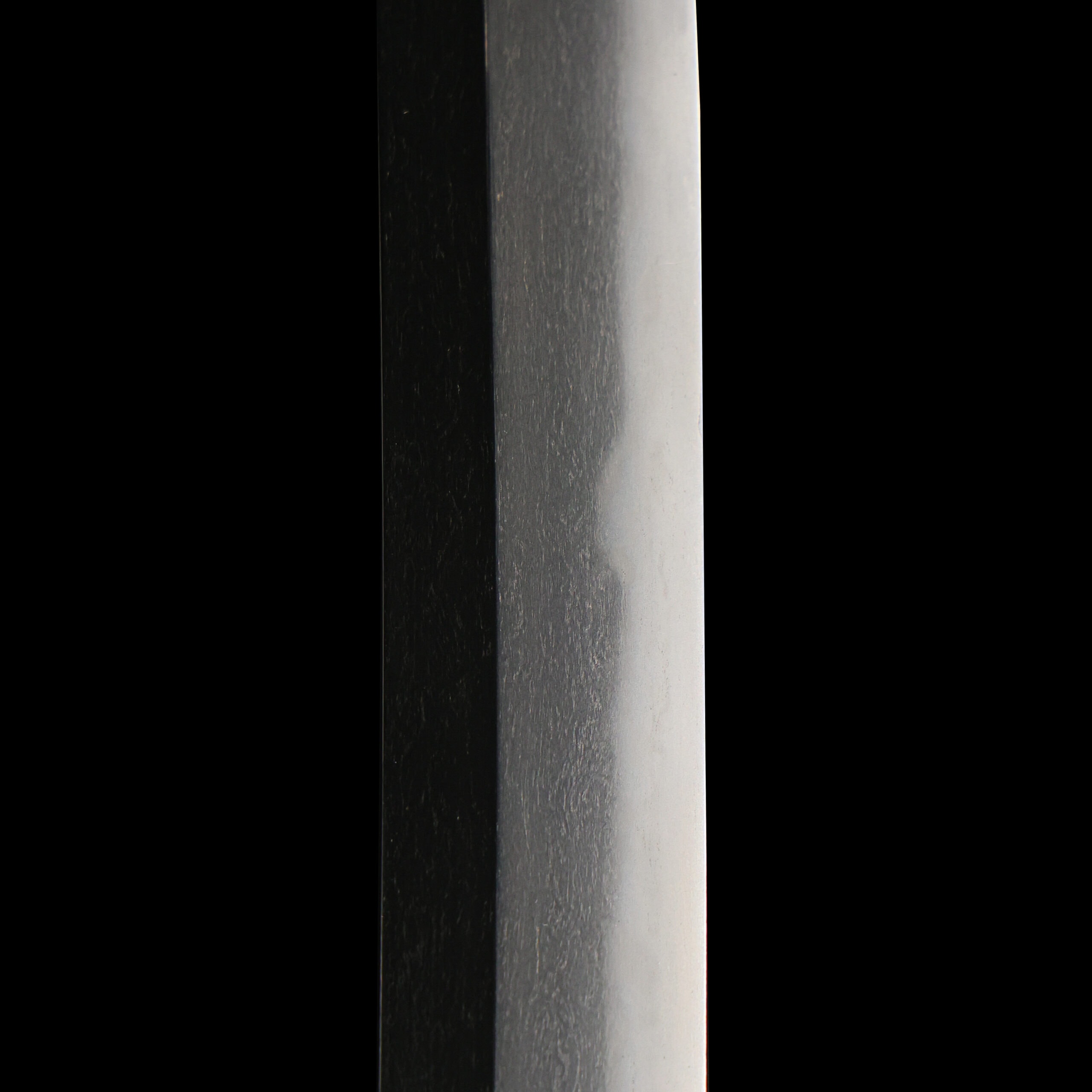
The Katayama Ichimonji school arose when Norifusa of the Fukuoka Ichimonji lineage relocated to Katayama during the mid-Kamakura period. While the place name "Katayama" has traditionally been identified with Bitchū Province, recent scholarship has advanced the theory that it may instead refer to Katayama in the vicinity of Fukuoka in Bizen Province, inviting further investigation. Norifusa, working alongside contemporaries Sukezane and Yoshifusa, is particularly renowned for forging splendid chōji-midare patterns, and it is thought that the name continued across several generations given the variation in signature styles and workmanship breadth observed among extant signed works. The school is traditionally celebrated as having excelled especially at naginata production, and many surviving works are naginata-naoshi conversions, typically showing wide mihaba with high shinogi, thin kasane, and large kissaki. The collective technical style of Katayama Ichimonji is characterized by a strong, clear jigane showing tightly forged itame-hada mixed with mokume and occasional nagare-hada, with extremely fine ji-nie adhering thickly throughout the surface. Fine chikei enter well, and midare-utsuri stands out distinctly—a consistent feature across the school's production. The hamon displays chōji-midare that tends toward somewhat smaller-scale patterning than the Fukuoka Ichimonji group, mixing ko-chōji, ko-gunome, togariba, and related angular elements in densely varied configurations.
A defining characteristic is the tendency for the undulations to show saka-gakari—a reverse-slanting inclination within the temper pattern—while abundant ko-ashi and yō enter well with a fine, detailed formation. The nioiguchi tends to be tight with ko-nie attaching, appearing bright and clear (saeru), often accompanied by kinsuji, sunagashi, and yubashiri effects. Many works show tobiyaki and occasional muneyaki, creating varied and vigorous scenery. The bōshi typically shows compact midare-komi ending in yakitsume or slight maru turn-backs. Although extant signed works are limited primarily to tachi, the unsigned works traditionally attributed to Katayama Ichimonji substantiate the school's reputation through consistent manifestation of its defining traits: the saka-gakari tendency in the temper, the small-patterned yet densely irregular chōji-midare, and the well-entering fine ashi within the ha. Many examples exhibit particularly vigorous and florid irregularities despite their small scale, with the nioiguchi displaying rich, full quality even within nioi-deki executions. The school's works are noted for retaining sound condition (kenzen) in both ji and ha, with the bright, clear appearance of the forging and the commanding vigor of the flamboyant chōji patterns representing enduring points of appreciation that distinguish Katayama Ichimonji within the broader Bizen Ichimonji tradition. Learn more →