Around 1800 Suishinshi Masahide argued in his writings that the craft must return to the old masters’ methods: the fukkotō revival. His greatest successor Naotane worked convincingly in Bizen and Sōshū manners that had been dead for centuries.
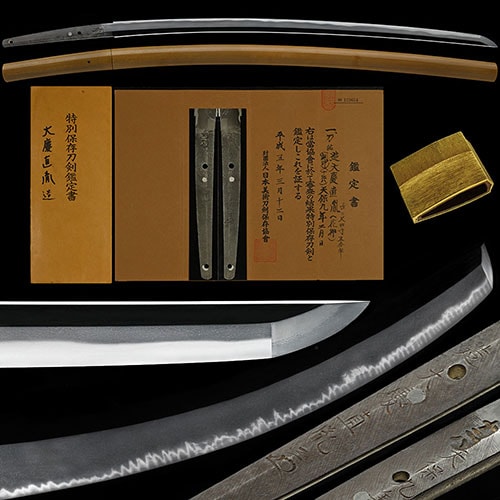
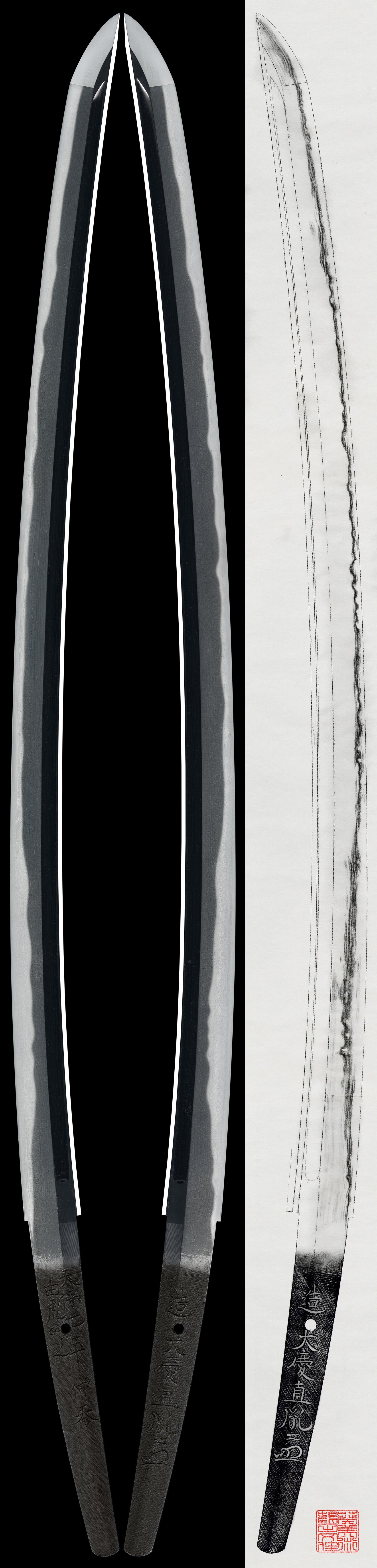
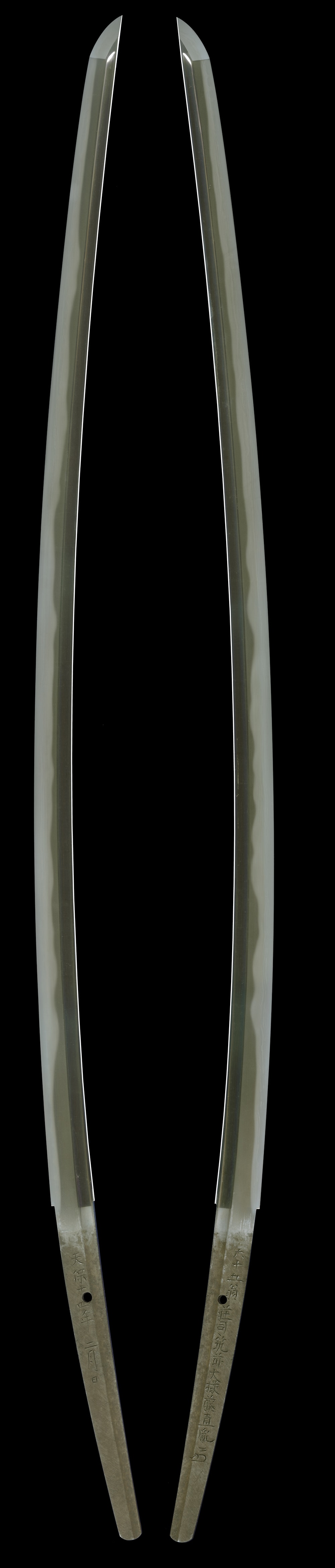
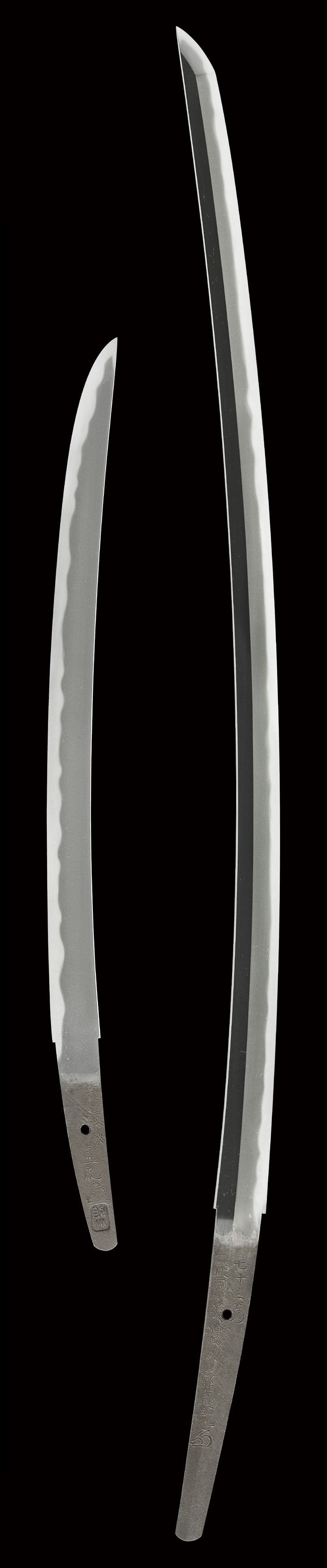
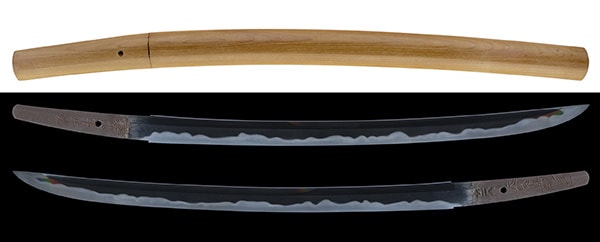
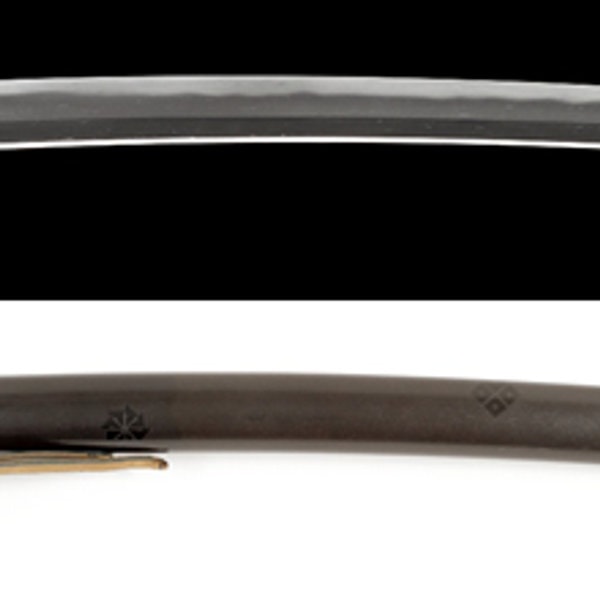
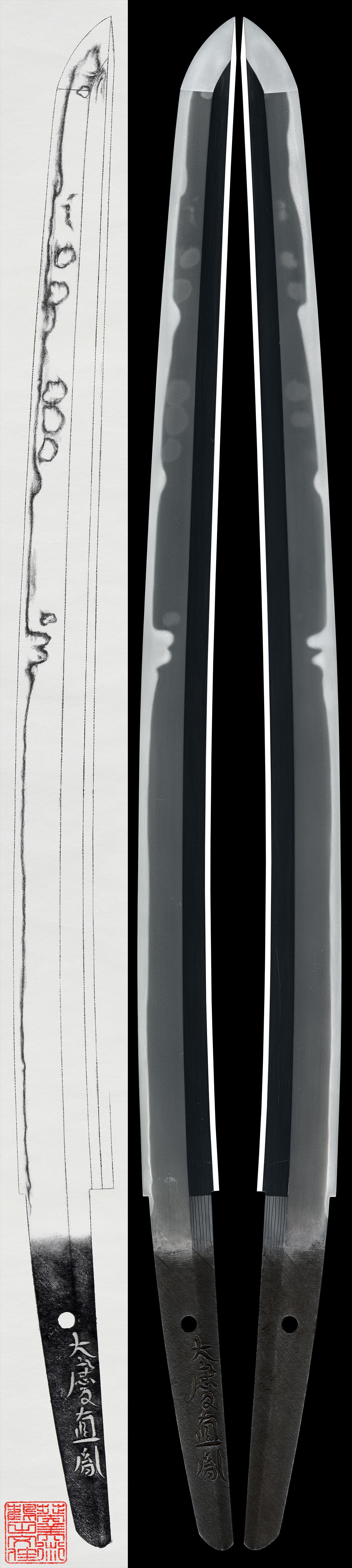
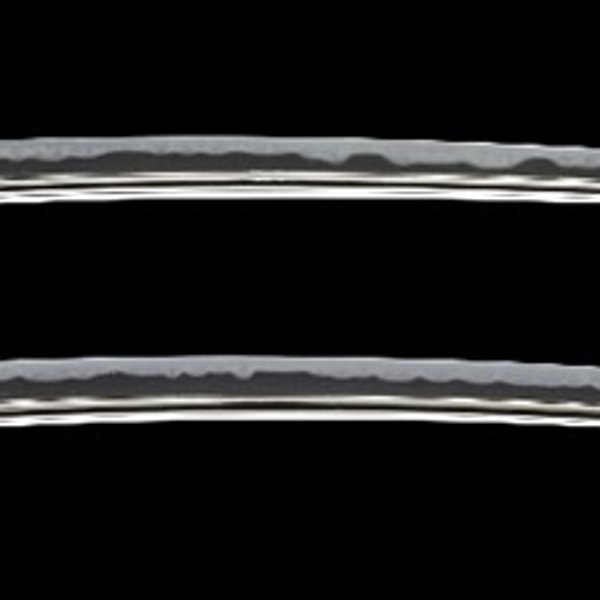
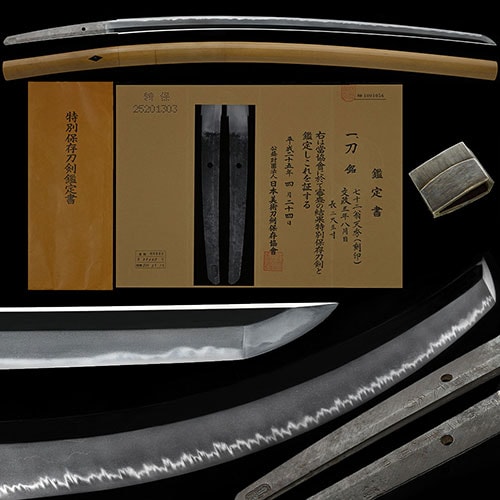
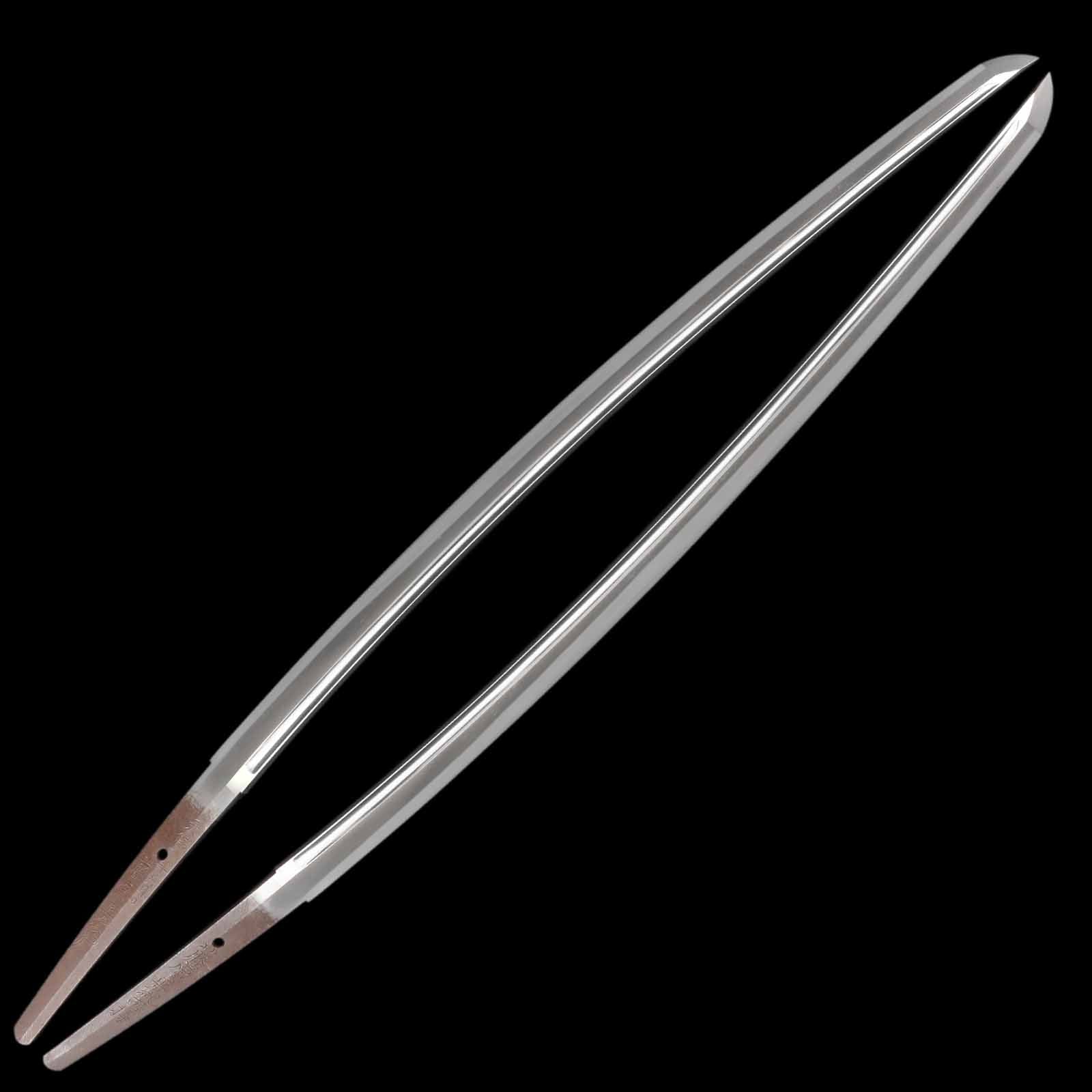
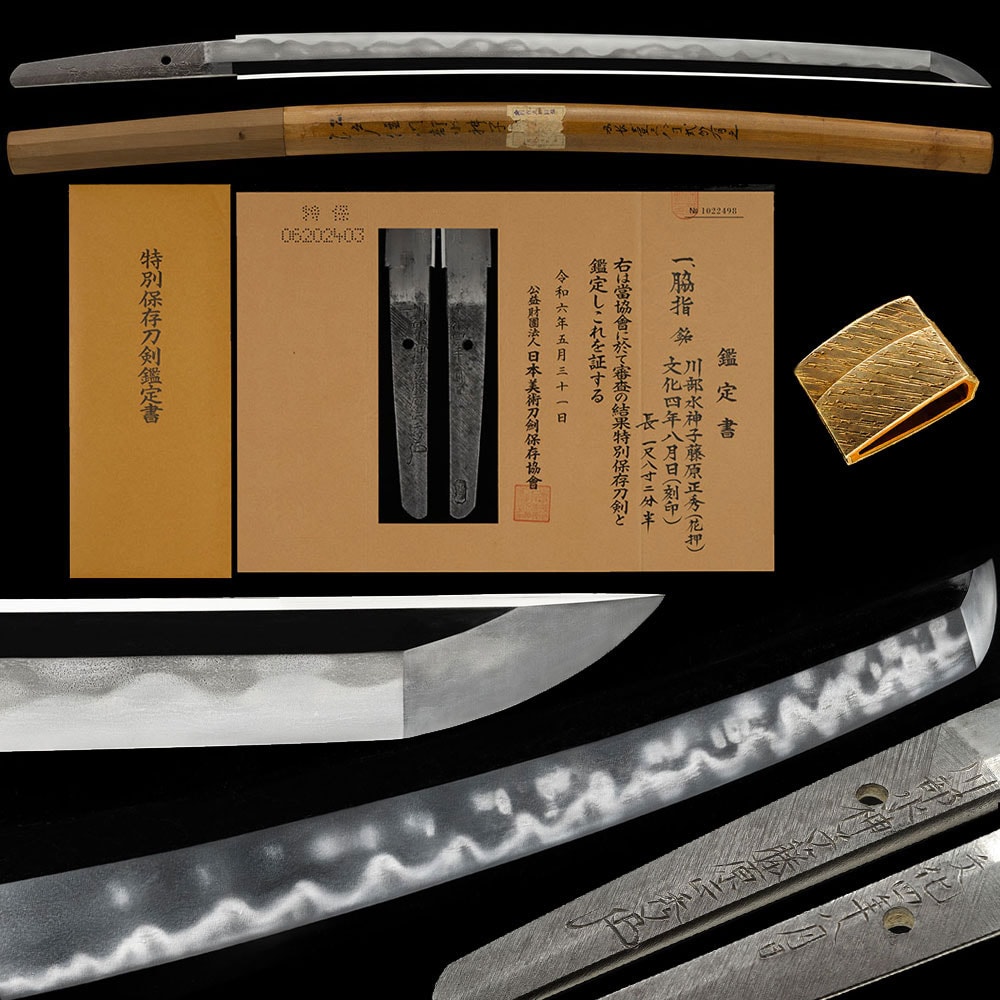
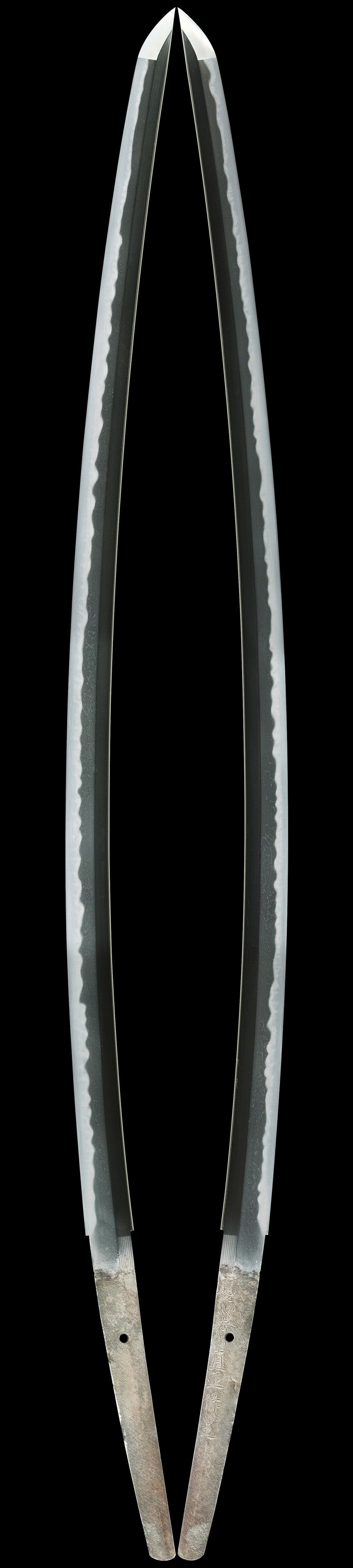
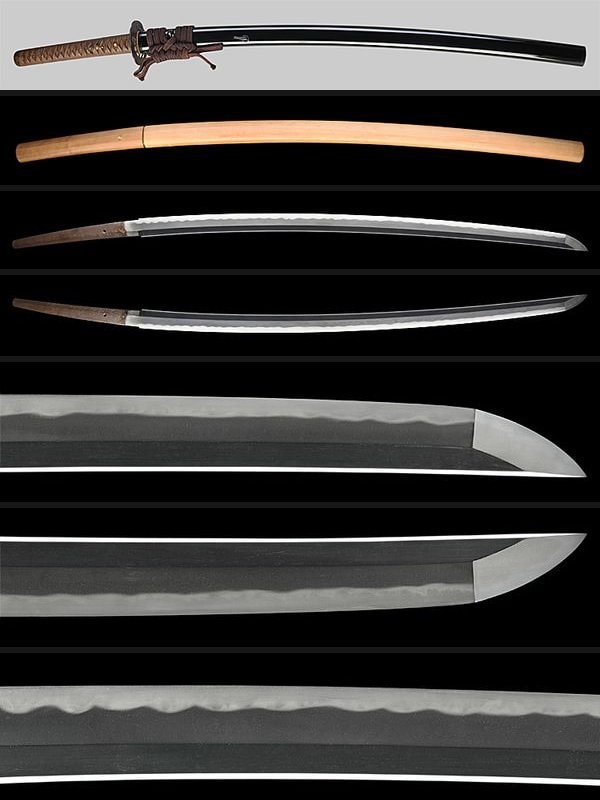
This listing features a katana by Taikei Naotane, a prominent smith from the late Edo period (Shin-Shinto era). Born in Dewa Yamagata, Naotane became a student of Suishinshi Masahide in Edo. The blade is noted for its successful execution of the toran-midare hamon, a style he adopted from his master's research into the works of Echizen no Kami Sukehiro.
 NihontoWatch
mei · Kyowa (1801-1804)
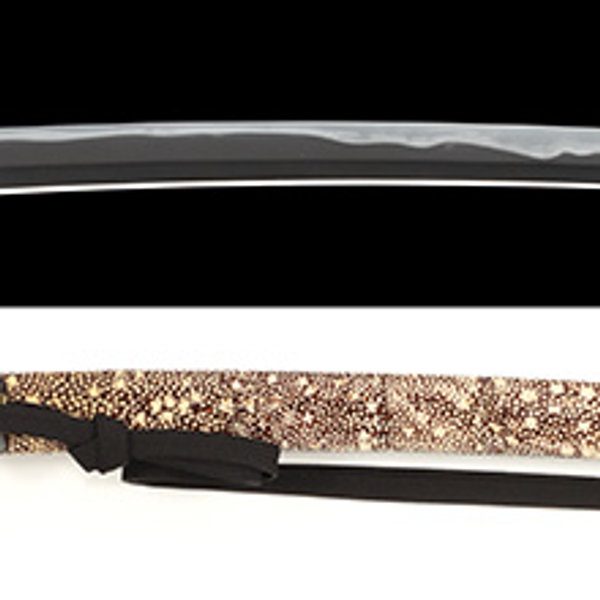
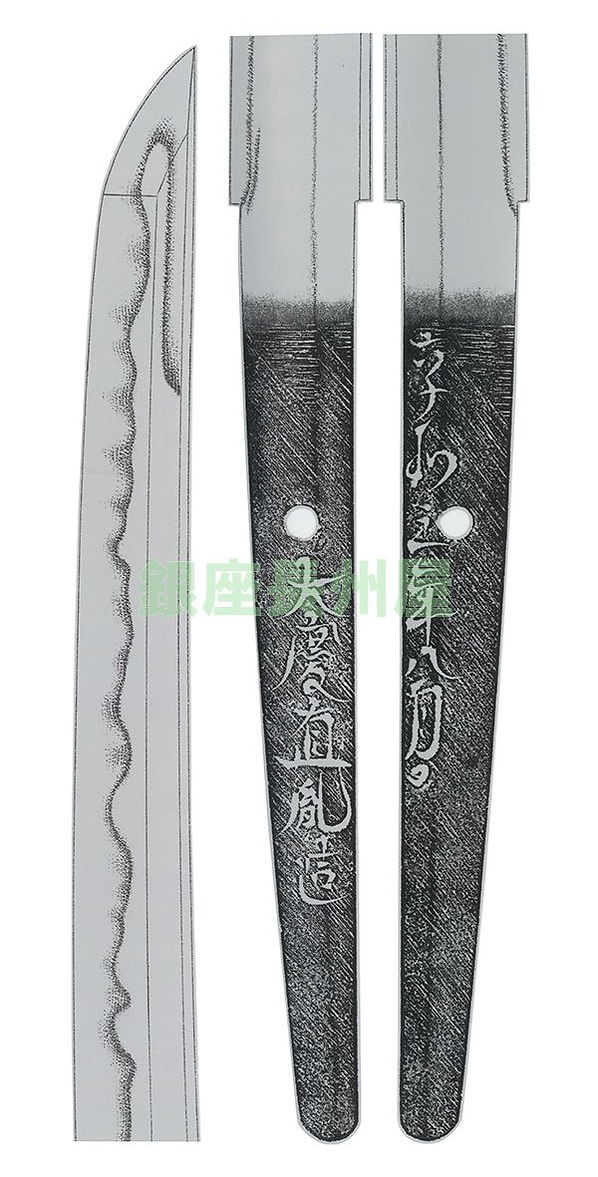
Taikei Naotane (shinshinto, Suishinshi Masahide line, Yamagata / Edo) · Musashi · around 1801-1837
Fujishiro Sai-jo saku · Tōken Taikan top 10%
14 pieces on the market now
Taikei Naotane was the foremost pupil of Suishinshi Masahide and, after his teacher, the central figure of the shinshintO. Born in An'ei in Yamagata of Dewa, his common name Shoji Minobei and his gO Daikei, he went up to Edo while still young, entered Masahide's school, and like his teacher served Lord Akimoto, becoming with Hosokawa Masayoshi one of the outstanding talents of the Suishinshi line. A blade he made at twenty-three is signed Shoji Naotane and dated Kansei 13, so the published sources place his entry to the school a few years earlier and his independence around the start of the Bunka era; he took the title Chikuzen Daijo about Bunsei 4, changed it to Mino no Suke when he went up to Kyoto in Kaei 1, and died at seventy-nine in Ansei 4 after a working career of some fifty years. Where Masahide was the theorist of the revival-sword movement, Naotane was its practitioner, and the published sources judge that he came to surpass his teacher in skill, recording of one Soshu-den katana that 「その技術が師を凌ぐと評せられた」 (“his technique came to be appraised as surpassing his teacher”).
His characteristic hand is the Bizen-den, the manner the published sources call his forte, and they state plainly that 「丁子乱れの巧みさは新々刀第一の定評がある」 (“the finesse of his choji-midare carries the established reputation of being the foremost among shinshinto”). Over a tightly forged ko-itame, at times nashiji-like, he tempers a choji-midare into which he mixes angular kaku-gunome, togariba and gunome, the ashi long and entering so far that they run through toward the edge. The whole shows the reverse slant of the old Osafune line, the choji and the saka-ashi leaning back, the nioiguchi nioi-dominant with ko-nie and bright and clear. The shape evokes a Kamakura tachi, koshizori or rather high in curvature with a chU-kissaki, and the published sources read the angular peaks and the reverse tendency as a conscious aim at the late-Kamakura Osafune masters Kagemitsu and Kanemitsu.
The jigane is the constant beneath this temper. It is a well-packed ko-itame with ji-nie, and on his finest Bizen-den blades a midare-utsuri rises distinctly near the koshi-moto, in the best pieces connecting upward into the yakigashira of the temper. ShinshintO blades carry no genuine kotO utsuri, so the deliberate revival of a midare-utsuri is itself the tell that he was reaching back to old Bizen, and the published sources single it out as evidence of his Osafune model. Yet they are equally clear about what marks the work as shinshintO rather than kotO: on a Bizen-den katana judged after Kanemitsu and Kagemitsu they note that it is 「純然たる匂出来ではな」 (“not a pure nioi-deki”), nie appearing throughout the line, and they call this 「古作と新々刀との相達」, the very difference between the old works and the new[[c:4]]. The bOshi runs midare-komi, becoming pointed and turning back with hakikake, or sugu to a ko-maru.
Naotane worked the several kotO traditions, and his record divides into clear registers. His prized second manner is the Soshu-den, rarer than the Bizen and modeled on Masamune, Sadamune and Shizu. Over a flowing itame mixed with O-mokume, and in the strongest examples a distinctive whorled uzumaki-hada that the published sources name a point of interest in his Soden work, he sets a notare mixed with gunome, the ji-nie thick and chikei entering, the nie gathering coarse and uneven, sunagashi and nie-suji running in stripes and the kinsuji long. One judge calls a Soshu wakizashi bold and faintly rustic, finding that 「野趣が感ぜら」 (“a rustic taste is felt”) in its uneven nie and frequent hakikake. A third, minor register survives in the calmer Yamato manner and in suguha: one Tenpo katana the sources call relatively uncommon for him, a suguha-tone in shallow notare with ko-gunome, and the Sanada daisho whose long sword is an all-masame Yamato-den forging to which Soshu notare and gunome are added, two traditions crossed in one blade. Being entirely a signed and frequently dated smith, the kantei question with Naotane is never his attribution but his standing.
What sets him apart is what the judges themselves name. His bright midare-utsuri, his reverse-leaning choji with its angular kaku-gunome and saka-ashi, and his deliberate Osafune revival distinguish his Bizen-den from the general run of shinshintO smiths, who carry no utsuri and no such reverse slant; his Soshu-den is told instead by the whorled uzumaki-hada and the coarse, striped nie activity. He stands directly downstream of Masahide and ahead of his own pupils: the carving on his blades is often by the Suishinshi-line carver Honjo Yoshitane, and his senior disciple Sawahara Shigetane and others carry the Daikei manner forward into the late shinshintO. The published sources rank his best work at the head of his oeuvre, calling one Bizen-den katana the piece that should be 「彼の備前伝の作中の筆頭に置くべきものである」 (“placed foremost among his Bizen-den works”) and another, with a waka cut into its tang, a masterpiece among his masterpieces, while one Tenpo Soshu-den katana is held to be the right wing of his oeuvre, surpassing even Masahide's own Soshu work.
For the collector Naotane is the great signed name of the shinshintO revival. Fujishiro grades him Sai-jo saku, and the Toko Taikan values his work near the upper part of its scale. He has no National Treasures and no Important Cultural Properties on the record; his designations run instead through the prewar Juyo Bijutsuhin and the modern Tokubetsu Juyo and Juyo tiers, with some forty designated works on record, all signed and dated across the Bunka to Kaei years. His blades are documented in distinguished hands attested by their own inscriptions and provenance: the Sanada daisho transmitted in the Sanada family, a companion tachi made by command for the Chancellor of the Realm and held in the Imperial collection, a katana commissioned by Watanabe Shu of the Tsu domain, and one made of carefully chosen iron for Ota Masayasu, a figure in iron production, that the published sources call 「会心の一口」, a blade of his full satisfaction. Among the prewar Juyo Bijutsuhin pieces are works held by Ide Keishiro, Suto Sojiro and Suzuki Seisuke. Because none of his work is locked away as designated cultural property and his output was large, a signed Naotane is more findable than a great kotO name, yet his finest Tokubetsu Juyo and Juyo blades are held far more often than they are traded; one comes to a private collector only from time to time, and a documented masterpiece in his Bizen-den, the manner the published sources crown the finest of all the shinshintO, remains a landmark when it appears.
Where Naotane stands among comparable artisans: across all of nihontō, and within tradition, era, and period. The tiers (Foremost · Leading · Major · Notable) weigh official designations from the NBTHK and Japan's Agency for Cultural Affairs, together with historical honors of lasting repute such as the Sansaku and Meibutsu-chō.
Select a lens to see how it's measured.
Years he was demonstrably active, proven by signed-and-dated blades
Shinshinto · Musashi
78 pieces on the market now
At Hamachō in Edo, in the closing decades of the eighteenth century and the opening ones of the nineteenth, Suishinshi Masahide[[c:1]] gathered the school that would turn Japanese swordmaking back toward its medieval models. Born Kawabe Gihachirō at Akayu in Dewa in 1750, signing first as Suzuki Takahide and then Eikoku, he studied under the Shitahara smith Yoshihide of Musashi, took the name Masahide in An'ei 3, and served the Akimoto house of Yamagata before settling in Edo, where he worked for nearly fifty years. He is the founding figure of the shinshintō and the theorist of the fukko-tō (revival-sword) doctrine, the argument that the sword ought to return to its Kamakura forms. Around that teaching he drew a large body of pupils, among them Taikei Naotane, who would give the revival its fullest practical form, the future second Masayoshi (Hosokawa Morihide), and a wider Edo and provincial following that carried the program into the Mito, Yonezawa, Tsuyama, and Tatebayashi domains. The shared vocabulary of the school is the deliberate reach back into the koto traditions, worked over a tightly forged, often muji-toned ko-itame with thick ji-nie. Masahide's own prime hand was the Ōsaka-utsushi, the surging tōran-midare of Tsuda Sukehiro opening from a long yakidashi and the broad suguha after Inoue Shinkai, betrayed on even his closest copies by a blackish, coarse nie that spills from the ha into the ji. Naotane gave the revival its Bizen and Sōshū faces: a reverse-leaning chōji-midare with angular kaku-gunome and saka-ashi, modeled on the late-Kamakura Osafune masters Kagemitsu and Kanemitsu and anchored by a consciously revived midare-utsuri that no ordinary shinshintō steel carries, set beside a Sōshū notare with its whorled uzumaki-hada and coarse, striped nie. The pupils divided this inheritance along their own lines. Jirōtarō Naokatsu, Naotane's adopted son, took a Bizen-den led by a kataochi-gunome from Kanemitsu with a pervasive saka-gakari slant and chōji- or midare-utsuri in the ji.
Suishinshi Masatsugu reproduced Naotane's two traditions, Sōshū and Bizen, down to the cut of his signature. Through Masayoshi the Bizen current passed to his heir Hosokawa Masamori of Tsuyama, whose chōji clusters mixed with gunome-chōji and togariba. The Osaka wave traveled separately into Mito through Naoe Sukemasa, who set a Shinkai-styled suguha and a Sukehiro tōran over a clear ko-itame, while Chōunsai Tsunatoshi of the Uesugi service carried a nioi-deki chōji mixed with gunome, suguha, and tōran-midare, often with carving by his own hand. To kantei the school is to weigh a tradition consciously copied against the period marks the copy cannot shed: the constant of the line is that the hamon is never the pure nioi-deki of old Bizen but carries nie throughout, a difference the NBTHK names outright as the divide between koto and shinshintō. The revived utsuri in Naotane and Naokatsu, the spilling nie in Masahide, the whorled uzumaki-hada shared across the line, and the broad, thick-kasane late-Edo sugata are the surest tells, narrowed further by the school's habit of full, dated signatures that make these smiths among the most exactly knowable of their age. Masahide stands at the head as the teacher and theorist, his finest work in his Ōsaka copies rather than the doctrine he proclaimed; Naotane stands ahead of him in execution, his Bizen-den held the finest among the shinshintō. Their pupils define the late-Edo Osafune and Sōshū revivals as practiced through Edo and the domains, with Naokatsu and Masatsugu read as the next hands after Naotane and Masayoshi. The provenance of the school runs through domain commission and bestowal (Mito blades forged at the Kōrakuen by lordly order, Tsuyama and Yonezawa fief work, Naotane's Sanada daishō and an Imperial-collection tachi) rather than ancient daimyō transmission, fitting for a movement that, within a single generation at Edo, redrew the direction of nineteenth-century swordmaking by turning it back toward the old models. Learn more →
| Smith | Era | Designated |
|---|---|---|
| Naotane直胤 | 1801-1837 | 40 |
| Masahide正秀 | 1777-1817 | 28 |
| Sukemasa助政 | 1804-1825 | 8 |
| Jirotaro Naokatsu直勝 | 1805-1858 | 6 |
| Masayoshi正義 | 1791-1860 | 5 |
The Shinshintō revival
Around 1800 Suishinshi Masahide argued in his writings that the craft must return to the old masters’ methods: the fukkotō revival. His greatest successor Naotane worked convincingly in Bizen and Sōshū manners that had been dead for centuries.
We could not find an authenticity certificate on the seller’s listing. Japanese swords and fittings are normally papered by the NBTHK (or the NTHK). Without one, the attribution is the seller’s own assessment and has not been independently verified — treat it with caution and ask the dealer about certification before buying.
If, due to our fault, the item differs significantly from its proper condition, the item may be returned. Cooling-off is within one week of the item's arrival.
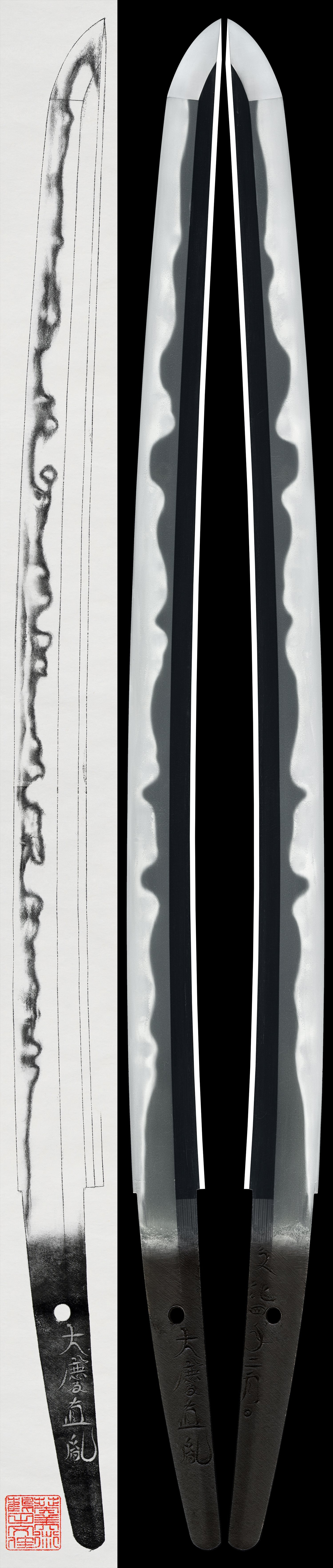
This listing features a katana by Taikei Naotane, a prominent smith from the late Edo period (Shin-Shinto era). Born in Dewa Yamagata, Naotane became a student of Suishinshi Masahide in Edo. The blade is noted for its successful execution of the toran-midare hamon, a style he adopted from his master's research into the works of Echizen no Kami Sukehiro.
NihontoWatchmei · Kyowa (1801-1804)
Taikei Naotane (shinshinto, Suishinshi Masahide line, Yamagata / Edo) · Musashi · around 1801-1837
Fujishiro Sai-jo saku · Tōken Taikan top 10%
14 pieces on the market now
Taikei Naotane was the foremost pupil of Suishinshi Masahide and, after his teacher, the central figure of the shinshintO. Born in An'ei in Yamagata of Dewa, his common name Shoji Minobei and his gO Daikei, he went up to Edo while still young, entered Masahide's school, and like his teacher served Lord Akimoto, becoming with Hosokawa Masayoshi one of the outstanding talents of the Suishinshi line. A blade he made at twenty-three is signed Shoji Naotane and dated Kansei 13, so the published sources place his entry to the school a few years earlier and his independence around the start of the Bunka era; he took the title Chikuzen Daijo about Bunsei 4, changed it to Mino no Suke when he went up to Kyoto in Kaei 1, and died at seventy-nine in Ansei 4 after a working career of some fifty years. Where Masahide was the theorist of the revival-sword movement, Naotane was its practitioner, and the published sources judge that he came to surpass his teacher in skill, recording of one Soshu-den katana that 「その技術が師を凌ぐと評せられた」 (“his technique came to be appraised as surpassing his teacher”).
His characteristic hand is the Bizen-den, the manner the published sources call his forte, and they state plainly that 「丁子乱れの巧みさは新々刀第一の定評がある」 (“the finesse of his choji-midare carries the established reputation of being the foremost among shinshinto”). Over a tightly forged ko-itame, at times nashiji-like, he tempers a choji-midare into which he mixes angular kaku-gunome, togariba and gunome, the ashi long and entering so far that they run through toward the edge. The whole shows the reverse slant of the old Osafune line, the choji and the saka-ashi leaning back, the nioiguchi nioi-dominant with ko-nie and bright and clear. The shape evokes a Kamakura tachi, koshizori or rather high in curvature with a chU-kissaki, and the published sources read the angular peaks and the reverse tendency as a conscious aim at the late-Kamakura Osafune masters Kagemitsu and Kanemitsu.
The jigane is the constant beneath this temper. It is a well-packed ko-itame with ji-nie, and on his finest Bizen-den blades a midare-utsuri rises distinctly near the koshi-moto, in the best pieces connecting upward into the yakigashira of the temper. ShinshintO blades carry no genuine kotO utsuri, so the deliberate revival of a midare-utsuri is itself the tell that he was reaching back to old Bizen, and the published sources single it out as evidence of his Osafune model. Yet they are equally clear about what marks the work as shinshintO rather than kotO: on a Bizen-den katana judged after Kanemitsu and Kagemitsu they note that it is 「純然たる匂出来ではな」 (“not a pure nioi-deki”), nie appearing throughout the line, and they call this 「古作と新々刀との相達」, the very difference between the old works and the new[[c:4]]. The bOshi runs midare-komi, becoming pointed and turning back with hakikake, or sugu to a ko-maru.
Naotane worked the several kotO traditions, and his record divides into clear registers. His prized second manner is the Soshu-den, rarer than the Bizen and modeled on Masamune, Sadamune and Shizu. Over a flowing itame mixed with O-mokume, and in the strongest examples a distinctive whorled uzumaki-hada that the published sources name a point of interest in his Soden work, he sets a notare mixed with gunome, the ji-nie thick and chikei entering, the nie gathering coarse and uneven, sunagashi and nie-suji running in stripes and the kinsuji long. One judge calls a Soshu wakizashi bold and faintly rustic, finding that 「野趣が感ぜら」 (“a rustic taste is felt”) in its uneven nie and frequent hakikake. A third, minor register survives in the calmer Yamato manner and in suguha: one Tenpo katana the sources call relatively uncommon for him, a suguha-tone in shallow notare with ko-gunome, and the Sanada daisho whose long sword is an all-masame Yamato-den forging to which Soshu notare and gunome are added, two traditions crossed in one blade. Being entirely a signed and frequently dated smith, the kantei question with Naotane is never his attribution but his standing.
What sets him apart is what the judges themselves name. His bright midare-utsuri, his reverse-leaning choji with its angular kaku-gunome and saka-ashi, and his deliberate Osafune revival distinguish his Bizen-den from the general run of shinshintO smiths, who carry no utsuri and no such reverse slant; his Soshu-den is told instead by the whorled uzumaki-hada and the coarse, striped nie activity. He stands directly downstream of Masahide and ahead of his own pupils: the carving on his blades is often by the Suishinshi-line carver Honjo Yoshitane, and his senior disciple Sawahara Shigetane and others carry the Daikei manner forward into the late shinshintO. The published sources rank his best work at the head of his oeuvre, calling one Bizen-den katana the piece that should be 「彼の備前伝の作中の筆頭に置くべきものである」 (“placed foremost among his Bizen-den works”) and another, with a waka cut into its tang, a masterpiece among his masterpieces, while one Tenpo Soshu-den katana is held to be the right wing of his oeuvre, surpassing even Masahide's own Soshu work.
For the collector Naotane is the great signed name of the shinshintO revival. Fujishiro grades him Sai-jo saku, and the Toko Taikan values his work near the upper part of its scale. He has no National Treasures and no Important Cultural Properties on the record; his designations run instead through the prewar Juyo Bijutsuhin and the modern Tokubetsu Juyo and Juyo tiers, with some forty designated works on record, all signed and dated across the Bunka to Kaei years. His blades are documented in distinguished hands attested by their own inscriptions and provenance: the Sanada daisho transmitted in the Sanada family, a companion tachi made by command for the Chancellor of the Realm and held in the Imperial collection, a katana commissioned by Watanabe Shu of the Tsu domain, and one made of carefully chosen iron for Ota Masayasu, a figure in iron production, that the published sources call 「会心の一口」, a blade of his full satisfaction. Among the prewar Juyo Bijutsuhin pieces are works held by Ide Keishiro, Suto Sojiro and Suzuki Seisuke. Because none of his work is locked away as designated cultural property and his output was large, a signed Naotane is more findable than a great kotO name, yet his finest Tokubetsu Juyo and Juyo blades are held far more often than they are traded; one comes to a private collector only from time to time, and a documented masterpiece in his Bizen-den, the manner the published sources crown the finest of all the shinshintO, remains a landmark when it appears.
Where Naotane stands among comparable artisans: across all of nihontō, and within tradition, era, and period. The tiers (Foremost · Leading · Major · Notable) weigh official designations from the NBTHK and Japan's Agency for Cultural Affairs, together with historical honors of lasting repute such as the Sansaku and Meibutsu-chō.
Select a lens to see how it's measured.
Years he was demonstrably active, proven by signed-and-dated blades
Shinshinto · Musashi
78 pieces on the market now
At Hamachō in Edo, in the closing decades of the eighteenth century and the opening ones of the nineteenth, Suishinshi Masahide[[c:1]] gathered the school that would turn Japanese swordmaking back toward its medieval models. Born Kawabe Gihachirō at Akayu in Dewa in 1750, signing first as Suzuki Takahide and then Eikoku, he studied under the Shitahara smith Yoshihide of Musashi, took the name Masahide in An'ei 3, and served the Akimoto house of Yamagata before settling in Edo, where he worked for nearly fifty years. He is the founding figure of the shinshintō and the theorist of the fukko-tō (revival-sword) doctrine, the argument that the sword ought to return to its Kamakura forms. Around that teaching he drew a large body of pupils, among them Taikei Naotane, who would give the revival its fullest practical form, the future second Masayoshi (Hosokawa Morihide), and a wider Edo and provincial following that carried the program into the Mito, Yonezawa, Tsuyama, and Tatebayashi domains. The shared vocabulary of the school is the deliberate reach back into the koto traditions, worked over a tightly forged, often muji-toned ko-itame with thick ji-nie. Masahide's own prime hand was the Ōsaka-utsushi, the surging tōran-midare of Tsuda Sukehiro opening from a long yakidashi and the broad suguha after Inoue Shinkai, betrayed on even his closest copies by a blackish, coarse nie that spills from the ha into the ji. Naotane gave the revival its Bizen and Sōshū faces: a reverse-leaning chōji-midare with angular kaku-gunome and saka-ashi, modeled on the late-Kamakura Osafune masters Kagemitsu and Kanemitsu and anchored by a consciously revived midare-utsuri that no ordinary shinshintō steel carries, set beside a Sōshū notare with its whorled uzumaki-hada and coarse, striped nie. The pupils divided this inheritance along their own lines. Jirōtarō Naokatsu, Naotane's adopted son, took a Bizen-den led by a kataochi-gunome from Kanemitsu with a pervasive saka-gakari slant and chōji- or midare-utsuri in the ji.
Suishinshi Masatsugu reproduced Naotane's two traditions, Sōshū and Bizen, down to the cut of his signature. Through Masayoshi the Bizen current passed to his heir Hosokawa Masamori of Tsuyama, whose chōji clusters mixed with gunome-chōji and togariba. The Osaka wave traveled separately into Mito through Naoe Sukemasa, who set a Shinkai-styled suguha and a Sukehiro tōran over a clear ko-itame, while Chōunsai Tsunatoshi of the Uesugi service carried a nioi-deki chōji mixed with gunome, suguha, and tōran-midare, often with carving by his own hand. To kantei the school is to weigh a tradition consciously copied against the period marks the copy cannot shed: the constant of the line is that the hamon is never the pure nioi-deki of old Bizen but carries nie throughout, a difference the NBTHK names outright as the divide between koto and shinshintō. The revived utsuri in Naotane and Naokatsu, the spilling nie in Masahide, the whorled uzumaki-hada shared across the line, and the broad, thick-kasane late-Edo sugata are the surest tells, narrowed further by the school's habit of full, dated signatures that make these smiths among the most exactly knowable of their age. Masahide stands at the head as the teacher and theorist, his finest work in his Ōsaka copies rather than the doctrine he proclaimed; Naotane stands ahead of him in execution, his Bizen-den held the finest among the shinshintō. Their pupils define the late-Edo Osafune and Sōshū revivals as practiced through Edo and the domains, with Naokatsu and Masatsugu read as the next hands after Naotane and Masayoshi. The provenance of the school runs through domain commission and bestowal (Mito blades forged at the Kōrakuen by lordly order, Tsuyama and Yonezawa fief work, Naotane's Sanada daishō and an Imperial-collection tachi) rather than ancient daimyō transmission, fitting for a movement that, within a single generation at Edo, redrew the direction of nineteenth-century swordmaking by turning it back toward the old models. Learn more →
| Smith | Era | Designated |
|---|---|---|
| Naotane直胤 | 1801-1837 | 40 |
| Masahide正秀 | 1777-1817 | 28 |
| Sukemasa助政 | 1804-1825 | 8 |
| Jirotaro Naokatsu直勝 | 1805-1858 | 6 |
| Masayoshi正義 | 1791-1860 | 5 |
The Shinshintō revival
Around 1800 Suishinshi Masahide argued in his writings that the craft must return to the old masters’ methods: the fukkotō revival. His greatest successor Naotane worked convincingly in Bizen and Sōshū manners that had been dead for centuries.
We could not find an authenticity certificate on the seller’s listing. Japanese swords and fittings are normally papered by the NBTHK (or the NTHK). Without one, the attribution is the seller’s own assessment and has not been independently verified — treat it with caution and ask the dealer about certification before buying.
If, due to our fault, the item differs significantly from its proper condition, the item may be returned. Cooling-off is within one week of the item's arrival.