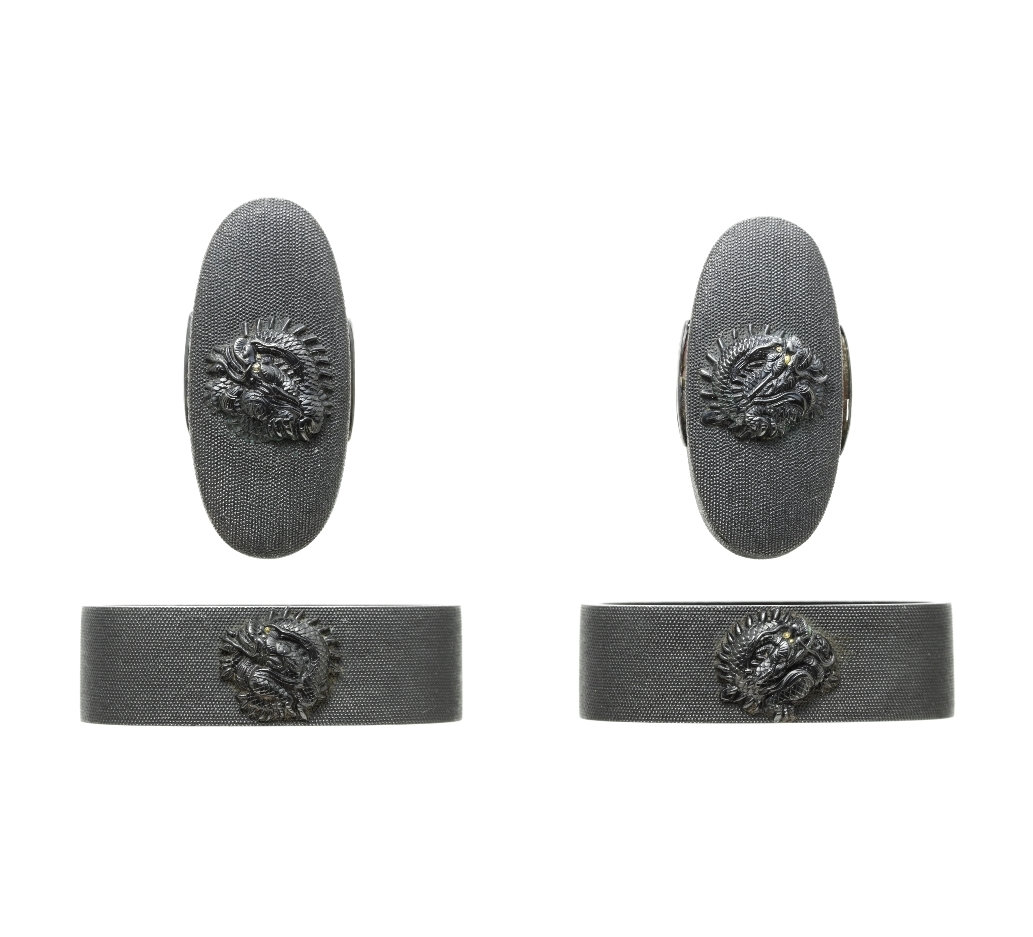
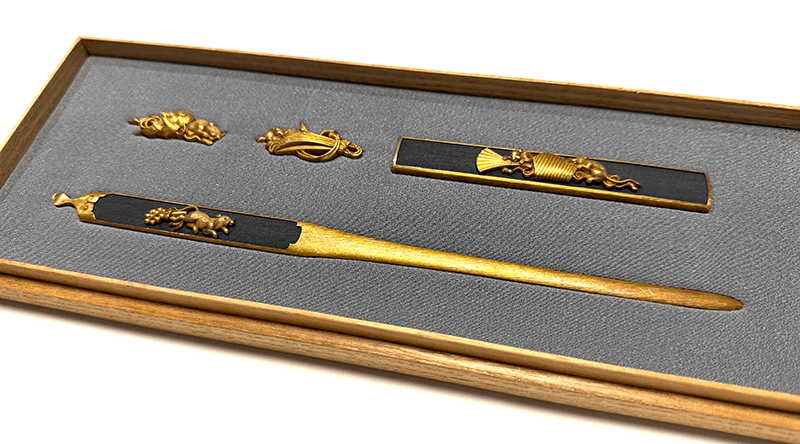
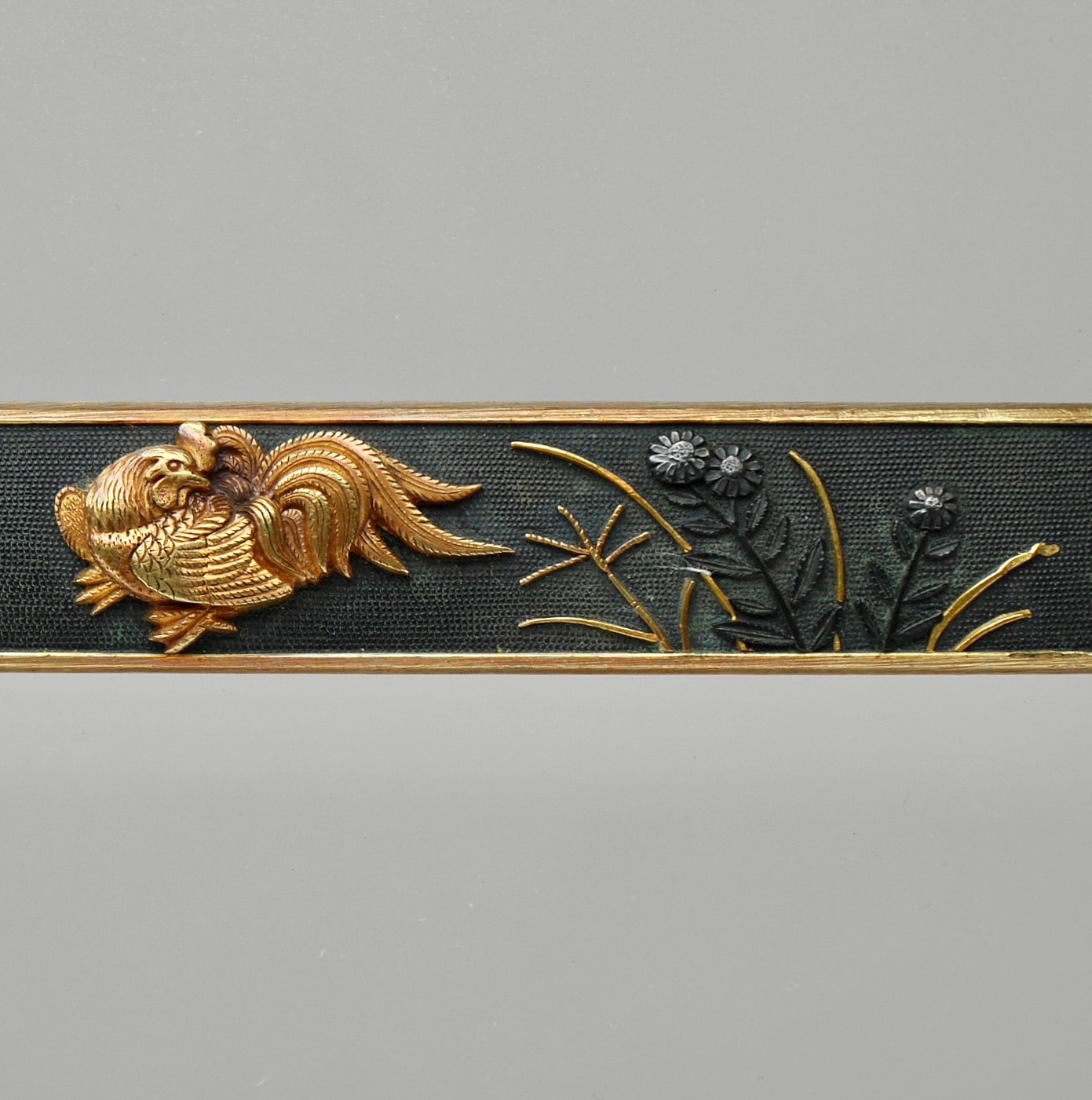
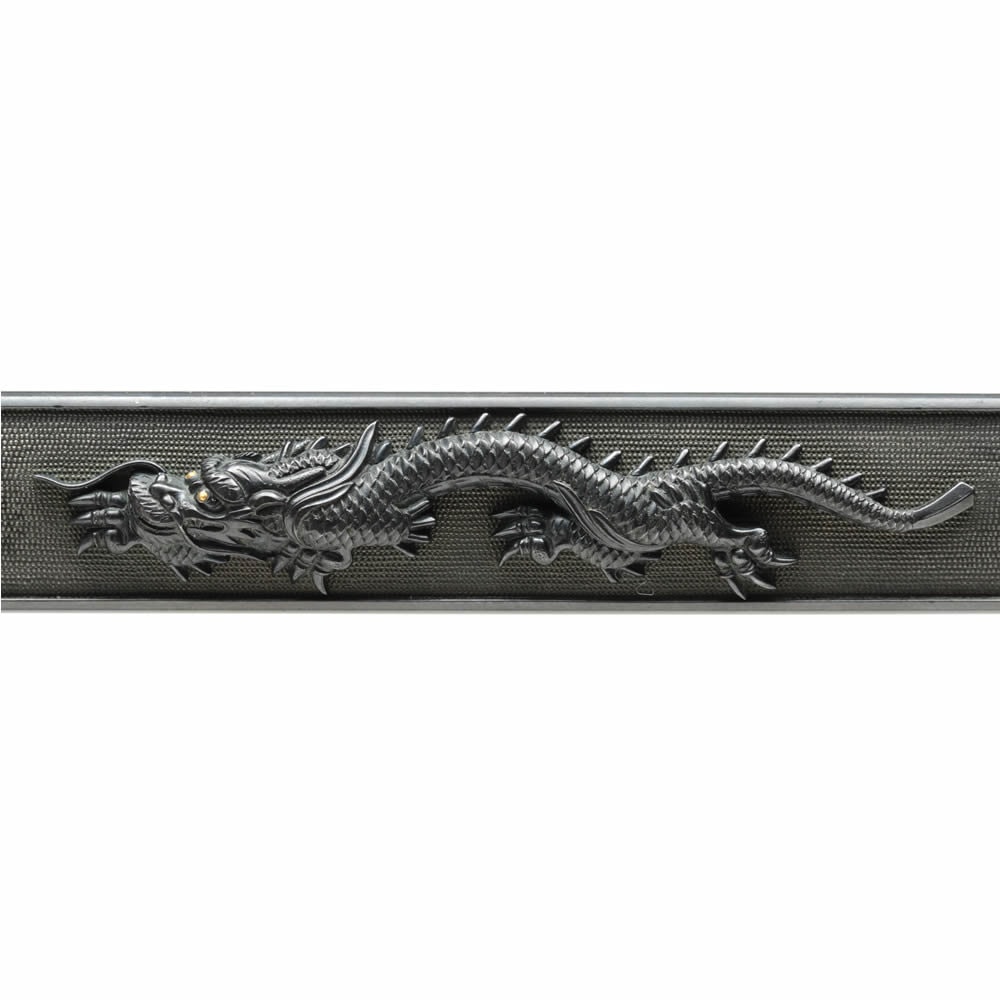
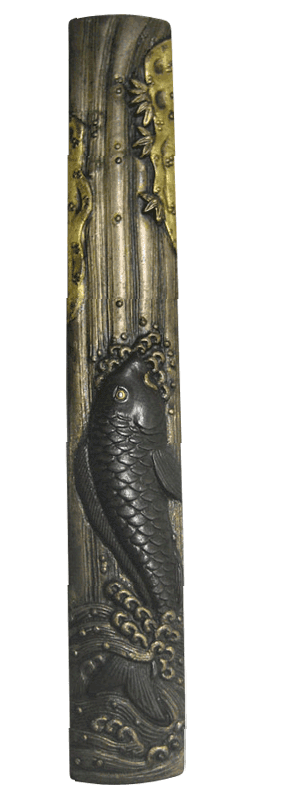
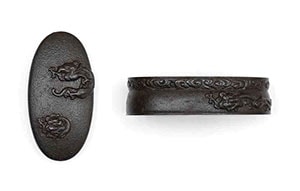
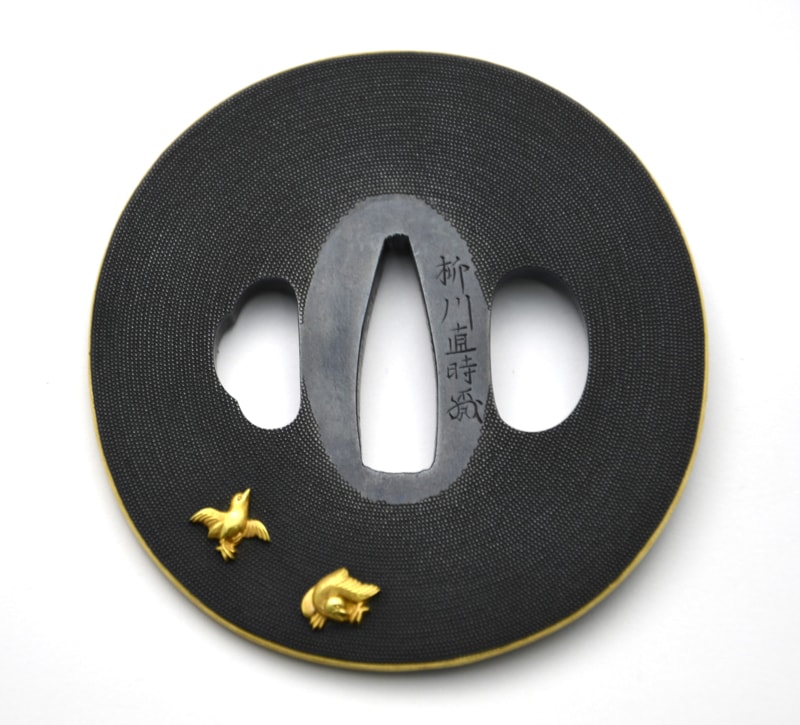
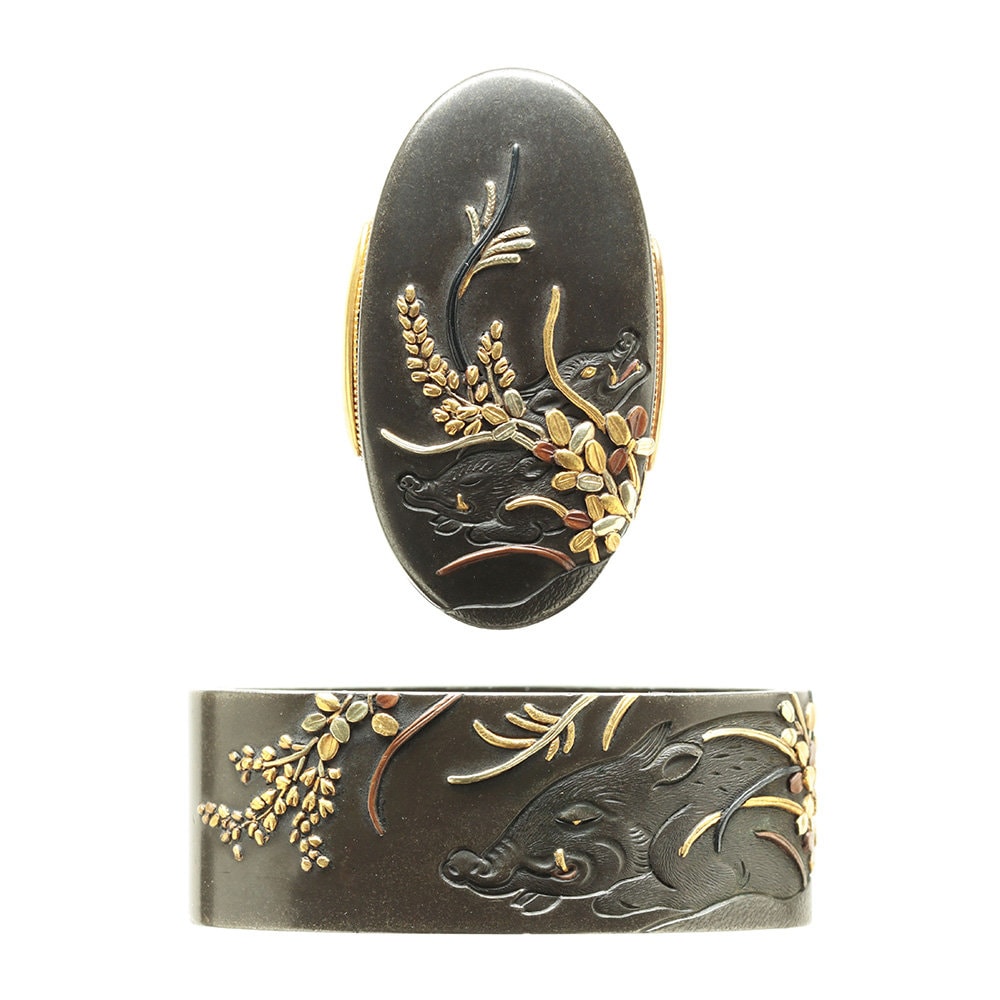
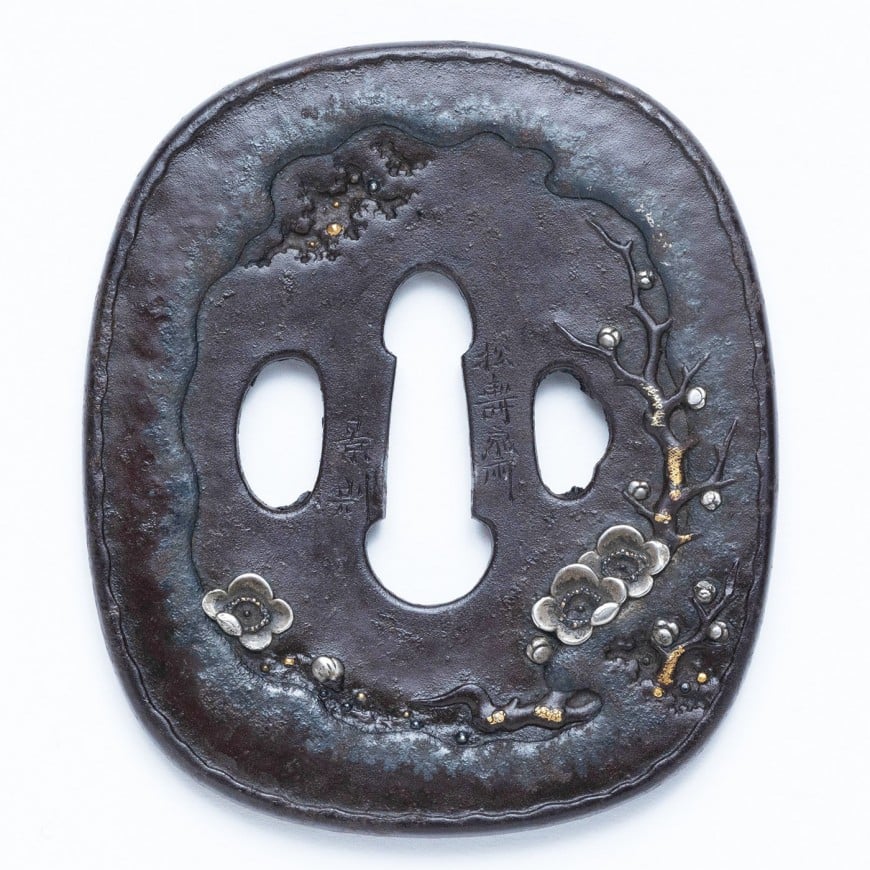
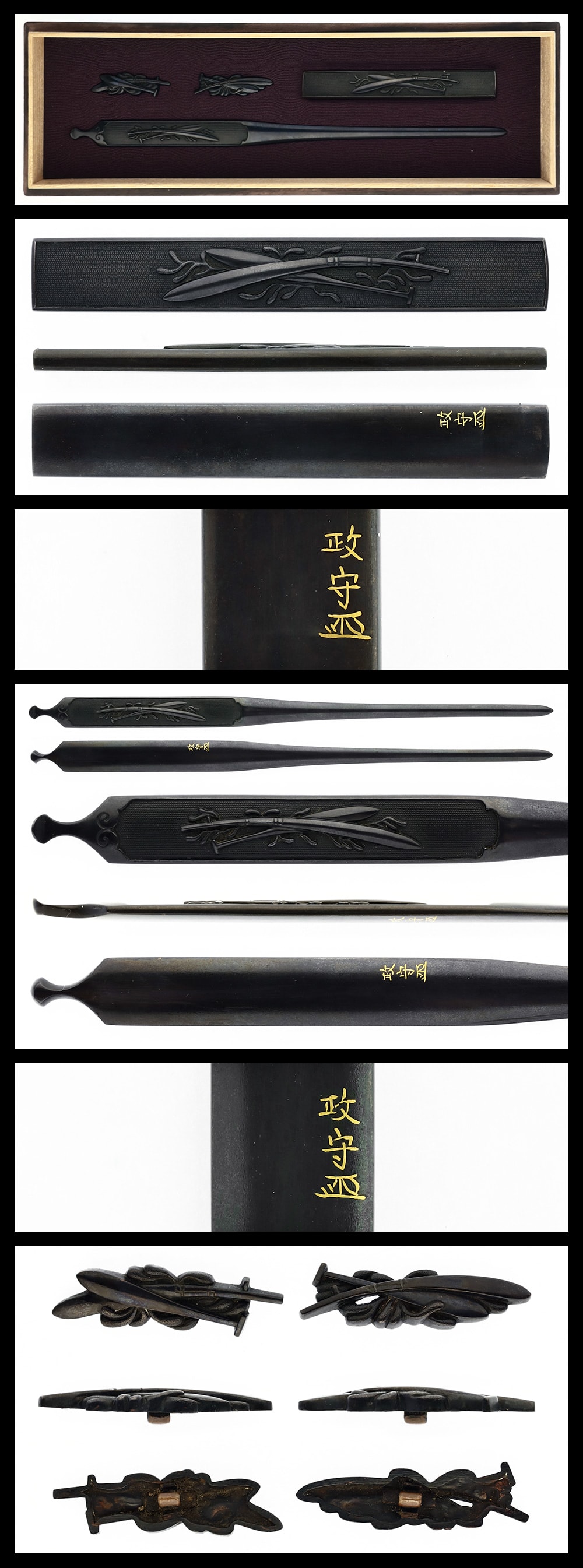
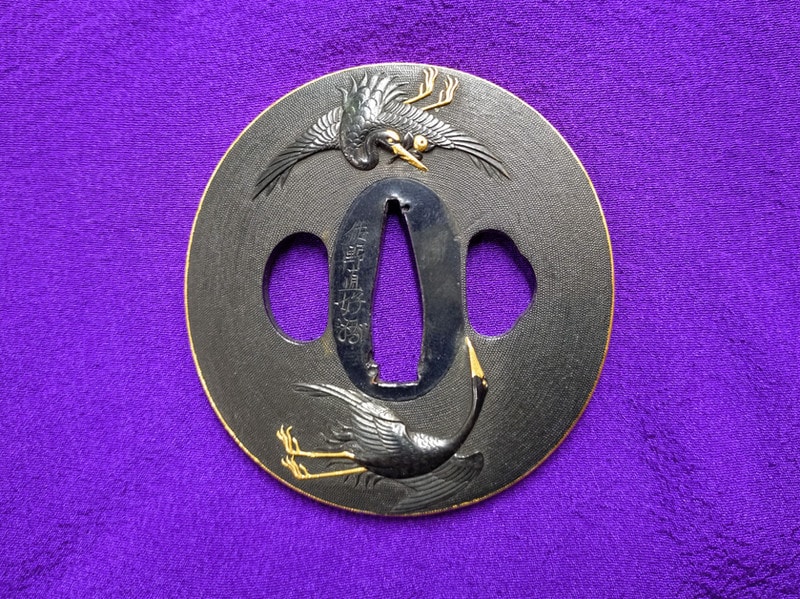
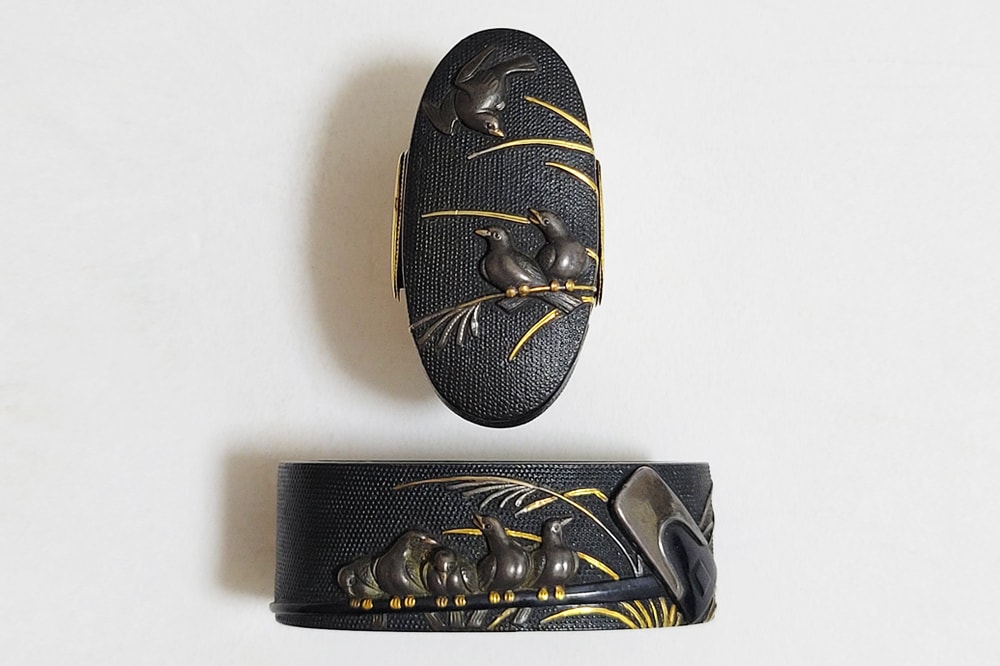
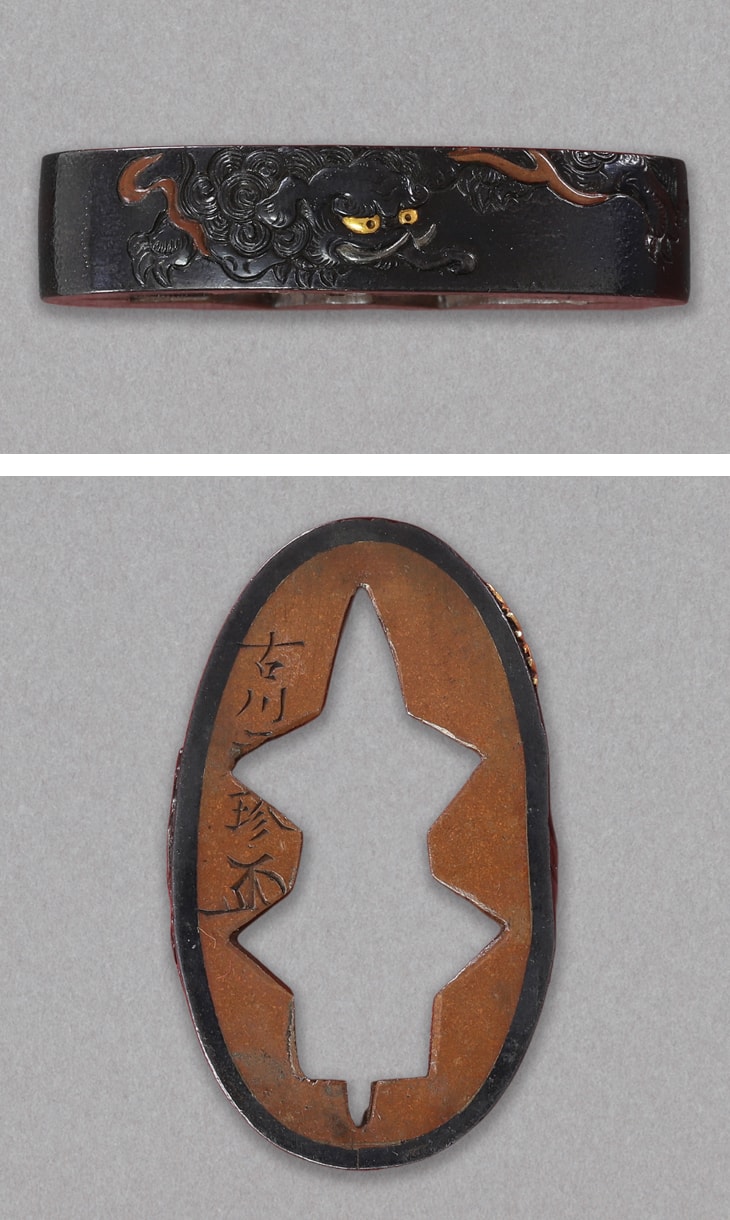
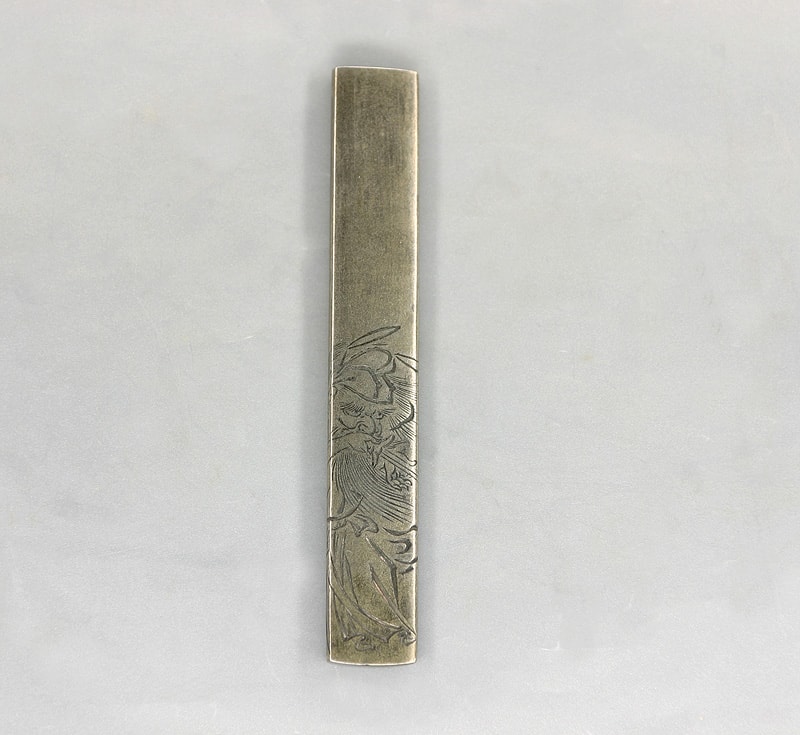
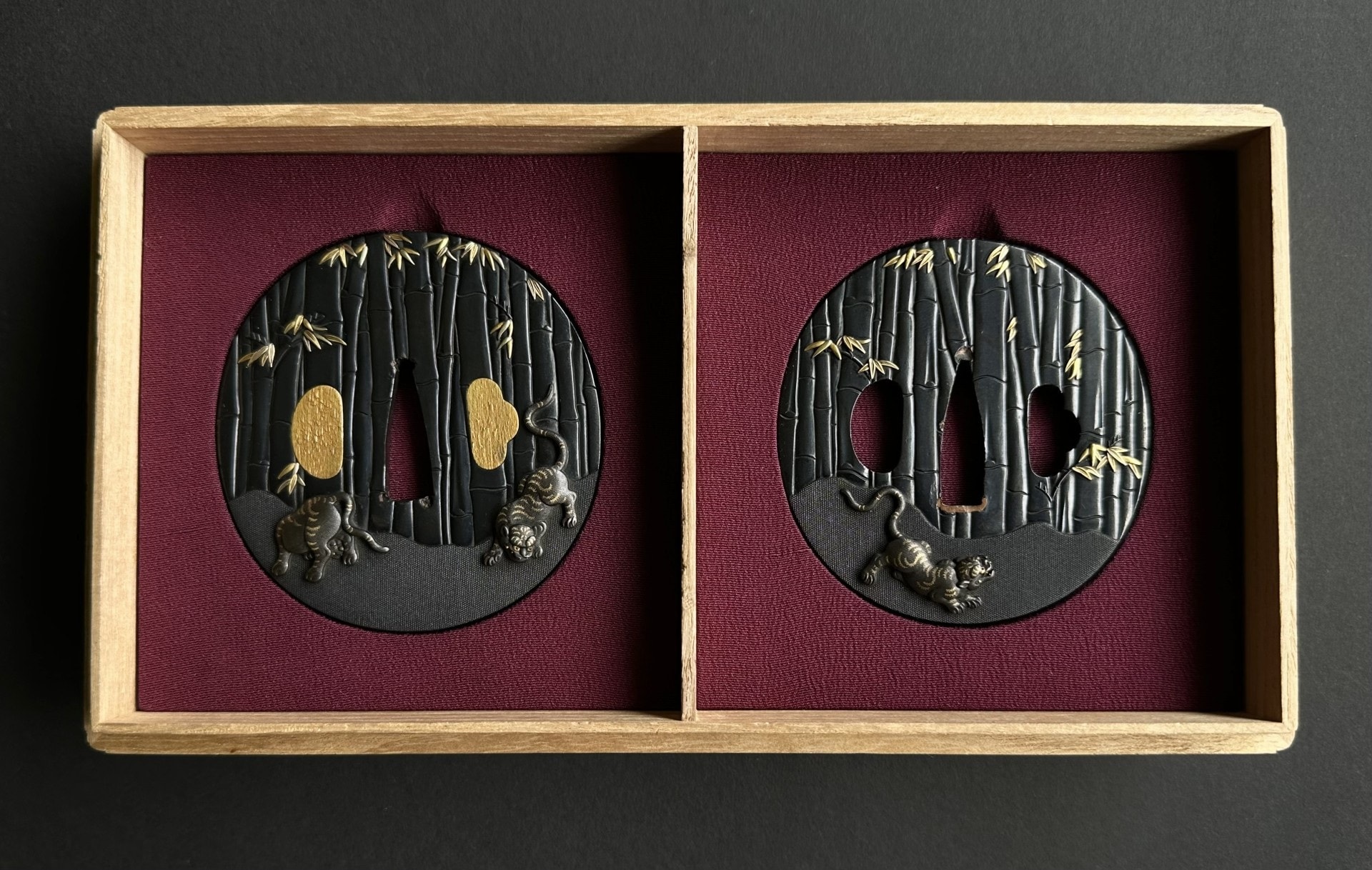
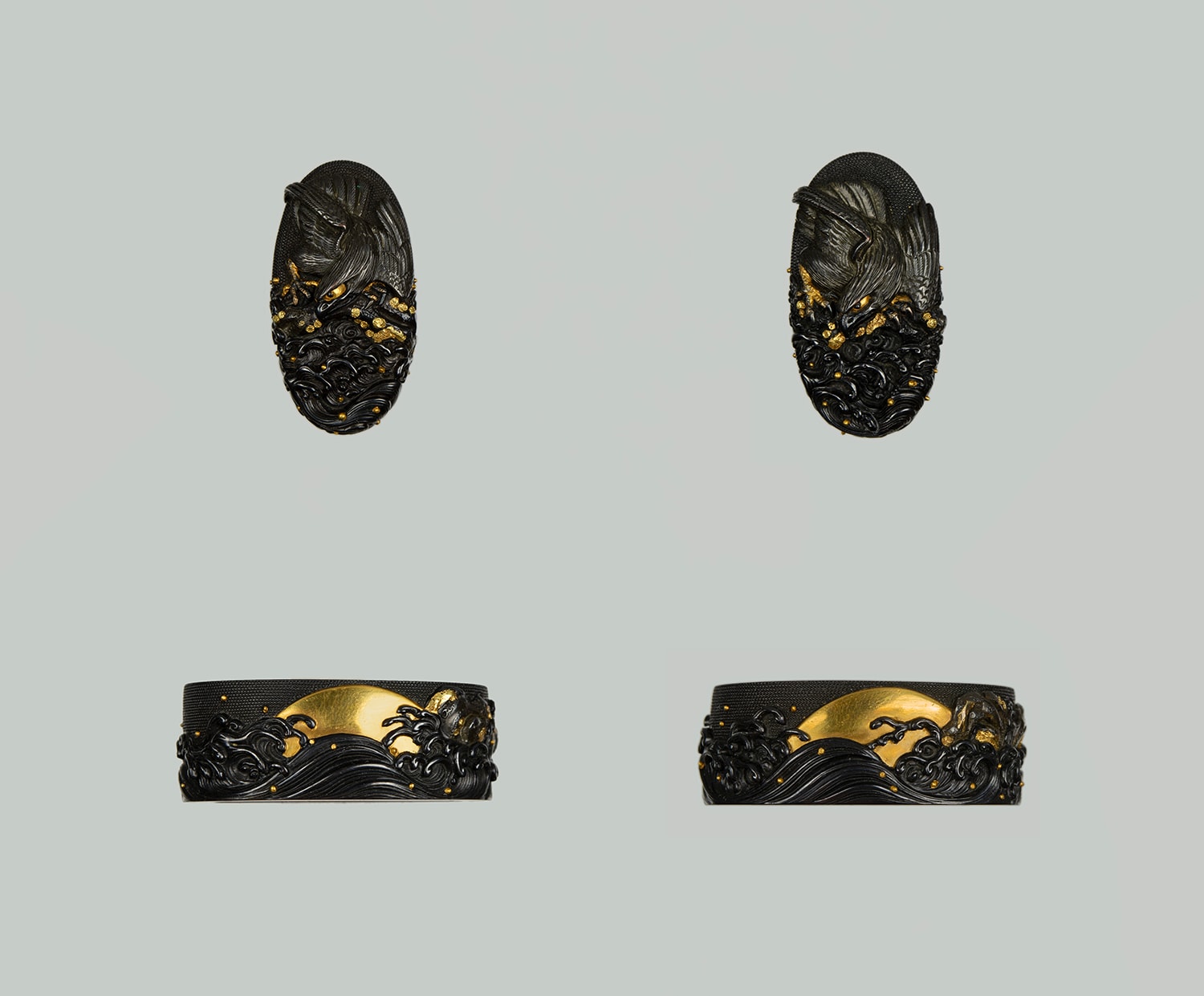
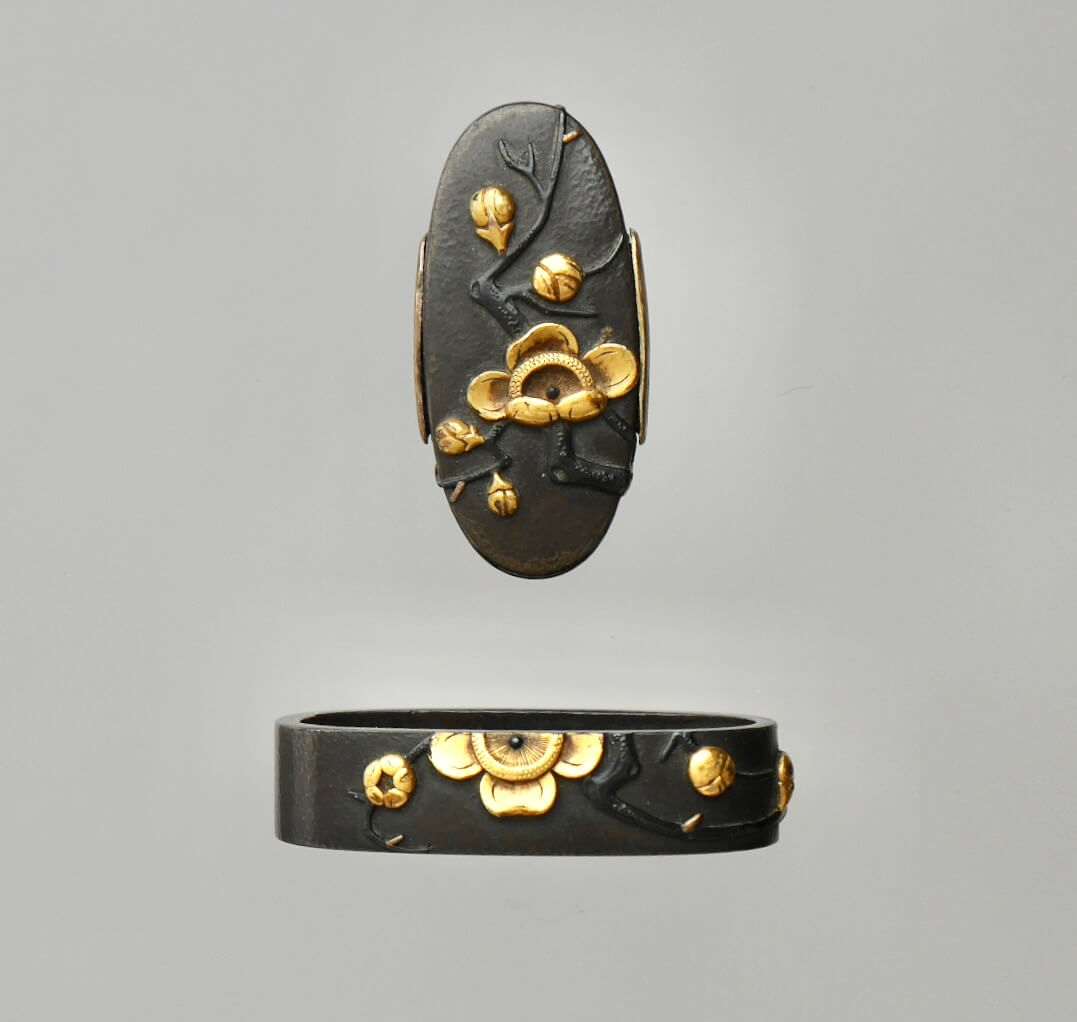
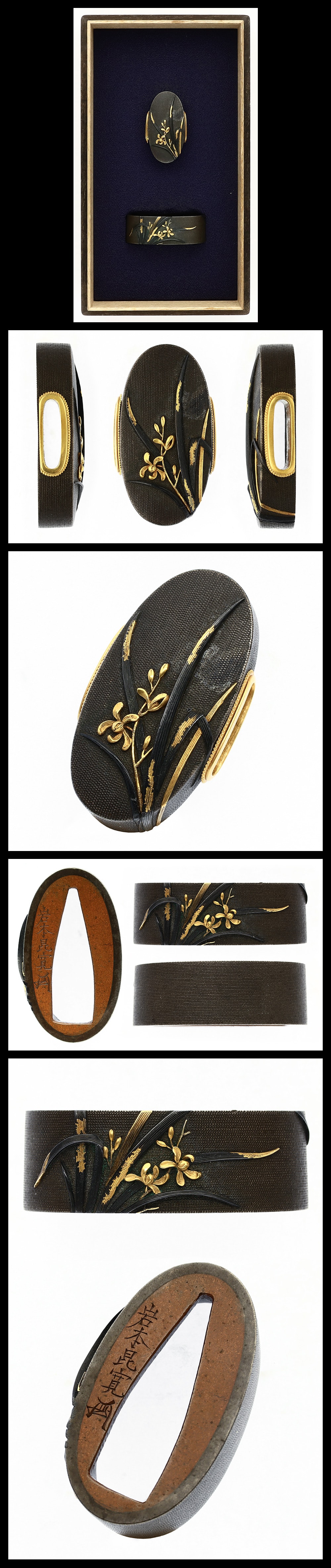
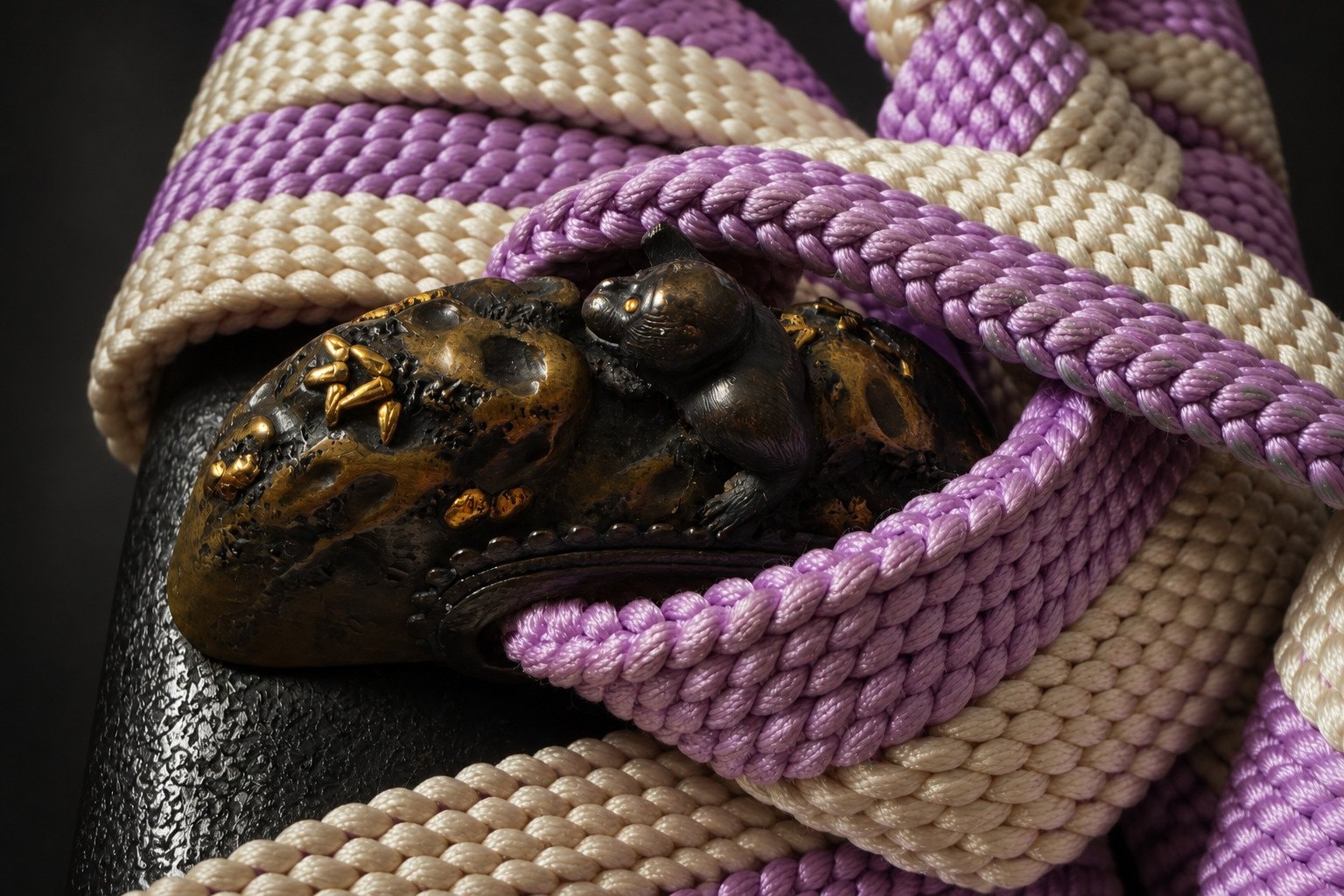
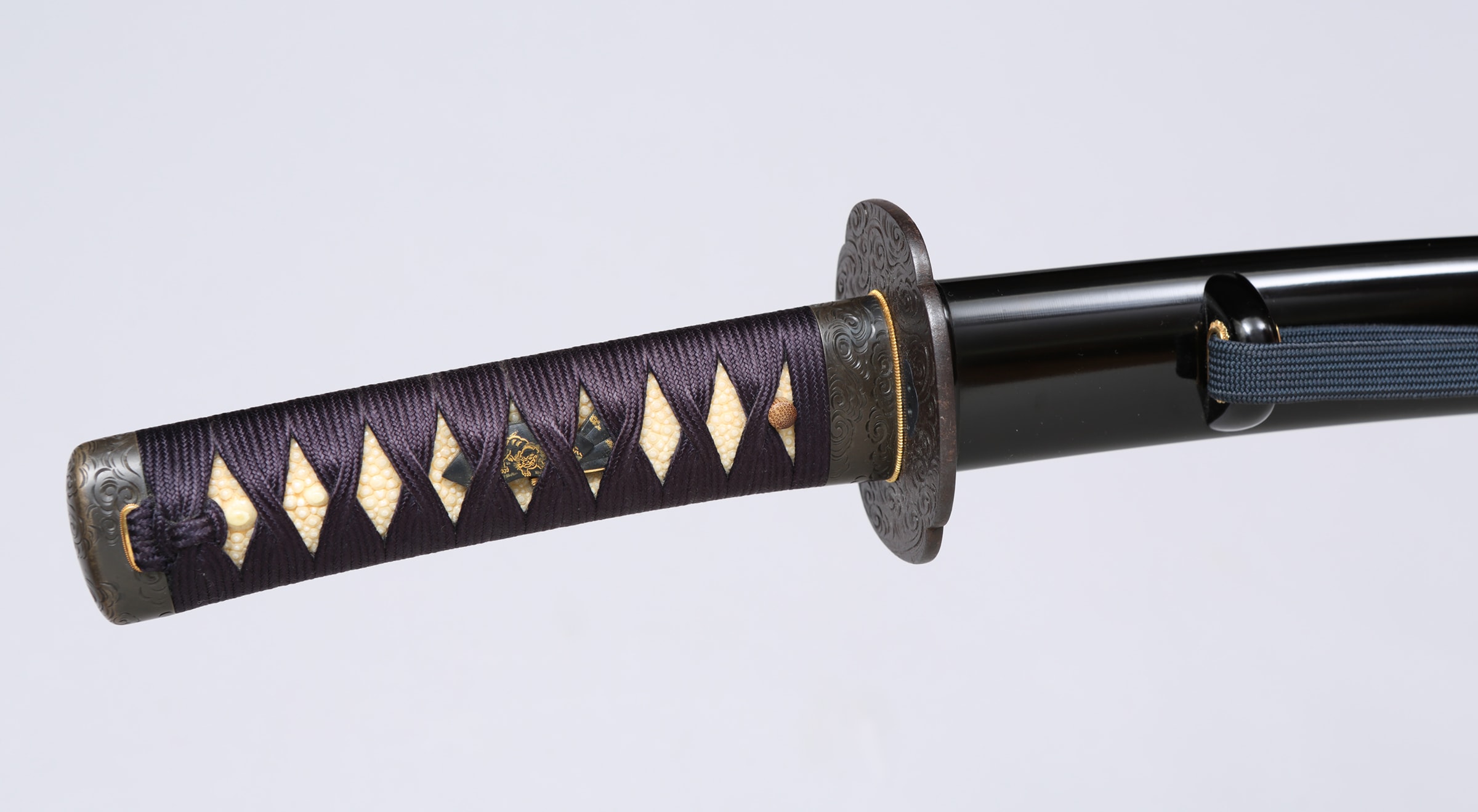
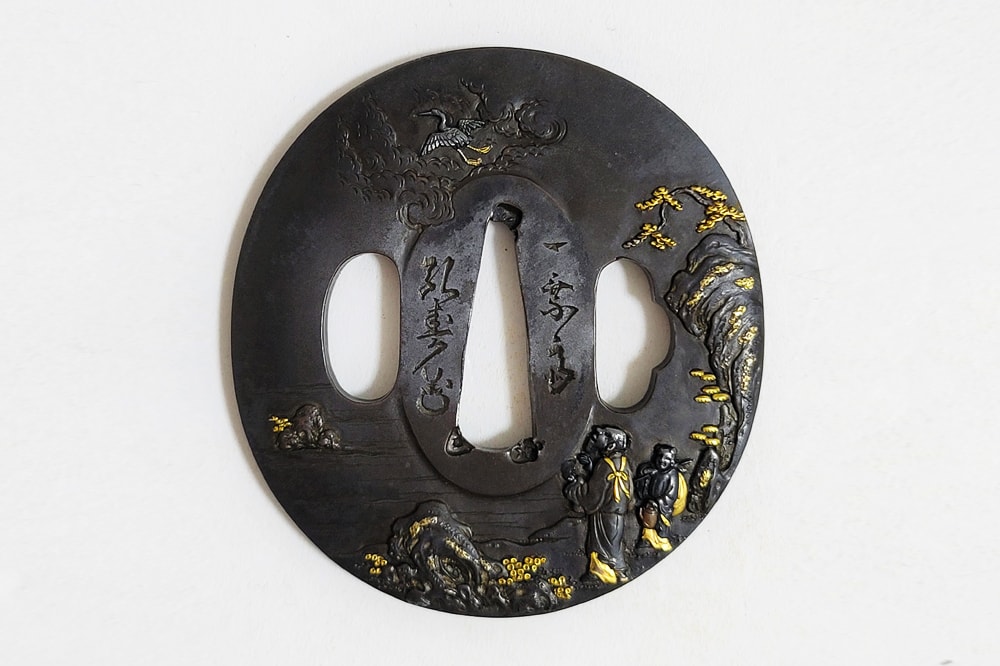
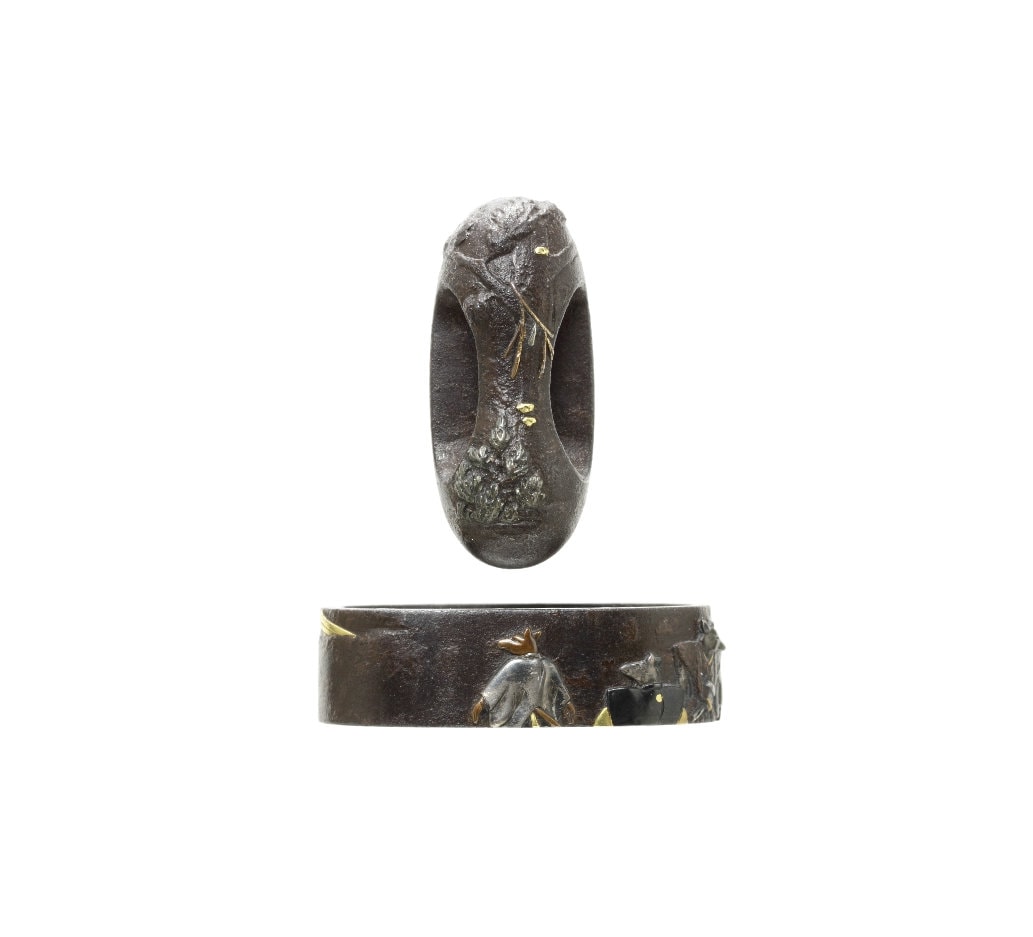
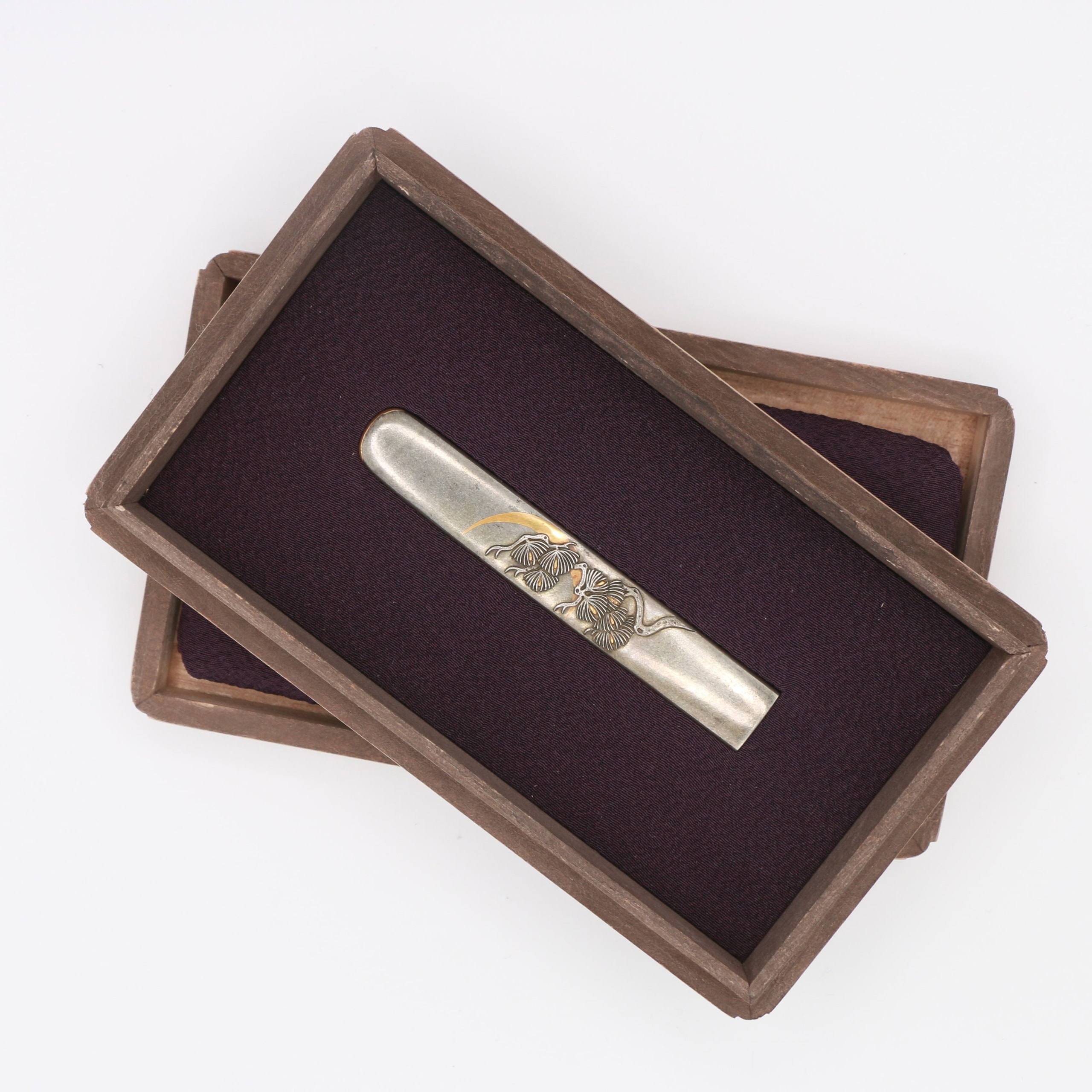
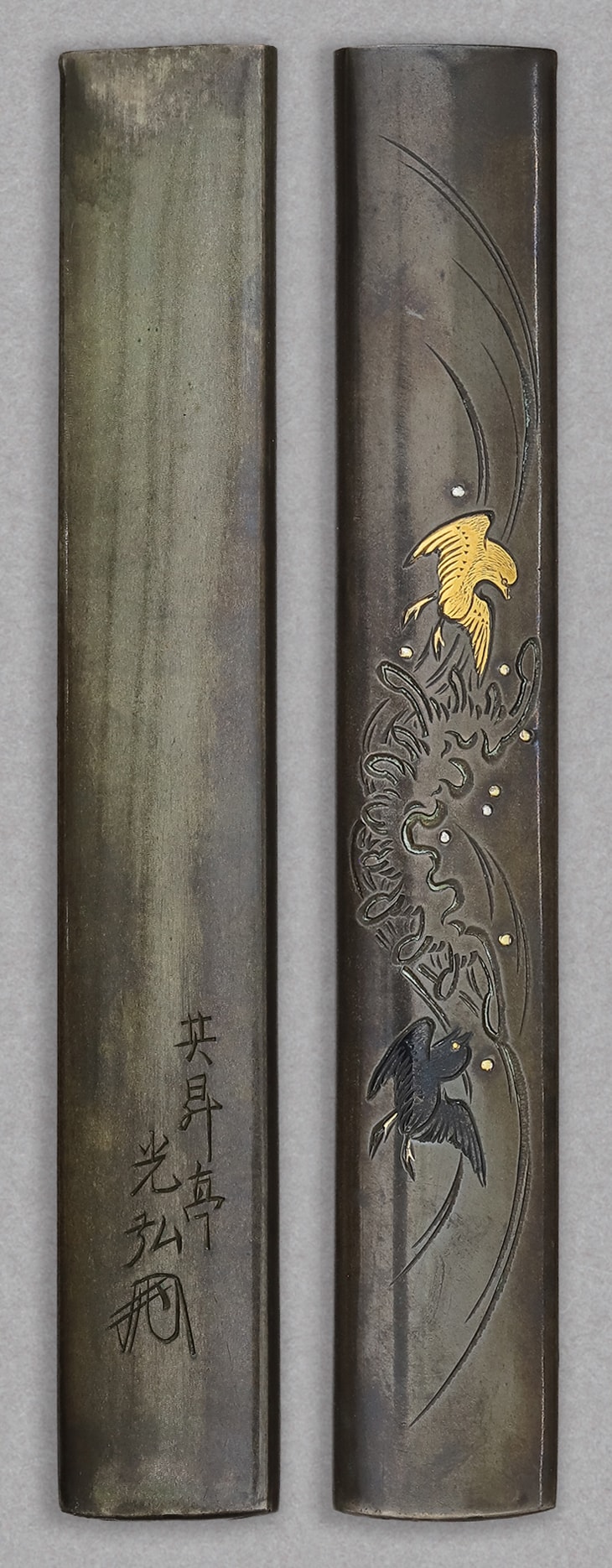
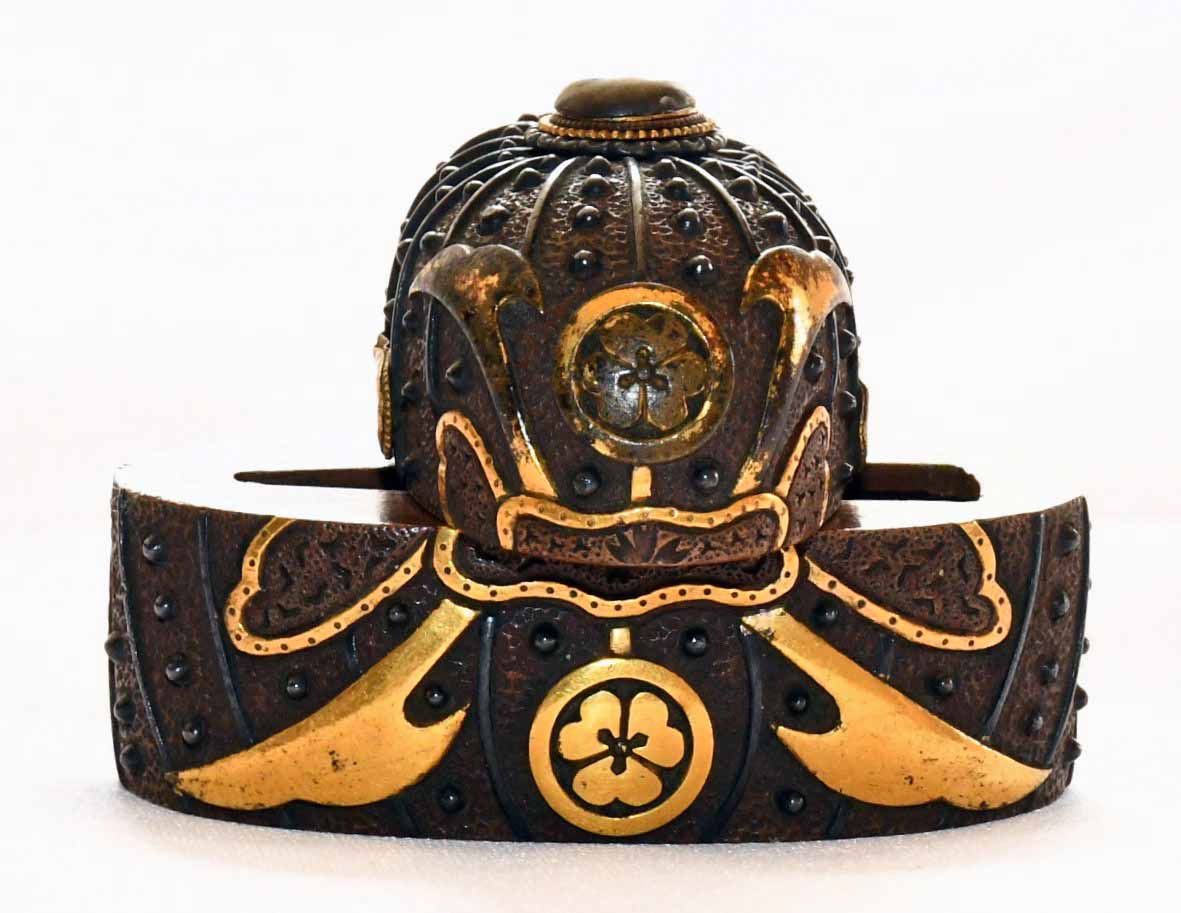
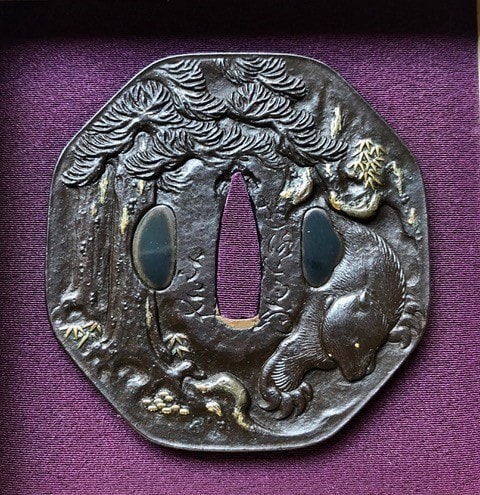
This is a set of Fuchigashira (sword collar and pommel) featuring a round dragon design, signed by Kikuoka Mitsutoshi. Mitsutoshi, son of Mitsumasa, was a refined artist of the late Edo period, excelling in the precise and elaborate carving style of the Yokoya school. This daisho set, likely intended for a formal koshirae, showcases a dignified style reminiscent of Goto family dragon designs, with finely detailed scales and fins on the dragons, and eyes highlighted in gold against a lustrous shakudo nanako ground.
mei · Yokoya · Edo

Yokoya
Edo
Musashi
Signed
Hozon (NBTHK)
Machibori · around 1670
1 piece on the market now
Where Mitsutoshi stands among comparable artisans: across all of nihontō, and within tradition, era, and period. The tiers (Foremost · Leading · Major · Notable) weigh official designations from the NBTHK and Japan's Agency for Cultural Affairs, together with historical honors of lasting repute such as the Sansaku and Meibutsu-chō.
Select a lens to see how it's measured.
Machibori · Edo
10 pieces on the market now
The Kikuoka school (Kikuoka-ha) was founded in Edo by Kikuoka Mitsuyuki (菊岡光行), a disciple of Yanagawa Naomitsu (柳川直光) of the Yokoya lineage. Born in Kan'en 3 (1750) in Kanda Kajimachi, Mitsuyuki trained thoroughly under the Yanagawa house and established an independent line that perpetuated the mainline machibori tradition. His younger brother Mitsumasa (菊岡光政, 1759--1824) likewise studied under Naomitsu and became a leading kinko in his own right. The two brothers were not only influential metalworkers but also celebrated bunjin and haikai poets, both adopting the inherited literary sobriquet Senryo (沾涼) passed down from their forebears. Mitsuyuki further used the art-name Katsukenshi (活剣子) and died in Kansei 12 (1800) at the age of fifty-one. Succession passed through his son Mitsutomo (光朝) as second generation, then to Mitsushige (菊岡光重), who had originally studied under Naomitsu before being adopted into the Kikuoka house as third-generation head. Mitsutoshi (菊岡光利), son of Mitsumasa, continued the principal line into the Bakumatsu era, dying in Bunkyu 3 (1863). A further generation is represented by Unsuiken Toshinobu[[c:1]], a pupil of Mitsutoshi, and by Jounsai Shigeyoshi (茂義), a retained craftsman of the Takamatsu domain who studied under Mitsushige.
The collective style of the Kikuoka school is rooted in the Yokoya-Yanagawa vocabulary and characterized by what the NBTHK consistently terms "precise and steadfast carving technique" (seiko kenjitsu na chogi). The canonical material treatment employs a shakudo nanako-ji[[c:2]] ground with gold crests (kinmon) and a gilt reverse (kin'ura), while menuki are typically executed in solid gold (kinmuku) using rounded sculptural carving (yobori). Carving methods follow the Yokoya manner: takabori (高彫) with colored-metal inlay (iro-e) and applied work (suemon), producing bold, volumetric compositions. '" Beyond lions, the repertoire embraced animals, birds, human figures, mythical beasts such as kirin (麒麟), and characteristically machibori themes drawn from literary and theatrical culture -- mice at play with the Noh properties of Shiki Sanban, Nio guardians modeled from life at Shinagawa Hoozan Kokoku-ji, dancing cranes, parent-and-child chickens, tigers, and auspicious early-spring imagery. Matching sets -- mitokoromono and sanshomono -- are the school's characteristic format, frequently bearing coordinated signatures on kozuka and kogai with split-tanzaku inscriptions (wari-tanzaku mei) on menuki. " The Kikuoka school occupies a distinguished position in the urban machibori lineage as the direct continuation of the Yokoya-Yanagawa mainstream. The NBTHK characterizes Mitsuyuki's manner as closely resembling that of Yokoya Somin (宗珉), noting that "some works display a level of skill approaching that of Somin" -- a comparison of the highest order. " Even the rare surviving works of Toshinobu are valued for confirming the "high level of his technique" within the Kikuoka idiom. Learn more →
| Smith | Era | Designated |
|---|---|---|
| Mitsuyuki光行 | 1750-1800 | 14 |
| Yukinobu行信 | — | 0 |
| Mitsutomo光朝 | — | 0 |
| Toshinobu利信 | 1670 | 1 |
| Mitsushige光重 | 1670 | 1 |
Certifies a genuine fitting worth preserving: a correct signature, or, if unsigned, an identifiable era and school, with recognized artistic and craft value.
The NBTHK (Nihon Bijutsu Tōken Hozon Kyōkai, the Society for the Preservation of Japanese Art Swords) is a public-interest incorporated foundation founded in 1948 and supervised by Japan’s Agency for Cultural Affairs (Bunkachō); it is based at the Japanese Sword Museum in Tokyo. Its expert panels physically examine each submitted work (shinsa) and issue a certificate (kanteishō) ranking it by artistic and historical merit. NBTHK papers are the most widely recognized standard of authentication for Japanese swords and fittings.
NBTHK official siteIf, due to our fault, the item differs significantly from its proper condition, the item may be returned. Cooling-off is within one week of the item's arrival.
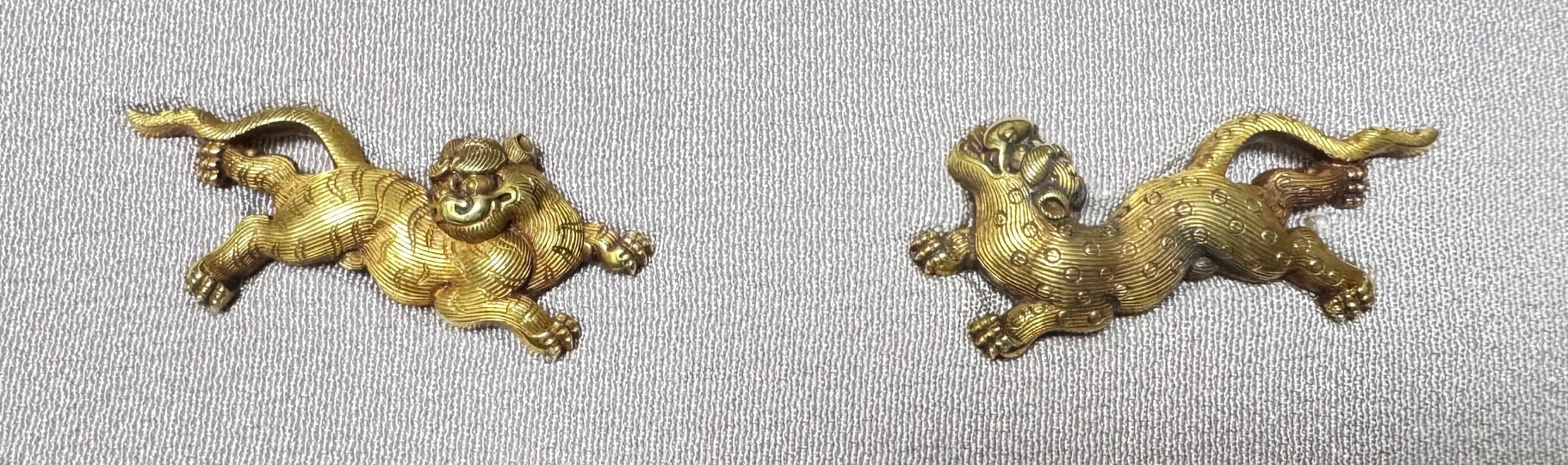
This is a set of Fuchigashira (sword collar and pommel) featuring a round dragon design, signed by Kikuoka Mitsutoshi. Mitsutoshi, son of Mitsumasa, was a refined artist of the late Edo period, excelling in the precise and elaborate carving style of the Yokoya school. This daisho set, likely intended for a formal koshirae, showcases a dignified style reminiscent of Goto family dragon designs, with finely detailed scales and fins on the dragons, and eyes highlighted in gold against a lustrous shakudo nanako ground.
mei · Yokoya · Edo

Yokoya
Edo
Musashi
Signed
Hozon (NBTHK)
Machibori · around 1670
1 piece on the market now
Where Mitsutoshi stands among comparable artisans: across all of nihontō, and within tradition, era, and period. The tiers (Foremost · Leading · Major · Notable) weigh official designations from the NBTHK and Japan's Agency for Cultural Affairs, together with historical honors of lasting repute such as the Sansaku and Meibutsu-chō.
Select a lens to see how it's measured.
Machibori · Edo
10 pieces on the market now
The Kikuoka school (Kikuoka-ha) was founded in Edo by Kikuoka Mitsuyuki (菊岡光行), a disciple of Yanagawa Naomitsu (柳川直光) of the Yokoya lineage. Born in Kan'en 3 (1750) in Kanda Kajimachi, Mitsuyuki trained thoroughly under the Yanagawa house and established an independent line that perpetuated the mainline machibori tradition. His younger brother Mitsumasa (菊岡光政, 1759--1824) likewise studied under Naomitsu and became a leading kinko in his own right. The two brothers were not only influential metalworkers but also celebrated bunjin and haikai poets, both adopting the inherited literary sobriquet Senryo (沾涼) passed down from their forebears. Mitsuyuki further used the art-name Katsukenshi (活剣子) and died in Kansei 12 (1800) at the age of fifty-one. Succession passed through his son Mitsutomo (光朝) as second generation, then to Mitsushige (菊岡光重), who had originally studied under Naomitsu before being adopted into the Kikuoka house as third-generation head. Mitsutoshi (菊岡光利), son of Mitsumasa, continued the principal line into the Bakumatsu era, dying in Bunkyu 3 (1863). A further generation is represented by Unsuiken Toshinobu[[c:1]], a pupil of Mitsutoshi, and by Jounsai Shigeyoshi (茂義), a retained craftsman of the Takamatsu domain who studied under Mitsushige.
The collective style of the Kikuoka school is rooted in the Yokoya-Yanagawa vocabulary and characterized by what the NBTHK consistently terms "precise and steadfast carving technique" (seiko kenjitsu na chogi). The canonical material treatment employs a shakudo nanako-ji[[c:2]] ground with gold crests (kinmon) and a gilt reverse (kin'ura), while menuki are typically executed in solid gold (kinmuku) using rounded sculptural carving (yobori). Carving methods follow the Yokoya manner: takabori (高彫) with colored-metal inlay (iro-e) and applied work (suemon), producing bold, volumetric compositions. '" Beyond lions, the repertoire embraced animals, birds, human figures, mythical beasts such as kirin (麒麟), and characteristically machibori themes drawn from literary and theatrical culture -- mice at play with the Noh properties of Shiki Sanban, Nio guardians modeled from life at Shinagawa Hoozan Kokoku-ji, dancing cranes, parent-and-child chickens, tigers, and auspicious early-spring imagery. Matching sets -- mitokoromono and sanshomono -- are the school's characteristic format, frequently bearing coordinated signatures on kozuka and kogai with split-tanzaku inscriptions (wari-tanzaku mei) on menuki. " The Kikuoka school occupies a distinguished position in the urban machibori lineage as the direct continuation of the Yokoya-Yanagawa mainstream. The NBTHK characterizes Mitsuyuki's manner as closely resembling that of Yokoya Somin (宗珉), noting that "some works display a level of skill approaching that of Somin" -- a comparison of the highest order. " Even the rare surviving works of Toshinobu are valued for confirming the "high level of his technique" within the Kikuoka idiom. Learn more →
| Smith | Era | Designated |
|---|---|---|
| Mitsuyuki光行 | 1750-1800 | 14 |
| Yukinobu行信 | — | 0 |
| Mitsutomo光朝 | — | 0 |
| Toshinobu利信 | 1670 | 1 |
| Mitsushige光重 | 1670 | 1 |
Certifies a genuine fitting worth preserving: a correct signature, or, if unsigned, an identifiable era and school, with recognized artistic and craft value.
The NBTHK (Nihon Bijutsu Tōken Hozon Kyōkai, the Society for the Preservation of Japanese Art Swords) is a public-interest incorporated foundation founded in 1948 and supervised by Japan’s Agency for Cultural Affairs (Bunkachō); it is based at the Japanese Sword Museum in Tokyo. Its expert panels physically examine each submitted work (shinsa) and issue a certificate (kanteishō) ranking it by artistic and historical merit. NBTHK papers are the most widely recognized standard of authentication for Japanese swords and fittings.
NBTHK official siteIf, due to our fault, the item differs significantly from its proper condition, the item may be returned. Cooling-off is within one week of the item's arrival.