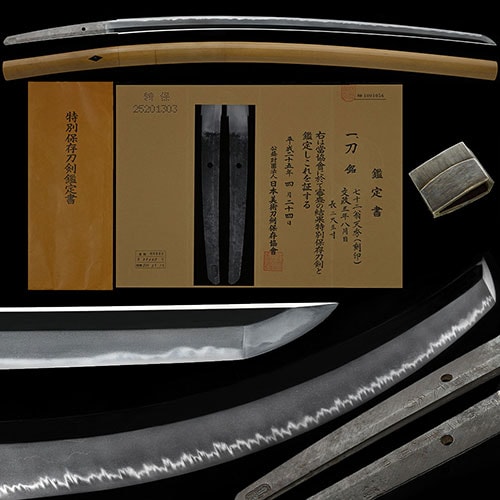
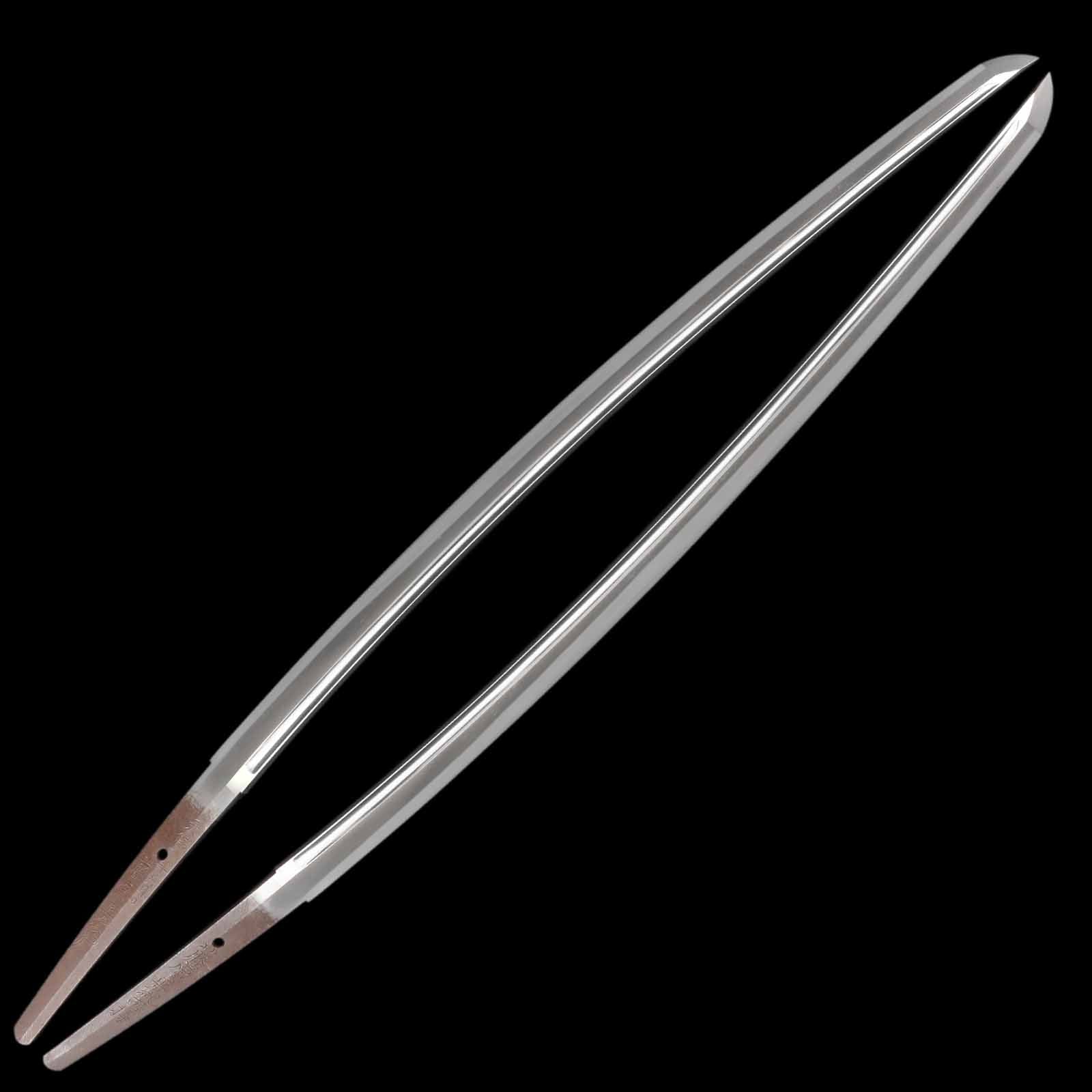
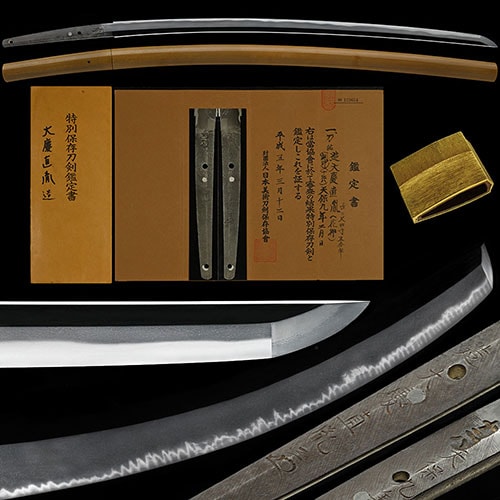
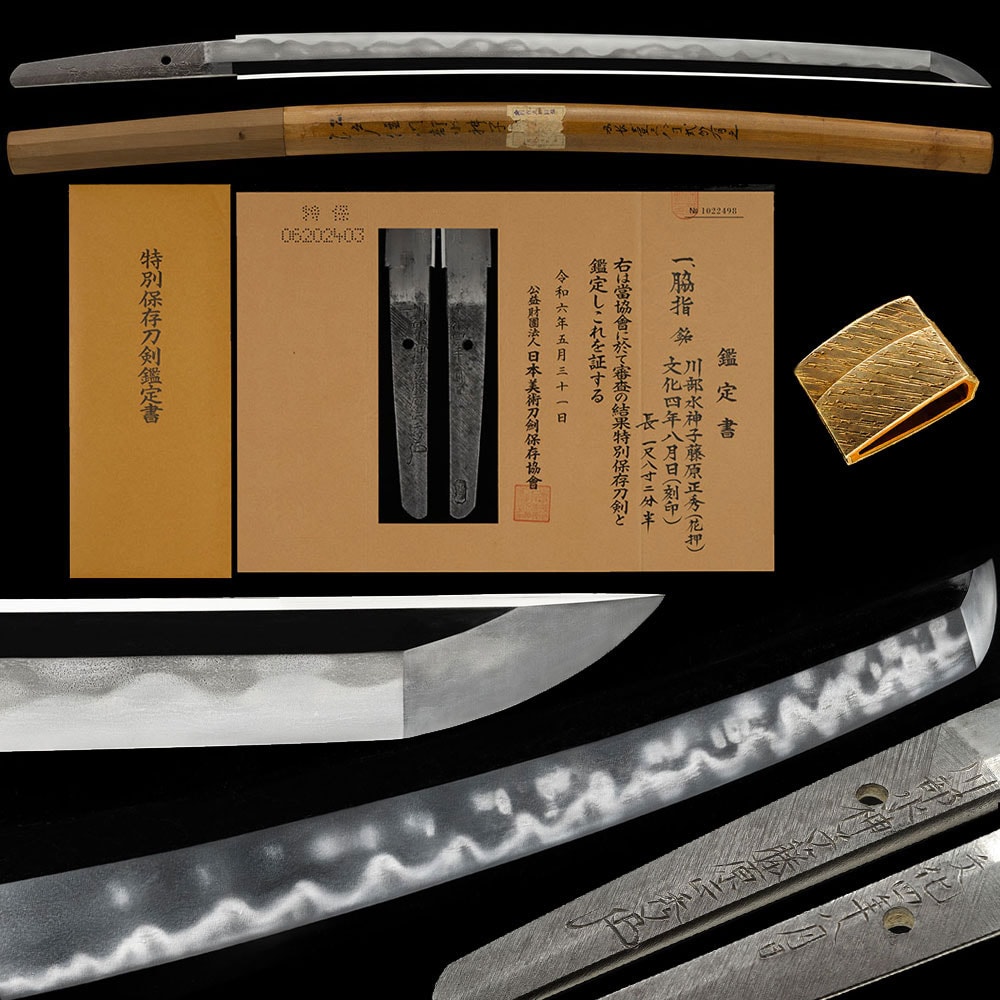
Around 1800 Suishinshi Masahide argued in his writings that the craft must return to the old masters’ methods: the fukkotō revival. His greatest successor Naotane worked convincingly in Bizen and Sōshū manners that had been dead for centuries.
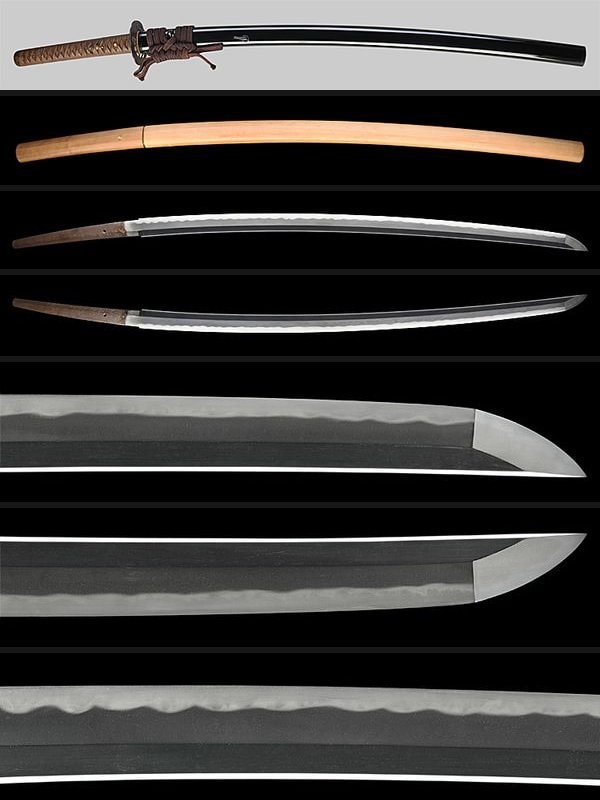
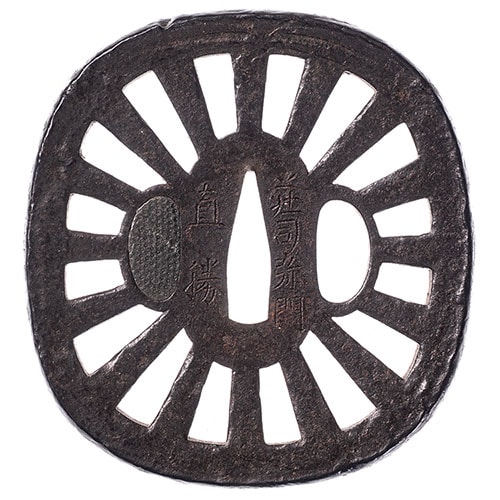
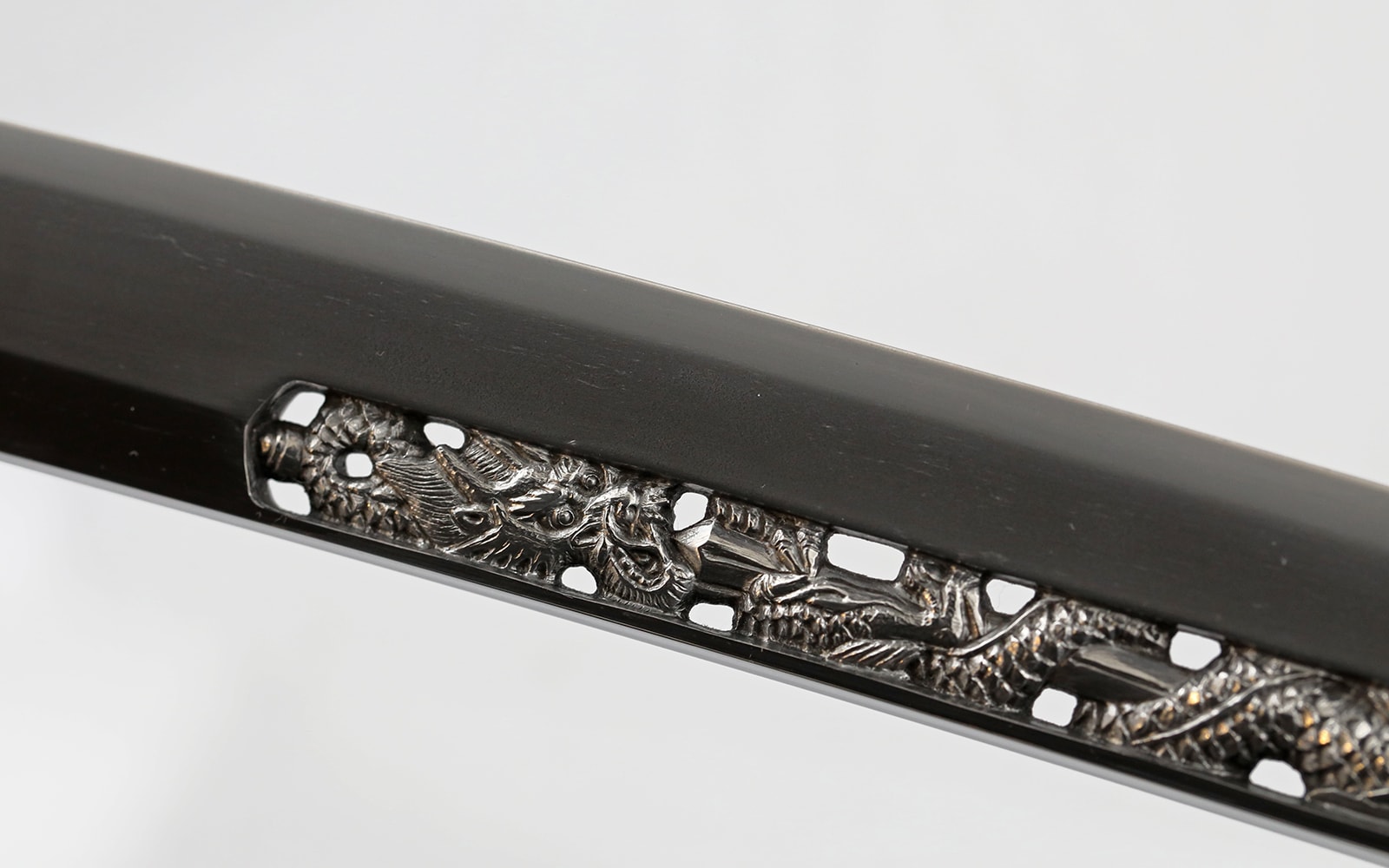
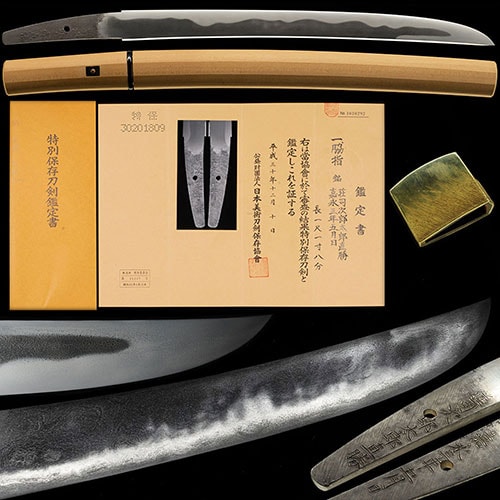
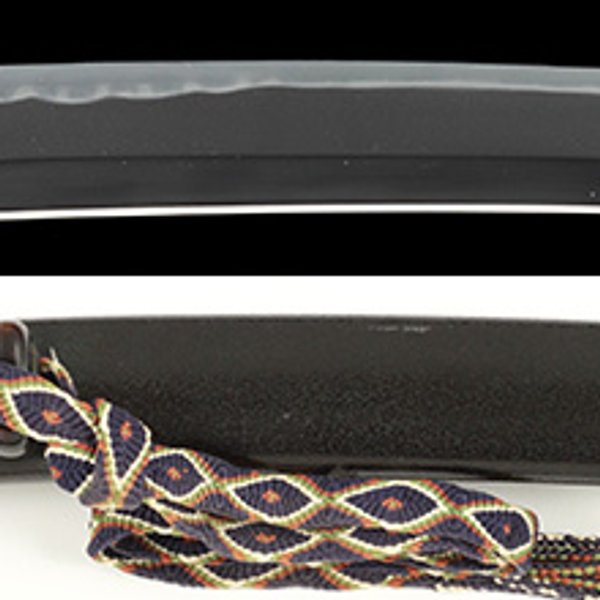
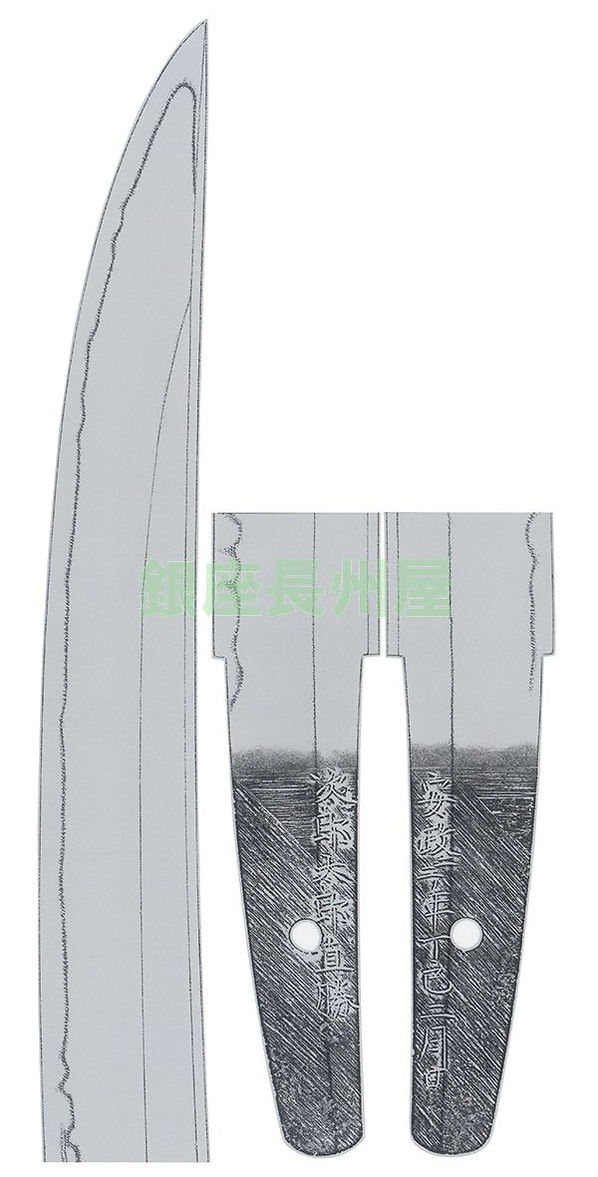
This listing from Ginza Choshuya features a tanto signed by Shoji Jirotaro Naokatsu, dated to the 8th month of Ansei 4 (1857) in the late Edo period. Naokatsu was a renowned student and son-in-law of Taikei Naotane, a practitioner of Suishinshi Masahide's fukko-to theory, and was highly regarded for his skill in both Bizen and Soshu traditions. The tanto is accompanied by a koshirae.
 NihontoWatch
mei · Bunka-Ansei (1805-1858)
Suishinshi Masahide line (Naotane school) · Musashi · around 1805-1858
Fujishiro Jo saku · Tōken Taikan top 31%
1 piece on the market now
Jirōtarō Naokatsu signed Jirōtarō Naokatsu in a large six-character mei and dated his blades across the late-Edo decades from Tenpō into Ansei, the earliest of the surviving designated works carrying a Tenpō 2 (1831) date and the latest an Ansei 2 (1855) one. He was a pupil of Taikei Naotane and later became Naotane's adopted son, serving the Akimoto house of Tatebayashi in Jōshū and living at Shitaya in Edo; he first used the name Kazusa Tarō and afterward changed it to Jirōtarō, though the published sources note that no work bearing the Kazusa Tarō signature has been observed. Through Naotane he stands in the Suishinshi line of Masahide, the central school of the shinshintō revival, whose aim was the fukkō-tō recovery of the old koto traditions. The published sources rank him within that line as the next most capable hand after Naotane and Masayoshi, calling him plainly the smith who follows Naotane in ability[[c:1]] and[[c:2]] a noted master in his own right. He died in Ansei 5 (1858), the year after Naotane, at the age of fifty-four.
His most characteristic hand is a Bizen-den revival modeled on the old Osafune masters, and the feature that carries it is a kataochi-gunome taken from Kanemitsu, the saw-tooth temper the published sources name when they call one katana's work primarily a kataochi-gunome[[c:3]]. Into that base he sets angular and pointed ha and ordinary gunome, and the whole runs with a pervasive saka-gakari slant, the long ashi entering well with yō intermingled. The sugata that carries this manner is robust: a wide mihaba with thick kasane, funbari at the base, and an extended chū- or ō-kissaki, so that on the long Tenpō 13 katana of eighty centimetres the blade has a weighty, martial presence in the hand. The published sources observe that in works of this type his sugata is bolder than Naotane's, the kataochi-gunome growing larger, and that the slant and the large mokume of the forging are habitual traits he shares with his teacher, what they call the points common to his Kanemitsu copies[[c:4]]. The bōshi enters midare-komi and turns with a slightly pointed tendency or a ko-maru.
Beneath that temper the jigane is the constant of the revival. He forges a ko-itame that packs well, at times opening into an itame with areas of large mokume and some nagare-hada, the ji-nie lying thick and the steel bright. Over it rises the antique Bizen reflection that anchors the whole manner: a chōji-utsuri on the earliest Tenpō 14 katana, a midare-utsuri standing clearly on the long Tenpō 13 blade, and on others a fainter utsuri-like effect over a tightly packed muji-toned jigane. This is the old Osafune jigane deliberately reached for, set lower and quieter than Naotane's, and it is the surest mark of his Bizen-den. The nioiguchi is bright throughout, the ashi long and frequent, with yō, fine kinsuji and sunagashi, and occasional small tobiyaki where the temper grows flamboyant. On one Tenpō katana the carvings turn unusual for him, a kurikara and suken carved down toward the tang, and the published sources read that piece as a copy directed not at Kanemitsu but at classical Nagamitsu, perhaps of a now-lost original.
The published sources divide his work in two, into Bizen-den and Sōshū-den, and his record carries both faces. The Bizen-den just described is his hallmark, the manner the judges set explicitly against the old Osafune Kanemitsu[[c:5]] and beside him Kagemitsu and Nagamitsu. His Sōshū-den is the other register, and it is the one the published sources praise most highly: examining it, they say there are works in which he even surpasses Naotane[[c:6]]. In this manner the temper opens into a flamboyant chōji-midare mixed with gunome, the long ashi entering, the nie attaching thickly and at places strongly so as to suggest yubashiri, muneyaki appearing on the back, kinsuji and sunagashi running, and the bōshi turning midare-komi to a pointed return; the nioiguchi is bright and clear. One Ka'ei 5 katana made at Suibara in Echigo is called the blade in which he fully displays his true strengths in this manner[[c:7]]. His mei carries the marks of an Edo professional: an ubu tang filed in ō-sujikai with keshō, a large six-character signature set near the mune, the longer signatures adding the Shōji name and the Fujiwara clan-name, at times an added note of where the blade was forged.
What sets him apart within the school is the same antique Bizen colour the judges name. His Bizen-den is held against Naotane's own work of the type, and the published sources call his best Bizen blade the standout among his works of that approach[[c:8]], judged to stand alongside Naotane's masterpieces of the same manner; the difference they draw is that his sugata is bolder and his kataochi-gunome larger, the temper set lower to evoke an older atmosphere. His own grounded tells distinguish him from the plainer shinshintō hands: the kataochi-gunome taken from Kanemitsu, the saka-gakari that runs through half his work, the chōji- and midare-utsuri in the ji, and the bright nioiguchi over a thick ji-nie. He carries the Suishinshi program forward from Naotane on both its sides, the Bizen revival modeled openly on the old Osafune line and the Sōshū manner the judges hold to surpass his teacher, and in doing so he defines the late-Edo Osafune revival as this school practiced it.
For the collector he is a fine late-Edo name held within a single rank. He has no National Treasures and no Important Cultural Properties, and no Tokubetsu Jūyō; his designated record runs entirely through the Jūyō, with six blades raised to that rank across sessions from the eighteenth in 1969 to the sixty-eighth in 2022, every one of them a signed and dated katana. Fujishiro rates him Jō-saku and the Tōkō Taikan values his work at the upper-middle of the shinshintō field. The recorded blades stay in private hands, the older designations passing through named private owners rather than through museums or shrines, and none carries an old daimyō denrai. Because his whole surviving designated record is six signed katana, a Naokatsu of this quality comes to market only seldom, a signed and dated shinshintō blade by the hand the published sources rank next after Naotane, and most welcome when one of his Bizen-den katana in the Kanemitsu manner, with its kataochi-gunome and midare-utsuri, is the one that appears.
Where Jirotaro Naokatsu stands among comparable artisans: across all of nihontō, and within tradition, era, and period. The tiers (Foremost · Leading · Major · Notable) weigh official designations from the NBTHK and Japan's Agency for Cultural Affairs, together with historical honors of lasting repute such as the Sansaku and Meibutsu-chō.
Select a lens to see how it's measured.
Years he was demonstrably active, proven by signed-and-dated blades
Shinshinto · Musashi
78 pieces on the market now
At Hamachō in Edo, in the closing decades of the eighteenth century and the opening ones of the nineteenth, Suishinshi Masahide[[c:1]] gathered the school that would turn Japanese swordmaking back toward its medieval models. Born Kawabe Gihachirō at Akayu in Dewa in 1750, signing first as Suzuki Takahide and then Eikoku, he studied under the Shitahara smith Yoshihide of Musashi, took the name Masahide in An'ei 3, and served the Akimoto house of Yamagata before settling in Edo, where he worked for nearly fifty years. He is the founding figure of the shinshintō and the theorist of the fukko-tō (revival-sword) doctrine, the argument that the sword ought to return to its Kamakura forms. Around that teaching he drew a large body of pupils, among them Taikei Naotane, who would give the revival its fullest practical form, the future second Masayoshi (Hosokawa Morihide), and a wider Edo and provincial following that carried the program into the Mito, Yonezawa, Tsuyama, and Tatebayashi domains. The shared vocabulary of the school is the deliberate reach back into the koto traditions, worked over a tightly forged, often muji-toned ko-itame with thick ji-nie. Masahide's own prime hand was the Ōsaka-utsushi, the surging tōran-midare of Tsuda Sukehiro opening from a long yakidashi and the broad suguha after Inoue Shinkai, betrayed on even his closest copies by a blackish, coarse nie that spills from the ha into the ji. Naotane gave the revival its Bizen and Sōshū faces: a reverse-leaning chōji-midare with angular kaku-gunome and saka-ashi, modeled on the late-Kamakura Osafune masters Kagemitsu and Kanemitsu and anchored by a consciously revived midare-utsuri that no ordinary shinshintō steel carries, set beside a Sōshū notare with its whorled uzumaki-hada and coarse, striped nie. The pupils divided this inheritance along their own lines. Jirōtarō Naokatsu, Naotane's adopted son, took a Bizen-den led by a kataochi-gunome from Kanemitsu with a pervasive saka-gakari slant and chōji- or midare-utsuri in the ji.
Suishinshi Masatsugu reproduced Naotane's two traditions, Sōshū and Bizen, down to the cut of his signature. Through Masayoshi the Bizen current passed to his heir Hosokawa Masamori of Tsuyama, whose chōji clusters mixed with gunome-chōji and togariba. The Osaka wave traveled separately into Mito through Naoe Sukemasa, who set a Shinkai-styled suguha and a Sukehiro tōran over a clear ko-itame, while Chōunsai Tsunatoshi of the Uesugi service carried a nioi-deki chōji mixed with gunome, suguha, and tōran-midare, often with carving by his own hand. To kantei the school is to weigh a tradition consciously copied against the period marks the copy cannot shed: the constant of the line is that the hamon is never the pure nioi-deki of old Bizen but carries nie throughout, a difference the NBTHK names outright as the divide between koto and shinshintō. The revived utsuri in Naotane and Naokatsu, the spilling nie in Masahide, the whorled uzumaki-hada shared across the line, and the broad, thick-kasane late-Edo sugata are the surest tells, narrowed further by the school's habit of full, dated signatures that make these smiths among the most exactly knowable of their age. Masahide stands at the head as the teacher and theorist, his finest work in his Ōsaka copies rather than the doctrine he proclaimed; Naotane stands ahead of him in execution, his Bizen-den held the finest among the shinshintō. Their pupils define the late-Edo Osafune and Sōshū revivals as practiced through Edo and the domains, with Naokatsu and Masatsugu read as the next hands after Naotane and Masayoshi. The provenance of the school runs through domain commission and bestowal (Mito blades forged at the Kōrakuen by lordly order, Tsuyama and Yonezawa fief work, Naotane's Sanada daishō and an Imperial-collection tachi) rather than ancient daimyō transmission, fitting for a movement that, within a single generation at Edo, redrew the direction of nineteenth-century swordmaking by turning it back toward the old models. Learn more →
| Smith | Era | Designated |
|---|---|---|
| Naotane直胤 | 1801-1837 | 40 |
| Masahide正秀 | 1777-1817 | 28 |
| Sukemasa助政 | 1804-1825 | 8 |
| Jirotaro Naokatsu直勝 | 1805-1858 | 6 |
| Masayoshi正義 | 1791-1860 | 5 |
The Shinshintō revival
Around 1800 Suishinshi Masahide argued in his writings that the craft must return to the old masters’ methods: the fukkotō revival. His greatest successor Naotane worked convincingly in Bizen and Sōshū manners that had been dead for centuries.
We could not find an authenticity certificate on the seller’s listing. Japanese swords and fittings are normally papered by the NBTHK (or the NTHK). Without one, the attribution is the seller’s own assessment and has not been independently verified — treat it with caution and ask the dealer about certification before buying.
If, due to our fault, the item differs significantly from its proper condition, the item may be returned. Cooling-off is within one week of the item's arrival.
This listing from Ginza Choshuya features a tanto signed by Shoji Jirotaro Naokatsu, dated to the 8th month of Ansei 4 (1857) in the late Edo period. Naokatsu was a renowned student and son-in-law of Taikei Naotane, a practitioner of Suishinshi Masahide's fukko-to theory, and was highly regarded for his skill in both Bizen and Soshu traditions. The tanto is accompanied by a koshirae.
NihontoWatchmei · Bunka-Ansei (1805-1858)
Suishinshi Masahide line (Naotane school) · Musashi · around 1805-1858
Fujishiro Jo saku · Tōken Taikan top 31%
1 piece on the market now
Jirōtarō Naokatsu signed Jirōtarō Naokatsu in a large six-character mei and dated his blades across the late-Edo decades from Tenpō into Ansei, the earliest of the surviving designated works carrying a Tenpō 2 (1831) date and the latest an Ansei 2 (1855) one. He was a pupil of Taikei Naotane and later became Naotane's adopted son, serving the Akimoto house of Tatebayashi in Jōshū and living at Shitaya in Edo; he first used the name Kazusa Tarō and afterward changed it to Jirōtarō, though the published sources note that no work bearing the Kazusa Tarō signature has been observed. Through Naotane he stands in the Suishinshi line of Masahide, the central school of the shinshintō revival, whose aim was the fukkō-tō recovery of the old koto traditions. The published sources rank him within that line as the next most capable hand after Naotane and Masayoshi, calling him plainly the smith who follows Naotane in ability[[c:1]] and[[c:2]] a noted master in his own right. He died in Ansei 5 (1858), the year after Naotane, at the age of fifty-four.
His most characteristic hand is a Bizen-den revival modeled on the old Osafune masters, and the feature that carries it is a kataochi-gunome taken from Kanemitsu, the saw-tooth temper the published sources name when they call one katana's work primarily a kataochi-gunome[[c:3]]. Into that base he sets angular and pointed ha and ordinary gunome, and the whole runs with a pervasive saka-gakari slant, the long ashi entering well with yō intermingled. The sugata that carries this manner is robust: a wide mihaba with thick kasane, funbari at the base, and an extended chū- or ō-kissaki, so that on the long Tenpō 13 katana of eighty centimetres the blade has a weighty, martial presence in the hand. The published sources observe that in works of this type his sugata is bolder than Naotane's, the kataochi-gunome growing larger, and that the slant and the large mokume of the forging are habitual traits he shares with his teacher, what they call the points common to his Kanemitsu copies[[c:4]]. The bōshi enters midare-komi and turns with a slightly pointed tendency or a ko-maru.
Beneath that temper the jigane is the constant of the revival. He forges a ko-itame that packs well, at times opening into an itame with areas of large mokume and some nagare-hada, the ji-nie lying thick and the steel bright. Over it rises the antique Bizen reflection that anchors the whole manner: a chōji-utsuri on the earliest Tenpō 14 katana, a midare-utsuri standing clearly on the long Tenpō 13 blade, and on others a fainter utsuri-like effect over a tightly packed muji-toned jigane. This is the old Osafune jigane deliberately reached for, set lower and quieter than Naotane's, and it is the surest mark of his Bizen-den. The nioiguchi is bright throughout, the ashi long and frequent, with yō, fine kinsuji and sunagashi, and occasional small tobiyaki where the temper grows flamboyant. On one Tenpō katana the carvings turn unusual for him, a kurikara and suken carved down toward the tang, and the published sources read that piece as a copy directed not at Kanemitsu but at classical Nagamitsu, perhaps of a now-lost original.
The published sources divide his work in two, into Bizen-den and Sōshū-den, and his record carries both faces. The Bizen-den just described is his hallmark, the manner the judges set explicitly against the old Osafune Kanemitsu[[c:5]] and beside him Kagemitsu and Nagamitsu. His Sōshū-den is the other register, and it is the one the published sources praise most highly: examining it, they say there are works in which he even surpasses Naotane[[c:6]]. In this manner the temper opens into a flamboyant chōji-midare mixed with gunome, the long ashi entering, the nie attaching thickly and at places strongly so as to suggest yubashiri, muneyaki appearing on the back, kinsuji and sunagashi running, and the bōshi turning midare-komi to a pointed return; the nioiguchi is bright and clear. One Ka'ei 5 katana made at Suibara in Echigo is called the blade in which he fully displays his true strengths in this manner[[c:7]]. His mei carries the marks of an Edo professional: an ubu tang filed in ō-sujikai with keshō, a large six-character signature set near the mune, the longer signatures adding the Shōji name and the Fujiwara clan-name, at times an added note of where the blade was forged.
What sets him apart within the school is the same antique Bizen colour the judges name. His Bizen-den is held against Naotane's own work of the type, and the published sources call his best Bizen blade the standout among his works of that approach[[c:8]], judged to stand alongside Naotane's masterpieces of the same manner; the difference they draw is that his sugata is bolder and his kataochi-gunome larger, the temper set lower to evoke an older atmosphere. His own grounded tells distinguish him from the plainer shinshintō hands: the kataochi-gunome taken from Kanemitsu, the saka-gakari that runs through half his work, the chōji- and midare-utsuri in the ji, and the bright nioiguchi over a thick ji-nie. He carries the Suishinshi program forward from Naotane on both its sides, the Bizen revival modeled openly on the old Osafune line and the Sōshū manner the judges hold to surpass his teacher, and in doing so he defines the late-Edo Osafune revival as this school practiced it.
For the collector he is a fine late-Edo name held within a single rank. He has no National Treasures and no Important Cultural Properties, and no Tokubetsu Jūyō; his designated record runs entirely through the Jūyō, with six blades raised to that rank across sessions from the eighteenth in 1969 to the sixty-eighth in 2022, every one of them a signed and dated katana. Fujishiro rates him Jō-saku and the Tōkō Taikan values his work at the upper-middle of the shinshintō field. The recorded blades stay in private hands, the older designations passing through named private owners rather than through museums or shrines, and none carries an old daimyō denrai. Because his whole surviving designated record is six signed katana, a Naokatsu of this quality comes to market only seldom, a signed and dated shinshintō blade by the hand the published sources rank next after Naotane, and most welcome when one of his Bizen-den katana in the Kanemitsu manner, with its kataochi-gunome and midare-utsuri, is the one that appears.
Where Jirotaro Naokatsu stands among comparable artisans: across all of nihontō, and within tradition, era, and period. The tiers (Foremost · Leading · Major · Notable) weigh official designations from the NBTHK and Japan's Agency for Cultural Affairs, together with historical honors of lasting repute such as the Sansaku and Meibutsu-chō.
Select a lens to see how it's measured.
Years he was demonstrably active, proven by signed-and-dated blades
Shinshinto · Musashi
78 pieces on the market now
At Hamachō in Edo, in the closing decades of the eighteenth century and the opening ones of the nineteenth, Suishinshi Masahide[[c:1]] gathered the school that would turn Japanese swordmaking back toward its medieval models. Born Kawabe Gihachirō at Akayu in Dewa in 1750, signing first as Suzuki Takahide and then Eikoku, he studied under the Shitahara smith Yoshihide of Musashi, took the name Masahide in An'ei 3, and served the Akimoto house of Yamagata before settling in Edo, where he worked for nearly fifty years. He is the founding figure of the shinshintō and the theorist of the fukko-tō (revival-sword) doctrine, the argument that the sword ought to return to its Kamakura forms. Around that teaching he drew a large body of pupils, among them Taikei Naotane, who would give the revival its fullest practical form, the future second Masayoshi (Hosokawa Morihide), and a wider Edo and provincial following that carried the program into the Mito, Yonezawa, Tsuyama, and Tatebayashi domains. The shared vocabulary of the school is the deliberate reach back into the koto traditions, worked over a tightly forged, often muji-toned ko-itame with thick ji-nie. Masahide's own prime hand was the Ōsaka-utsushi, the surging tōran-midare of Tsuda Sukehiro opening from a long yakidashi and the broad suguha after Inoue Shinkai, betrayed on even his closest copies by a blackish, coarse nie that spills from the ha into the ji. Naotane gave the revival its Bizen and Sōshū faces: a reverse-leaning chōji-midare with angular kaku-gunome and saka-ashi, modeled on the late-Kamakura Osafune masters Kagemitsu and Kanemitsu and anchored by a consciously revived midare-utsuri that no ordinary shinshintō steel carries, set beside a Sōshū notare with its whorled uzumaki-hada and coarse, striped nie. The pupils divided this inheritance along their own lines. Jirōtarō Naokatsu, Naotane's adopted son, took a Bizen-den led by a kataochi-gunome from Kanemitsu with a pervasive saka-gakari slant and chōji- or midare-utsuri in the ji.
Suishinshi Masatsugu reproduced Naotane's two traditions, Sōshū and Bizen, down to the cut of his signature. Through Masayoshi the Bizen current passed to his heir Hosokawa Masamori of Tsuyama, whose chōji clusters mixed with gunome-chōji and togariba. The Osaka wave traveled separately into Mito through Naoe Sukemasa, who set a Shinkai-styled suguha and a Sukehiro tōran over a clear ko-itame, while Chōunsai Tsunatoshi of the Uesugi service carried a nioi-deki chōji mixed with gunome, suguha, and tōran-midare, often with carving by his own hand. To kantei the school is to weigh a tradition consciously copied against the period marks the copy cannot shed: the constant of the line is that the hamon is never the pure nioi-deki of old Bizen but carries nie throughout, a difference the NBTHK names outright as the divide between koto and shinshintō. The revived utsuri in Naotane and Naokatsu, the spilling nie in Masahide, the whorled uzumaki-hada shared across the line, and the broad, thick-kasane late-Edo sugata are the surest tells, narrowed further by the school's habit of full, dated signatures that make these smiths among the most exactly knowable of their age. Masahide stands at the head as the teacher and theorist, his finest work in his Ōsaka copies rather than the doctrine he proclaimed; Naotane stands ahead of him in execution, his Bizen-den held the finest among the shinshintō. Their pupils define the late-Edo Osafune and Sōshū revivals as practiced through Edo and the domains, with Naokatsu and Masatsugu read as the next hands after Naotane and Masayoshi. The provenance of the school runs through domain commission and bestowal (Mito blades forged at the Kōrakuen by lordly order, Tsuyama and Yonezawa fief work, Naotane's Sanada daishō and an Imperial-collection tachi) rather than ancient daimyō transmission, fitting for a movement that, within a single generation at Edo, redrew the direction of nineteenth-century swordmaking by turning it back toward the old models. Learn more →
| Smith | Era | Designated |
|---|---|---|
| Naotane直胤 | 1801-1837 | 40 |
| Masahide正秀 | 1777-1817 | 28 |
| Sukemasa助政 | 1804-1825 | 8 |
| Jirotaro Naokatsu直勝 | 1805-1858 | 6 |
| Masayoshi正義 | 1791-1860 | 5 |
The Shinshintō revival
Around 1800 Suishinshi Masahide argued in his writings that the craft must return to the old masters’ methods: the fukkotō revival. His greatest successor Naotane worked convincingly in Bizen and Sōshū manners that had been dead for centuries.
We could not find an authenticity certificate on the seller’s listing. Japanese swords and fittings are normally papered by the NBTHK (or the NTHK). Without one, the attribution is the seller’s own assessment and has not been independently verified — treat it with caution and ask the dealer about certification before buying.
If, due to our fault, the item differs significantly from its proper condition, the item may be returned. Cooling-off is within one week of the item's arrival.