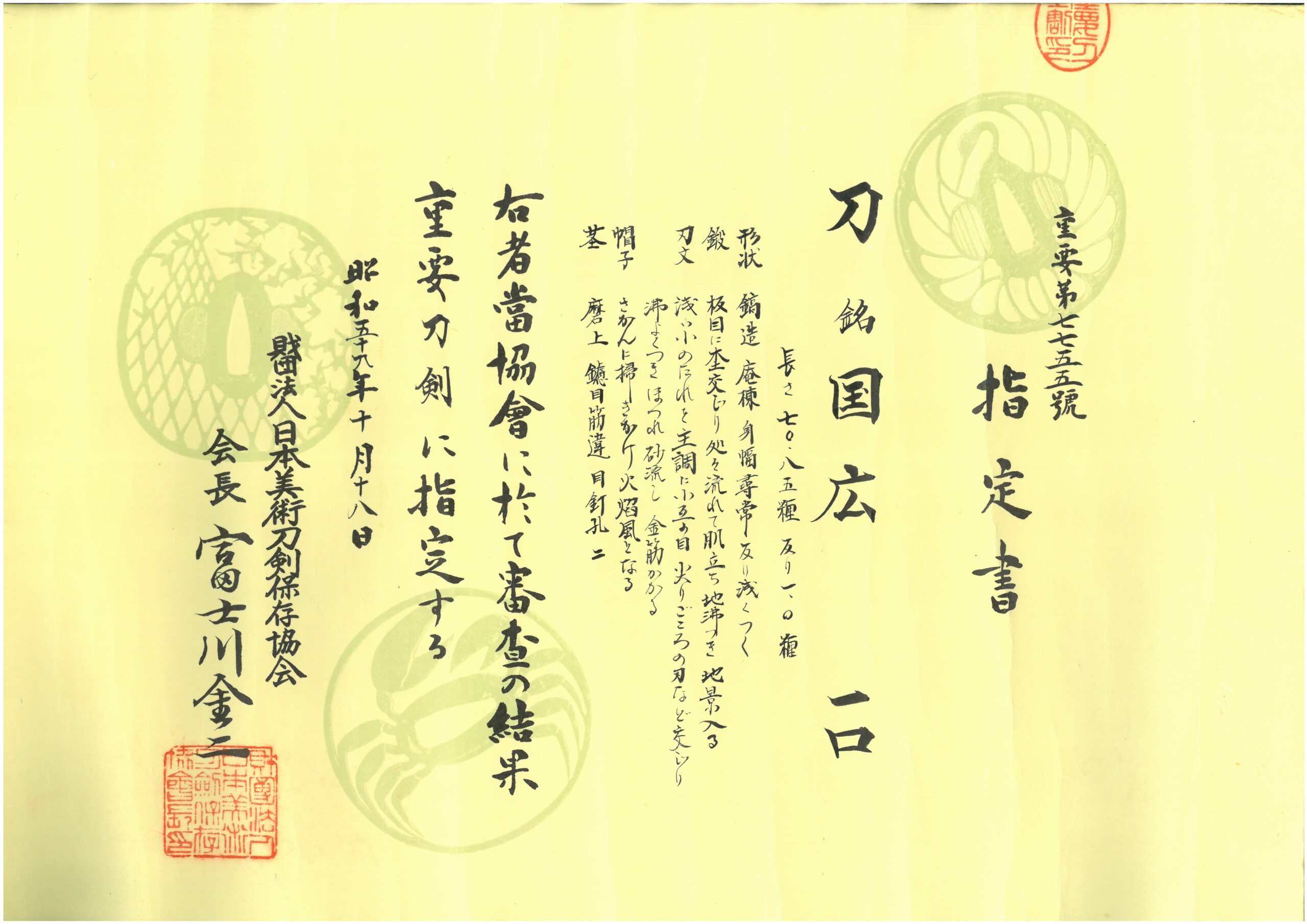


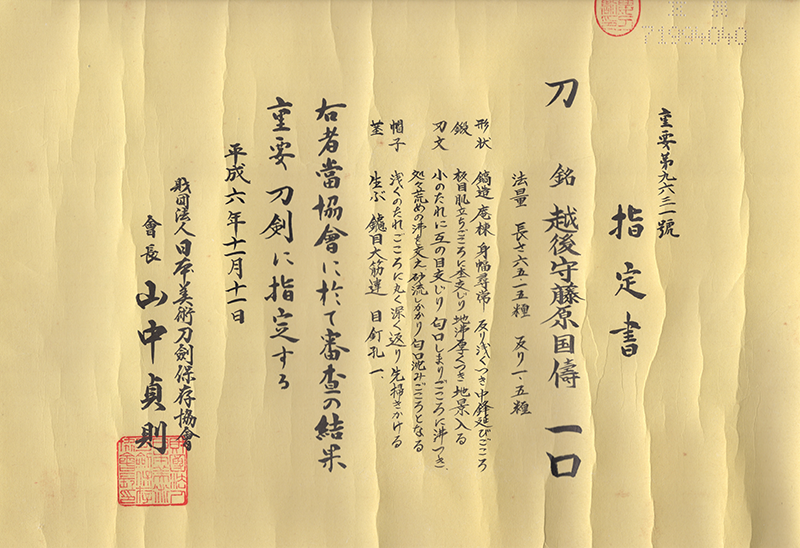
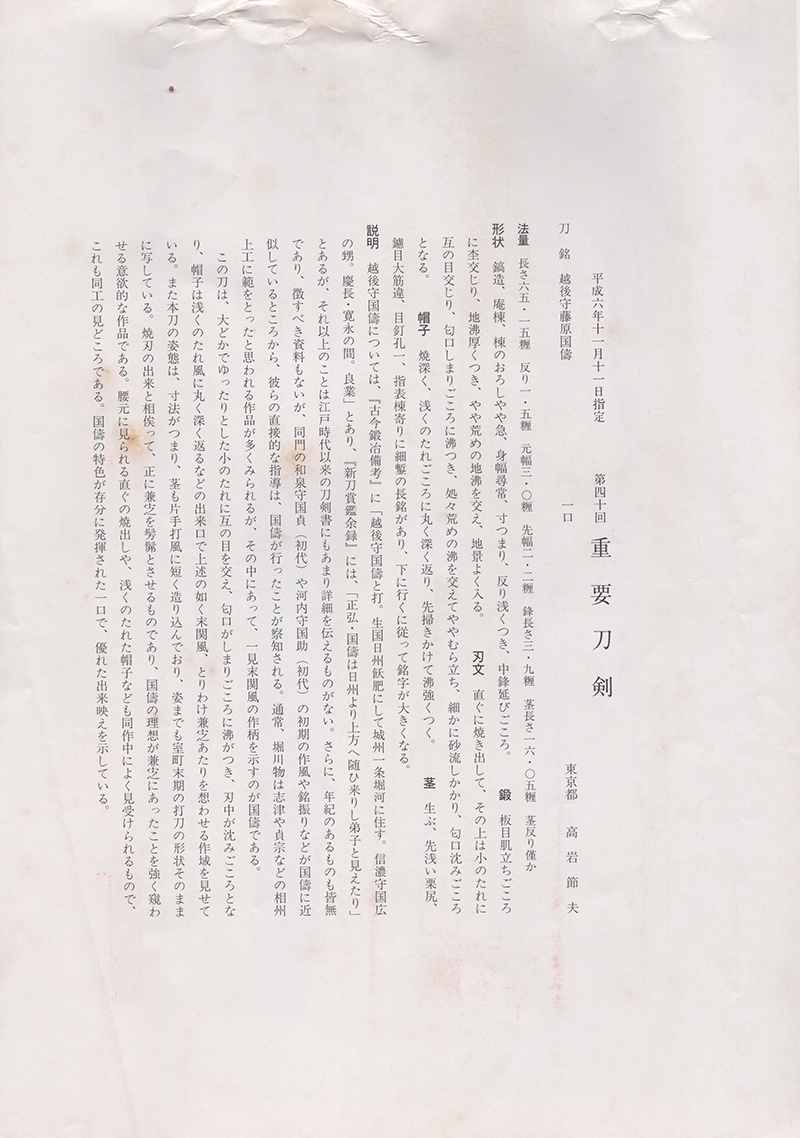
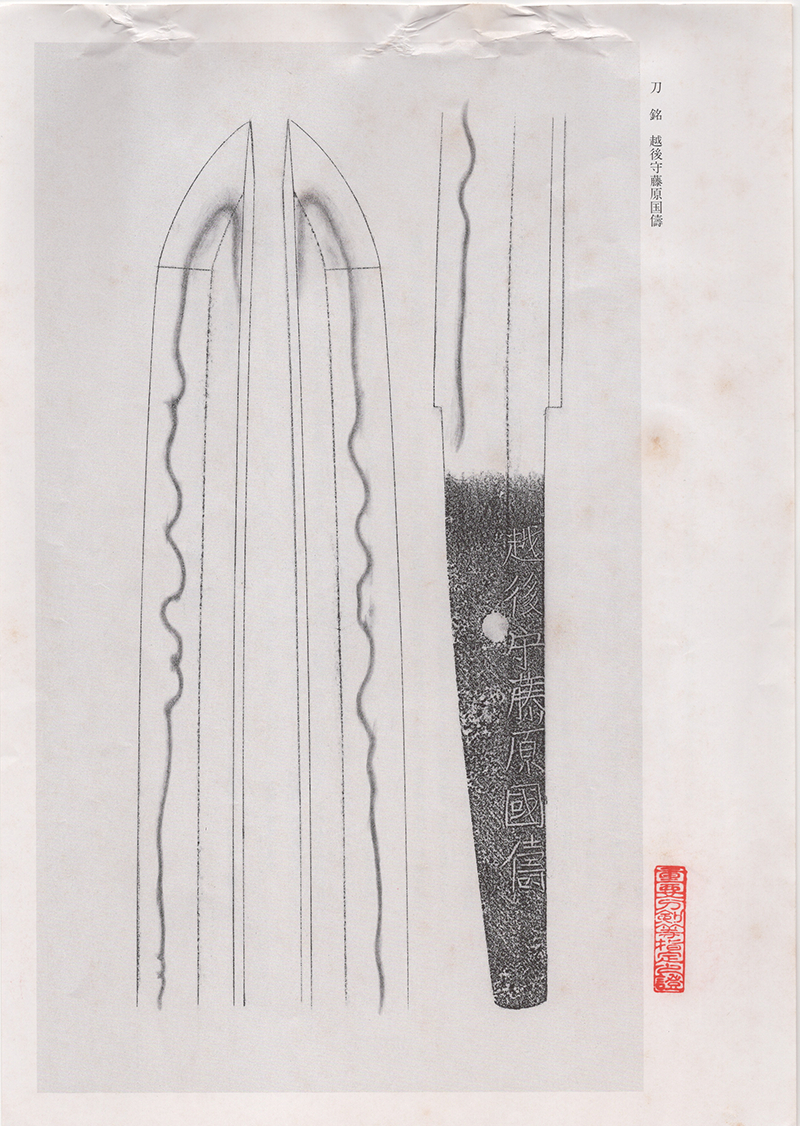
-, 40th Session — Designated November 11, 1994
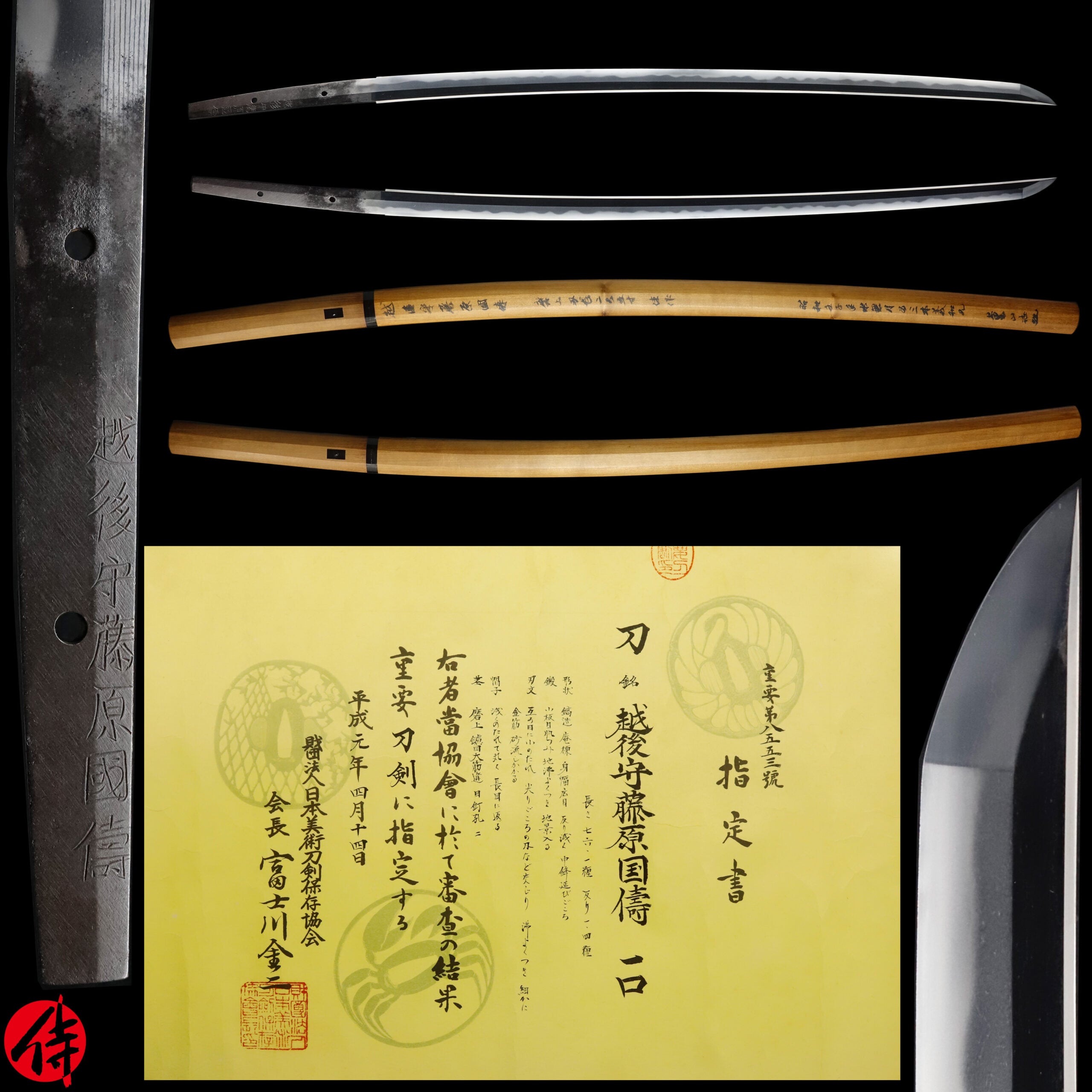
, : Echigo no Kami Fujiwara Kunitsugu (越後守藤原国儔)
Measurements 65.15 cm, 1.5 cm, 3.0 cm, 2.2 cm, 3.9 cm, 16.05 cm, slight
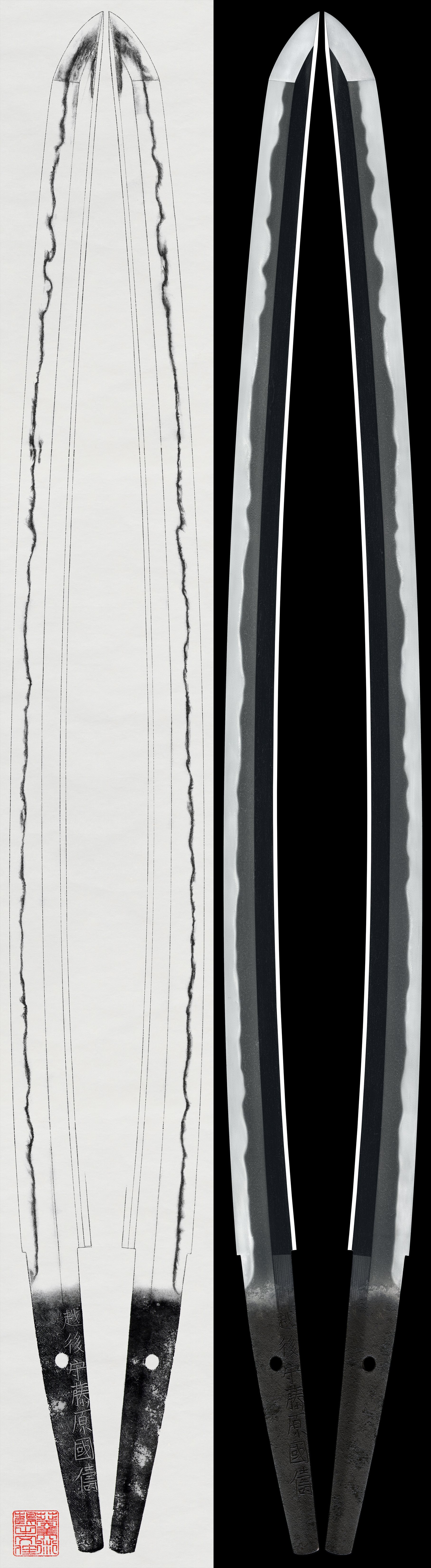
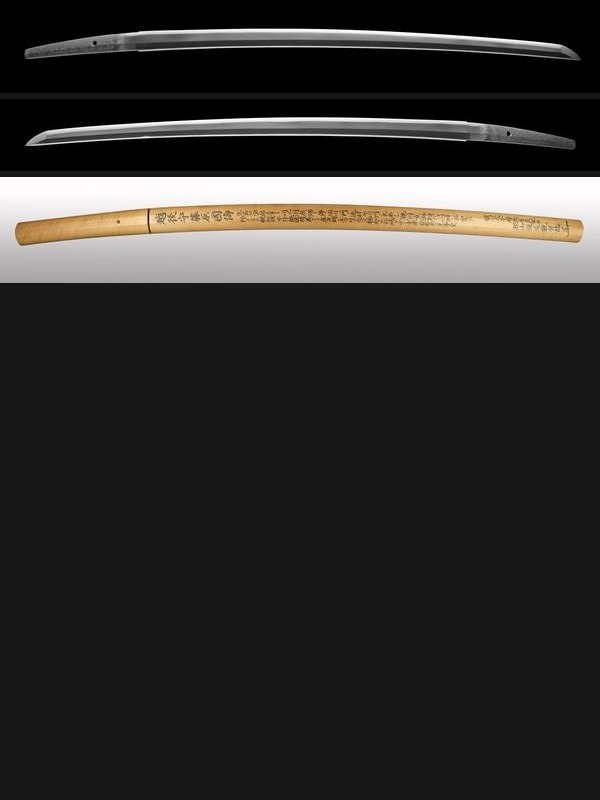
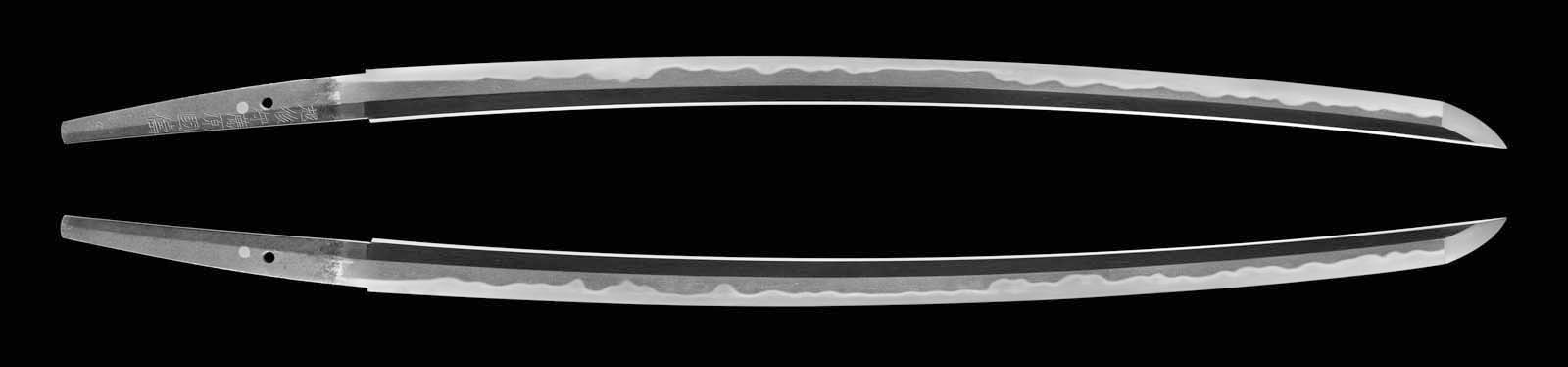
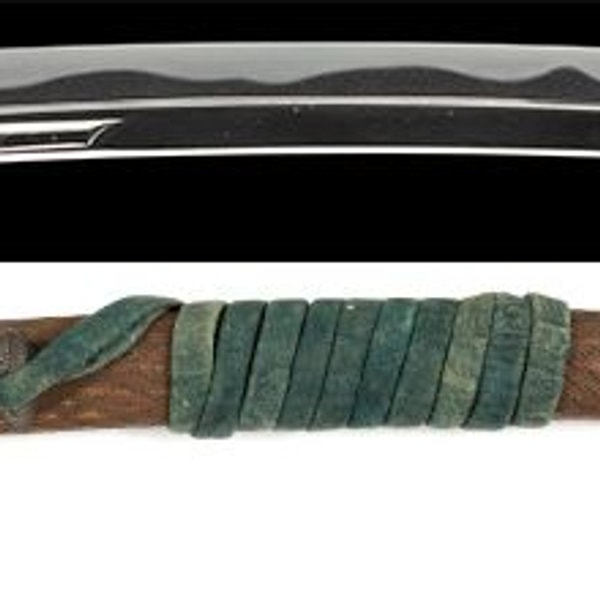
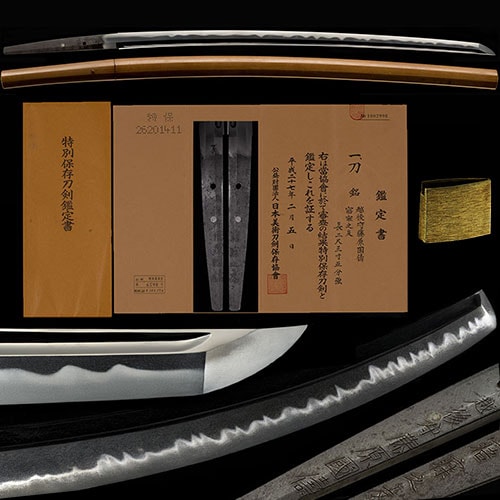
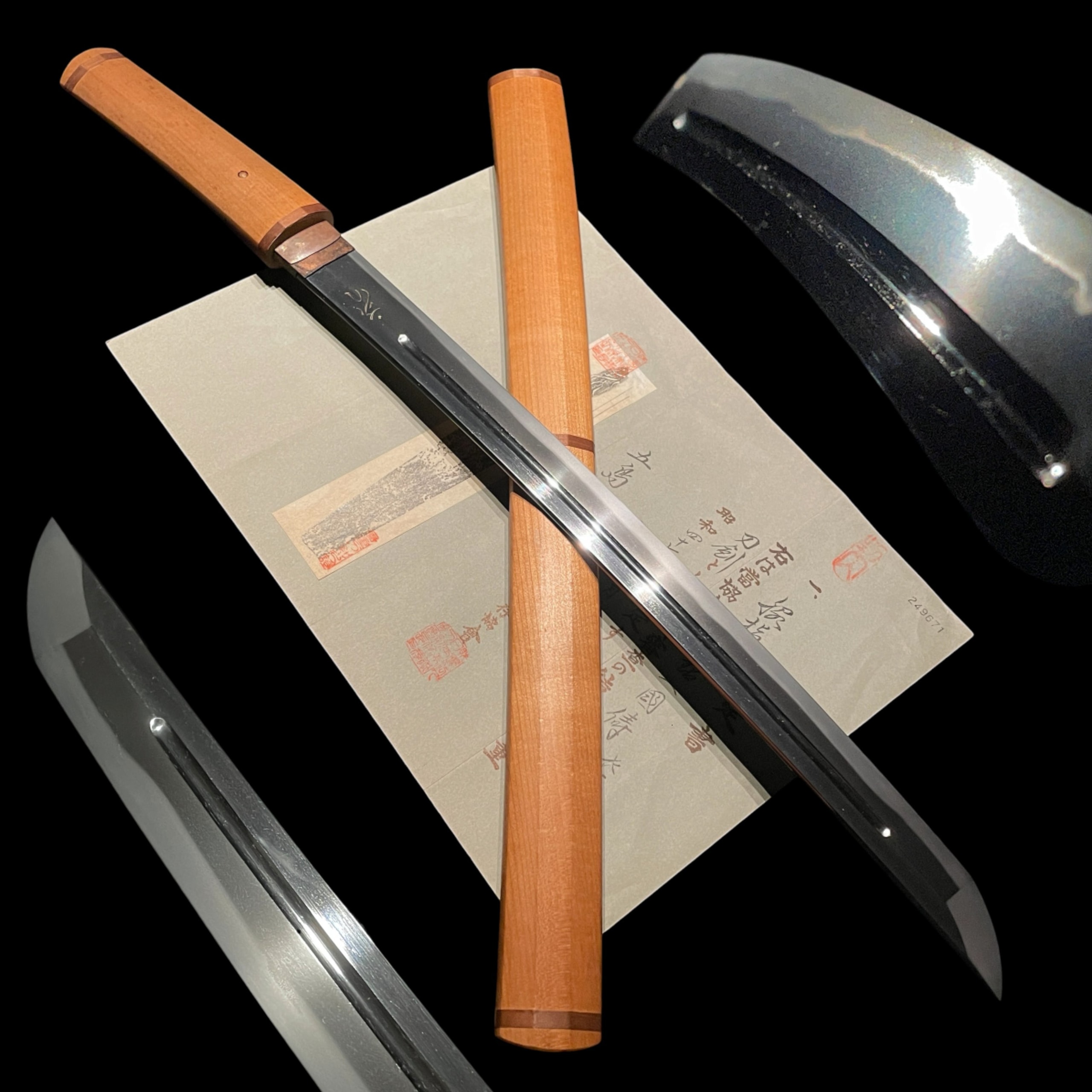
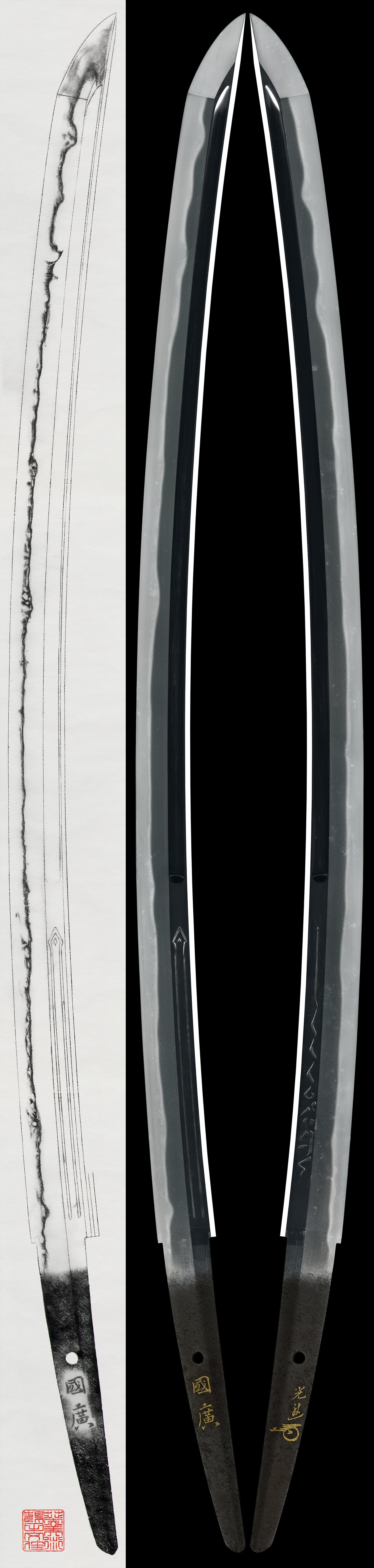
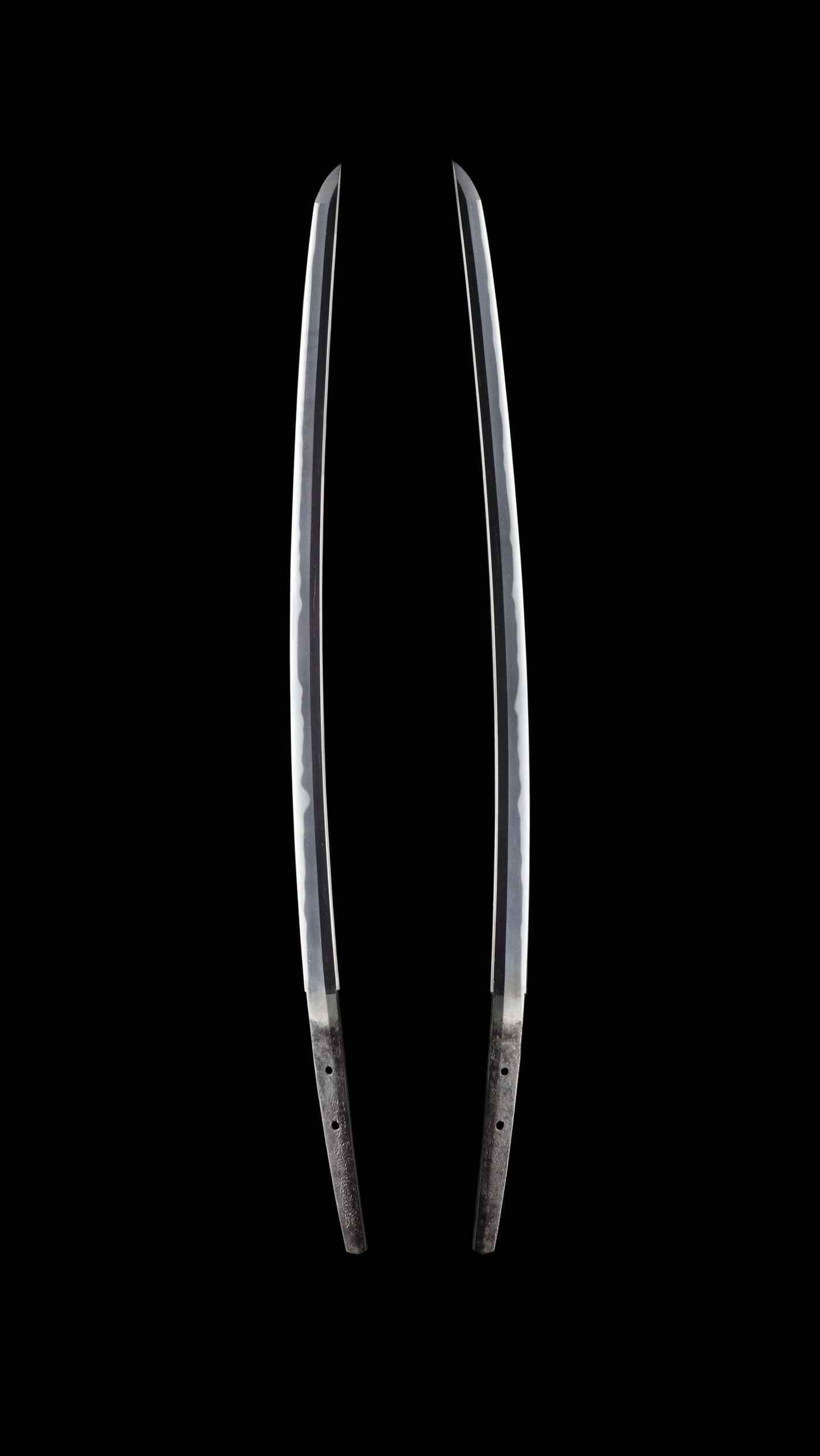
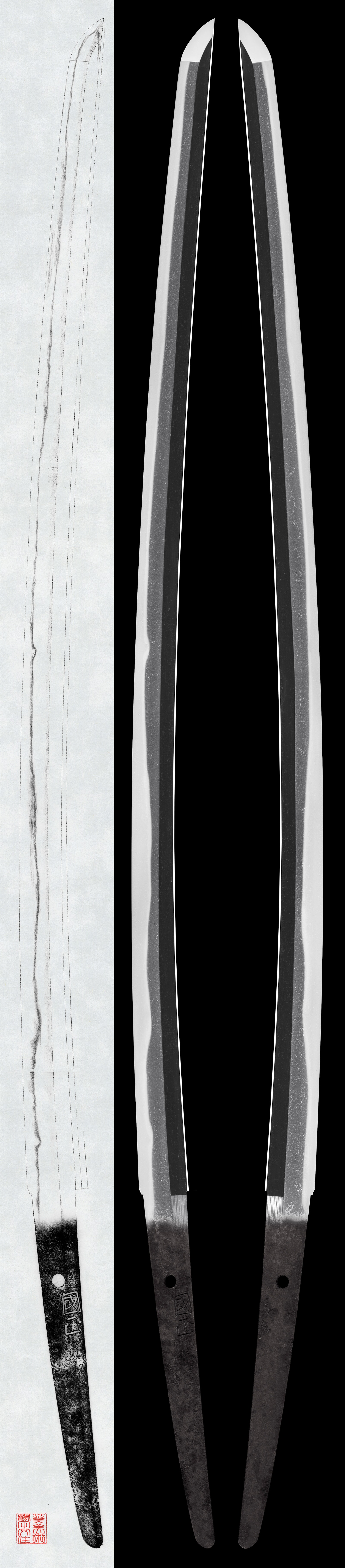
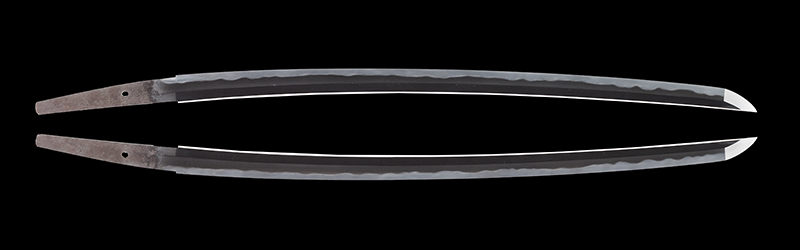
Description Keijō: , ; the drop of the back ridge is somewhat steep; standard ; somewhat ; shallow ; with a slightly extended feeling. : with a slightly standing-grain tendency, mixed with ; abundant adheres, with some coarser intermixed; enters well. : Begins in ; above that, mixed with ; the shows a tendency to tighten, with adhering; in places coarser is mixed in, producing slight irregularity; fine runs through, and the takes on a (subdued) tendency. : Tempering is deep; with a shallow tendency it turns back in a rounded form with deep return; at the point it becomes , and the is strong. : None. : ; tip is a shallow ; file marks are large ; one ; on the toward the there is a long signature cut with a fine chisel, and the characters become larger as they descend.
Artisan Echigo no Kami Fujiwara Kunitsugu (越後守藤原国儔)
Era Early period (Keichō–’ei era)
Explanation Regarding Echigo no Kami Kunitsugu, the Kokon Kaji Bikō states: “Signed Echigo no Kami Kunitsugu. Born in Obi in province, and resided at Ichijō in Jōshū (Yamashiro). Nephew of Shinano no Kami Kunihiro. Between the Keichō and ’ei eras. A good maker.” The Shōkan Yoro further notes: “Masahiro and Kunitsugu appear to have been disciples who followed (Kunihiro) from up to the capital region.” Beyond this, however, sword books since the period transmit few details. Moreover, there are no works bearing dates (), leaving no direct documentary material upon which to draw.
Nevertheless, because the early styles and signature manners of fellow-school smiths such as Izumi no Kami Kunisada () and Kawachi no Kami Kunisuke () closely resemble those of Kunitsugu, it can be inferred that Kunitsugu exercised direct guidance over them.
In general, among -mono there are many works thought to take as models the superior masters such as and Sadamune. Within this context, Kunitsugu stands out as a maker whose workmanship, at first glance, shows a flavor.
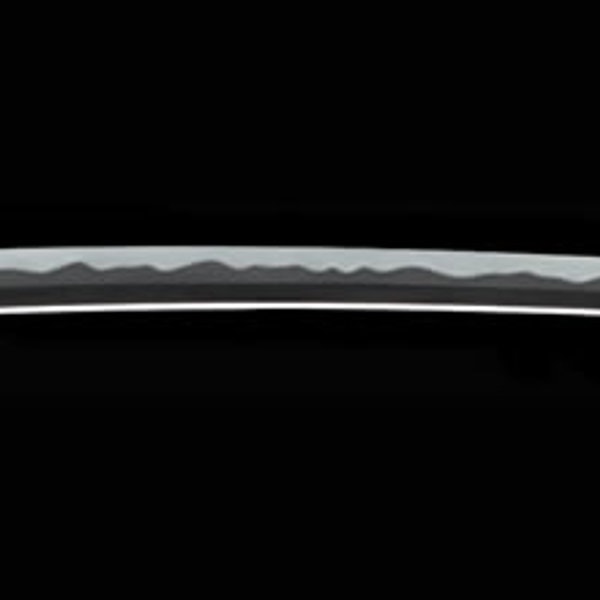
This shows a broad and relaxed mixed with ; the tends to tighten and is accompanied by ; the interior of the temper takes on a tendency; and the forms a shallow- style and returns roundly and deeply. As noted above, the workmanship displays a manner, especially evoking the territory of Kanemoto. Furthermore, the sword’s overall form is compact in proportion, and the is also made short in a one-handed-uchi style, so that even the faithfully reproduces the late- shape. Taken together with the character of the hardened edge, it positively calls Kanemoto to mind, and strongly suggests that Kunitsugu’s ideal lay in Kanemoto—an ambitious work.
Features such as the straight visible near the , and the shallow- , are also frequently encountered within this smith’s work, and these too are noteworthy points. This is a blade in which Kunitsugu’s distinctive characteristics are fully expressed, and it displays a superior level of workmanship.